February 28-March 4.: We spent five days in Conakry due to visa issues, which was much longer than we originally planned. We started losing hope that we would be able to visit both Sierra Leone and Liberia. Eszti’s brother and former classmate were joining us in Côte d’Ivoire, so we had a fixed date by which we needed to reach Man, a city near the Liberian border, to meet them. Guinea and Côte d’Ivoire are neighboring countries, while Sierra Leone and Liberia were just “extra” detours we really wanted to visit. We gave ourselves until Friday: if we managed to cross into Sierra Leone that day, we would go that way; if not, we would spend another week in the eastern forests of Guinea before heading to Côte d’Ivoire.
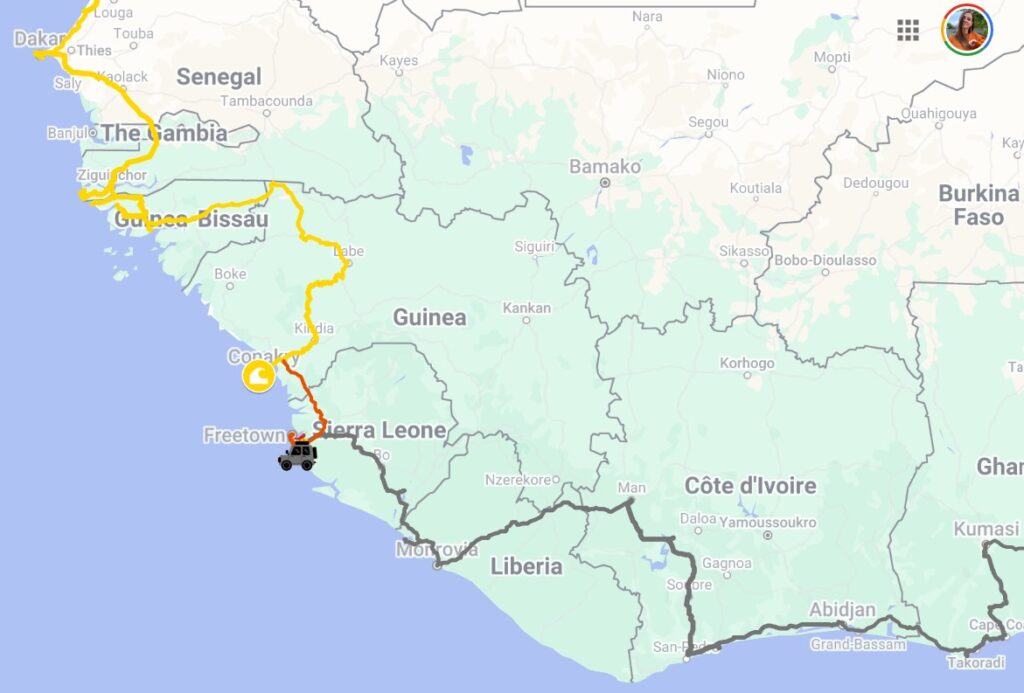
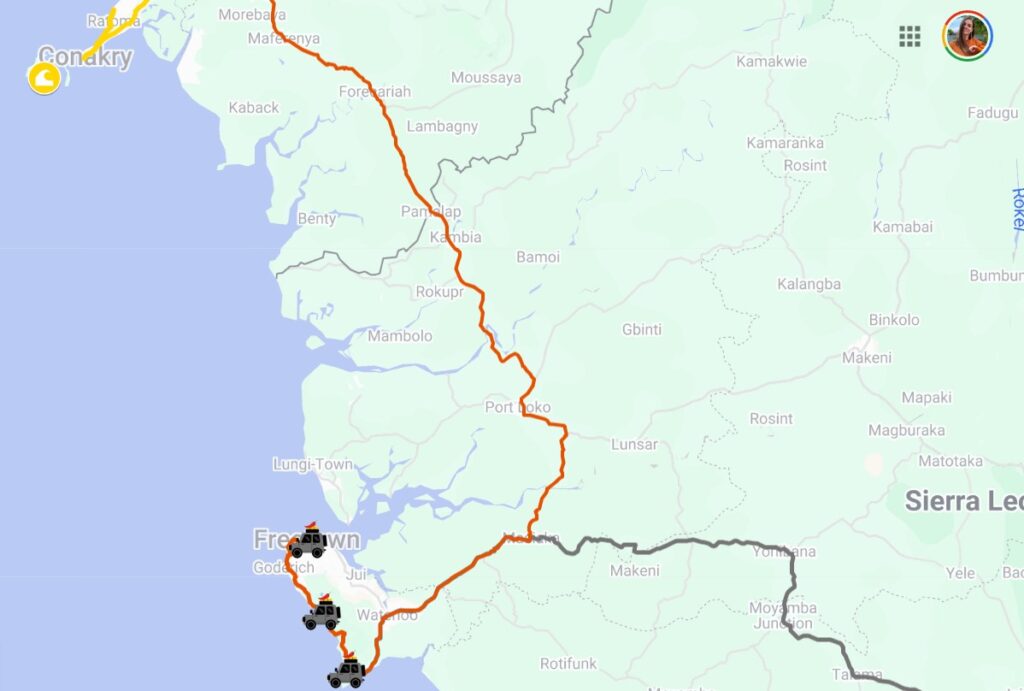
Finally, at noon on Friday, we received the message: we could pick up our visa for the Democratic Republic of the Congo (DRC). We rushed through the city—Ramadan had just begun, and everyone was praying in the streets instead of sitting in their cars—which meant we still had a chance to reach Sierra Leone that day if we hurried. Once we made it out of Conakry, the road miraculously turned into perfect, smooth asphalt, allowing us to reach the border before closing time.
The border officer, Juliett, who welcomed us, was incredibly kind. English is the official language in Sierra Leone, and most people also speak Krio, an English-based creole. Finally, we were in a country where we had a common language with the locals. With great energy and speed, Juliett guided us through the usual immigration procedures (Sierra Leone is the only West African country with a visa-on-arrival system) and customs, all while excitedly telling us that Sierra Leone has the most beautiful beaches in West Africa, so we should hurry to catch the sunset at a scenic spot.
That day, our only goal was to reach the next town, Kambia, where we found a charming bungalow-style accommodation. The next morning, we set off for the coast. The first thing we noticed was the quality of the roads: surprisingly good, especially compared to Guinea, and we even drove on a multi-lane highway! The scenery was stunning, passing by small villages dotted with palm trees. Everything seemed peaceful at first, but once we entered a town, we were back in the familiar chaos of Africa—on the multi-lane road, we could barely move at 5 km/h due to the numerous street vendors.
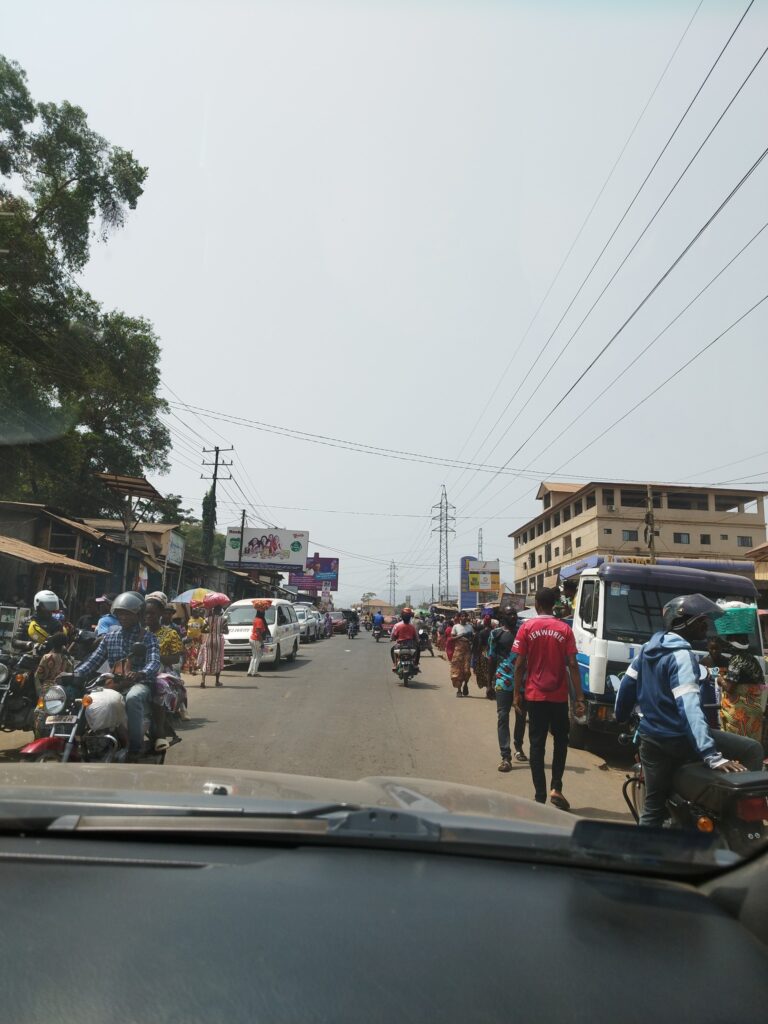
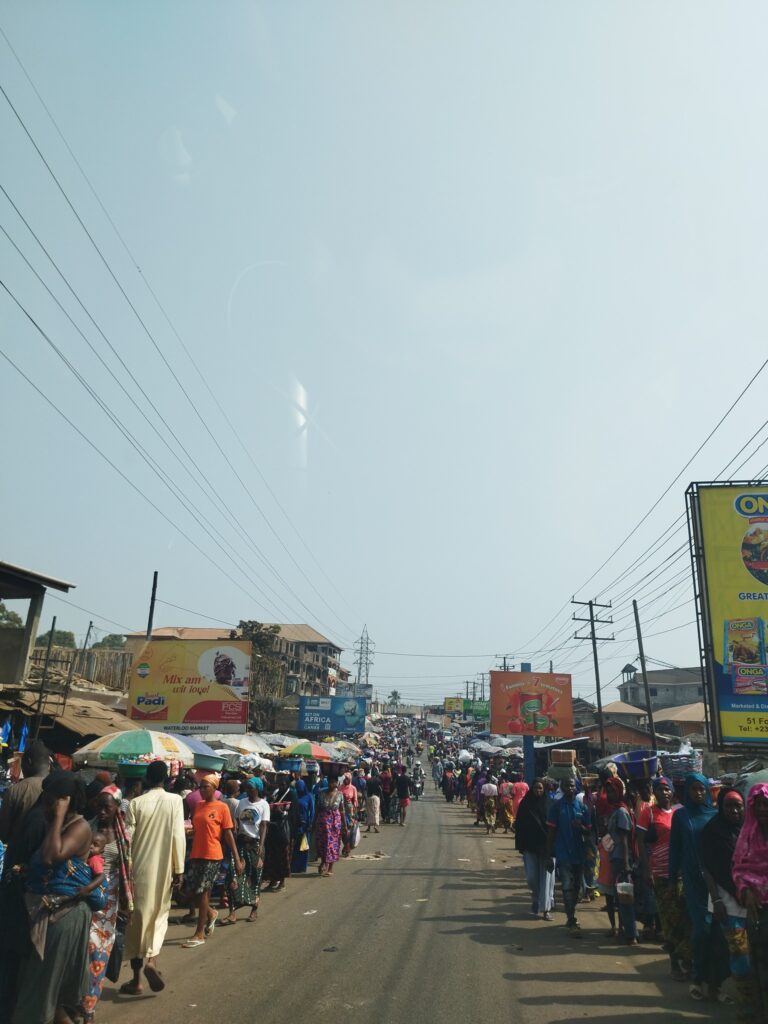
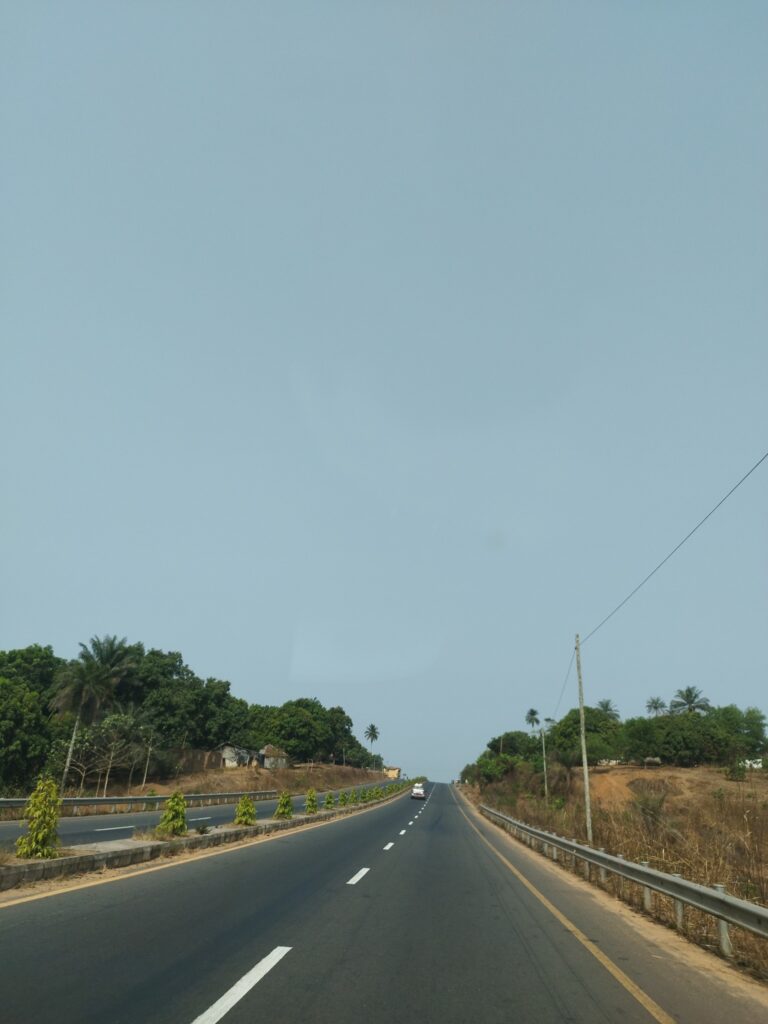
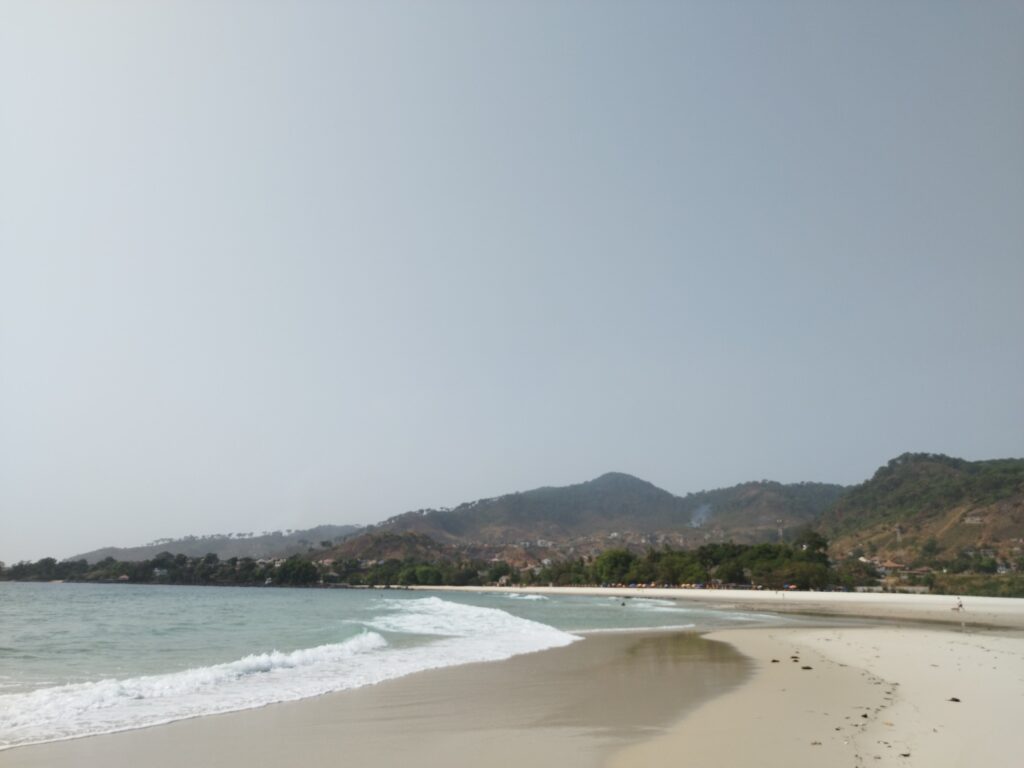
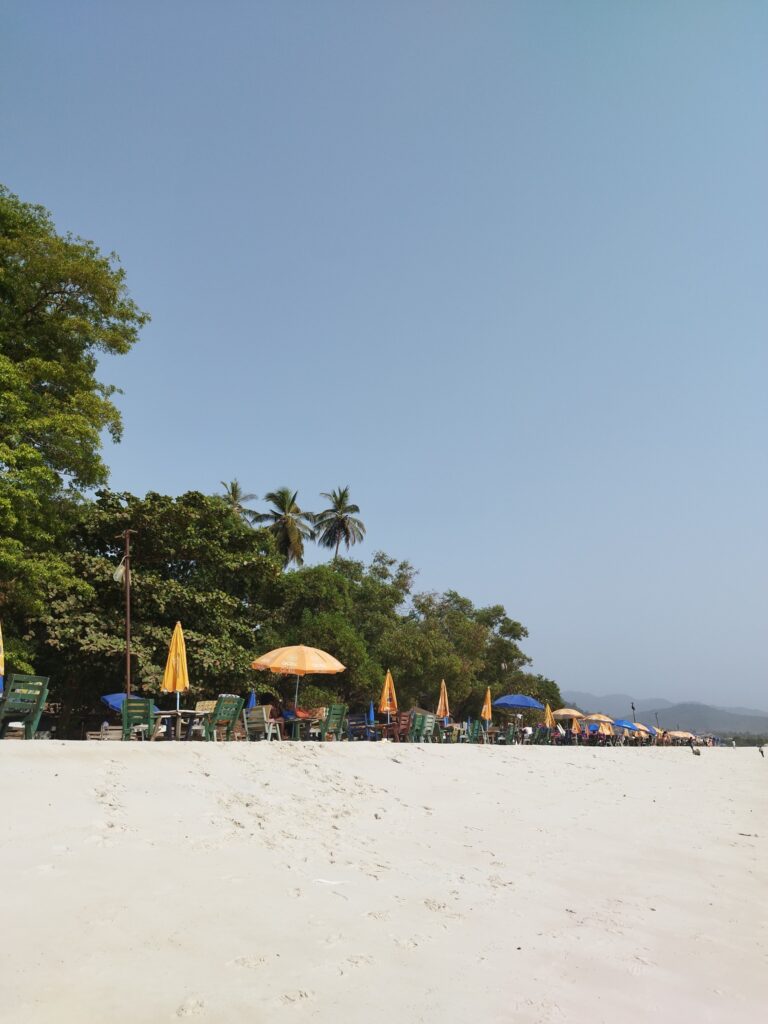
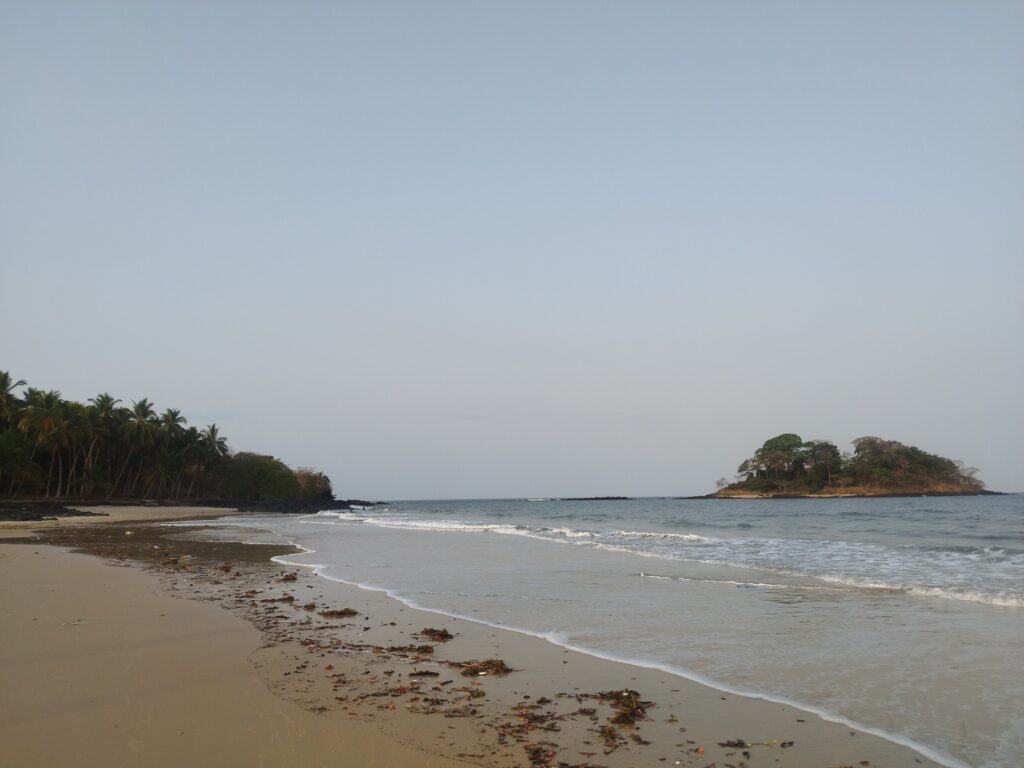
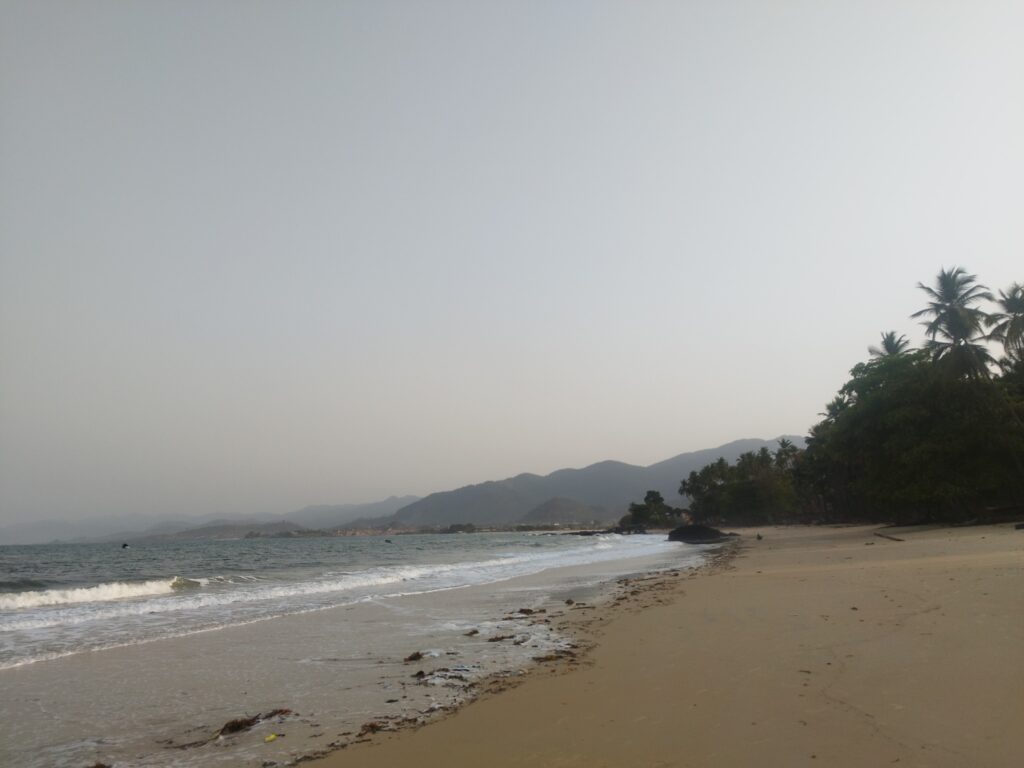
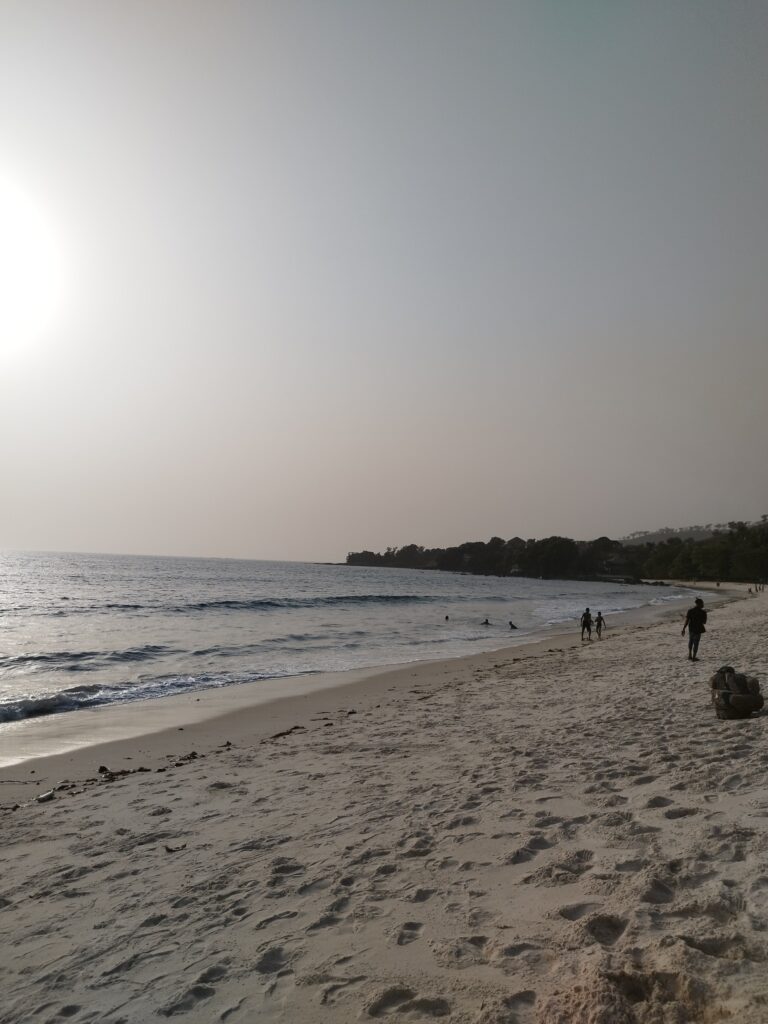
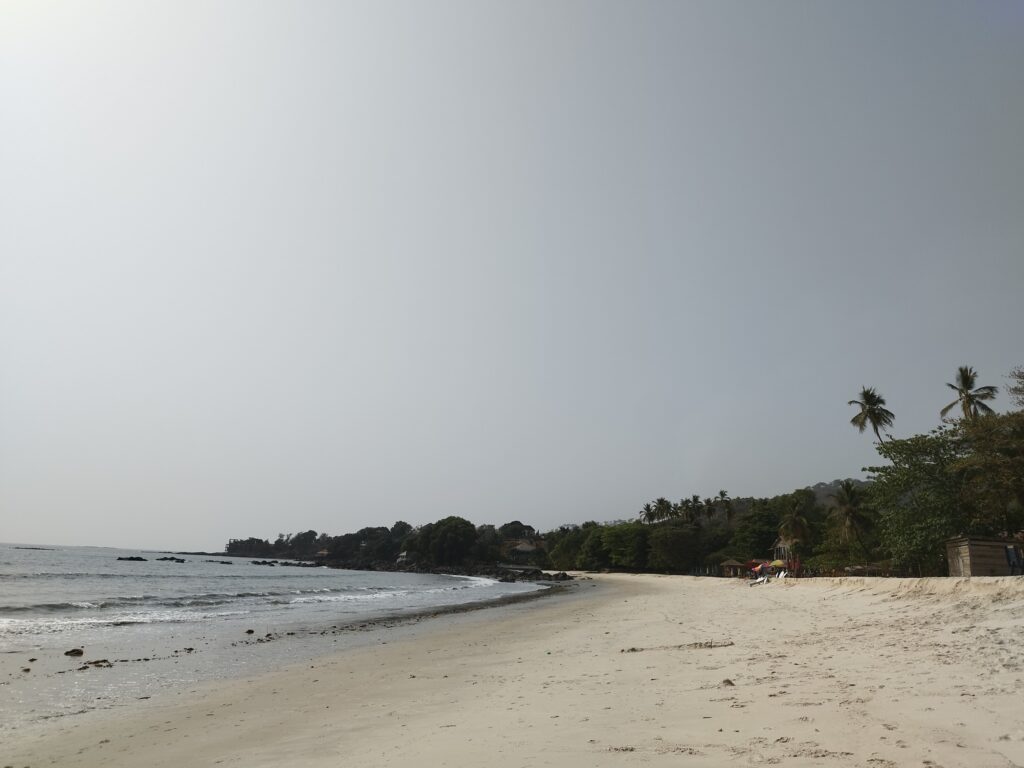
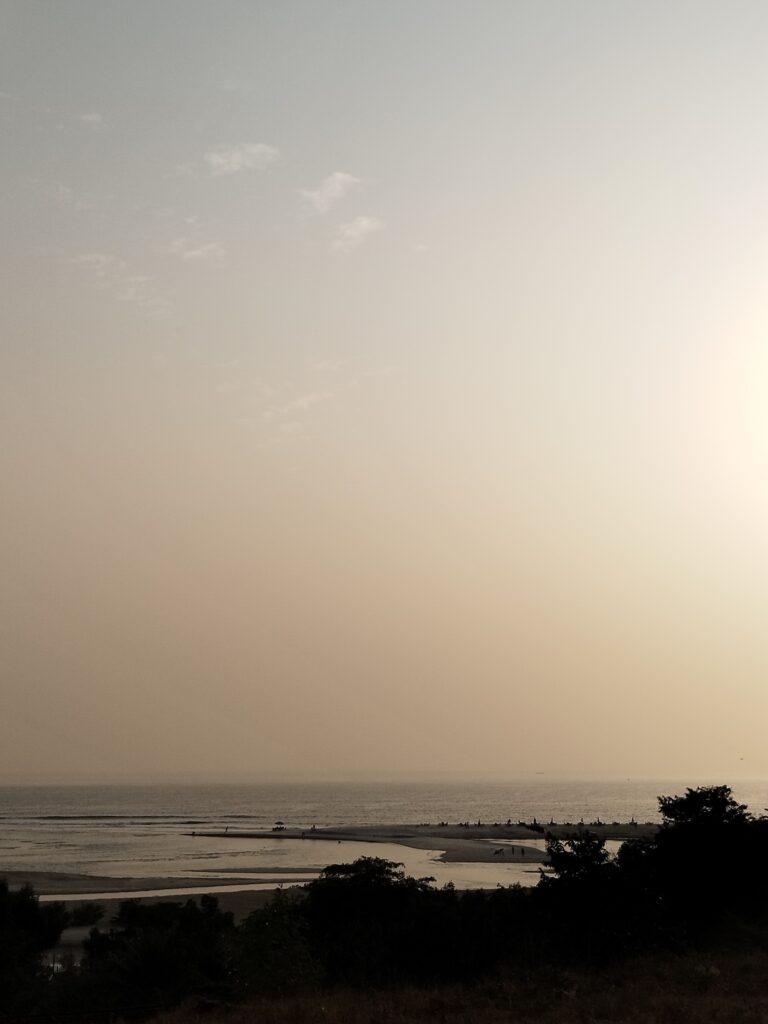
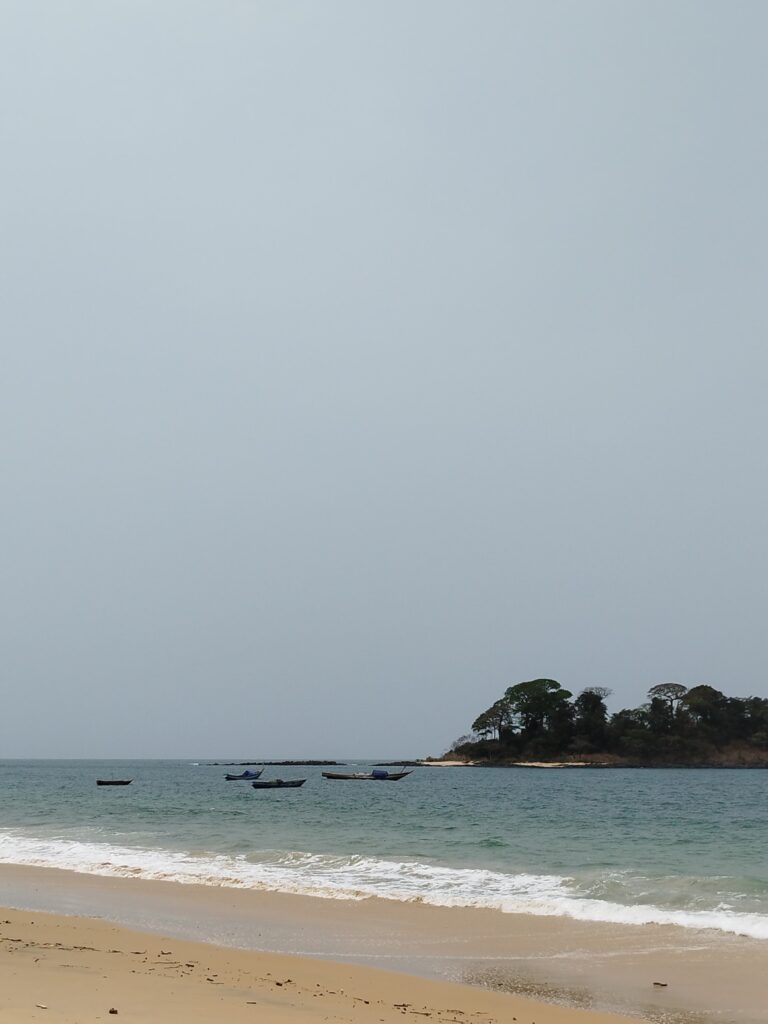
Our first stop was the famous River Number 2 beach. We found a place that allowed camping, so we woke up to a breathtaking view. The beach is famous for a river that flows into the ocean here, and many people prefer swimming in the safer river waters—but we chose the sea. At low tide, we could walk from the accommodation to the beach via a small bridge over the river, but at high tide, the water flooded everything, forcing us to take a detour. We swam, had some drinks, and simply watched people. On weekends, the beach fills up with visitors from Freetown who come to picnic.
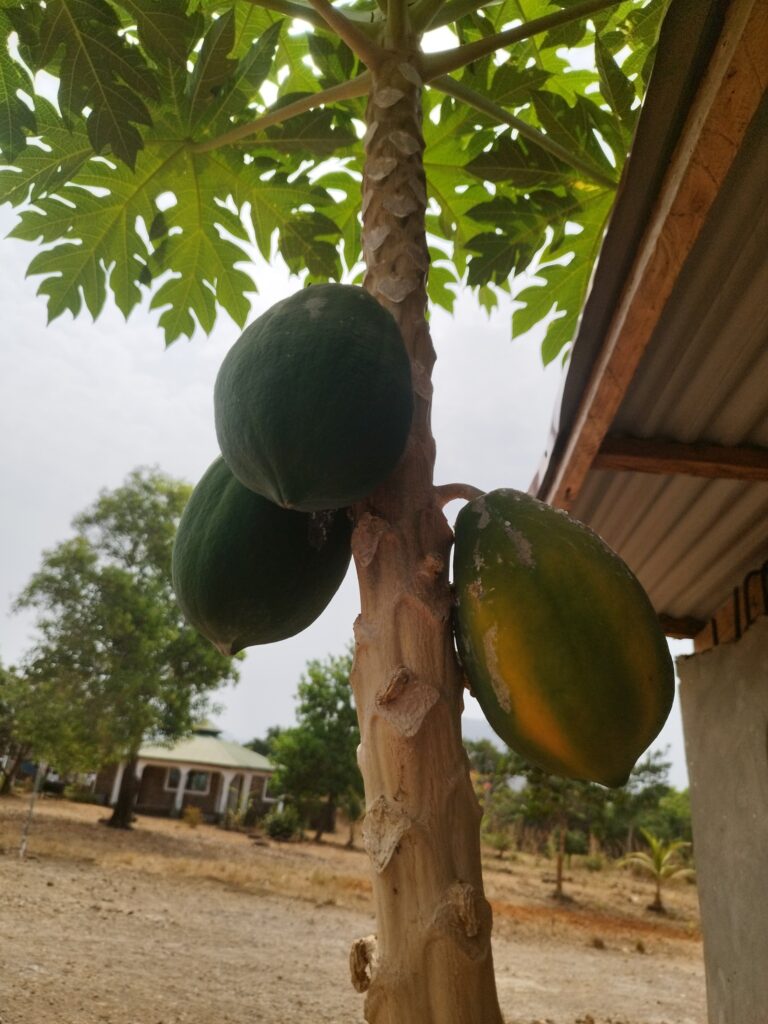
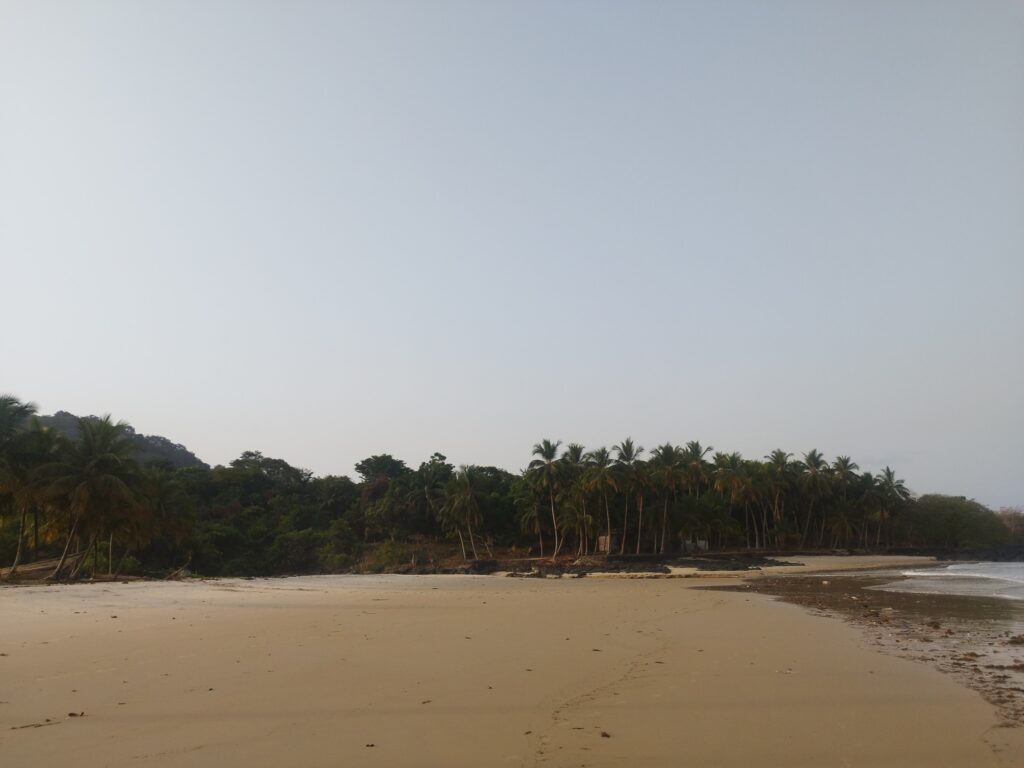
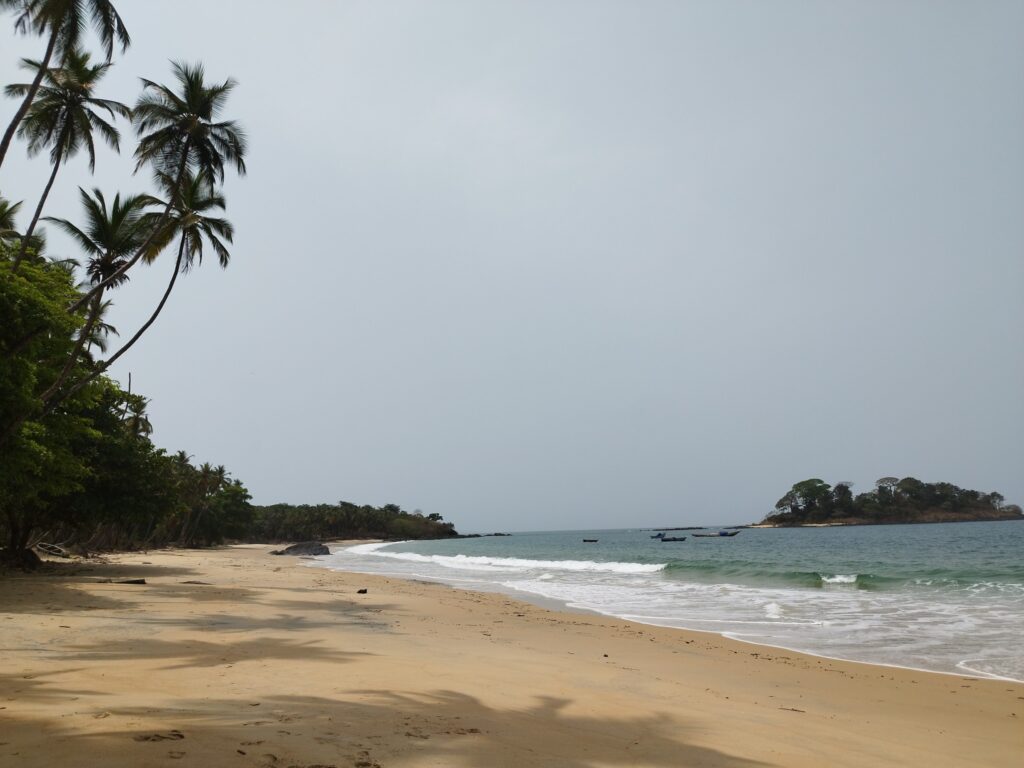
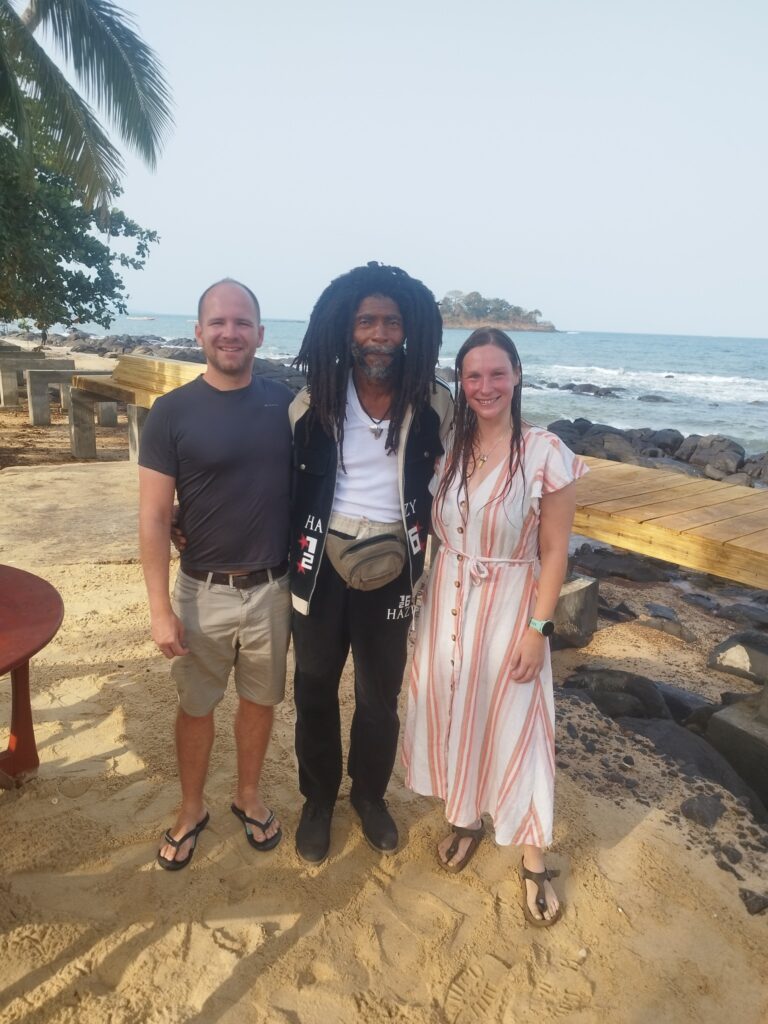
The next day was Ádám’s birthday. The night before, we had long conversations with the manager and maintenance worker of the place, and in the morning, one of them surprised Ádám with a beer, while the other brought a huge papaya. After that, we drove to Bureh Beach, where we stayed for two days in Diana Szántó’s lovely bungalow, warmly welcomed by Bongay. For Ádám’s birthday dinner, we had grilled fish with coconut rice and opened a bottle of wine we had bought back in Guinea-Bissau.
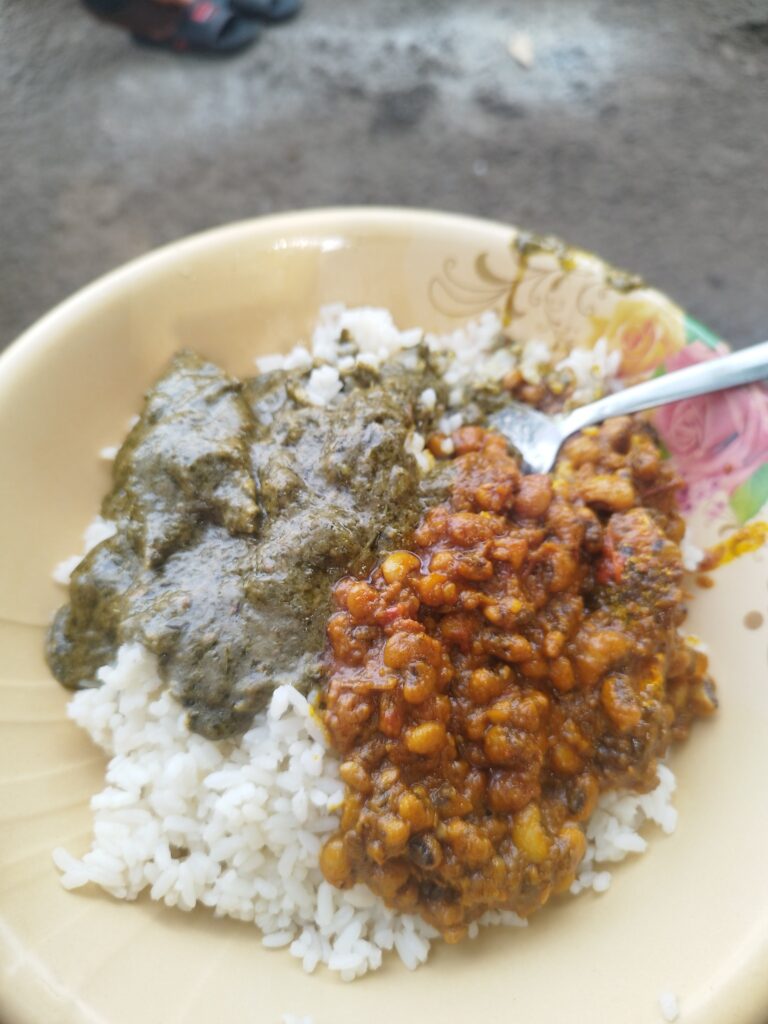
Unfortunately, we had little time to enjoy the beach because the next day we had to go to Freetown to sort out another pending visa. In the morning, we drove to the Liberian embassy, which was still closed at 10 AM, so we sat down at a street vendor’s stall for breakfast. For about one euro, we got a huge meal: rice with beans and cassava leaf sauce. Our Sierra Leonean acquaintances had told us that we must try the cassava leaf sauce, and it truly was fantastic—coconut-infused, spicy, with dried fish—perfectly complementing the beans.
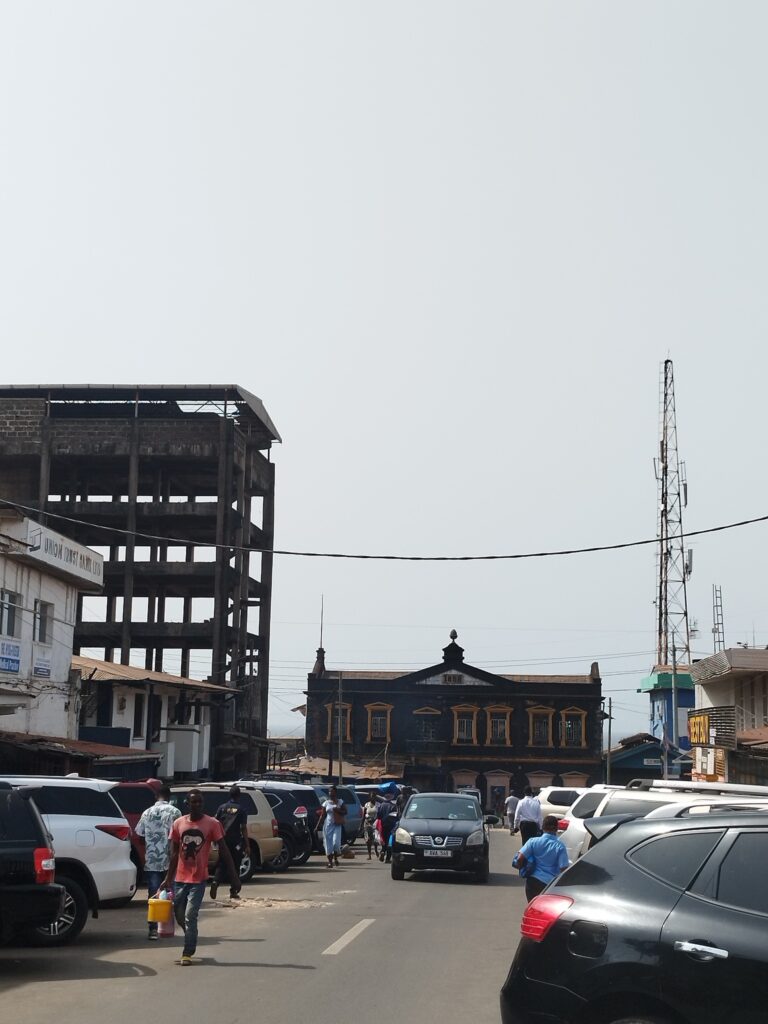
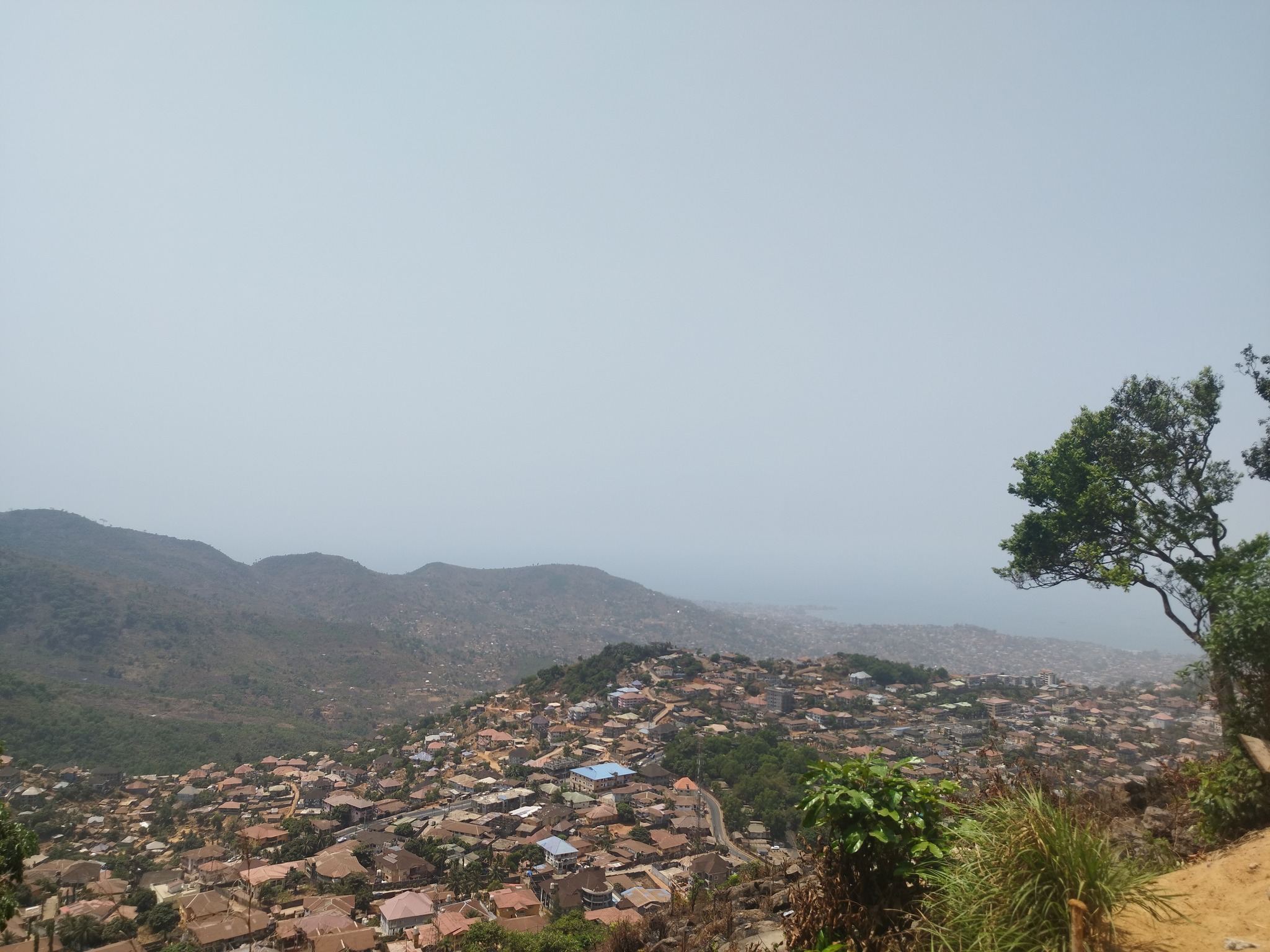
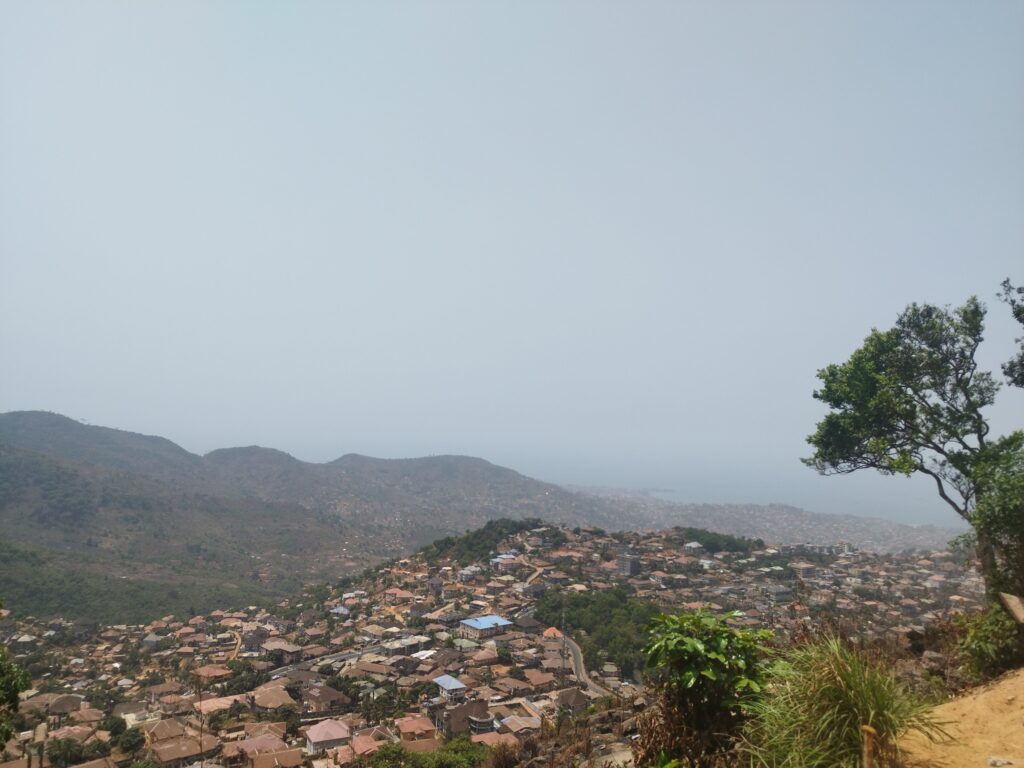
By around 11 AM, we managed to submit the visa application, hoping it would be ready the same day, and set out to explore the city. Freetown is beautiful, spread across hills and surrounded by the ocean. We aimed for the highest viewpoint, but when we arrived, we found a large viewing platform under construction, making it partially inaccessible—though in the end, they let us in a little. The journey itself offered stunning views. Afterward, we headed downtown, though it was an adventure—Google Maps led us onto increasingly narrow and steep dirt roads until we decided they were only suitable for motorbikes and turned back. Still, we enjoyed some spectacular panoramas.
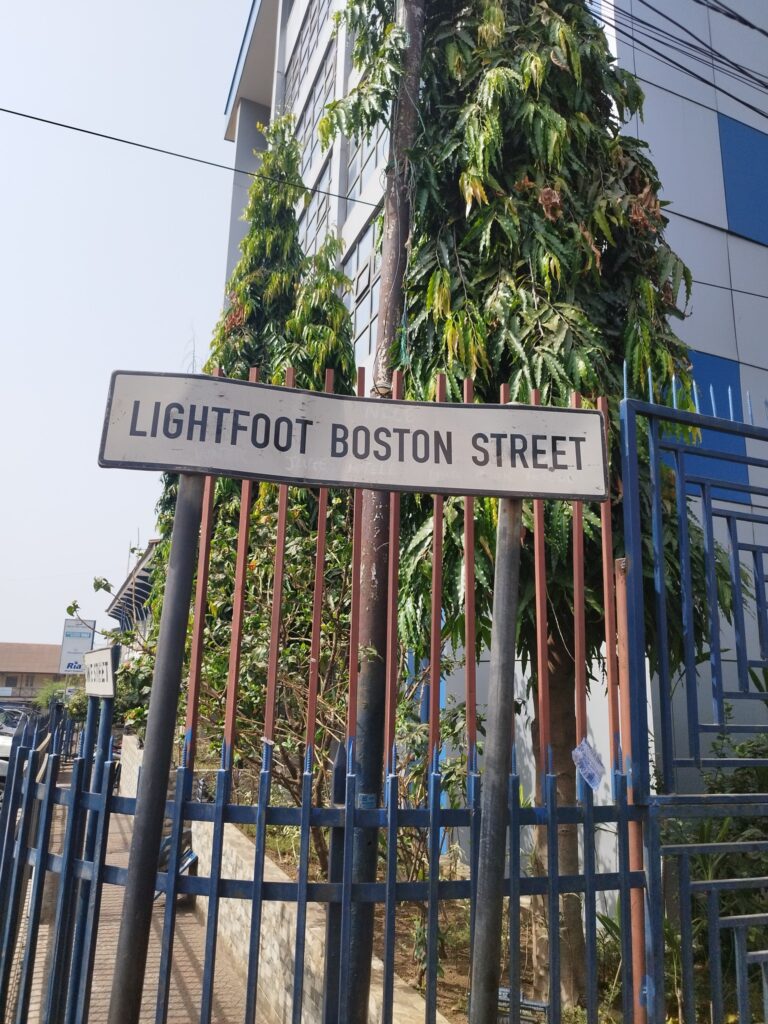
The city’s main landmark is the Cotton Tree, a symbol of Freetown’s history. It became significant in 1792 when a group of formerly enslaved African Americans, who had gained their freedom during the American Revolutionary War, settled in what is now Freetown. The city has a completely different atmosphere compared to other major African cities we’ve visited. We liked that every street had an interesting—sometimes funny—name. The people were incredibly kind, and the challenge here was that they were so eager to chat with us that it was sometimes difficult to move on (though understanding their English wasn’t always easy).
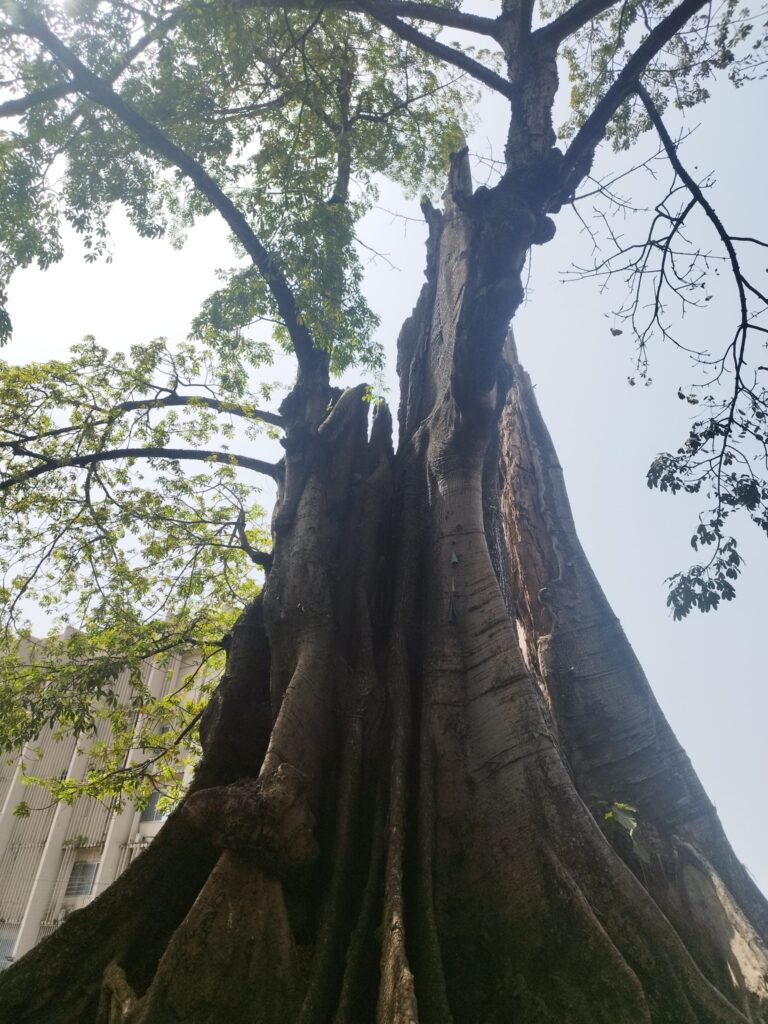
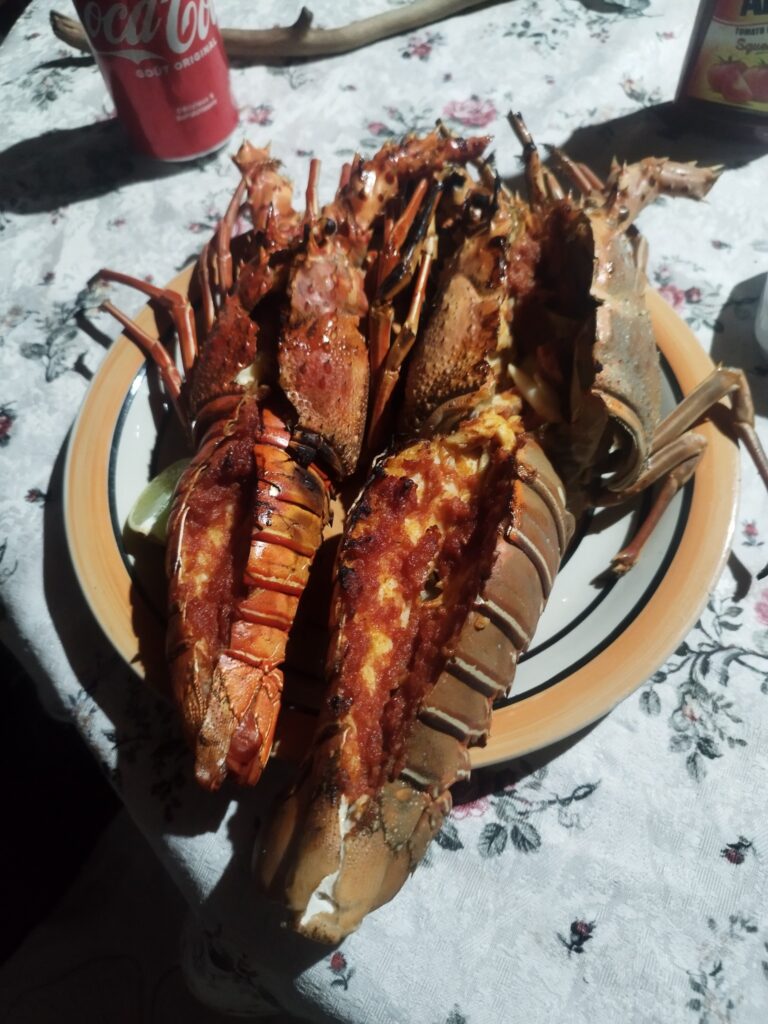
Fortunately, by the end of the day, we received the visa. To celebrate, Eszti treated Ádám to real Italian gelato—unfortunately, just before dinner, so we struggled a bit to finish our evening meal, which consisted of fried plantains and a huge mackerel. JJ, a French traveler with fascinating stories (as he had traveled around Africa once before 22 years ago), ordered lobster for his last meal. As a final birthday gift, Ádám got to try lobster and Guinness for the first time—Guinness has a special export version that is very popular in West Africa.
The next morning, Eszti went for a run—a big challenge due to the heat and humidity, as well as the fact that she had to greet and exchange a few words with almost everyone she passed. At one point, an elderly woman in flip-flops joined her, and they ran back to the village together.
After that, we said goodbye to the beach—Bongay and the village sent us off warmly. Even though we could only spend two days there, we felt how special and welcoming Bureh was, full of kind people.