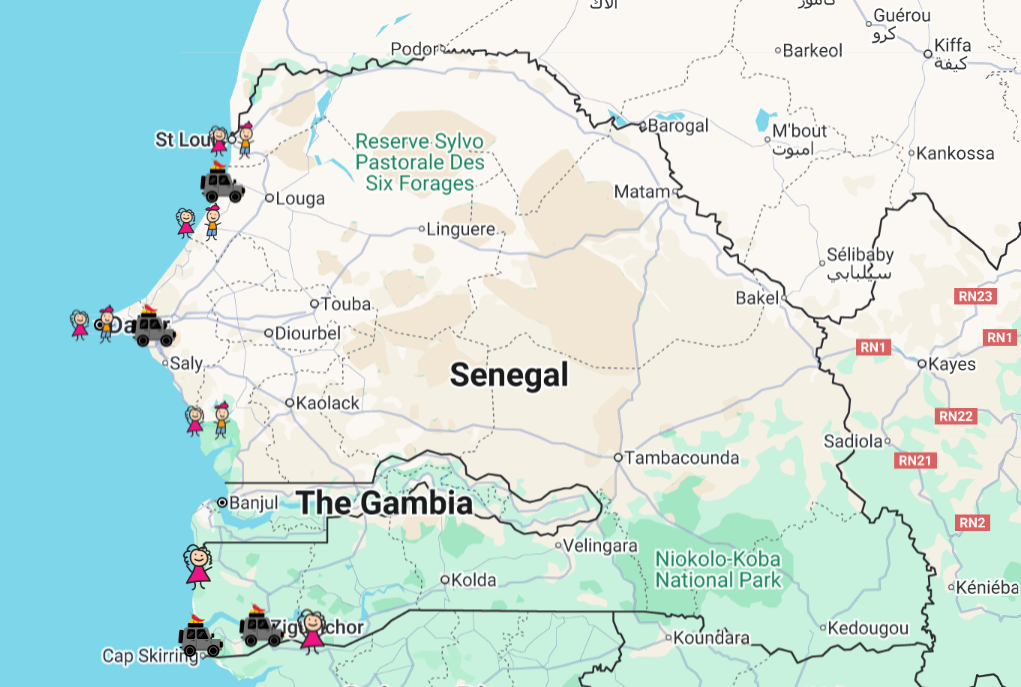
We visited Senegal for the first time in February 2023, just for a vacation. Adam and I spent two weeks traveling along the route Toubab Dialow-Bandia National Park-Mar Lodge-Saint Louis-Lompoul-Dakar, then I took a bus to Casamance, Zighuincor, from where I went to Abene, then back to Dakar via the same route due to corruption at the Gambian border, and then back to Toubab Dialow. In February 2025, we traveled the Potou-Dakar-Cachouane route to gain new experiences in Senegal, albeit in a short time.
What should you know about the country?
Summary
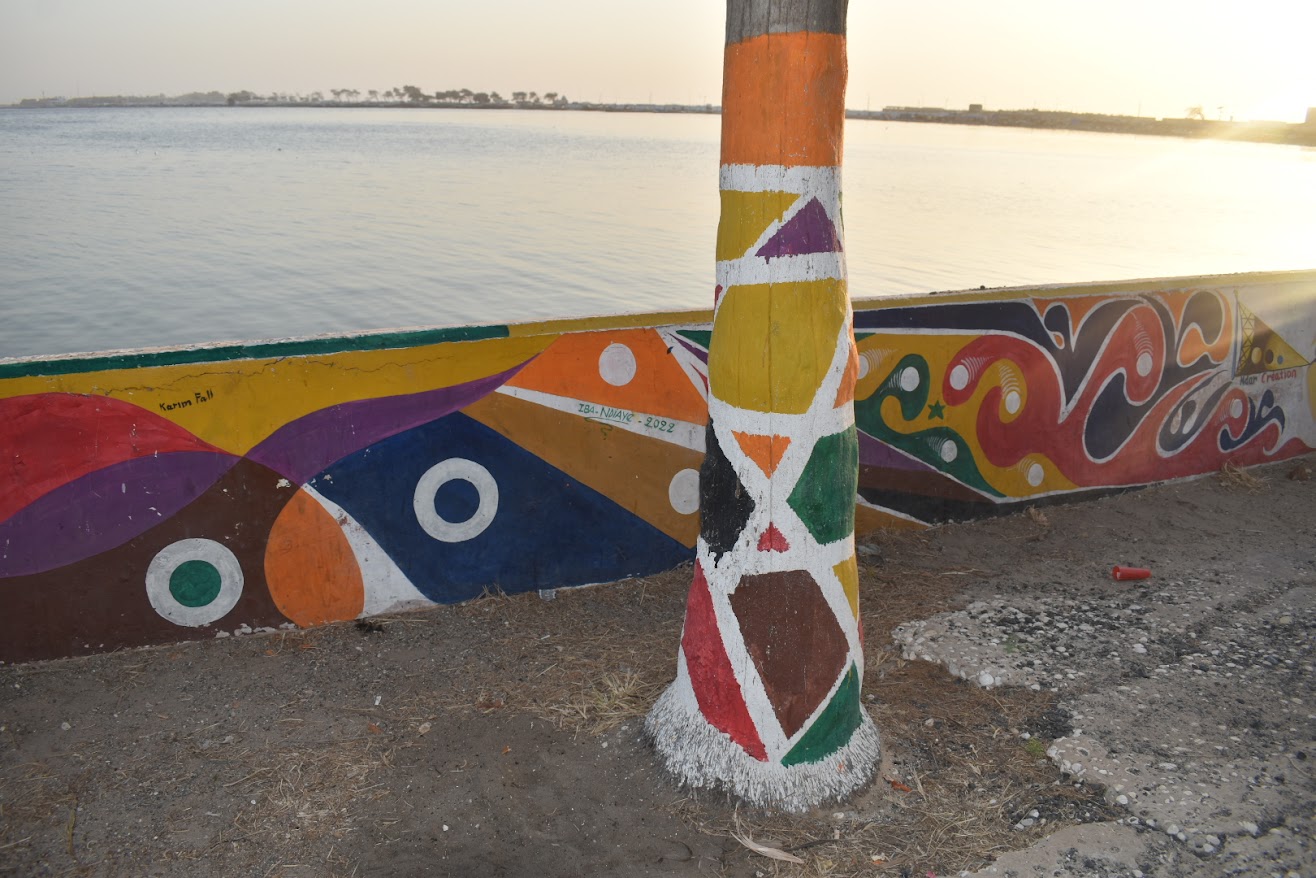
Senegal is located in Northwest Africa, on the Atlantic coast, with a population of 18.5 million people living in an area slightly larger than twice the size of Hungary. Its population consists of several ethnic groups: the largest is the Wolof (approx. 40%), followed by the Peul/Pula (20%), the Serer (15%), and the Mandinka, Diola, and smaller groups, which make up the remaining 25%. The official language is French, but Wolof is the most widely spoken language in the country, with many people also speaking Peul, Serer, and Mandinka. More than 90% of the population is Sunni Muslim, and Islam shapes everyday life, social customs, and political culture. Tijaniyya (Tijaniism), Mouridism, Qadiriyya and Layenism, as well as the famous Baya Fall movement (known for their colorful clothes and dreadlocks), which was formed in the 20th century and emphasizes non-violence, religious commitment and community harmony. The role of religion is particularly visible in everyday life, pilgrimages, festivals, and local community events.
One of the most well-known elements of Senegalese social culture is teranga, which literally means hospitality, but encompasses much more than that: it is an integral part of cooperation, community cohesion, and a lifestyle based on respect. The value of teranga is preserved and practiced in everyday social interactions, family and friend relationships, and community events such as weddings, markets, and festivals.
Throughout history, significant kingdoms have existed in Senegal since the Middle Ages, such as the Wolof Kingdom, the Djolof (Jolof) Empire, and the Sereer communities. From the 15th century onwards, Portuguese and then French traders and colonizers appeared on the coast, establishing long-term economic and cultural ties with Europe. Senegal was fully annexed to French West Africa in 1895 and became independent in 1960. Since then, the country has enjoyed relative political stability and is renowned for its democratic traditions and peaceful transfers of power.
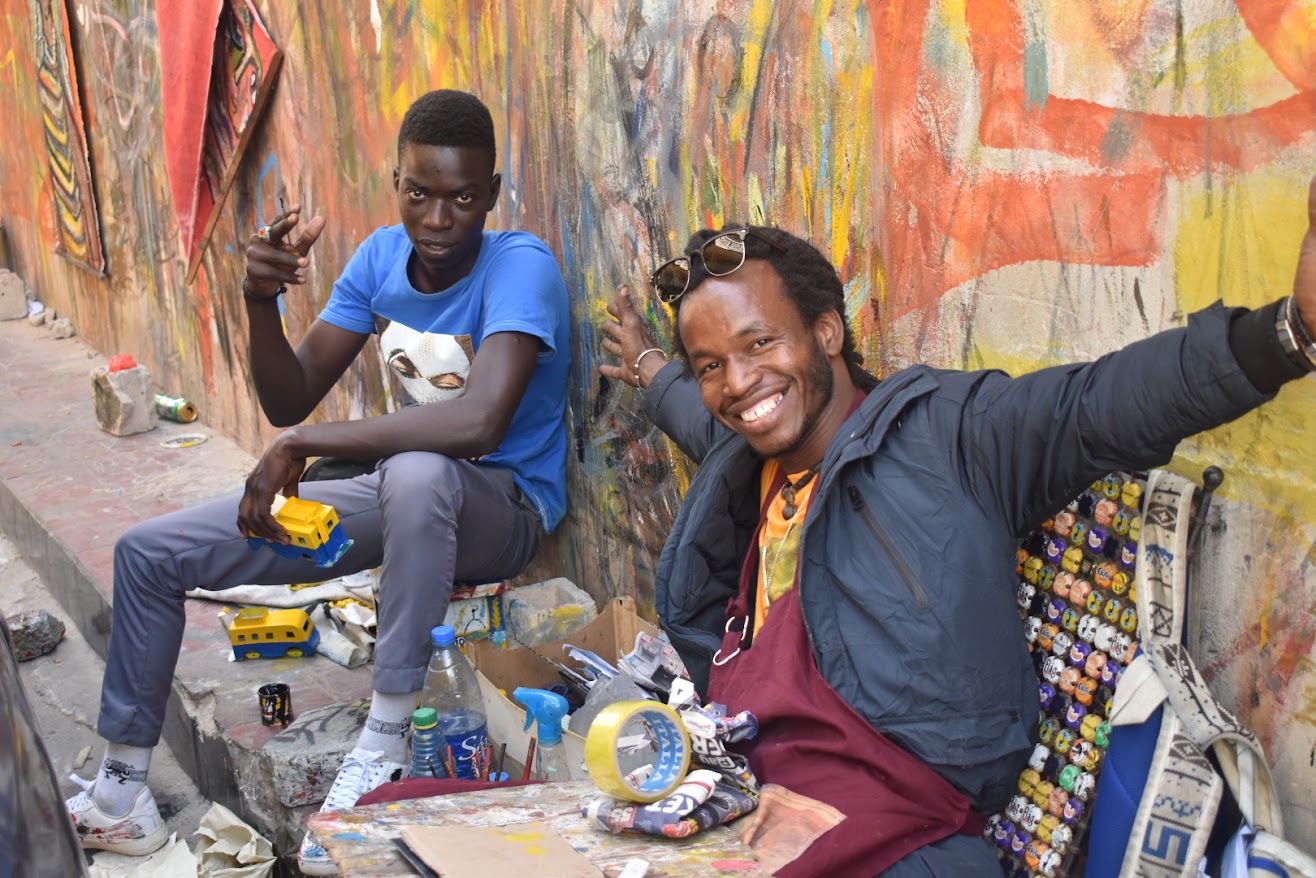
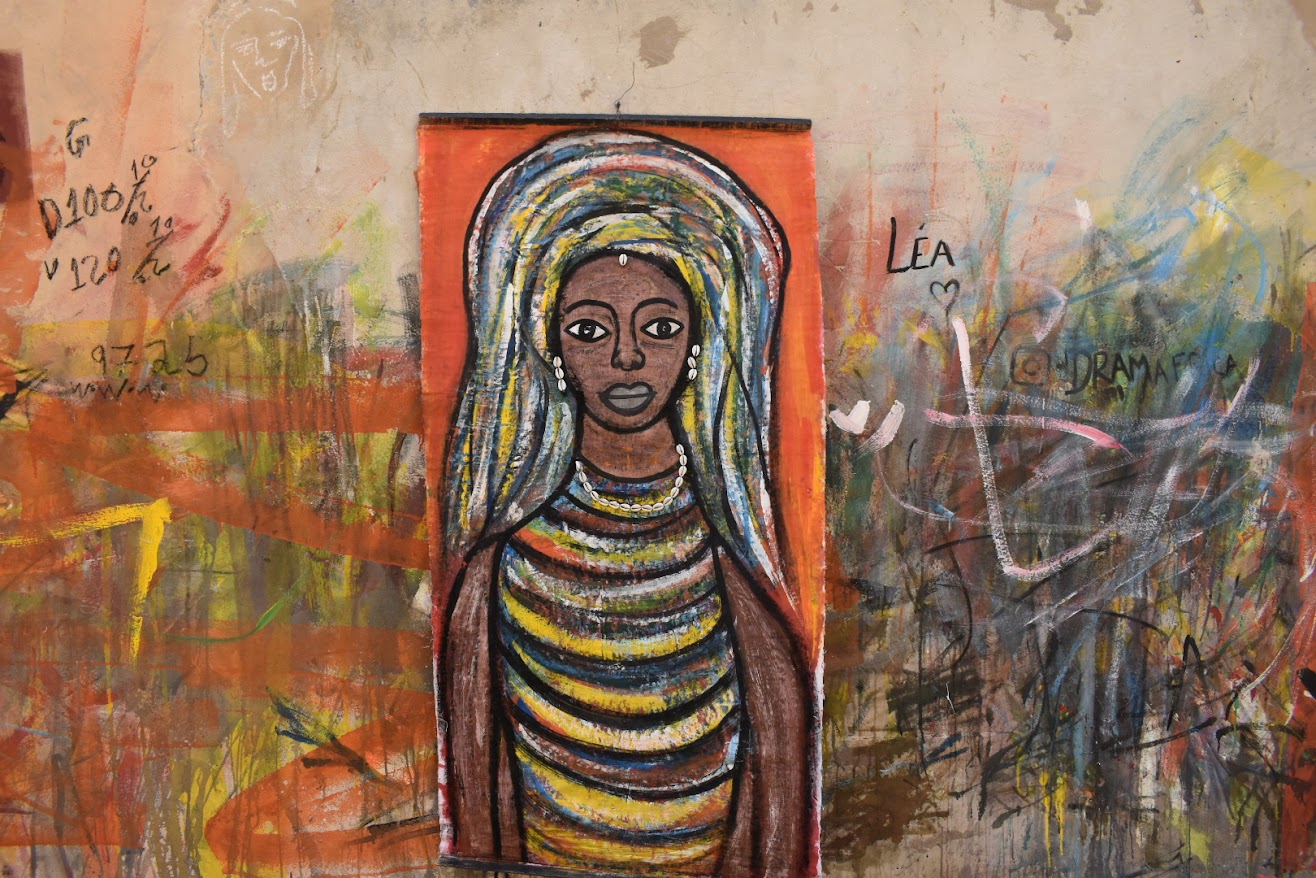
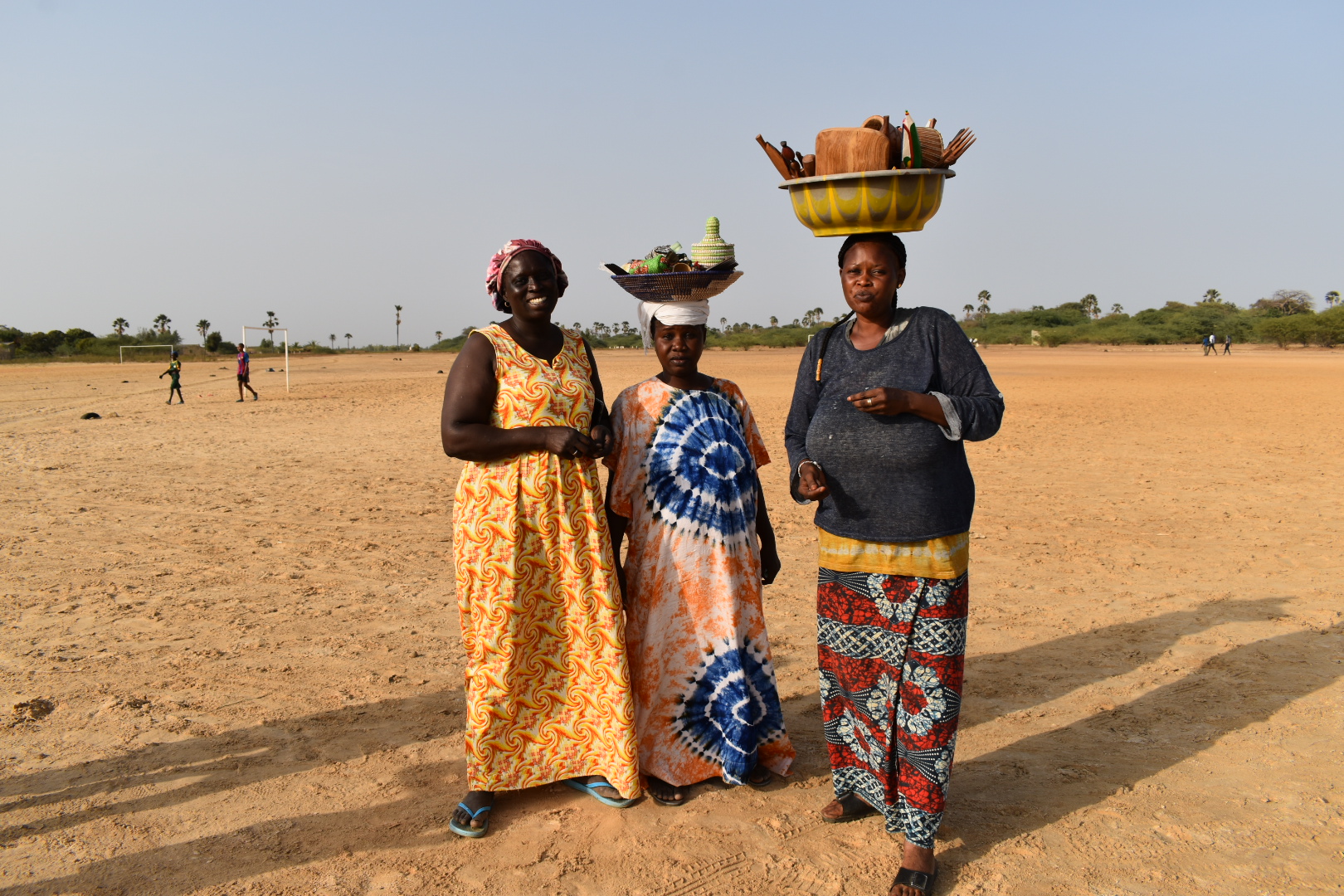
In terms of culture, Senegal has a rich musical and literary heritage: mbalax music has become a national symbol, and Senegalese literature flourishes in both French and local languages. Traditional crafts, colorful textiles, and festivals and fairs are all an integral part of community life and reflect the spirit of teranga. During our trip, we met many artists, bought some great souvenirs, visited several festivals, and spent our evenings listening to traditional drumming and watching dance performances in numerous pubs.
Climate
Senegal’s climate is mostly tropical, with the northern part closer to the savannah and semi-desert, while the southern Casamance region is greener and rainier. There are two main seasons in the country: the dry season lasts from November to May, with a surprisingly pleasant climate in the north, where the temperature does not exceed 30 degrees during the day, but it is hot in Casamance. The rainy, humid season lasts from June to October.
Clothing
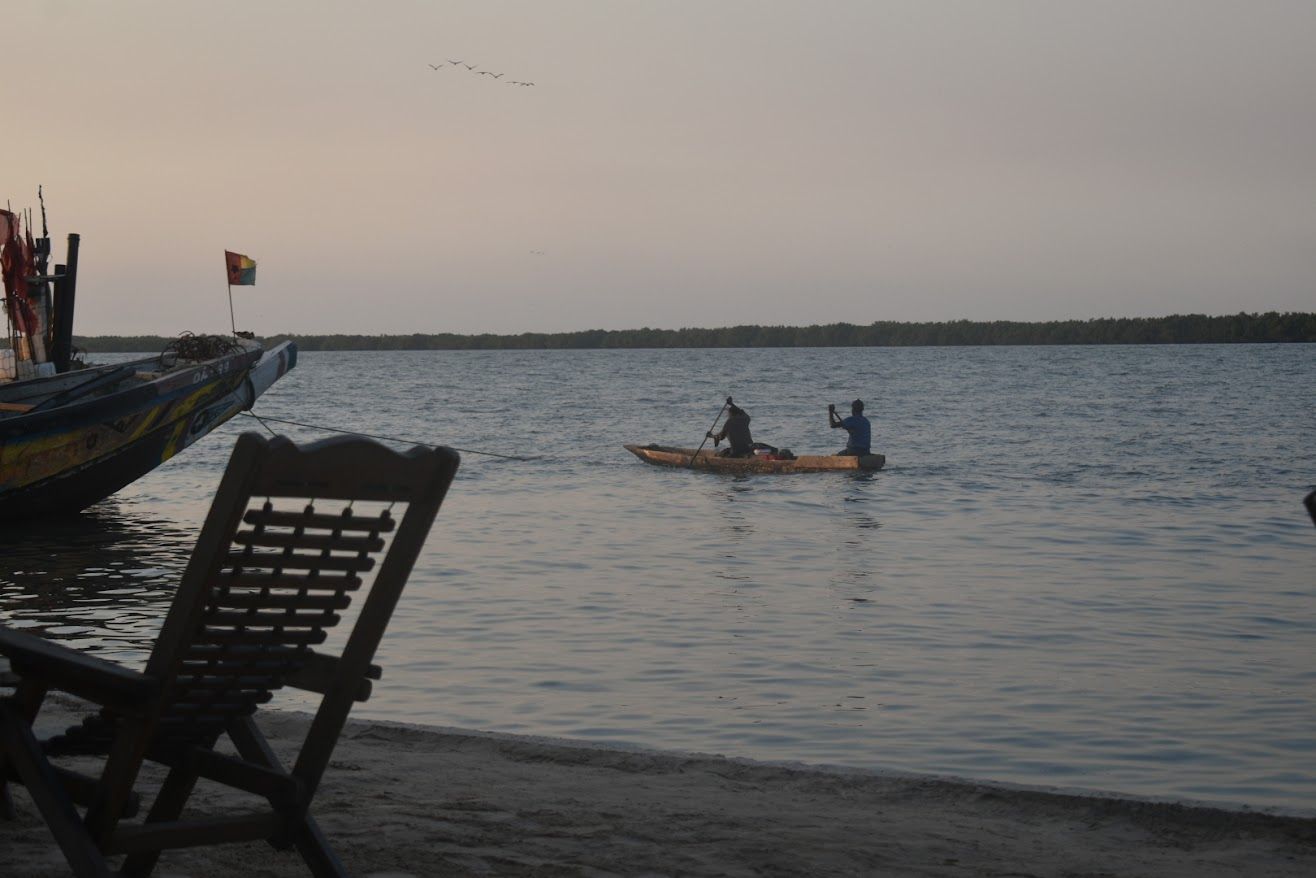
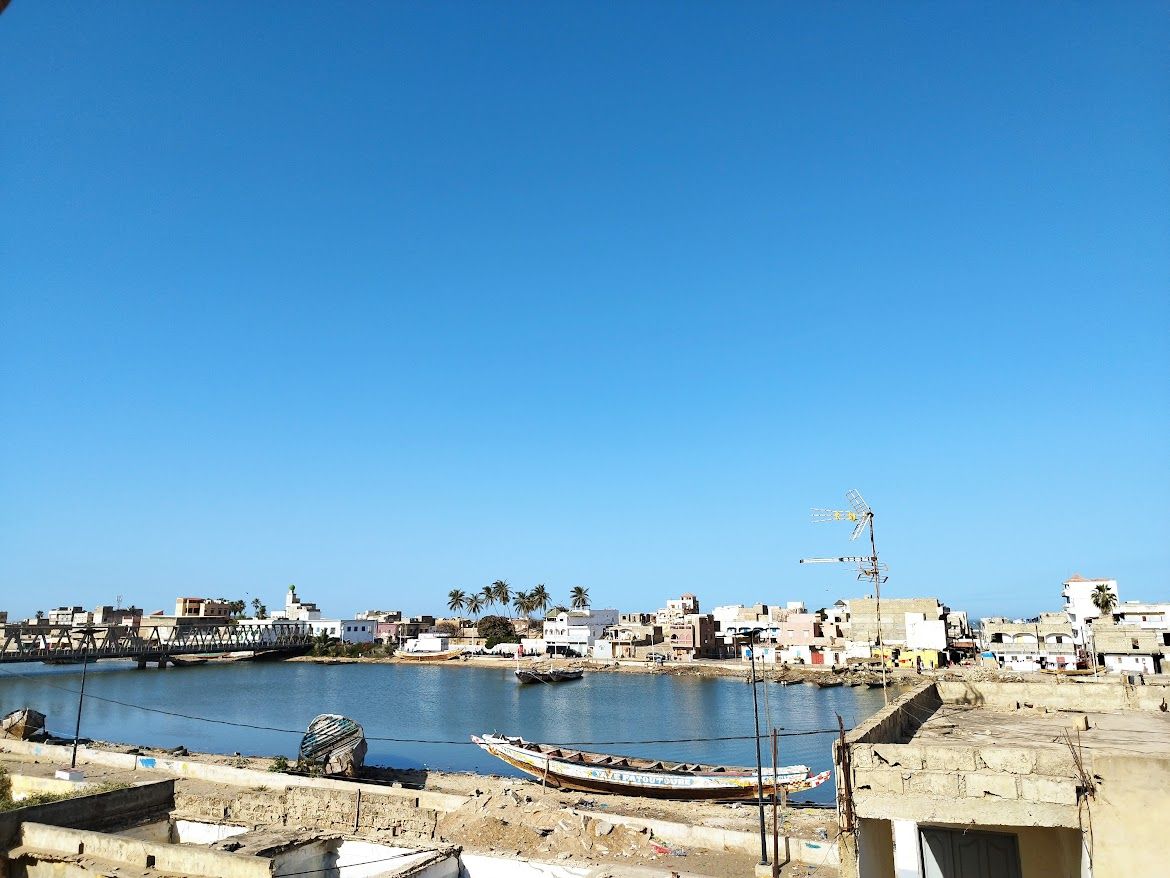
Senegal is a Muslim society, although it is by no means as conservative as Mauritania, which we visited previously. It is good to respect local customs in terms of clothing (it is recommended to wear long, loose-fitting clothes), but any attire is acceptable on the beach, in Dakar, or even in the tourist areas of Casamance (but I always make sure to have a shirt with me if I am wearing a sleeveless top).
Food
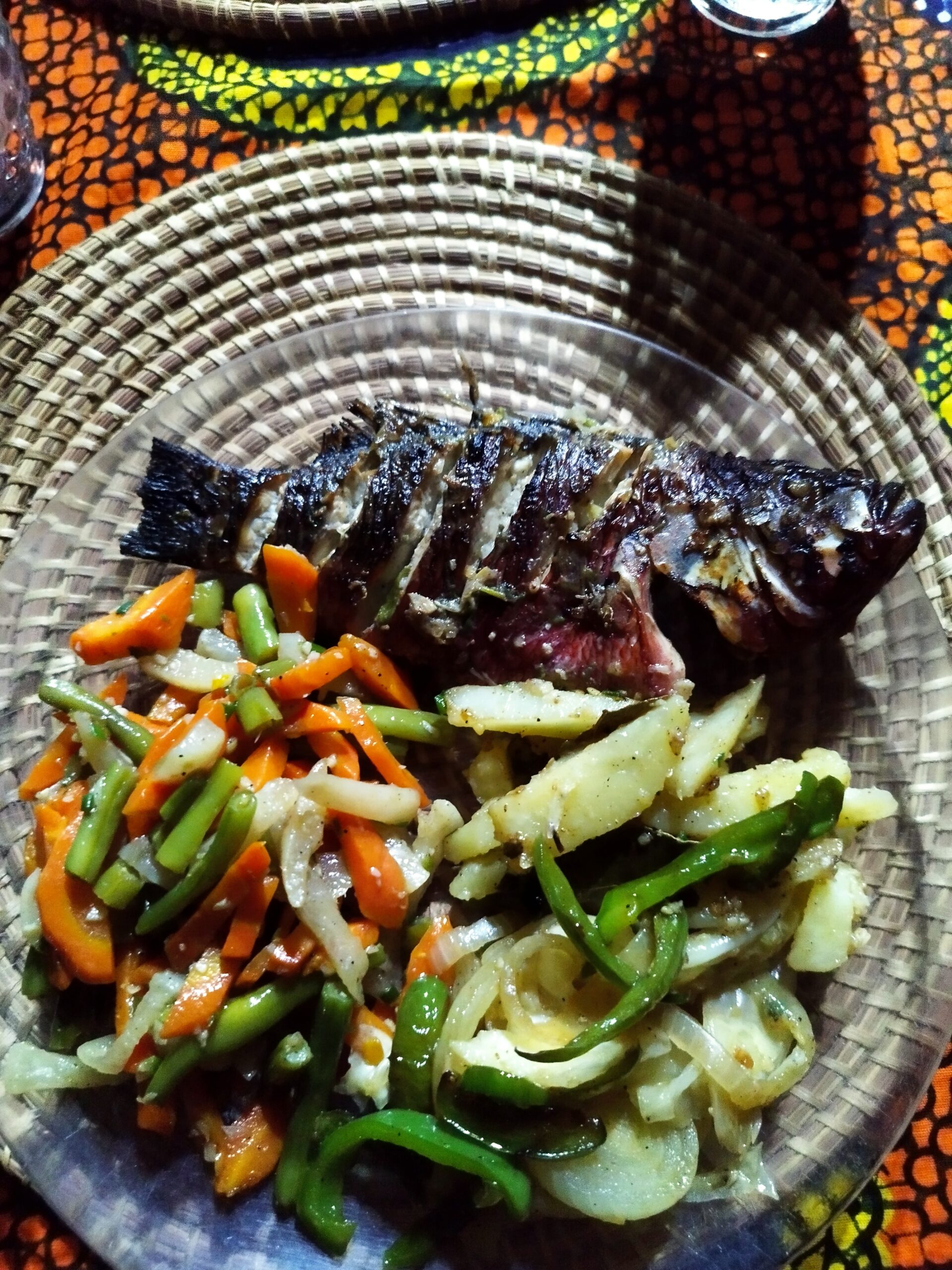
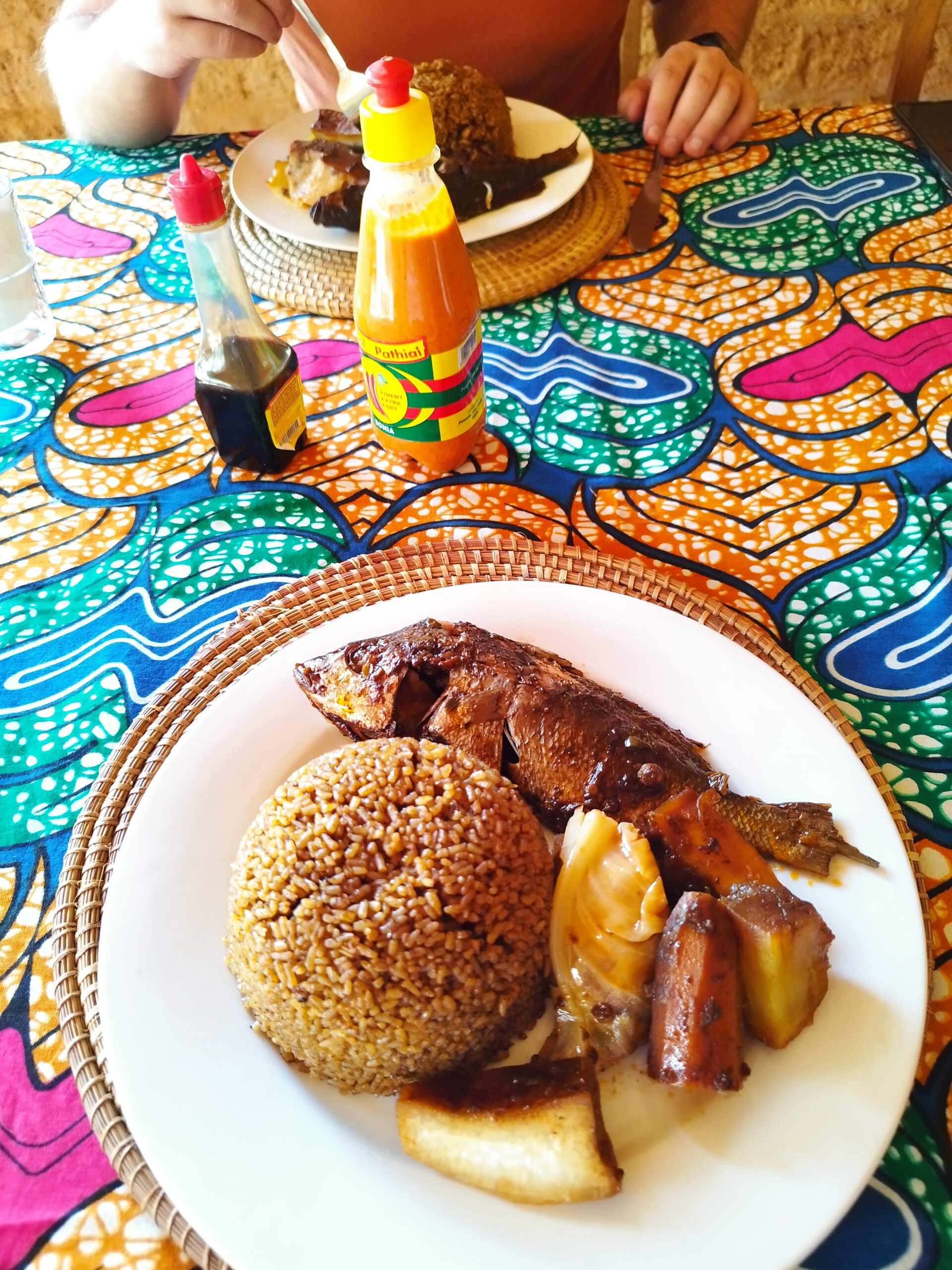
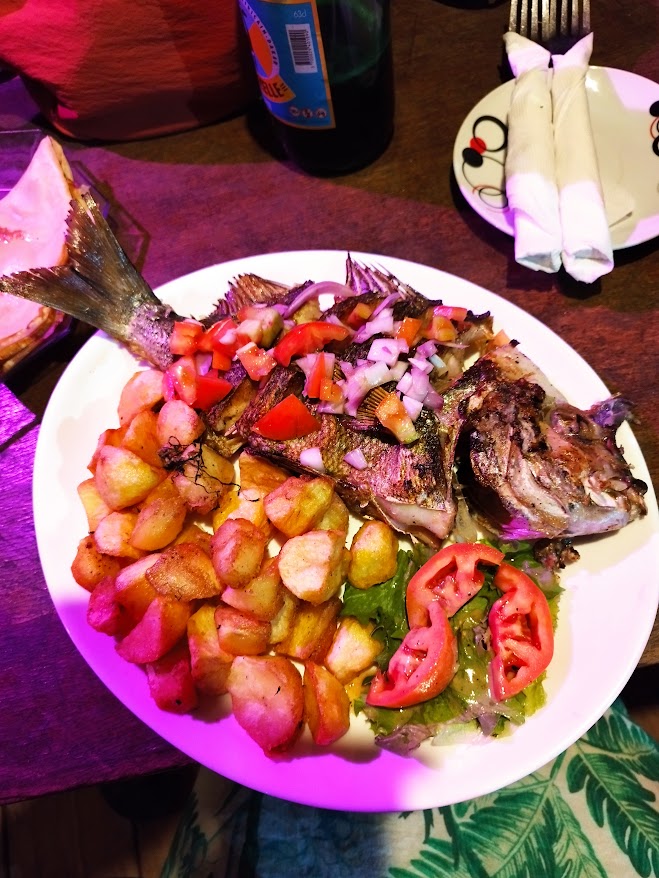
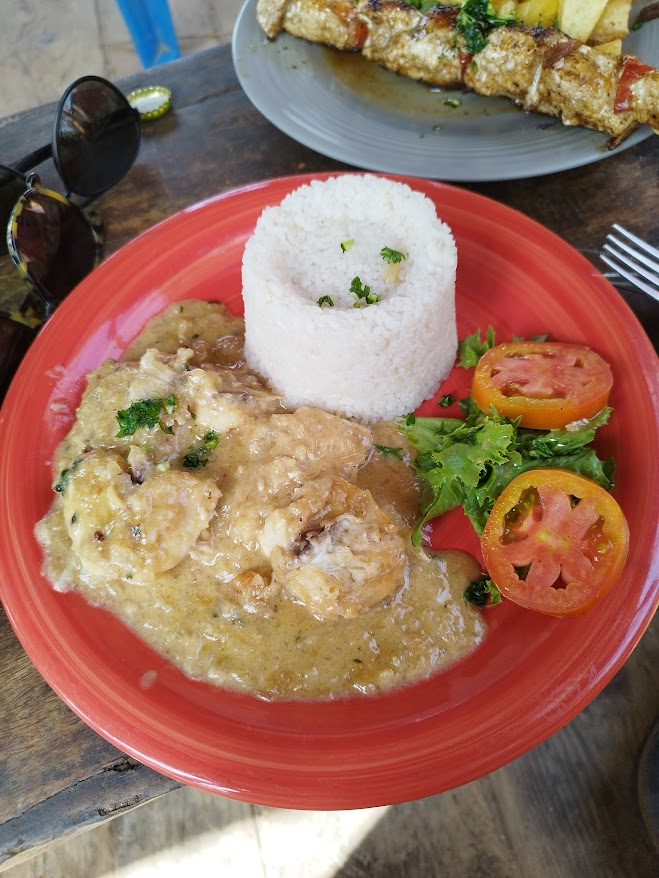
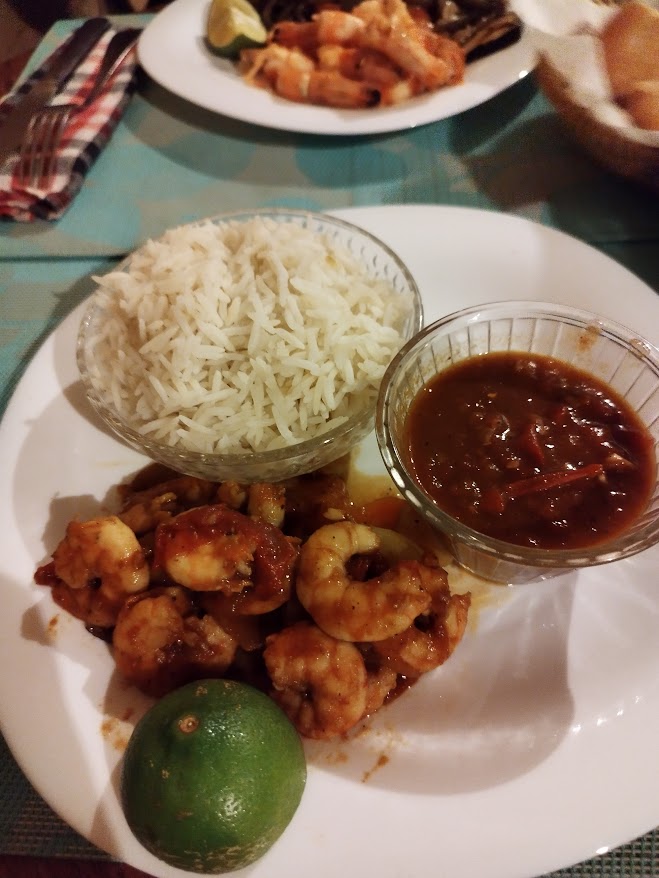
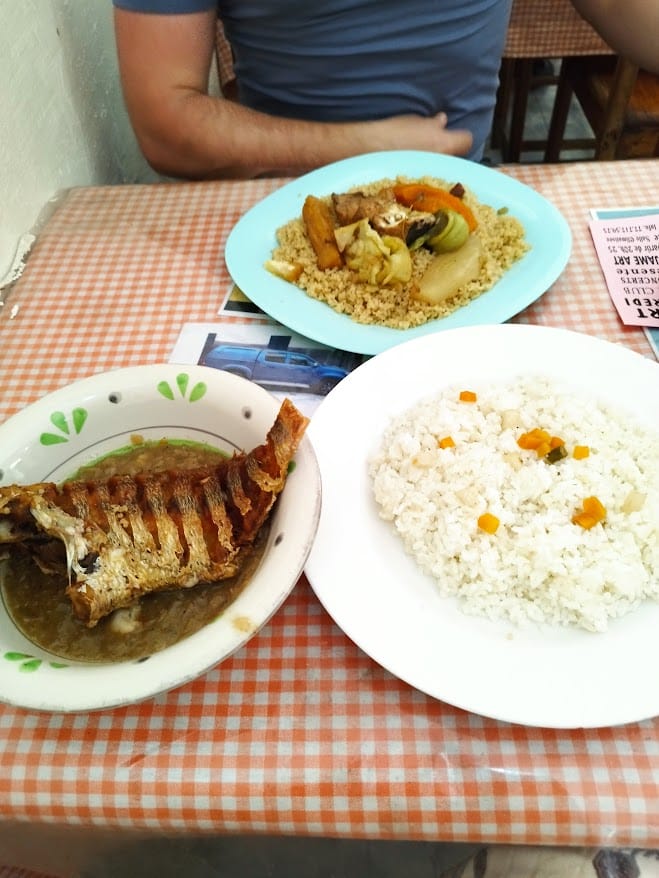
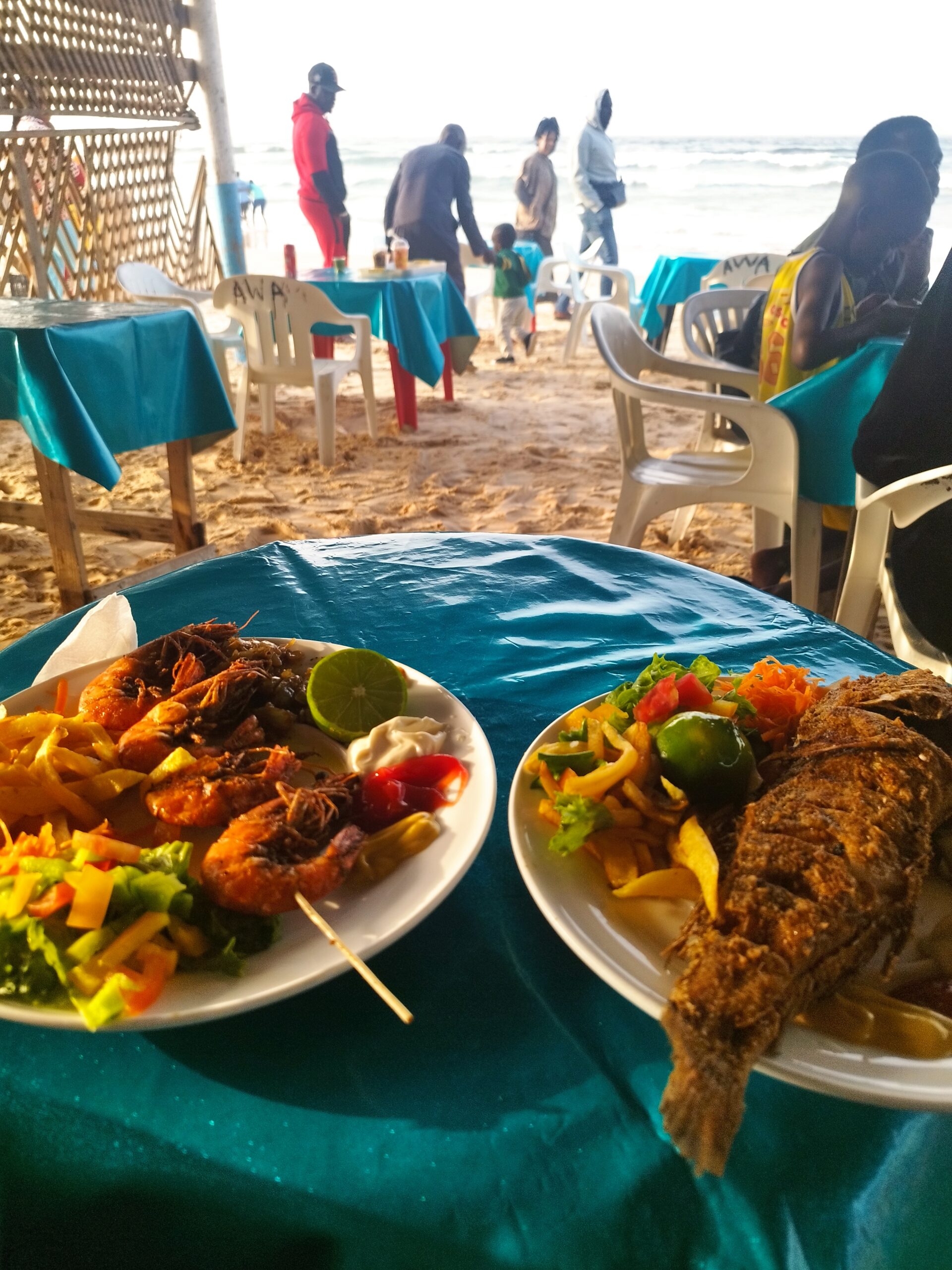
Senegalese cuisine is rich and delicious, based on rice, fish, seafood, and local vegetables. The most famous dish is thieboudienne, which is made with spicy rice and fish, but yassa (chicken or fish with lemon and onions) and mafe (nut or peanut stew) are also popular dishes, often with strong, spicy flavors and rich sauces – we ate these many times, and we really liked them because of their strong flavors. On the beach, you can eat grilled fish and seafood at the stalls and city restaurants for a little more money, but a cheaper option is to buy the daily menu at most restaurants for around 400-1000 Ft. They prepare a different Senegalese specialty every day, often posting the entire week’s selection in advance.
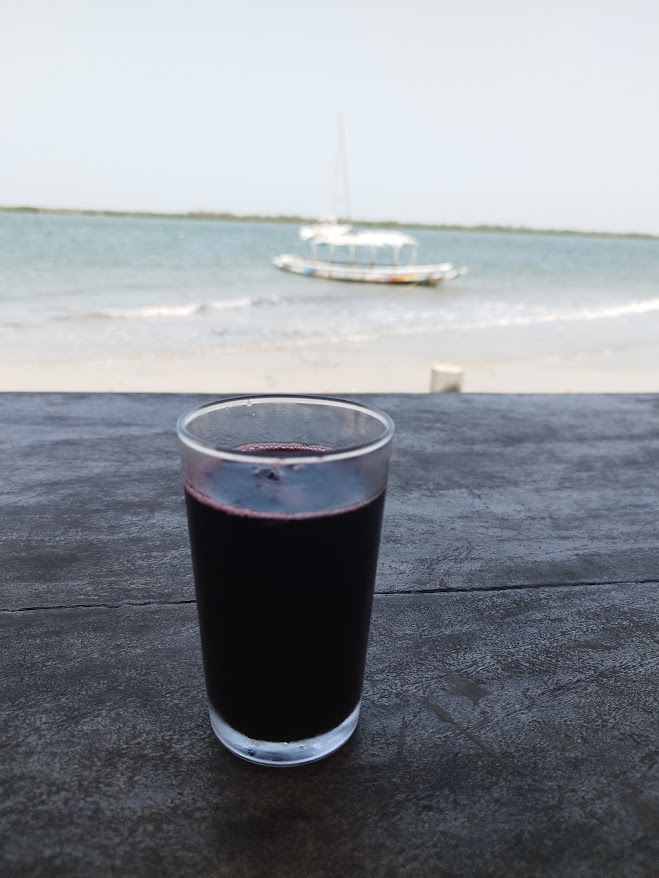
One of the characteristics of coffee consumption in Senegal is “Café Touba,” a strongly spiced coffee flavored with cloves, which is sold on practically every corner, often with a lot of sugar, but we loved it anyway, and it became one of our favorite African coffees. Juice is also very popular, with bissap, or hibiscus, and bouye, or baobab, being the most common, but all kinds of other tropical fruit juices are also sold (often with a little too much sugar).
Safety
Senegal is considered one of the most stable and safest countries in Africa. We saw the most tourists here, mainly in Casamance, where even the remote little villages were full of visitors, mainly French travelers.
Separatist movements have been active in Casamance since 1982, which is why the Hungarian government classified the region as a Level I – not recommended for travel area in February 2023 and 2025. Fortunately, as of December 2025, only a Level II security warning is in effect. In reality, incidents in this area are very rare, and when they do occur, they usually happen in the eastern part of the region (and not against tourists). As a result, Casamance is actually one of the safest parts of the country for travelers. The I classification was particularly annoying for us because many African countries that are currently considered safe by other European governments – and which we also travel through – are still not recommended travel destinations according to the Hungarian classification. In many cases, these travel warnings have not been reviewed for years. This can also have consequences for us: for example, if we fell ill or had an accident in such a place, our travel insurance would not cover the costs – we were most ill in Casamance because we caught some kind of virus in Dakar.
Sights and Experiences – Where we’ve been and What we’ve missed
Dakar
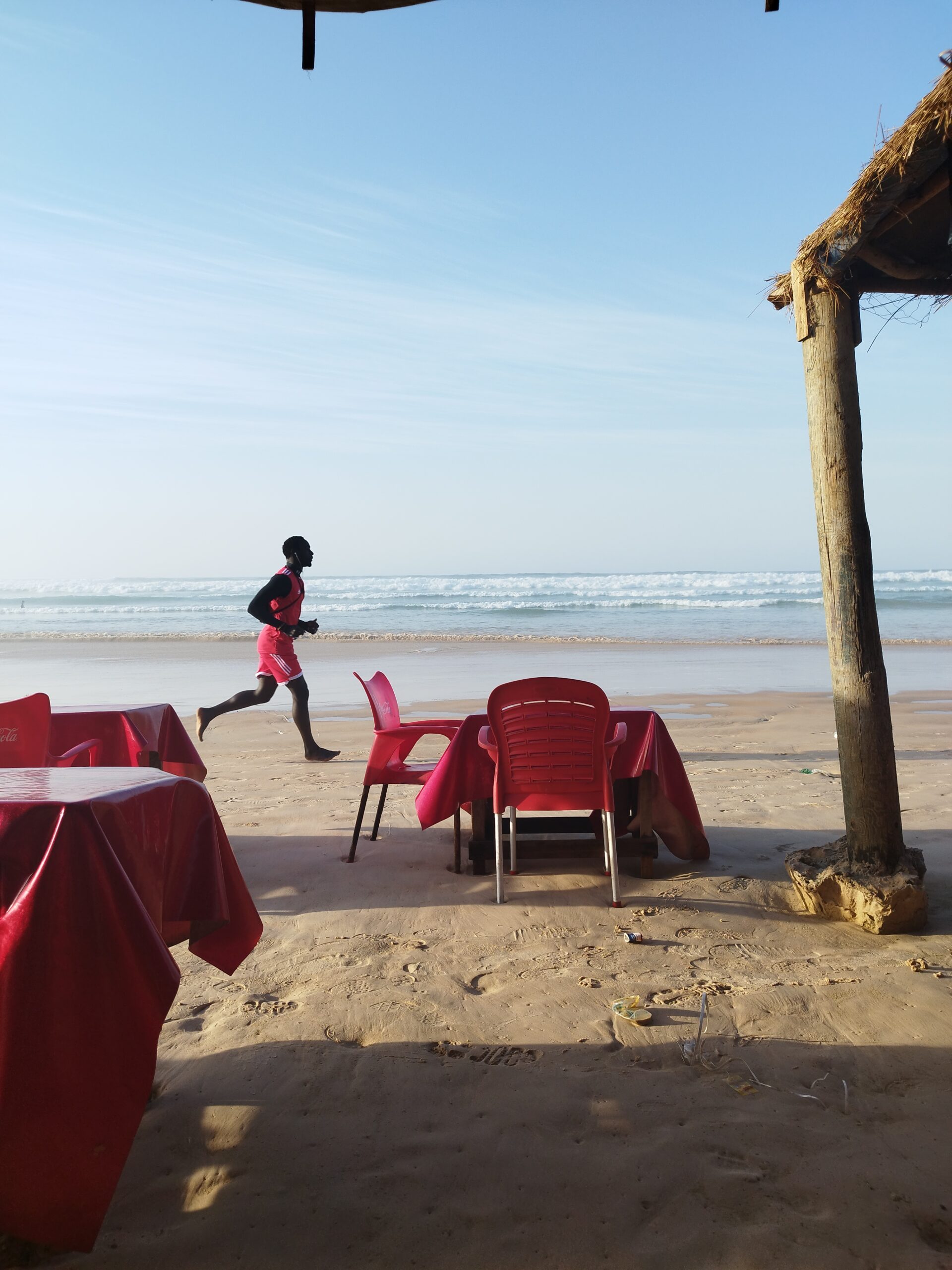
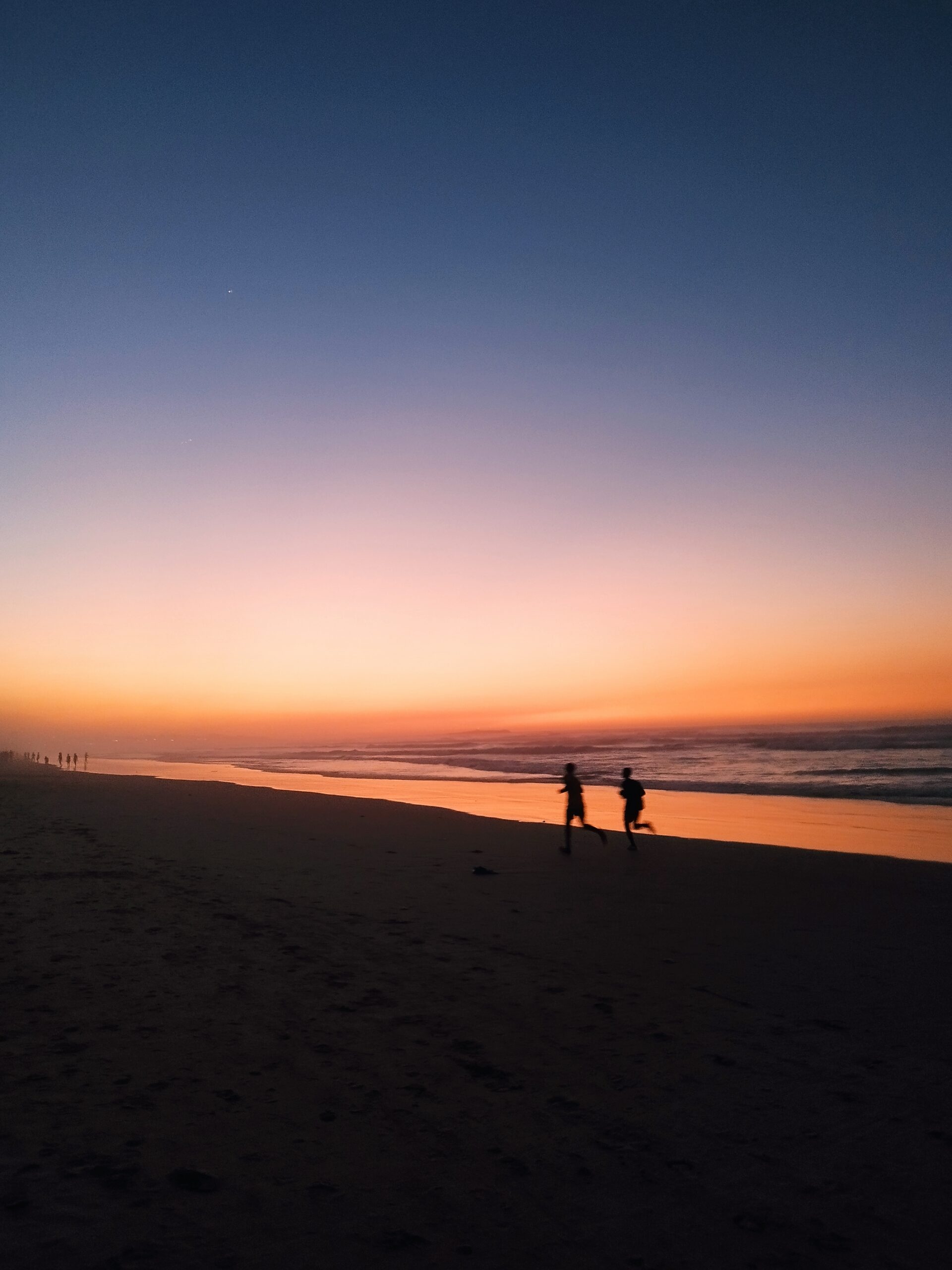
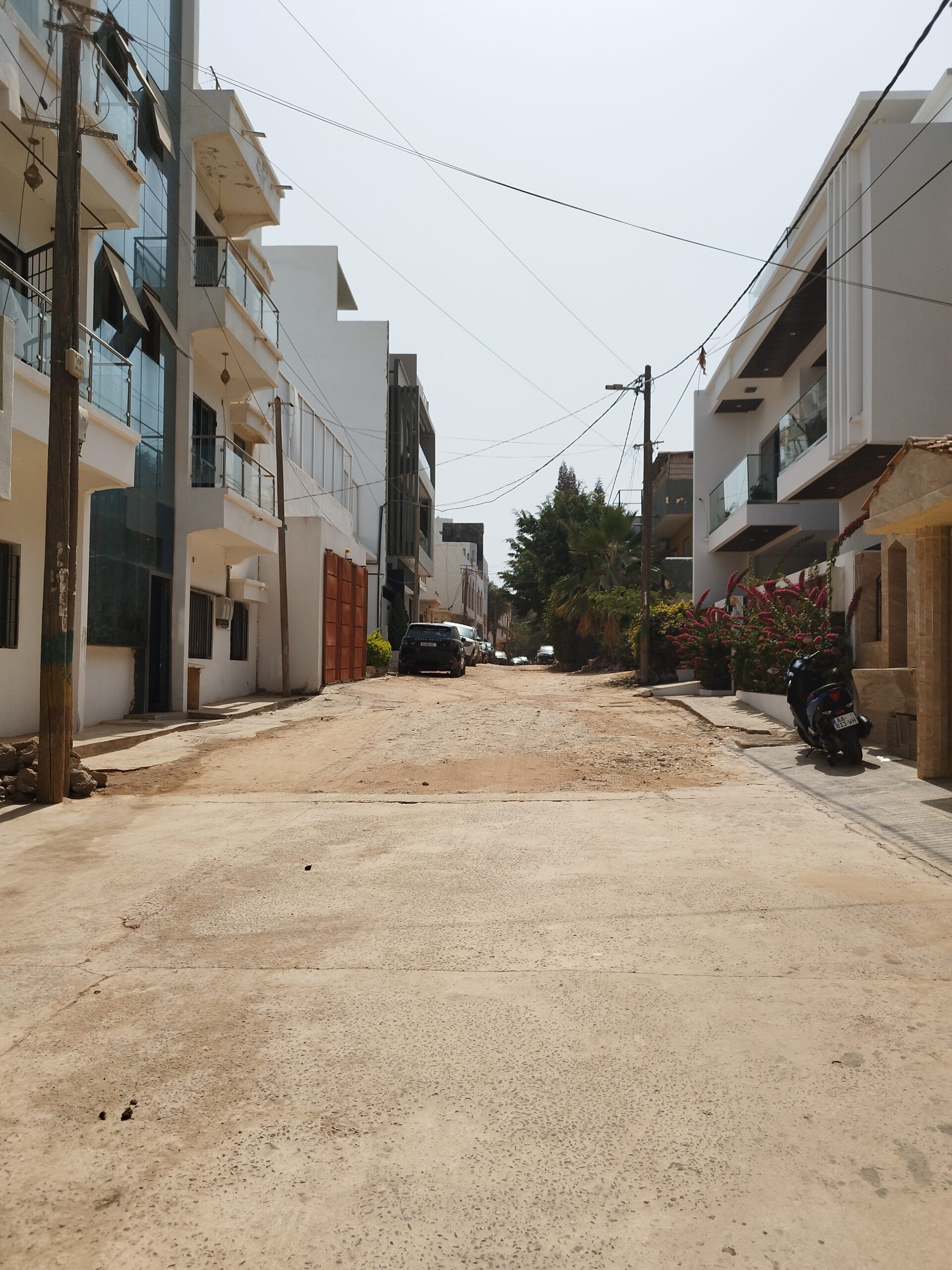
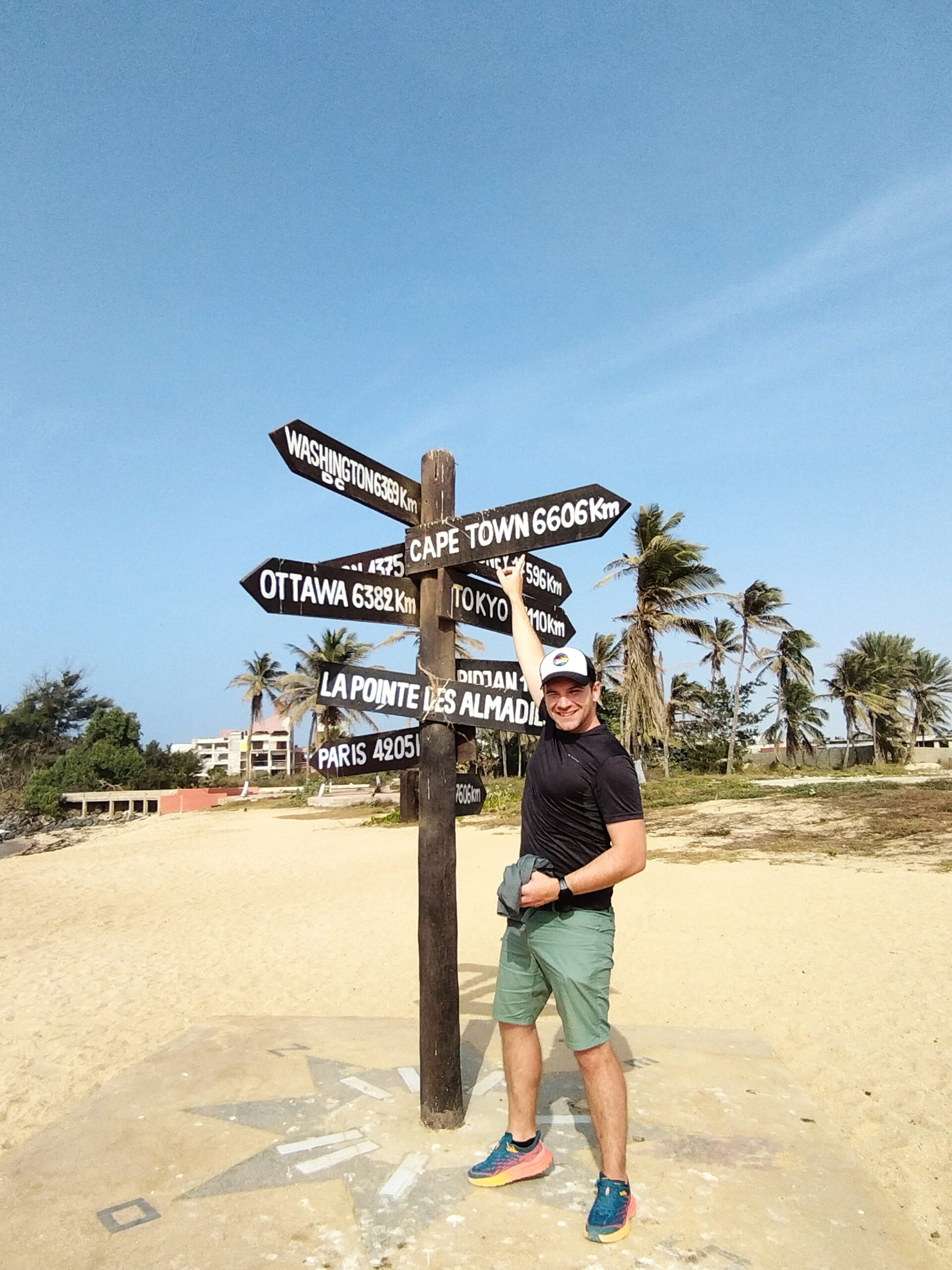
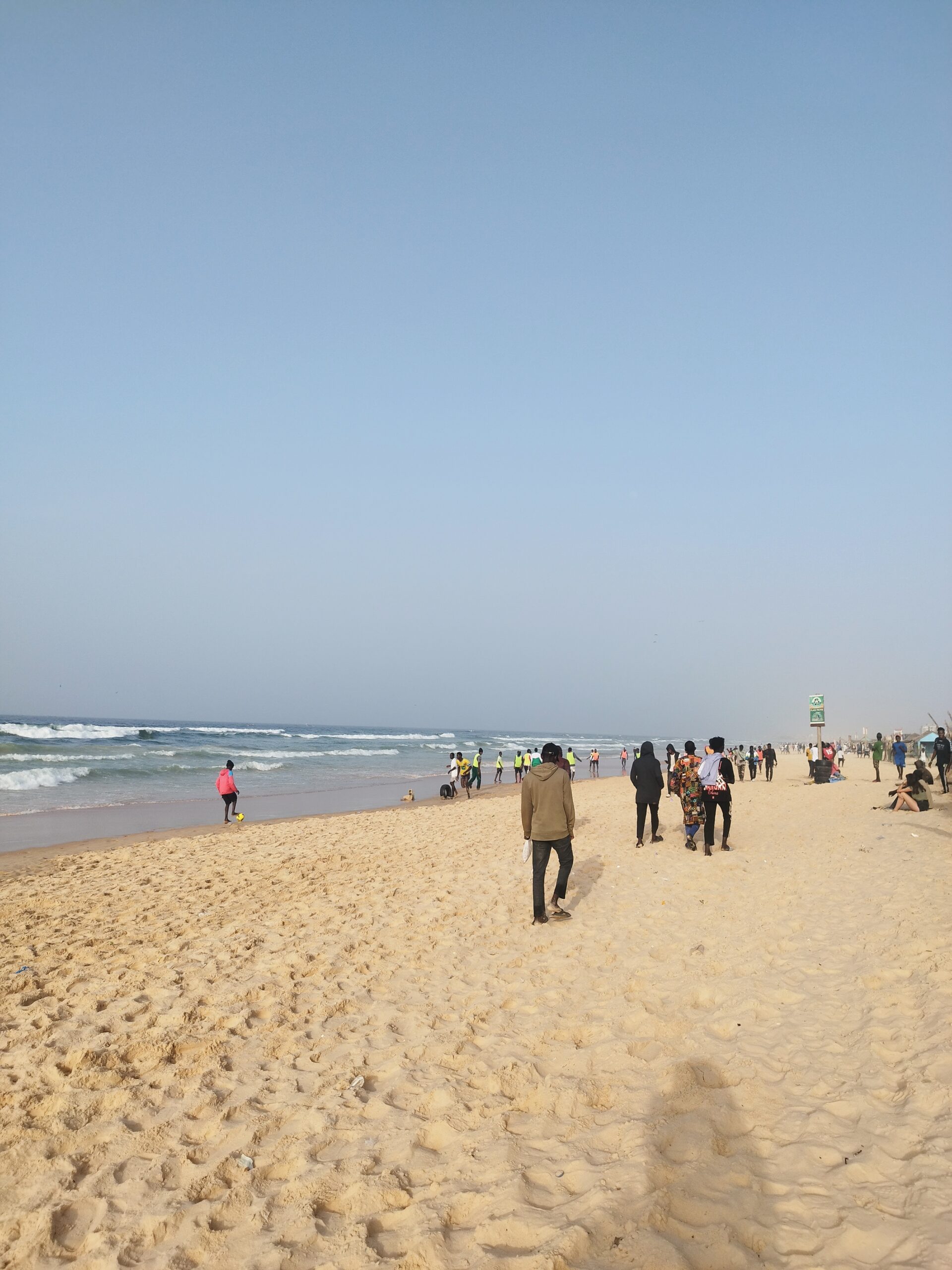
Dakar is the political, economic, and cultural center of Senegal, as well as one of the largest cities in West Africa. The city has a population of approximately 1.2 million, while the total population of the metropolitan area is around 3–4 million, which gives a good idea of its constant hustle and bustle. Dakar is both modern and chaotic: the main roads are often congested, the side streets often turn into spontaneous markets, while some parts of the peninsula are particularly quiet and affluent. It is not a classic “sightseeing” destination, but rather an interesting place because of its everyday life and urban atmosphere. One of the most important features of the city is its proximity to the ocean. The long coastline is bustling with life in the morning and evening: athletes, families out for a stroll, and street vendors appear, and the beach is a natural space for community life. The Yoff district is particularly exciting, where the traditional, somewhat chaotic African atmosphere is still strongly felt, and where charcoal-grilled fish and spicy-sour mango snacks are part of everyday life. The westernmost point of Africa, Pointe des Almadies, is also located here. Overall, Dakar is a lively, contrasting city that showcases the urban, modern face of Senegal – in sharp contrast to the country’s more peaceful rural areas.
The island of Ilée de Ngor, a popular surfing spot, is easily accessible by ferry from Dakar (we haven’t been there yet).
Île de Gorée
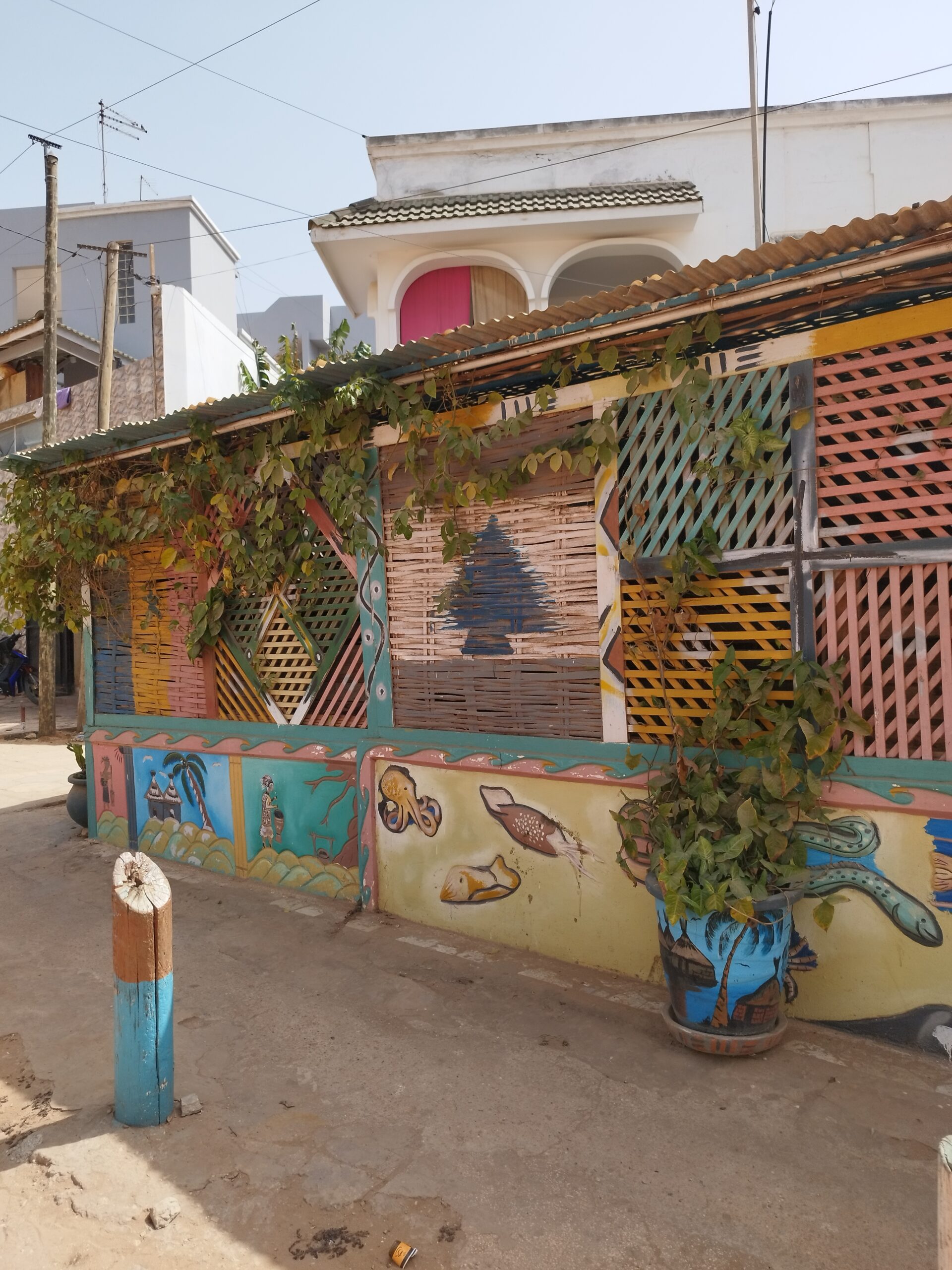
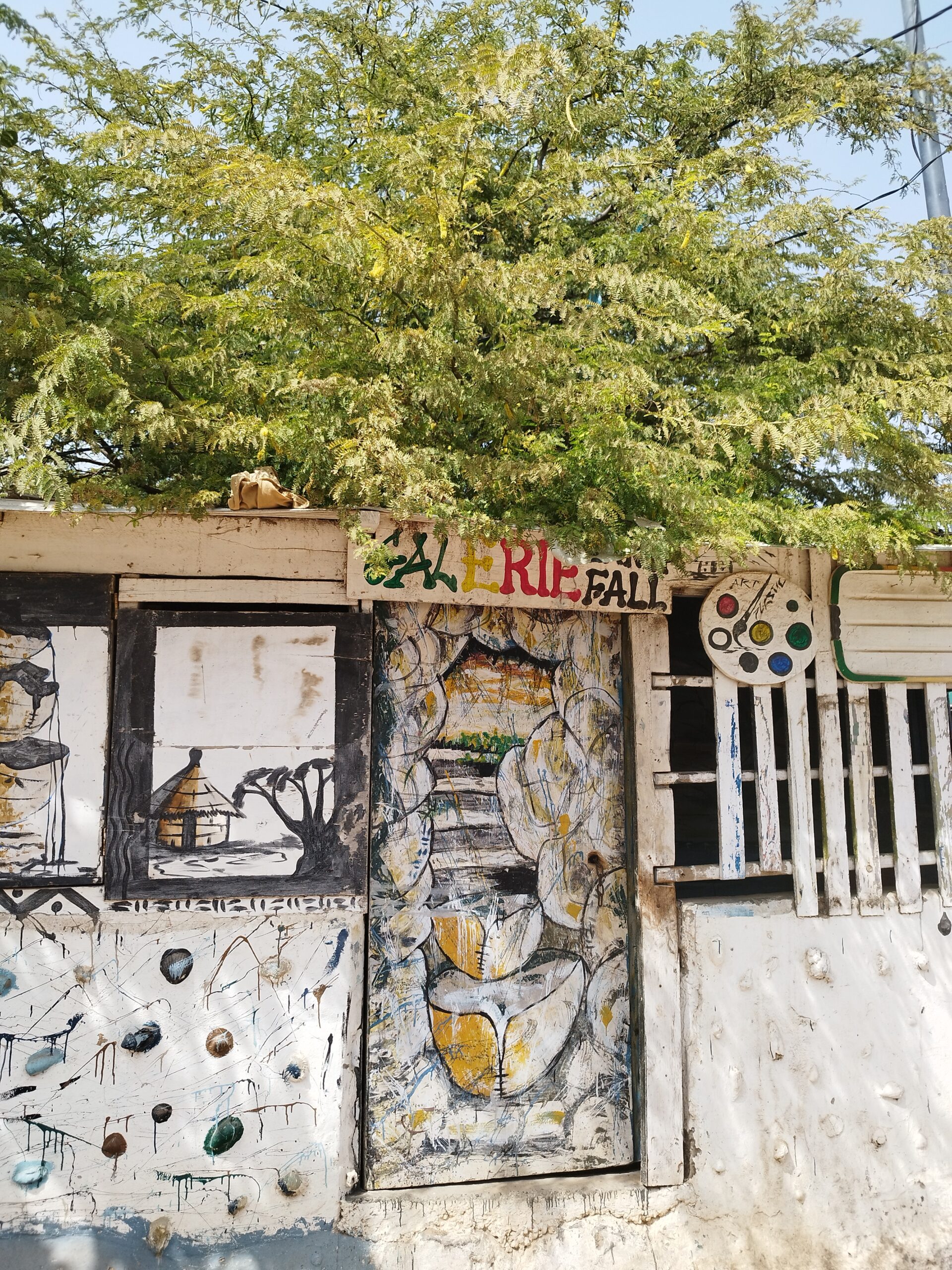
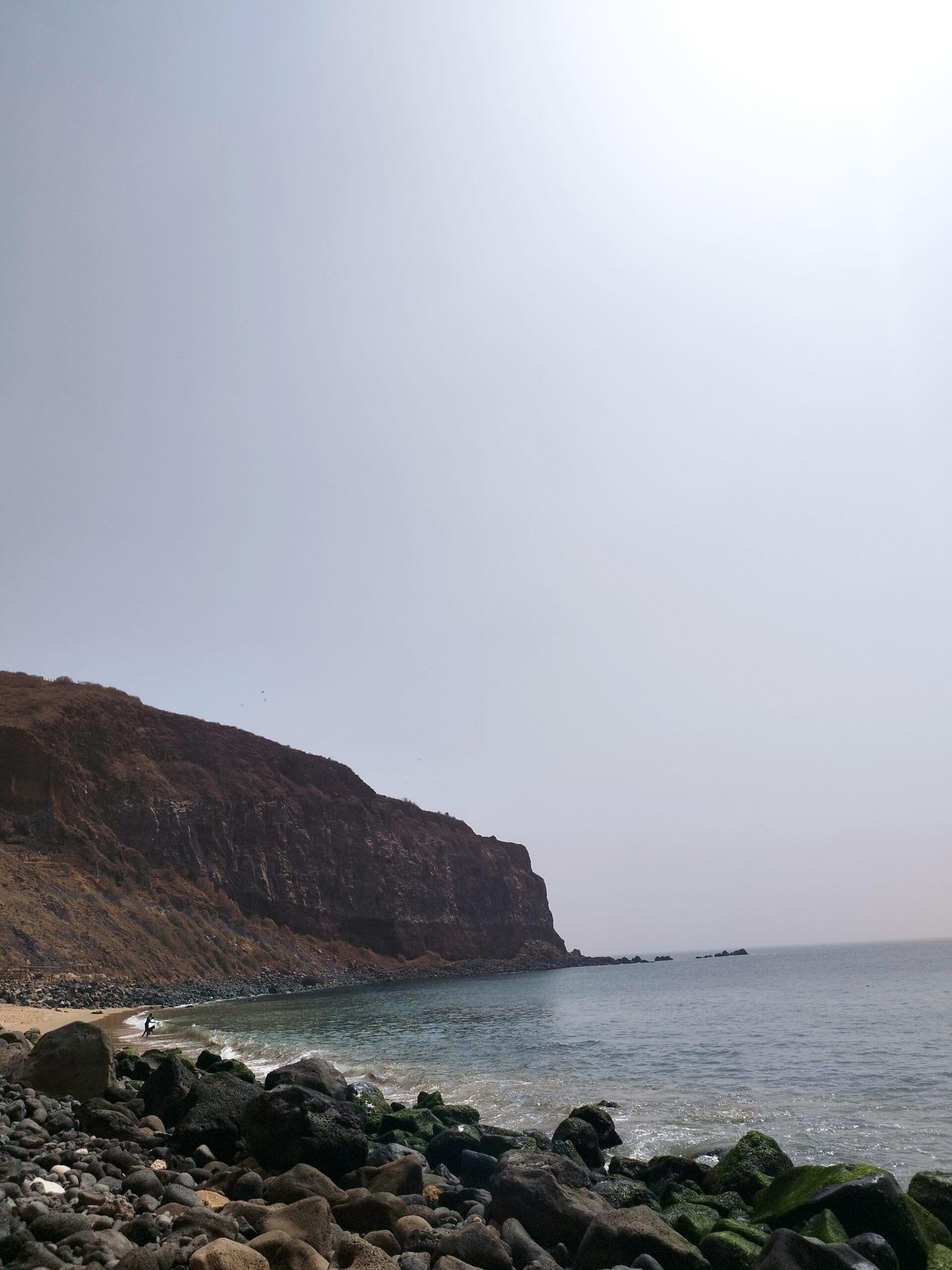
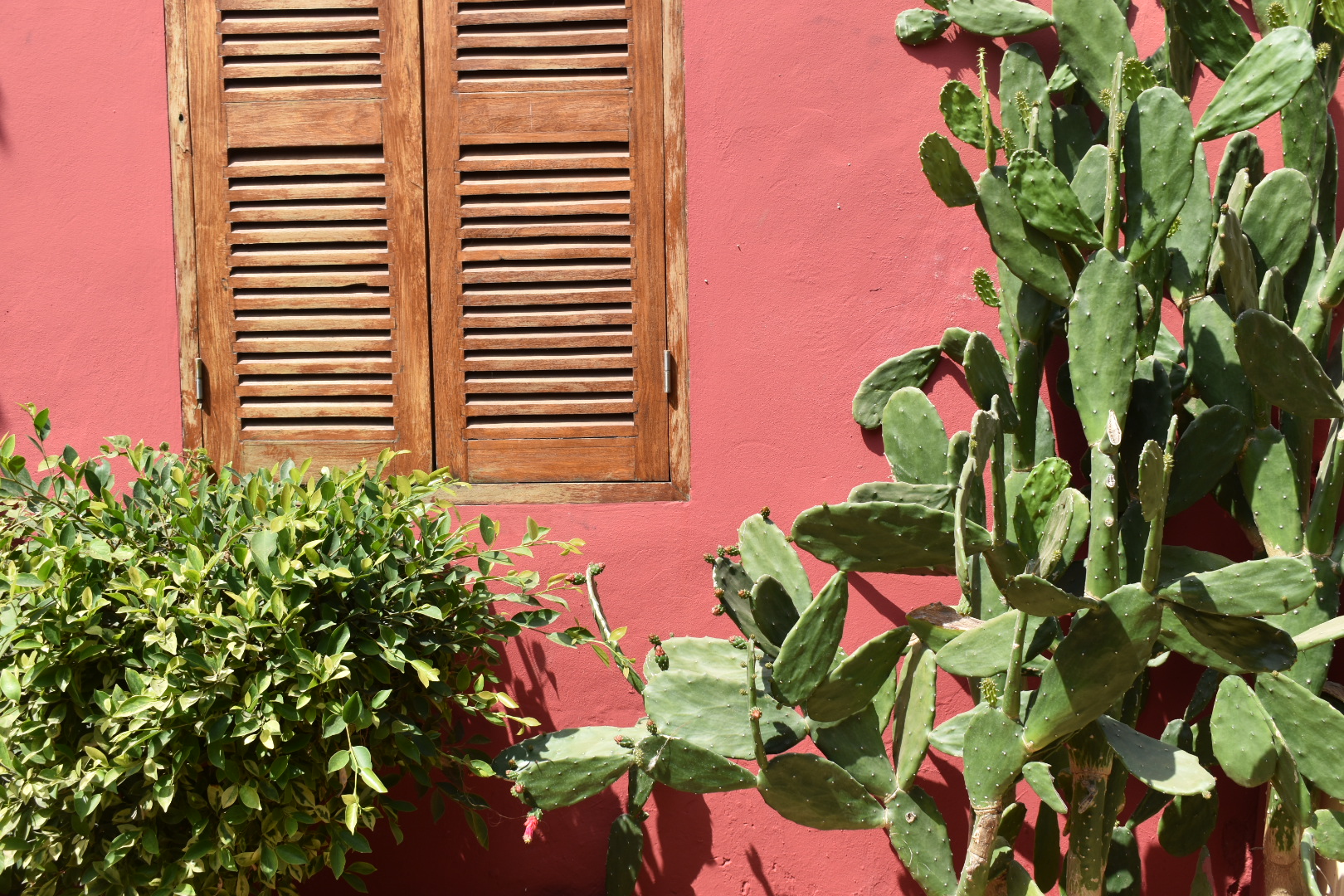
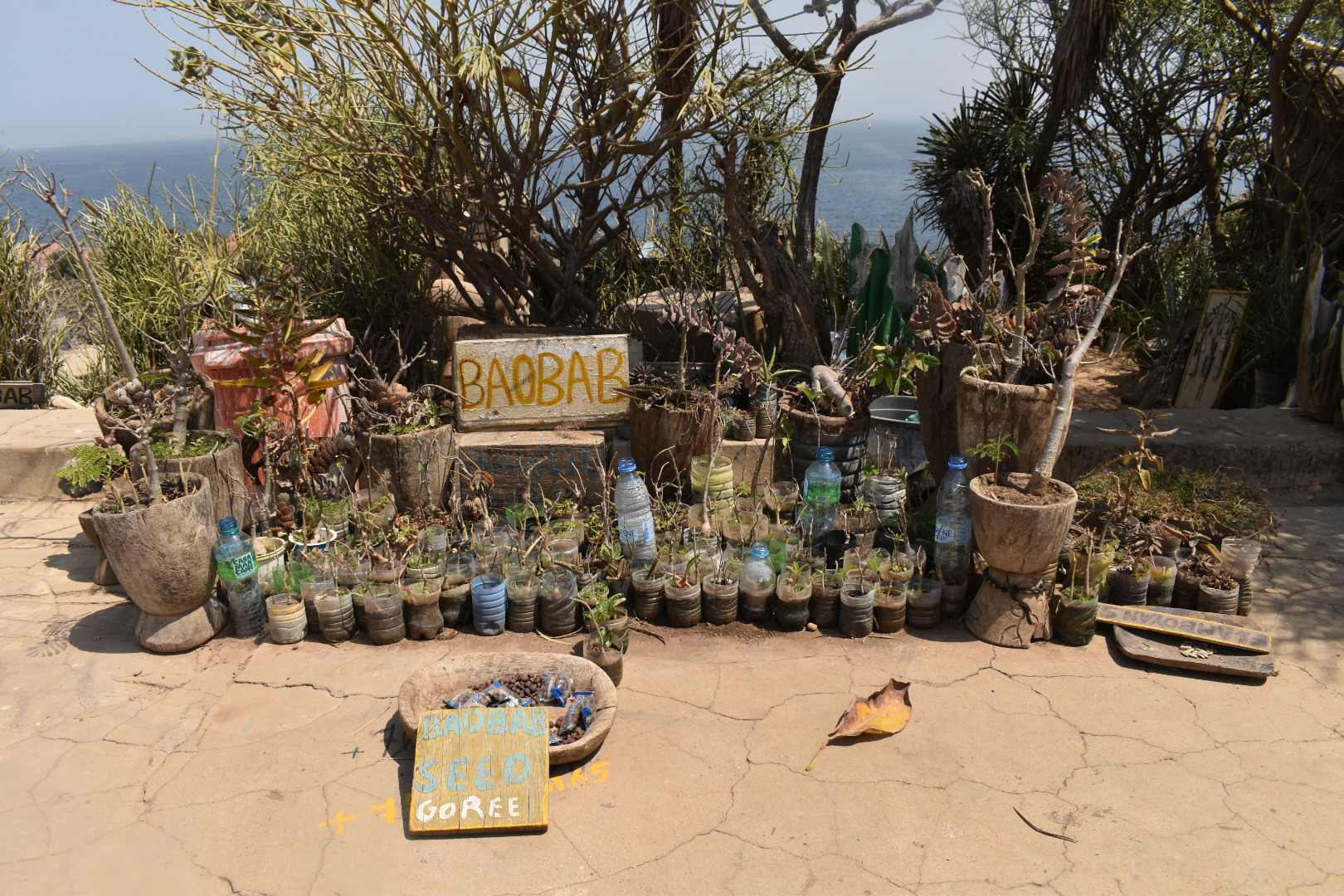
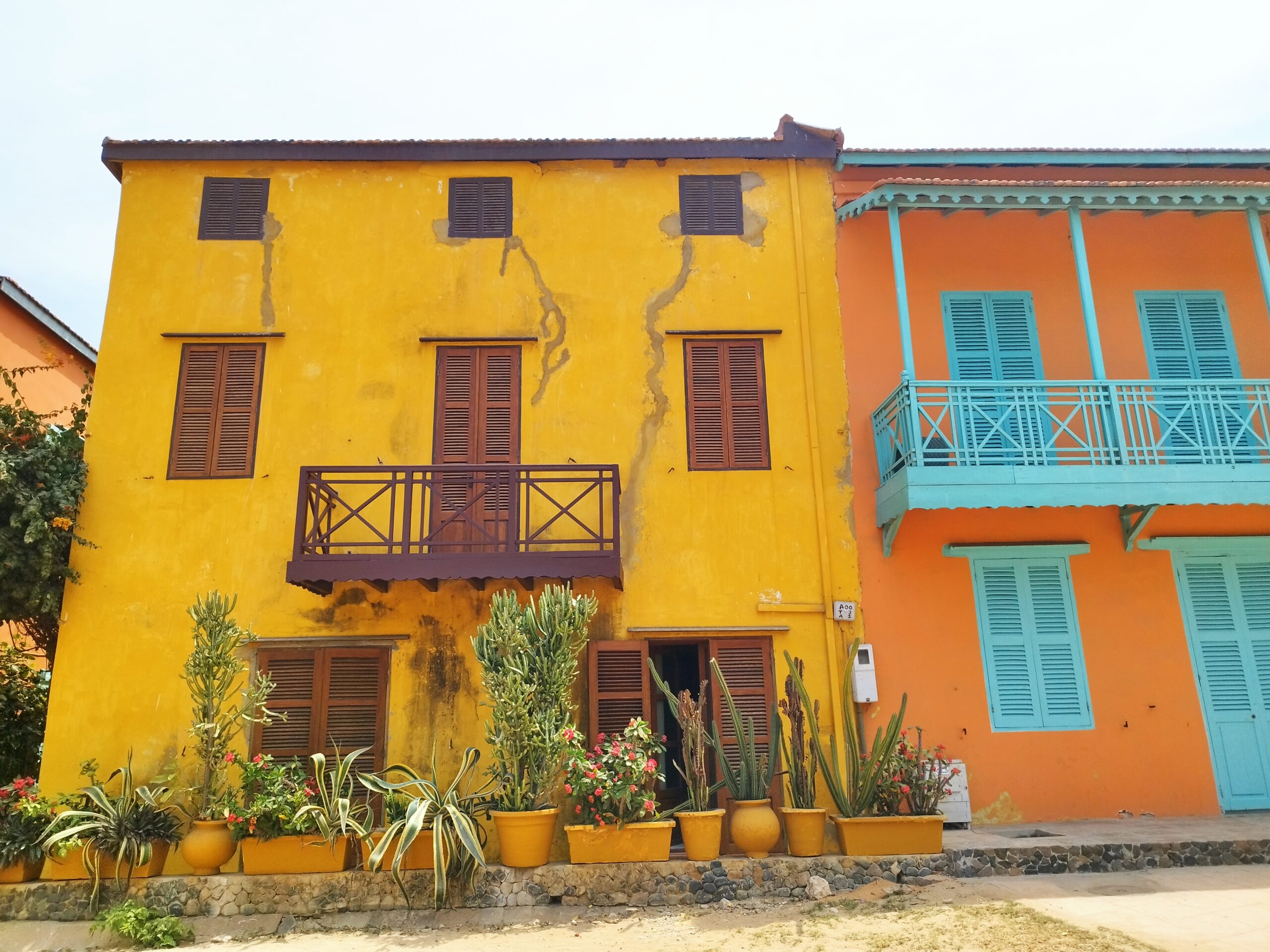
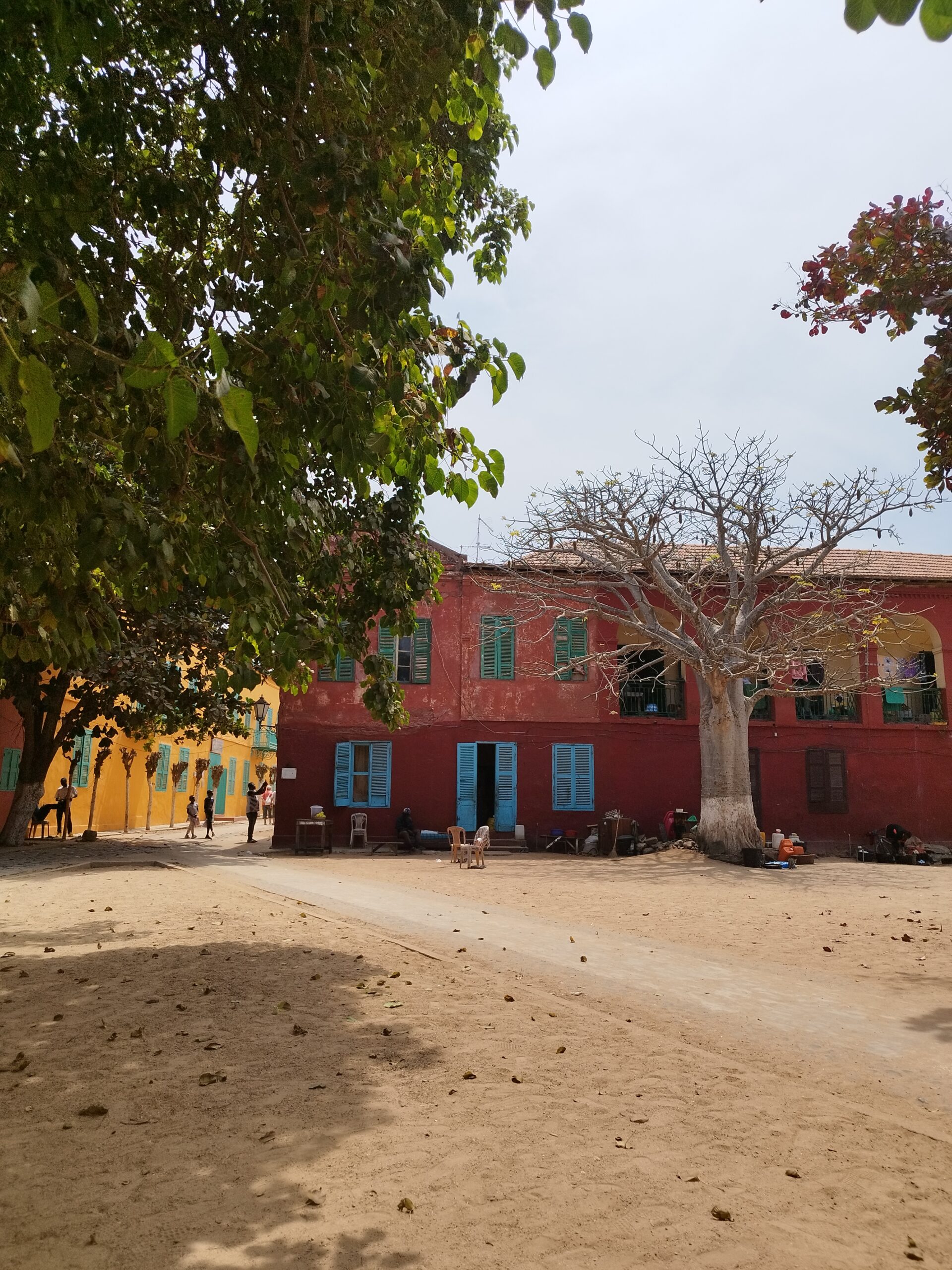
Île de Gorée is a car-free island measuring only approximately 900 × 300 meters, located about 3 km off the coast of Dakar. Today, approximately 1,000–1,500 people live here, mainly from fishing, tourism, and handicrafts. It has been a UNESCO World Heritage Site since 1978. The island’s most important memorial site is the Maison des Esclaves, which is linked to the transatlantic slave trade and became known worldwide through the “Door of No Return.” Although historians dispute exactly how many slaves were taken directly from Gorée, the place is now a symbolic memorial center for all of West Africa. The atmosphere of Gorée is in stark contrast to Dakar: quiet streets, colorful houses, small galleries, and cafes characterize it. It is typically a half-day trip, accessible by ferry from Dakar. The whole island is very touristy, but the people are friendly, and we had a delicious meal at a restaurant near the beach that was geared more towards tourists, at a similar price to anywhere else.
Mar Lodj és a Sine-Saloumn Delta
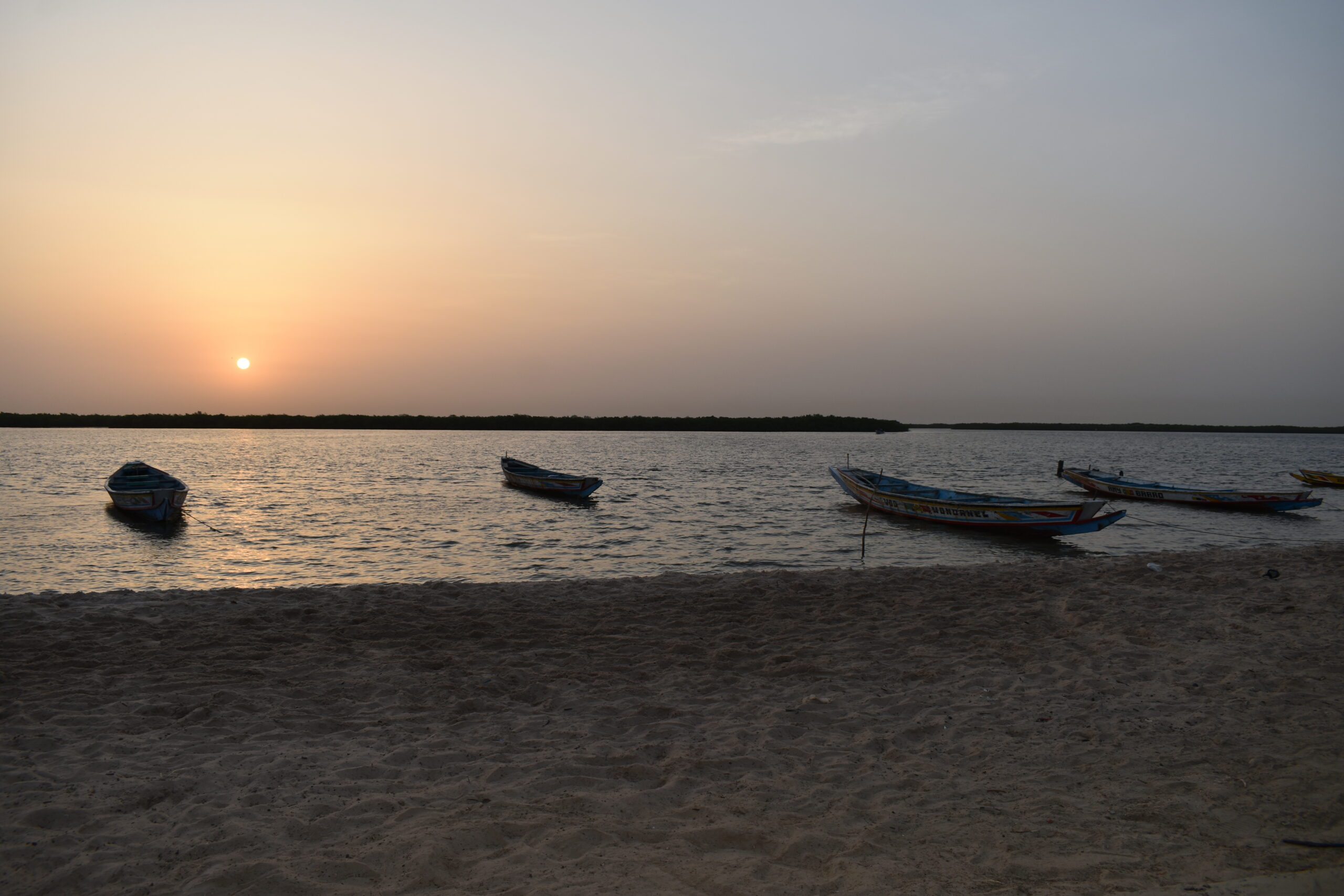
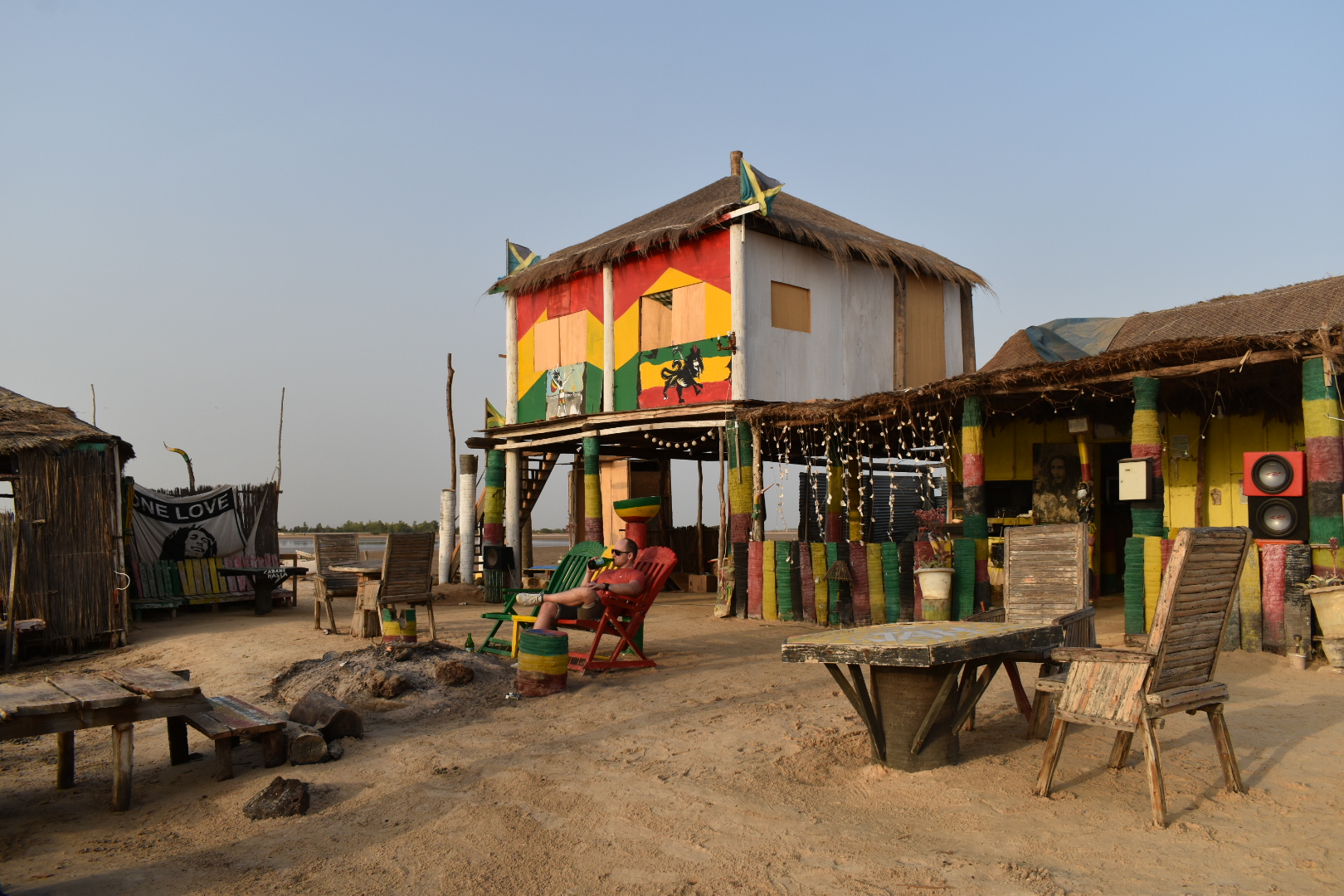
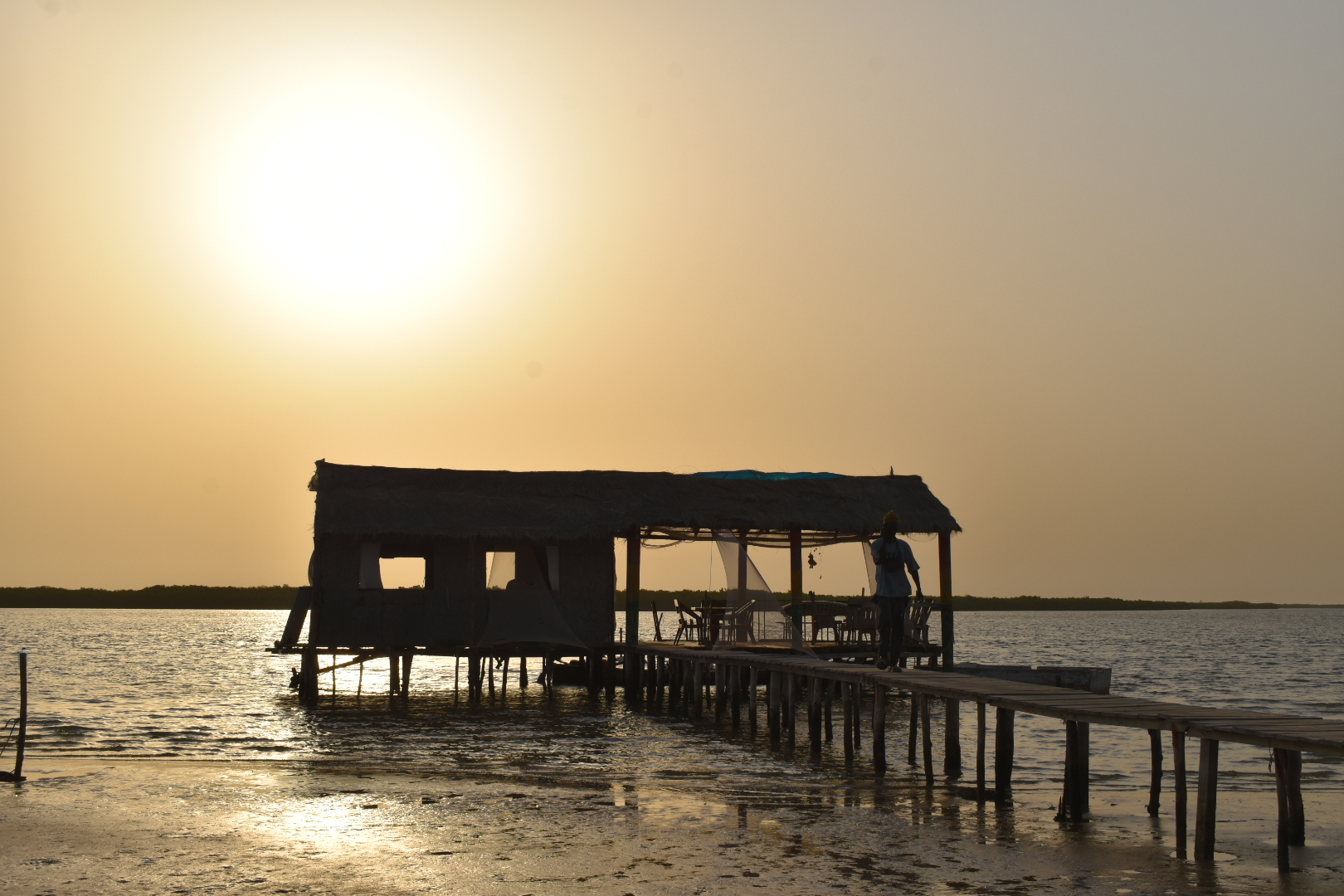
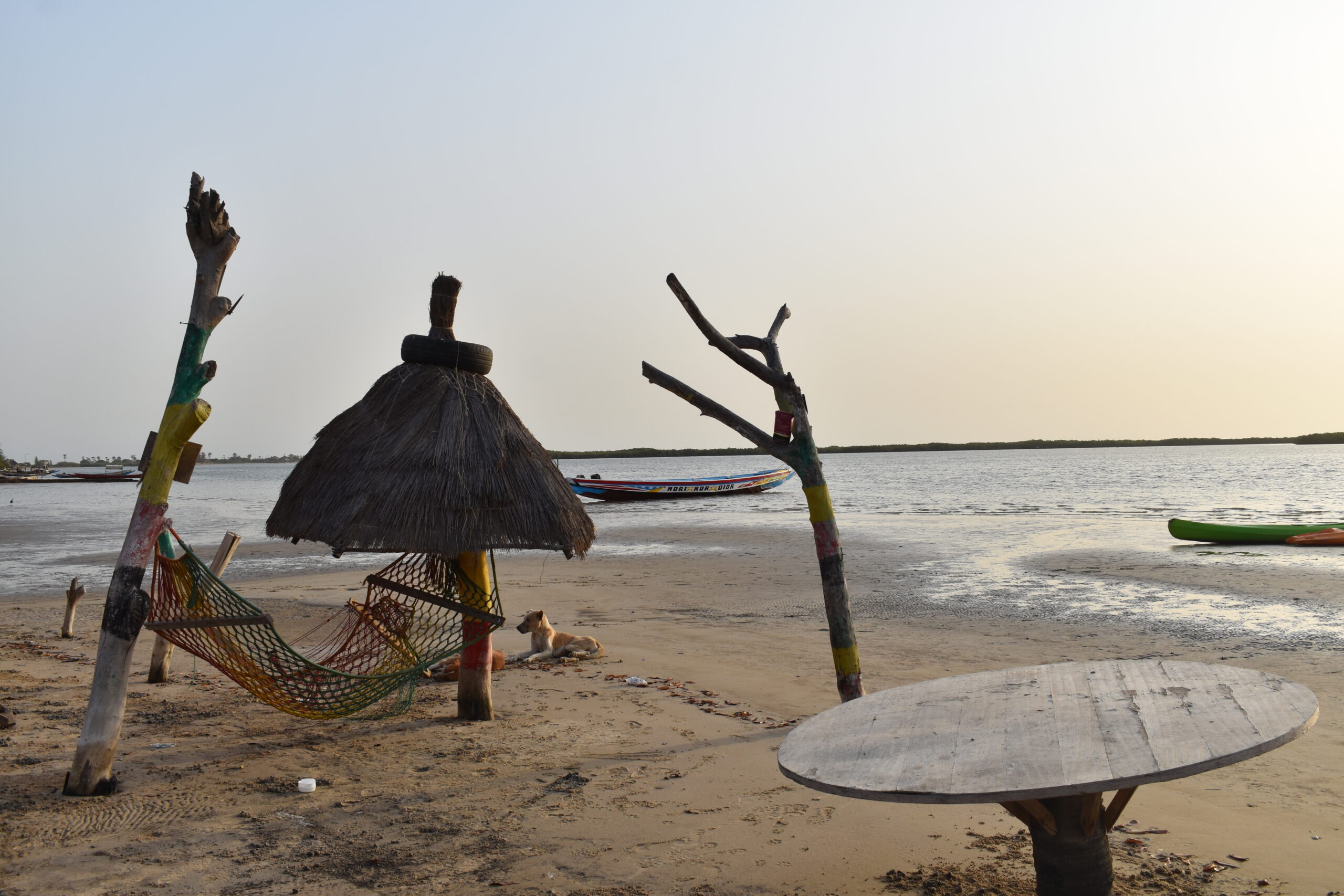
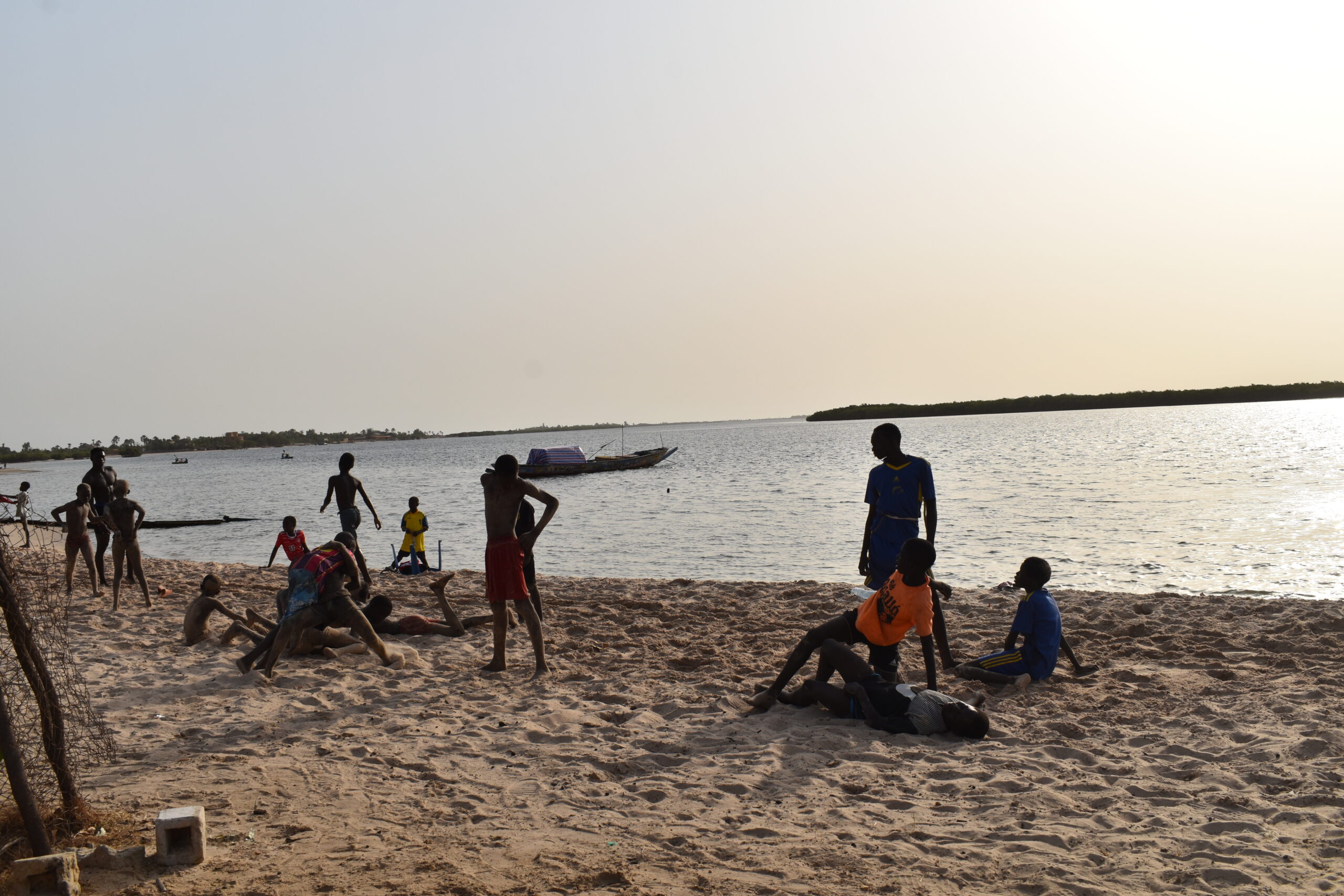
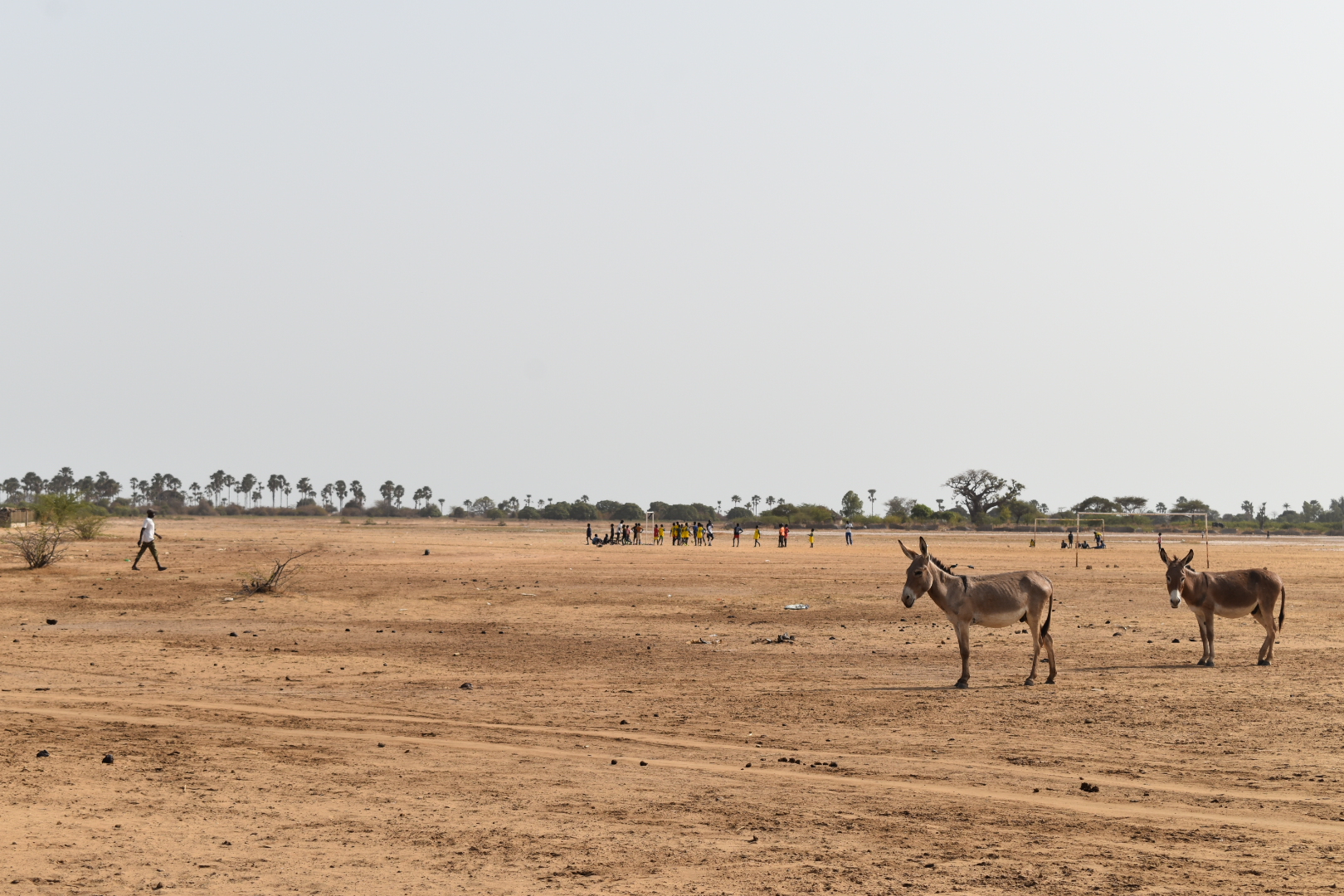
Mar Lodj is a tiny island village in the Sine-Saloum Delta, one of Senegal’s most unique natural regions. The delta is a UNESCO biosphere reserve, where saltwater river branches, mangrove forests, and small islands form a complex aquatic world. It can be reached by boat, and we stayed in a small, family-run accommodation where they always cooked for us in the evening. We were served grilled fish and chicken – by far the most delicious food we ate in Senegal – and once we even had thieboudienne. We spent most of our days walking around the three villages (but it was very hot), then kayaking among the mangroves. In the afternoon, we joined the locals playing soccer, and in the evening we watched the children’s traditional wrestling or drank a beer in the relaxed atmosphere of the Rasta bar. For us, Mar Lodj was about slowing down, people, and simple but memorable experiences.
There are several other villages in the delta that are worth visiting, such as Palmerine and Toubacouta.
Toubab Dialow
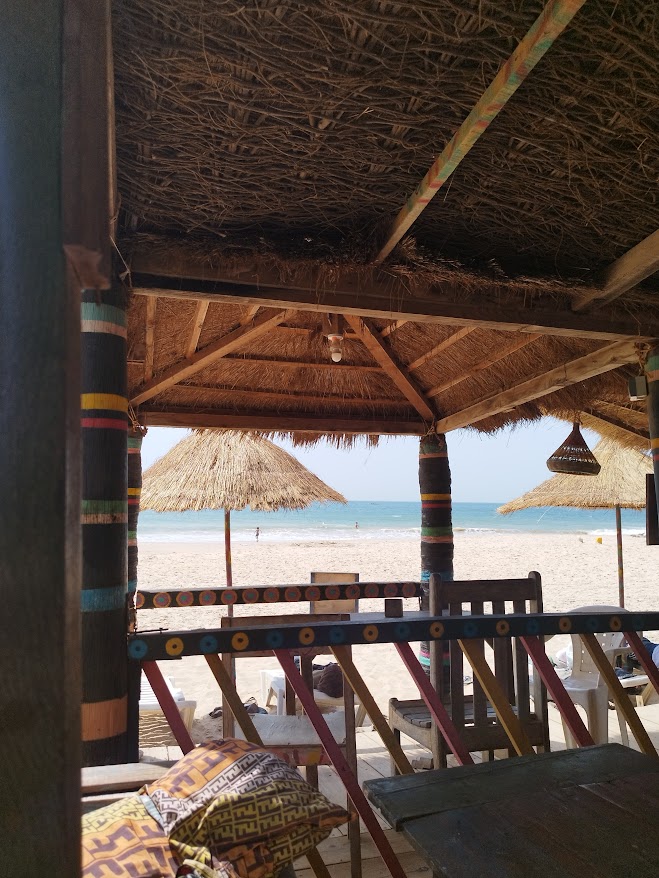
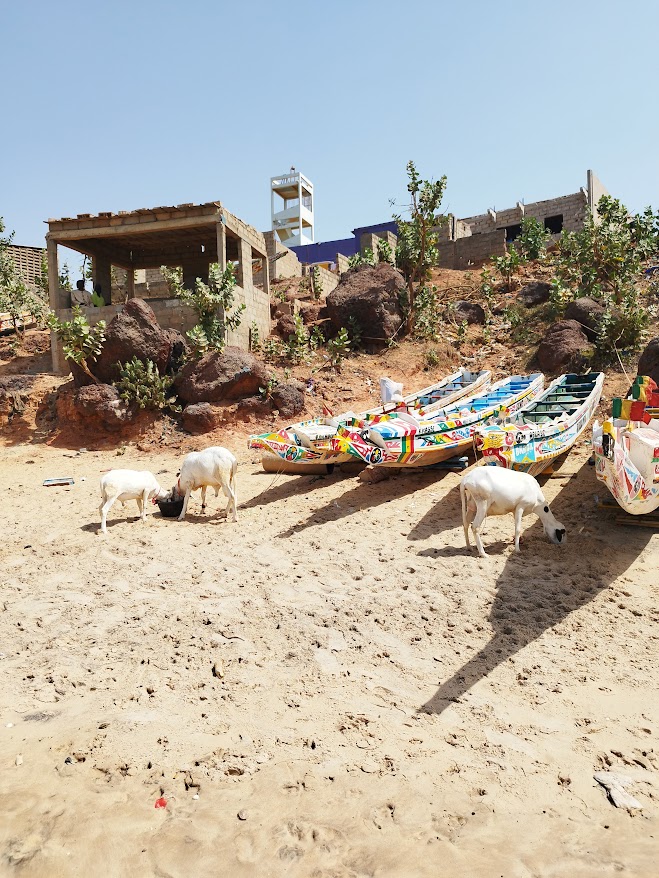
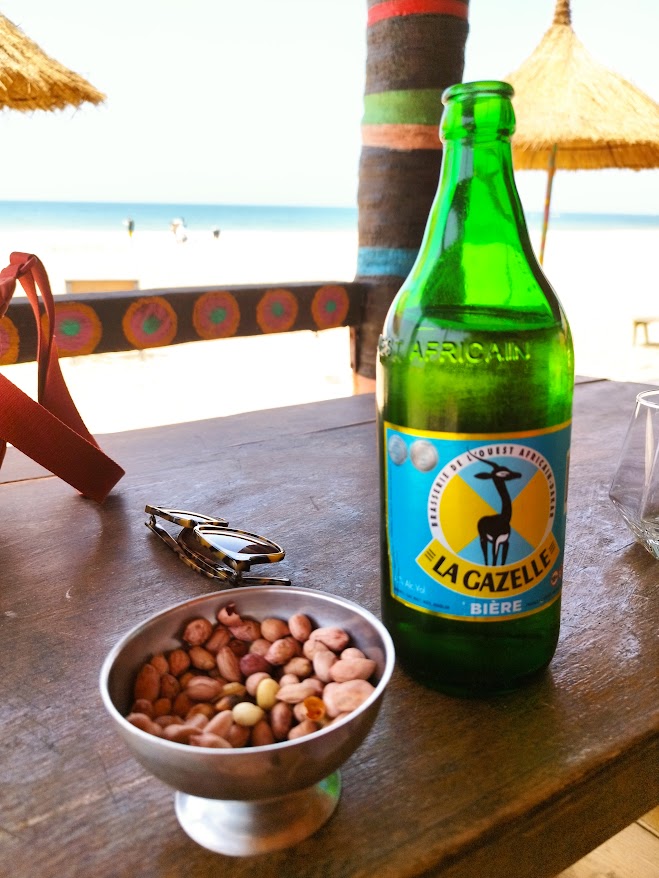
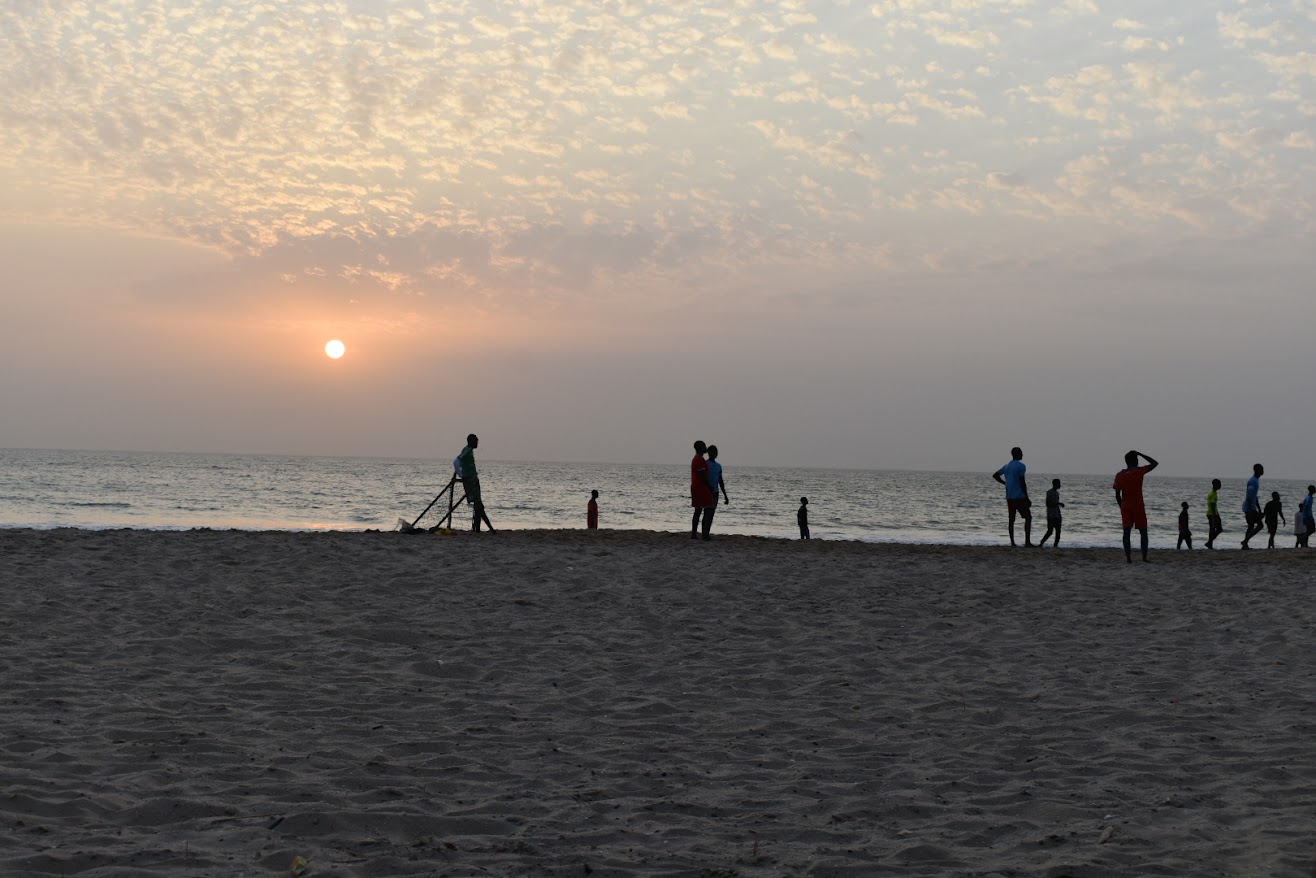
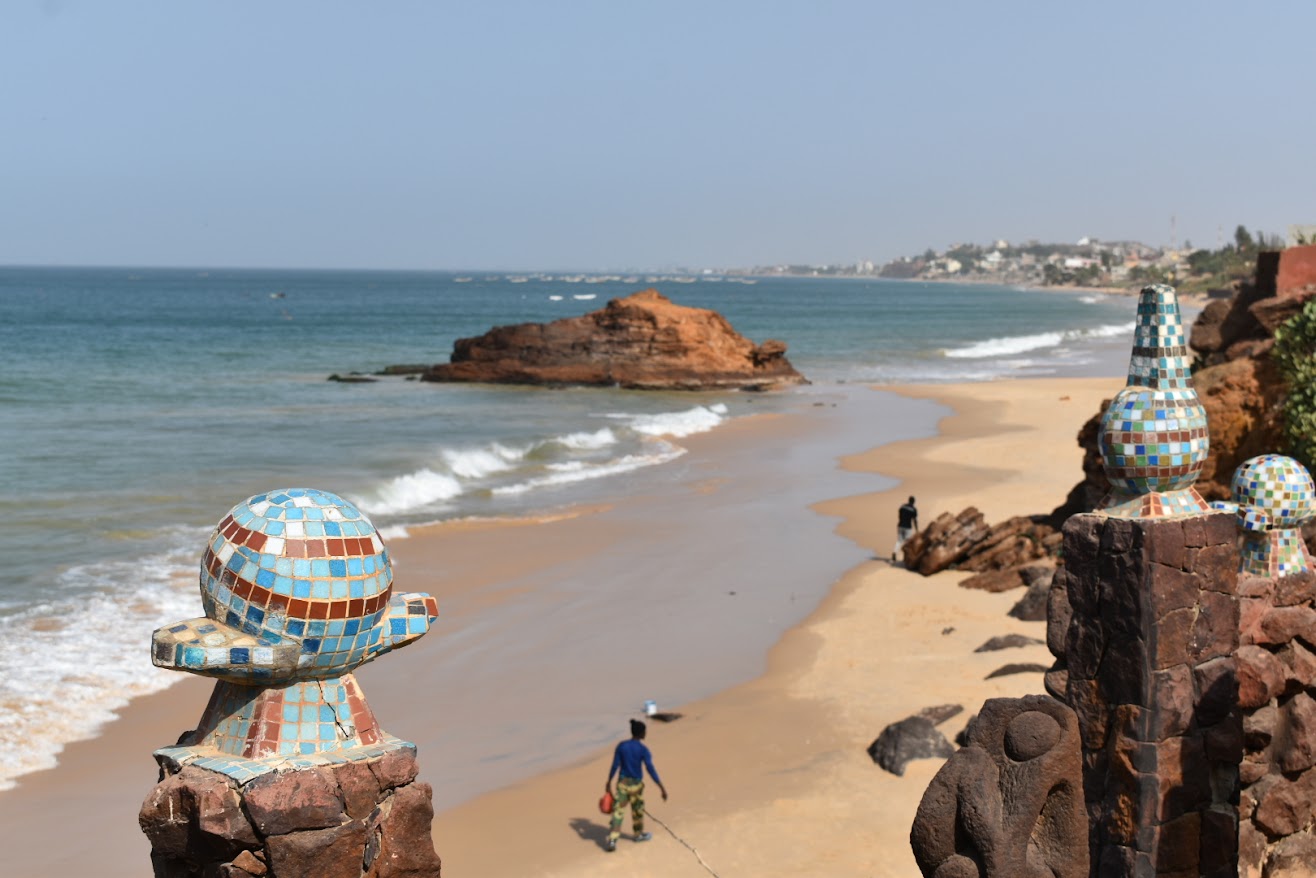
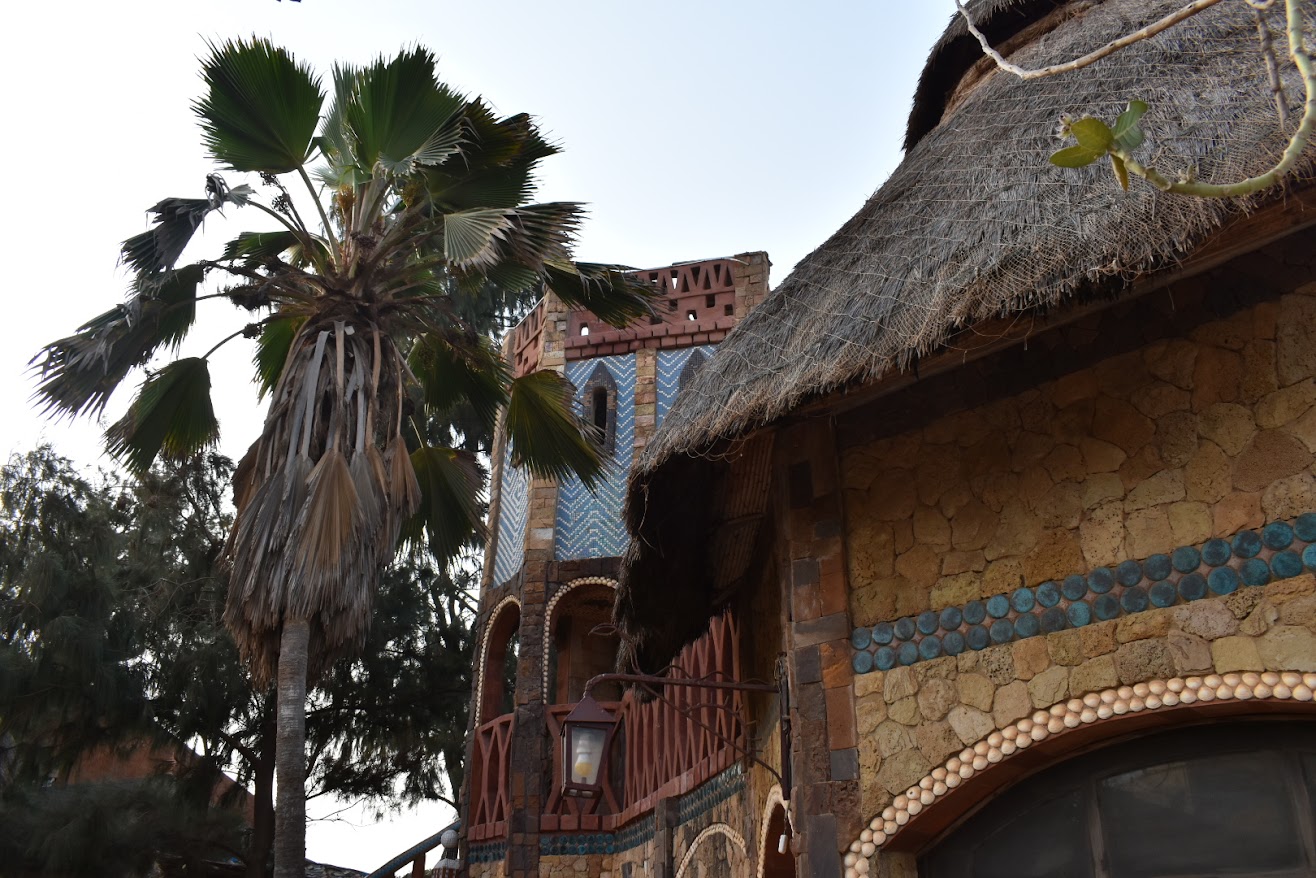
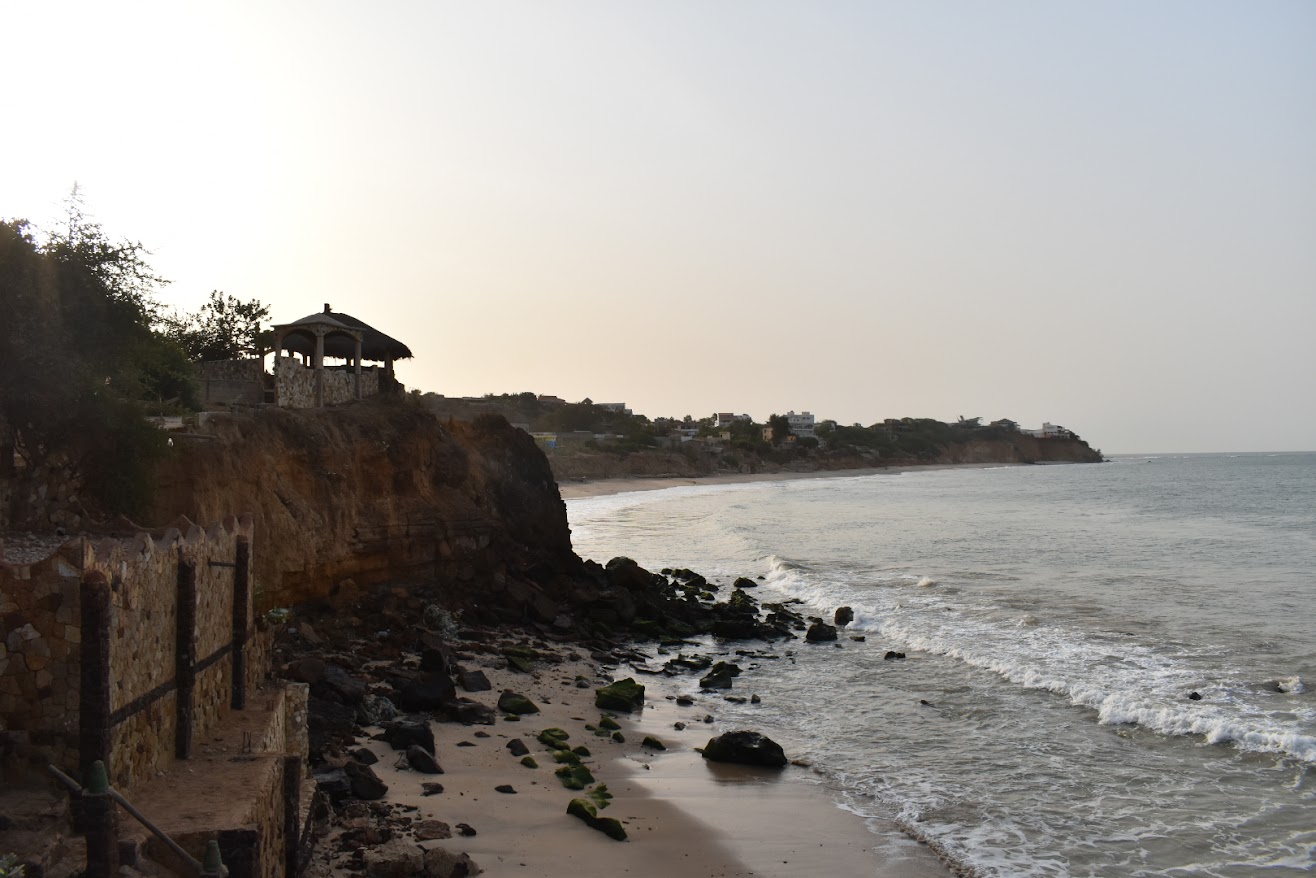
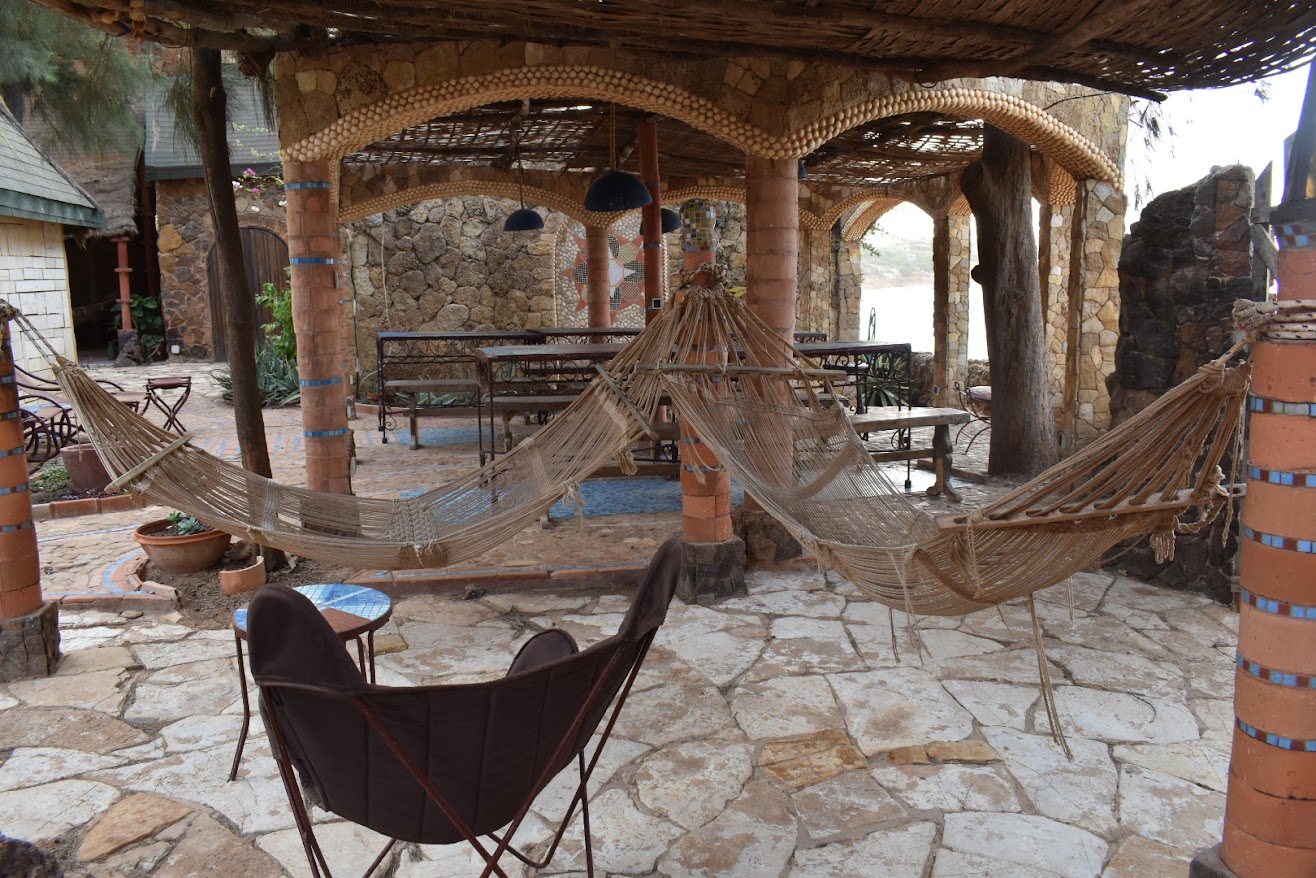
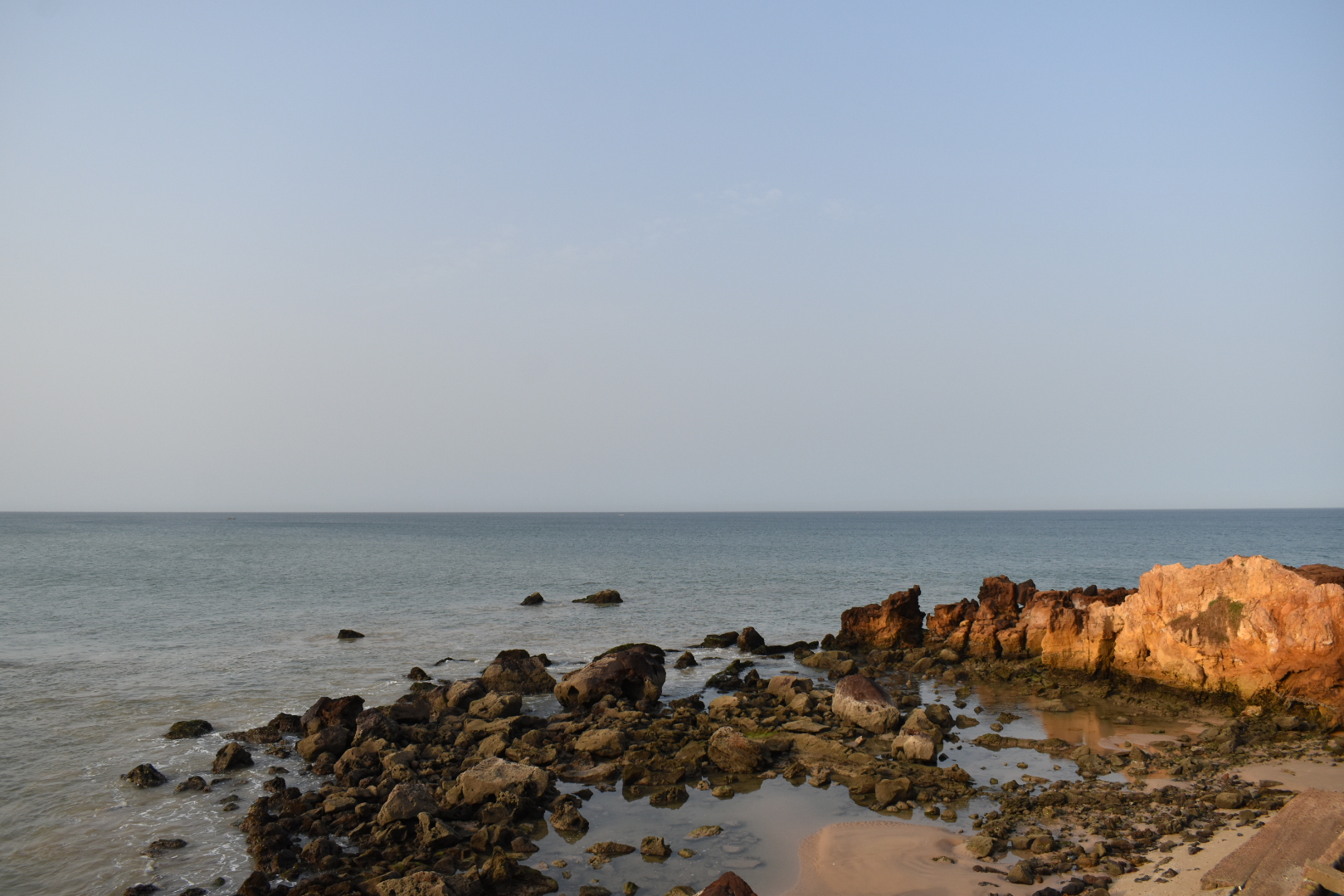
Toubab Dialow is easily accessible from Dakar International Airport by taxi, and from Dakar by metro and bus (very crowded, so quite a unique experience). This resort village has retained its rural atmosphere, with a few accommodations and beach huts where you can eat delicious grilled fish, fish skewers, and seafood. The village is famous for its art, many people come here to learn to play the drums, and in the evenings there are often traditional dance/drum performances in community spaces/pubs. The locals are friendly, and there are many Rastafarians from all over Senegal living here. It’s a great place to spend a few days in a peaceful environment. We were there in winter (February), so the weather was bearable. We had to wear jackets in the evening, and the maximum temperature during the day was 30 degrees Celsius.
Bandia National Park
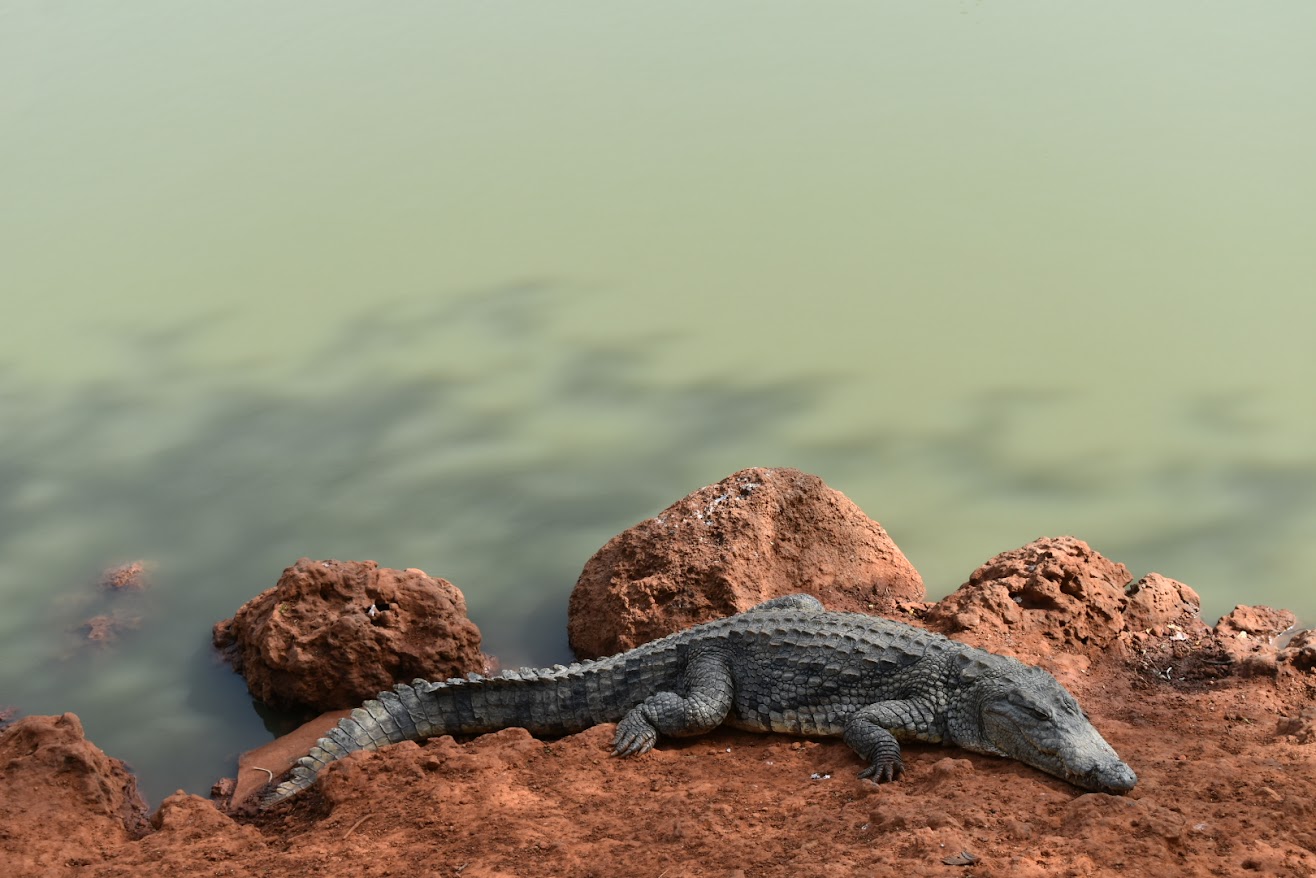
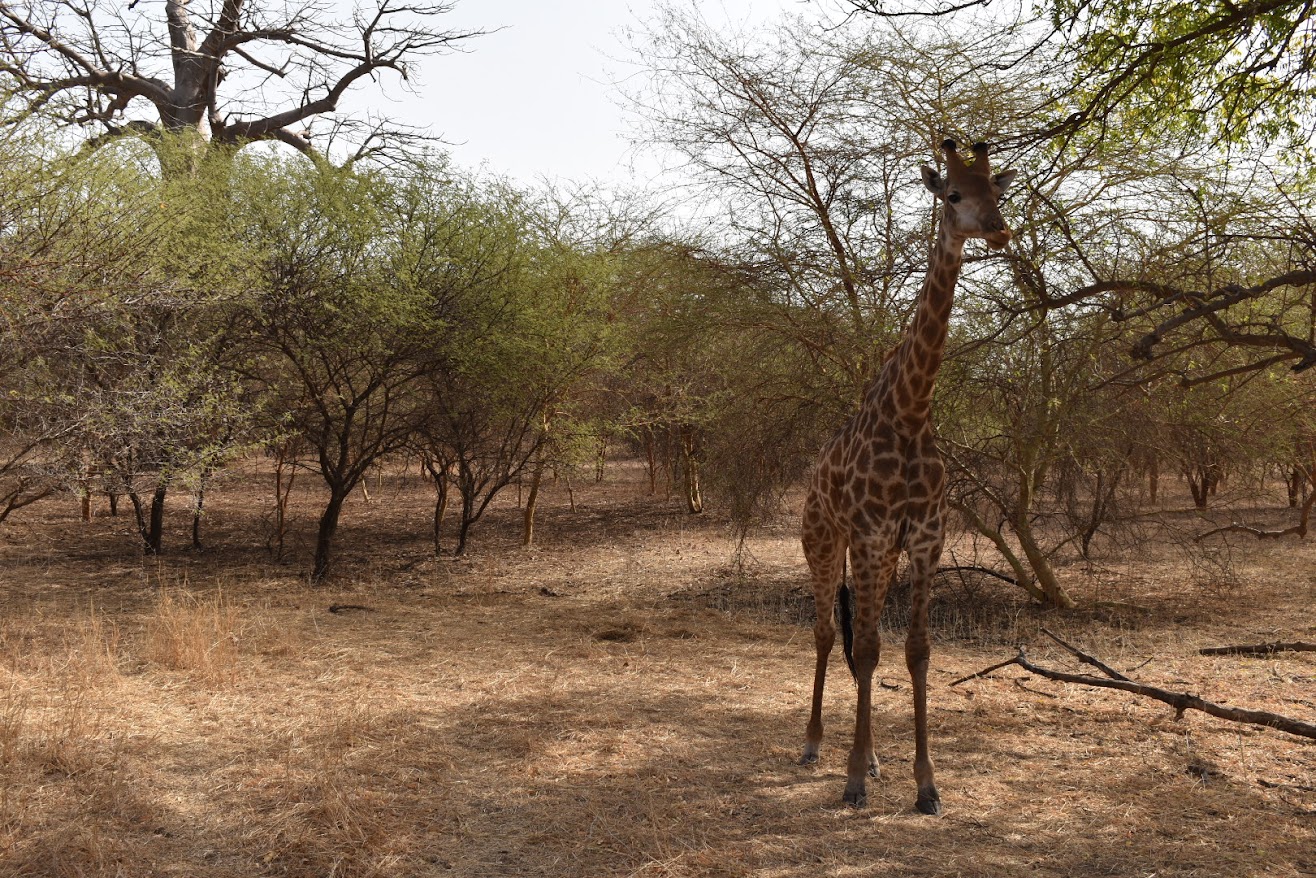
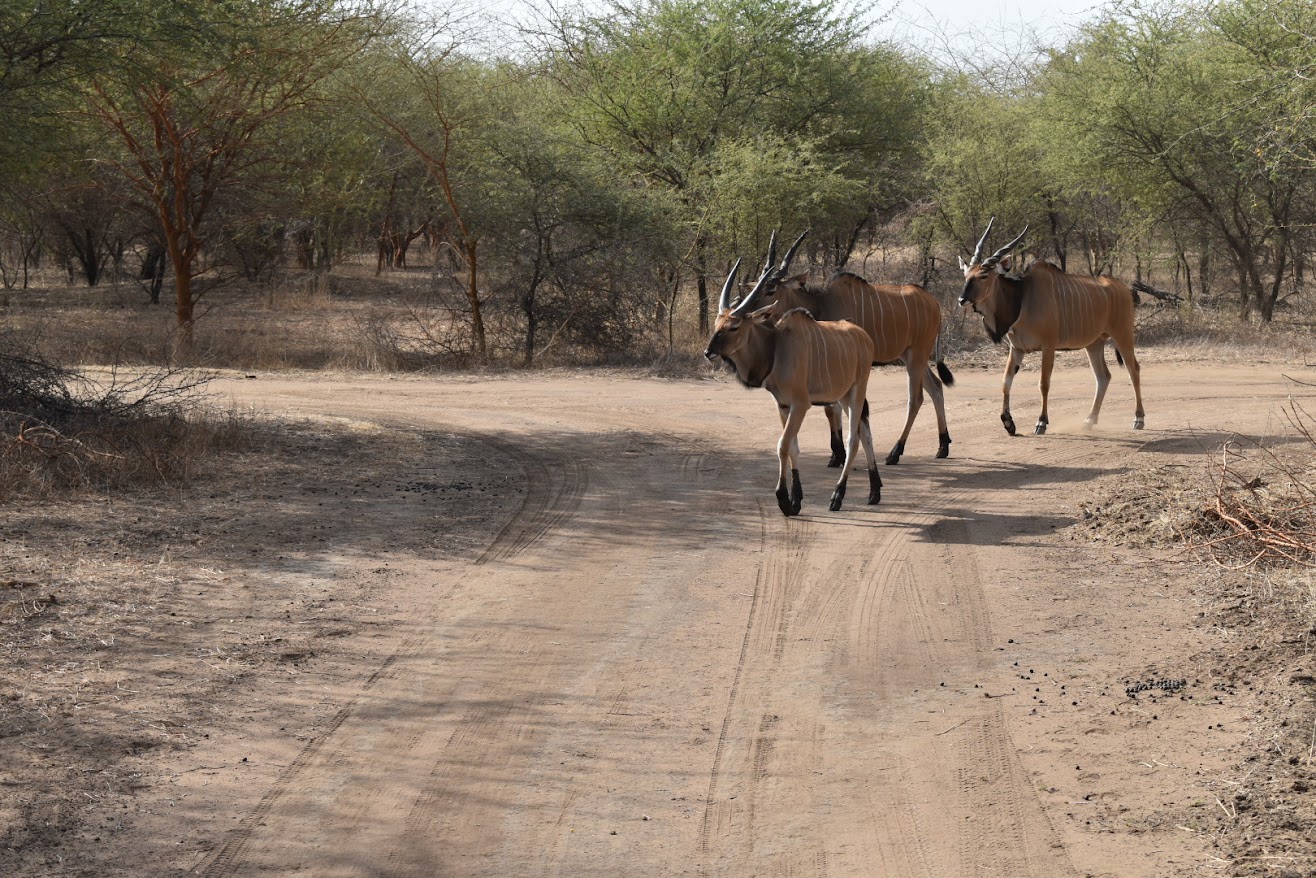
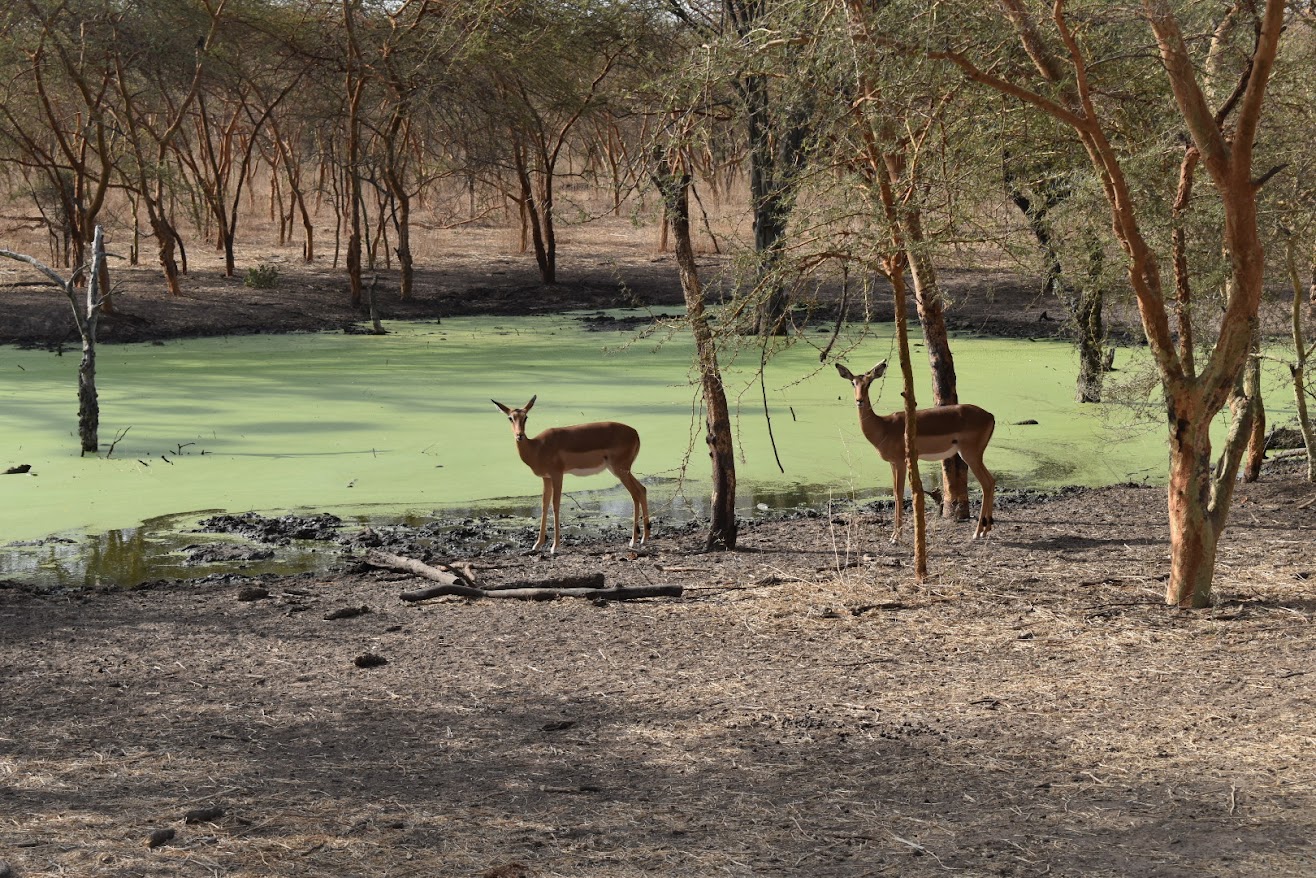
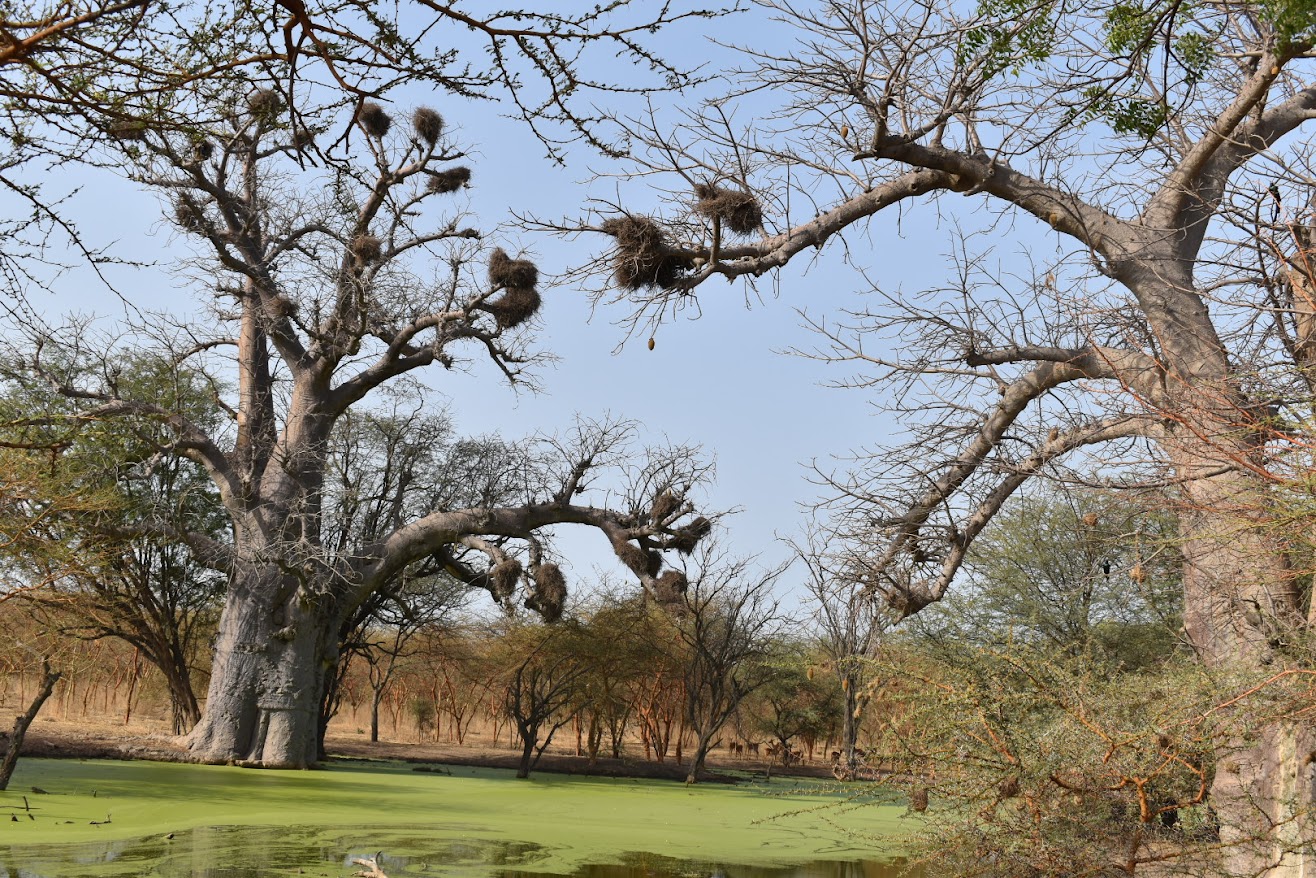
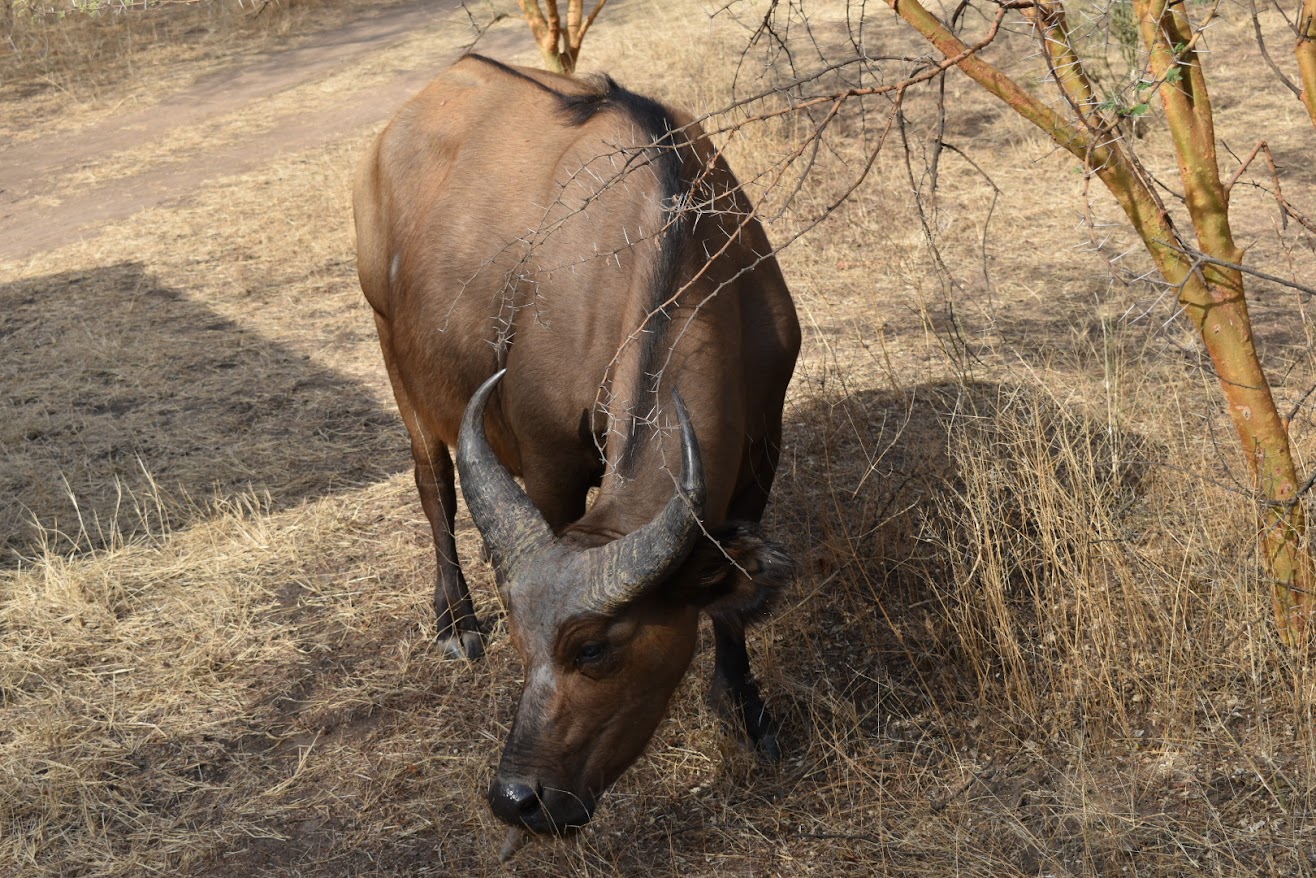
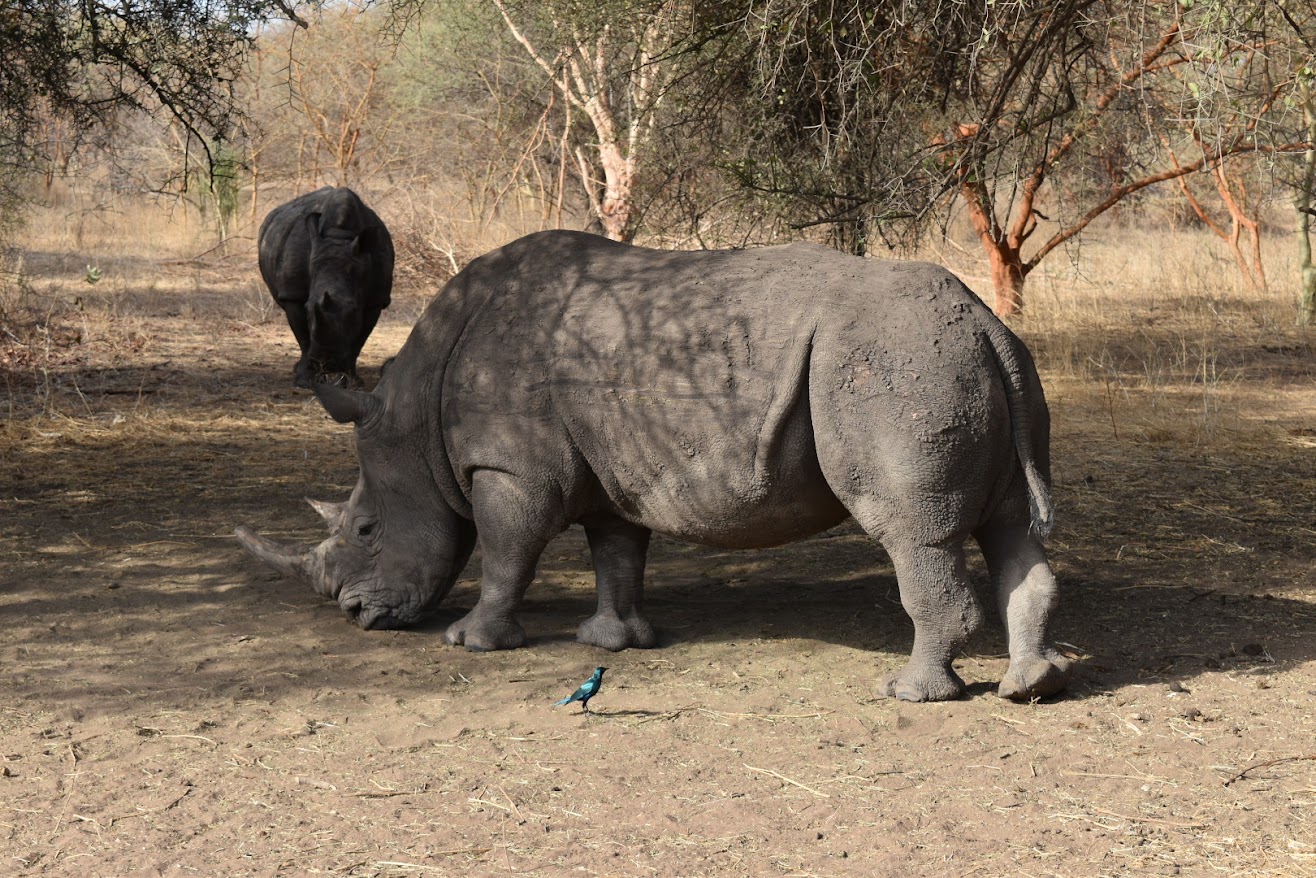
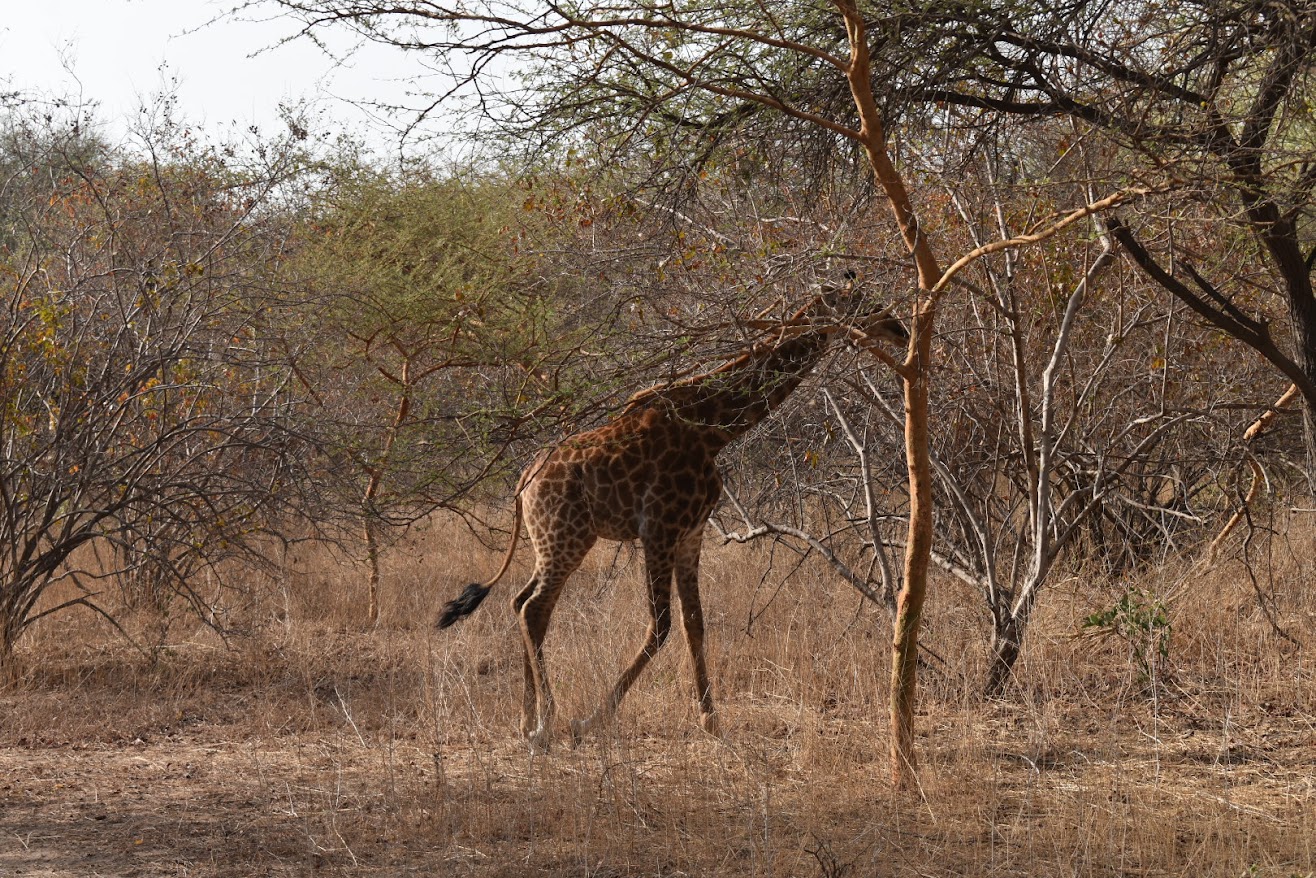
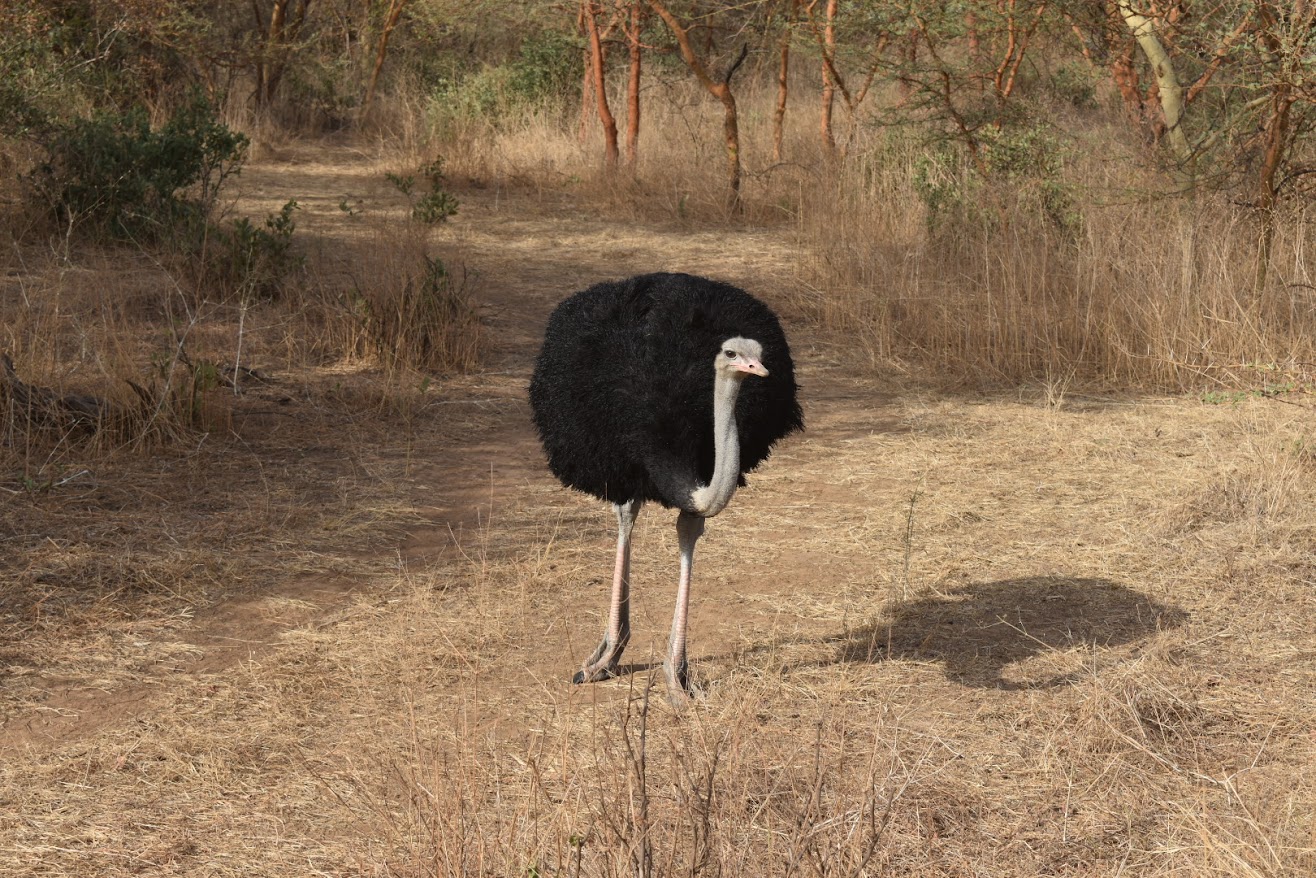
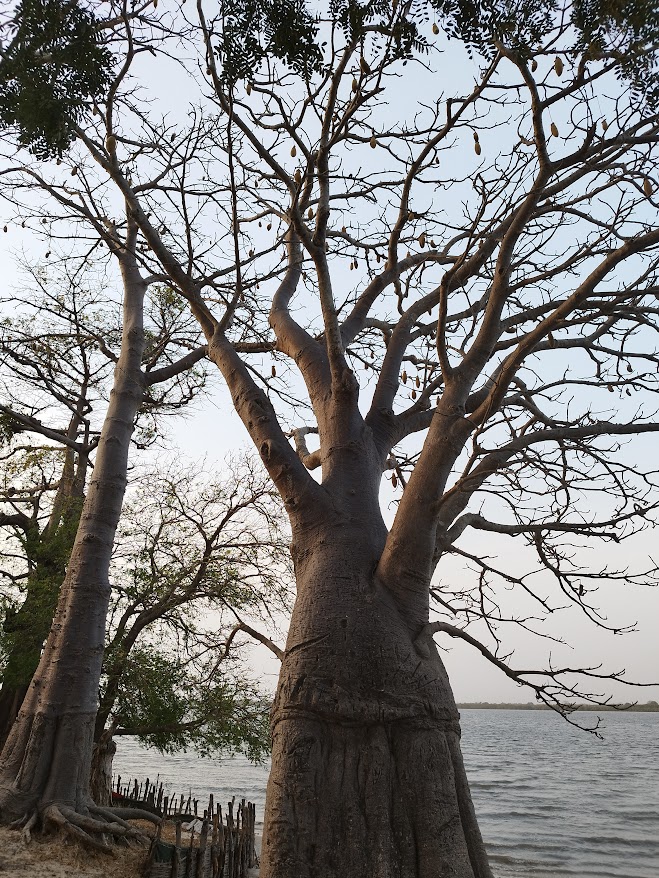
We took public transport from Toubab Dialow to the park, which was very easy, we just had to get on a minibus going in that direction. We paid about €20 per person for a safari. This worked by waiting until an 11-seater safari vehicle was full of guests (which took about 10 minutes). You can also go in with your own car, but the entrance fee is about €30. The park is only 35 square kilometers, so it looks like a large zoo, but in West Africa, the number of national parks that can be visited is limited, and there are many animal species here. We saw rhinos, giraffes, crocodiles, marsh antelopes, sable antelopes, zebras, gazelles, buffalos, ostriches, and giant baobab trees, where we could get out and walk around. Overall, it was a very nice little day trip.
Saint Louise
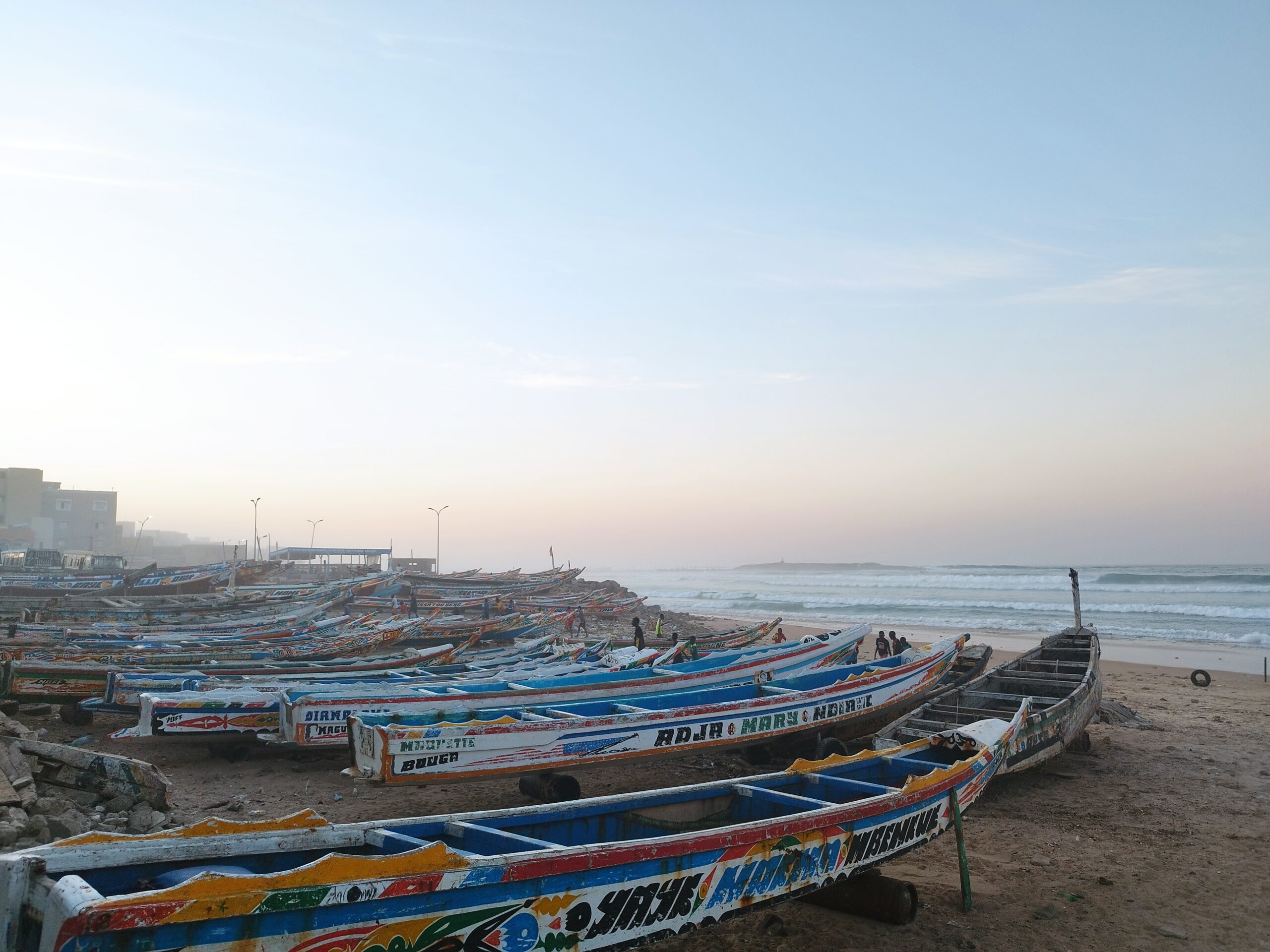
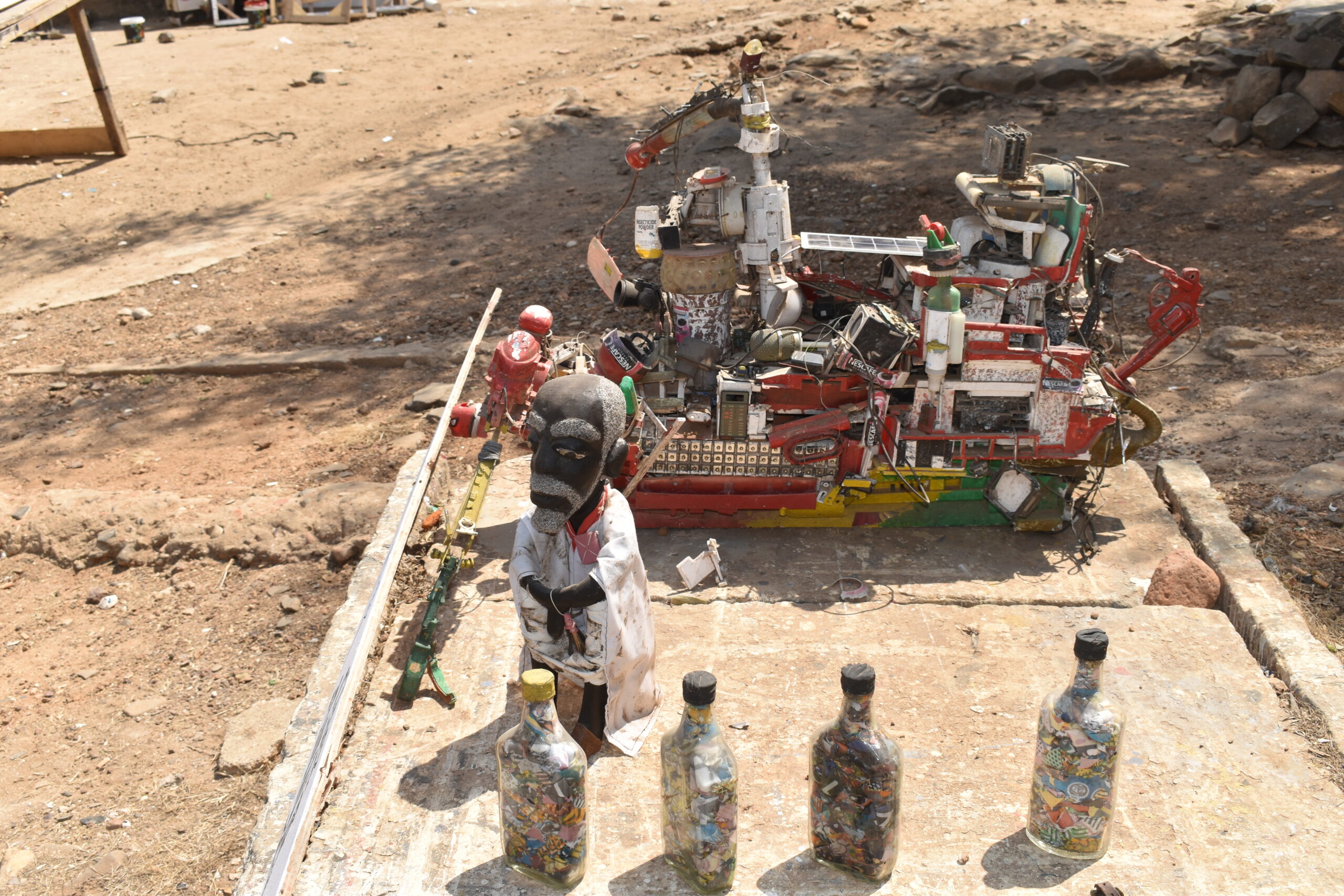
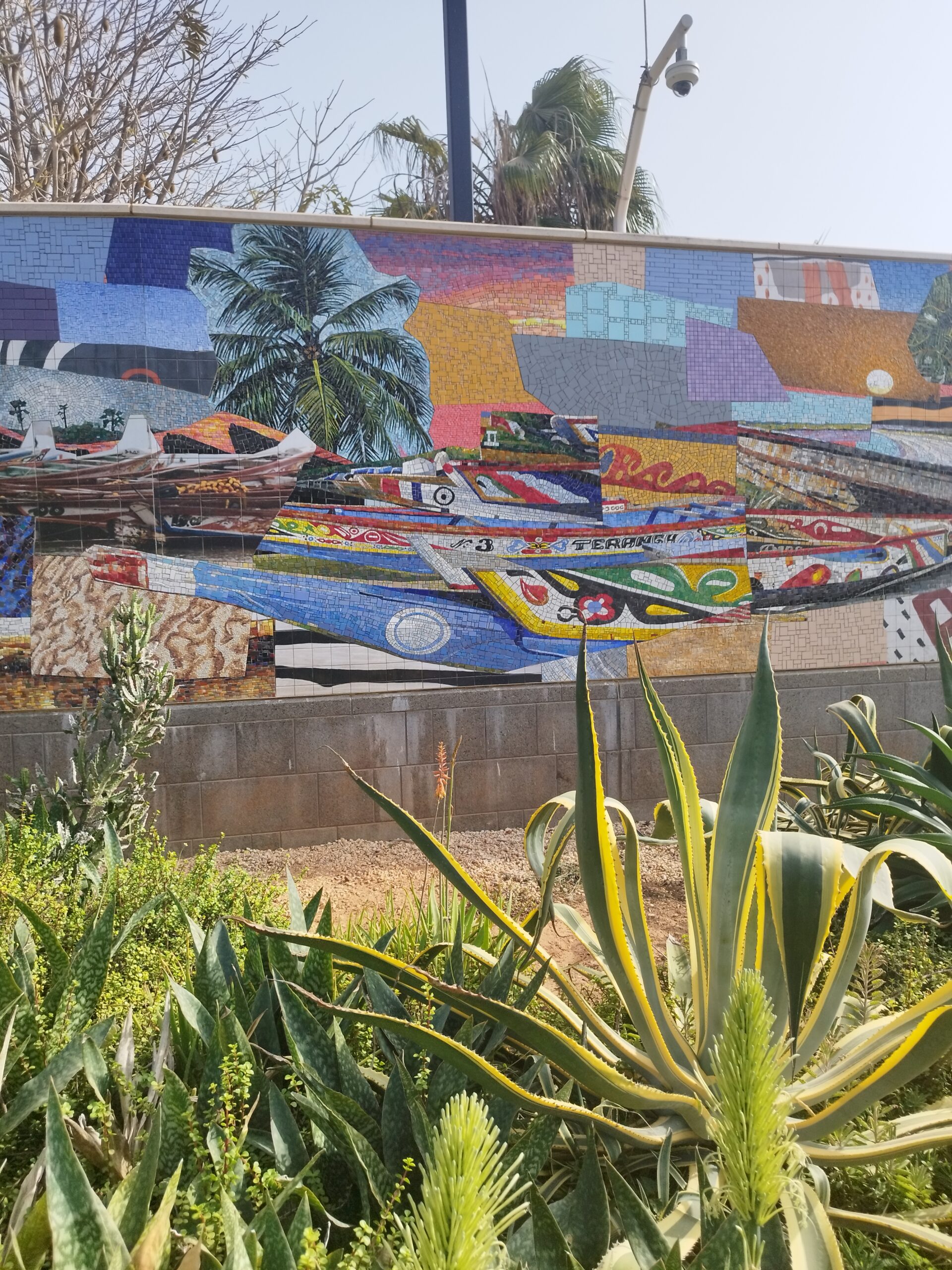
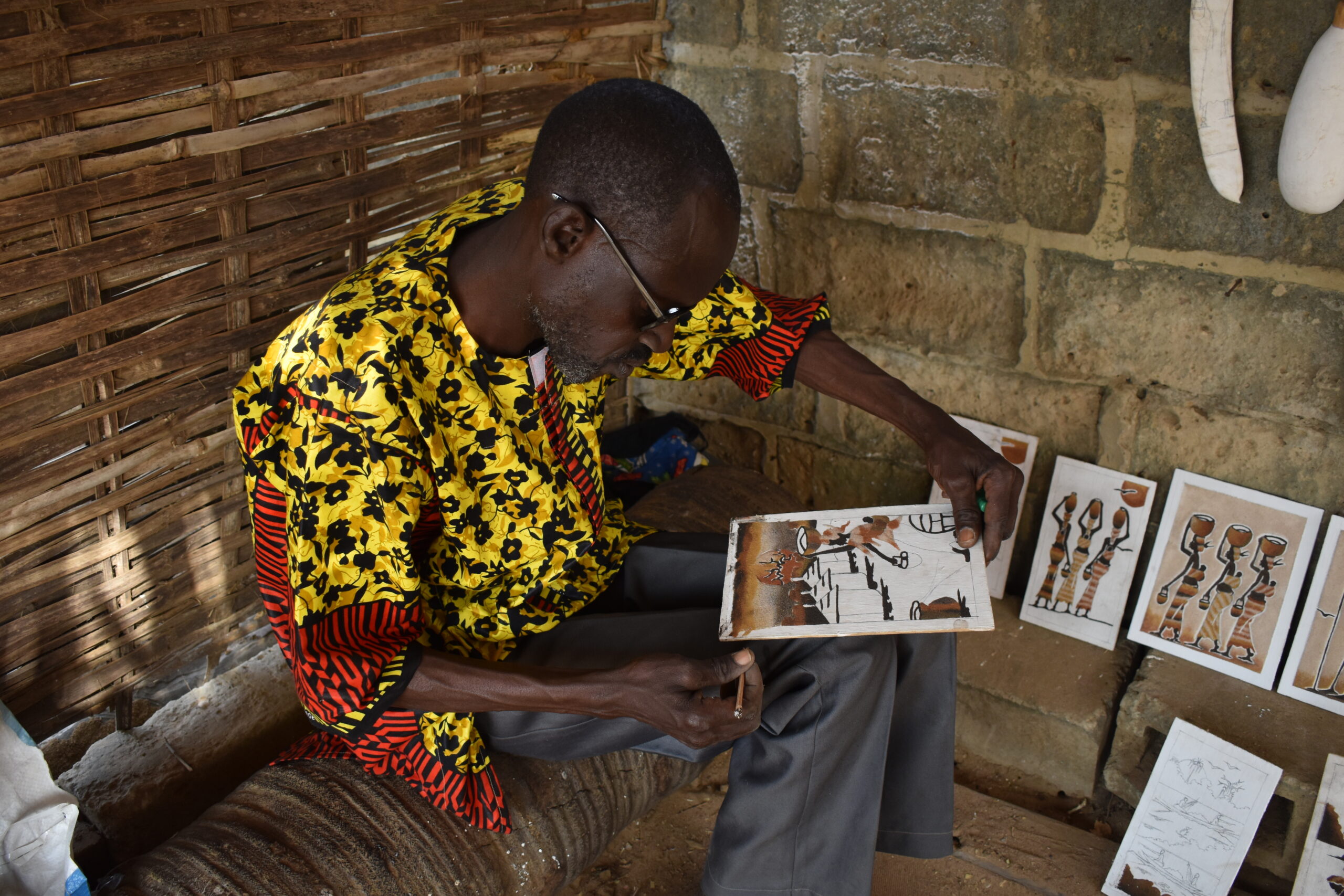
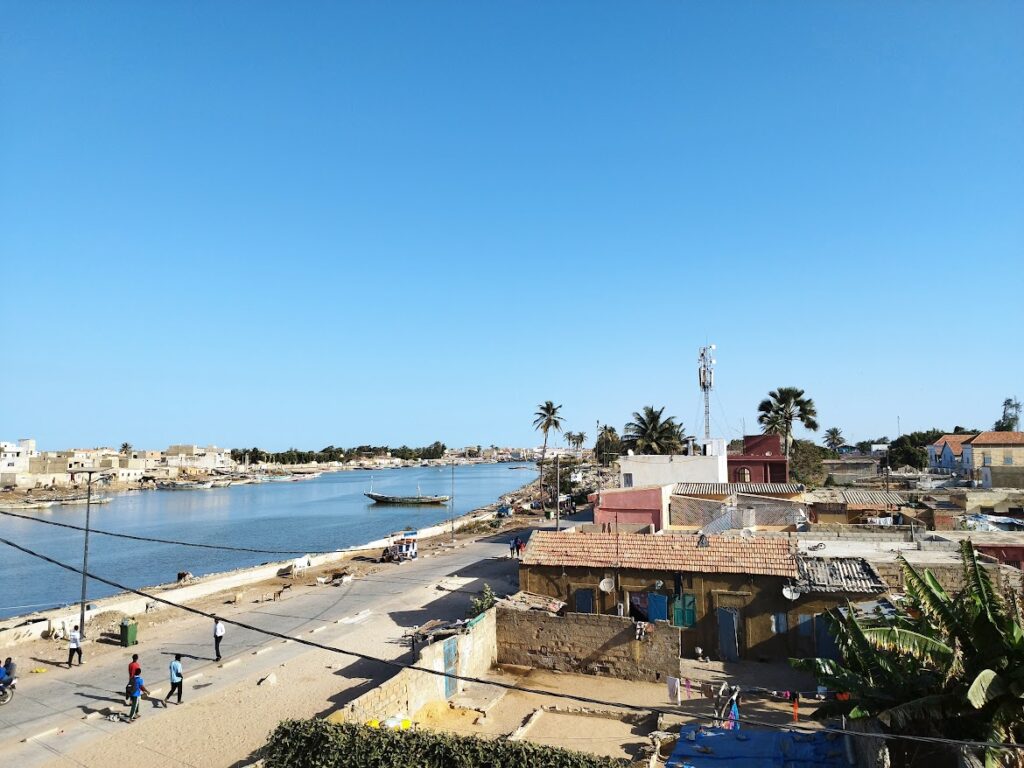
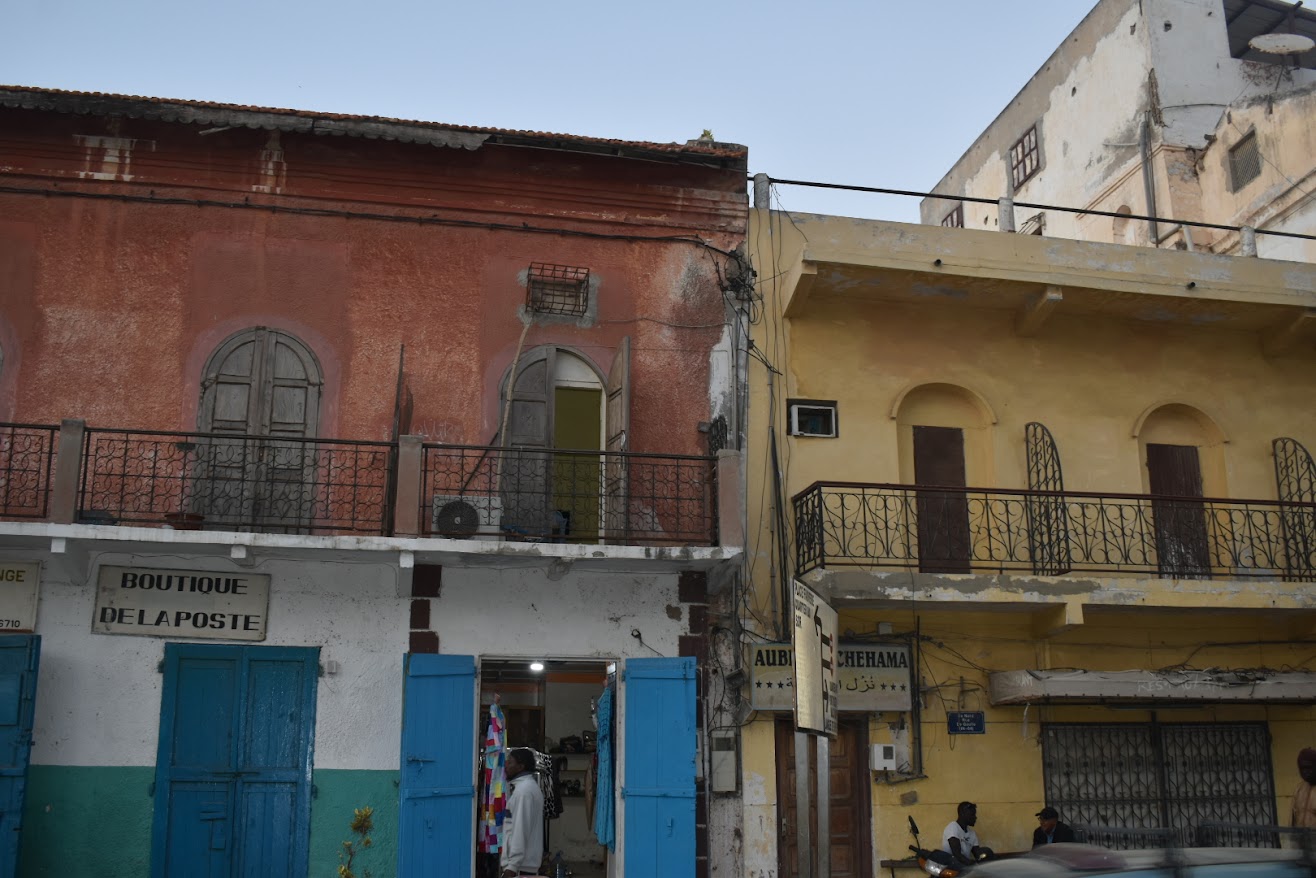
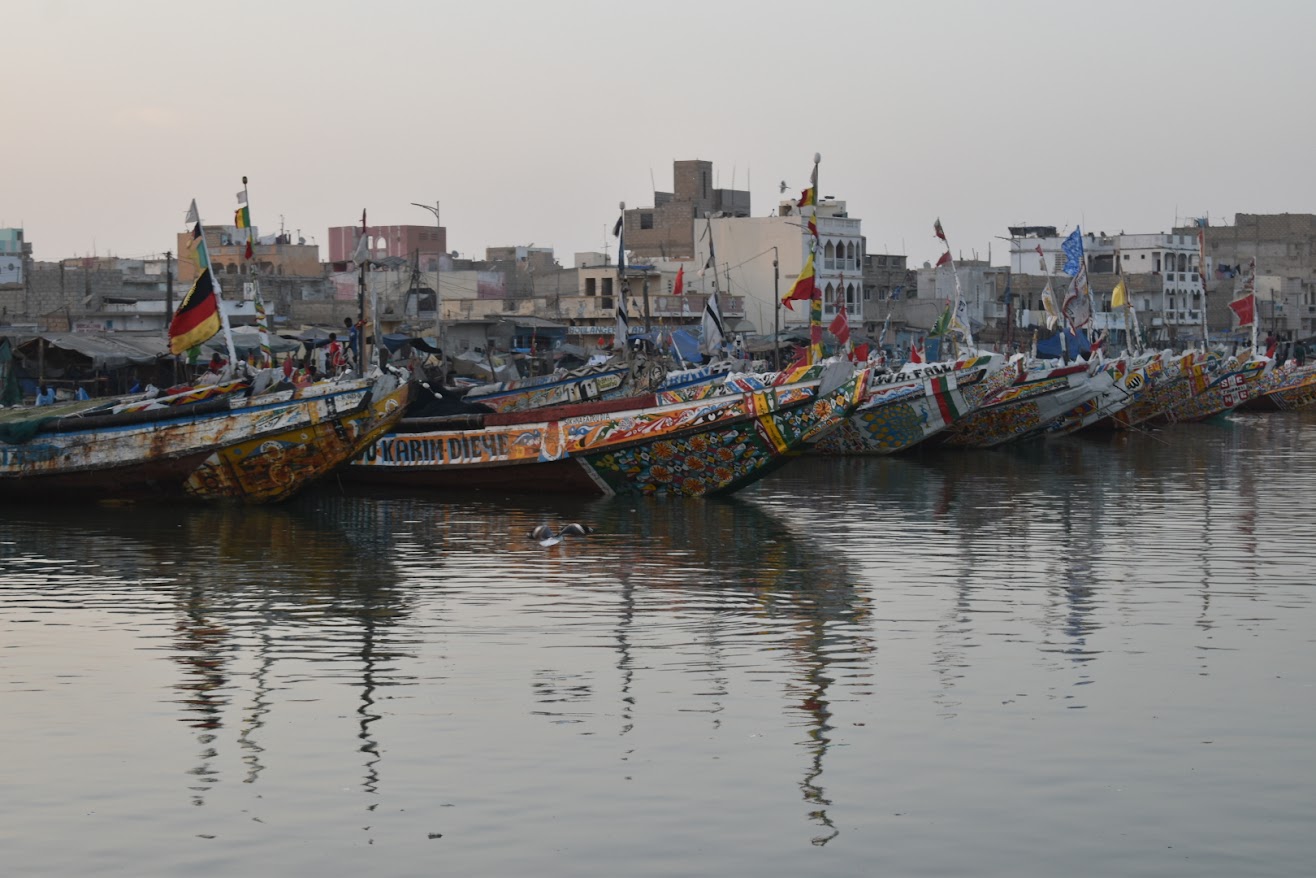
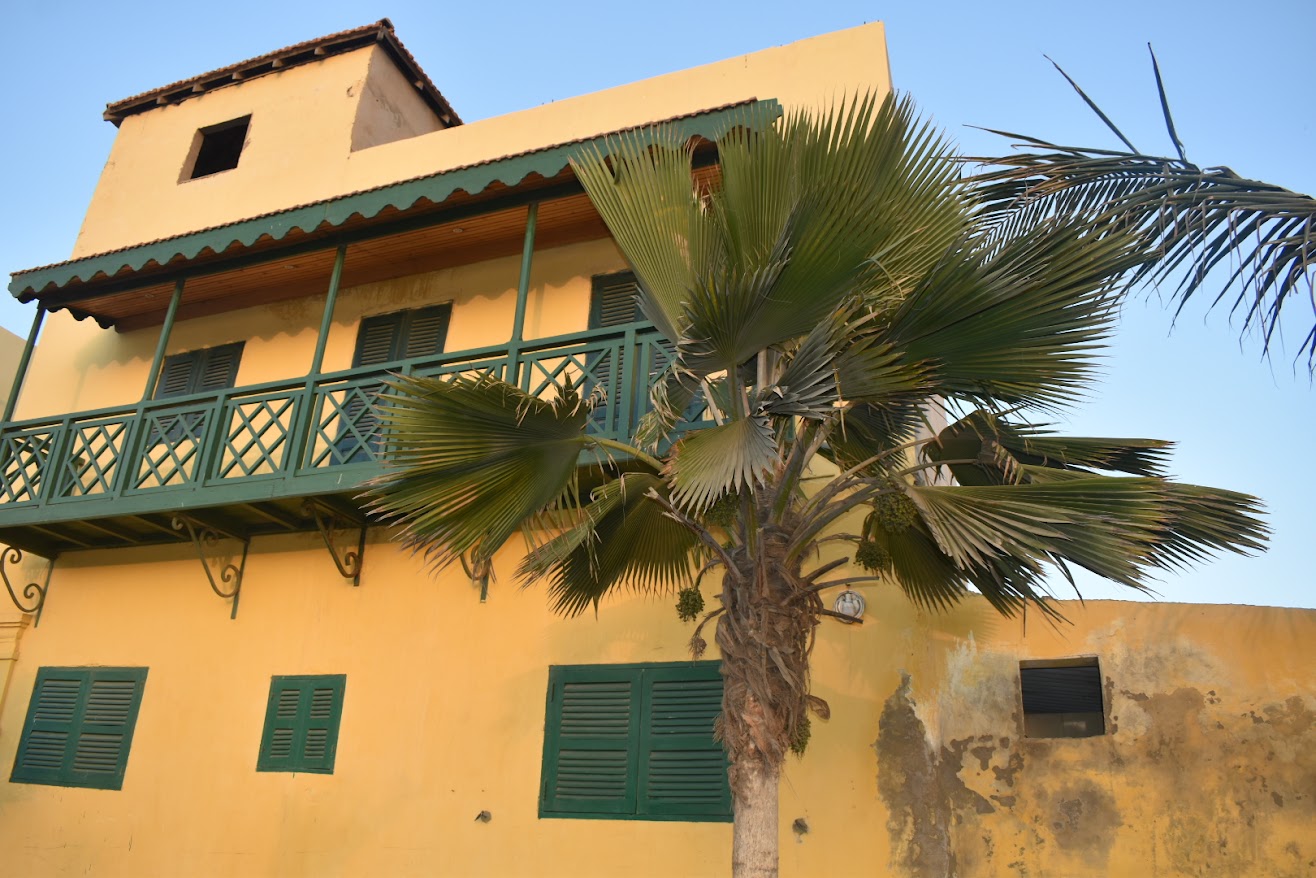
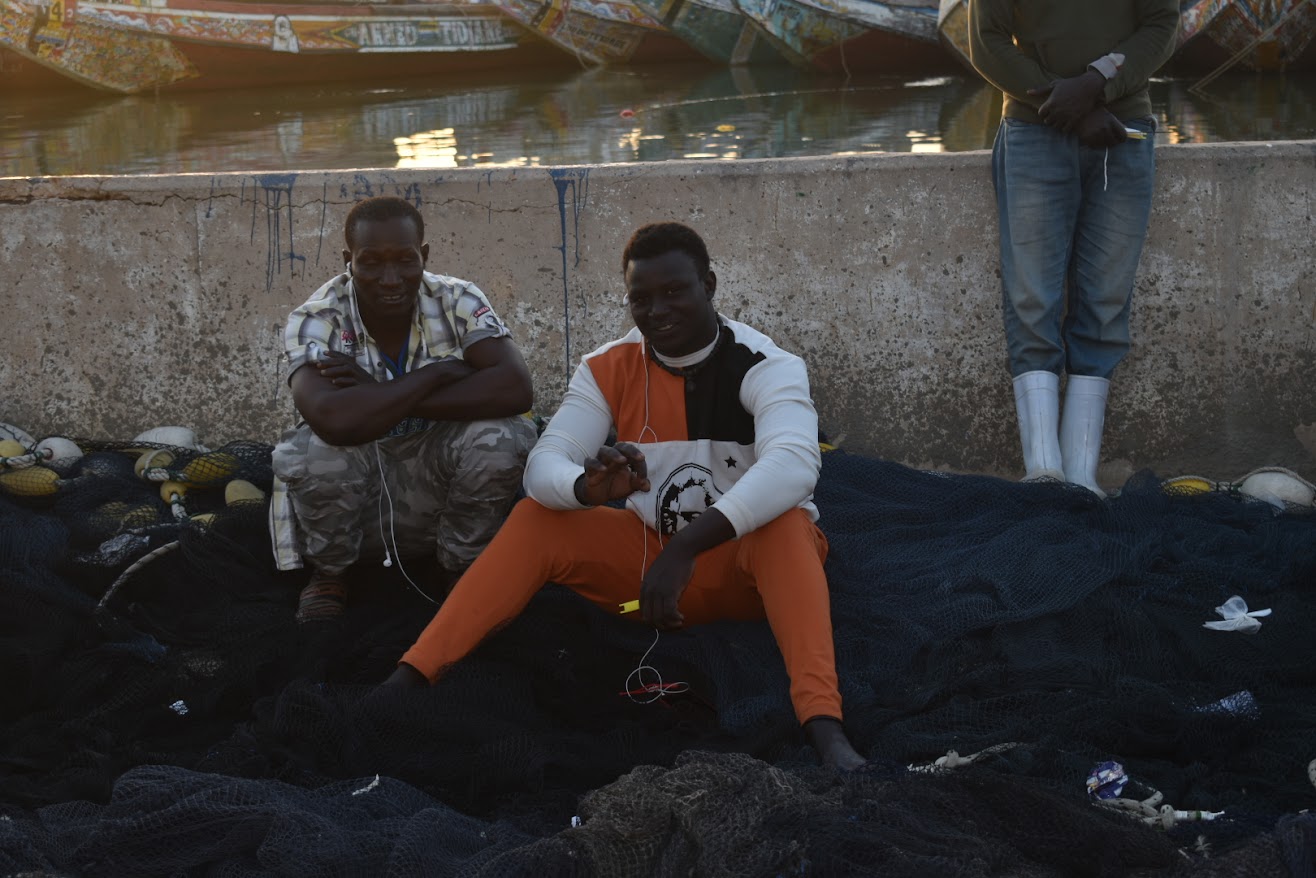
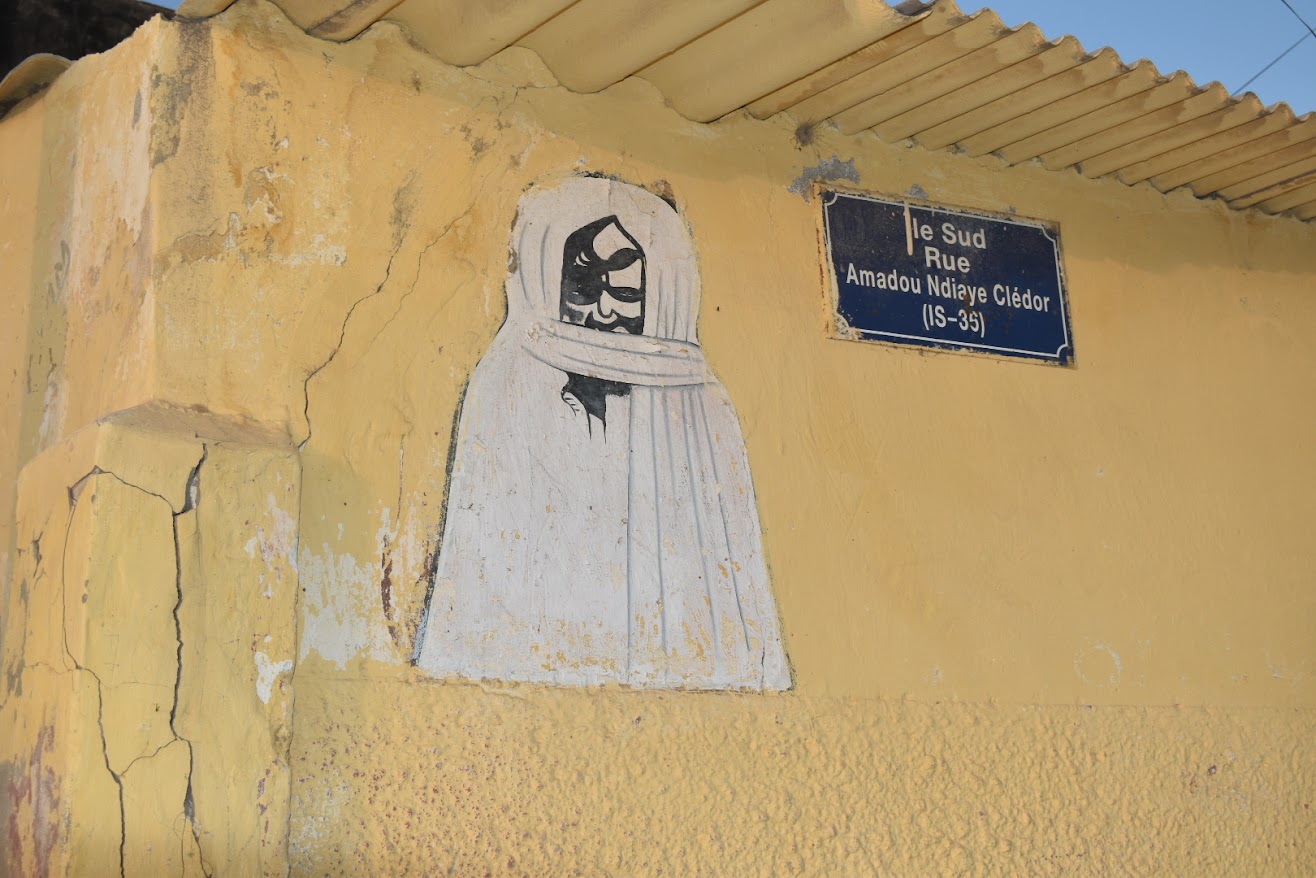
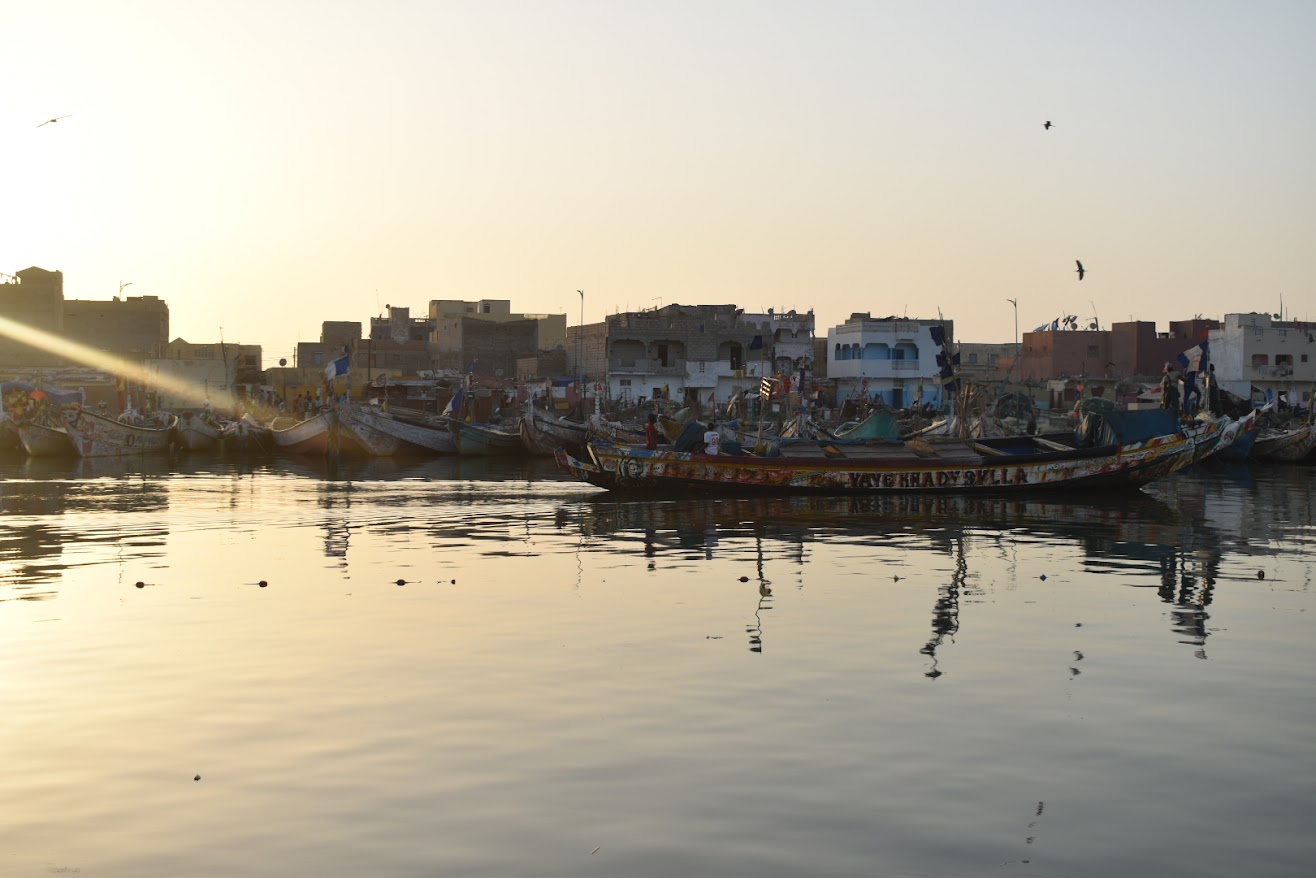
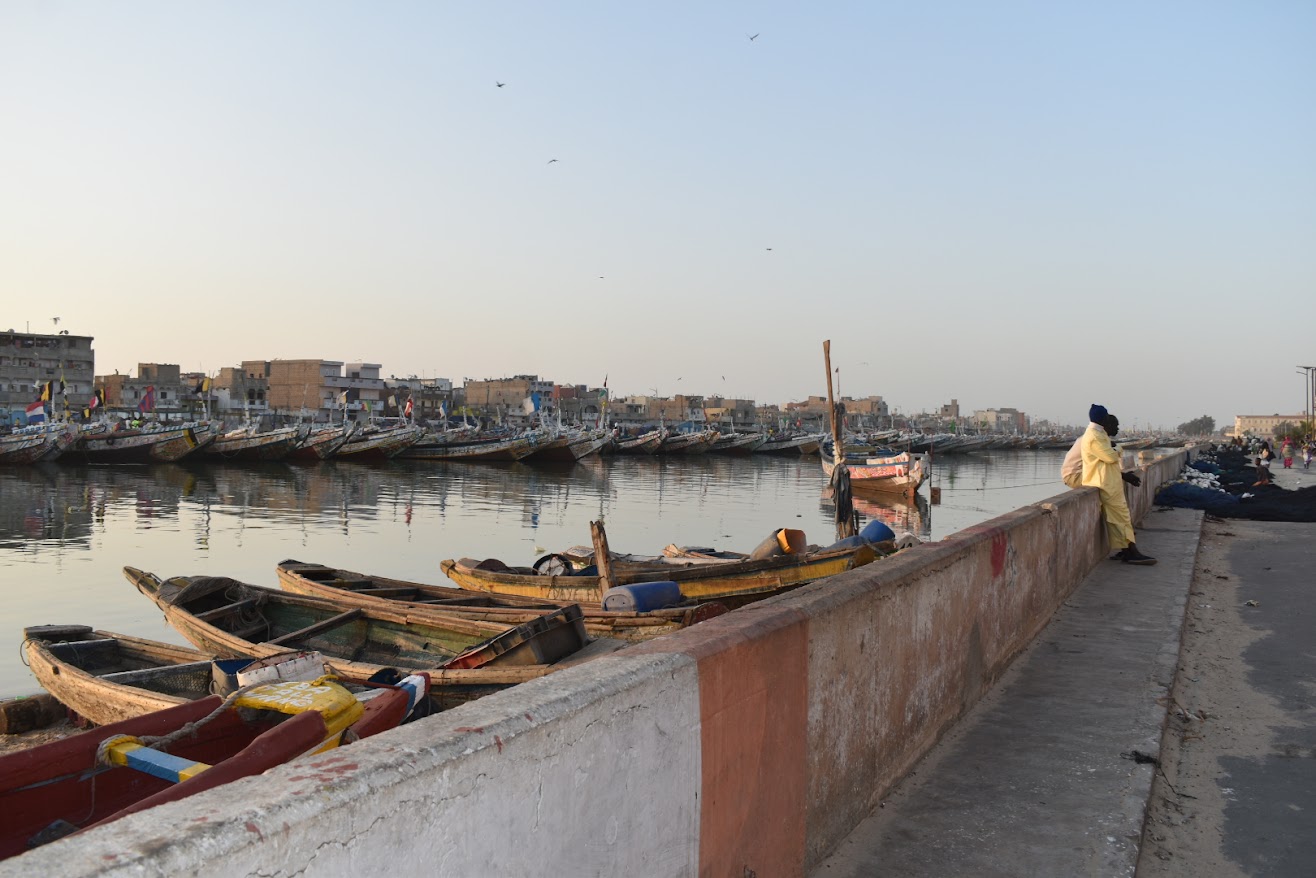
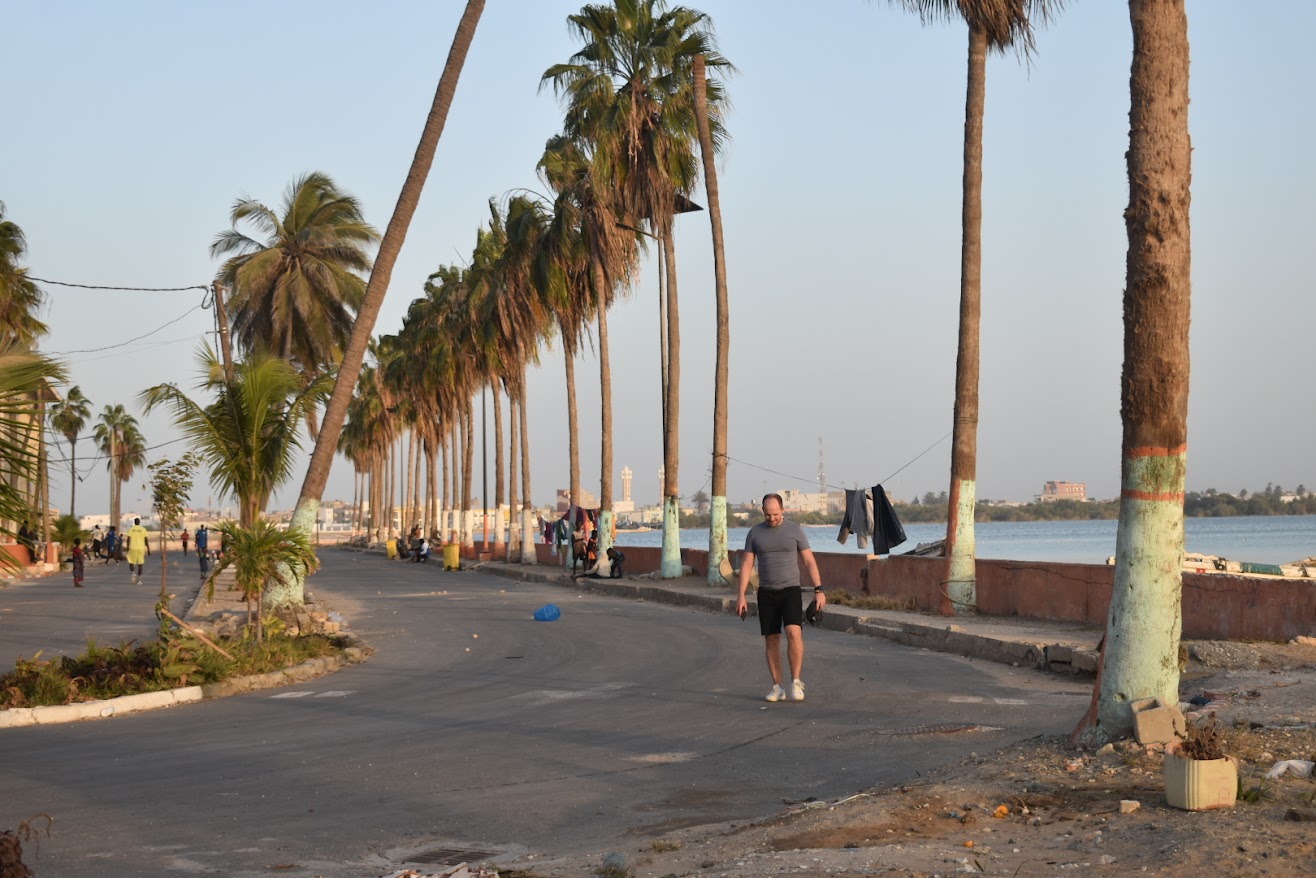
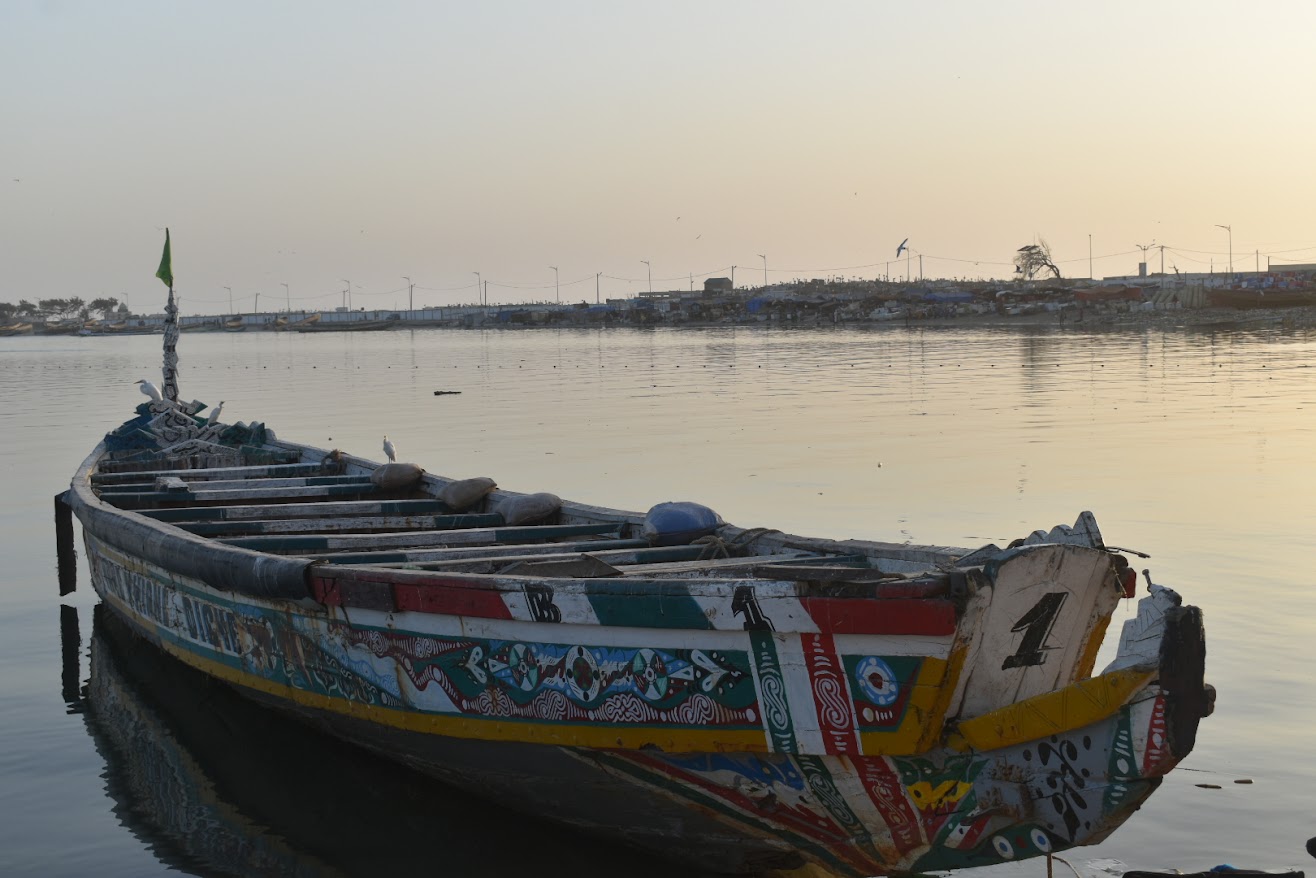
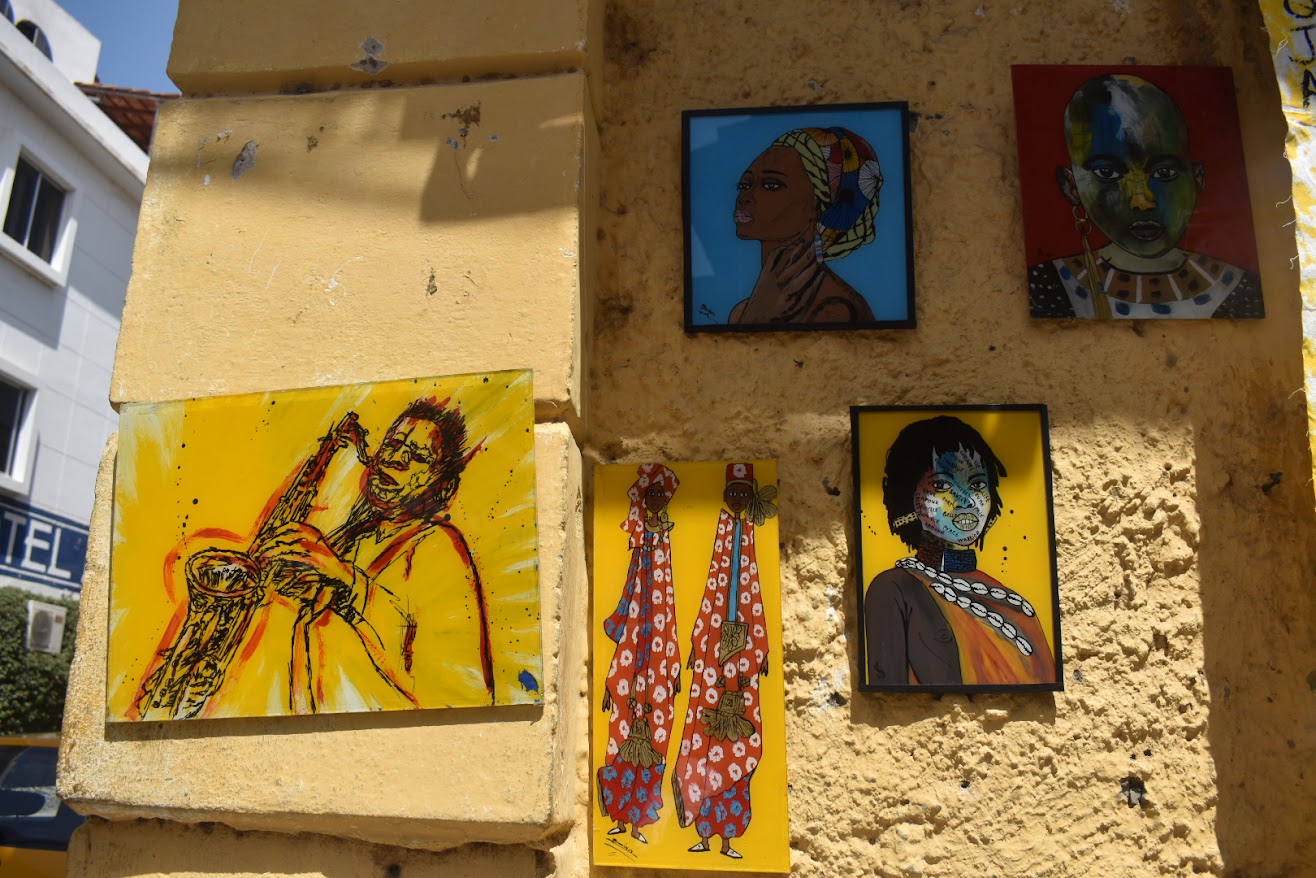
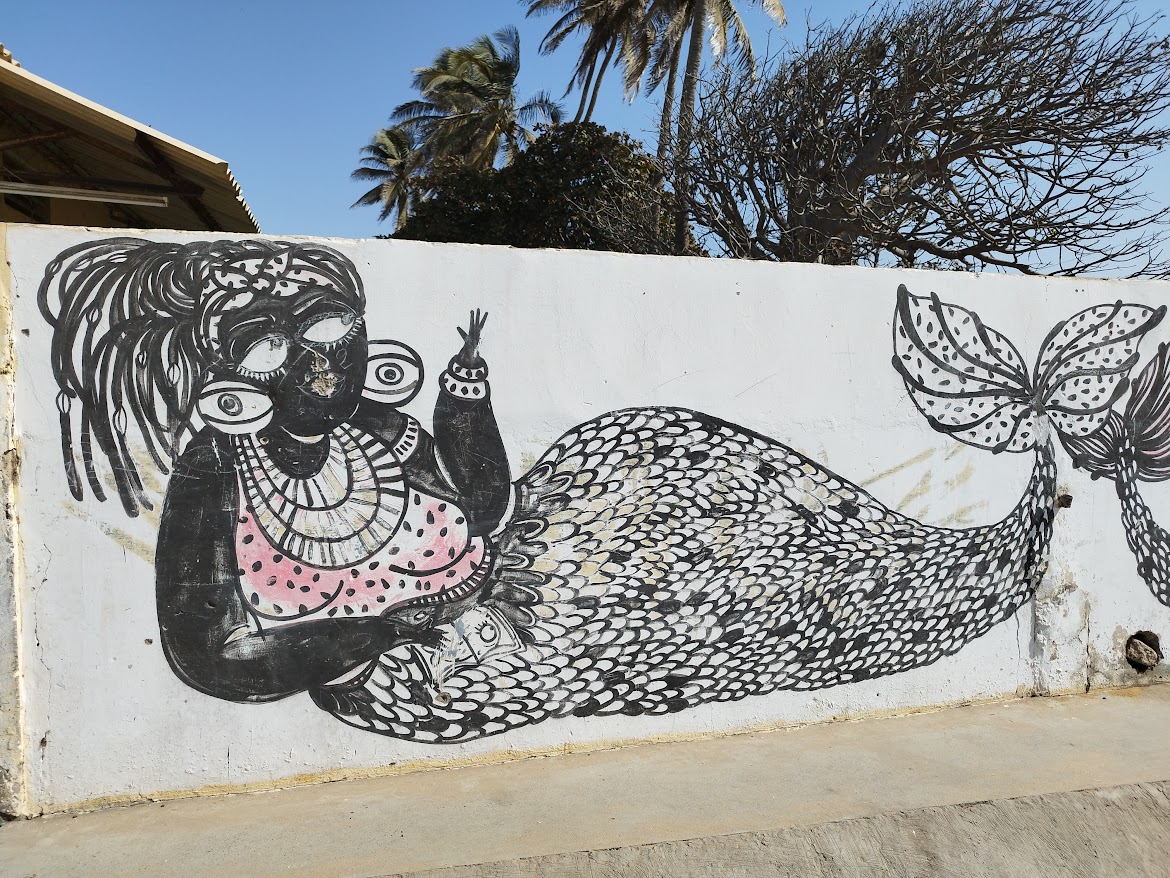
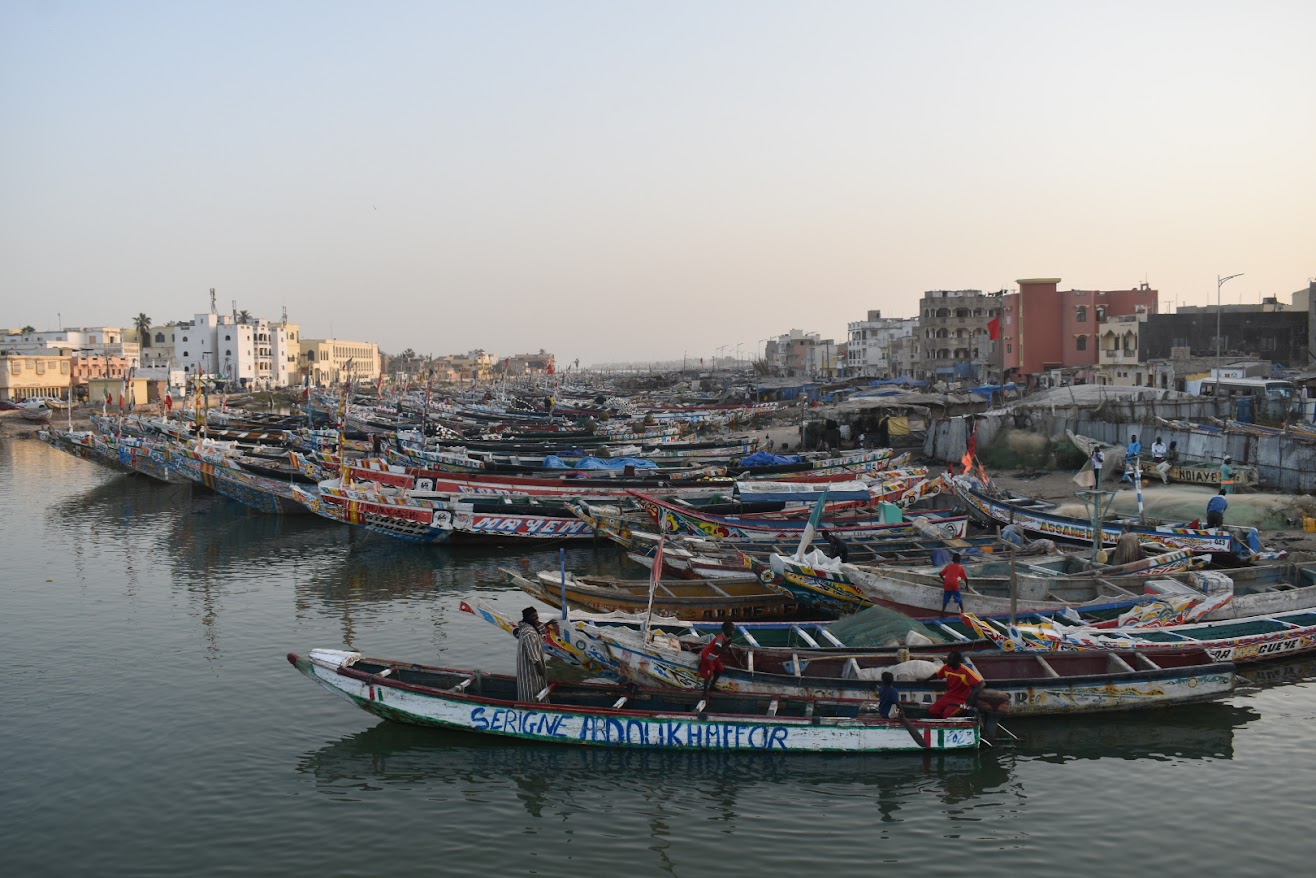
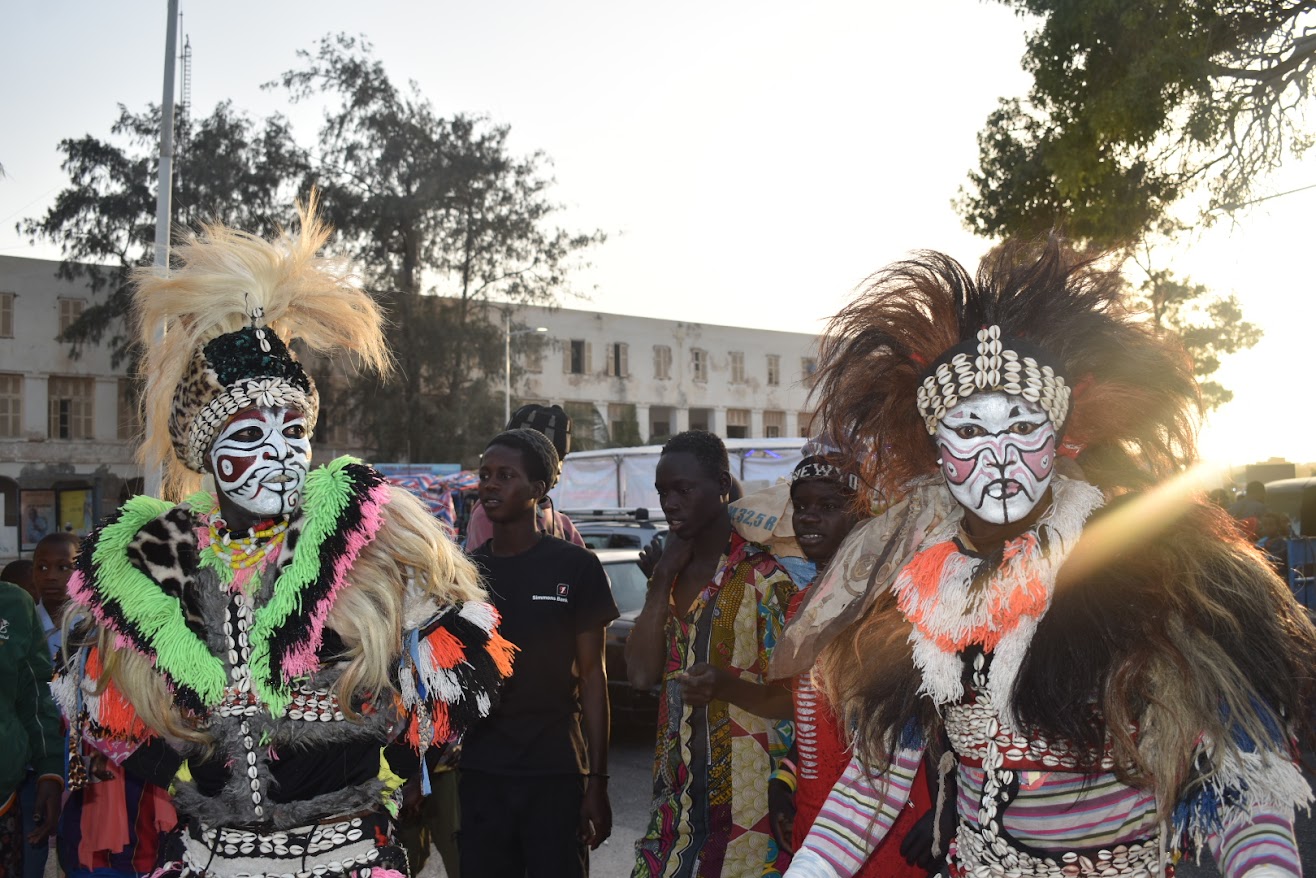
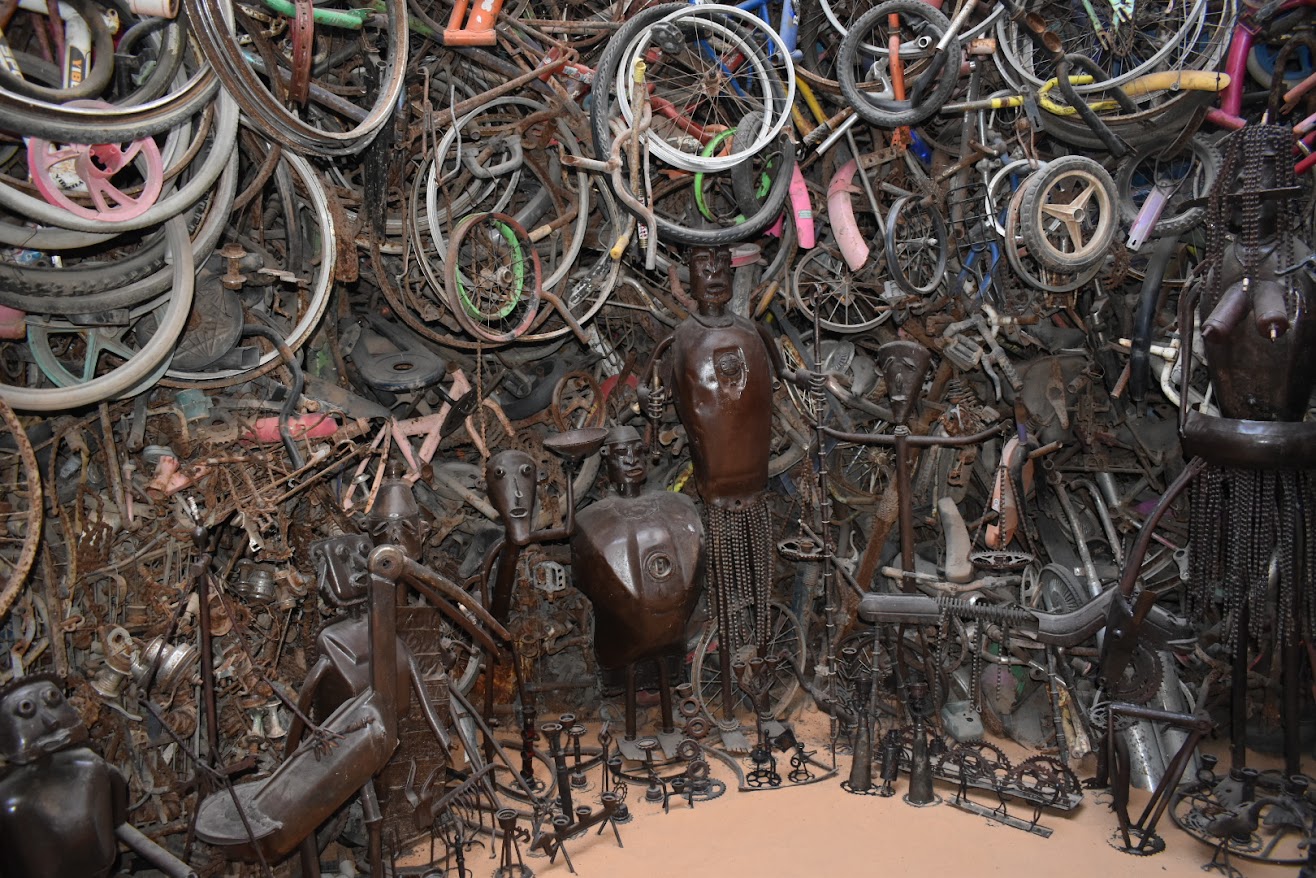
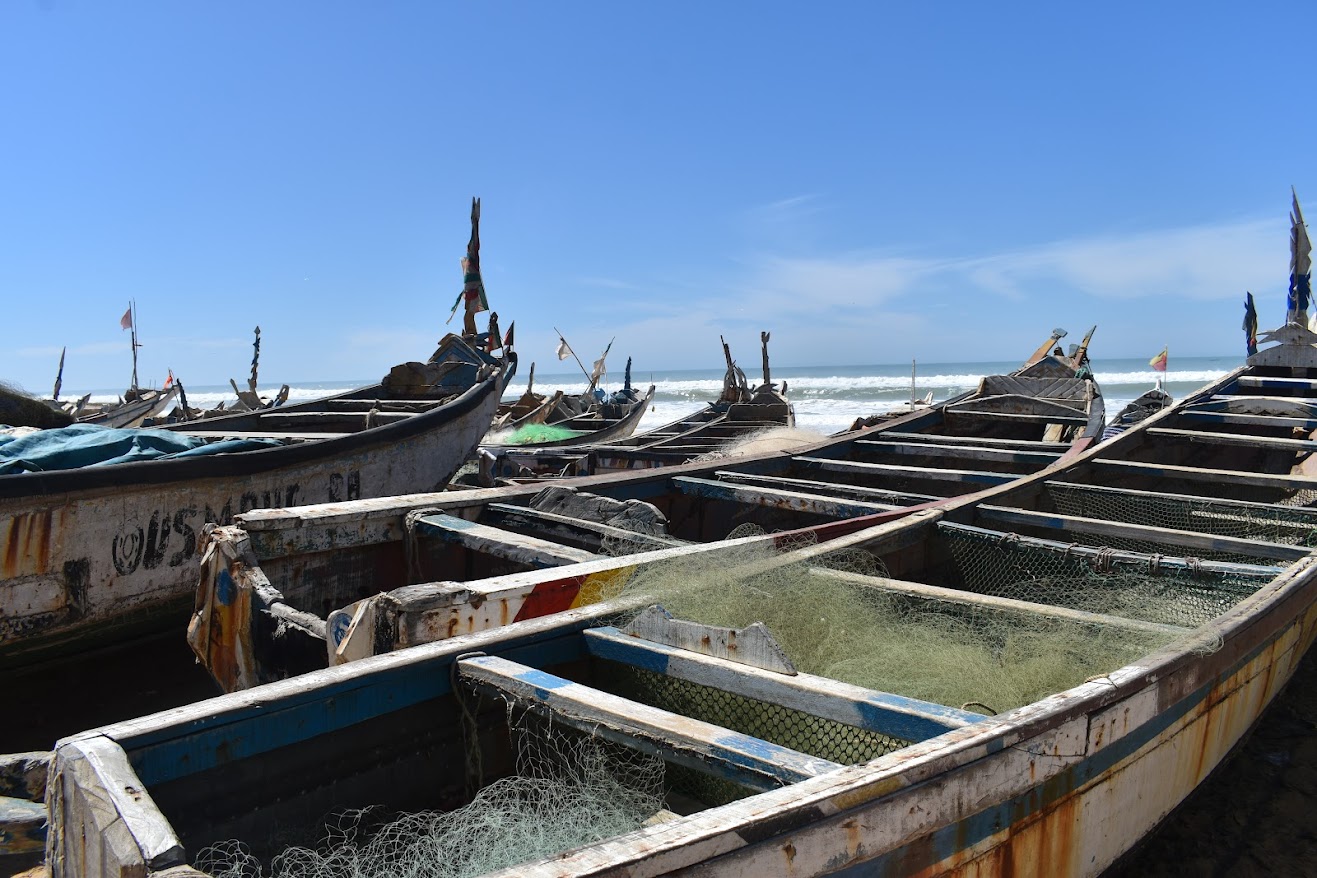
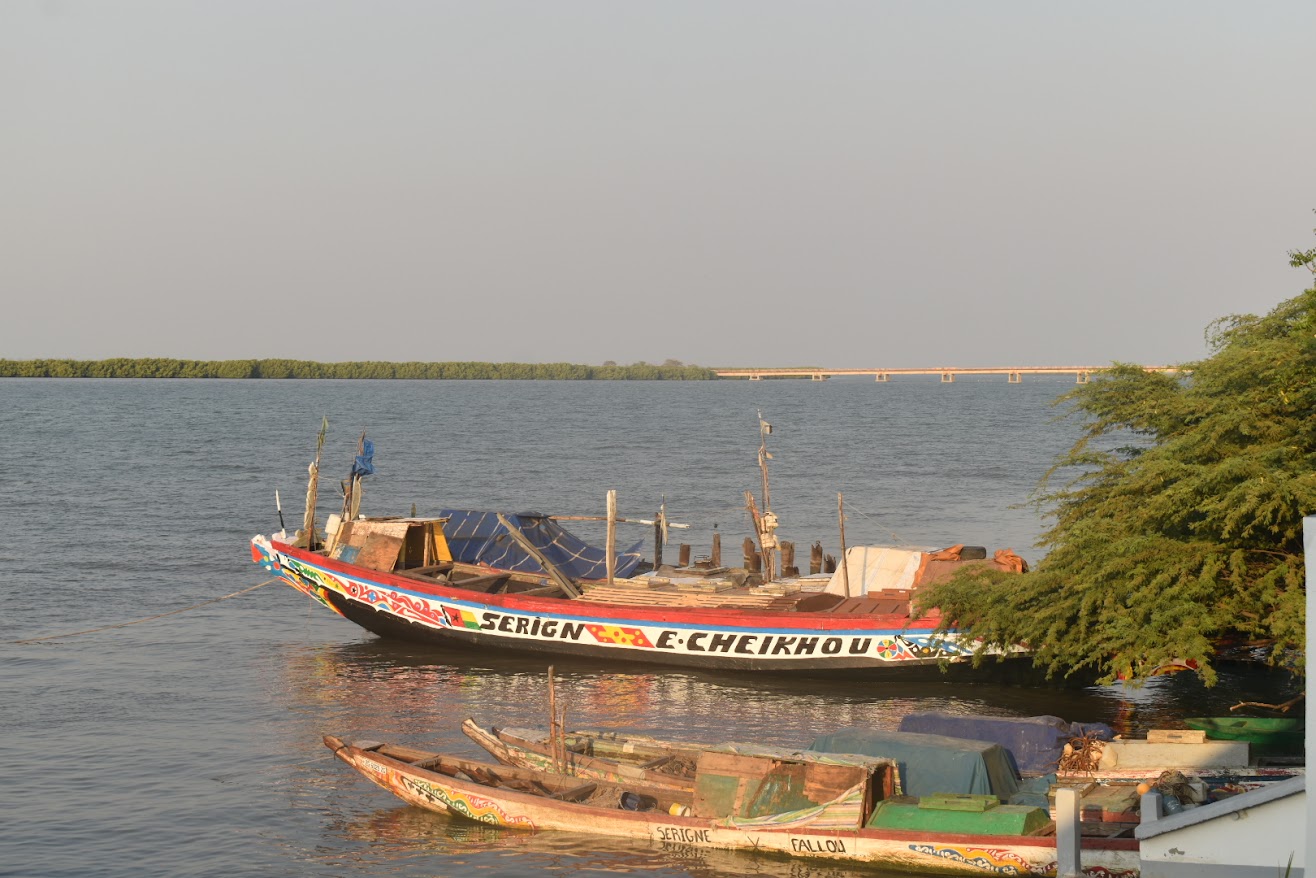
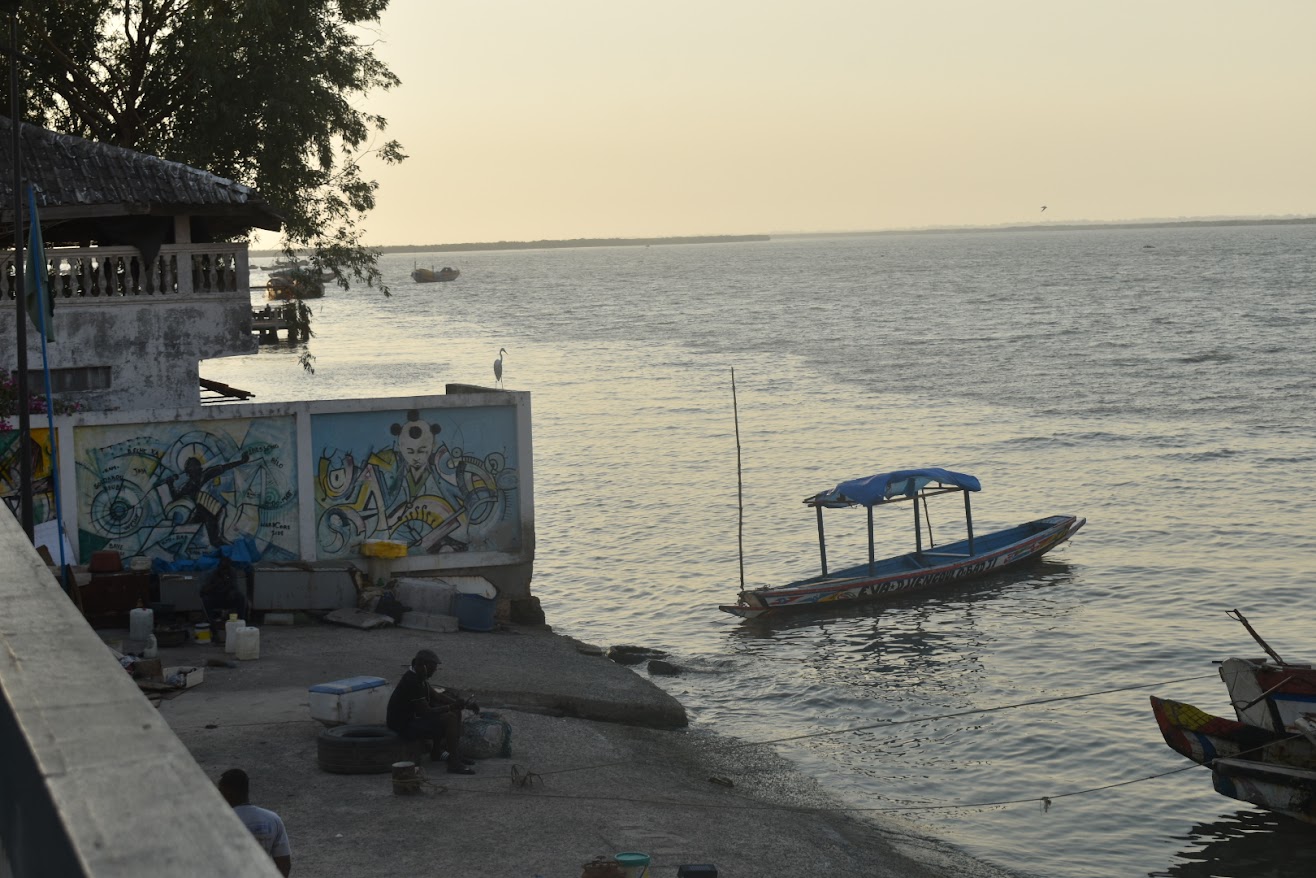
Saint Louise is a UNESCO World Heritage Site and the former capital of Senegal. The city center is famous for its charming hotels and colorful colonial houses, but we quickly left here to explore the rest of the peninsula. The city has a huge fishing port, where colorful fishing boats constantly come and go. The streets are decorated with lots of graffiti, and many artists live here. At night, it’s easy to stumble upon traditional drum performances in pubs, and during the day, you might come across artists making things from recycled bicycles or random festivals where dancers rush through the city in colorful costumes.
Lompoul su Mer and Lompoul Desert
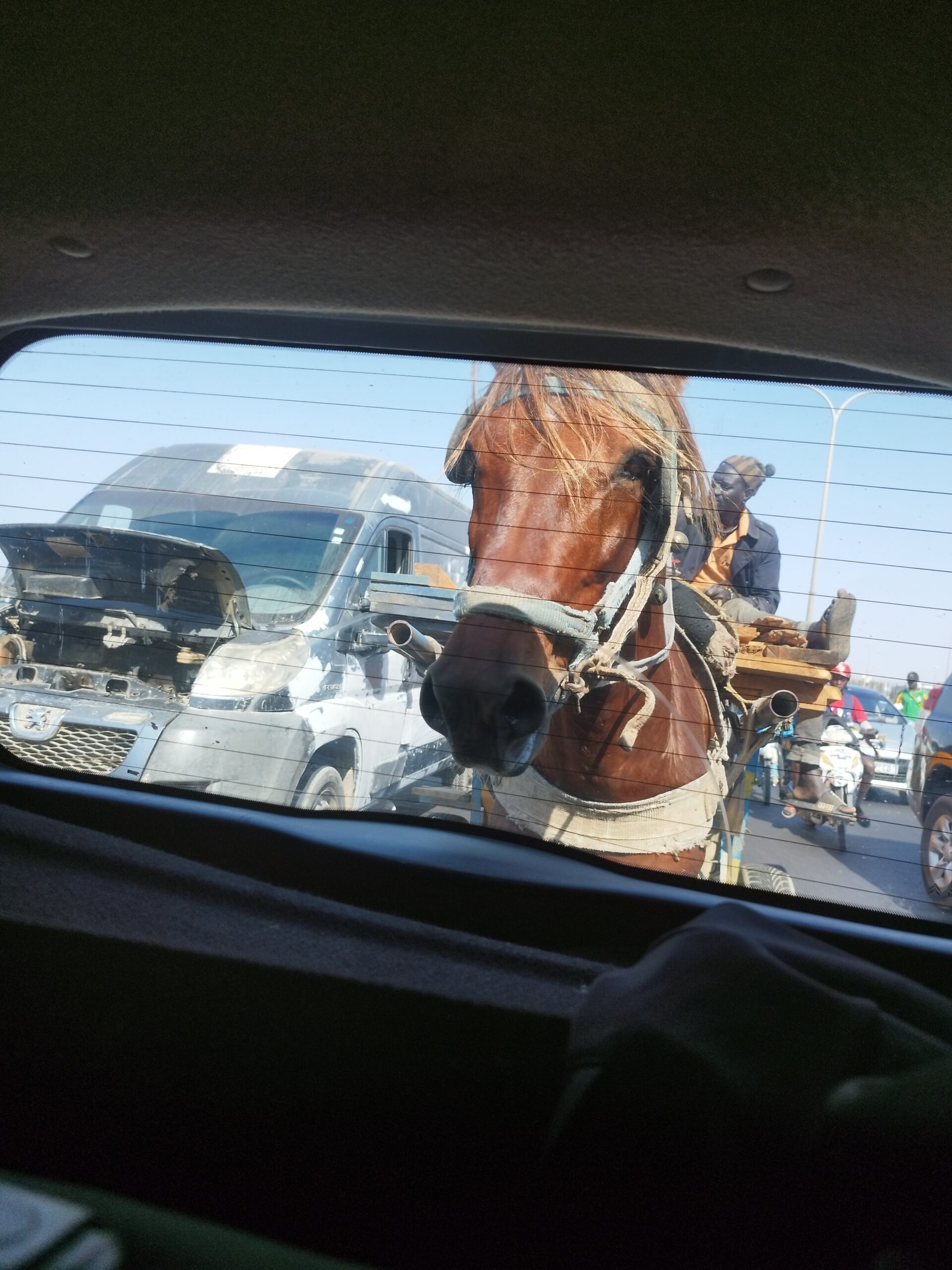
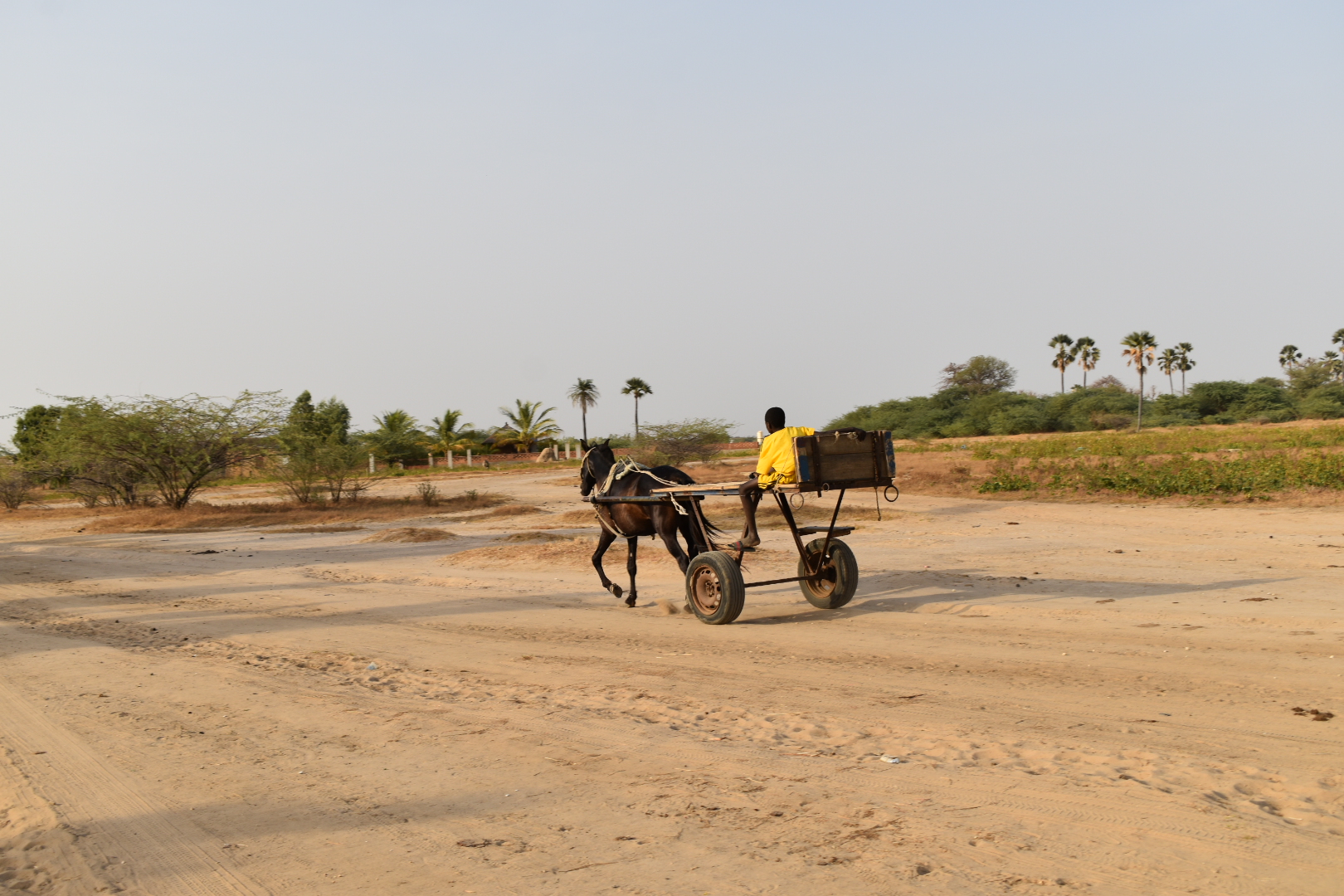
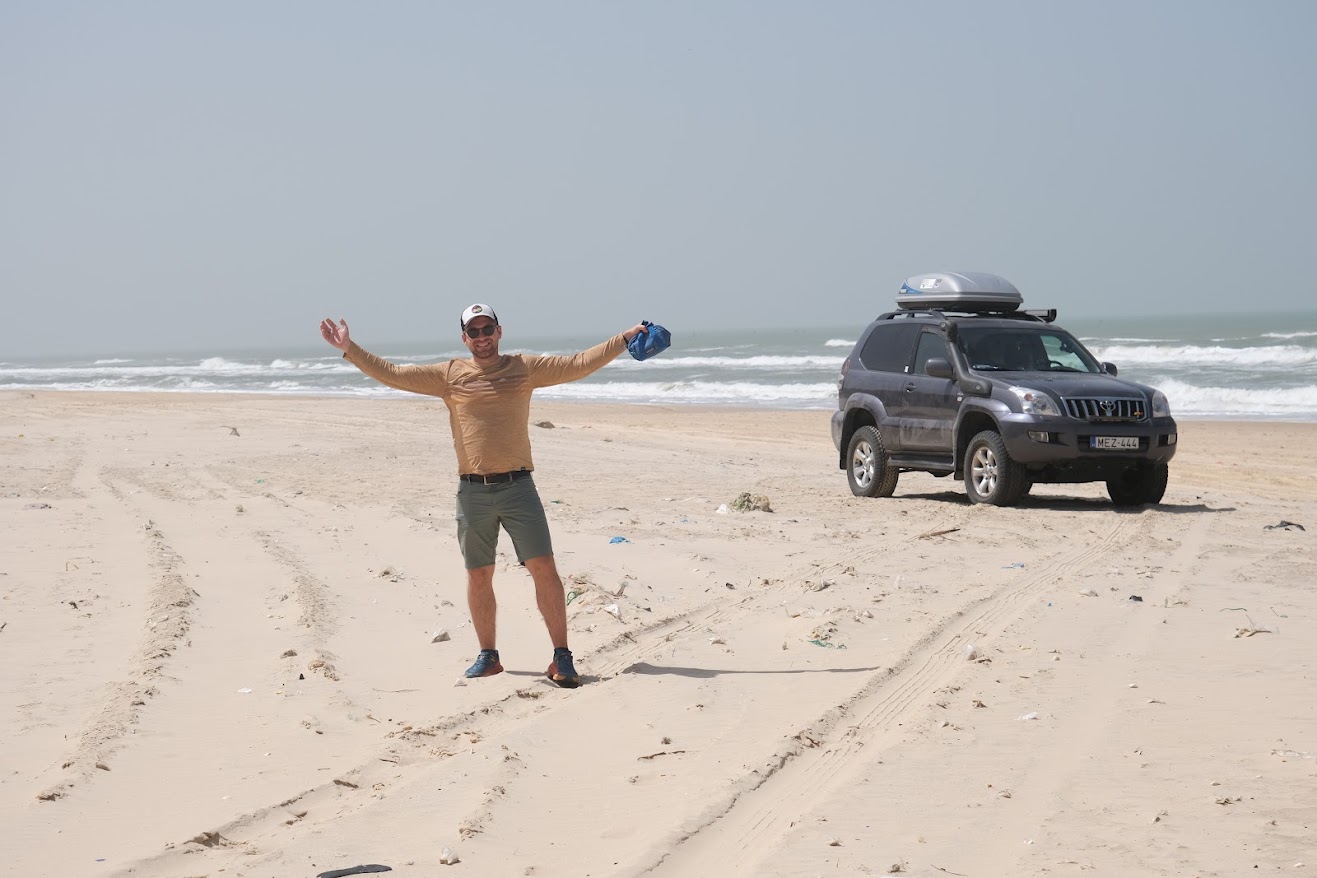
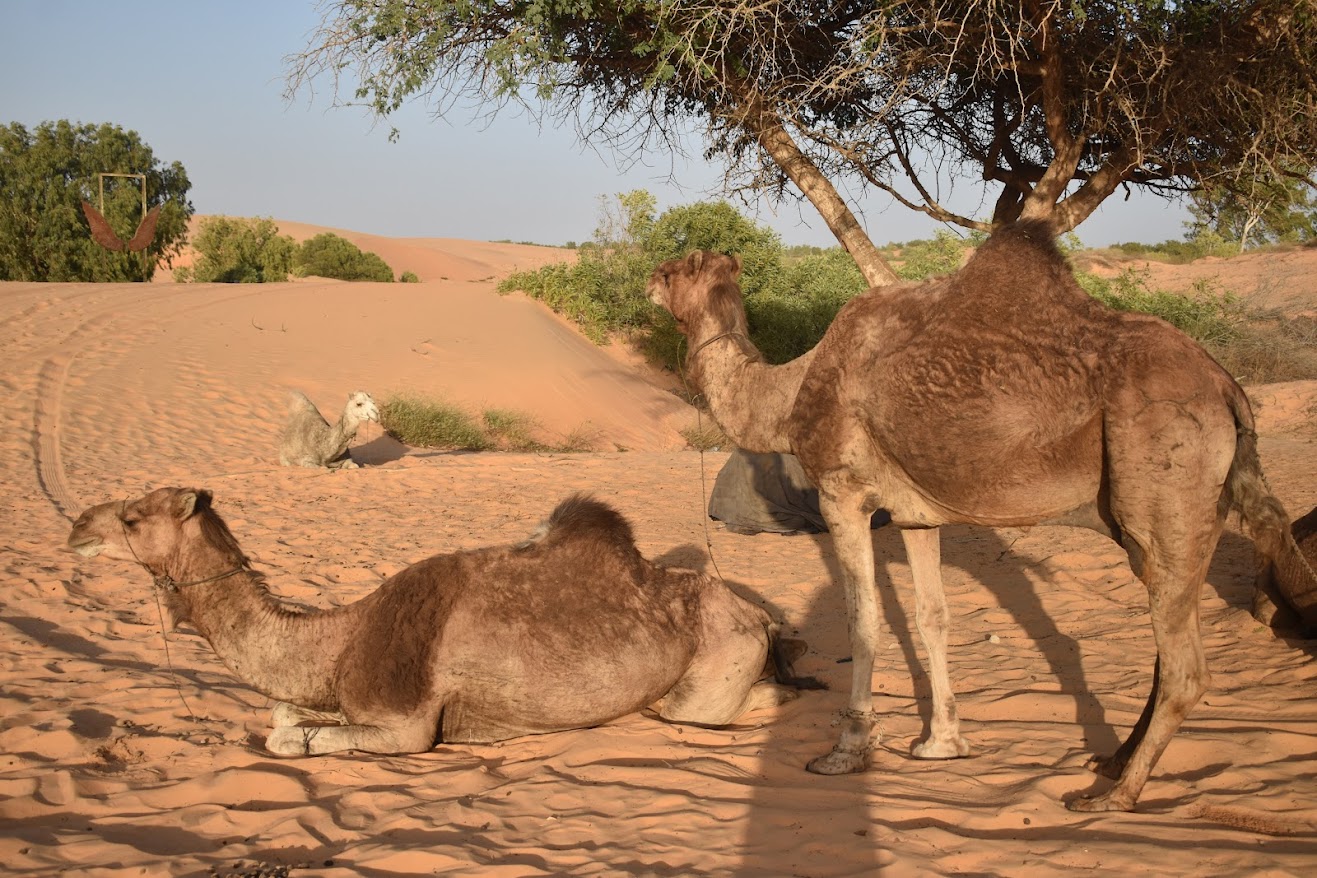
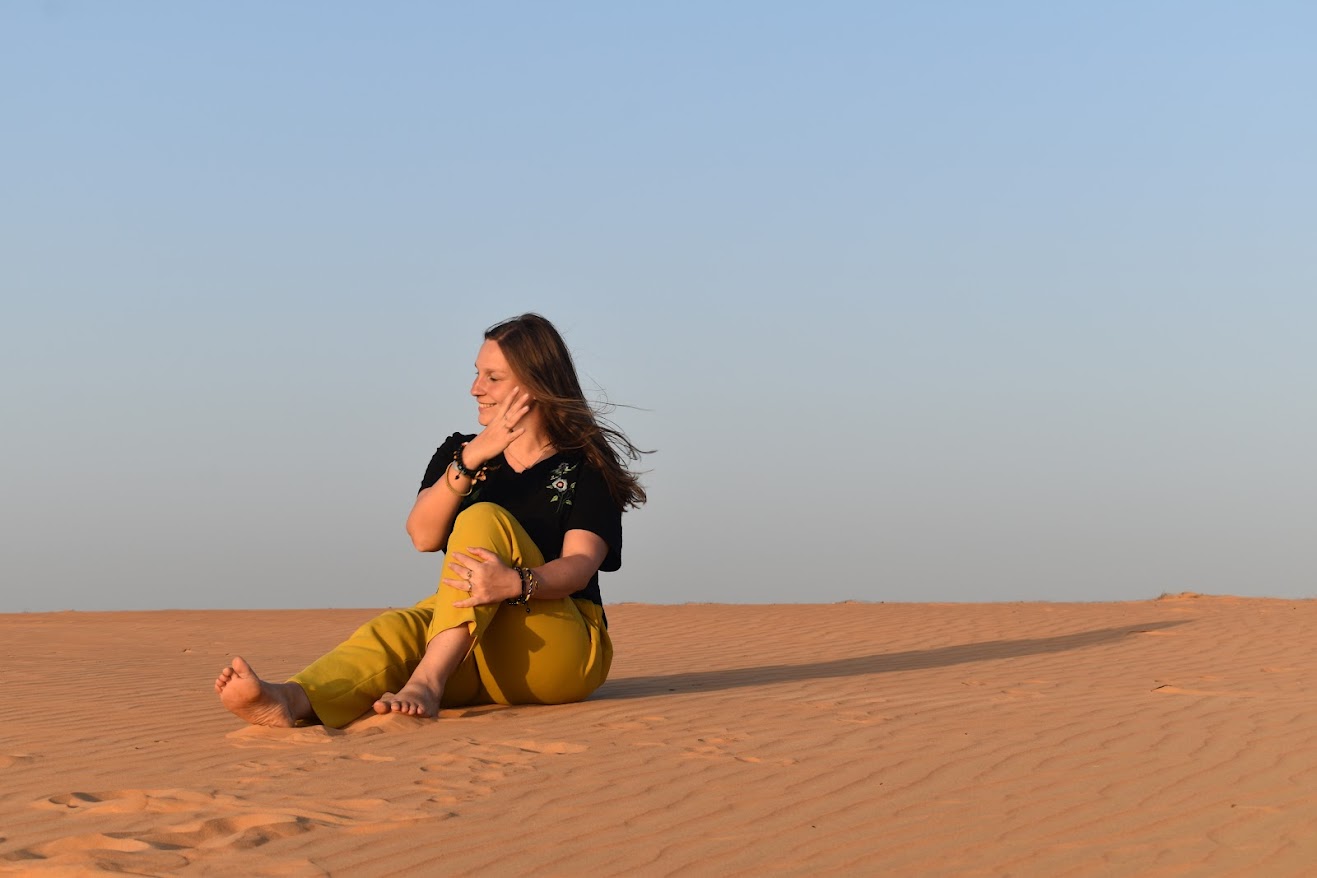
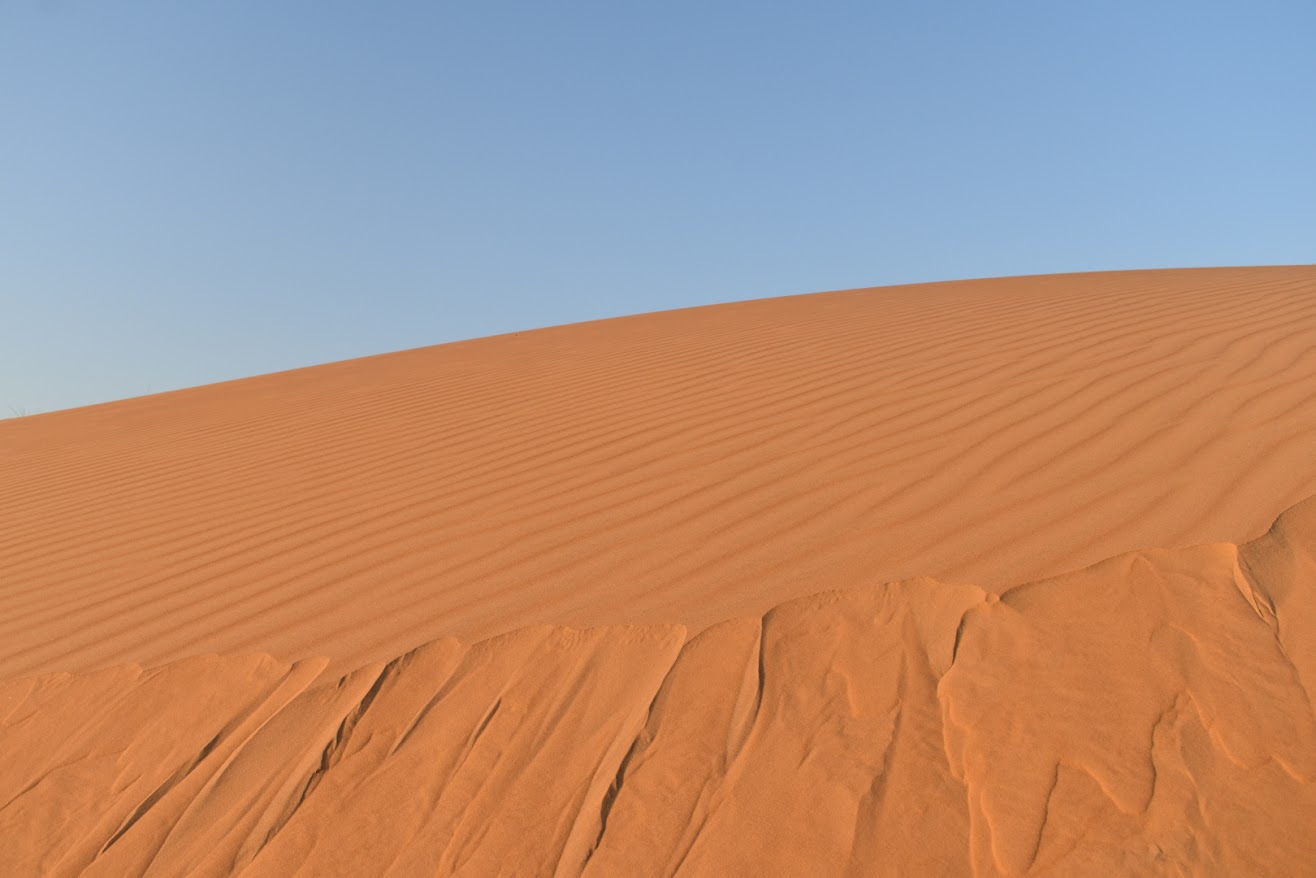
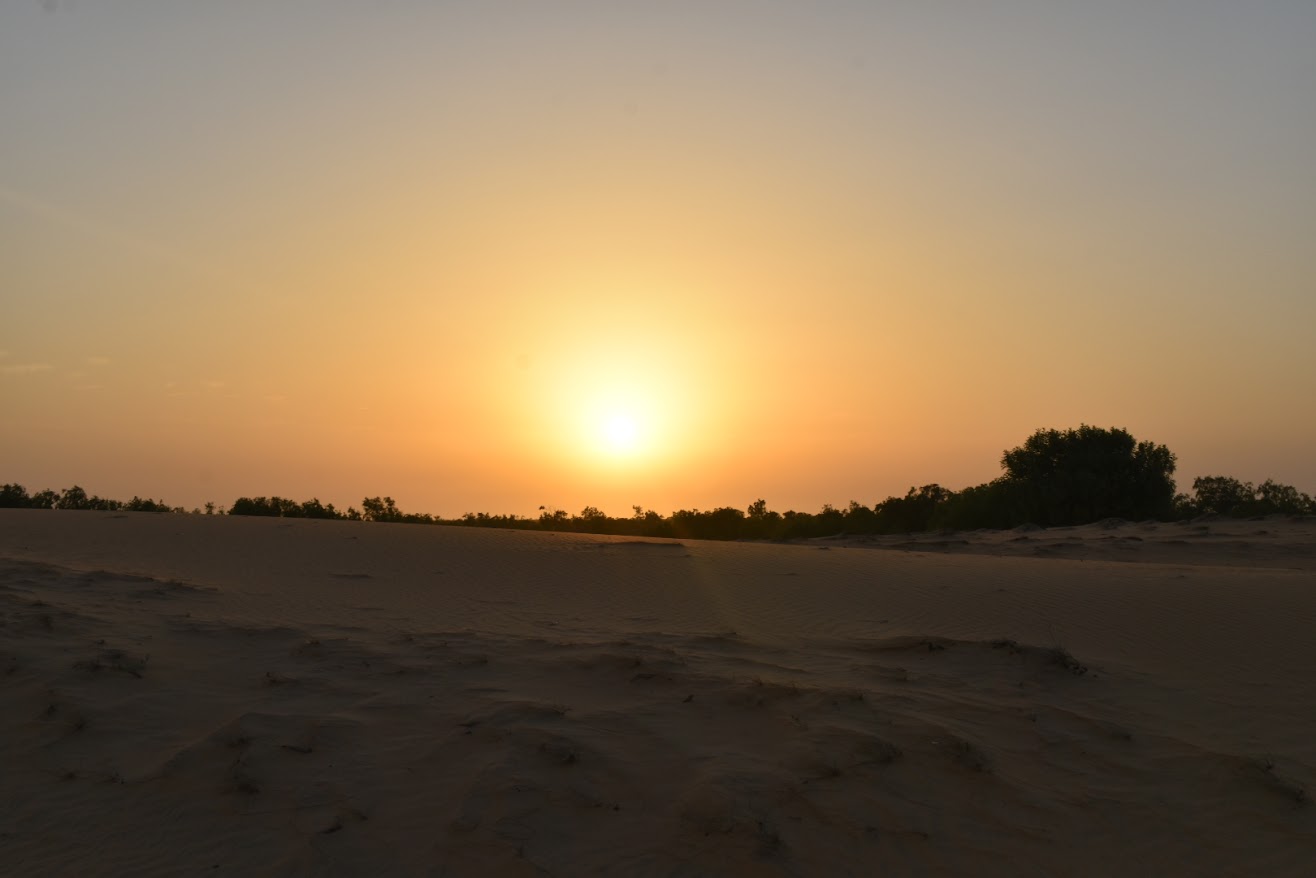
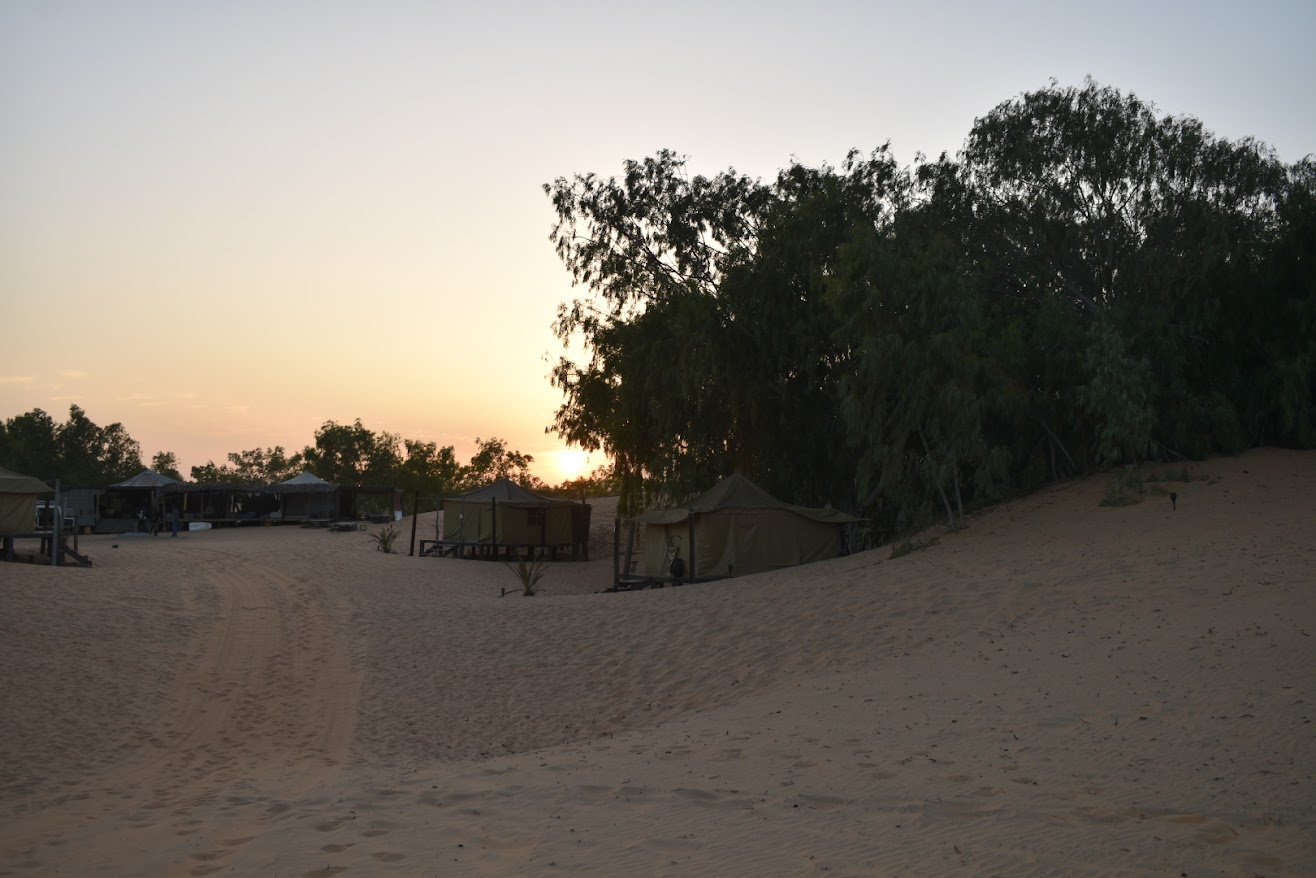
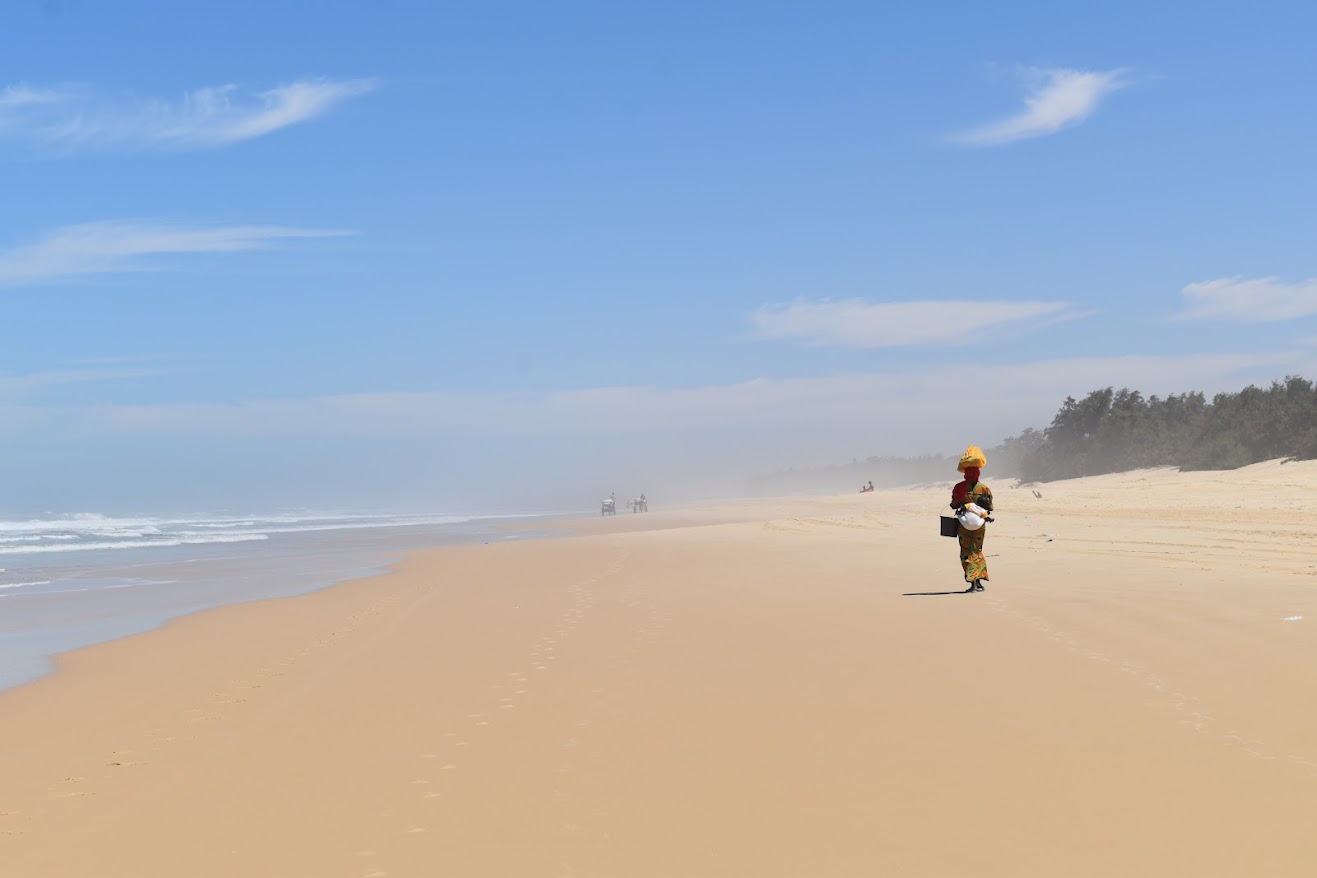
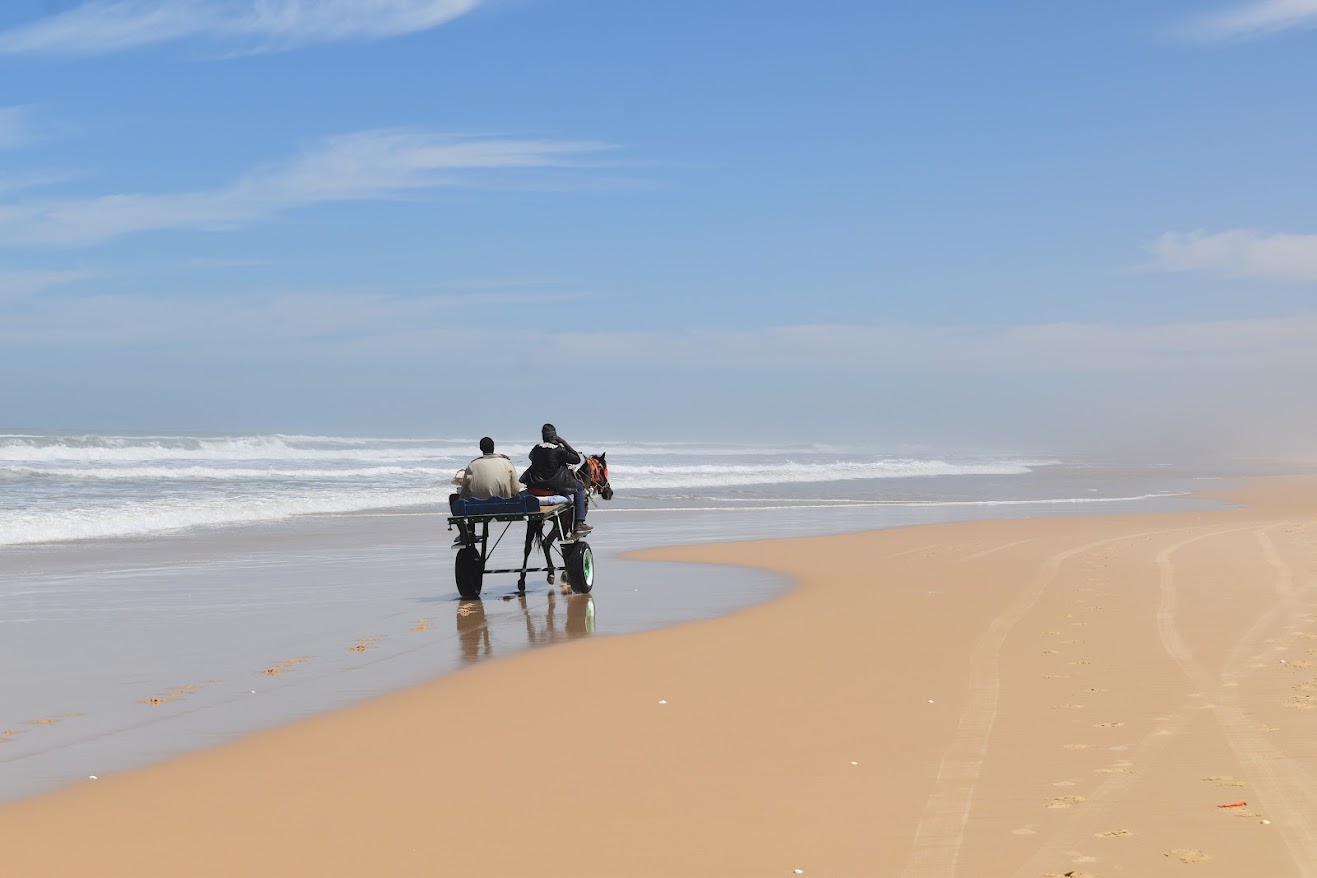
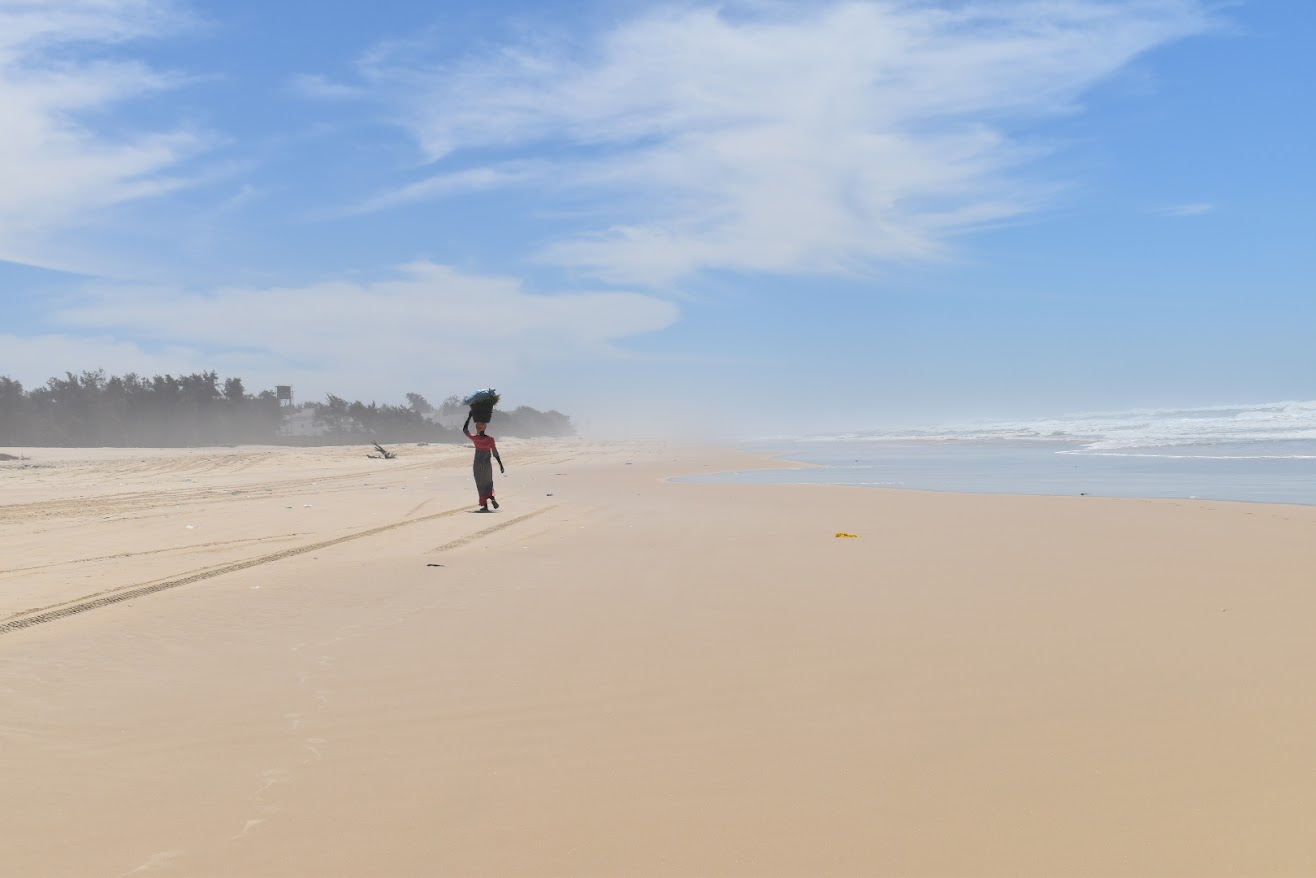
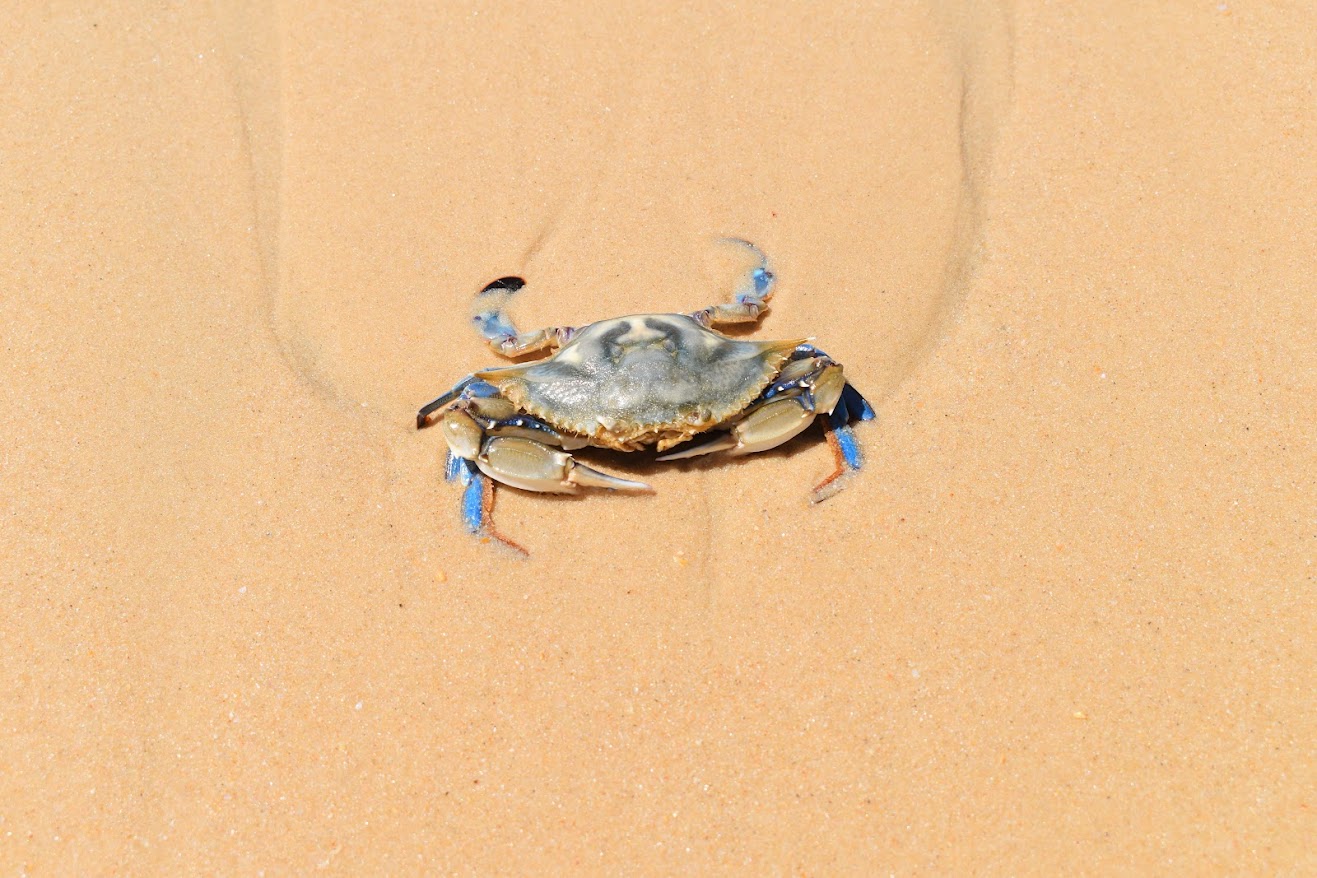
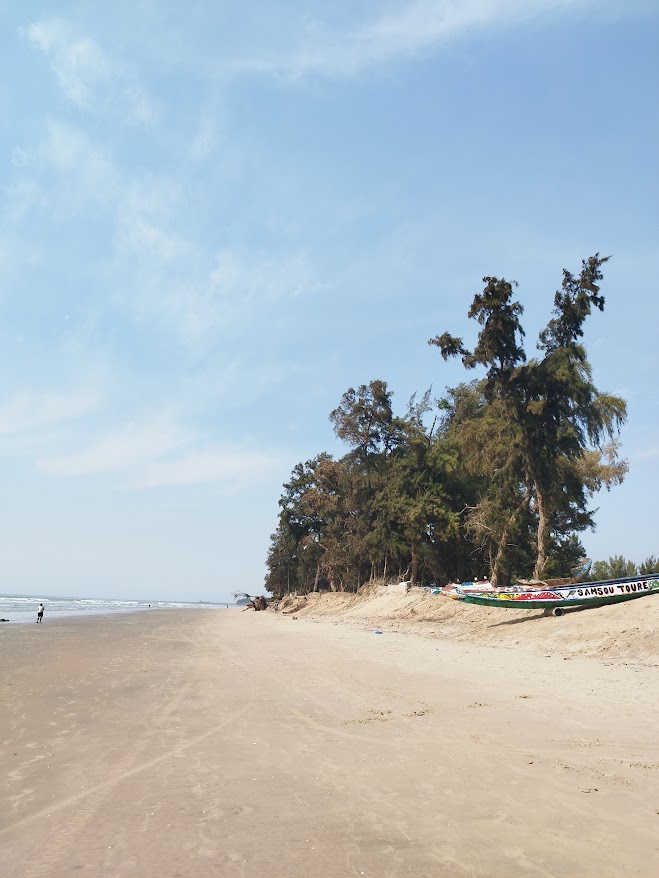
Lompul is a small desert, an extension of the Sahel region of the Sahara. We spent two nights in a tent, which was a surprise to the people working there, as people usually only stay for one night or stop by on their way to quad bike tours. Instead of passing through quickly, we walked down to the beach (it was extremely hot) and strolled along to the small fishing village. It was very interesting to see people traveling along the coast in horse-drawn carriages. We had lunch and a beer at a small hotel, then hitchhiked home because we couldn’t stand the heat anymore. Two years later, we returned to the coast by car and stopped at the hotel, where unfortunately everything had become very expensive, so we cooked for ourselves in the shade of the pine trees (surprisingly, there are some on the coast)
There are many other beautiful little villages in the area on the coast, and we stopped in Potou to go wild camping.
Ziguinchor
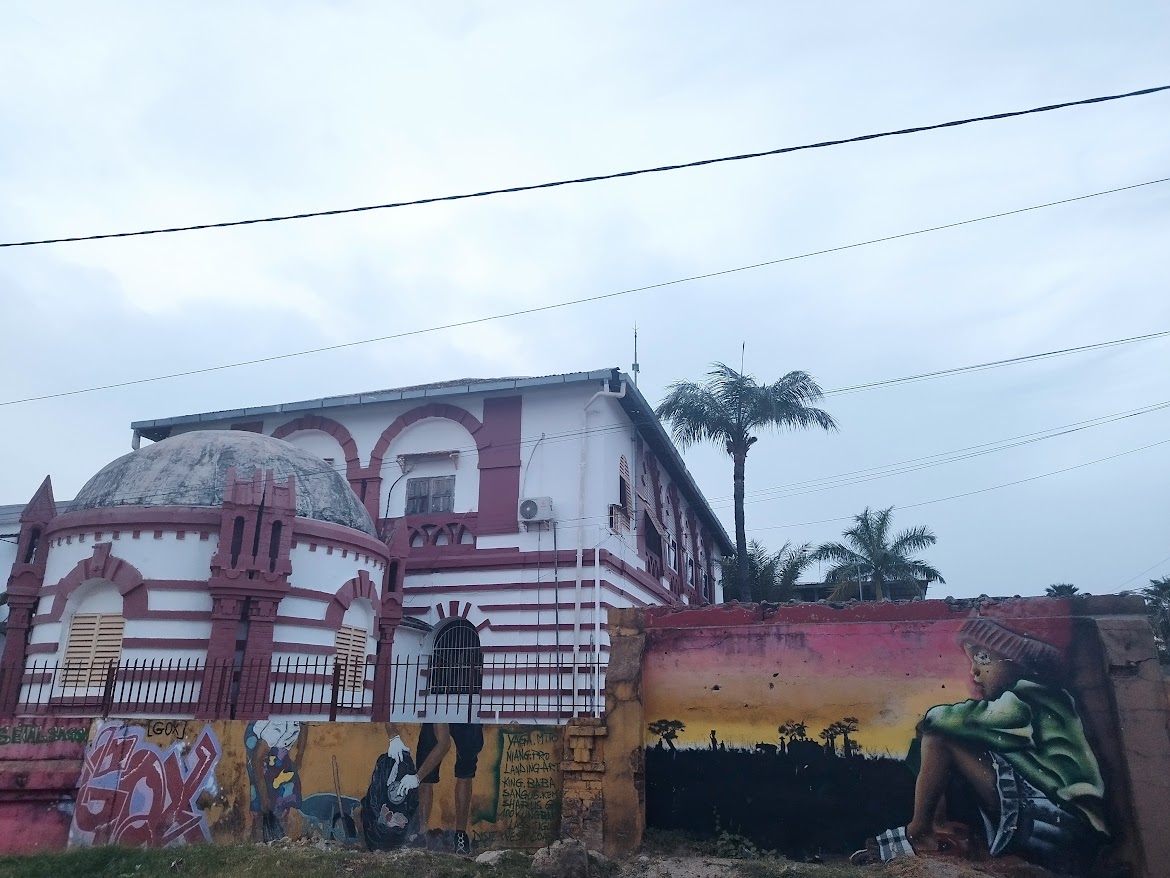
Ziguinchor is the center of the Casamance region in southern Senegal, a tropical city on the banks of the Casamance River, with many trees and green areas. Its atmosphere is noticeably different from that of the northern part of the country: it is calmer, more “southern,” and a good starting point for exploring the rural villages and riverside landscapes of Casamance. The people here are even friendlier and kinder than in the north. In the evening, I ate a fried chicken baguette in the main square connected by a roundabout in the company of a few locals, then spent half a day walking around the city. First, I had to sit down next to everyone at the fish market, then, as I walked down the street, everyone called me into their shops to greet me and ask where I was from, so I only covered a few hundred meters in an hour.
Cap Skirring
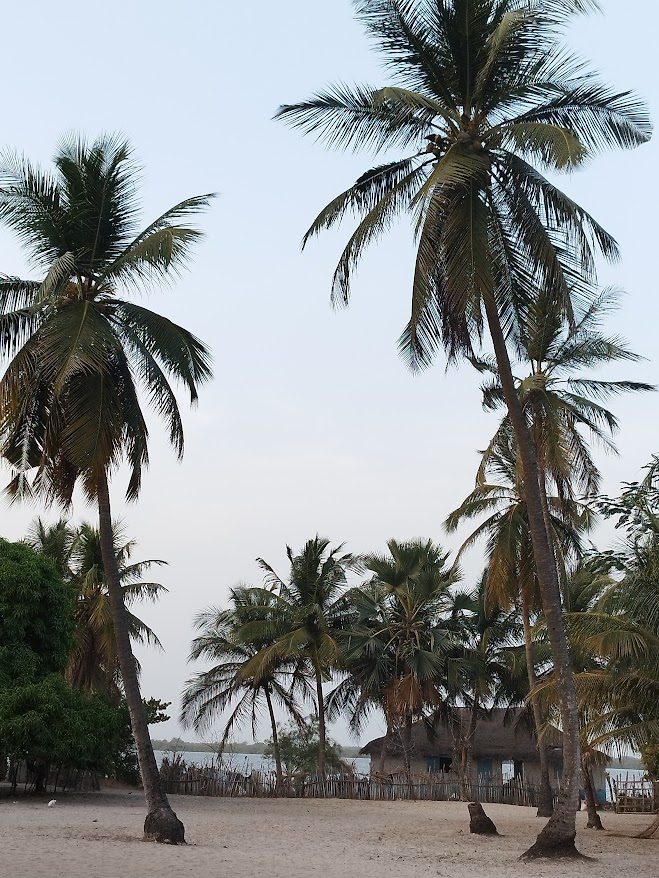
Cap Skirring is a famous seaside resort in southern Senegal in the Casamance region, with white sandy beaches, palm trees, lots of restaurants and tourists, so we skipped it in 2023 and 2025, but it may be a good choice for those who want a little more infrastructure.
Abene
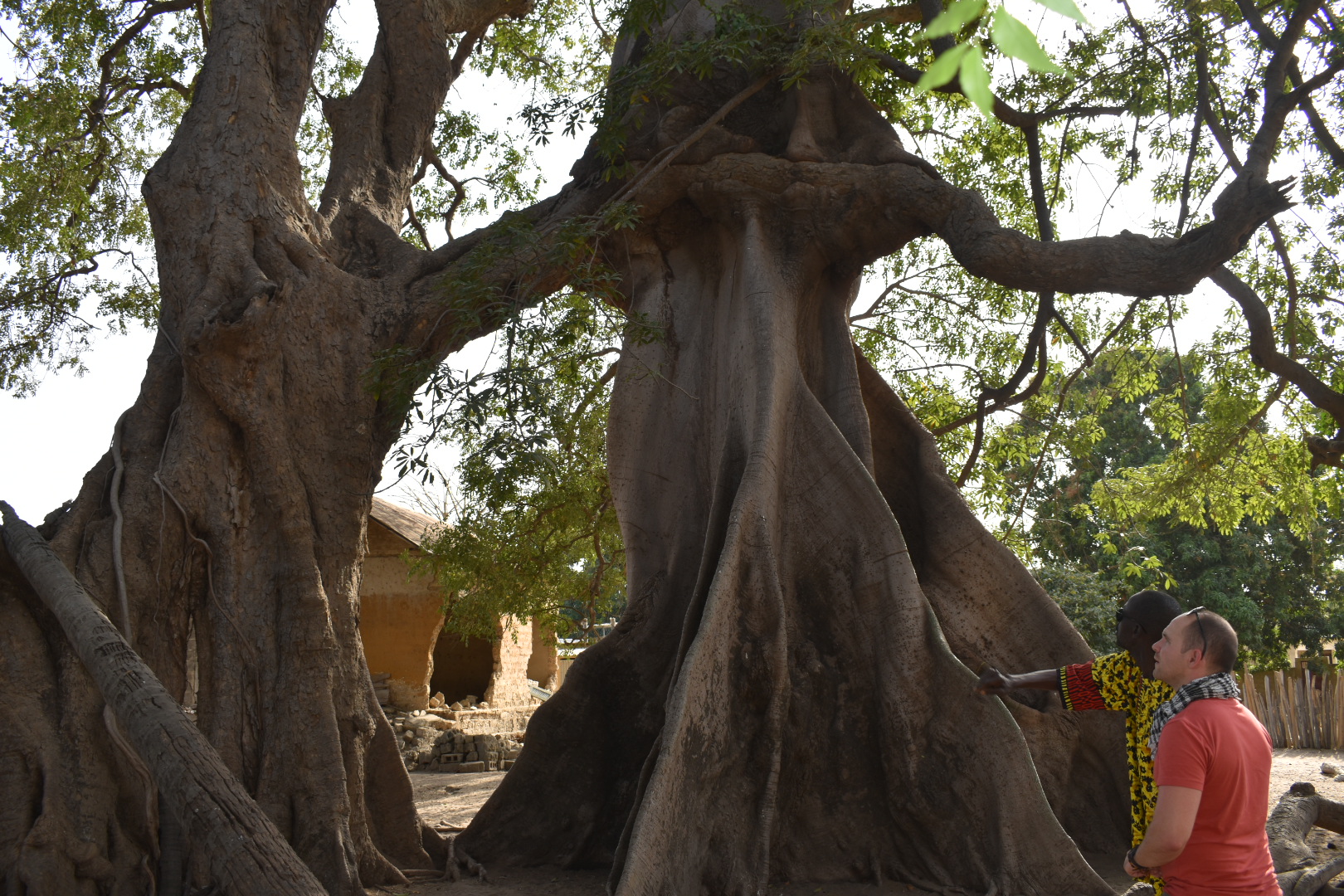
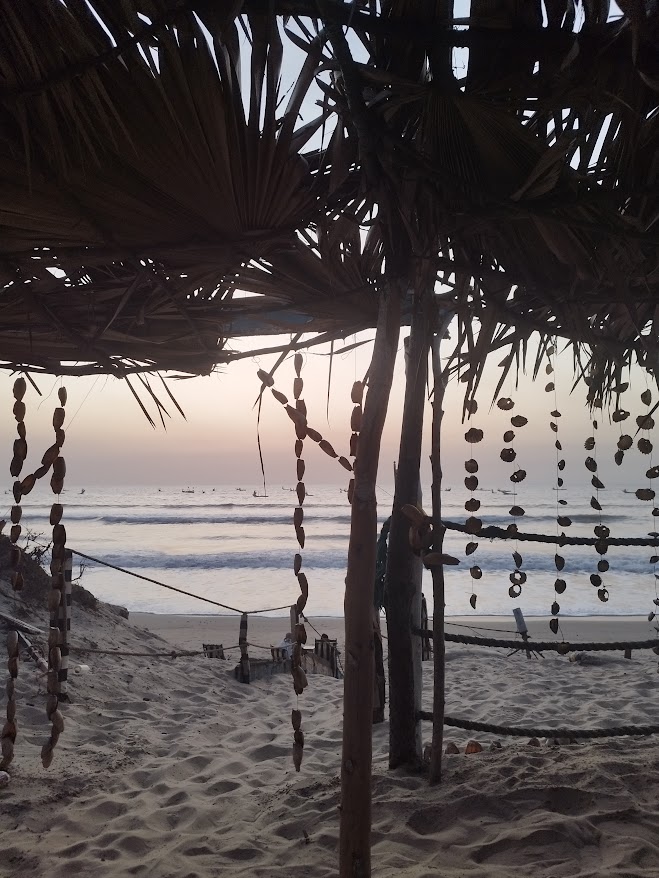
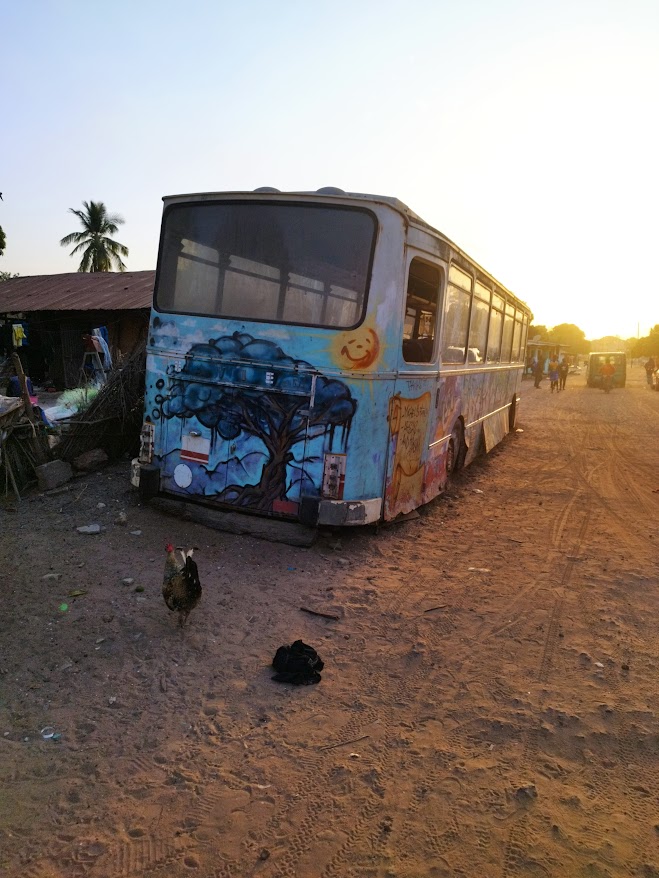
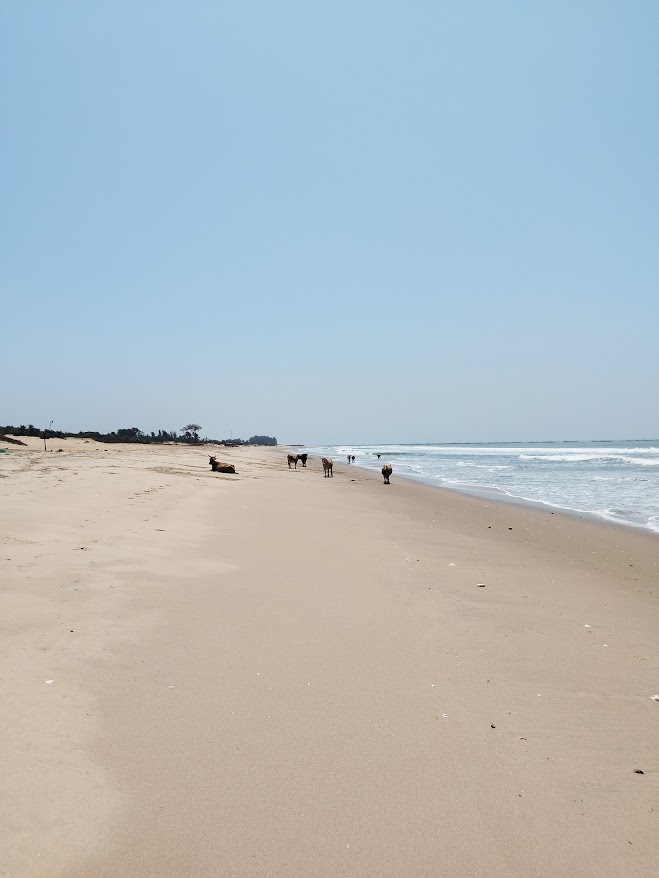
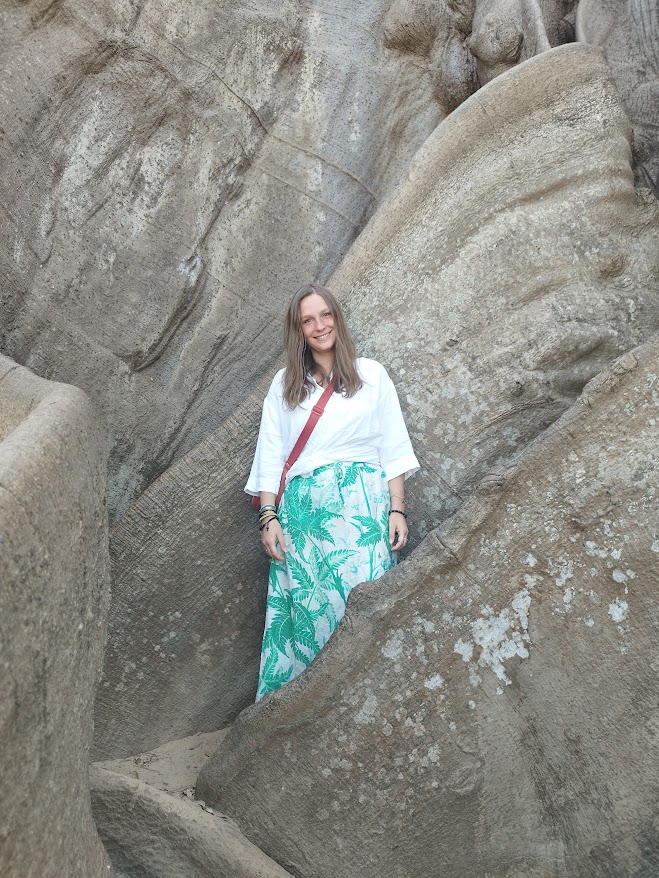
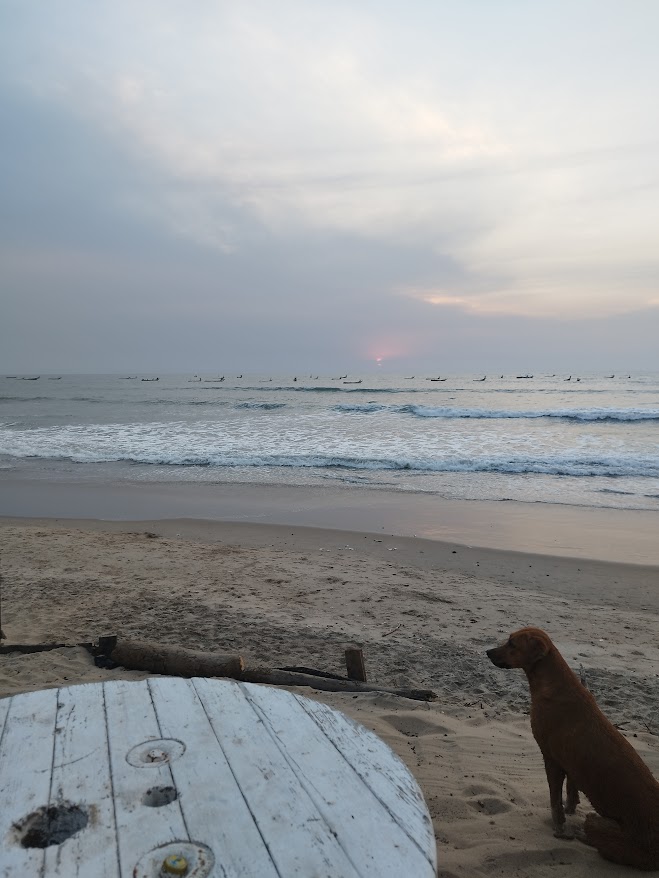
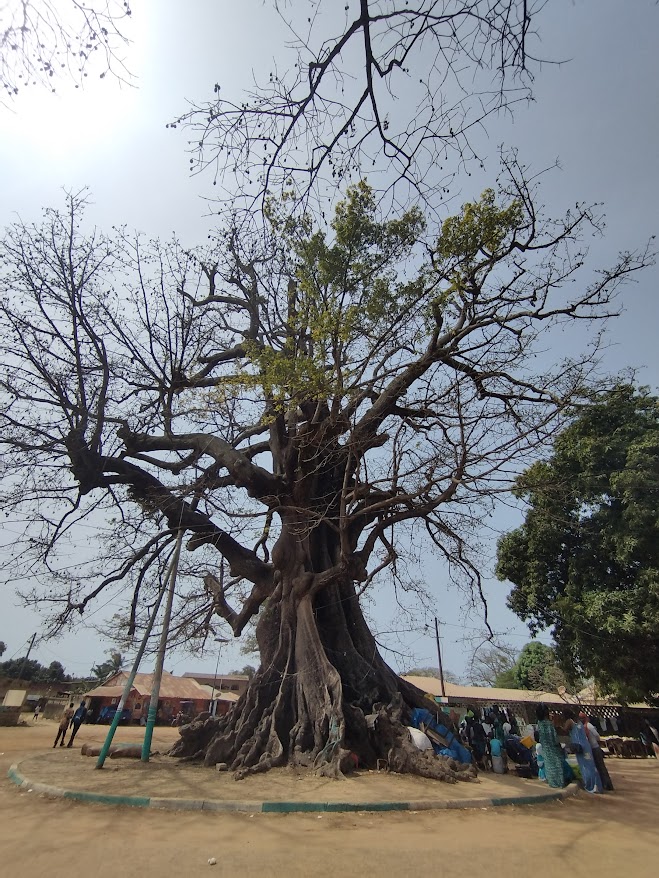
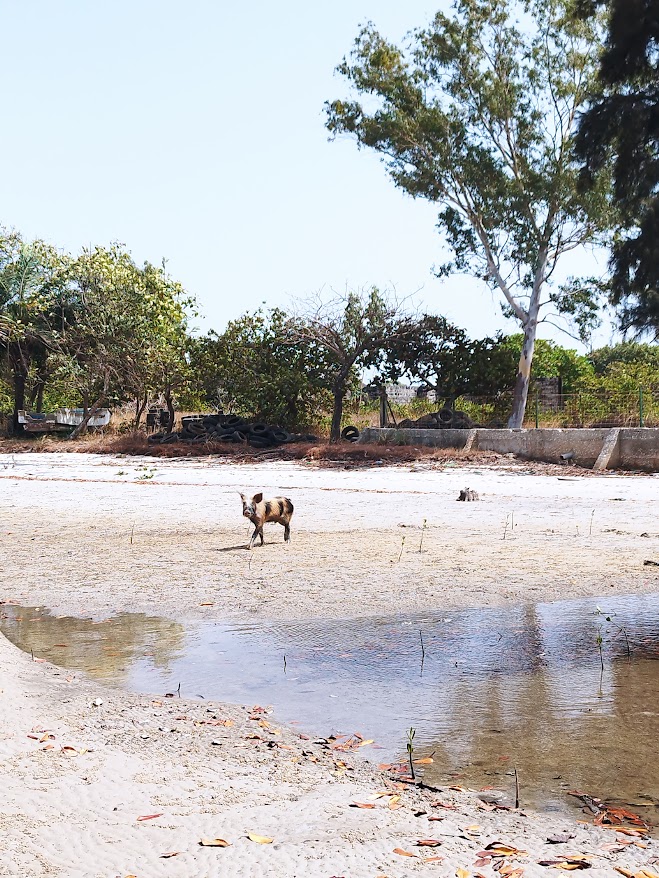
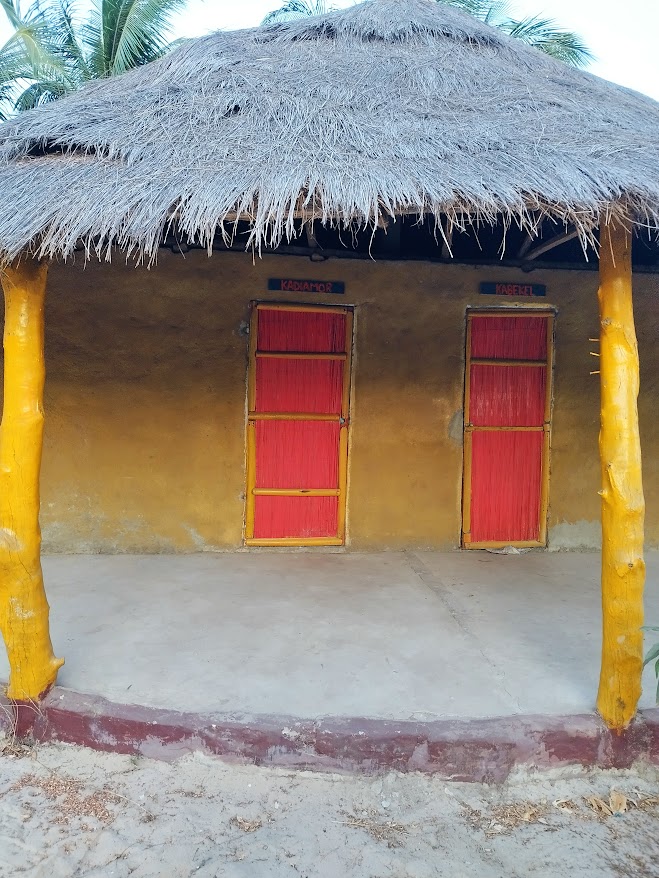
Abene is a small resort village located north of Ziguinchor, close to Gambia, next to Kafountine, which is a slightly larger fishing village. Abene is famous for its giant baobab tree, its festival, its cows on the beach, and its peaceful environment. The locals are very proud of their culture, which they are happy to share with visitors. There are Rasta bars on the beach, and many people follow the Baha’i religion (they are often called Muslim Rastas), with peace, equality, and acceptance as their main principles. Every evening, Rasta parties liven up the night. This is truly a place where people go to meet the locals.
Cachouane and Diembéreng
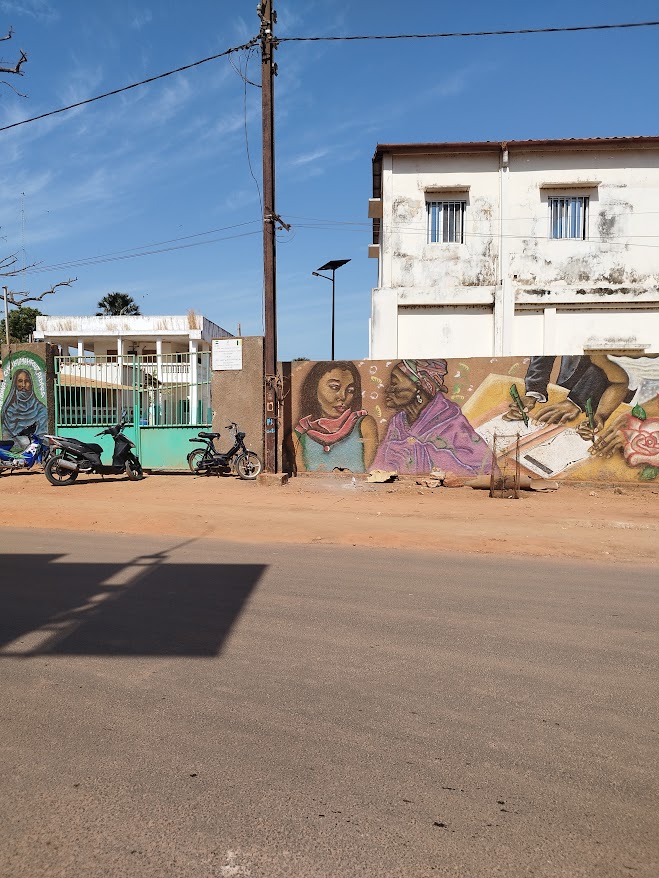
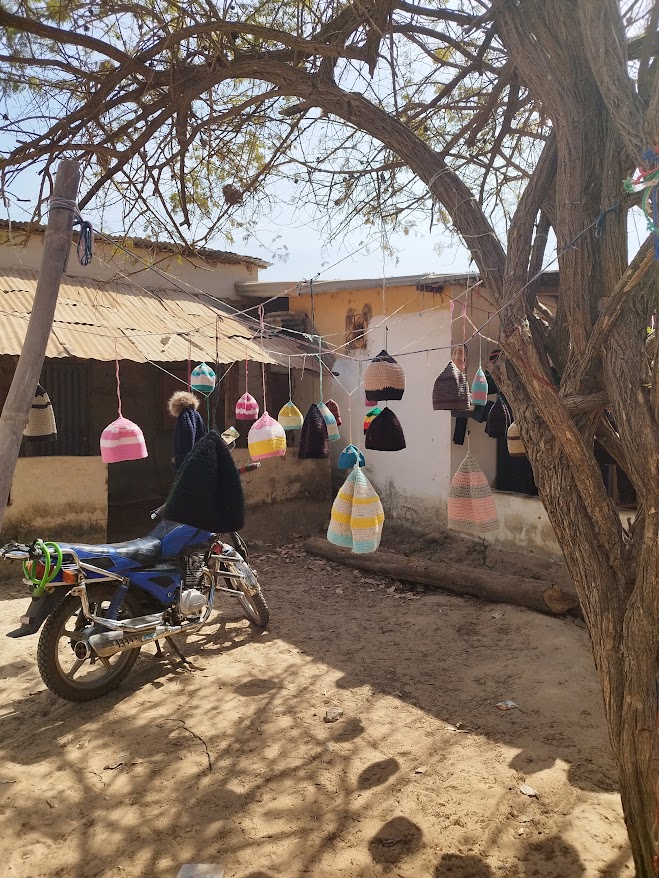
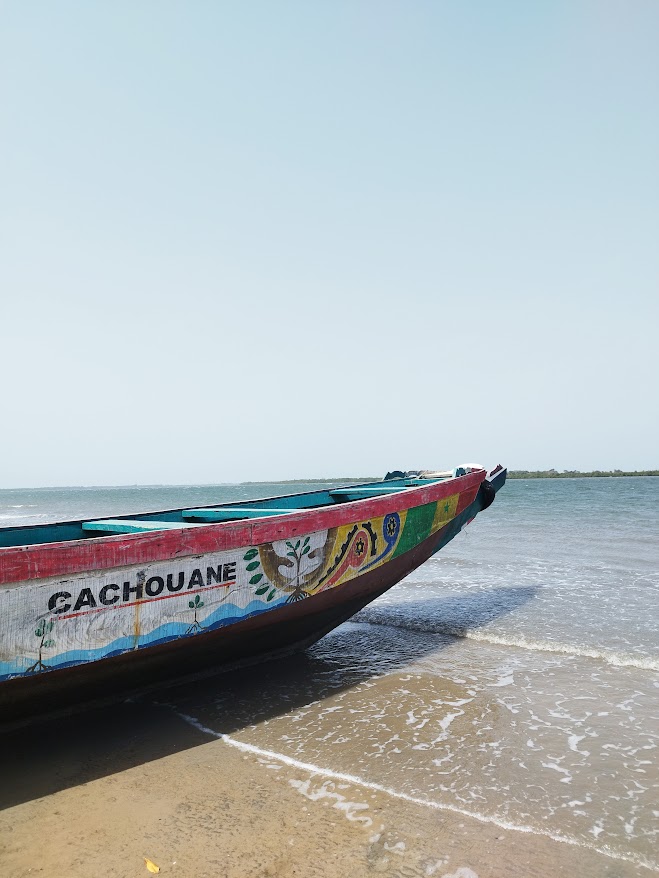
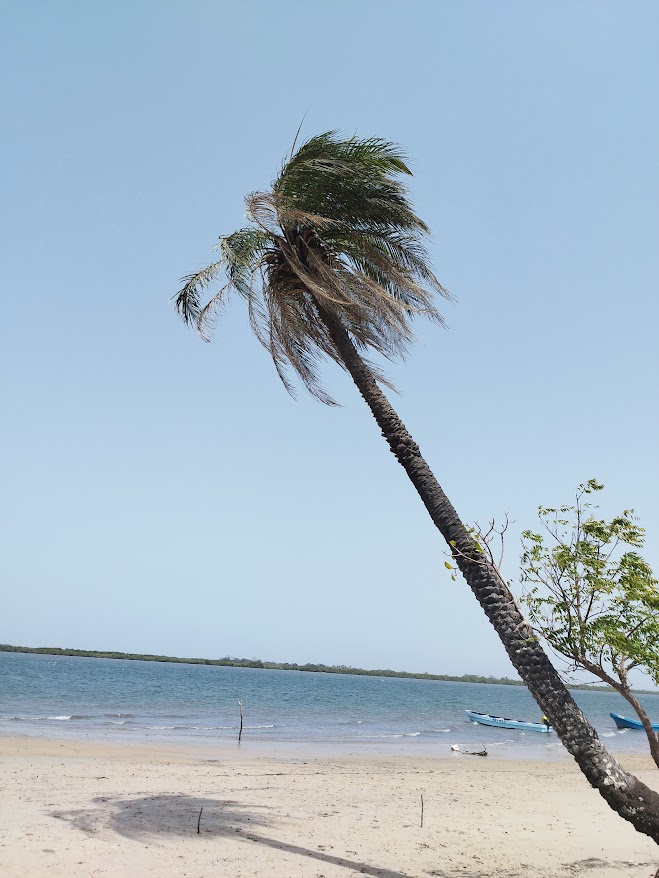
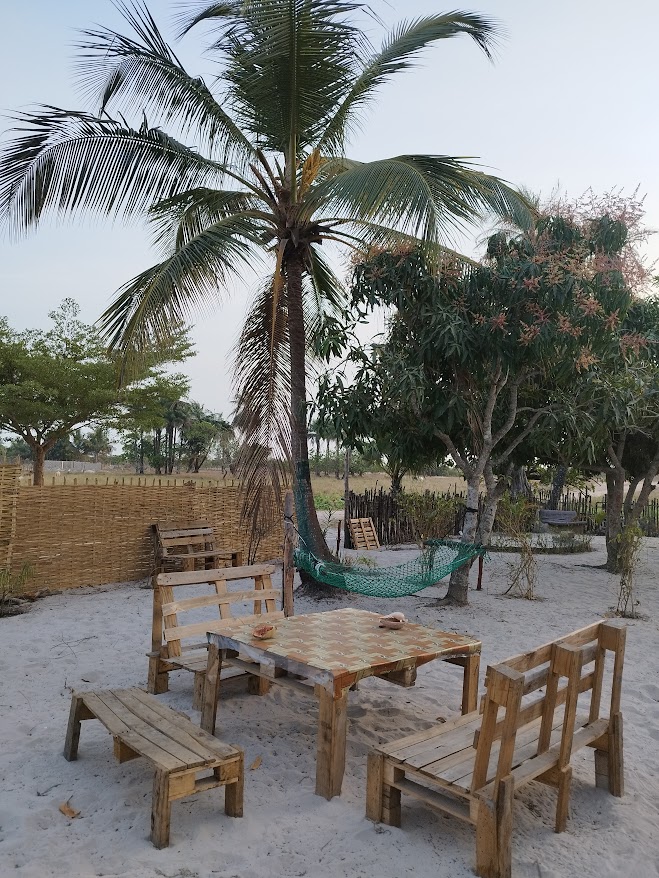
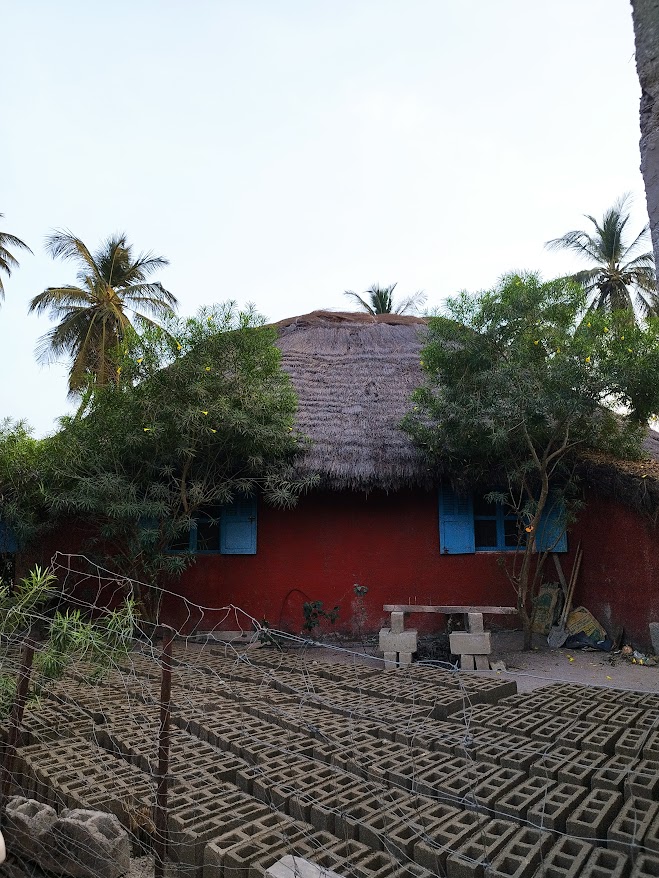
Two places we visited from the many options offered by the Casamance canals and mangrove forests. We caught some kind of virus, so we spent most of our time relaxing in Cachouane at a cute little guesthouse run by eight siblings. We also took a few walks along the river and soaked up the very slow and peaceful Casamance lifestyle. On the way back, we stopped in Diembéreng, a small village where people sit under large baobab trees and sell various products, but it also has a beach, so it’s worth spending some time here. Everyone was very nice here too, and we had the daily special (fish soup) at one of the small restaurants.
What we missed in Cassamance, but others recommended, was the island of Karabane and Oussouye, which is often described as a good starting point for exploring the delta and villages.
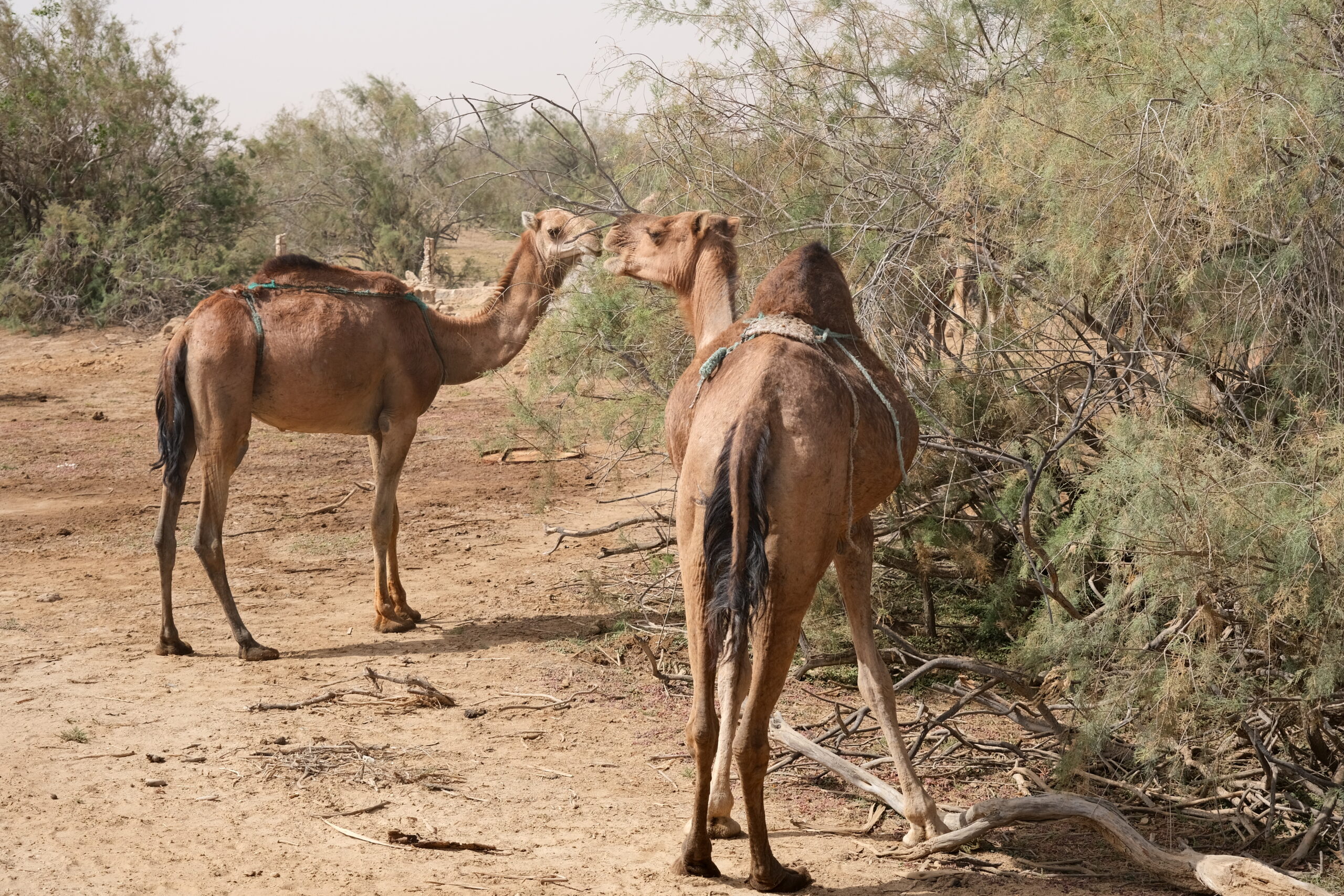
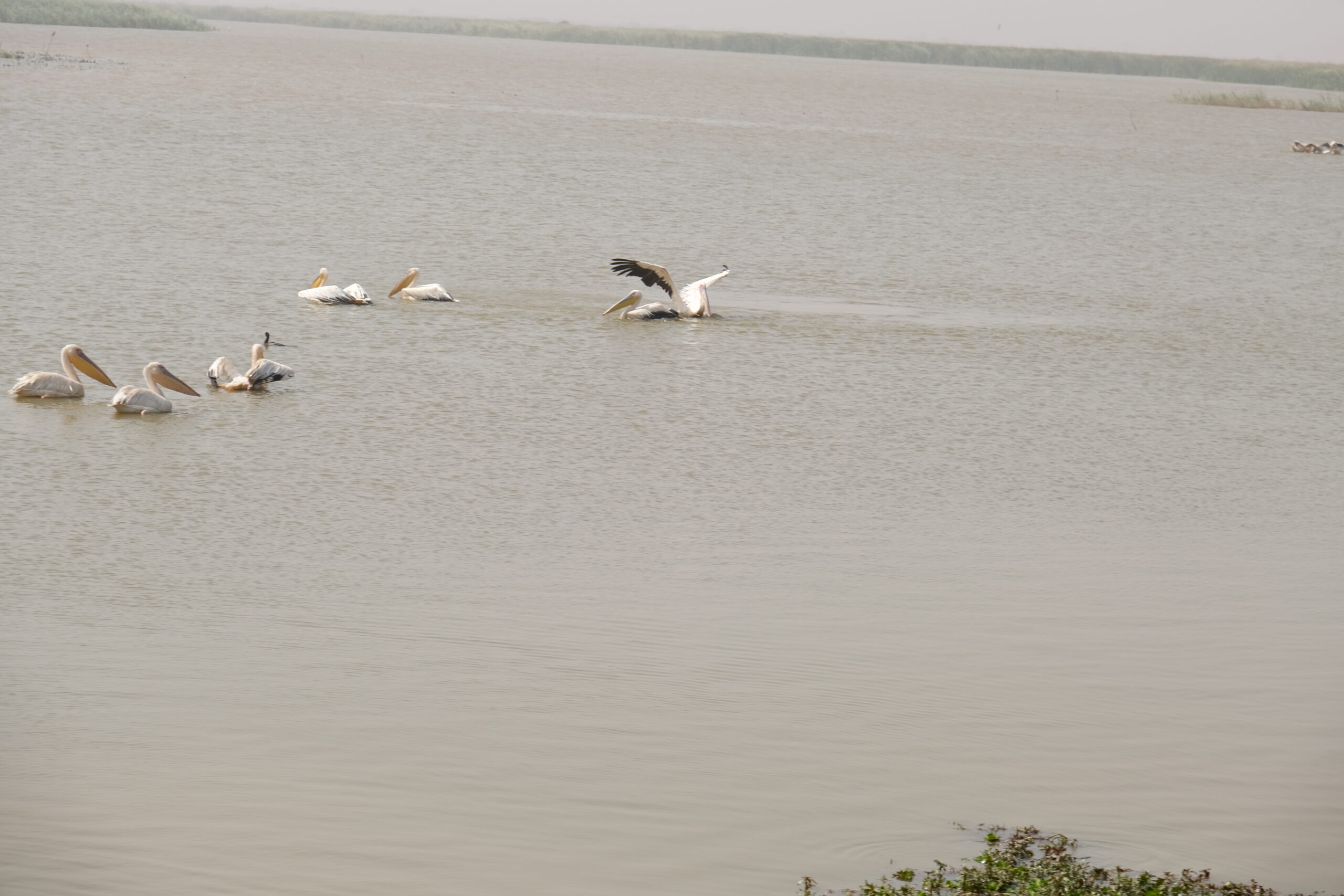
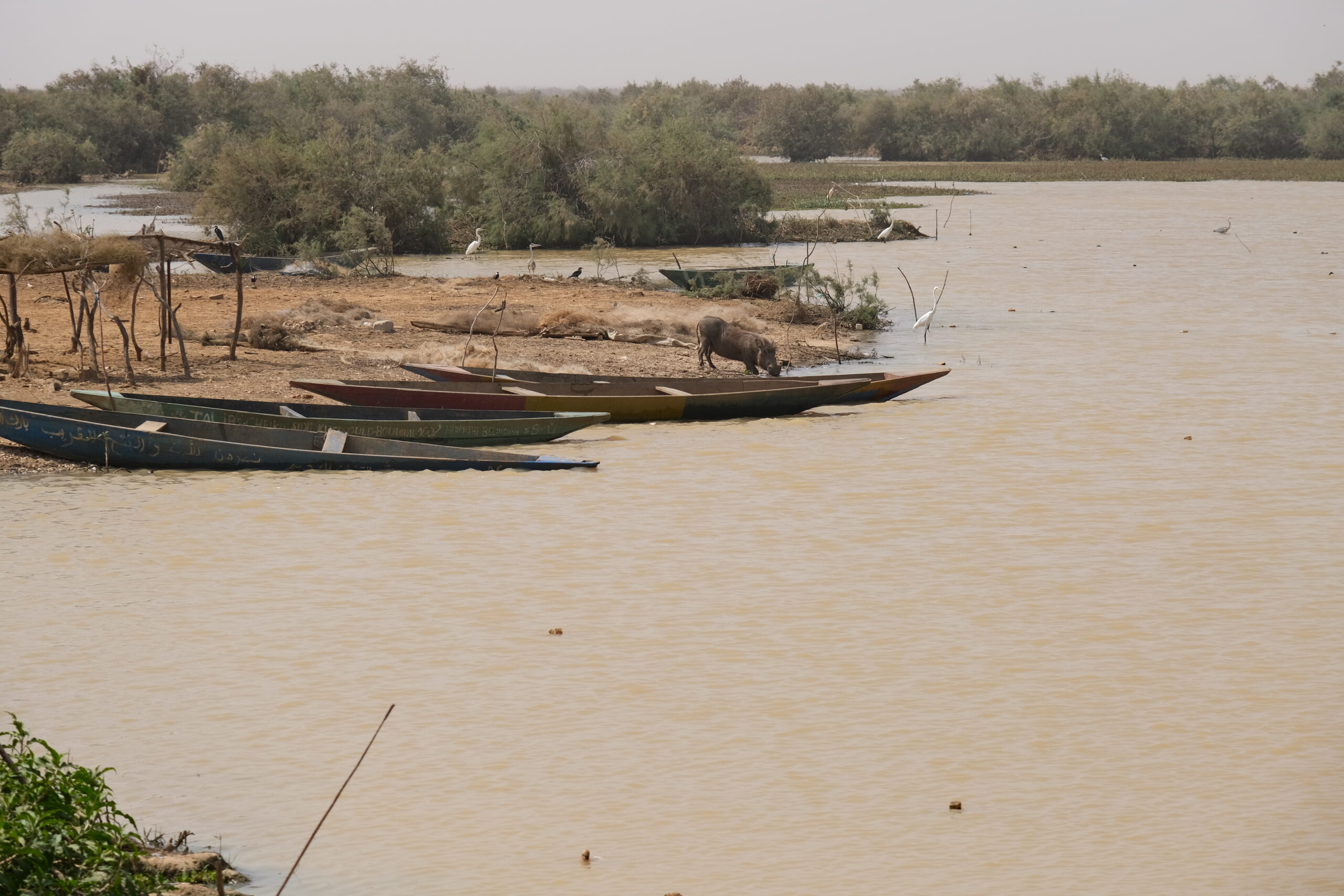
Djoud National Bird Sanctuary
The reserve, located in the delta of the Senegal River, is one of the world’s most important bird habitats, where more than 3 million birds (pelicans, flamingos, herons) can be observed during the migration period. It is connected to the Diawling National Park in Mauritania, which we visited while crossing the border.
Nikolo-Koba National Park
A remote, wild savannah-forest national park in eastern Senegal, home to antelopes, baboons, crocodiles, and occasionally lions. The infrastructure is minimal, but we looked into it and found that there are campsites/small lodgings on the riverbank. We thought about going there for a long time, but it was just too far off our route.
Kédougou
Located near the Guinean border, the area around the town founded by the Maleniké people is one of the greenest and most diverse regions of Senegal, where waterfalls, hill walks, and rarely visited villages make the place interesting. Since we crossed the border towards Guinea-Bissau, we unfortunately missed out on this region, but we would love to visit it someday.
Touba
Touba is one of Senegal’s most unique and interesting cities: it is the spiritual center of the Mouride Islamic Sufi order, founded at the end of the 19th century by Cheikh Ahmadou Bamba during French colonial rule. Bamba’s teachings combined the Islamic faith with hard work, discipline, and moral purity; for this reason, the colonial authorities considered him dangerous and exiled him, but the number of his followers continued to grow, and after his death, Touba became a pilgrimage city.
There is no alcohol or tobacco in Touba, and the city is largely run by religious leaders – in many ways, it is a true “state within a state.” Life revolves around the monumental Grand Mosque, culminating in the annual Grand Magal, when millions of pilgrims arrive from all over the country.
Closely linked to the city is the Baye Fall community, a branch of the Mouride order based on the teachings of Ibra Fall. Baye Fall followers condemn violence and express their spiritual devotion primarily through physical work and service; they often deviate from classical Islamic precepts and are easily recognizable by their colorful clothes and dreadlock-like hair.
One of the most interesting features of Touba is that there are virtually no official, traditional accommodations: hospitality here is not a business, but a religious duty. Pilgrims and visitors are welcomed by families of Baye Fall followers, often free of charge, with food and a place to sleep, reflecting the community solidarity of the Mouride teachings. As a traveler, Touba is not just a city, but a living religious and social system, which is a rare and deeply memorable experience in West Africa – for this reason alone, we will definitely return to Senegal.
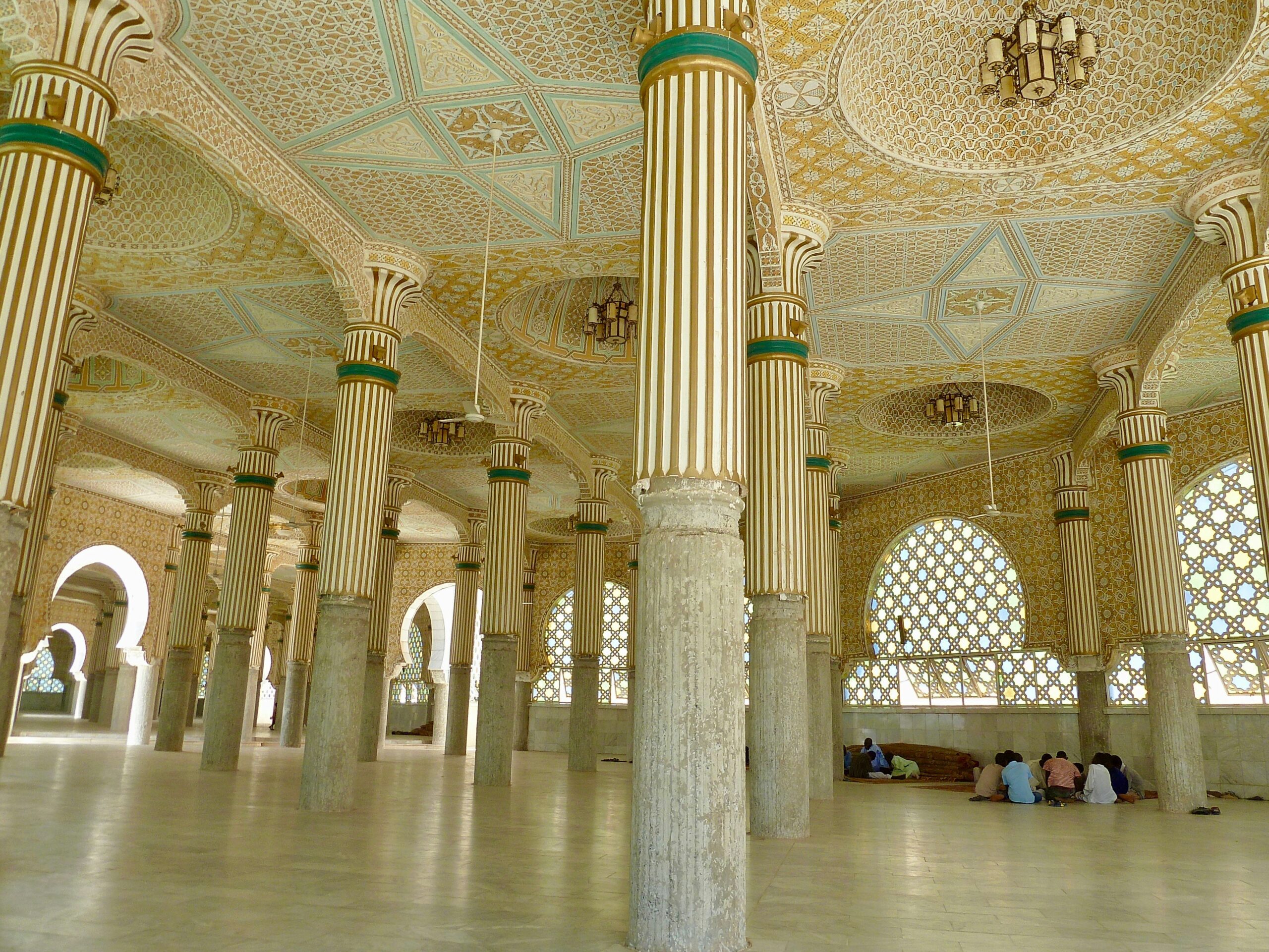
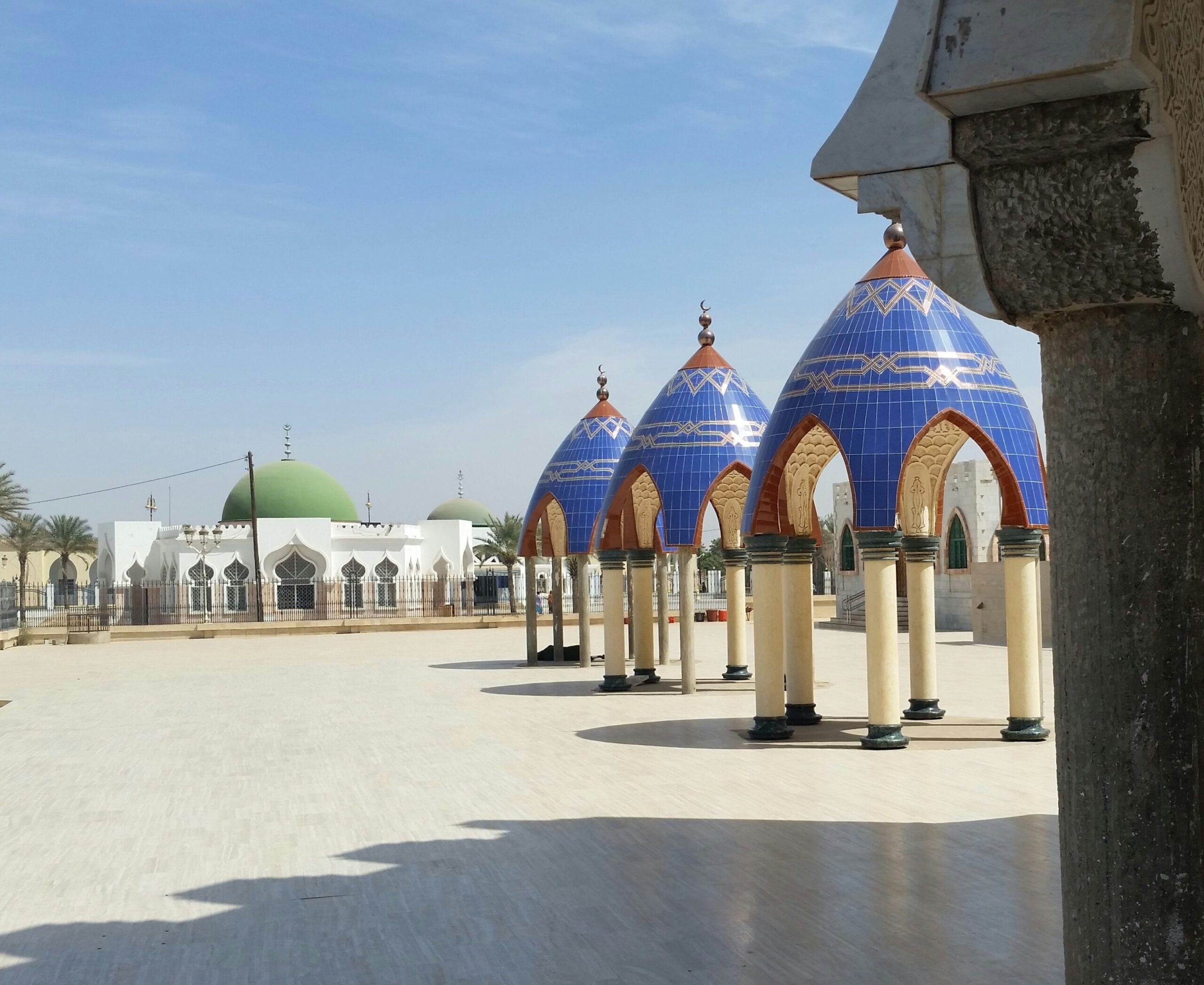
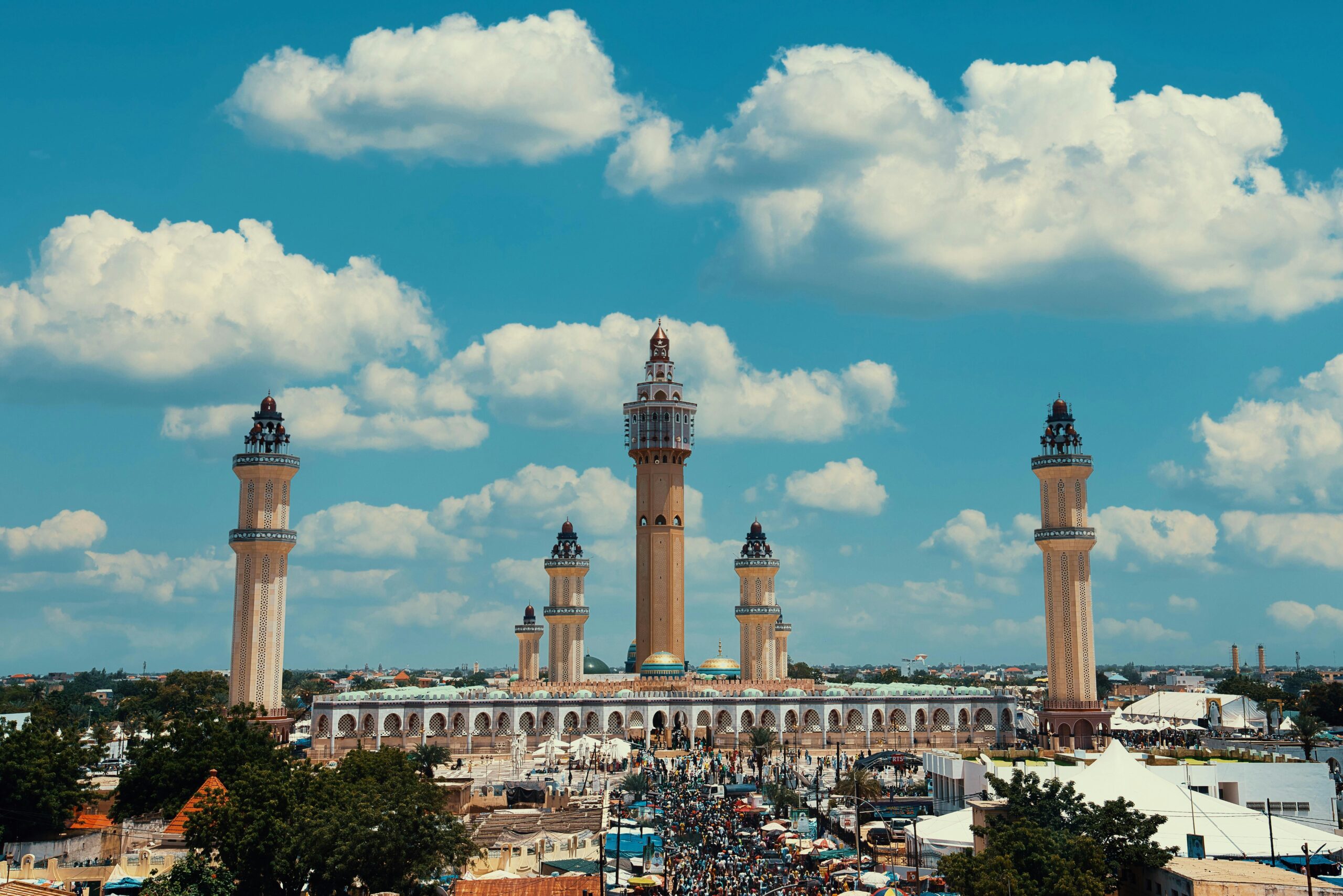
Photo: Eyelit Studio on Unsplash and Karen Nash on Unsplash and E. Diop on Unsplash
Lake Rebta
A salt lake near Dakar, which can be colored pink by algae (the intensity of the color depends on the season), and where locals still produce salt using traditional methods. We missed this on both visits, as we read that the lake’s pink color is beginning to fade. However, it is worth a day trip from Dakar.
Legemlékezetesebb Történeteink
Although everyone throughout Africa was very kind to us, Muslim cultures are the most hospitable, and you are most likely to be invited to things – this was also true in Senegal, which was further enhanced by Teranga, the philosophy of hospitality that permeates the entire country.
I spent a few days in Abene by the beach, where there was a small café that I kept returning to. A couple of young guys worked there, who lived with an old lady who wanted to invite me to lunch, but it was already 3 o’clock and the chicken was still running around, so I politely declined. In the evening, we drank beer at one of the Rasta bars on the beach, where they caught fish and fried it, some of which I got to eat, and they even got me a little coconut for dessert. On the way back to the village, it turned out that the guys from the café were waiting for me because they couldn’t invite me for lunch, so I had to have dinner with them. They made Yassa-style fish. I only spent one day in Zighuincor, but there and here in Abene, I already knew half the village, and I had to stop every minute to talk to someone. They reciprocated my kindness with invitations to eat, and I, for lack of anything better, with a beer or two (as a Muslim country, beer is not that cheap in Senegal, but the country is not that conservative, so many people like to drink).
Another funny story happened on one of my bus trips. In minibuses, it is completely normal for mothers to put their children on the lap of someone else who seems willing to play with them. I also got a baby for about half an hour, who started crying at the end, and I couldn’t calm him down, so I gave him back to his mother—luckily for me, because it turned out that the reason for the crying was that the baby needed to vomit, and I escaped by just a second that it wasn’t on me!
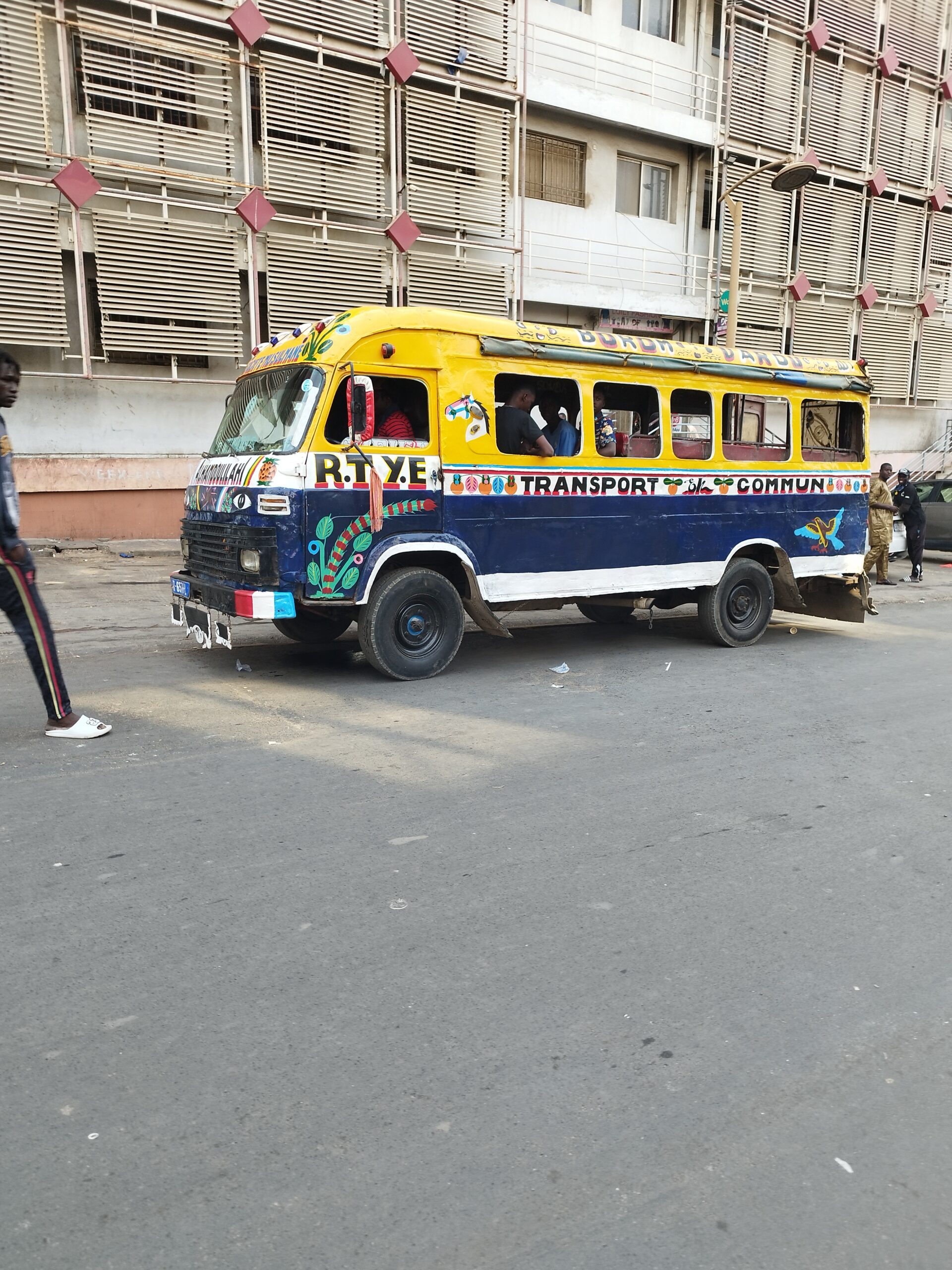
Another important thing to mention about public transport is that in 2023 there were still a lot of old sept-place (old 7-seater cars) on the roads, which left when they were full. There were a few cars that we couldn’t imagine how they still worked, such as one that started without a key (and didn’t stop when it was removed). One day, we took public transportation between Mar Lodj and Saint Louise, which is only 350 kilometers away, but the locals considered it an impossible mission, as we had to start the morning by boat and then change vehicles many times—yet we made it there on time and met a lot of people along the way (e.g., artists from Saint Louise). On another occasion, we had to take a minibus between the Lompoul desert and Dakar, which others do in a day trip, but it took us almost 10 hours to get to Dakar, and the whole day’s program consisted of staring out the window in traffic. Transportation is completely unpredictable, so you need a good dose of patience to get from A to B.
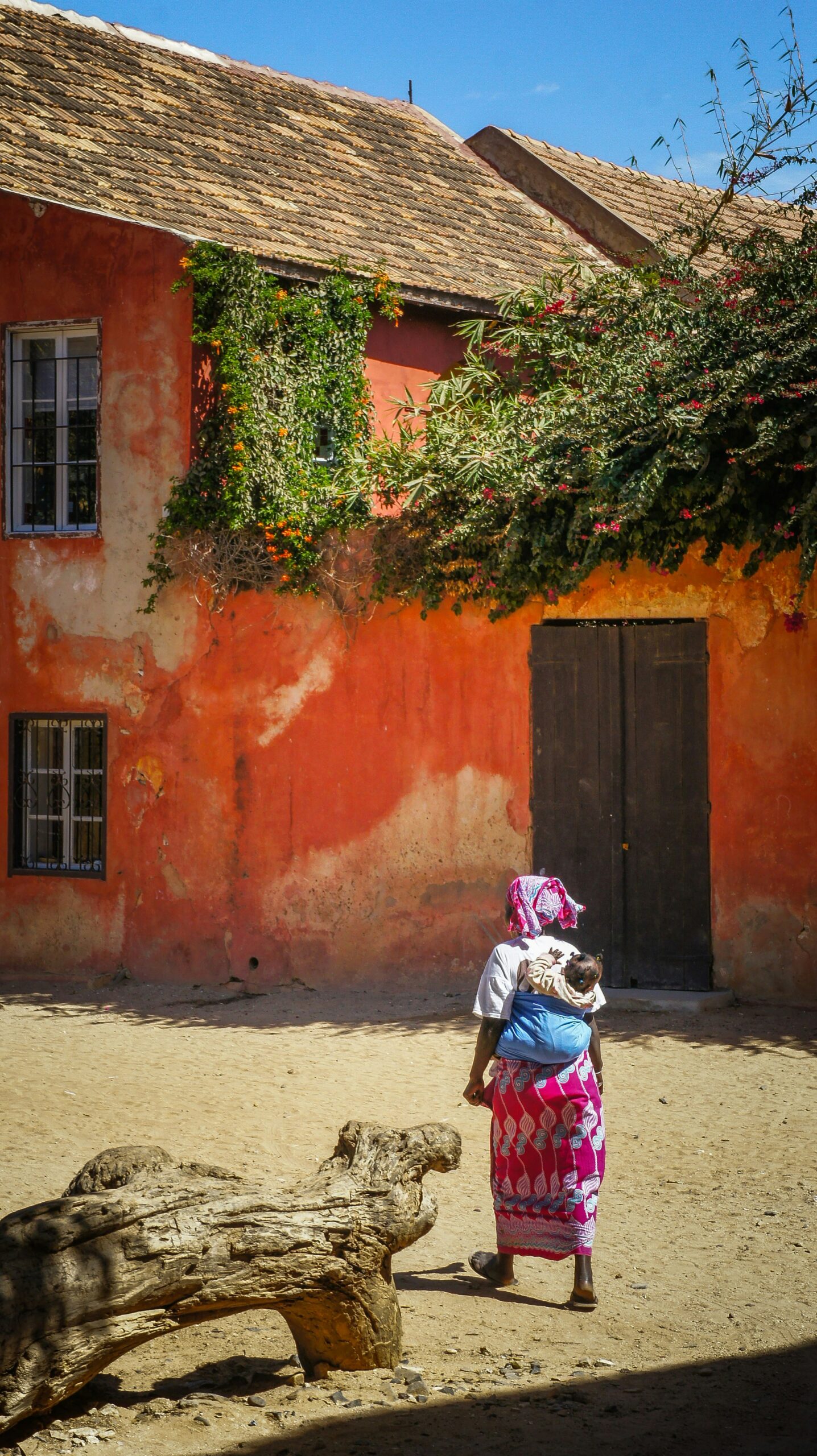
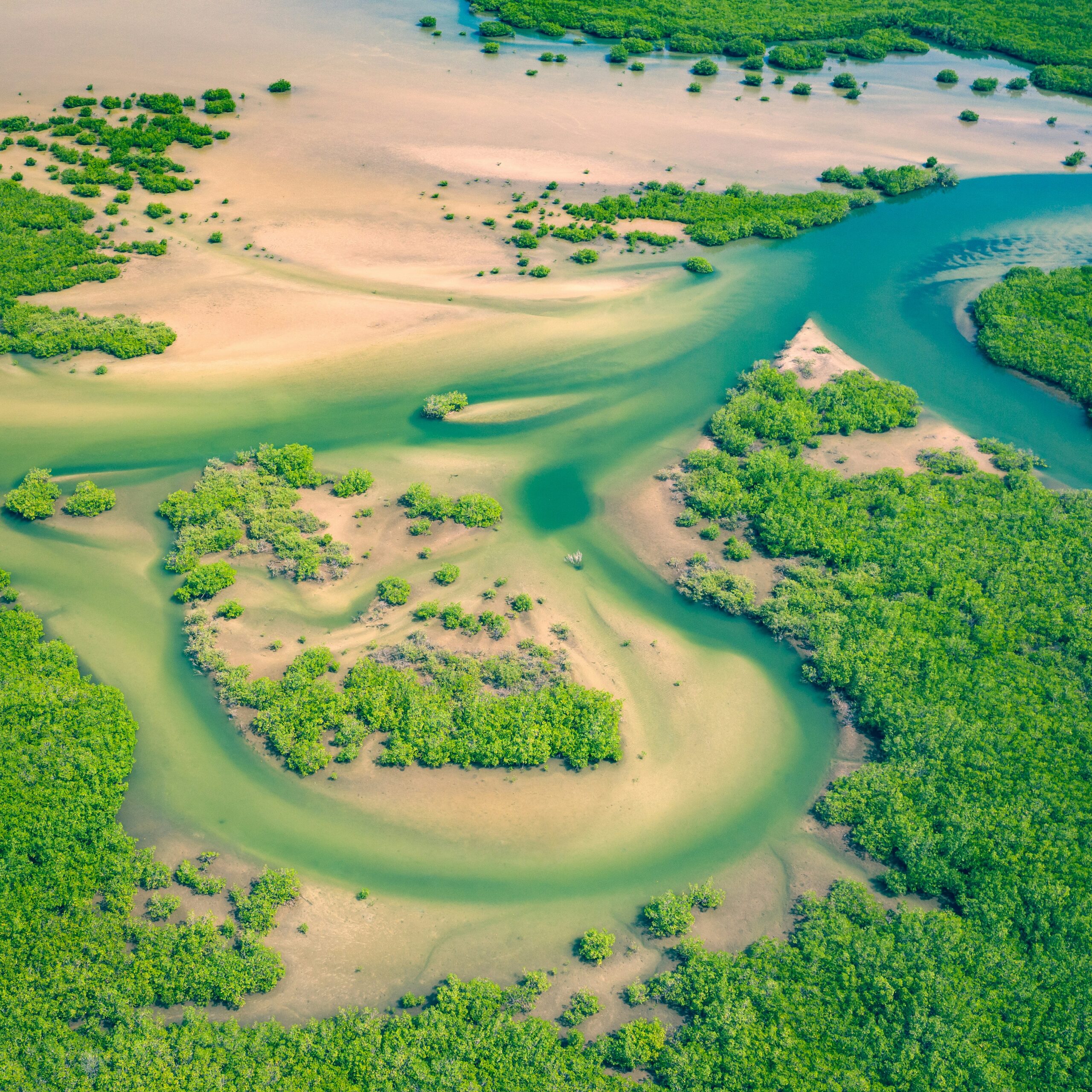
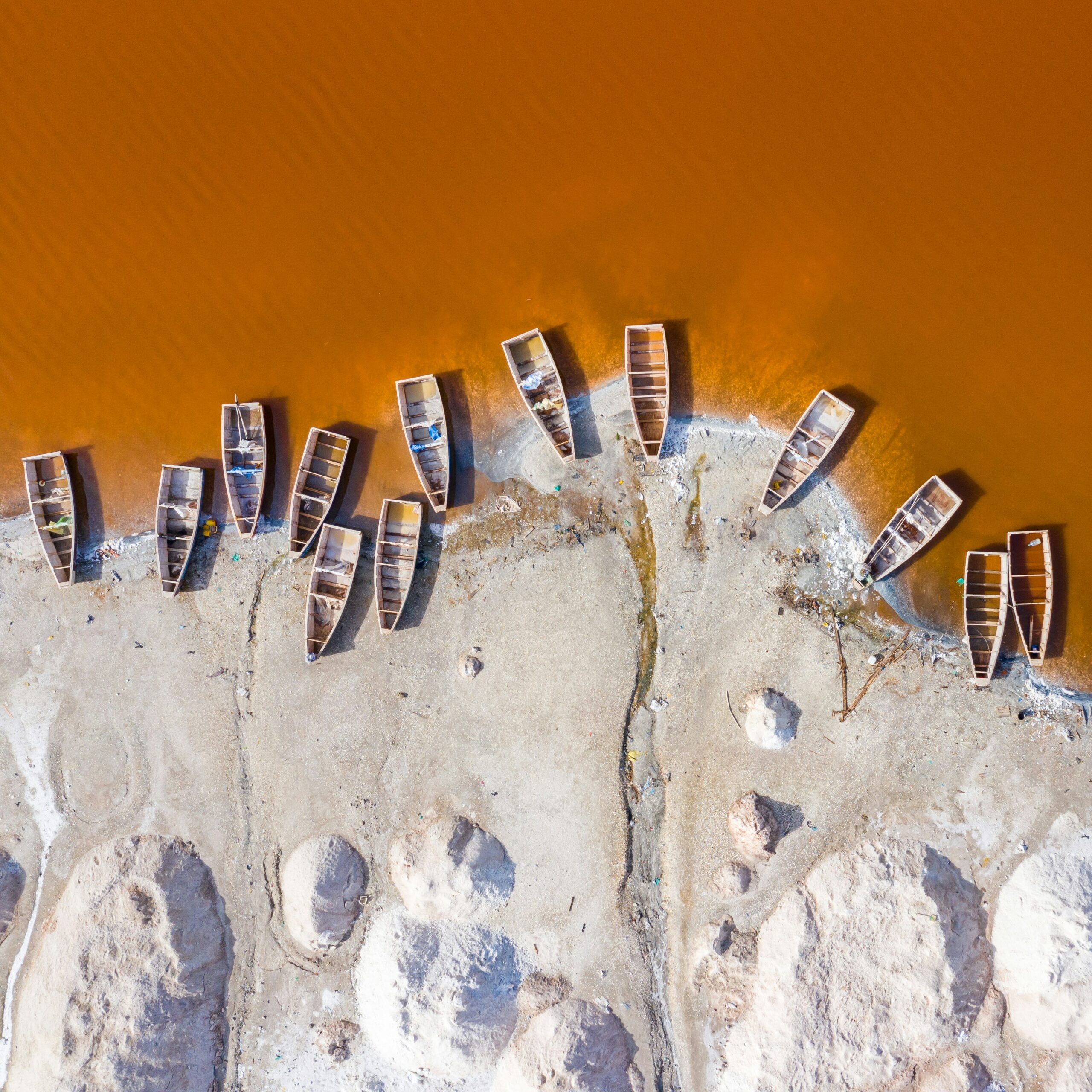
Photo by Curioso Photography on Unsplash, Photo by Curioso Photography on Unsplash, Photo by Vince Gx on Unsplash
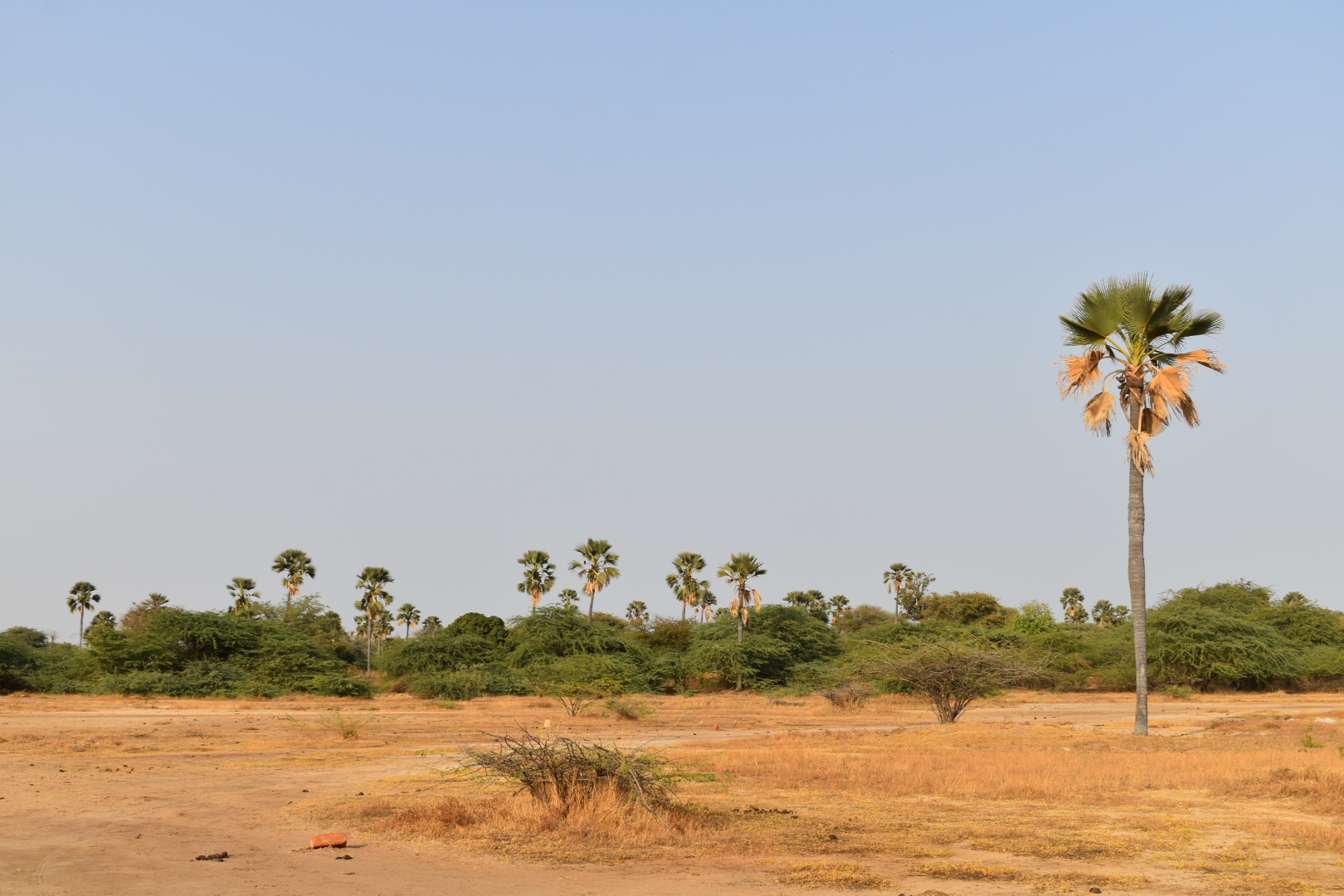
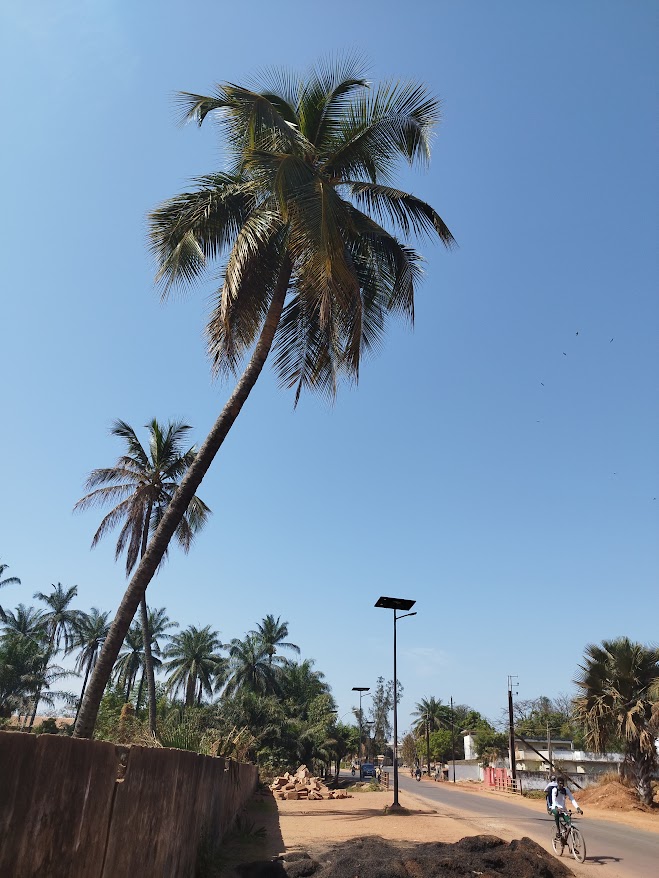
Senegal is a very colorful country, full of art, whether it be music, dance, painting, textiles, or fine arts. The north is desert, while the south is lush green vegetation, dotted with palm trees and rivers. We were very impressed by the diversity of the country. Teranga is everywhere, and although there is plenty to see, it is worth visiting the country just to slow down a little and enjoy the hospitality and company of the locals.