July 12-15: Leaving Zimbabwe turned out to be even more complicated than entering. Upon arrival, we were given a QR code that had to be scanned in nine different steps. About half of these steps involved paying some kind of fee (for example, nearly 30 dollars as a border usage fee). Zimbabwe really drained our wallets, as every bureaucratic procedure was extremely expensive. Even road usage cost 3–4 dollars at toll gates (while in other countries we usually spent that much in total). After finally making it through all the steps, our license plate appeared on a large screen in the parking lot, signaling that we could leave the country.
Upon entering South Africa, we lined up, were asked how many days we wanted on our visa, and were immediately given 30 days (for free). The customs officers also stamped our CDP (they just came out to glance at the car to check that we really had arrived with it). In total, the whole process took ten minutes—without any QR codes. 
It was already dark, so we looked for accommodation in the town near the border. We thought there was a backpacker hostel, but it turned out it was being used for something else. The guard took pity on us and let us sleep in the old dorm, which most closely resembled a hospital ward. We managed to shop at Shoprite just ten minutes before closing, to stock up for the national park. We also grabbed a meal at McDonald’s—it was striking how many fast-food chains and malls there are in South Africa. In many towns, these are the most popular spots, so almost everyone eats there. We were mentally prepared for South Africa to be like this, so it felt less of a culture shock than Namibia. Later on, we were happy to find several street stalls selling meat grilled over charcoal.
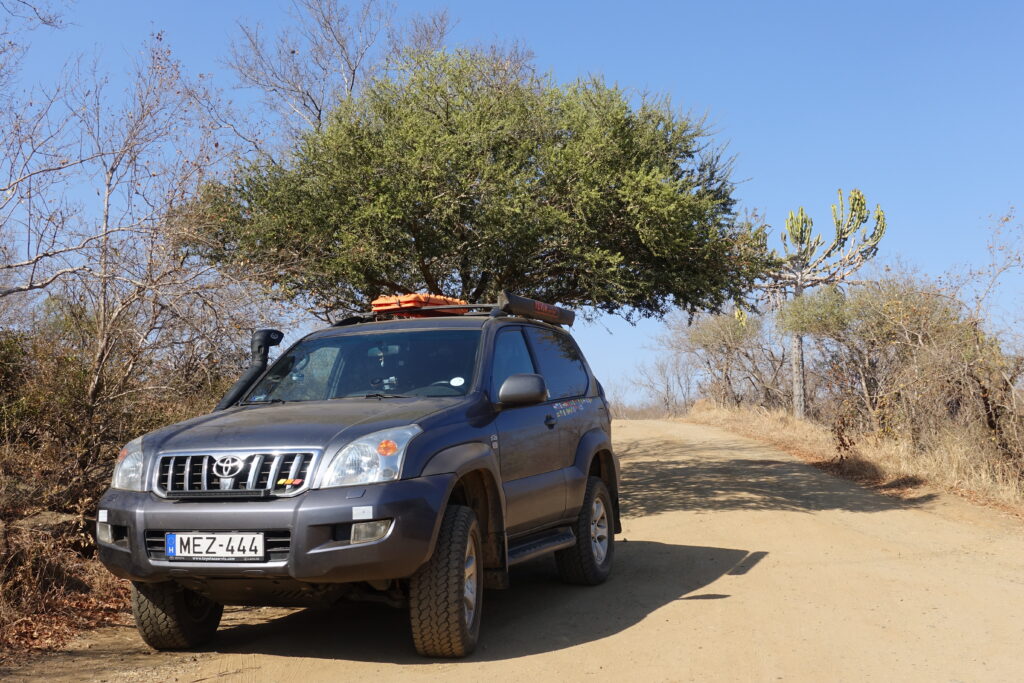
The next morning, we woke up at five and set off for Kruger. We’d heard South Africa was very developed, but this part of the country still shocked us. We drove on barely visible tertiary roads on the map to take a shortcut, yet everything was paved. We passed through small, modern towns, with barbed wire around the houses, and in every town there was at least one KFC—often several. However, the outskirts were lined with small tin shacks—these were often the old townships, the neighborhoods designated for Black people during apartheid. South Africa is still the most unequal country in the world (with Namibia following closely behind), and you feel it immediately upon arrival. Between towns, everything was fenced off: vast cultivated fields and planted forests stretched out, everything centered around large-scale agriculture and livestock farming. In most small towns, signs indicated that street vendors were not allowed to sell their goods by the roadside.
On the positive side, although the country seemed unfriendly at first glance, most people turned out to be cheerful and friendly. At a gas station (where we ended up having breakfast at a Steers burger joint), the employees were blasting music and dancing—even though it was still very early and cold, they decided to start the day in good spirits. Everyone was curious where we came from, and gradually we started to relax as well.
We had already heard stories about Kruger: a Spanish couple told us they spent 30 days inside the park without leaving once. This 20,000 square kilometer national park attracts about 2 million visitors annually (80% of them South Africans). The entry fee is about 20 euros per day, but if you spend the night inside the park, you only pay for one day. Alternatively, you can buy a Wild Card for around 200 euros, which gives you unlimited access to any national park in South Africa and Eswatini for a year. Inside the park, there are supermarkets, restaurants, doctors (even dentists), gas stations, and the main roads are paved. You could literally live in the park for a year without needing to leave.
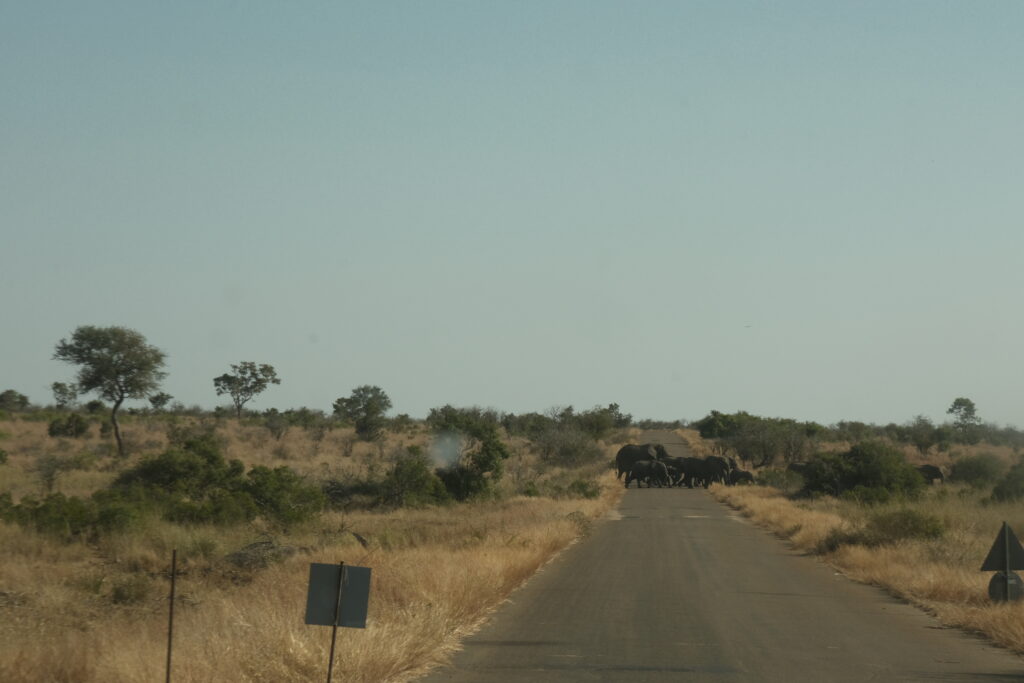
There’s a 40 km/h speed limit within the park, and just a few kilometers after the gate we ran into a police officer checking speeds—a surreal experience, especially considering that only a few weeks earlier we had been roaming around the Central Kalahari Game Reserve, completely alone and wild camping.
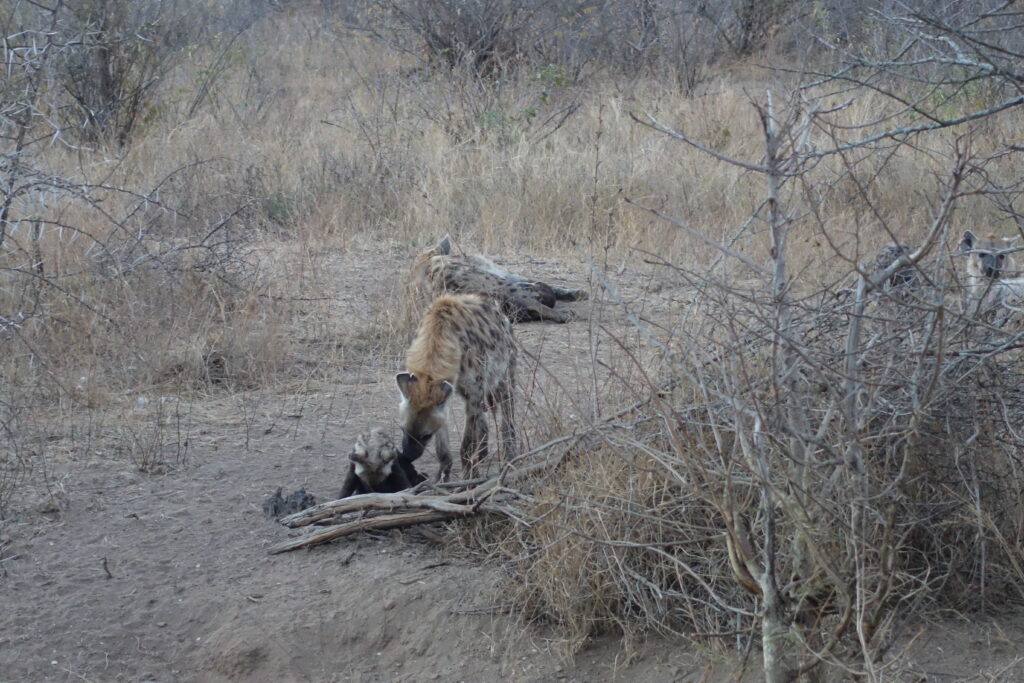
We first drove to a small picnic spot, where next to us a couple had arrived in a regular car for brunch. They had rented a gas stove from the rangers and were frying bacon, sausage, and eggs, while sipping mimosas. Meanwhile, we cooked a quick pasta dish. It was strange to see how unafraid people were at the picnic areas: in one place, for example, a hyena was wandering around, and just a few weeks earlier a leopard had actually attacked a person.
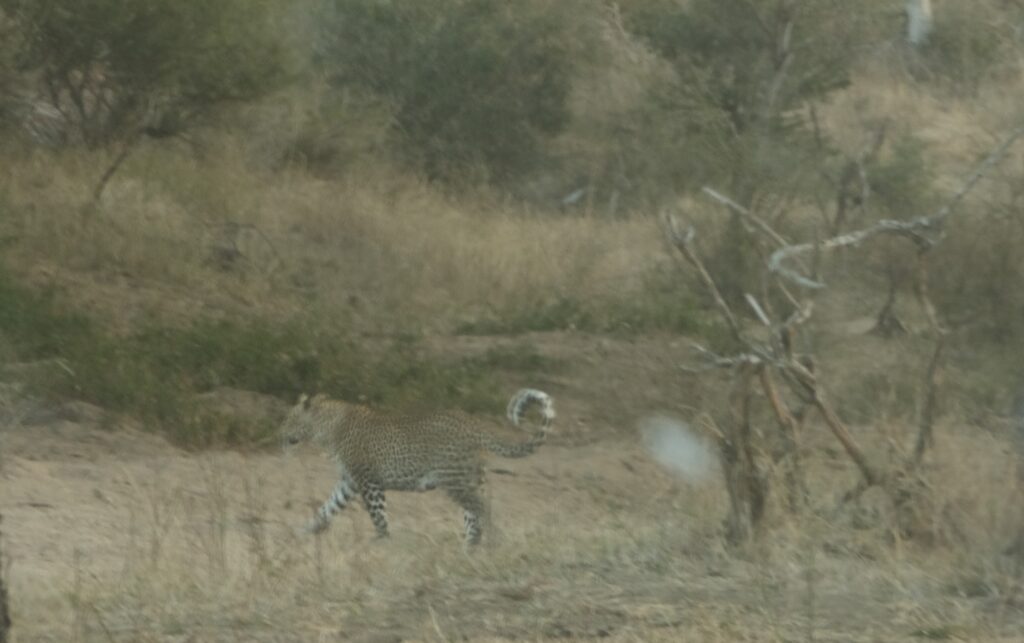
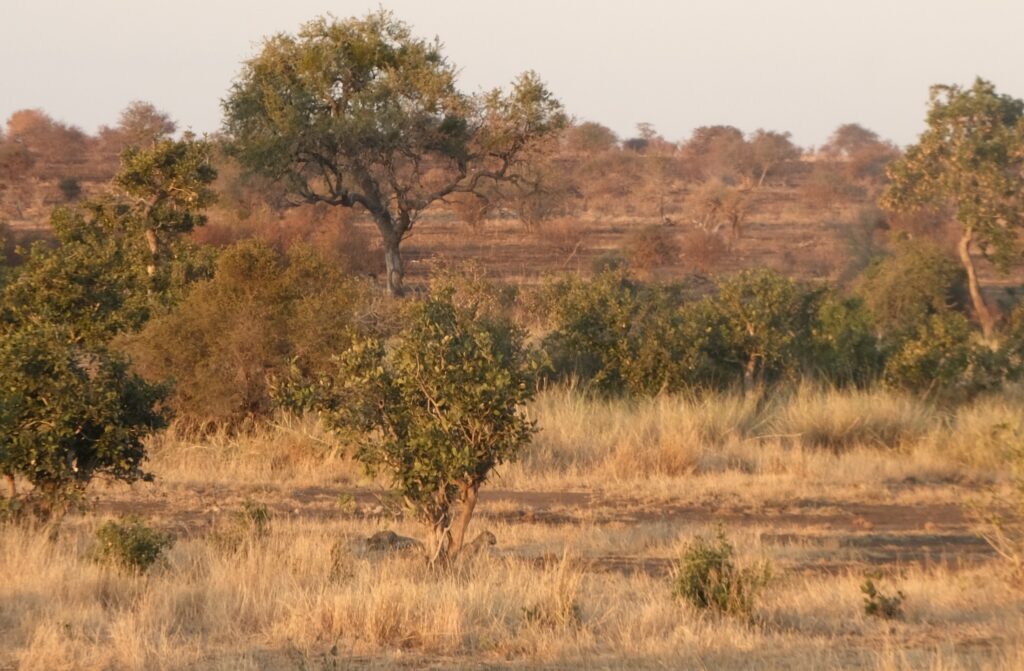
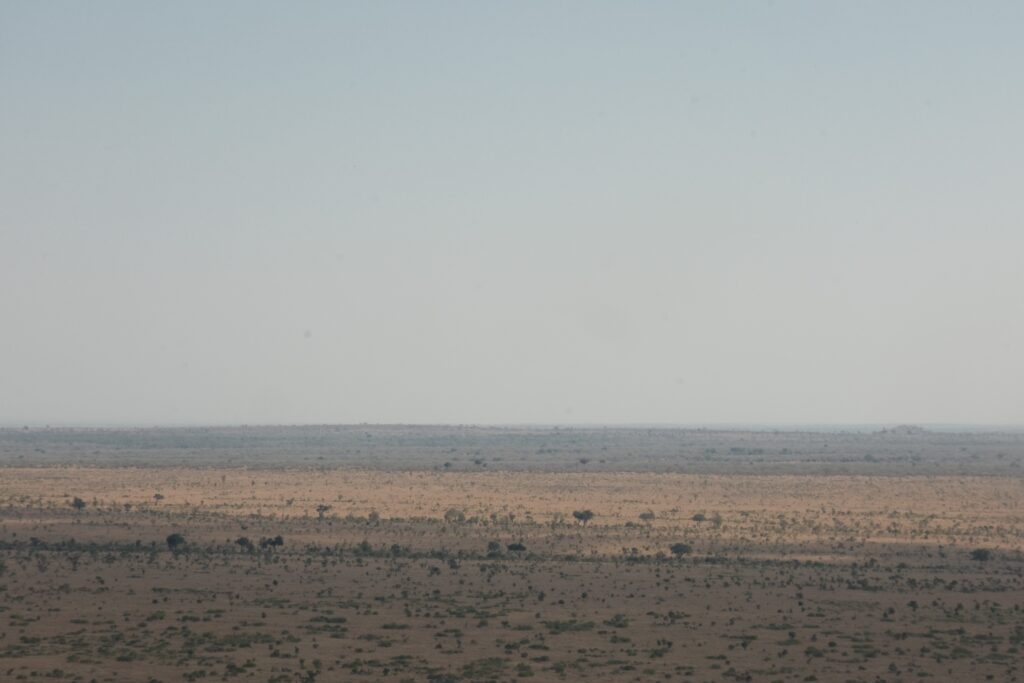
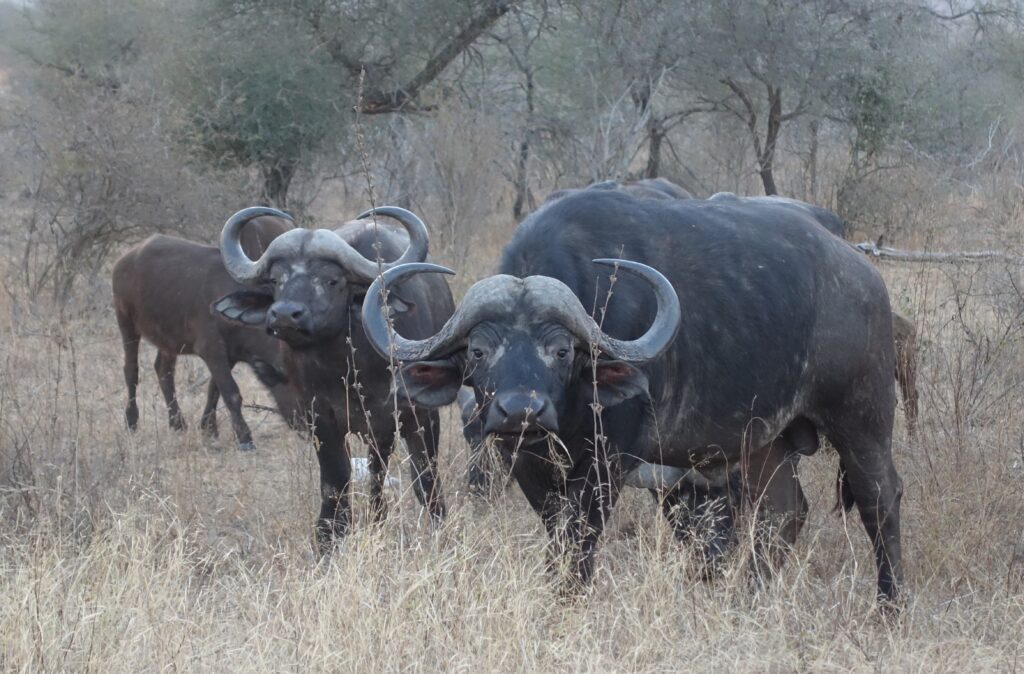
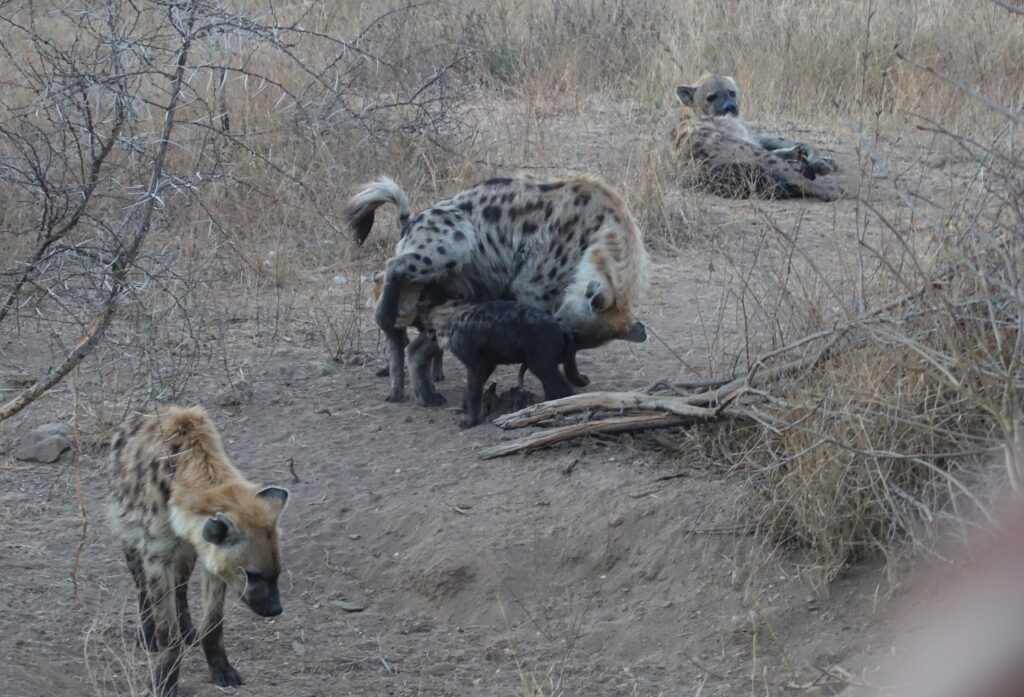
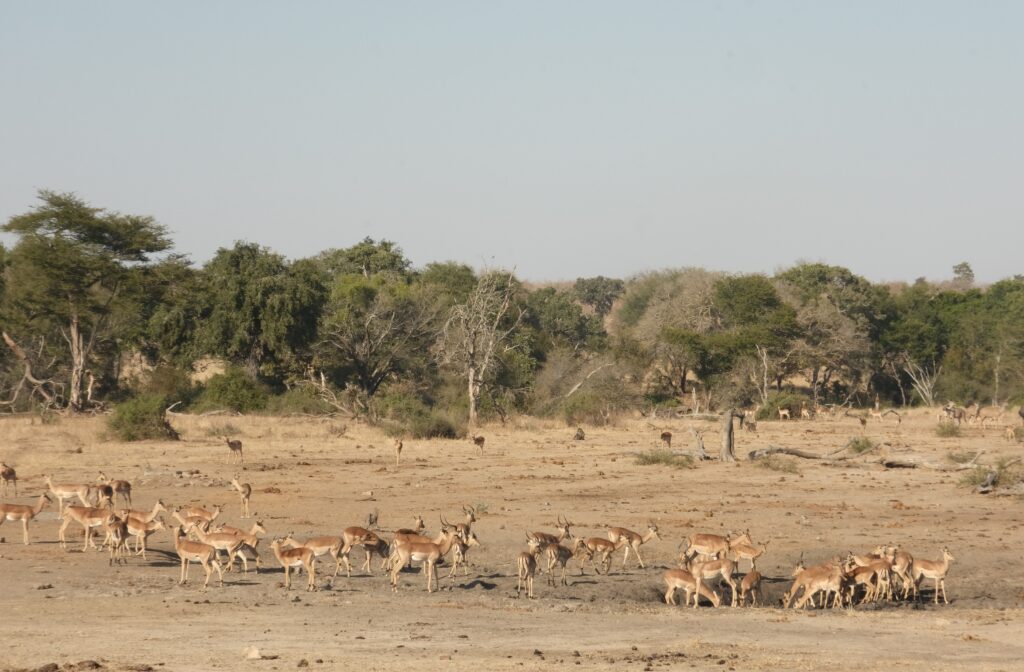
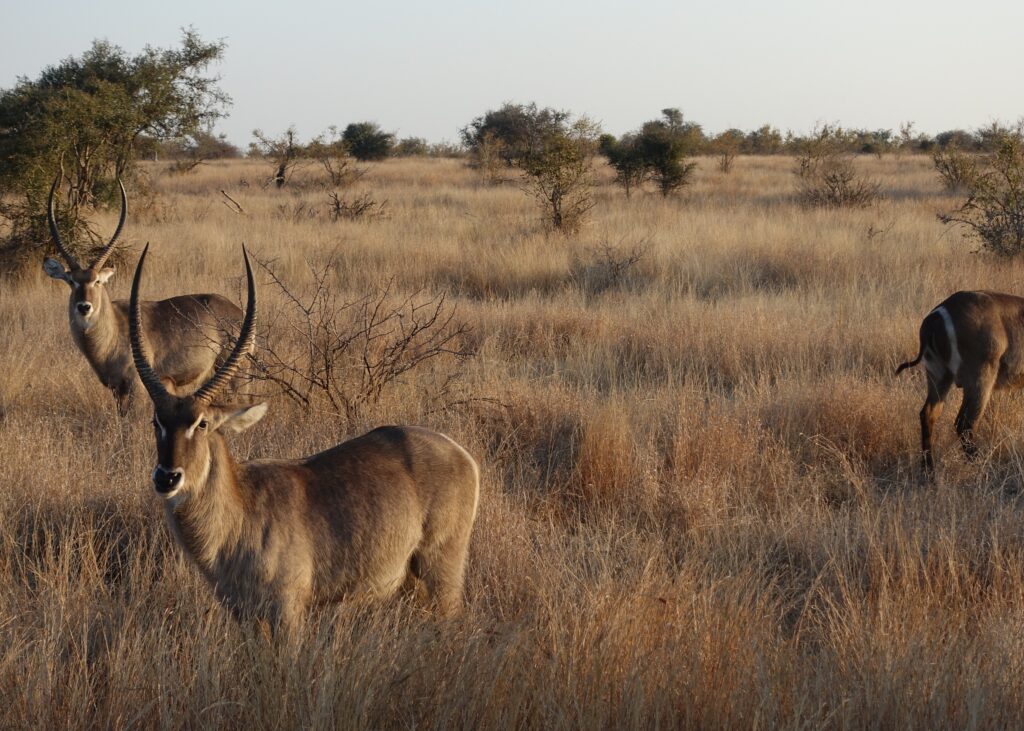
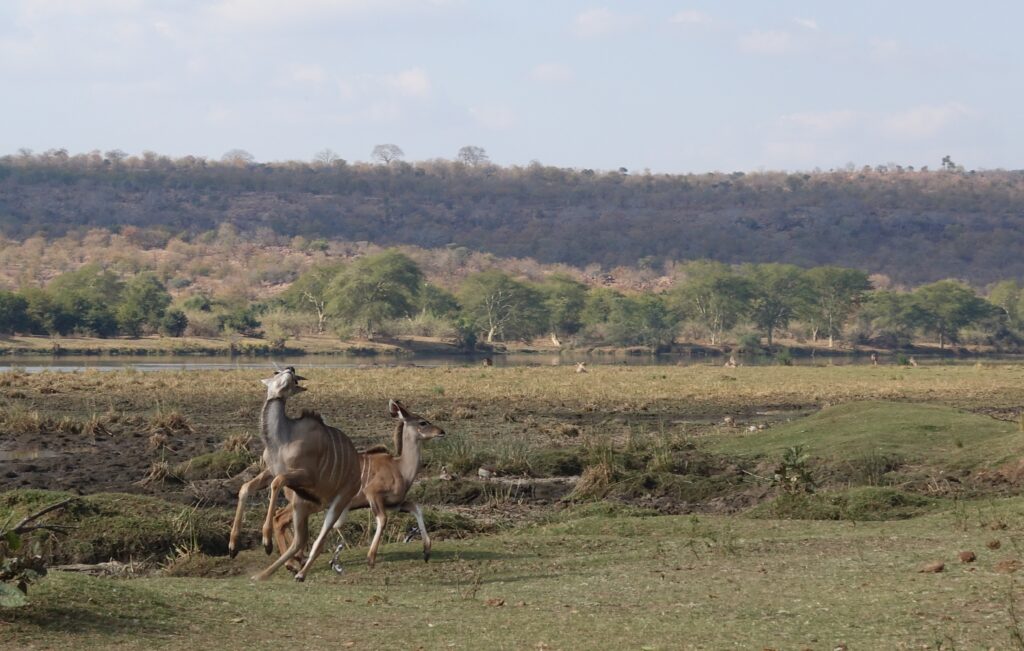
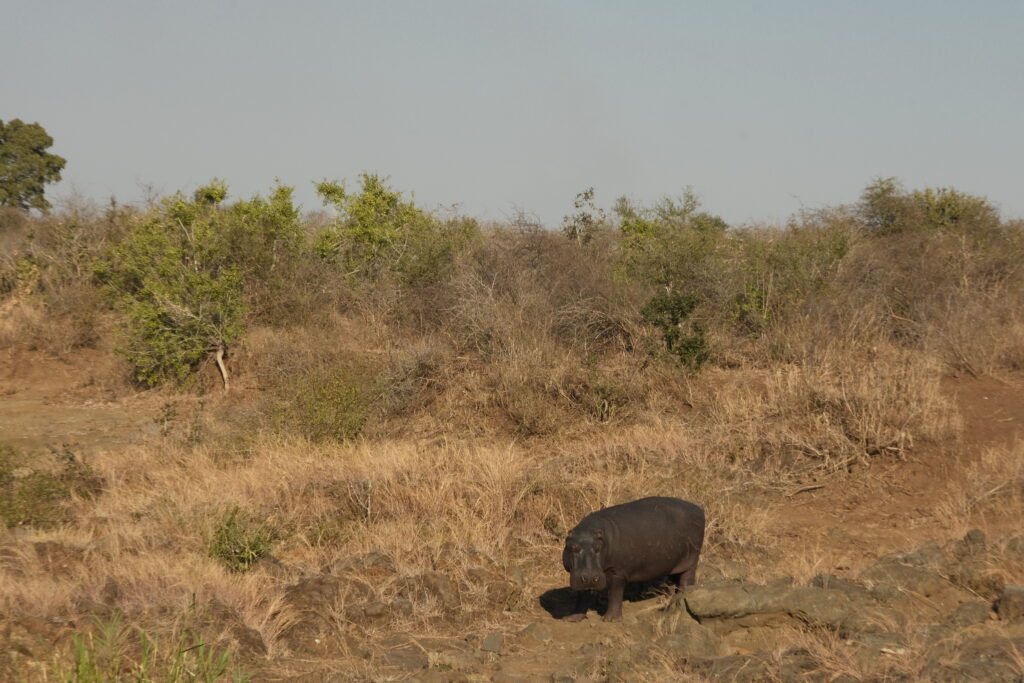
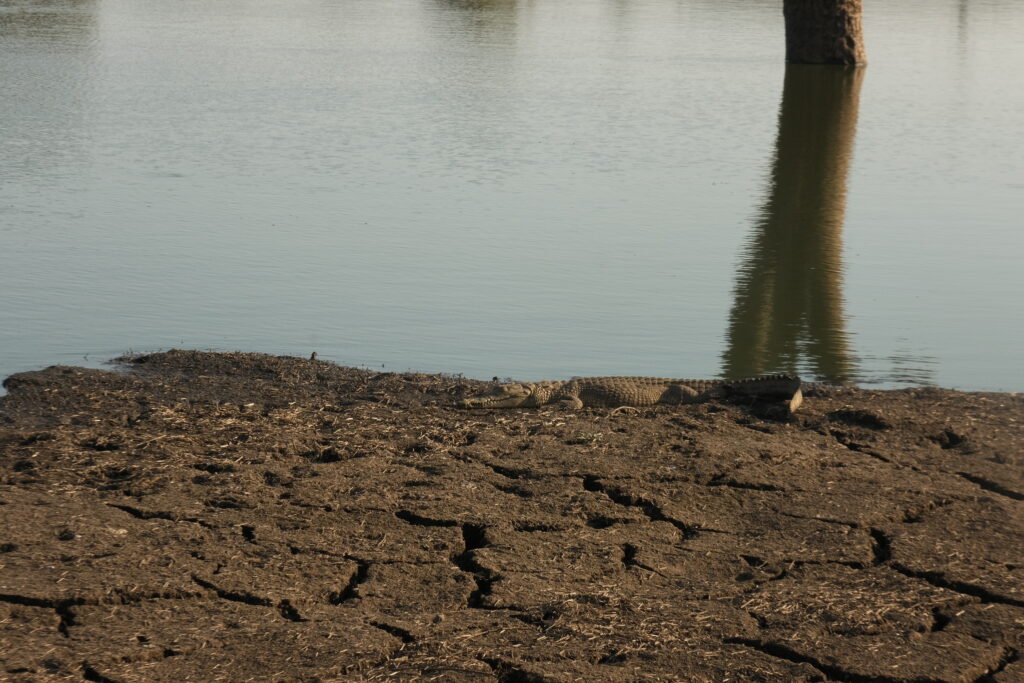
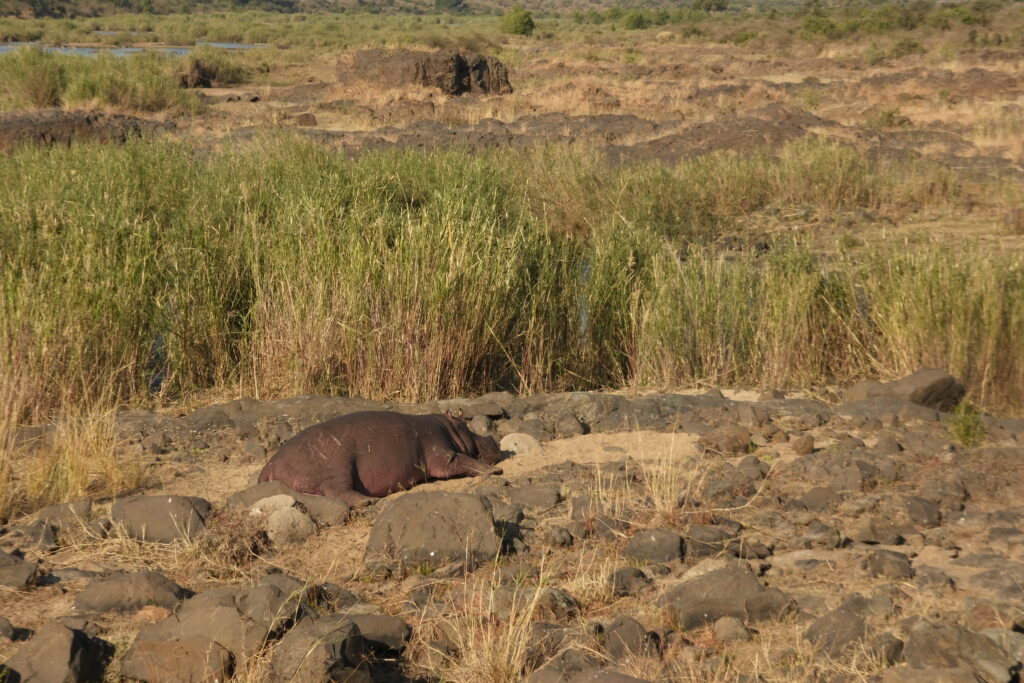
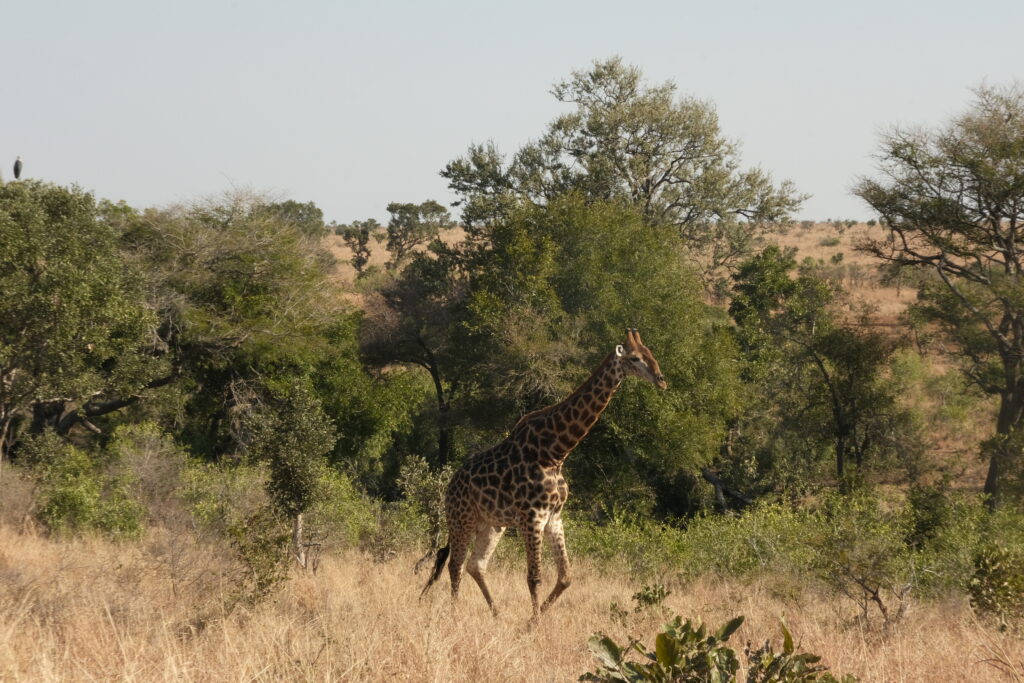
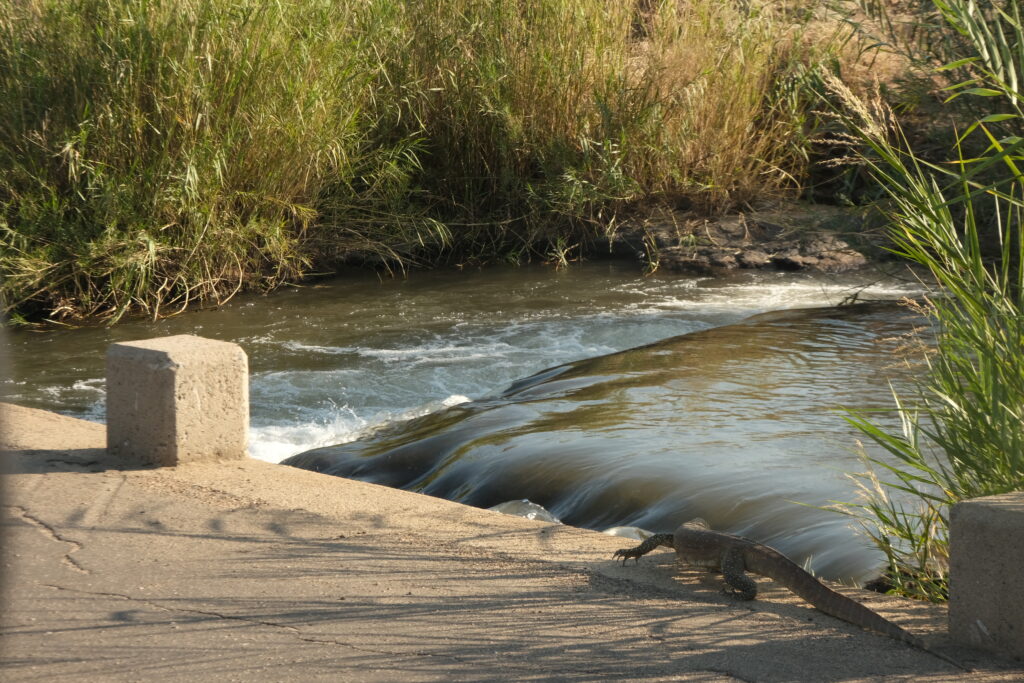
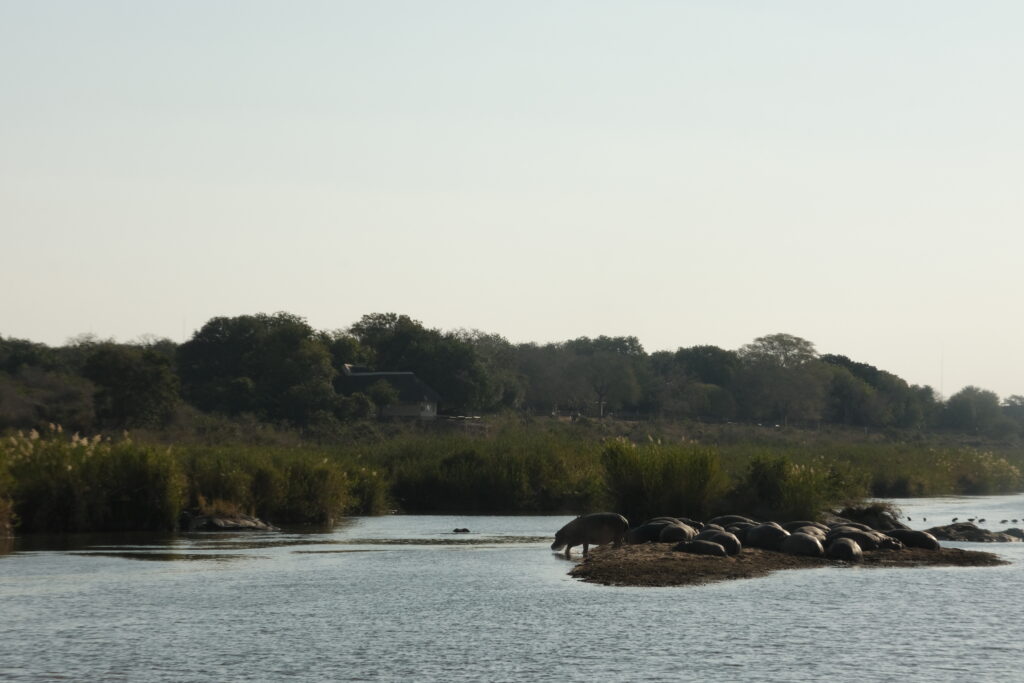
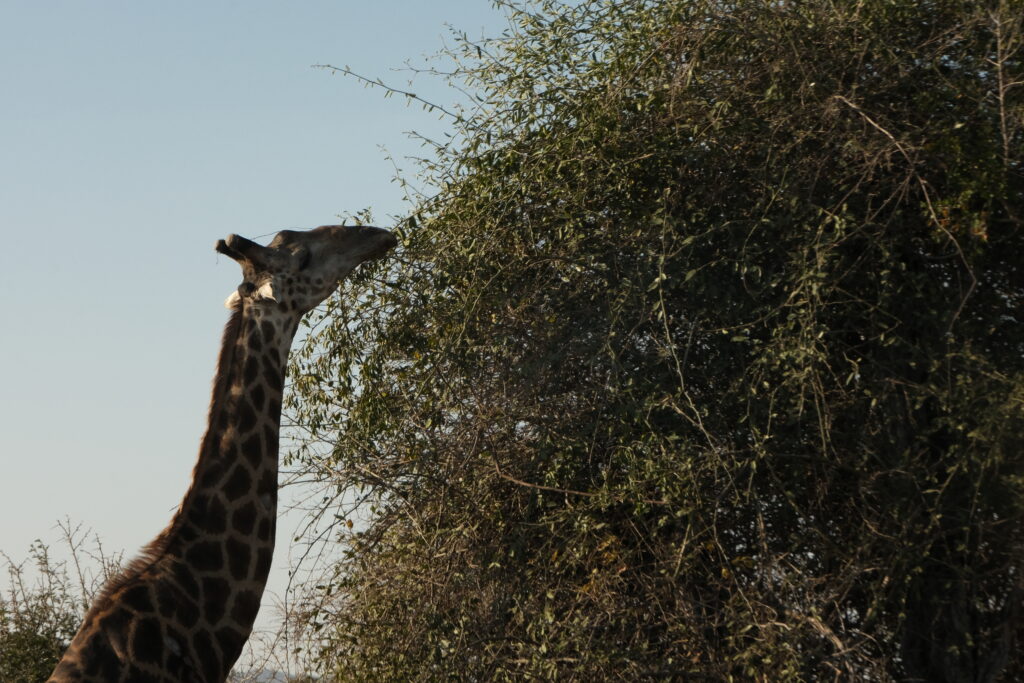
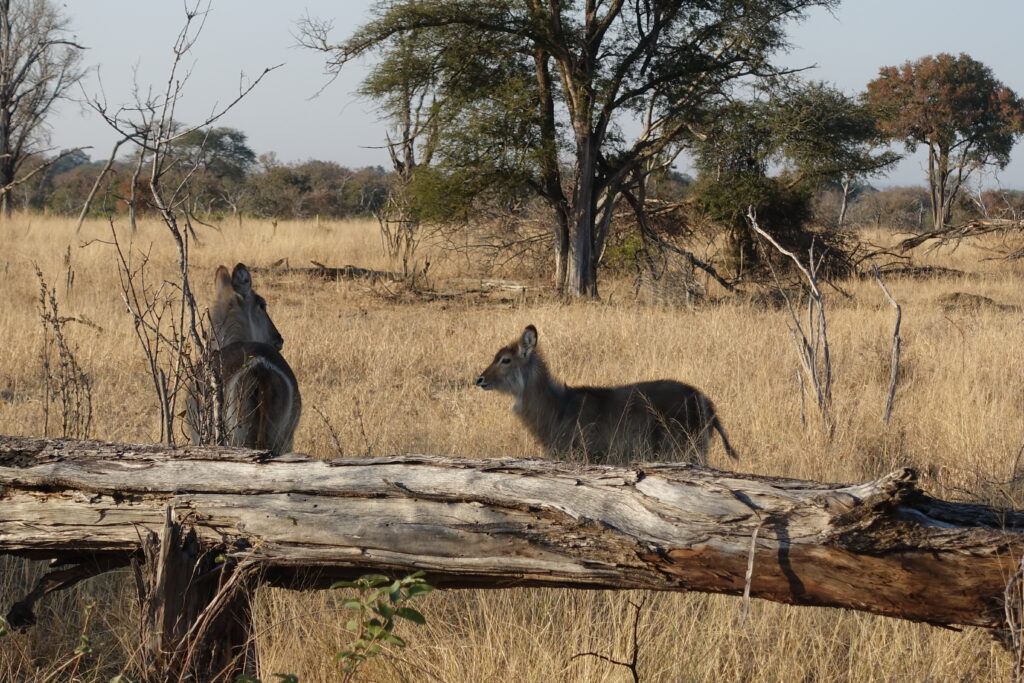
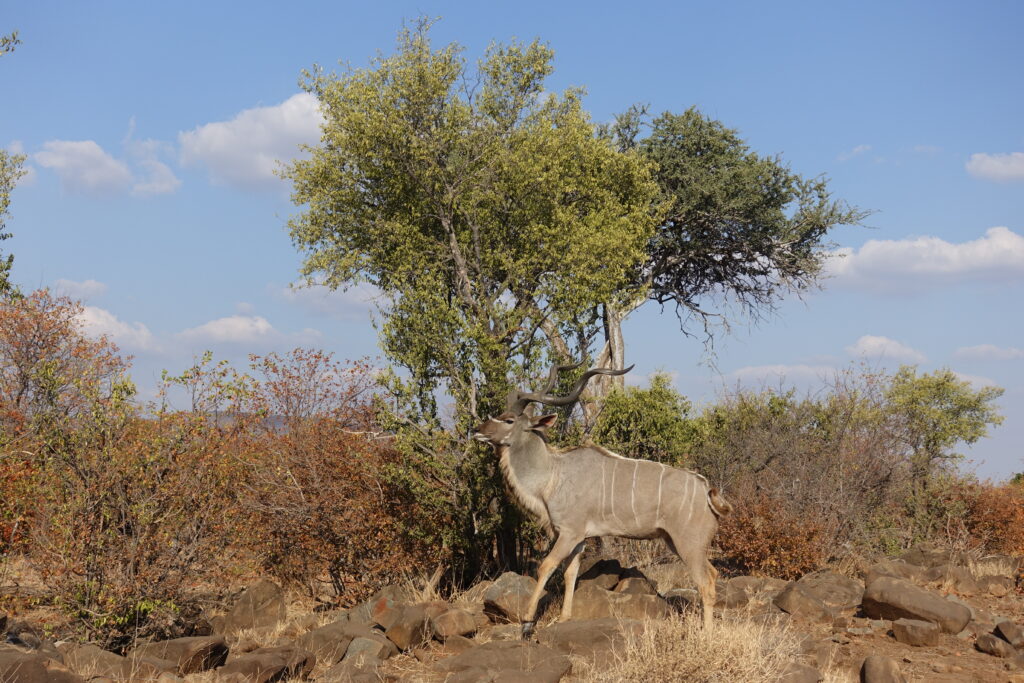
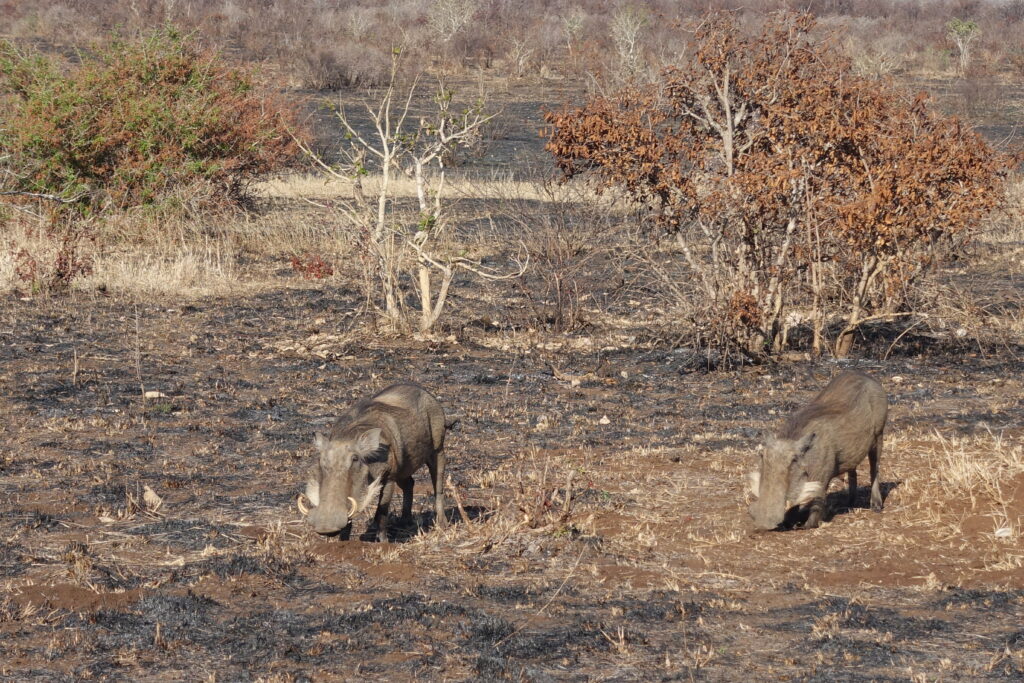
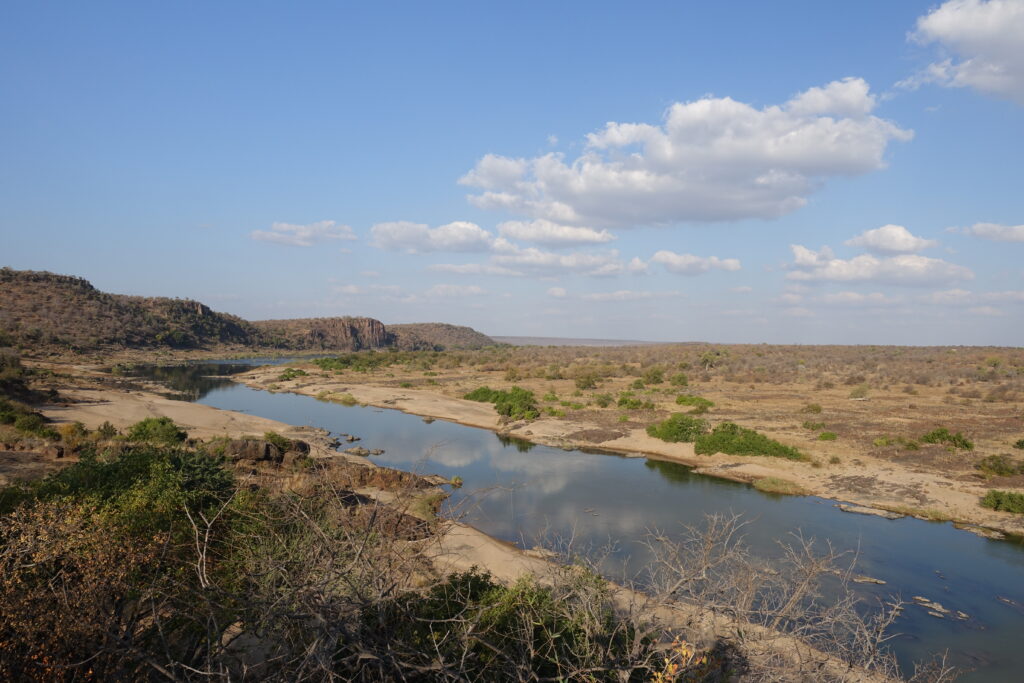
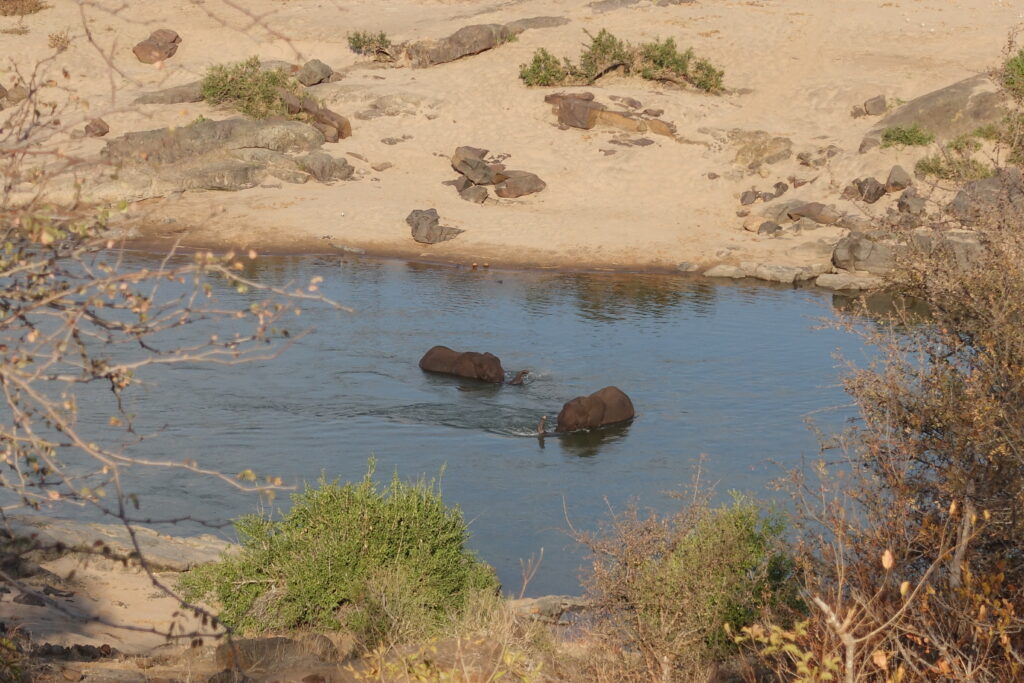
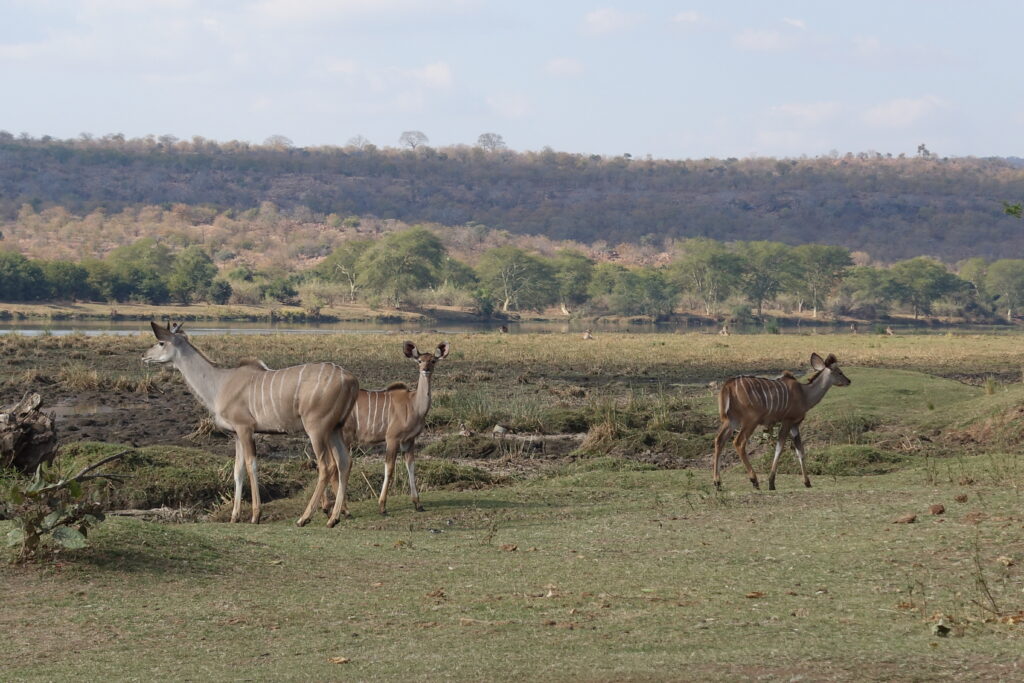
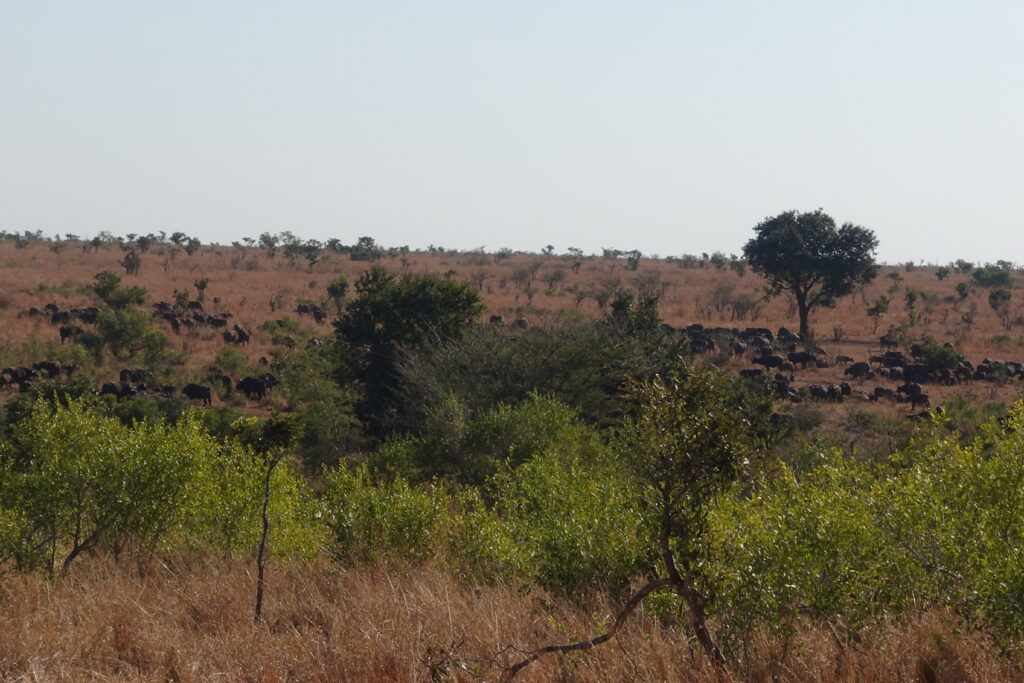
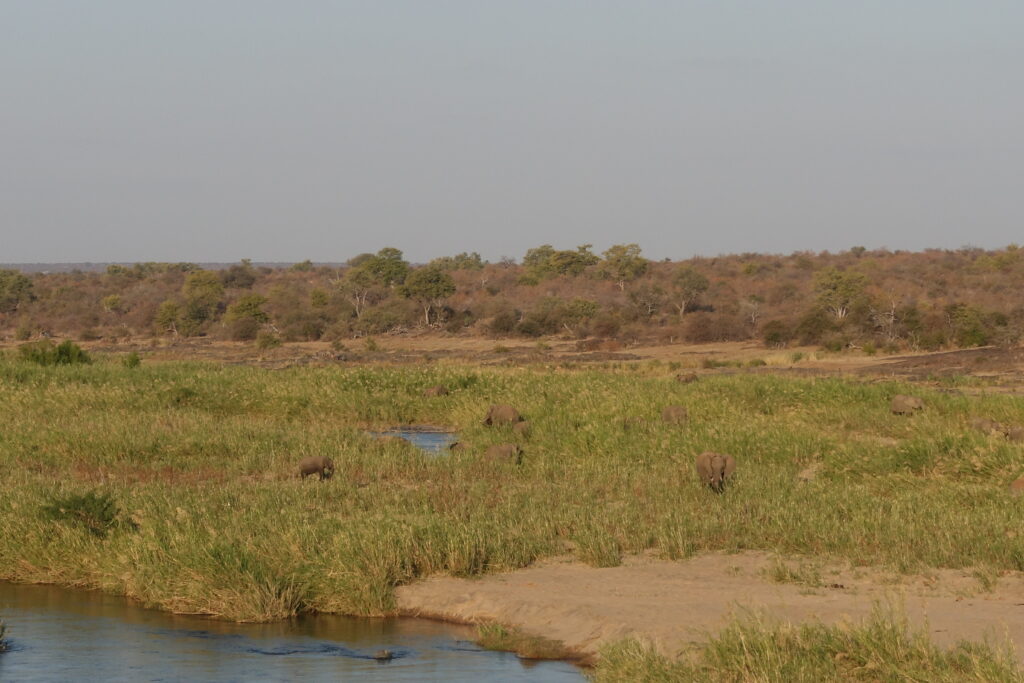
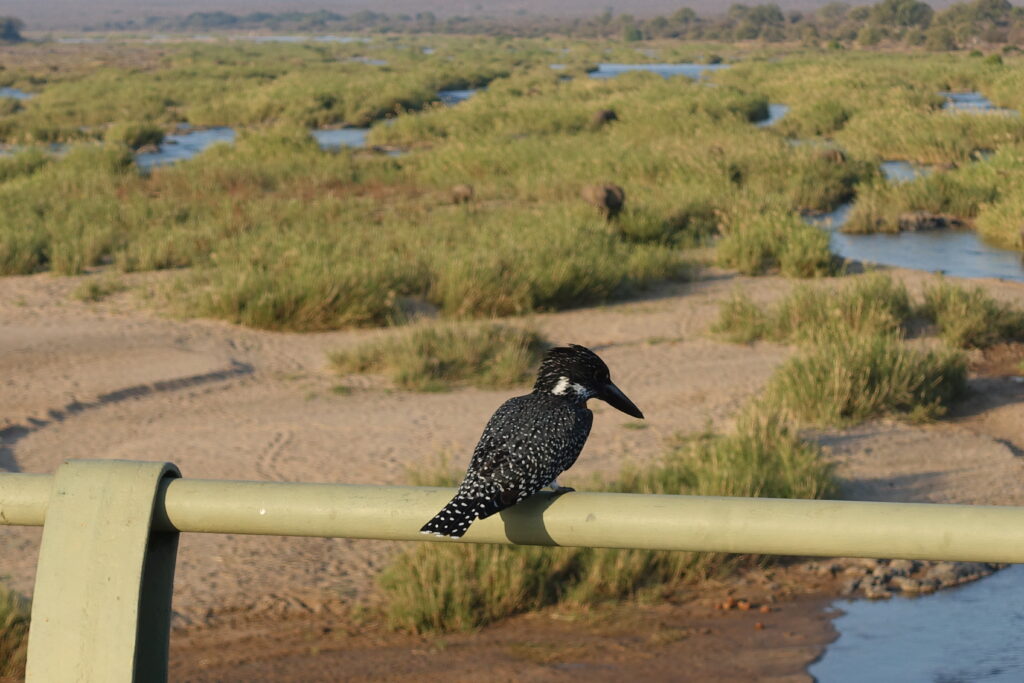
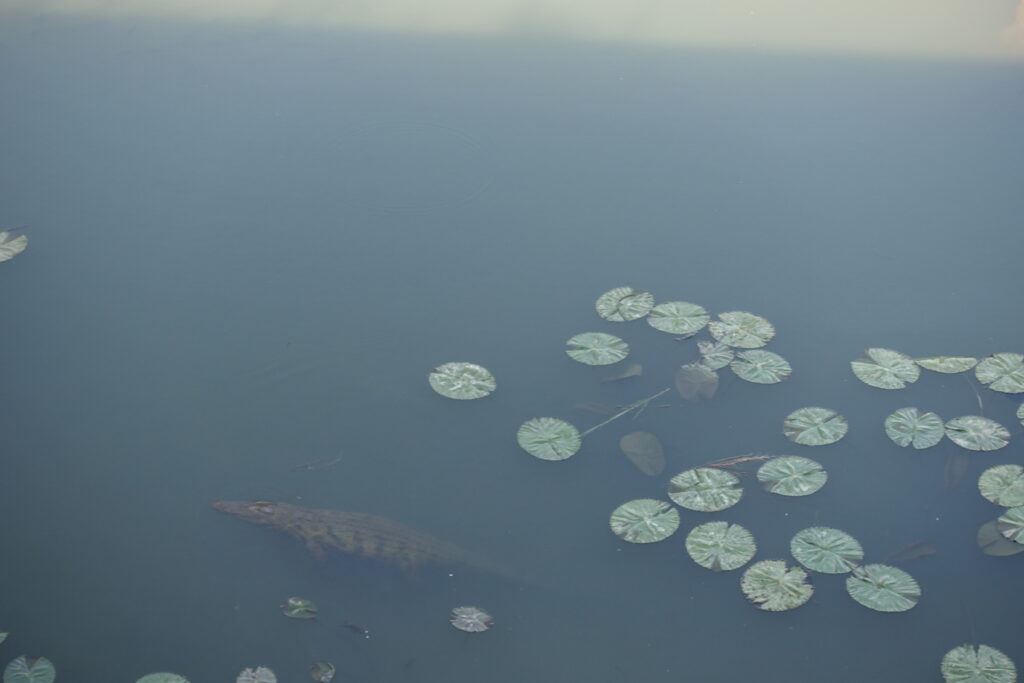
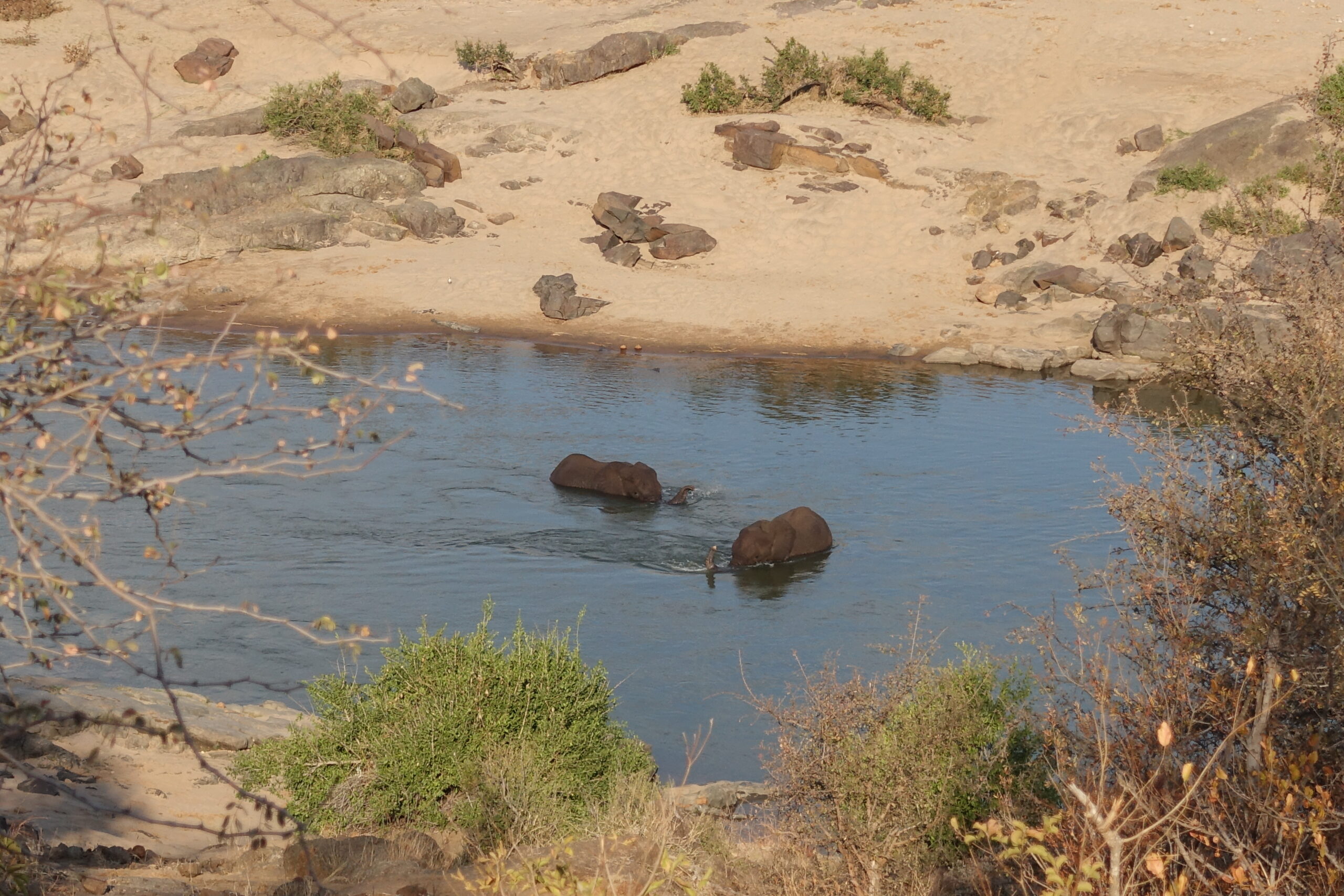
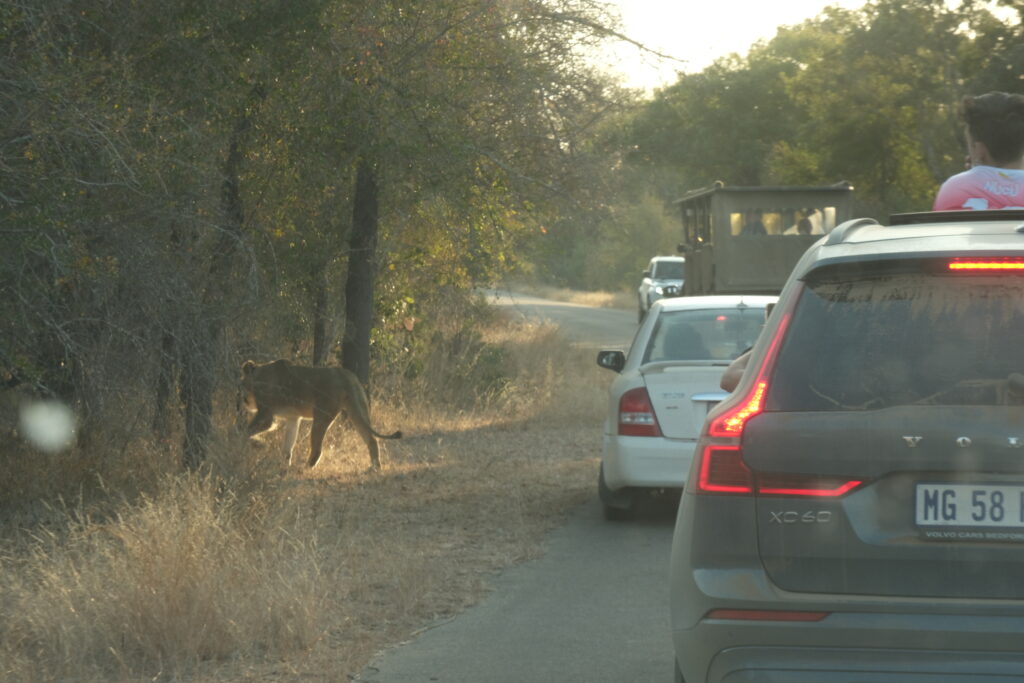
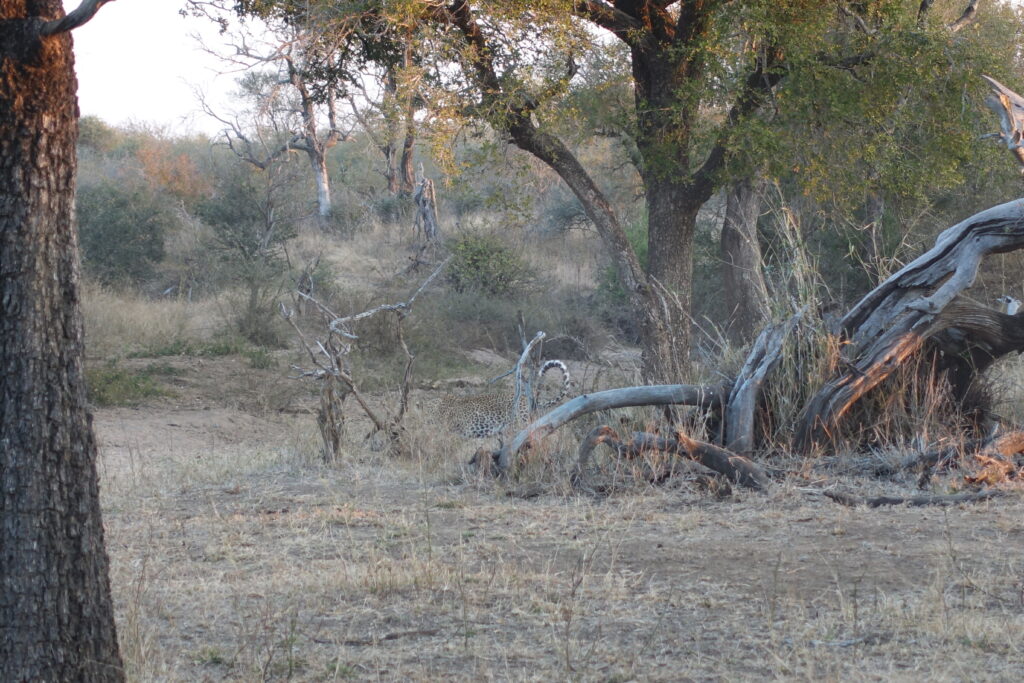
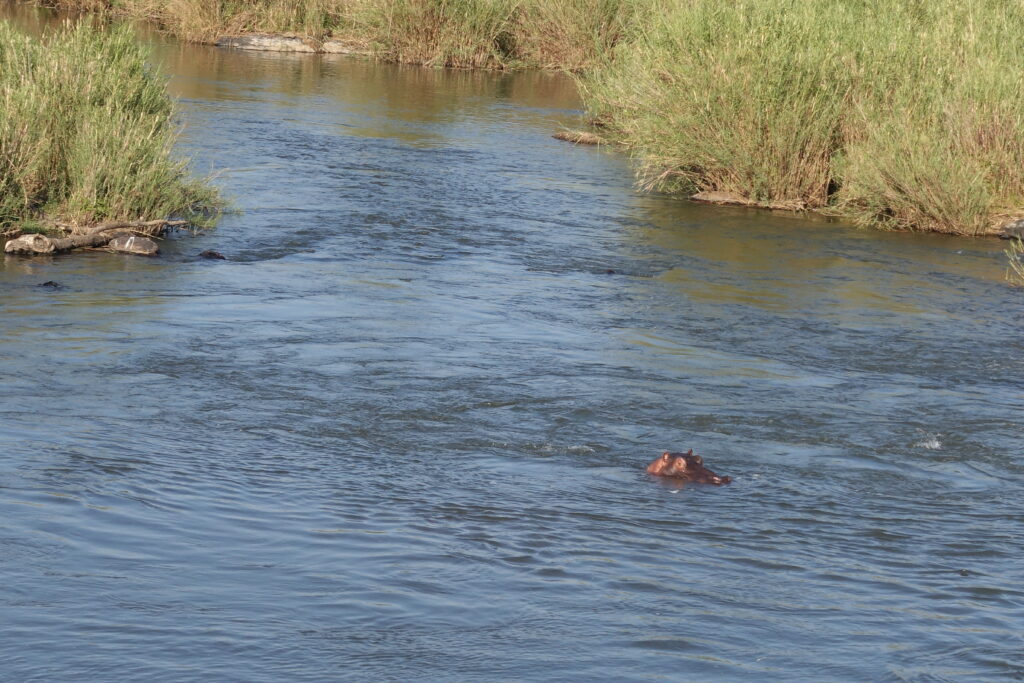
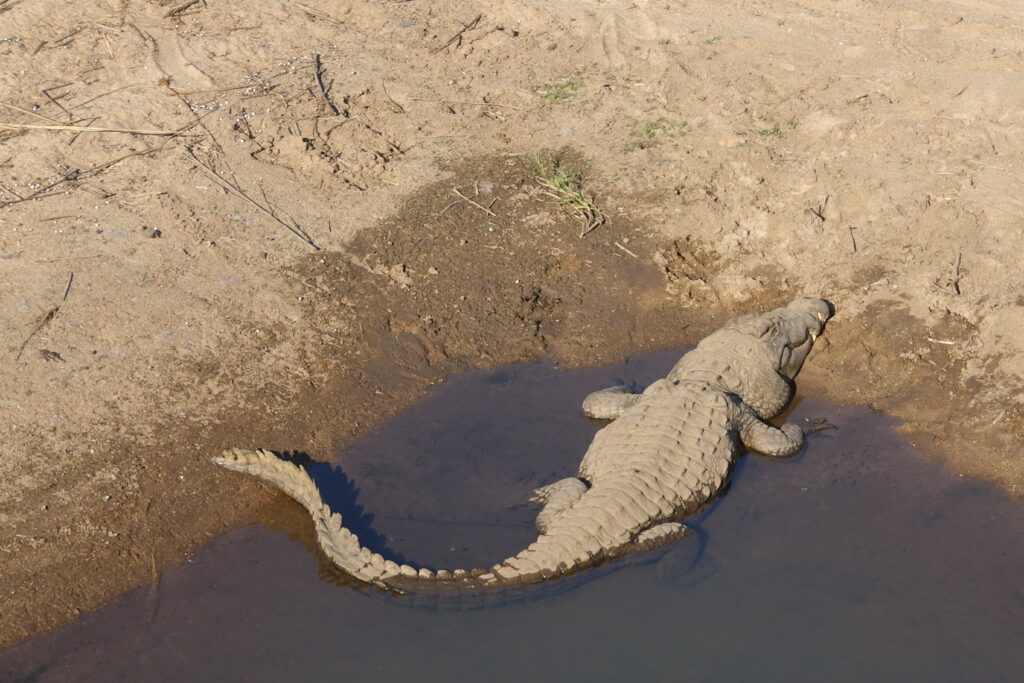
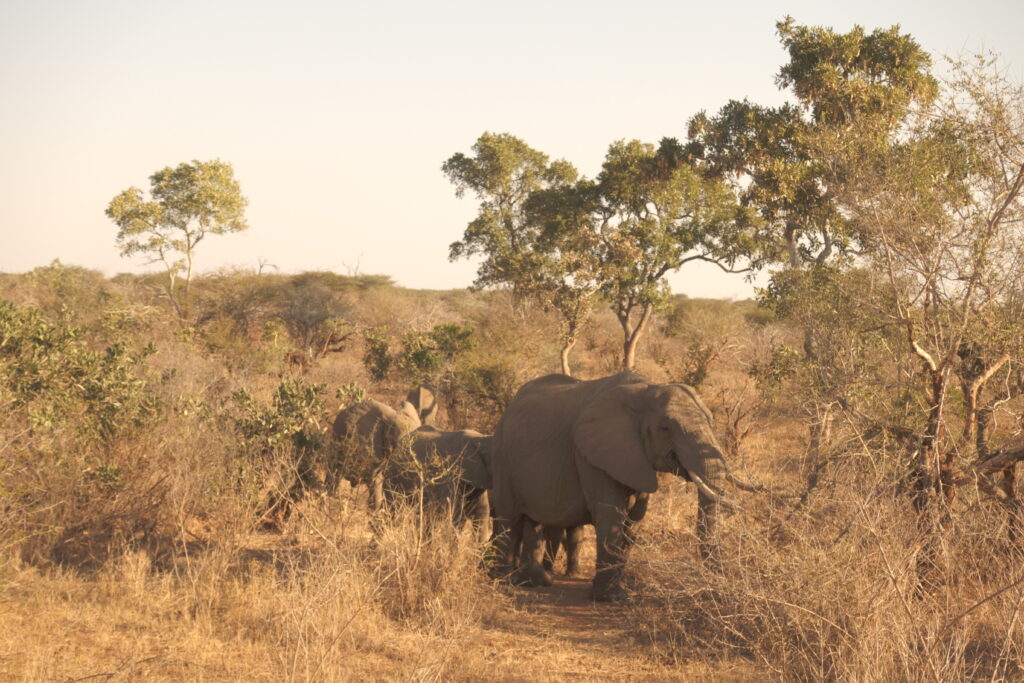
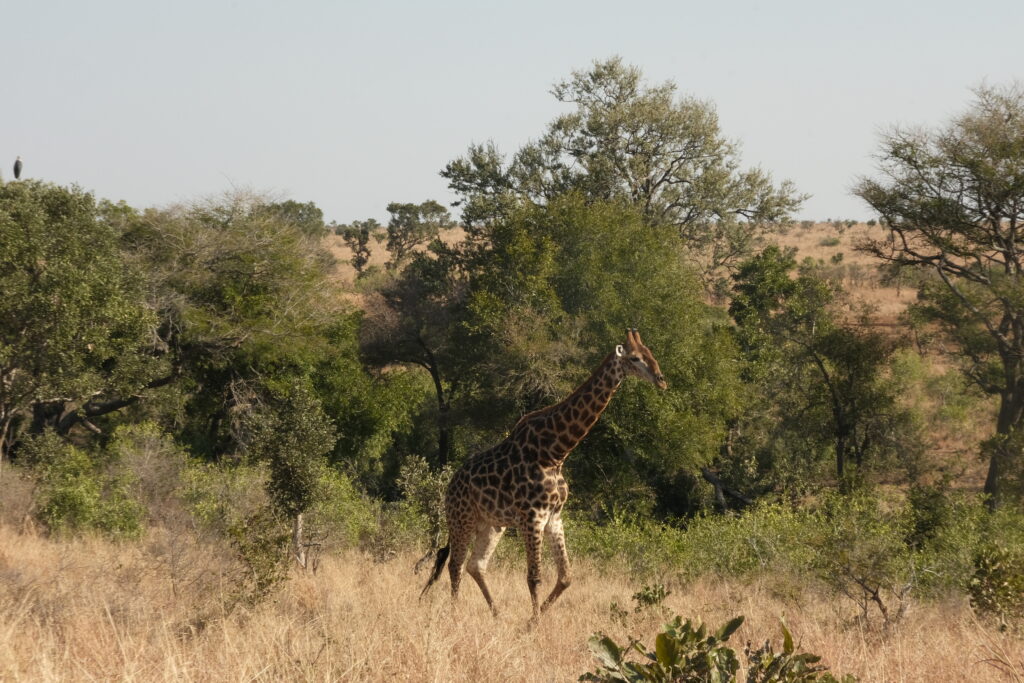
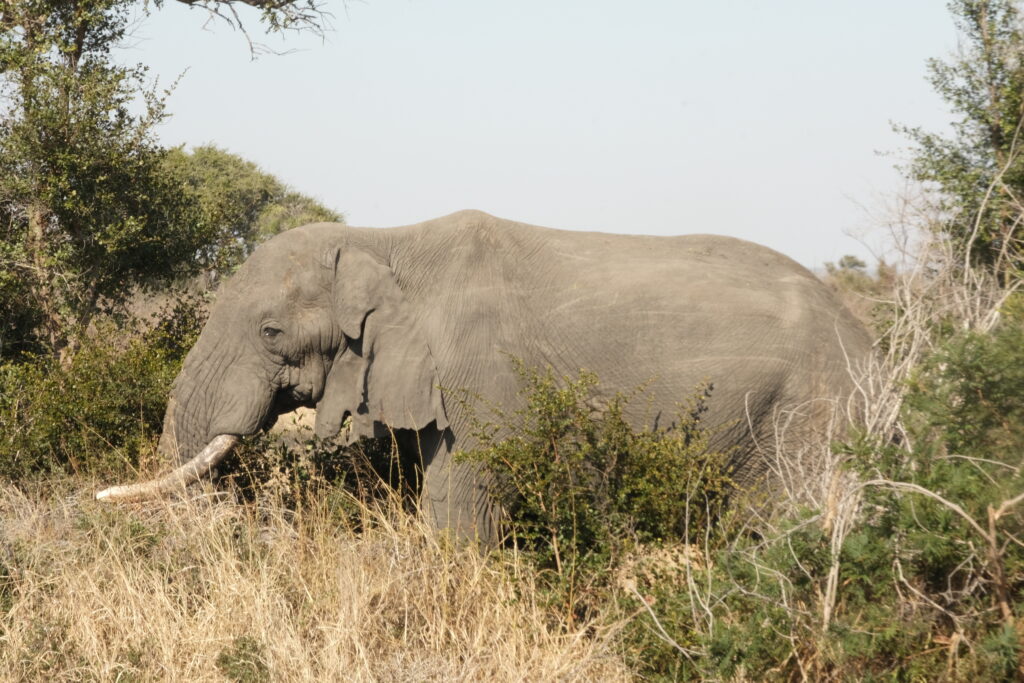
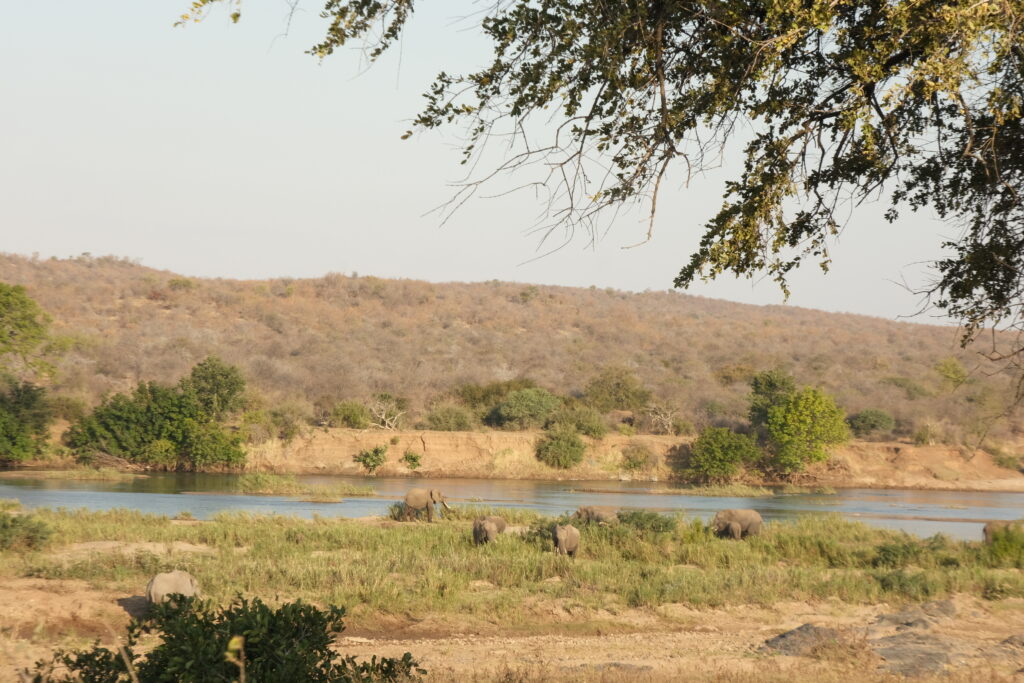
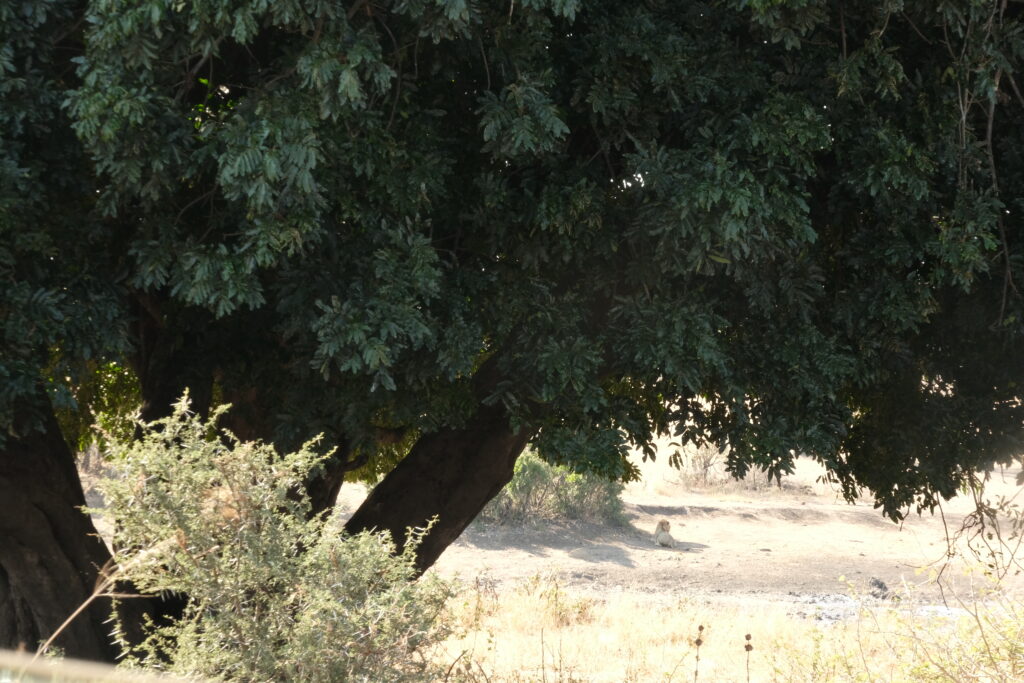
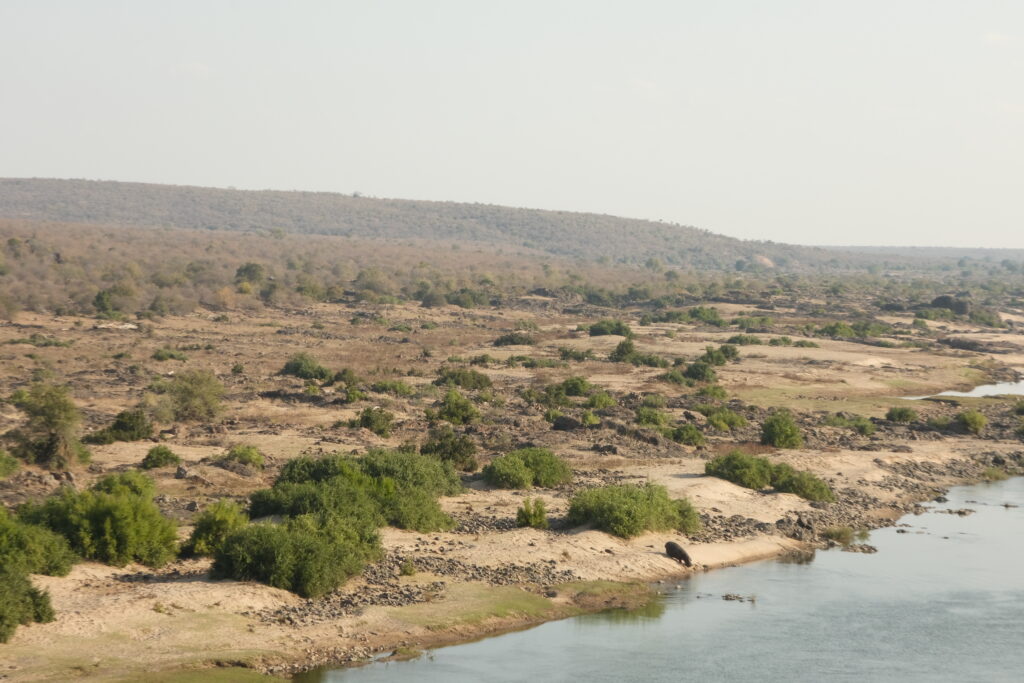
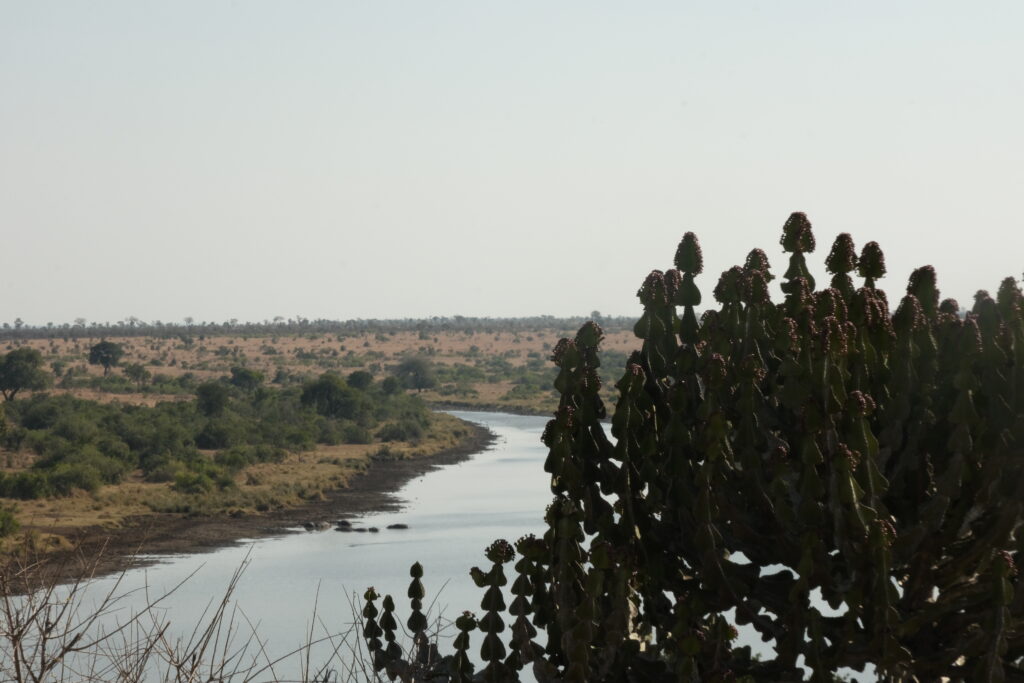
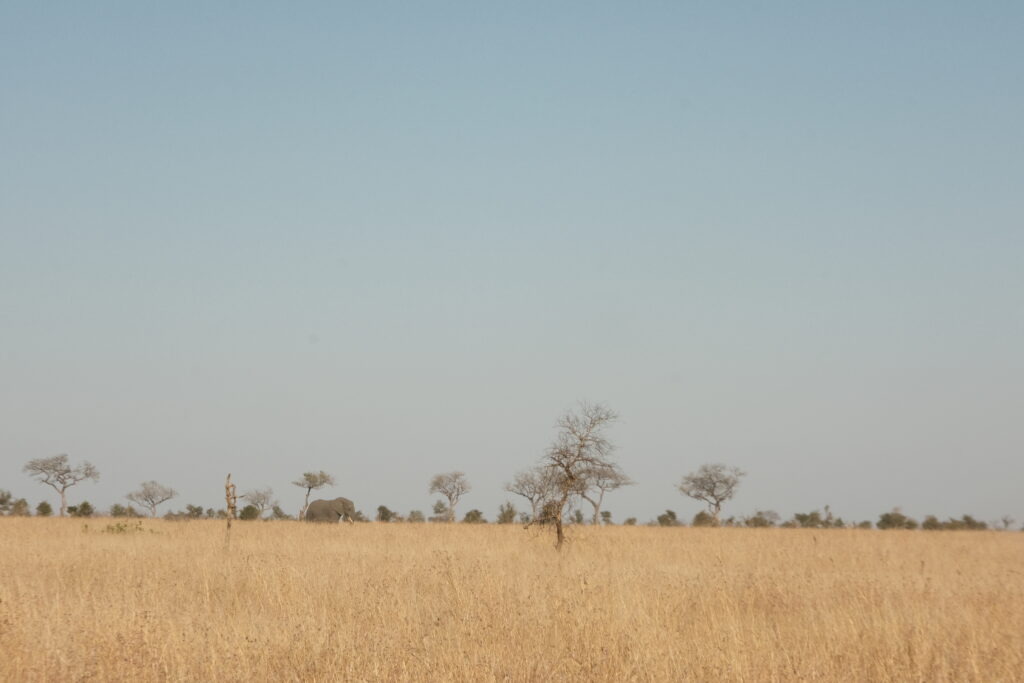
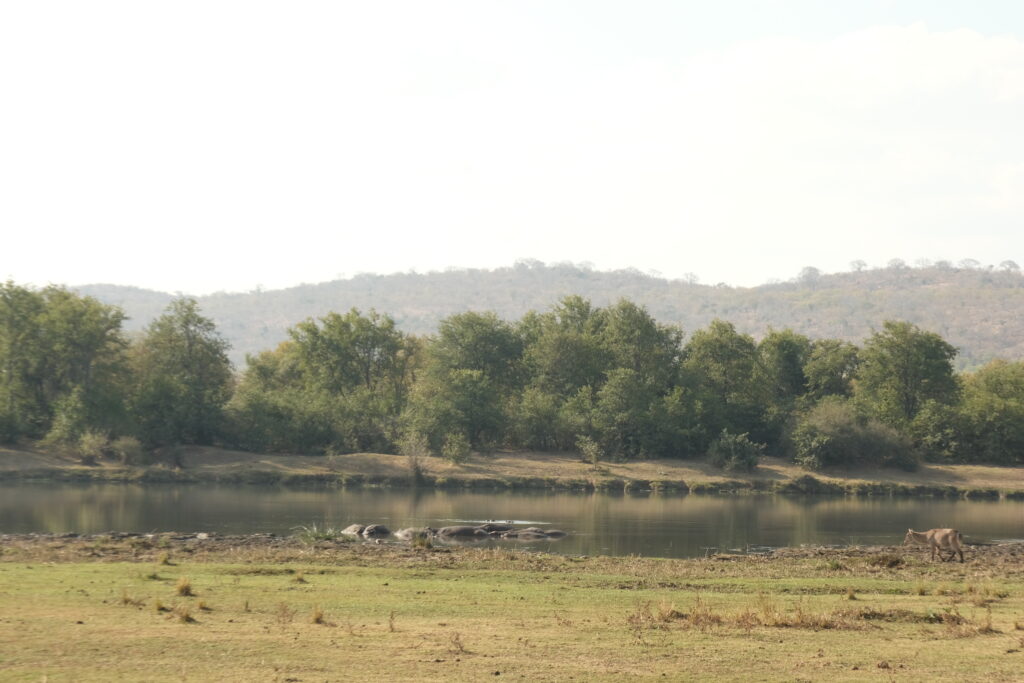
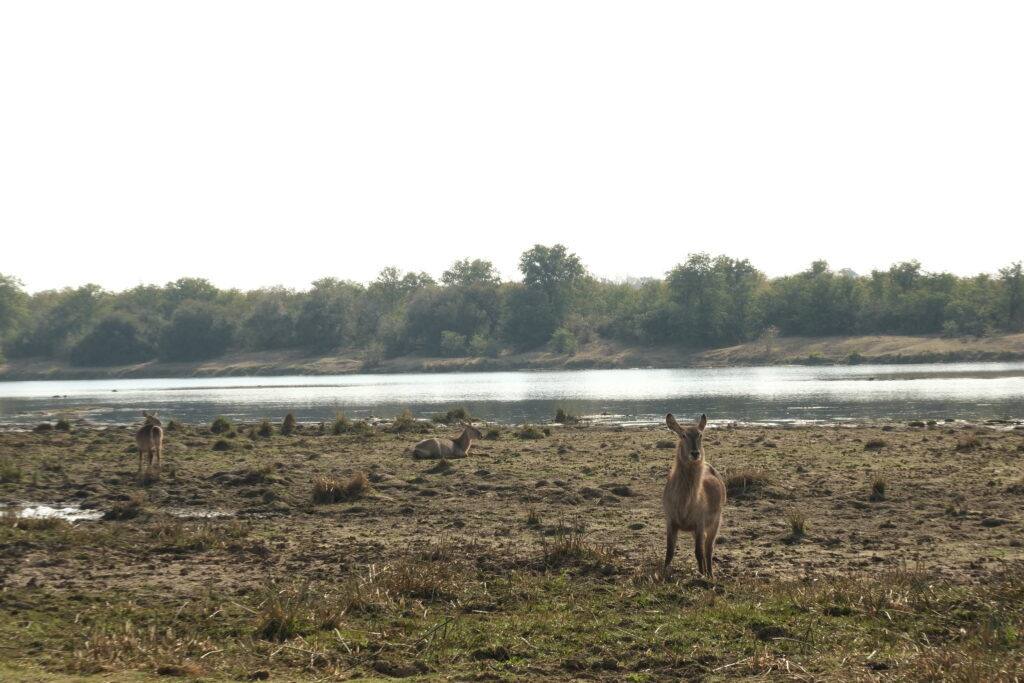
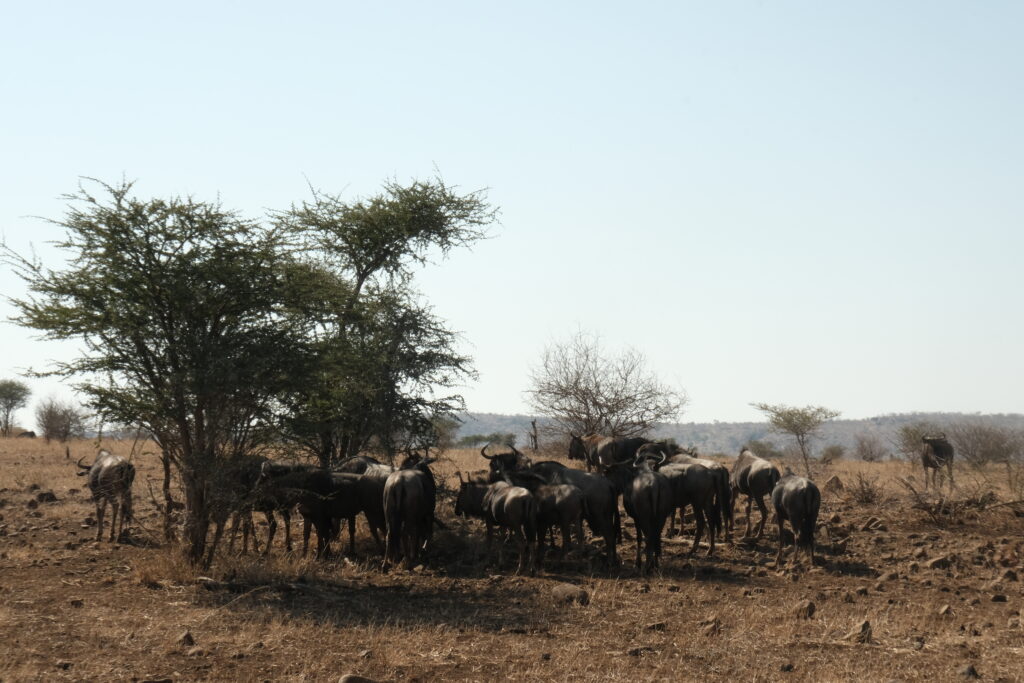
After the initial shocks, we started looking for side roads, not just the typical waterholes by the main roads, but routes that went deeper into the park. We discovered beautiful rivers and saw an incredible number of elephants, hippos, waterbucks, kudus, and other animals—it really was stunning. When we returned to the asphalt road, we were back in the crowd: both afternoons we saw leopards and lions. On the one hand, this was a great experience—we had been eagerly waiting to spot a leopard—but on the other hand, it was a bit disappointing to wait in long lines of cars just to see the animals, which seemed completely unfazed by the attention. (In the parks in Botswana, for example, we had to be careful with elephants because they were wary of car noise, and we often drove past them cautiously. Here, by contrast, you could simply stop a few meters from an elephant and her calf to take photos.)
The campsites were also mind-blowing. Driving is allowed in the park until 5:30 p.m., and we always cut it close, arriving almost last—so it was hard to find a spot, as others had already settled in earlier to claim the best sites. The campsites themselves felt like a fashion show of RVs and their awnings: many were larger than our apartment in Budapest, complete with kitchens, living rooms, dining rooms, their own braai setups, and endless strings of lights. Many people truly move into Kruger. We must have looked funny, pulling in with just our car—though luckily there were a few other simple tent campers as well.
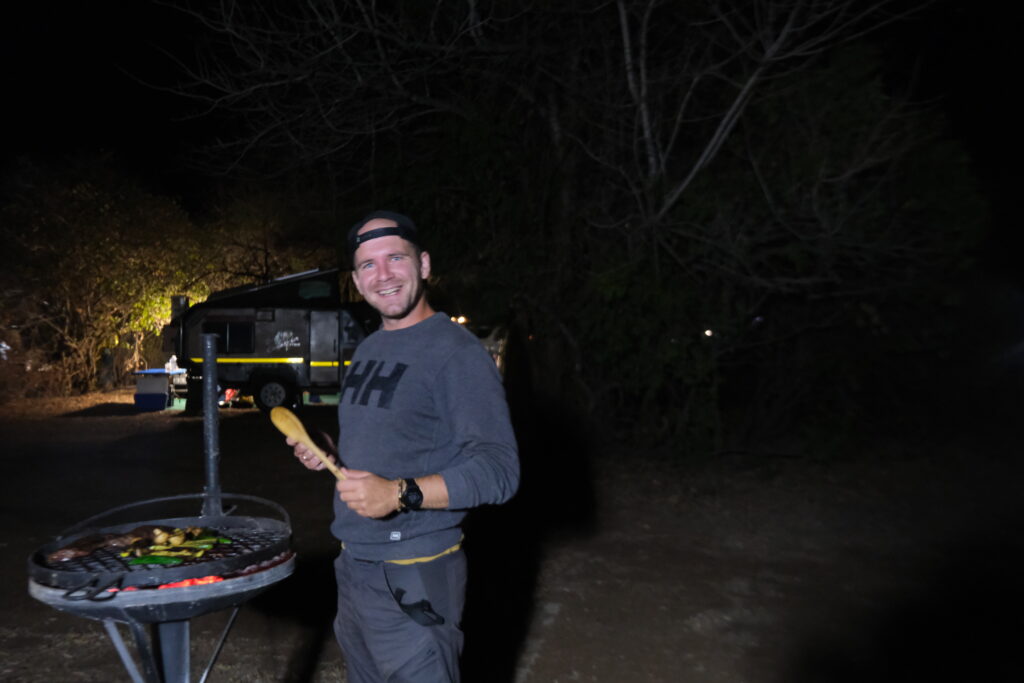
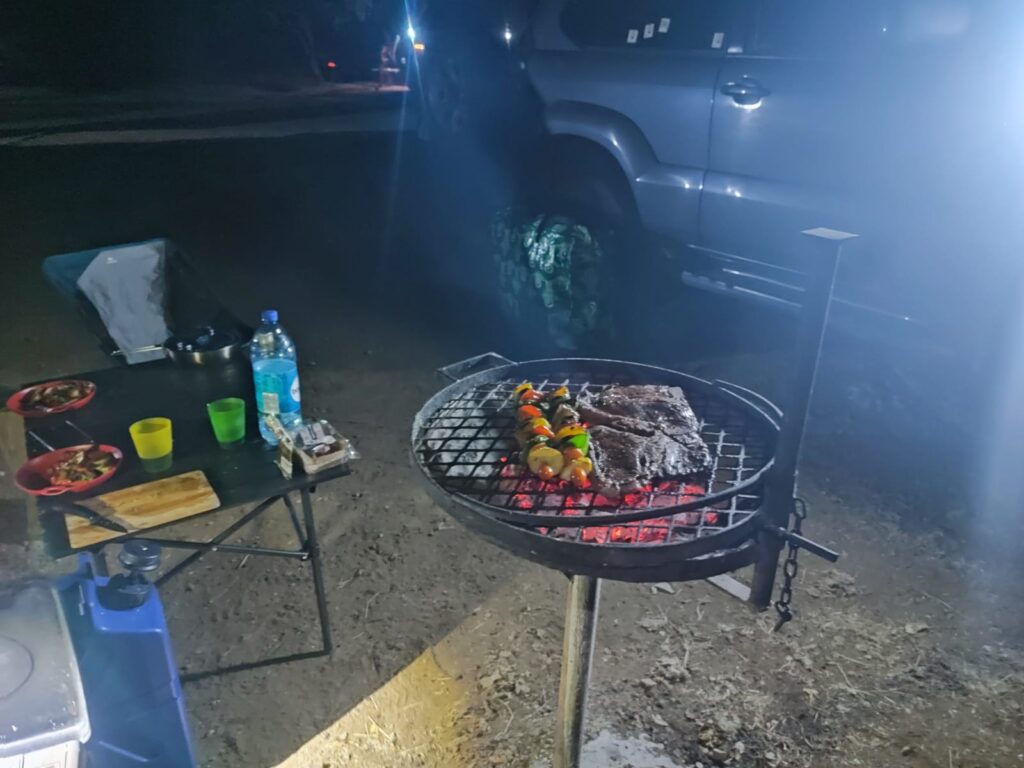
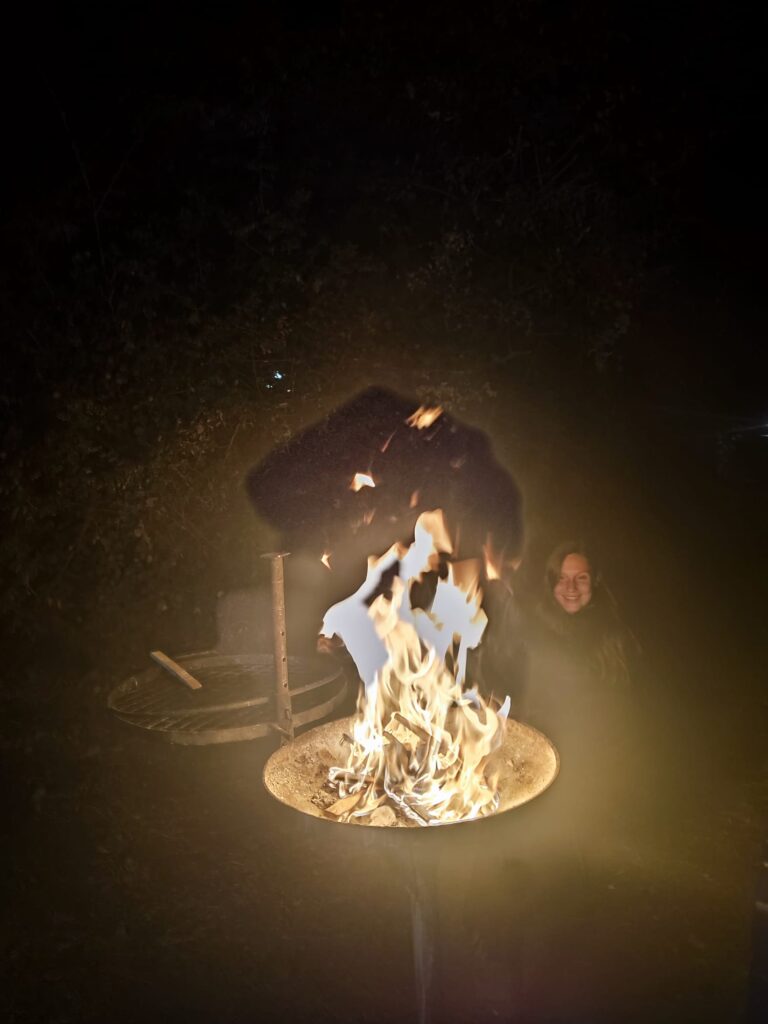
Each campsite came with its own braai (charcoal grill), so we embraced the South African tradition and did some shopping. One night we grilled sirloin, the next night T-bone steaks (two large cuts cost just a few euros), with grilled vegetables on the side (less typical for South Africa, where braais are very meat-focused), all accompanied by a bottle of South African red wine.
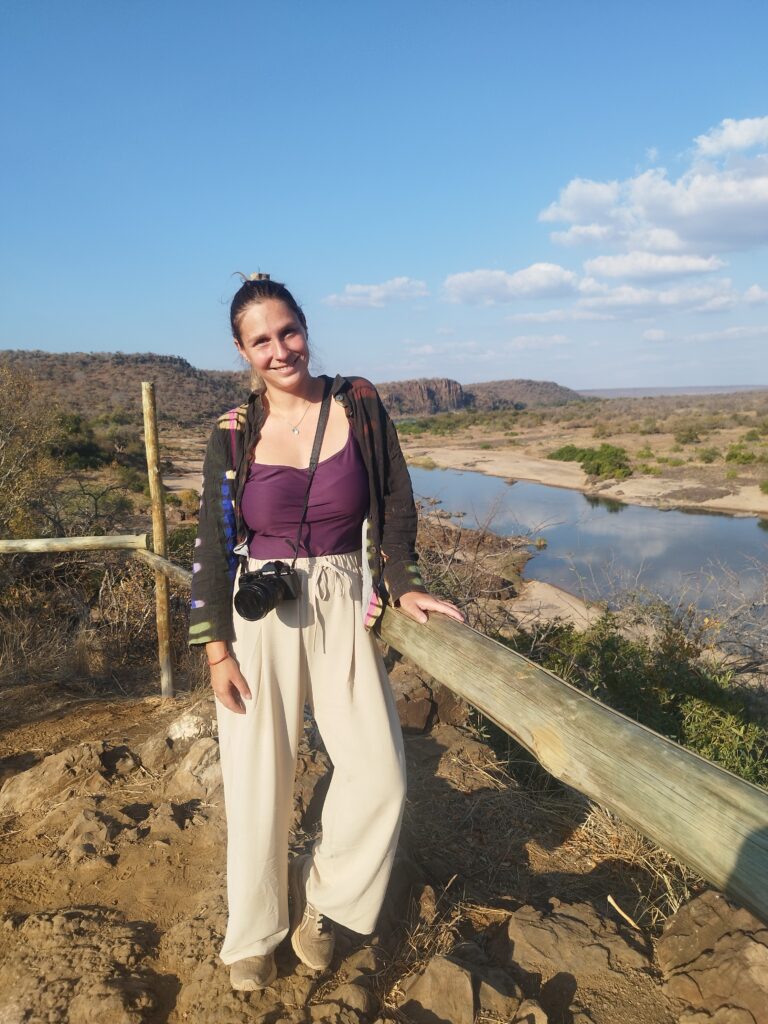
It was amazing to see so many animals, and Kruger is certainly a very comfortable park—but for us, Botswana’s raw closeness to nature was more moving. There, we didn’t feel like we were in a large, developed zoo, but truly in the wild.