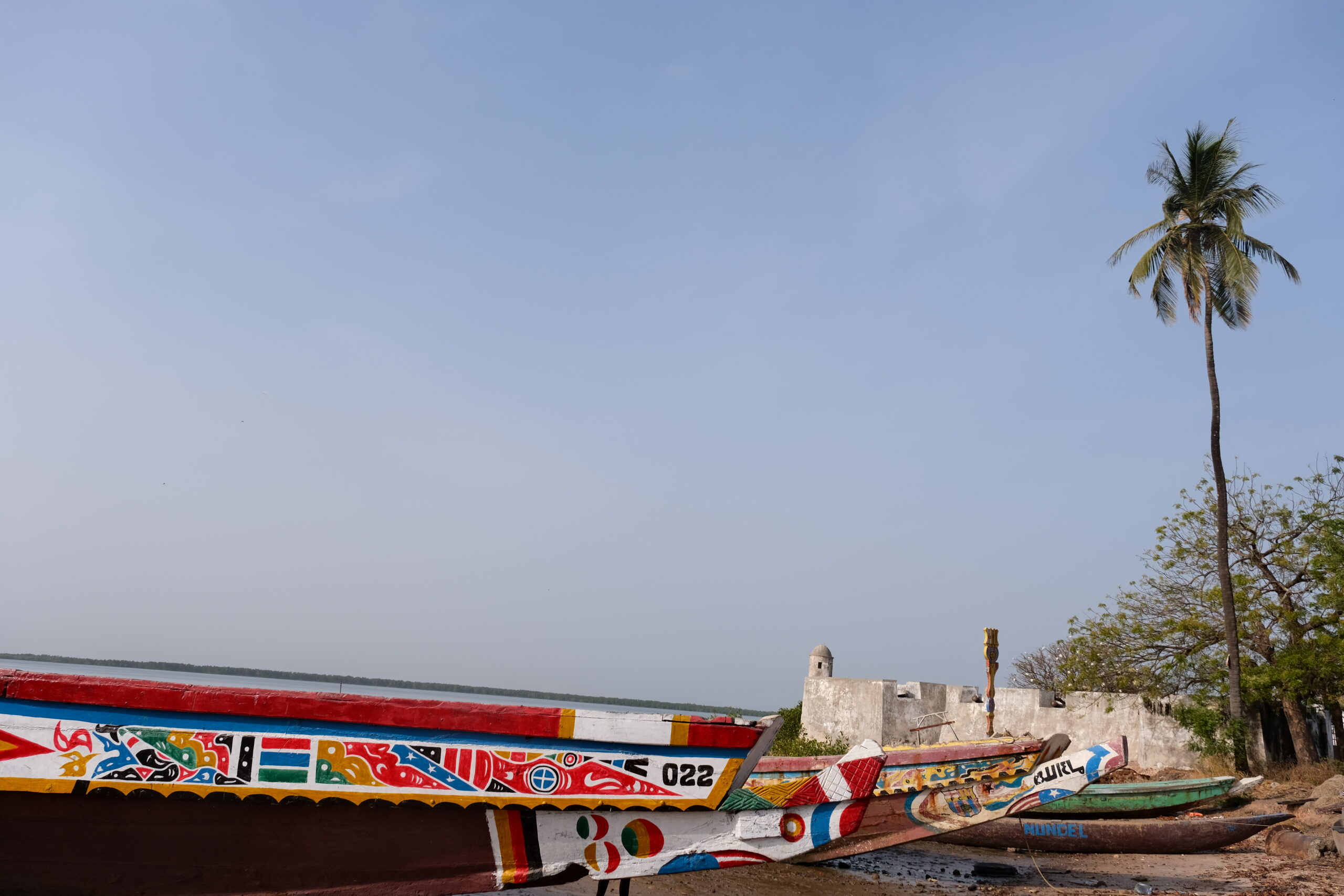
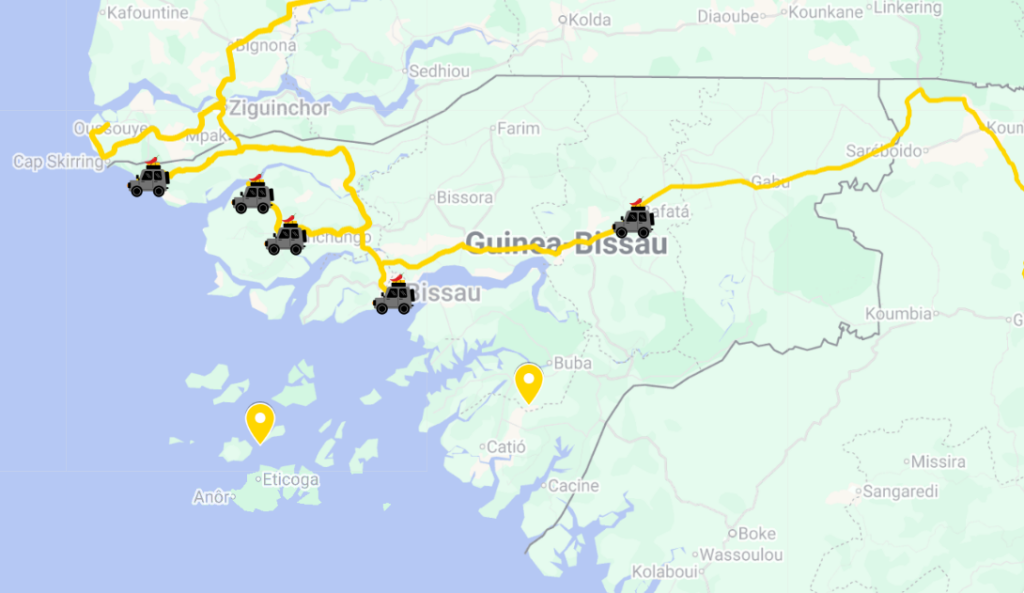
We spent about a week in this small country, about which we didn’t know much in advance, as there were very little information available online. Looking back, what’s certain is that because of the road conditions and the fact that so many beautiful things are located far from the capital and on the islands, we would recommend at least 2–3 weeks; for us, many of the things we had planned were left out. After Mauritania and Senegal, what really struck us was the stunning scenery—the whole country is full of greenery and rivers.
What should you know about the country?
Summary
Guinea-Bissau is located in West Africa, with an area about one-third that of Hungary and a population of roughly 2–2.1 million people, comprising more than 20 ethnic groups; the largest are the Balanta, Fula (Fulani), Mandinka, and Papel communities. Before the arrival of the Portuguese, much of the region belonged to the Kaabu (Gabu) Empire, which, as a successor state of the Mali Empire, was a major political and commercial power between the 13th and 19th centuries. Along the coast and on the Bijagós Islands, autonomous communities practicing traditional African religions lived and resisted external powers for a long time.
Between the 16th and 19th centuries, the area of present-day Guinea-Bissau—especially Cacheu and Bissau—played an important role in the Atlantic slave trade, from where hundreds of thousands of people were transported, mainly to Brazil and the Caribbean, through Portuguese mediation. The Portuguese arrived in the 15th century, but Guinea-Bissau only came under actual colonial control by the late 19th century; the country gained independence in 1974 after an armed liberation war led by Amílcar Cabral. Since then, at least four successful military takeovers (1980, 1998–99 civil war, 2003, 2012) and more than ten coup attempts (most recently in December 2025) have occurred, resulting in prolonged political instability.
Around 25–30 different languages are spoken in Guinea-Bissau, most belonging to the Atlantic and Mande language families. Portuguese is the official language, but in daily communication most people use Bissau-Guinean Creole (Kriol) as a lingua franca alongside their ethnic languages.
About 45–50% of the population is Muslim (mostly Sunni), 20–25% Christian (mostly Roman Catholic), and 25–30% practice traditional African religions. Religious syncretism is common, with elements of Islam or Christianity blending with local spiritual traditions. Despite the political instability, daily life is primarily organized not by the state but by local communities, traditional leaders, spiritual systems, and music—especially gumbe—which remain the foundation of Guinea-Bissau’s social functioning.
Climate
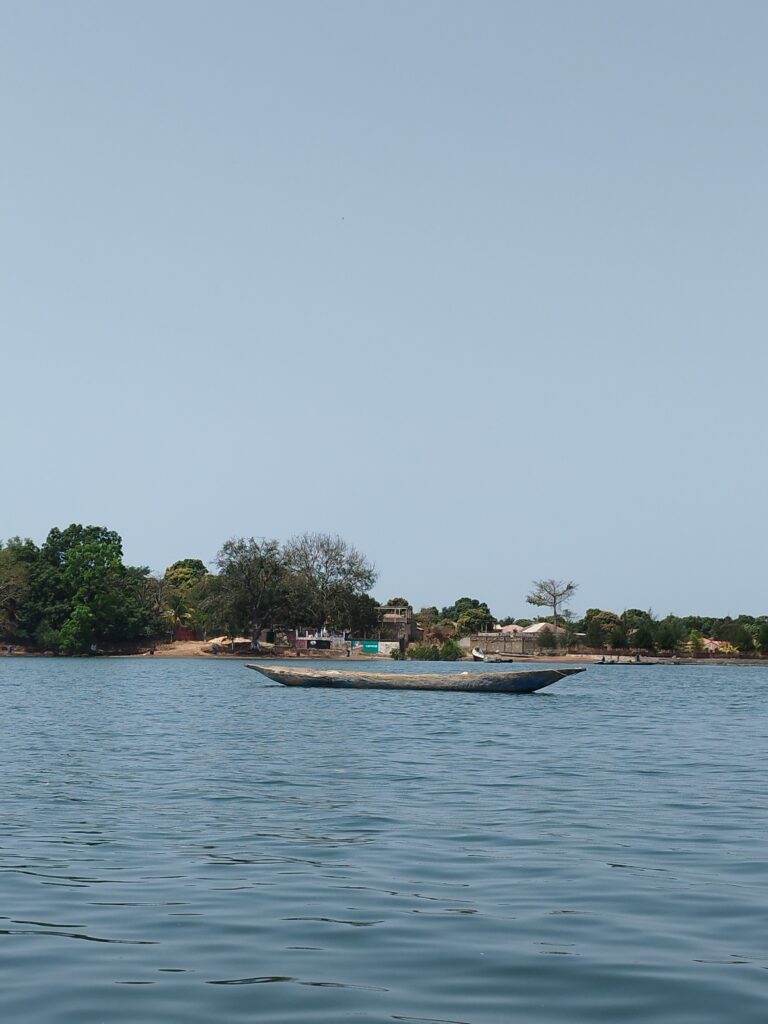
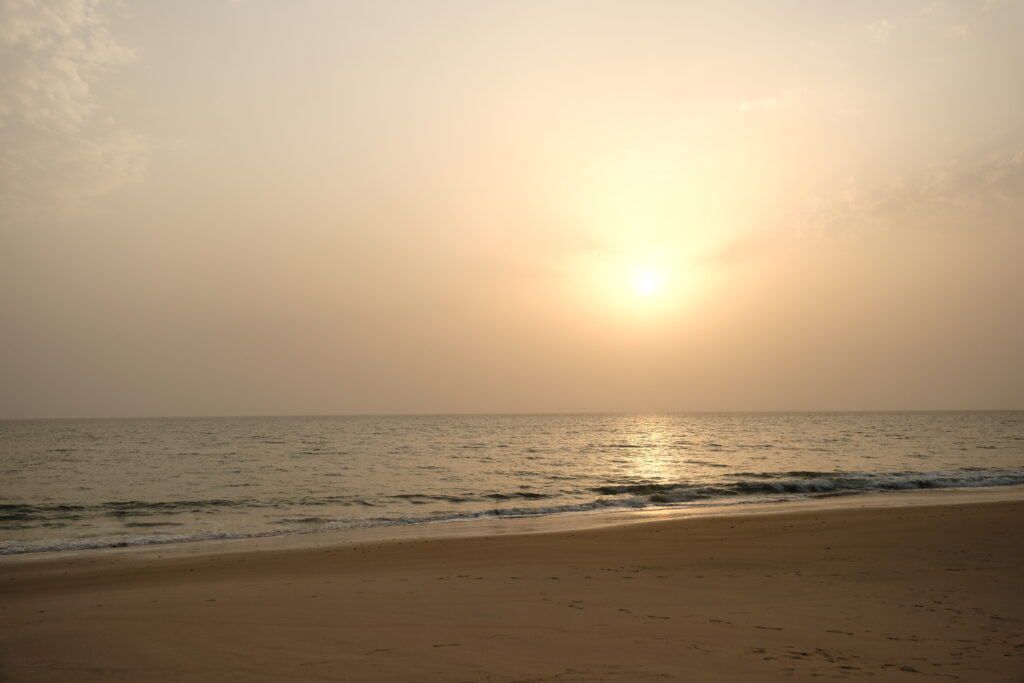
Guinea-Bissau has a tropical climate, with high temperatures year-round (averaging 25–30 °C) and high humidity. Two distinct seasons alternate: the dry season lasts roughly from November to May, while the rainy season, from June to October, brings heavy showers and frequent flooding.
Clothing
Although Guinea-Bissau has a Muslim majority, it was perhaps the African country where we observed the most relaxed dress code; many women wore shorts and sleeveless tops, so I also brought out my own shorts.
Food
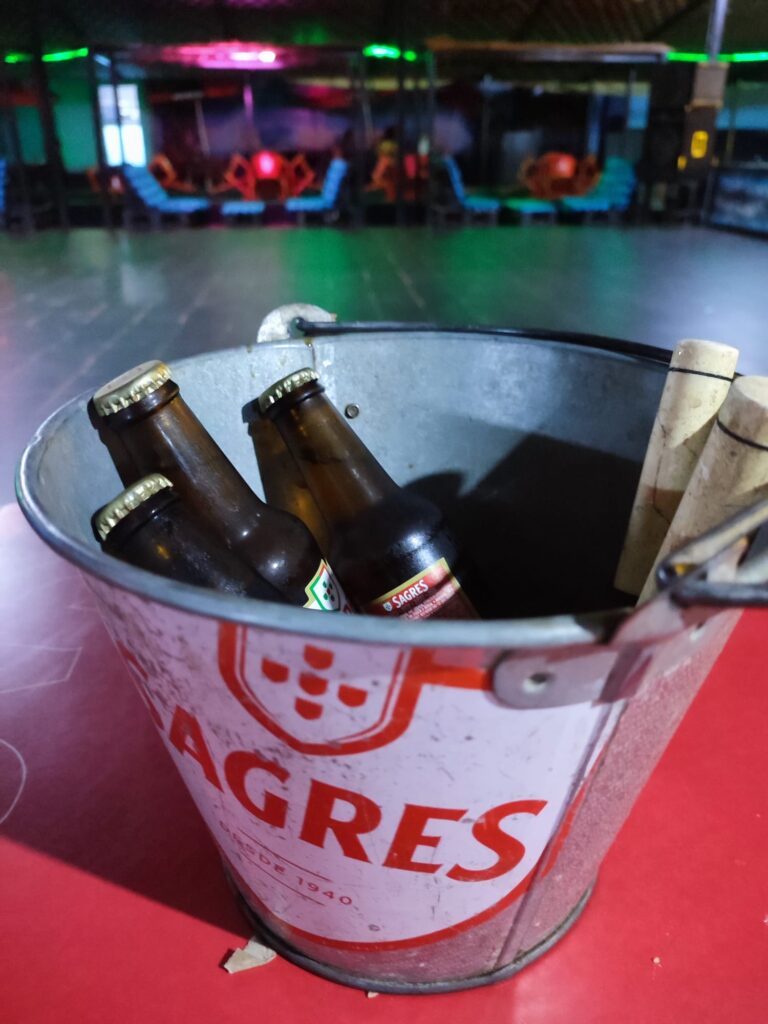
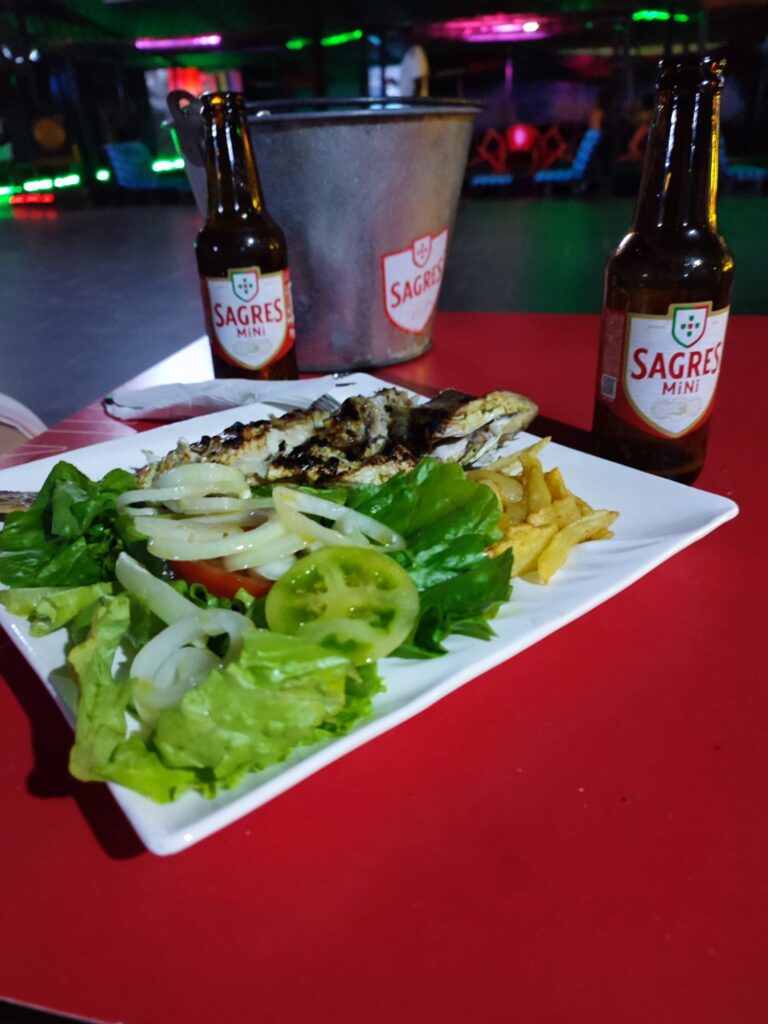
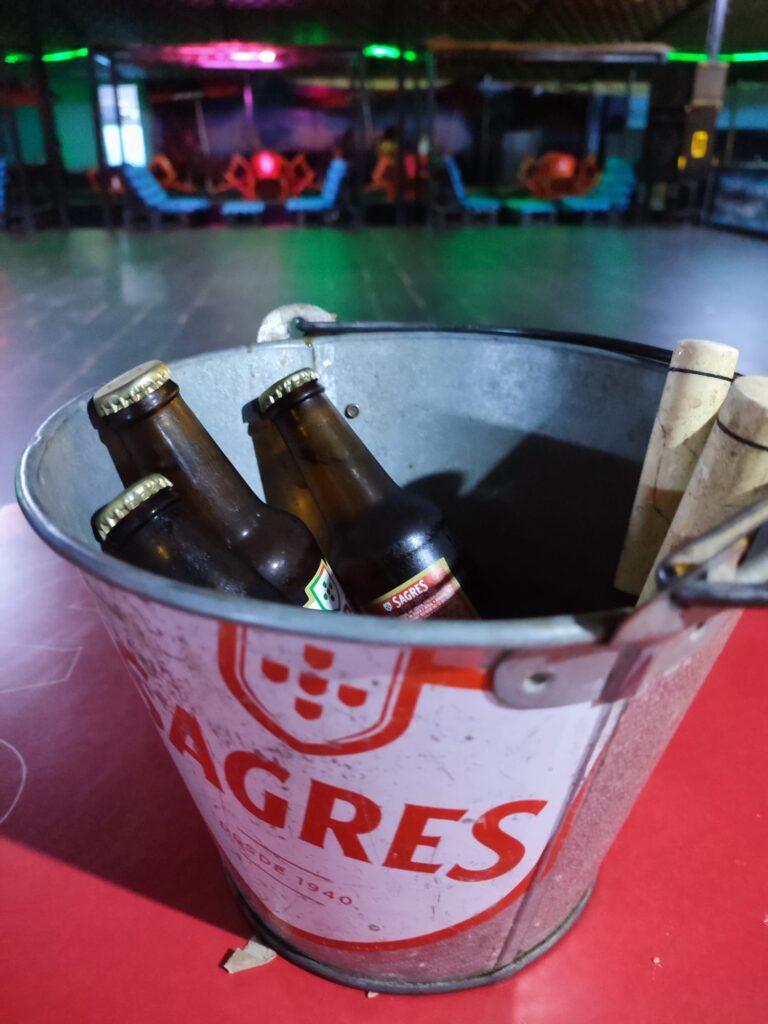
Eating in Guinea-Bissau was sometimes a challenge. Unlike elsewhere, where you can eat at local eateries throughout the day, here we found that after a hearty breakfast, by around 4–5 p.m. most places were already out of food (someone even took us to every restaurant in Cachungo), and dinner was only served late. In the end, we managed to get a baguette and a boiled egg on the street. The local cuisine is based on rice and fish; for breakfast, you can easily get futi, a dried-fish rice-and-vegetable dish that keeps you full all day. In the evenings, grilled fresh fish is widely available, which goes very well with a few beers (sold only in threes).
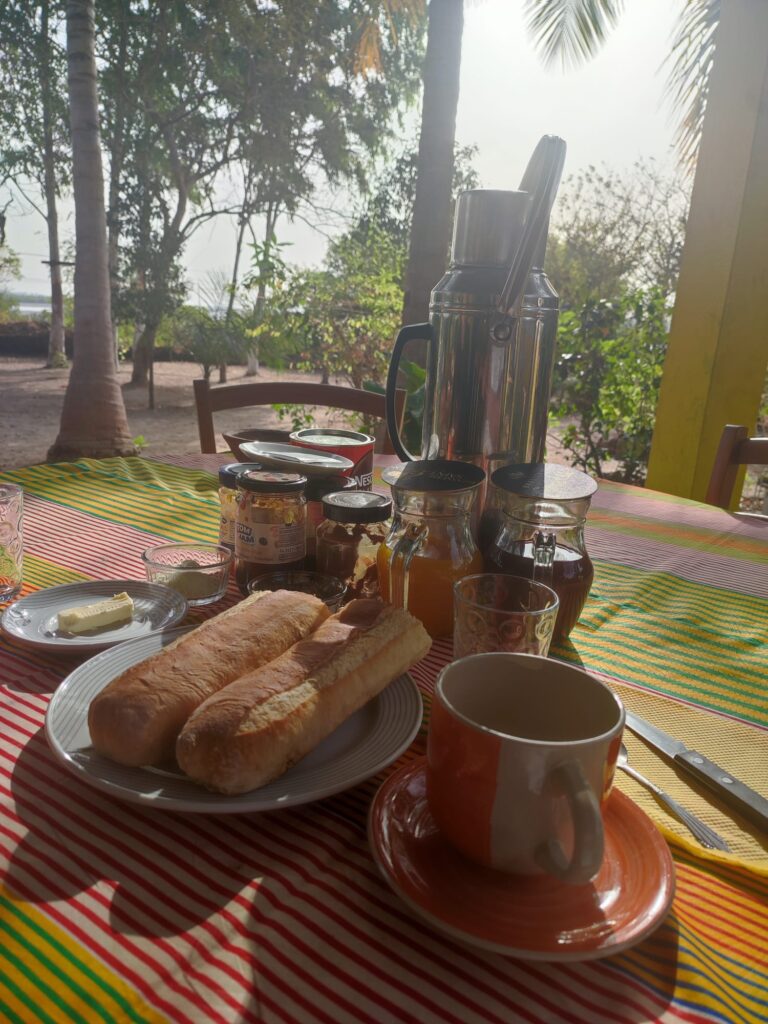
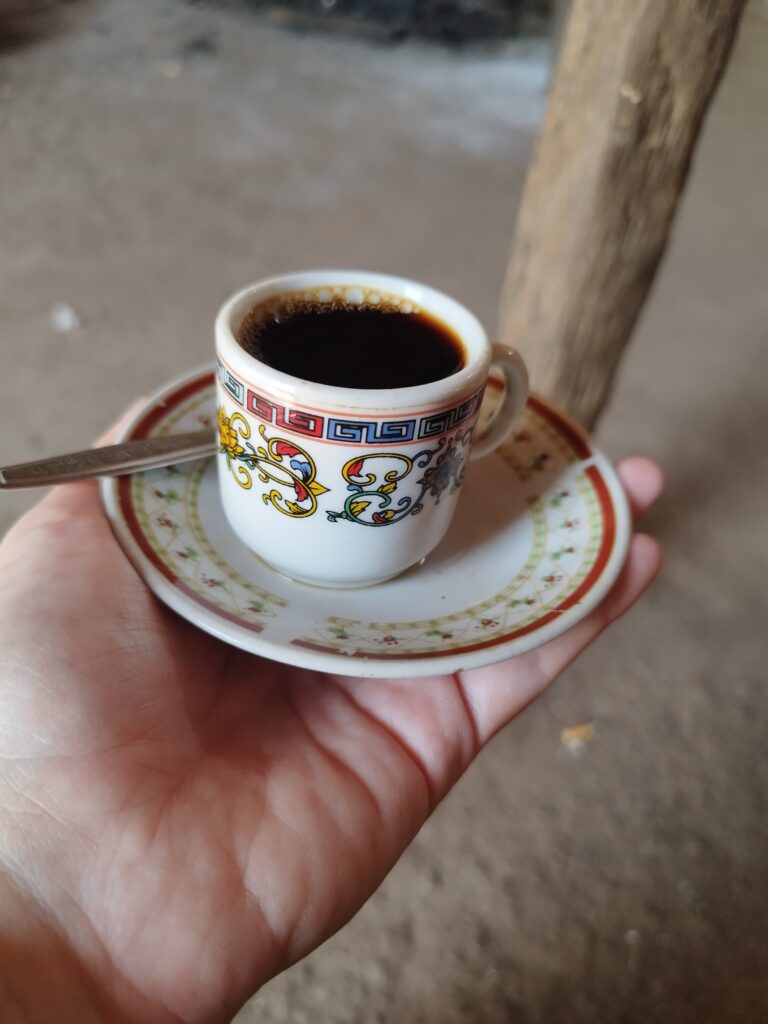
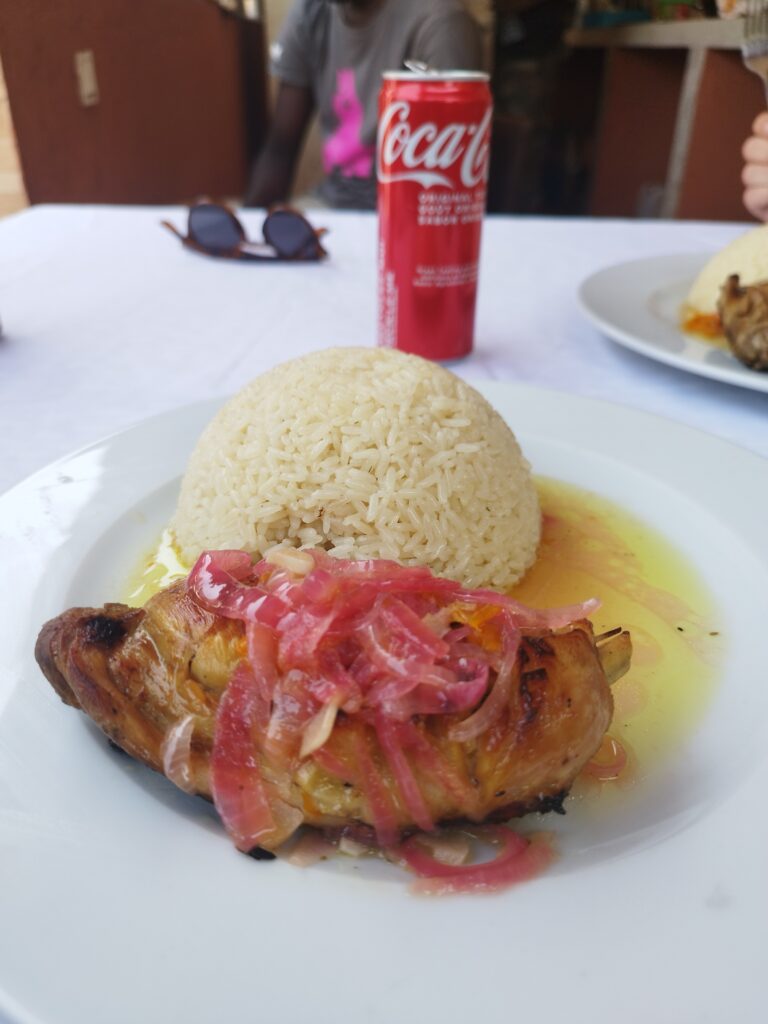
In the mornings, women sell baguettes with various spreads they make themselves, such as pea or liver spreads, and at our accommodation we also enjoyed very tasty pineapple jam. Bissap (hibiscus) juice is common here as well. We didn’t get to try caldo de mancarrat (meat or fish in peanut sauce), but at one place we had freshly made marinated chicken with onions, garlic, and chili, which was delicious. Coffee culture is not widespread in Guinea-Bissau itself, but it is common in neighboring Guinea, so near the border we had the chance to enjoy strong black coffee made in large moka pots.
Safety
On November 26, 2025, the country was shaken by another attempted coup, although many sources suspect that the president orchestrated it to avoid facing his opponents in the elections. Nevertheless, the country remains politically very unstable; for example, curfews are often imposed after coup attempts. The Hungarian consular service marked the country as high-risk even when we were there (February 2025), although everything was calm at the time, and other countries considered it safe.
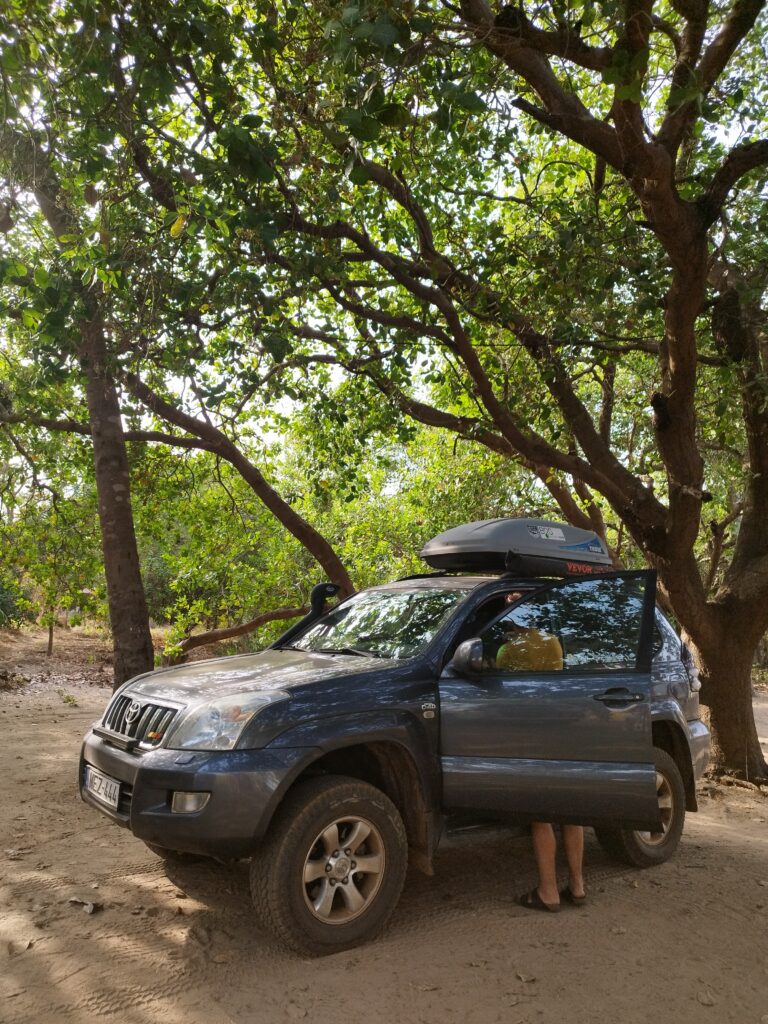
We didn’t spend much time in Bissau, the capital, but in the countryside we found public safety to be good. In Sao Domingos and Bafata, we even walked home at night; the main challenge was the lack of street lighting. Sometimes we parked on the street overnight, and in Verala we did wild camping, which was completely accepted by the locals. There were very few police checkpoints, and officers mostly just stopped people to chat.
Roads
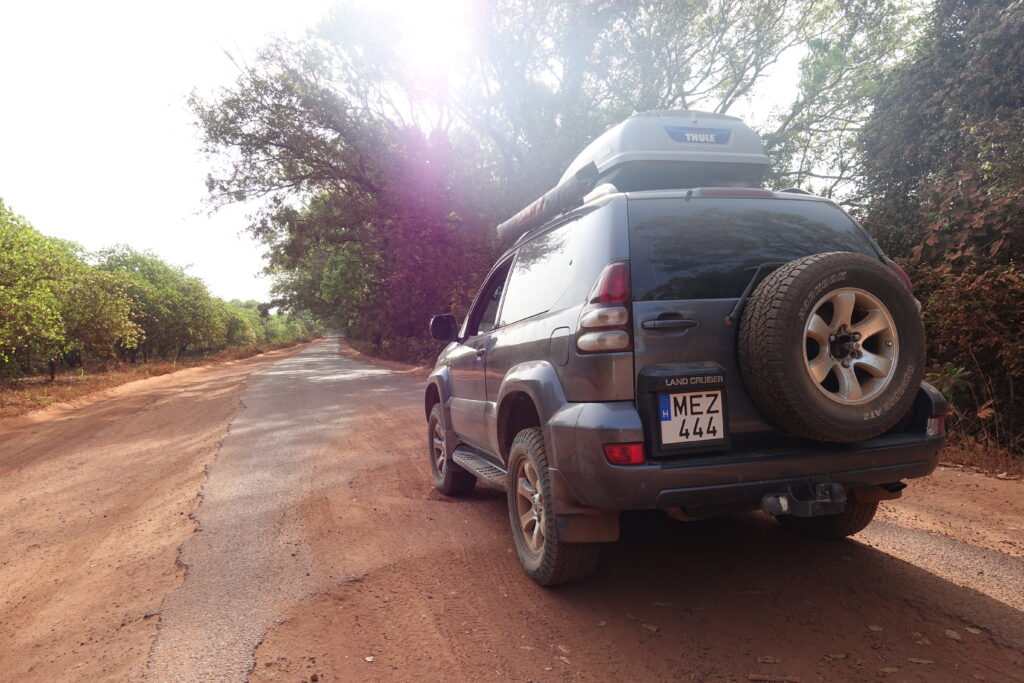
During our African journey, the roads here were in the worst condition. We could cover only about 100 kilometers in a day, and we hardly ever used third gear. The roads were full of huge potholes.
Sights and Experiences –Where we’ve been and what’s left out
Sao Domingos
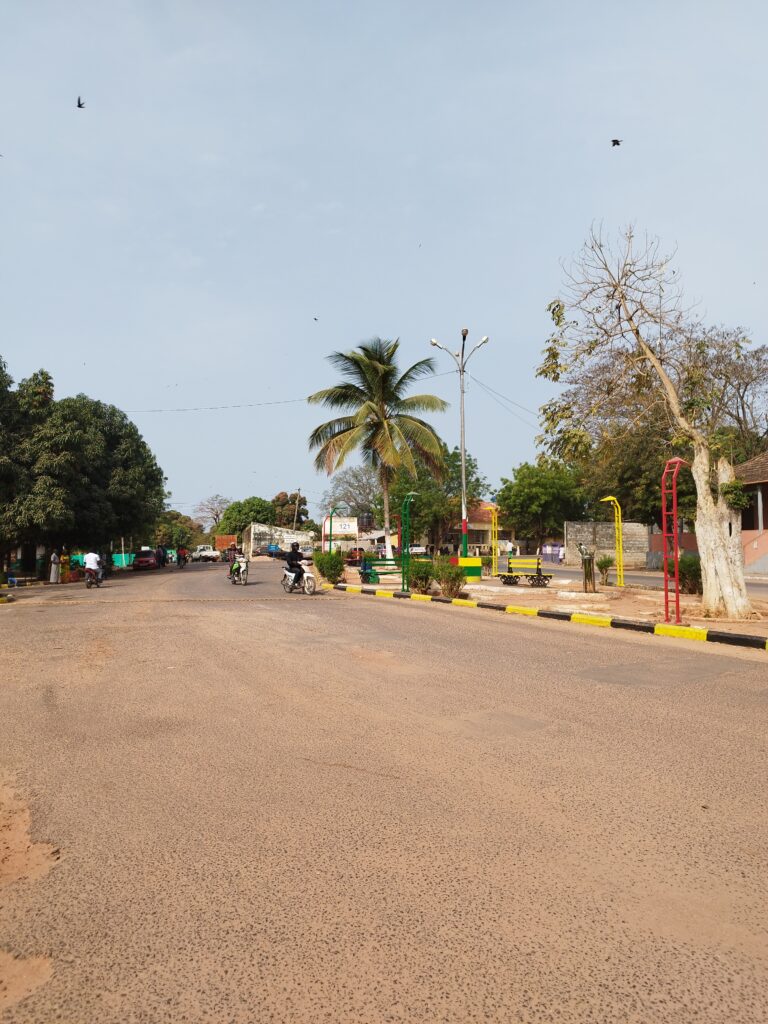
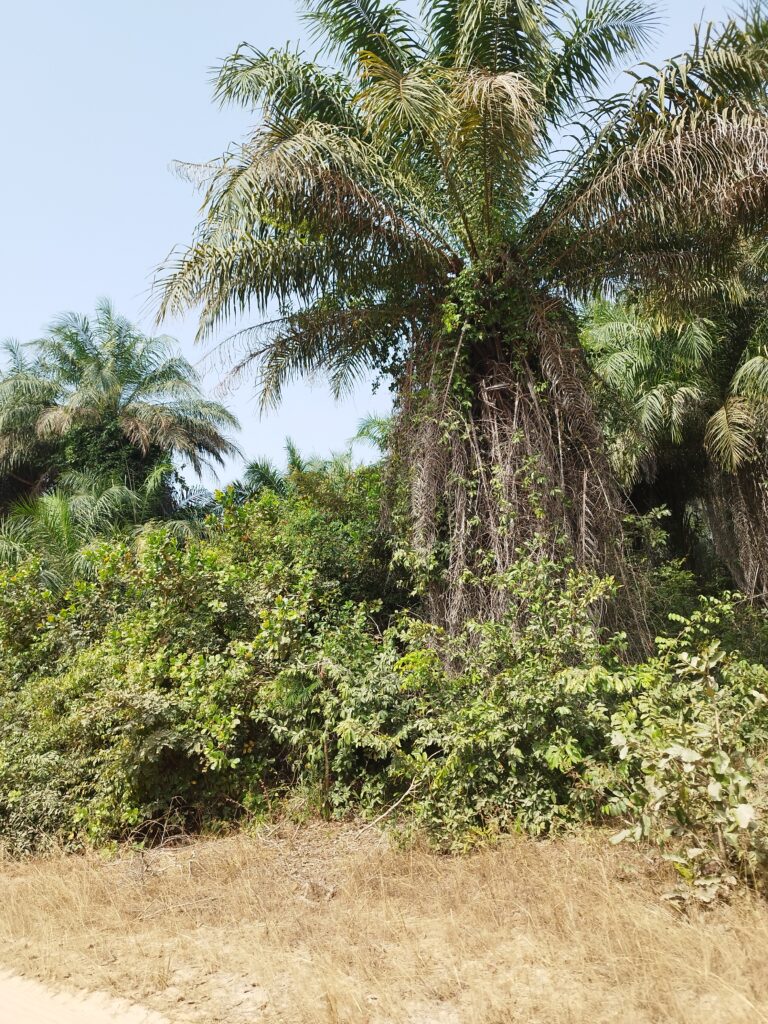
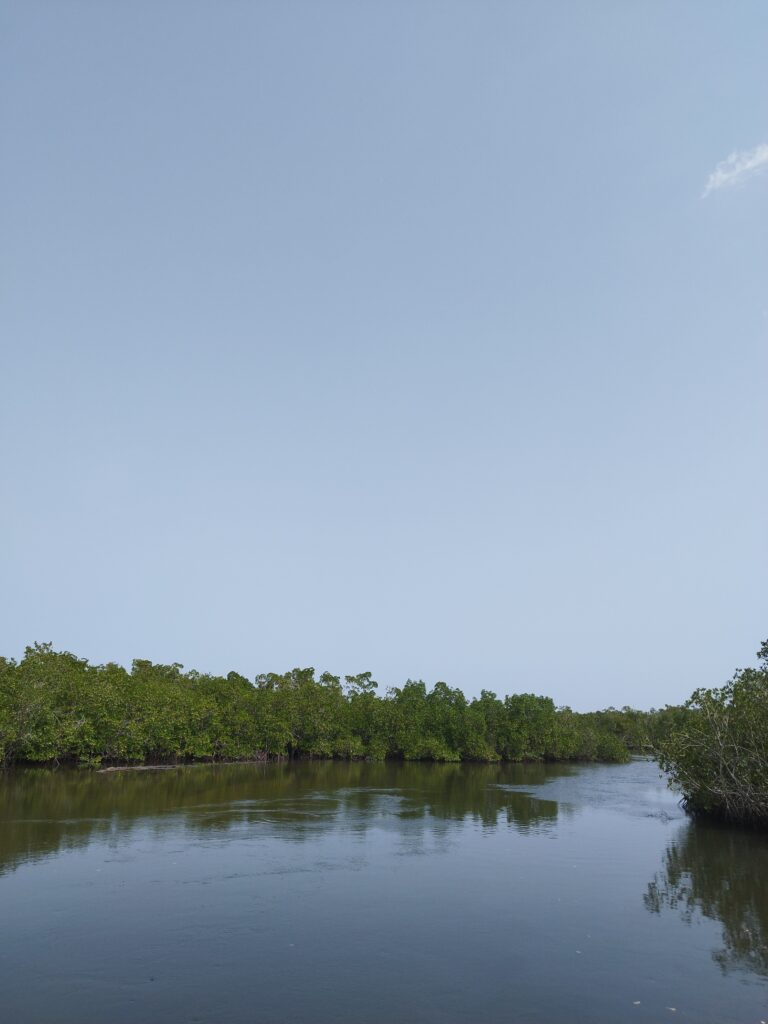
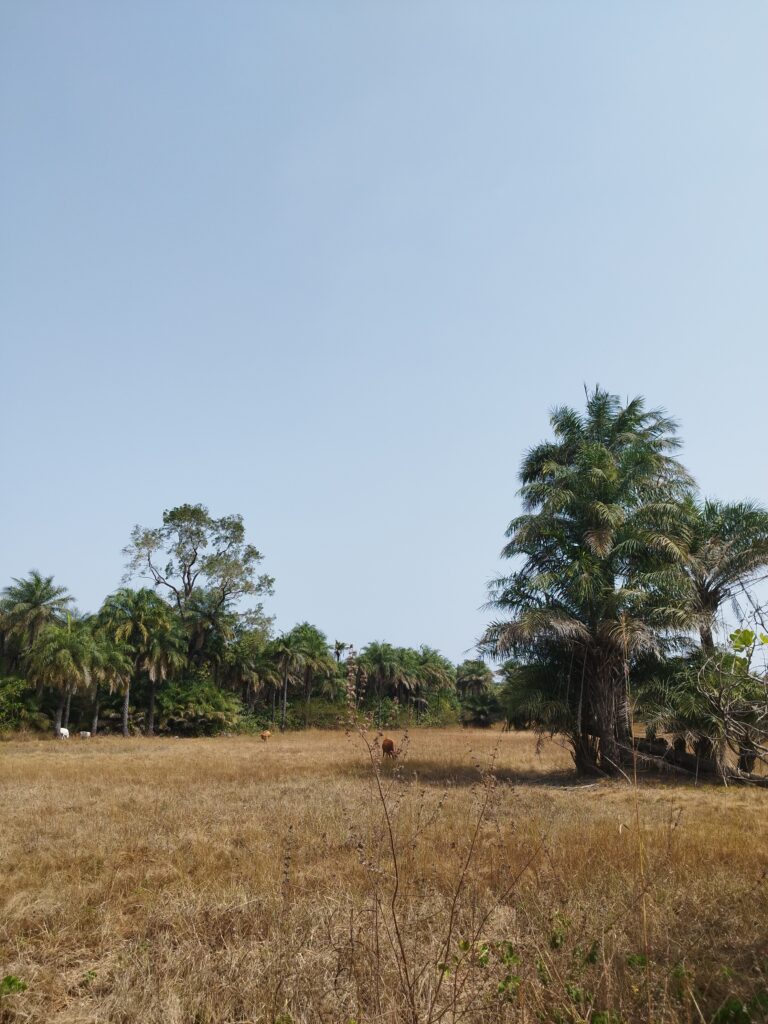
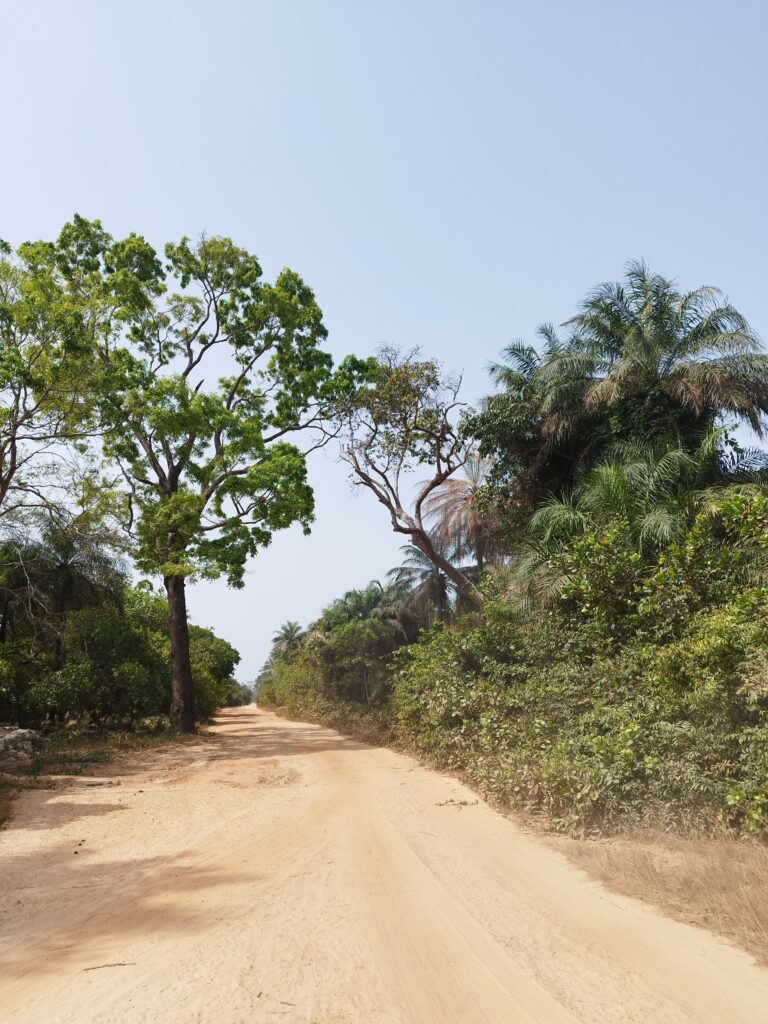
The first major settlement after the Senegalese border is the trading town of Cacheu, located on the banks of the Cacheu River. We stopped there for one night, strolling through the very calm little town where grills were glowing along the main street, and then we went into a bar. It’s the first non-fully Muslim country we’d visited since Europe, so we enjoyed being able to have a reasonably priced beer and the friendliness of the locals, who all tried to chat with us—though they spoke Portuguese and we only spoke English. The next morning, we had a delicious baguette sandwich from a street vendor, with sauces of our choice; we tried pea and liver spreads. The 50-kilometer drive from Sao Domingos to the coast takes about three hours, but it’s worth it—the landscape is lush, with palm trees and mangrove forests.
Varela
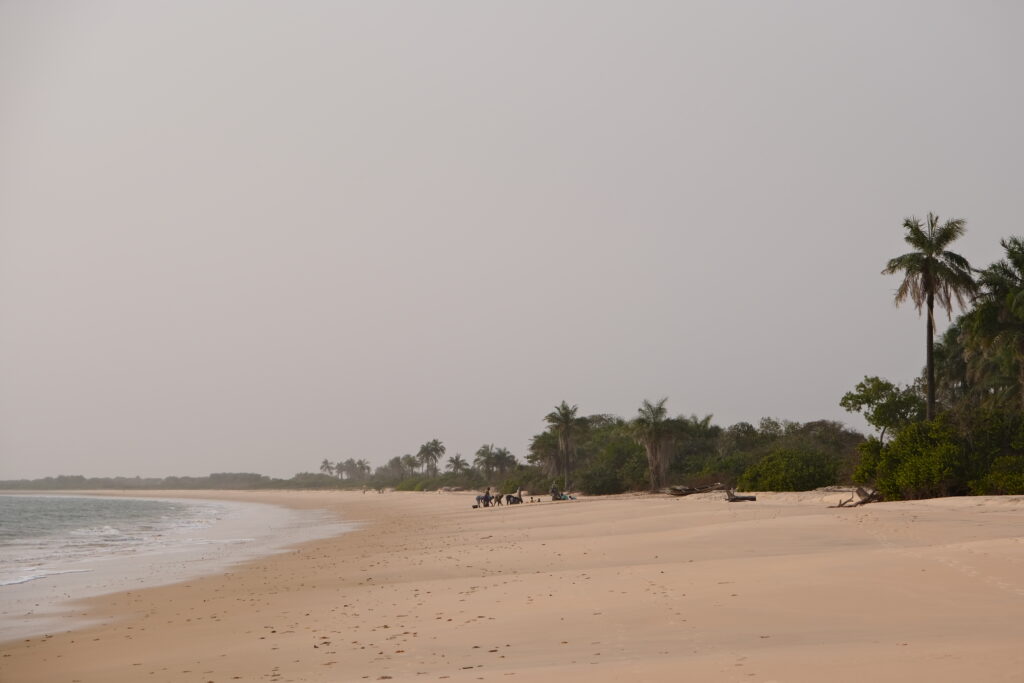
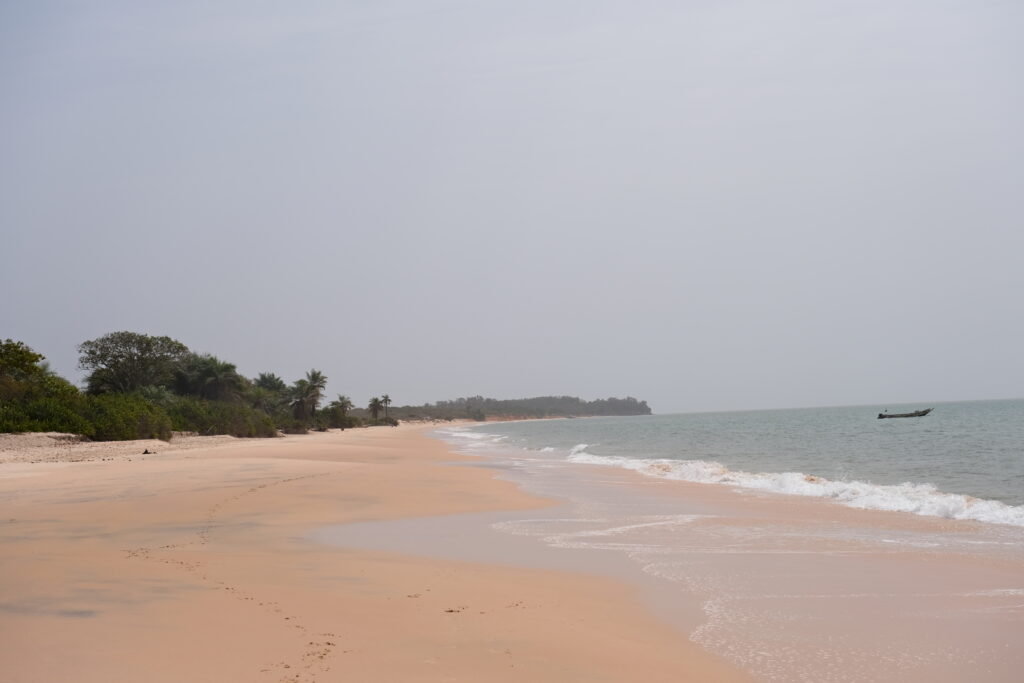
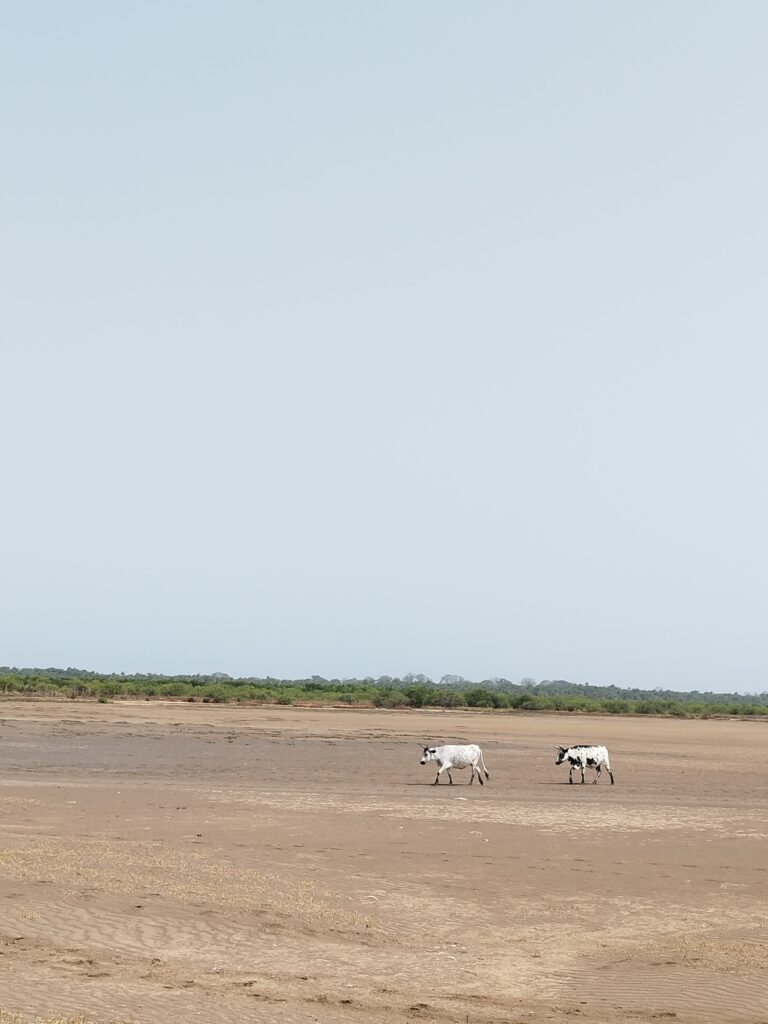
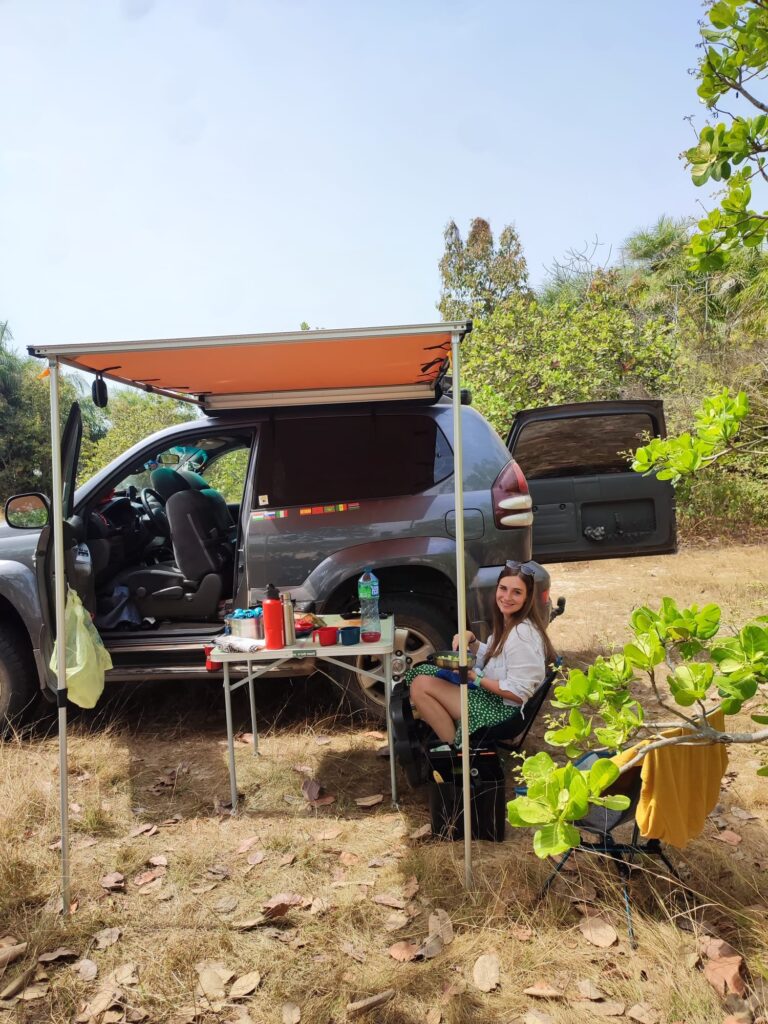
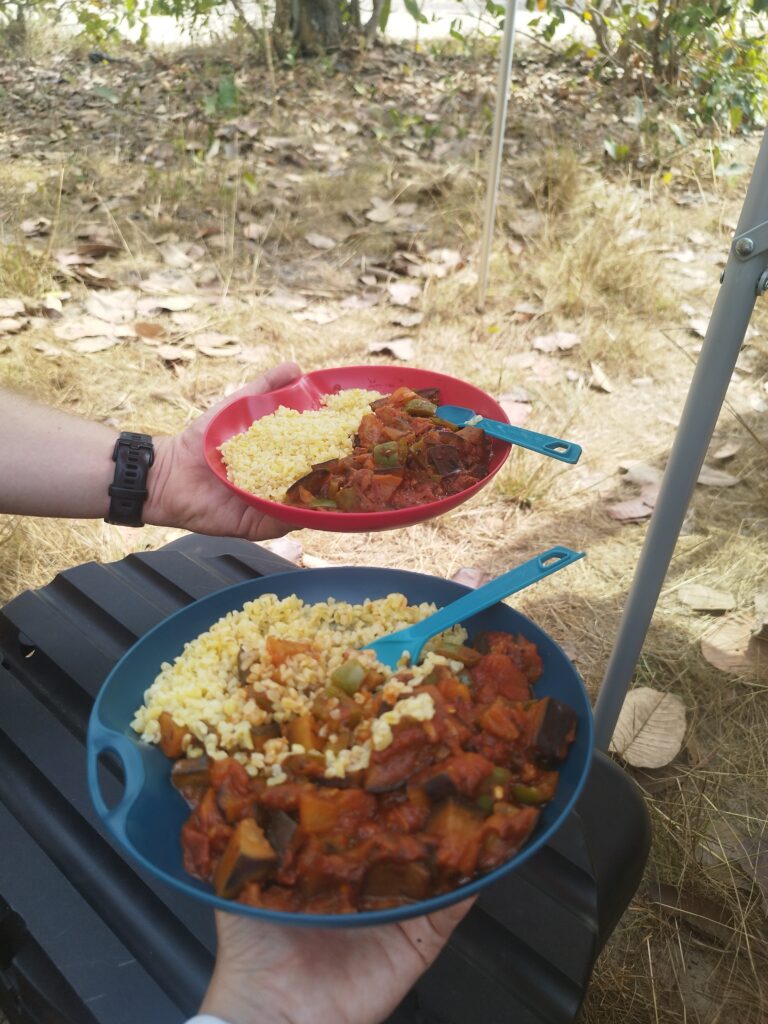
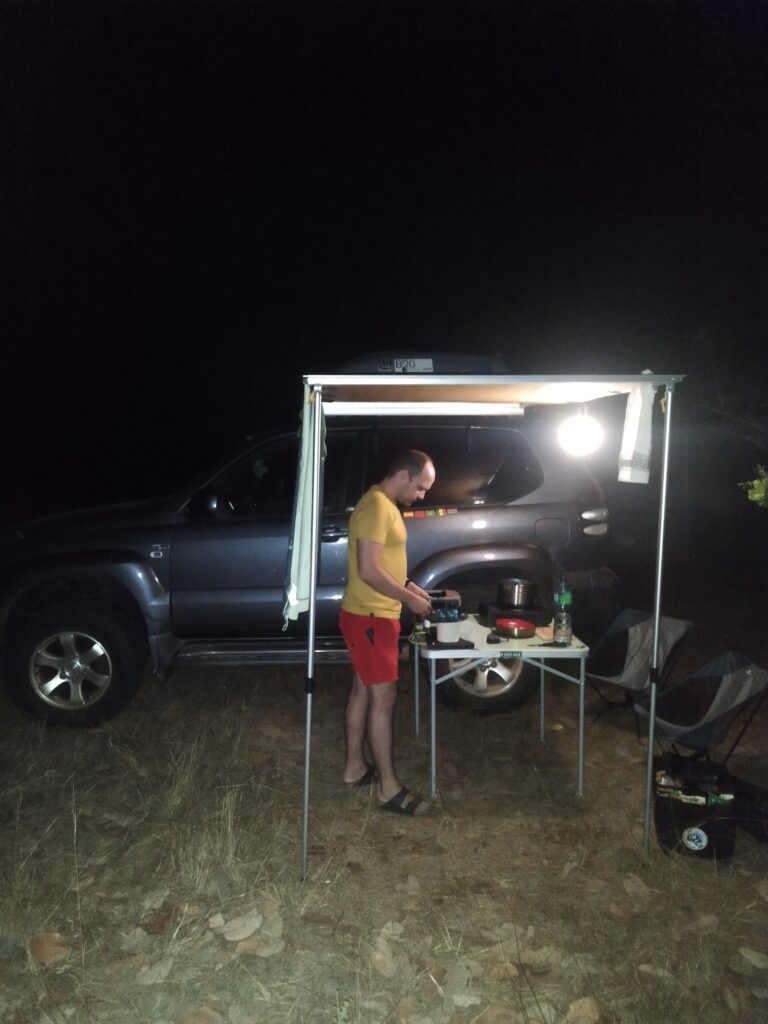
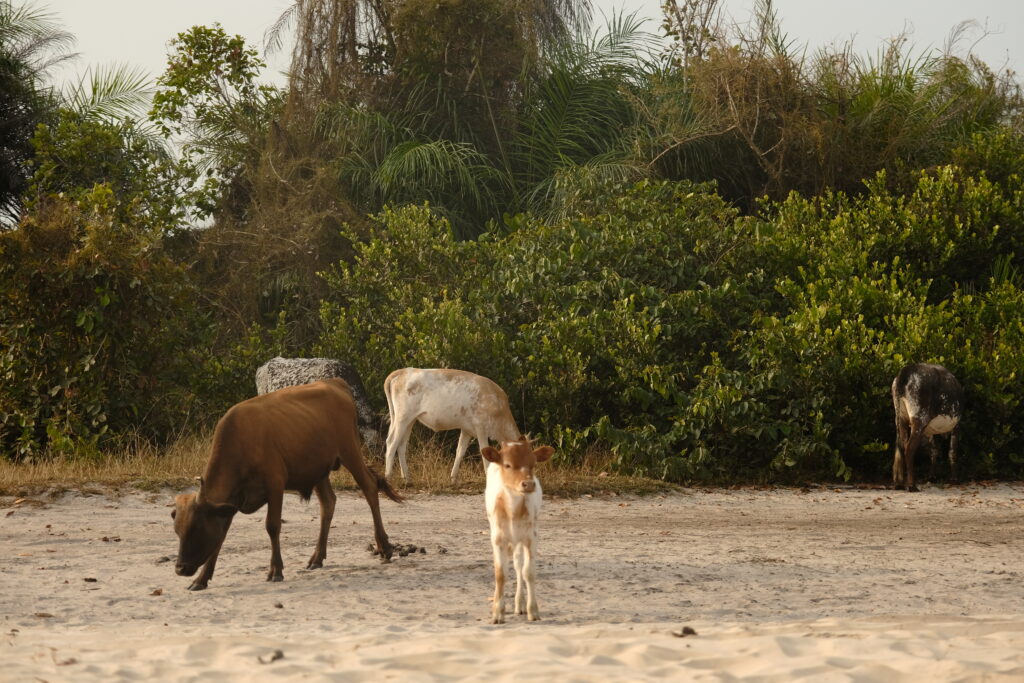
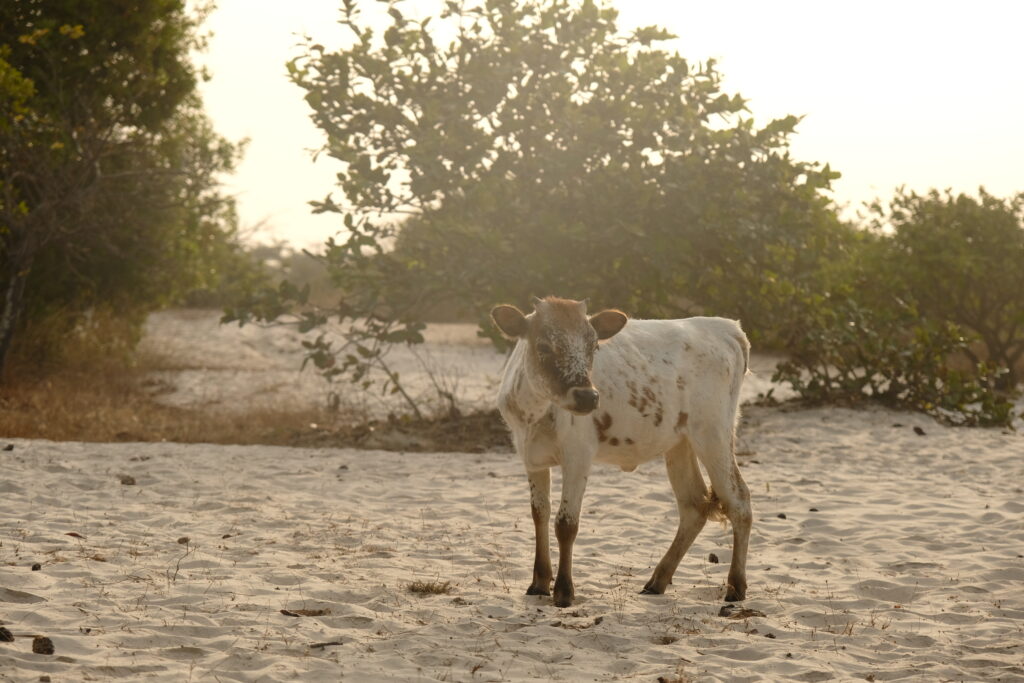
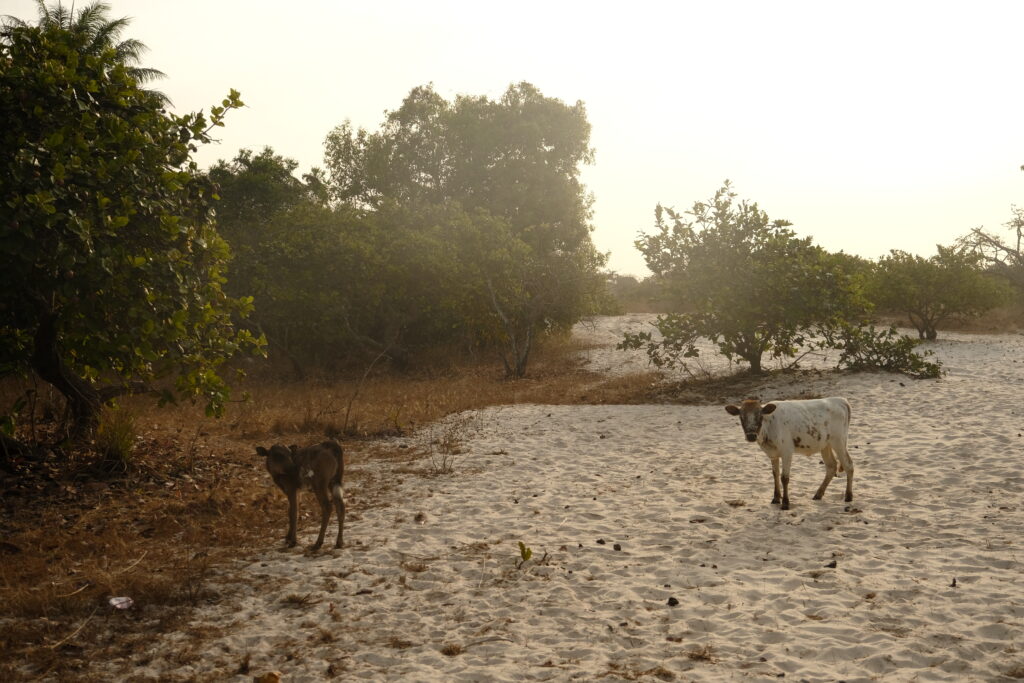
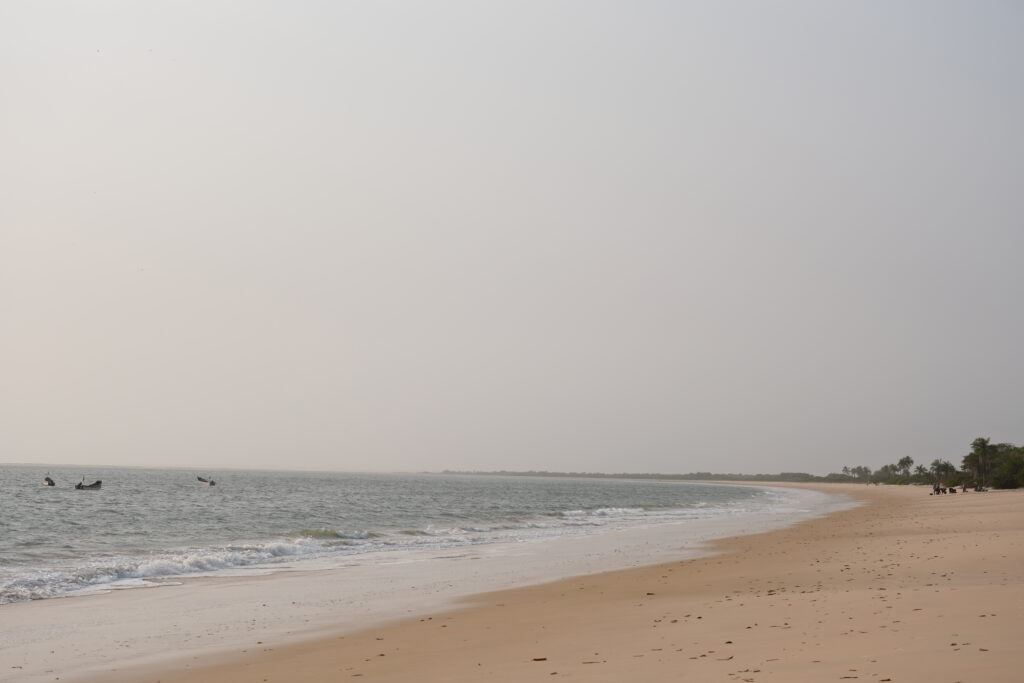
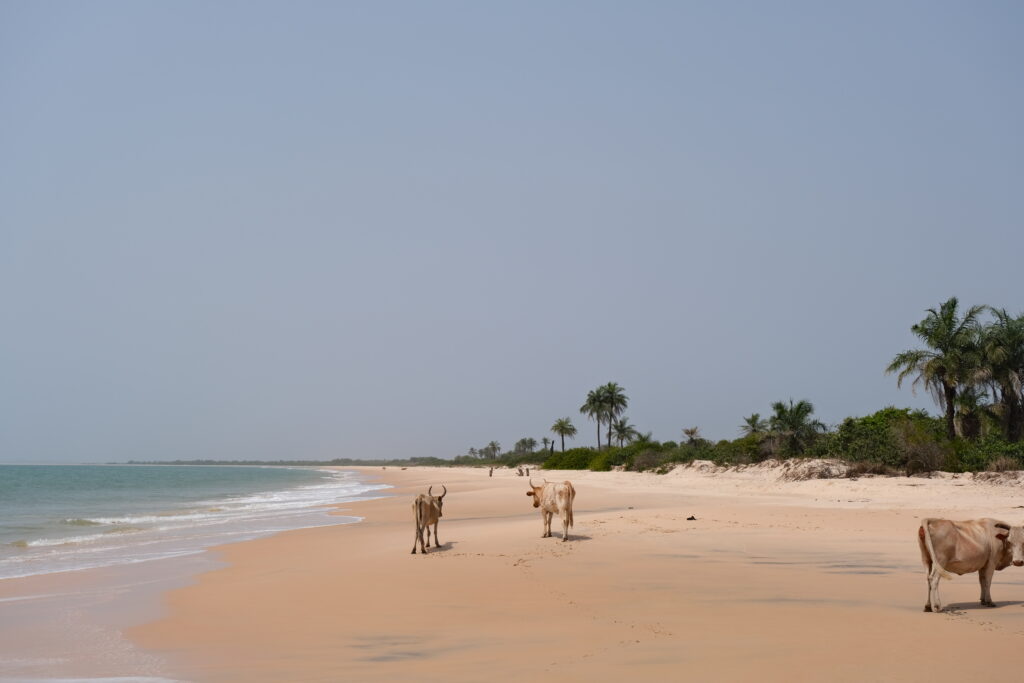
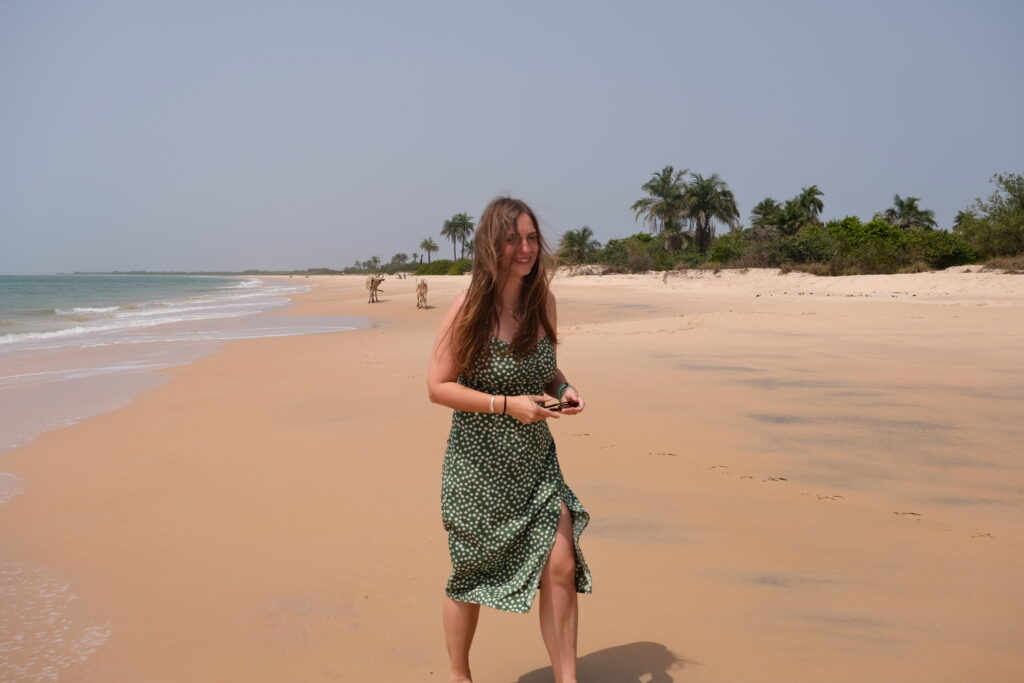
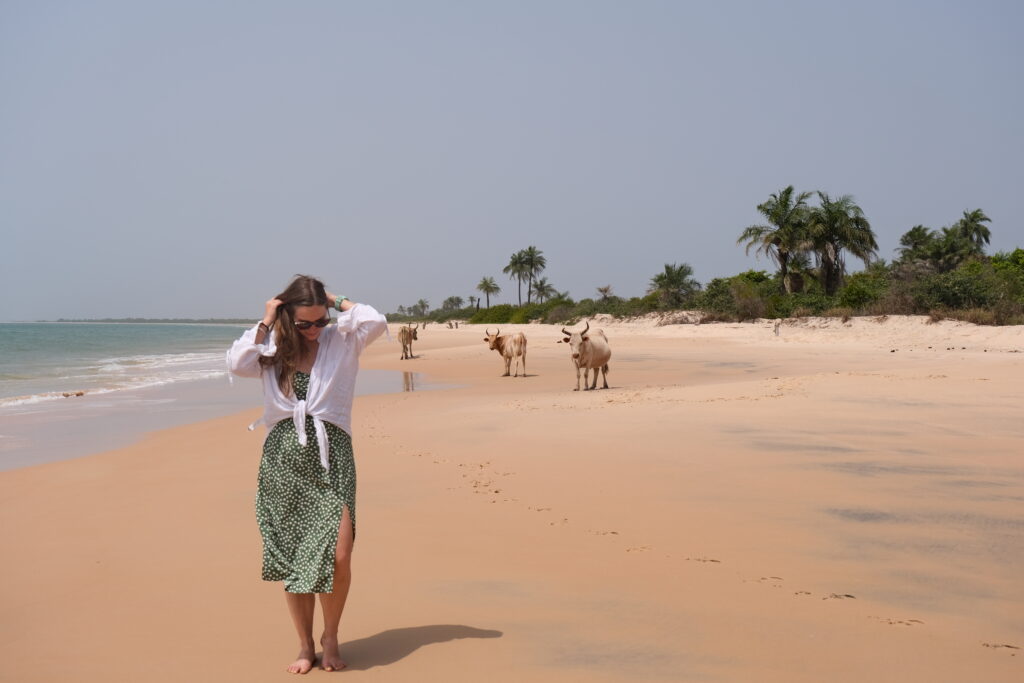
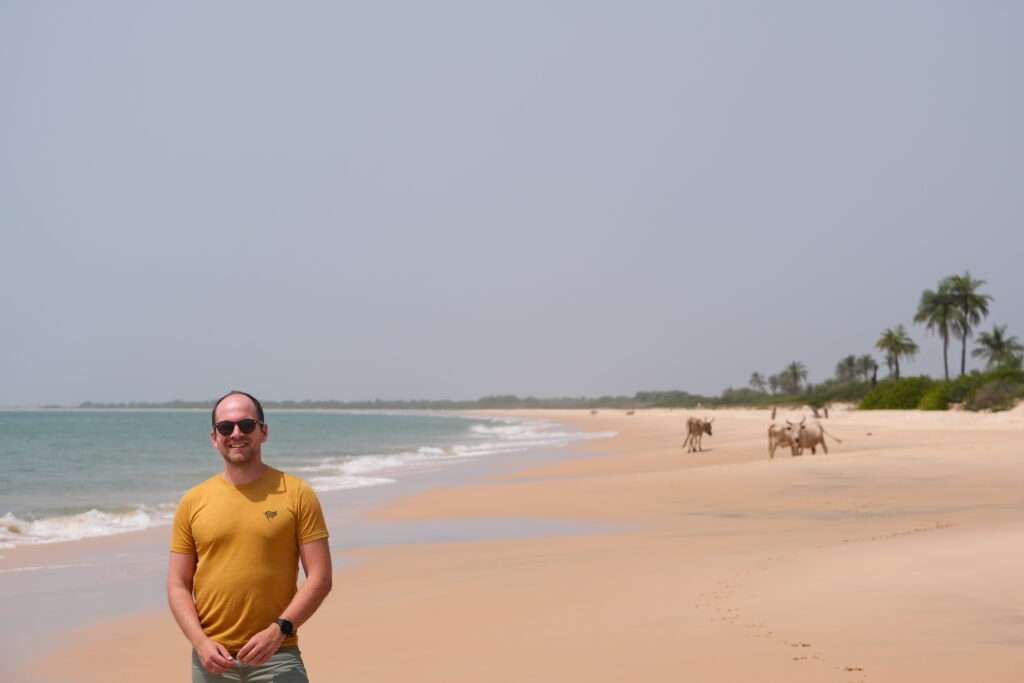
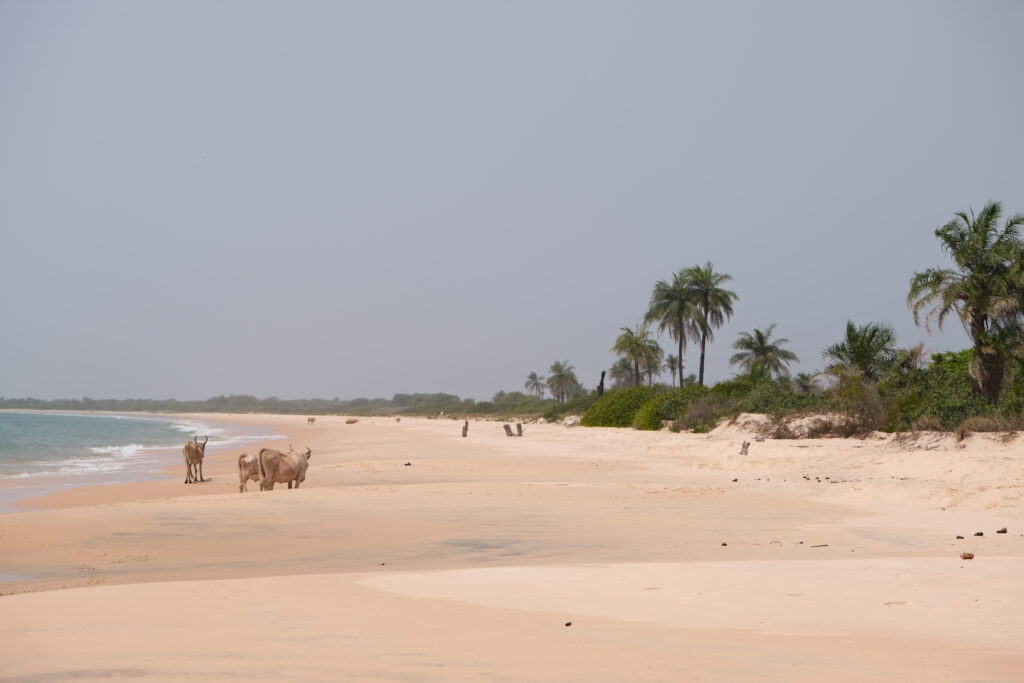
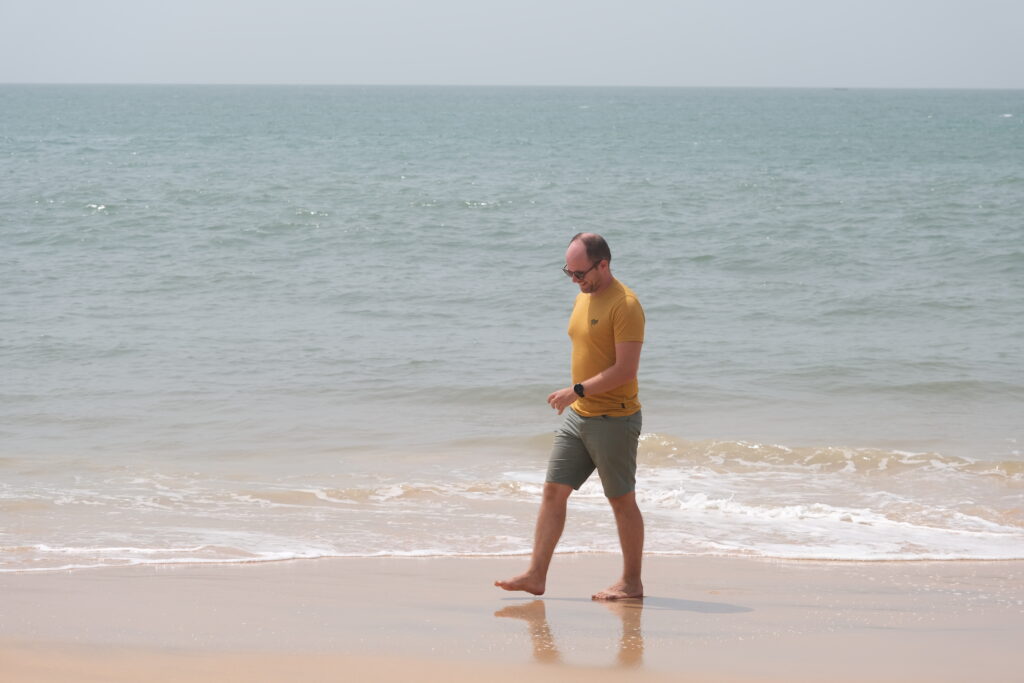
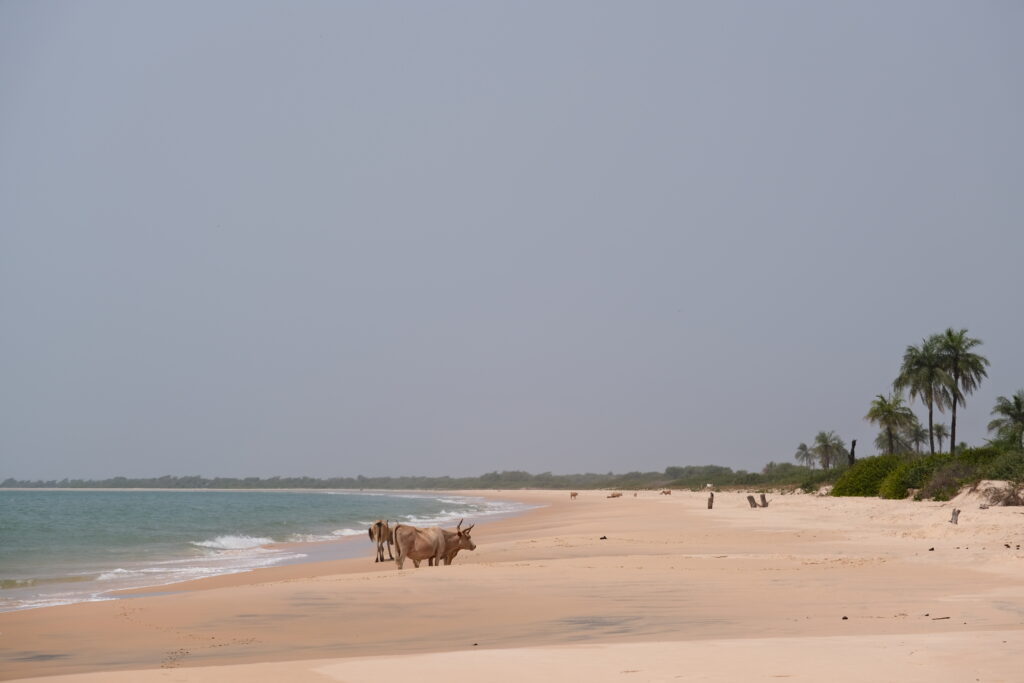
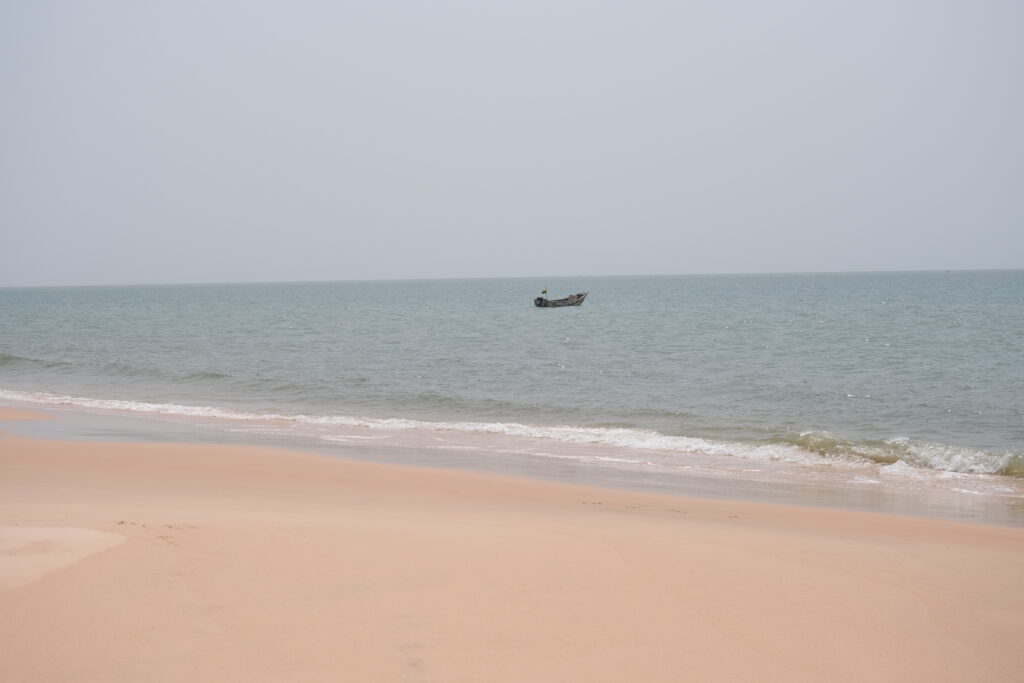
Near Varela, small fishing villages and a stunning, seemingly endless stretch of empty sandy, palm-lined beach can be found—often described as a little paradise. There is a hotel run by Italians serving Italian food, but we were looking for more local experiences, so we stopped to wild camp right by the beach. During the day we swam, walked along the shore, watched the fishermen, and the many sunbathing cows on the beach (we still don’t understand what they were doing there), and in the evenings we cooked.
In theory, there is a fisherman who hosts wild campers, but he was away at the time. Many people come to Varela from Senegal by boat just for the day (often without even getting a visa) and stay at the Italian hotel. Despite Guinea-Bissau often appeares on lists of the least visited countries in the world, tourists can still be seen on the beach—though many of them are not officially in the country. In the village, there are also a few local restaurants; for breakfast we tried futi, a very filling dish made of rice with dried fish and dried chili-seasoned vegetables.
Cachungo
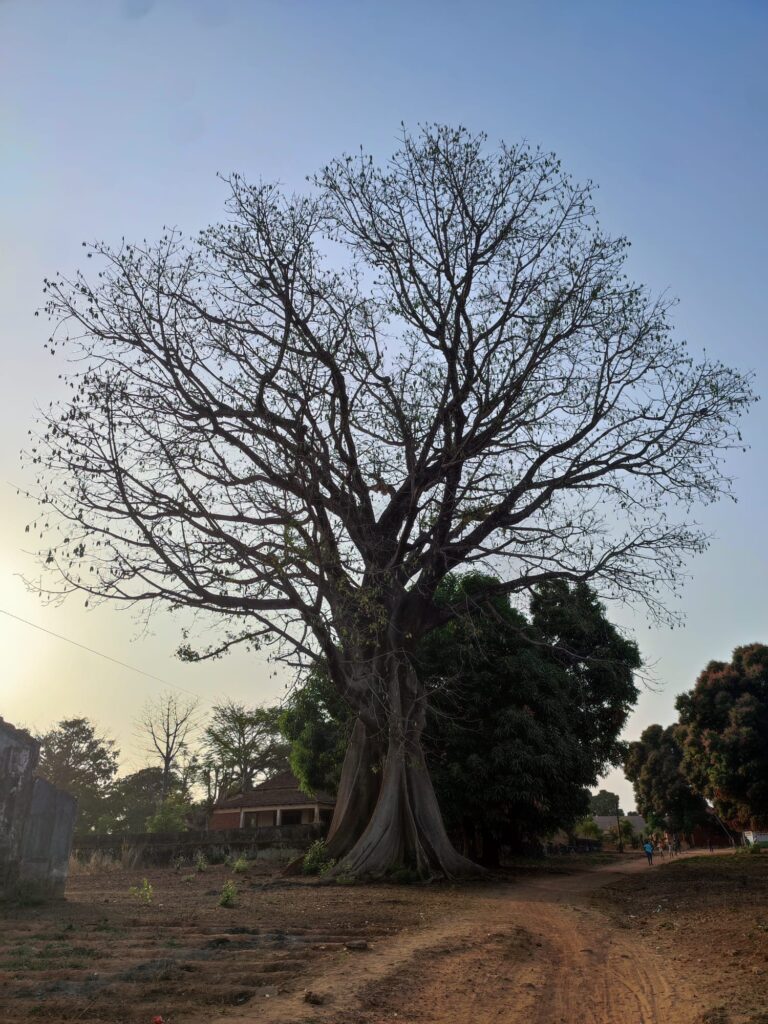
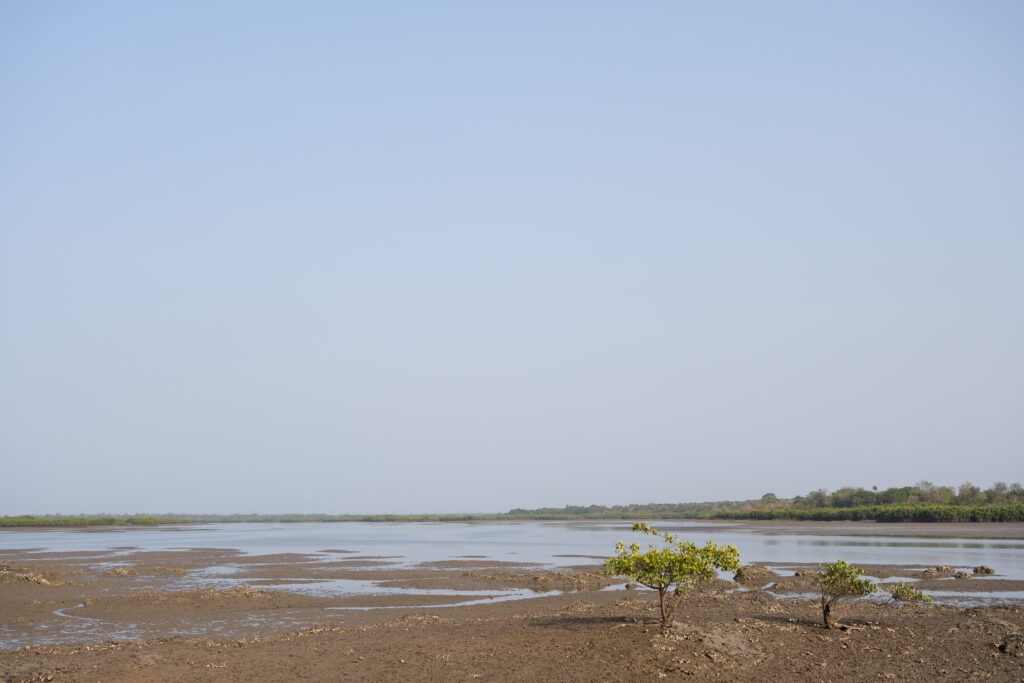
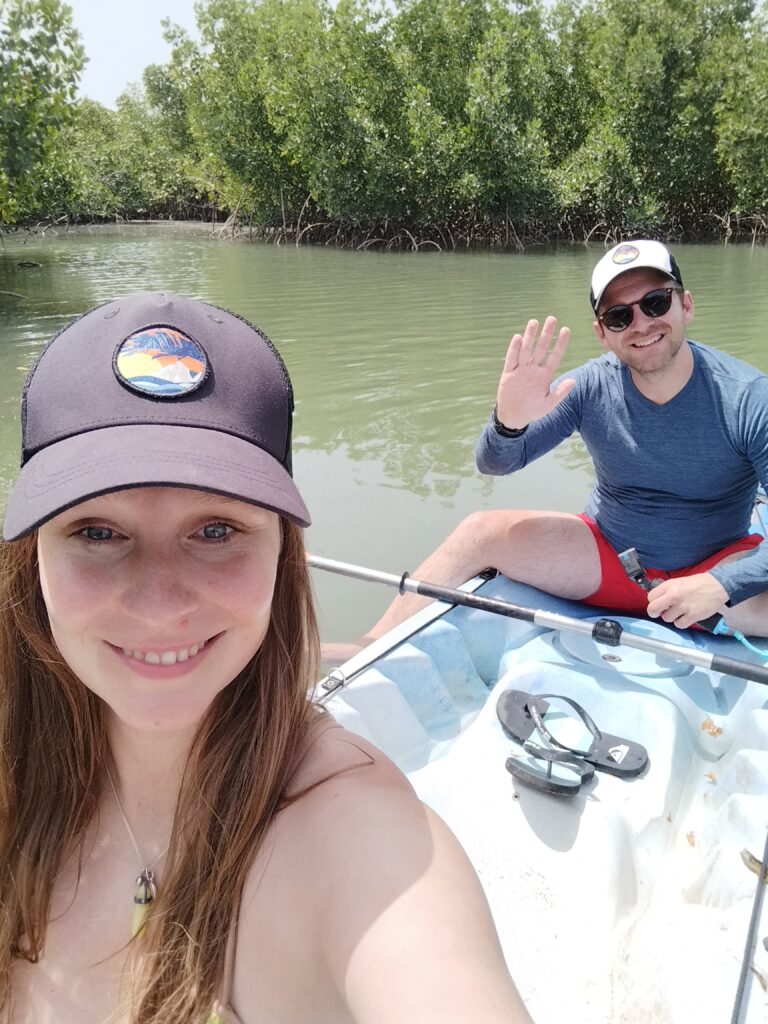
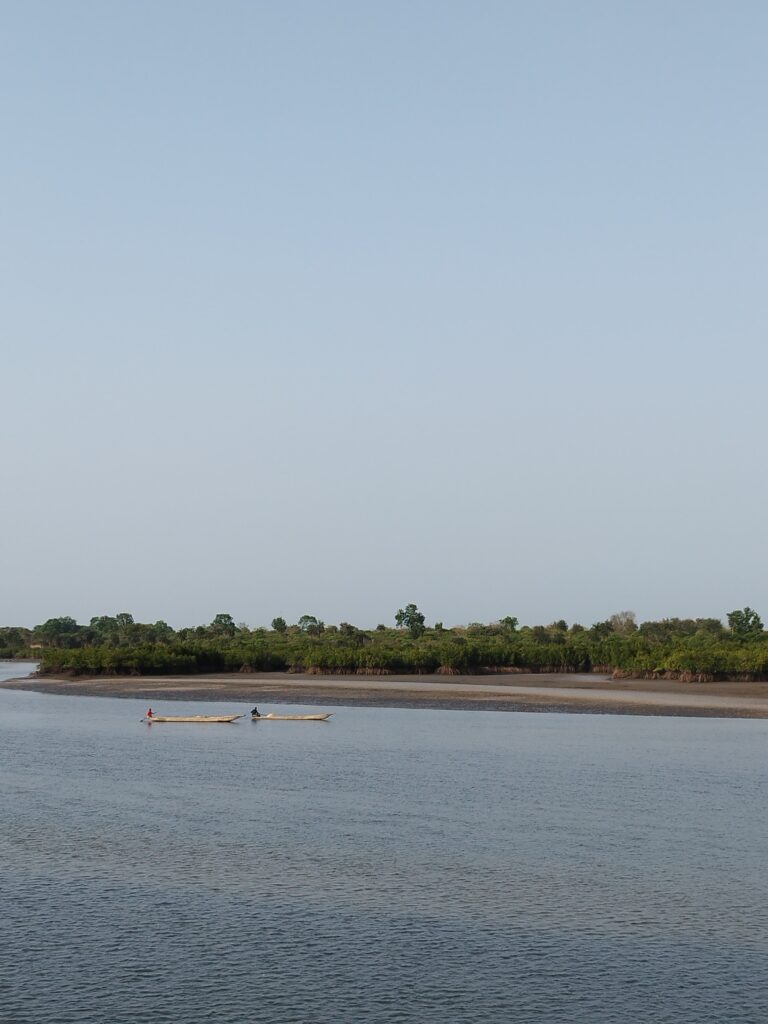
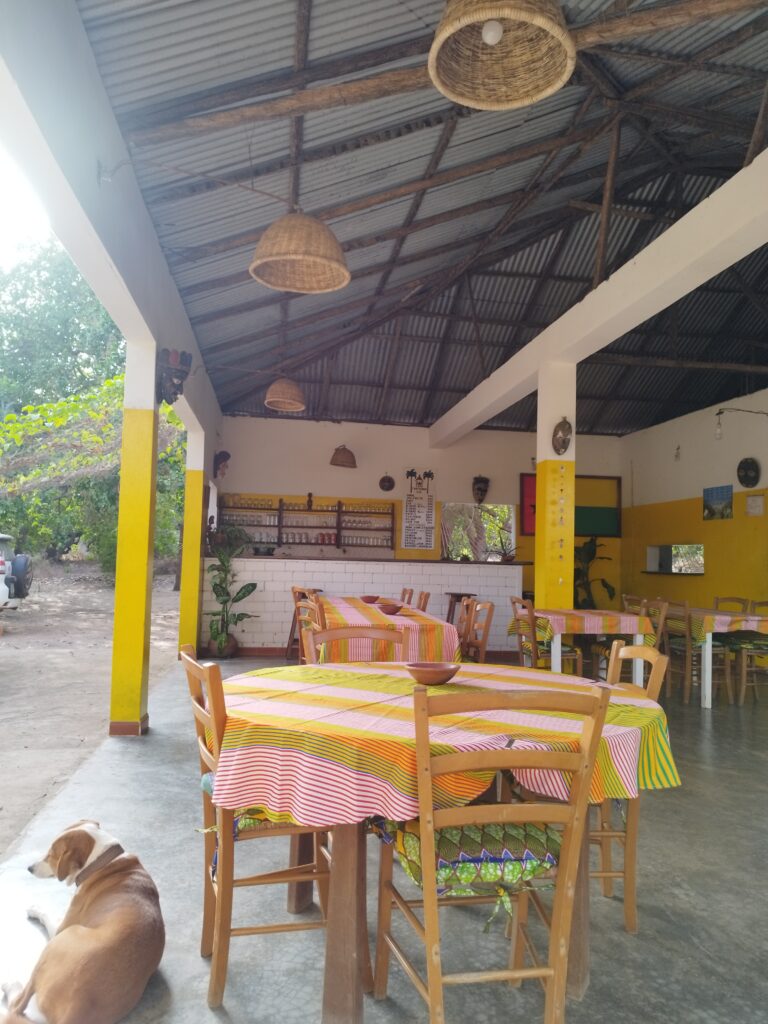
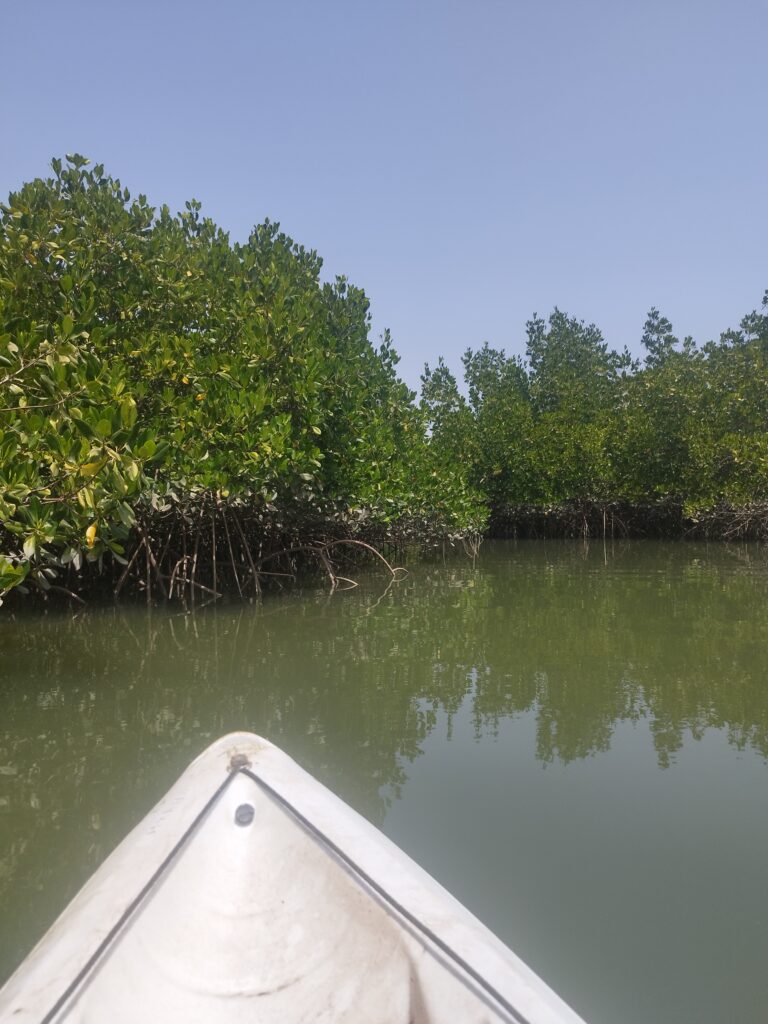
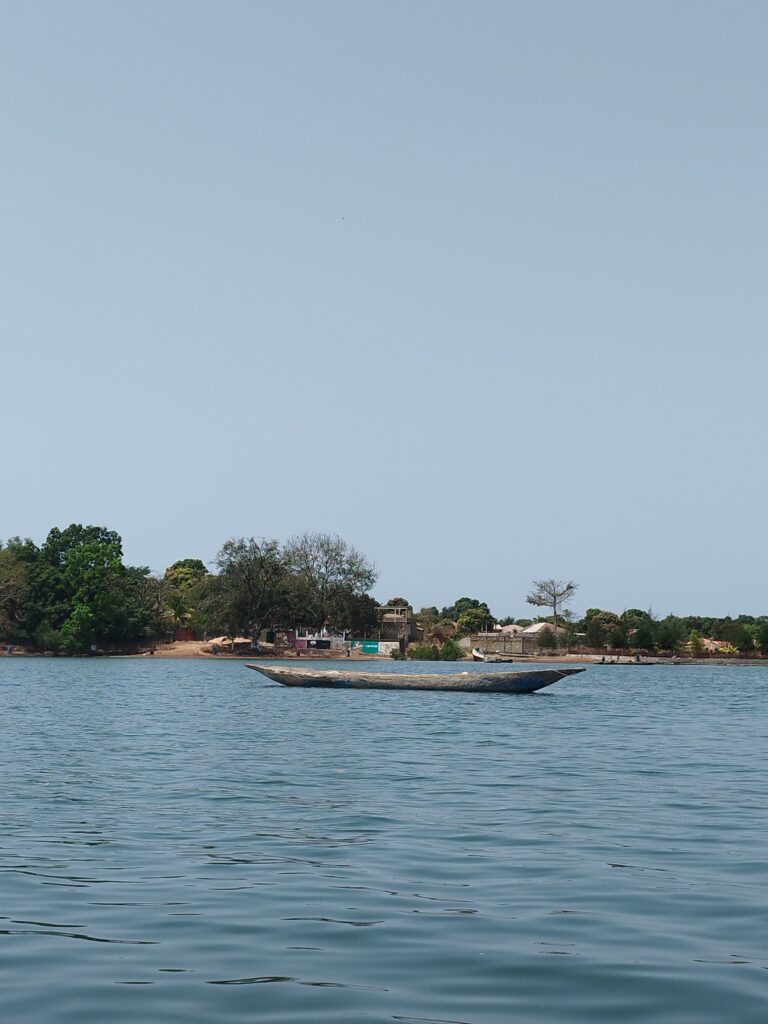
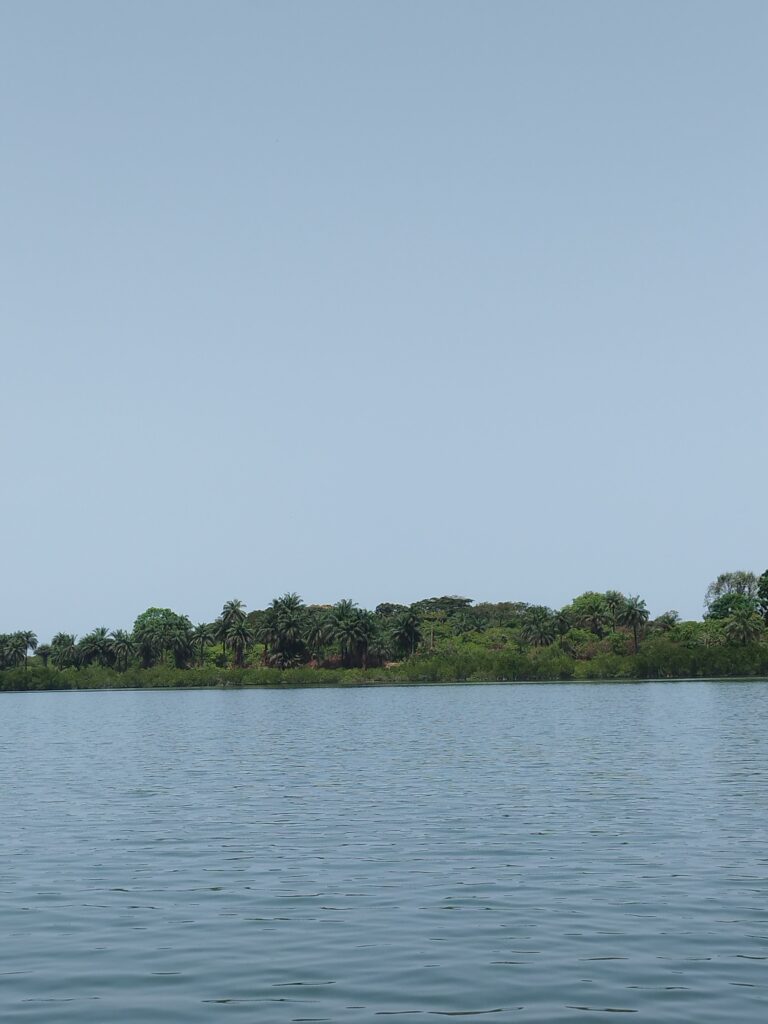
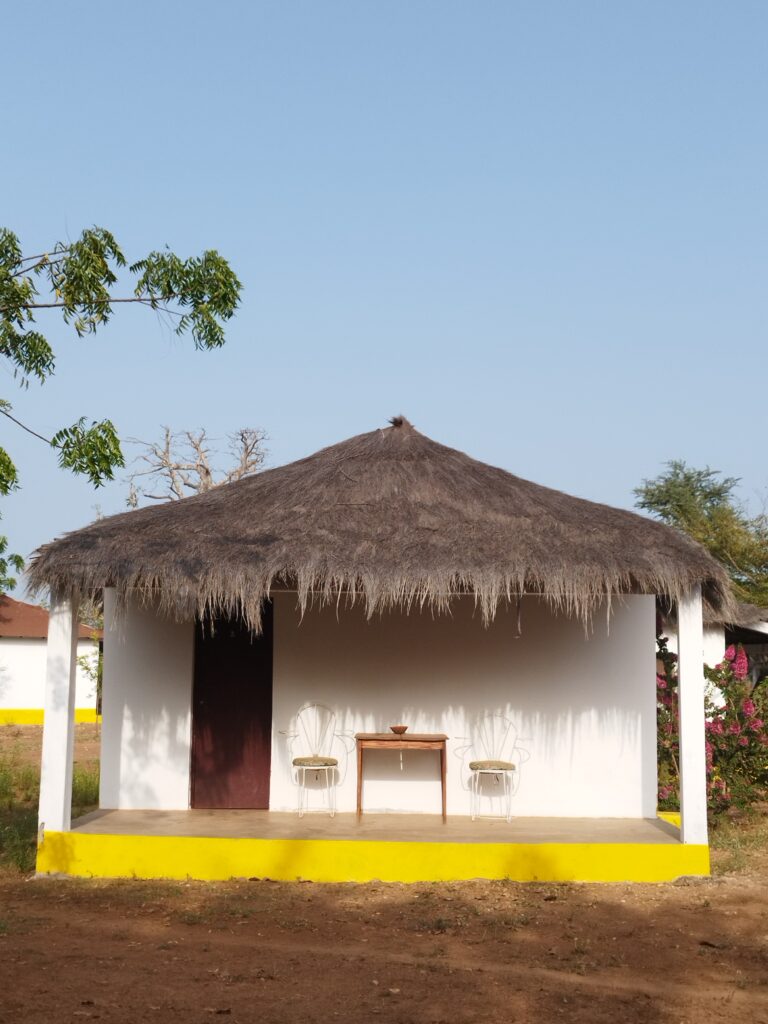
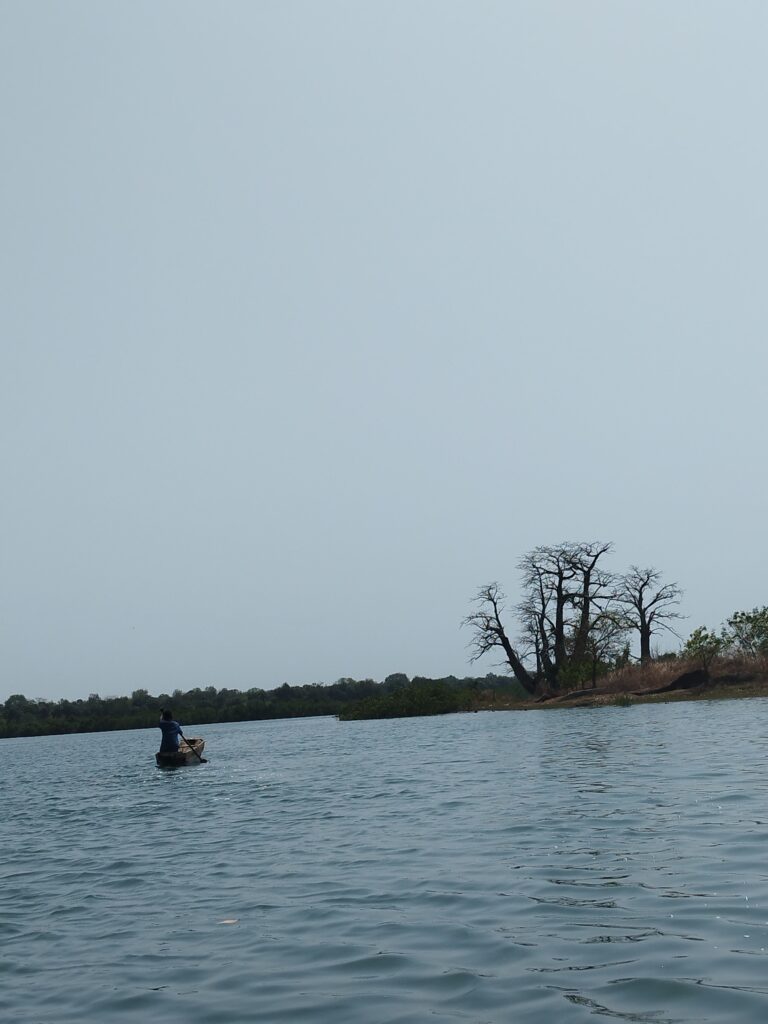
From Varela, we drove back to Sao Domingos and then planned to continue on to Cacheu. Cacheu lies on the opposite bank of the Cacheu River, but you have to go all the way around, which would have meant a 155-kilometer drive. Road conditions in Guinea-Bissau are so terrible that we were moving extremely slowly, and reaching Cacheu started to feel like a mission impossible, so we stopped in Cachungo instead. As it turned out, this was a very good decision: we found a nice place to stay where we could camp, and we could borrow a kayak for free to explore the mangrove-covered channels.
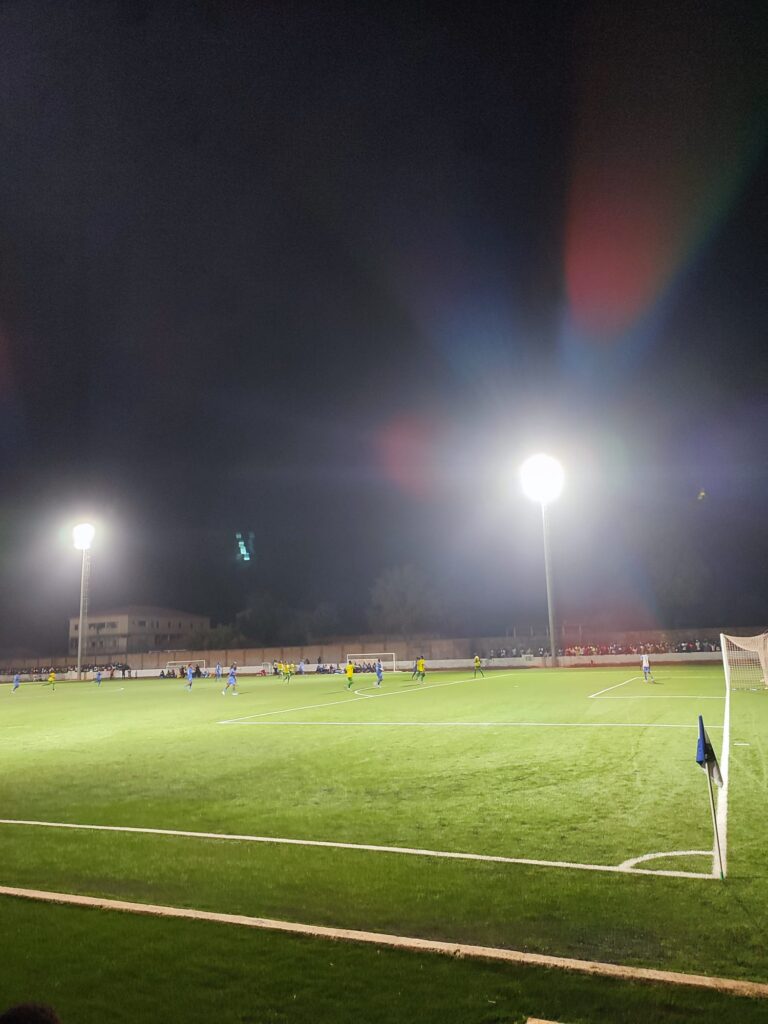
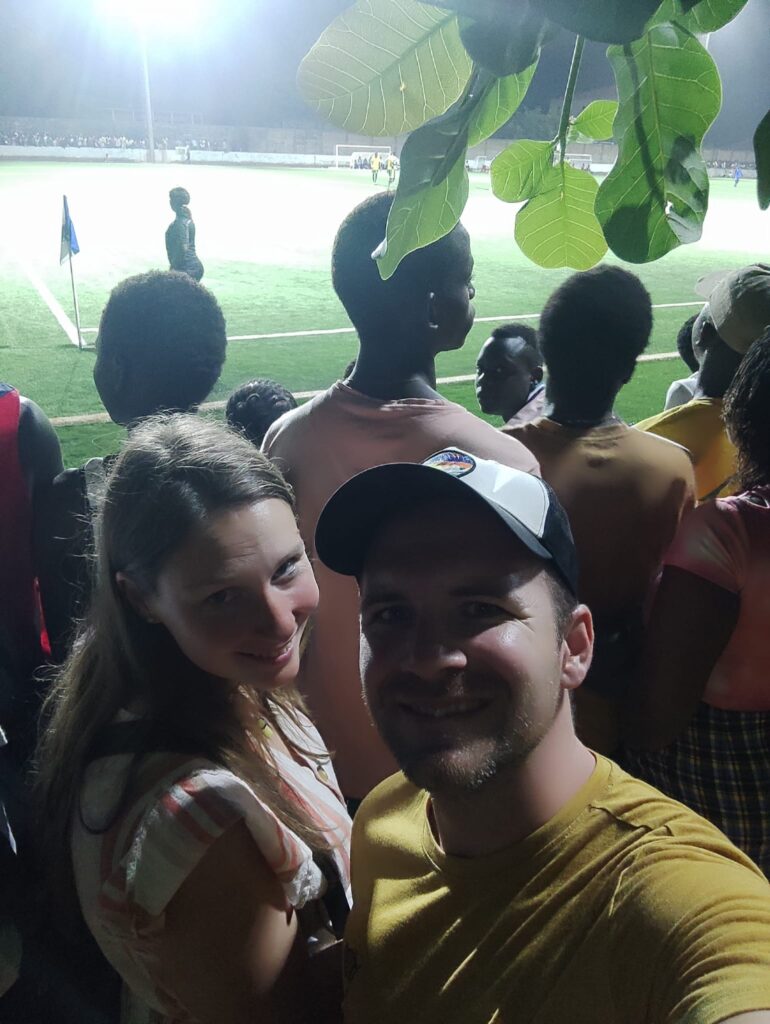
Besides kayaking, we also ended up at two football matches. On the first evening we watched only children, who were playing in some kind of tournament. The next day we saw crowds of people all heading in the same direction; it turned out there was a football match in the stadium, so we went in to watch that as well.
Cacheu
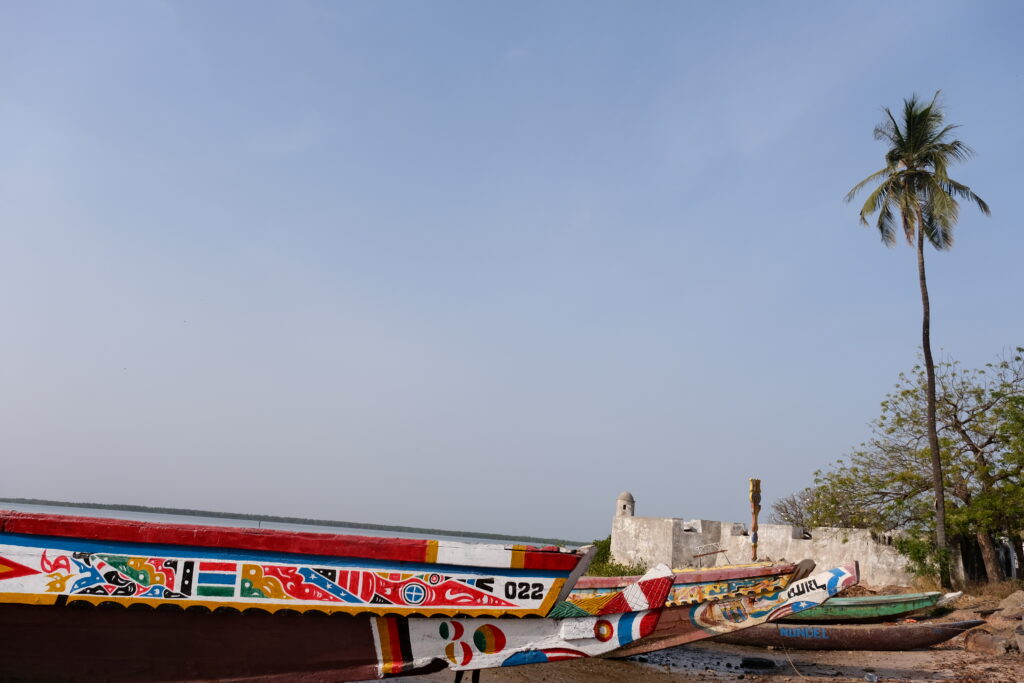
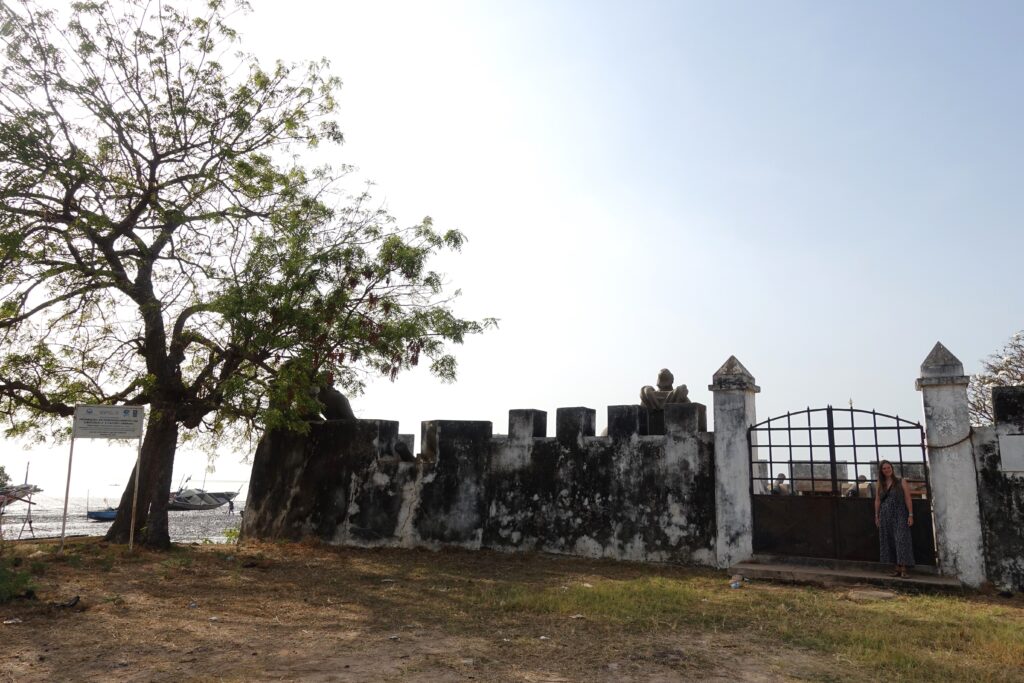
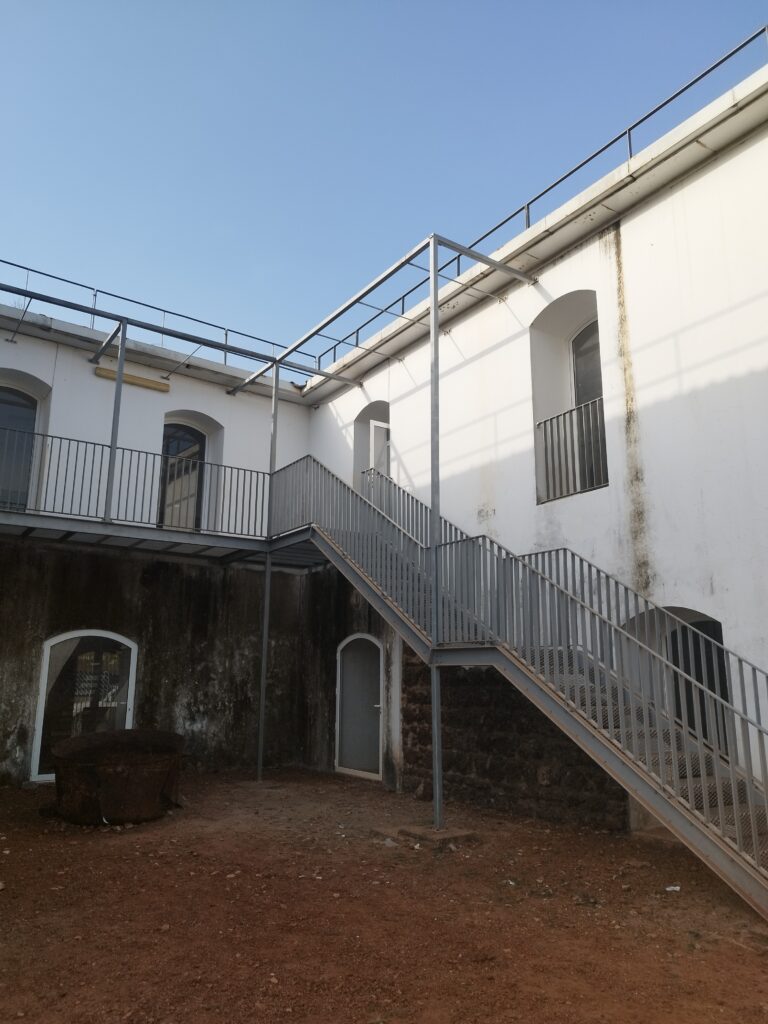
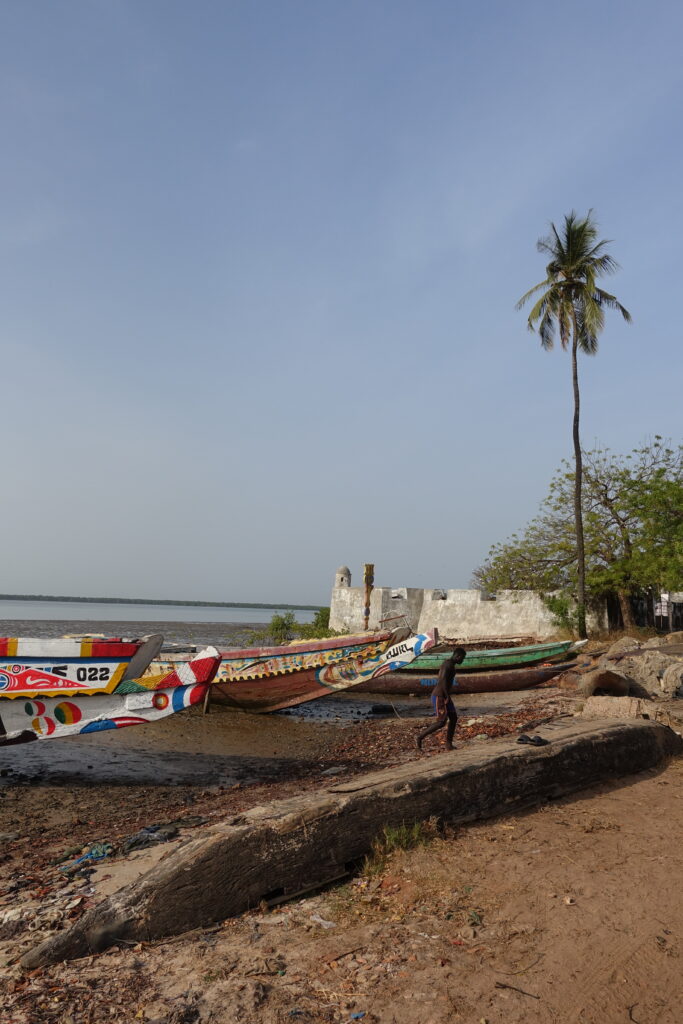
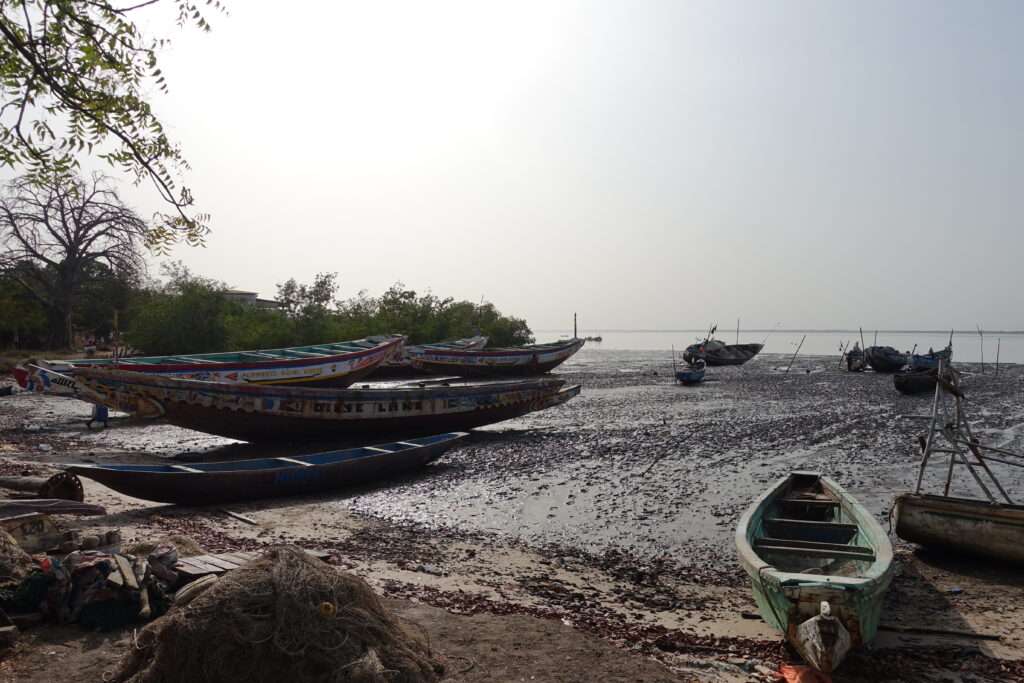
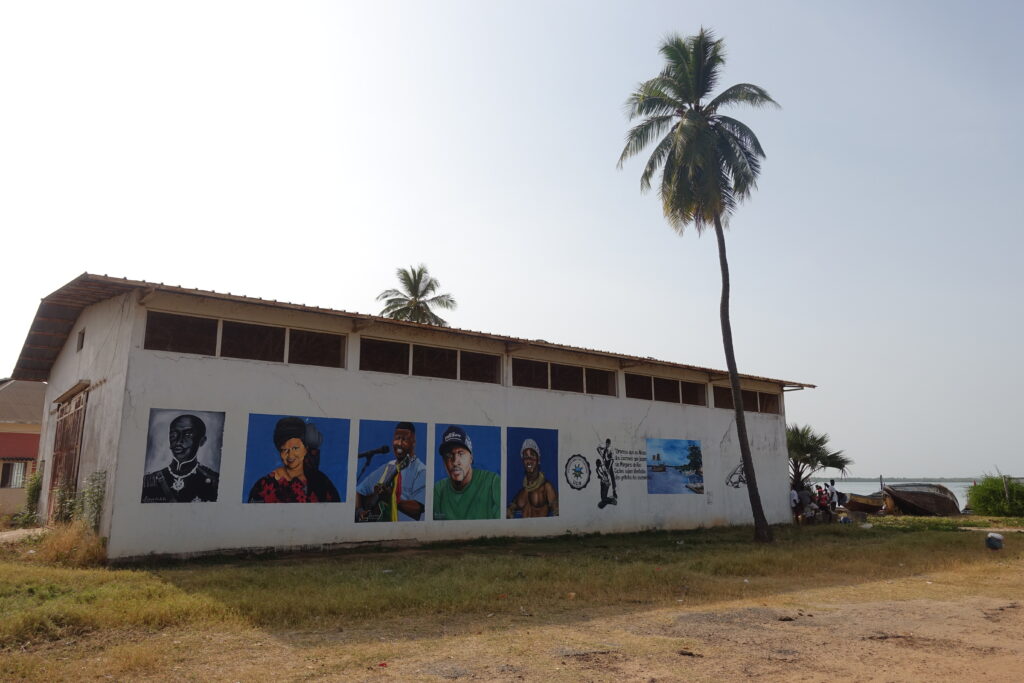
Cacheu is a small port town on the banks of the Cacheu River, ironically almost opposite São Domingos, yet it took us two days to reach it, finally as a day trip from Cachungo. In the 17th and 18th centuries, the town was the center of the Portuguese Upper Guinea slave trade, a history commemorated by an old fort and a museum. After finally finding the entrance and the ticket seller, we visited the museum, which was very informative—we learned a great deal about the region’s history and one of humanity’s greatest tragedies.
Bissau
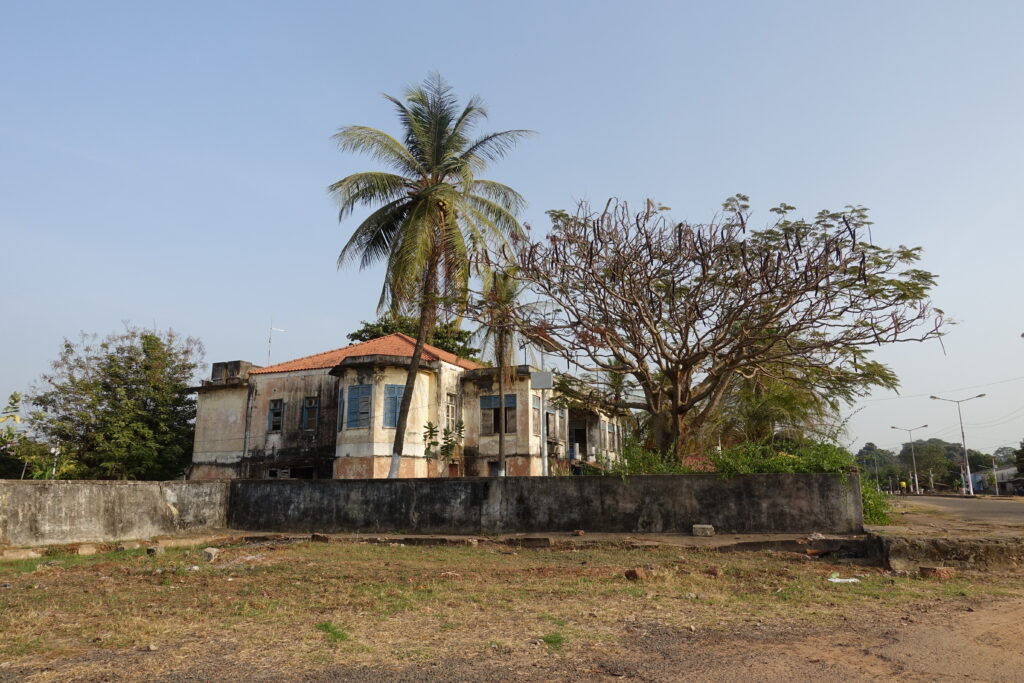
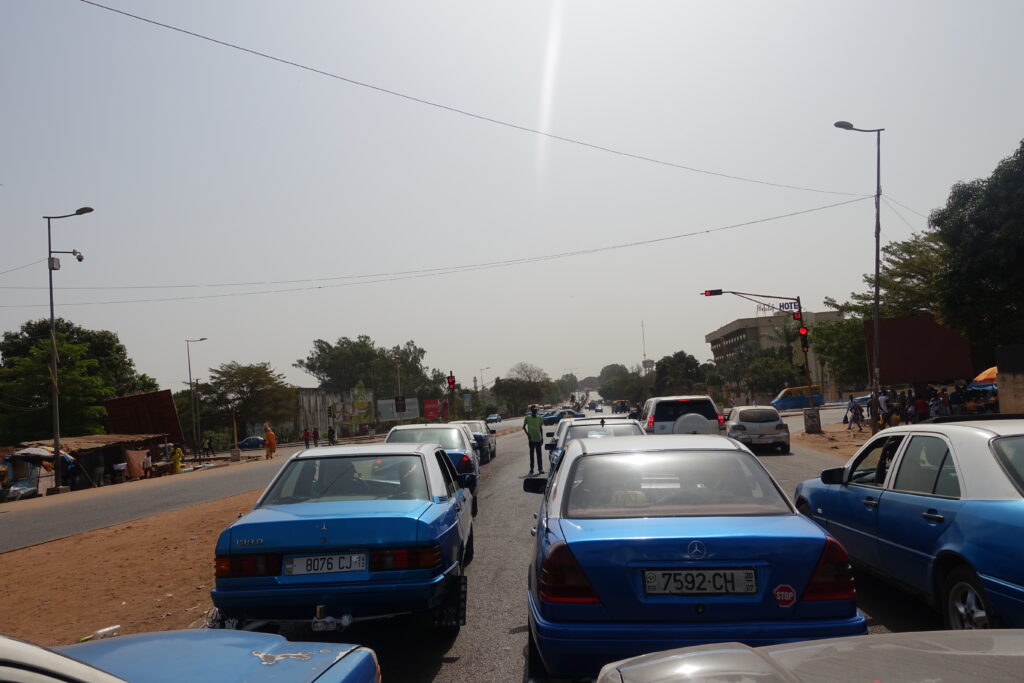
Bissau is the capital and largest city of the country, located on the Atlantic coast at the mouth of the Geba River, with a population of around 500,000. The road leading into the city from the airport is a two-lane asphalt road with very little traffic (mostly old blue Mercedes taxis), which feels like a striking contrast after all the potholes elsewhere. Compared to other large African cities, Bissau is very quiet and less hectic; the old town has an interesting atmosphere thanks to its remaining Portuguese-era buildings. There are many more expensive restaurants in the city, and it is harder to find cheap local eateries or street food. The port and the markets are also on the list of sights worth visiting.
Bijagós-Islands
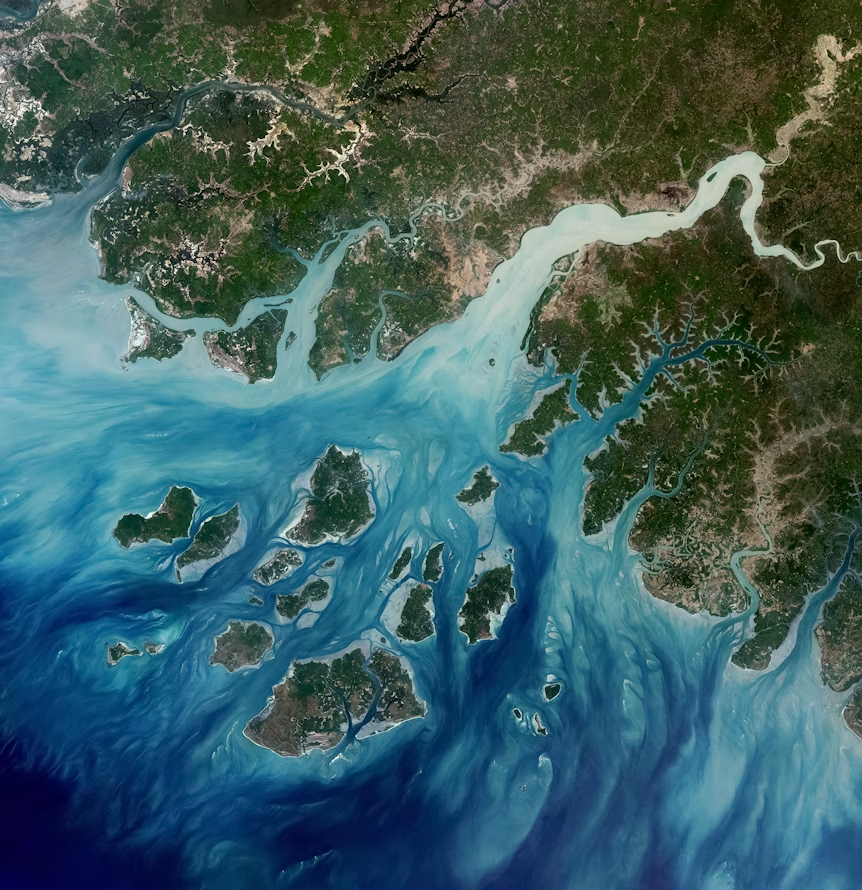
The Bijagós Islands are an archipelago of 88 islands and have been a UNESCO Biosphere Reserve since 1996. Only about 20 of the islands are inhabited, and the traditional culture of the Bijagó people is still very much alive. The region is known for sea turtles, hippos, mangrove forests, and an extraordinary variety of birdlife. From Bissau, ferries run to the largest island, Bubaque, from where smaller boats can take visitors to the other islands. Unfortunately, we had to skip the islands, because the ferry schedules meant that a visit would have required either just one day or a full week, and we didn’t have the time. Even so, this archipelago is undoubtedly the most fascinating attraction in Guinea-Bissau.
Delta South of Bissau
Originally, we planned to explore the delta south of Bissau as well, including the mangrove forests and small villages along the rivers, but we soon realized that travel within the country was so slow that instead of the planned one week, we would have needed at least 2–3 weeks. The places we marked on the map as interesting included Buba, at the mouth of the Rio Grande de Buba, from where it is possible to reach some lesser-visited islands; Quebo along the Corubal River; and Cacine, located even farther south, almost by the ocean.
Bafatá
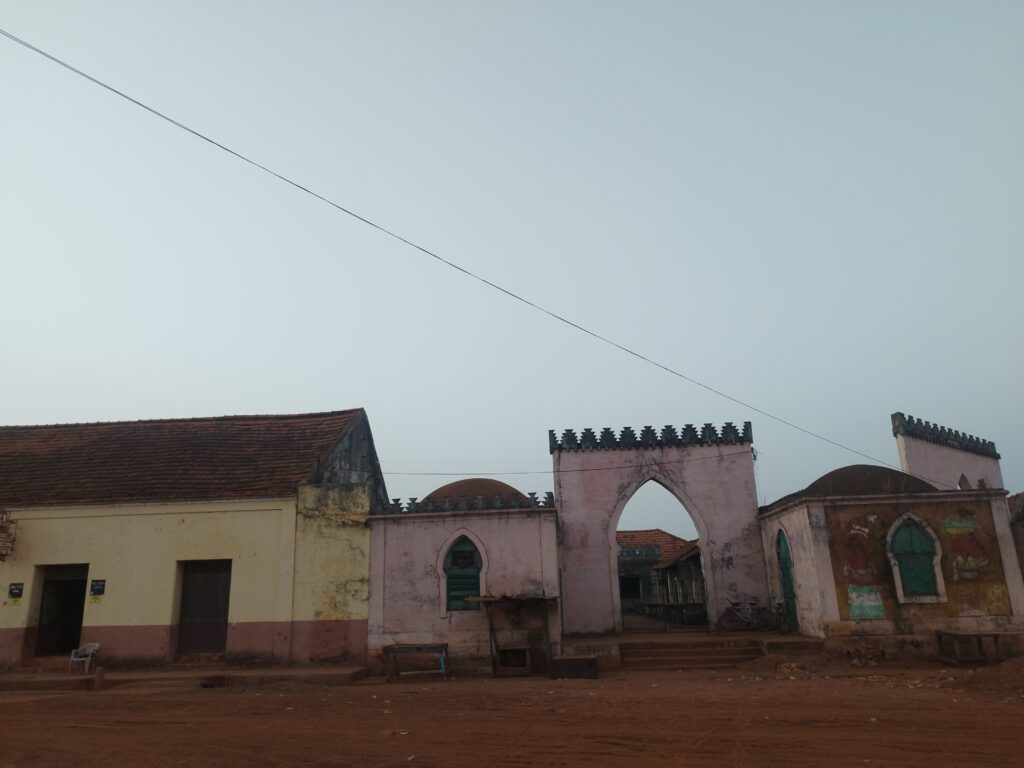
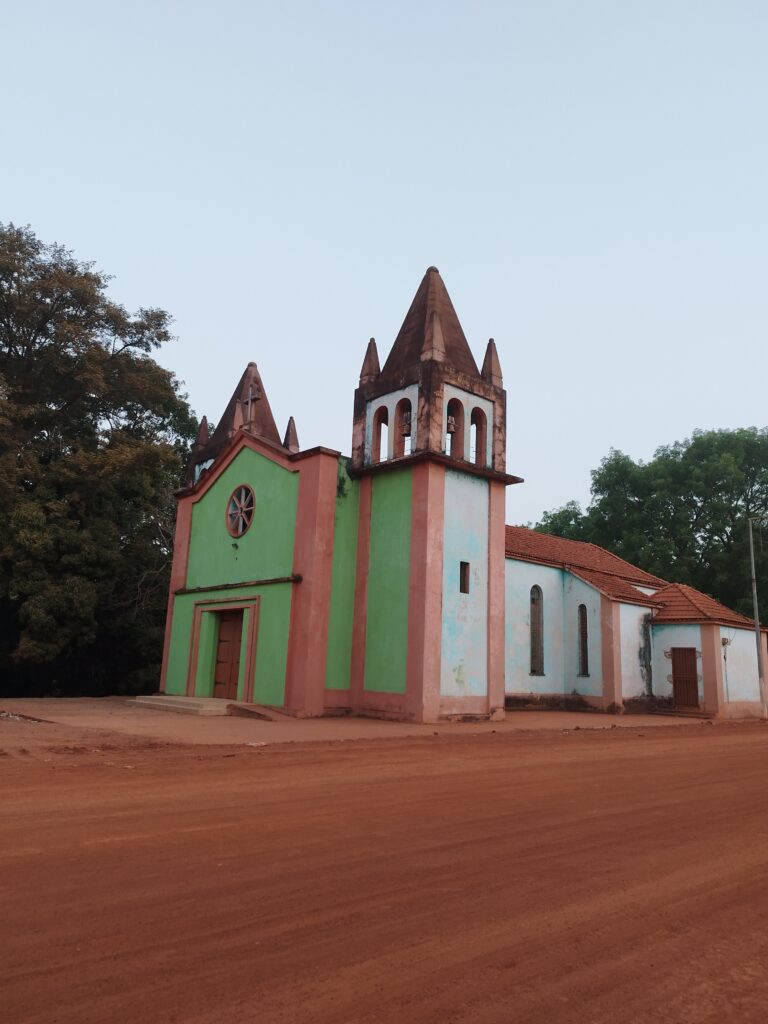
Bafatá lies on the road toward the Guinean border and is Guinea-Bissau’s second-largest city, yet it feels more like a large village, with a very calm atmosphere and many friendly people. The town is located on the banks of the Geba River, and a few old, colorful Portuguese colonial buildings have survived there.
Our most memorable stories
As soon as we got our visa (which took about five minutes—just a quick visit to the embassy) and crossed the border, we were immediately struck by a sense of calm. The border was very small and almost empty; we had to go into a single office, and the process was over quickly. Upon arriving in São Domingos, we just caught the customs officers, who were extremely helpful, and right away it felt good to be in the country—we sensed that bureaucracy wouldn’t be a problem here. Later on, even the Guinean ambassador turned out to be incredibly helpful (mainly because his best friend is a Hungarian who has been living there for 20 years).
In São Domingos, people were very open and direct; everyone wanted to chat with us a bit, even though we didn’t share a common language. One young guy spoke some English; he had been in a motorcycle accident and had hit his head, so he repeated everything a hundred times—we heard his name so often that we’re sure we’ll remember it for the rest of our lives. In any case, we ended up sitting with him for a few hours, and he was also able to translate a little for the group at the next table, who tried to include us in their conversation. This kind of openness characterized the whole country—whether when we sat down for breakfast in Varela and chatted with everyone a bit, or when we went to football matches in Cachungo.
The friendliness is also partly due to the lack of tourists. I try to go running in every country, and in Bafatá I was quite a spectacle—especially since I set off just as children were going to school, so I had to greet someone almost every second.
It was wonderful to spend a week in this kind, small country with such beautiful nature. However, because of the language barrier, it would have been great to know a bit of Portuguese, so we could actually talk to people; as only gestures and laughing remained as a common language.