The 7 Best
Central Kalahari Game Reserve (Botswana)
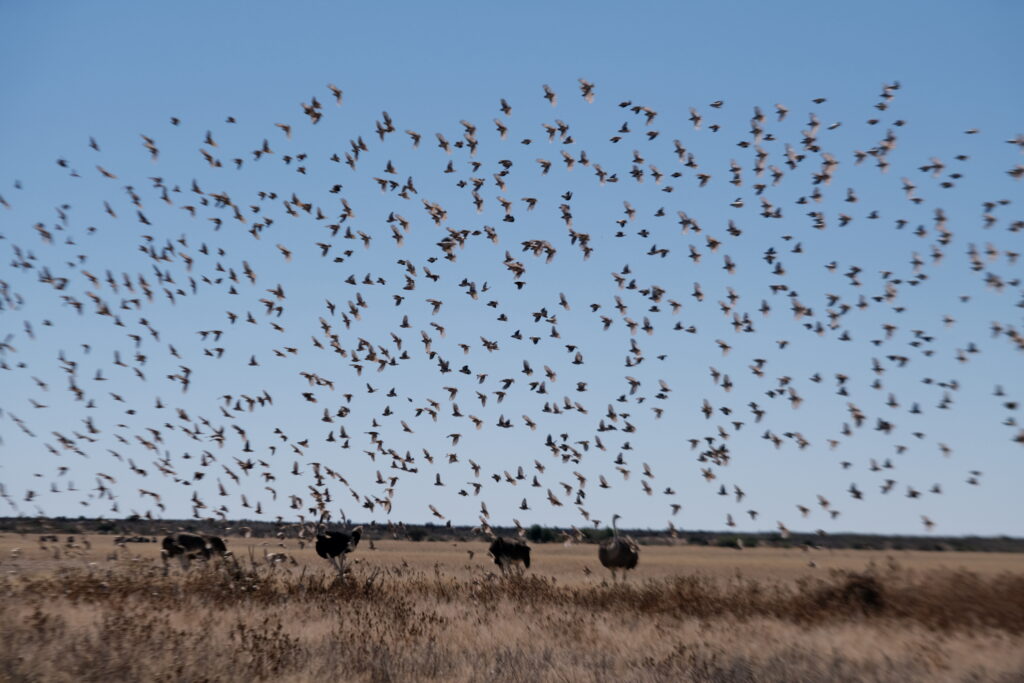
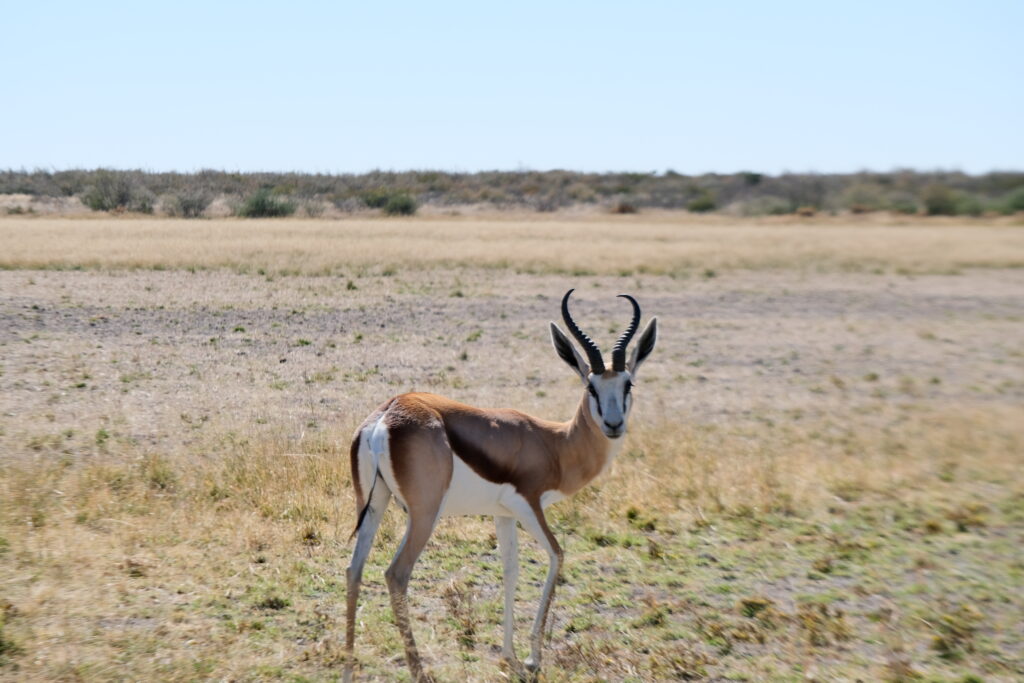
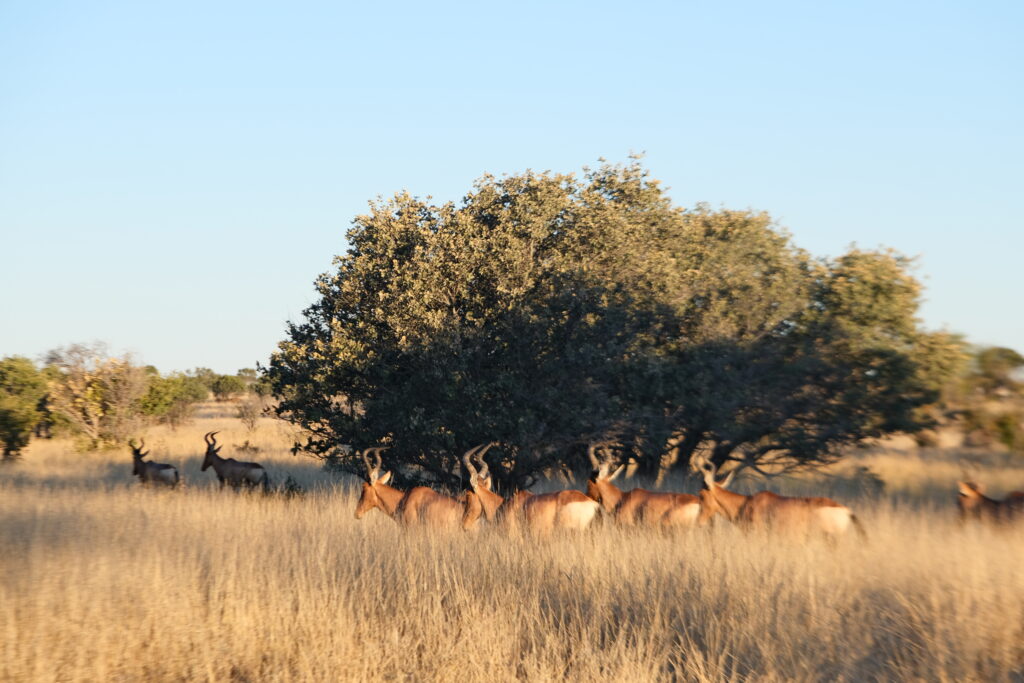
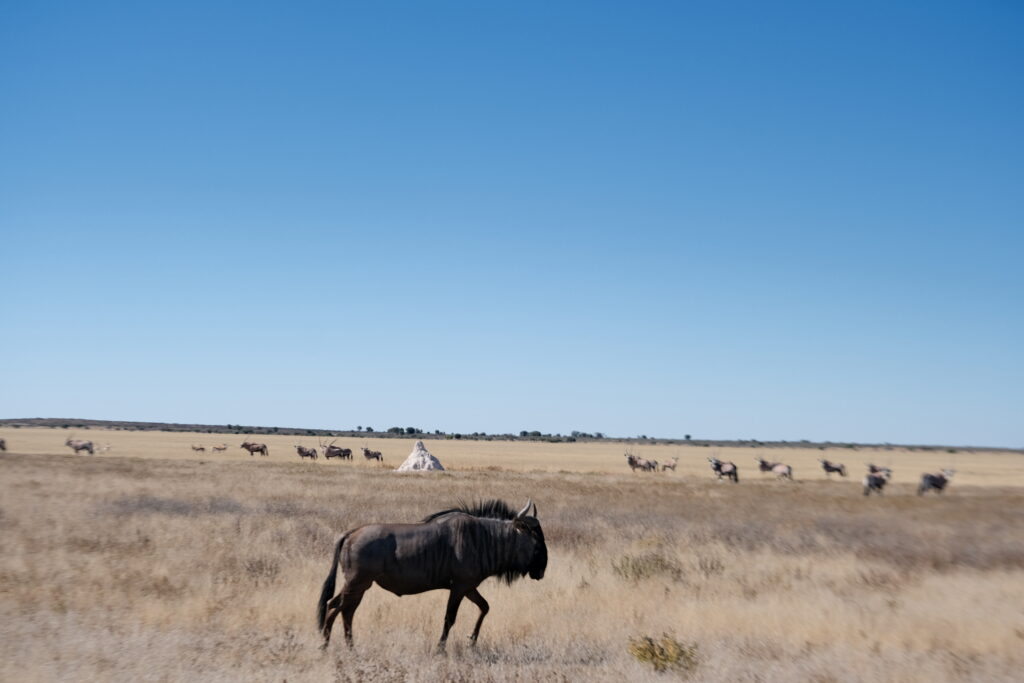
The Central Kalahari Game Reserve covers an area of 52,800 km² — the second largest game reserve in the world, and at the same time one of the most remote places we have ever visited. UNESCO listed it as a World Heritage Site because of its exceptional biodiversity and the San people’s millennia-old culture of living in harmony with nature (sadly, since then the Botswanan state has repeatedly displaced them and restricted their right to hunt, causing them to lose their traditional way of life). Across this vast semi-desert and savanna landscape live desert-adapted lions, leopards, African wild dogs, cheetahs, elephants, and thousands of antelope species — and at times hours can pass without seeing a single animal.
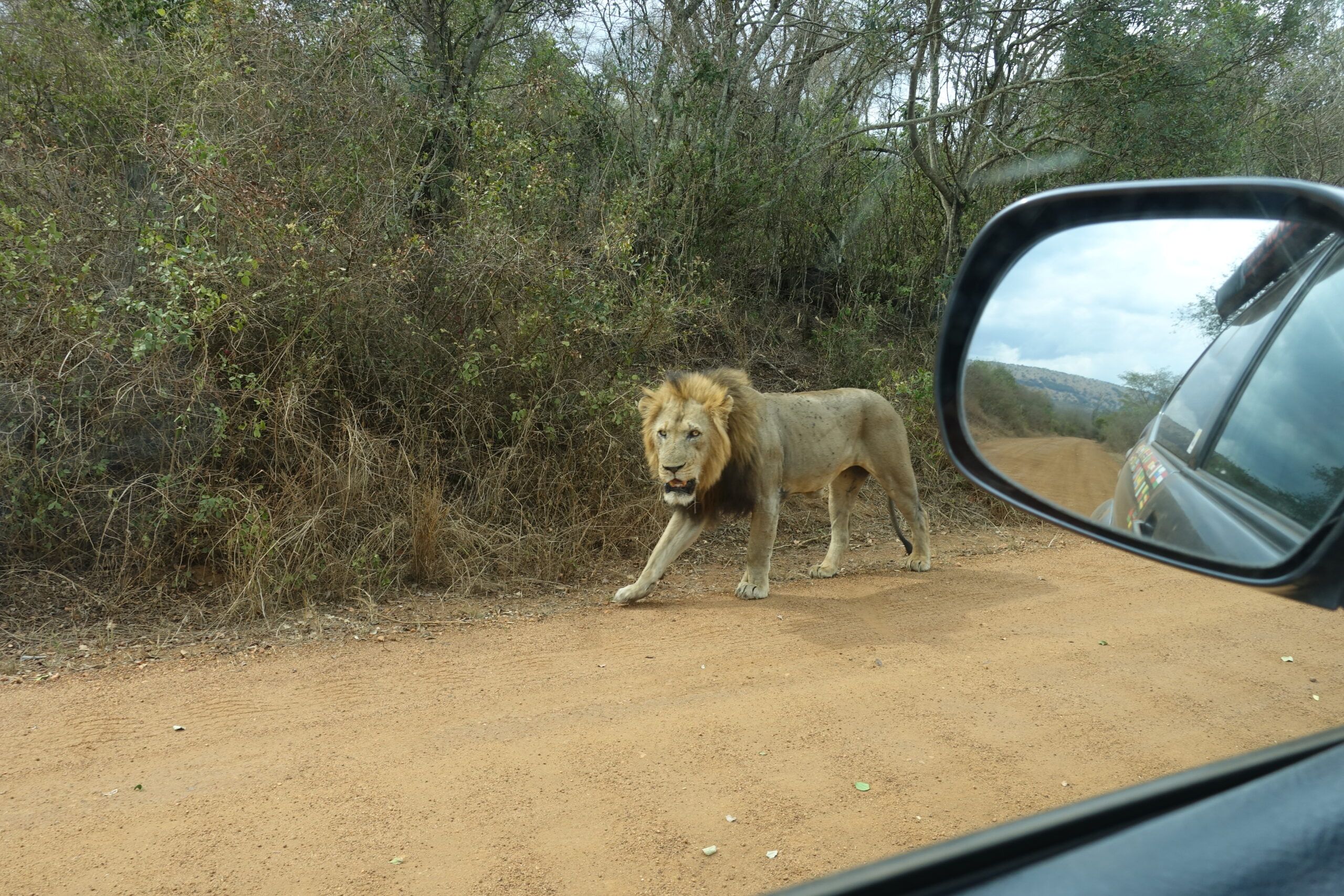
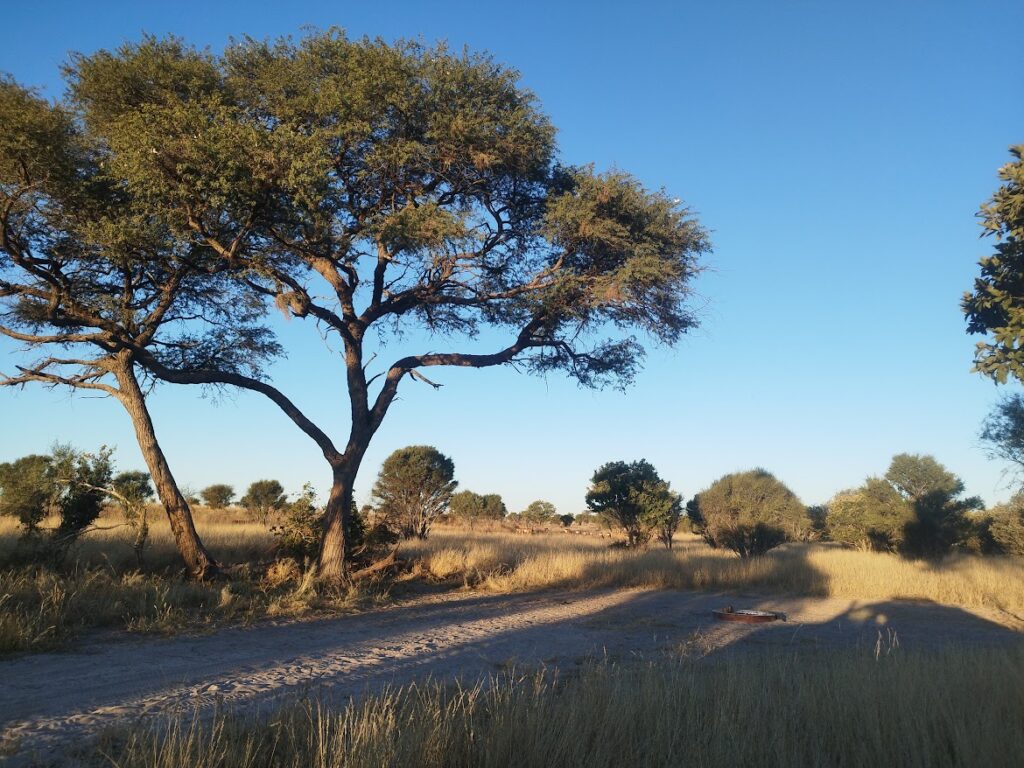
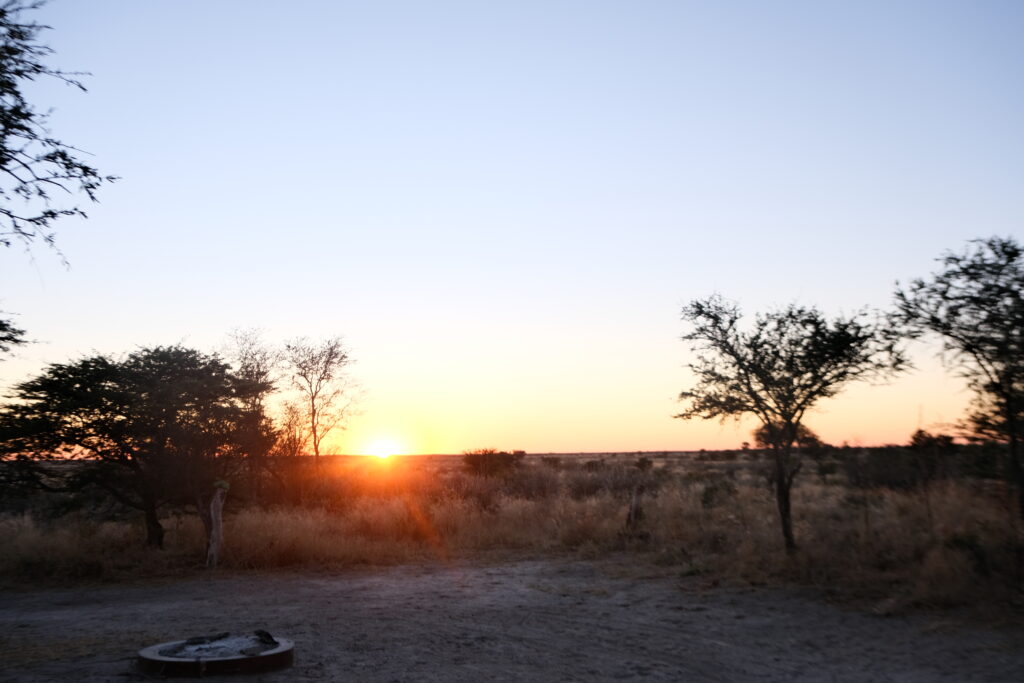
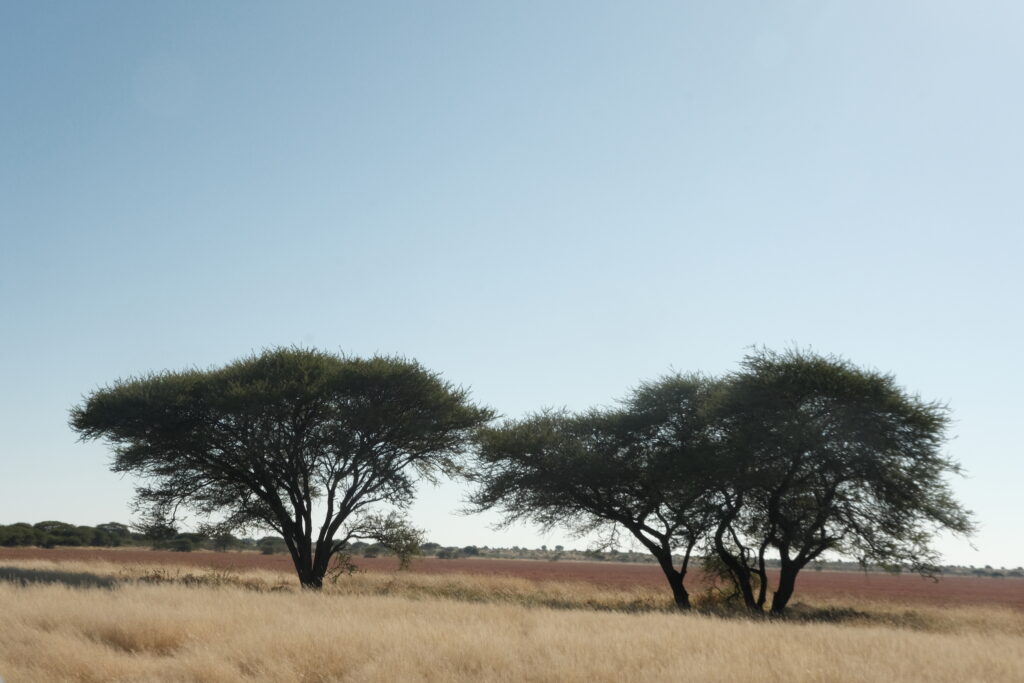
The Kalahari is a real adventure for those who love the feeling of true wilderness. The journey leads along long, deep sandy tracks through landscapes dotted with acacia trees, dried-up salt pans, and vast valleys. There are no shops, no water, no fences, and no luxury camps: at official campsites you’ll find at most a fire pit, a separated area with a bucket for showering, and a “long drop toilet” — and at night anything from an oryx or a giraffe to even a lion can wander right up next to your car.
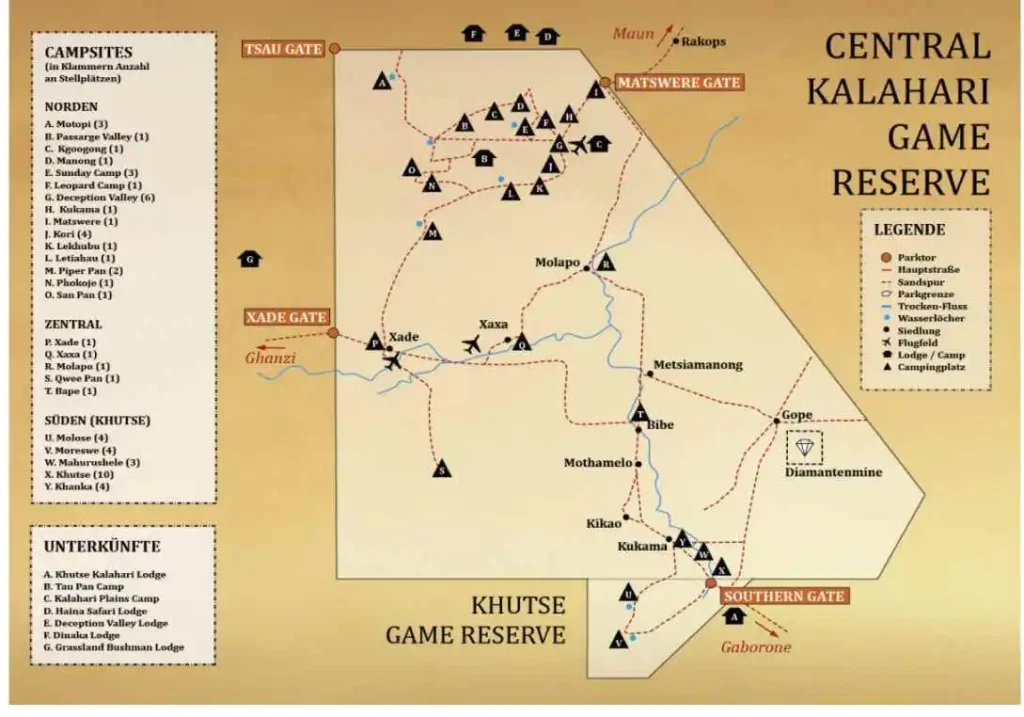
We booked our park entry and campsites in Ghanzi, where a kind lady put together a three-day itinerary for us, called the rangers about campsite availability, and marked everything on a map. She asked whether we had a satellite phone. We didn’t, so she gave us one piece of advice: if we break down, don’t get out of the car — eventually someone will come by… It didn’t sound very reassuring, but it summed up perfectly just how remote the place is.
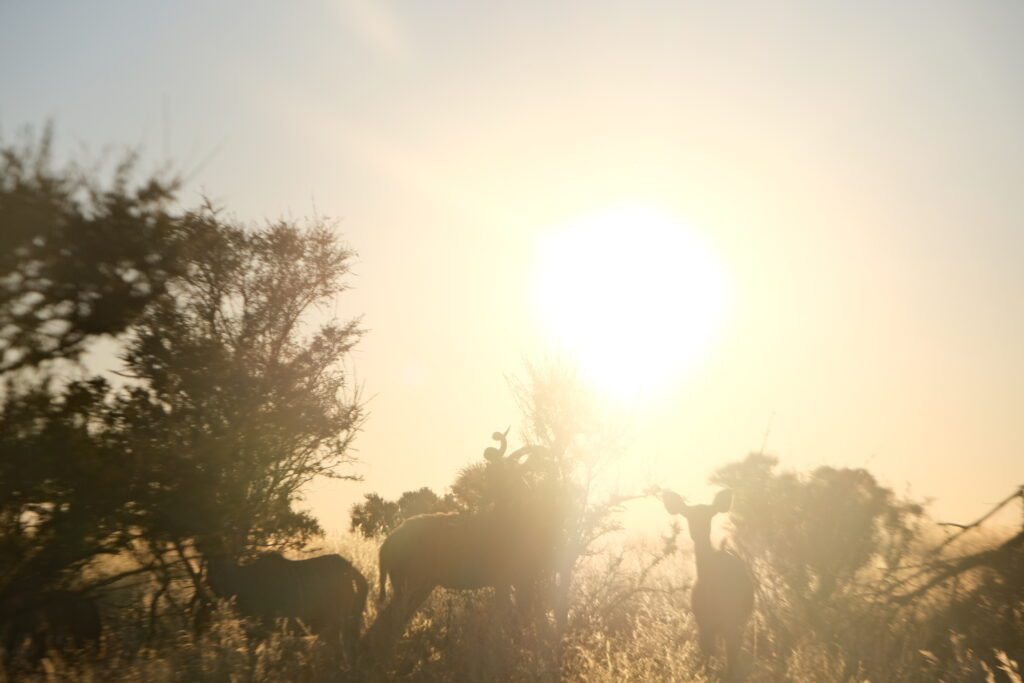
We slept at several campsites inside the park. At the first one, for example, around a hundred eland and kudu had taken over the area, so we moved closer to the rangers, where we camped together with a Swiss–Australian group. The next day, heading toward Piper Pan, we met a South African couple who kindly offered to share their campsite with us — all sites are private here. Many people value solitude, but many others (including us) are simply happy to see another human being appear in the middle of nowhere.
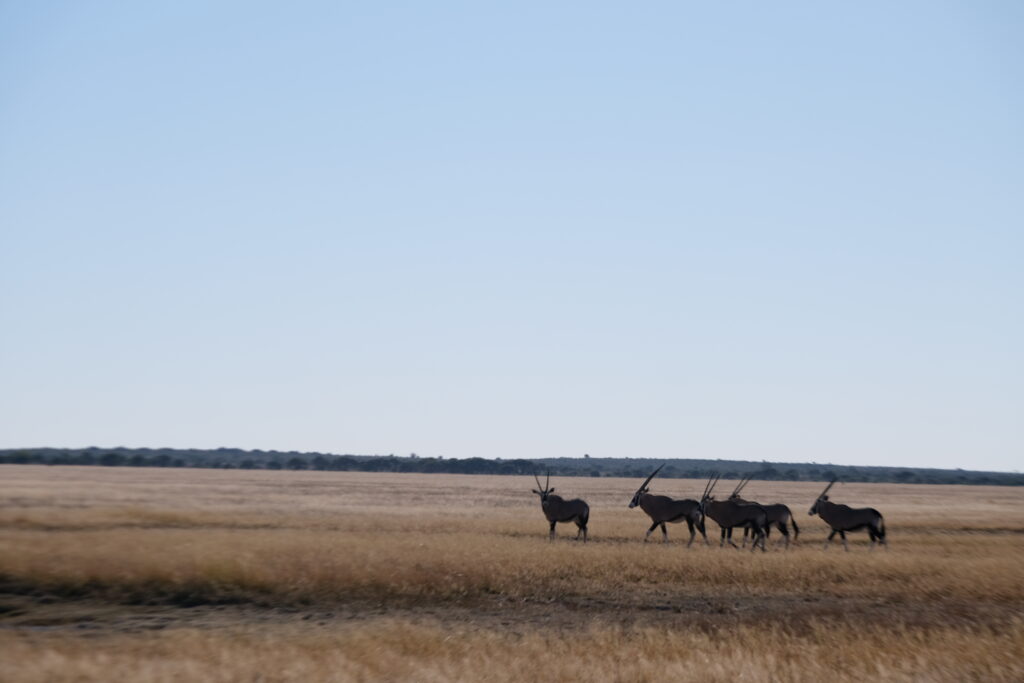
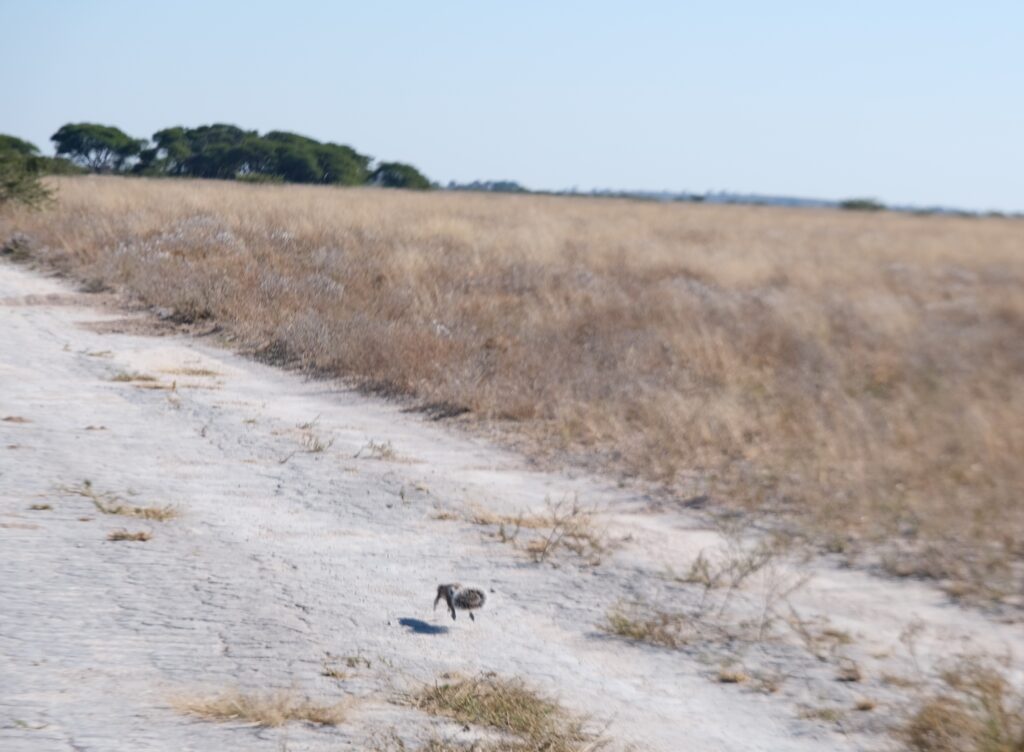
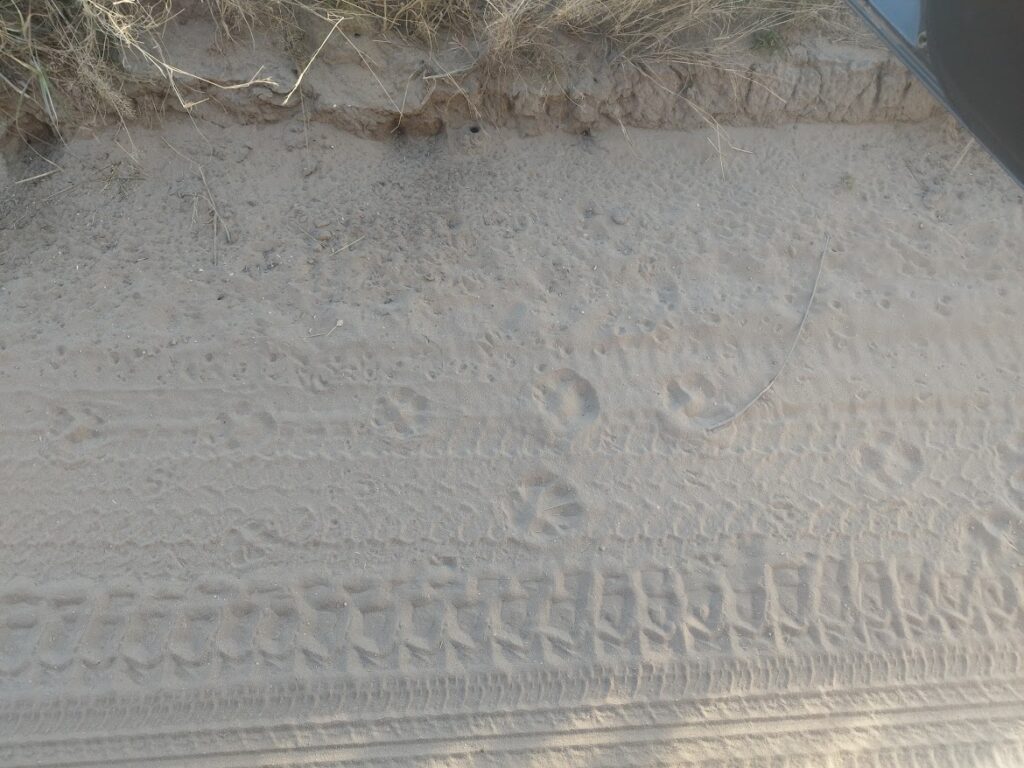
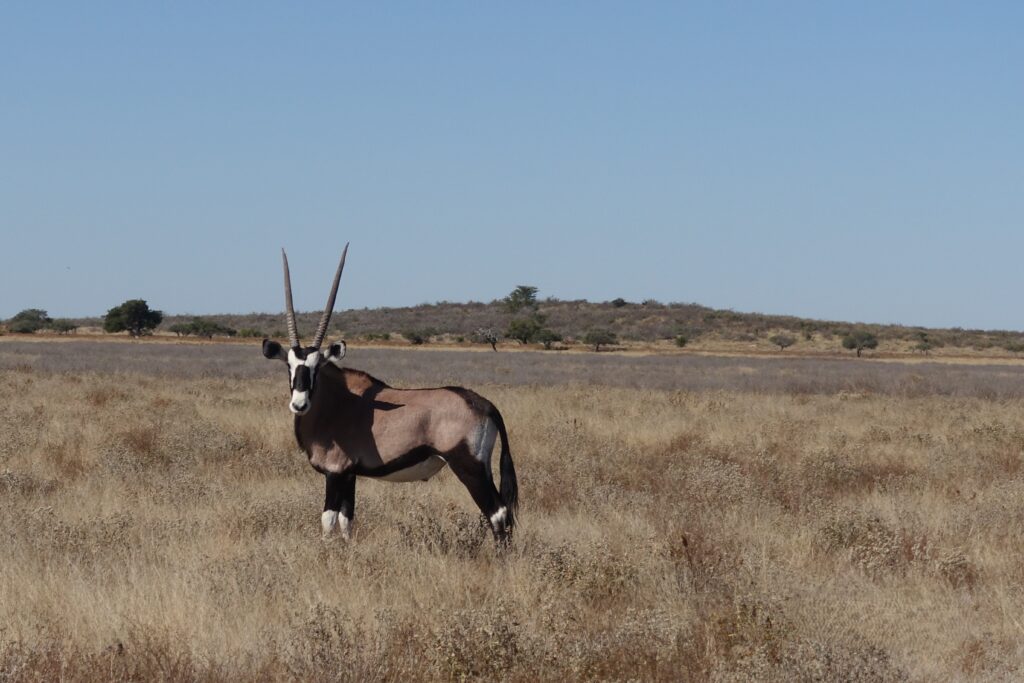
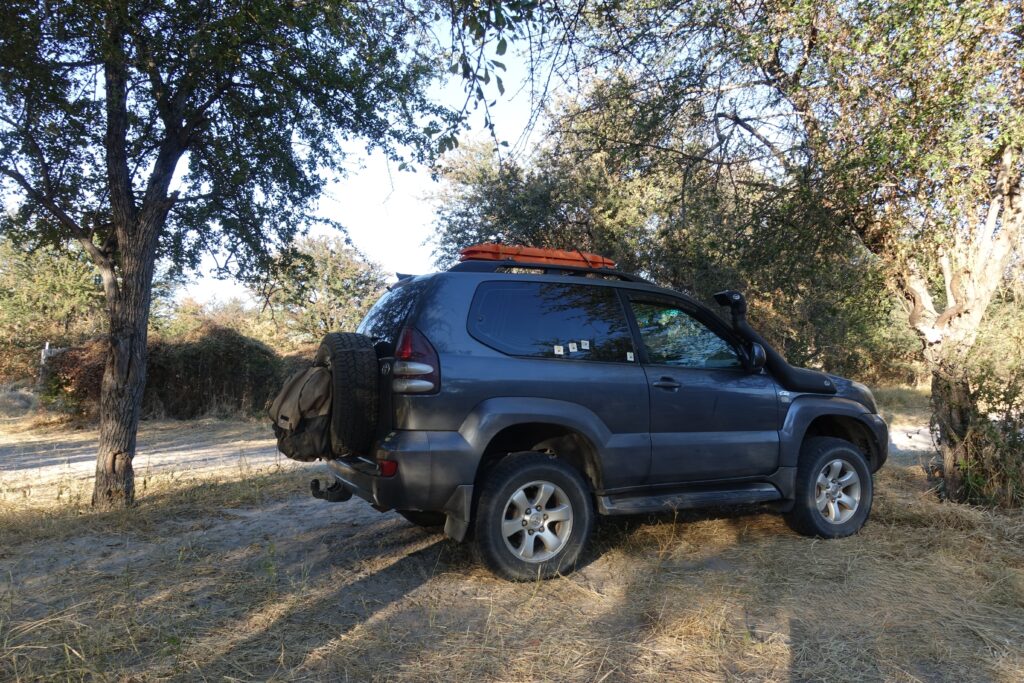
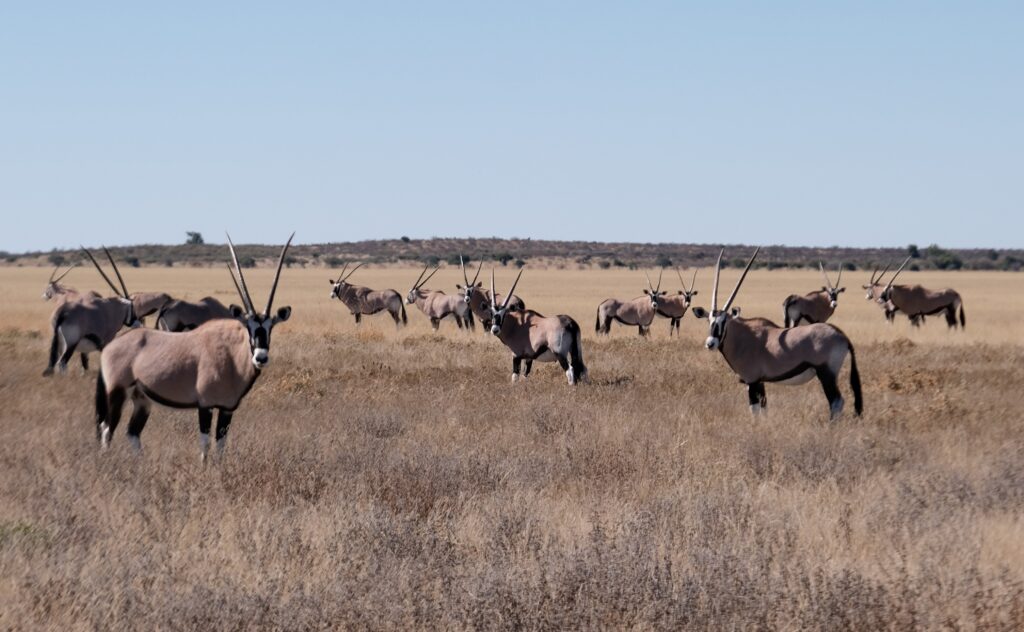
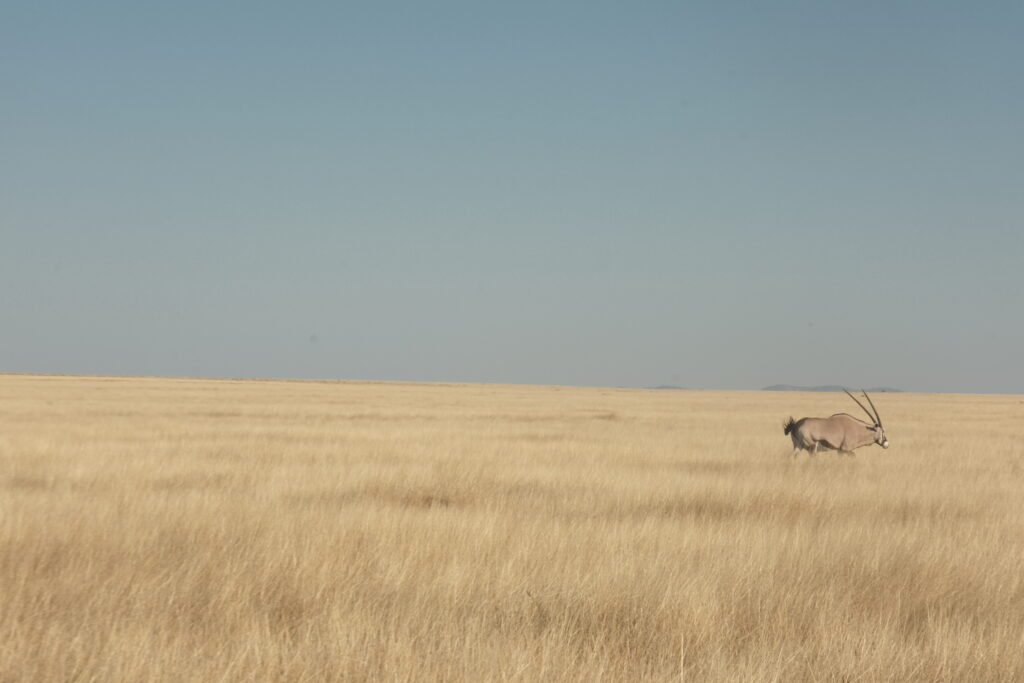
The days were warm (around 30°C), but at night the temperature dropped to 4°C, and we only dared to step away from the rooftop tent while lighting the area all around us. Exploring the areas between Deception Valley, Leopard Pan, and Passage Valley, we saw plenty of wildlife: oryx, kudu, giraffes, and many smaller predators. The unpredictability of the wild is part of the experience: one night something jumped onto our rooftop tent — we don’t know whether it was a leopard or just a guinea fowl — but in the morning we found fresh leopard tracks just a few meters from the car. We followed them for a few hours, but never encountered their owner.
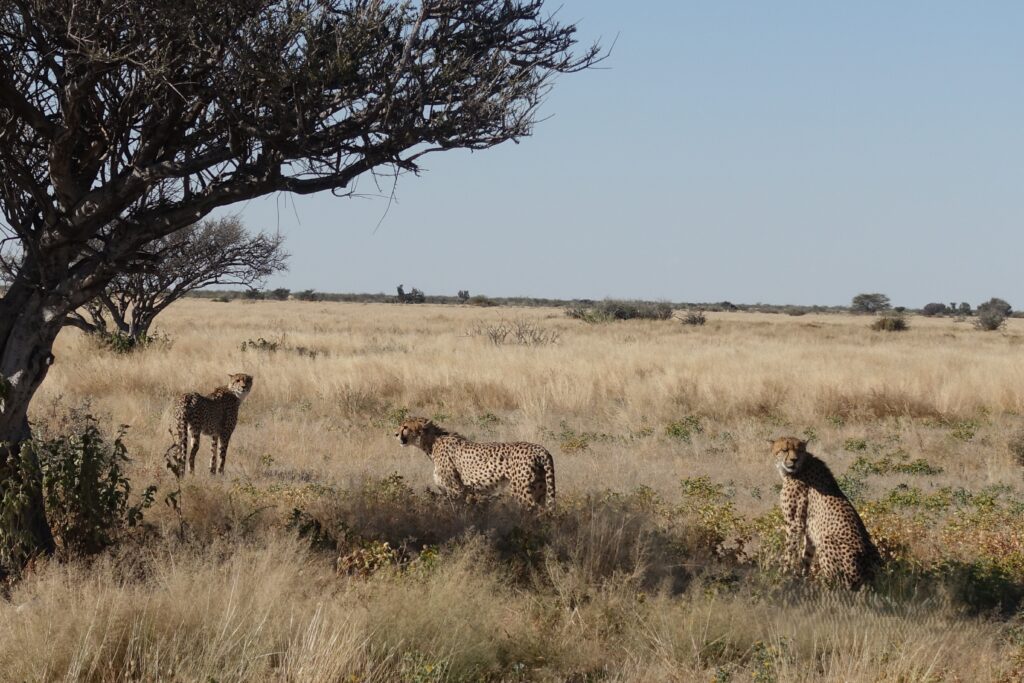
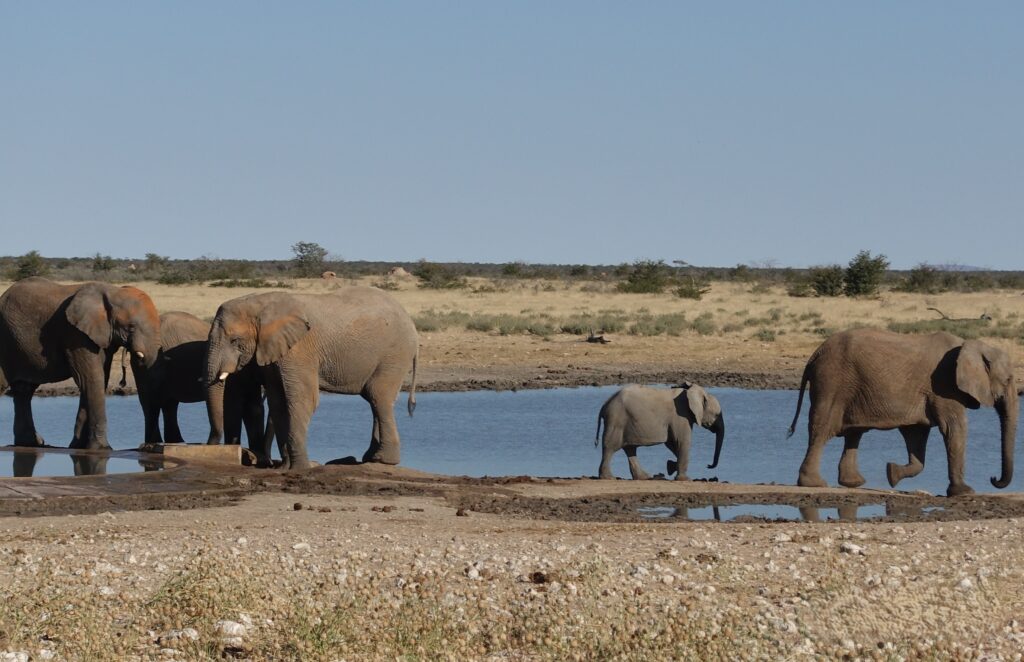
Although we didn’t see large numbers of animals every day, that was exactly what made it special: here, you truly have to search for them, and every encounter feels like a gift. As we were leaving the park, one last surprise awaited us: cheetahs ran across the road in front of us, followed by a few elephants — already on the asphalt.
The Central Kalahari is not a “classic safari experience.” There are a few lodges and organized safaris, but most people set out on their own. This is something else entirely: a vast, raw, unforgettable adventure — one of the last places in the world where you can truly be in the wild.

Price (2025 June):
We paid 2,060 BWP (USD 164), about 54,000 HUF, for 3 nights (4 days) for 2 people including the vehicle (payment by card was possible). If we remember correctly, the cost broke down as follows:
- 90 BWP (2,200 HUF) / day / vehicle entrance fee
- 190 BWP (4,670 HUF) / day / person entrance fee
- 30 BWP (740 HUF) / night / person camping fee
Our full blog post about the Kalahari experience can be found here: https://eandatravel.com/day-150-154-central-kalahari-game-reserve-botswana/
Majete National Park (Malawi)
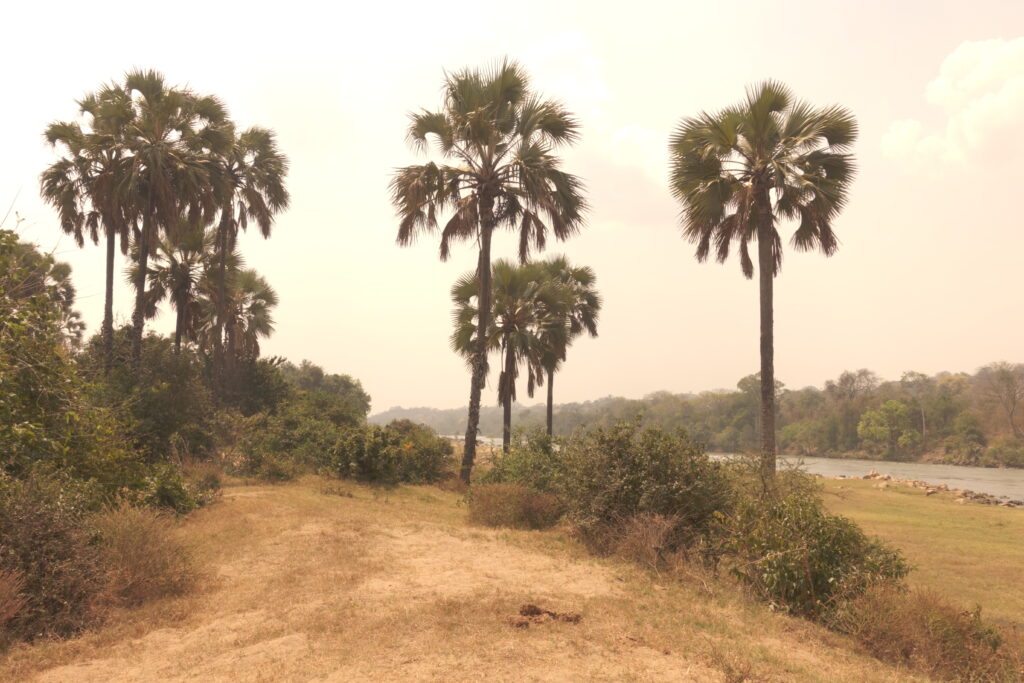
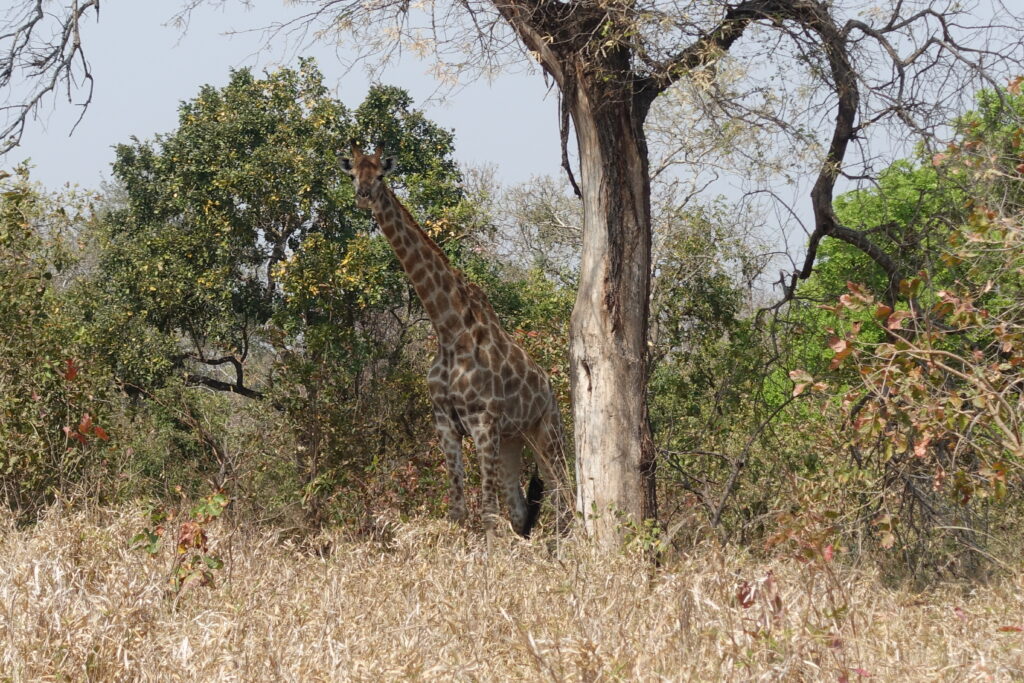
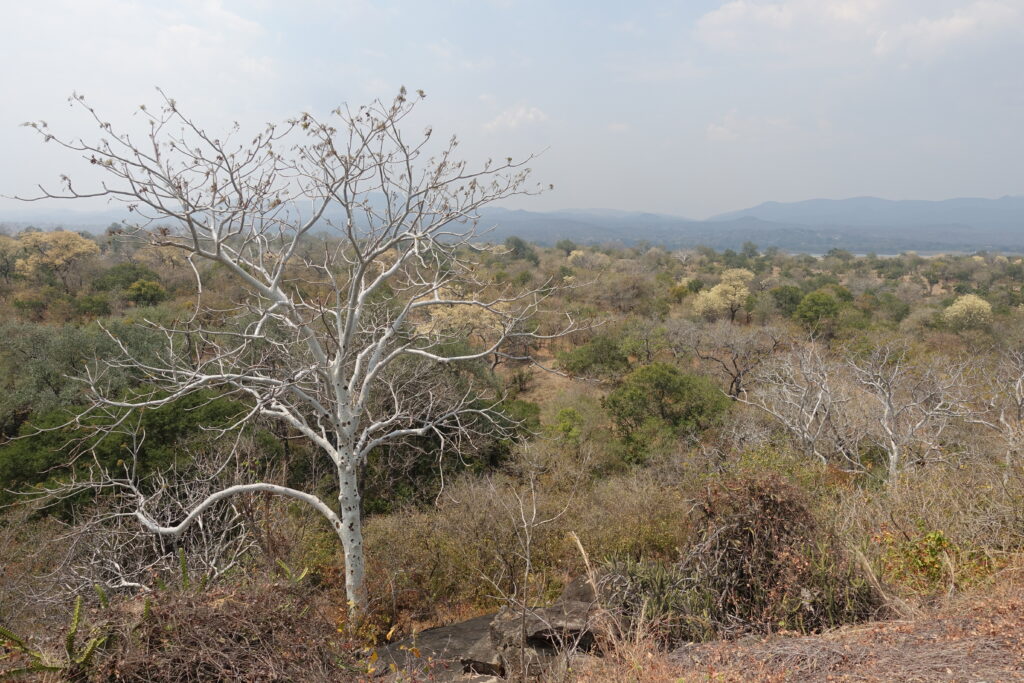
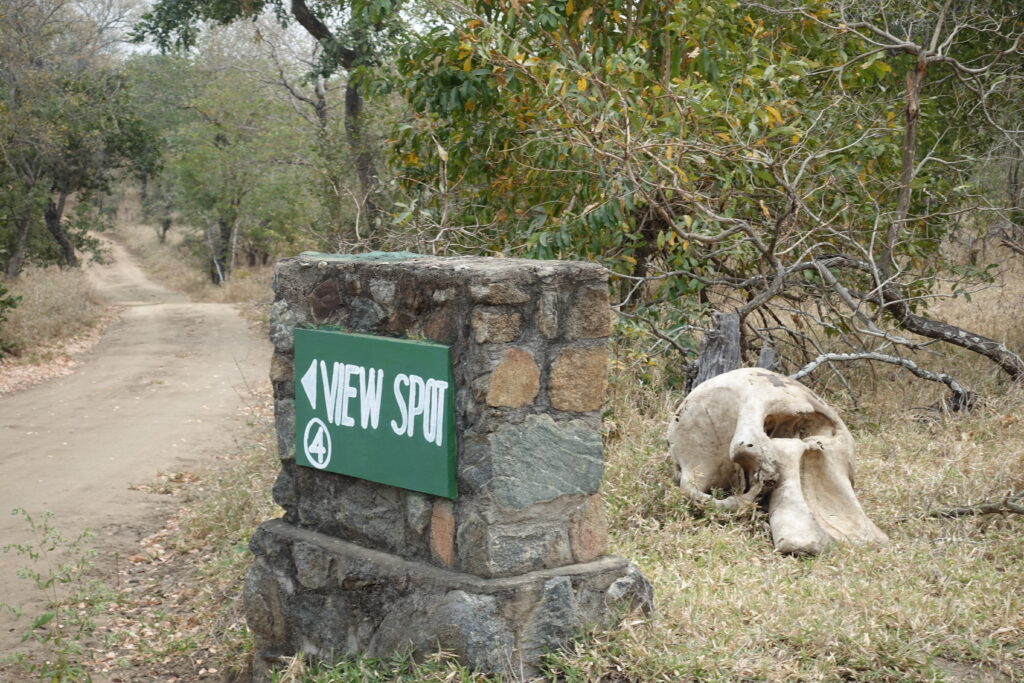
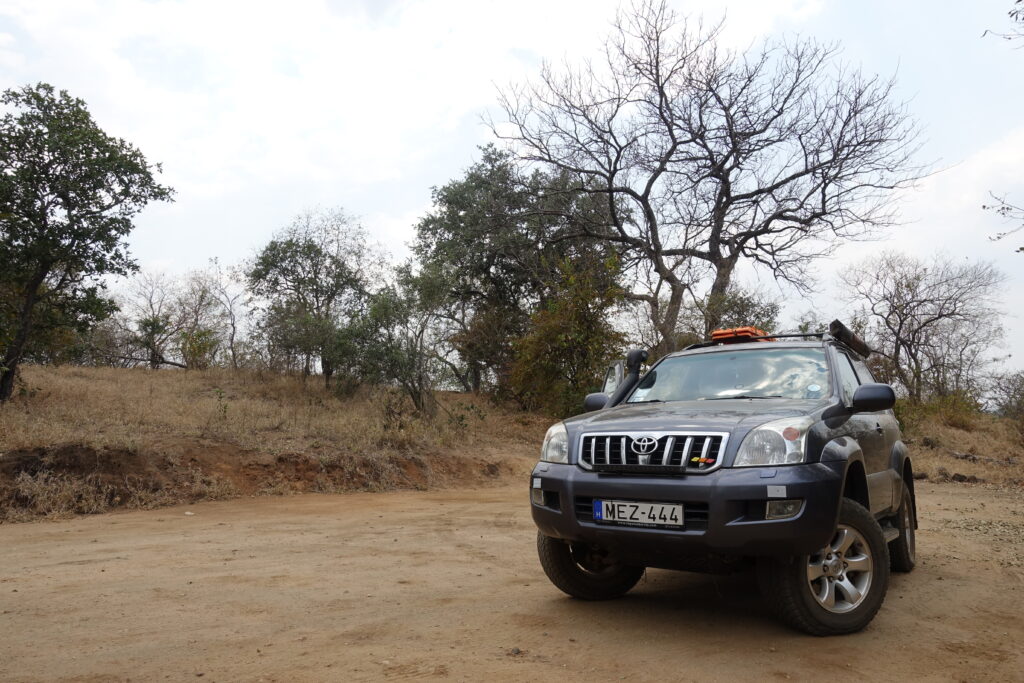
Majete National Park is one of Malawi’s most beautiful and most successful conservation stories. It is not a large park, but over the past twenty years its wildlife has been restored in an exemplary way: species that had previously been wiped out were reintroduced, and today all of the Big Five — elephant, rhinoceros, buffalo, lion, and leopard — can be found here. While Liwonde is better known thanks to its open savannahs, Majete’s lush, forested green landscapes, especially around the Shire River, create a very different atmosphere: more intimate, wilder, and more peaceful.
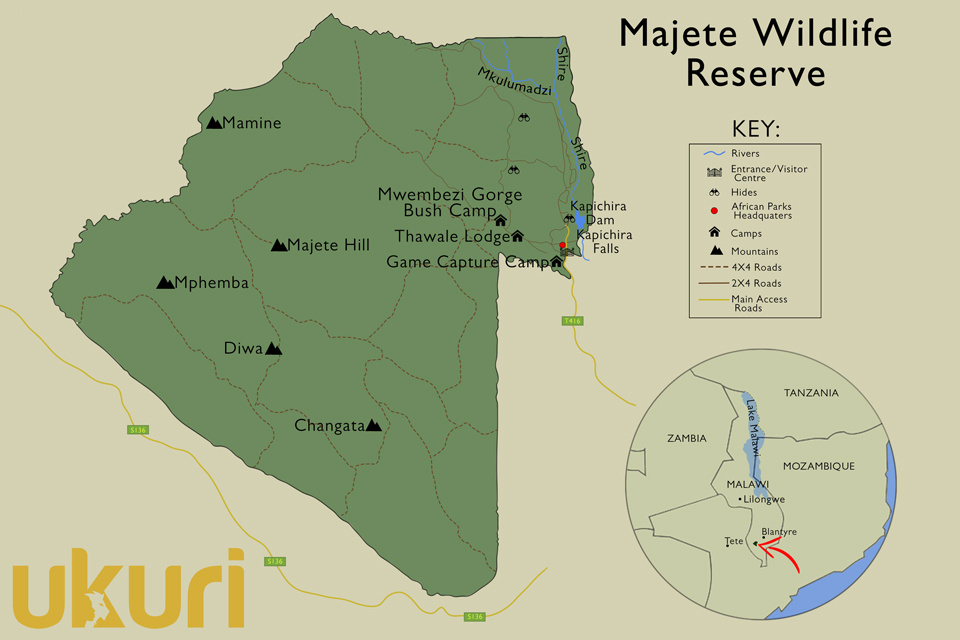
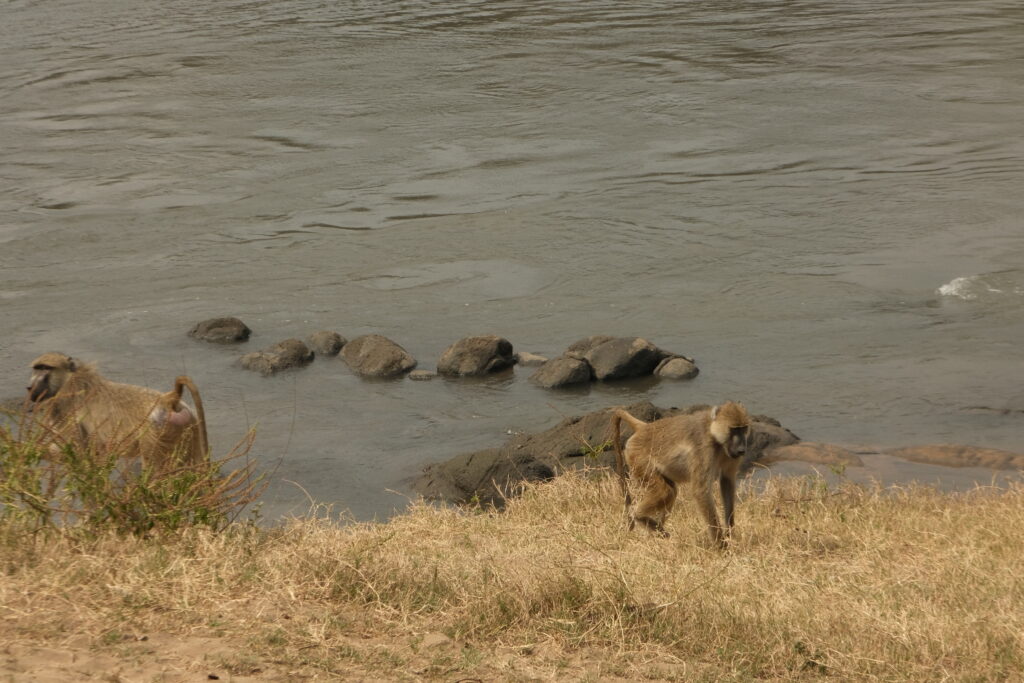
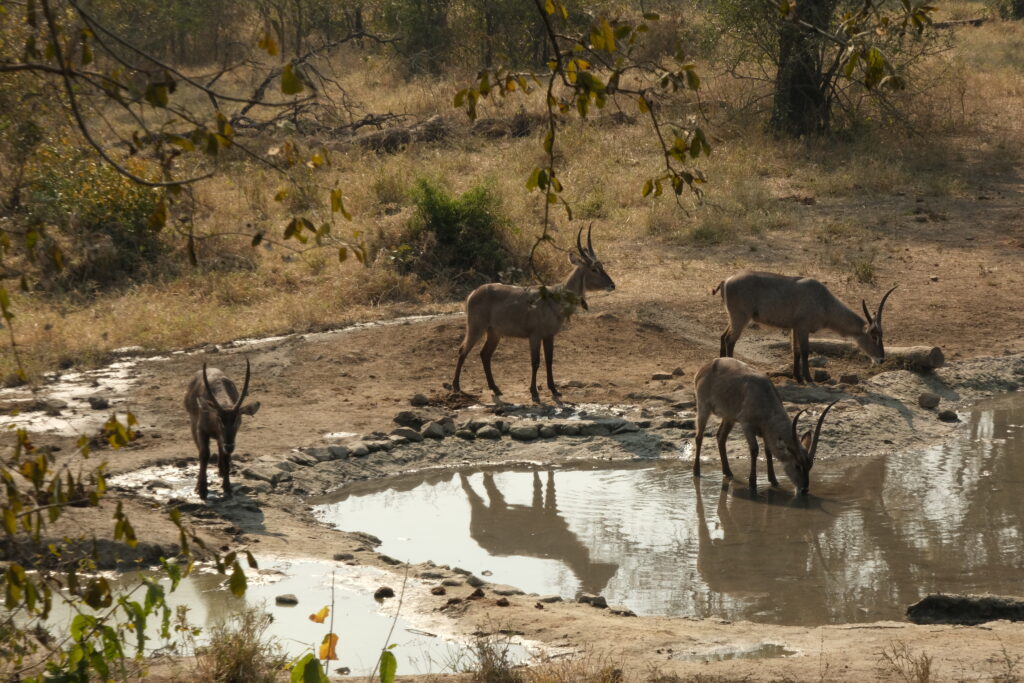
There is also a community campsite in the park, where a significant portion of the revenue goes directly to the local community — something we especially loved. The campsite itself became one of our favorites of the entire trip: it has a well-equipped shared kitchen, a nicely designed relaxation area, and beyond the fence there is a waterhole visited daily by monkeys, various antelope species, elephants, and occasionally even leopards. We camped, but safari tents and bungalows can also be rented (and there is also a luxury lodge in the park, not far from the campsite). The place is not completely secure — any animal can jump over the fence — but that’s exactly what makes it so exciting. Our evenings were made special by conversations with the campsite manager, who told us a lot about Malawi and even taught us how to play Bao, a board game loved by locals.
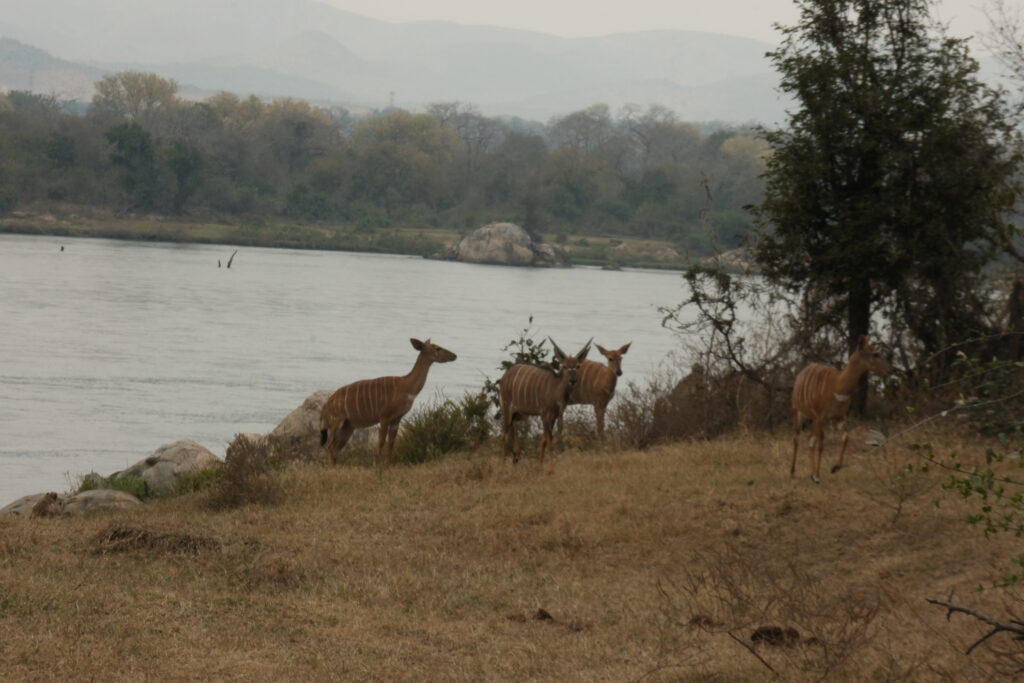
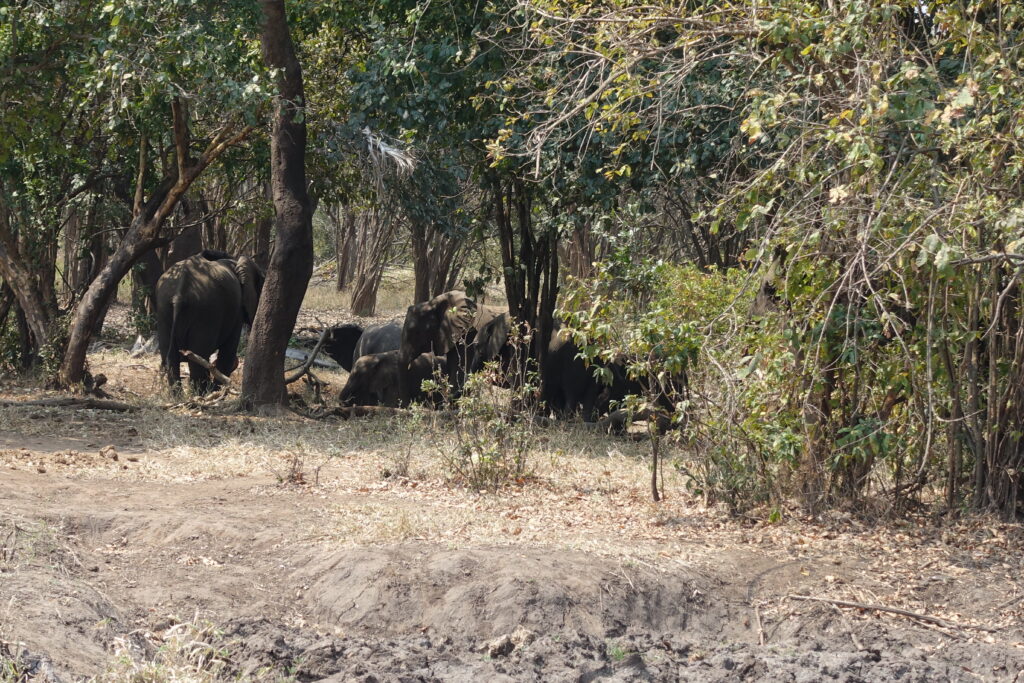
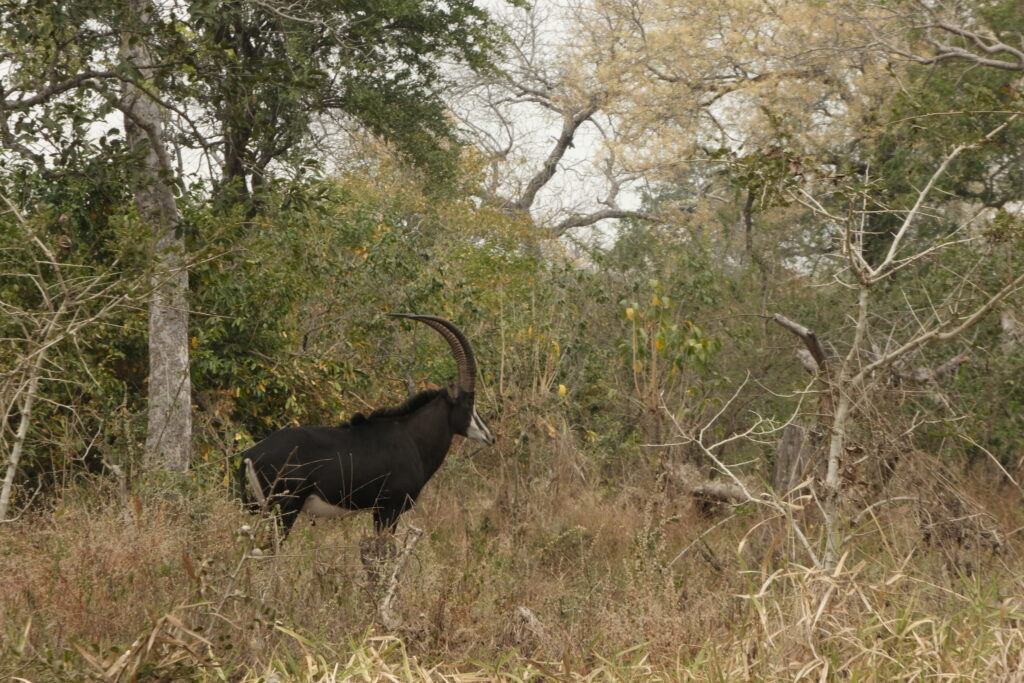
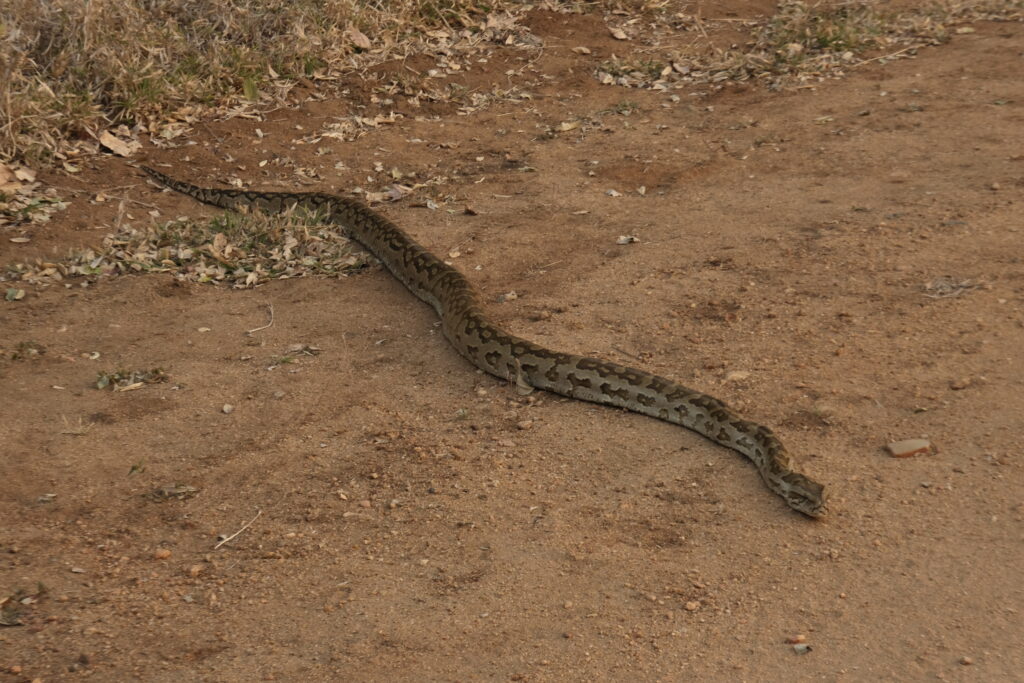
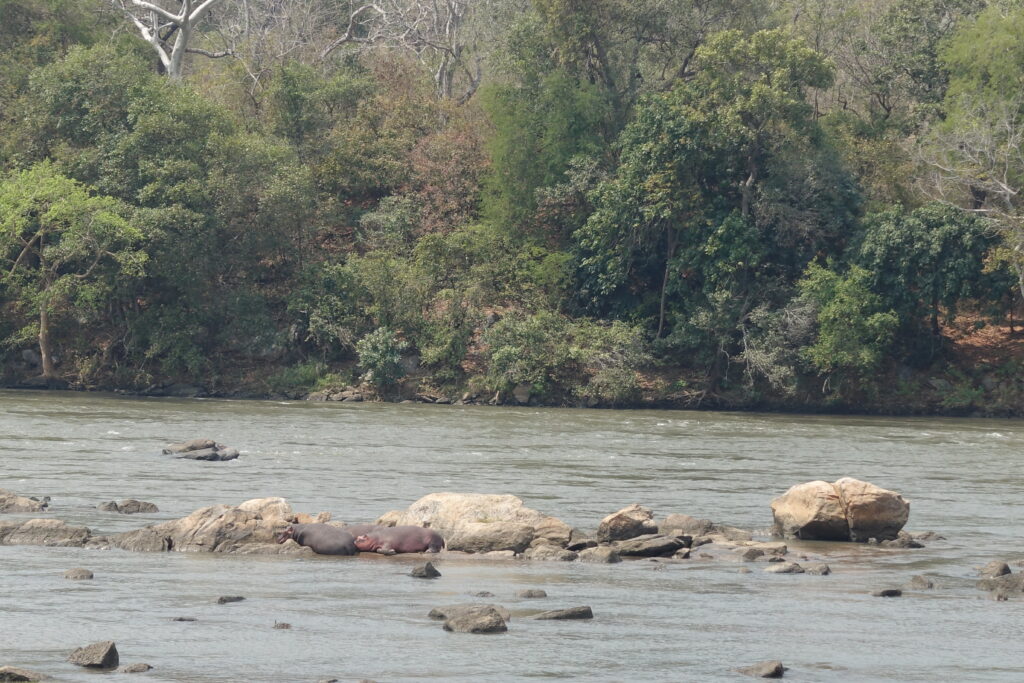
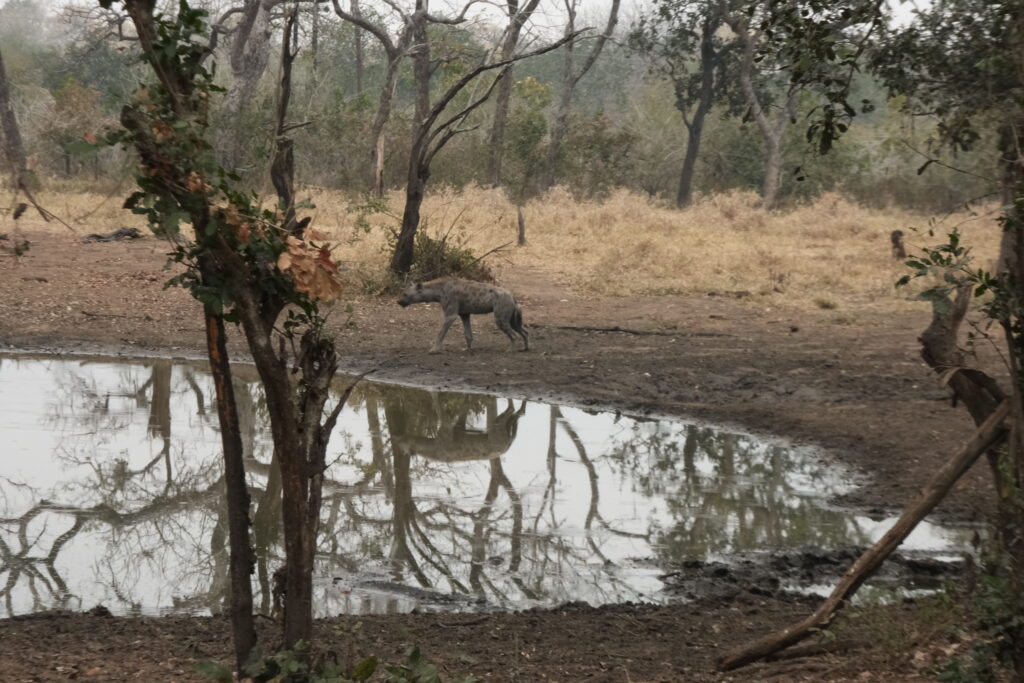
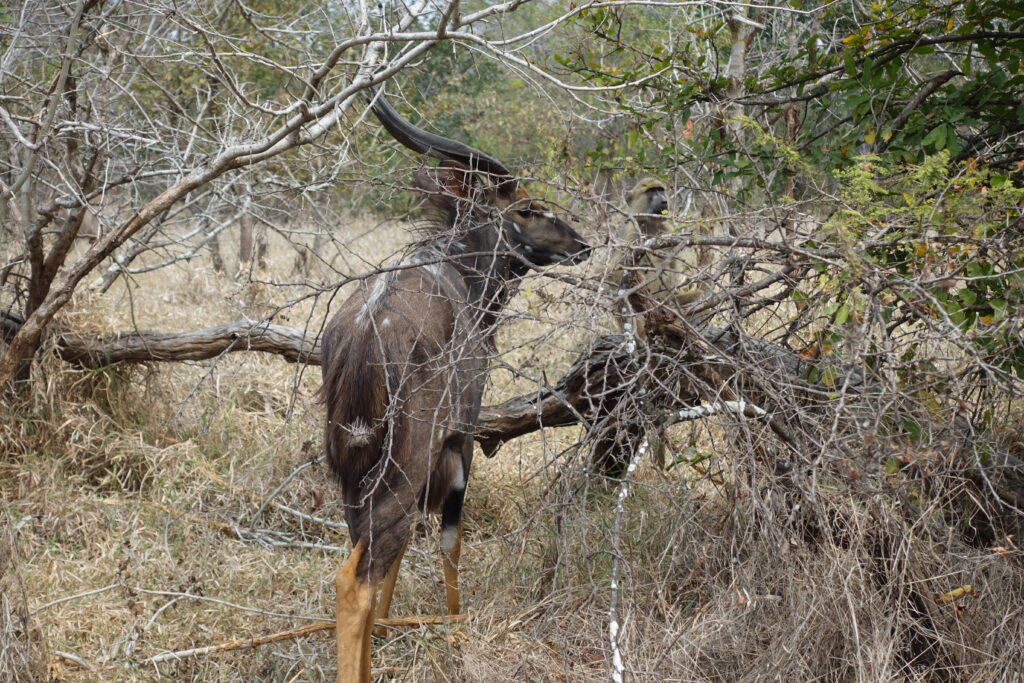
Exploring the park is most spectacular along the river: crocodiles, hippos, huge herds of elephants, and lush vegetation line the route. We saw many elephants ourselves, and once even turned back because of a group — there were so many calves that we didn’t dare drive through them. To access the more remote inner areas of the park, special permission is required, as there is no mobile reception there, but these farther regions are also beautifully maintained: well-marked roads, atmospheric waterholes, and vast, tranquil open spaces alternate along the way. This is where we saw stunning sable antelopes in both black and brown variations, as well as massive herds of Cape buffalo, who always seem to eye you with a slightly threatening gaze. On our last morning, we also spotted a brown spotted hyena at a nearby waterhole.
Majete may not be a place where you encounter animals every single minute — but because of its lush, wild scenery and the powerful story of wildlife restoration, it is a truly special experience. Slightly off the beaten path, very friendly and sincere: exactly the kind of national park where you feel you’ve come genuinely close to Africa.

Price (2025 August):
For two nights (which allows three full days inside the park), we paid 17,500 HUF for two people at the community campsite.
This is how the costs broke down:
Entrance fee: USD 15 / night (the standard entrance fee for international visitors is USD 30 / night, but we received a discount)
Vehicle entry: USD 5 / night
Camping fee: USD 10 / person / night
In total, we had to pay USD 90, which was converted to Malawian kwacha at a good exchange rate. We then exchanged the kwacha at an even better rate, which is how it ended up costing us only 17,500 HUF for 3 days / 2 nights.
Our full blog post about the Majete experience can be found here.: https://eandatravel.com/day-233-235-majete-wildlife-reserve-malawi/
Kidepo Valley National Park (Uganda)
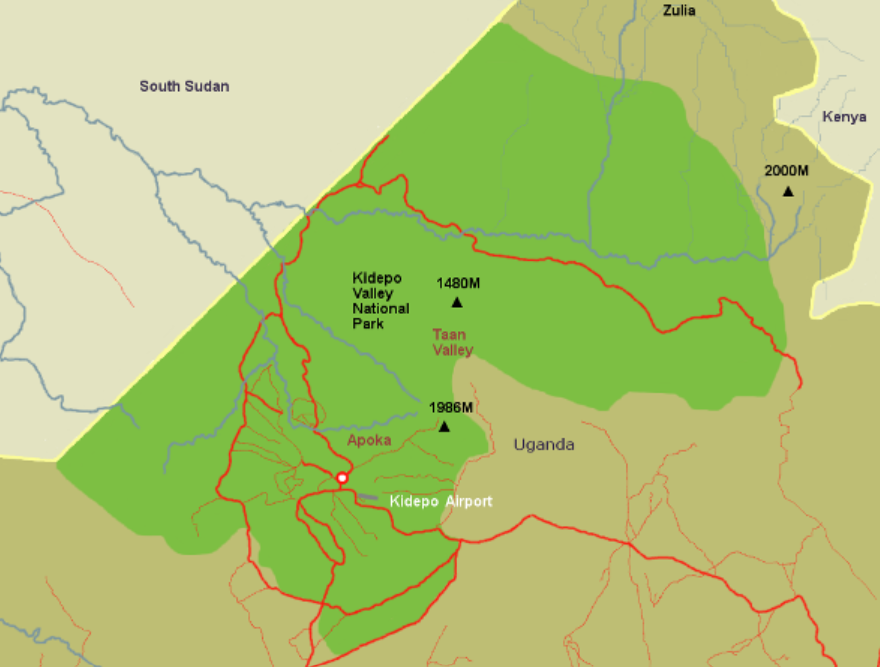
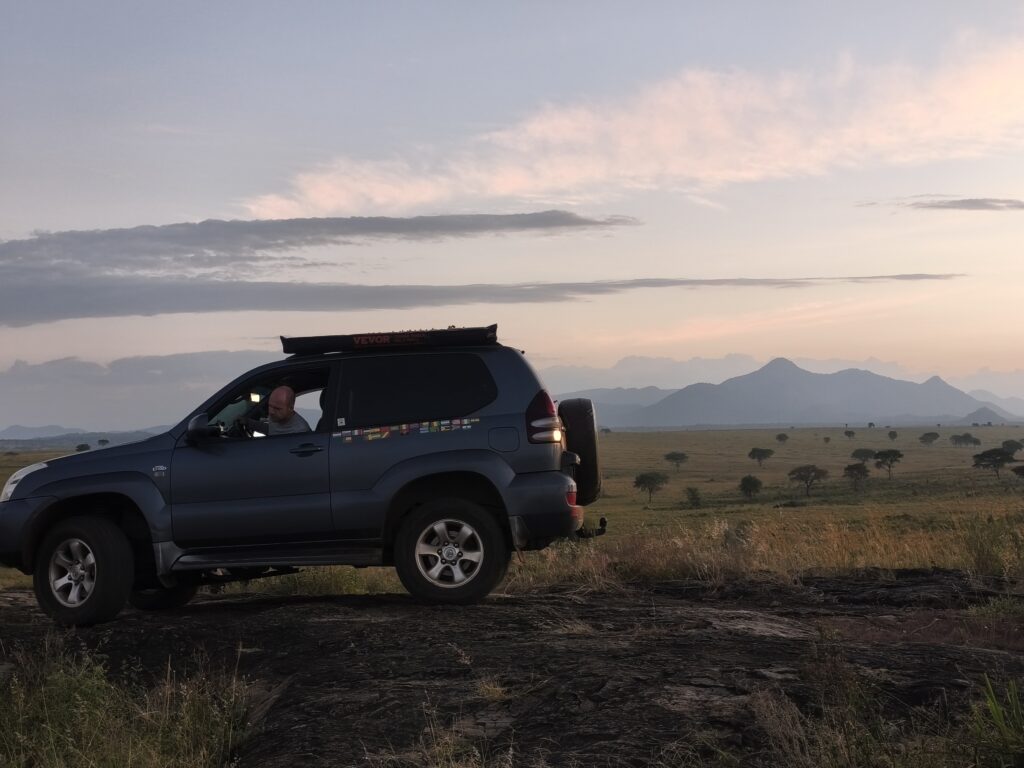
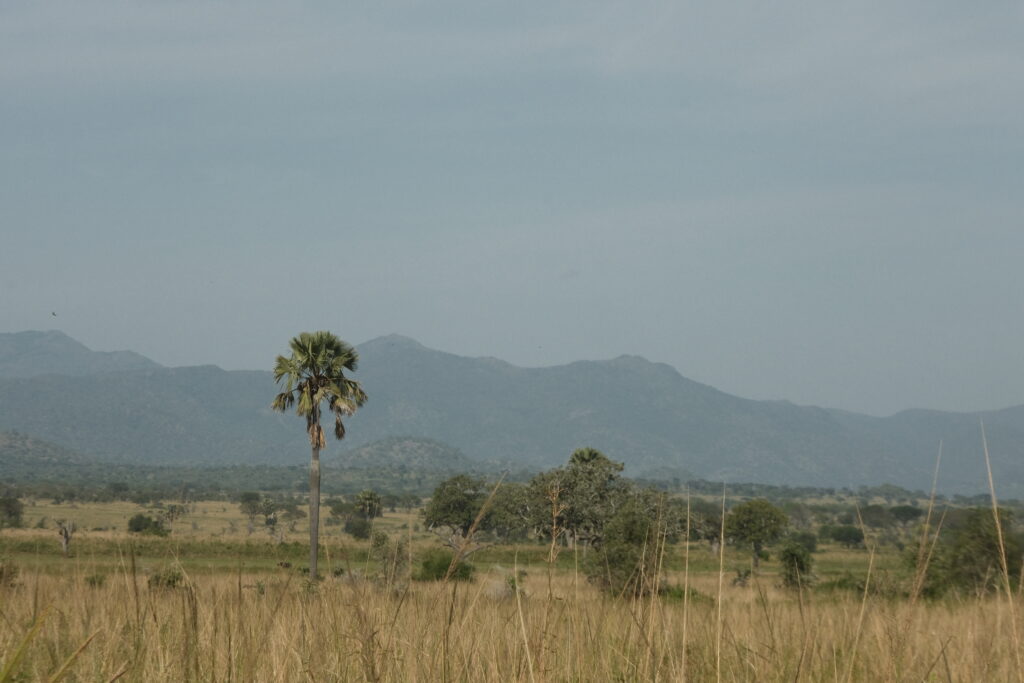
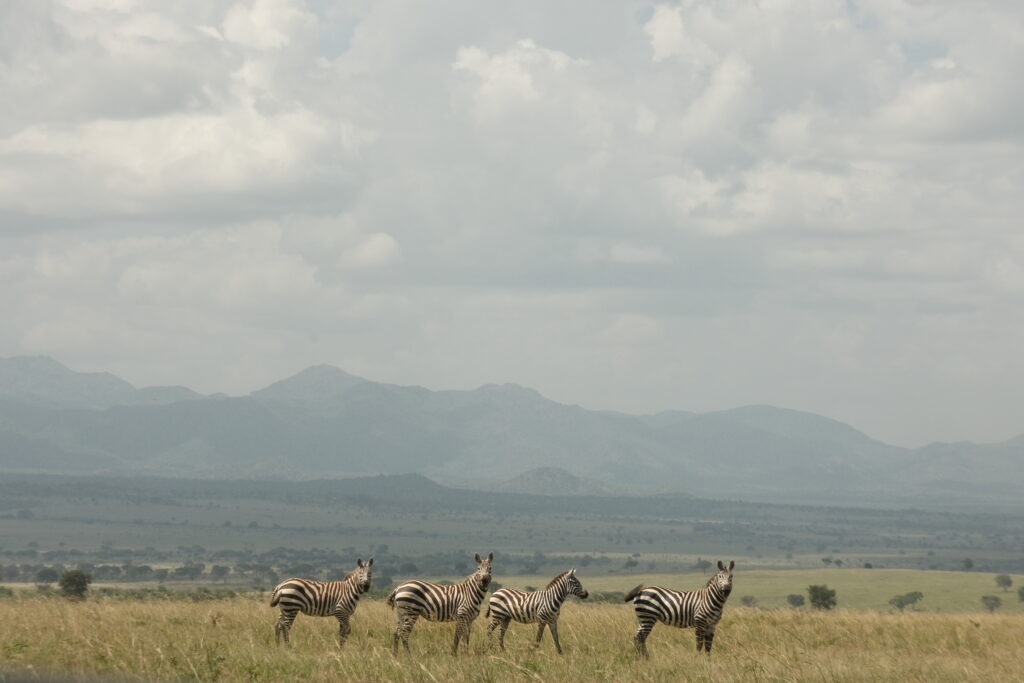
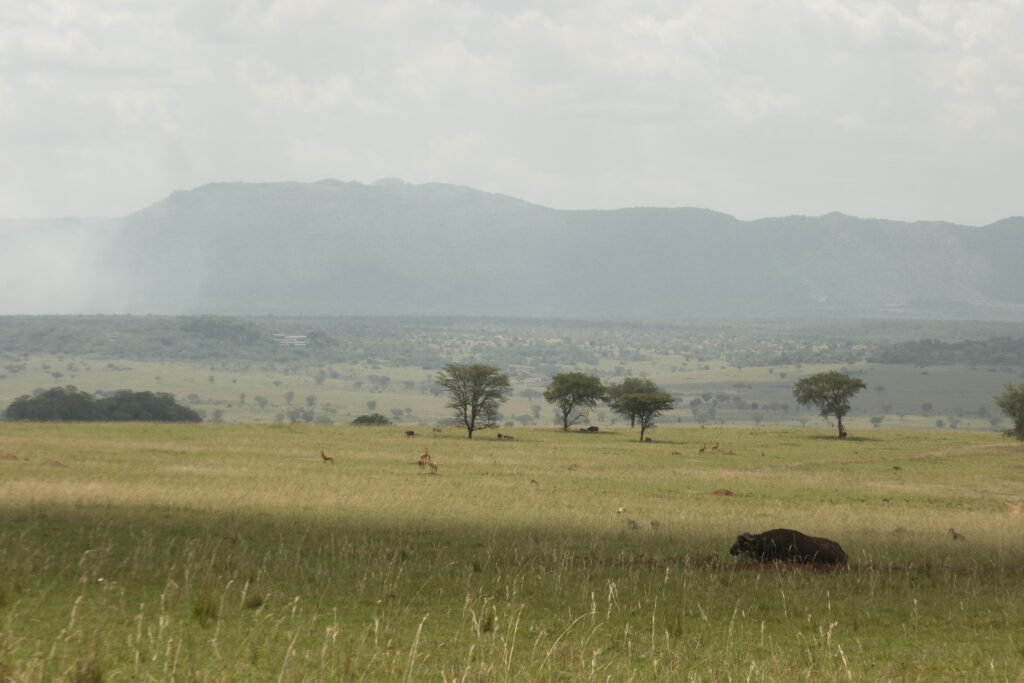
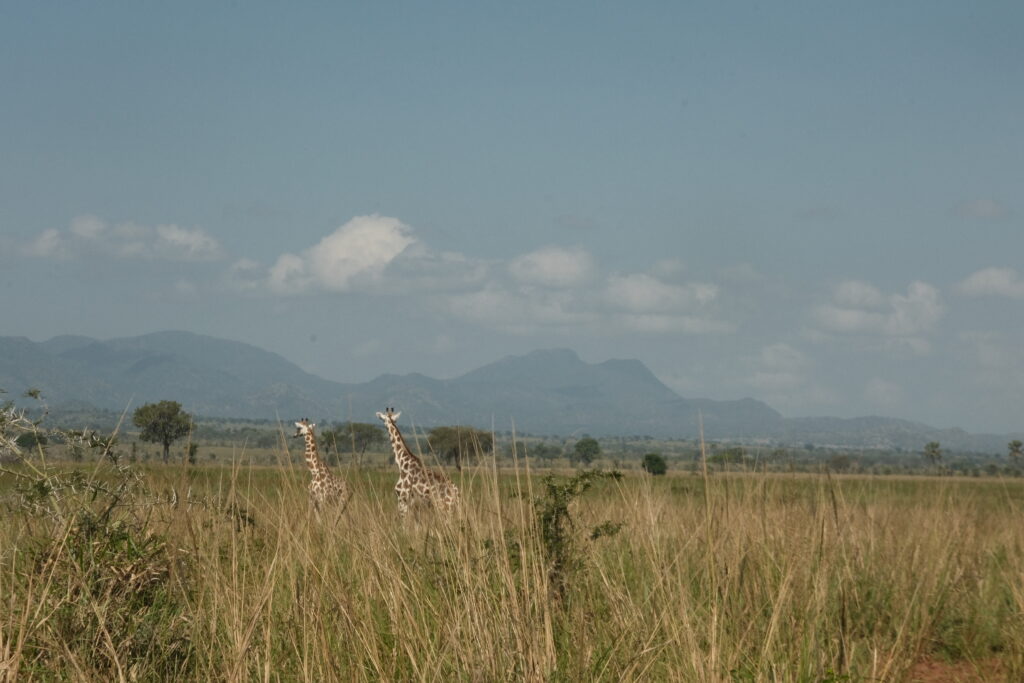
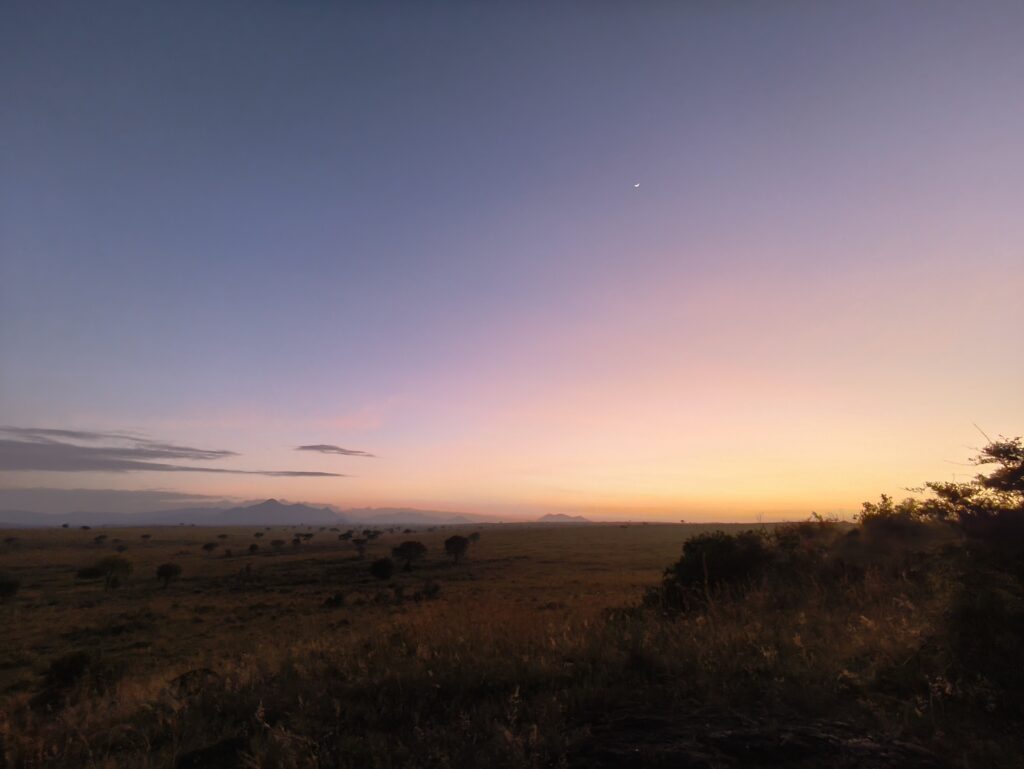
Kidepo Valley National Park is located in northeastern Uganda, in the Karamoja region. The park is a vast savanna at the foot of Mount Morungole, stretching all the way into South Sudan. Many African national parks (we didn’t visit any in Tanzania or Kenya due to our budget) are dominated by dense bush; even when we saw plenty of animals, the landscape itself was often not particularly beautiful. Kidepo, however, delivers the perfect Lion King feeling. I’ve been to the park twice: once at the start of the rainy season, when everything was yellow and the cinematic savanna came to life, and now again in November, at the end of the rainy season, when everything had turned lush and green — still an incredibly beautiful sight.
The park covers an area of 1,442 km². Although special permission is required to access the areas near South Sudan in the Kidepo River valley (and it takes about a day to get there), most safari activities focus on a smaller area around the Narus River valley. This isn’t a problem, as that’s where the majority of the wildlife is found anyway.
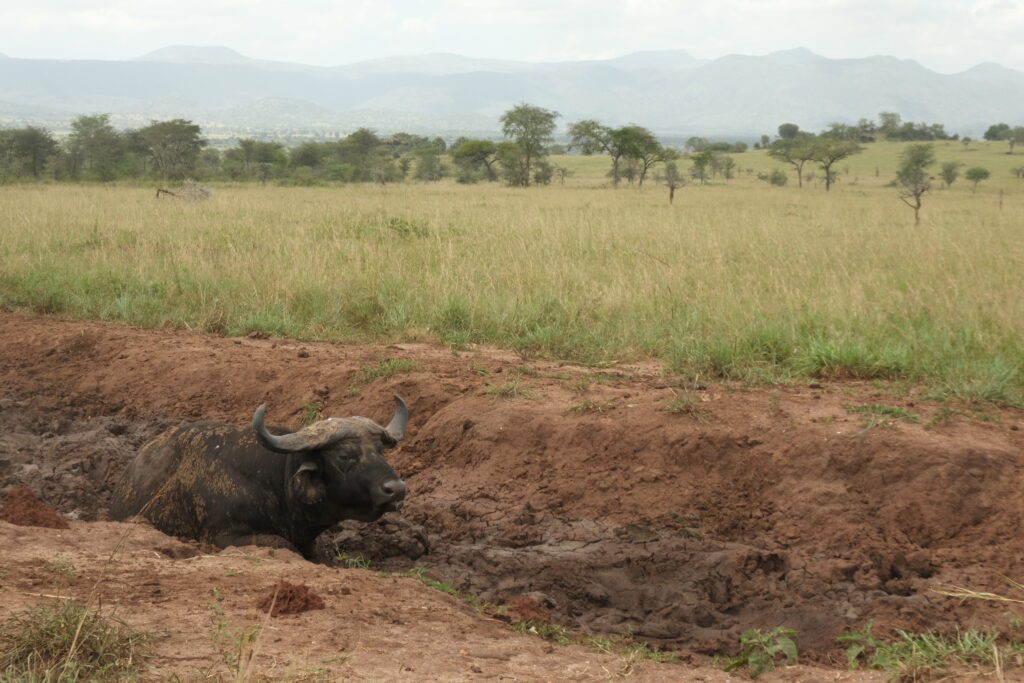
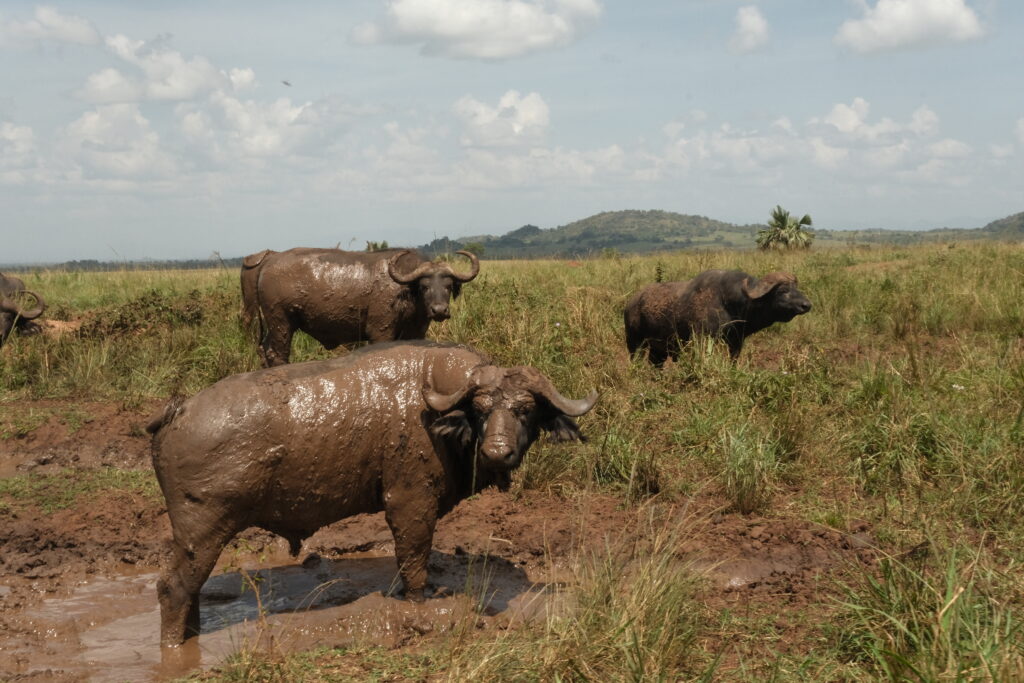
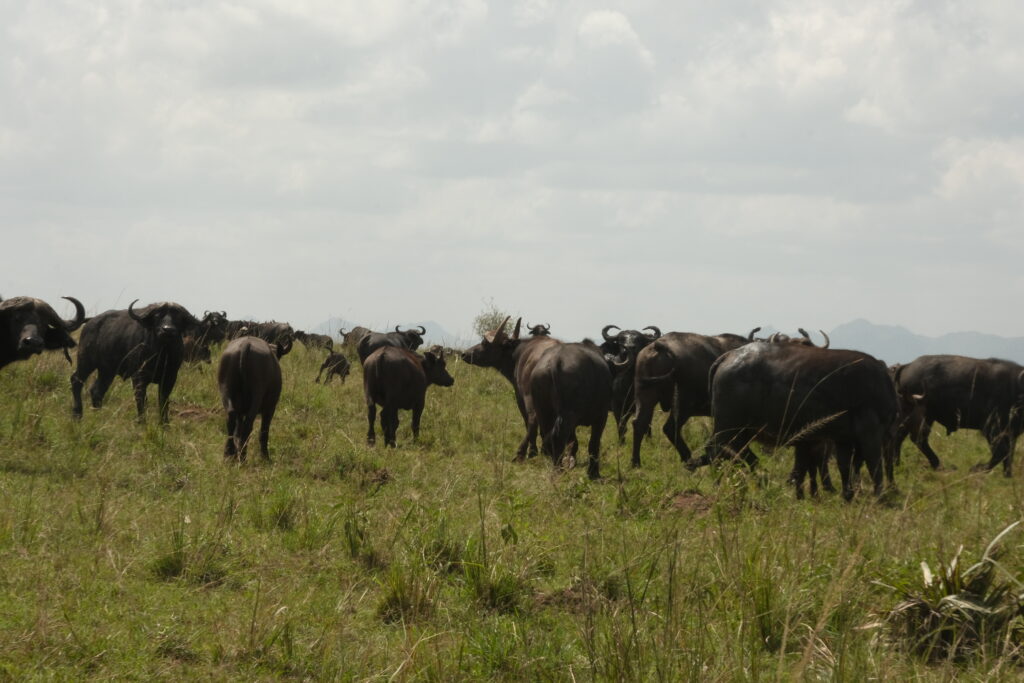
As soon as we entered the park, we were completely blown away — we had never seen so many animals in one place. An estimated 10,000–15,000 Cape buffalo live in the park, which is especially surprising because elsewhere — as one of the Big Five — they often have to be actively searched for. Here, however, they behave more like gazelles or impalas: they’re everywhere. The only problem is that while antelopes are harmless, buffalo are extremely dangerous animals, so it was quite nerve-racking to drive through the middle of a herd. Later we learned that it’s not the herds that are the most dangerous, but the solitary, ostracized males — fortunately, they were mostly busy wallowing in the mud.
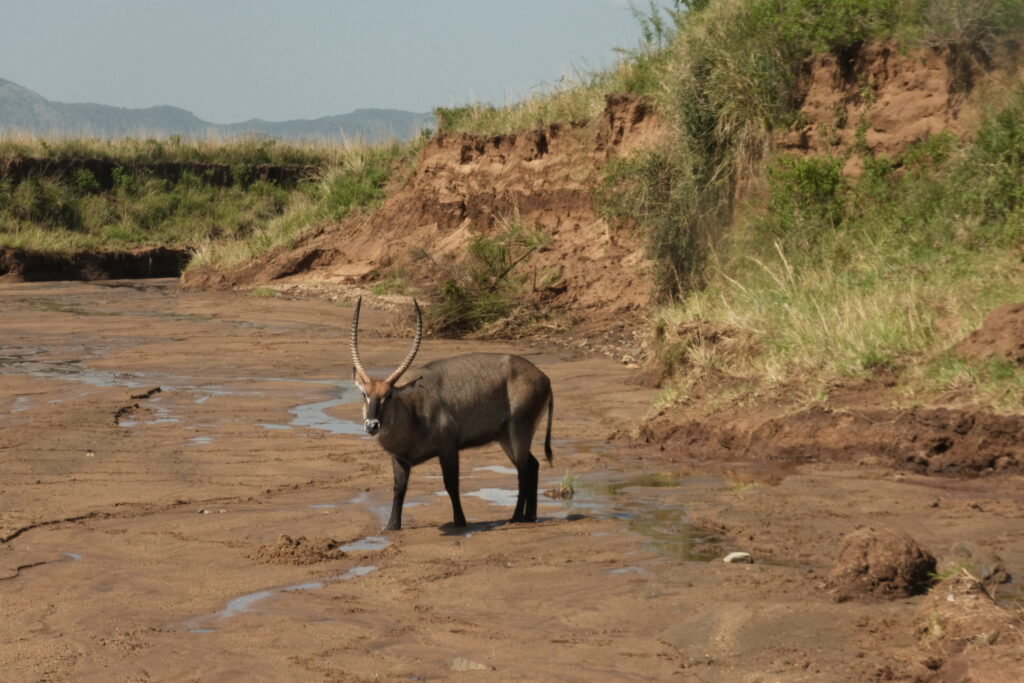
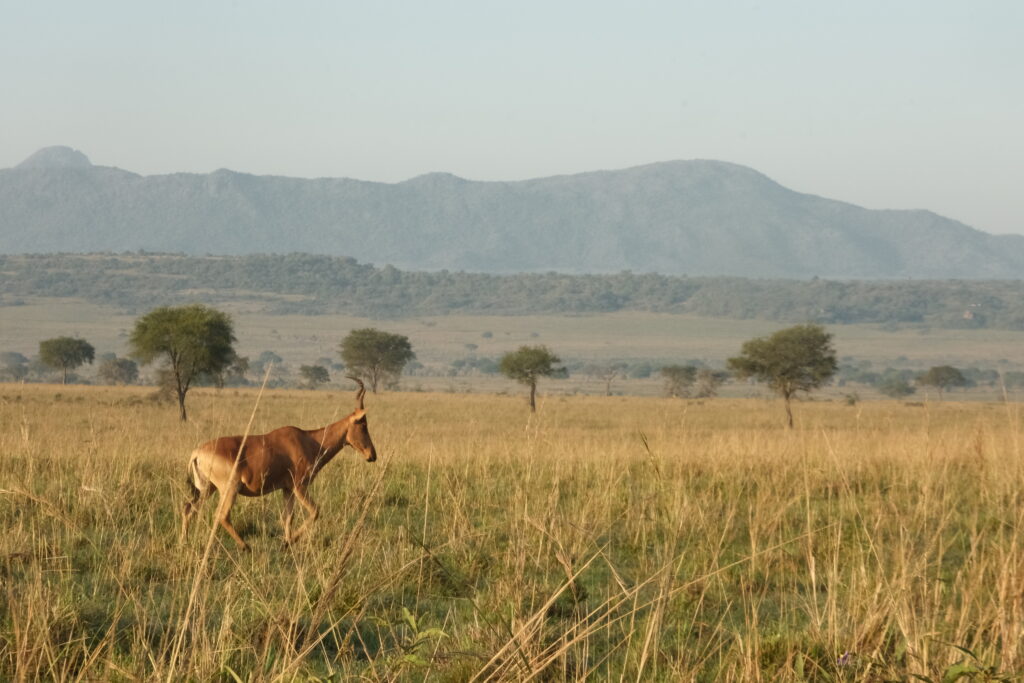
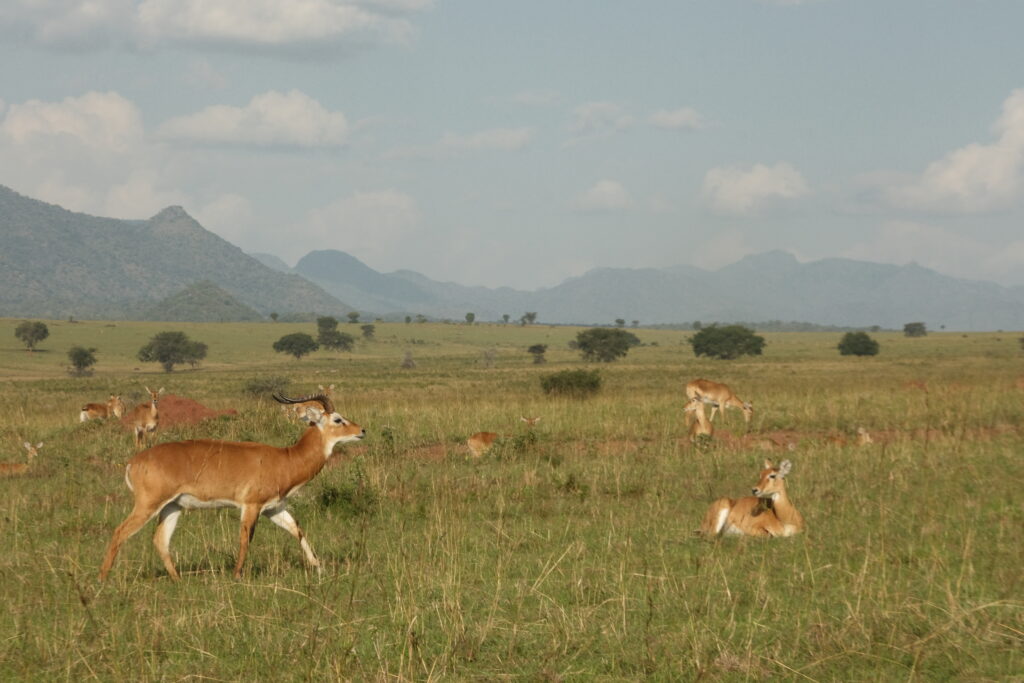
Kidepo is also home to completely different antelope species than those we were used to seeing. The most common is the Jackson’s hartebeest, which we had never seen before. They look particularly amusing when they climb to the tops of hills to warn the others about approaching predators. A similar-looking, slightly browner species is the topi. We were finally able to see very small antelopes as well, mainly oribis (with their distinctive small black facial markings), and possibly also klipspringers and dik-diks. My personal favorites, the swamp antelopes, live here in large numbers alongside several species of reedbuck, and we also saw countless eland — the largest antelope species, which can weigh up to 500–600 kilograms.
There are relatively few predators in the park. This time we weren’t lucky, even though we repeatedly explored the areas around the lion and leopard rocks. Seven years ago, however, I even saw lion cubs here. A few cheetahs also live in the park, along with several species of jackals and foxes.
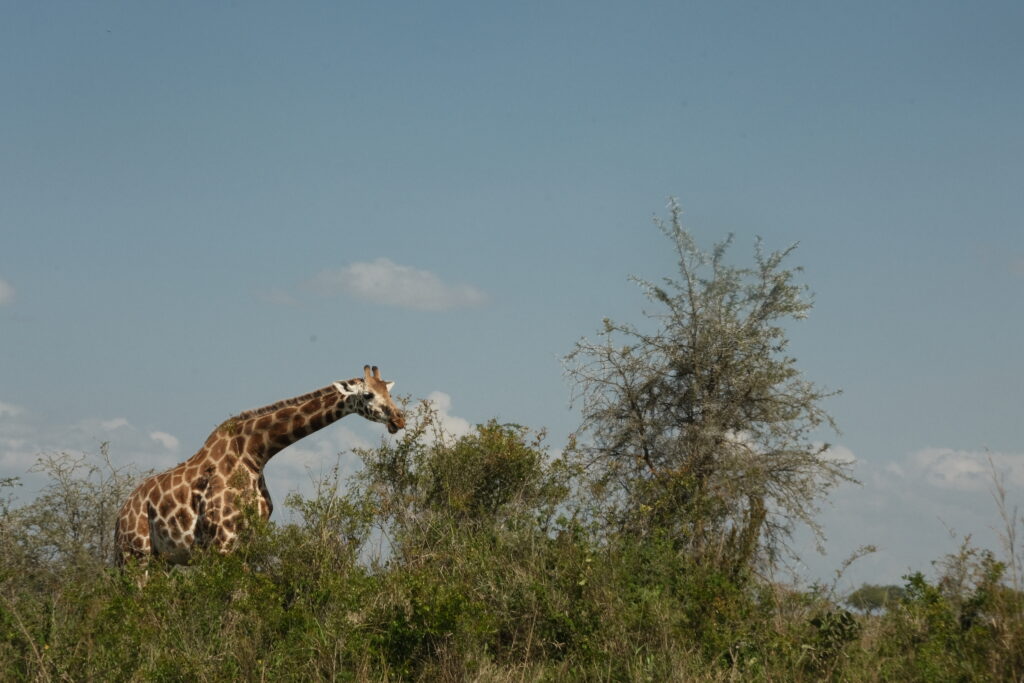
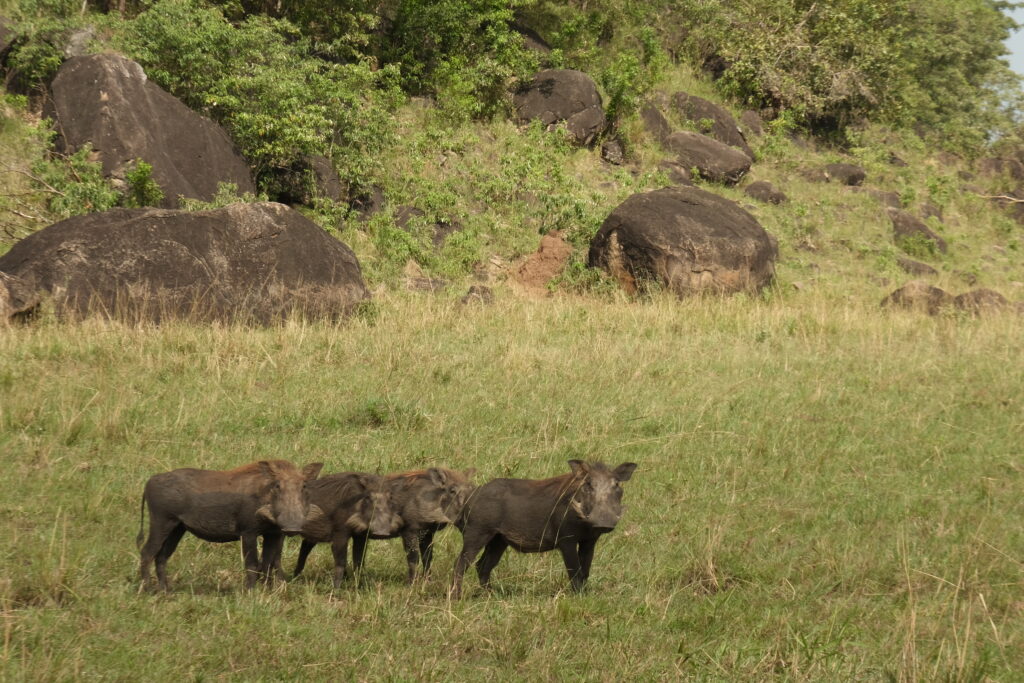
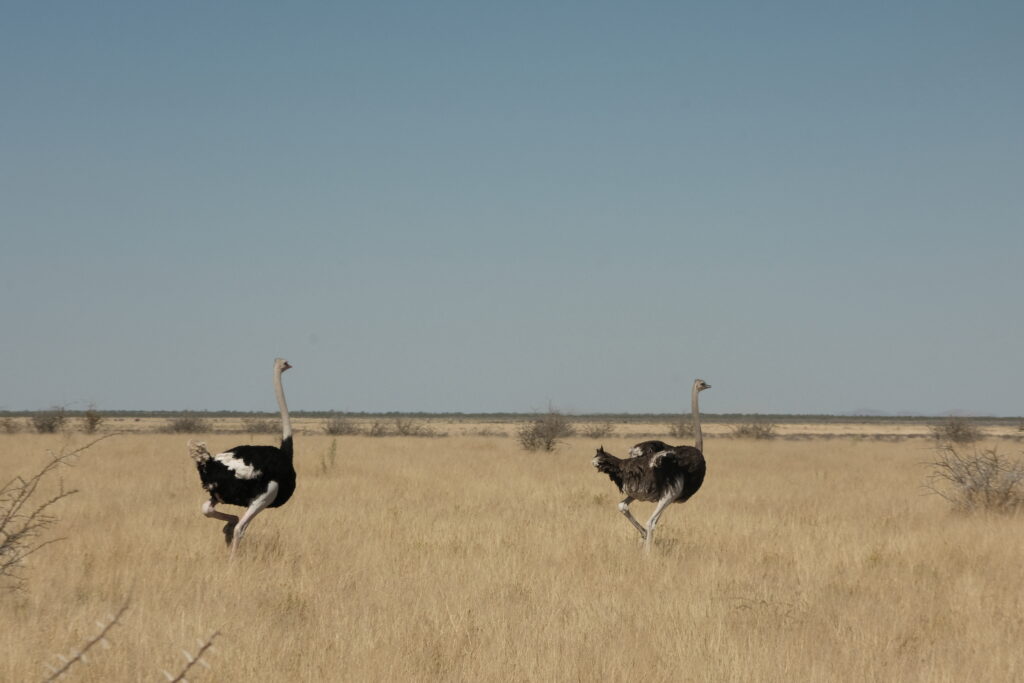
There was no shortage of zebras and giraffes, and even an ostrich had wandered in from the Kidepo River valley. We didn’t see any elephants this time, because the park is not fenced, so they tend to roam the endless savannas of Karamoja in search of food — much to the frustration of local farmers, whose crops they raid at night. We ourselves saw fresh elephant tracks outside the park. We also encountered the famous patas monkeys, the fastest monkeys in the world, capable of running on the ground at speeds of up to 55 km/h.
Kidepo Valley National Park is also special because around 300 rangers work here, mainly due to the threat of poachers from South Sudan. Twenty of them have also been trained as guides, and for USD 25 they can be hired for about three hours. They help with navigation, show you where it’s worth going — we wouldn’t have dared to leave the main tracks on our own — and they continuously share knowledge about the animals and how the park operates. Our guide was Jennifer, who had an incredible amount of knowledge, took us to beautiful places, and was, not least, an extremely kind and positive person.
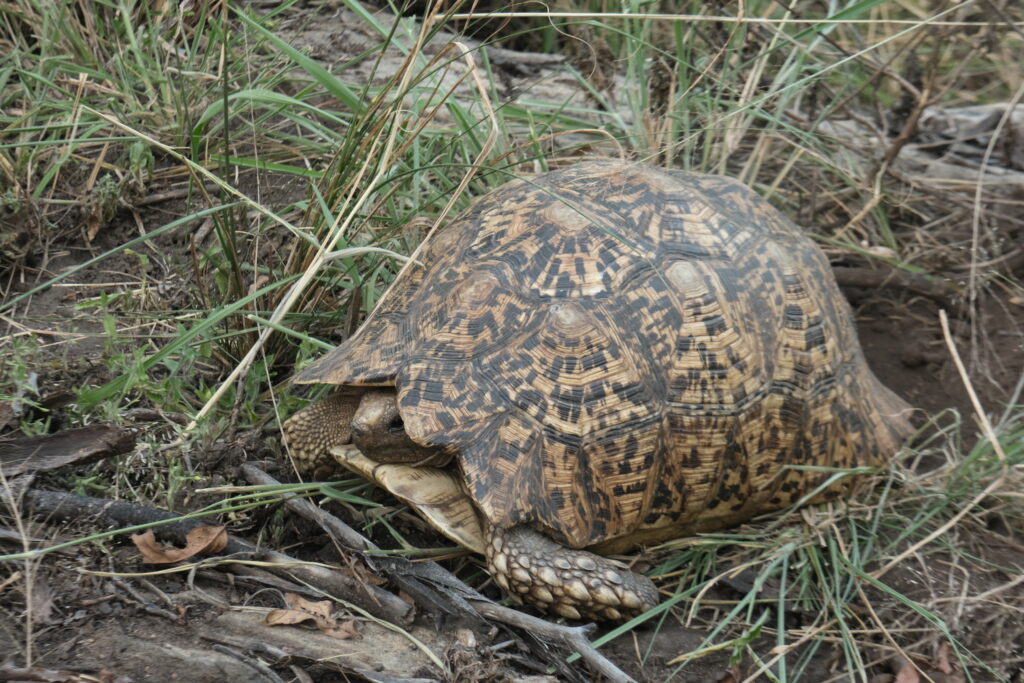
Another great innovation is the system of designated wilderness campsites. Camping is possible in the company of rangers for USD 10 per person. There are two such sites: we visited one purely for the view, where we met Daniell and together discovered a leopard tortoise. We spent the night at the other campsite, located on a hilltop with stunning views, where Richard sat with us by the campfire at night and told us about his life and what he had learned about animals during his 25-year career.
Everyone, without exception, was kind and incredibly knowledgeable. The nearly three days we spent in Kidepo were not only special from a professional and natural-history perspective, but also deeply meaningful on a human level. It may well have been our last African national park on this journey — and quite possibly one of the most beautiful and memorable of them all.
Price (2025 November):
This was our most expensive national park: in total, we paid 91,038 HUF for two people for two nights, including a ranger-escorted wilderness campsite and hiring a guide for three hours. Overall, our costs broke down as follows:
USD 40 / person / 24 hours entrance fee (we paid for two days)
USD 50 one-time vehicle entry fee (officially, in Ugandan parks this should be paid daily, but here it isn’t strictly enforced)
40,000 shillings (about 4,000 HUF) / person / night camping fee (this also applies to ranger-escorted wilderness camping; we paid for two nights)
USD 25 for a guide for three hours
Our full blog post about the Kidepo experience can be found here: https://eandatravel.com/day-299-300-kidepo-valley-national-park-uganda/
Zinave National Park (Mozambique)
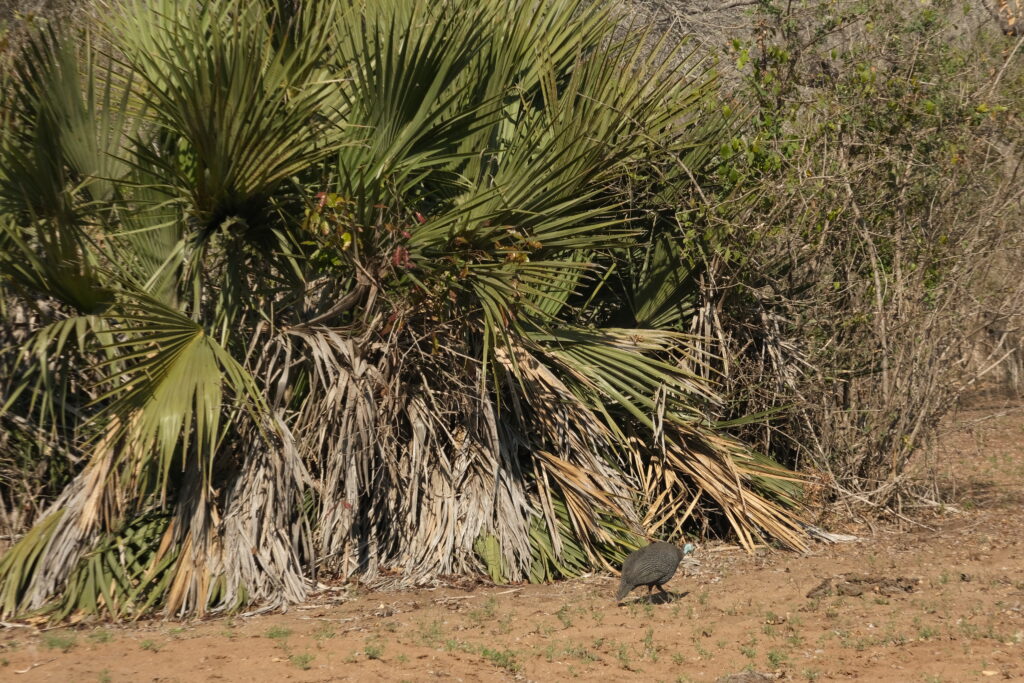
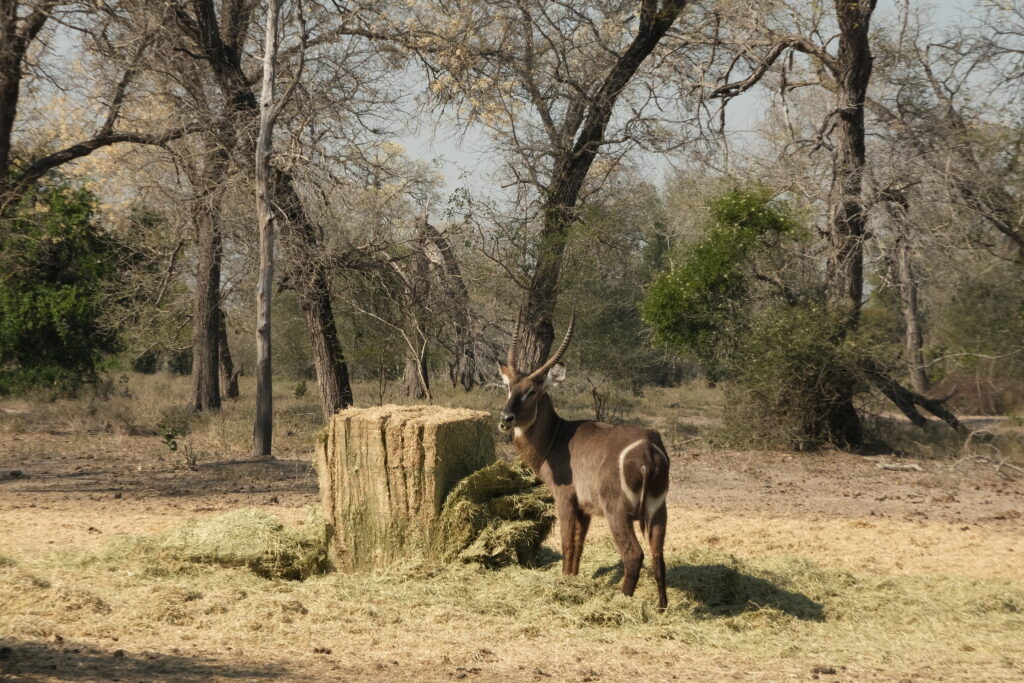
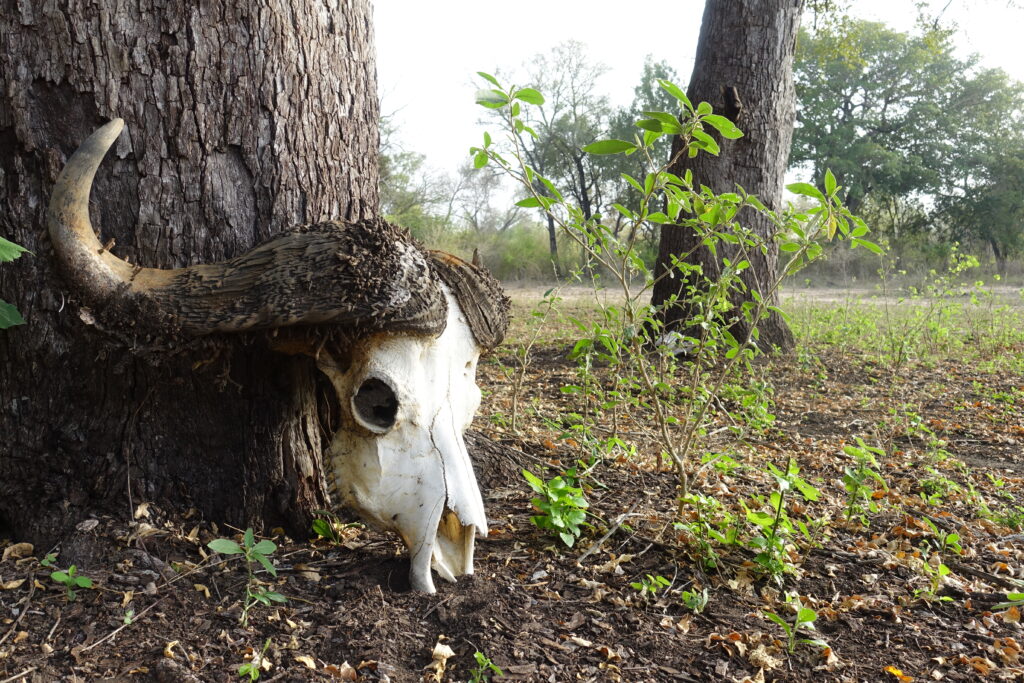
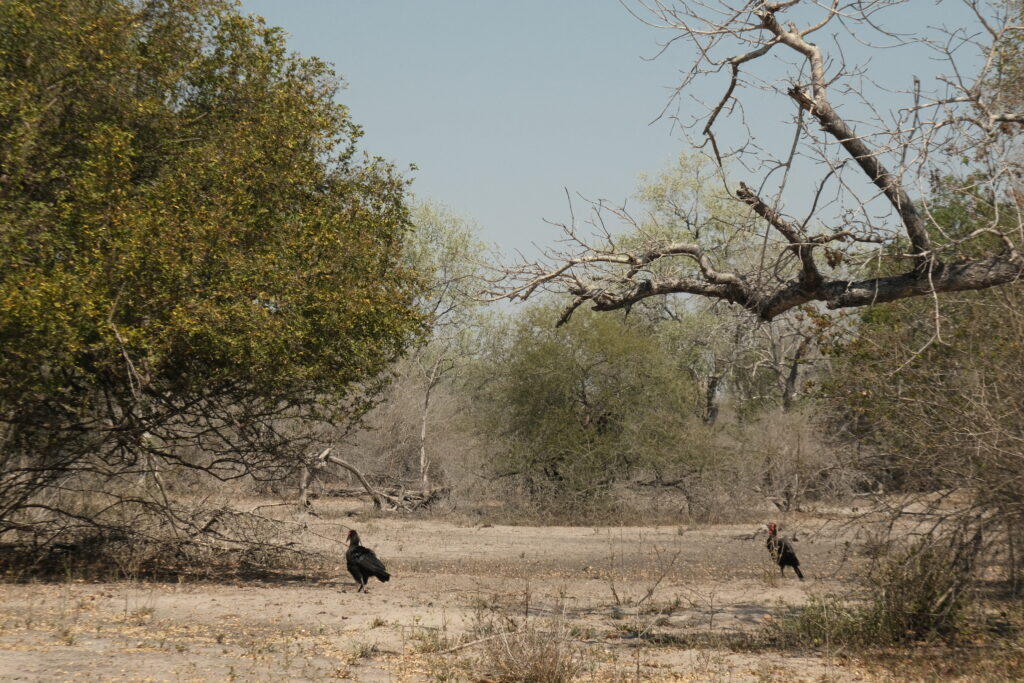
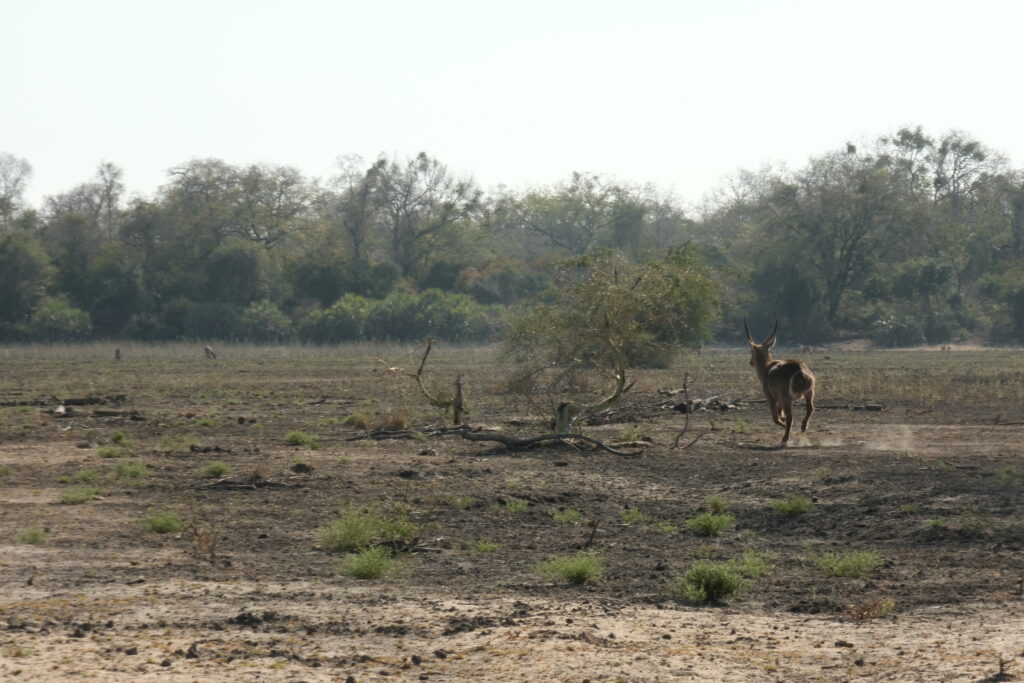
Zinave National Park is a truly special place in Mozambique, especially for those who love lush landscapes and wildlife. Leaving the N1 highway, we approached the park on a dirt road, which was a relief from the pothole-ridden main road from the very first moment. At first the park felt calm, but the scenery quickly became impressive: elephants, Cape buffalo, and numerous antelope appeared within minutes of entering.
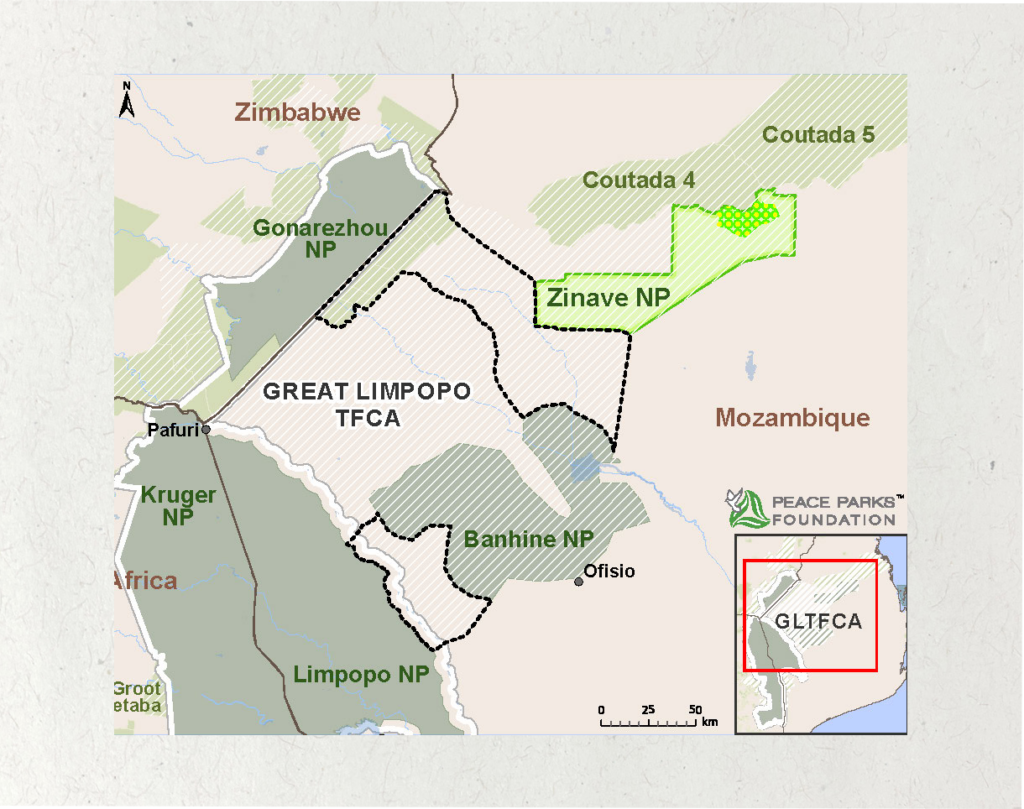
Zinave is an integral part of the Great Limpopo Transfrontier Conservation Area, which also includes Kruger National Park in South Africa and Gonarezhou National Park in Zimbabwe. What makes Zinave special is that, unlike Gorongosa (Mozambique’s other famous park), self-drive is allowed here, meaning you can explore the area with your own vehicle. The printed map was easy to understand, but a newly built access road was missing from our digital maps, so on the way out we got lost and ended up driving around for three hours. The park entrance fee is very affordable, and the camping infrastructure is well developed, with showers, maps, and fire pits. Although at first we were told the park was closed due to renovations, it turned out that it was open to self-sufficient visitors, so we quickly stocked up and set off to explore. On the first night we were taken to a nearby wilderness campsite, but for the second night we asked to stay at the official campsite instead (which, in theory, we weren’t supposed to be able to use because of the renovations).
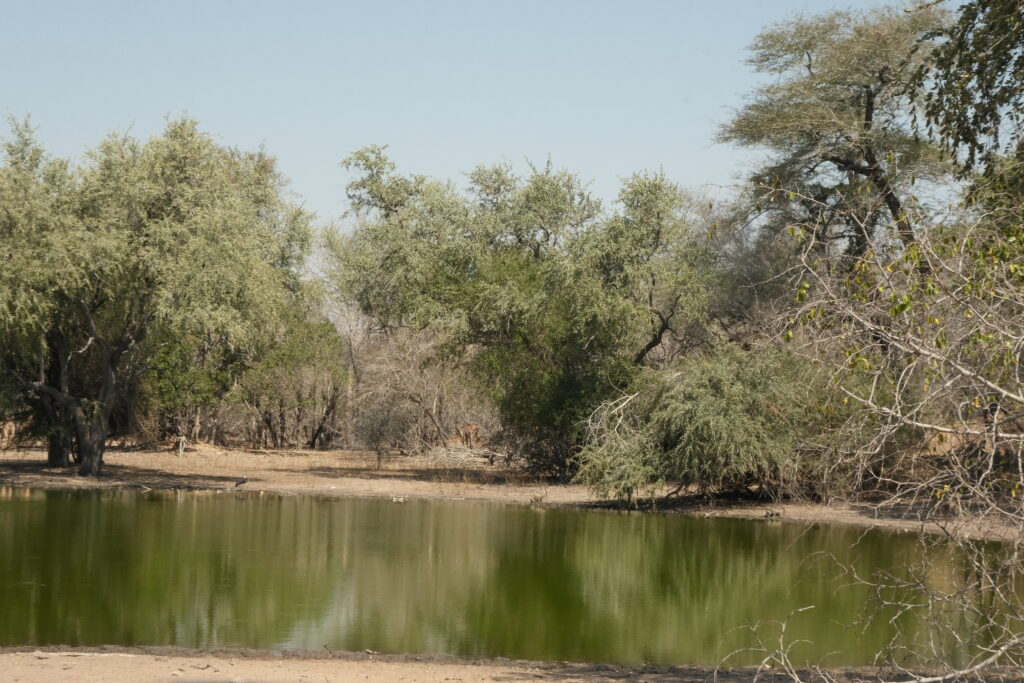
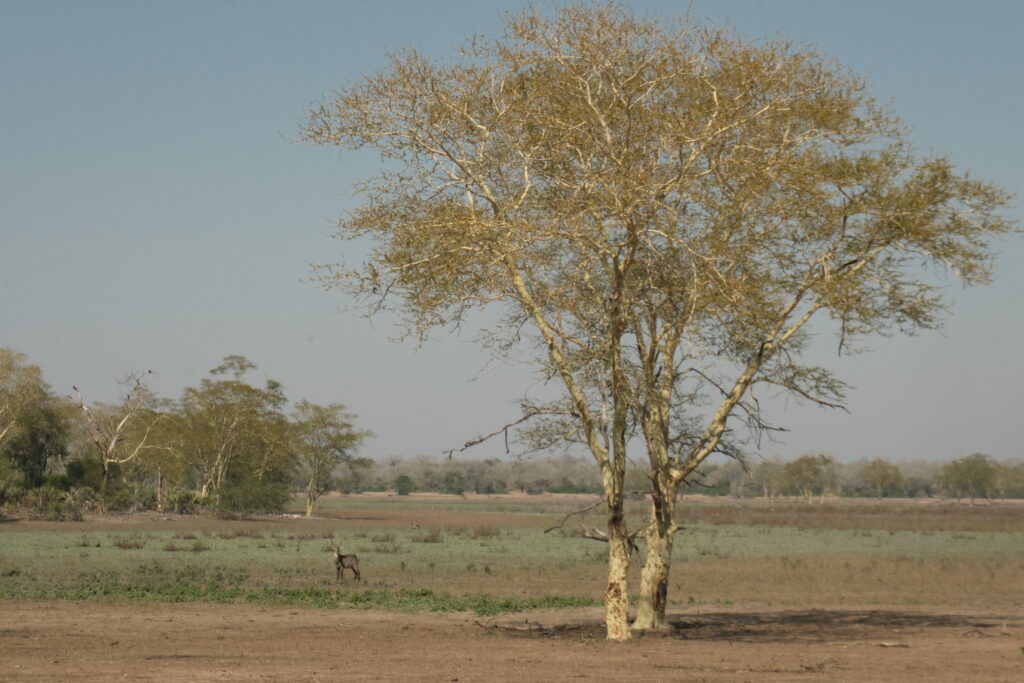
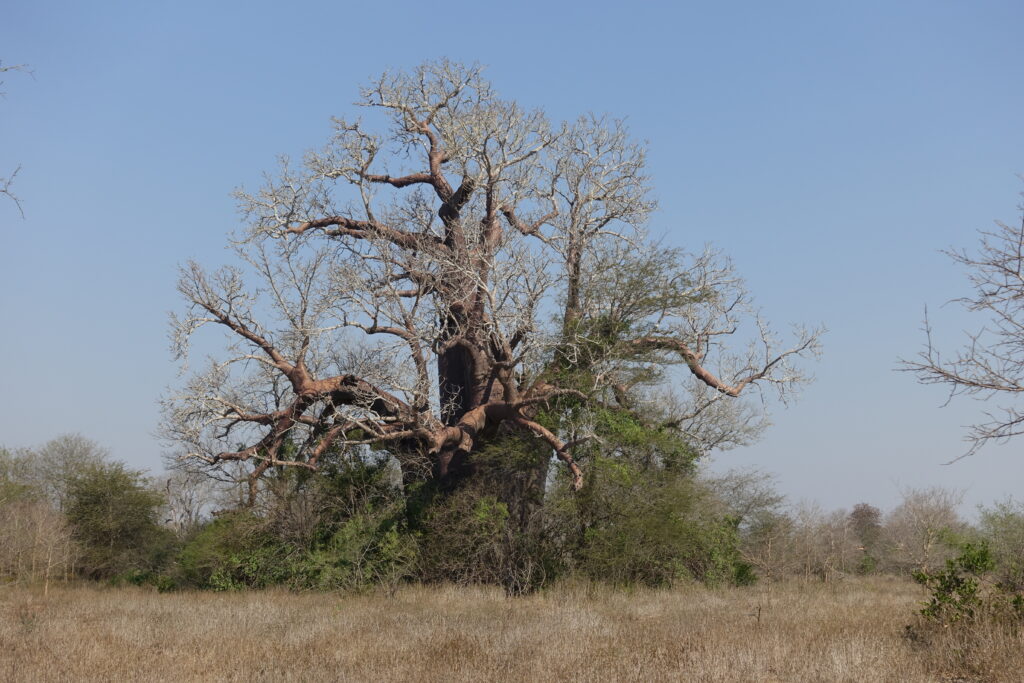
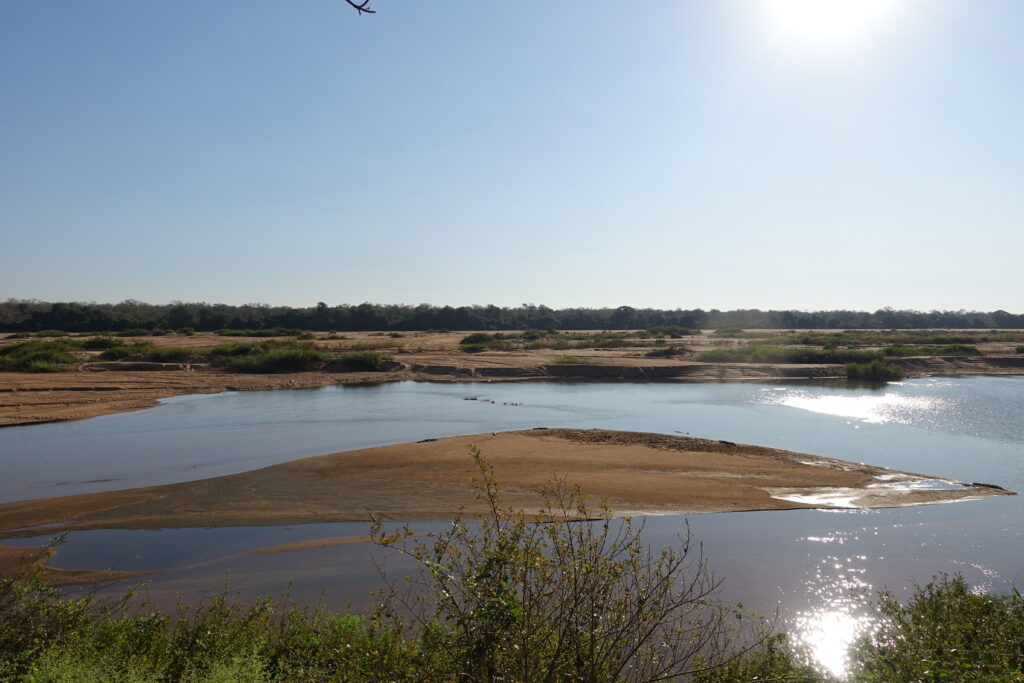
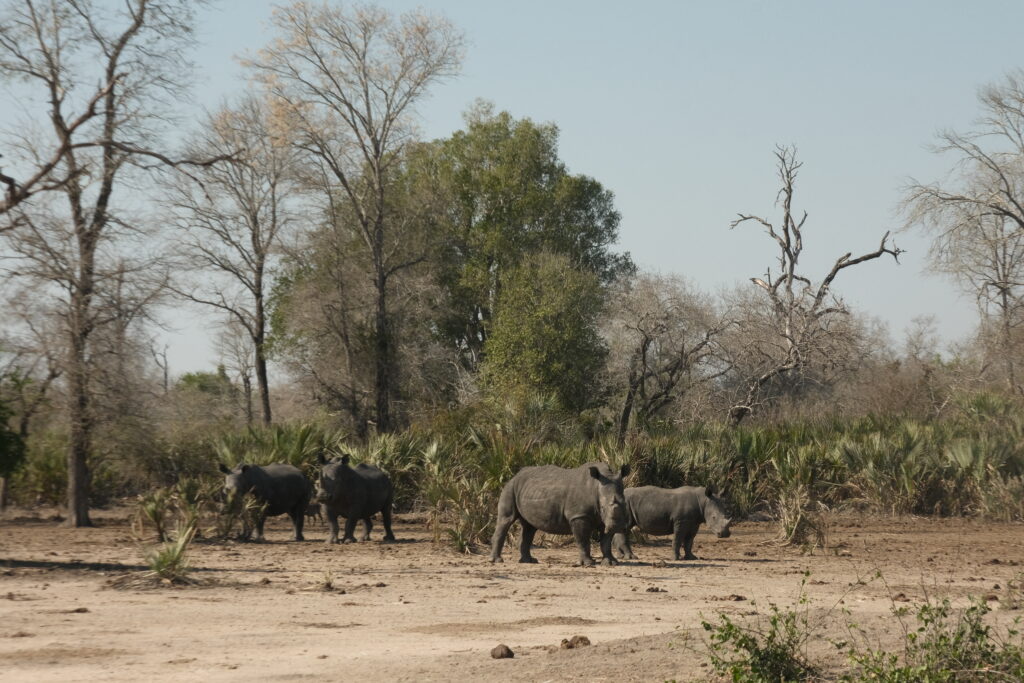
In addition to elephants and buffalo, we also saw rhinoceroses, and even a giant eland appeared in the distance. The forested, riverine environment, ancient giant baobab trees, and lush, water-filled pans make the park truly unique. Visitors can often spot crocodiles and hippos as well (the campsite itself overlooks a river). The park was established in 1973, and wildlife has been continuously reintroduced over the years, which has turned Zinave into Mozambique’s first Big Five park — home to all five iconic species: lion, leopard, Cape buffalo, elephant, and rhinoceros.
Tourism, however, has not really taken off yet, so only the more determined travelers make it here. But that is exactly where the magic lies: silence, green landscapes, abundant wildlife, and an authentic self-drive experience, far away from mass tourism.
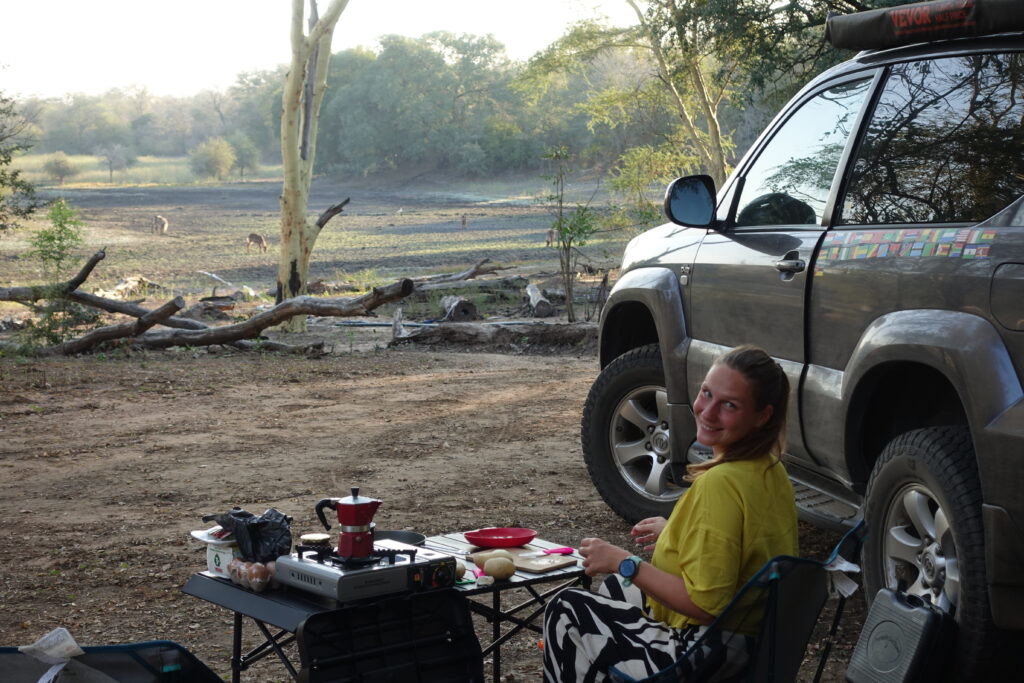
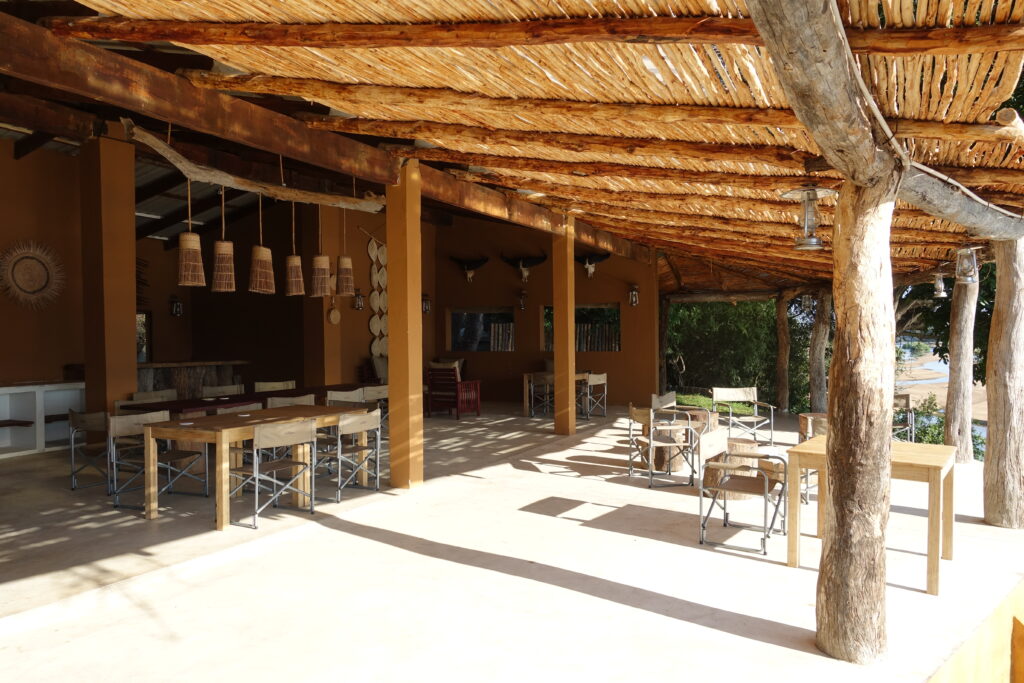
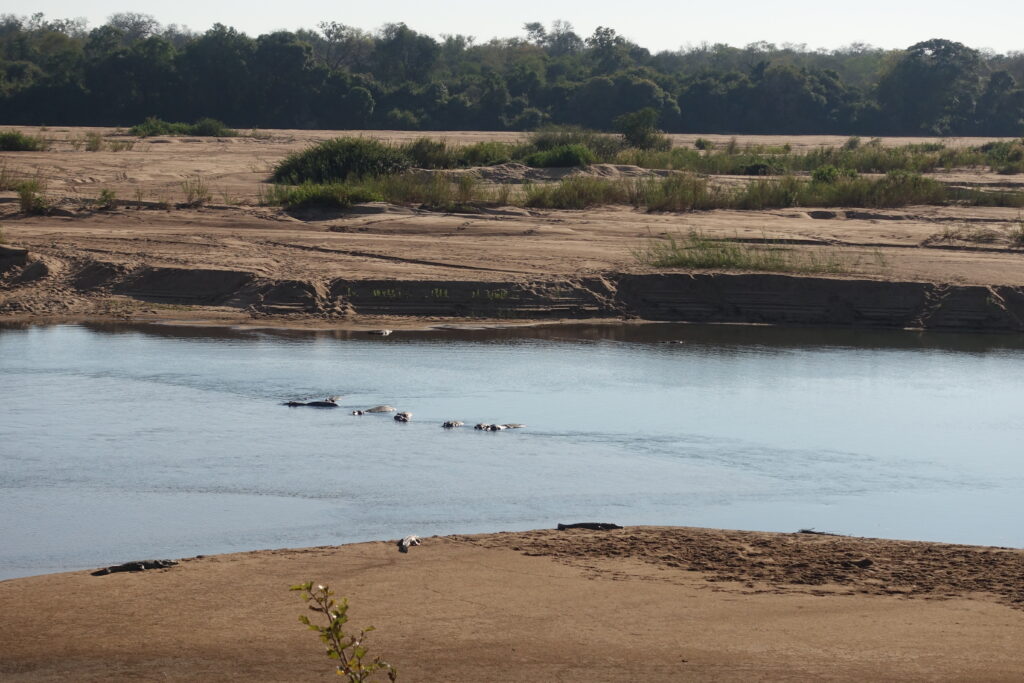
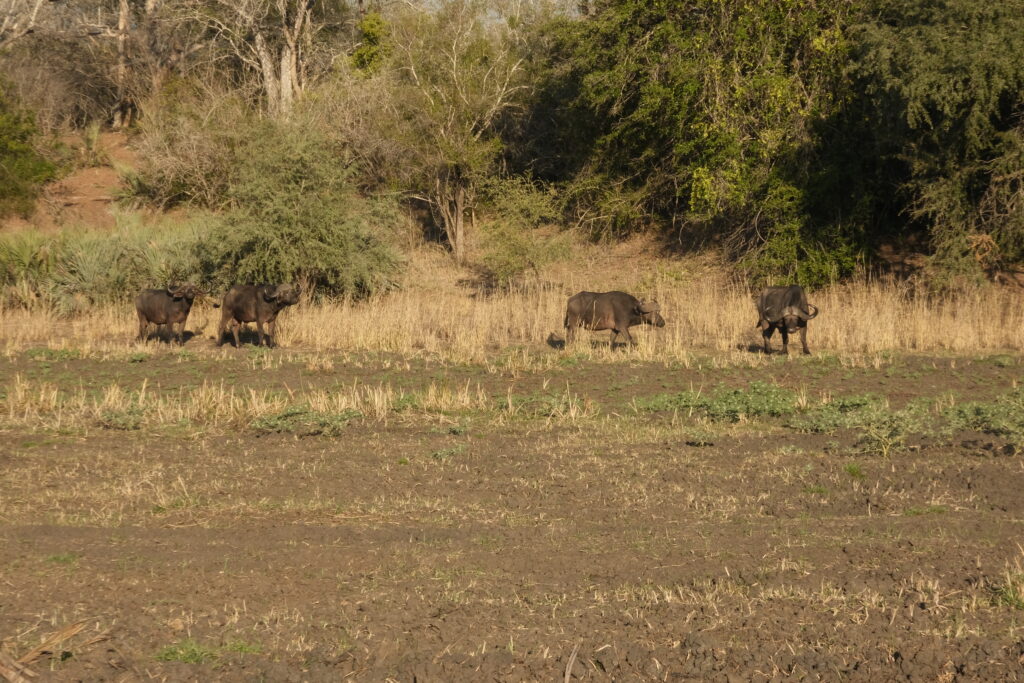
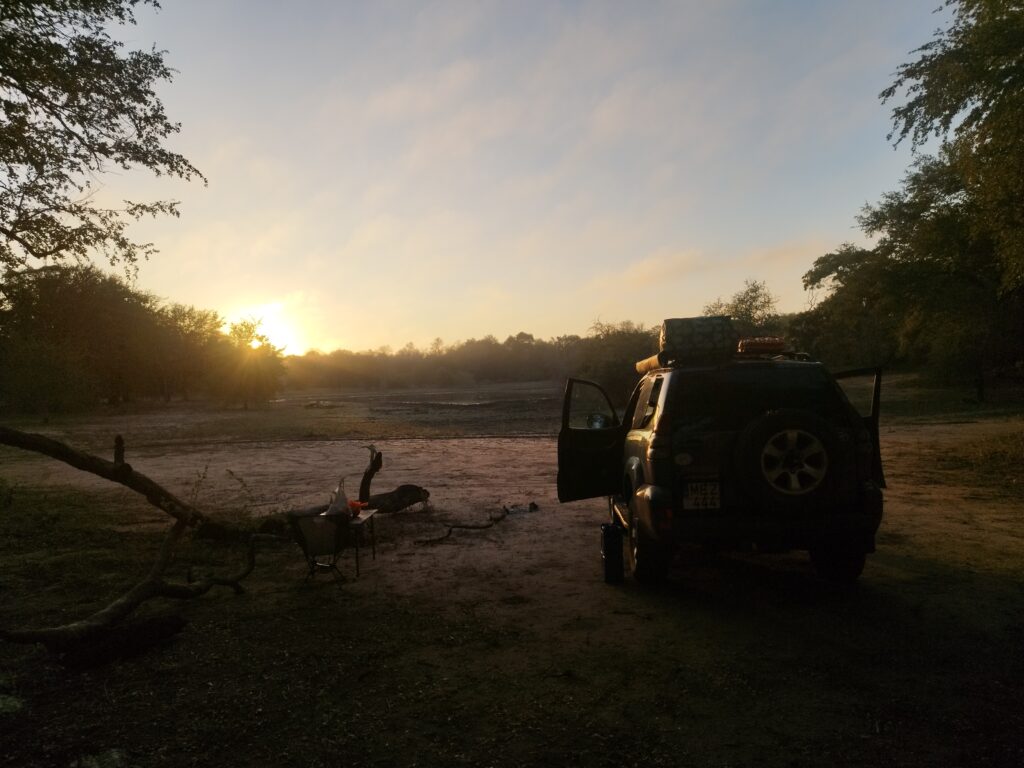
Price: we paid 16,860 HUF for 3 days / 2 nights / 2 people. The website hasn’t been working for a while, so we don’t remember exactly how the costs were broken down.
Our full blog post about the Zinave experience can be found here: https://eandatravel.com/day-215-216-zinave-national-park-mozambique/
Etosha National Park (Namibia)
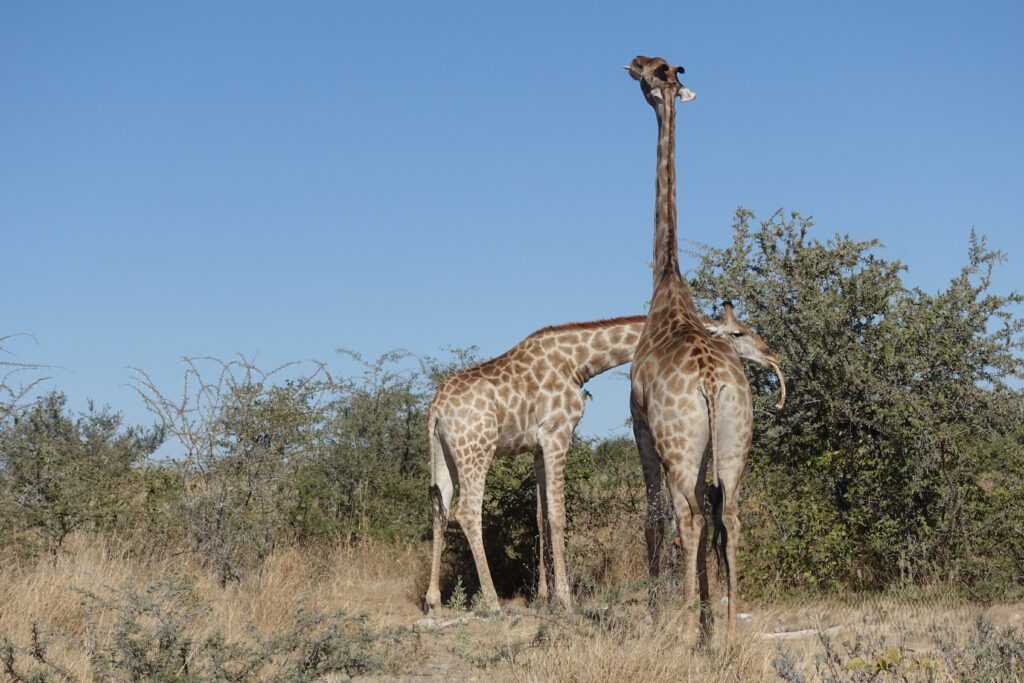
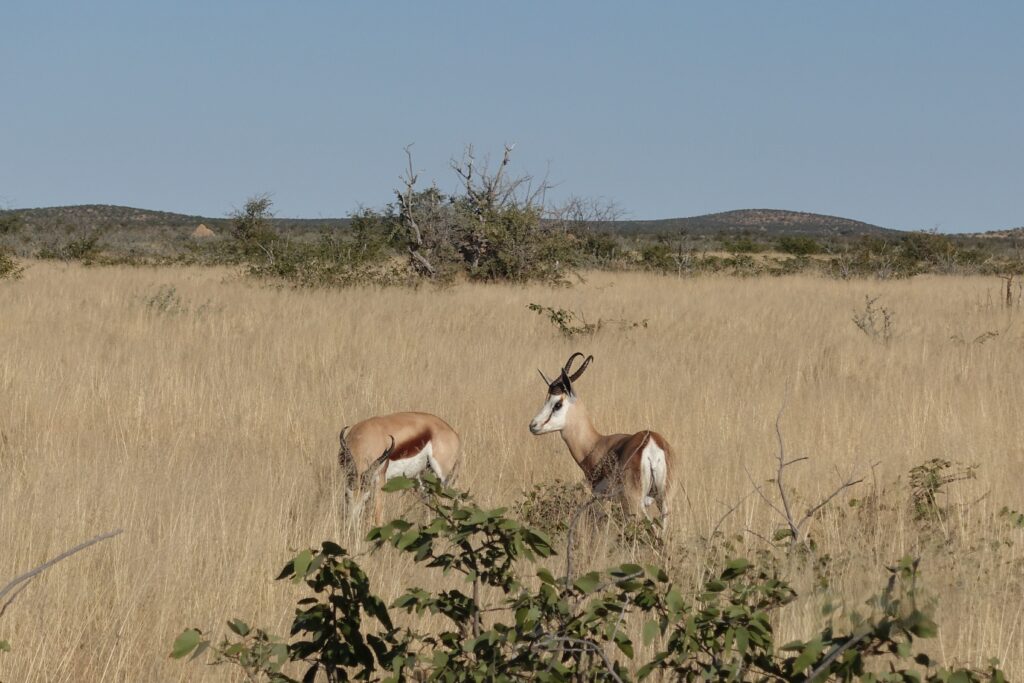
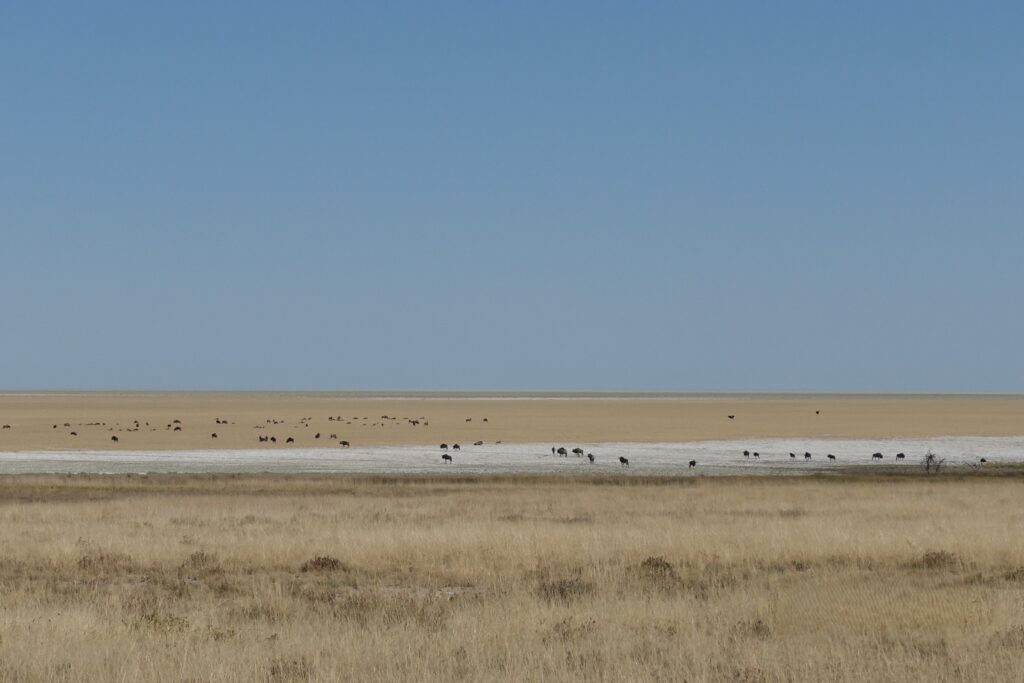
Etosha is one of Namibia’s — and indeed Africa’s — most famous and best-developed national parks. At its heart lies the vast, blindingly white Etosha salt pan, which gives the park a unique, almost Martian landscape. Around the pan stretch savannas, open grasslands, and numerous waterholes where wildlife is easy to observe. Apart from South Africa’s Kruger, this was our most successful safari experience in terms of sheer animal sightings.
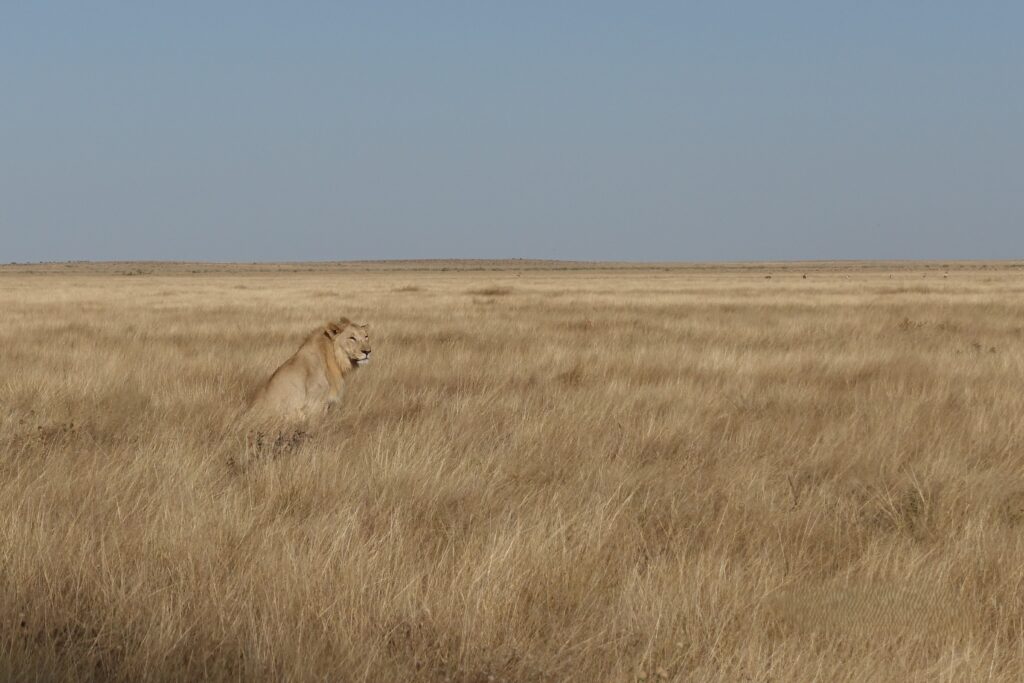
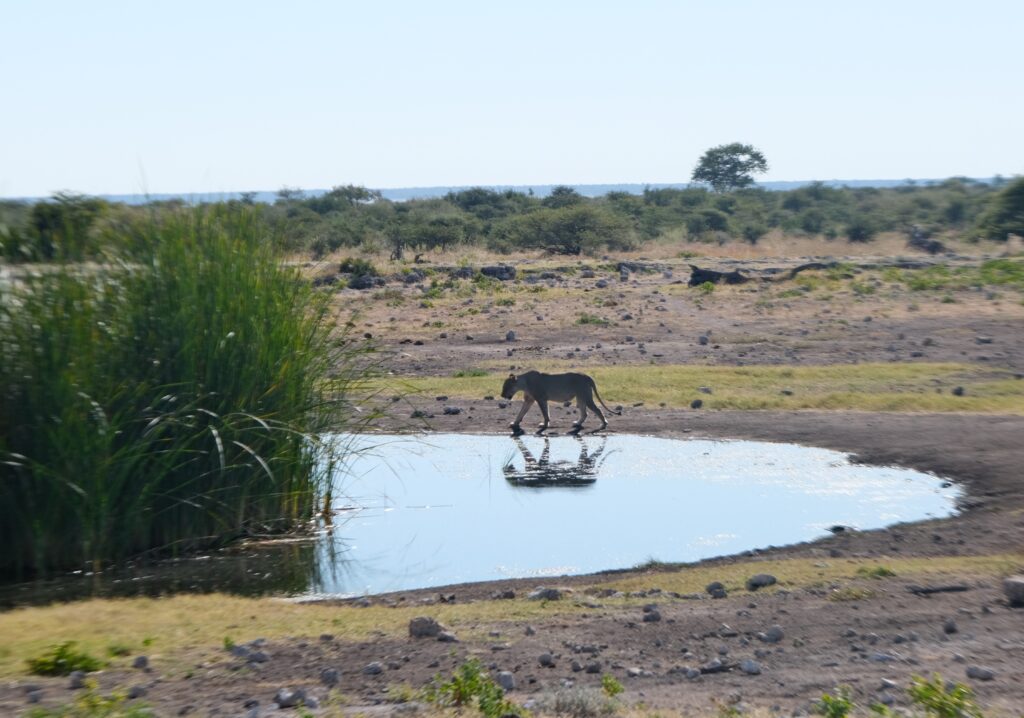
On the recommendation of others, we entered the park through Etosha’s western gate, the Galton Gate — a decision that turned out to be an excellent one. In the less-visited western section, we saw large numbers of animals at almost every waterhole. Already on the first day, herds of elephants, zebras, and giraffes appeared, and during a detour toward the Adamax Pan we encountered cheetahs, hunting lions, and massive zebra herds. The salt pan itself is breathtaking: its dazzling white, almost otherworldly surface gives the entire park a truly special atmosphere.
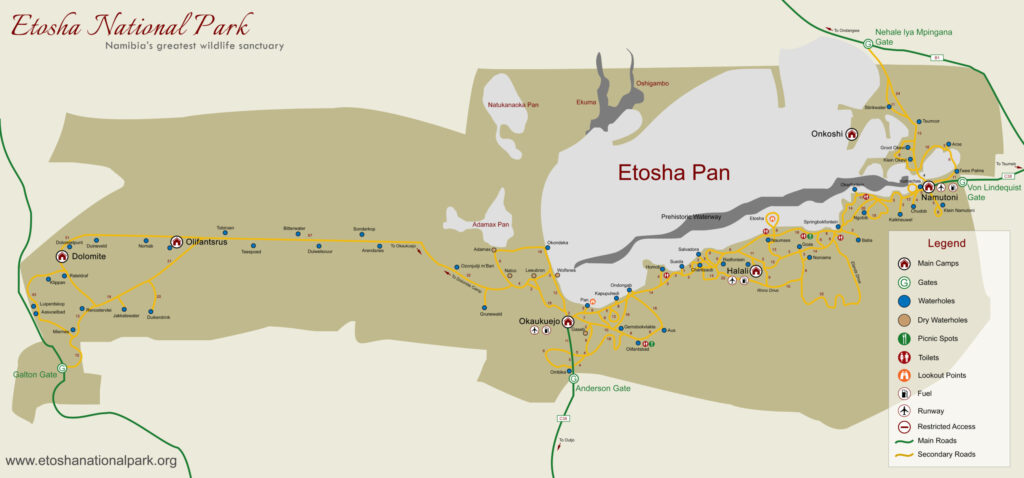
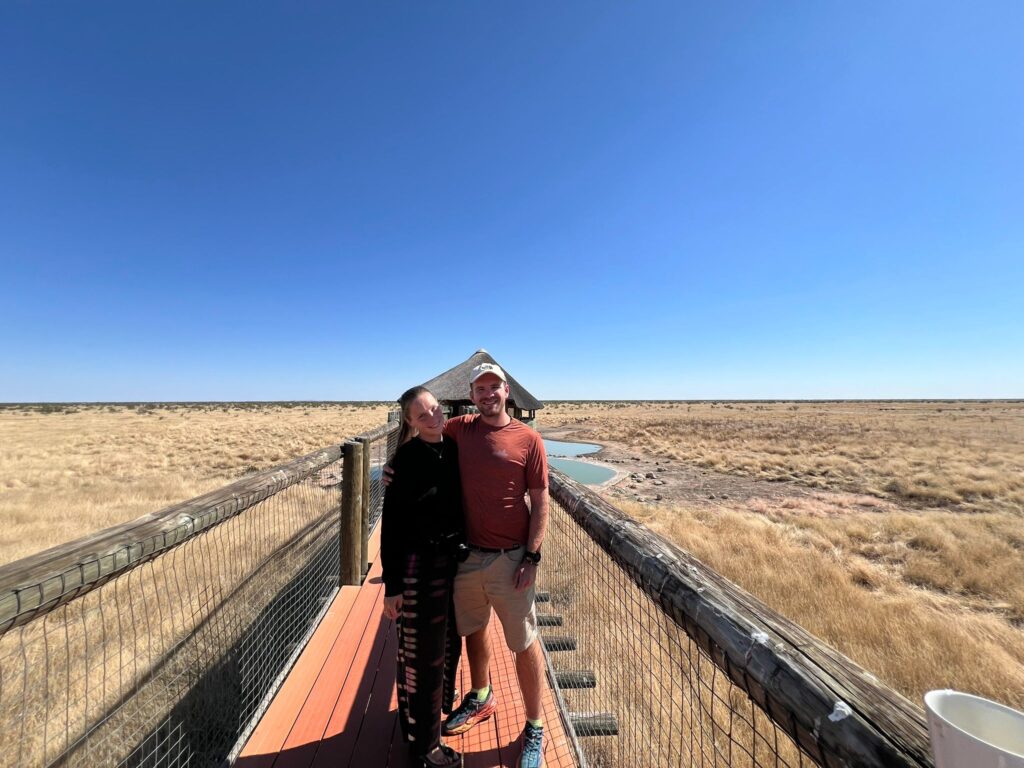
There are around five campsites in Etosha, and accommodation is available at roughly three of them as well. The campsites are more expensive than in many other African national parks, but overall they are still well worth it: the entrance fee is not particularly high, and it is valid for 26 hours, which gives plenty of flexibility for independent exploration. The campsites are usually very full and need to be booked in advance by email (and paid for ahead of time), mainly by Namibian and South African visitors. Evenings are defined by the atmosphere of braais (barbecues) happening everywhere.
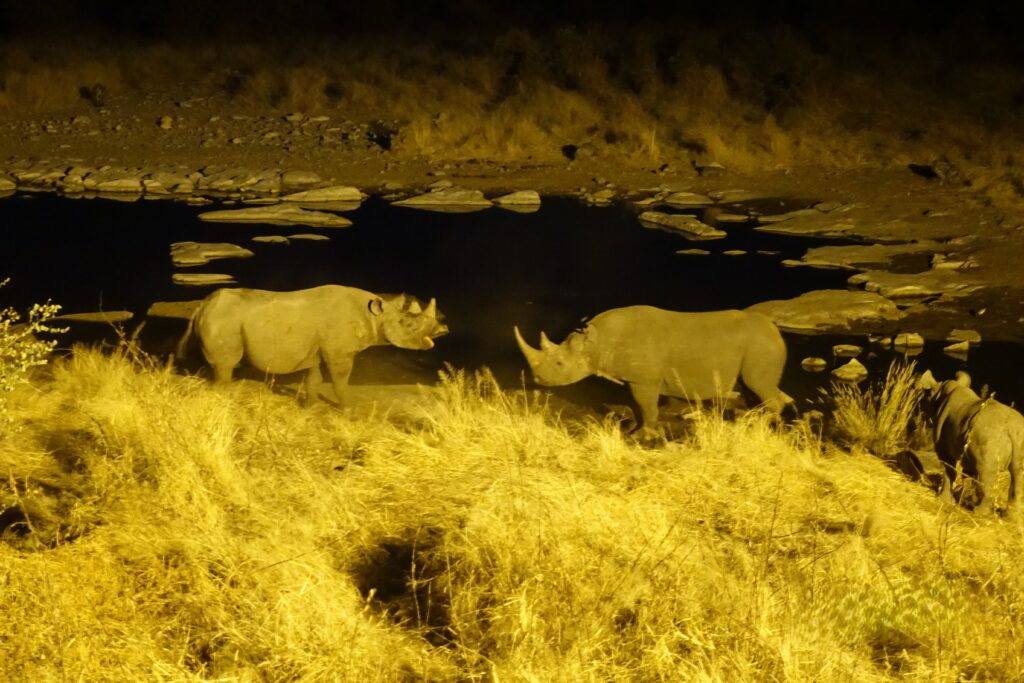
One of the highlights of the camping experience was the floodlit waterhole at night: on one evening, we watched nine rhinoceroses drinking at the same time (including calves), which was an absolutely exceptional experience — and all of it safely observed from within the campsite. On another occasion, a rhino was grazing right at the entrance of the campsite, causing a small traffic jam — not often can you blame such a delay on something like this.
Etosha is an excellent first safari experience: well-developed roads (though heavily corrugated), easy navigation, many waterholes, and frequent, varied wildlife sightings. What can sometimes be missing is the feeling of complete wilderness — at times it feels more like a huge, very well-organized natural “zoo” (even though it is enormous, covering more than 22,000 km²). Despite this, Etosha was the perfect introduction to the world of national parks for us, and it provided a great foundation for the wilder parks that followed.
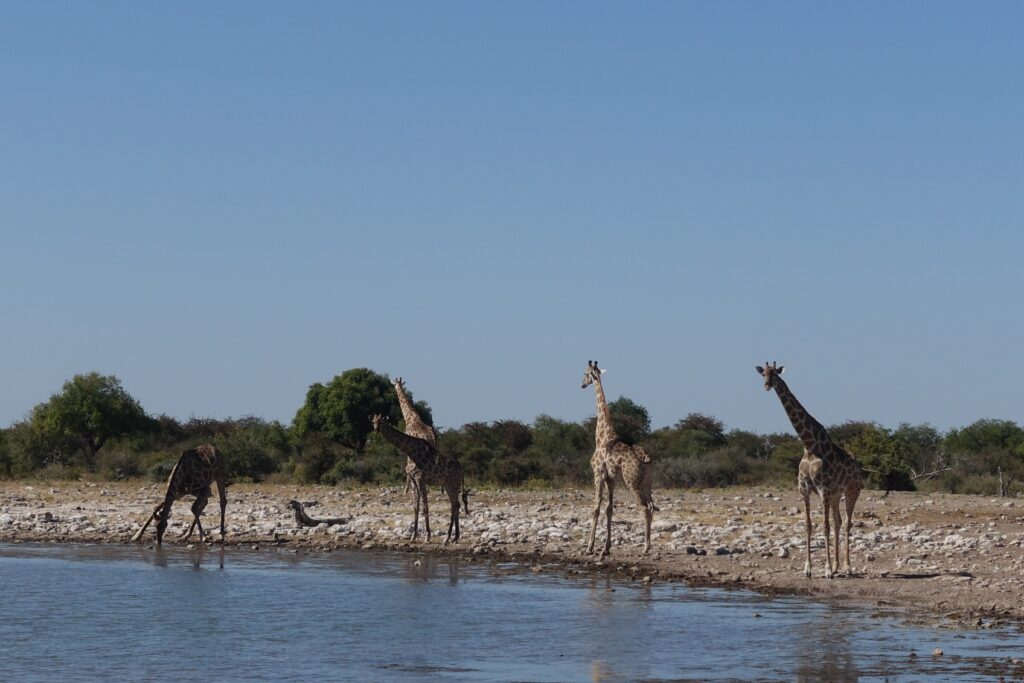
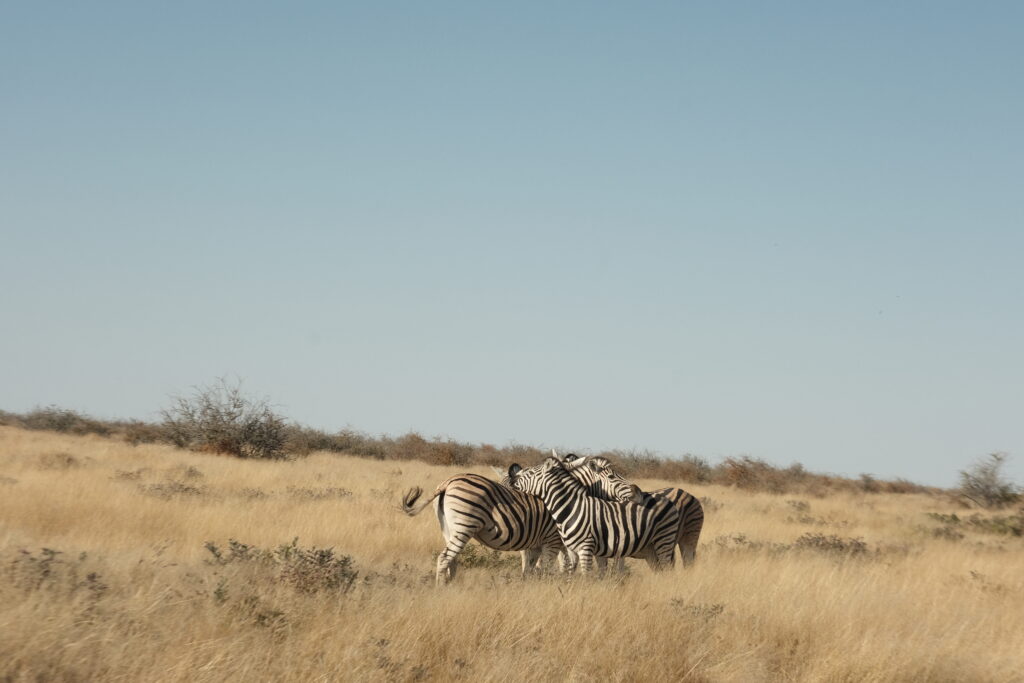
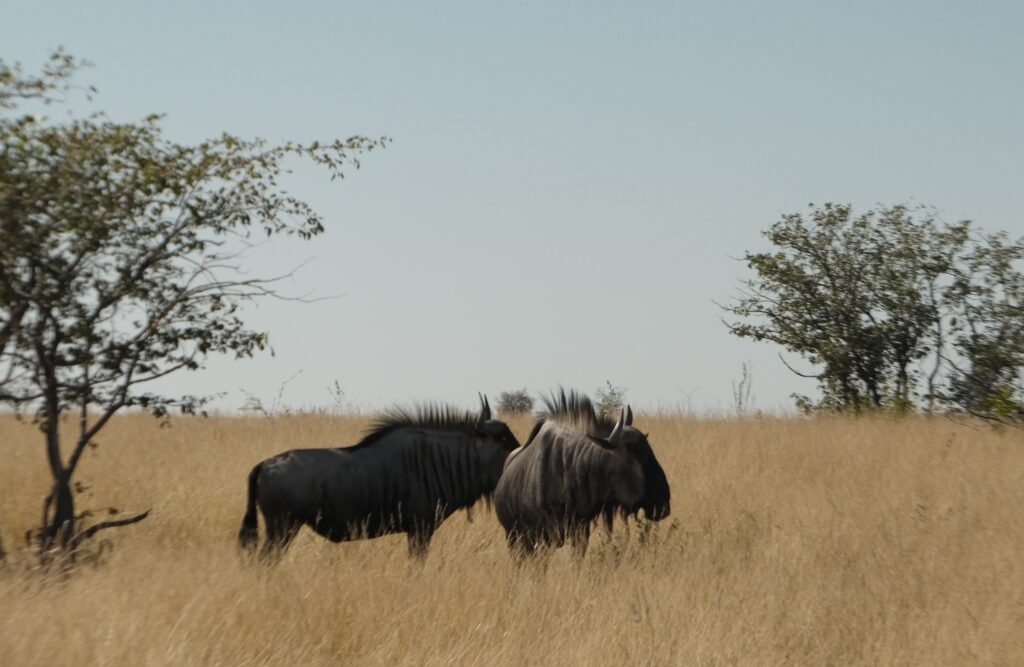
rice: we paid 49,380 HUF for 2 days / 2 nights for two people.
Entrance fee (valid for 24 + 2 grace hours): N$150 (2,920 HUF)
Vehicle entry (valid for 24 + 2 grace hours): N$50 (970 HUF)
Camping fee / night: N$460 (8,940 HUF)
Our full blog post about the Etosha experience can be found here: https://eandatravel.com/day-137-139-etosha-national-park-namibia/
Kruger National Park (South Africa)
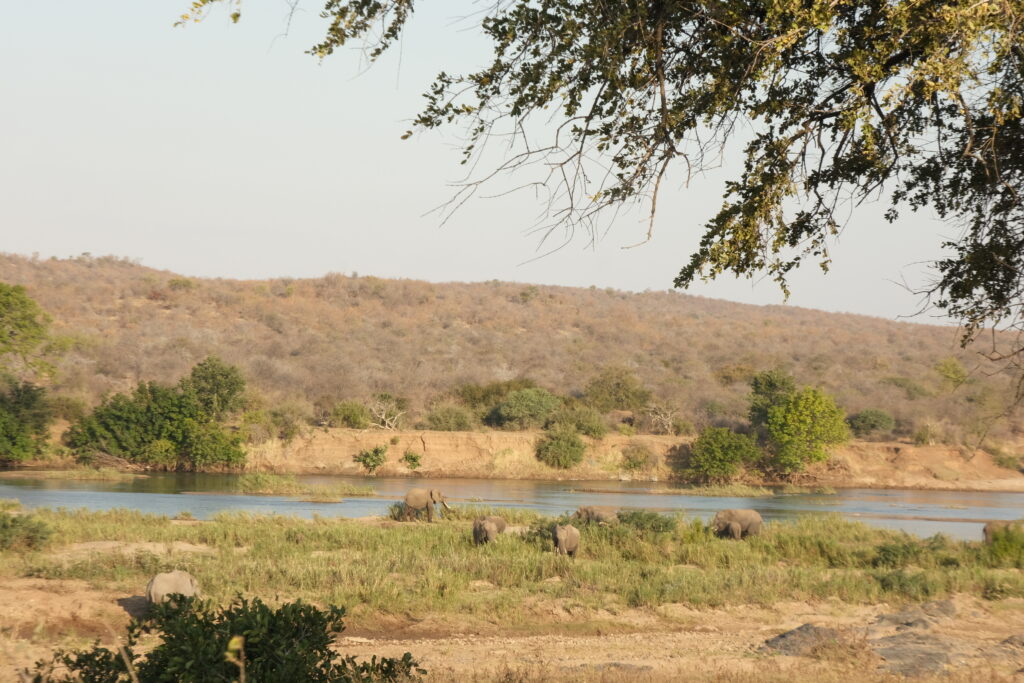
Kruger is a roughly 20,000-square-kilometer national park that attracts about two million visitors a year (around 80% of them South African). Entrance costs about 25 euros per day, but if you stay overnight inside the park, you only have to pay for one day. For 200 euros, you can buy an annual Wild Card, which allows unlimited access to all national parks in South Africa and Eswatini. Inside the park there are supermarkets, restaurants, a doctor (even a dentist), fuel stations, and the main roads are paved. You could genuinely stay in the park for a year without needing to leave for anything. We met several people who had spent a very long time inside — for example, a Spanish couple told us they hadn’t left the park for 30 days.
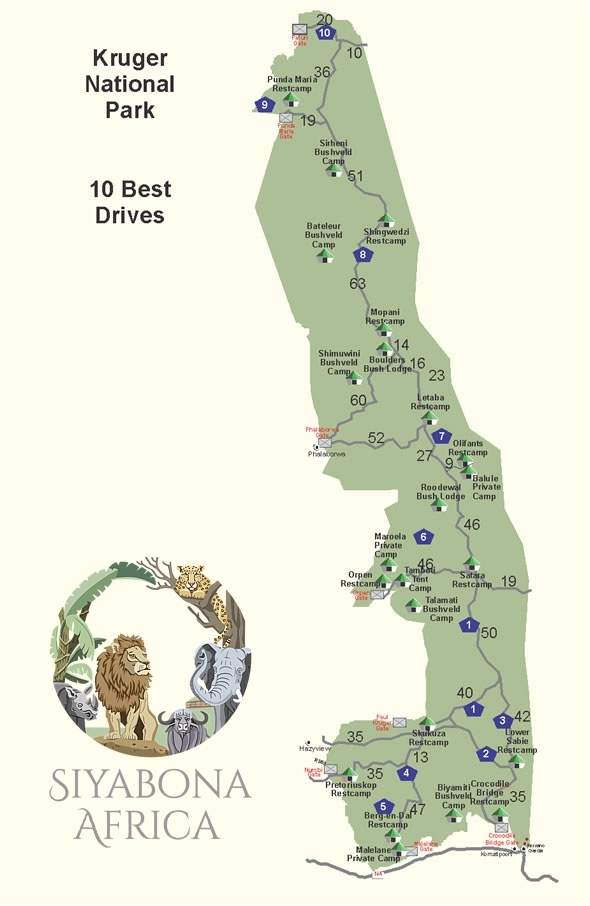
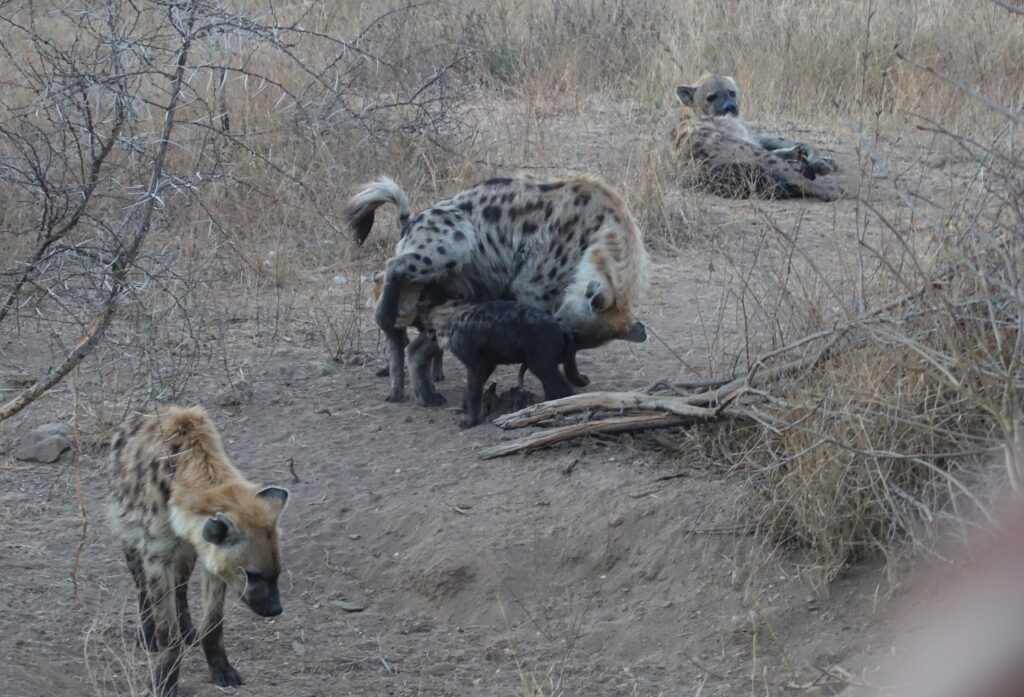
There is a strict 40 km/h speed limit throughout the park, and just a few kilometers after entering we even encountered a police officer checking speeds — a surreal experience, especially considering that just a few weeks earlier we had been roaming the Central Kalahari Game Reserve, completely alone, wild camping. First, we drove to a small picnic site where, next to us, a couple arrived in a regular car and sat down for brunch. They had rented a gas stove from the rangers and were frying bacon, sausages, and eggs, sipping mimosas alongside. Meanwhile, we threw together a quick pasta. It was strange to see how unafraid people were at the picnic sites: in one place, for example, a hyena was casually wandering around (although a few weeks after our visit, a leopard killed a person there).
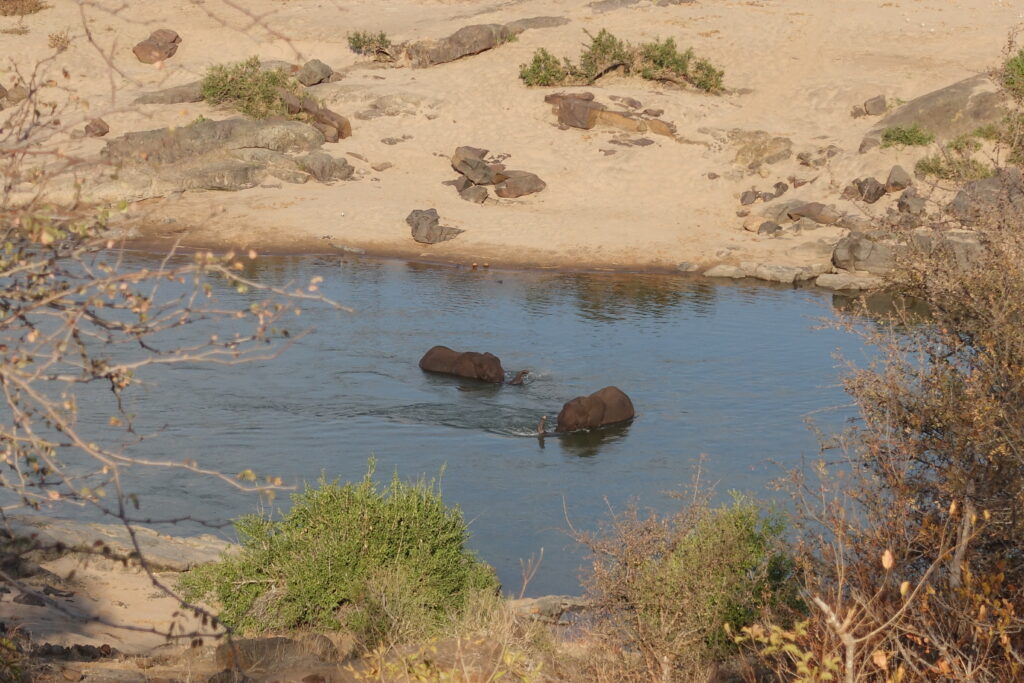
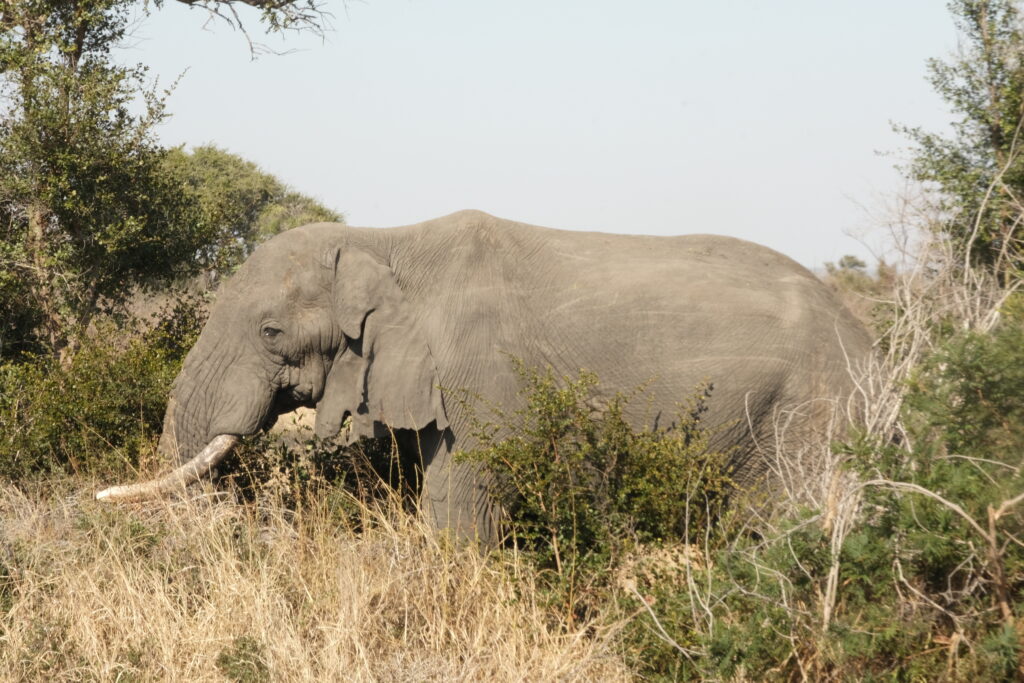
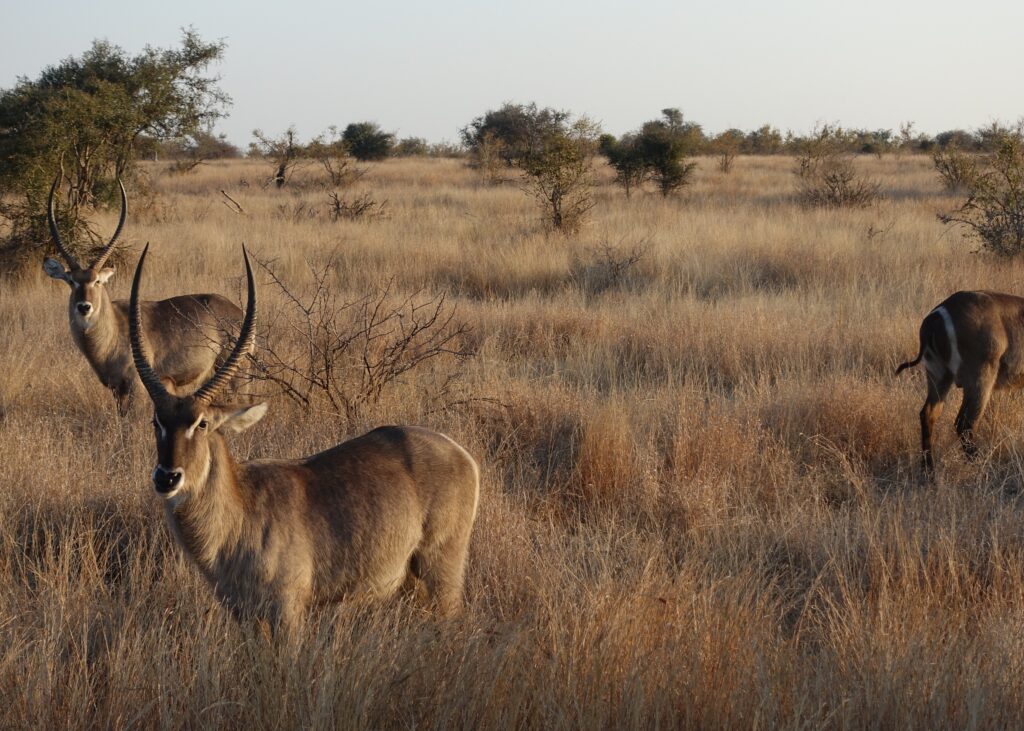
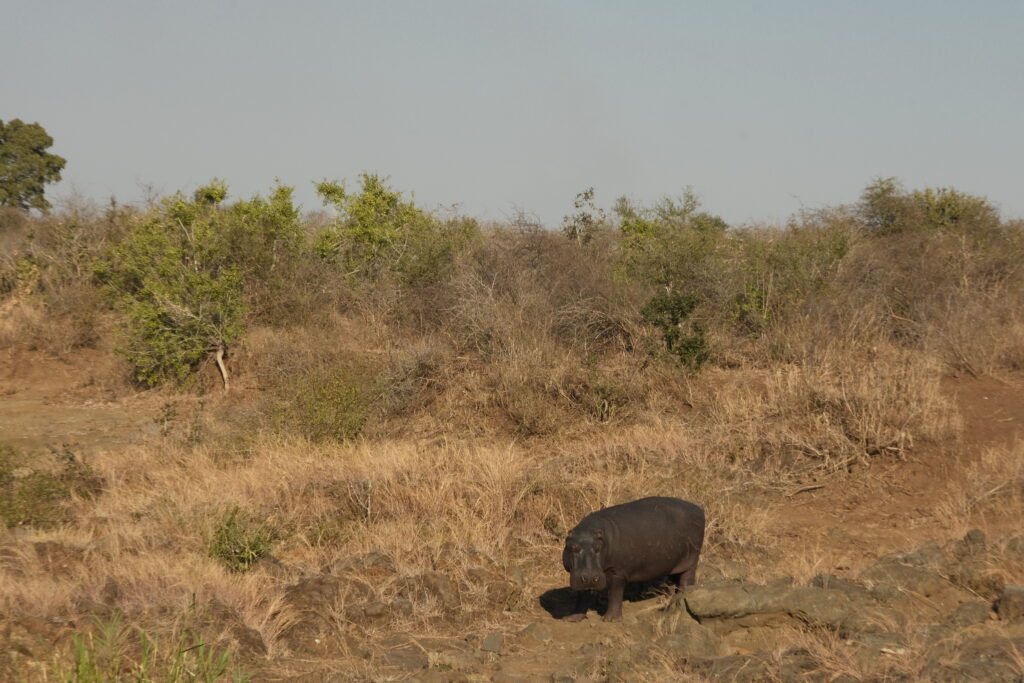
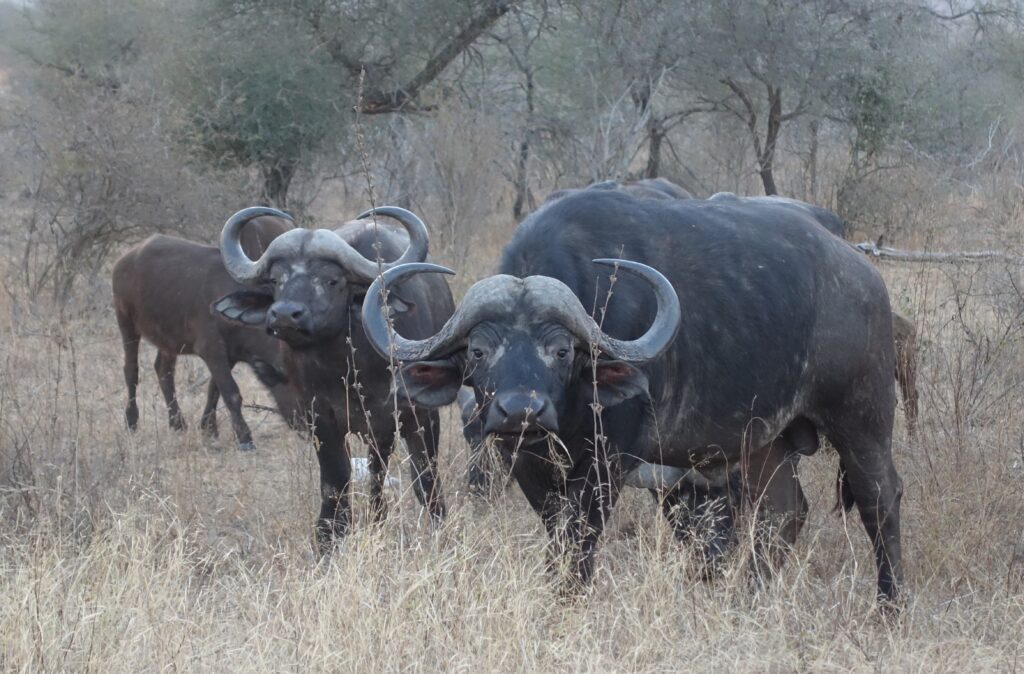
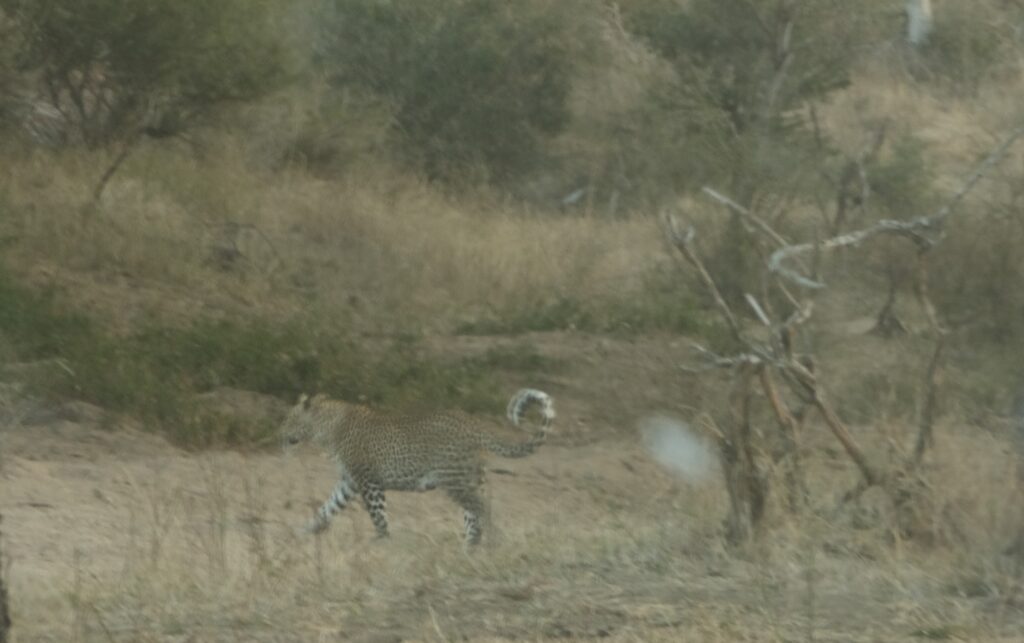
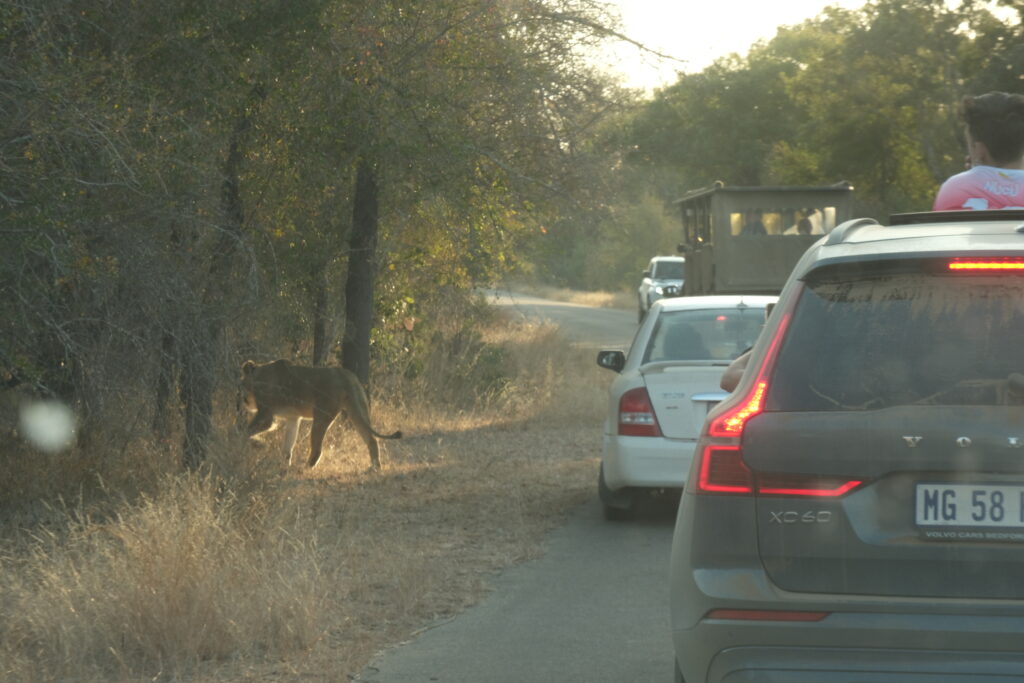
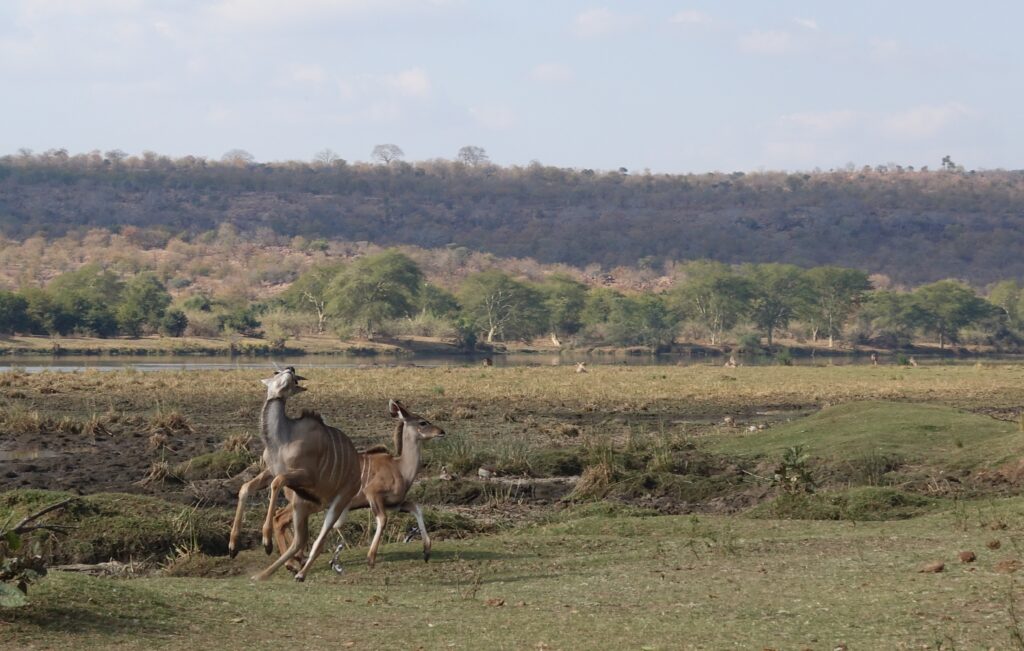
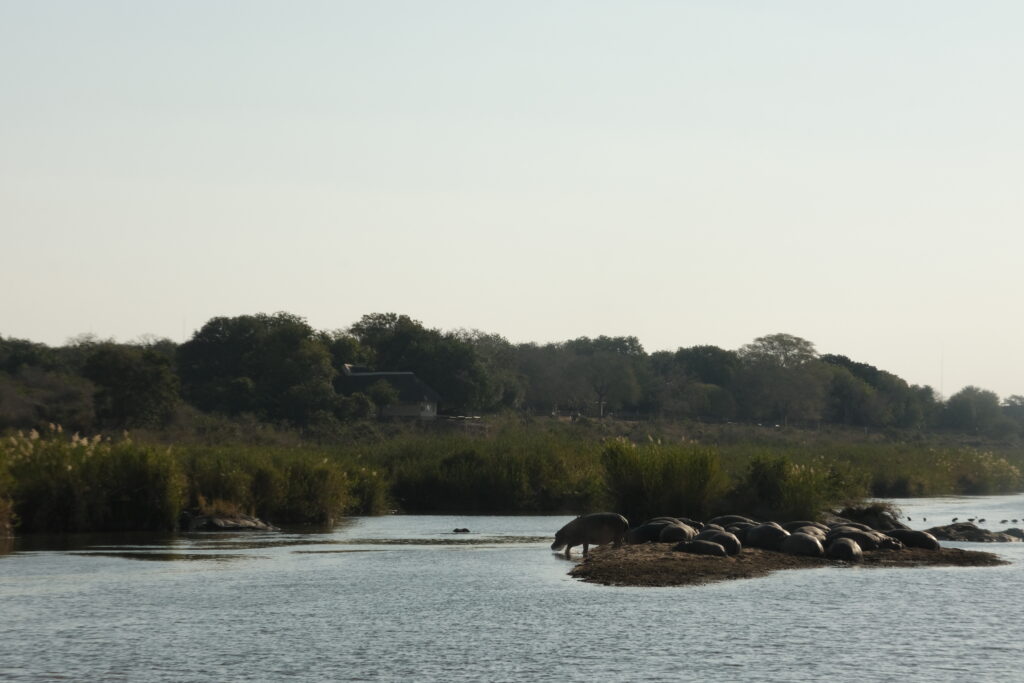
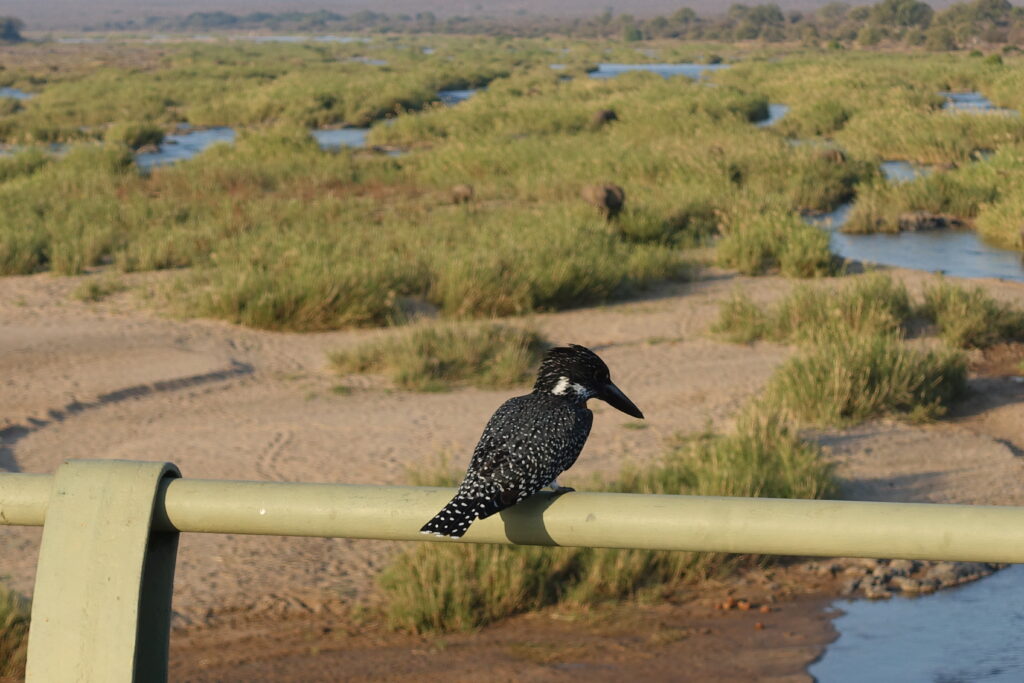
After the initial shock, we started looking for side roads that didn’t just lead to roadside waterholes but allowed us to venture deeper into the park. We found beautiful rivers and saw an incredible number of elephants, hippos, swamp antelopes, kudu, and many other animals — it really was stunning. When we returned to the paved roads, we encountered the crowds again: on both afternoons we saw leopards and lions. On the one hand, this was a great experience — we had been really hoping to see leopards — but on the other hand, it was somewhat disillusioning to wait in long lines of cars to see animals that were clearly not bothered by the attention at all. In the parks in Botswana, for example, we had to be careful around elephants because they were wary of engine noise, and we often drove past them very cautiously. Here, by contrast, you could simply stop a few meters away from an elephant and her calf to take photos.
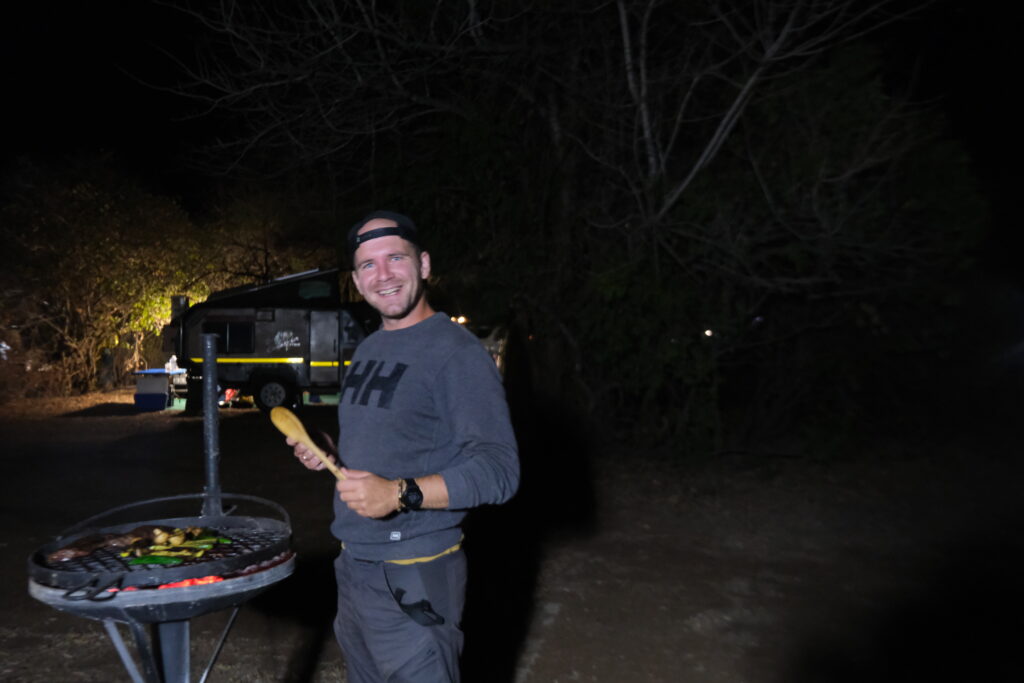
The campsites were also astonishing. Driving in the park was allowed until 5:30 p.m., and we always cut it close, arriving almost last — which meant we could barely find a spot, as others had already settled in early during the day to claim the best sites. The campsites felt like a fashion show for motorhomes and their awnings: many of them were bigger than our apartment back in Budapest, complete with kitchens, living rooms, dining areas, private braais, and endless strings of lights. A lot of people truly move into Kruger. We must have looked quite amusing, simply pulling up with our car — although fortunately there were a few other basic tent campers as well. Every campsite came with a braai (charcoal grill), so embracing South African customs, we went shopping too. One evening we bought rump steak, the next evening T-bone steak (about 1,000 HUF for two large pieces of meat), and grilled vegetables as a side (less typically South African, as braais tend to be very meat-focused), all accompanied by a bottle of South African red wine.
It was wonderful to see so many animals, and Kruger is indeed a very comfortable park — but Botswana’s closeness to nature resonated with us more. There, we didn’t feel like we were in a huge, well-developed zoo, but truly out in the wild.
Price: we paid a total of 58,000 HUF for 3 days / 2 nights for two people. The costs broke down as follows:
- ZAR 535 (about 10,000 HUF) per person for 1 night (which covers 2 full days) for the entrance fee
- One campsite cost ZAR 403 (about 7,900 HUF) for 1 vehicle + 2 people
- The other campsite cost ZAR 456 (about 8,950 HUF) for 1 vehicle + 2 people
We booked very last minute, so only the two largest campsites still had availability (Satara and Skukuza). If you plan ahead, accommodation can be booked in advance on the national park’s official website:
https://www.sanparks.org/parks/kruger/accommodation
Our full blog post about the Kruger experience can be found here: https://eandatravel.com/1705-2/
Akagera National Park (Rwanda)
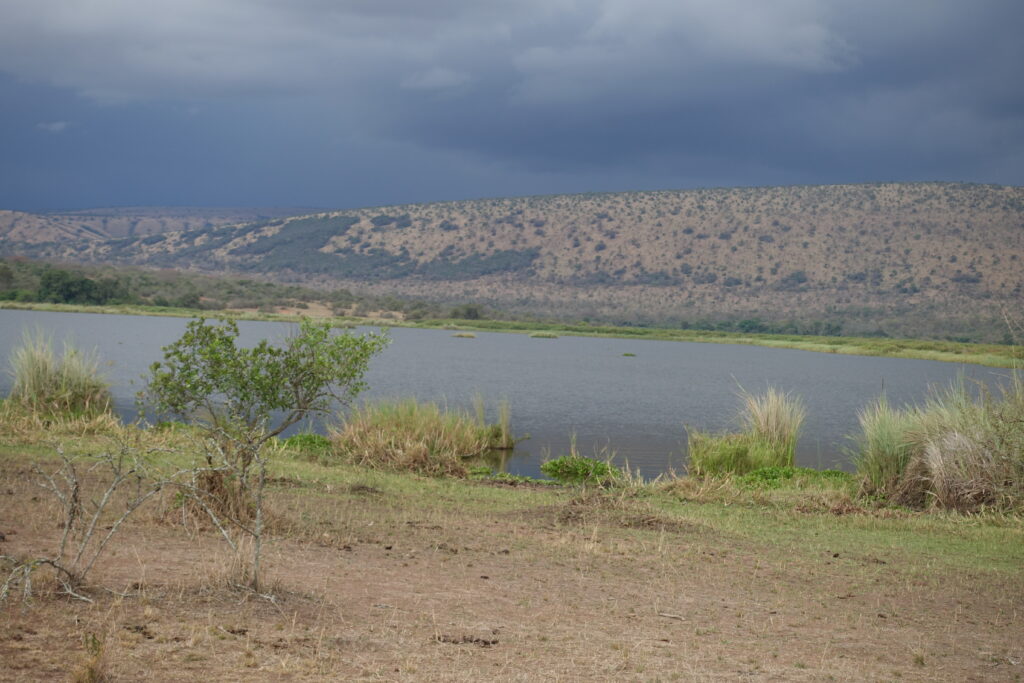
Akagera National Park was established in 1934. It is also a Big Five park and is home to many other animals, including around 500 bird species. Rwanda generally has a forested, hilly landscape, but this area is a wetland, with marshy habitats. In the northern part of the park there is also a small savanna, making this the only place in the country where savanna animals live—many of which had once gone extinct here, but great efforts have been made to reintroduce them (for example, rhinoceroses are continuously being brought in).
Akagera is more expensive than the parks we had visited previously; however, the one-day entrance fee is also valid for two full days if you camp inside the park (and even so, it is still a fraction of the prices in Tanzanian or Kenyan parks).
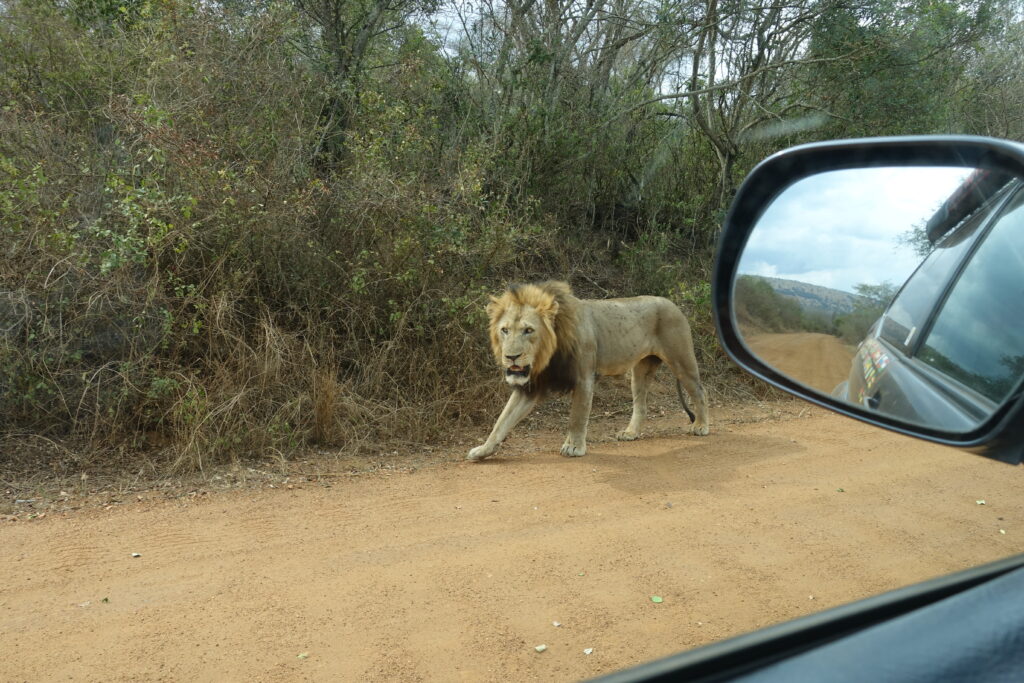
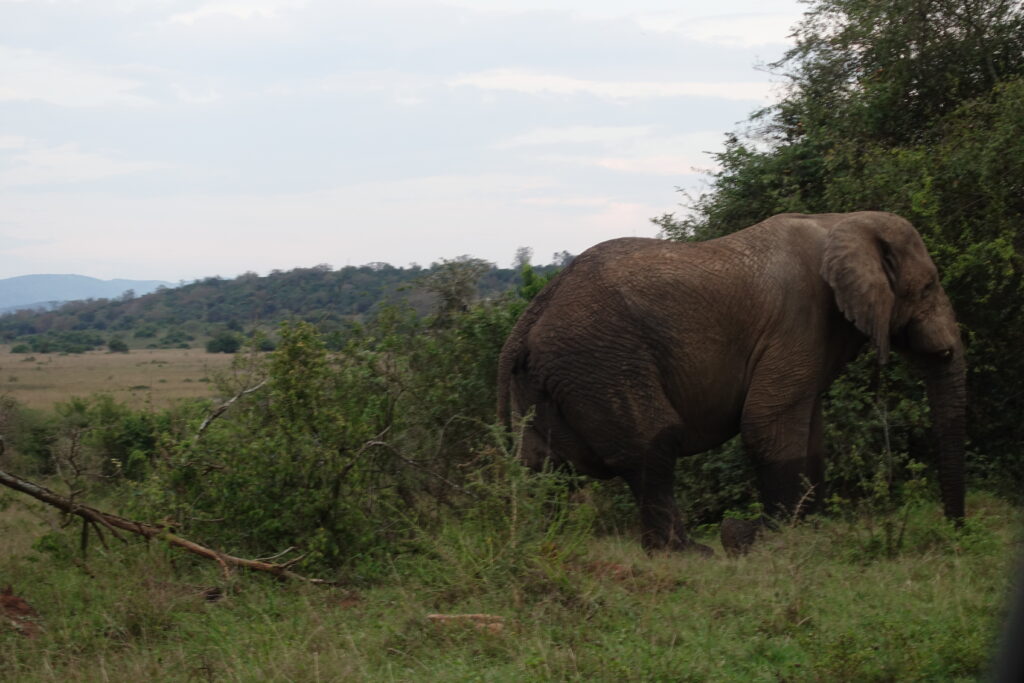
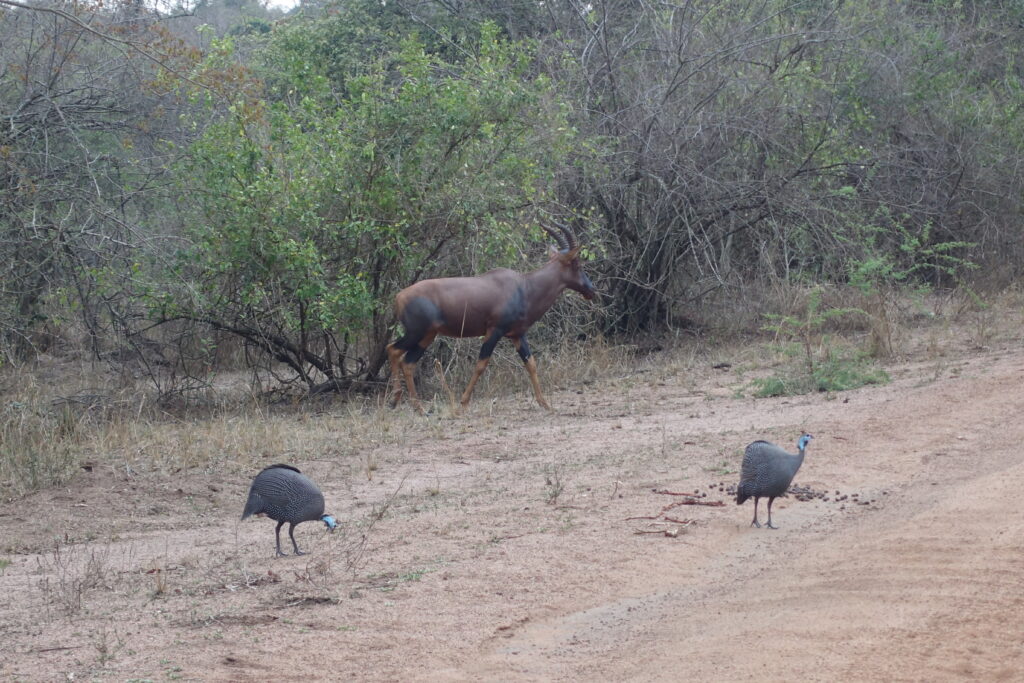
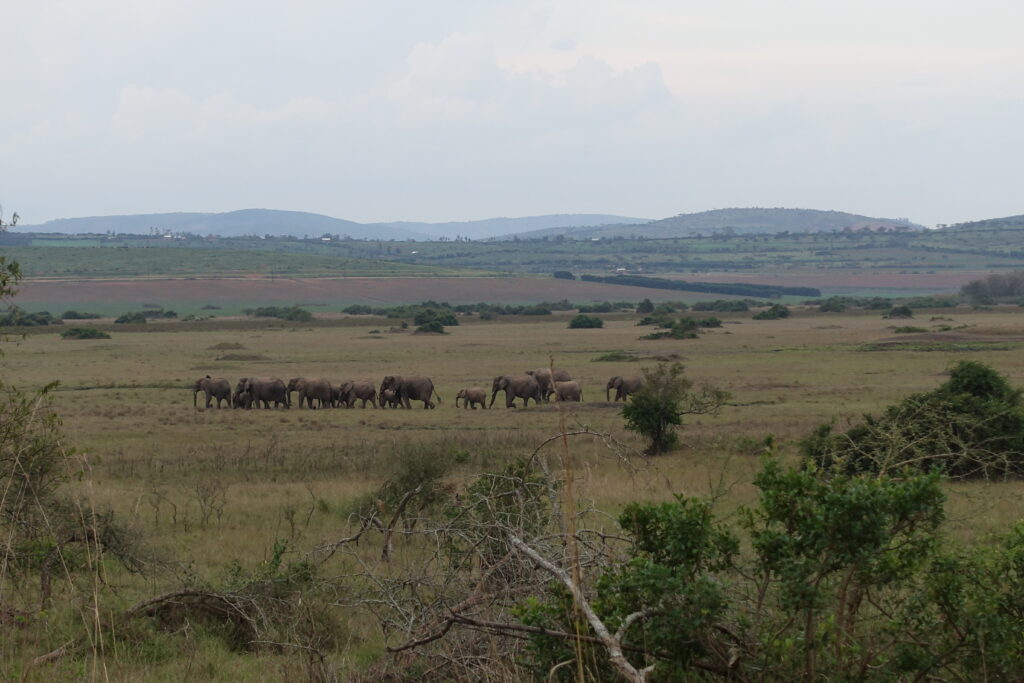
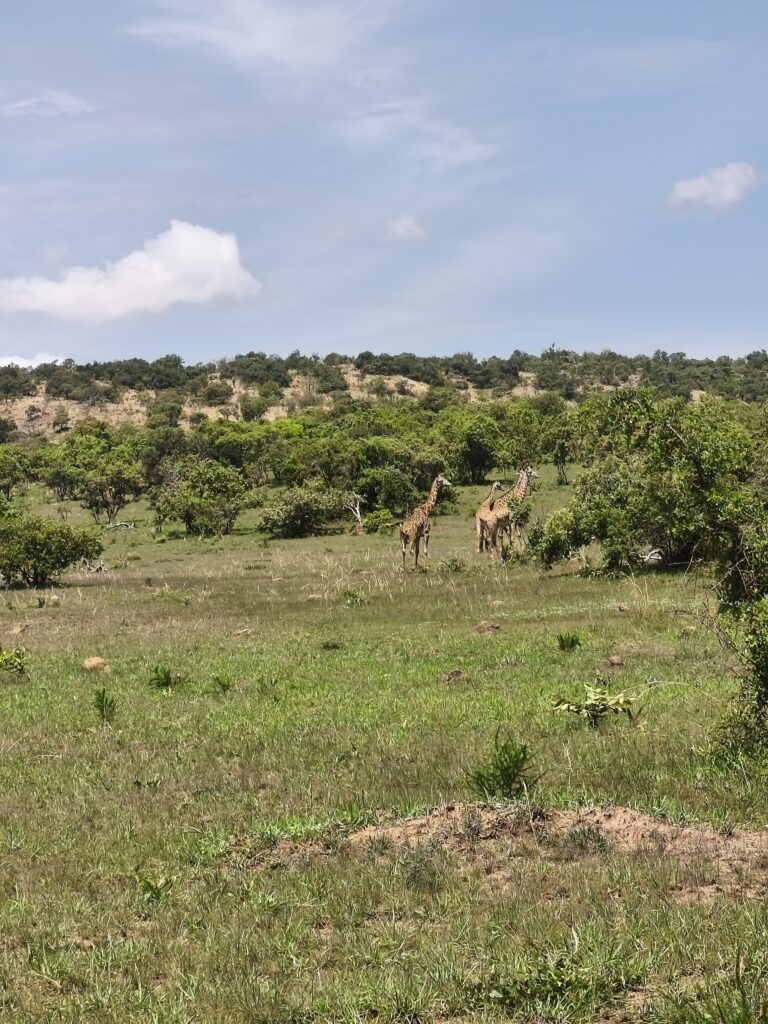
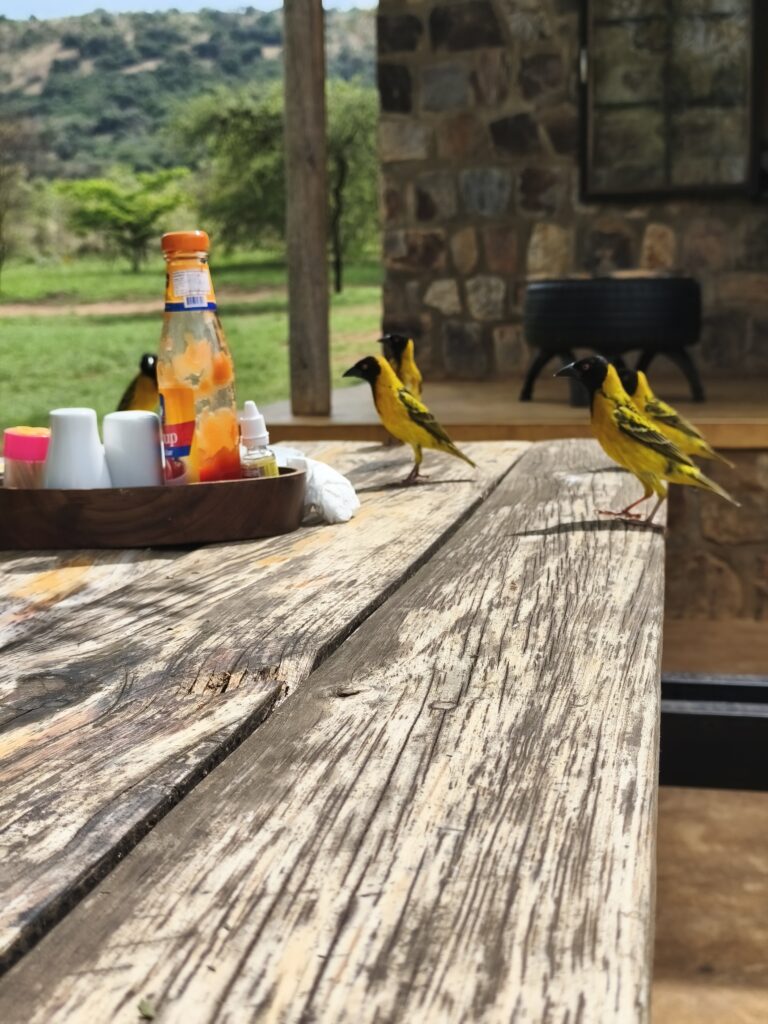
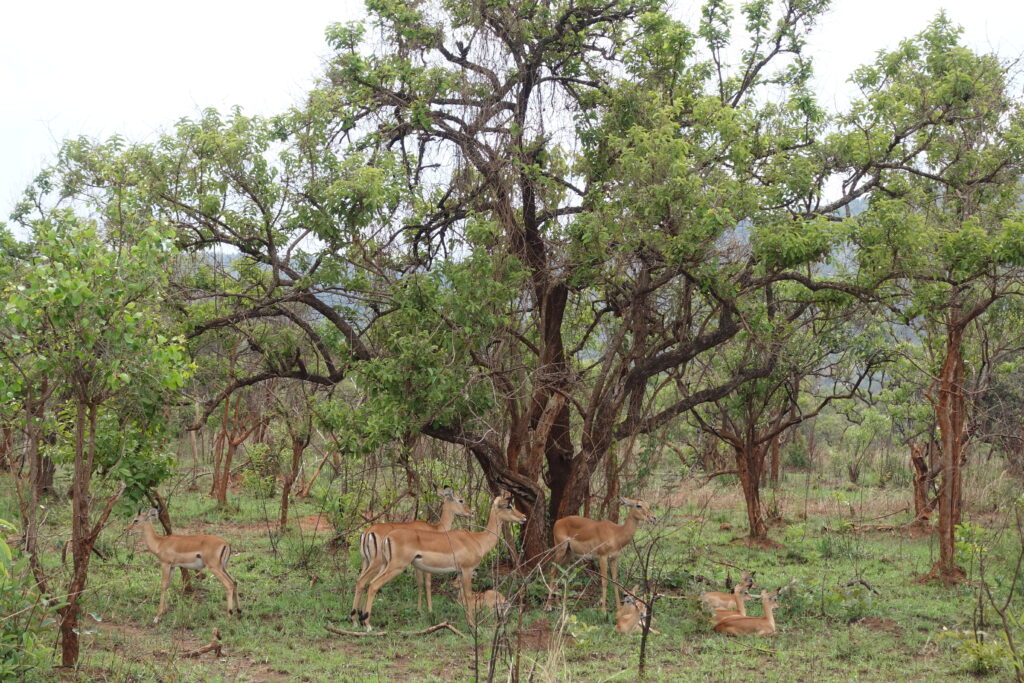
Upon arriving at the park, we received a short briefing and then set off. At first, as we started driving, we didn’t encounter many animals, but when we reached one of the ten lakes, we saw huge numbers of hippos, zebras, sitatunga antelopes, baboons, and other monkeys. We were advised to take a loop through the center of the park, so we drove in that direction, when a massive male lion walked toward us for 5–10 minutes, almost as if he were posing. At the beginning of the chosen loop, we also spotted a leopard, but only for a moment before it ran off, and later we saw large numbers of Cape buffalo. On the way to the campsite, a huge male elephant did the same thing the lion had earlier. It was an extremely successful first safari day for my parents.
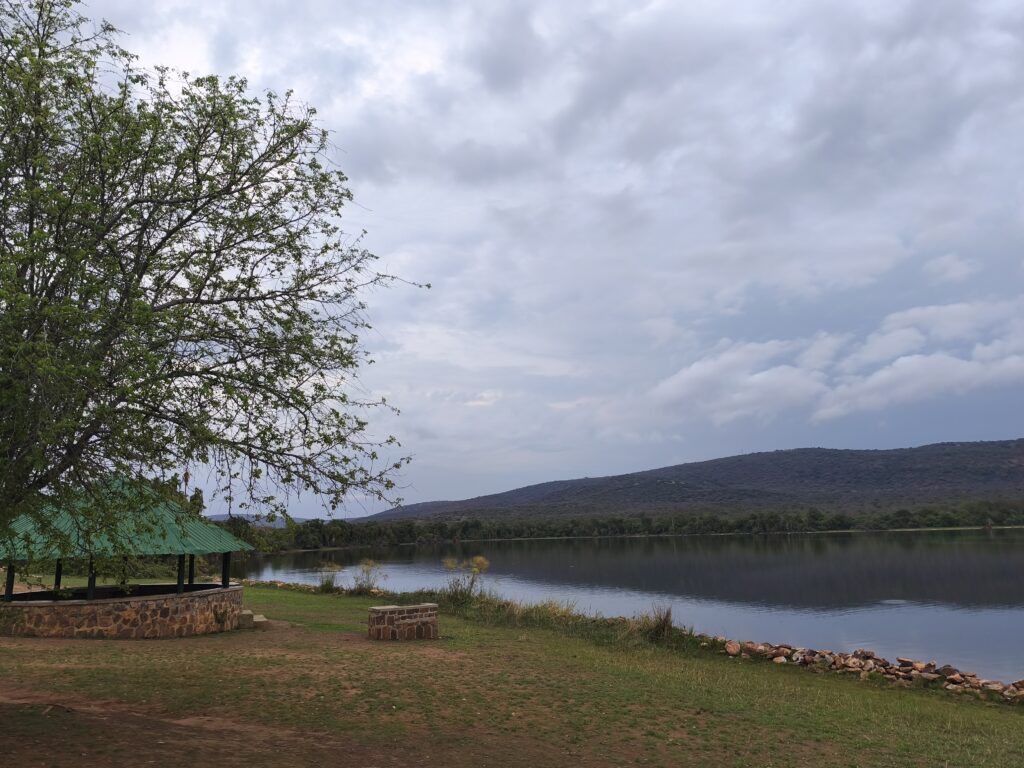
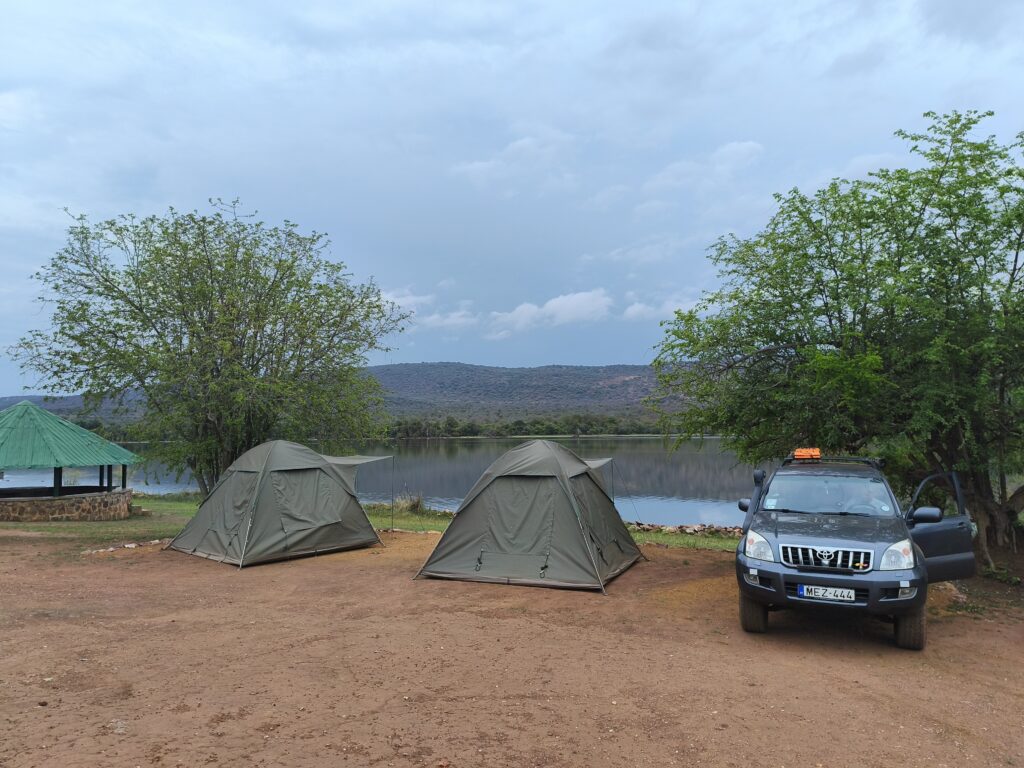
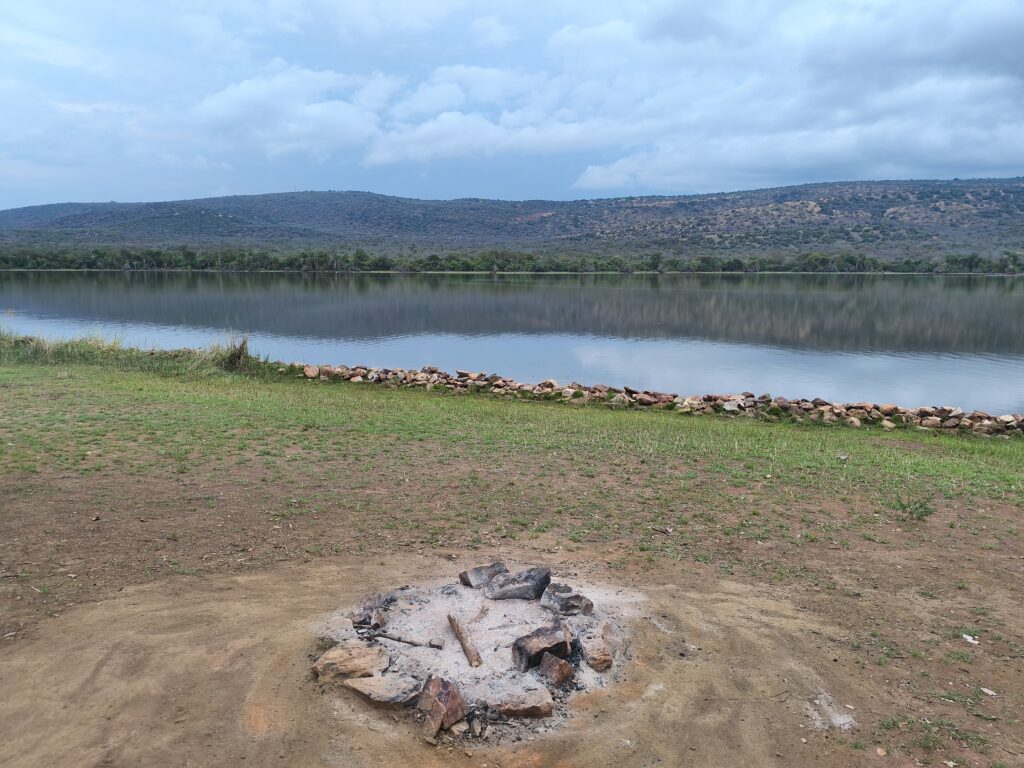
In the evening, we were the only guests at a lakeside campsite. We slept in the car, while my parents rented a pre-set tent. We quickly cooked dinner, but there were so many insects around us that we soon went to sleep. The campsite was not fully fenced, and there were many hippos in the lake right in front of us, yet we had a surprisingly peaceful night.
The next day, we wanted to exit through the northern gate, so we drove across the entire park. When I was a child, my mom always said that my dad’s favorite animal was the rhinoceros, and indeed he managed to see them twice, although they were very far away. We were incredibly lucky: for example, as we were heading toward the park exit, not long after saying, “It would be so nice to see an elephant,” one walked right in front of us. Then, when we said, “It would be great to see several elephants at once,” an entire herd appeared, with lots of calves. It was probably beginner’s luck for first-time safari-goers.
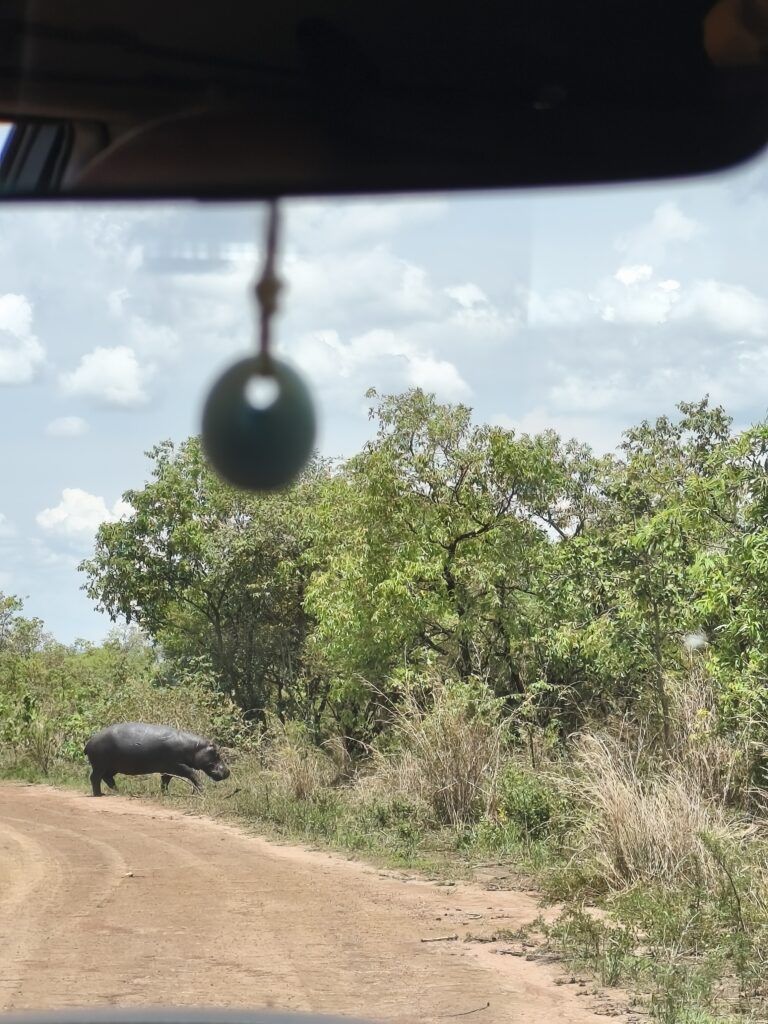
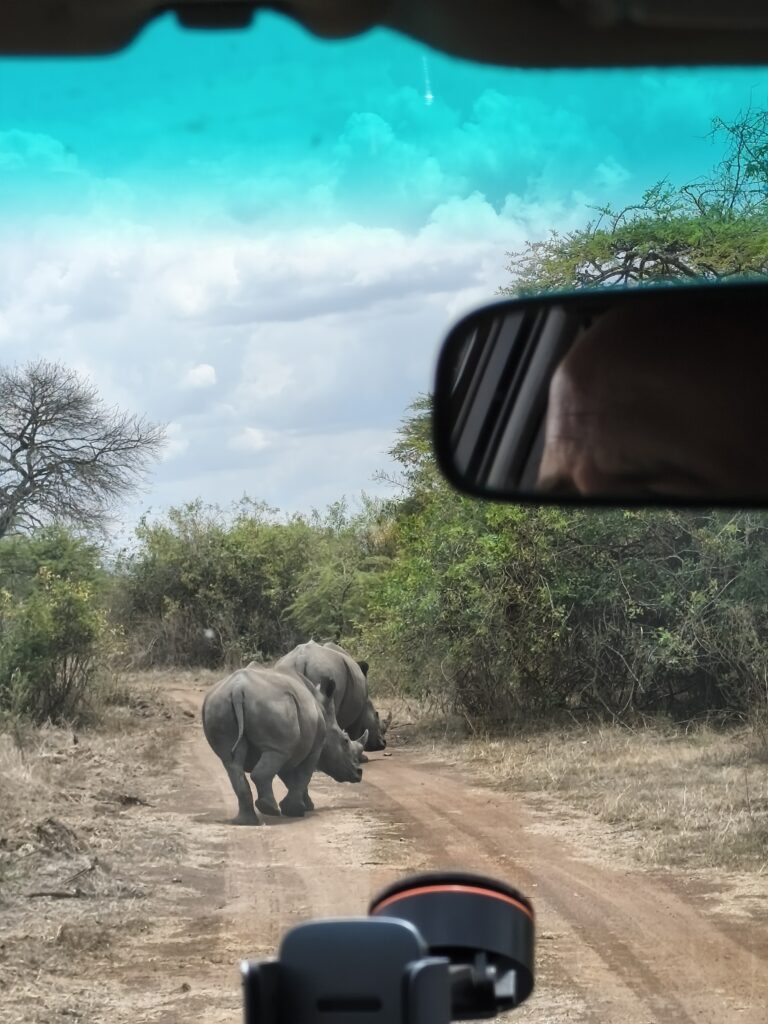
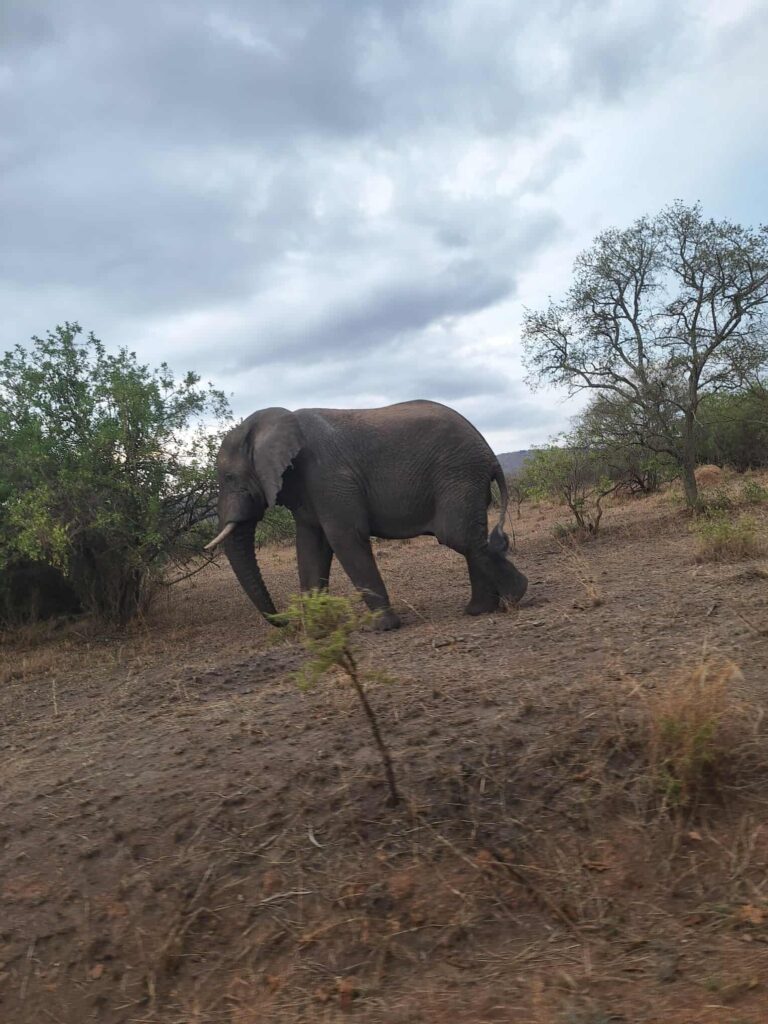
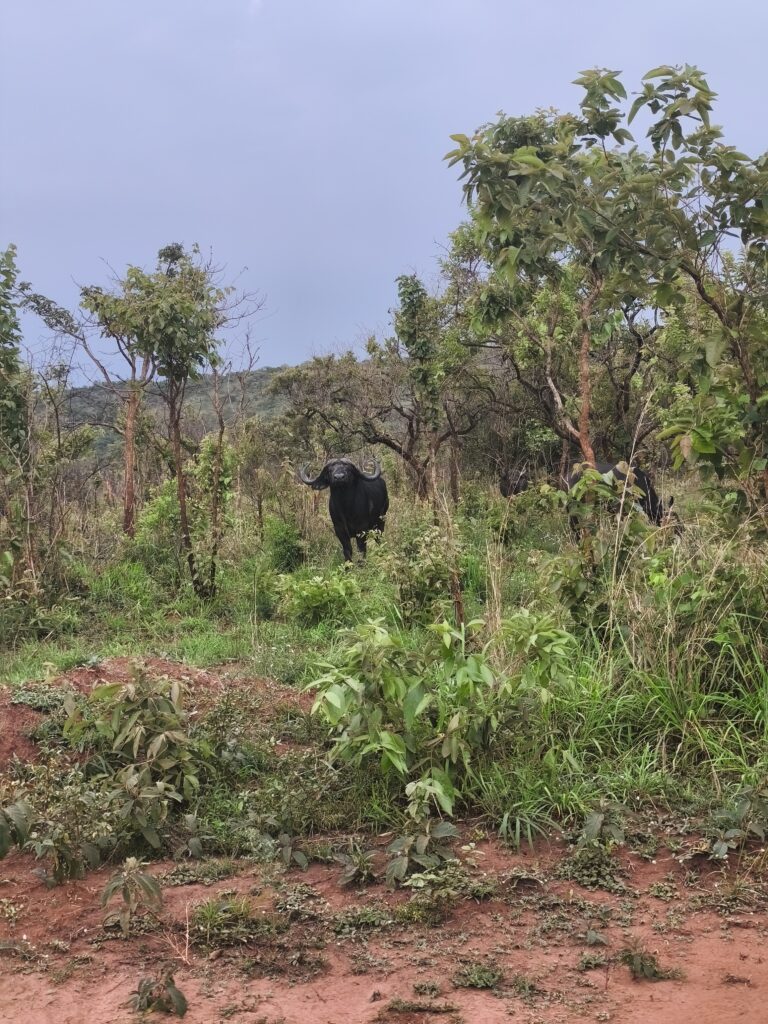
Price: We paid 49,380 HUF for 2 days / 2 nights for 2 people.
Entrance fee (for 24 + 2 grace hours): N$150 (2,920 HUF)
Vehicle entry fee (for 24 + 2 grace hours): N$50 (970 HUF)
Camping / night: N$460 (8,940 HUF)
Our full blog post about our Etosha experience can be found here: https://eandatravel.com/day-276-278-akagera-national-park-rwanda/
+3 Where we also slept inside
Moremi National Park (Botswana)
Moremi is located in the eastern part of the Okavango Delta and was named after Chief Moremi of the BaTawana tribe. The game reserve was established by his widow (who was in charge at the time) to prevent excessive hunting. It is a game reserve rather than a national park so that the BaSarwa tribe could continue to live and hunt in the area for their own survival.
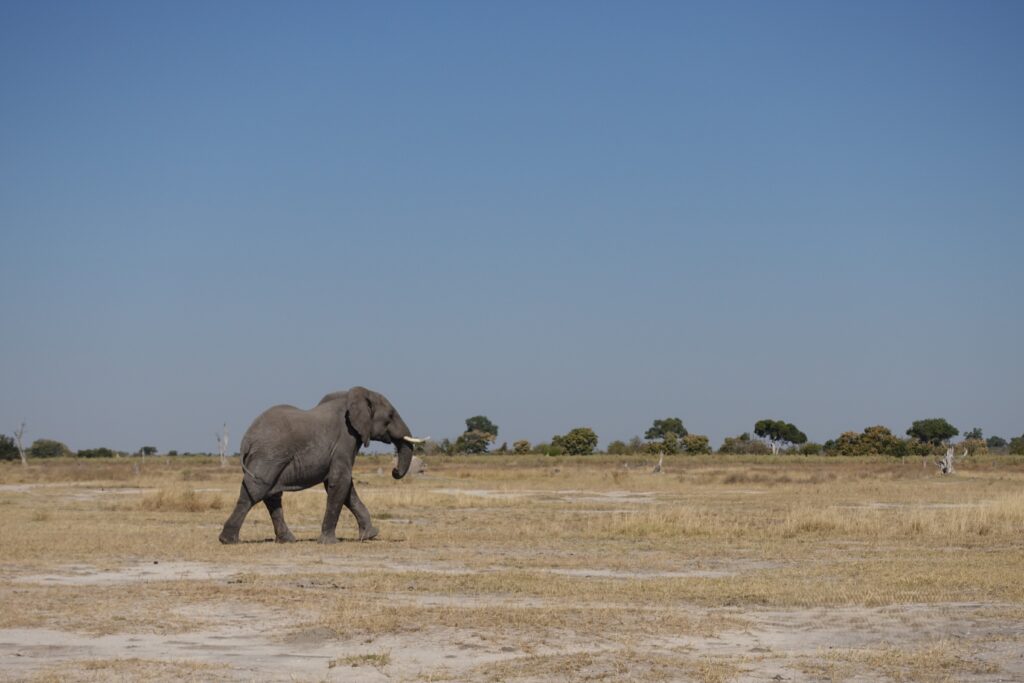
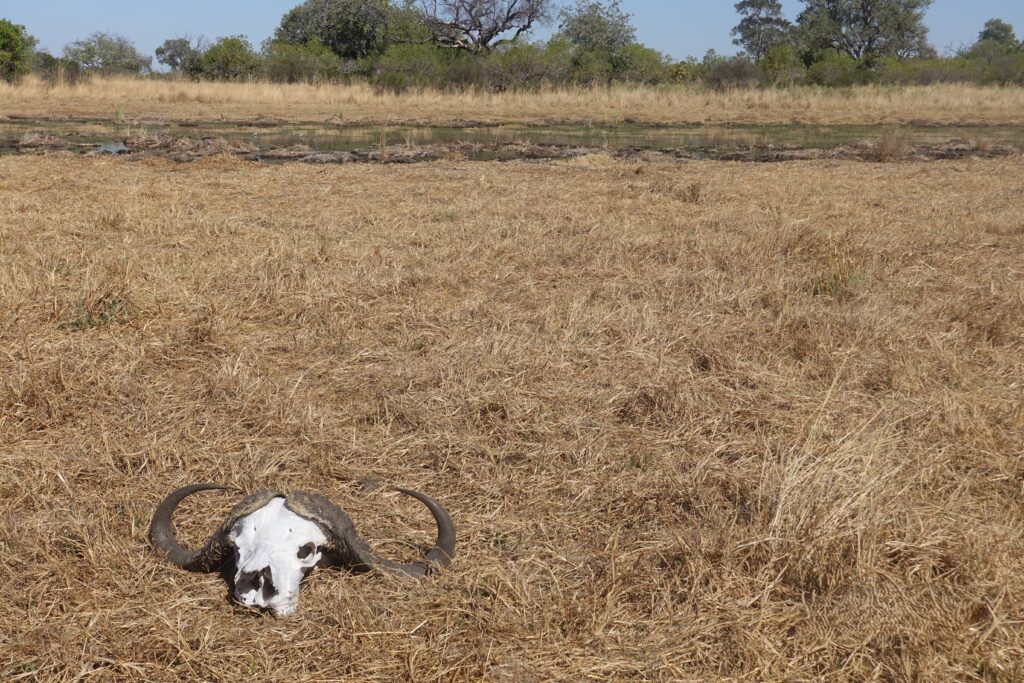
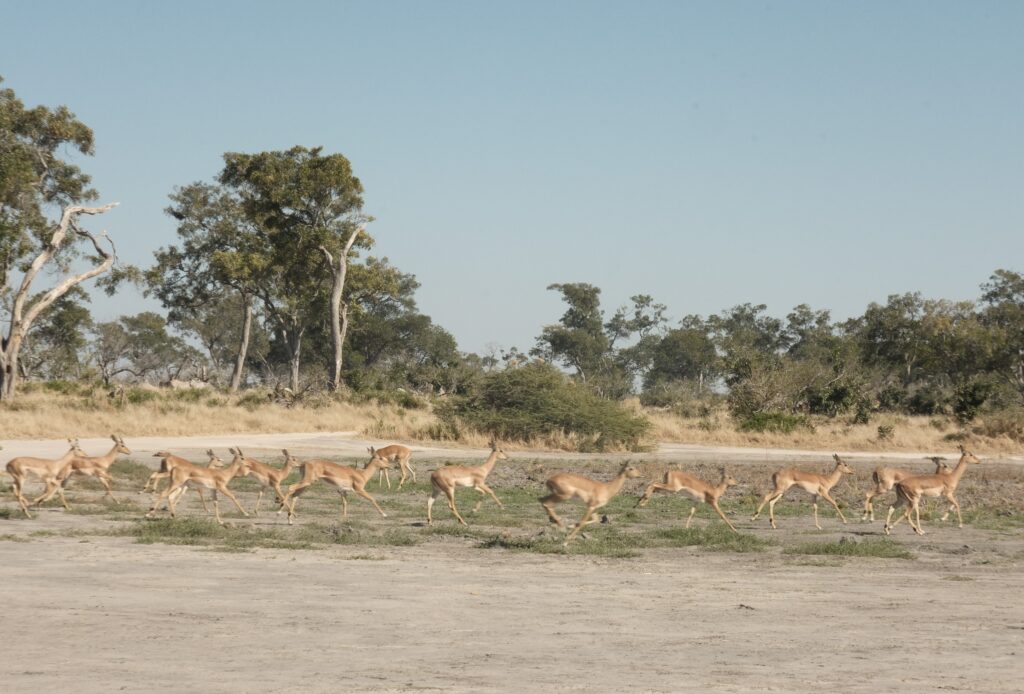
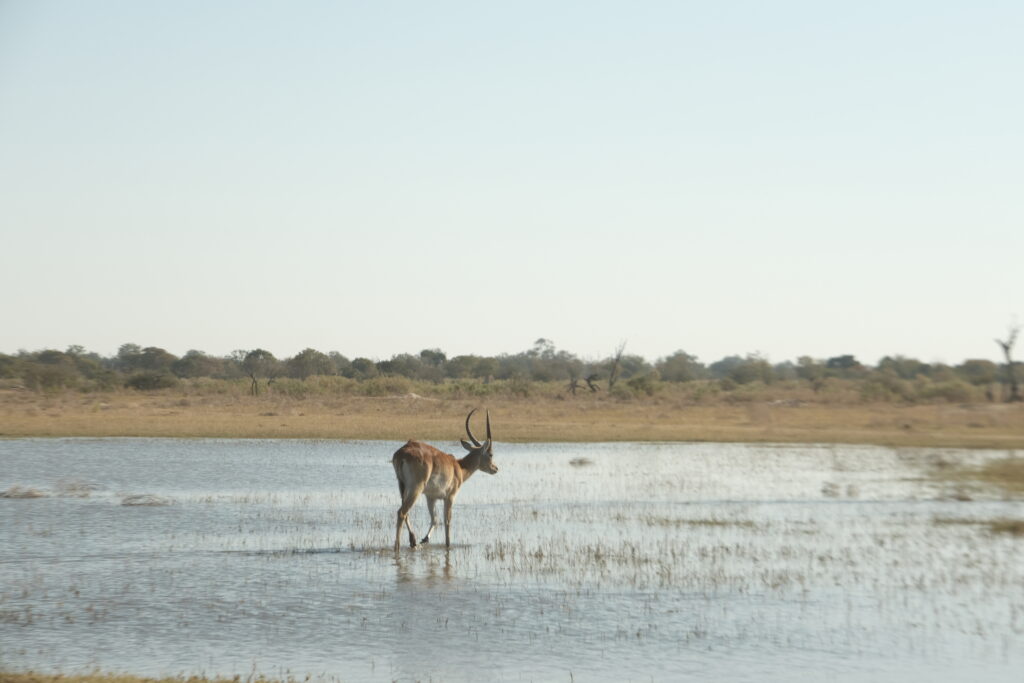
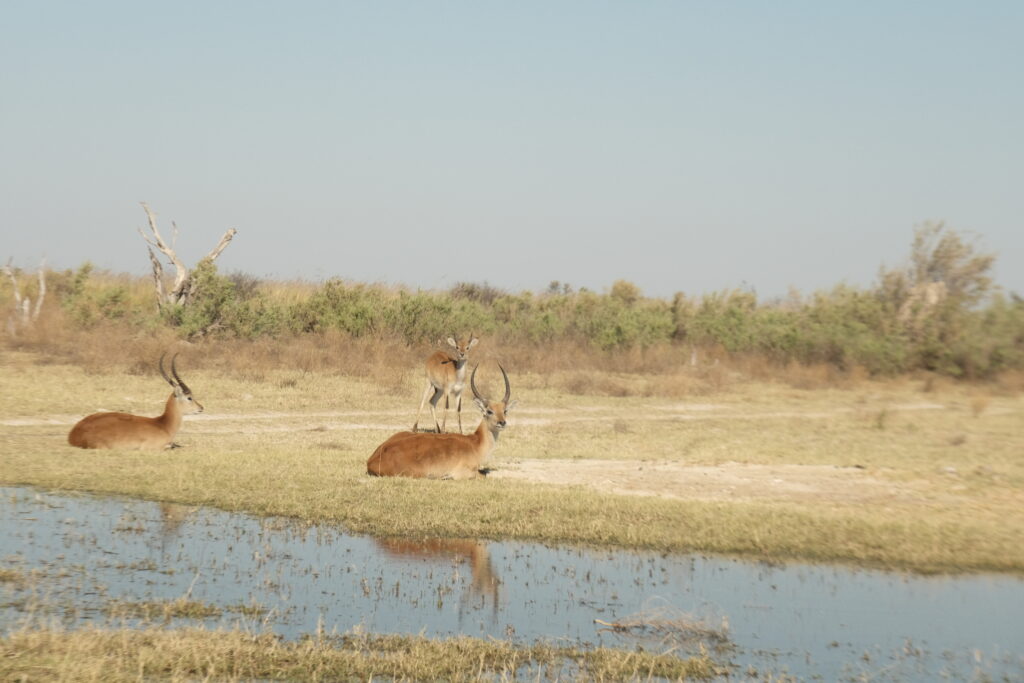
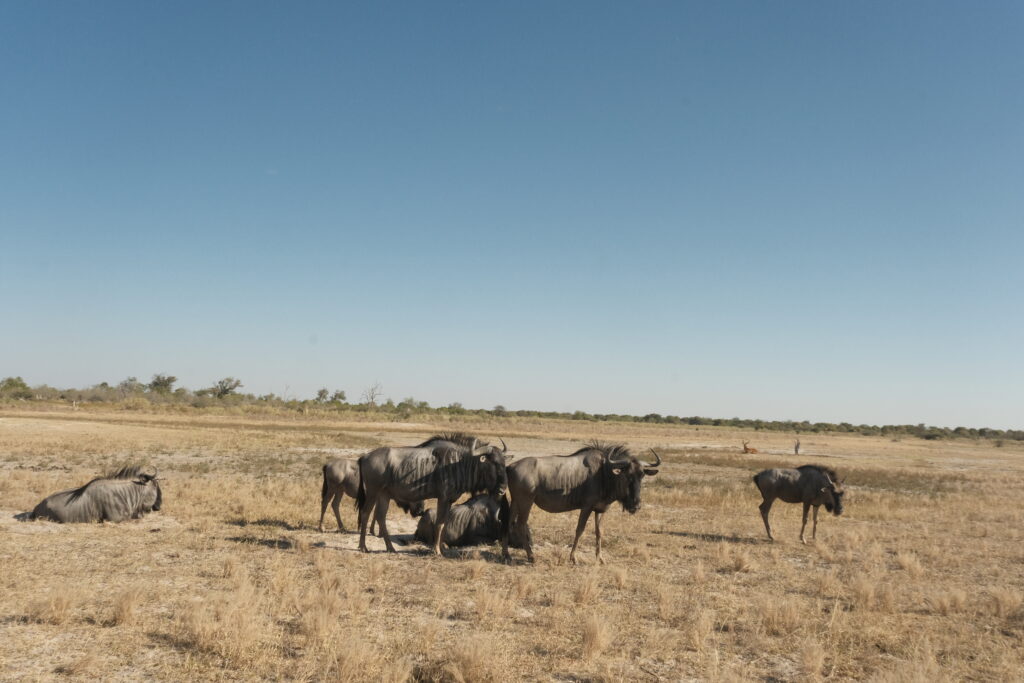
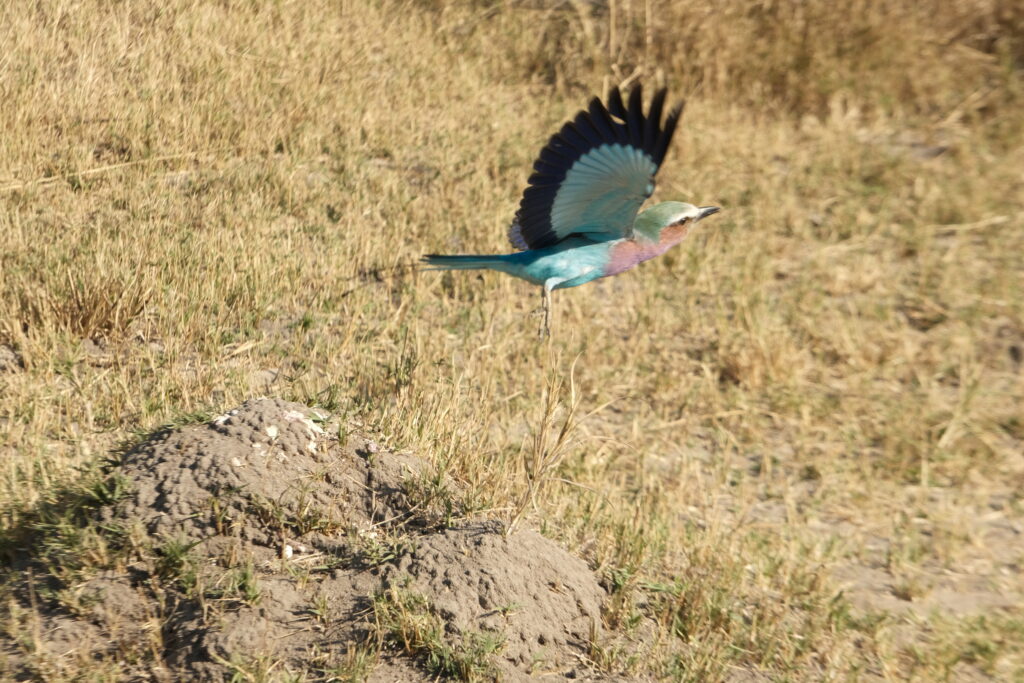
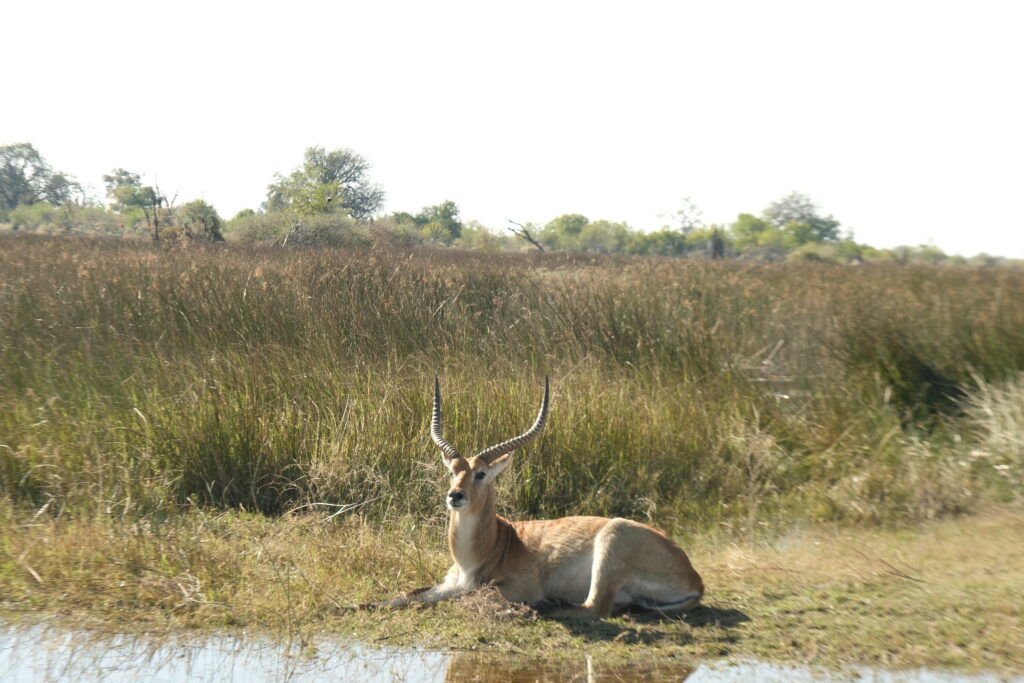
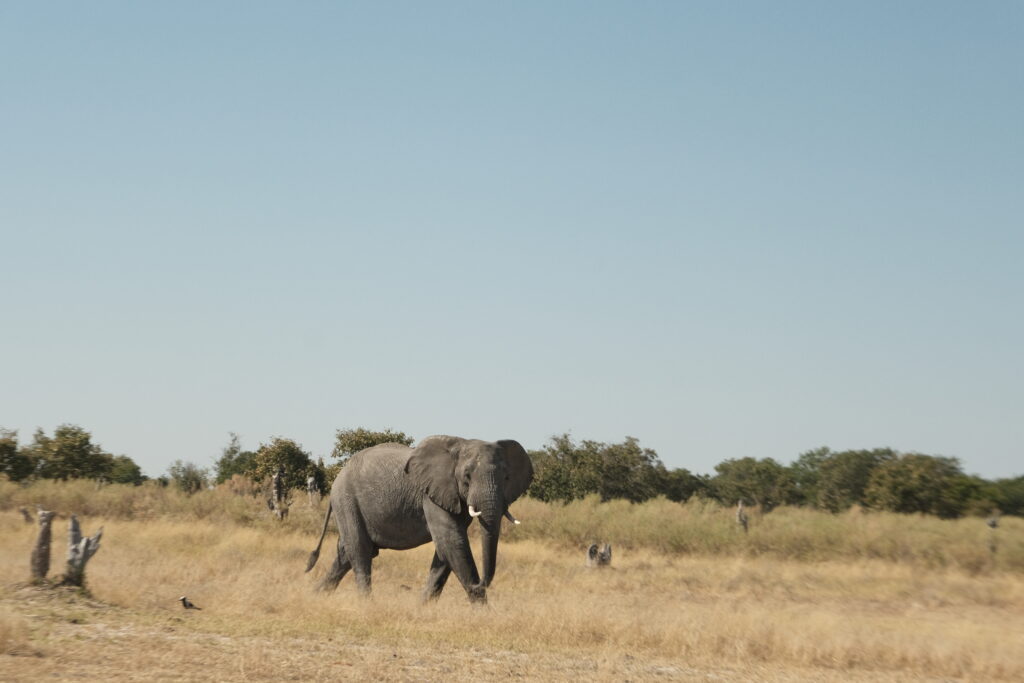
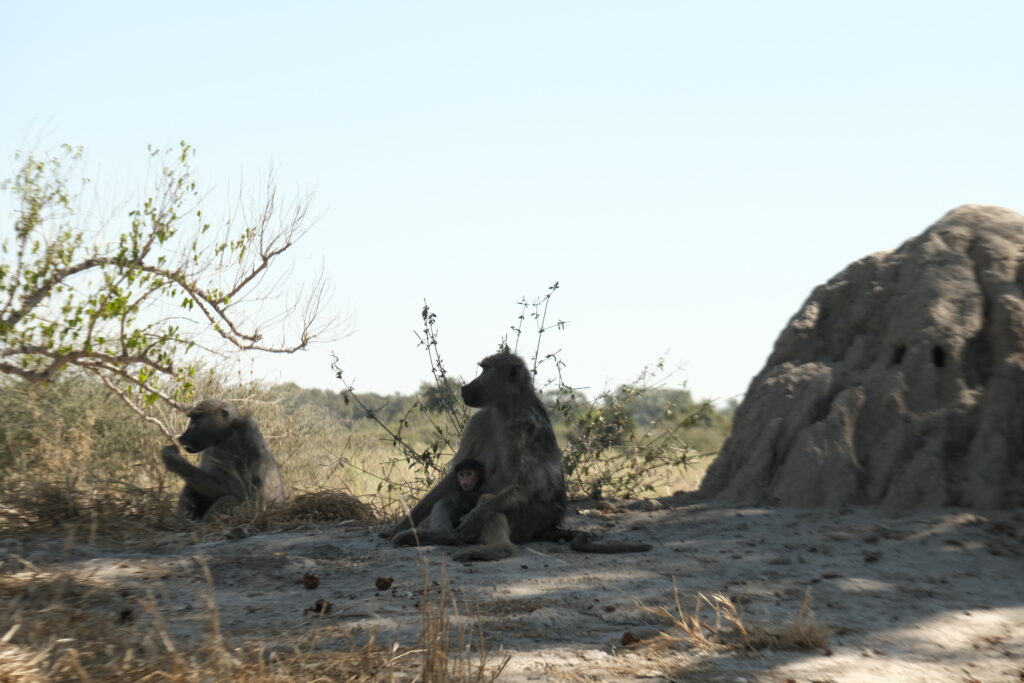
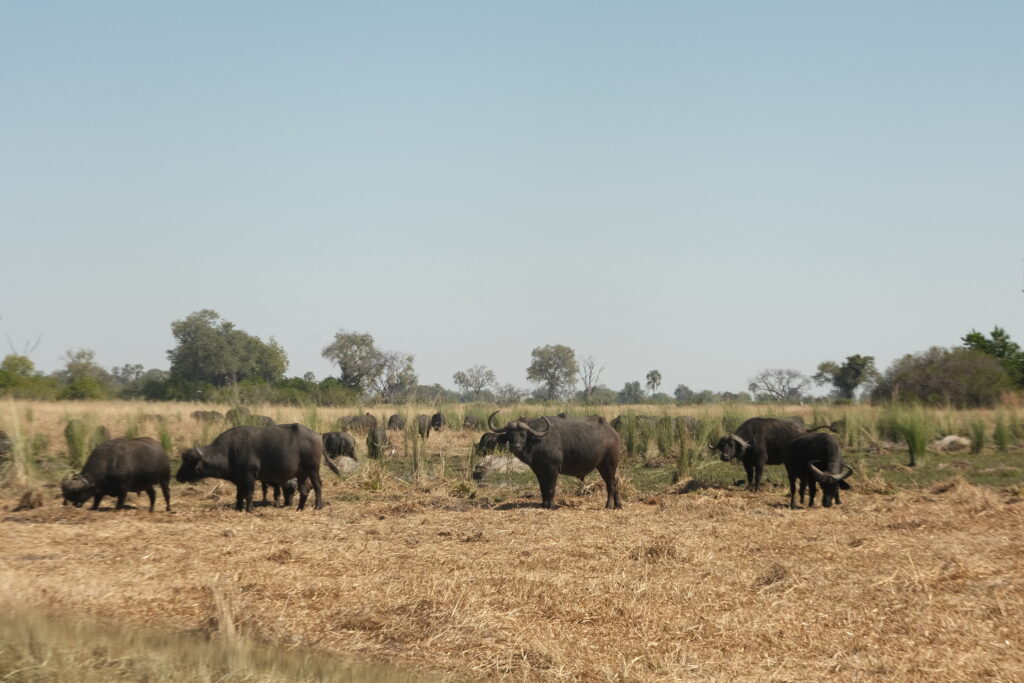
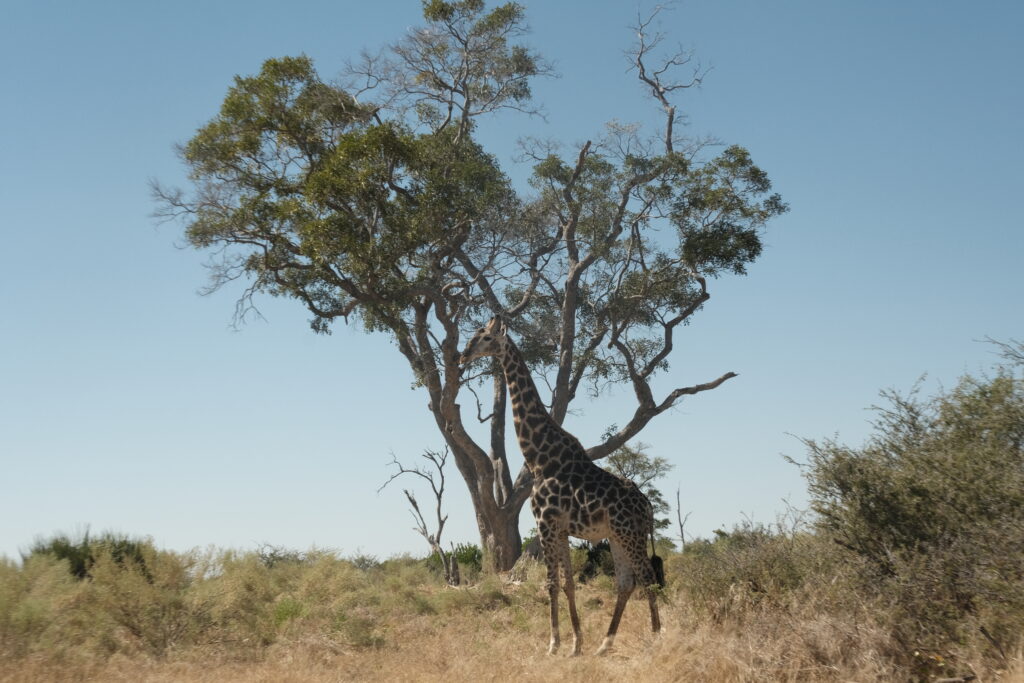
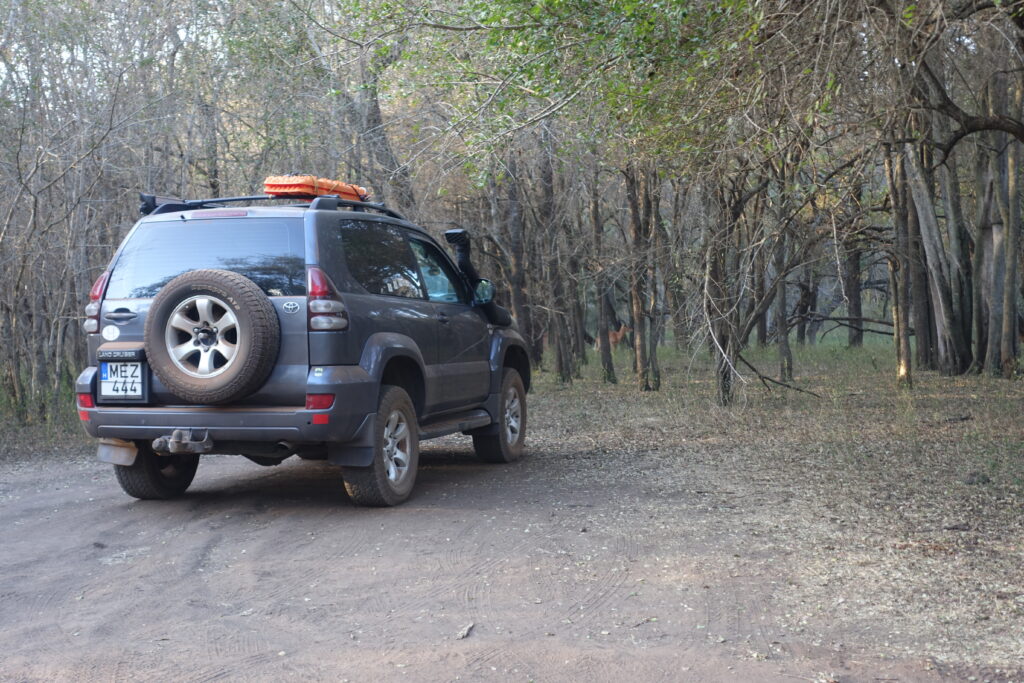
Although Moremi is a beautiful national park with an abundance of wildlife, it did not make it into our list of favorite national parks because we do not recommend it for self-drive travel. This is where the scariest experience of our African journey happened to us (or rather, to me). We didn’t get a map (we would have had to buy one at a fairly high price), so we relied on our offline map, but the many safari vehicle tracks had completely erased the roads. In the end, it was very difficult even to reach our own campsite, which required crossing several bridges. The second bridge had collapsed, so we had to take a detour and cross a smaller water channel. At first it looked rough, but Mezi handled the obstacle well. At the third bridge there was a campsite; we looked around and then thought we would quickly cover the remaining ten kilometers to our own campsite. However, the fourth bridge had also collapsed. There were signs indicating a detour, but after a while the signs disappeared. First, we had to cross a huge puddle: Ádám walked ahead to check how deep it was. It was terrifying to drive through, but we were surprised at how easily Mezi made it across. Then came an even muddier section, where we were sure Mezi would get stuck, but she managed that as well. Then came the scariest part: sunset was approaching and we couldn’t find the road. We were afraid we might have to turn back, but we also feared that we would get even more stuck on that route and end up trapped in the mud overnight. We were very lucky that a safari vehicle came along, and its driver showed us the way.
On top of that, it is also challenging that the campsites are officially booked by large safari companies, but we got a tip to contact the staff working there directly, who eventually let us in.
We recommend Moremi only for very well-prepared travelers or as part of an organized safari.
Price: We paid 59,000 HUF for 1 night (2 full days) for 2 people, including camping.
You can read about our full experience in Moremi National Park here: https://eandatravel.com/day-157-158-moremi-national-park-botswana/
Milwane National Park (Eswatini)
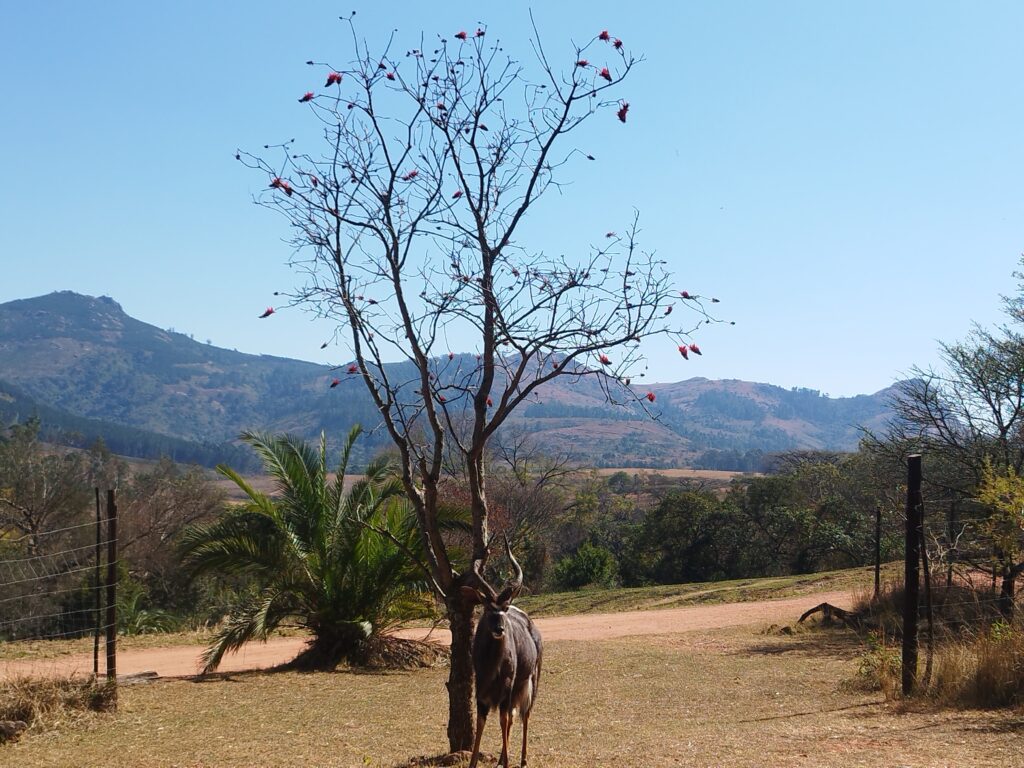
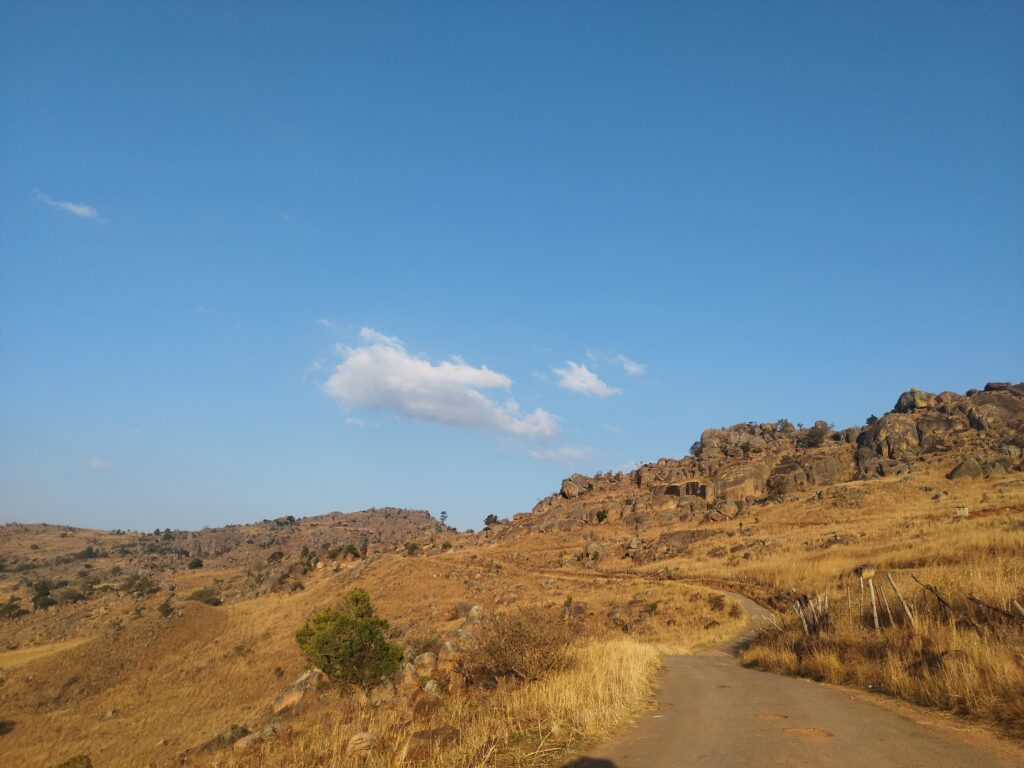
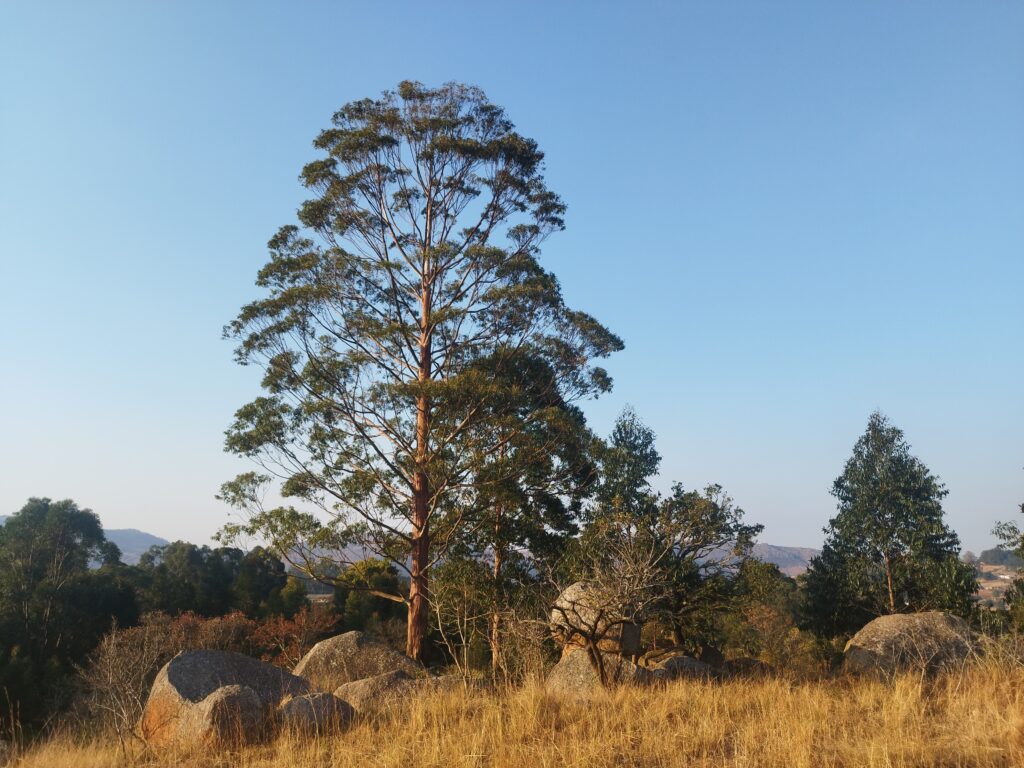
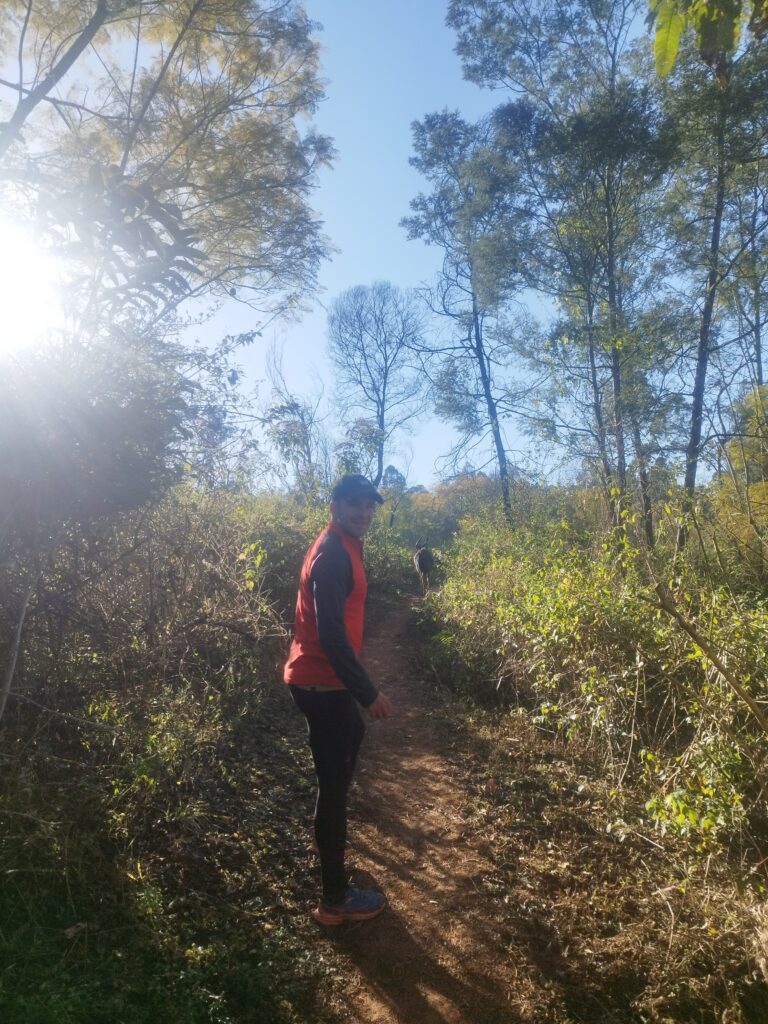
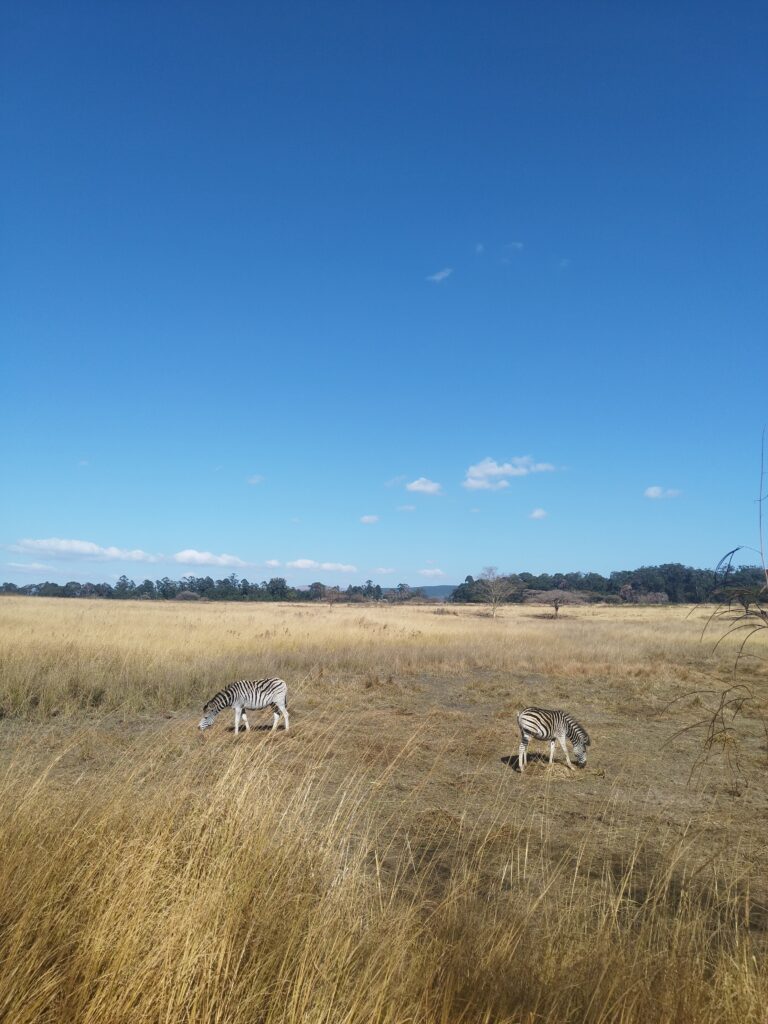
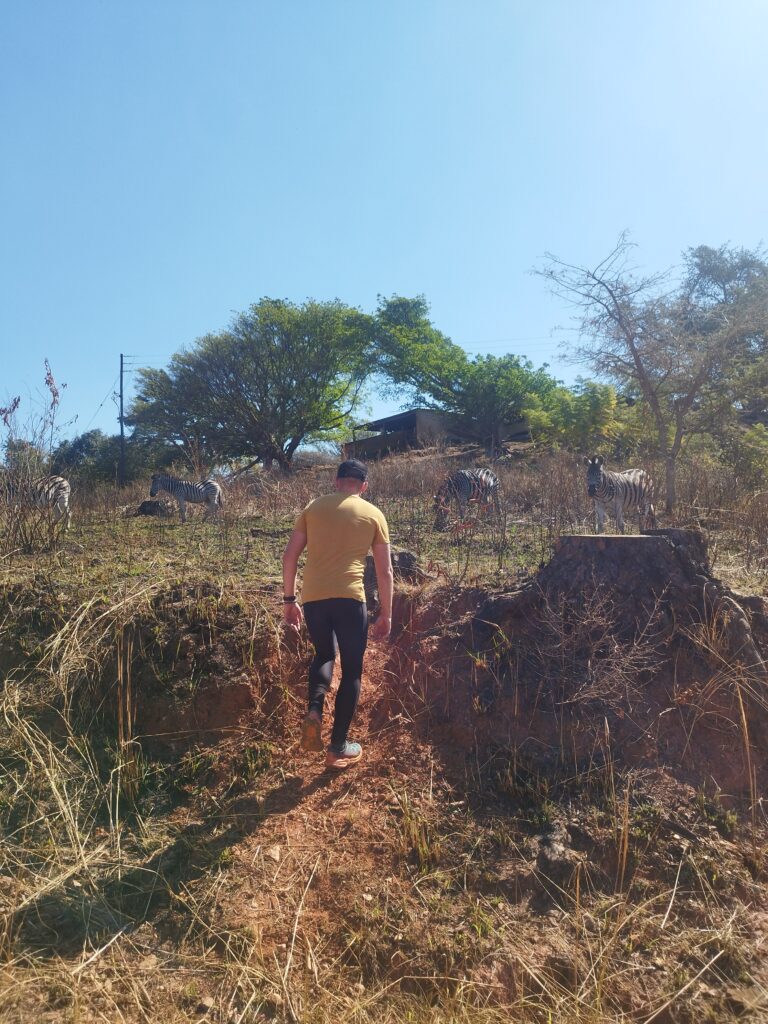
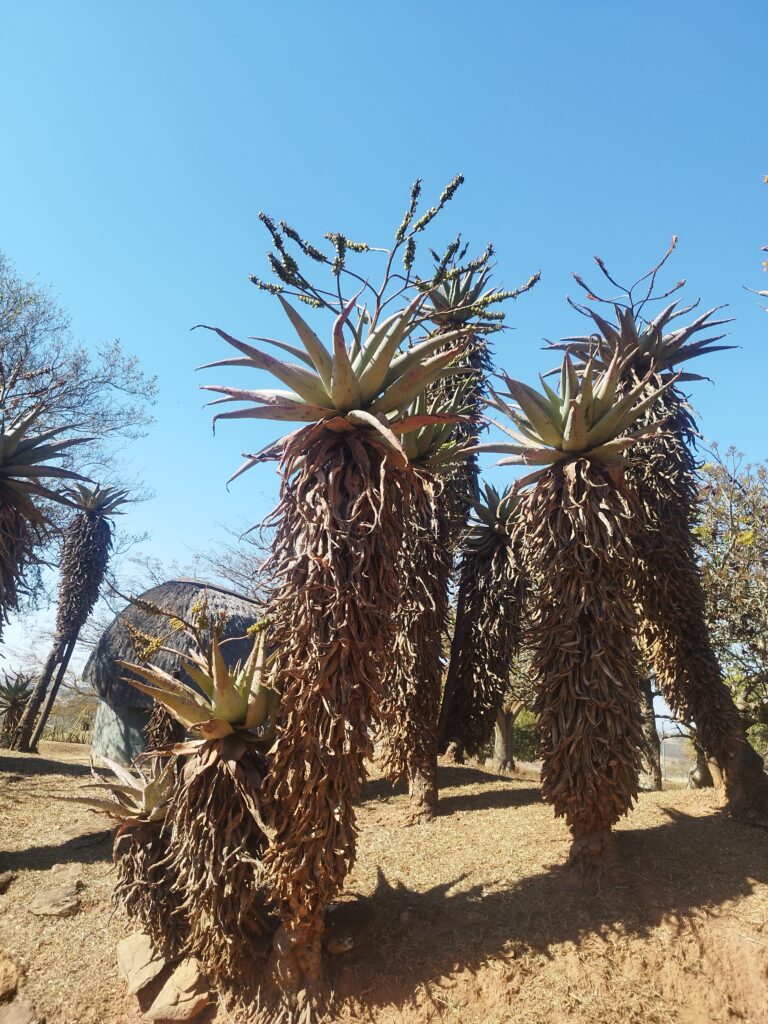
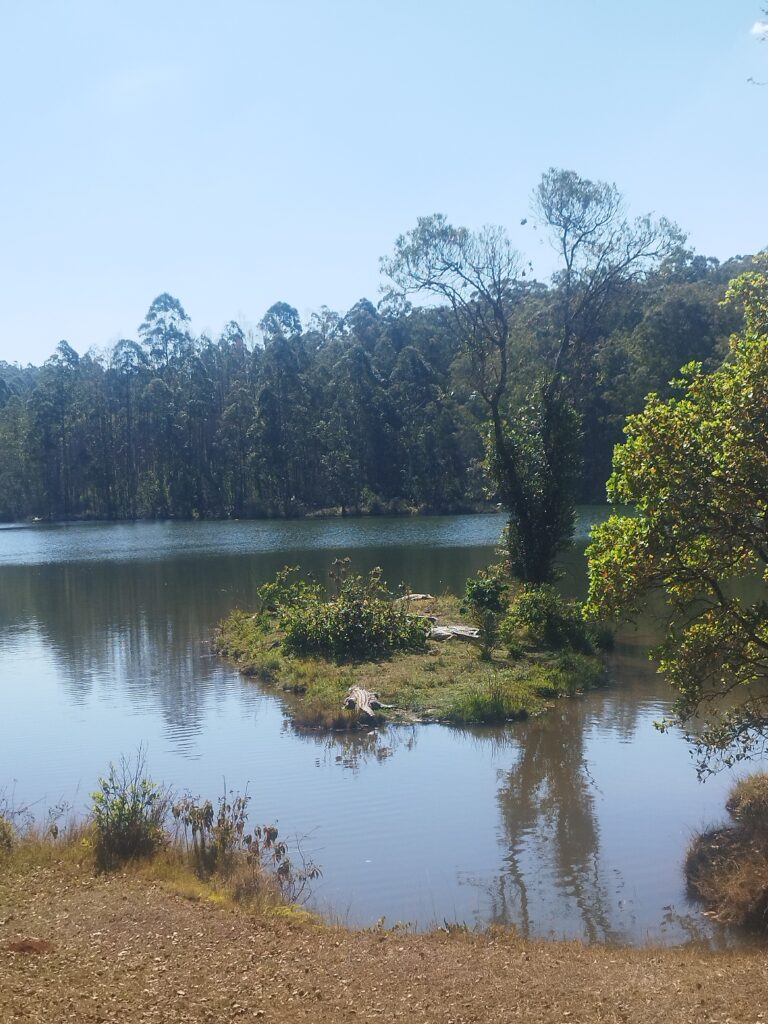
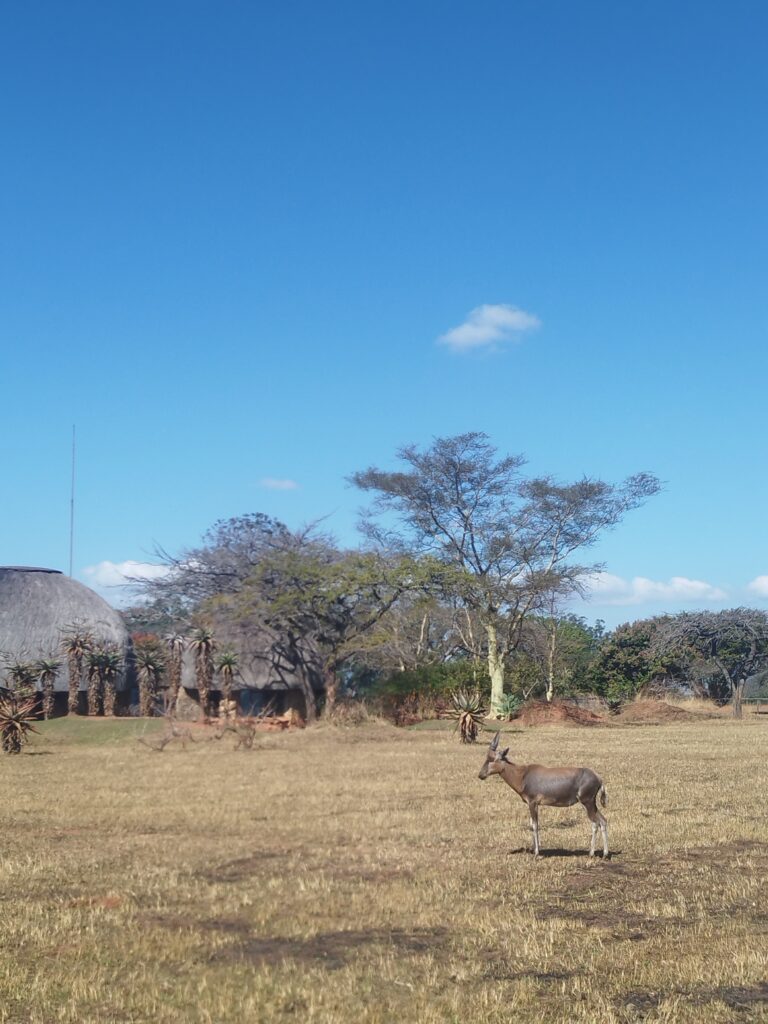
Mlilwane National Park is a bit of an outlier on our list, because we didn’t do a car safari here. We were looking for a place to sleep for the night, and that’s how we came across the park, which turned out to be very charming. There are no big game animals here, so you can do several types of tours on foot or by bicycle. We ran the 7 km “Hippo” trail both in the afternoon and again the next morning. We saw zebras, impalas, wildebeest, crocodiles, gazelles, and explored a beautiful, hilly, forested landscape. Our campsite was lovely as well; impalas often wandered through, and in the evening two warthogs even curled up next to the campfire and went to sleep.
Overall, we spent a very relaxing day here, and including camping and entrance fees, you can do it for under 10,000 HUF (though there are cheaper and more expensive bungalows available too). Because of this, we especially recommend a detour to Eswatini for families traveling to South Africa, particularly those with small children—there were many kids around who really enjoyed being so close to the animals.
Price: We paid 10,000 HUF for 2 people for 1 night, including camping. This is how it broke down:
- 90 lilangeni (1,785 HUF) / person / night – entrance fee
- 170 lilangeni (3,375 HUF) / person / night – camping fee
You can read about the whole experience here: https://eandatravel.com/day-201-204-nap-milwane-national-park-eswatini/
Hlane National Park (Eswatini)
We ended up in Hlane National Park as well while looking for a place to stay overnight. We quickly looked it up and found out that it is the largest protected area in Eswatini. On top of that, the entrance fee and camping together still fit perfectly into our budget—so there was no hesitation, we headed straight to the park!
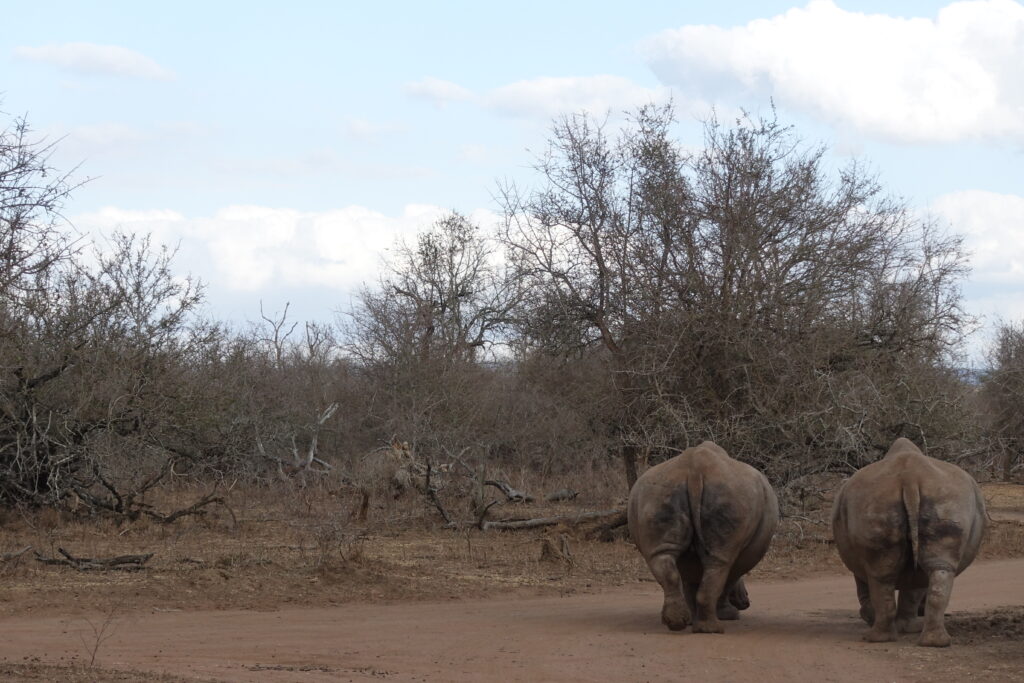
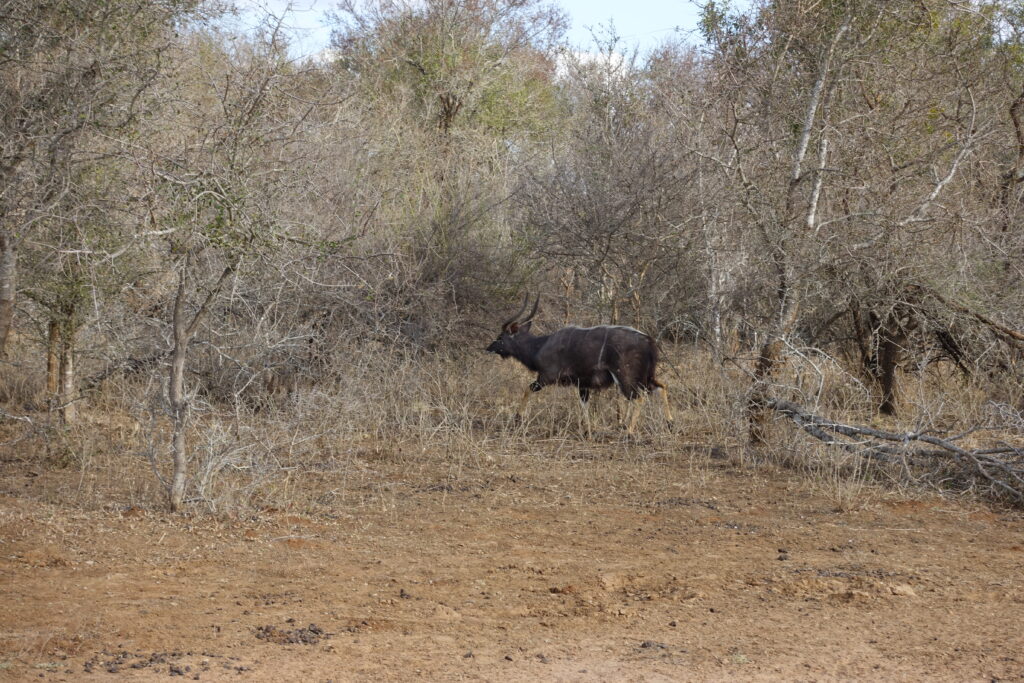
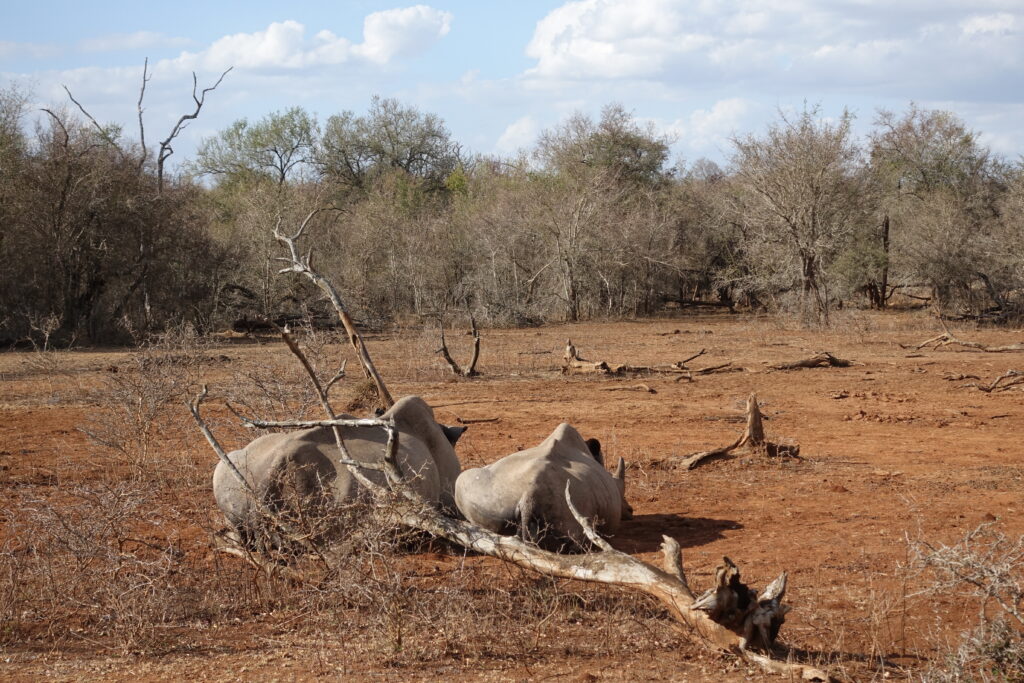
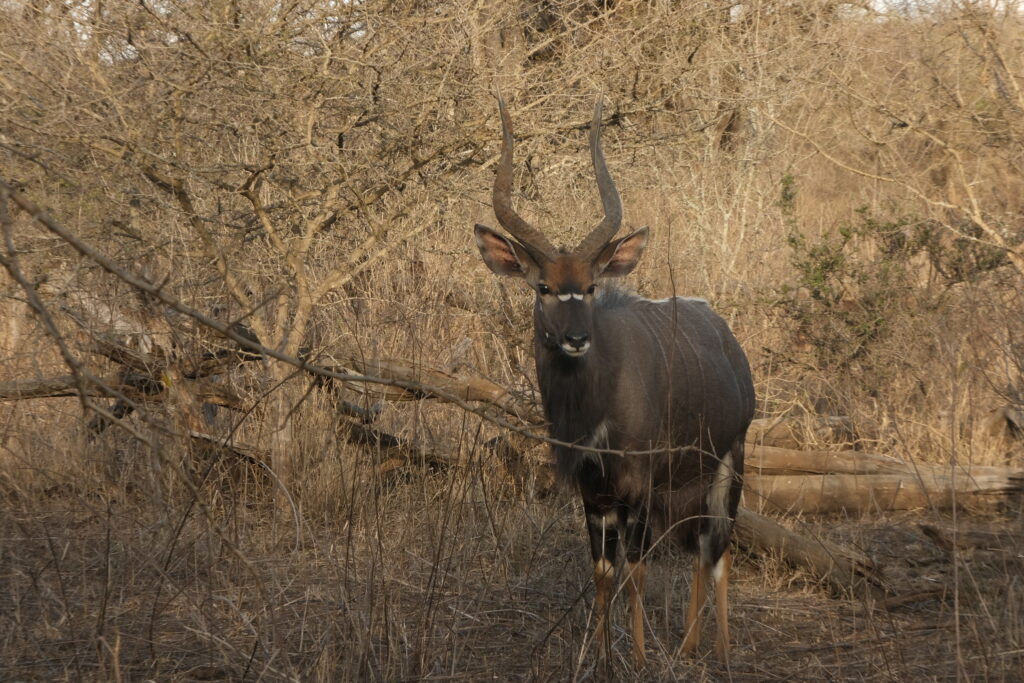
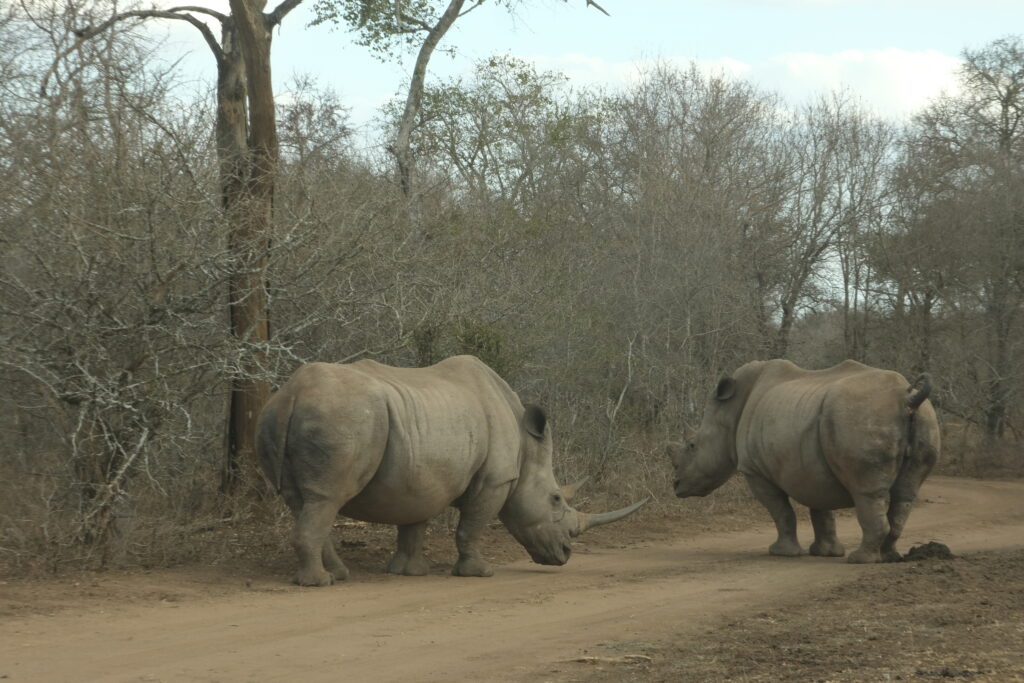
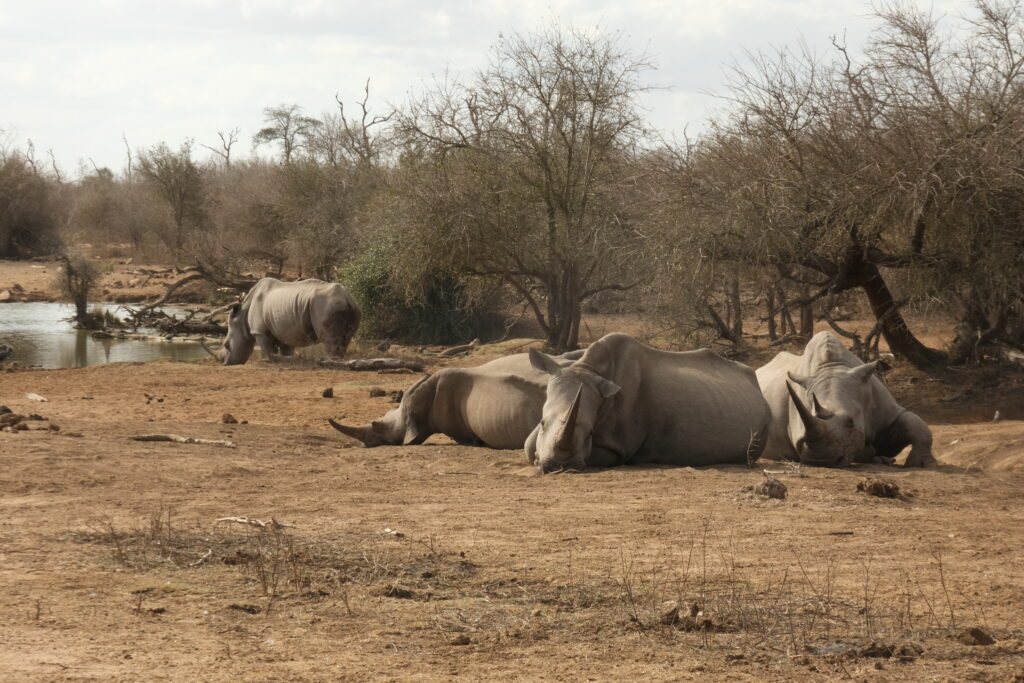
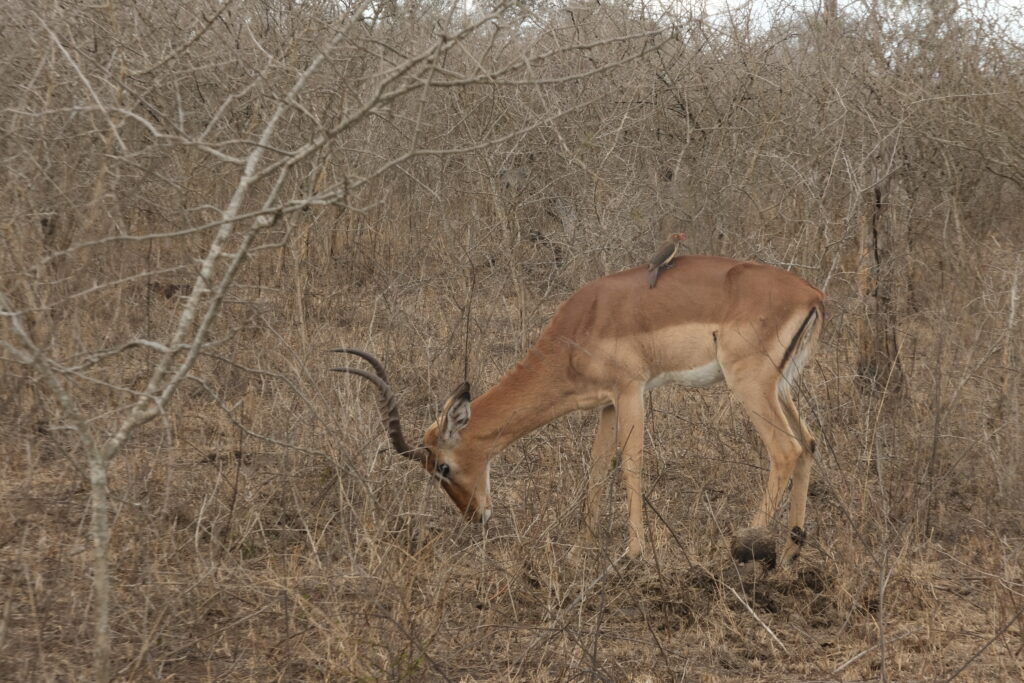
Before setting off, we bought some meat and sausages so we could have one last braai as a farewell to the southern African countries. In the park’s first, so-called “introductory” section, we encountered a lot of rhinos—this alone was already a huge experience. We also saw an impala eating bones, which was surprising, as this was already the third herbivore we had seen doing this. It’s a rare behavior, done to obtain calcium and phosphorus. Later we found out that by driving through a gate we could explore a much larger area (at reception they told us that any area you’re allowed to enter will have an open gate, while the rest are closed). In this section we saw fewer animals, but the landscape was much more varied and greener. Unfortunately, in many parks animals—especially elephants—become so overpopulated that they eat everything down, leaving the environment barren. We preferred places with fewer animals, where you have to look a bit harder to find them, but the landscape stays lush and alive. This way, it feels far less like a giant zoo.
Price: We paid 10,000 HUF for 2 people for 1 night, including camping. This is how it broke down:
90 lilangeni (1,785 HUF) / person / night – entrance fee
170 lilangeni (3,375 HUF) / person / night – camping fee
You can read about our whole experience here: https://eandatravel.com/day-204-205-hlane-national-park-eswatini/