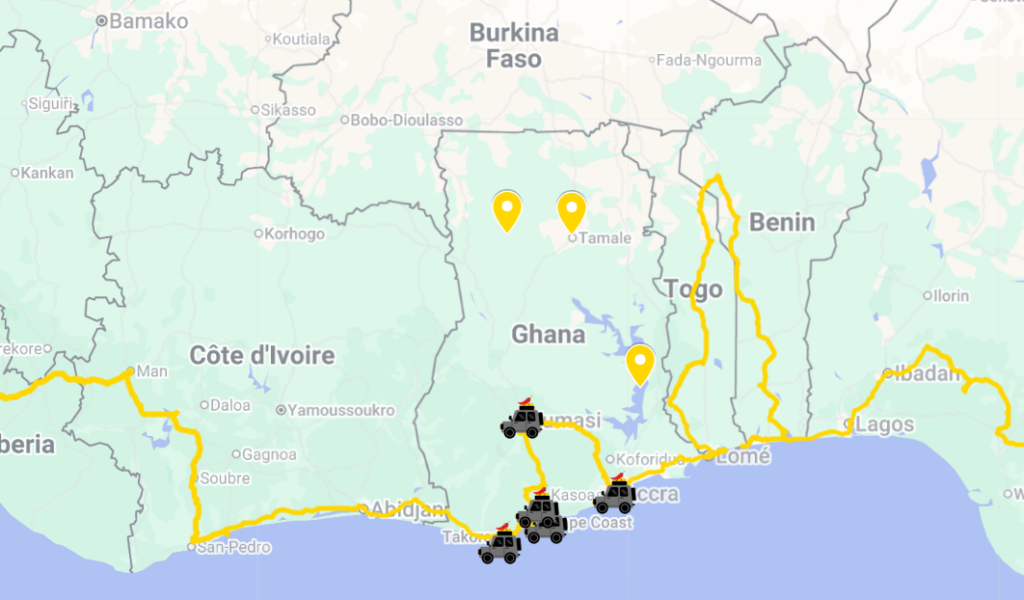
We spent one week in Ghana, which allowed us to visit the southern parts of the country, but we could easily have spent much more time there to explore further north as well. Ghana is often referred to as a “gateway” country to Africa, as it is safe, has relatively well-developed tourist infrastructure (especially compared to other West African countries), plenty of tourists, English is widely spoken, and above all, people are very proud of their hospitality (and it’s truly genuine). We can wholeheartedly recommend it as a great first destination for anyone considering traveling to Africa but unsure where to start.
What should you know about the country?
Summary
Ghana is located in West Africa, covering an area of about 238,500 km² (roughly two and a half times the size of Hungary), with a population of over 32 million people. More than 100 ethnic groups live in the country; the largest include the Akan (especially the Ashanti and Fante subgroups), the Ewe, the Mole-Dagbani (Dagomba), the Ga-Dangme, and the Gurma communities. Before colonization, several significant states existed in the area of present-day Ghana, including the Ashanti Empire, which was one of the most powerful states in West Africa in the 18th–19th centuries, as well as the Fante city-states and the northern Dagomba kingdoms, all of which were actively involved in regional and trans-Saharan trade.
From the 15th century onward, Portuguese, later Dutch, Danish, and British traders appeared along the coast; the country’s former name, the Gold Coast, refers to the importance of the gold trade. The region became a major center of the Atlantic slave trade, a legacy still visible today in coastal forts such as Cape Coast Castle and Elmina Castle. By the late 19th century, the British had consolidated their rule, and the territory became a colony known as the British Gold Coast. Ghana gained independence in 1957, becoming the first sub-Saharan African British colony to do so; its first Prime Minister and later President was Kwame Nkrumah, a leading figure of Pan-Africanism. After a period of political instability and military coups following independence, a multi-party democratic system has been in place since 1992.
Ghana’s official language is English, which is used in education and public administration. In addition, many local languages are spoken, mainly from the Kwa and Gur branches of the Niger–Congo language family; Akan (Twi, Fante), Ewe, and Dagbani are widely used regional languages and play an important role in everyday communication and the media.
In terms of religion, around 70% of the population is Christian, about 15–20% Muslim (mainly Sunni), while the remainder follow traditional African religions, with religious syncretism also being common. Music and dance play a central role in cultural life: Ghana is the homeland of highlife and hiplife, and drumming traditions as well as traditional festivals (such as the Ashanti Akwasidae festival) are key elements of community identity. The chieftaincy system still holds significant social and cultural importance today, especially in rural areas.
Klíma
Ghána éghajlata trópusi, de földrajzi elhelyezkedése miatt jelentős regionális különbségek figyelhetők meg. A déli, tengerparti és esőerdős területeken (például Accra környékén) forró, párás klíma jellemző, két esős évszakkal (április–június és szeptember–november), míg az északi régiókban – például Tamale térségében – inkább szavannai éghajlat uralkodik, egy markáns esős időszakkal (május–október) és hosszú száraz évszakkal.
Az éves átlaghőmérséklet általában 26–28 °C között mozog (de márciusban a páratartalomtól Accrában 40 fonak érződött). A száraz évszakban, különösen december és február között az észak felől érkező, poros harmattan szél jelentősen csökkentheti a páratartalmat és rontja a levegő minőségét. A csapadék mennyisége délen jóval magasabb (akár 1500–2000 mm évente), míg az északi területeken ennek nagyjából a fele hullik.
Food
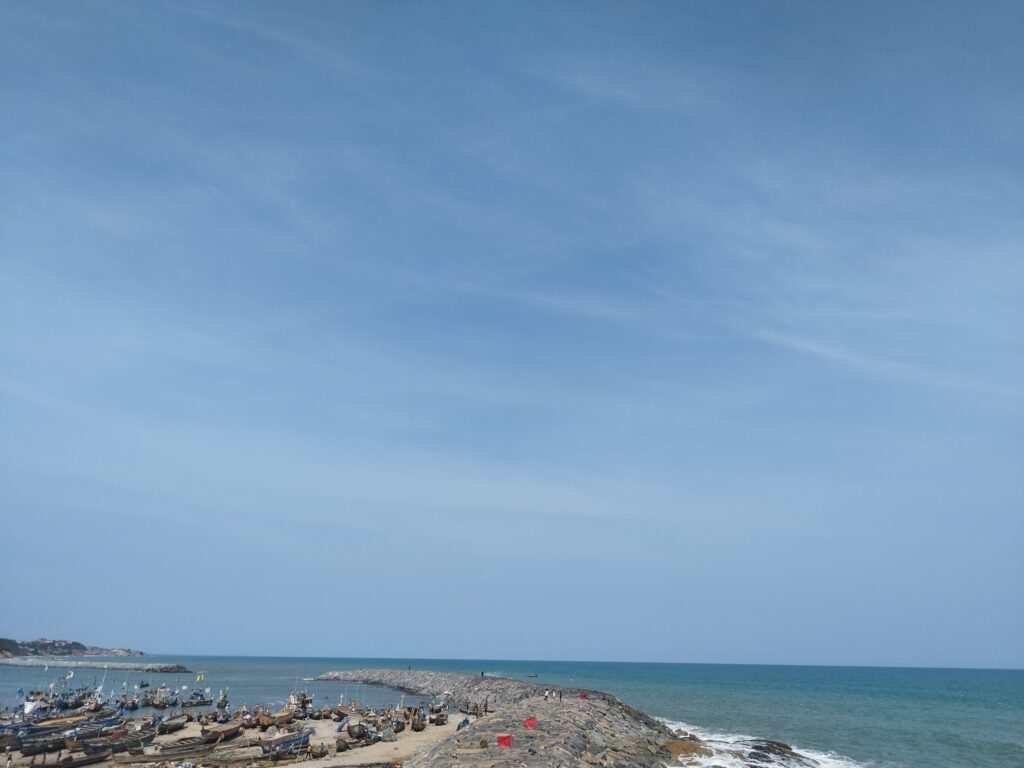
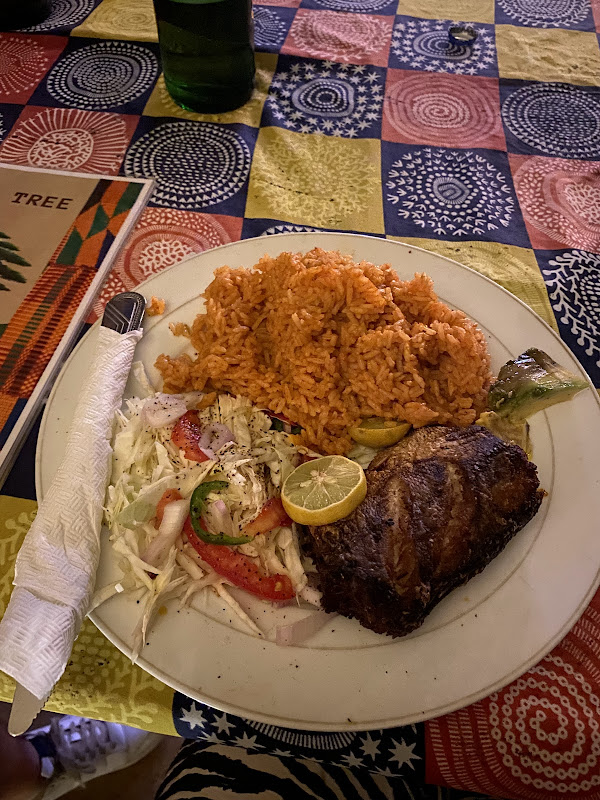
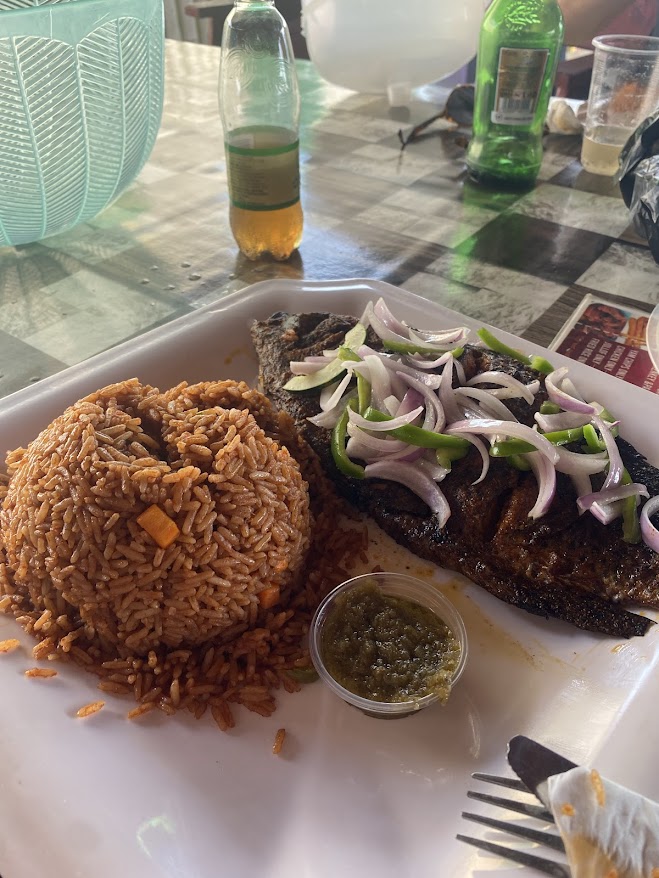
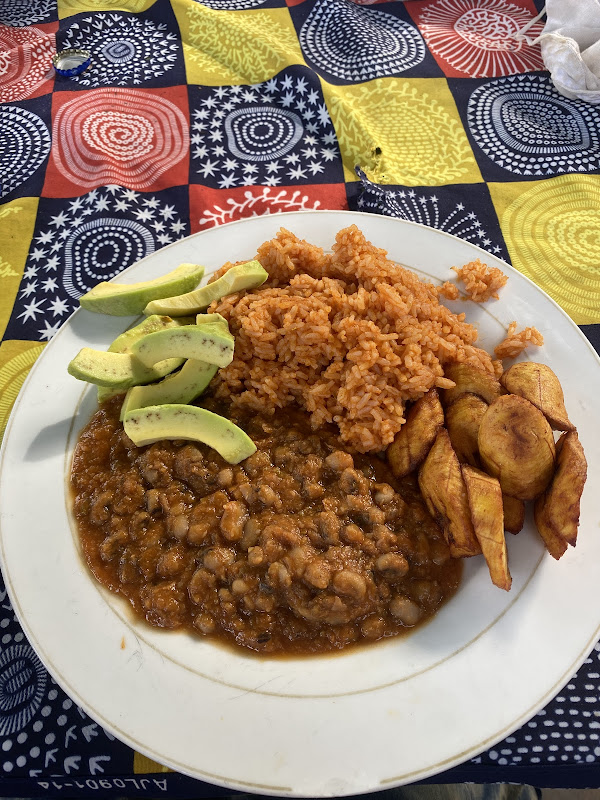
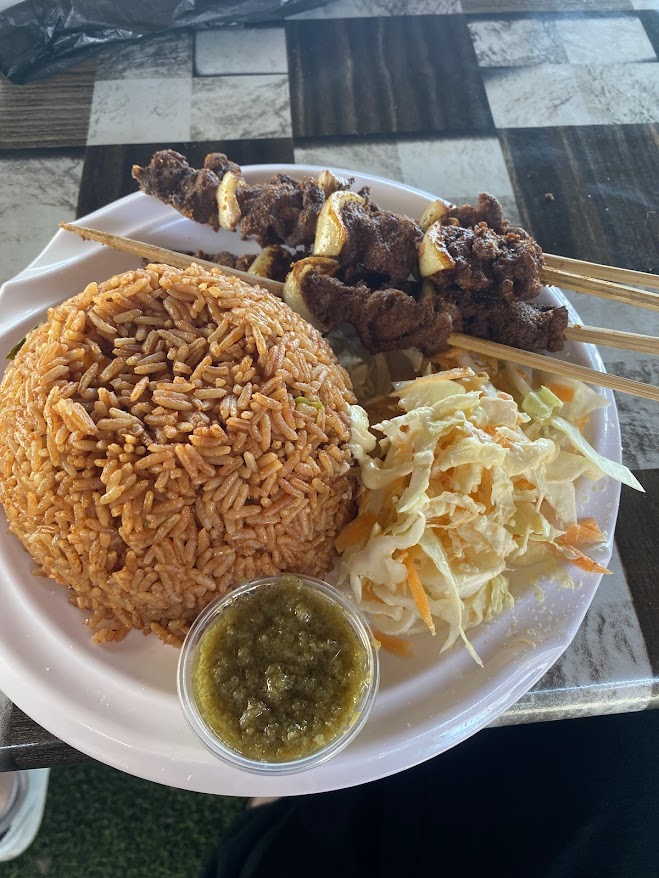
Ghanaian cuisine is hearty, spicy, and strongly based on local ingredients such as cassava, plantain, yam, rice, and maize. Perhaps the country’s most famous dish is jollof rice (tomato-based spiced rice), which is the subject of a friendly rivalry across West Africa over who makes it best—Ghana and Nigeria are the main contenders. The Ghanaian version is served with delicious spicy sauces, and the rice can be eaten with almost anything; we had it with grilled fish (both freshwater and sea fish), goat skewers, vegetables, and sometimes on its own.
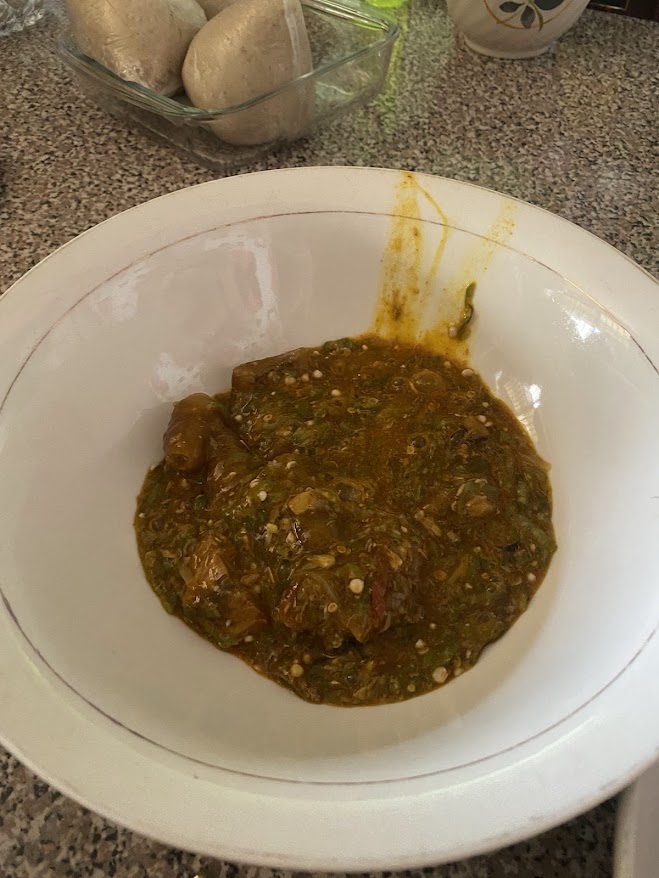
Another very famous staple is fufu (pounded cassava and/or plantain, shaped into a dough-like ball), as well as its fermented corn-based counterparts, garri and kenkey. These are served with a variety of soups and sauces, such as groundnut (peanut) soup or palm oil–based stews, and okra sauce is also a big favorite. Okra sauce (which may include fish or meat) is naturally very stretchy and is eaten by hand (wrapped around the fingers), but unfortunately we couldn’t get used to its texture. Palava sauce is also very delicious, made with cocoyam leaves, spinach, amaranth leaves (callaloo), and egusi (ground seeds of a type of melon).
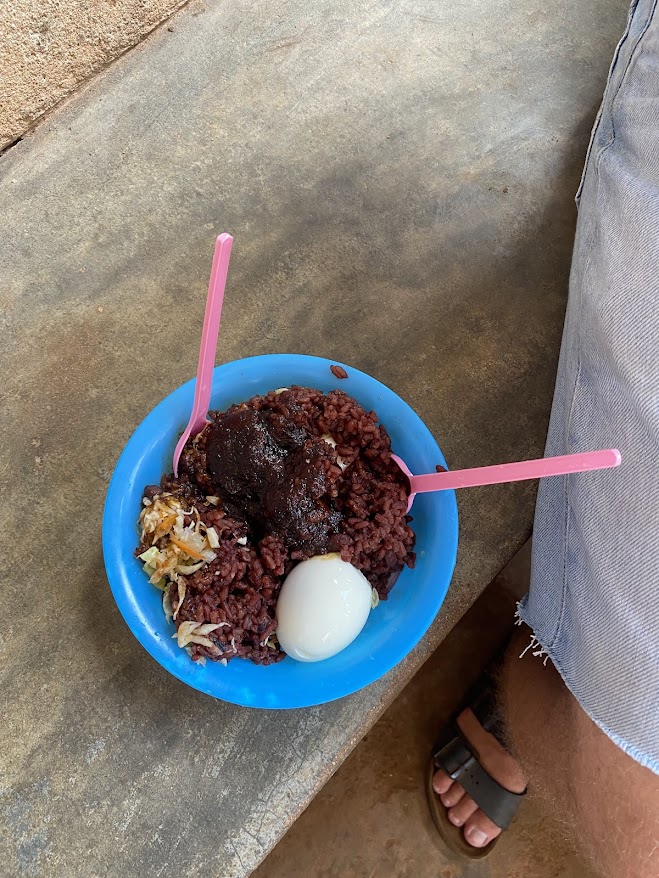
For breakfast, we tried the two most popular dishes: hausa koko, a fermented millet porridge that is slightly spicy (with ginger and sometimes cloves), served with koose, small bean fritters. The other common breakfast is waakye, a dish of rice and beans cooked together, often colored with sorghum leaves (at first we thought its dark color came from soy sauce). It can be served with boiled or fried egg, spicy sauce, and sometimes a darker, salty sauce—occasionally soy sauce–like, though more often a local fermented or Maggi-seasoned sauce.
Safety
The country used to be considered one of the safest in Africa; however, in recent years crime rates have slightly increased in larger cities such as Accra and Kumasi. At the market in Kumasi, we felt this ourselves, as several people warned us to watch our valuables, and someone even tried to pickpocket us.
In the villages, we felt just as safe as anywhere else in West Africa, and it is still fair to say that Ghana is a safe destination overall — you just need to be a bit more cautious than in the past.
Roads
The quality of the roads was not very good. Although there are many asphalt roads, they are covered with huge potholes. The entrance to Accra is complete chaos — we laughed a lot there, as a minibus ended up guiding us through because we somehow kept finding ourselves stuck between two lanes.
There was once an attempt to introduce toll roads in the country, but now the toll gates stand abandoned; for road conditions like these, they probably decided not to charge at all. We met travelers from Benin who were surprised that the roads here were worse than at home. Growing up, they had always heard about Ghana as a place that was clean and had excellent roads, but nowadays Benin (and Togo) have clearly overtaken it in both respects.
Sights and Experiences – Where We’ve been and what’s been left out
Accra
Accra is Ghana’s capital and largest city (around 2.5 million inhabitants, with the metropolitan area reaching up to 5 million), located on the Atlantic coast. It is the country’s political, economic, and cultural center, with modern office buildings, bustling markets, and seaside promenades.
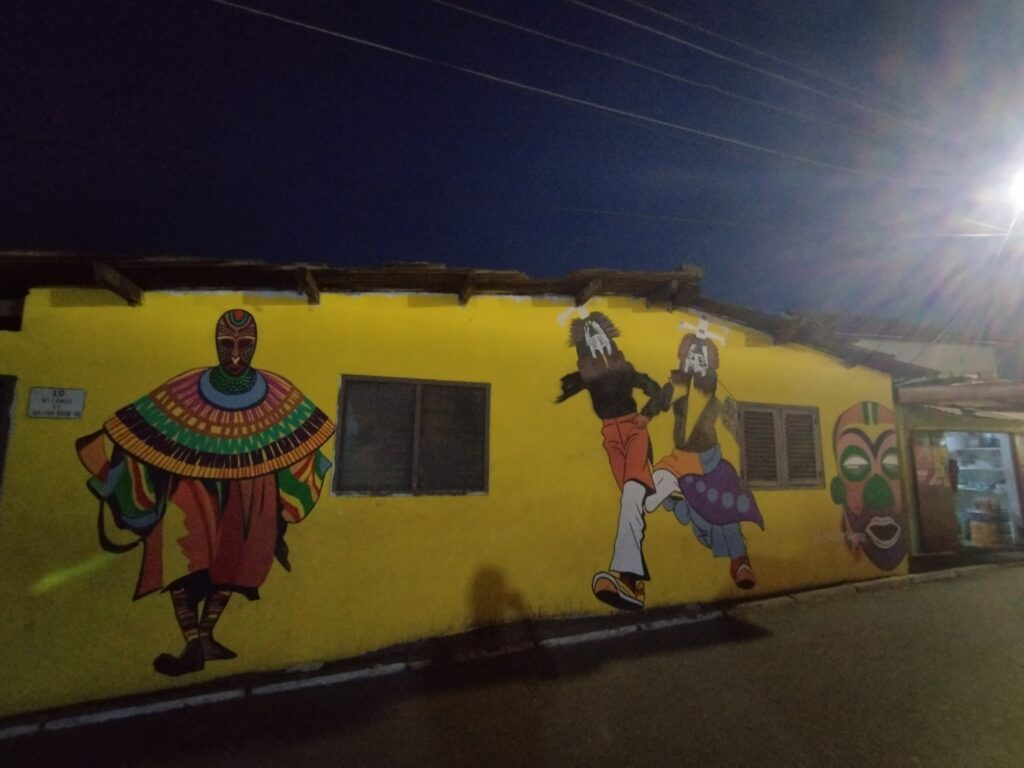
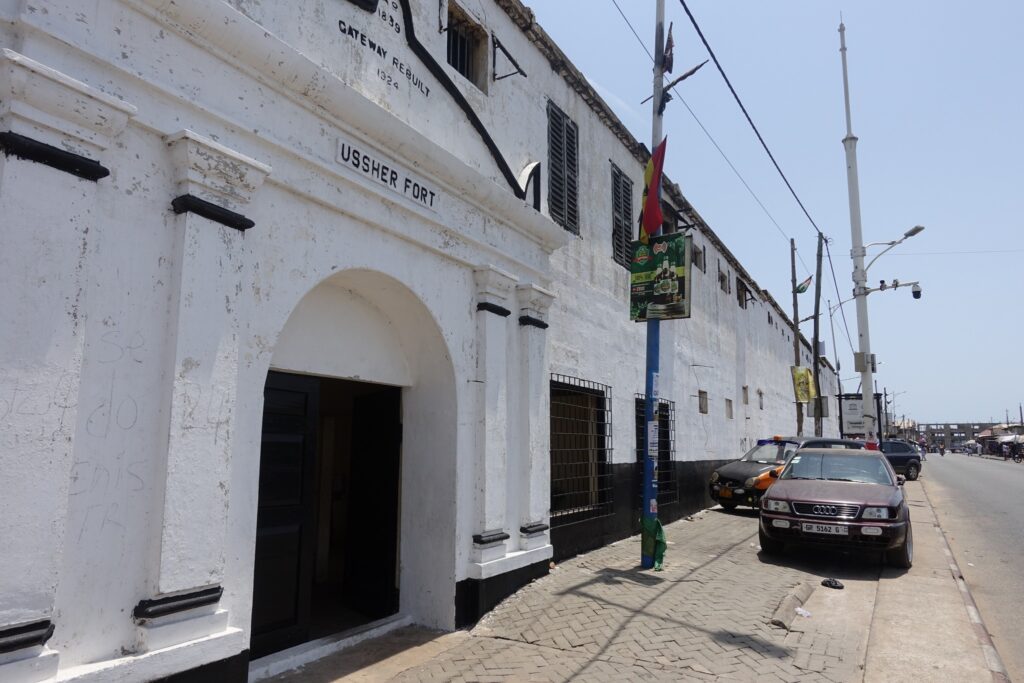
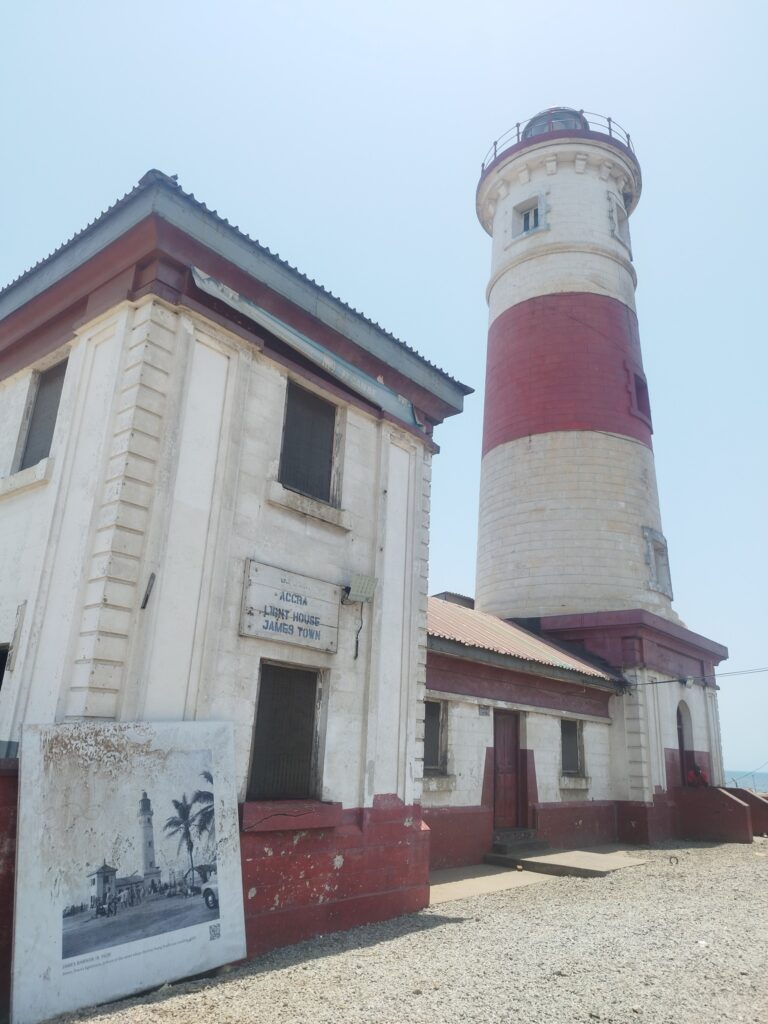
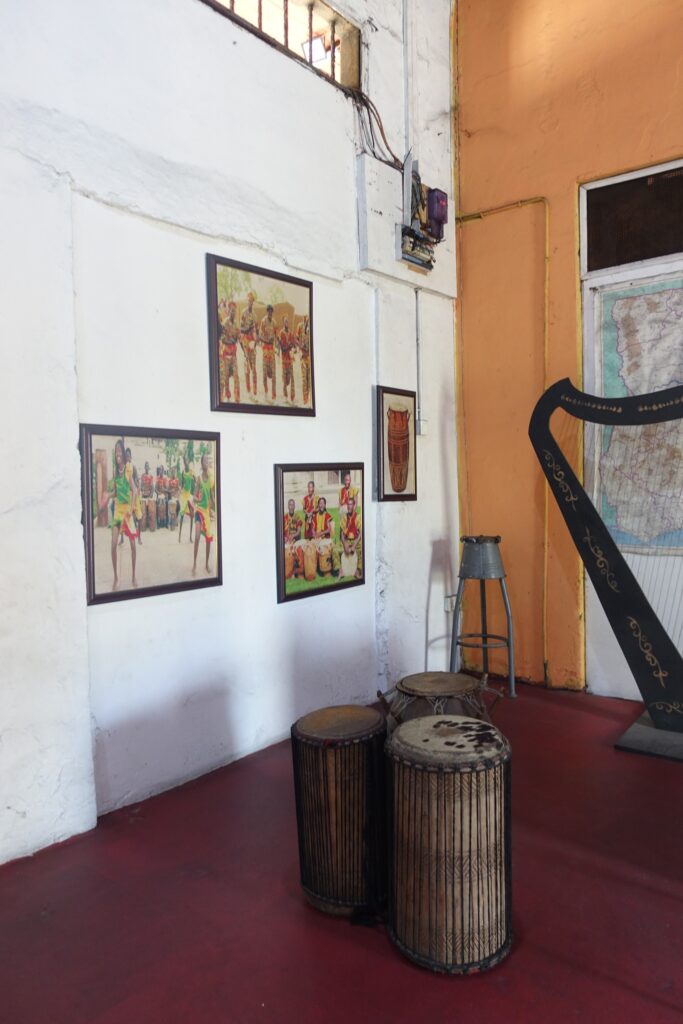
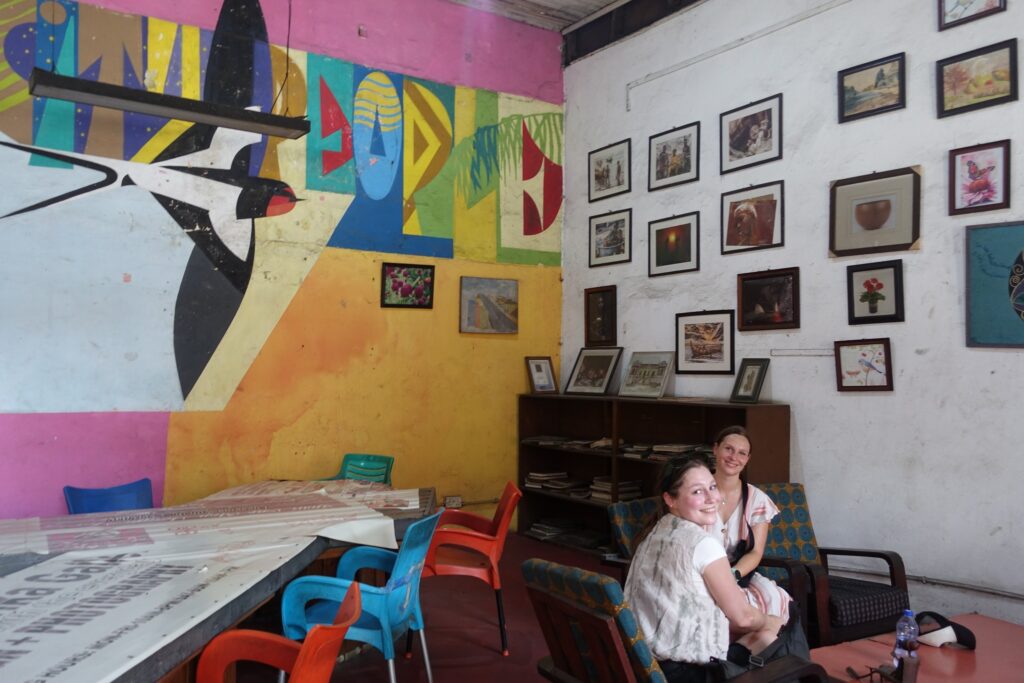
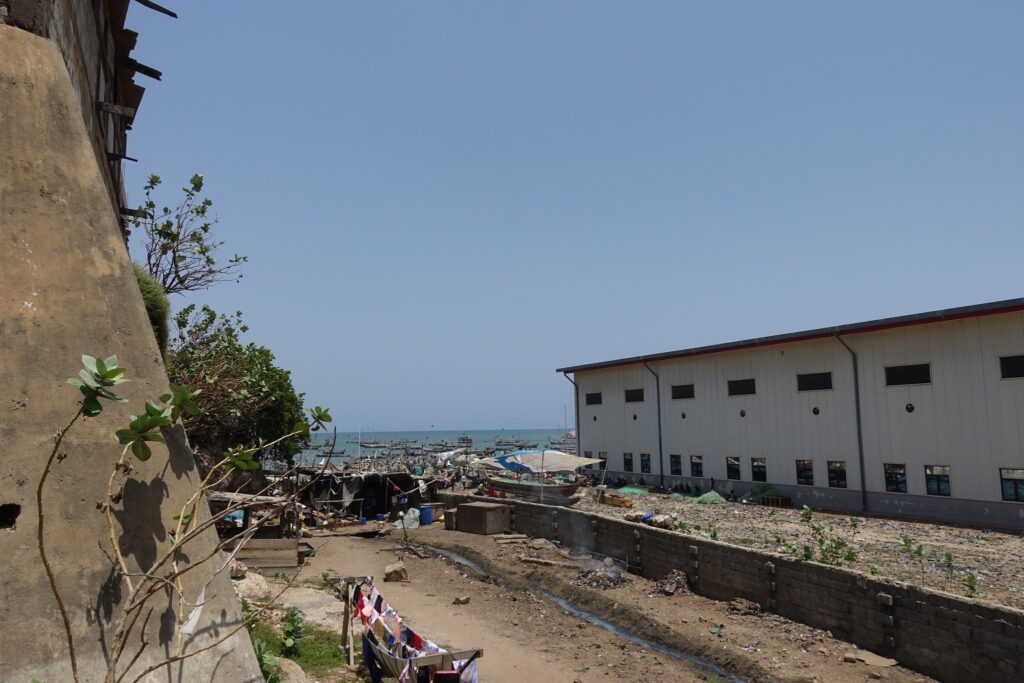
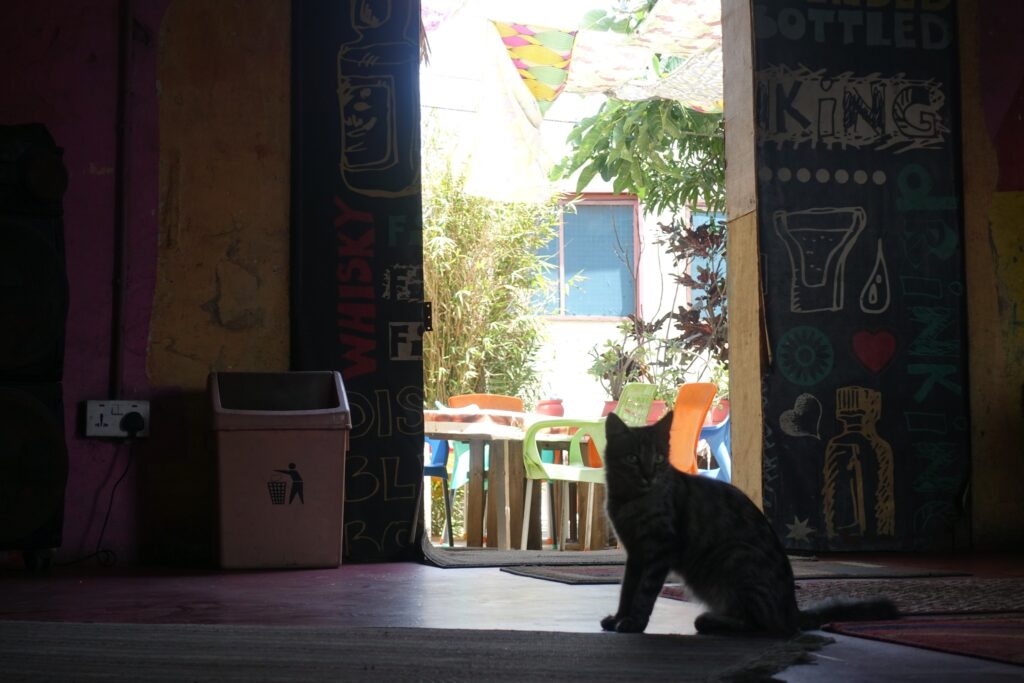
What we liked about the city is that it feels modern, yet small, brightly painted houses and street vendors coexist beneath the larger buildings. We started our sightseeing in Jamestown, one of the city’s oldest districts, which today functions as a fishing community. Its forts and small lighthouse are the best-known landmarks; although it is currently one of the poorer neighborhoods, it is also a very vibrant area full of art. We spent most of our time in a cultural center there (mainly because it was so hot that we couldn’t walk much longer).
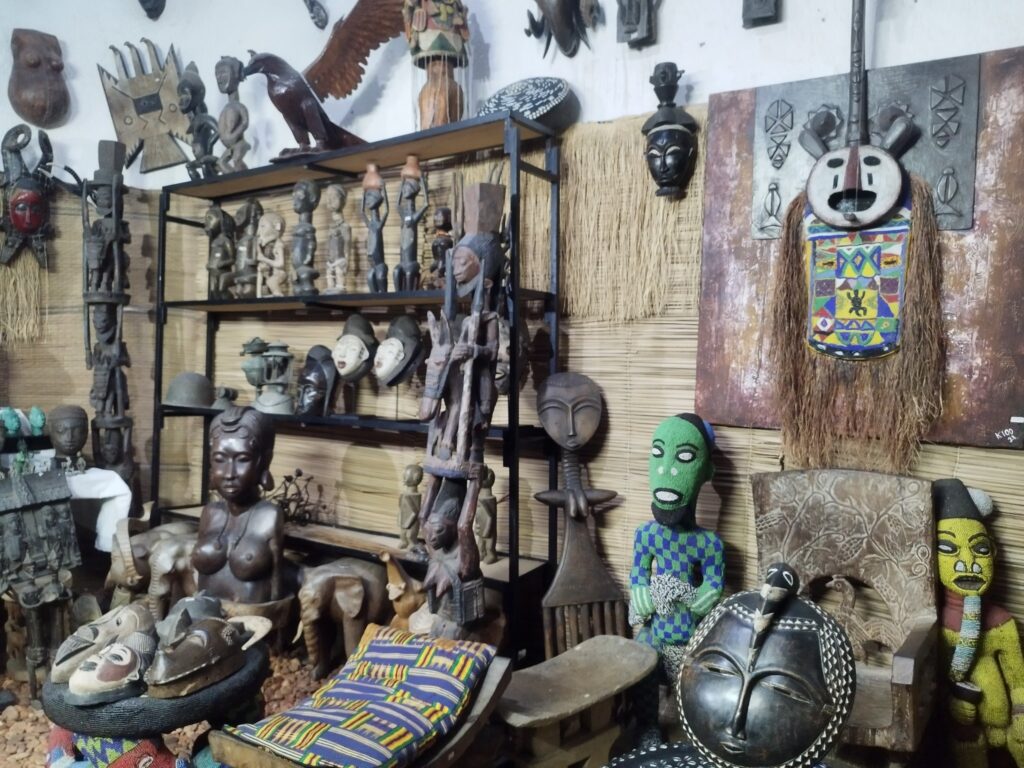
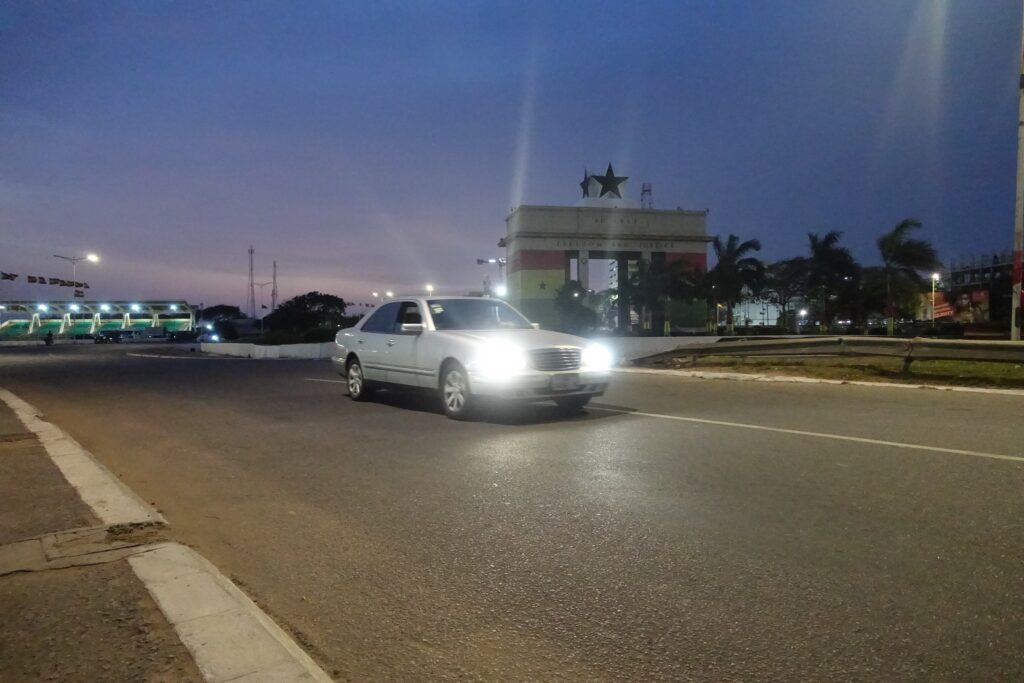
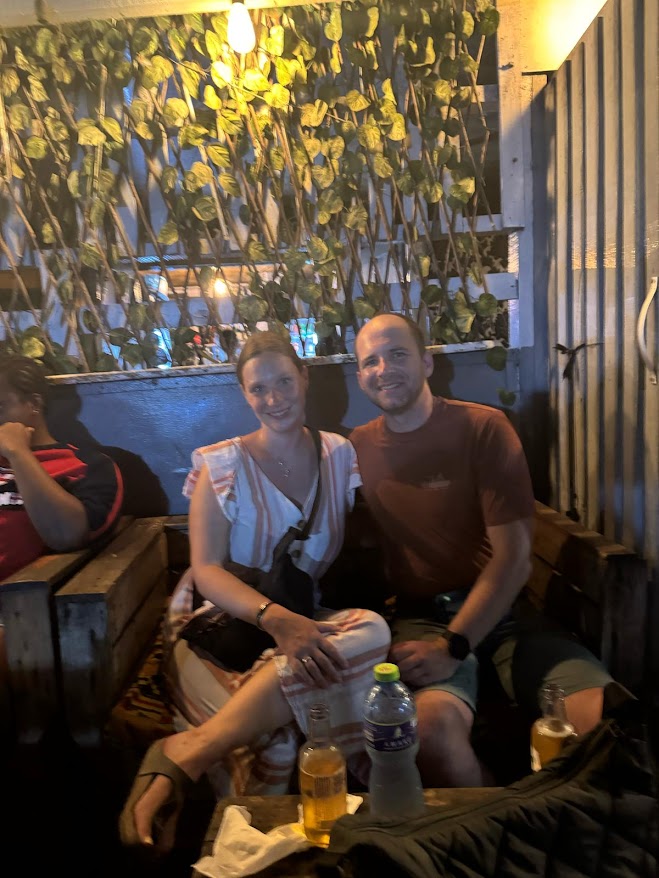
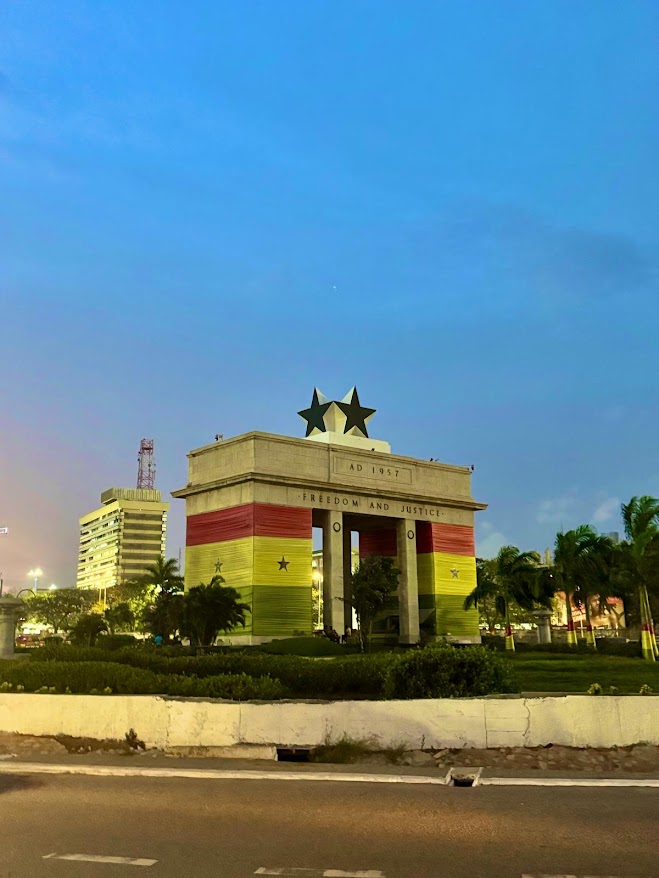
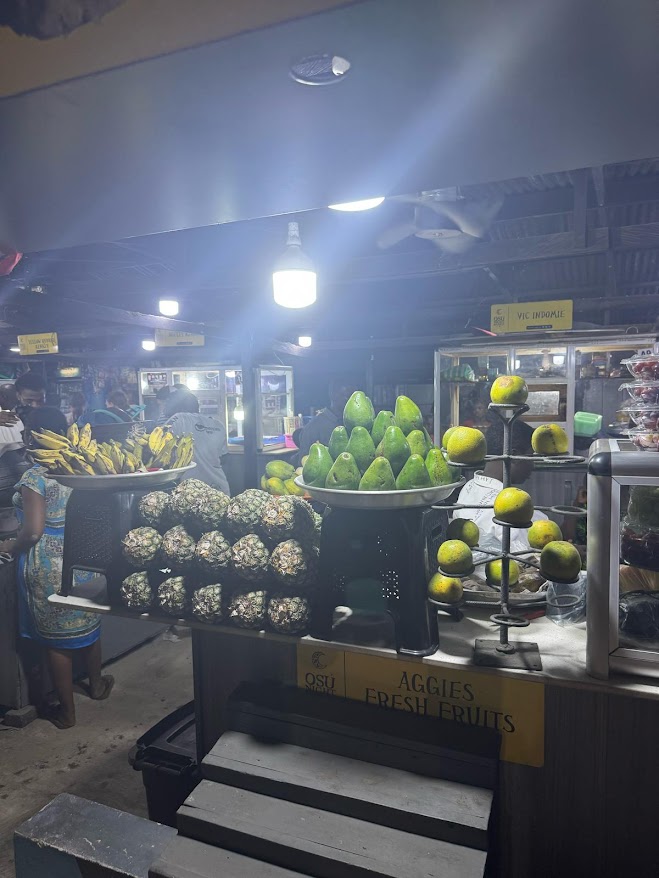
Makola Market, the city’s largest market, was lively but still enjoyable to explore, and it was great to discover local products. We also visited the souvenir market, where we found many interesting old masks. We walked through some of the city’s iconic spots, such as the Independence Arch (symbolically important because Ghana was the first sub-Saharan African country to gain independence after colonial rule), and ended the evening at the night market. Alongside unusual items (like grilled rat), there were plenty of other delicious options — we chose a very popular grilled fish stand and had mackerel with tomato salad.
Unfortunately, the beach within the city itself is quite littered, though we heard that the coastline further out is cleaner and more atmospheric — we just didn’t have enough time to see it. Accra is definitely an interesting African metropolis.
Busua Beach
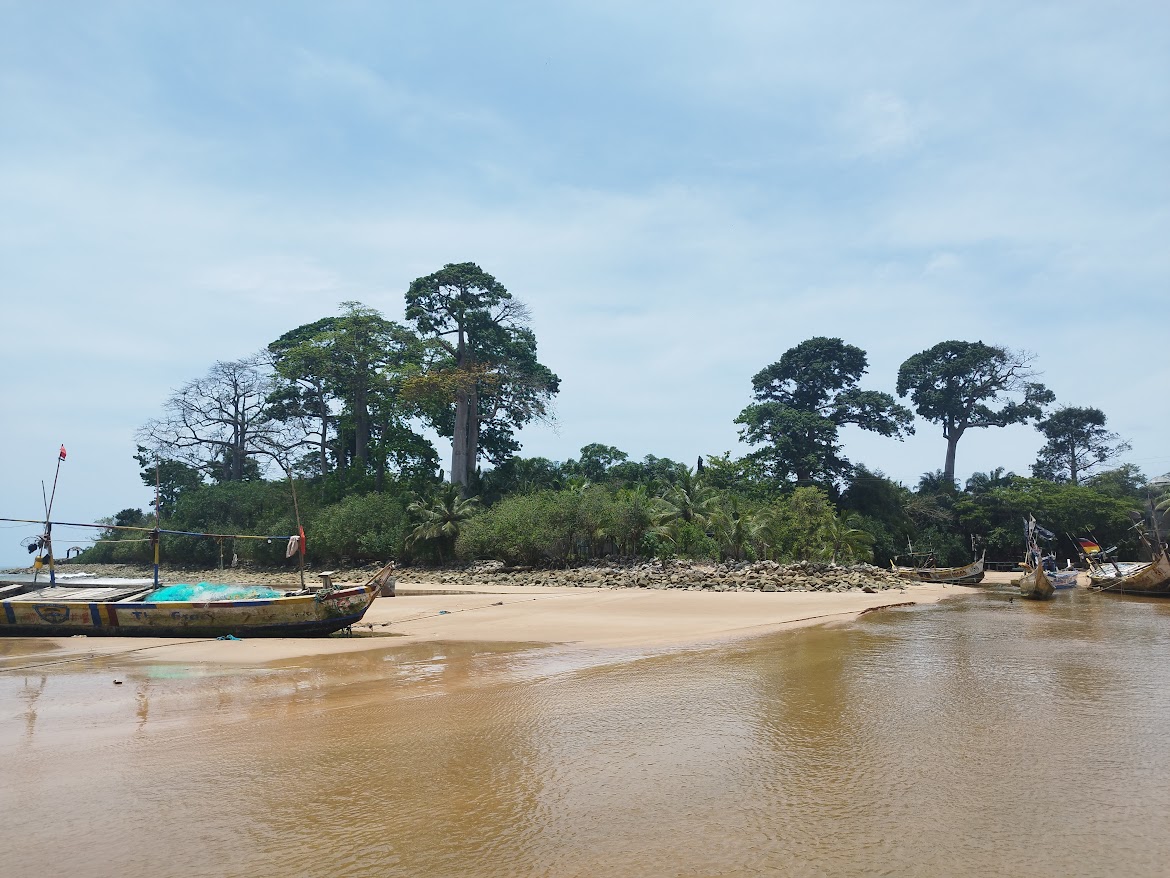
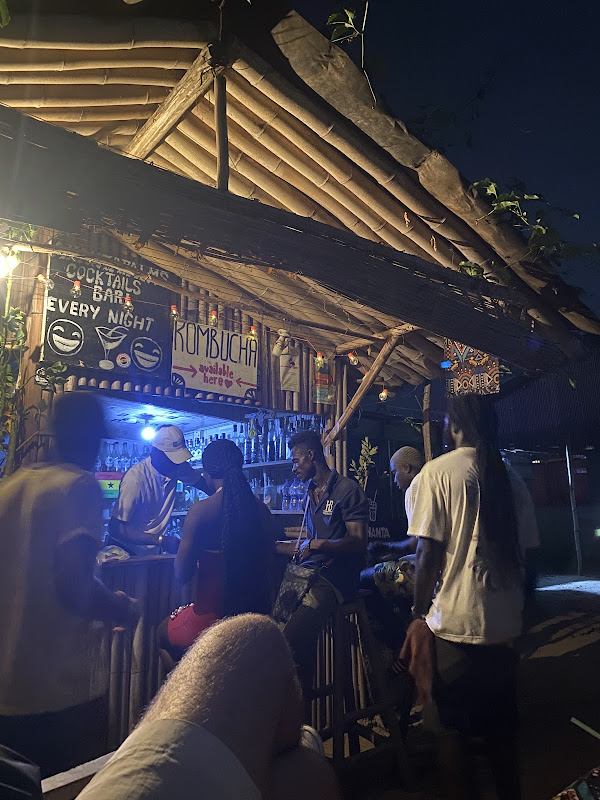
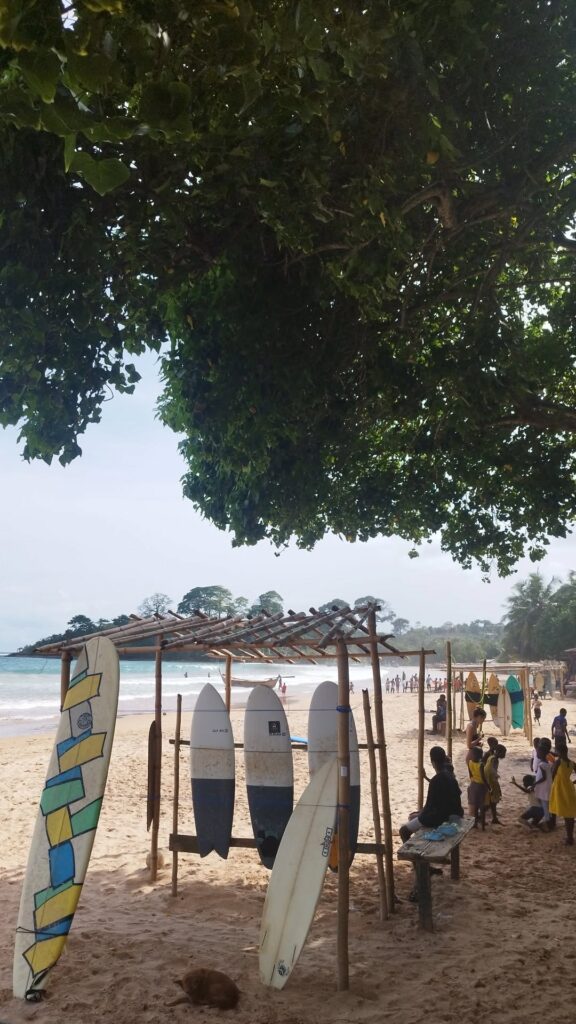
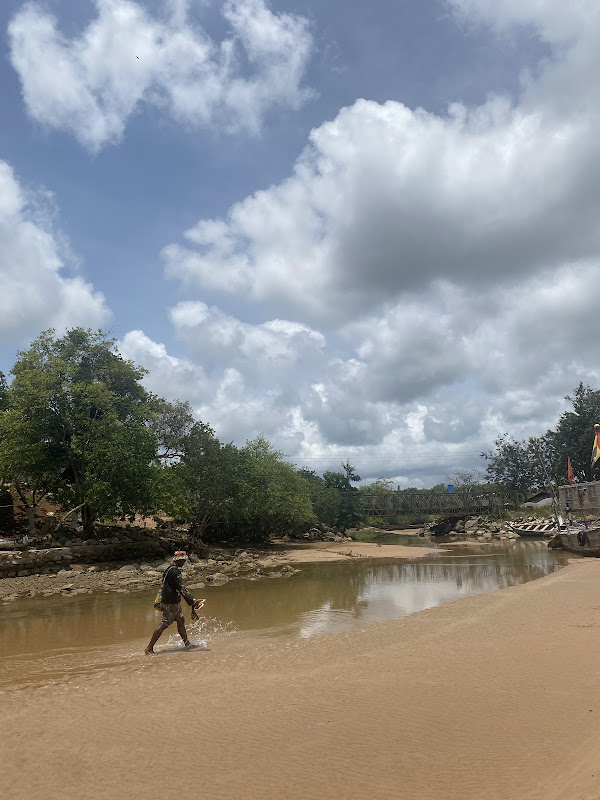
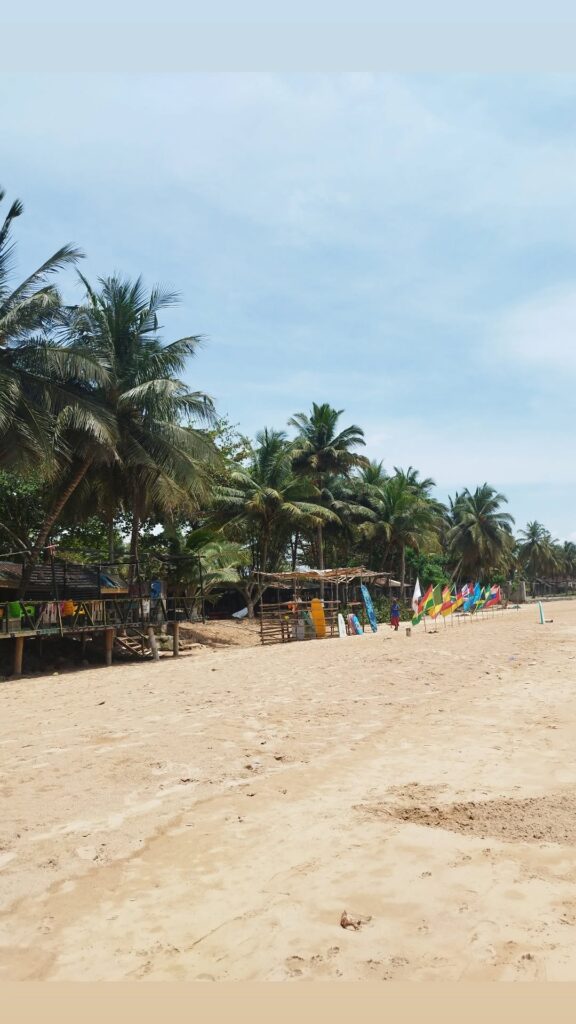
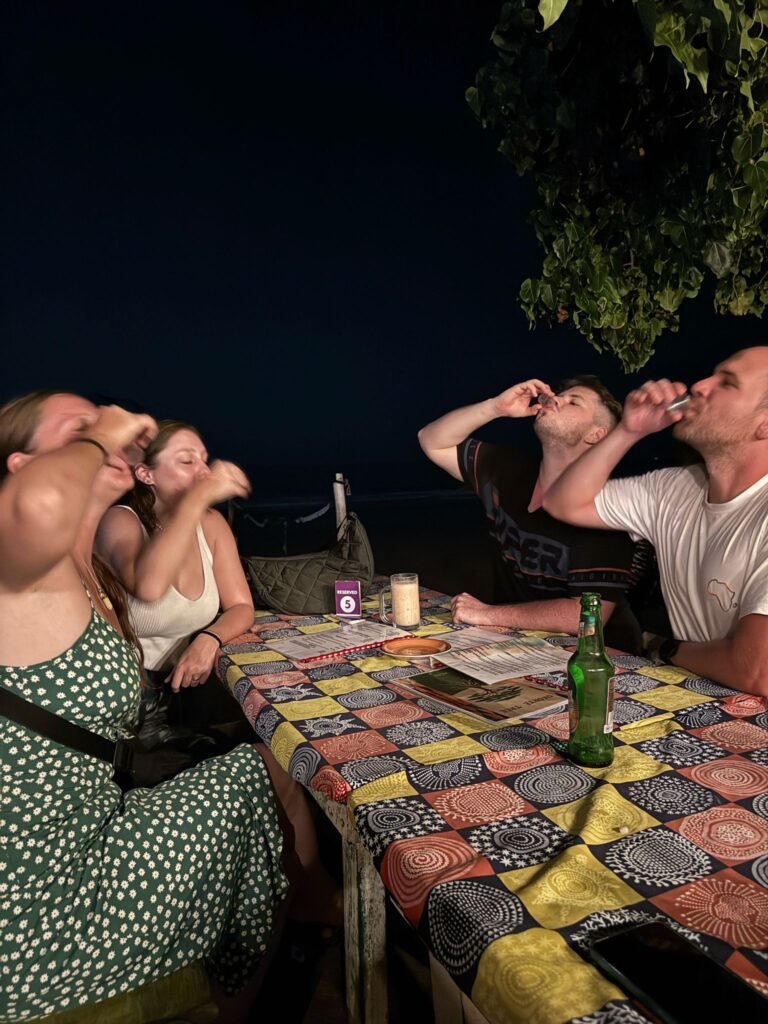
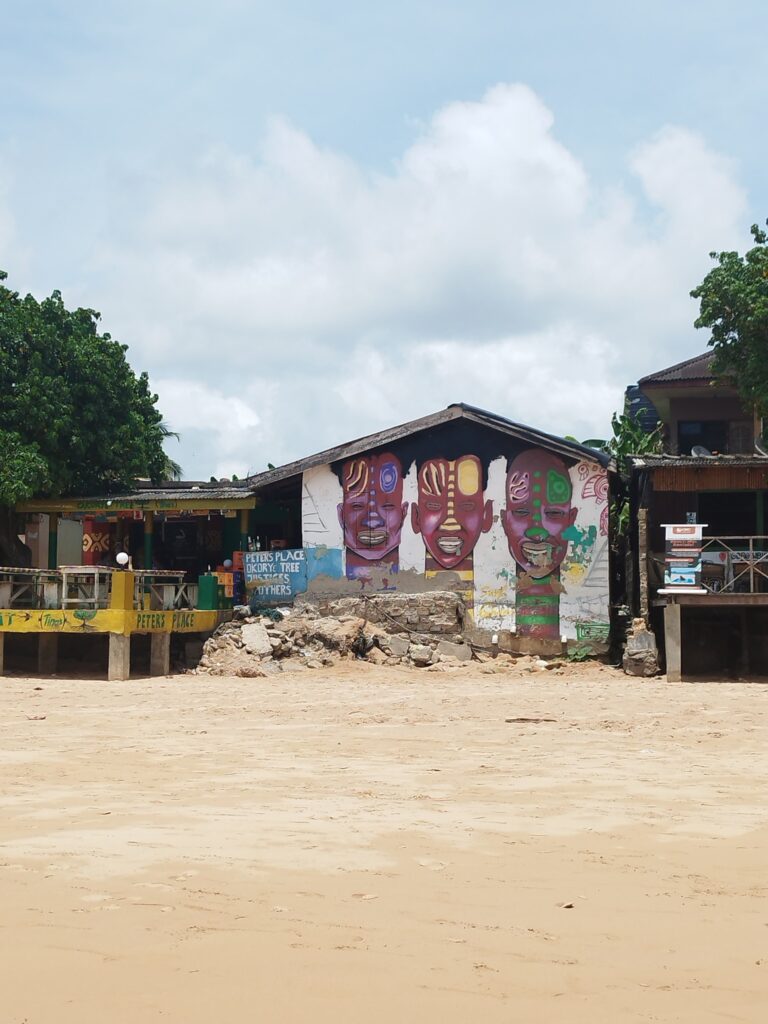
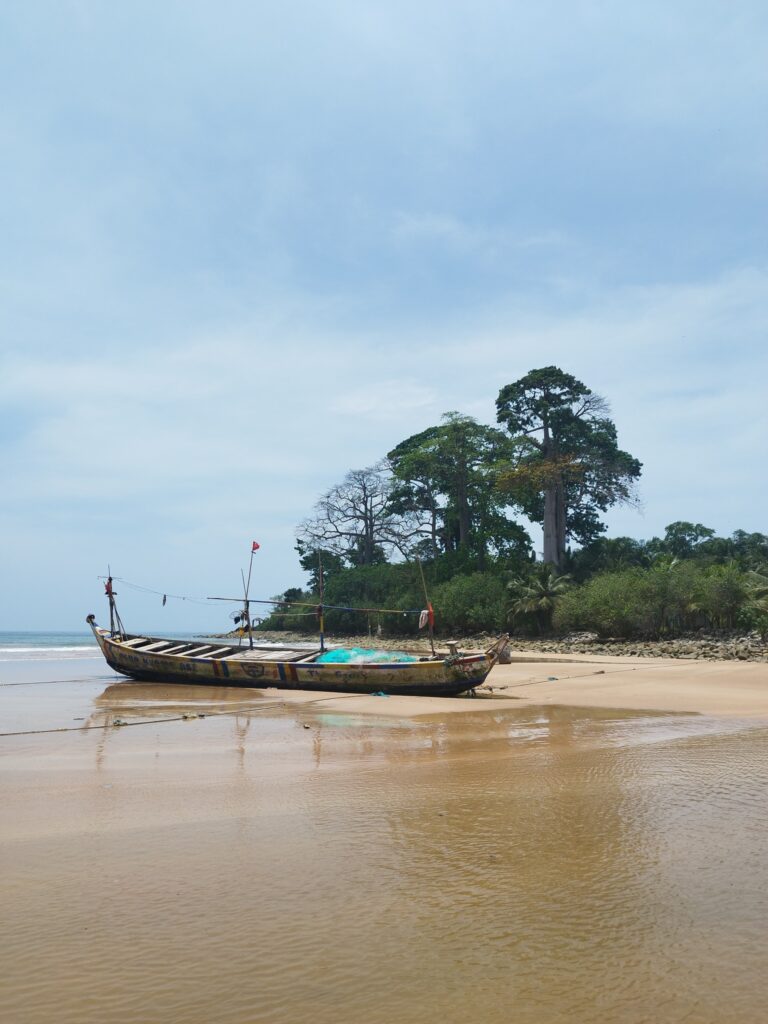
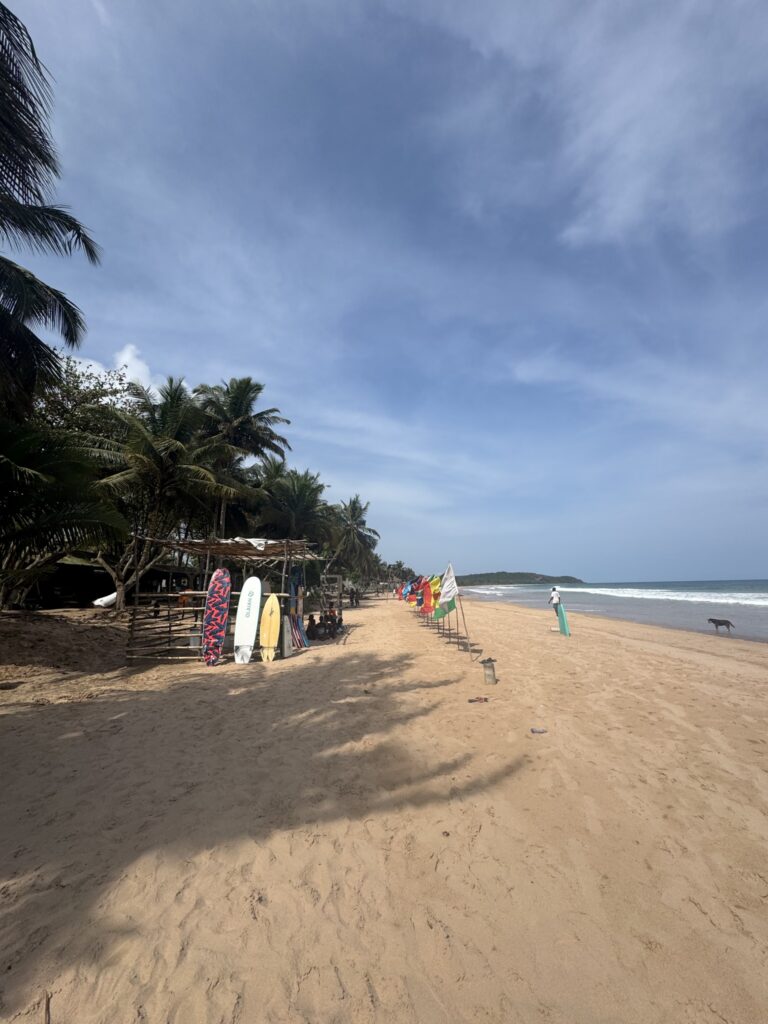
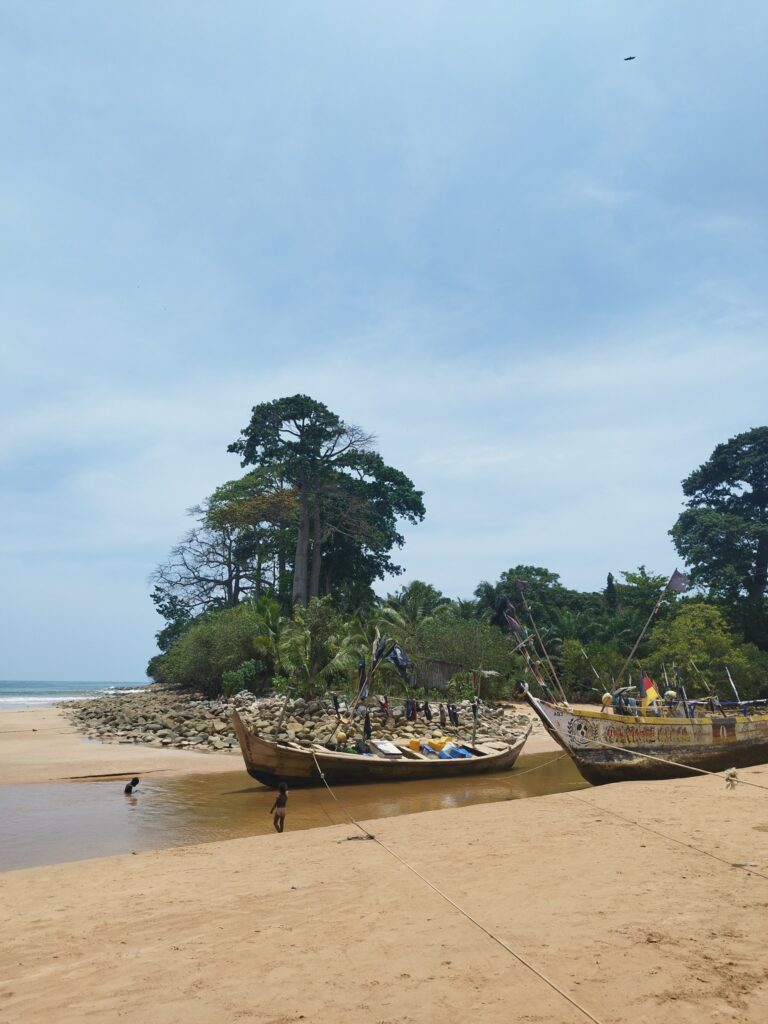
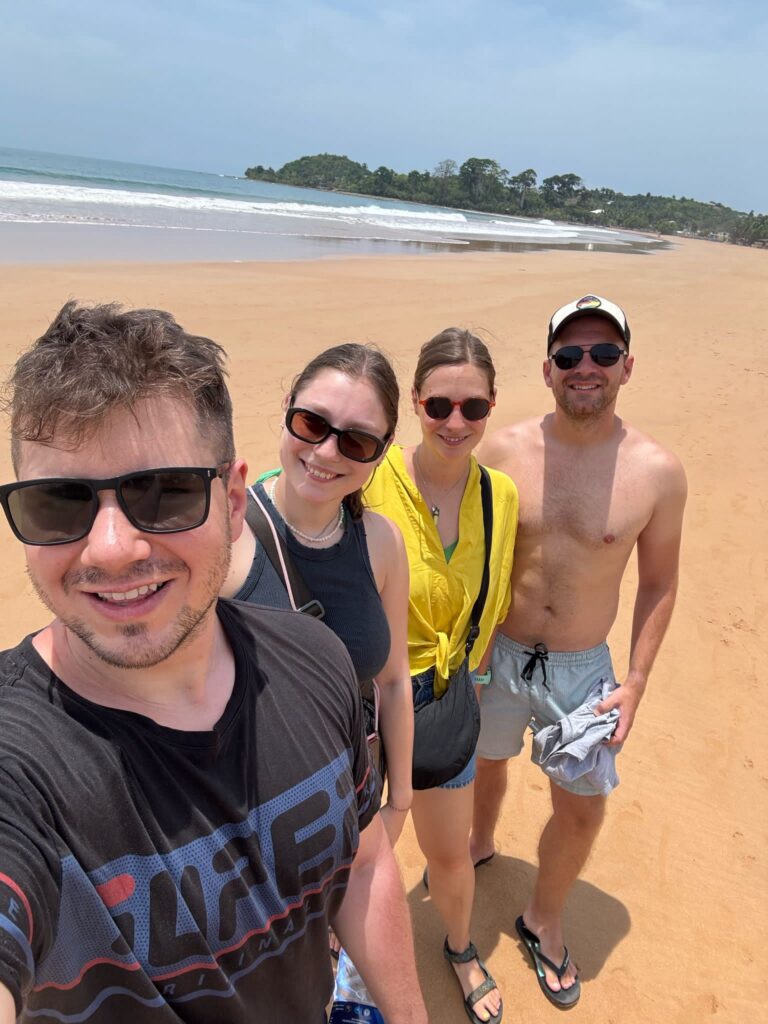
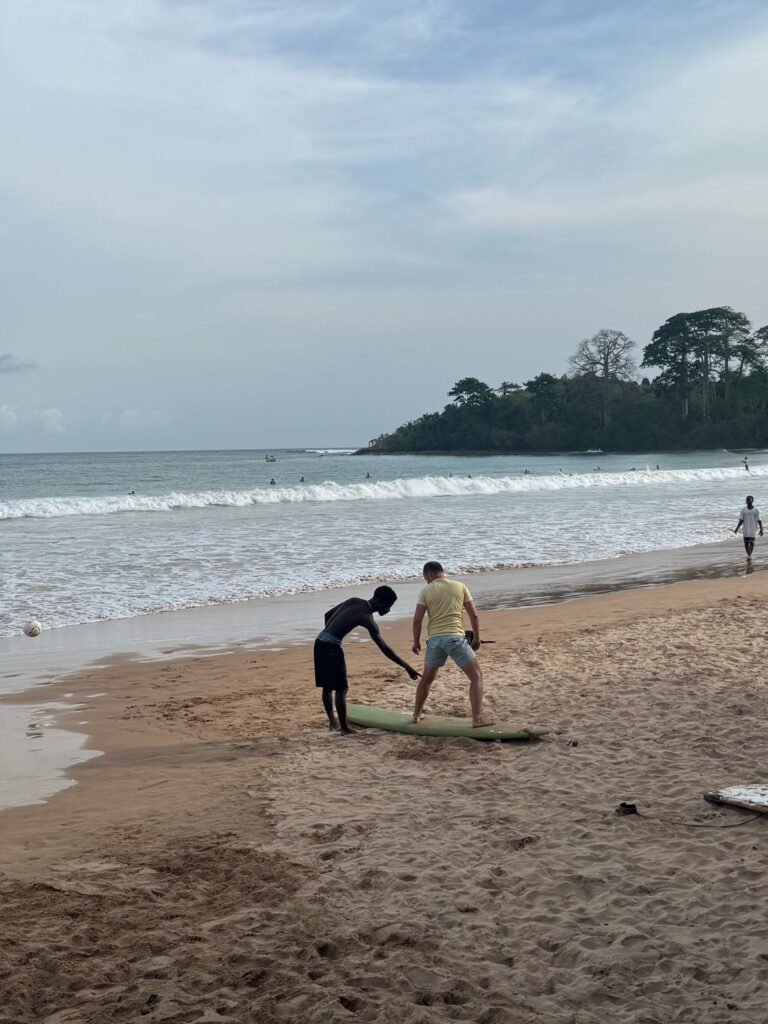
Busua Beach really surprised us. I had read that it was a backpacker spot, but in West Africa that usually just means that an occasional traveler passes through. Here, however, it was genuinely full of mostly young travelers, beach shacks, small restaurants, rastafarian bars, a beautiful shoreline, fishing boats, surfers, and an amazing laid-back atmosphere that completely drew us in.
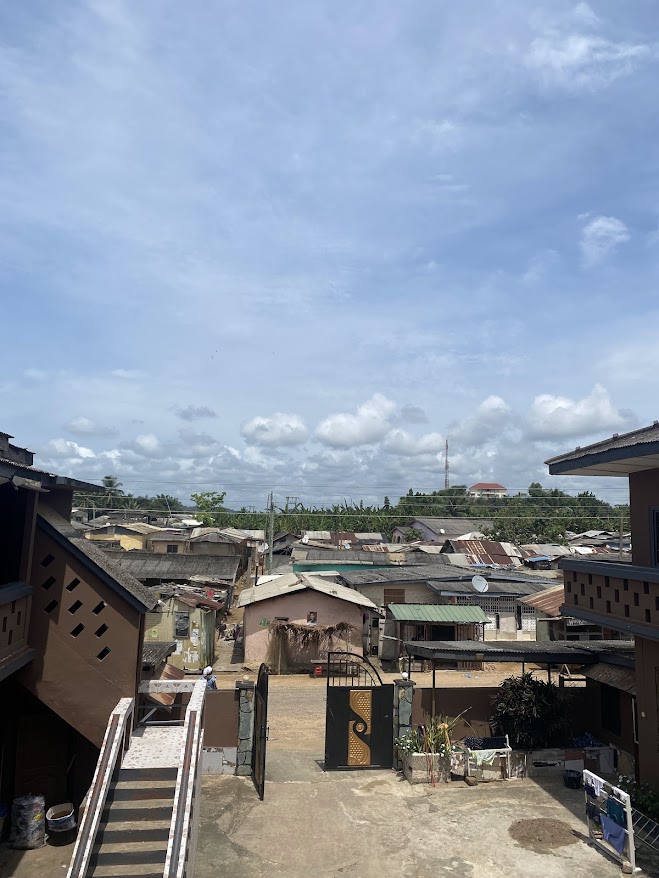
The village itself is very small, so you quickly start recognizing everyone.
Kakum National Park
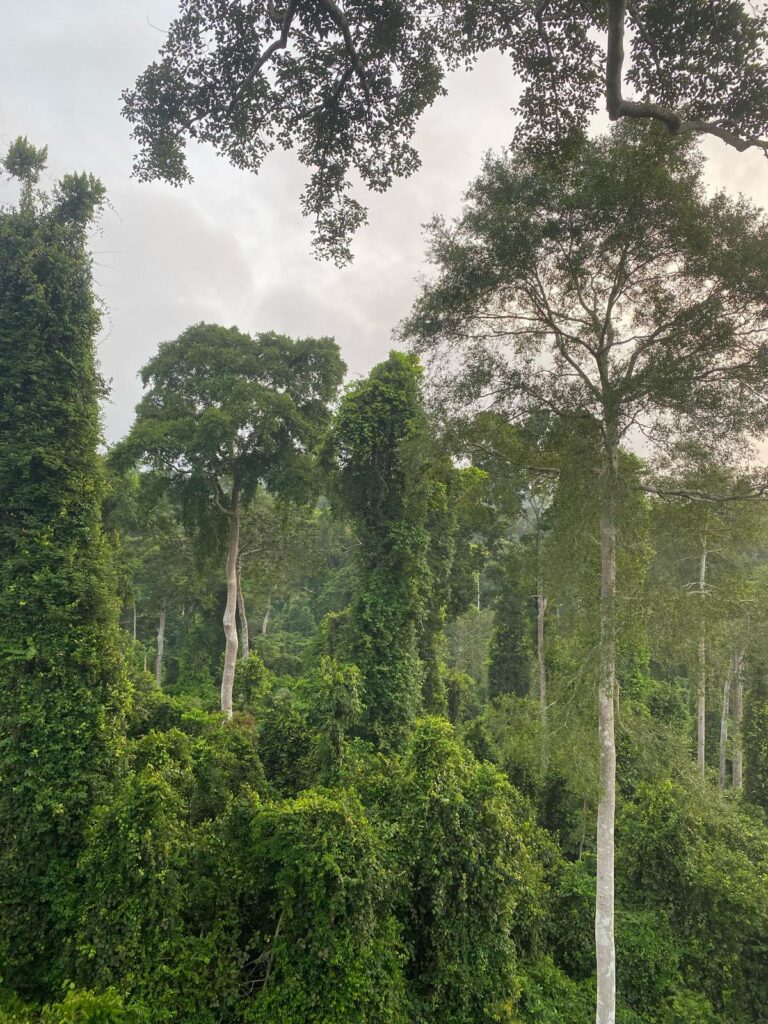
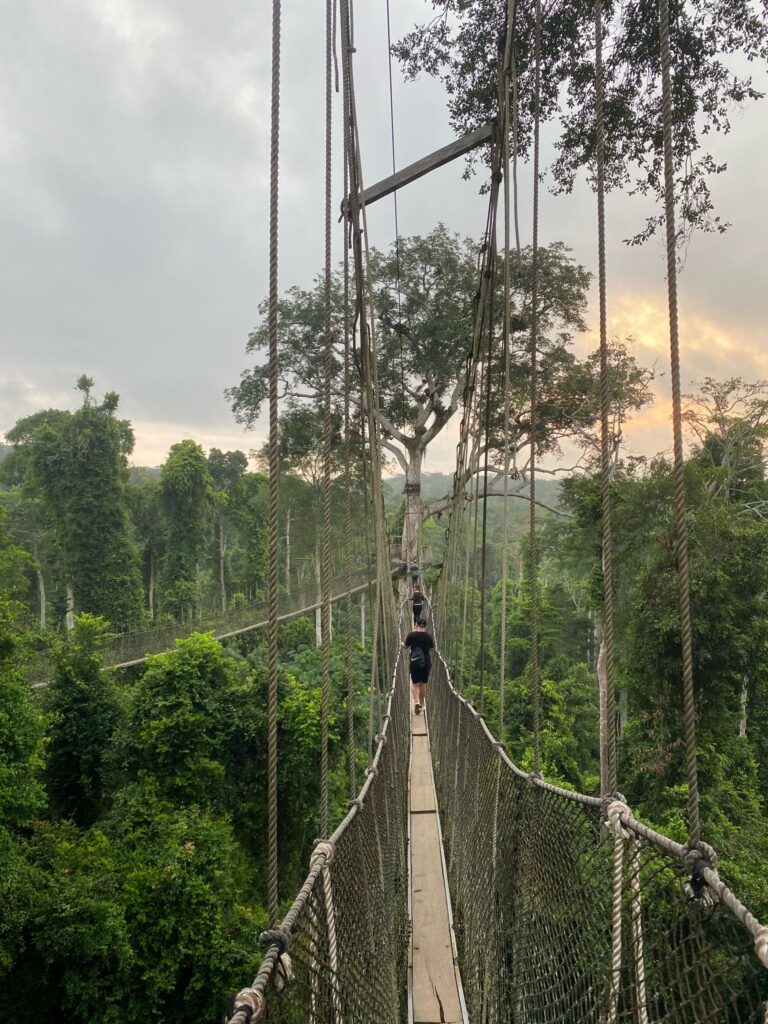
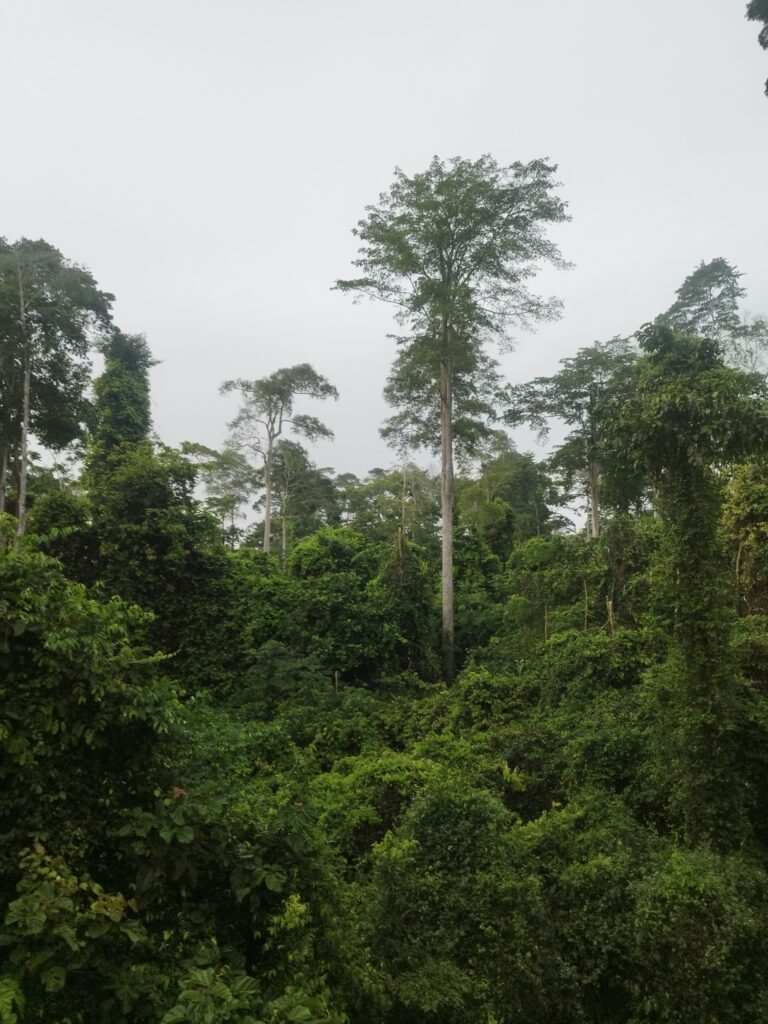
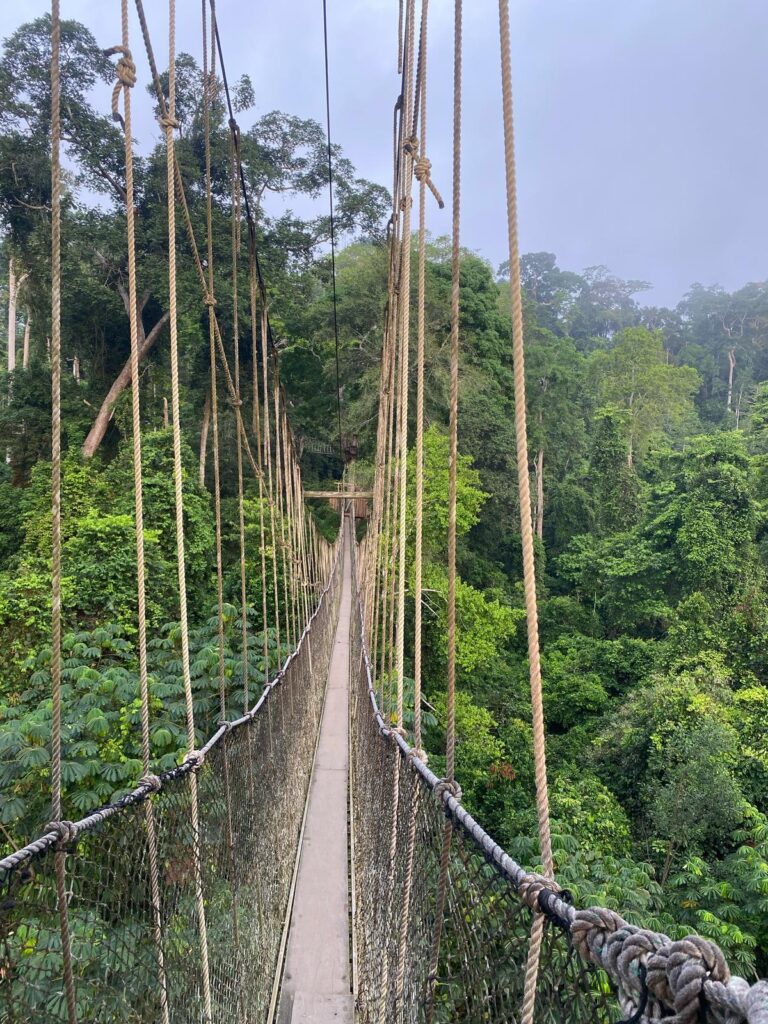
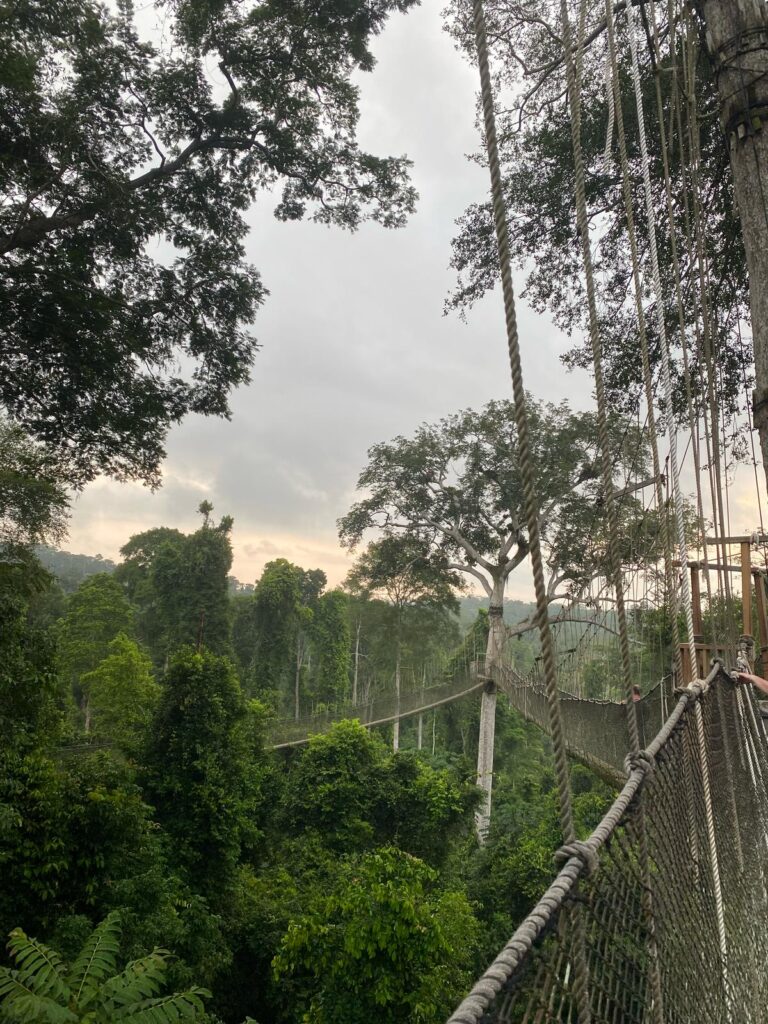
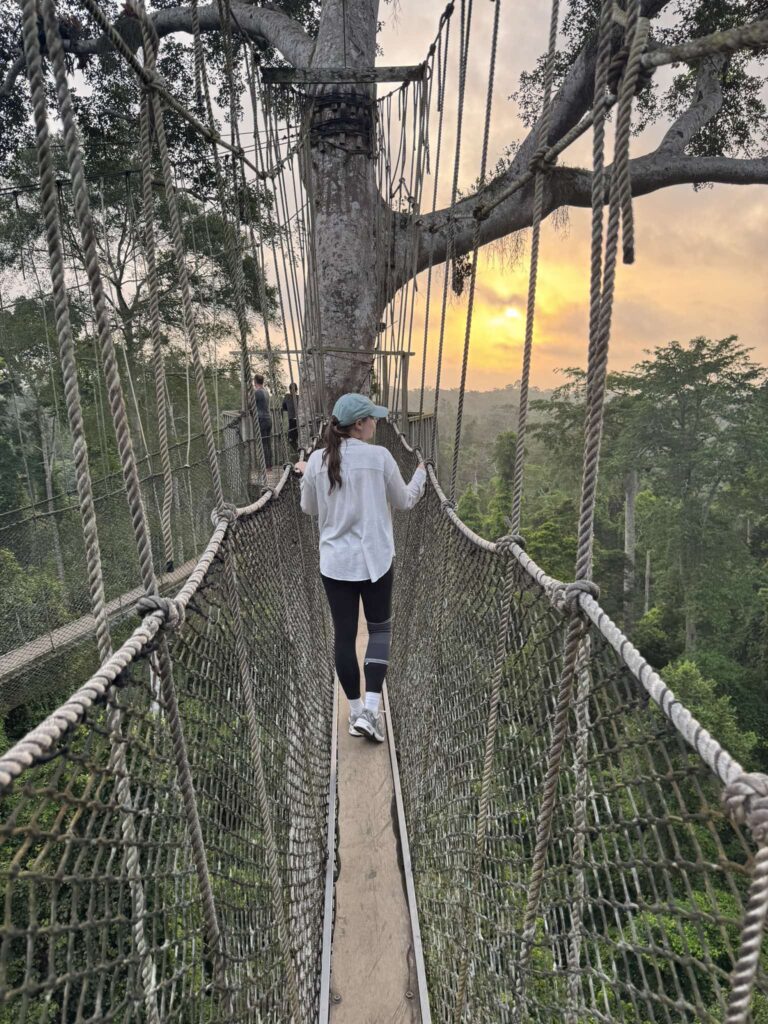
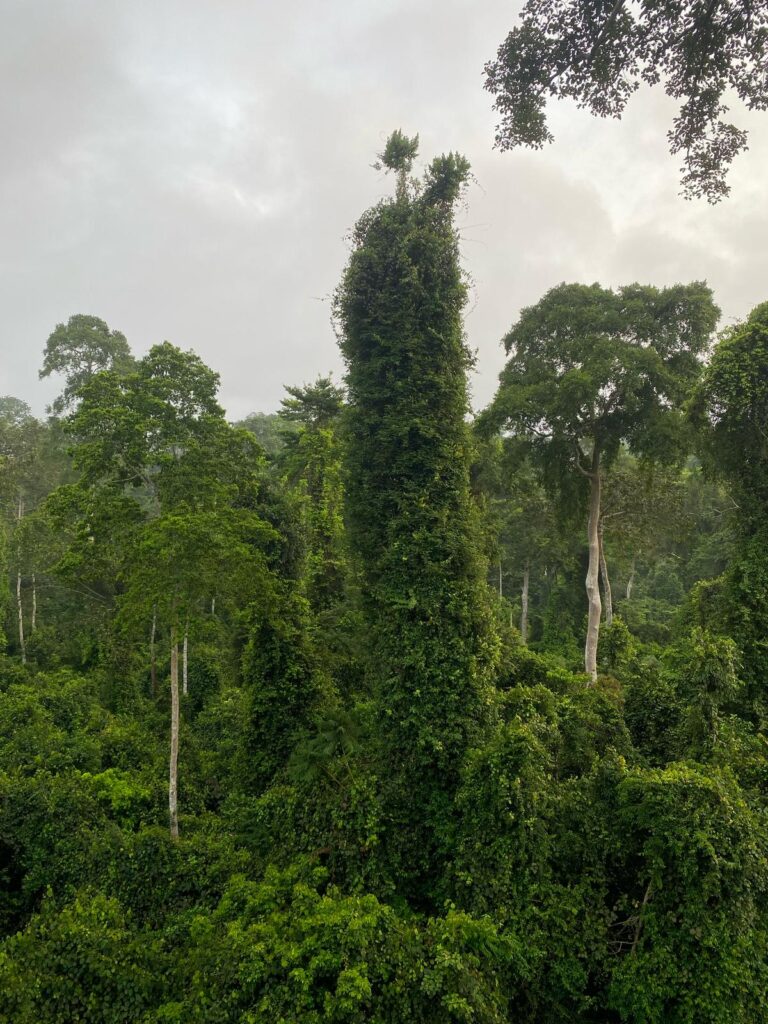
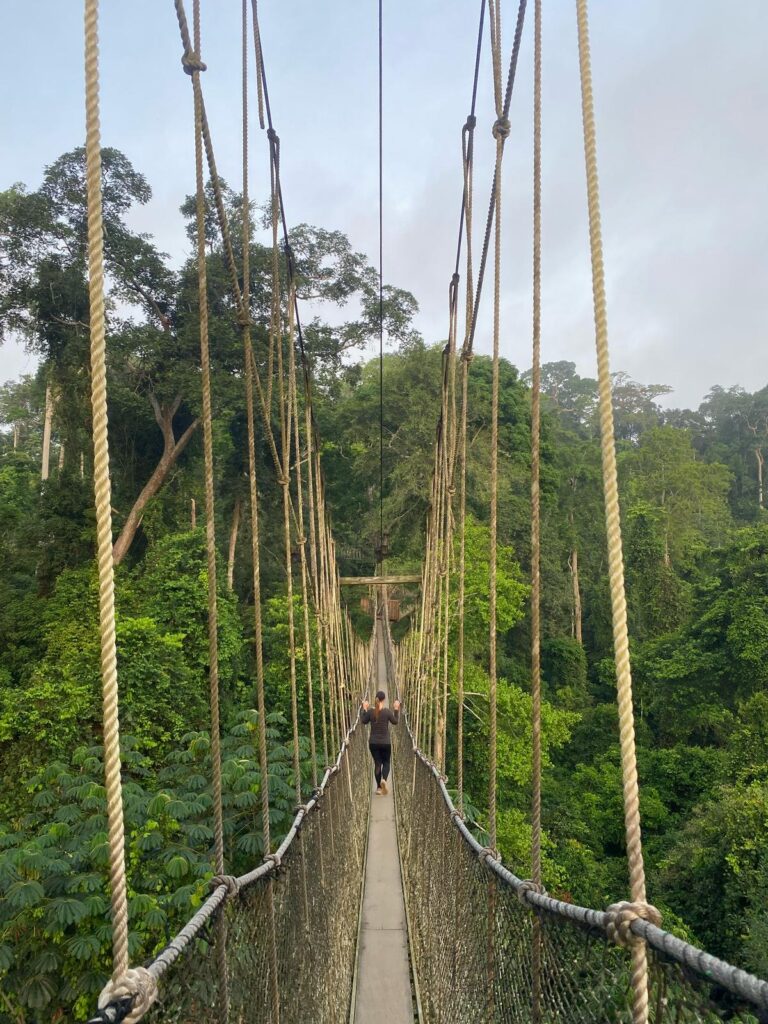
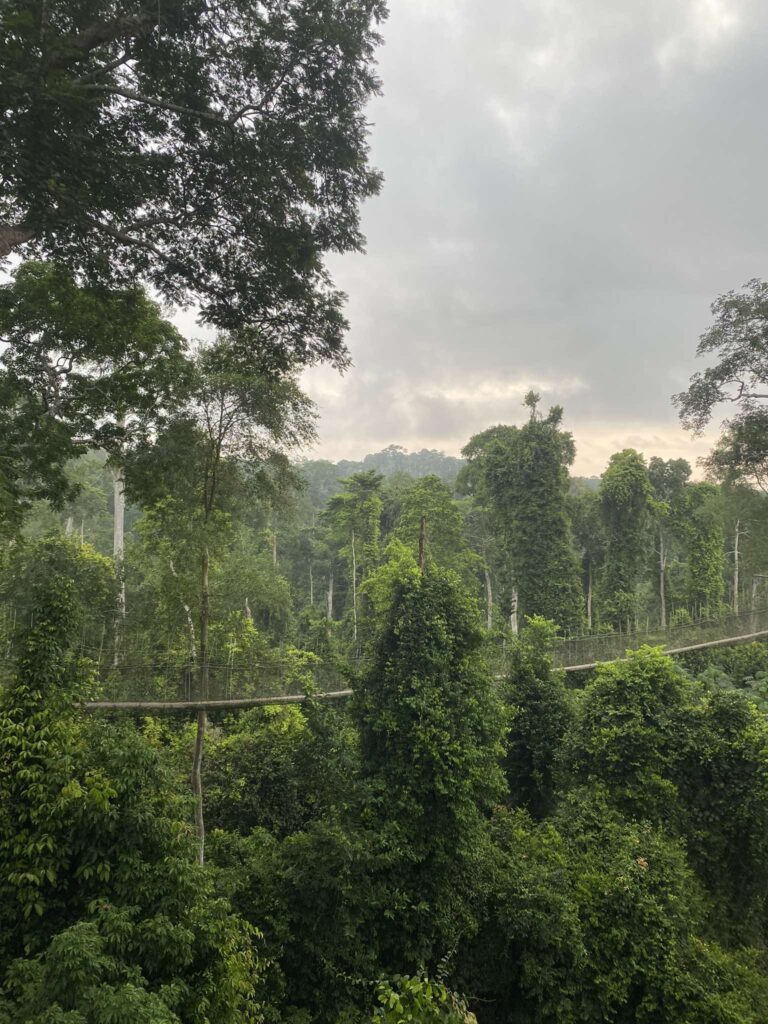
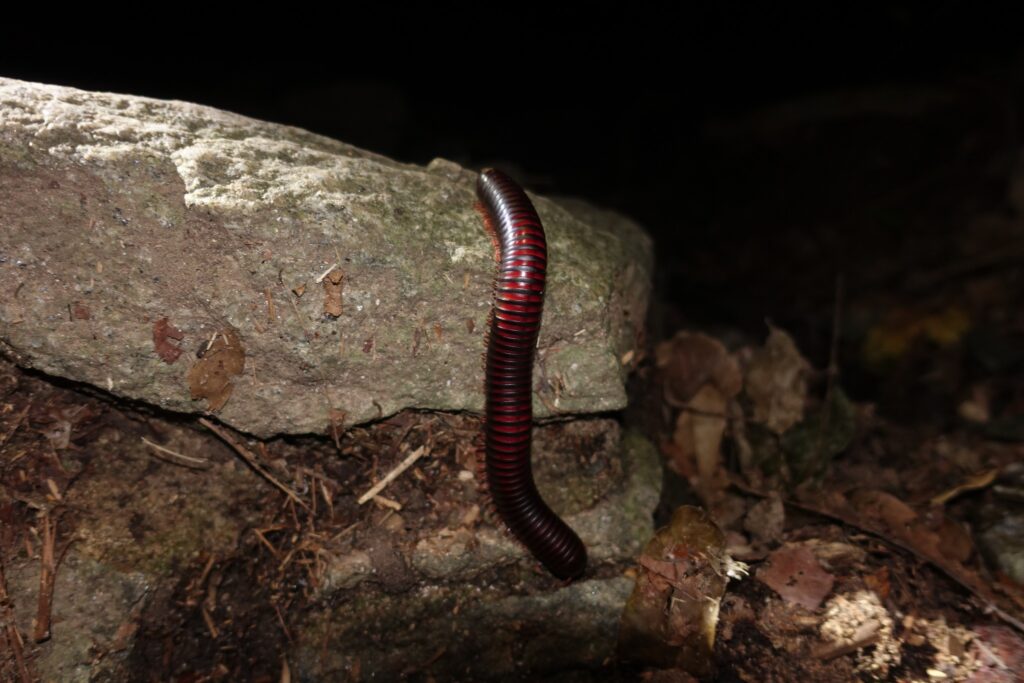
Kakum National Park is a tropical rainforest in southern Ghana, famous for its canopy walkway suspended high above the forest floor. The park is known for its rich wildlife: forest elephants, several monkey species (such as colobus and cercopithecus), as well as numerous bird and butterfly species live here, although larger mammals rarely show themselves to visitors.
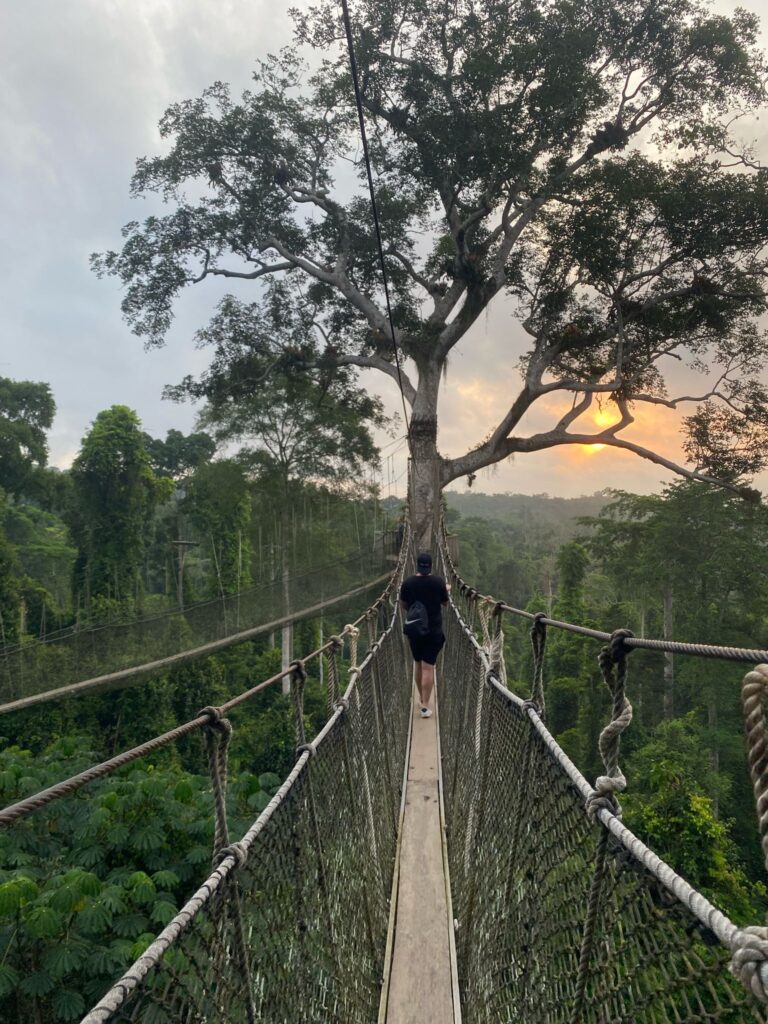
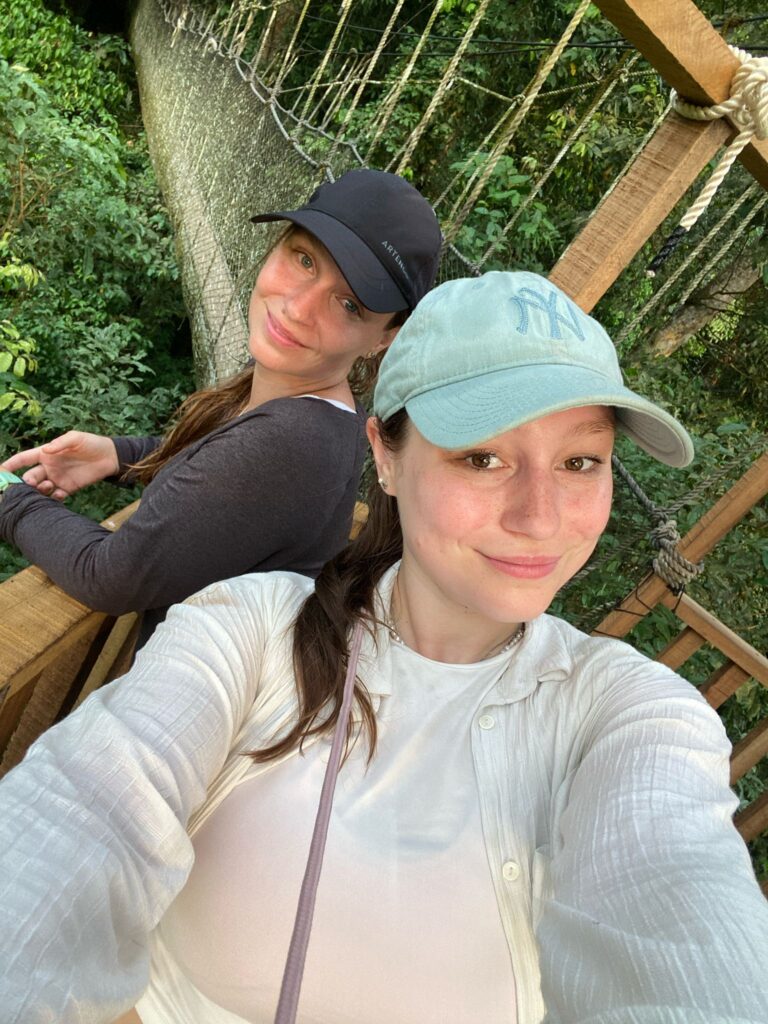
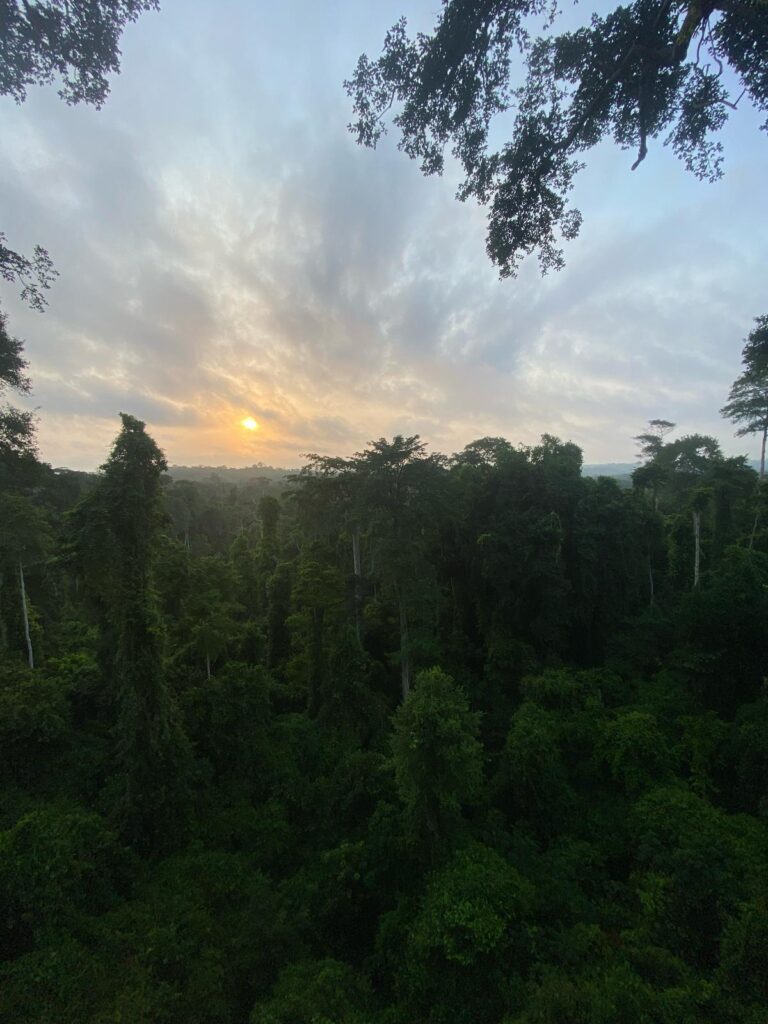
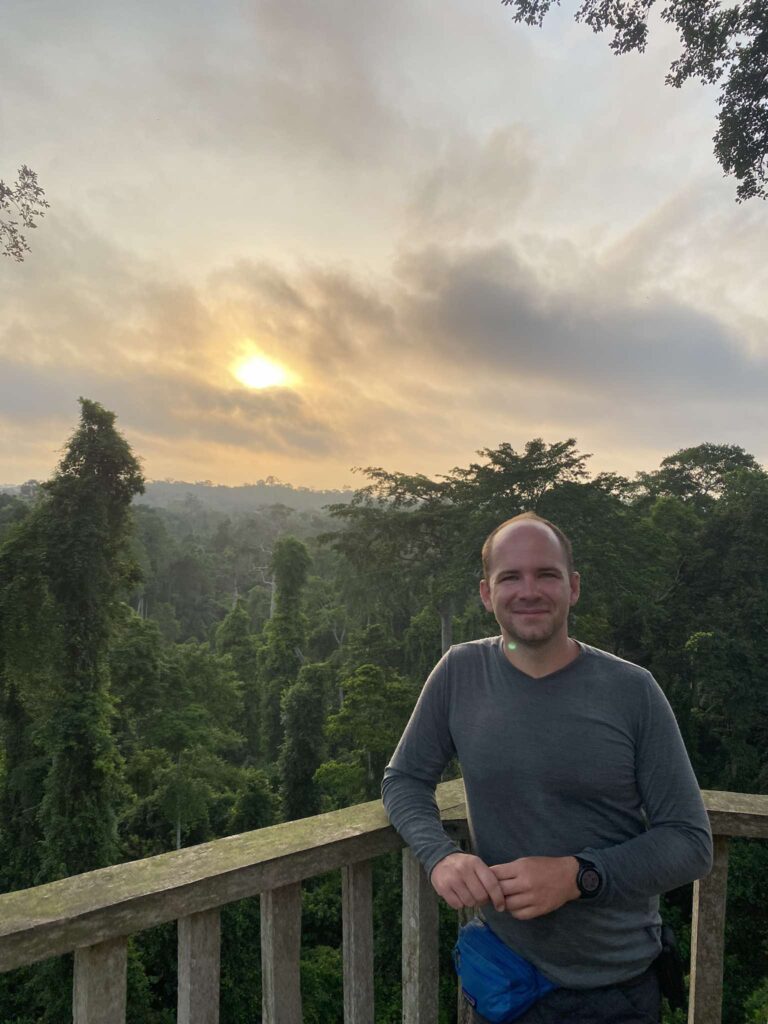
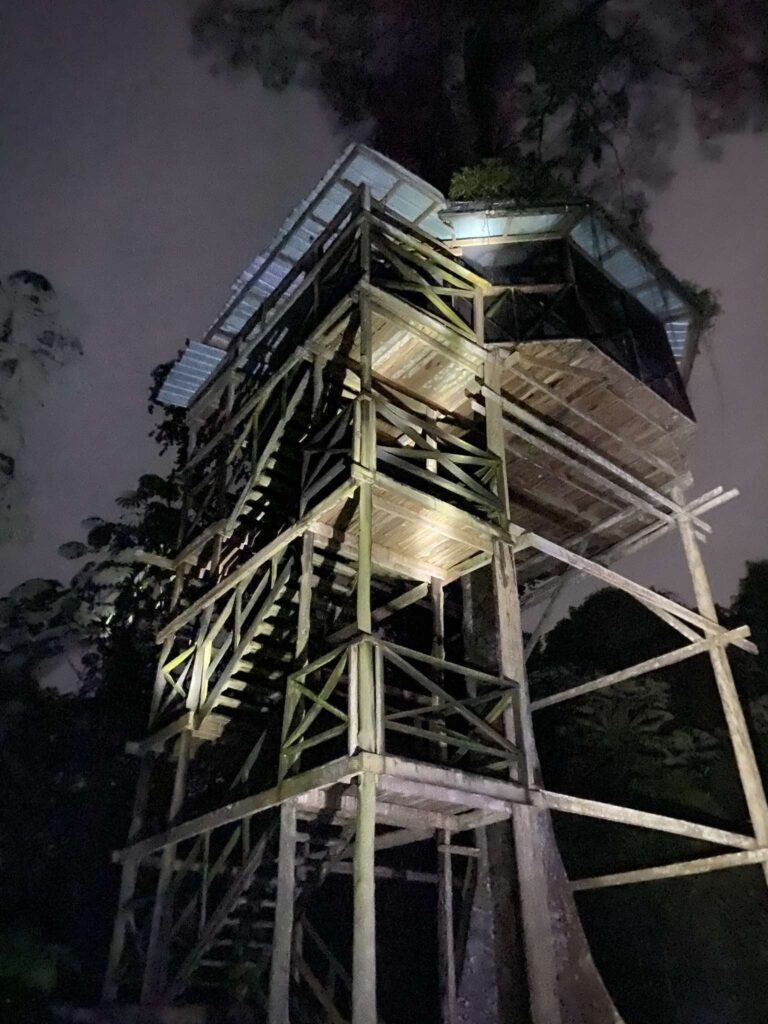
Our experience here was mixed. On the one hand, we were completely ripped off: we paid for a night walk and a jungle stay in a treehouse, which turned out to be in terrible condition — clearly no one had stayed there for a long time — and the “night walk” simply meant walking to the cabin while we could still hear the noise of a nearby party. On the other hand, this situation gave us the chance to access the canopy walkway at 6 a.m., before opening hours, and the forest looked absolutely stunning at sunrise.
Cape Coast Castle
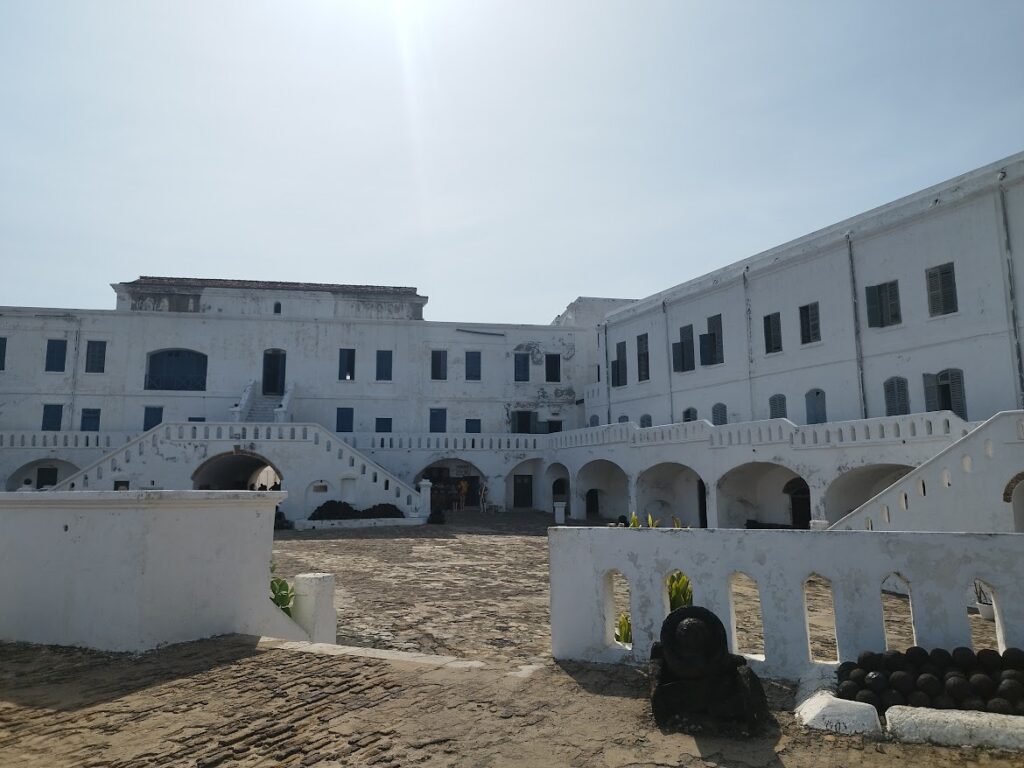
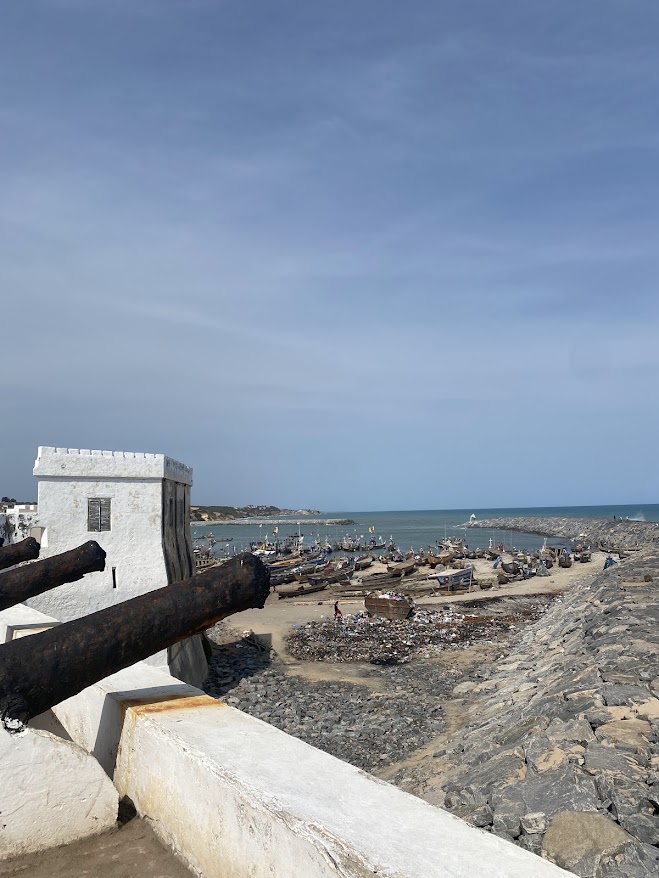
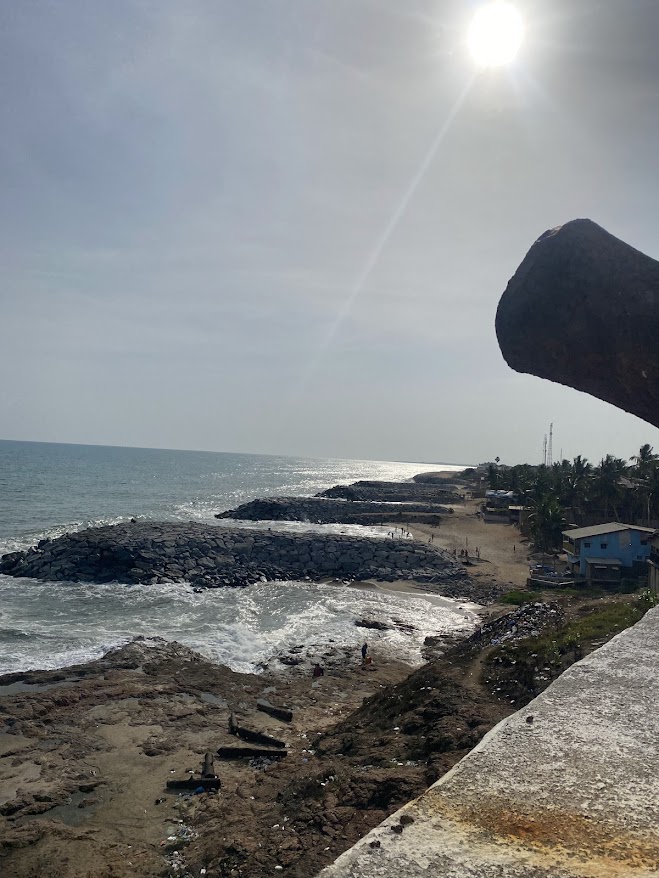
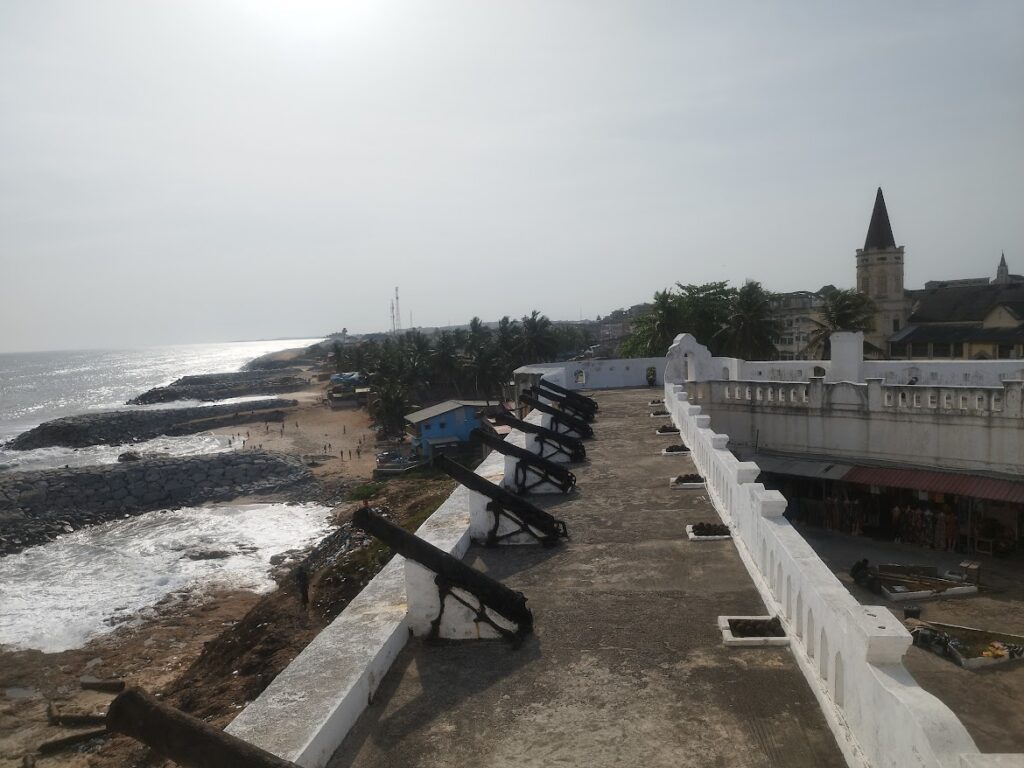
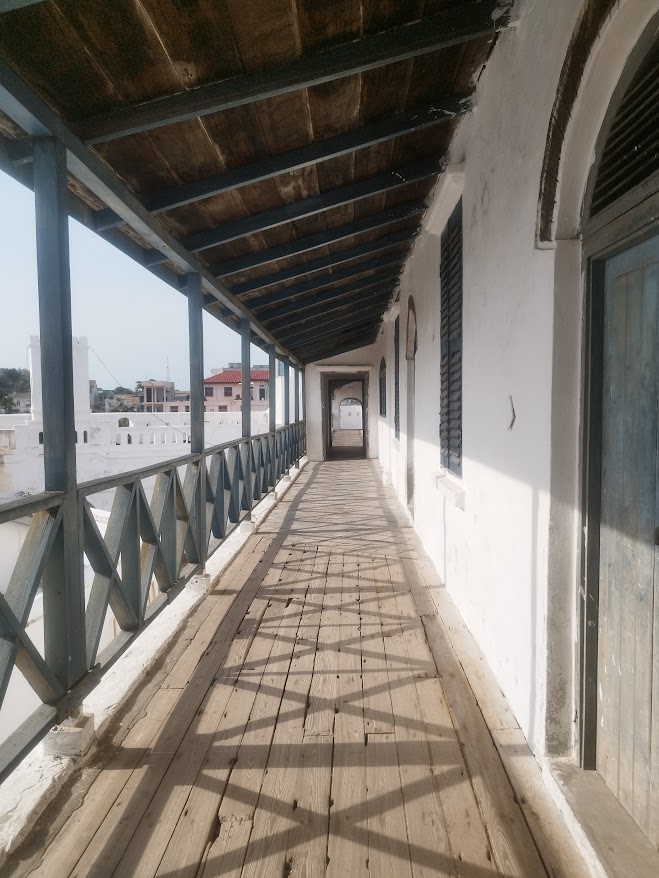
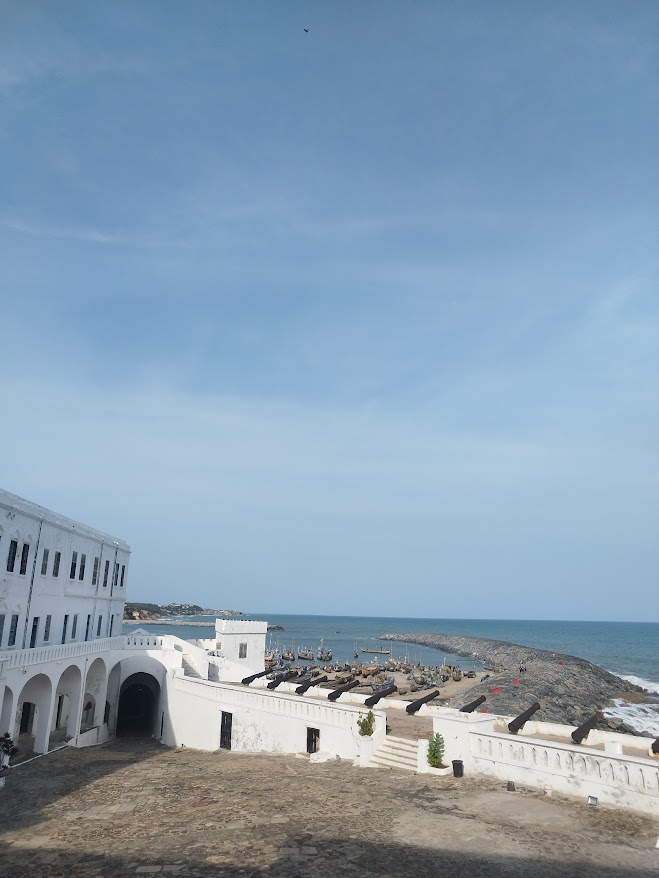
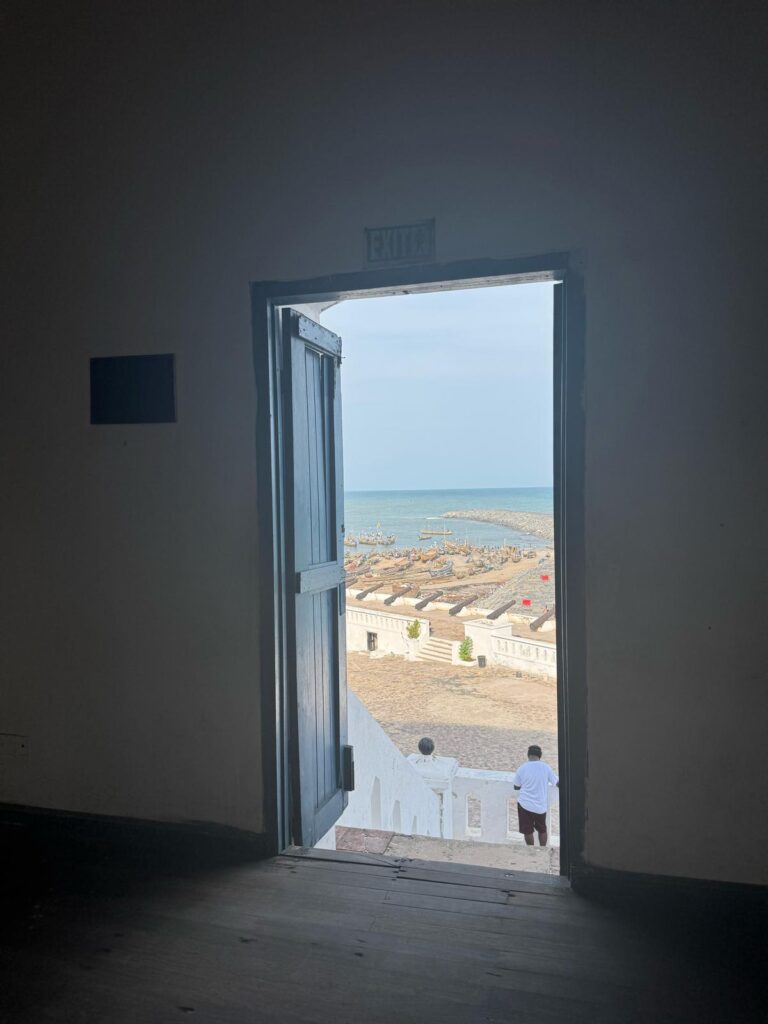
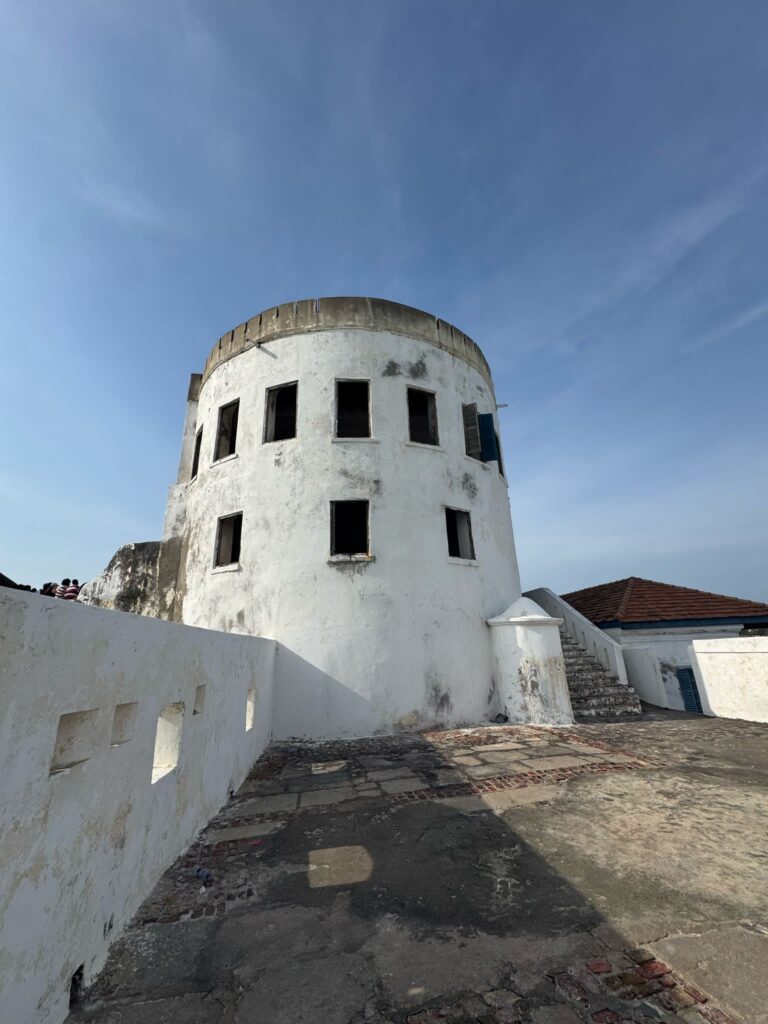
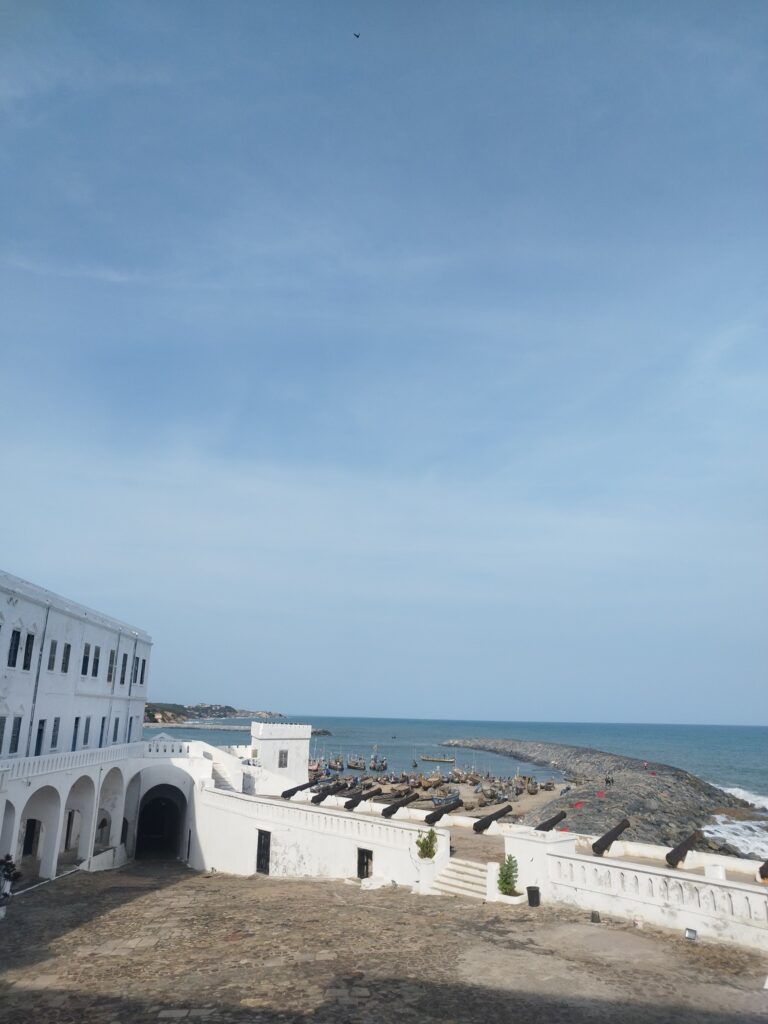
In Cape Coast, we joined a guided tour that turned out to be an incredibly powerful experience. Our guide began by welcoming us to Cape Coast Castle, a place that played a role in one of humanity’s greatest crimes: slavery. Ghana’s coastline was once known as the Gold Coast, and around 40 forts can be found here that served as centers of the transatlantic slave trade. The most famous of these is Cape Coast Castle, originally built by Swedish traders in the 17th century, later taken over by the Dutch and eventually the British. The castle functioned simultaneously as a military fortress, a trading post, and a slave holding site.
Official estimates suggest that around 15 million people were taken from West Africa to the Americas during the transatlantic slave trade — most of them to Brazil. However, our guide pointed out that the term “transatlantic” is misleading, since it was not the Atlantic Ocean that was responsible, but various European nations. In his view, “European slave trade” would be a more accurate term. He also added that the real number of victims may have been up to four times higher — possibly as many as 60 million. People became enslaved in two main ways: either they were captured directly by Europeans (in Ghana mainly the British) — abducted from their lands or lured into the forts under false promises of a better life — or they were prisoners of local tribal wars, sold by victorious leaders, in Ghana primarily among the Asante and Fante groups.
The most harrowing part of the tour was entering the underground dungeons. In some rooms, up to 300 people were crammed together for months. Food was passed through a small opening; otherwise, they were forced to live in their own urine, feces, and blood, while women were regularly raped by soldiers (many of whom had been convicts in England and were given a new start as guards in Ghana). Many died on the long, exhausting journey to the coast or in these inhumane conditions. Those who survived faced an even longer and more dangerous sea voyage — and many perished during that stage as well. This is how the number of 60 million victims is sometimes cited, when including those who died before or during the journey to the Americas, beyond the estimated 15 million who arrived.
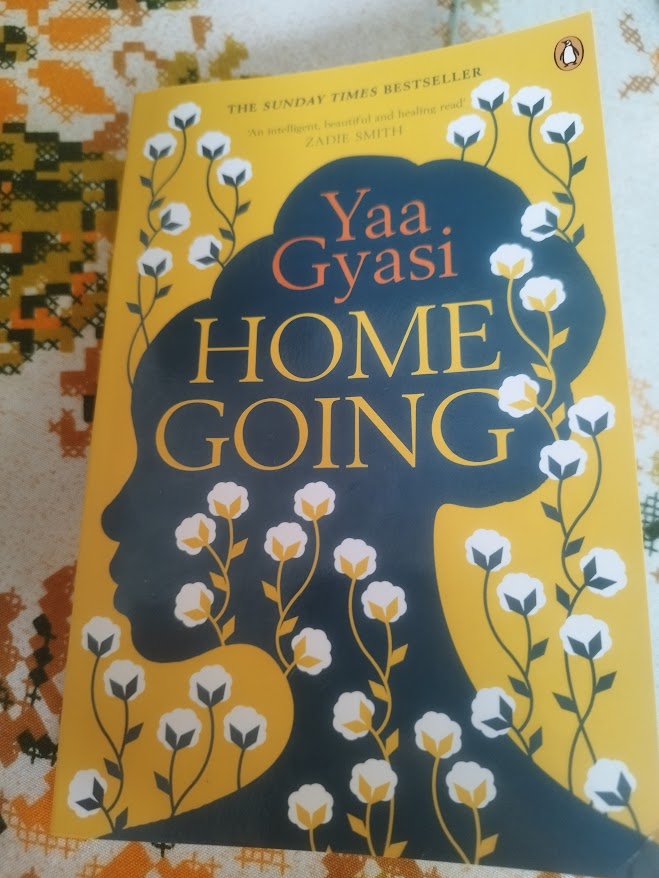
Perhaps the most shocking element was that the castle’s church was built directly above the largest dungeon. While European slave traders prayed upstairs, people were suffering in unimaginable conditions below. This contrast left a deep impression on all of us. Our guide also recommended a powerful Ghanaian-American novel, Homegoing by Yaa Gyasi (published in Hungarian as Hazatérés), which follows the fate of two Ghanaian half-sisters across generations: one sold into slavery in America, the other married off to a British trader. The book offers a moving insight into the long-term consequences of slavery.
Near Cape Coast, it is also worth visiting Elmina and the nearby Elmina Castle, the oldest European-built fortress in the region.
Kumasi
Kumasi is the historic center of the Ashanti (Asante) Kingdom and remains the heart of traditional Asante culture today. The city’s most important landmark is the Manhyia Palace, the residence of the Asantehene (king), which now functions as a museum offering insight into the history of the Ashanti Empire and the legend of the famous Golden Stool.
It is also worth visiting the vast Kejetia Market (Kumasi Central Market), one of the largest markets in West Africa, as well as the nearby craft villages, where you can learn about traditional kente weaving and the making of adinkra symbols.
Since we arrived in Kumasi on a Sunday, everything was closed, and thanks to an invitation from locals, we unexpectedly ended up at a birthday party instead.
The next morning, we quickly walked through the market, but due to its enormous size, it was almost impossible to take it all in within such a short time.
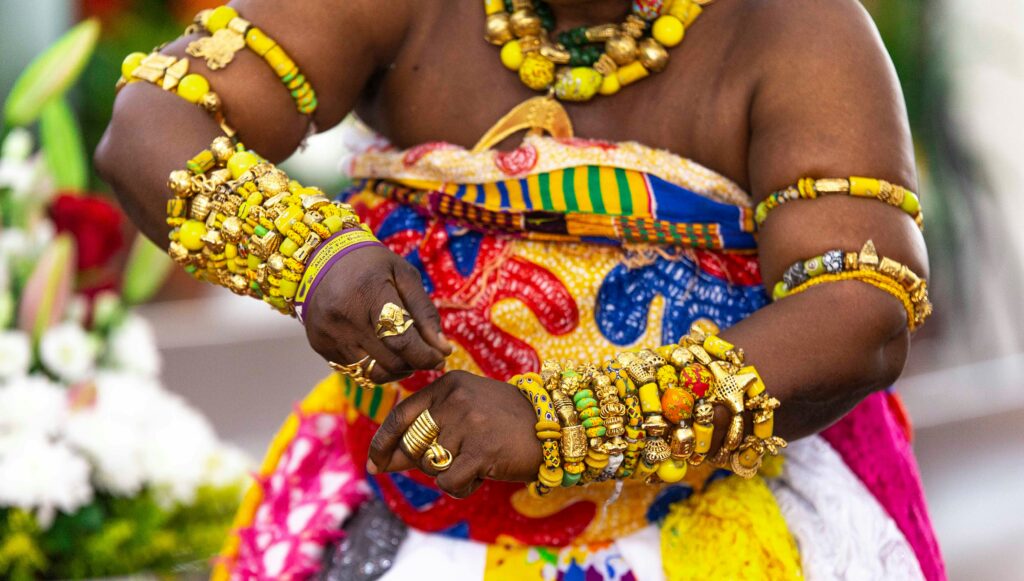
Photo: Emmanuel Offei on Unsplash
Volta Lake
Lake Volta is one of the largest artificial lakes in the world, offering opportunities for boat trips and for exploring traditional village life along its shores. The nearby Akosombo Dam is a key element of the country’s energy production, supplying a significant share of Ghana’s electricity.
Mole National Park
Mole National Park is Ghana’s largest national park, where you can spot elephants, antelopes, and baboons on safari. They also organize walking safaris, which offer a particularly special experience. There are hostels and budget accommodations around the park, and entrance fees are affordable — we would have loved to visit, but due to the poor road conditions, it would have taken too much time.
Nearby, it is also worth visiting the Larabanga Mosque, a mud-built mosque dating back to the 15th century.
Beaches
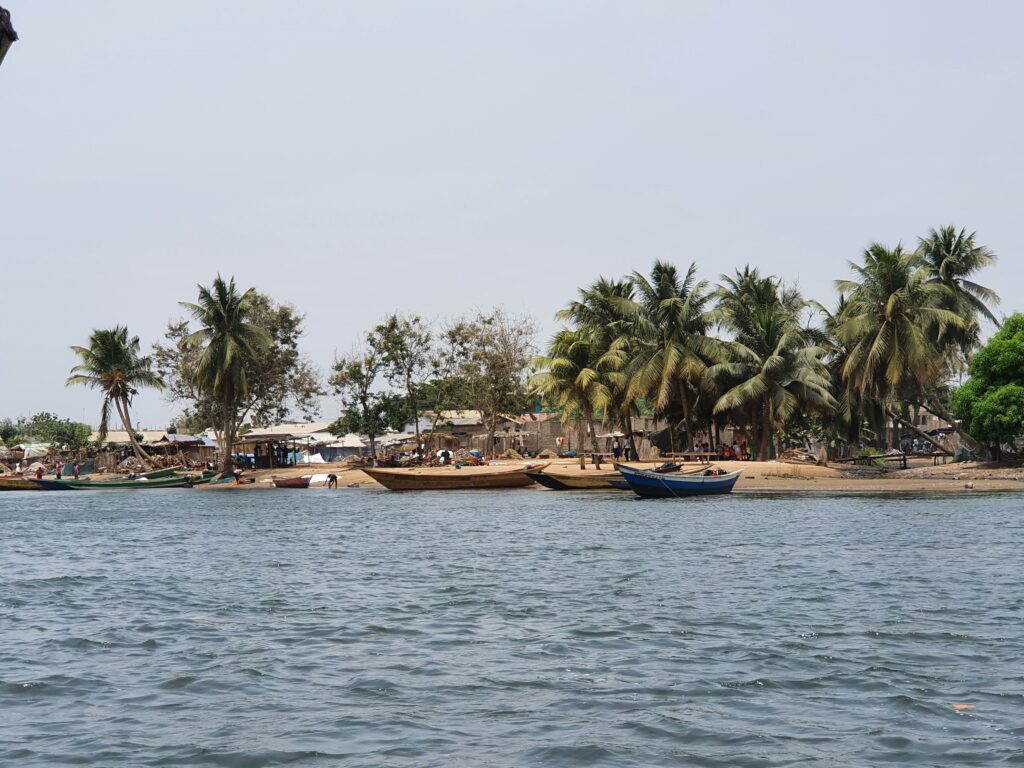
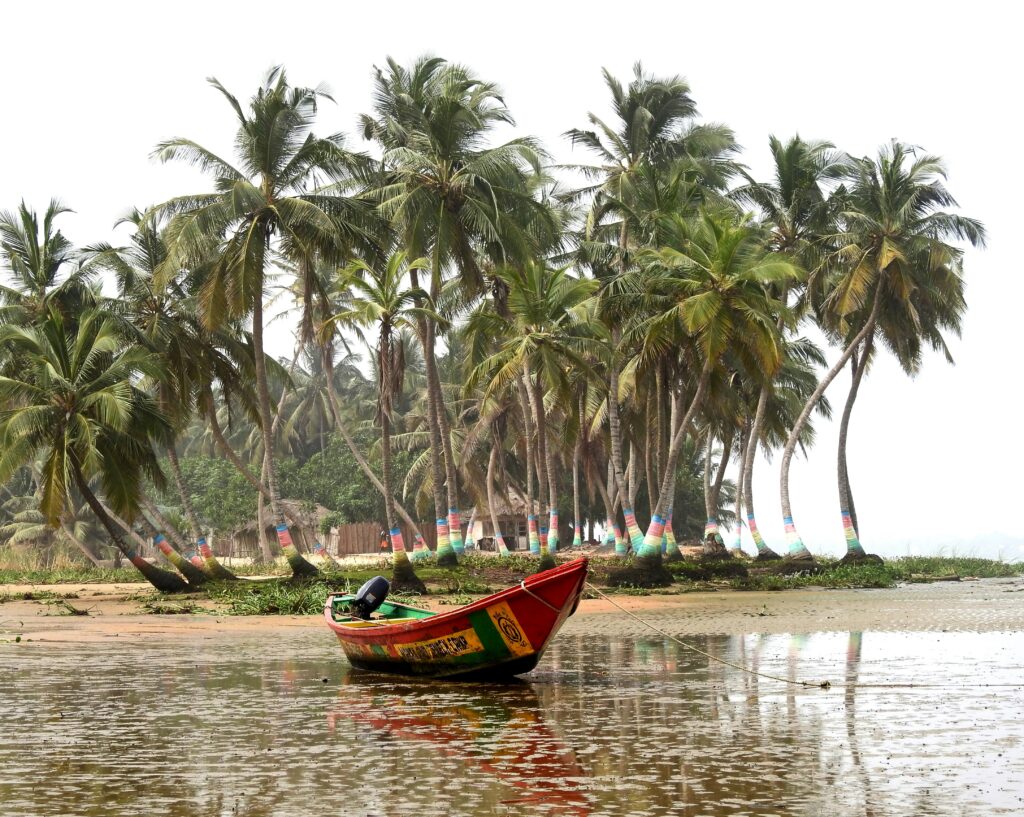
Besides Busua Beach, Ghana has many other beautiful beaches, for example on the eastern side of Accra, such as Labadi Beach (also known as La Pleasure Beach), which is one of the most popular city beaches, as well as quieter stretches further east like Kokrobite Beach, known for its laid-back vibe and live music scene.
Fotó: Yoel Winkler on Unsplash
Wli Waterfalls
Wli Waterfalls is one of the highest waterfalls in West Africa, set in lush green surroundings near the Ghana–Togo border. A hiking trail leads to both the lower and upper sections of the falls, offering beautiful views and a refreshing swim at the base.
Nzulezo
Nzulezo is a village built on stilts over a lagoon, accessible only by canoe. It offers a unique glimpse into traditional water-based life, where homes, schools, and daily activities all take place above the water.
Tamale
Tamale is the largest city in northern Ghana and the center of the Savannah region. It is a predominantly Muslim area and one of the cultural hubs of the Dagomba people, with an atmosphere noticeably different from the southern coastal cities.
Tamale is a convenient base for visiting Mole National Park, and from here the historic Larabanga Mosque — the oldest mosque in Ghana — is also easily accessible. The city itself offers few classic “sights”; it is more interesting for its relaxed, rural feel, lively markets, and the opportunity to experience northern Ghanaian lifestyle.
Our Most Memorable Stories
Ghana gave us many memorable experiences.
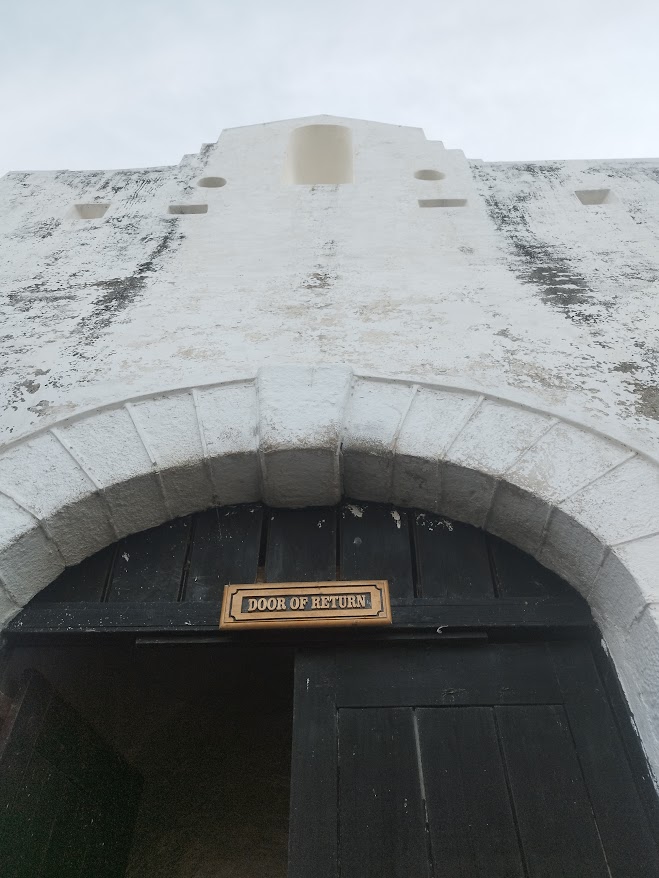
It was a shocking experience when, at the end of the Cape Coast Castle tour, we walked through the door from which the slave ships departed. This was referred to as the “Door of No Return,” since whoever passed through it never returned to their homeland. In recent years, however, a new inscription has been placed on the harbor-facing side: “Door of Return,” as a tribute to African Americans who return to the land of their ancestors, even if only for a visit. Perhaps that is why, when the tour guide mentioned that most enslaved people were taken to Brazil, the yellow crystal I was wearing around my neck — which I had bought in Brazil last spring — suddenly broke off. In Ghana, people still believe that the spirits of their ancestors live among us; I felt that perhaps someone “wanted to return home,” so I left it there in the castle.
The experience in Kakum National Park was both funny and infuriating. We arrived a bit late, but fortunately our guide waited for us. We still had to wait another half hour because he believed other guests were coming — although it is possible he counted us twice, since we had hesitated for a long time about whether we would be three or four people. The plan was to walk to the treehouse, drop off our things, and then walk for two hours in the forest at night in hopes of seeing animals.
Things started to become strange at this point, and unfortunately took a turn for the worse. Although we always try to write positively about our travels and focus on the good, we think it is important to be honest and also share when something was not a good experience.
Kakum is a relatively small national park, entirely covered by rainforest. Monkeys, birds, elephants, and other rainforest species live here. The park is one of Ghana’s most popular tourist attractions (compared to other West African countries, Ghana has far more tourists), and it is home to one of Africa’s three canopy walkways. We had read that although the canopy walkway is spectacular, it is very crowded and therefore less enjoyable, so we wanted to go deeper into the forest instead. A famous vlogger who recently traveled across Africa made a video about how special it was to sleep in the jungle — so we decided to try the treehouse overnight stay.
From the parking lot, it was about a 15-minute walk to the treehouse (we could hear the nearby road traffic and the noise of a town party the entire way), when our guide informed us that he had left the key at home. Therefore, we had to go to another treehouse farther away — but at least the walk there would count as part of the “forest walk.”
We walked 15 minutes back to the parking lot, where there is also a restaurant. At this point, our guide started looking for “bush rat” — which he eventually found next to the kitchen. It was probably an entirely ordinary rat, since in many African countries bush meat is eaten, and we had already seen huge forest rats being sold by the roadside. By then we were starting to get a bit nervous, but we still hoped it would turn out to be a good experience.
We walked for about an hour along a paved stone path that visitors normally use during the day to reach the canopy walkway. We could still hear the road and the party. Eventually we turned onto a small trail, and after another 10-minute walk arrived at the other treehouse. It must once have been very beautiful, but now it seemed completely abandoned: the “rooms” were in terrible condition, everything was covered in mouse urine and mold, and the mattresses and pillows lying on the floor had been chewed — it was obvious that no one had been there for a long time.
Fortunately, our guide had brought enough bedding, so we could spread a lot underneath us, and in the end three of us slept on two mattresses under a mosquito net. At night there were indeed many jungle sounds — which under different circumstances we would surely have enjoyed — but instead we were afraid of the mice that we could hear moving around us the whole time. We left at 5 a.m. to pick up Bálint at the parking lot at 6 — this became the “morning walk.” Now, two months later, looking back, we still have only positive memories of the entire trip, and we were satisfied with every tour we paid for. That is why we regret that we were cheated precisely where tourism is already present.
We do not know what might have happened: whether the conditions are always this bad, or whether our guide and the manager simply pocketed the money without officially registering us. In any case, they charged a lot of money for us to sleep in an abandoned, run-down treehouse in the jungle, and they even charged separately for the walk there and back as “guided forest walks.”
At 6 a.m., we finally went up to the canopy walkway, which at sunrise, completely alone, was truly beautiful — this ultimately compensated us for the night experience. Now it remains only a good story, together with the famous “bush rat” and the dreaded jungle night.
Our positive experience related to hospitality happened in Kumasi. We managed to find accommodation where we were immediately invited to the birthday party of a one-year-old boy. We asked whether it would be strange if we went, but they convinced us that in Ghana this is completely natural — hospitality is extremely important. The party took place in an apartment: while the children danced, the adults ate. We were served okra stew, which has a special, slimy texture; we had always wanted to try it, but perhaps it is the farthest from our taste, so we found it hard to truly enjoy. It is customary to eat it by hand: to wrap it around your fingers and then lick it off — as a cultural experience, however, it was exciting, and we were happy to finally try it. What we also really liked is that in Ghana and across West Africa people are very well informed. Here too we talked about politics, and although our views did not match (it was interesting how much they knew about Hungary), we were still able to talk at length about serious topics without arguing, supporting our points with arguments (sometimes joking a little).
Our last touching experience comes from Busua Beach. The local surfers created a very friendly atmosphere, and the best moment was when we saw that after school the local children come down to the beach, and there is a small community space built for them where they can study and play, and have surf lessons. The whole beach has a very inclusive vibe, towards the end we already knew everyone.