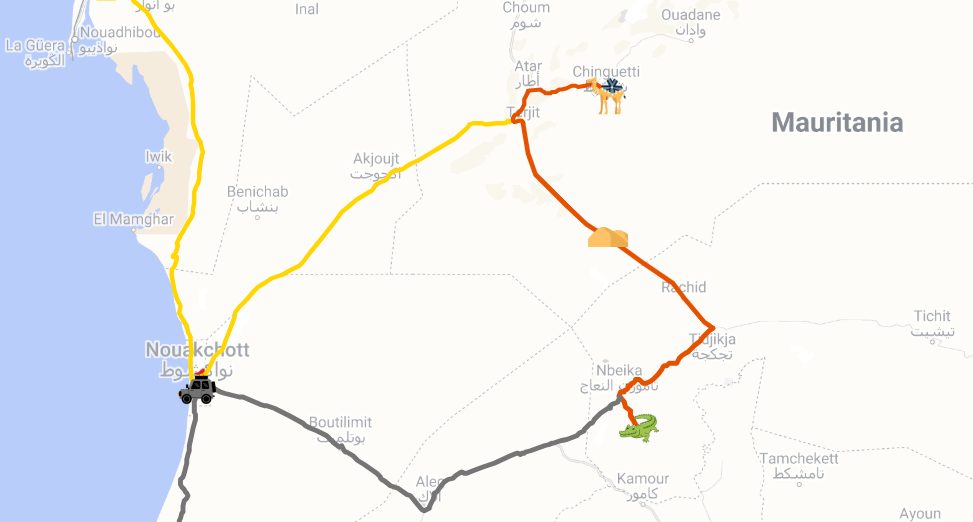
February 2-4: After Terjit, we headed towards Chinguetti. We stopped in Atar, the regional center, for lunch and to explore the local market. We thought we had plenty of time, as we didn’t realize how bad the road marked as a main route on Google Maps would be. At first, we struggled along the corrugated road at 30 km/h, until we figured out the trick: you have to go at least 80-90 km/h so that the speed smooths out the bumps.
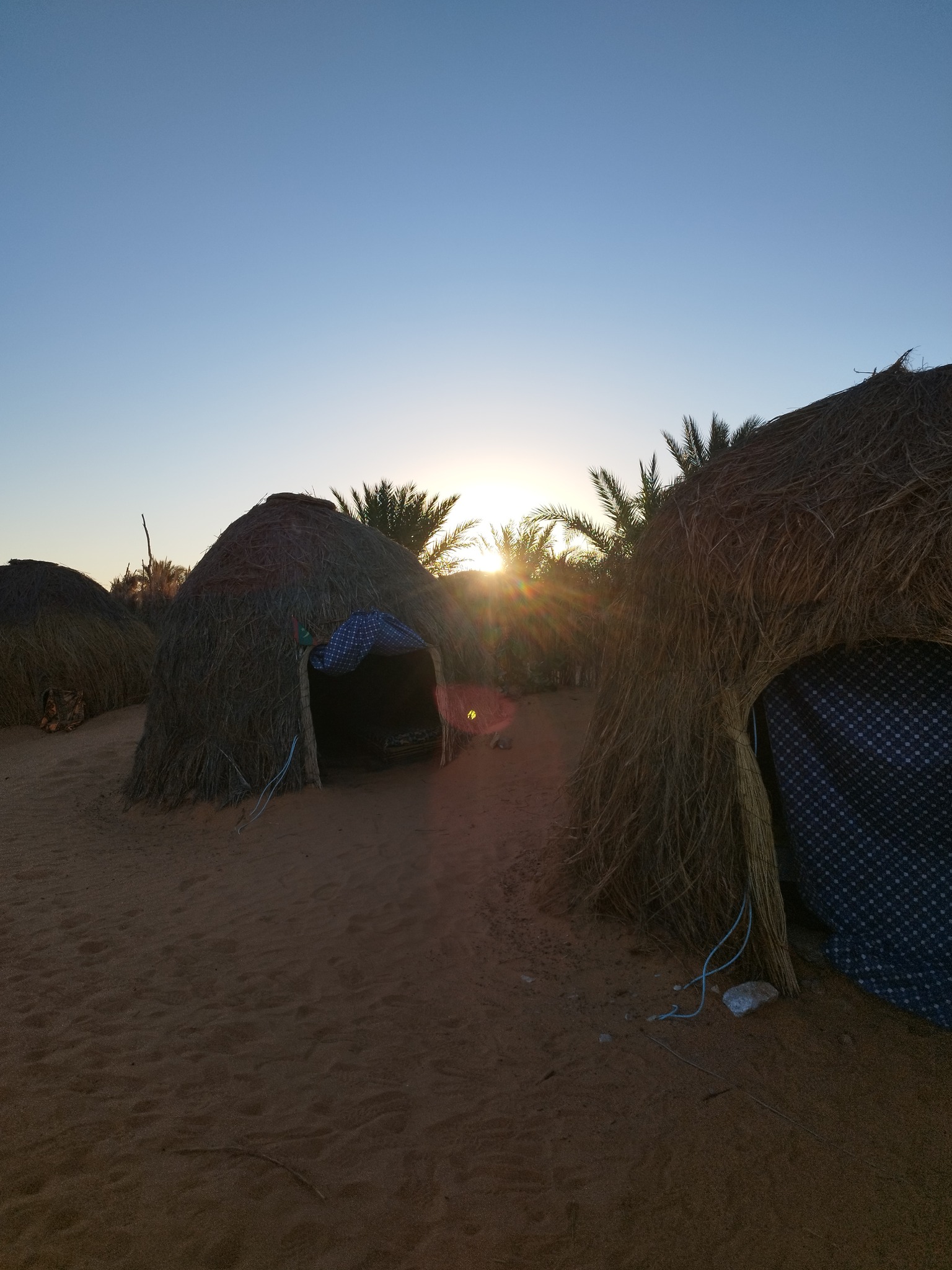
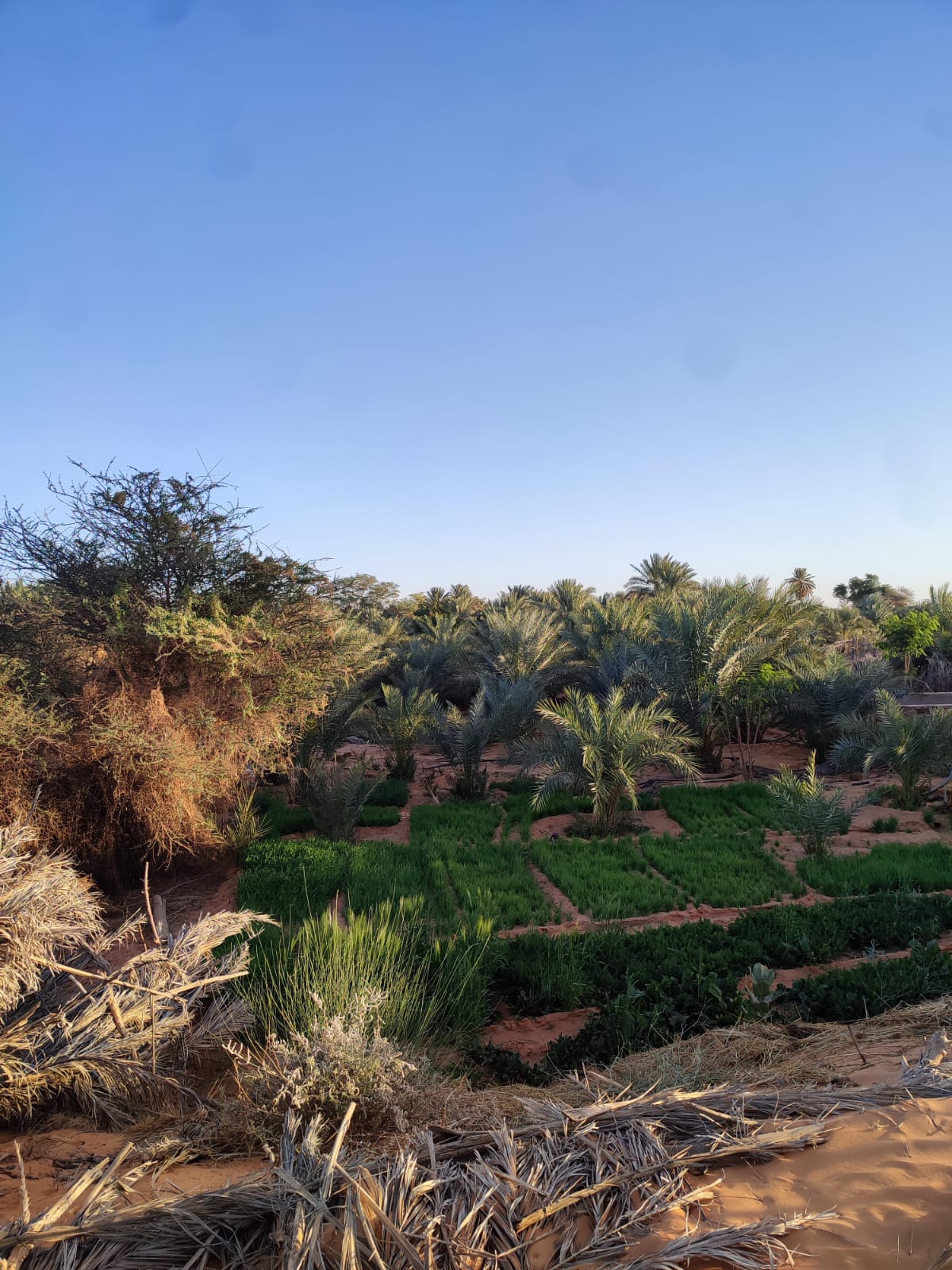
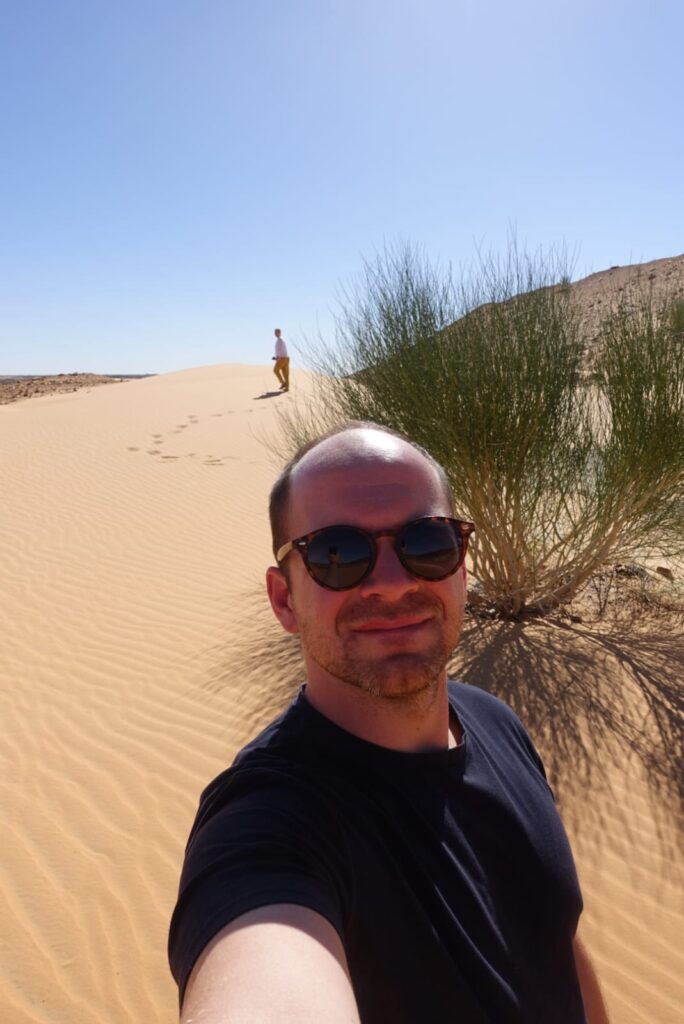
The road to Chinguetti passed through a mountainous, rocky desert, but about 5 kilometers before reaching the town, endless sand dunes began. As we arrived, we were greeted by palm trees and lush green farms—everyone in the oasis in the middle of the desert was growing some kind of vegetable. We managed to find a tent camp on the outskirts of town, nestled under the sand dunes, which was just as stunning as our previous accommodation.
Chinguetti is a “ksour” (a fortified village in North Africa) founded in the 11th century (or according to some sources, as early as the 8th century) as a trade hub and a center of Islamic culture. It was an important stop for nomadic caravans coming from Timbuktu and other places and is considered the 7th holiest city of Islam due to the many ancient Qurans and other Islamic writings preserved in its libraries.
Today, the town is divided into two parts: a newer section and the old town, separated by a “wadi” (a dry riverbed that fills with water once or twice a year, usually during the rainy season in August). The old town is a UNESCO World Heritage Site.
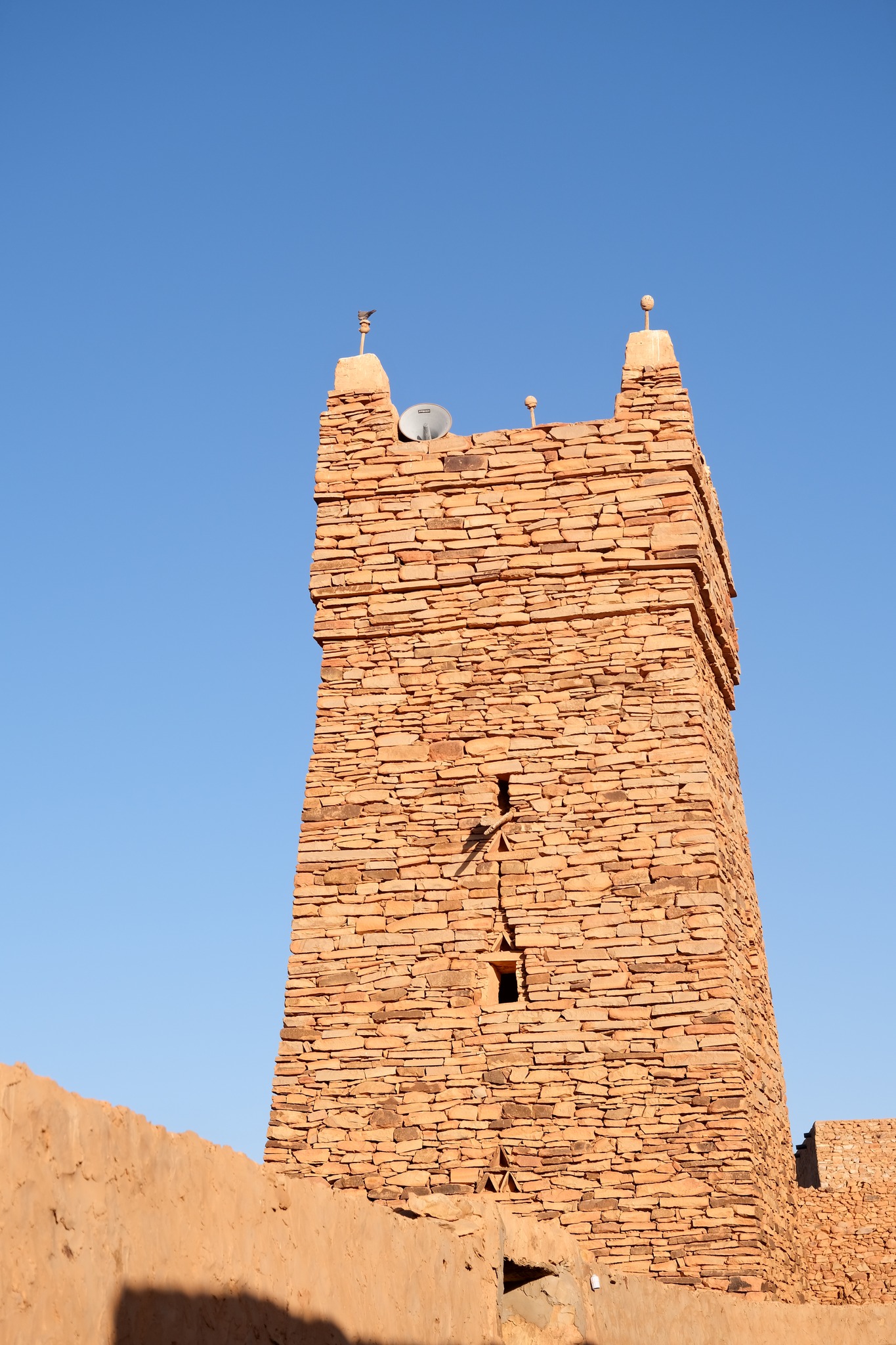
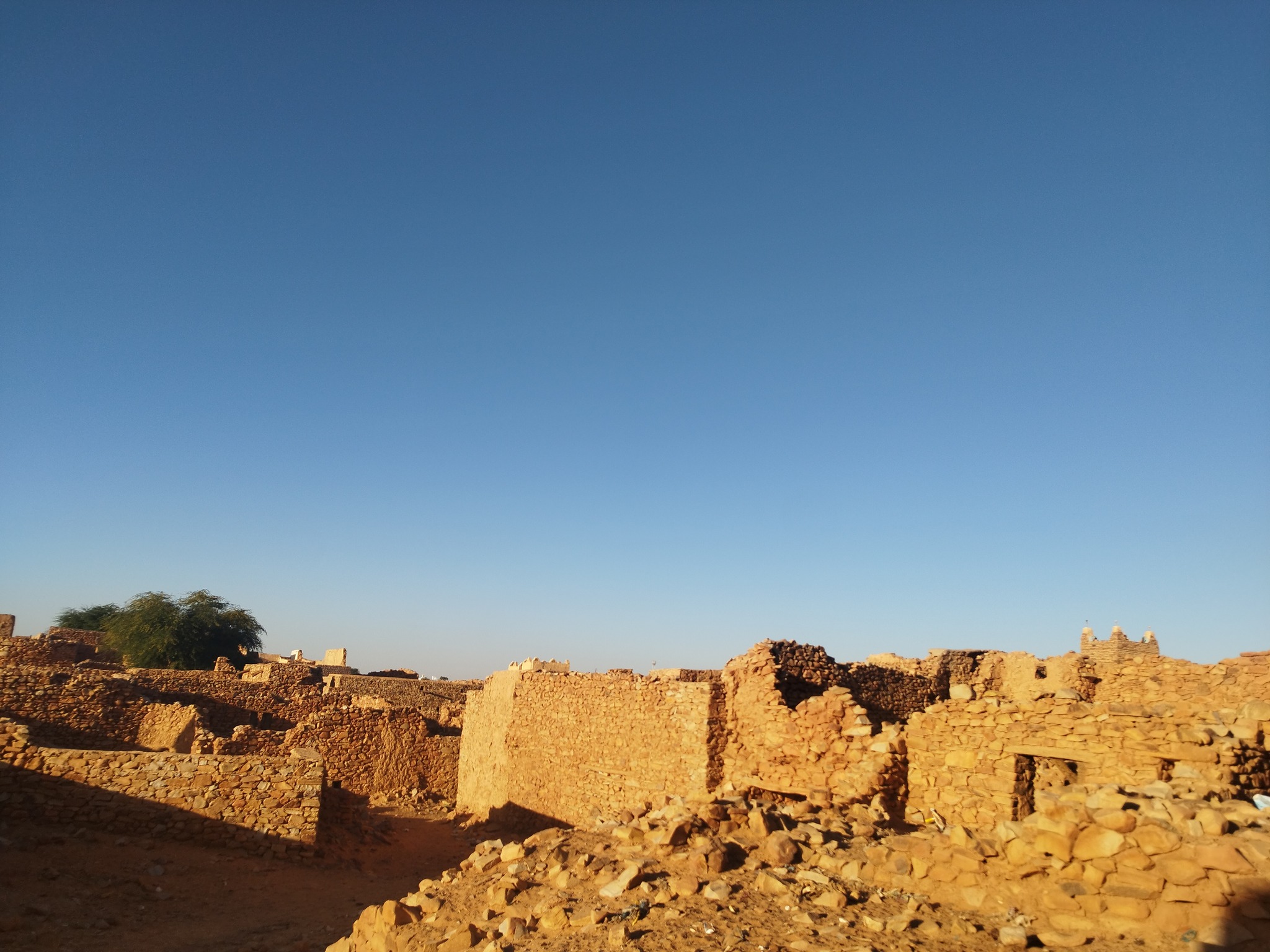
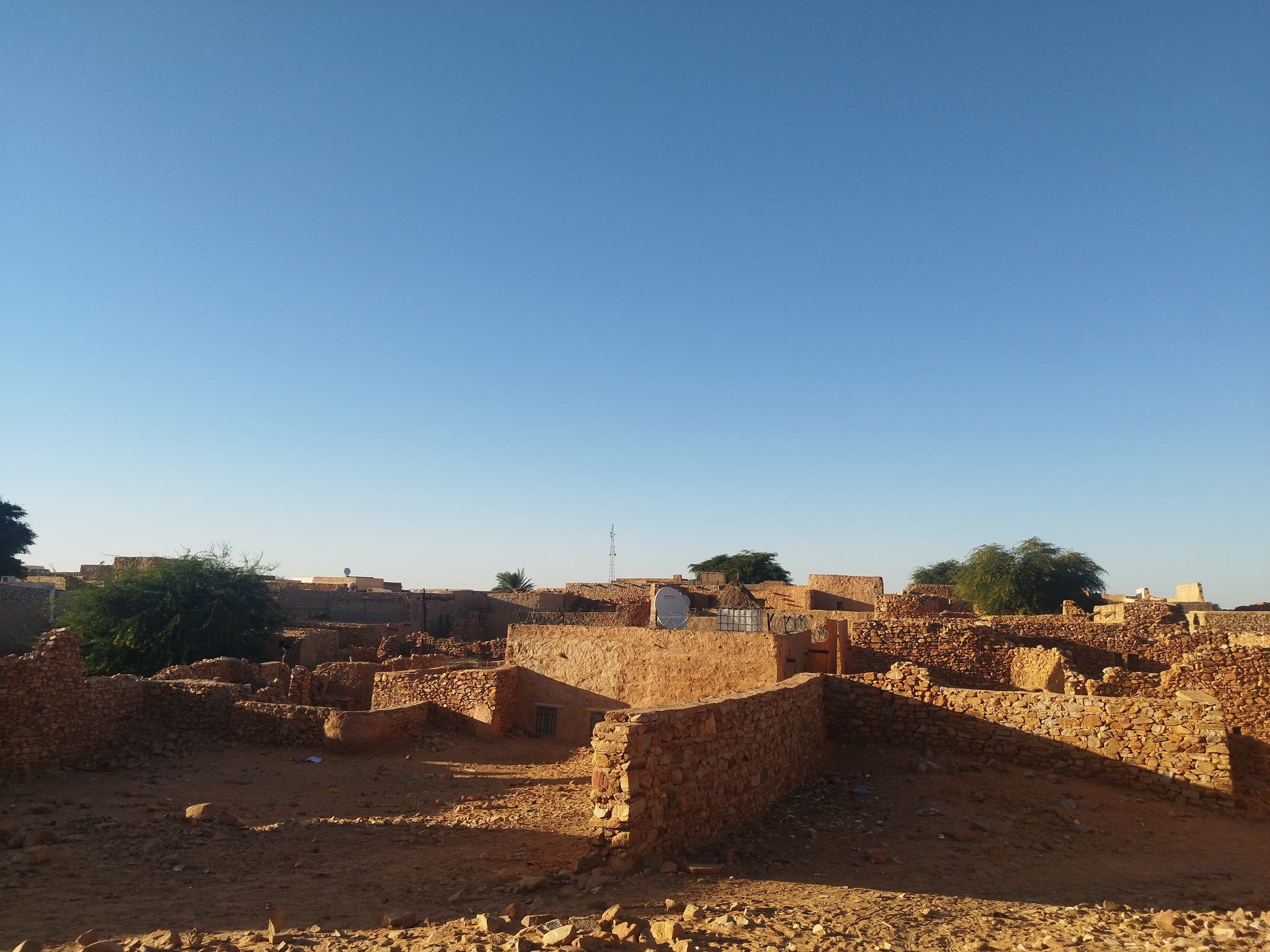
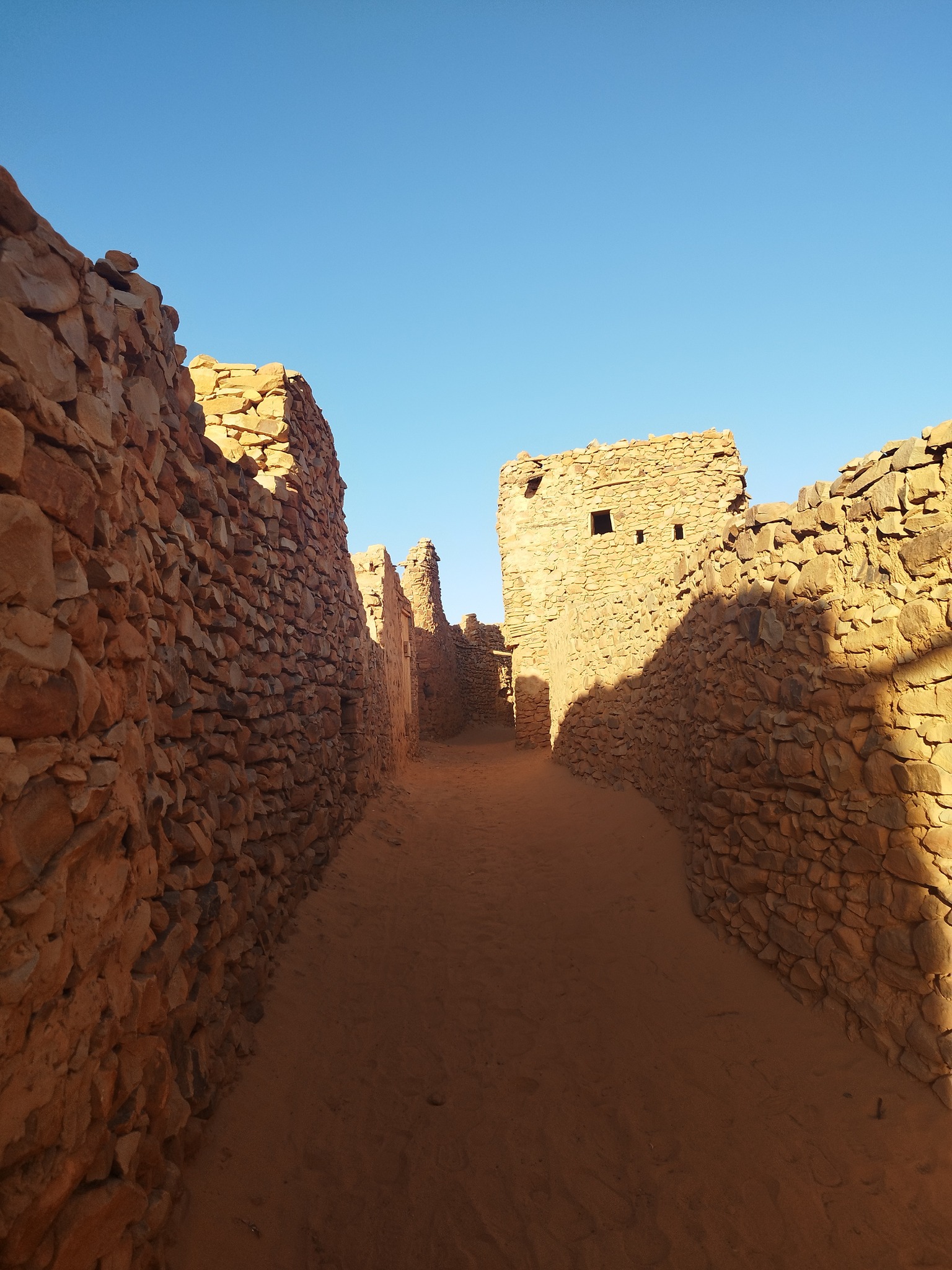
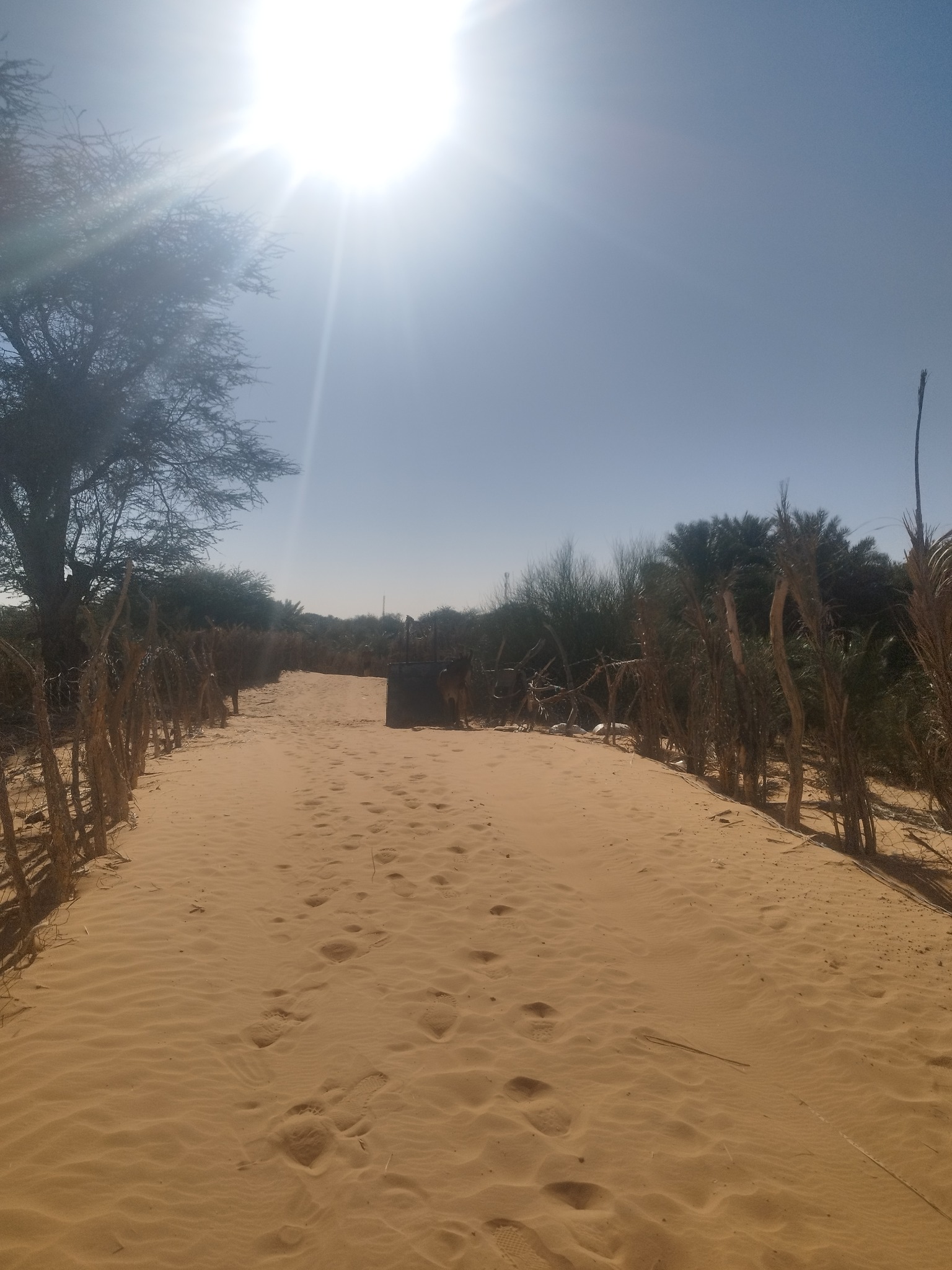
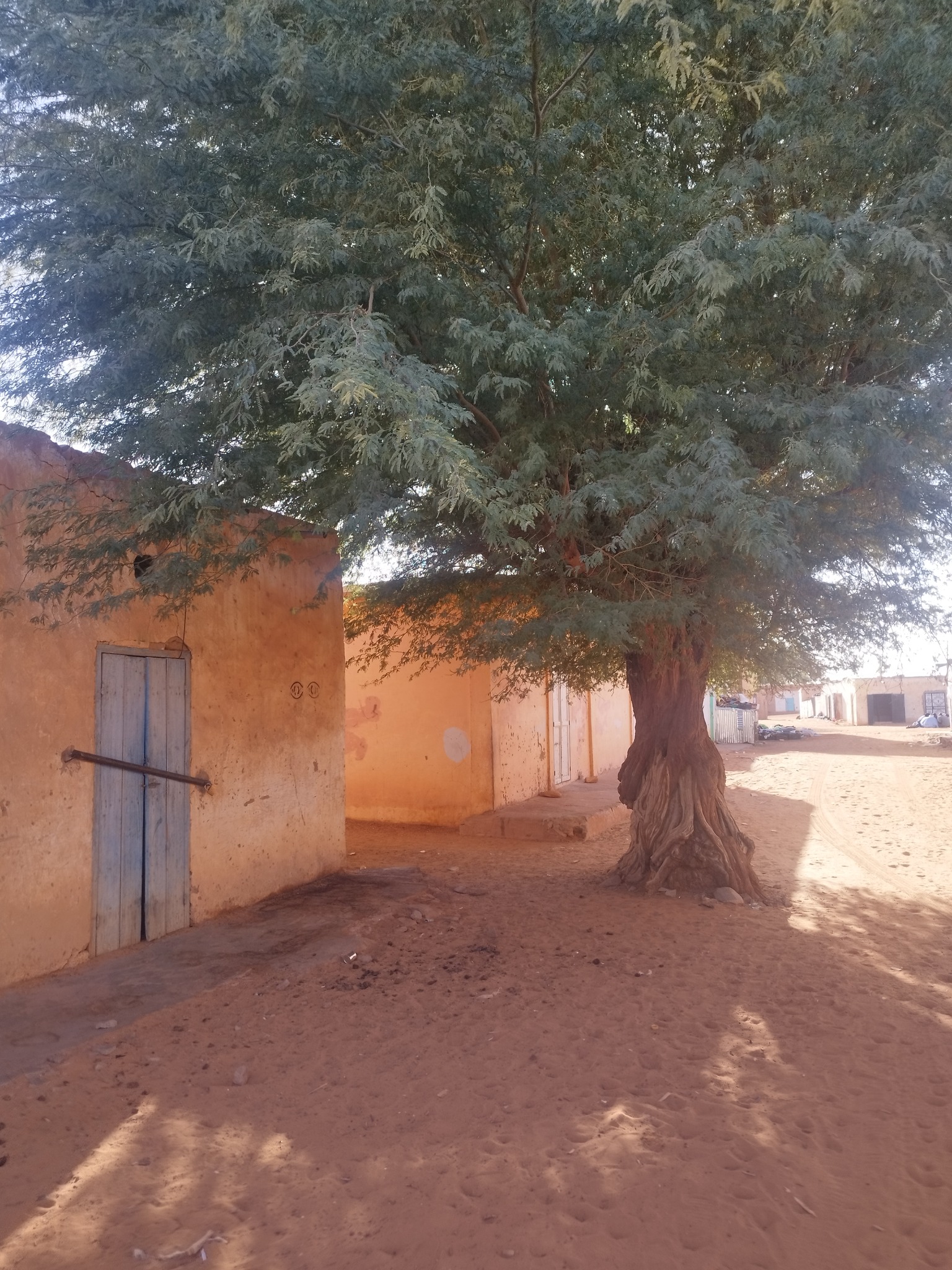
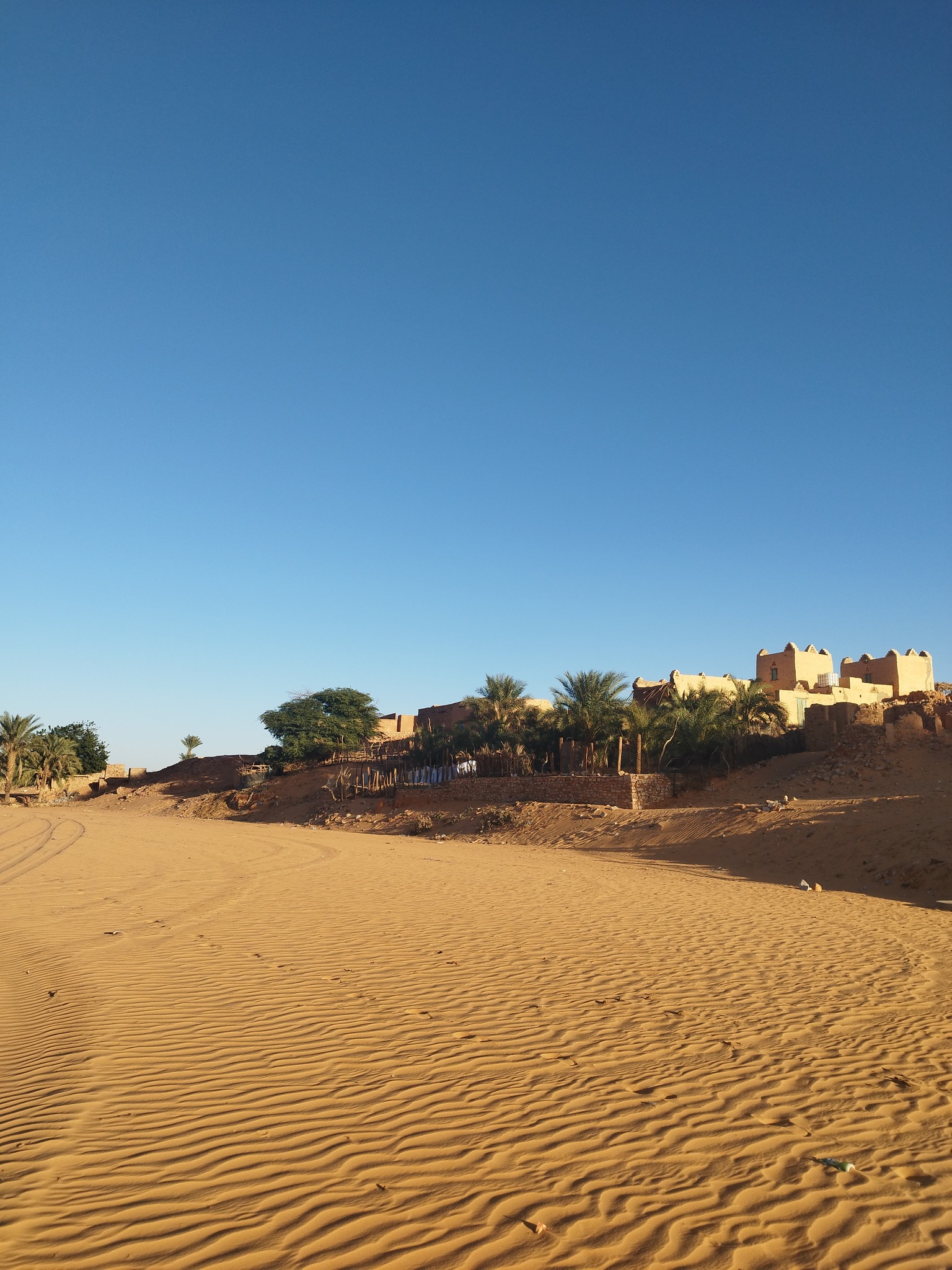
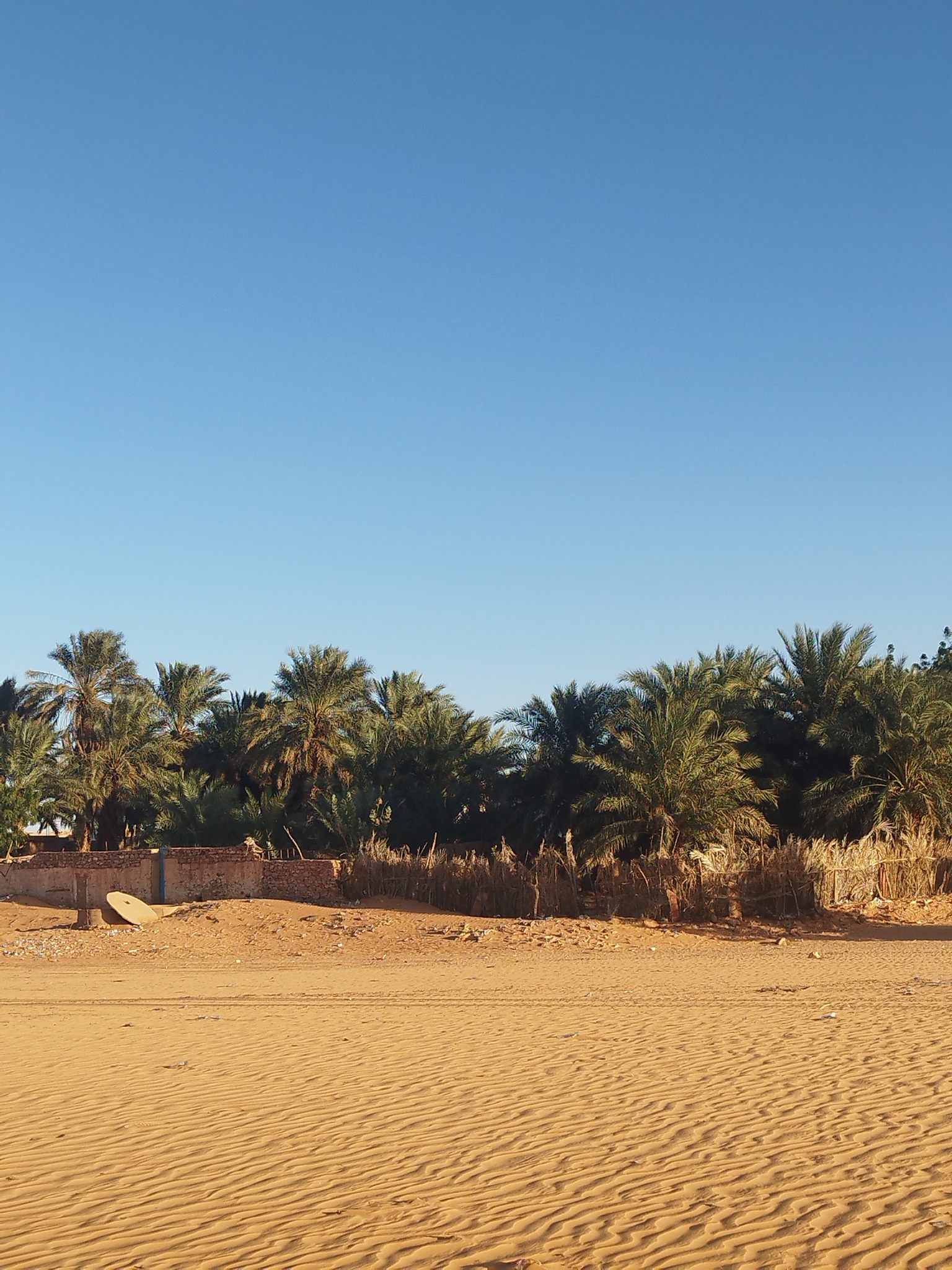
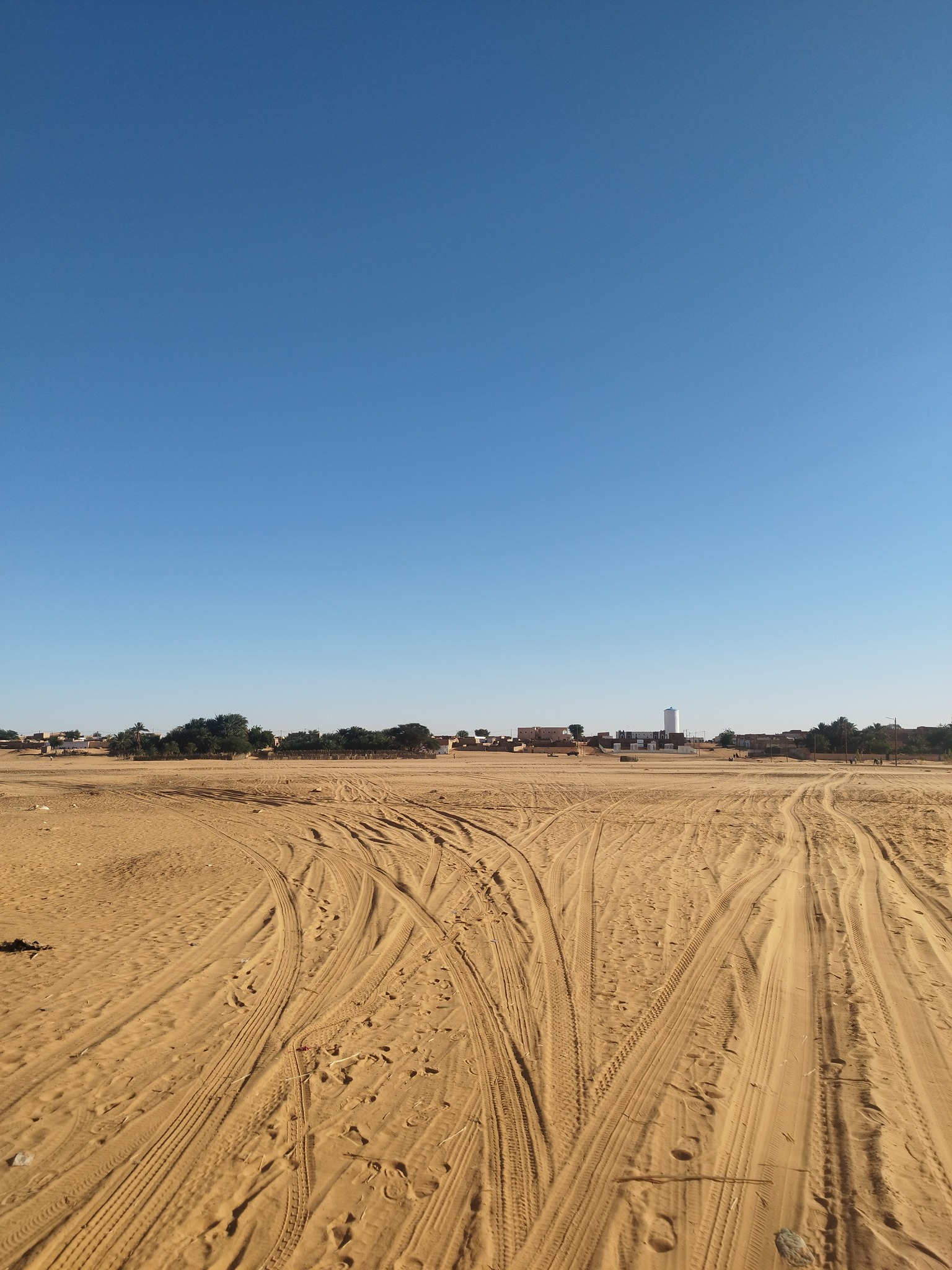
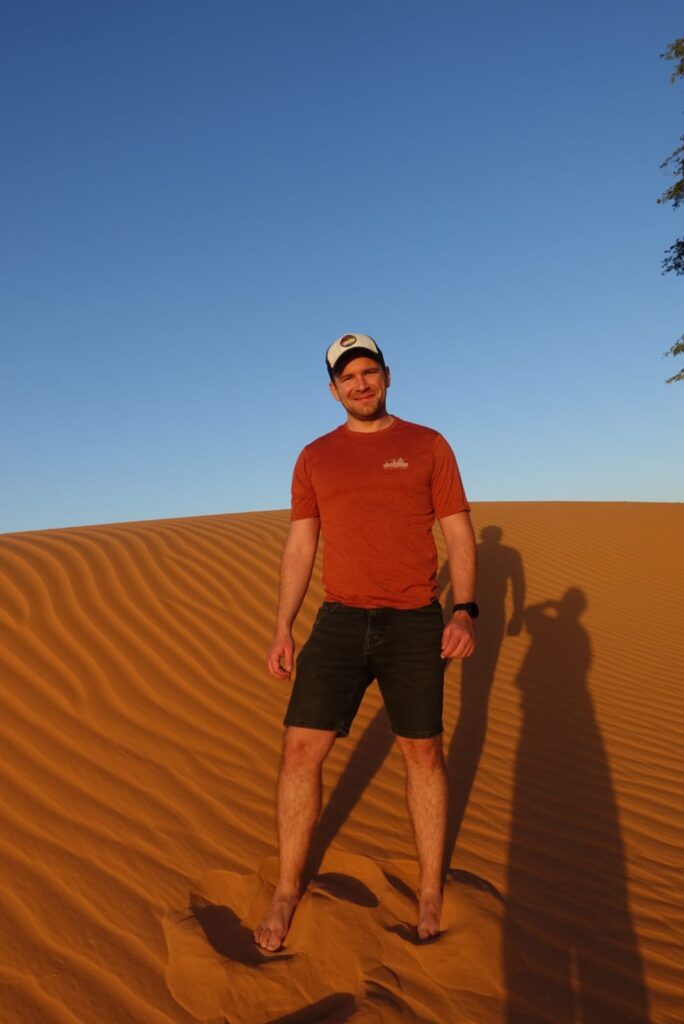
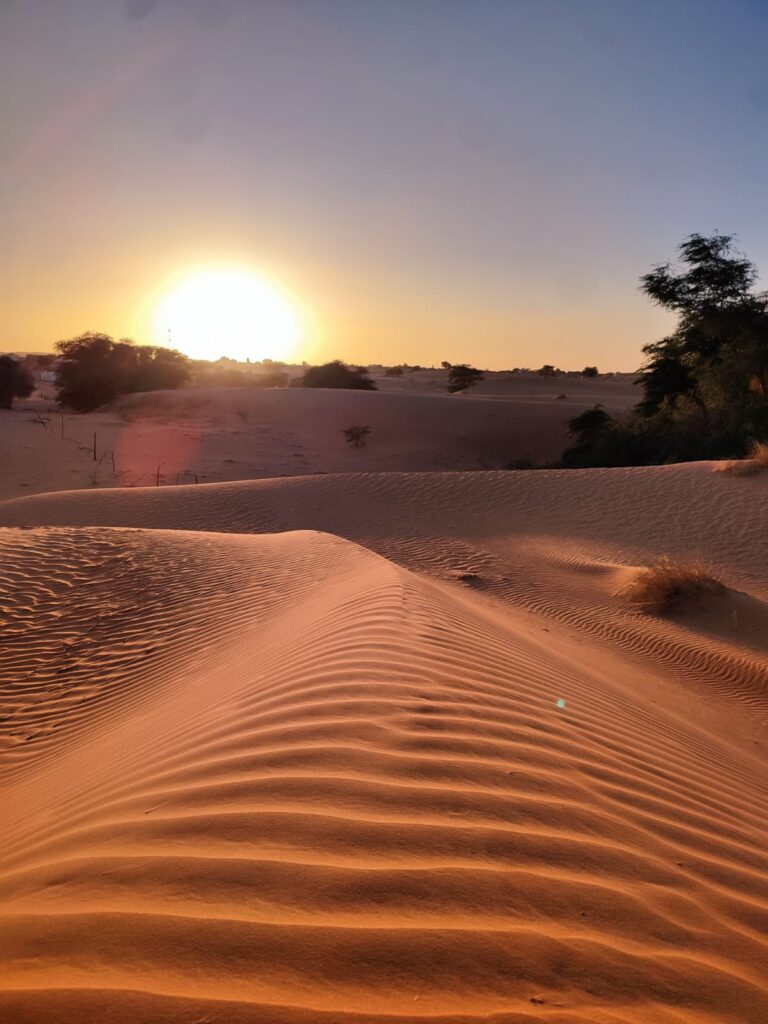
In the afternoon, we explored both the old and new parts of Chinguetti. Unfortunately, we couldn’t visit the libraries as they were closed. Around 6 PM, we returned to our camp to climb the dunes and watch the sunset.  In the evening, we were served a delicious dinner: vegetable soup and a vegetable-chicken stew with rice. After dinner, we had a long conversation with Abdou, the camp owner, while sipping Mauritanian tea by the campfire.
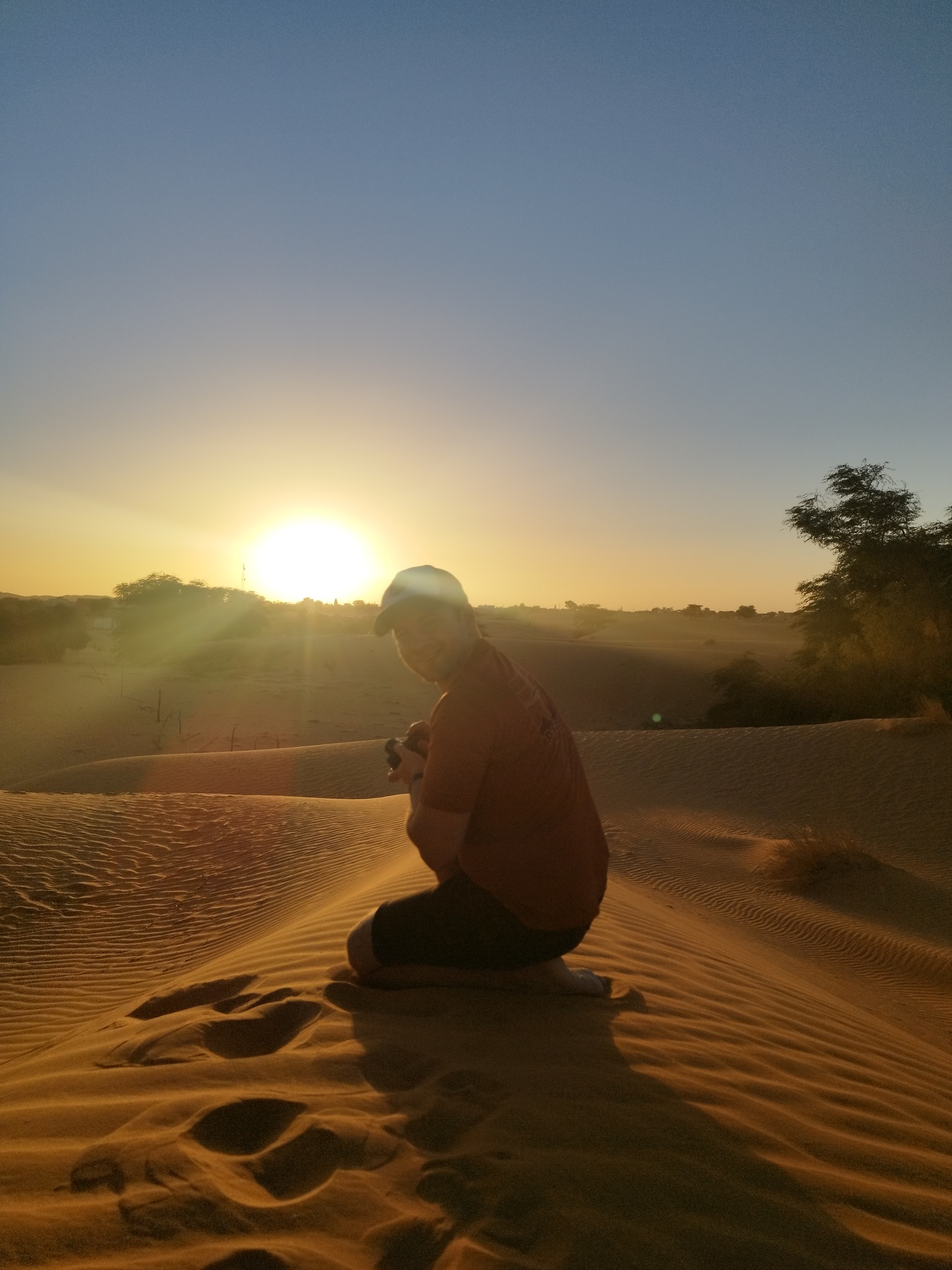
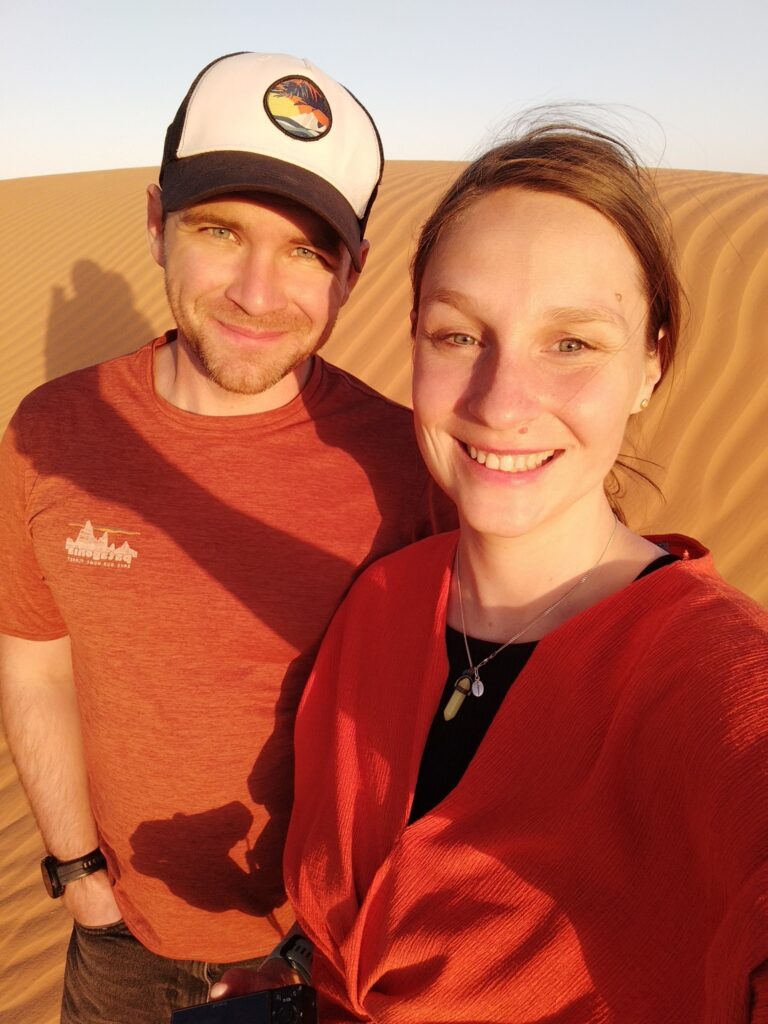
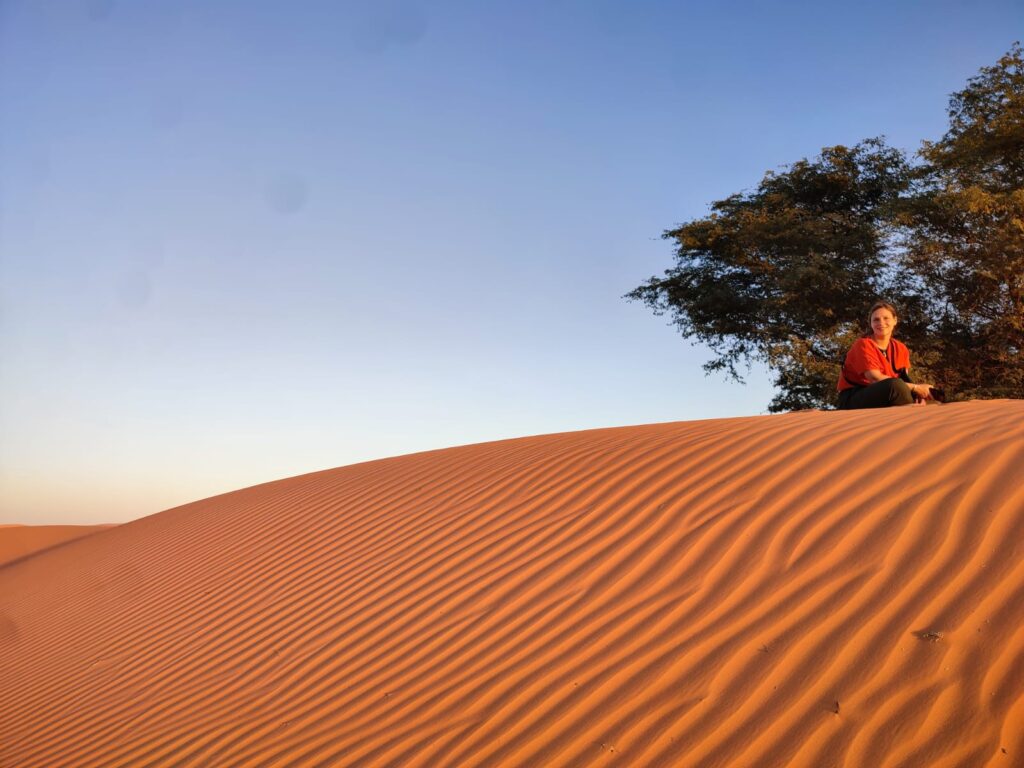
Abdou spent most of his life as a nomad in the desert. He told us about the traditions of nomadic life, how he used to travel to Timbuktu with camel caravans—back when it was still safe—and explained how caravans navigate at night using the stars. He also mentioned that the remaining full-time nomads—now only a small percentage of the population—don’t use money at all. Their main tasks are watering their camels and setting up temporary camps. They primarily drink camel milk and tea, eat couscous, and their biggest challenges are the lack of vegetables and the distance to hospitals.
Abdou moved to town because of his son, who wanted to study, but his former wife refused to leave the nomadic life—she is still roaming the desert. We asked Abdou which life he prefers. While he is happy now with his new wife and young child, has a good income from the camp and desert tours, and takes pride in his garden where he can finally grow vegetables, he still longs for the desert. He plans to return to a nomadic life after turning 60. A few times a year, he collects donations and visits nomadic families in the desert to ask what they need and provide basic education, such as informing them about the risks of early pregnancies.
After Chinguetti, we had originally planned to visit Oudane, another UNESCO World Heritage Site and former caravan hub, but we decided not to take on another 100 kilometers of terrible roads (or risk crossing the desert). However, we heard about a newly paved road leading south to Tidjikja, which wasn’t even on Google Maps yet.
We asked around, and everyone recommended this route, saying it passed through breathtaking landscapes. The only risk was that sand dunes sometimes covered the road, requiring travelers to dig themselves out. We drove back to Terjit, where the road started, and set off with the plan to wild camp wherever nightfall caught us.
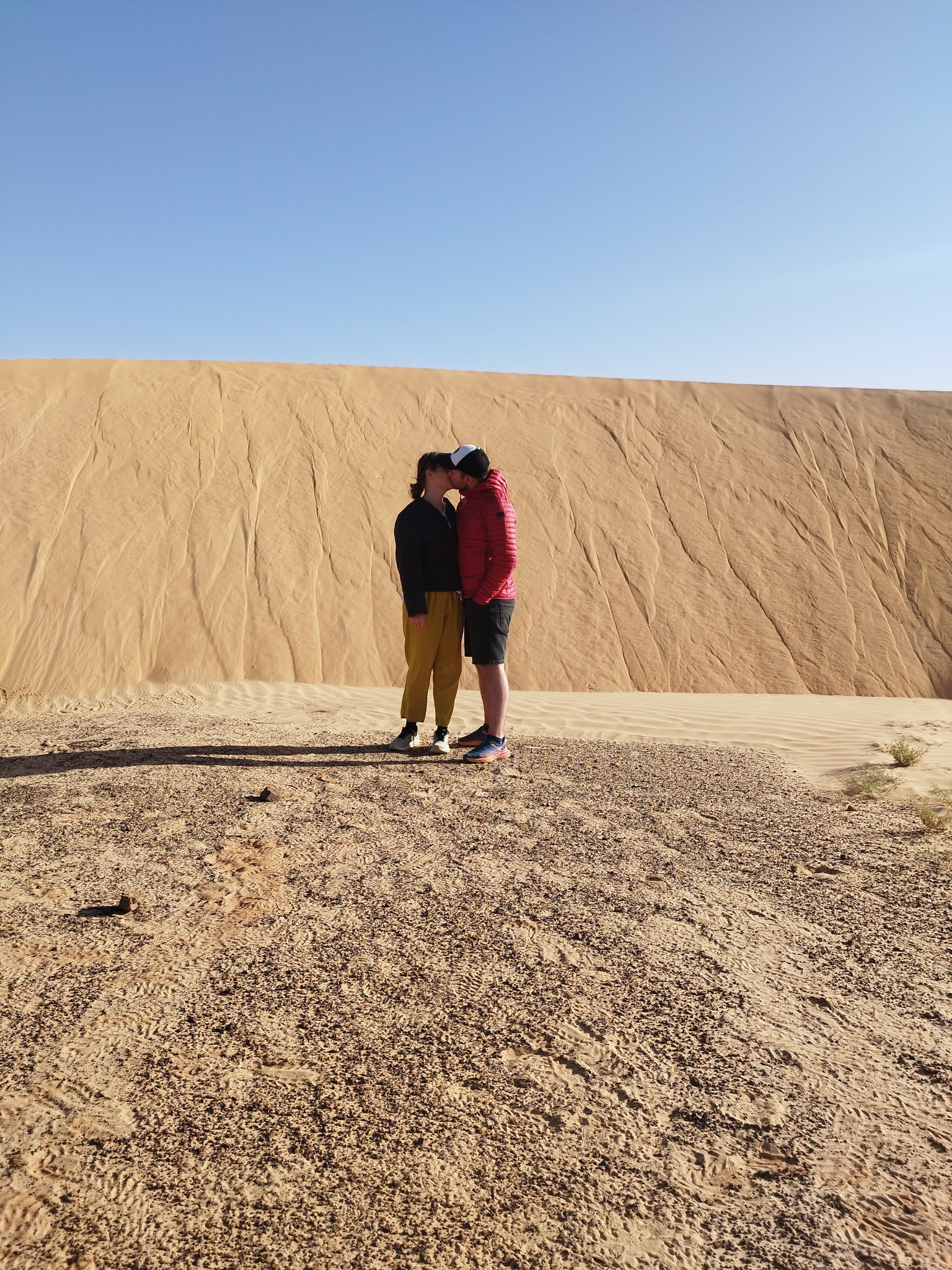
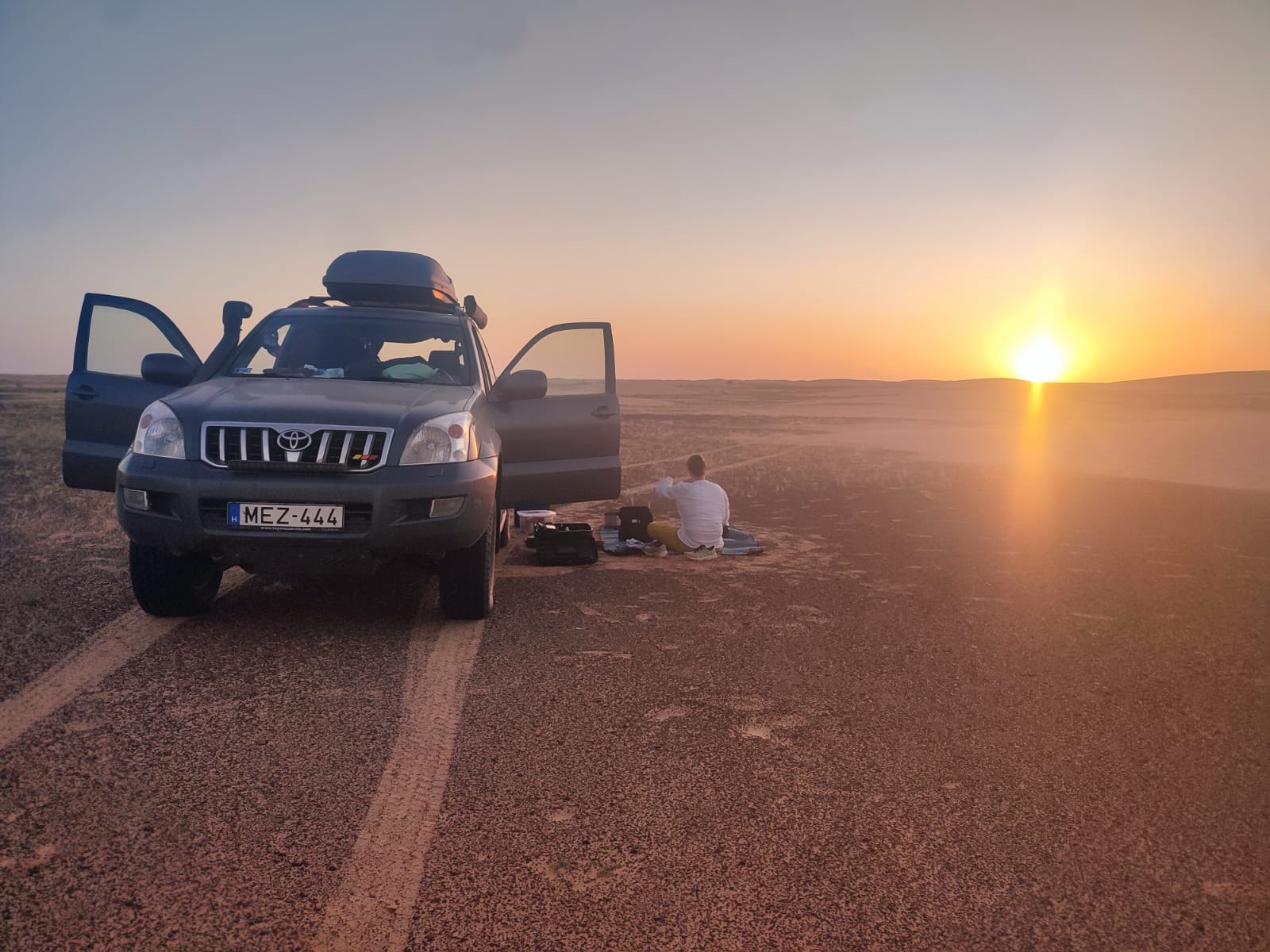
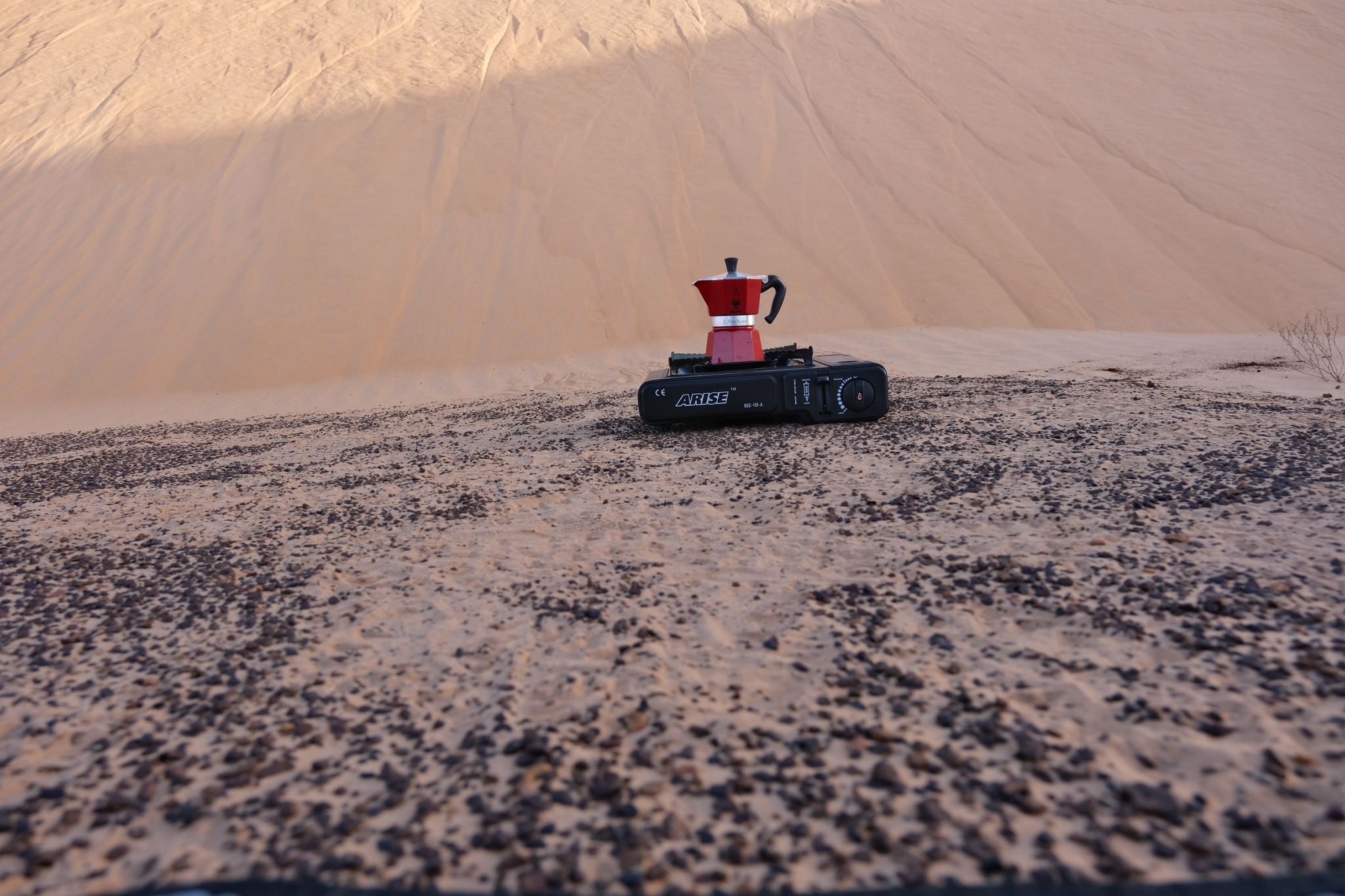
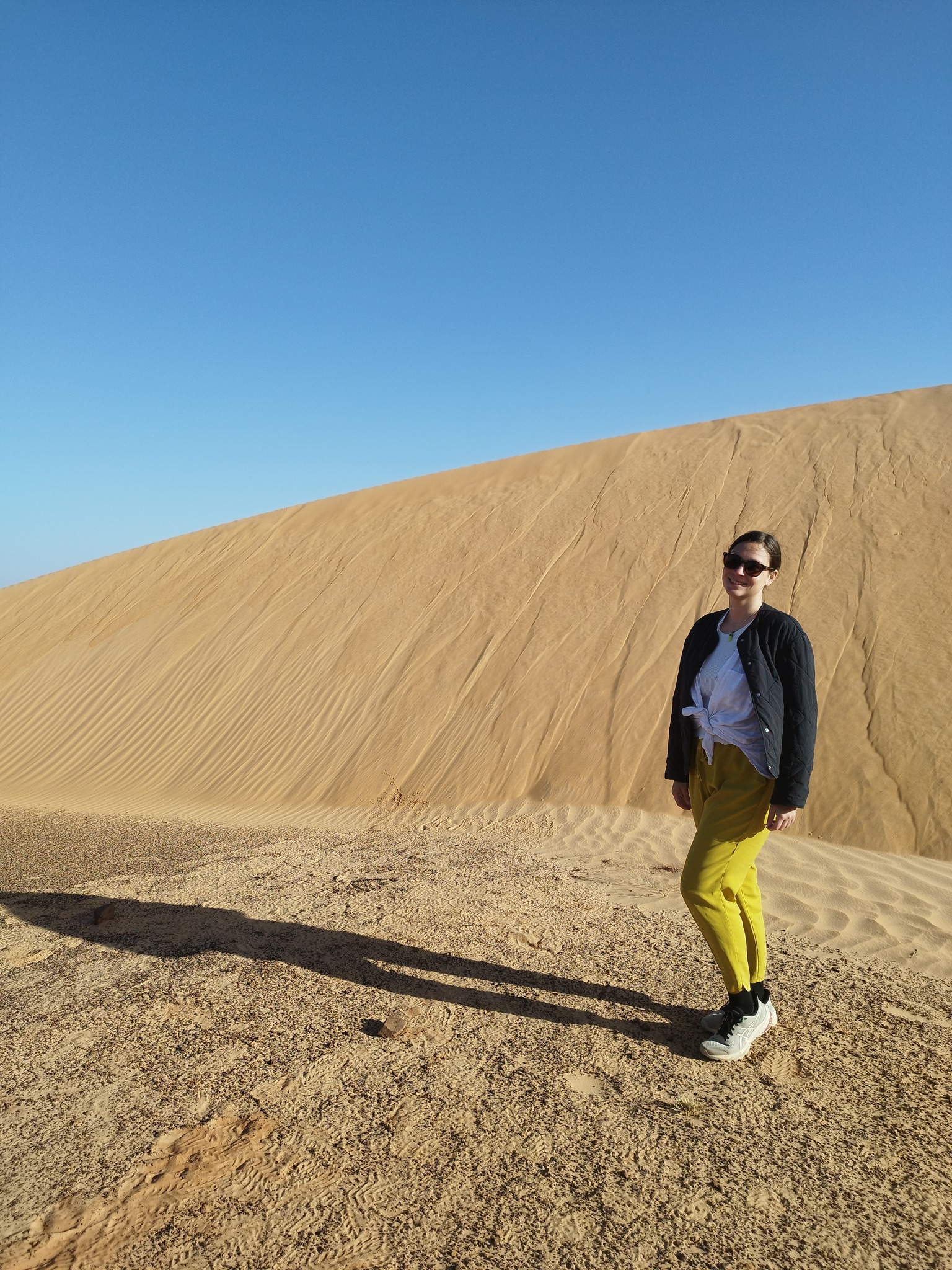
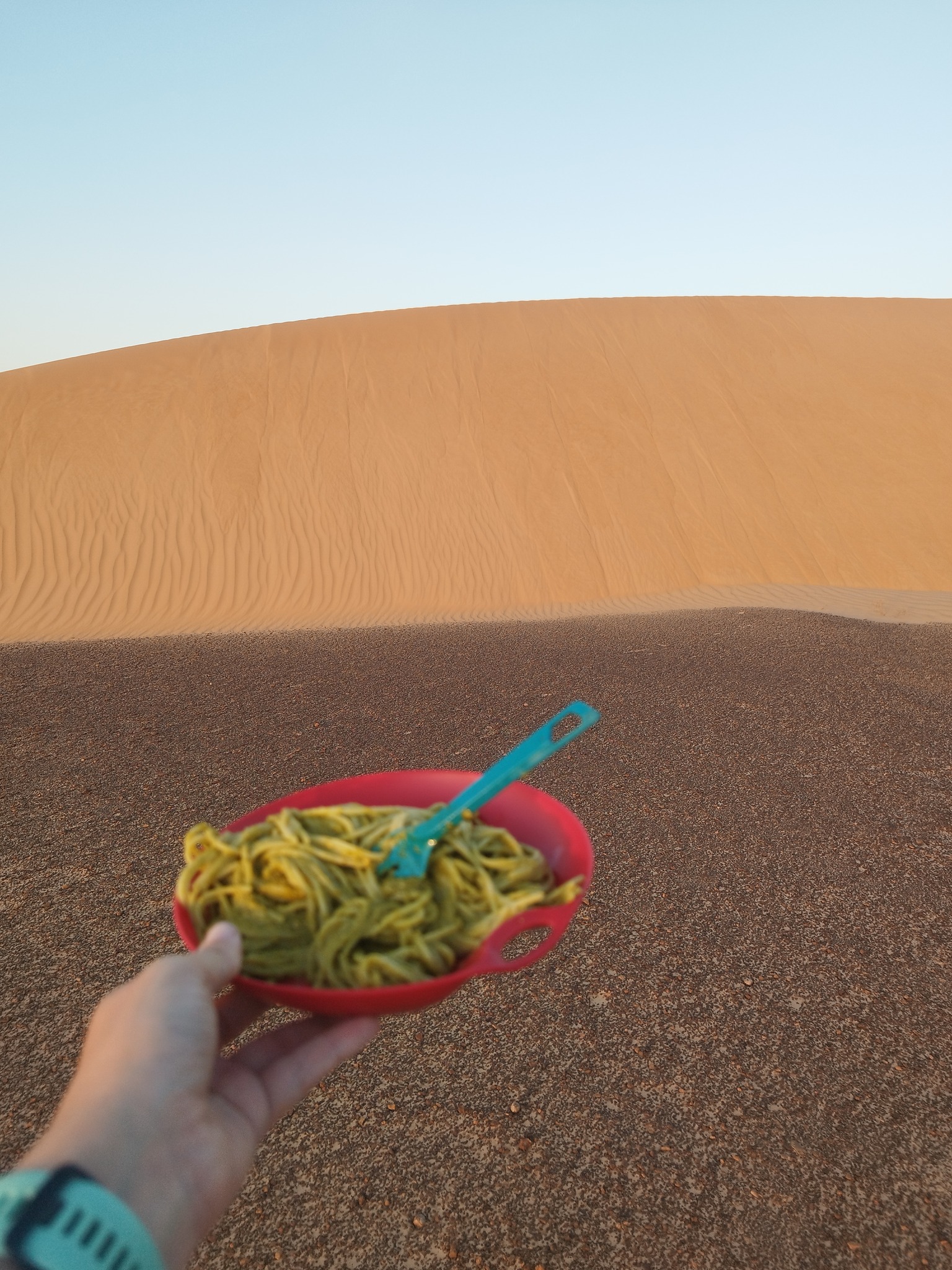
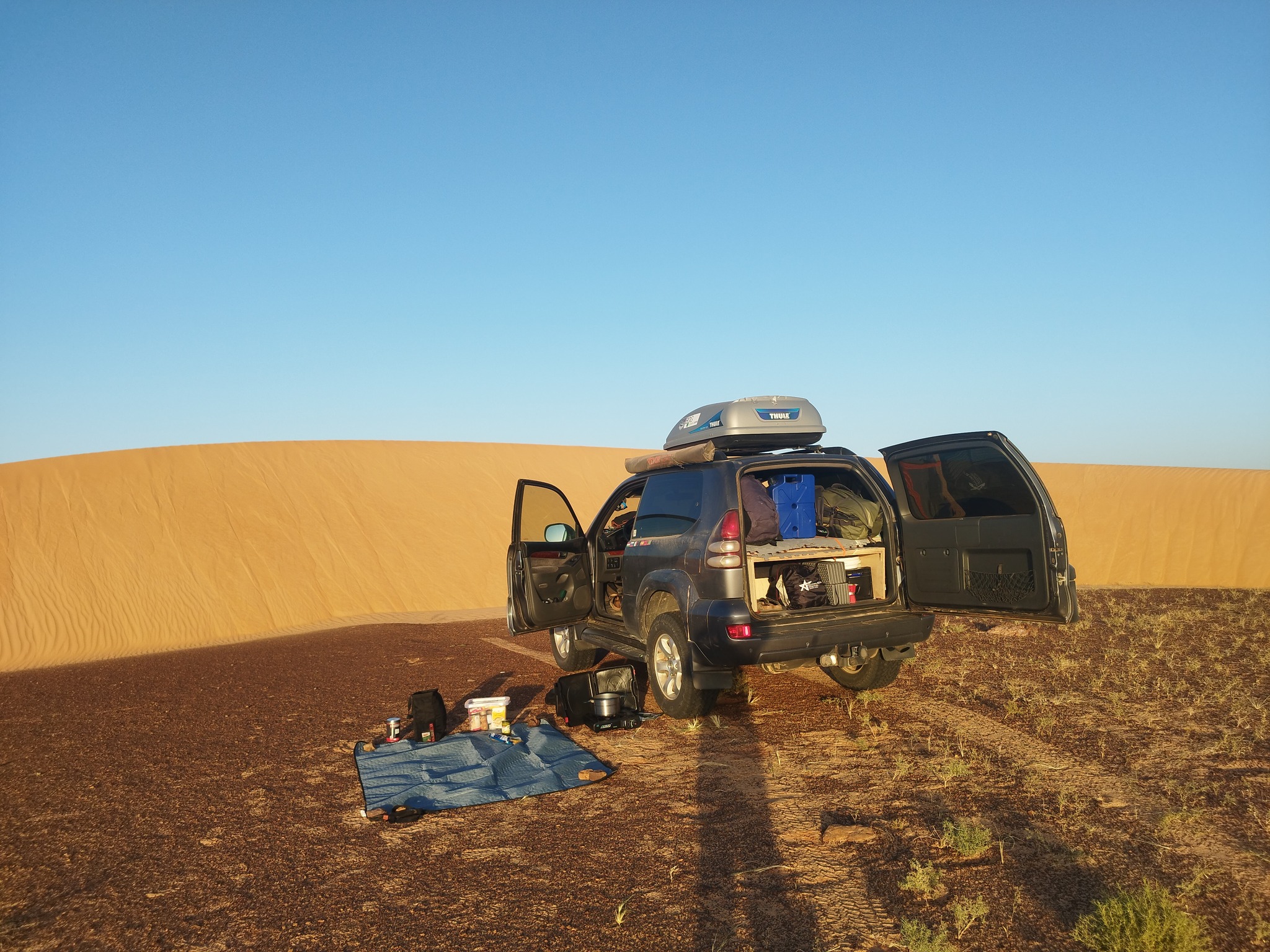
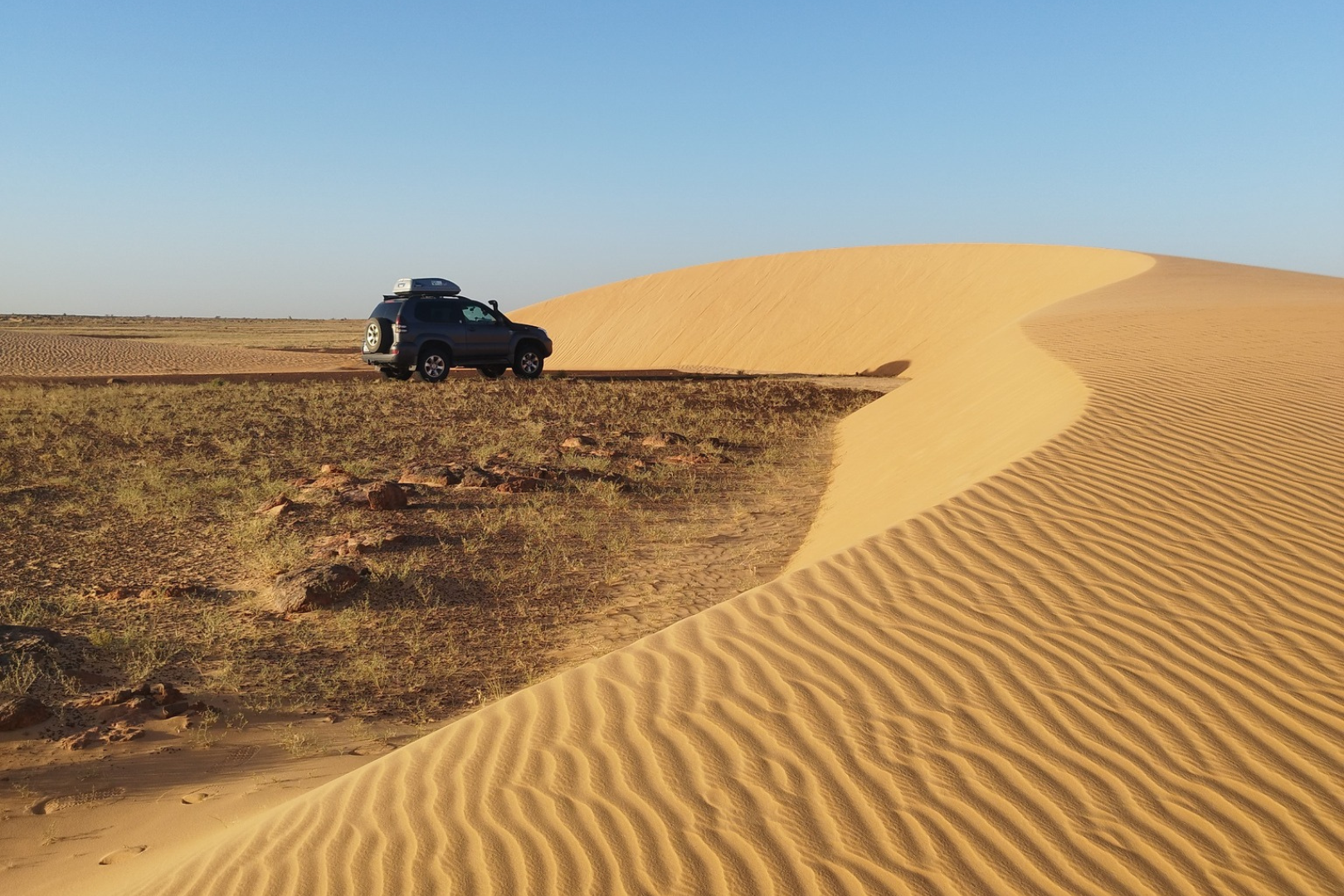
The route was truly stunning! After a few hours of driving, we found a spot where the sand was firm enough to set up camp in the shadow of a dune. We weren’t far from the road, but traffic was so sparse that in 300 kilometers, we only saw about 15 cars.
We arrived in Tidjikja, the first major town, a real desert settlement with an interesting market. Our plan was to drive to a village called Nbeika, from where a 25-kilometer sand track leads to a river valley where desert crocodiles can be found. We drove through the sand for quite a while but never managed to find the crocodiles. However, the landscapes we saw were incredible: lush gardens between sand dunes, tiny villages, and flowing rivers (with actual water in them).
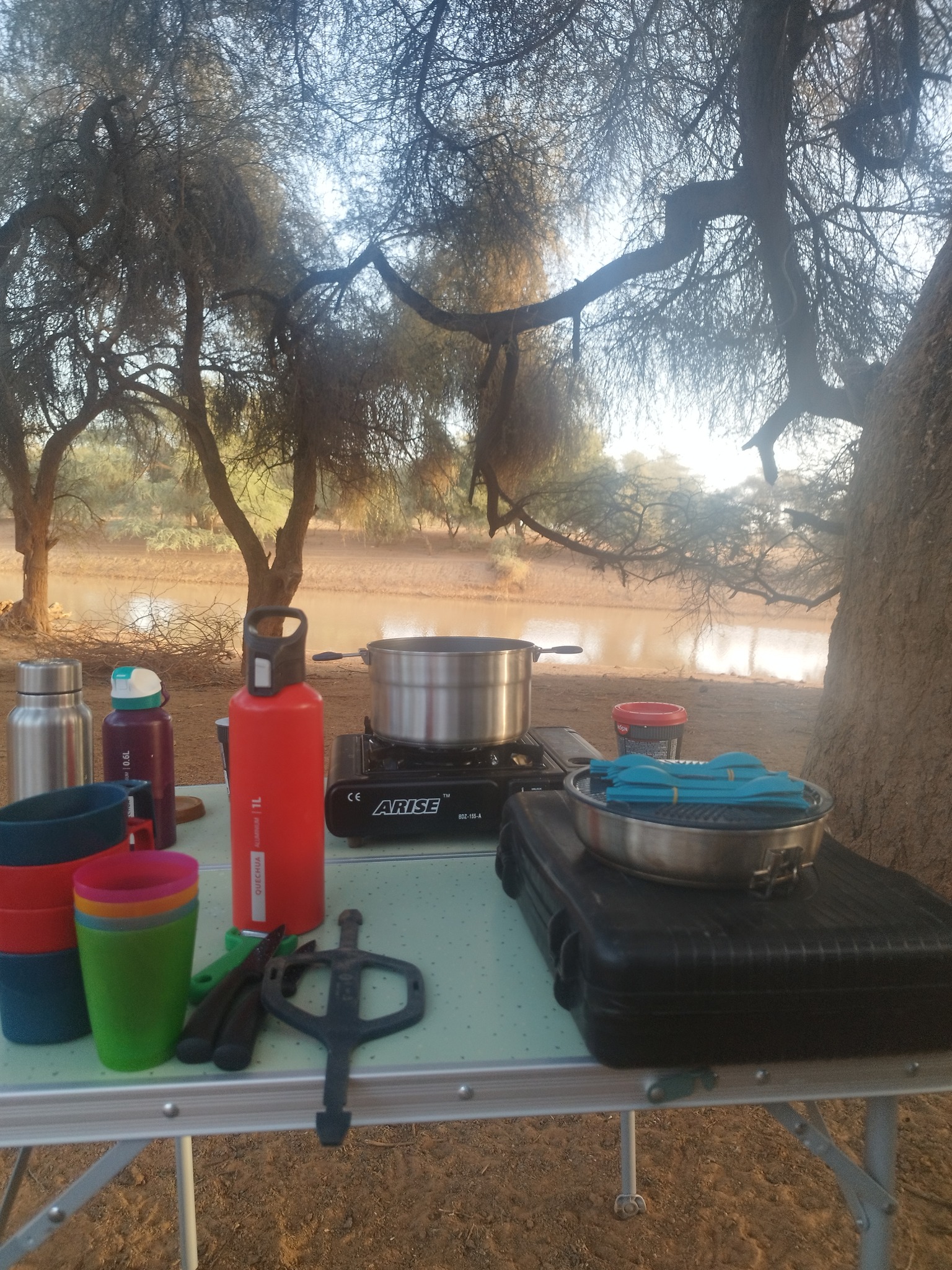
For the night, we found a wild camping spot by a river, sheltered under the trees.