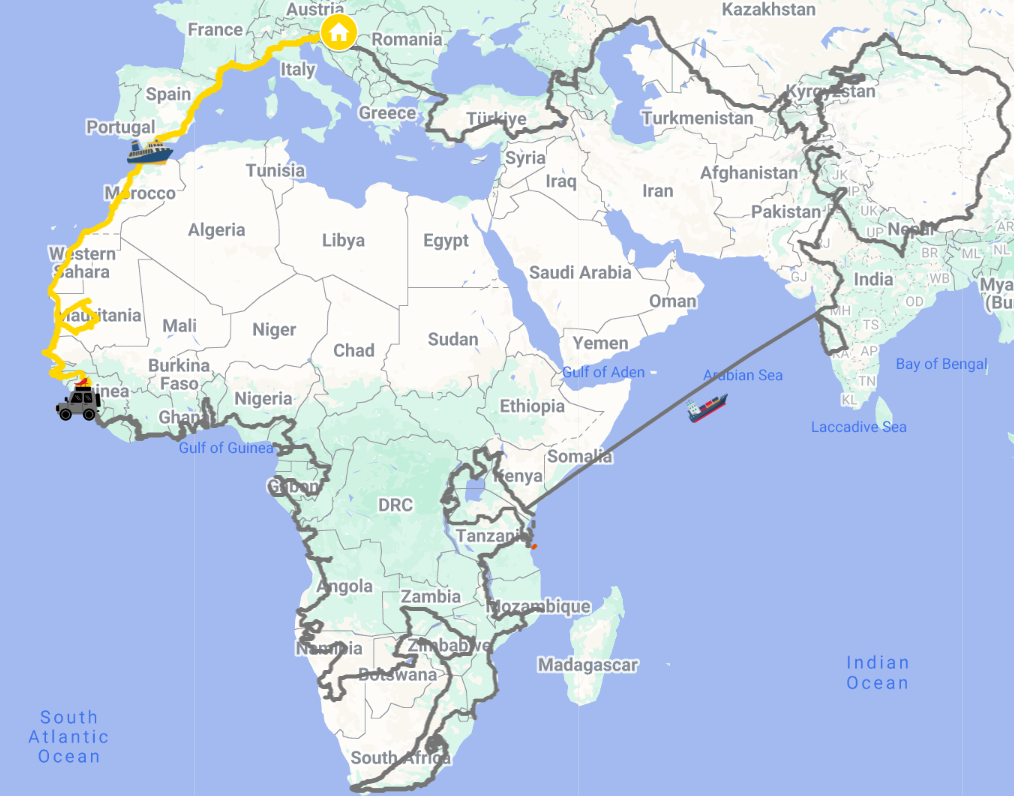
February 23-28.: After exploring the Fouta Djallon region, we headed toward Conakry. Although we set off at 8 AM, due to traffic (and potholes), we couldn’t make it all the way to Conakry that day. Instead, we spent the night in Coyah, a small town before the capital, where we found a beautiful place to stay by a small stream.
The next day, we left for Conakry at sunrise, around 7 AM, but this turned out to be the worst possible timing. The Monday morning rush hour was brutal—despite Coyah being only 35 kilometers away from Conakry, it took us four hours just to reach the airport on the city’s outskirts. The traffic was unbelievable, most of the cars were dented or damaged, and we even had a minor fender-bender. In the end, after a five-minute argument about who was at fault, a police officer simply waved us both on, telling us to move along because we were blocking traffic (it’s apparently that common for cars to bump into each other).
We had to go to the airport because at the small northern border crossing where we entered they couldn’t take our fingerprints or stick the visa into our passports. Instead, they had just stamped the back of our printed e-visas. There is an official immigration office in downtown Conakry where they can properly issue the visa within a day or two, but we had heard that some travelers managed to get it done directly at the airport by going to the international arrivals section. Luckily, this worked for us too—our fingerprints were taken immediately, and we were issued a visa valid for three months from that day.
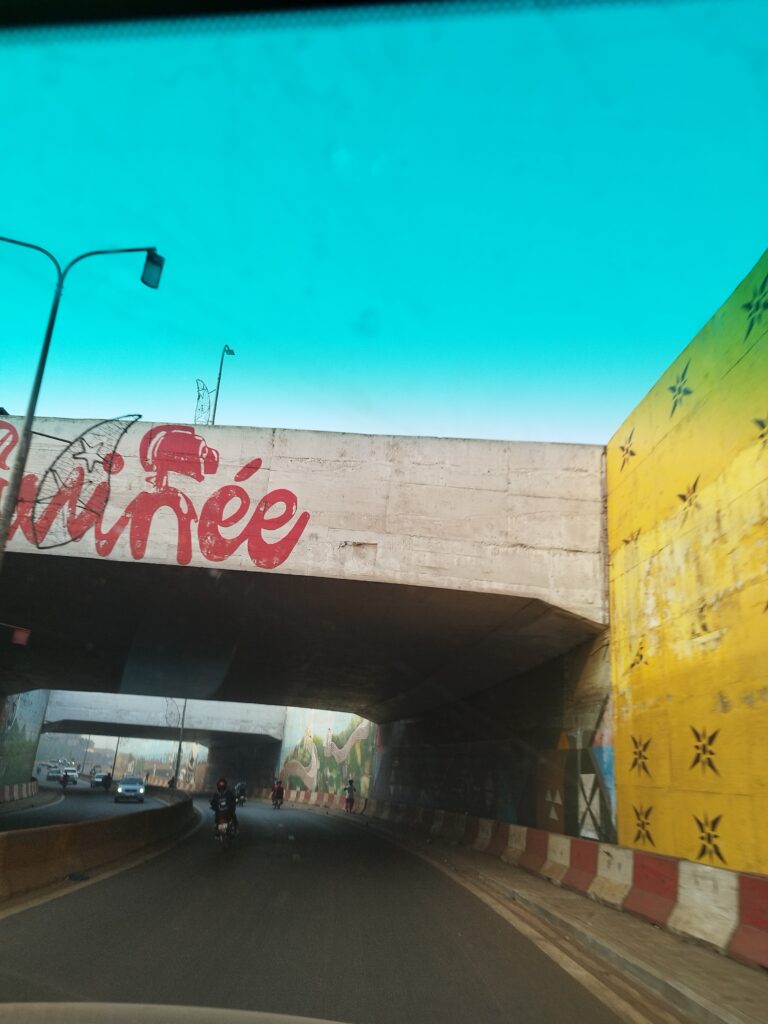
After a quick breakfast and some rest, we continued the remaining 13 kilometers into the city center, where the embassies are located. By this time, the rush hour had passed (and we were getting used to the local driving culture), so we reached downtown relatively quickly.
Our first stop was the Ivorian Embassy, but it was closed for a two-hour lunch break. While waiting, we walked over to the Embassy of the Democratic Republic of the Congo (DRC), where we met a very kind woman. She explained what documents we needed to apply for a visa. She also mentioned that while approval wasn’t guaranteed, they would send our application to Kinshasa, the capital. If the visa wasn’t granted, they would refund our payment—an unexpected but pleasant surprise, as most places in the world don’t offer refunds for visa fees, even if the application is denied.
It was uncertain whether we would get the visa because the DRC has always been considered as a dangerous country, with several armed rebel groups operating there, mainly in the eastern region. Moreover, just a few weeks before, the M23 rebel group had advanced and taken control of Goma, causing an even greater humanitarian catastrophe. Because of this, the DRC froze the issuance of tourist visas, so we had to provide a very strong justification that we only intended to cross the country’s western part in just one or two days. (The DRC is a huge country—Matadi, where we planned to stay overnight, is 3,000 kilometers from Goma. Still, we know that no part of the country is truly safe, so we also wanted to spend as little time there as possible.)
While gathering the necessary documents, we had some time to explore the city. Eszti (Ádám needed a little more time) was immediately captivated by something in Conakry. Most travelers don’t like this city because it’s very big, chaotic, and incredibly difficult to get around, but we found that it has a unique charm.
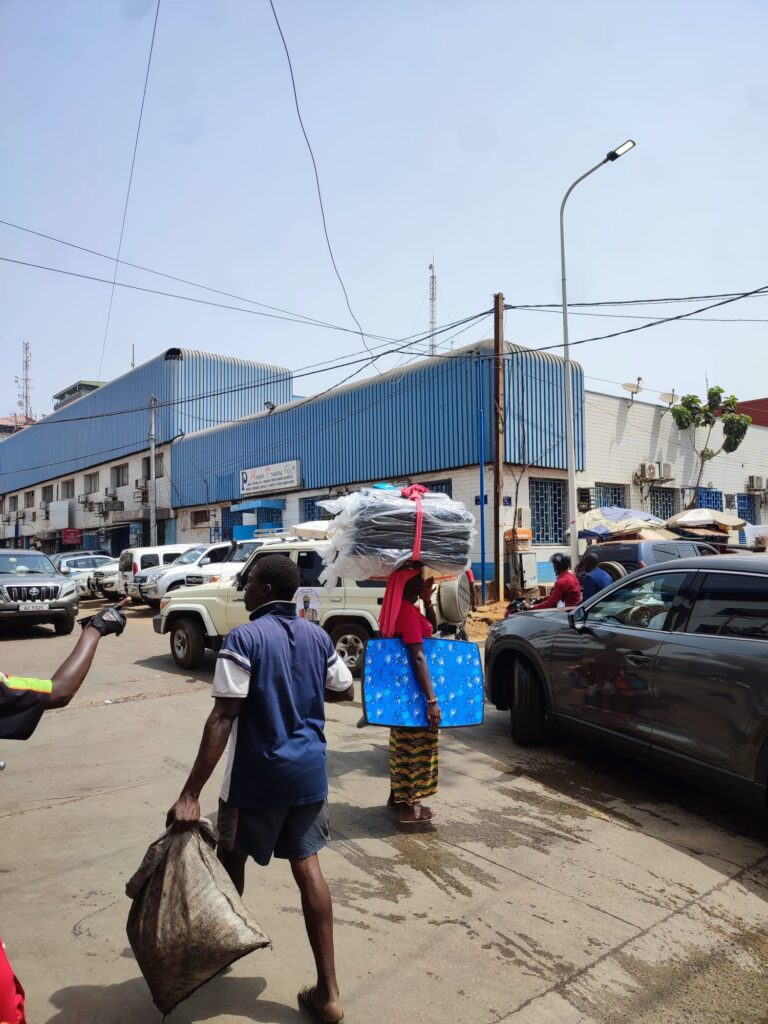
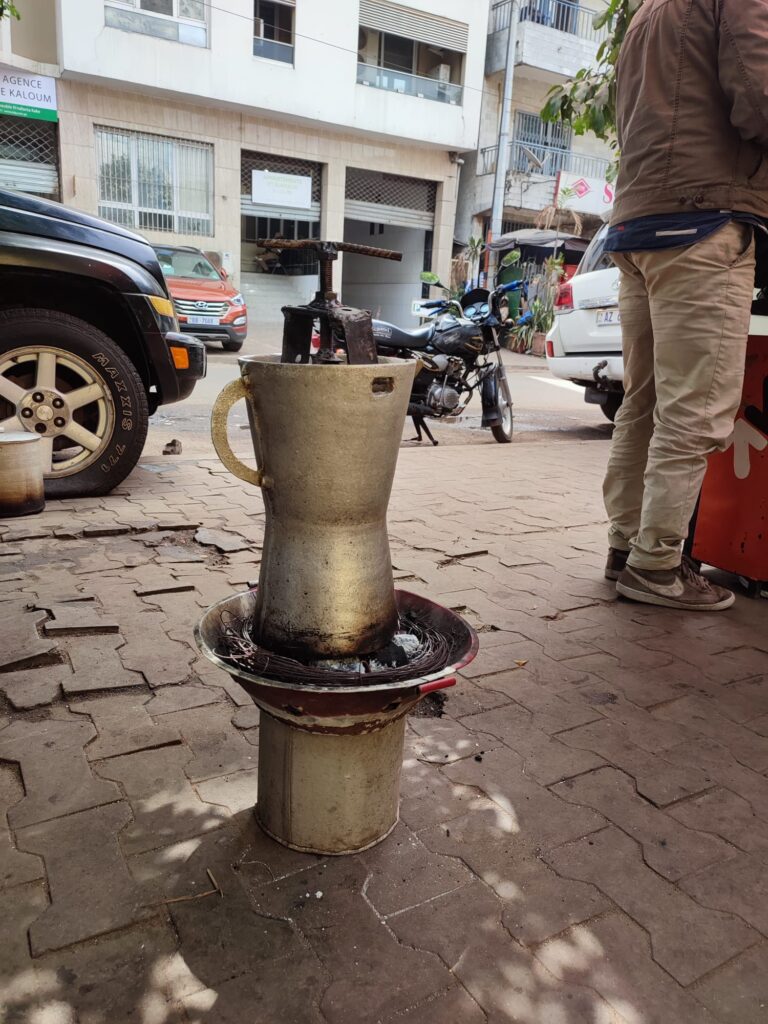
One thing that characterizes the whole country is the abundance of small street cafés. Coffee is brewed in large, often homemade, moka pots, which was a huge relief because, up until Senegal, we had enjoyed delicious brewed café touba, but from there onward, every West African country only offered Nescafé (or sometimes not even that). In Guinea, people also told us that café touba was available, and we tried it in one place. To our biggest surprise, instead of the usual spiced, Guinean pepper-infused taste, we were served a very strong, hot ginger drink. They were so happy that we liked their beverage that they even invited us to it.
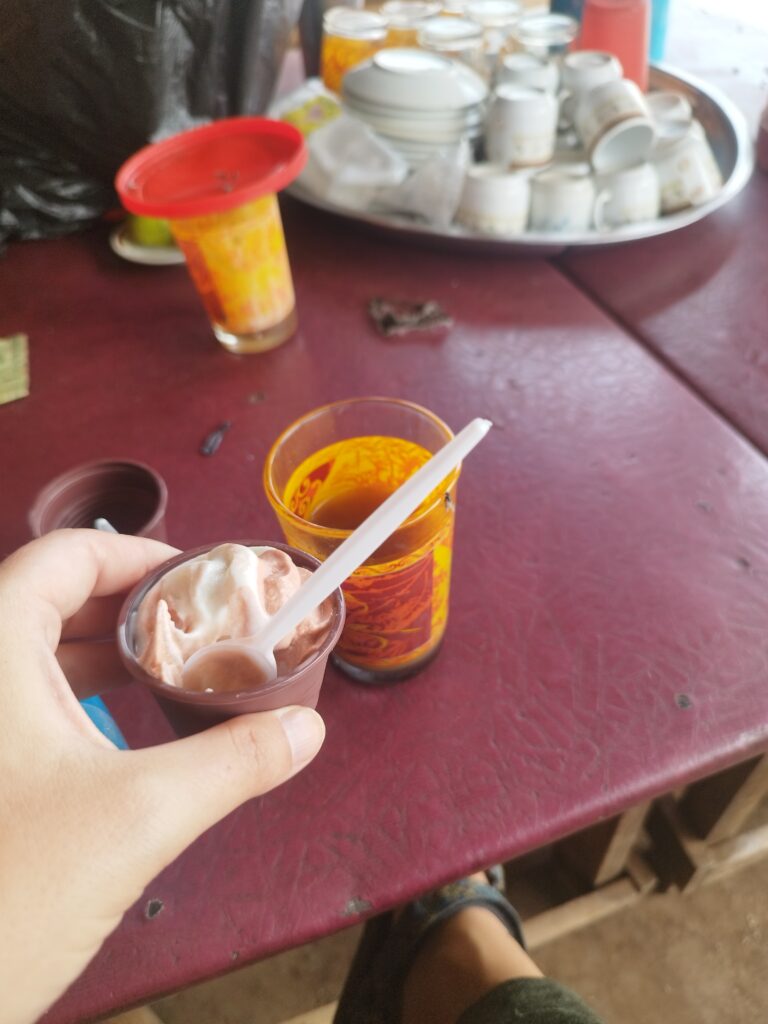
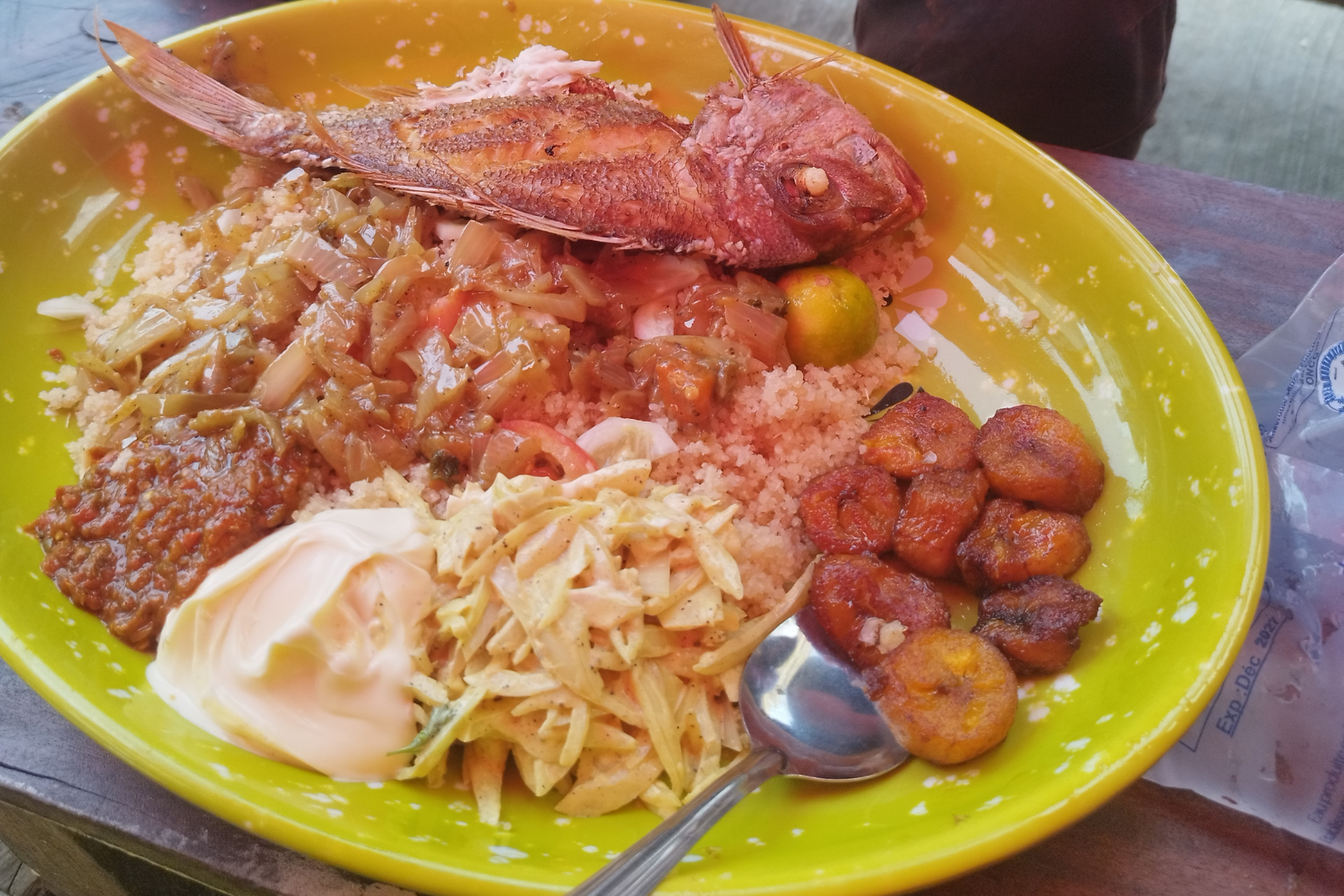
Some cafés also have ice cream machines, where you can get different flavored soft-serve ice creams for about 50 forints. In addition to cafés, there are many street-side breakfast and lunch spots. Breakfast is mostly rice with a palm oil and fish sauce (or a few women sell porridge), while lunch has many different options. Our favorite vendor was a very popular place that served freshly grilled fish with quinoa, fried plantains, and four types of salad. Naturally, everything is eaten by hand, and the size of the fish depends on how many people are sharing it. Besides street vendors, the main alternative is fast food places, where you can find delicious shawarma (Middle Eastern-style thinly sliced beef wrap) and fataya (similar to a deep-fried dough, filled with beef, eggs, vegetables, and spicy sauce), as well as fresh ginger, bissap and baobab juices.
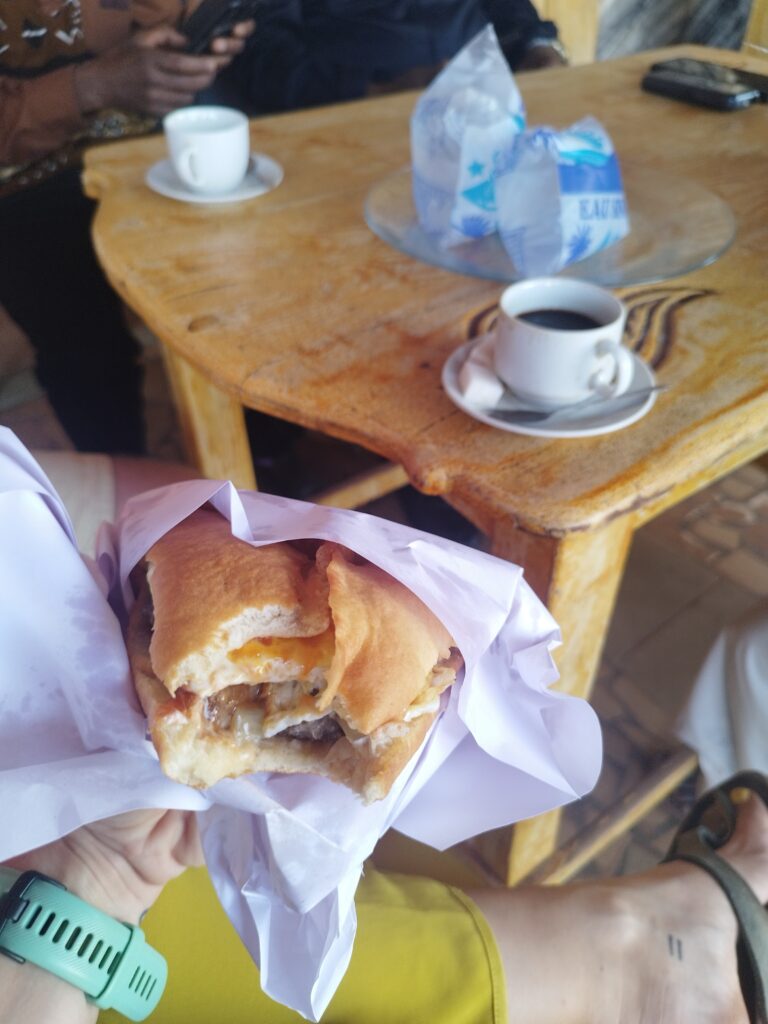
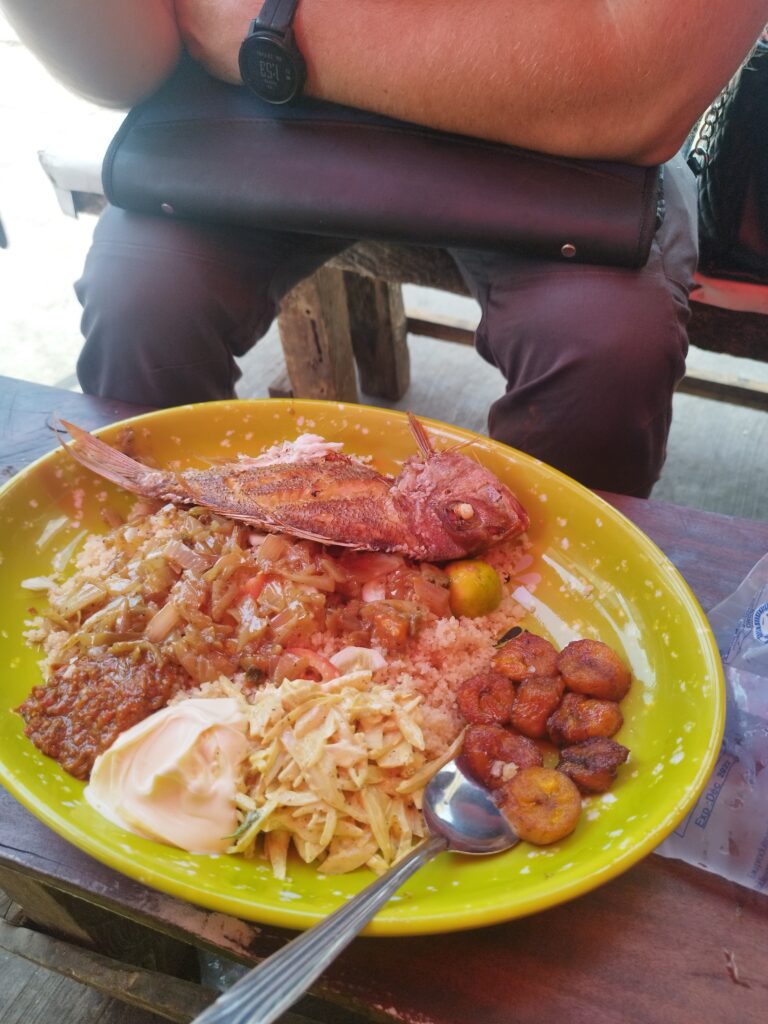
We got our Côte d’Ivoire visa very quickly—we only had to wait for half an hour at the embassy. However, by the time we got back, the DRC embassy had already closed. We looked for accommodation in the city center so we could be there early the next morning. Unfortunately, the cheapest option in town was the worst-value places we had ever stayed at. We paid about 42 euros (our daily budget for both of us, including food and accommodation, is 30 euros, so we far exceeded it) for a terrible room in a Catholic mission. This was one of the biggest challenges in Guinea—often, we ended up spending way beyond our budget, yet we still didn’t even get running water (though in exchange, there were plenty of bugs).
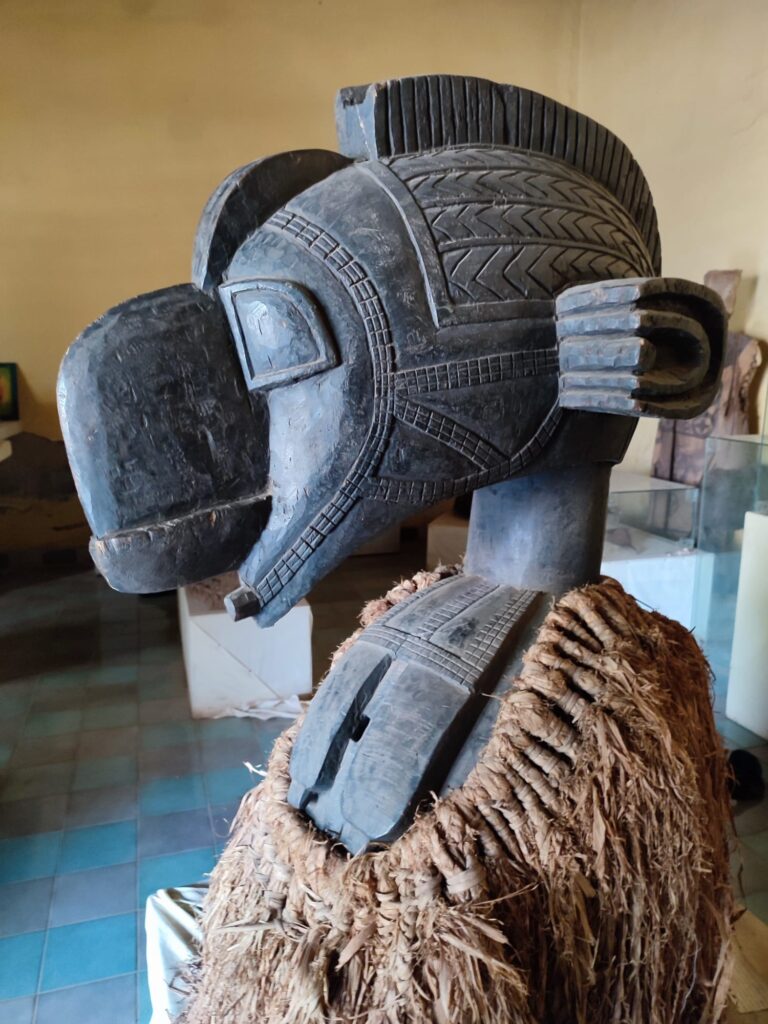
The next day, we managed to submit our DRC visa application, and we were told to to wait until Friday to get it. So, after a bit more sightseeing (we walked through the city center, which we still really liked, visited the port, and went to the museum, where we learned about the country’s symbol, Nimba, the fertility goddess of various ethnic groups), we decided to move to an accommodation further from the city, where we had read that camping in our car was possible.
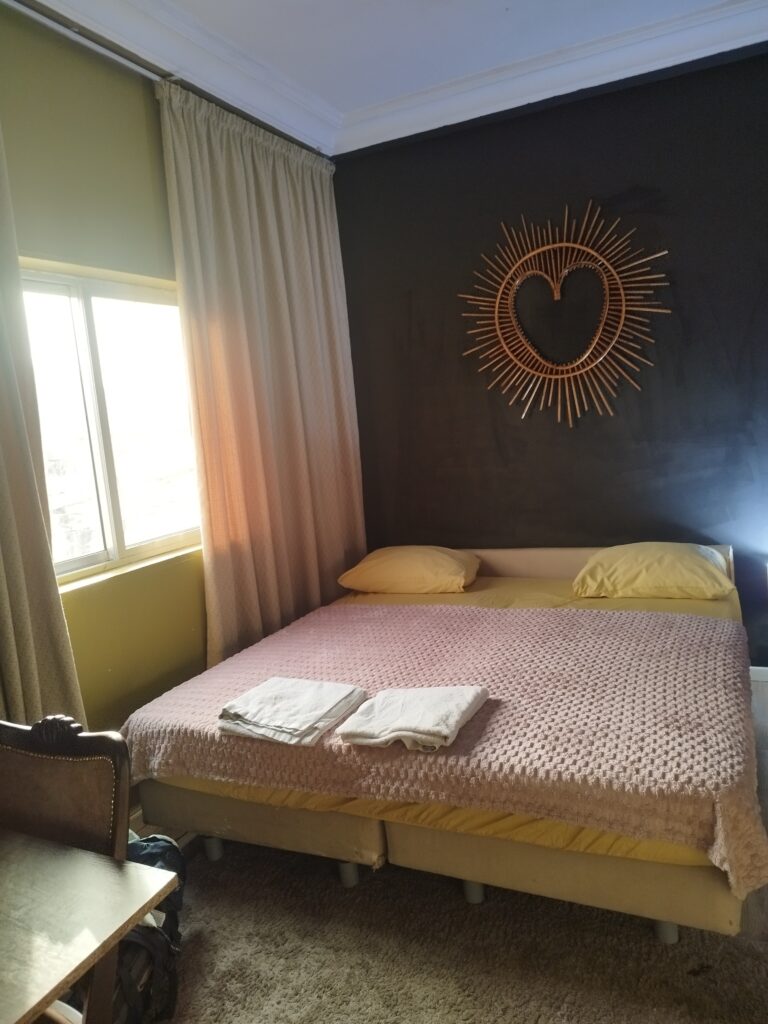
When we arrived, we were amazed at how beautiful the place was. Even though it cost the same as the terrible accommodation in the city center, we asked if we could check out a room. It was stunning (for the first time on our trip, we saw a shower curtain), so we decided we deserved a bit of luxury.
The place was run by Mori, a Guinean who has been living in the Netherlands for some time but frequently returns home. He immediately offered us several glasses of palm wine—a fermented, mildly alcoholic drink made from the sap of palm trees, which is produced on the islands near Conakry. We didn’t just love his place for the hospitality; he also organized different activities for his guests, such as weekend trips to the islands. One evening, we went to a bar where we listened to live Guinean music.
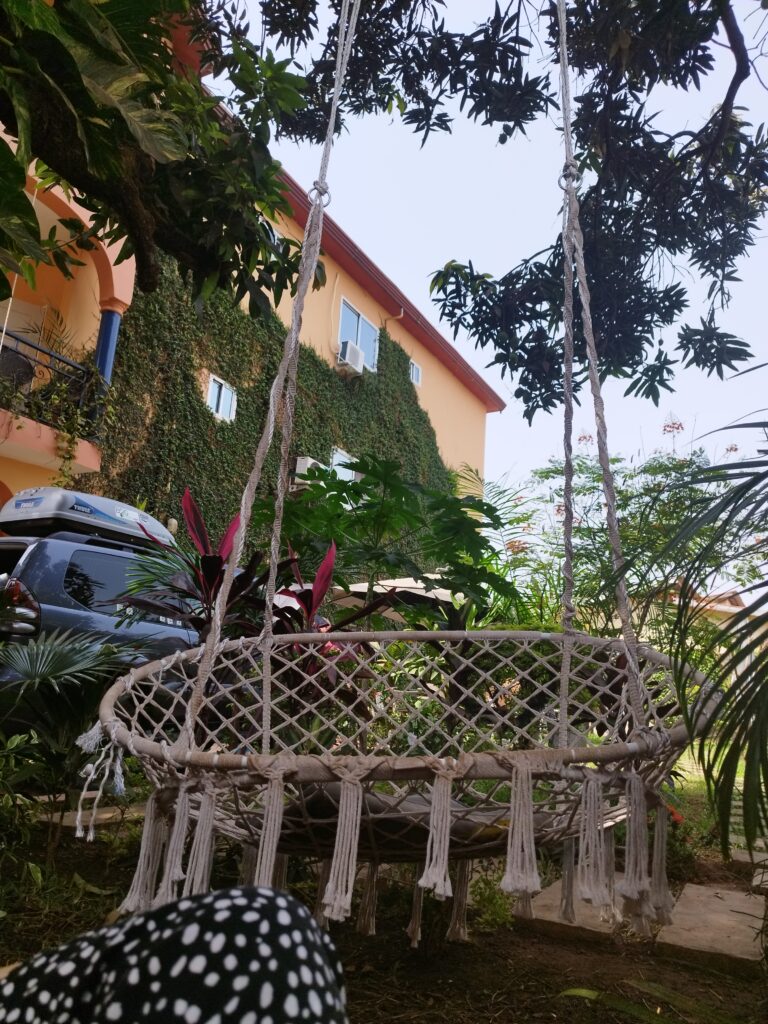
At Mori’s, we also met some really nice travelers, which was special because it’s rare to meet other travelers in West Africa—usually, we are the only guests at accommodations. Here, however, we met Jax and Amado, a Filipino-American couple from California who travel around Africa very slowly under the name Nullacruising, collecting and publishing traditional music (their old but brilliantly converted Land Cruiser is a rolling studio). We also had great conversations with Richard, a traveler from New Zealand, and met another New Zealander traveling by motorcycle (they were both surprised to run into each other), an 82-year-old French woman who was riding a small motorcycle across West Africa, and a Ghanaian-American couple who had just bought a small motorbike to embark on a similar journey.