Our experiences, border-crossing procedures, and costs by country
One of the biggest challenges of an overland trip around Africa is that the continent consists of many countries, which can sometimes turn the journey into a bureaucratic nightmare. To help others, we’ve collected how our own border crossings went: where we obtained our visas, what the immigration and customs procedures were like, what additional costs we had (mainly road taxes and insurance), and what else to watch out for both at the borders and within each country. Of course, situations can change quickly, so we included the exact dates when we entered each country. The most up-to-date information can be checked on the iOverlander app, but as of December 2025, we have verified most countries ourselves.
We travelled with a CPD, the Carnet de Passage, which is an international customs document that allows the temporary importation of a vehicle without paying duties and taxes. Its advantage is that it simplifies procedures in many countries, but the downside is that you must leave a deposit for the duration of your journey, and the document must be filled out perfectly in order to get your deposit back at the end. Since the CPD only has 25 pages, we tried not to use it in countries where it wasn’t mandatory, so that we wouldn’t run out of pages (and some countries don’t accept it anyway).
Morocco
Date of entry: 2025 January
Getting a visa: Hungarian nationals are visa free for 90 day
Border: Ceuta (Spain)
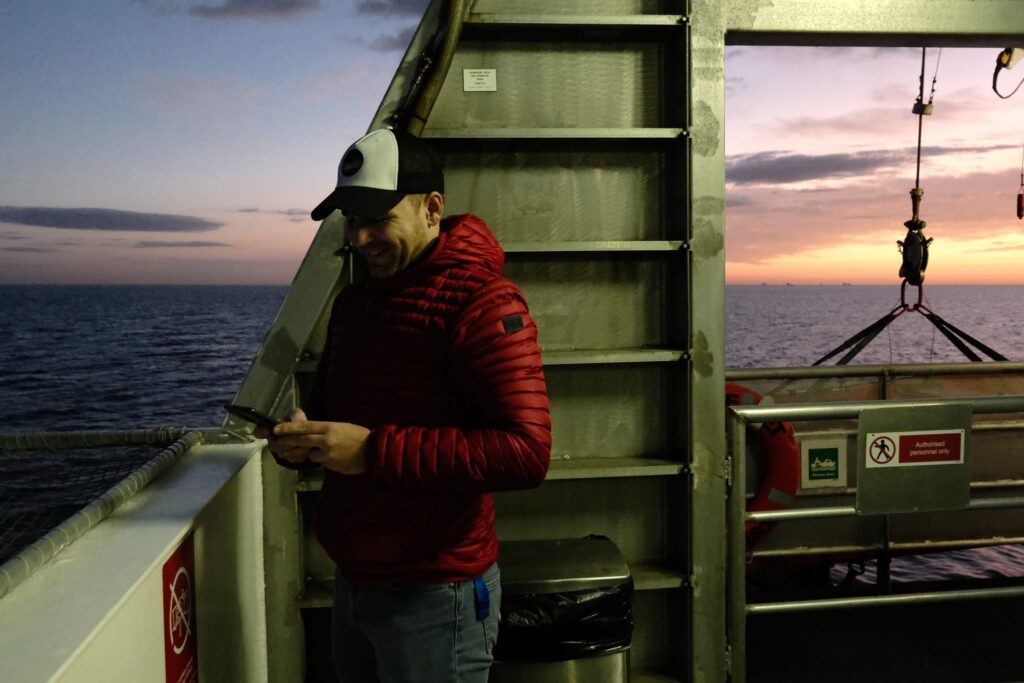
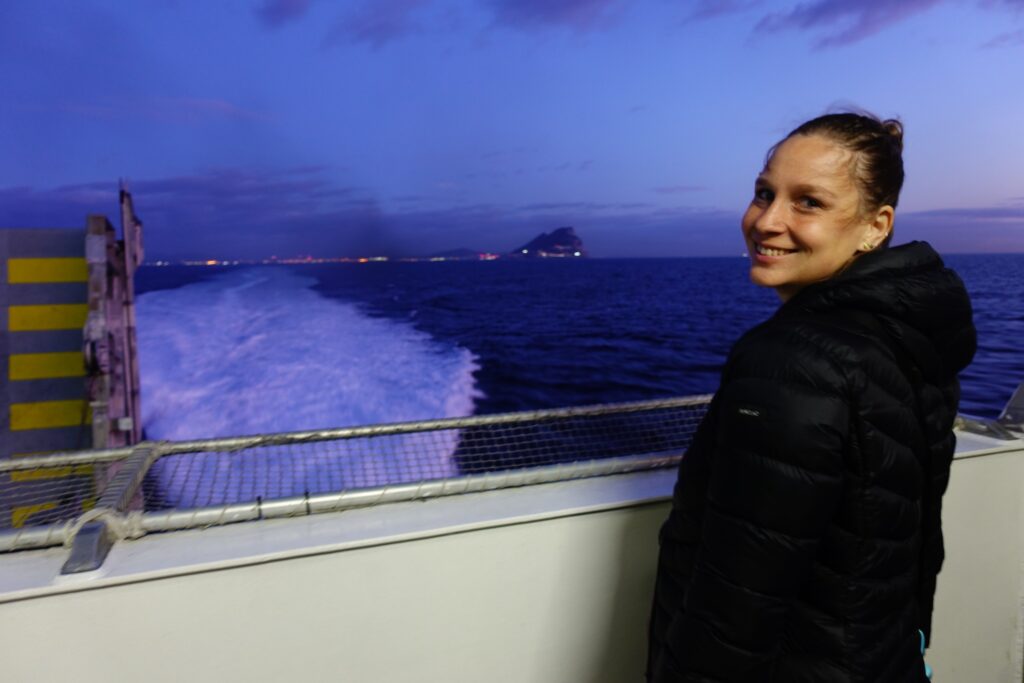
We chose this border because the Algeciras–Ceuta ferry is the cheapest connection between Europe and Africa (we paid 147 euros for two people and the car). Many travellers head straight to Tangier, where you must start the border formalities before boarding the ferry, but our ferry arrived in Africa on Spanish territory (Ceuta is an autonomous city belonging to Spain).
Before the border: It’s very strange, but before the border we had to drive into an empty parking lot, where we were given a small slip of paper that we had to show later (we had read about this, but didn’t do it at first, so they immediately sent us back).
Immigration: Took 1 min, we received a stamp.
Customs: No CDP was required. We received a customs slip for free, which we had to keep for exiting the country. The customs officers quickly inspected our car; drones are strictly forbidden to bring into the country. Altogether it took about 10 minutes, and everyone was very friendly (though we’ve read comments saying it can sometimes take longer)..
Other fees: They check insurance, but Hungarian compulsory liability insurance also covers Morocco (at least ours did — otherwise the insurance would cost 90 euros).
Other useful information:
They monitor speed a lot in Morocco, and we were also fined about 15 euros (they were able to show us a camera photo).
We spent around 9000 Fts for road tolls until the end of Western Sahara.
Mauritania
Belépés ideje: 2025 January
Vízumbeszerzés: Mauritani introduced the evisa system in the beginning of January 2025. https://anrpts.gov.mr/en/visa/requestvisa?fbclid=IwY2xjawHoxylleHRuA2FlbQIxMAABHSNWEhL4D-uPF5DLalB9pgRH2IvsXnfxUi7XHhwSmvSUyWaNKnQptXyBxw_aem_NG_T-1MOovCB_GHPAurmtg
1We submitted the application 10 days before arrival, but we only received approval 2 days before entering. We heard the same from others — no matter when they applied, it was only approved 1–2 days before entry.
The platform isn’t difficult to fill out, but it’s very important that every uploaded document is in the exact required format (the image size and MB limit are specified).
We didn’t receive any email notifications (we knew this in advance from others), so you have to keep checking the website regularly to see whether your application has been approved.
The fee for the 30-day visa is 55 euros, which must be paid at the border (in euros).
Border: Guerguerat (Western Sahara) – Mauritána
This is the only land border between Morocco and Mauritania (though a new one is almost finished). There is no border between Morocco and Western Sahara, so at this crossing you must exit Morocco and enter Mauritania.
Moroccan exit:
This was our most nerve-racking border crossing in Africa. We arrived around noon, with only about 10 cars ahead of us, yet we stood in line until 4 p.m. Eventually we were let through to the Moroccan side, where we had to drive the car through the scanner (drones are banned in Morocco, and pork and alcohol are prohibited in Mauritania — we had eaten all our Pick salami by then). We were given a slip of paper, took it to an office, where we got another slip, and then maybe another one. We handed in our customs slip — we went from office to office until finally, a little after 5 p.m., we managed to get the exit stamp and the car was cleared to leave the country.
The border closed at 6, but luckily Mauritania is in a different time zone, so we gained an extra hour.
Police checkpoints:
At this point we were not yet experienced border crossers, so we found it strange how many different offices we had to enter, where we had to write our details into large logbooks and answer questions (in French) — something we later got used to in West Africa.
Fixers:
There are endless helpers at the border who, for about 10–20 euros, will help you find the right office and speed up the process. However, it’s possible to manage without them as well — the border officers are friendly, though many do not speak English.
Immigration:
In one office, they scanned our passports, gave us a slip of paper, and we could go to another office for the visa (by this point we had been at the border for 6 hours and had visited more than 20 offices with various documents — we were starting to get exhausted). At the visa office, they scanned our e-visa (we had to print two copies), took our photo, we paid the fee, and received an actual visa stamped into our passports.
Customs:
Mauritania does not accept the Carnet de Passage (CDP); you have to get a Passavant for 10 euros, which guarantees that we will not sell the car in Mauritania. Adam’s passport was stamped with this Passavant, and we also received a receipt for the 10 euros. (In most countries, the Passavant is free, but sometimes they charge a fee without giving a receipt — here the 10 euros is legitimate.) However, at exit, they also wanted 10 euros, for which they could not provide a receipt, so it would have been a bribe, which we refused. After a small argument, we did not pay.
Other fees:
It is mandatory to buy insurance, which you can get right after the border. We paid 32 euros for 30 days, but we were so exhausted that we accidentally let a fixer help us, who added a small fee on top. The building is actually easy to spot right after the border.
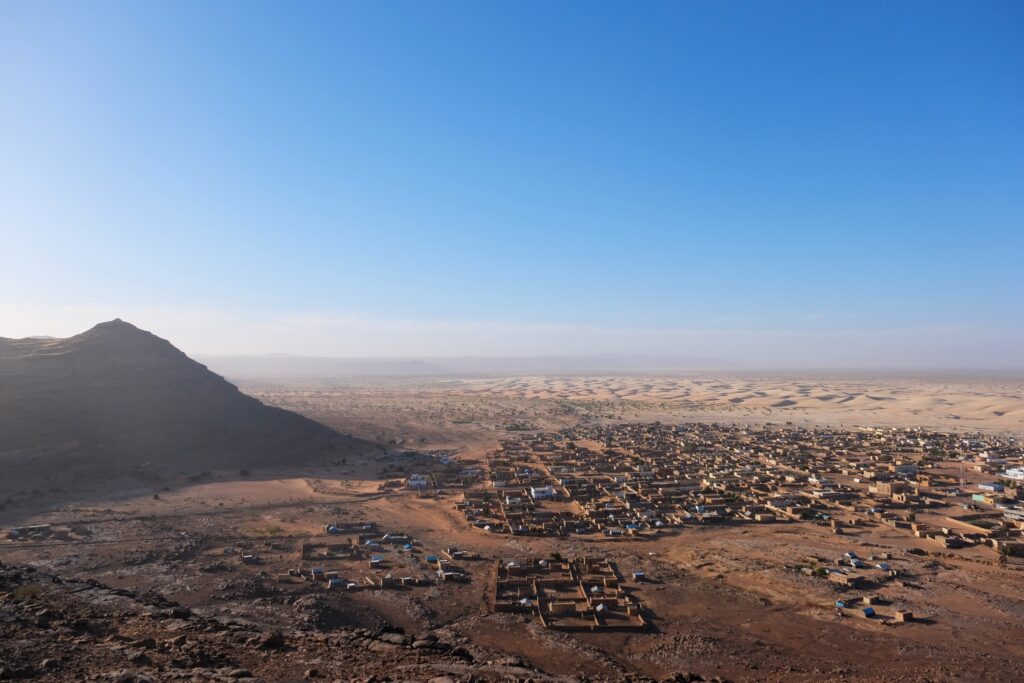
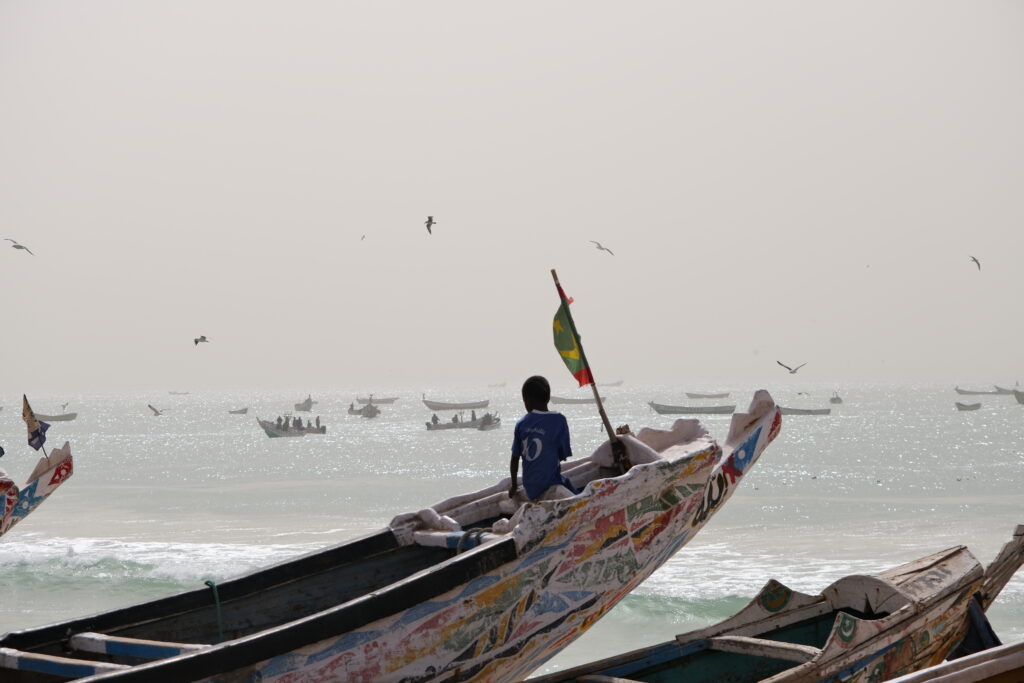
Some other useful info: There are an incredible number of police checkpoints in Mauritania. The officers are very friendly; they usually just ask for your passport and take a photo of your license plate. To speed up the process, we made 200 photocopies of our passport details and wrote our license plate number on them — we handed these over and could continue immediately (we almost ran out by the end). This passport data sheet is called a fiche, and this is what the police kept asking for.
Senegal
Belépés ideje: 2025 February
Visa: Hungarian Nationals are visa free for 90 days.
Border: Diama
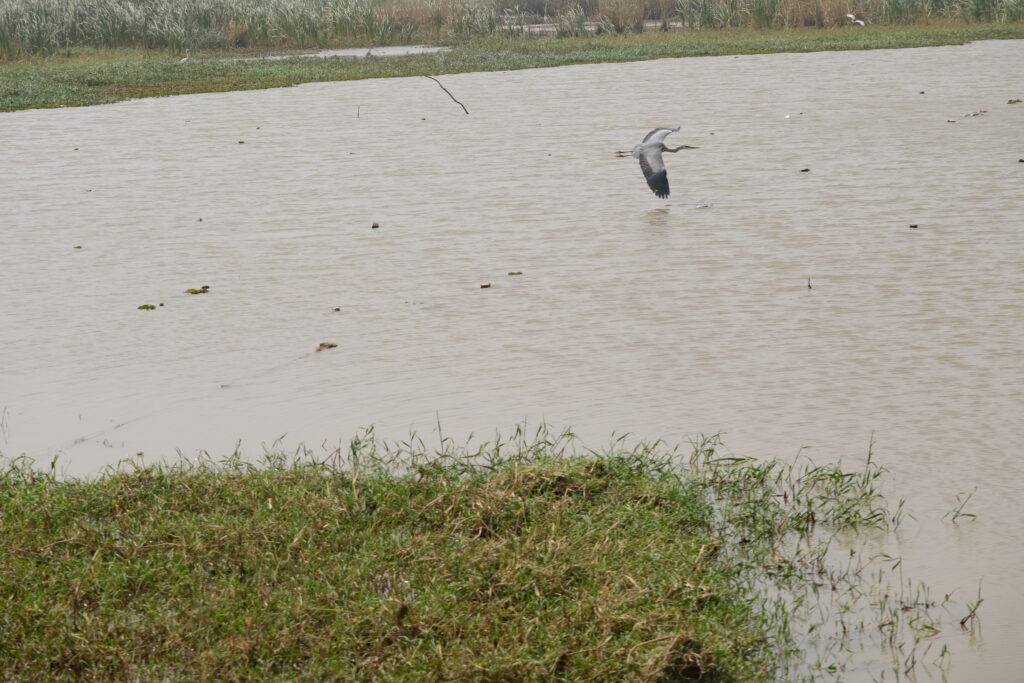
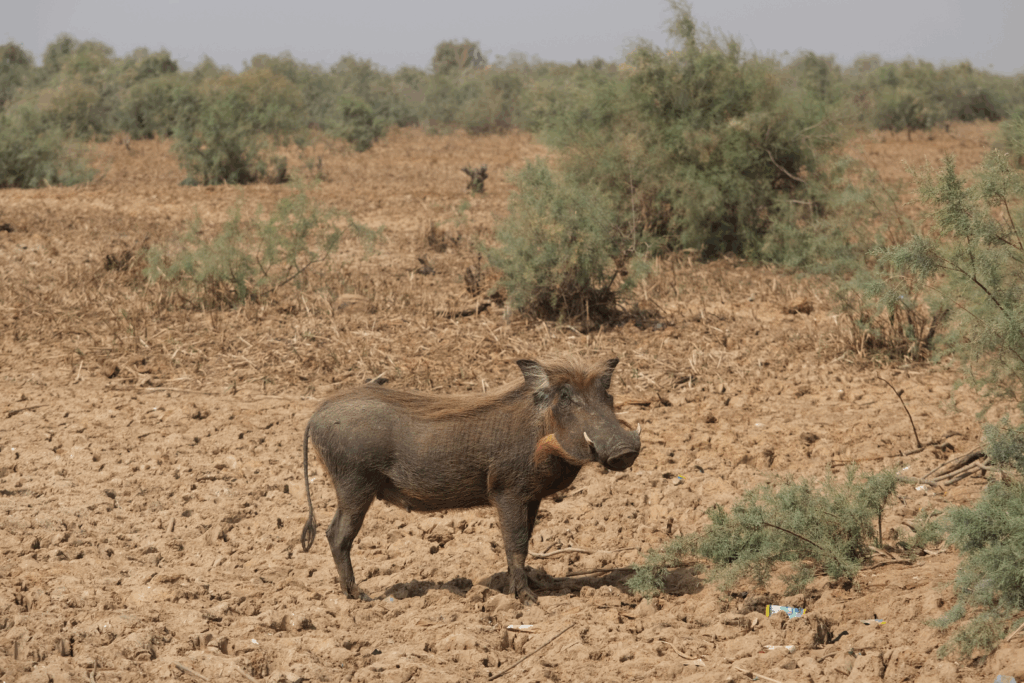
We chose this border because the main Rosso border has a very bad reputation (corrupt, slow, and expensive). To reach the border, we had to drive through Diwling National Park, for which a local entrance fee must be paid (200 MRU per person, less than 5 euros). The park was very beautiful — we saw many flamingos, pelicans, and warthogs. A 4×4 is recommended for the roads, but you can also do it more slowly with a 2×4.
Mauritanian exit:
A 100 MRU “community tax” is also collected per person at this border. We had set aside 400 MRU for the national park, but hadn’t accounted for this, so we had to exchange some more Mauritanian currency at the border. Unfortunately, the Mauritanian side was very corrupt. At exit, the border officer also wanted a small “gift,” which we refused with a laugh. The biggest scam is that they ask for 10 euros to stamp the Passavant. We knew this was just a bribe, so we argued with them for 15 minutes (using our very broken French) that we would only pay if they could provide a receipt — since we received a receipt for the 10 euros when entering. Eventually, they gave up and let us go. (Unfortunately, almost everyone pays this fee, even though they shouldn’t.)
Immigration: We waited a few minutes and got a stamp.
Customs:
This was the first country where we had to use our CDP. In Senegal it is not mandatory, but the alternative is a 250-euro temporary customs document (Passavant). At this border, they could not stamp our CDP, so we received a 5-day temporary Passavant for 5000 CFA (about 7.5 euros), which required us to go to Dakar to get the stamp in our CDP.
Other fees:
We bought insurance for 3 months covering all of West Africa (up to the end of Nigeria) for 80 euros. We received a paper with an Axa QR code. In no country was our insurance ever checked (maybe once they looked at the paper), so we don’t know whether it was valid. The West African insurance is called ECOWAS or the “brown card.”
A bridge toll of 4000 CFA (about 6 euros) must be paid (at the Rosso border this would have been much higher with huge queues, so overall, even though this border is also somewhat corrupt, it was still much better).
Other useful info:
The CDP office in Dakar is listed on iOverlander, and you have to plan around it because it is only open on weekdays.
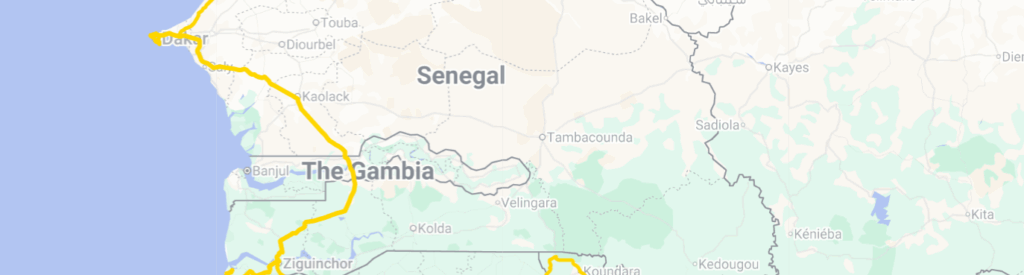
Gambia
Date of Entry: 2025 February
Visa: In theory Hungarian Nationals are visa free for 90 days.
Border: Farafenni
This is the transit border for Gambia. I (Eszti) traveled by bus in 2023 from Dakar to Zighuncor, which passes through Gambia. At that time, the Gambian border officers gave an entry and exit stamp (it takes about half an hour to cross the country), but in total they charged around 8000 CFA (about 4500 HUF) in “stamp fees.” Later, at another border where I wanted to enter the country, the officer showed a fake paper printed that day claiming a visa cost of 125 USD for EU citizens. Unfortunately, others behind me paid it because they were with a tour guide and believed it, though it was a complete scam — Hungarian and other EU citizens are visa-exempt. I then turned back and traveled the same route by bus from Zighuncor to Dakar, and again they charged about 8000 CFA.
We debated whether to completely bypass Gambia, but it would have been a huge detour, so we decided to cross it, though we started with a lot of anxiety. We don’t remember everything, only that the Gambians were very corrupt and kept asking for money for everything. Because of the border officers’ attitude, we didn’t want to visit the country at all.
Senegal exit:
We received an exit stamp in about 1 minute. Instead of a CDP, we got a transit paper stating that we would return to Senegal in 3 days, for which a small fee had to be paid (around 2000 CFA, about 1200 HUF). We couldn’t dispute this fee. At the Diama border, the Passavant also required a payment.
Immigration:
We decided that we absolutely would not pay anything and were willing to wait as long as needed. At first, they tried to argue that since we were just transiting, a few euros were required for the stamp. When we admitted that we planned to spend one night in the country, their attitude changed, and they gave us a stamp for free.
Customs:
The CDP is not mandatory; we received a transit Passavant, for which we ended up paying 5000 CFA (about 3000 HUF) either on entry or exit.
Other useful info:
From this point on, all other African borders were very easy (a few visas were more complicated to obtain, but there was no corruption), so once you get past this, everything is fine. 🙂
Guinea Bissau
Date of Entry: 2025 February
Visa acquisition:
In Zighuincor, you can get a visa at the consulate. We walked in, chose the type we wanted (we requested a single-entry 30-day visa for 25,000 CFA, about 14,500 HUF), they took our passports to an office, and about 10 minutes later we got them back with the visa.
Border: Mpak
This is the main border between Zighuincor and Bissau-Guinea.
Senegal exit:
We received exit stamps in our passports and CDP within a few minutes. Everyone was very friendly.
Immigration:
We had to write our details into a logbook for the officers, and then in another office we received the entry stamp.
Customs:
The Passavant costs 2,500 CFA (about 1,500 HUF). It cannot be obtained at the border, but at the office in the first town, São Domingos. The staff were very friendly, and the process took about 5 minutes.
Other fees:
A road tax of 5,000 CFA (about 3,000 HUF) must also be paid at the border. The ECOWAS insurance had already been arranged in Senegal.
Other useful info:
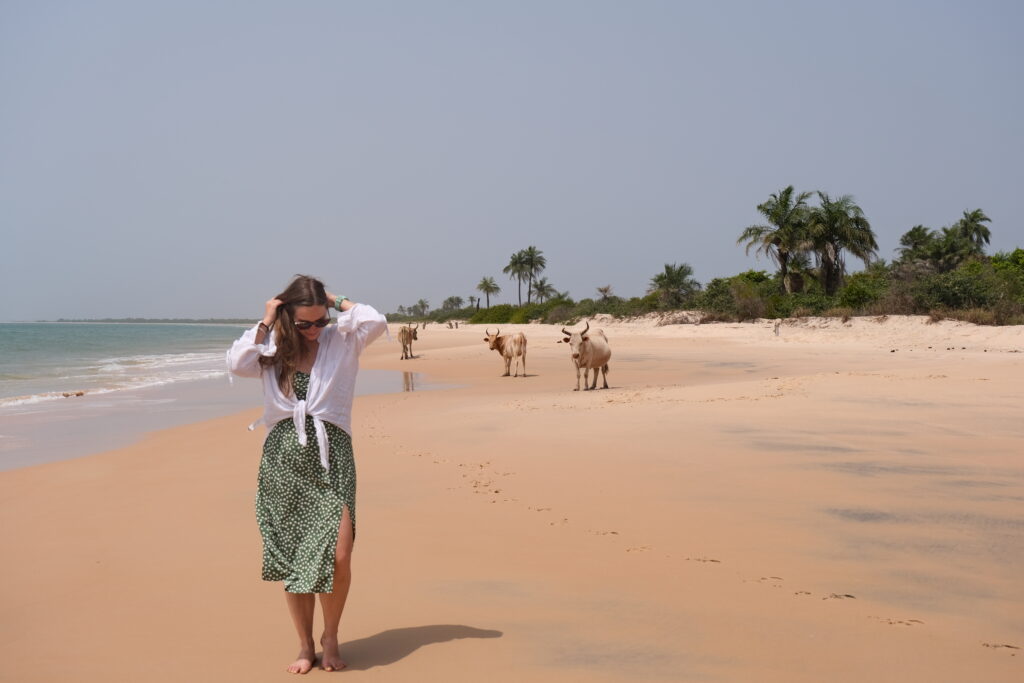
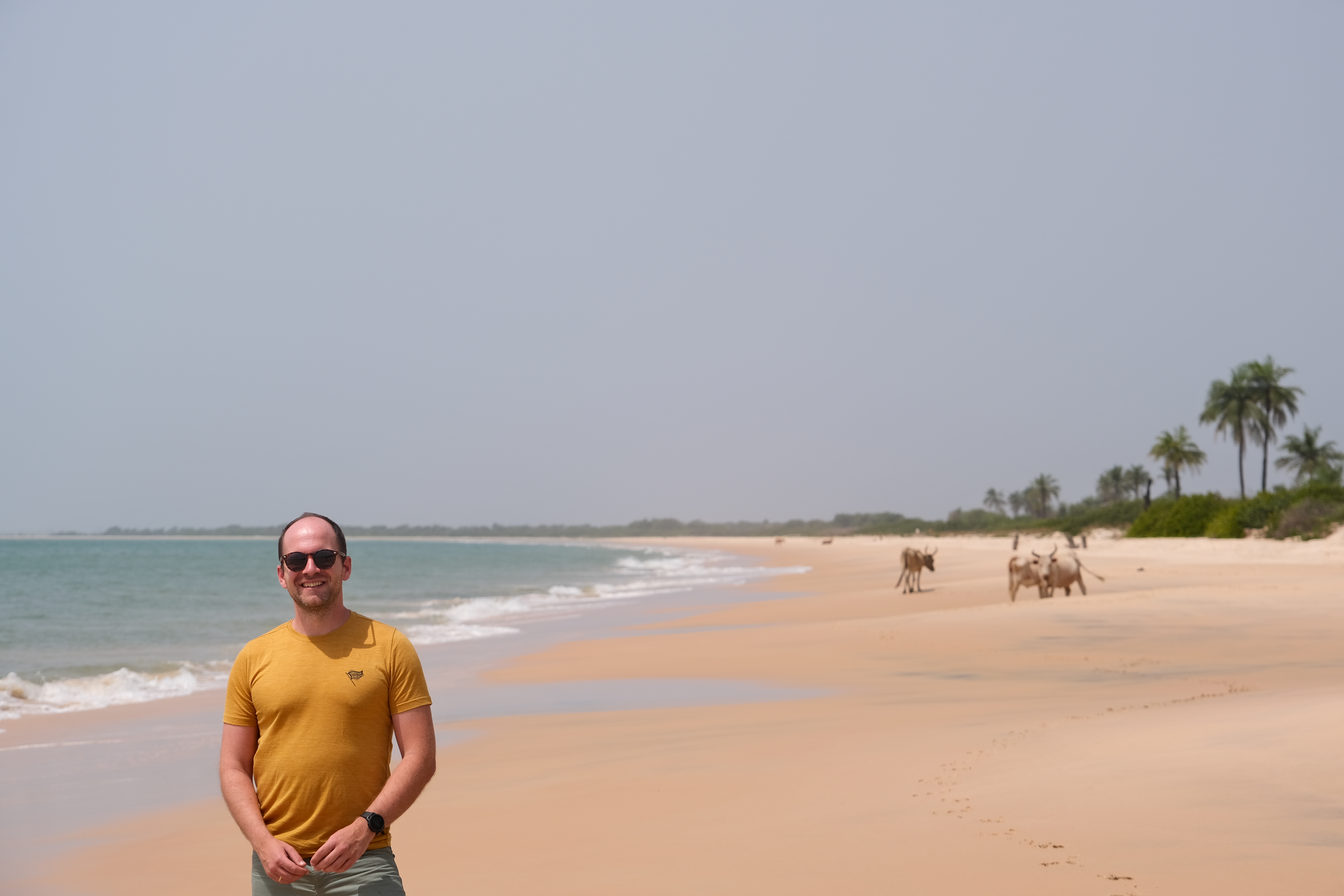
The roads in the country are currently very bad. On the paved roads there are very deep potholes, and sometimes we were only able to cover about 100 kilometers in a day.
Guinea
Date of Entry: 2025 February
Visa acquisition:
This was our most difficult visa. An e-visa is mandatory, which can be obtained here: https://www.paf.gov.gn/visa. It’s very important not to enter Hungary as your address, but rather Senegal or Bissau-Guinea, where you are currently located.
We submitted our visa application 1 month before arrival. However, since Hungary was listed as our address and there is no embassy there, our application got lost somewhere in Europe and nobody handled it. We called the embassies, but they were not very helpful. Eventually, in Bissau, the ambassador was kind and personally called the relevant embassies for us. Our application was finally located in Madrid, and it was approved within a few minutes. Including processing fees, the visa cost 81.89 USD (31,000 HUF).
Border: Kandika
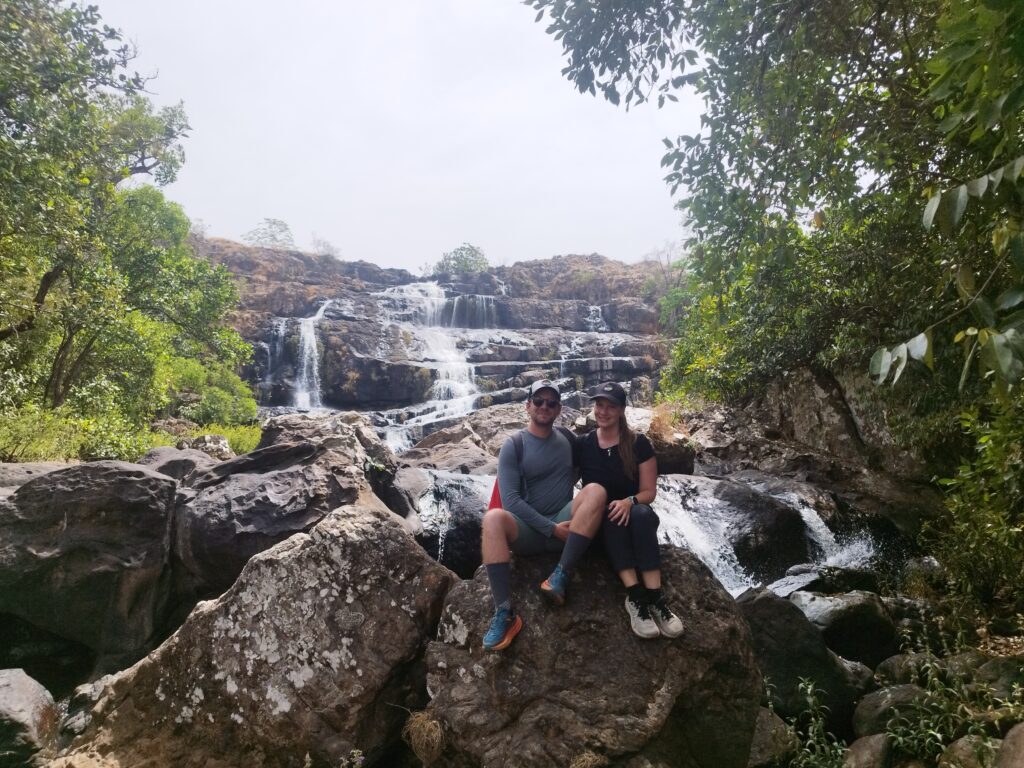
We chose the northern border because we wanted to visit the Guinea Fouta Djallon region. The road to the border, especially on the Guinean side, has a very bad reputation. It’s an unpaved road with some rocky sections, but in the dry season it is completely manageable — you just need to allow enough time. That day, we covered 160 kilometers between Bafata (Bissau-Guinea) and Koundara (Guinea), including the border, in about 10 hours. The border itself is very small, with just a few little buildings on each side. The customs officers sat under a tree outside.
Bissau-Guinea exit:
We received exit stamps in our passports and Passavant within a few minutes. Everyone was very friendly.
Immigration:
At this border, they cannot affix the visa into the passport. You must arrive with 2 printed e-visas: one is taken, and the other you keep. We received a slip with a stamp giving us 5 days to reach Conakry, the capital, for the visa, but the officers assured us that there was no rush — we could take our time.
Customs:
At the border, they told us to check in Koundara if anything was needed. In Koundara, they said that a tourist visa is sufficient proof that we do not intend to sell the car, so we did not need a CDP or Passavant.
Other fees:
The ECOWAS insurance we arranged in Senegal is also valid here.
Other useful info:
We had read a lot about Guineans being corrupt, but we only encountered friendly police and military personnel throughout.
Our printed and affixed visa was finally requested at Conakry airport more than 5 days later. According to reports, this doesn’t work for everyone, but we got lucky with friendly immigration officers. Alternatively, it can be obtained at the immigration office, though that may take several days.
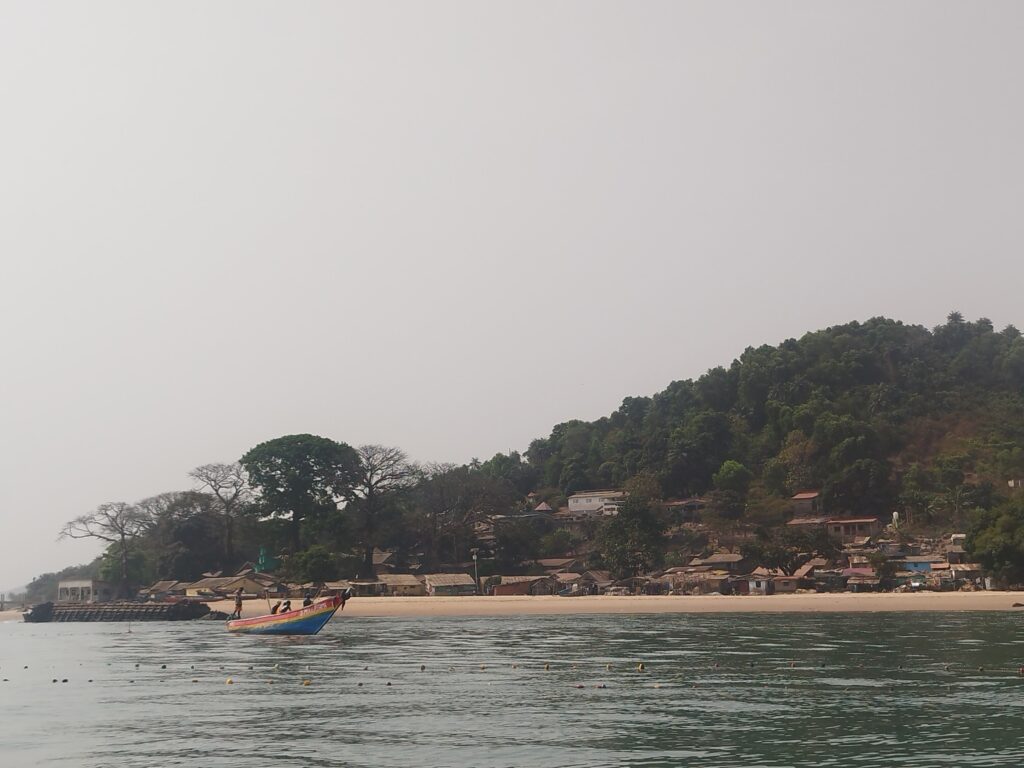
Sierra Leone
Date of Entry: 2025 February
Vízumbeszerzés: A határon 85 USD-ért (32.000 Ft-ért) lehet érkezési vízumot kapni
Határ: Pamelamp (Kambia)
Modern, jól szervezett határnak tűnt, nagyon hamar átértünk.
Guinea kivándorlás: Pár perc alatt kaptunk pecsétet kifelé az útlevelünkbe, mindenki nagyon kedves volt.
Bevándorlás: Délután fél 6-kor értünk a határra, egy határőr nő nagyon gyorsan segített nekünk, hogy minél hamarabb végezzünk és még világosban lássunk valamit az országból. Adott gyorsan egy vízumot és elvitt minket a vámirodába, így negyed óra alatt kb végeztünk is.
Vám: Lehet temporary import permit-et kérni, de az pénzbe kerül, így pecsételtettünk a CDP-be, amit egyből megcsináltak.
Egyéb díjak: 500 SLE (majdnem 10.000 Ft) útbiztonsági díjat szednek be. Az országban kétszer még kellett 20 SLE azaz kb 365 Ft útdíjat fizetni. Bár drágák ezek a díjak, de Freetown-ig négysávos autópálya van (és a libériai határig is jó az út), Nyugat-Afrikában itt voltak a legjobbak az utak.
Egyéb hasznos infó: Nem volt semmi problémánk a rendőrökkel az országon belül, kevés ellenőrzőpont volt.

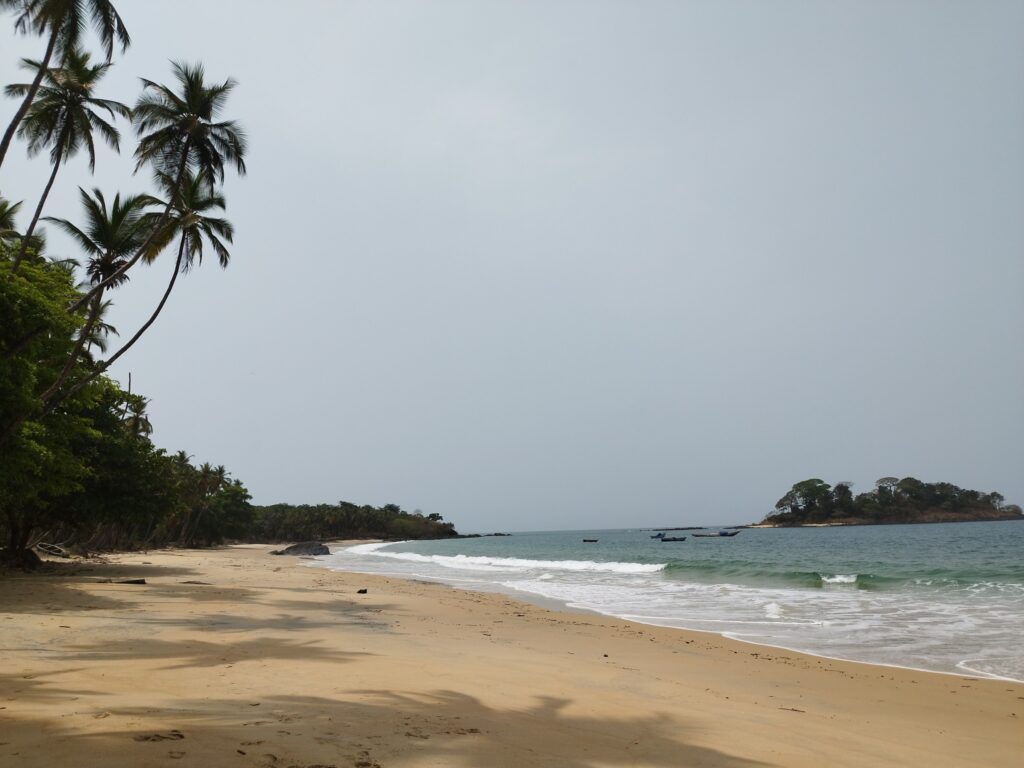
Liberia
Date of Entry: 2025 March
Visa acquisition:
You need to obtain the visa in advance at an embassy. It is easier to get it in Conakry (Guinea), but we had already been in the city for 5 days, and after arranging other visas, we arrived on a Friday and didn’t want to wait through another weekend. So we went to the embassy in Freetown, where for an extra 50 USD they guarantee the visa will be ready within 48 hours instead of 1 week. The visa officer gave us his WhatsApp number, and we repeatedly told him that we needed it the same day, as that was why we had come to Freetown. Finally, it was ready by 3 p.m. We paid a total of 150 USD per person. In Conakry, you don’t need to pay the extra 50 USD — they usually issue it the same day anyway.
Border: Bo-Waterside
This is the main border between the two countries.
Sierra Leone exit:
We received exit stamps in our passports within a few minutes. Everyone was very friendly.
Immigration:
We had to write our details in a small logbook, and then we received the entry stamp. The border officers were friendly and even helped us plan which route to take next.
Customs:
We had the CDP stamped.
Other fees:
The ECOWAS insurance arranged in Senegal is also valid here.
Other useful info:
We had no problems with the police within the country. There were few checkpoints (one corrupt officer who made up various issues, but we just laughed at him and he let us go quickly).
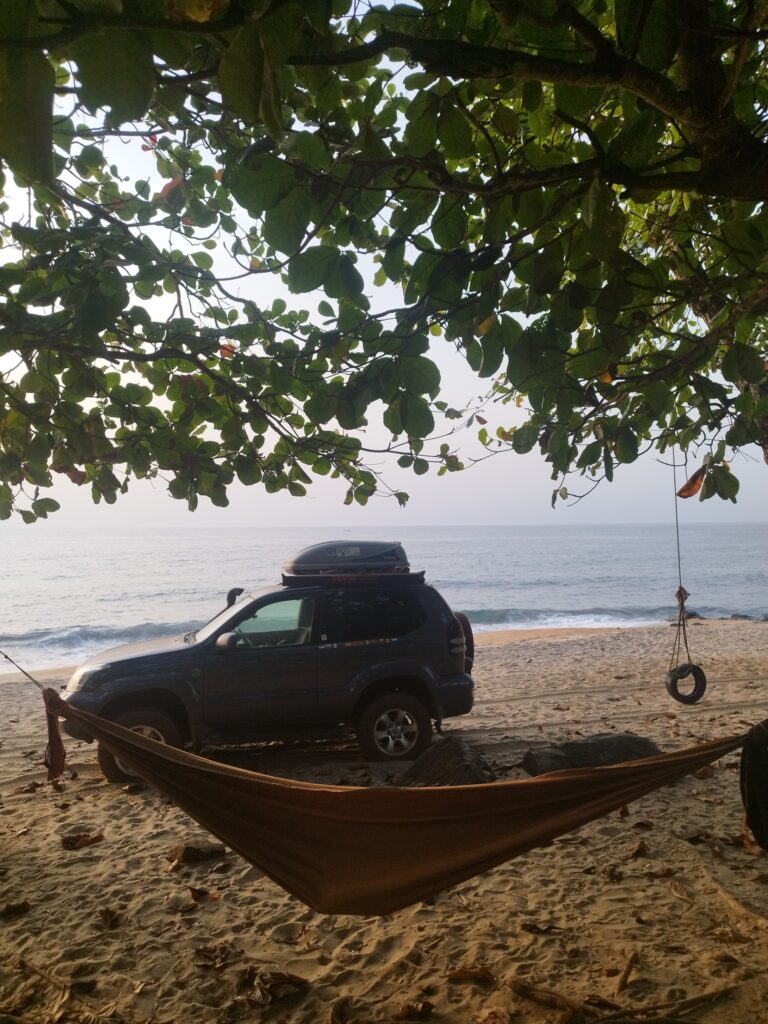
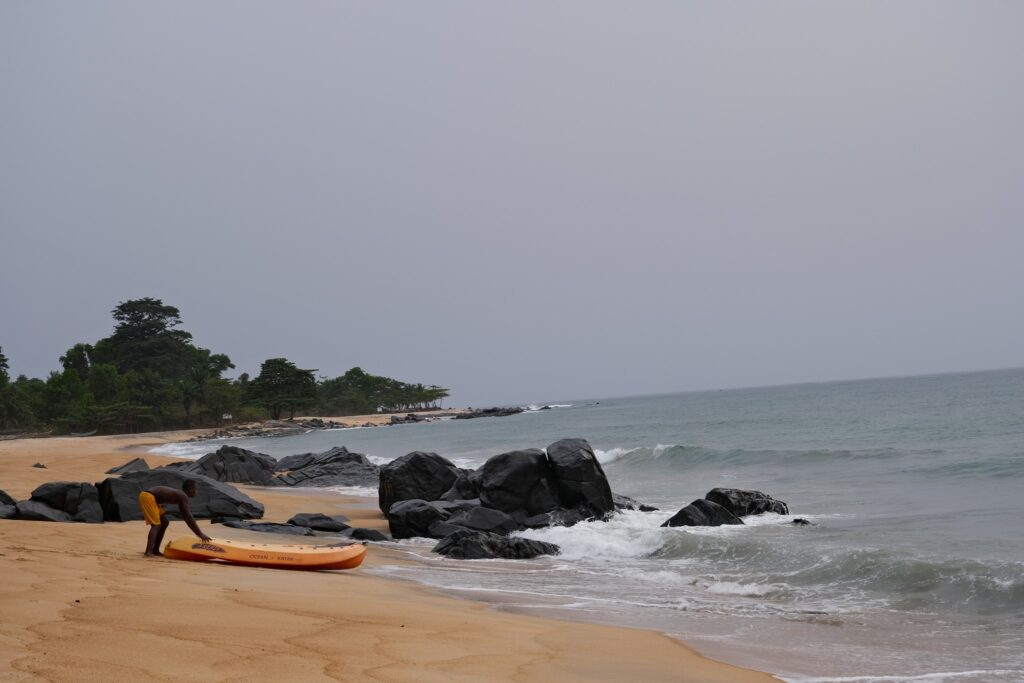
Côte d’Ivoire
Date of Entry: 2025 March
Visa acquisition:
You need to obtain a visa in advance. We got this visa in Conakry. First, you must pay 58 euros online: https://www.snedai-visardv.ci/visa/. You are supposed to receive an immediate confirmation, which you then present at the embassy (I didn’t receive the confirmation, but it was fine — they accepted my bank statement showing the payment). We filled out a form, and then we were called in to speak with the ambassador, who was very kind and issued our visas immediately.
Border:
We crossed at the northern border toward Danané.
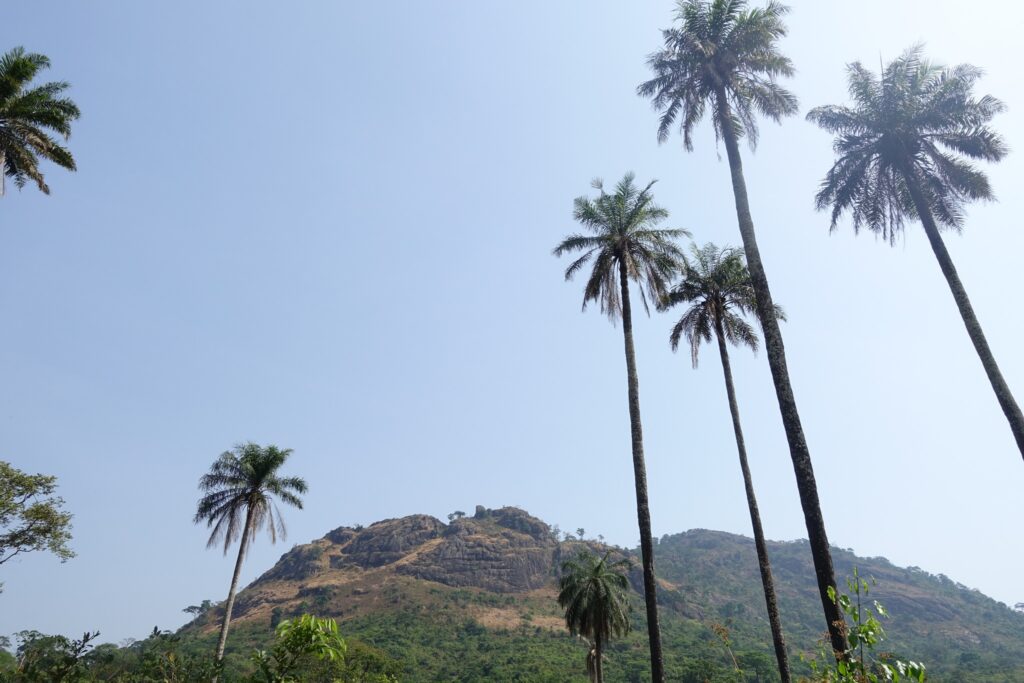
It is a relatively small border. The road in Liberia is paved, while on the Côte d’Ivoire side it is unpaved and not perfect, but passable.
Liberia exit:
One of the nicest borders we experienced. Bureaucratic, because we had to write our details in many logbooks, but everyone was very helpful. Often they just photographed our passports and separated us — I handled the exit formalities while Adam took care of customs.
Immigration:
On the Côte d’Ivoire side, the officers were not as friendly. It started again with complaints about us not speaking French. Eventually, slowly, we received a stamp, and one officer even took a photo of us in front of our car.
Customs:
We couldn’t get a Passavant, so we had our CDP stamped instead, which they did immediately.
Other fees:
The ECOWAS insurance arranged in Senegal is also valid here.
Other useful info:
There were very few checkpoints; our documents were only checked 2–3 times.
Ghana
Date of Entry: 2025 March
Visa acquisition:
You must obtain the visa in advance. There are occasional reports that some African embassies can issue it, but generally everyone must get it in their own country. It costs 120 USD (about 50,000 HUF). You need to call the Budapest consulate to schedule an appointment; they are very helpful with visa matters (e.g., assisting with a local contact person and giving advice). The visa is valid for 3 months from issuance.
Border: Noé–Elubo
This is the main border between Côte d’Ivoire and Ghana, a large, slow, and busy crossing.
Côte d’Ivoire exit:
We were sent back and forth between various offices. We had to enter our details in three logbooks, wait in line for the exit stamp, and the CDP stamping also took some time — slower than the average exit from a country.
Immigration:
Like in many later countries, Ghana issues something called a “Gate Pass” at entry. There was no checkpoint and we didn’t see anyone, so we didn’t get a Gate Pass at first. This was initially fine, but the customs officers sent us back because without it we couldn’t complete all the steps. Overall, it was an easy but rather slow border: first the usual yellow fever health check, then even with our visa already in the passport, we had to fill out immigration forms, answer questions in a separate office, have our photo taken, and provide fingerprints. Crossing both sides took about 3 hours.
Customs:
A CDP is mandatory in Ghana, so we had it stamped. Ghana is the hardest country to enter without a CDP — reports indicate that at this border, a temporary customs permit can cost 150,000–200,000 HUF. So the options are either to try a smaller northern border or obtain the customs document in advance at the embassy.
Other fees:
The ECOWAS insurance arranged in Senegal is also valid here.
Other useful info:
There were very few checkpoints within the country; our documents were checked only 2–3 times.
Togo
Date of Entry: 2025 March
Visa acquisition:
You need to get an online visa: https://voyage.gouv.tg/. A 15-day visa costs 25,000 CFA (about 15,000 HUF). You must specify an issuance date, from which it is valid. A lodging address is required. The application is easy to submit, and ours was approved within 1 day.
Border: Lomé
This is the main border between Ghana and Togo, a large, slow, and busy crossing that leads directly into Togo’s capital.
Ghana exit:
We really didn’t like this border. About 20 fixers immediately approached us offering help. We tried to bypass them and go directly to the border officers, who were puzzled about why we refused assistance (for money). Nothing is clearly signposted; the customs building is hidden, and an Interpol check also takes place in a small unmarked office at the back. We were even confused about which side was Ghana and which was Togo. Eventually, seeing we were frustrated, the officers guided us around.
Immigration:
We almost didn’t notice that Togolese immigration is on the other side of the road. We thought we could only get a temporary stamp and would need to go to Lomé, but to our surprise, we received a 15-day visa in our passport. On exit, we crossed a very small border where we didn’t even get a stamp, so we cannot confirm whether the visa we received there was fully valid.
Customs:
We had the CDP stamped relatively quickly. We asked about the cost of a Passavant (temporary customs document instead of a CDP), and they quoted a very high price — probably just to avoid issuing it, since others could get it cheaper — so we let it go.
Other fees:
The ECOWAS insurance arranged in Senegal is also valid here.
Other useful info:
There were very few checkpoints; our documents were only checked 2–3 times.
Benin
Date of Entry: 2025 March
Visa acquisition:
You need to get an online visa: https://evisa.bj/. A 30-day visa costs 50 EUR (about 20,000 HUF). You must specify an issuance date, from which it is valid for 30 days. A lodging address is required. Otherwise, the application is easy to submit and is accepted immediately.
Border: Boukombé
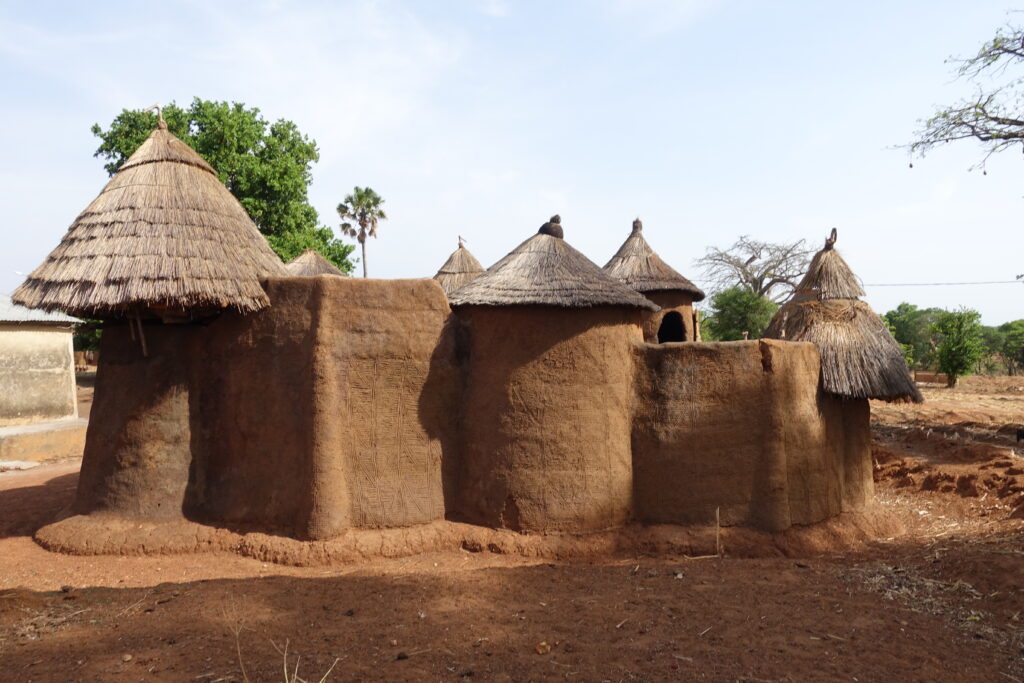
Located in the north, this is the smallest border we have crossed so far. You have to pass through the Koutammakou UNESCO World Heritage site; we paid the entry fee, which was about 1,000 HUF.
Togo exit:
According to iOverlander, the border officer could be found under a mango tree — indeed, that’s where he was. He couldn’t give us a stamp, but made us promise not to return with the same visa once we exited (officially, we are still considered in Togo). There was a small customs office, but they forgot to remove their paper from the CDP, so we had to go back from the Benin side (about 10 minutes between the two sides).
Immigration:
Benin immigration was completed in a parking area in front of a building. Here, they were able to give us a stamp, so we officially entered the country.
Customs:
We wanted a Passavant, but since the officer had already seen the CDP, after about half an hour of arguing (more funny than serious, as he didn’t understand English and we didn’t understand French), we couldn’t get it. As it was getting dark, we allowed him to stamp the CDP instead (we were worried it might fill up too quickly if every non-CDP-required country also stamped it, so we preferred not to have a stamp here).
Other fees:
The ECOWAS insurance arranged in Senegal is also valid here.
Other useful info:
There were relatively few checkpoints; our documents were only checked 2–3 times.
Nigeria
Date of Entry: 2025 April
Visa acquisition:
It is relatively difficult to get a visa en route (for example, it’s possible in Benin, but expensive and requires local registration), so we applied for our Nigerian visa in Hungary just before departure at the Nigerian Embassy.
First, we had to submit our application on https://immigration.gov.ng/nigerian-visa/ and pay 240 USD per person. Then, we transferred 30 USD per person to the Budapest embassy as an administrative fee. After that, we booked an appointment by email. The steps are listed here: http://nigerianembassy.hu/index.php?option=com_content&task=view&id=27&Itemid=38
For the appointment, we had to bring: passport, 2 ID photos each, accommodation reservations, bank statements (to prove sufficient funds), and since we didn’t have plane tickets, a letter describing our planned route. At the embassy, we had a short interview. It turned out we needed a few additional documents: copies of our passports, a copy of our marriage certificate (since I went alone to pick up the visas, this proved I could legally collect Ádám’s visa too), and a copy of a Nigerian reference’s ID — for this, we quickly asked a Nigerian acquaintance living in Budapest. We sent these via WhatsApp and got an appointment to collect the visas; at that point, it was enough to provide the missing documents in paper form.
The Nigerian visa is valid for 3 months from the date of issue (i.e., you are supposed to leave the country within this time).
Border: Seme-Krakre
This is the main border connecting Cotonou (Benin’s economic center) and Lagos (Nigeria’s economic hub).
Benin exit:
Very fast; we immediately received both the exit stamp and the CDP stamp.
Nigeria entry:
Everyone in Nigeria was very kind. They took us to an office for a short interview, but we received our visa very quickly. Surprisingly, from that day we were granted an additional 30 days, even though our official visa only had 13 days left.
Customs:
Nigeria is a CDP country, so we had it stamped (this process took just a few minutes).
Other fees:
The ECOWAS insurance arranged in Senegal is also valid here.
Other useful info:
Between Lagos and the border, there are military/police checkpoints every few kilometers, and they continue frequently after Lagos. Our experience was positive; mostly they just checked that everything was fine and occasionally requested actual documents. The only remark was that an international driver’s license issued in Hungary is completely unusable here, because all the text on the cover is in Hungarian, whereas it should serve as a translation of the license. We couldn’t argue with this, only agree — it’s not our fault our country cannot issue a proper document. Fortunately, we have never been asked for it again, although it is required in most countries.
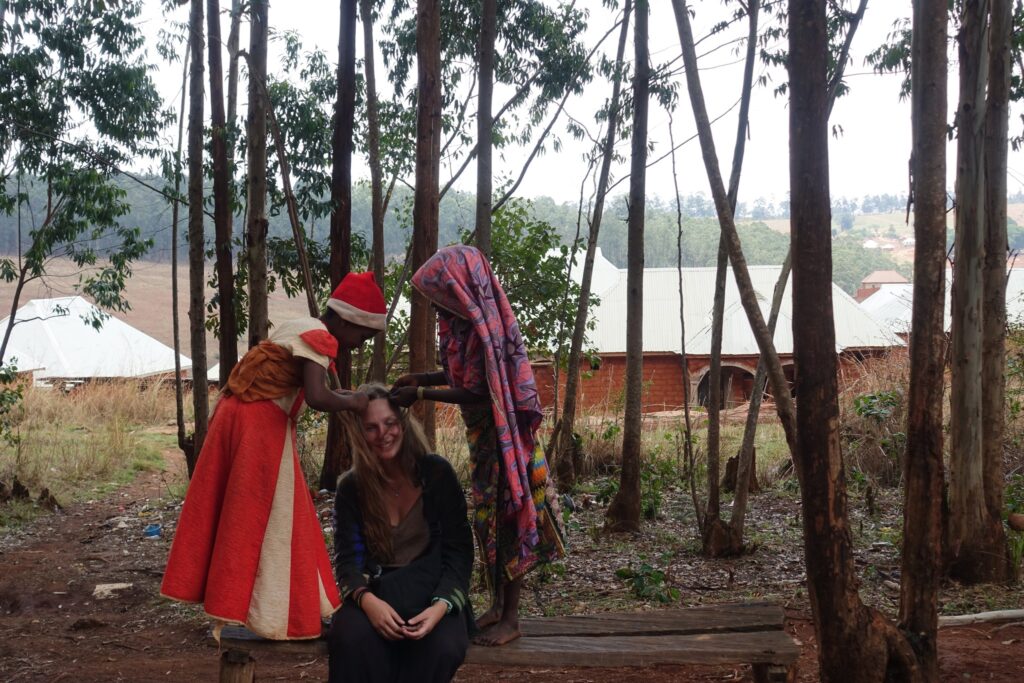
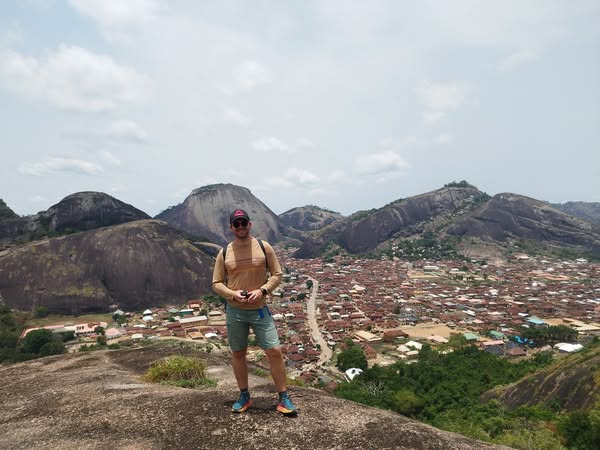
Cameroon
Date of Entry: 2025 April
Visa acquisition:
We applied online for the visa: https://cameroon-evisa.com/cameroon-visa-fees/. It cost 166 USD per person (≈67,000 HUF). We had to gather many documents, but the online form was relatively easy to fill out. Since we weren’t sure when we would enter the country, we applied for a long validity period — 80 days — which was quickly granted.
Border: Banyo
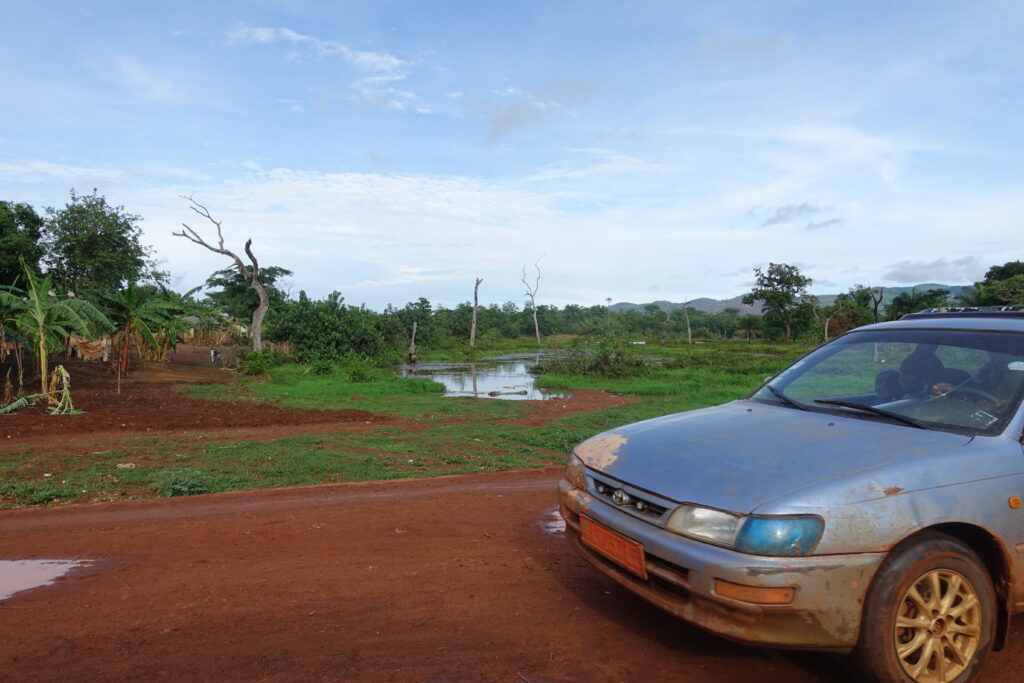
This is the border that can be crossed in the north without a military convoy outside the rainy season, roughly in 3 days. Its reputation is worse than the reality: there are rocky sections in Nigeria and water crossings in Cameroon, but the scenery is beautiful, people are kind, and at the beginning of the rainy season we only got caught in the rain occasionally, stopping briefly before continuing.
Nigeria exit:
Very fast; we immediately received the exit stamp and CDP stamp.
Cameroon entry:
Our e-visa was checked at the border and later in an immigration office, but they could not physically stick the visa in our passports there. We had it stamped at Douala airport, where a soldier escorted us to immigration, who successfully affixed the visa (not everyone gets this; we had some trouble with the police).
Customs:
A Passavant must be requested at Banyo. It is very important to check everything: for example, how many days it’s valid for (ours was accidentally issued for only 14 days, so it expired en route) and that the route is correctly written, which must be strictly followed. Therefore, it’s better to list all the cities in Cameroon in advance on the document.
Other fees:
We got Central African vehicle insurance (the “Pink Card”) in Foumban for 33,000 CFA (≈20,000 HUF) for 2 months. This was valid in Cameroon, Gabon, and both Congos.
Other useful info:
Cameroon became one of our favorite countries in Africa, but it was the only country where police officers were very strict and confrontational, trying to fine us for everything. It was essential that all documents were correct. For example, they initially didn’t want to let us enter Kribi because it was not listed on our Passavant route — which is absurd since a Passavant is a customs paper. Similarly, they tried to fine us because our visa didn’t specify “tourist entry,” which would have technically prevented us from visiting a waterfall. We stood our ground and didn’t pay any bribes or fines, but it caused many arguments and roadside waits (one procedure took 6 hours).
Congo (Brazzaville)
Date of Entry: 2025 May (x2)
Visa acquisition:
We wanted to get the DRC visa in Cameroon, where a single-entry visa would cost 50 USD and a multiple-entry visa 80 USD (we needed the latter because we had to re-enter due to Gabon). In Conakry, we processed our DRC visa. As a follow-up requirement, they asked us to get a Congo-Brazzaville visa as well. At the embassy, we obtained a multiple-entry, 3-month urgent visa in about 30 minutes — extremely expensive, ≈260 USD per person. Since this was our best chance to get the DRC visa and we didn’t want to risk the border crossing, we paid it.
Borders:
- Ntam (Cameroon–Congo DRC): Small, quiet, very fast and orderly.
- Moumba (Gabon–Congo DRC): Located between the larger towns of Ndenge and Nyanga. In May, the 100 km journey took a full day due to mud.
1. Cameroon–Congo border
Cameroon exit: Very fast; we immediately received exit stamps and passavant stamps.
Congo entry: Also very quick; we were stamped shortly after arrival.
Customs: Due to our previous bad experiences in Cameroon, we didn’t request a passavant here (although it is possible) and instead had everything stamped into the CDP.
2. Gabon–Congo border
Gabon exit: 25 km before the border, in Ndende, we had to visit the immigration office. We waited until about 10 AM for the officers to arrive and stamp us. The CDP could also be stamped here.
Congo entry: Small border, very quick. We filled in a few logbooks and received a stamp.
Customs: We tried to request a passavant, but the Congolese officers asked for ≈15 USD, so we again used the CDP for stamping.
Other fees: The Pink Card insurance is valid here as well.
Other useful info: There are many police checkpoints, especially around the Gabon–Congo border. Most officers are kind, although once they tried to have us unload everything. The process can be very slow due to many questions, documentation of all details, and muddy roads.
Gabon
Date of Entry: 2025 May
Visa acquisition:
We submitted our visa application at the embassy in Cotonou at 10:00 AM and were able to pick up the visas by 3:00 PM the same day. The expedited visa cost ≈105 USD. We had to provide a passport copy, hotel bookings, and yellow fever vaccination certificate. No additional questions were asked.
Border:
- Likely named Kabala. On the Gabon side, the first settlement is Lenkoni.
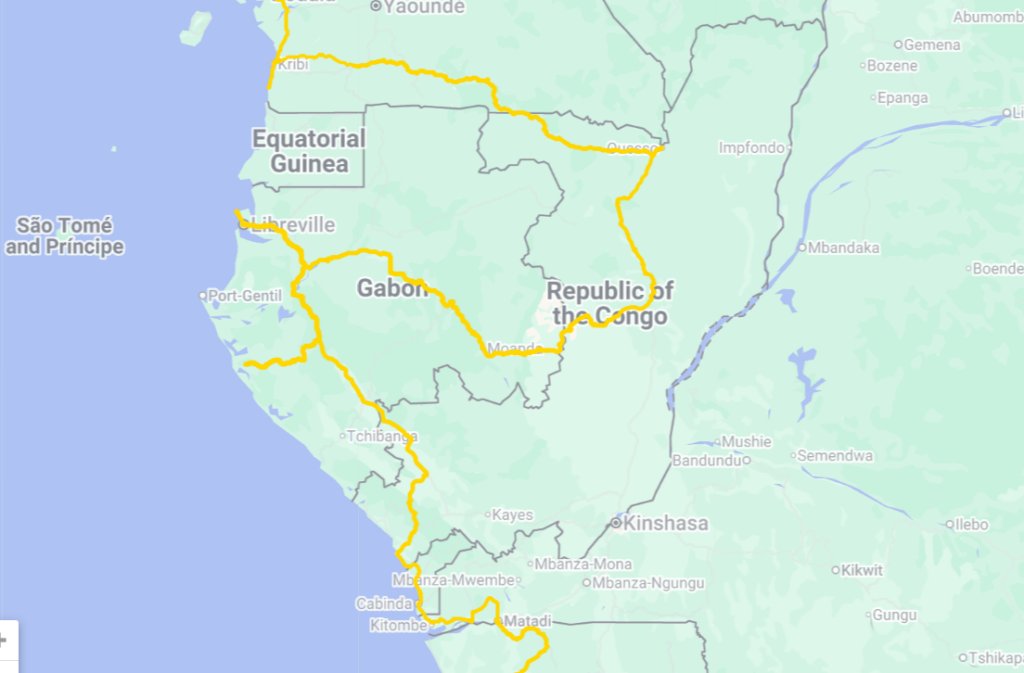
- The Cameroon–Gabon border was closed, so we entered and exited Gabon via Congo.
Congo exit: Very fast; we immediately received exit and CDP stamps.
Gabon entry: The border staff were surprised to see us, as not many travelers enter Gabon this way. We showed our visa, which they verified via WhatsApp with Libreville, the capital. We waited about 2 hours for confirmation that we could be admitted. After stamping, we had to go into a room for an interview where they asked many questions (e.g., our travel plans) in French. The interview went well; they were happy when we could respond or demonstrate answers.
Customs: They had seen the CDP before but weren’t fully sure how to fill it out, so we assisted them.
Other fees: The Pink Card insurance is valid here as well.
Other useful info:
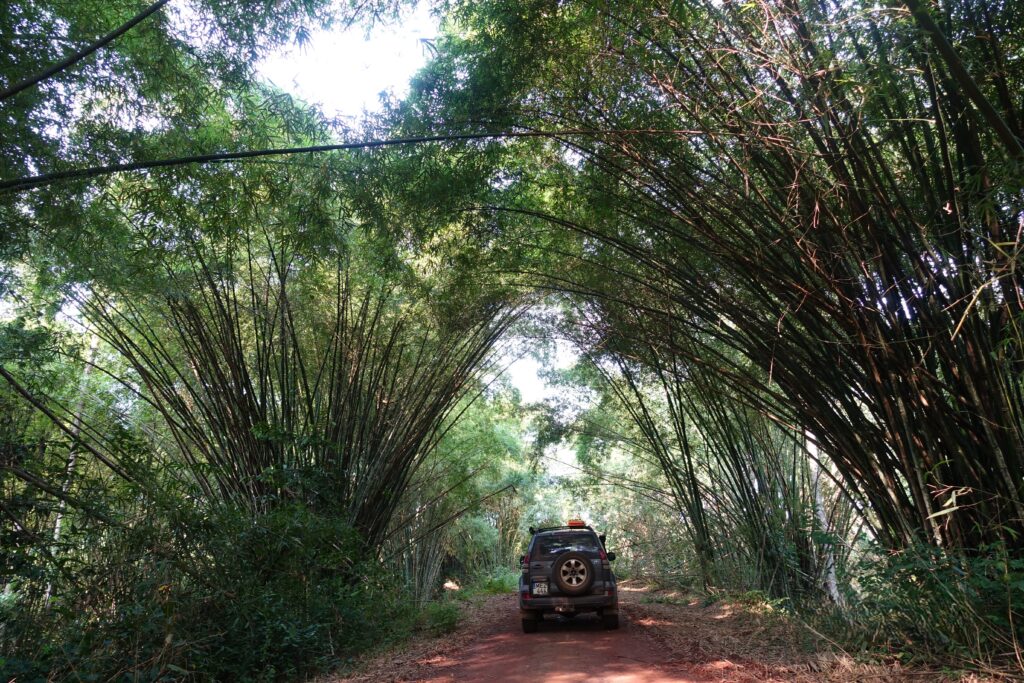
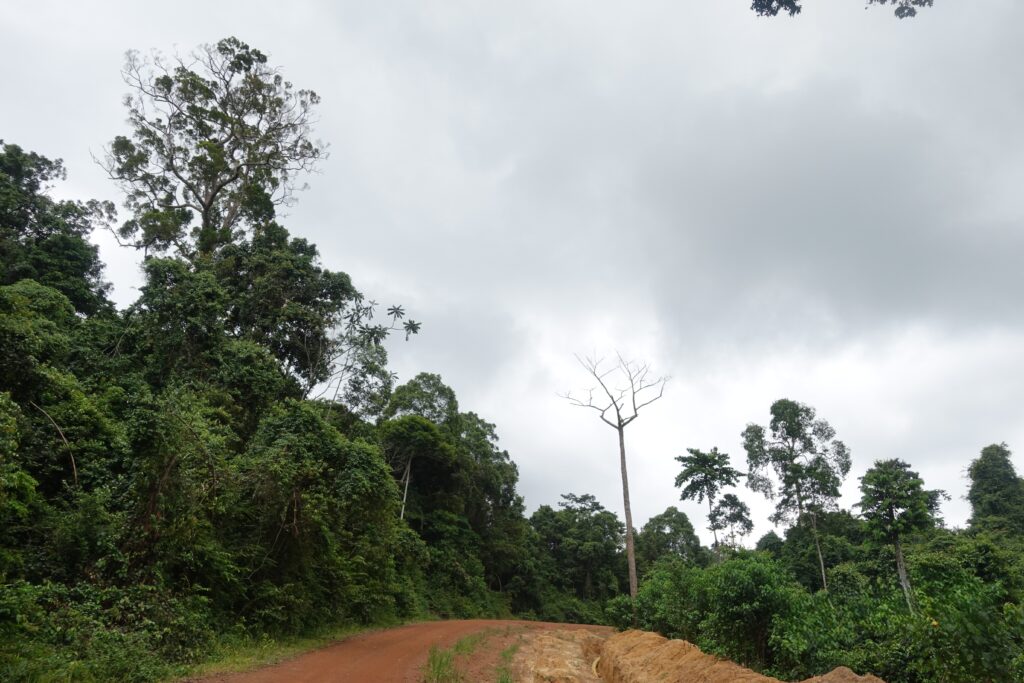
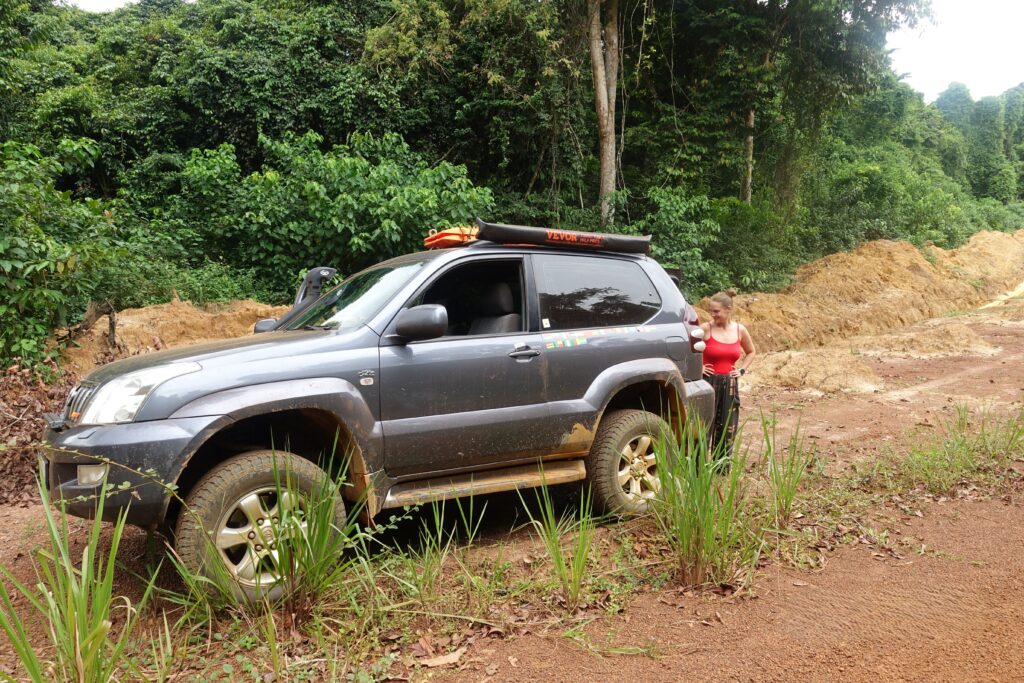
The road to Libreville is beautiful through the jungle, but about half of it is unpaved. In May, there was some rain, but it was light enough to pass through, although we were briefly stopped at a checkpoint due to rain.
The police monitors speed. We were stopped once and were shown the fine (it’s very high), but they let us go after promising we won’t speed again.
Angola
Date of Entry: 2025 May (2x)
Visa: Hungarian Nationals are visa free for 30 days.
Border:
1. Congó – Cabinda (Angolan exclave between the 2 Congos)
2. DRC (Matadi)
We wanted to cross the DRC as fast as possible this is why we chose these 2 borders.
- Border Crossing
Congo emmigration: Was very fast, immediately got exit stamp on passport and CDP.
Immigration: Was fast as well, took a photo of us in front of our car.
Customs: TIP (Temporary Import Permit):
We had to obtain a TIP for our vehicle. This was the most modern border we’ve encountered so far, but the system froze while processing the TIP, so we had to wait about 1 hour. Once it was ready, we had to go to the nearby bank to pay the fee of ≈13 USD.
2. Border Crossing
DRC Exit (Immigration):
The process was very organized. An immigration officer guided us through the steps, and we received both the exit stamp and the CDP stamp.
Immigration: This was also quick—health check, then a stamp, and they took a photo of us again in front of the car.
Customs: They accepted the TIP (Temporary Import Permit) that we obtained when entering Cabinda.
Additional Fees: Angola is not included in the Central African “Pink Card” insurance system, so we had to get separate insurance in Cabinda. There are many agencies; we purchased 30-day coverage for 10,742 Kwanza (≈ $31).
Additional Useful Info: From Angola onwards, through Southern and Eastern Africa, there are hardly any checkpoints, and the police almost never ask for any documents.
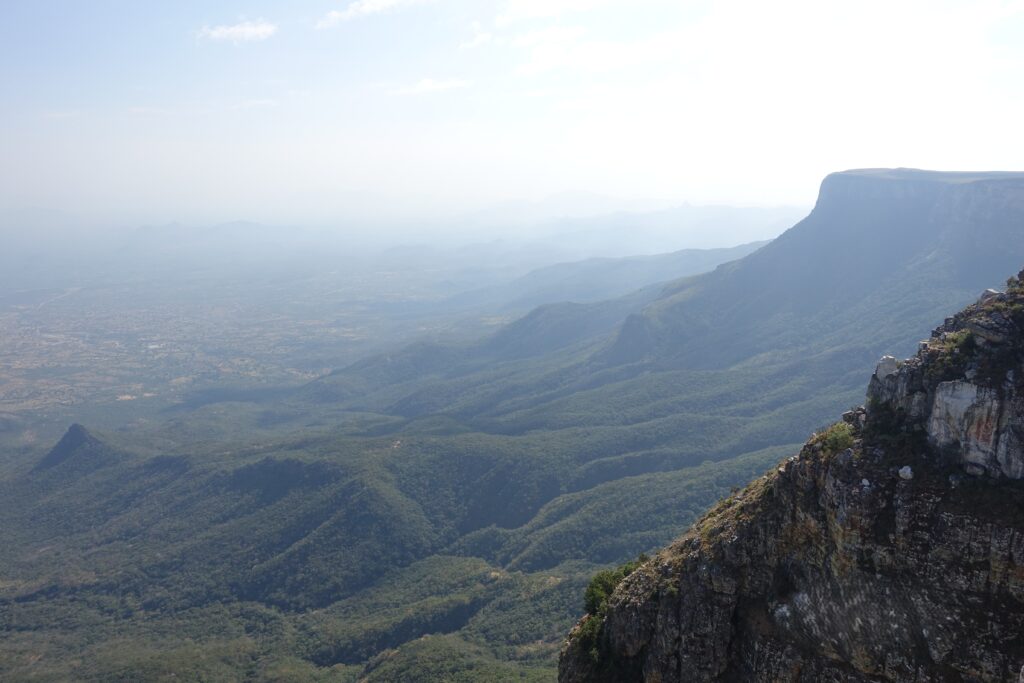
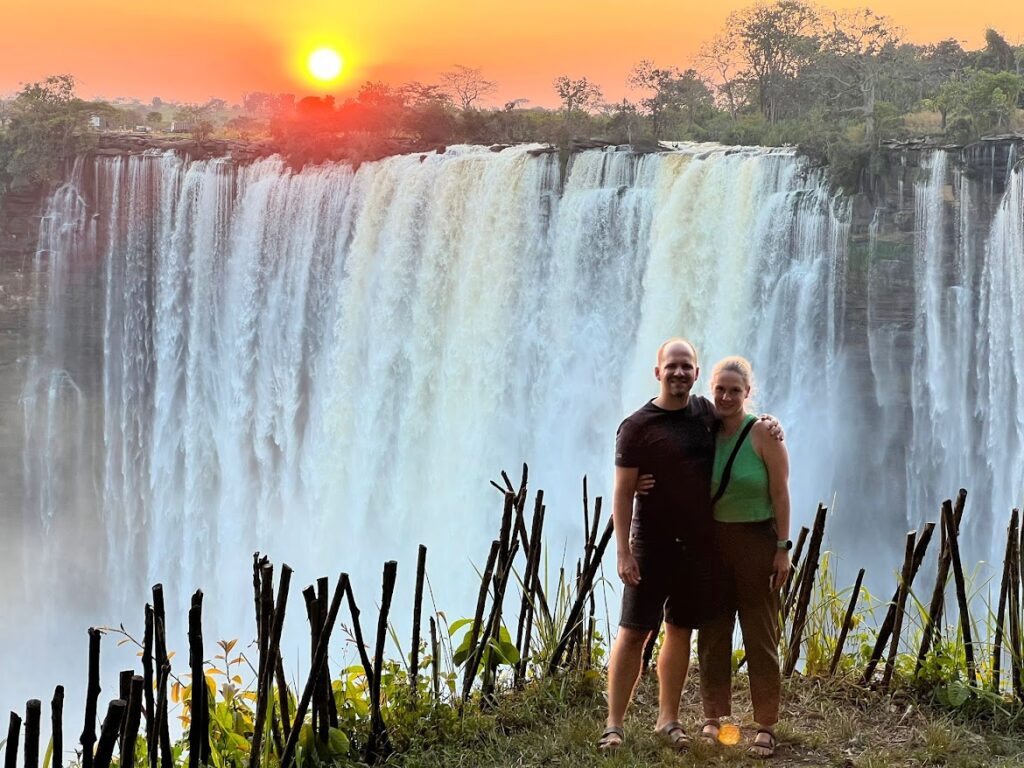
Kongói Demokratikus Köztársaság (DRC)
Belépés ideje: 2025. május
Visa acquisition:
We obtained our visa at the embassy in Conakry. It cost 115 USD per person. Even though we only spent 2 days in the country, we had to request a 30-day visa. We went to the embassy on Monday, but had to gather some documents first (hotel booking, bank statement, copies of documents, and also handling the Ivory Coast visa). We submitted the application on Tuesday. By Thursday, we received confirmation that we could get the visa, provided we also got a Congo-Brazzaville visa. We arranged that as well—very smoothly, as the officer met us at our accommodation instead of requiring another trip to the city. By early Friday afternoon, the visa was ready.
Border: Cabinda
We crossed the border from the Angolan exclave of Cabinda, which is the most commonly used crossing.
Angola exit: Very fast; we immediately received exit stamps, and the TIP (temporary import permit) was stamped for future re-entry.
Angola entry: The border was very organized. The officer greeted us and provided an English-language form to fill out. While they processed our visa, customs officers escorted us to the health checkpoint. The whole process took about 1 hour.
Customs: Our CDP was stamped quickly, and the customs officers briefly inspected our car.
Other fees: We paid a later checkpoint road fee of ≈120 USD, which was important because multiple checks occurred inside the country. There was also a bridge toll of ≈35 USD in Matadi before the border. Payments were made in USD.
Other useful info: Navigation to Boma is difficult via Google Maps. We followed iOverlander posts because the old road no longer exists.
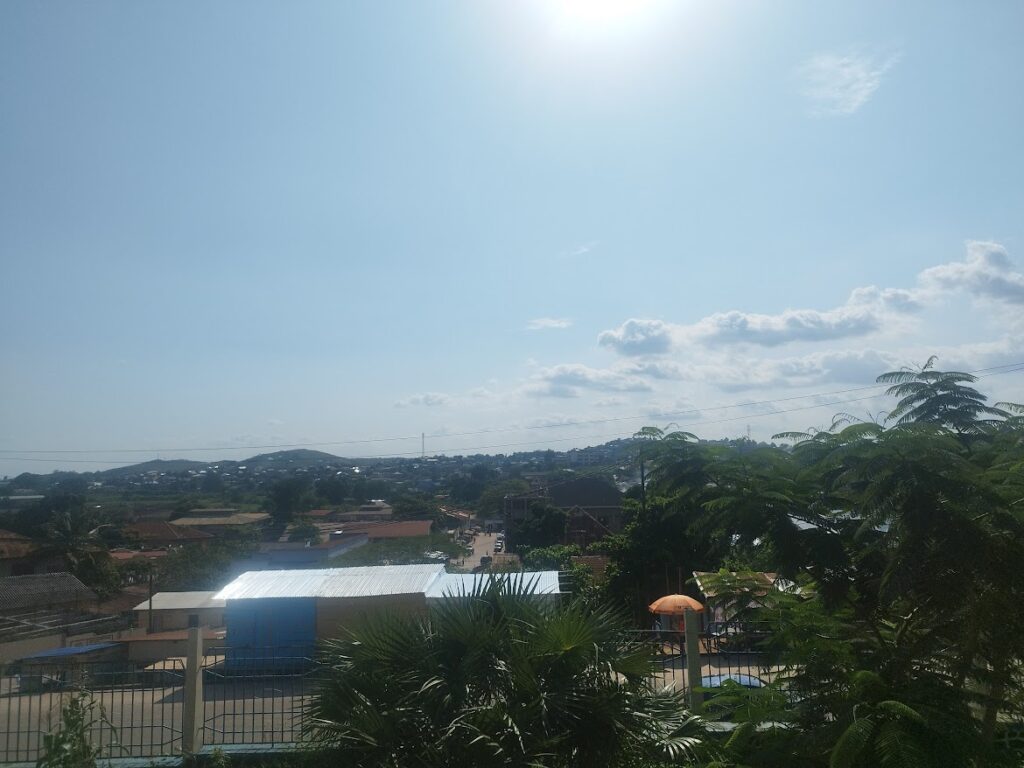
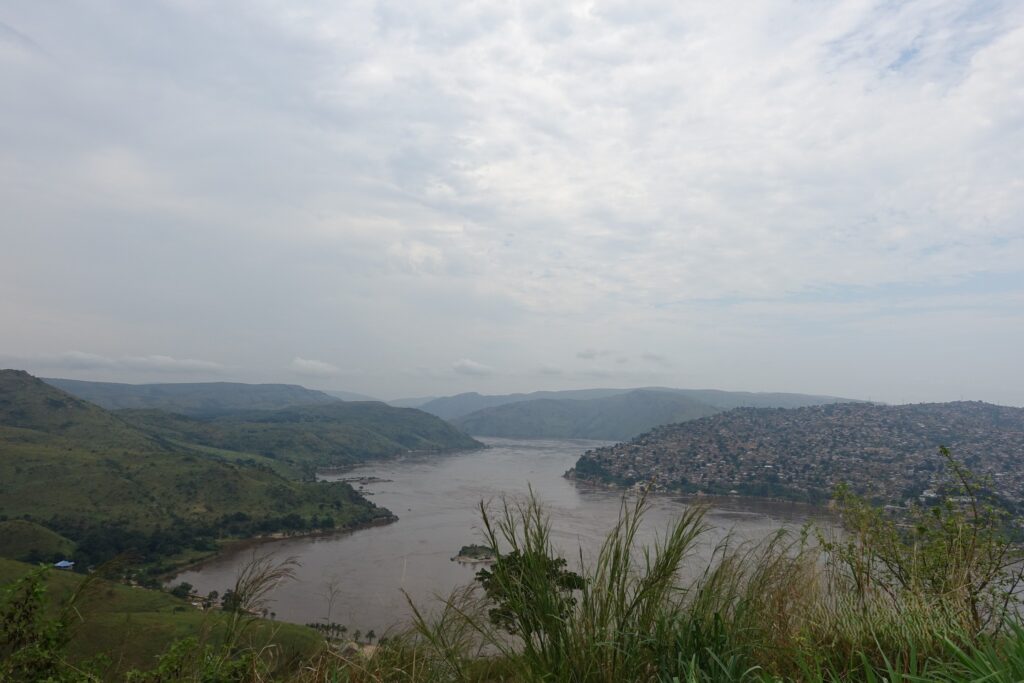
Namibia
Date of Entry: 2025 June
Visa: You can get it online, but we opted for the visa-on-arrival option at the border. Paid by card, it cost 80 USD per person.
Border: Santa Clara – Oshikango. We wanted to cross toward Ruacana through the Angolan desert, but the new visa system doesn’t allow issuance there. Since one of our friends was with us, we didn’t have time to go to the Namibian embassy in Luanda, so we used one of the main border posts.
Angola exit: Large border, a bit slow. After photos and a few questions (we had to describe our travel route), we received the exit stamp and a stamp on our TIP.
Namibia entry: Since we used visa-on-arrival, it took a bit longer, but we got our visa within about 1.5 hours, paid by card.
Customs: Our CDP was quickly stamped; customs opened the car and checked it for about 10 seconds.
Other fees: A road toll was required, 22 EUR (approx. 24 USD).
Other useful info: In Namibia, insurance is not mandatory.
Botswana
Date of Entry: 2025 June
Visa: Hungarian citizens can enter visa-free for up to 30 days.
Border: Trans-Kalahari
One-stop border post: Everything is handled in one place. Upon entry, we received a “gate pass,” which we had to carry with us at all times.
Namibia – Botswana Border Crossing
Departure (Namibia): We received an exit stamp immediately. On the Botswana side, we wanted to have our passport stamped because our first passport was full. They sent us back to the Namibian side to get the new passport stamped. They called their supervisor, who approved it, and we received another exit stamp.
Entry (Botswana): We received an entry stamp in our new passport right away.
Customs: CDP was stamped quickly.
Other fees: We had to pay a toll of 30 EUR (card accepted).
Other useful info: Insurance is not mandatory in Botswana.
Zambia
Date of Entry: 2025 June
Visa: Hungarian Nationals are visa free for 30 days.
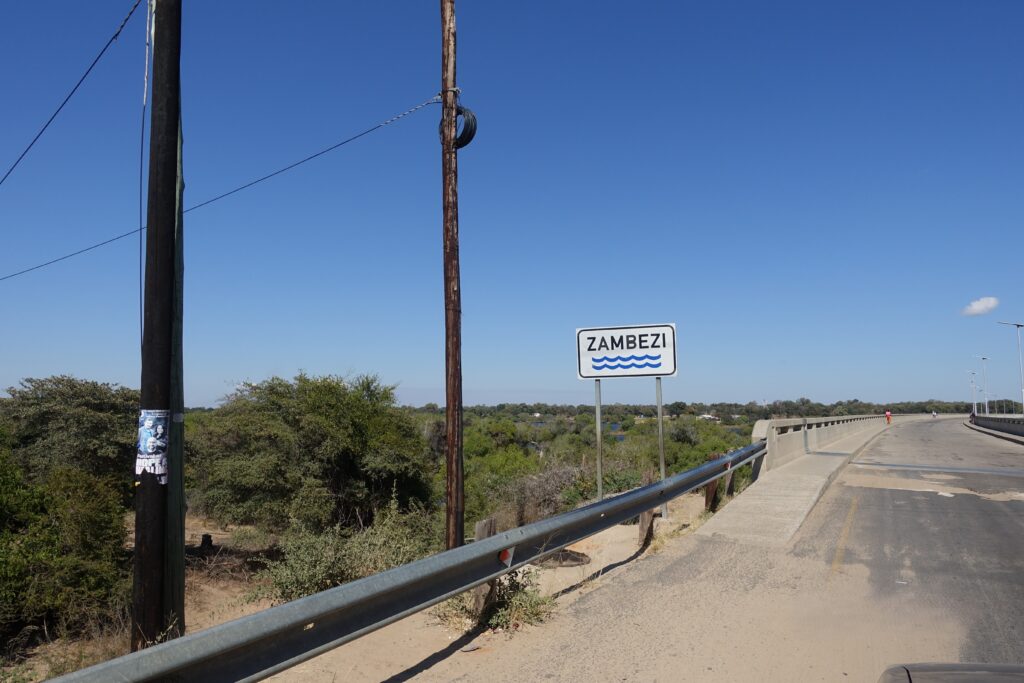
Border: Kazungula
This is where Botswana, Zambia, Zimbabwe and Namibia meets 🙂
Botswana – Zambia Border (Kazungula / Livingstone)
This is a modern one-stop border post, meaning everything is located in a single building (except for a preliminary health checkpoint, where you must stop and obtain a gate pass). You go window to window for processing. Occasionally, staff are not present at certain windows, which can be confusing.
Departure (Botswana): The exit stamp and CDP processing were quick (we arrived before sunset, so the border was not busy).
Entry (Zambia): Entry stamp was issued immediately.
Customs: We used our CDP because the TIP requires filling a very long online form.
Other fees: Various fees were required (tolls, carbon tax, etc.). The border staff were not fully familiar with the system, so it took a lot of time. Total paid: ~14,000 HUF (~40 USD), card accepted.
Insurance: Must be purchased at the border. We initially didn’t get insurance due to the road toll process and no one at the insurance window, so we were fined immediately on the road to Livingstone. We bought insurance later in Livingstone for ~4,000 HUF (~12 USD), but cheaper options are available at the border.
Other useful info: An Interpol stamp is required. Ours was stamped on the back of the CDP without explanation, so we returned the next day to the border to avoid fines. Despite being a “modern” one-stop border post, it is chaotic and unnecessarily complicated.
Zimbabwe
Date of Entry: 2025 July
Visa: You can request a visa at the border, but you need to use the e-visa platform (a tablet is provided at the border). The border officers accept it immediately, so having a pre-submitted e-visa can speed up the process. The visa costs $30 USD per person.
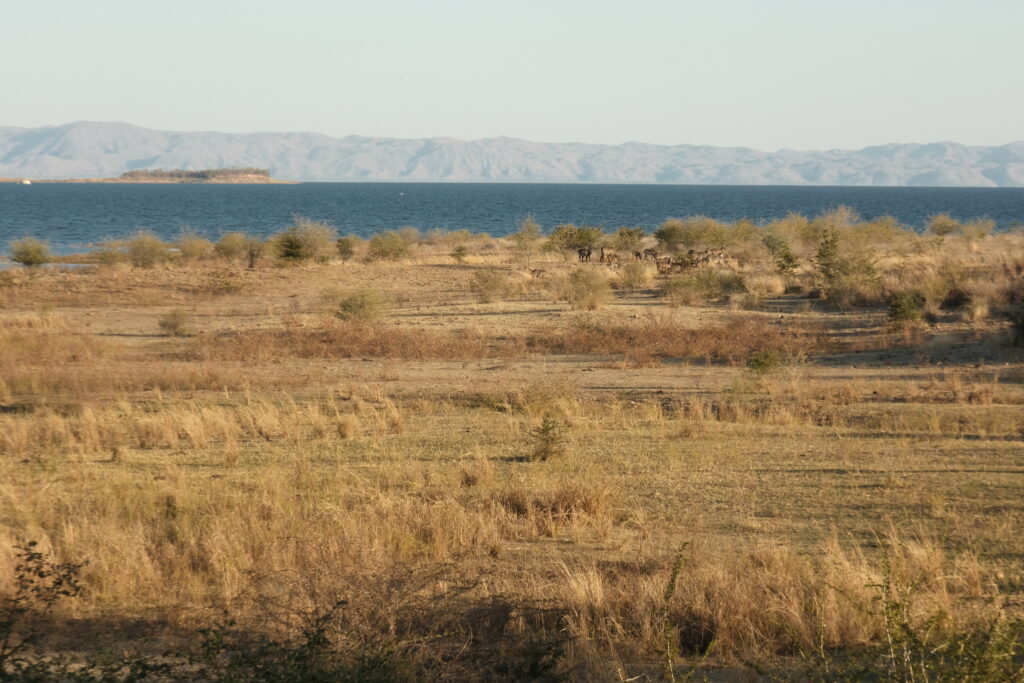
Border: Kariba Dam
This is a border over a dam, with one side in Zambia and the other in Zimbabwe. It’s a slightly smaller border, so it felt calmer, although we arrived close to closing time, at dusk.
Zambia exit: The exit stamp and the CDP stamp were done very quickly. We were supposed to pay some dam fee, but we didn’t have cash, so they let it go.
Entry: We submitted our visa application on the tablet, paid 60 USD in cash, and received the visa after about 15 minutes.
Customs: We didn’t use the CDP because we had to purchase the combined TIP + road fee + all other taxes anyway.
Other fees: We were supposed to apply for the TIP online in advance, but the system didn’t work properly on our phone, so the customs officer did it for us. With the paperwork, we had to go to the office next door to pay 50 USD (payment by card was also possible), then we went back to the customs window to finalize it.
Other useful info: There was also an Interpol check here, which we went through while our visa was being finalized.
We only crossed the country, but we still had to pay 24 USD in tolls (USD is accepted in Zimbabwe), and on exit, they charged us another 37 USD, which really wasn’t worth it for the few days we were in the country.
South-Africa
Date of Entry: July and August 2025
Visa: Hungarian citizens are visa-free for 30 (or 90) days.
Border:
- Beitbridge (main Zimbabwe–South Africa border)
- Maseru (main Lesotho–South Africa border)
- Border crossing:
Zimbabwe exit: Entering the country was terrible, but exiting was even worse. They built an incredibly modern, nine-step exit border. We received a gate pass with a QR code, which we had to scan at every step. At the end, a large screen showed our license plate in green, so we could leave the country. Most of the nine steps involved some type of payment; in the end, we had to pay 37 USD for various fees, such as bridge and border usage fees.
Entry: The South African border was surprisingly not modern. We queued at immigration, were asked how long we planned to stay, and received a 30-day multiple-entry “visa” (more like a stamp indicating 30 days) in our passport.
Customs: We used the CDP; it went quickly, and a customs officer came out to check the car. On exit, the inspection was very fast.
2.Border crossing:
Lesotho exit: We’ll describe in detail at Lesotho. Exiting would have been very simple, but the visa rules were not clear. They let us in without a visa, but on the way out they looked for our visa, so it took some time to convince them to let us leave.
Entry: At the South African border, we waited about half an hour in line. Our 30-day visa was still valid, and we received an additional stamp.
Customs: There is no customs check because Lesotho is in a customs union with South Africa. When entering Lesotho, we didn’t do anything with the CDP, so on exit and re-entry to South Africa we also didn’t need to use it.
Other fees: We didn’t need to buy insurance or pay road taxes. Within the country, we spent roughly 60 USD on tolls.
Other useful info: –
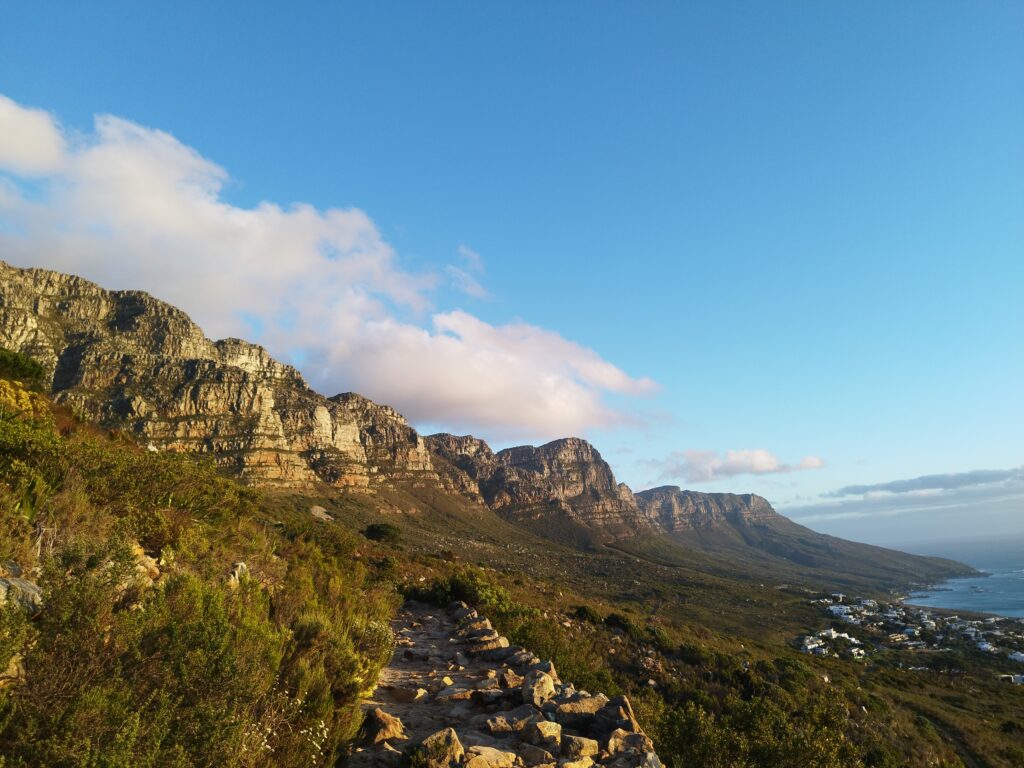
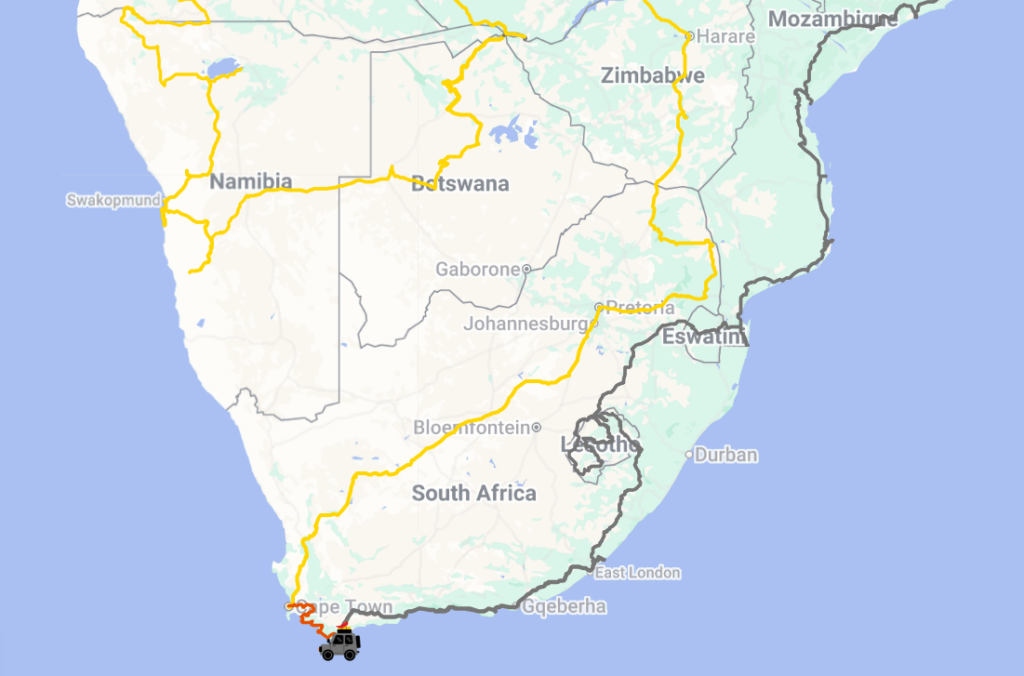
Lesotho
Date of Entry: 2025 July
Visa: Lesotho was one of the most complicated countries for obtaining a visa, but we really wanted to enter. According to the Hungarian Consular Service, Hungarian citizens still require a visa as of December 2025. The Consular Service recommends obtaining the visa at the embassy in Pretoria or Johannesburg.
We went to the Pretoria Embassy, but they sent us away and gave us an email address and a WhatsApp number (though they directed us to use the email). Since we received no response from the email address, we went there in the afternoon to try again. They still insisted that a visa could not be applied for in person at the embassy and that it had to be done online; however, their e-visa system was broken, so it could only be done via email. They did provide their email addresses, and finally the process started.
They requested nine documents from us and asked many questions. Two weeks later, we finally received a document that we could show at the border, allowing us to stay in the country for 72 hours, after which we were supposed to go to the embassy in the capital to apply for a visa. This was completely nonsensical.
The Lesotho Prime Minister had declared a month earlier that EU citizens could travel visa-free for 14 days (half of the EU countries had already been visa-free), and one Polish traveler had managed to use this loophole at one of the borders (he tried three times before being allowed in). So we decided to try the same. We wrote to one of the Lesotho embassy email addresses to confirm whether EU citizens were indeed visa-free, and they replied that yes, for 14 days. We saved this email to show if needed.
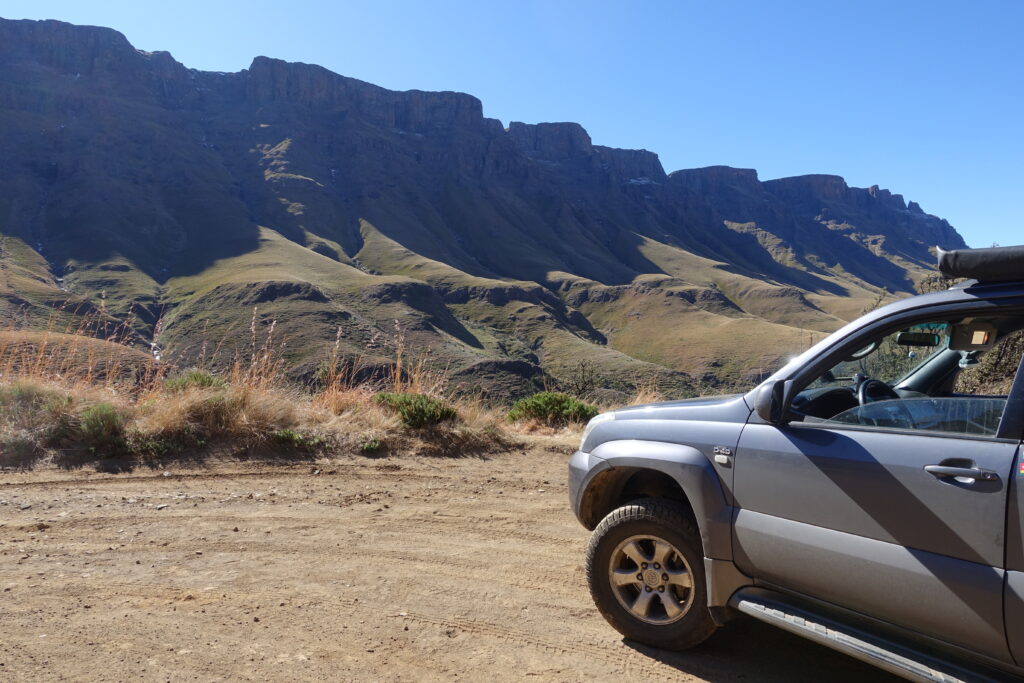
Border: Sani Pass
This is a small border crossing through a beautiful mountain pass, and we definitely wanted to go this way because of the view.
South-Africa exit: The exit stamp was very quick. We didn’t have to deal with the CDP, as the two countries are in a customs union with each other.
Immigration: They asked how many days we wanted to stay in the country and then gave us a 30-day stamp for free. Technically, they probably shouldn’t have given us a stamp, or if they did, it would have been only for 14 days, but we were just happy to be allowed in. Exiting was trickier, because there they knew that Hungarian citizens need a visa, but we referred to the Prime Minister’s announcement and the email confirming the 14-day visa exemption for EU citizens. In the end, they let us leave, although they said our 30-day stamp was definitely not valid (we were in the country for only about 12 days, so it worked out fine compared to the 14-day exemption).
Customs: South Africa and Lesotho are in custom union with each other, no CDP is needed.
Other fees: 300 lesothoi loti (16 USD) is the fee of using the border and bringing the car in.
Additional useful information: –
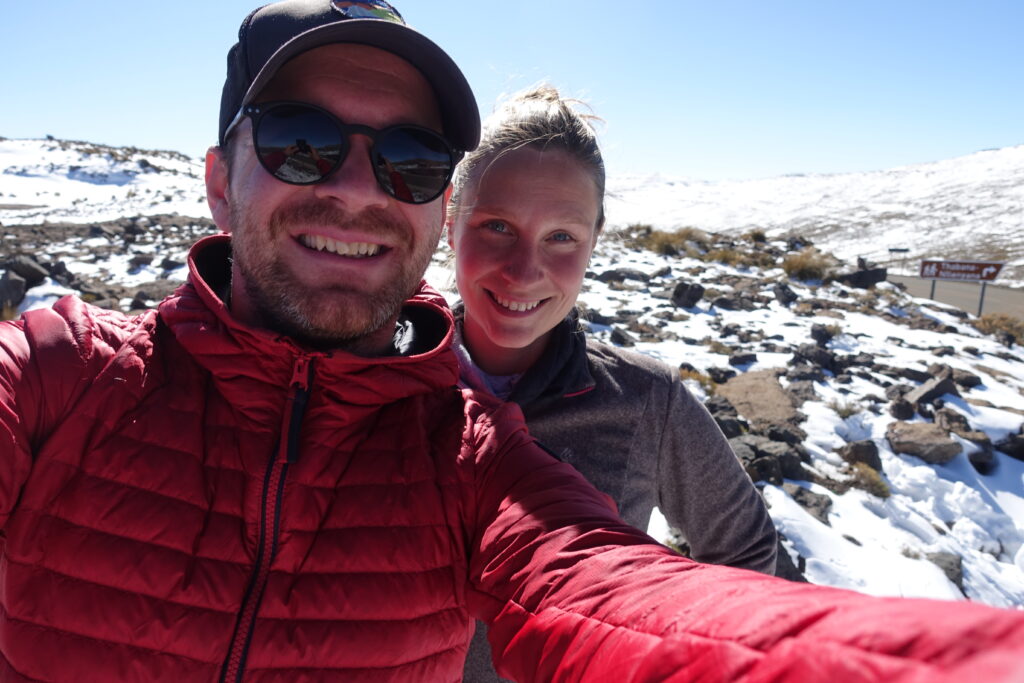
Eswatini
Date of Entry: 2025 August
Visa: Hungarian nationals are visa free for 30 days.
Border: Ngwenya Oshoek
This is the border leading toward the capital of Eswatini.
South Africa exit: The exit stamp and the CDP stamp were processed very quickly.
Immigration: Eswatini is very much a tourist-friendly country; the border was full of signs and travelers. We queued up and received our stamp immediately.
Customs: South Africa and Eswatini are in a customs union, so we didn’t need to use the CDP. We checked, and it was fine that we had our CDP stamped when leaving South Africa. At the Eswatini exit, they only dealt with the emigration stamp; no customs paperwork was required, just the road toll.
Other fees: A 100 ZAR (about 5 USD) road toll had to be paid at the border.
Other useful info: –
Mozambique
Date of Entry: 2025 August
Visa acquisition: Some EU countries became visa-exempt, requiring only an ETA (electronic travel authorization, like a small travel tax) of about 15 USD. For all other countries, the visa fee was increased— for Hungary, it was around 135 EUR (about 145 USD). The visa can be applied for at https://www.evisa.gov.mz/, but the process is very complicated. For all previous countries, we only booked one refundable accommodation per country for about two weeks, which we canceled once we got our visa. We submitted the Mozambique application, but it was rejected within a day because we didn’t have a prepaid accommodation. This was a major problem because we couldn’t find anywhere on Booking.com or elsewhere to pay by card. After three hours of searching, we found a place outside Booking.com’s system where we could pay, and they sent us a confirmation of payment. We resubmitted the application, and the next day the visa was approved—but it was sent to the accommodation instead of us. Fortunately, they noticed and forwarded it to us.
Border: Eswatini–Mozambique
Eswatini exit: The exit stamp was very quick, we did not have to do anything with customs.
Immigration: We were a bit nervous since we only had a 2-day accommodation booking, but the border officials were kind. Based on our approved e-visa, they issued us a 30-day visa. The process took a little time because they also took a photo and we had to fill out a data form, but everything was completed within an hour. We were able to pay by card.
Customs: We requested a TIP which was free.
Other fees: We had to pay a road tax of 100 rand, roughly 2,000 HUF. We also wanted to get insurance. First, we went to an ATM, but unfortunately it didn’t work. When we returned to the border, we found out that we couldn’t pay in USD at all. We were only allowed to pay in South African rand, so we were permitted to walk back into Eswatini, withdraw money from the ATM, quickly convert it into rand at a supermarket, and then walk back to Mozambique. The insurance cost 280 rand, a little under 6,000 HUF.
Other useful info: In Mozambique, we were never stopped by the police (they usually only stop cars with South African plates), and at the border they didn’t even understand why we were so insistent on getting insurance.
Malawi
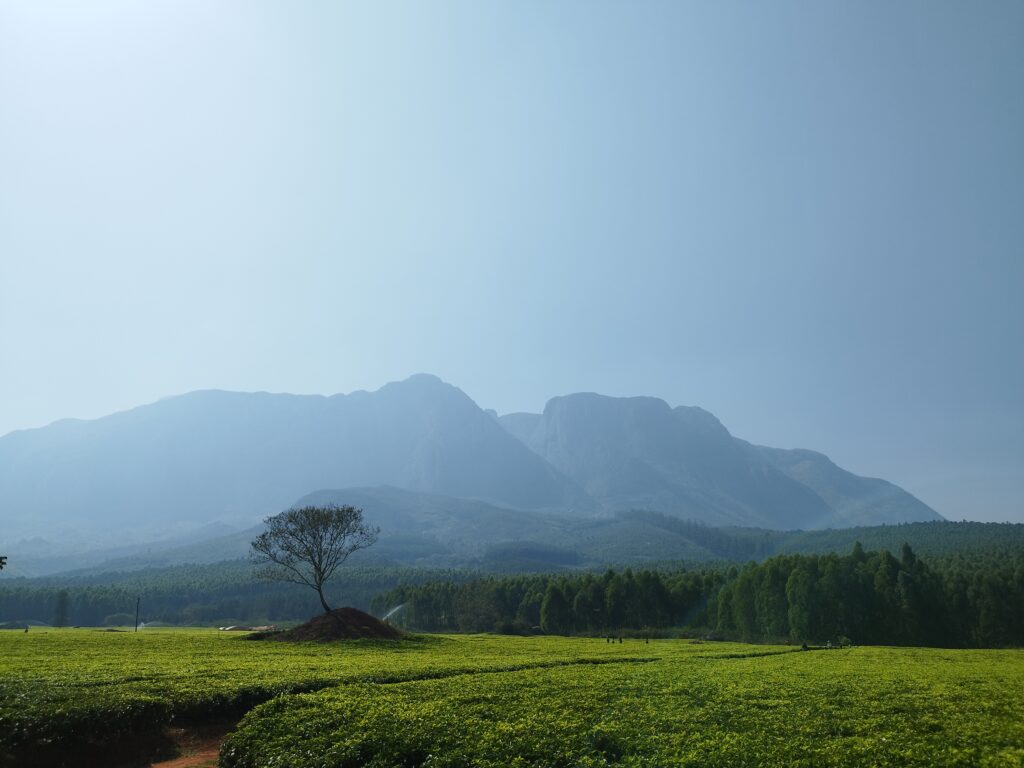
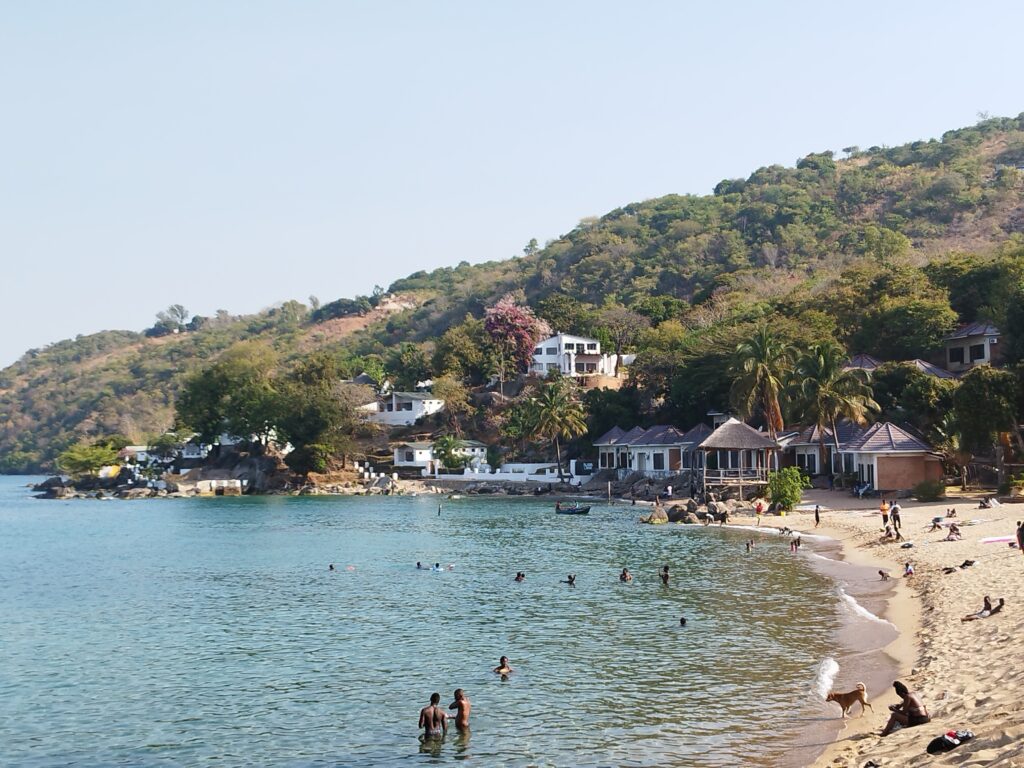
Date of Entry: 2025. September
Visa acquisition: The situation with this visa is similar—most EU countries are visa-exempt, but unfortunately Hungary is not. In theory, it’s possible to get a visa at the border if you persist long enough, but officially you’re supposed to apply for an e-visa, which is just as cumbersome as Mozambique’s. The application is at https://evisa.gov.mw/.
The biggest challenge with this visa was that they required a letter from both the “host” and the “travel agent.” We wanted to climb a mountain in Mulange, so I prepared two documents: the travel agent was listed as our guide, and our planned accommodation as the host. I asked our guide to print and sign the documents with the host and send them back to us. Ádám’s visa was approved fairly quickly, but mine remained pending a few days before arrival. The official phone number was unreachable, and emails bounced back, so I started looking for WhatsApp contacts for the immigration office in various groups. Someone recommended a number that forwarded me to others, and eventually someone received my message and approved my visa as well. The visa cost 55 USD, roughly 18,000 HUF.
Border: Milange-Mulanje
Mozambique exit: The exit stamp was very quick; we had to show the TIP and road tax (this is where we realized our car was registered as South African, but the police never asked, so we didn’t even notice the mistake).
Entry: It was fairly slow, but everyone was friendly. They asked a few questions in an office, then issued the visa, but the printer was broken, so we received a hand-filled one (which caused no issues when exiting).
Customs: We filled out the CDP because the TIP would have had an extra fee.
Other fees: We had to pay a road tax and a carbon offset fee, totaling around 9,000 HUF. This was a bit of a long process—the customs officers issued it together with the CDP, then we submitted it at the adjacent window for payment (20 USD and 11,500 Malawi kwacha for our car), and with the payment receipt, we returned to the officers who finalized our documents.
We purchased insurance after the border for 60,000 kwacha, roughly 8,800 HUF. It is cheaper at other borders, and we weren’t stopped at all in Malawi, so nothing was checked. At this point, a COMESA (East African) insurance could have been arranged, but we forgot to do so.
Other useful info: –
Tanzania
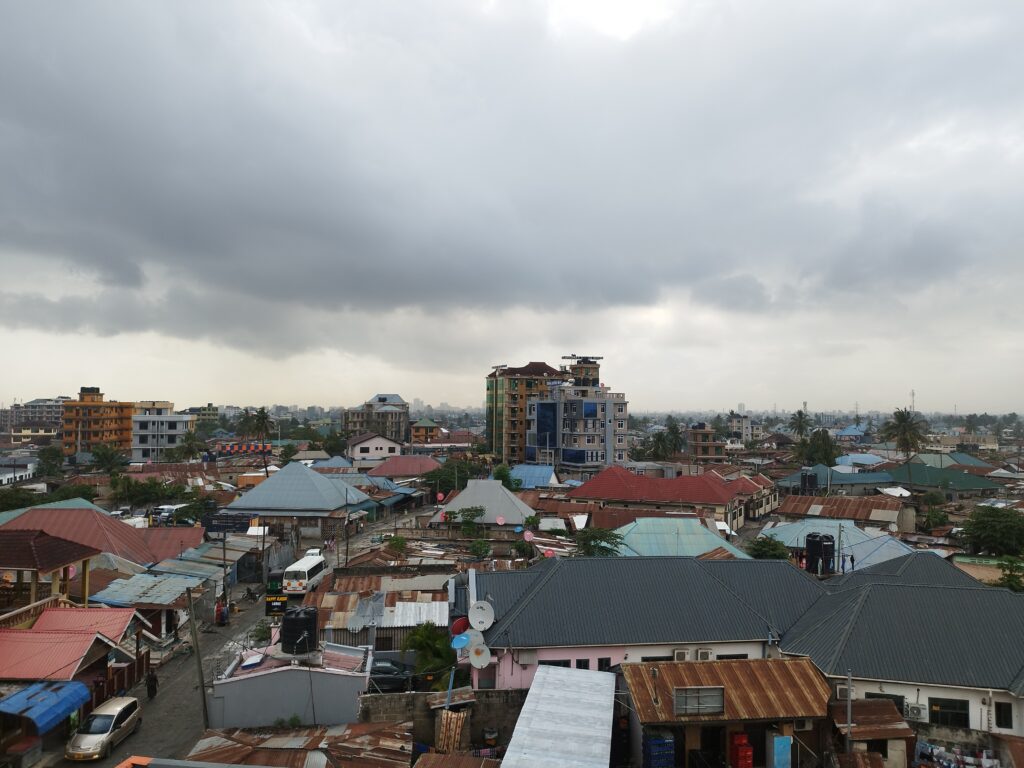
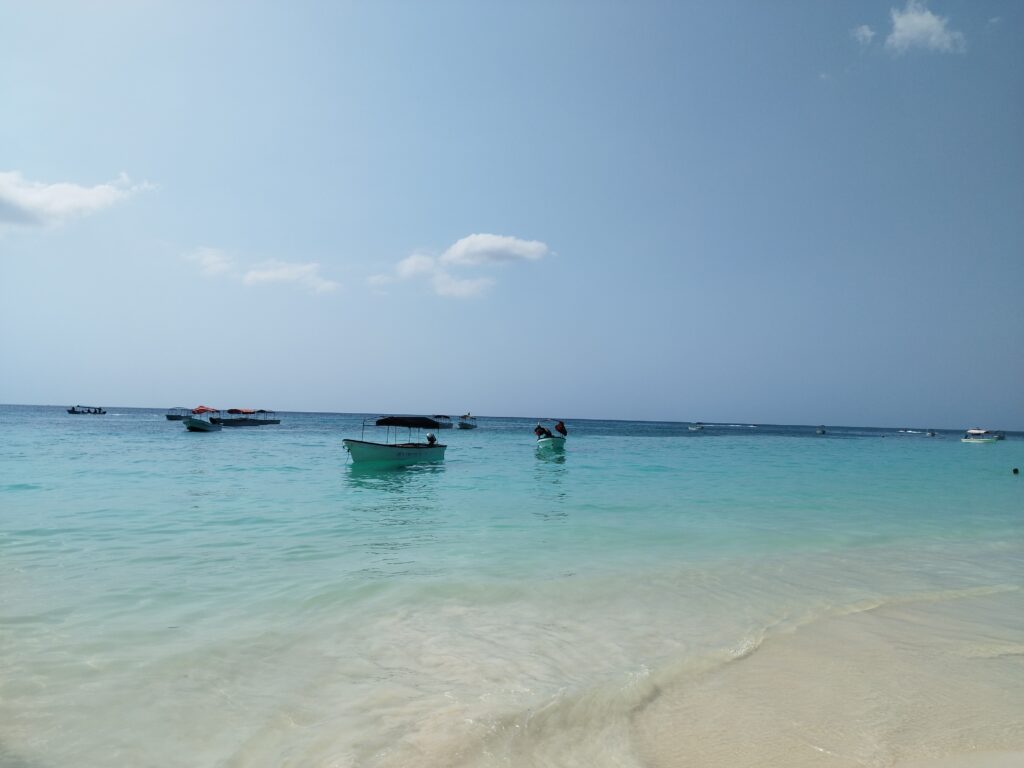
Date of Entry: 2025 September and October
Visa: Possible to get a visa on arrival, the 90 day “single” entry visa costs 50 USD.
Border:
1. Kasumulu: Located in between Karonga and Mbeya. It’s horribly crowded, we don’t recommend it.
2. Kabanga: Northern Burundi border, this is the easiest way to connect Burundi and Rwanda through Tanzania.
- Border crossing
Malawi exit: The exit stamp and the CDP process were quick once we finally found the building, shook off the endless “fixer” (helper), and bypassed the truck line after realizing we didn’t have to wait in it.
Immigration: We applied for a visa on arrival, which required filling out a form and then waiting about half an hour. The officer was very kind and explained that since we only planned to transit through neighboring East African countries (we wanted to go to Burundi and then return to Tanzania to continue to Rwanda, as the Burundi-Rwanda border was closed), our single-entry visa would be valid, so there was no need to pay 90 USD for a multiple-entry visa.
Customs: We processed the CDP, but also had to pay the road tax to the customs officers. The Tanzanian side was probably the worst border we encountered. They insisted that we have our own “agent” to handle the paperwork, which we refused, since we had successfully managed customs ourselves up to that point. Eventually, we received a paper that allowed us to walk to the bank, which we found with great difficulty on our own (truck drivers wanted to help, but even they didn’t know the way). It turned out that we had to pay 25 USD on a hillside about a 10-minute walk outside the border. However, the 25 USD could only be paid in Tanzanian shillings, so we had to exchange 26 USD to get the right amount. After the payment, we returned to customs and received our final customs/road tax documents. Although these were valid for 30 days, they were taken at the Tanzania-Burundi border, so we had to request new ones at the Burundi-Tanzania border. The agents still tried to ask for a small payment, but we didn’t pay them in the end because we managed everything ourselves.
Second border crossing:
Burundi exit: The modern one-stop border made the exit very quick.
Entry: It took about 5 minutes; they accepted the visa we had purchased at the Malawi border.
Customs: We realized that there was no need to process a CDP because the road tax also serves as a customs document. We received a three-day transit customs/road tax paper for 5 USD. They spoke English and explained what the paper was for. It turned out that we had to provide a preliminary route, and they calculated the fee based on it. Since the part after Burundi wasn’t included in that route, we had to get a new document issued.
Other fees: We made the insurance process a bit more complicated than necessary. The key point is that you can get East African, i.e., COMESA (yellow card) insurance, which we could have already arranged in Malawi. In Tanzania, the requirement was to have local insurance. We took out a one-month policy with a local agency for roughly 3,000 HUF, then went to the national agency, who promised to issue a three-month COMESA policy. However, there was a power outage all afternoon, so we couldn’t complete it. In Dar es Salaam, they didn’t accept that we only had one month of local coverage, so we got an additional three-month local policy at a local office for 10,000 HUF, then COMESA insurance for 16,000 HUF. In the end, the total for the COMESA insurance came just under 30,000 HUF, which was valid for us in Burundi, Rwanda, Uganda, and Kenya (and it could have also covered Malawi, Zambia, and Zimbabwe if we had arranged it in time).
Burundi
Date of Entry: 2025 October
Visa: You cannot obtain a visa at the nearby embassies; a 3-day transit visa can be obtained at the border for 45 USD (about 30,000 HUF). It can be extended in the capital, Bujumbura, by 5–10–15 days for 10–20 USD. We didn’t extend ours because there were about 1,000 people at the immigration office, and no one had time to assist us. We submitted an online extension request, which was rejected, so we could only have tried in person. A Hungarian traveler who arrived two weeks after us, however, successfully extended his visa in about an hour (he had not submitted an online request beforehand).
Border: Manyovu
This is the border coming from Lake Tanganyika in Tanzania.
Tanzania exit: Our road tax document was taken away, even though it was valid for a total of 30 days. They said that when re-entering the country, we would need to obtain a new road tax. At exit, however, they confirmed that we only received a stamp, and we could return using our previous visa. The CDP was stamped quickly.
Entry: Upon arrival, we applied for a 3-day transit visa. It had to be paid for at a separate office, but the process was otherwise quick.
Customs: The CDP was not accepted; we were able to obtain a TIP for 15 USD (about 5,000 HUF). This also had to be paid at the payment office—best to mention if you have a vehicle, because then it could be paid together with the visa.
Other fees: Our COMESA insurance obtained in Tanzania was valid here.
Other useful info: –
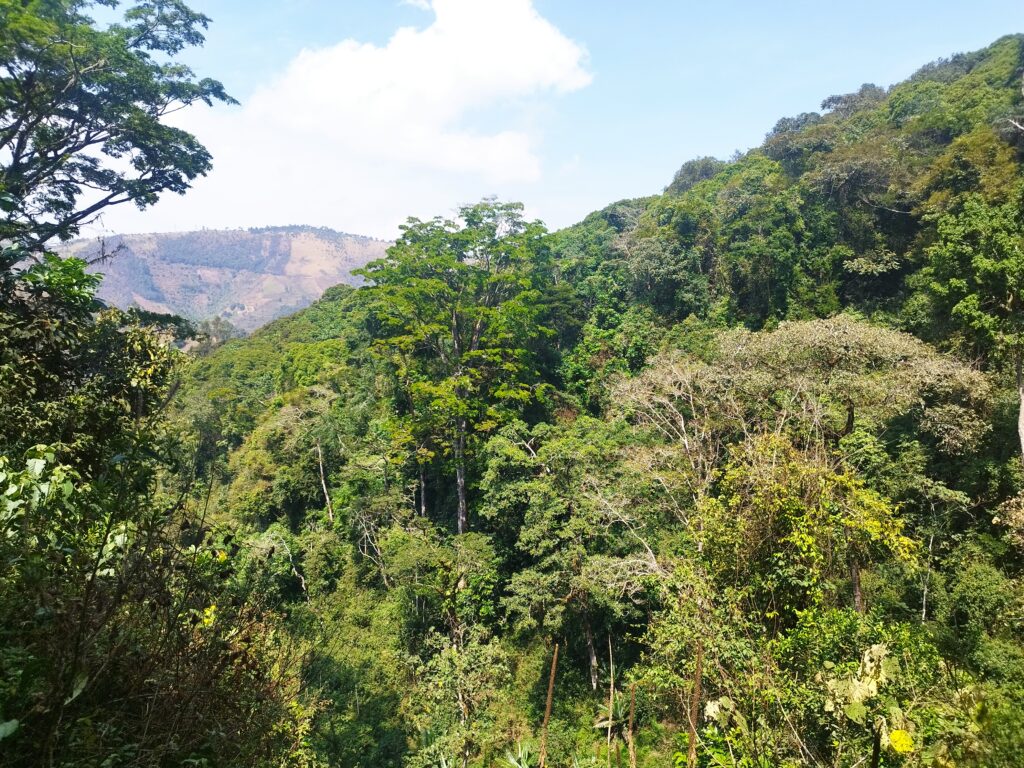
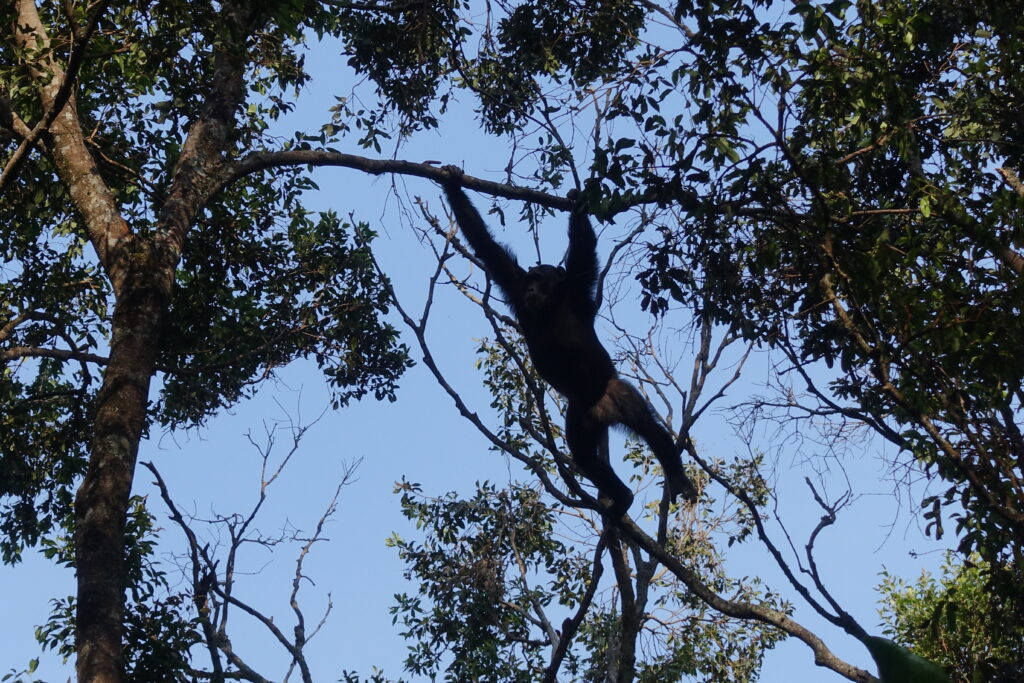
Rwanda
Date of Entry: 2025 October
Visas: It’s possible to get an East-African visa on arrival for 90 days for 100 USD.
Border: Rusomo
This is the main border between Tanzania and Rwanda, there is very big traffic.
Tanzania exit: Took 1 minutes in total, got an exit stamp and took our road tax.
Entry: It took more than 2 hours. We waited in line, answered a few questions, and were then sent to get the visa. At one window we could submit the application, then at another window we had to pay. We paid 100 USD in cash here, although at the international airport only card payments are accepted. After paying, we returned to the immigration line, waited again, and one of the officers issued our visa. There was no proper visa printer, so the officer filled it out by hand, which showed that very few tourists request this here. Interestingly, we thought the Rwandan border would be the most modern, but even the small Mozambican border had a proper visa printer, while here it didn’t. However, our handwritten visa caused no problems and was accepted everywhere later.
Customs: We had the CDP stamped, which was very quick.
Other fees: Our COMESA insurance, purchased in Tanzania, was valid here.
Other useful info: –
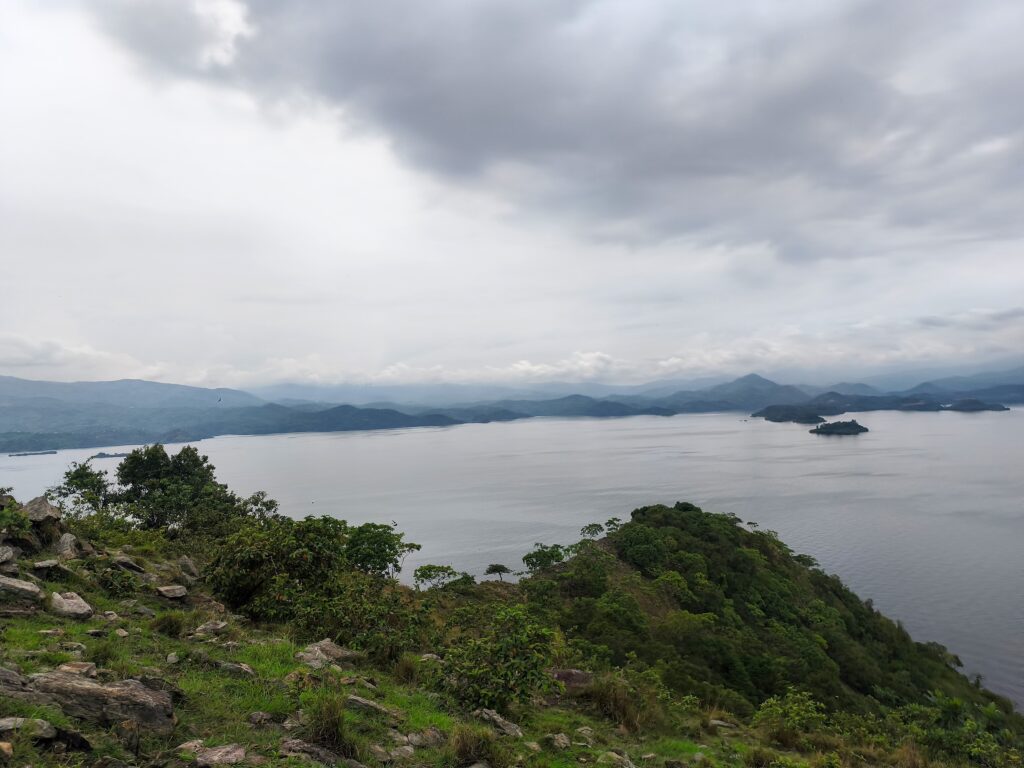
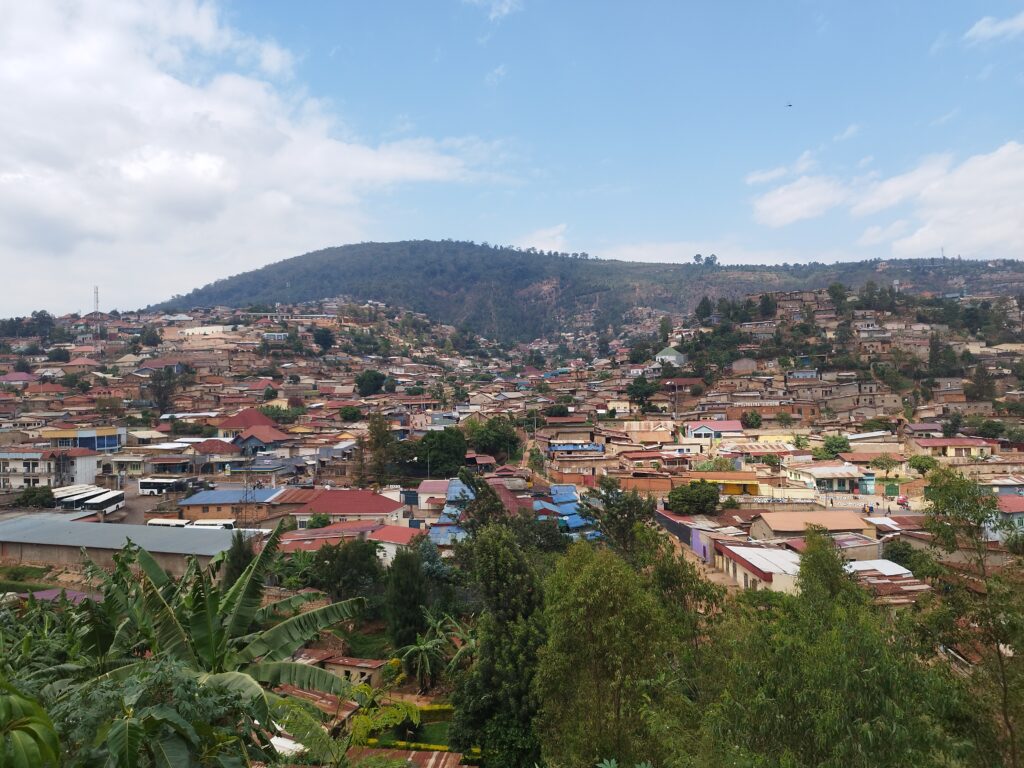
Uganda
Date of Entry: 2025 October
Vízumbeszerzés: our East African visa was valid here as well.
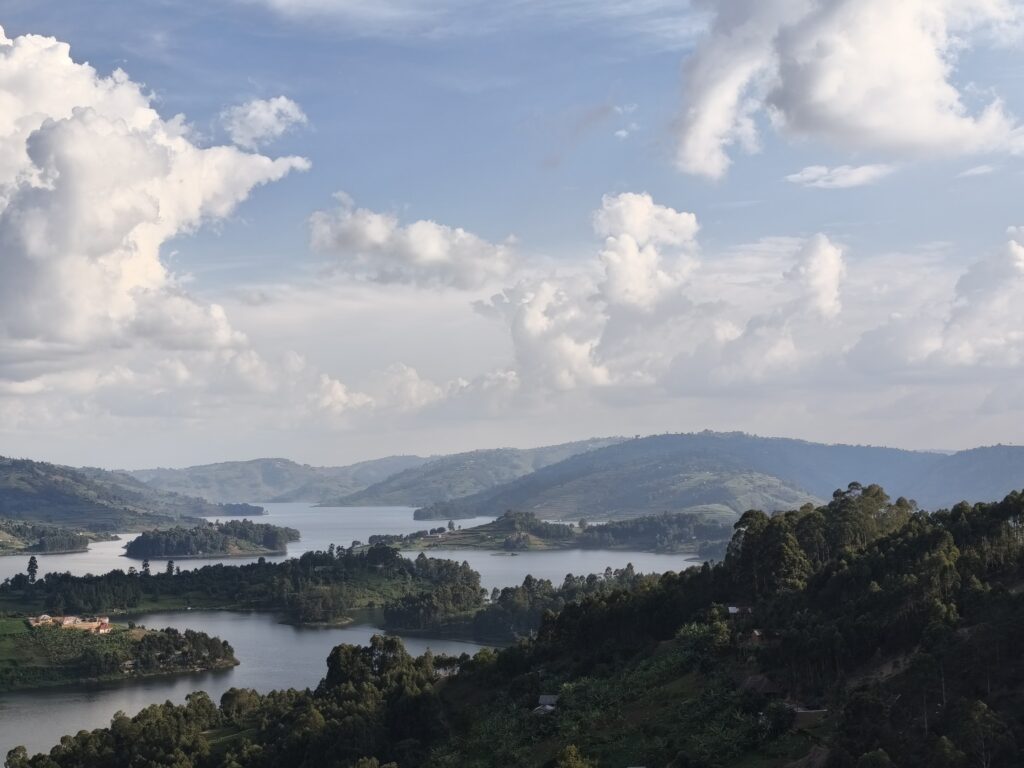
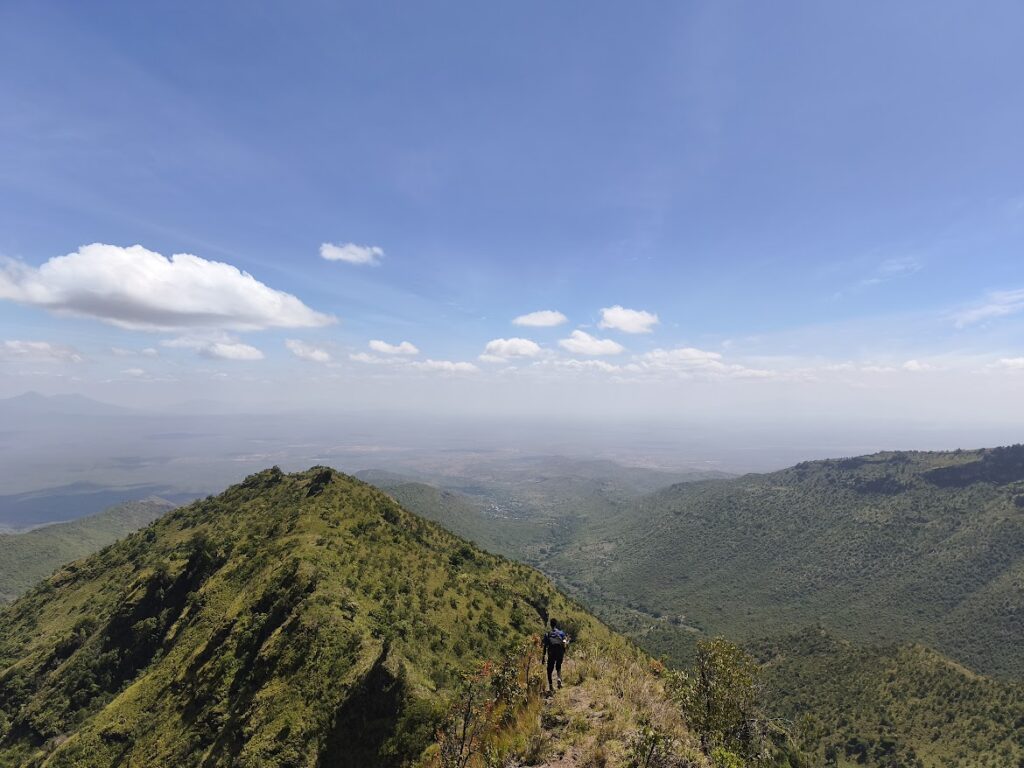
Border: Cyanika
Not a too crowded border, very fast to cross.
Rwanda exit: There was a 5 minutes line, then we received our stamp immediately.
Immigration: The line was maximum 5 minutes here as well, they asked what we want to visit, then gave us a stamp.
Customs: We stamped our CDP, but we also needed to get a TIP combined with a road tax, so maybe we should’ve not asked for a CDP stamp.
Other fees: The road tax cost 60 USD (free for motorcycles, for example), but it couldn’t be paid in USD. It’s best to exchange for Ugandan shillings somewhere before the border, because at the border they can either help via mobile money (but with double fees: one for the exchange and one for the payment) or exchange at a high rate.
Other useful info: In Uganda, the police never stopped us on their own. Once we overtook over a solid line, but we promised it wouldn’t happen again
Kenya
Date of Entry: 2025 November
Visa: Our East African visa was valid here as well.
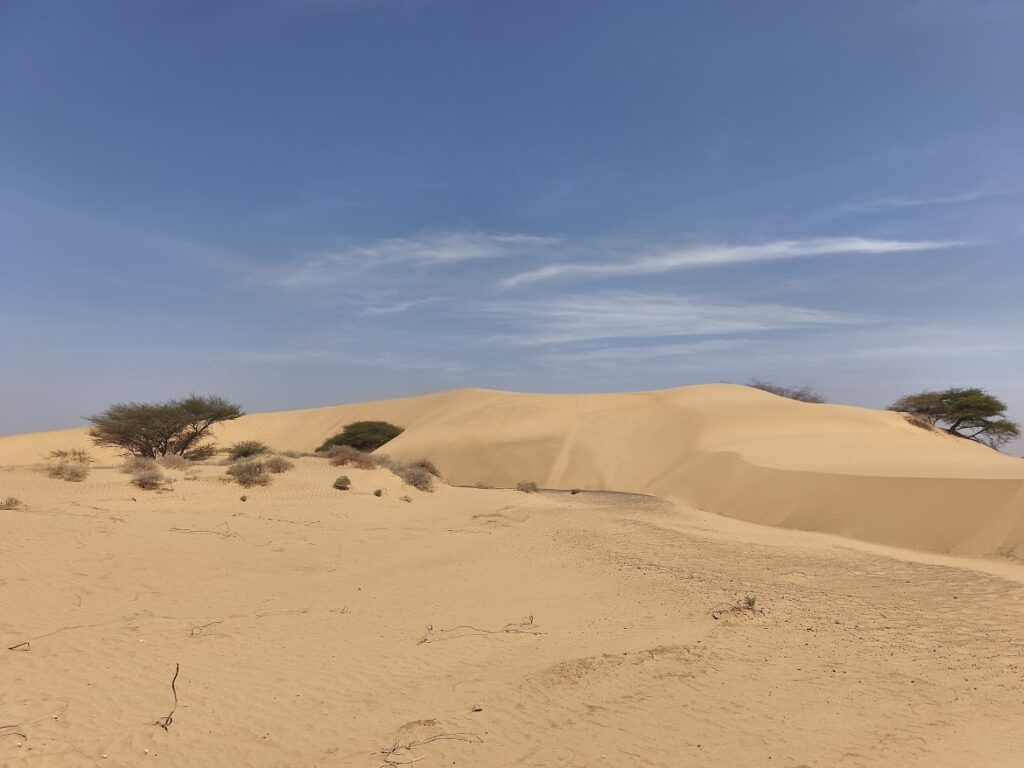
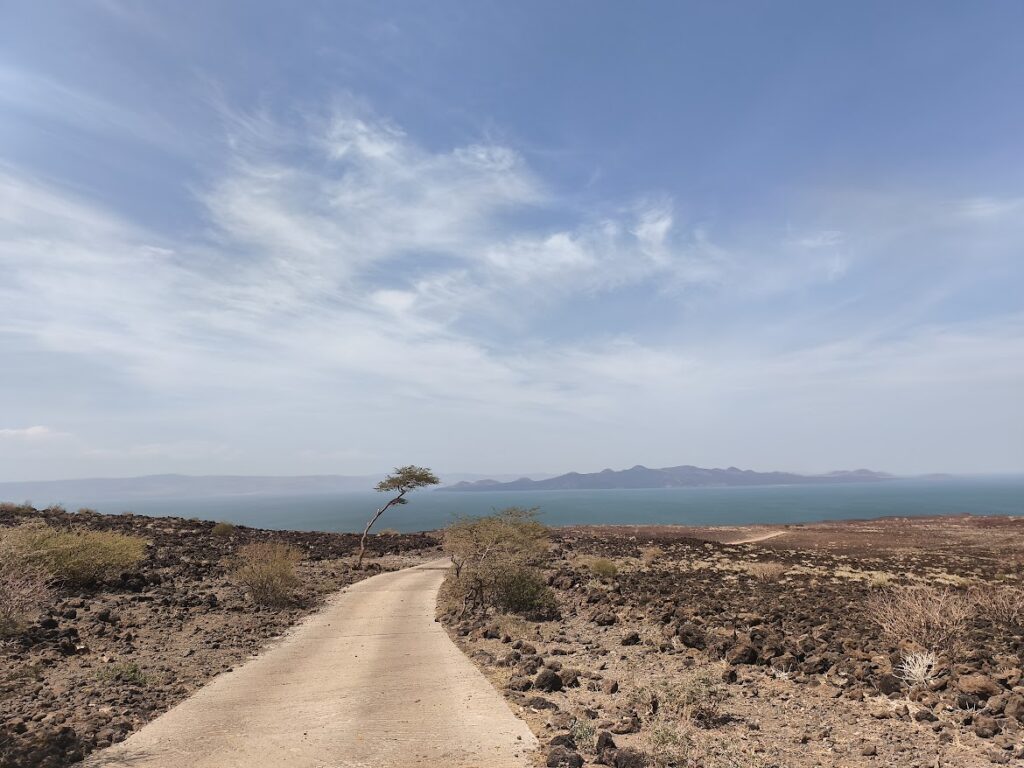
Border: Suam
This is a small border on the road circling Mount Elgon. They built two very modern buildings, but there is practically no traffic.
Uganda exit: It took 5 minutes in total, we got a stamp on our passport and CDP.
Immigration: It was only slow because the immigration and custom officers were bored and asked a lot of questions.
Custom: We got our CDP stamped.
Other fees: We had to pay a 40 USD road tax (we could pay in cash).
Other useful information: In the first 1500 kms in Kenya we have never been stopped by the police.
Summary – A bit about the costs
We were prepared for the fact that one of the biggest expenses during our African trip would be the visas. In the end, we spent ≈ 2,100 € per person on visas: we visited 32 countries, so entering each country cost us around ≈ 65 € on average. The most expensive visa was Nigeria (it was also one of the hardest countries to get into), followed by Cameroon, the Republic of the Congo, and Ghana – each of these cost more than ≈ 130 € per person. The visas for all other countries were cheaper. In the next six months in Asia, we will only need to spend a fraction of this amount on visas.
Customs costs: We paid around ≈ 920 € in total, which includes the fee for two CDPs, each costing ≈ 420 €. By the end of the African leg, we had to request a new CDP because our one-year validity was about to expire and the pages were getting full – so this will not be an expense anymore in Asia. In addition, we paid roughly ≈ 80 € for various mandatory customs papers.
Road taxes: In Africa, we spent around ≈ 370 € on road taxes, and another ≈ 120 € on toll gates. For comparison: in Europe, the tolls for France, Italy, and Slovenia alone cost us more than ≈ 260 € – in Spain, we avoided using the highway.
Insurance: All African car insurances together cost around ≈ 315 €.
Fines: We paid ≈ 60 € in fines (two speeding tickets, one for overtaking on a solid line, and once for not having insurance). All fines were legitimate. We never paid bribes – and apart from Cameroon, they didn’t really ask for them. When we didn’t understand something, they often just waved us through.
Other fees: Around ≈ 42 € (e.g. bridge tolls and mainly the Zimbabwe exit fee).
Fuel: This was our biggest fixed expense. We had planned with 500 HUF/litre (≈ 1.31 €/l), but eventually the diesel price was on average around 375 HUF/litre (≈ 1.00 €/l). We only refueled at known, reliable gas stations because our car is sensitive to fuel quality, so we didn’t save money on this.
Food and accommodation: Our daily budget was 15 €/person/day. Besides food and accommodation, this also included laundry (sometimes we did it ourselves), toiletries, clothes, and other daily necessities. In West Africa this budget was harder to maintain because accommodation is more expensive and often lower quality, but in East Africa it was easier.
It’s possible to travel even cheaper, but since we didn’t invest in converting the car, we only spent about 22% of our nights sleeping in the car. Only about 7% of our nights were completely free.
This was a personal decision – some people wild-camp the whole way with expensive rooftop tents and gear, but we preferred being close to people. Street food was often cheaper than cooking for ourselves. We usually chose the cheapest rooms with running water (when available). We ate in local eateries everywhere and enjoyed the local food. We could afford beer several times a week, sometimes coffee (which we mostly brewed ourselves), and even chocolate – which was usually much more expensive than beer.
We could plan ahead for the visas, CDP cost and daily budget; everything else we had to estimate. Honestly, we expected much higher expenses in the other categories. There’s a lot of negative talk about African corruption and bureaucracy, and we also thought we would have to pay road taxes almost everywhere. West Africa had many checkpoints, but in Southern and Eastern Africa we rarely met any police.
Most of the officials, police officers and soldiers were friendly and helpful – often they helped us with route suggestions.
It requires a lot of planning (especially for the order and place to obtain the visas), but the bureaucracy is absolutely manageable. The beautiful, incredibly diverse nature and culture make every little difficulty more than worth it.