January 30-31: The border crossing from Morocco to Mauritania was truly exhausting. We arrived at the border around noon, and there were about 15 cars ahead of us, so at first, we thought we would get through easily. By 2 p.m., only two cars had crossed the border when the border guards went on a one-hour lunch break. They reassured us, saying they believed we would still make it to Mauritania that day, as the border only closed at 7 p.m., but we were beginning to lose hope. After 5 hours of waiting in line, we finally passed the first gate, and from there, the endless bureaucracy began. In Morocco, they scanned our car, then inspected it with a dog, and sent us from one office to another with various papers. In Mauritania, we had to visit 10 different offices with our e-visa. Fortunately, we gained an extra hour in Mauritania, as it is in an earlier time zone. Overall, it was a very hectic border, but most people were kind and helpful, so after 8 p.m., we finally managed to complete everything, and we were finally in Mauritania.
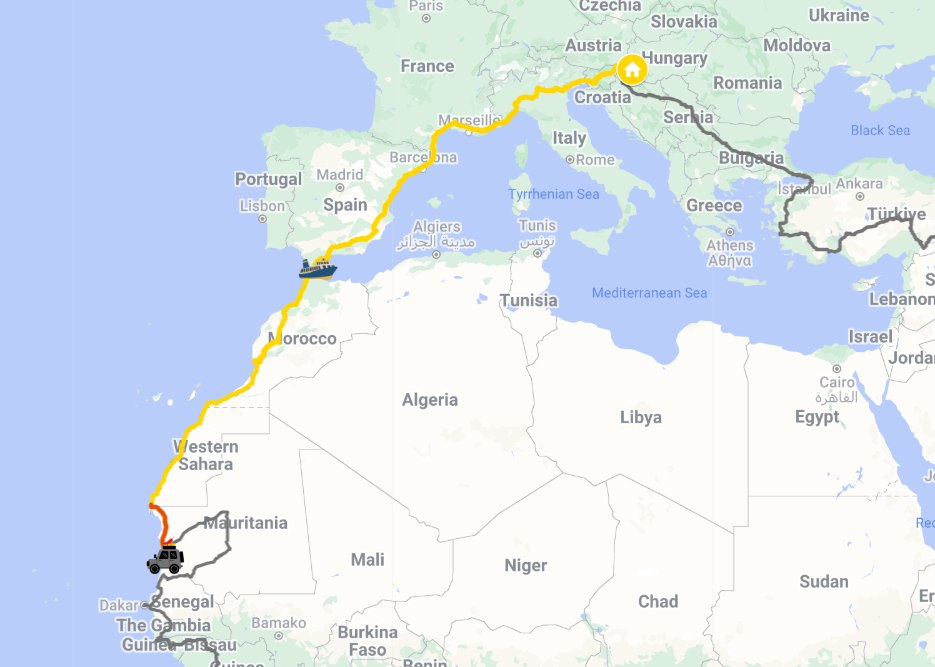
We spent the evening in a small guesthouse in Nouadhibou, Mauritania’s second-largest city (with a population of around 73,000), known for its fishing industry. As soon as we entered the city, we immediately felt how different the country was from Morocco. The hustle and bustle was intense, traffic was chaotic, and nearly everyone was dressed in desert clothing – men in blue or white robes, with scarves wrapped around their heads like turbans to protect themselves from the wind.
We had dinner in the Senegalese quarter, at a tiny restaurant, where we ate couscous and tortellini with chicken and onion sauce (onion as a side dish or sauce is very common in Mauritania and Senegal – in Senegal, this dish is called Yassa). 
The next morning, we found a street vendor selling incredibly delicious bean stew baguettes with café touba. We already knew this type of coffee from Senegal, where we traveled two years ago. It’s a strong, distinctive coffee flavored with Selim (or Guinea) pepper, known locally as djar.
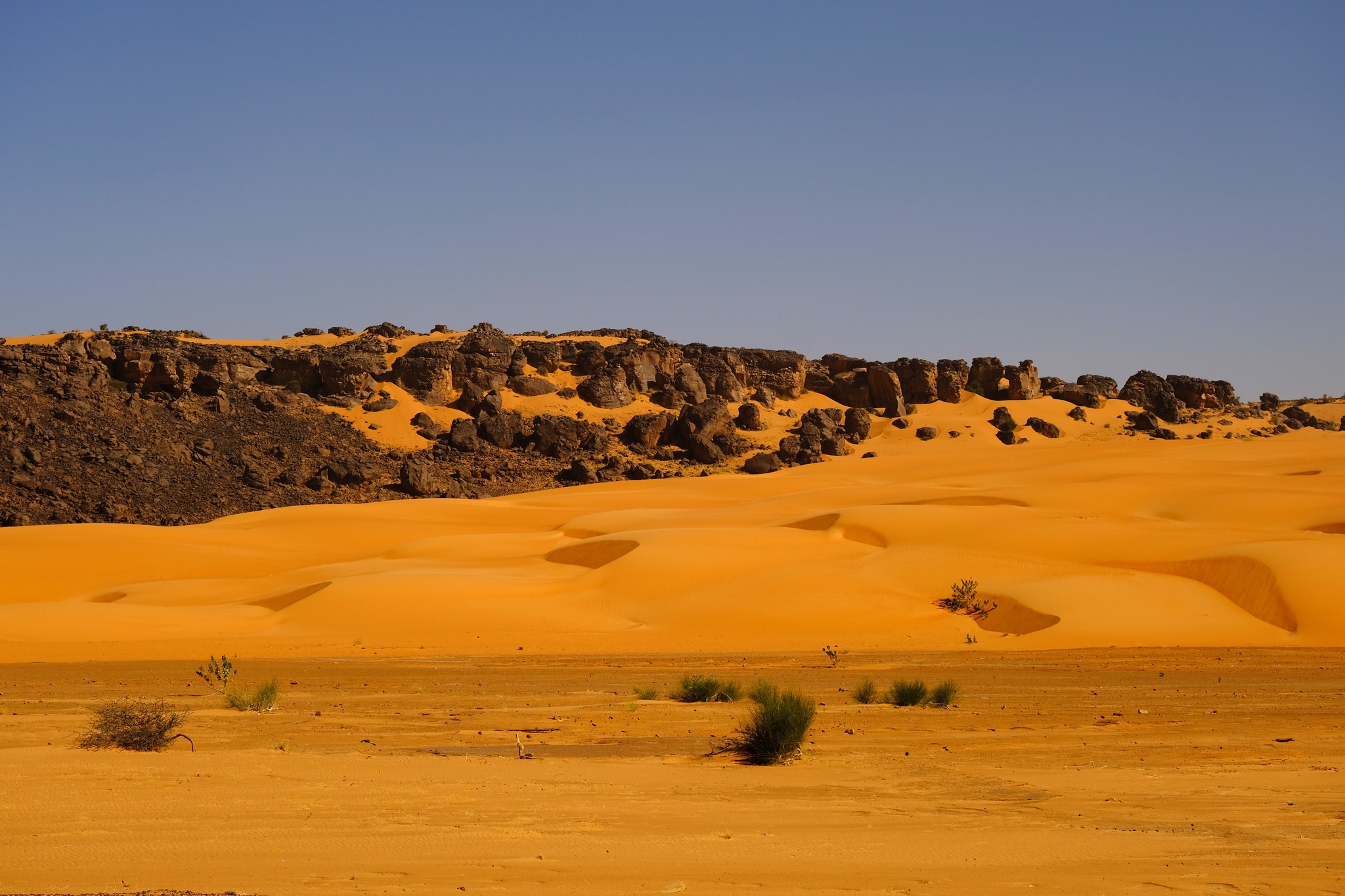
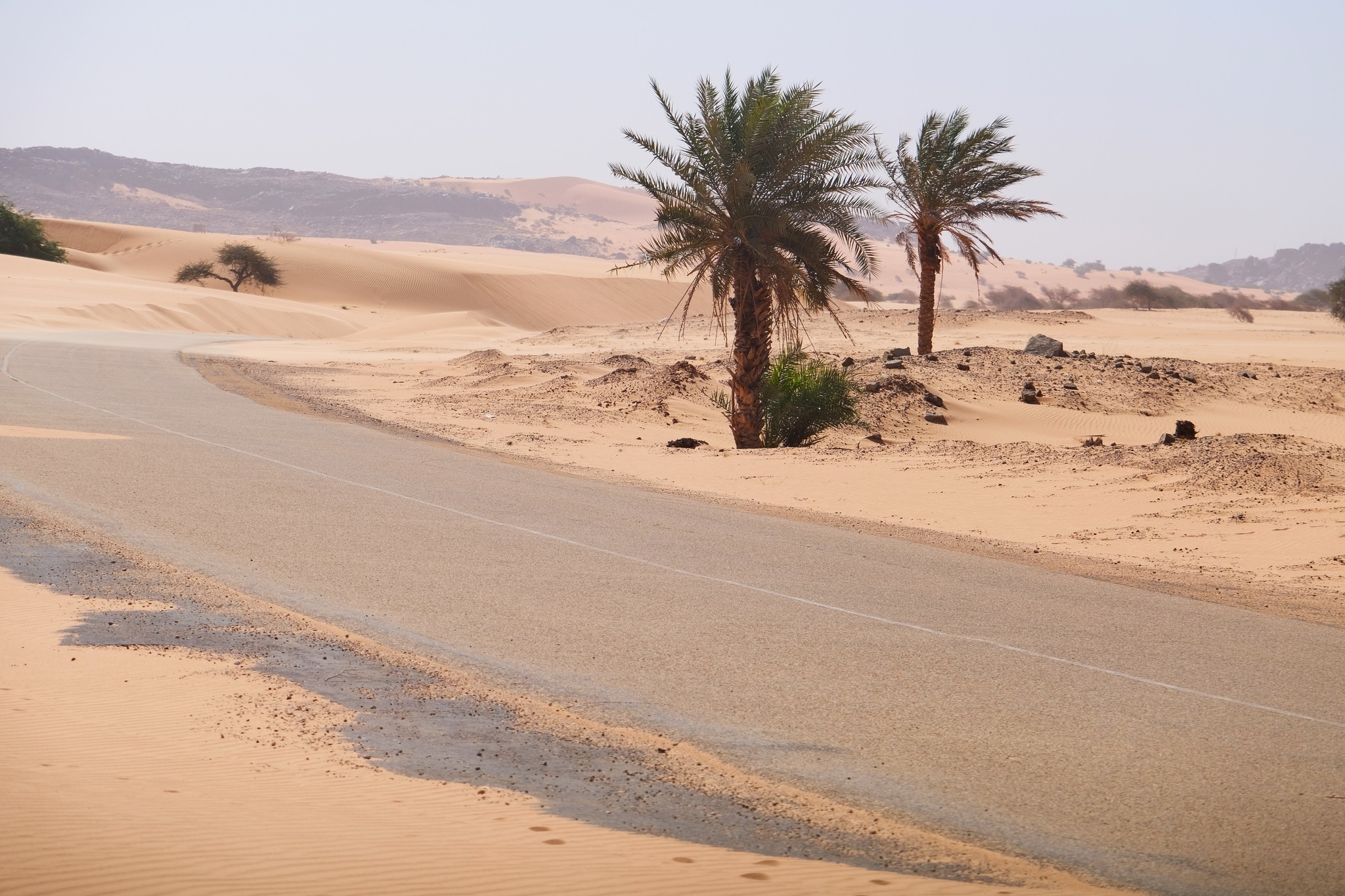
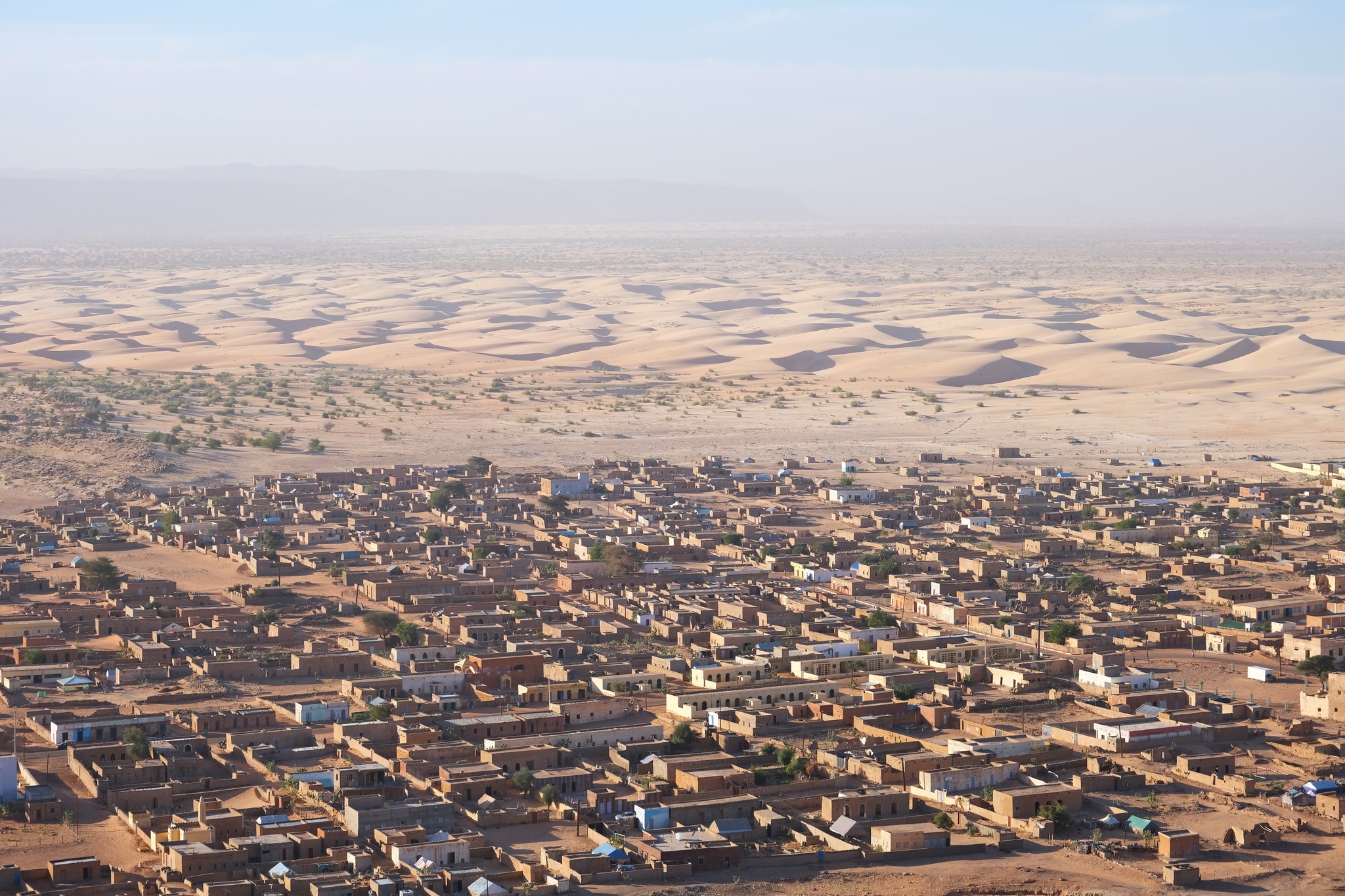
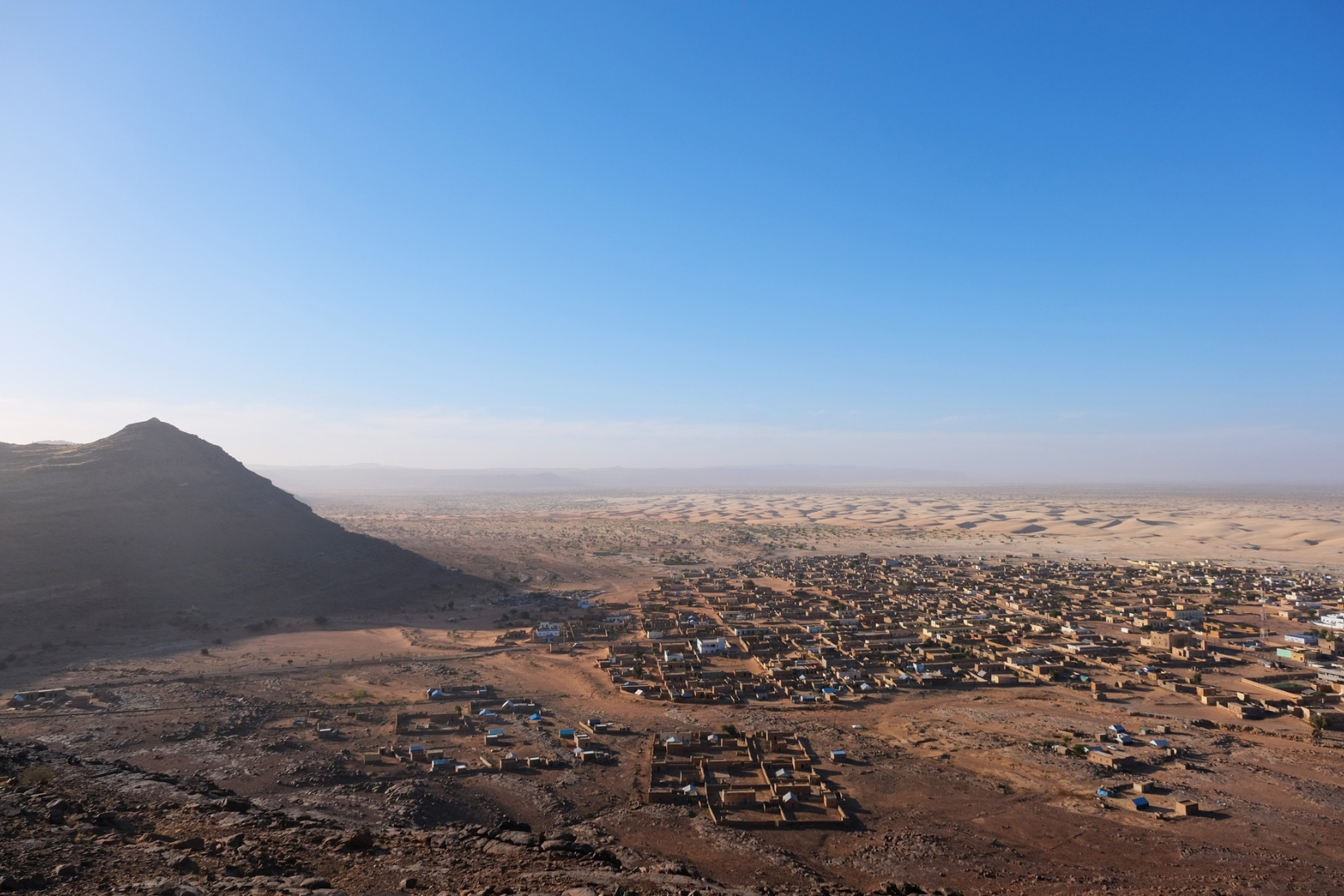
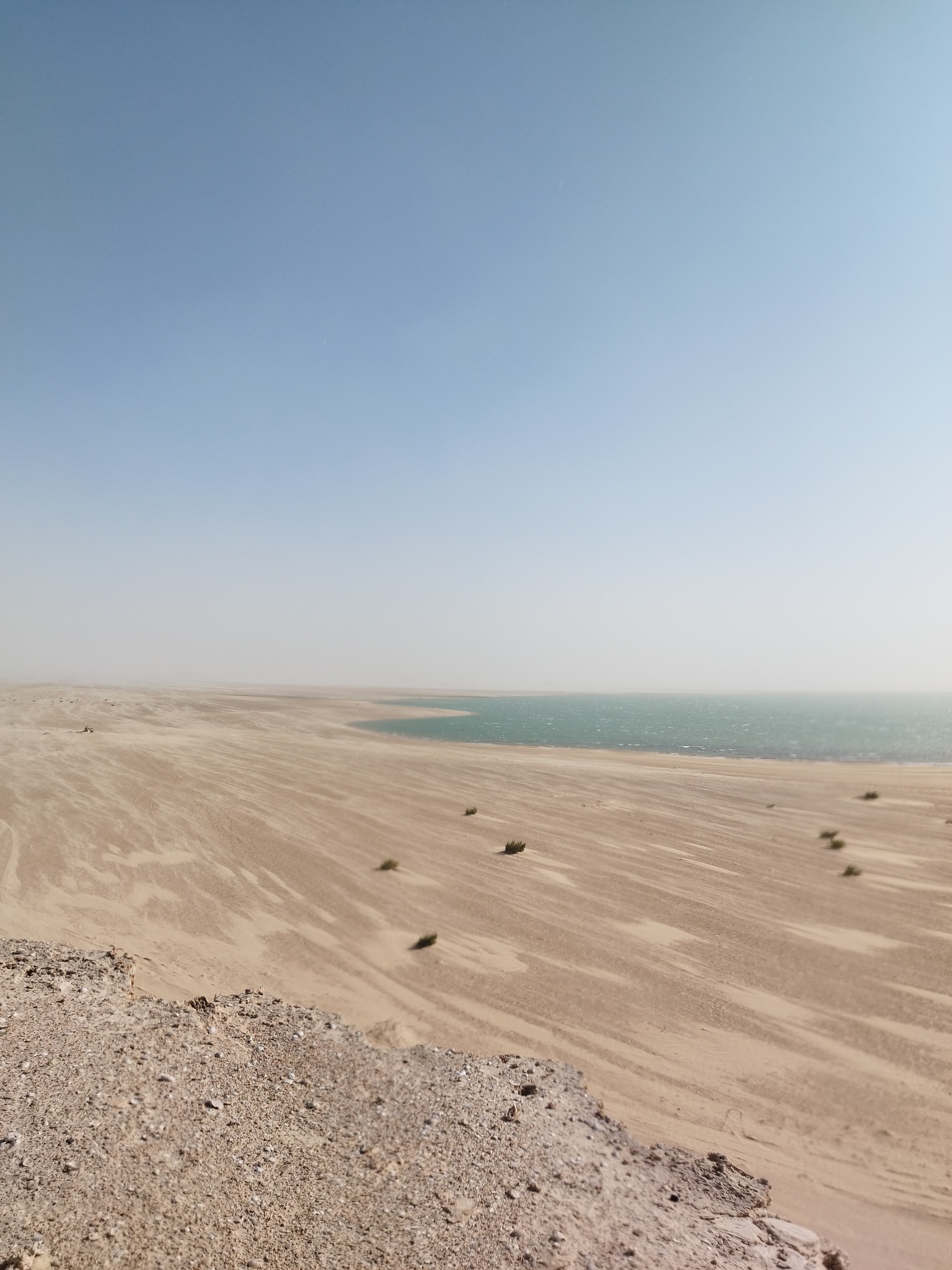
After breakfast, we thought Mauritania must have a coffee culture too, so we drove 80 kilometers through sand dunes and a sandstorm into a small village – settlements are rare in this area – to have a cup of coffee. The villagers were very surprised and happy to see us, and we eventually found an elderly man with whom we could communicate in our limited French to ask for coffee. He told us there was no café in the village, but we could buy Nescafé at the small store. As it turned out, this is typical of Mauritania, where Senegalese people sell café touba in larger towns.
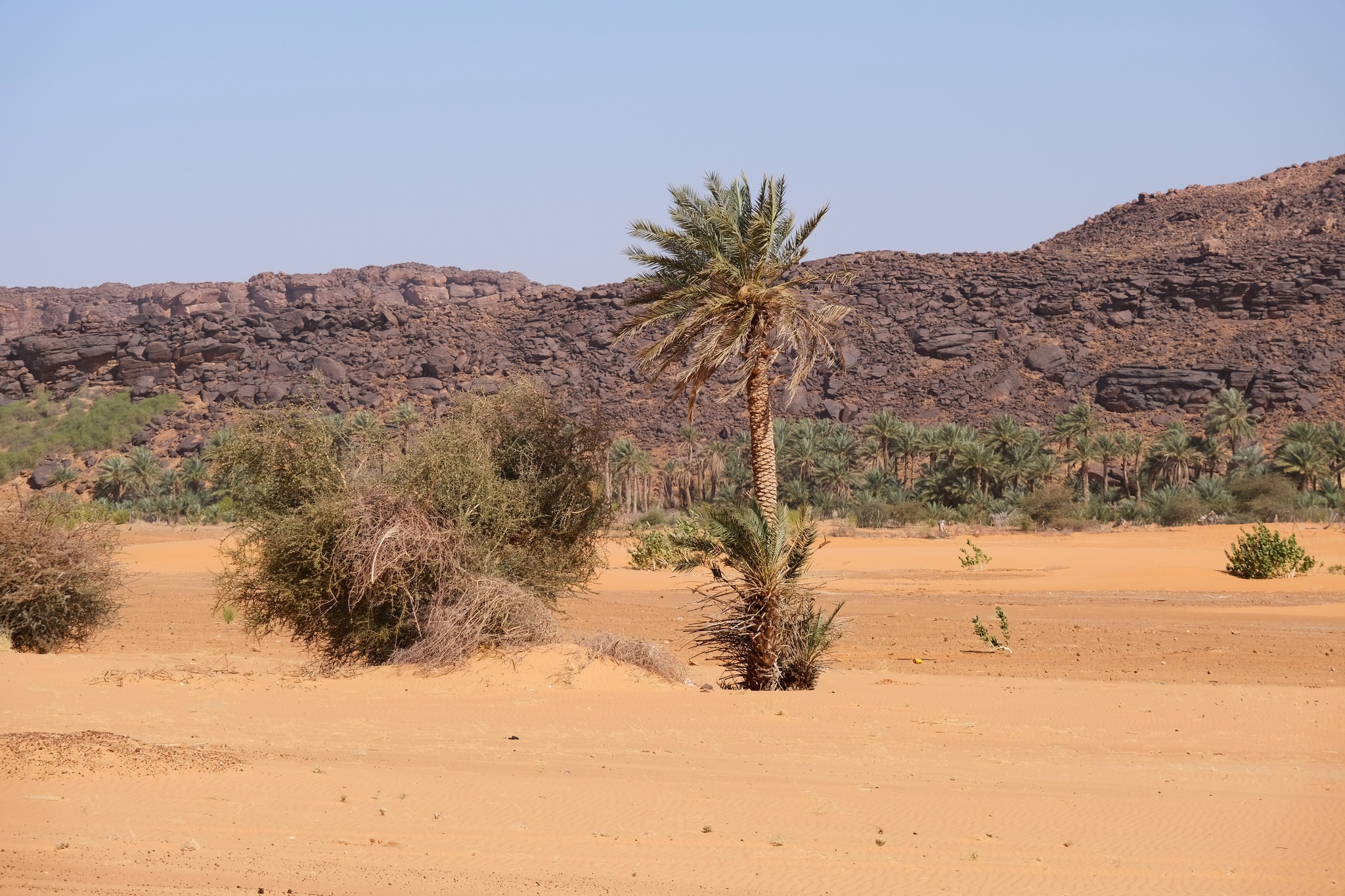
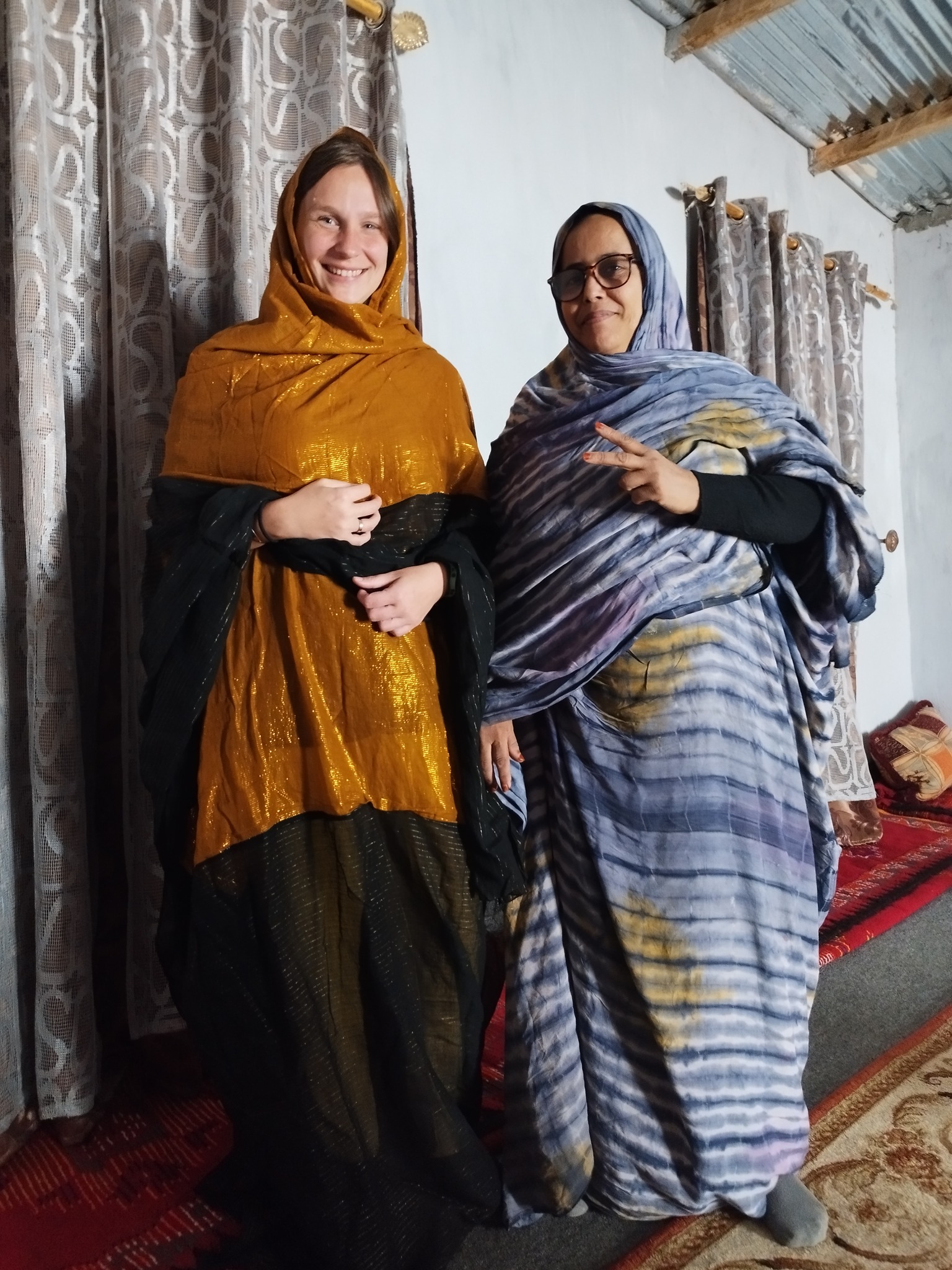
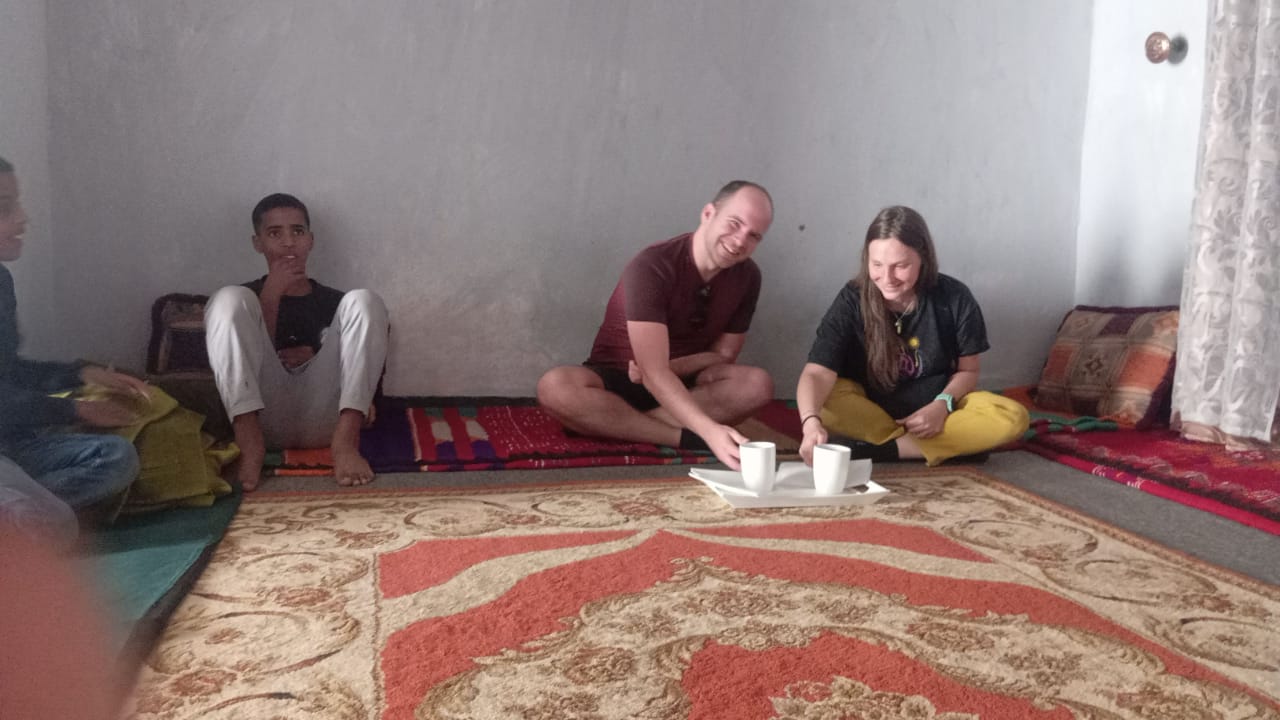
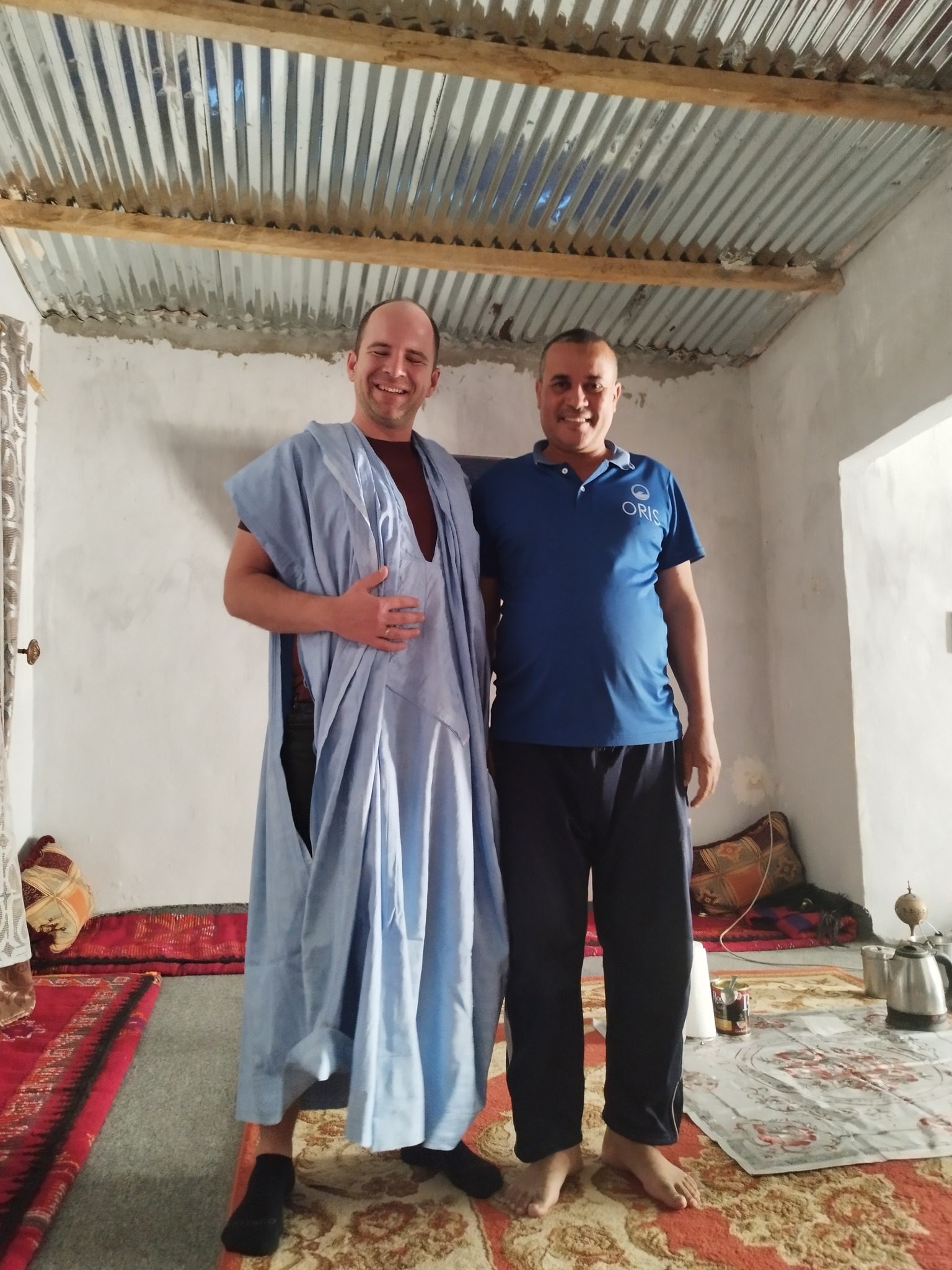
As we were leaving the village, a woman waved at us to follow her. She invited us into her house and made us coffee. We tried to communicate using gestures and our limited French, along with the little English Mohamed, her son, spoke. After a while, we managed to get into the conversation. Half an hour later, her husband and the other son returned home, and they showed us pictures of a beautiful oasis near the village, where incredibly delicious dates grow, which we were able to taste. We became so friendly despite the language barriers that they brought us traditional Mauritanian clothing, showed us how to wear it, and in the end, gave it to us as a gift. Our hearts were filled with warmth from the kindness we received from this family.
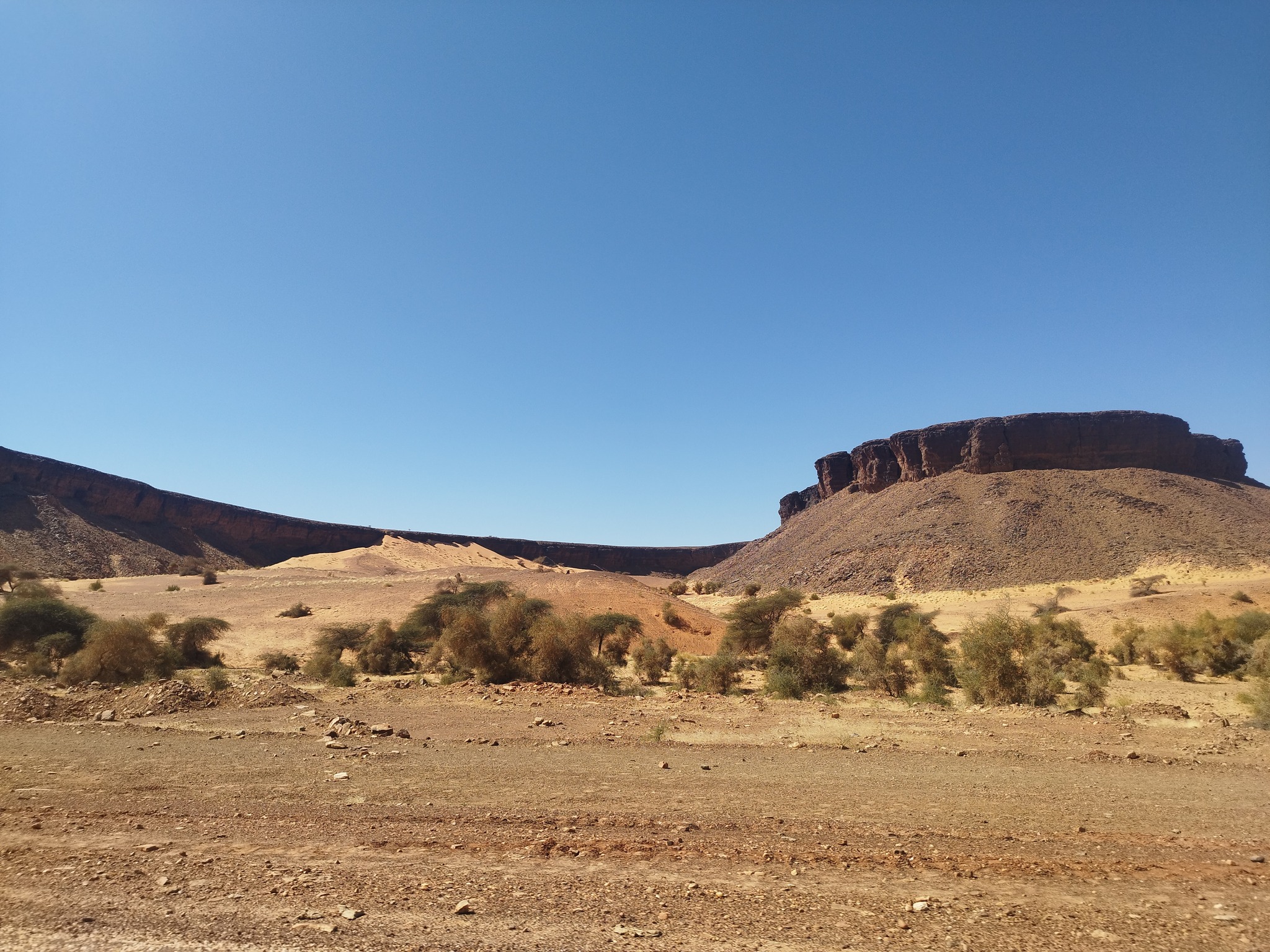
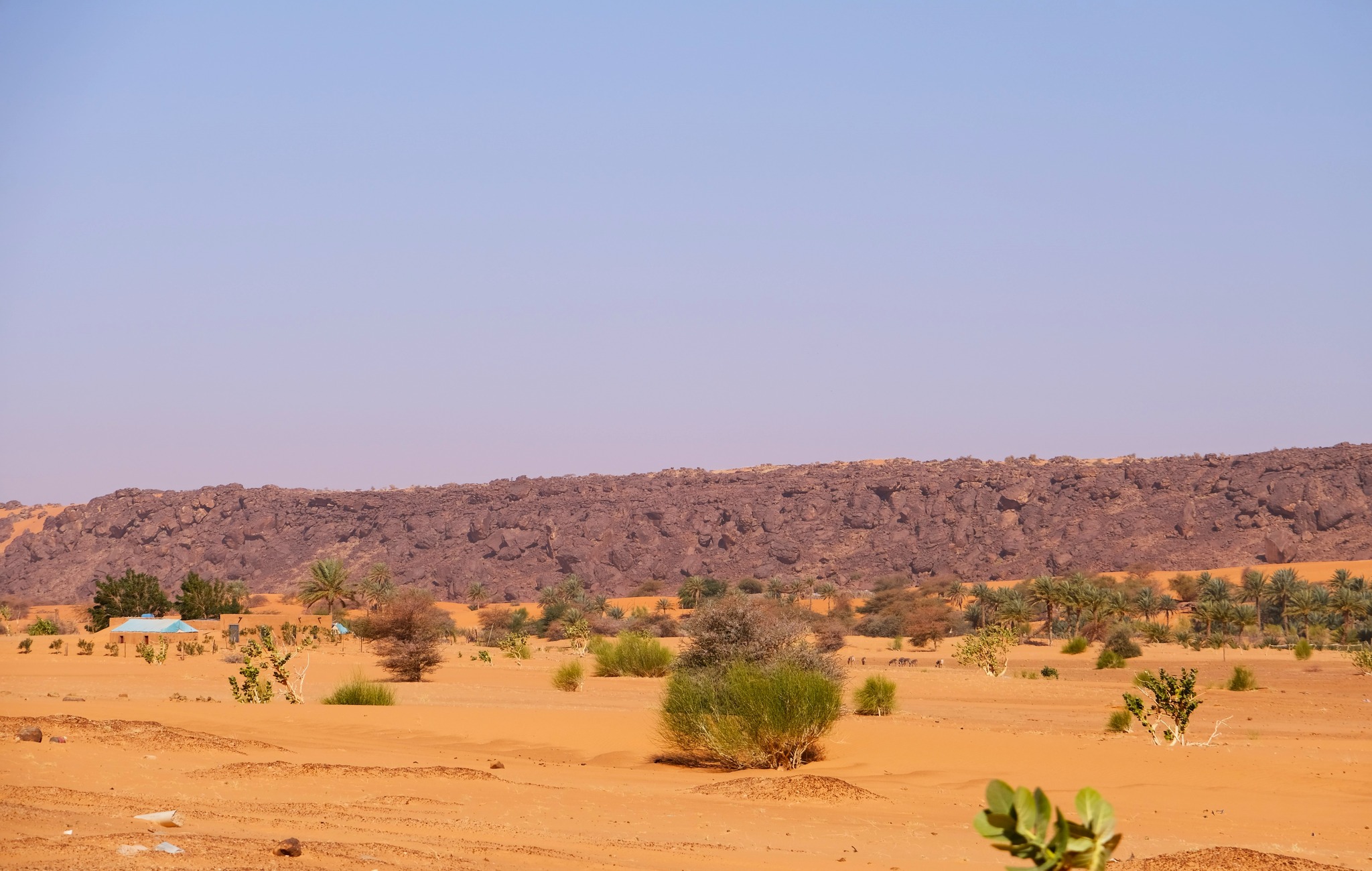
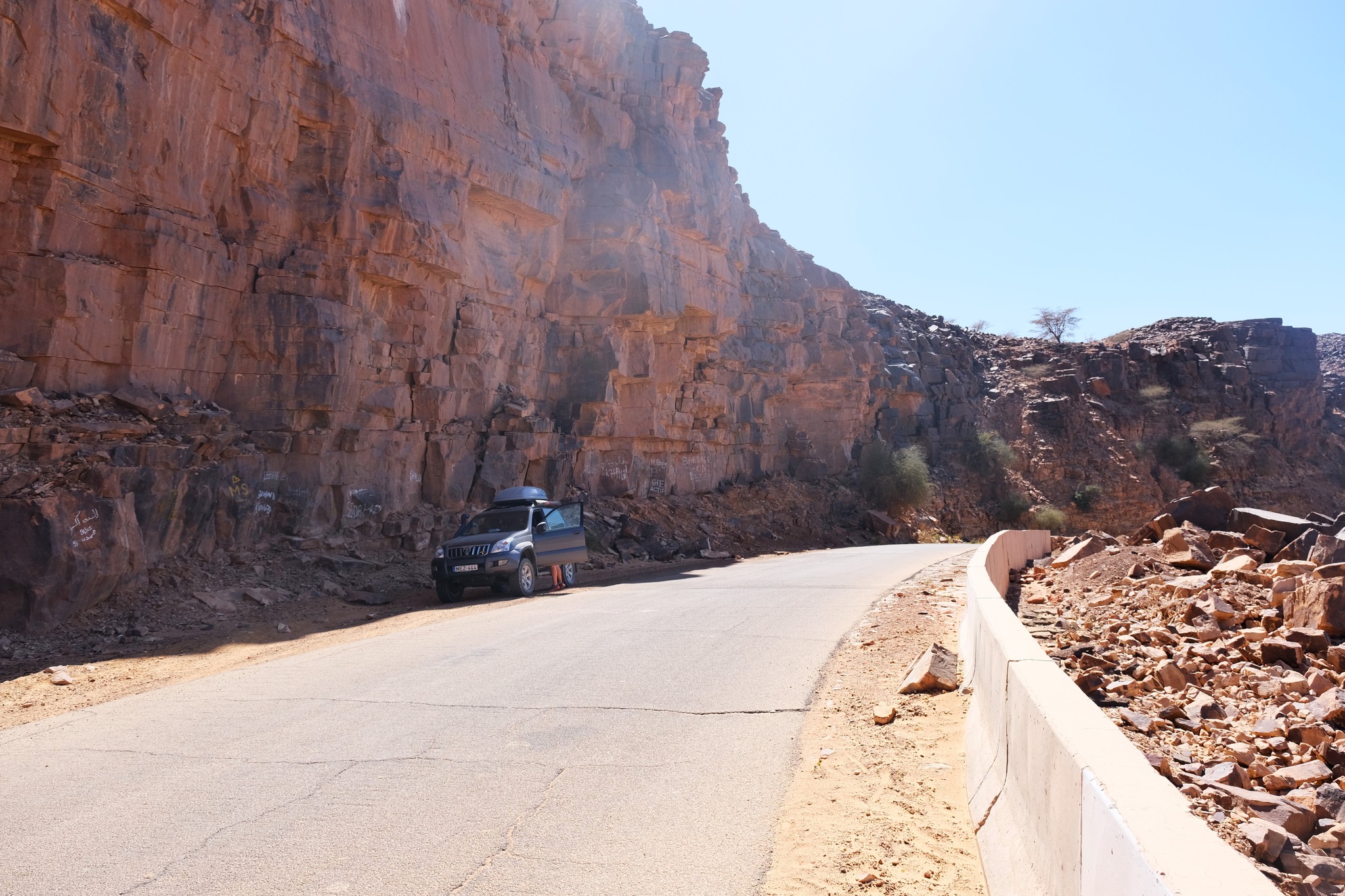
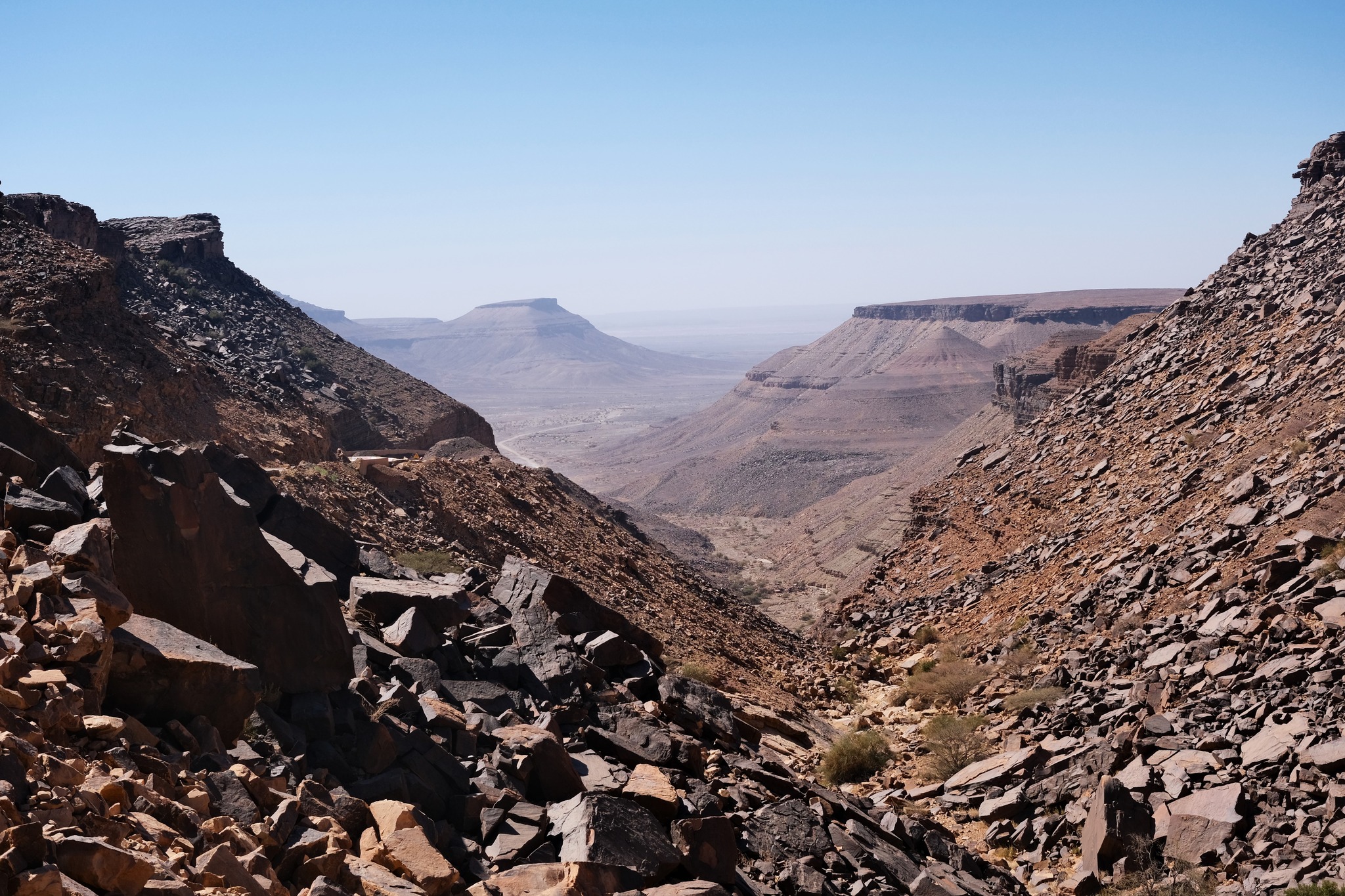
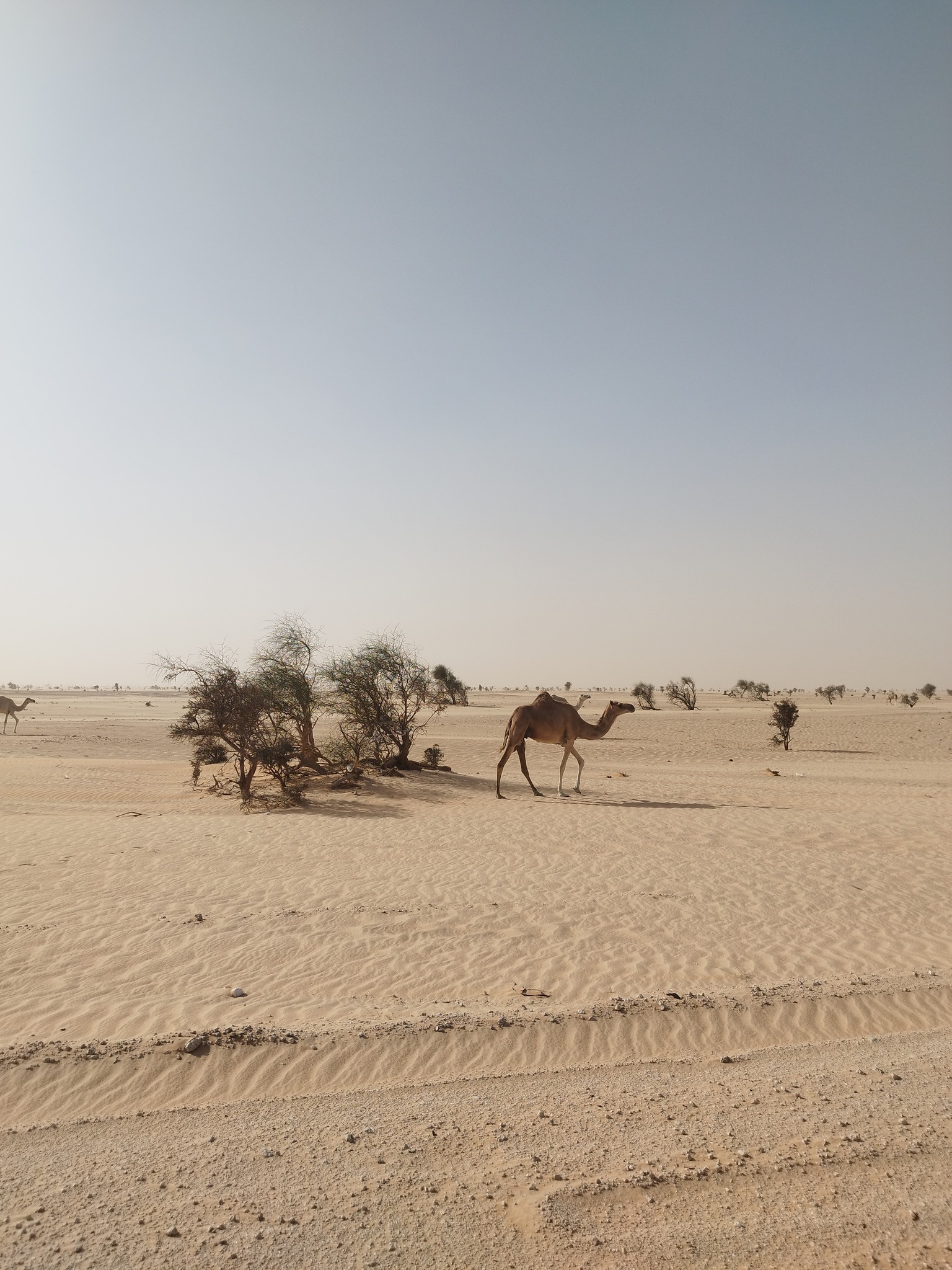
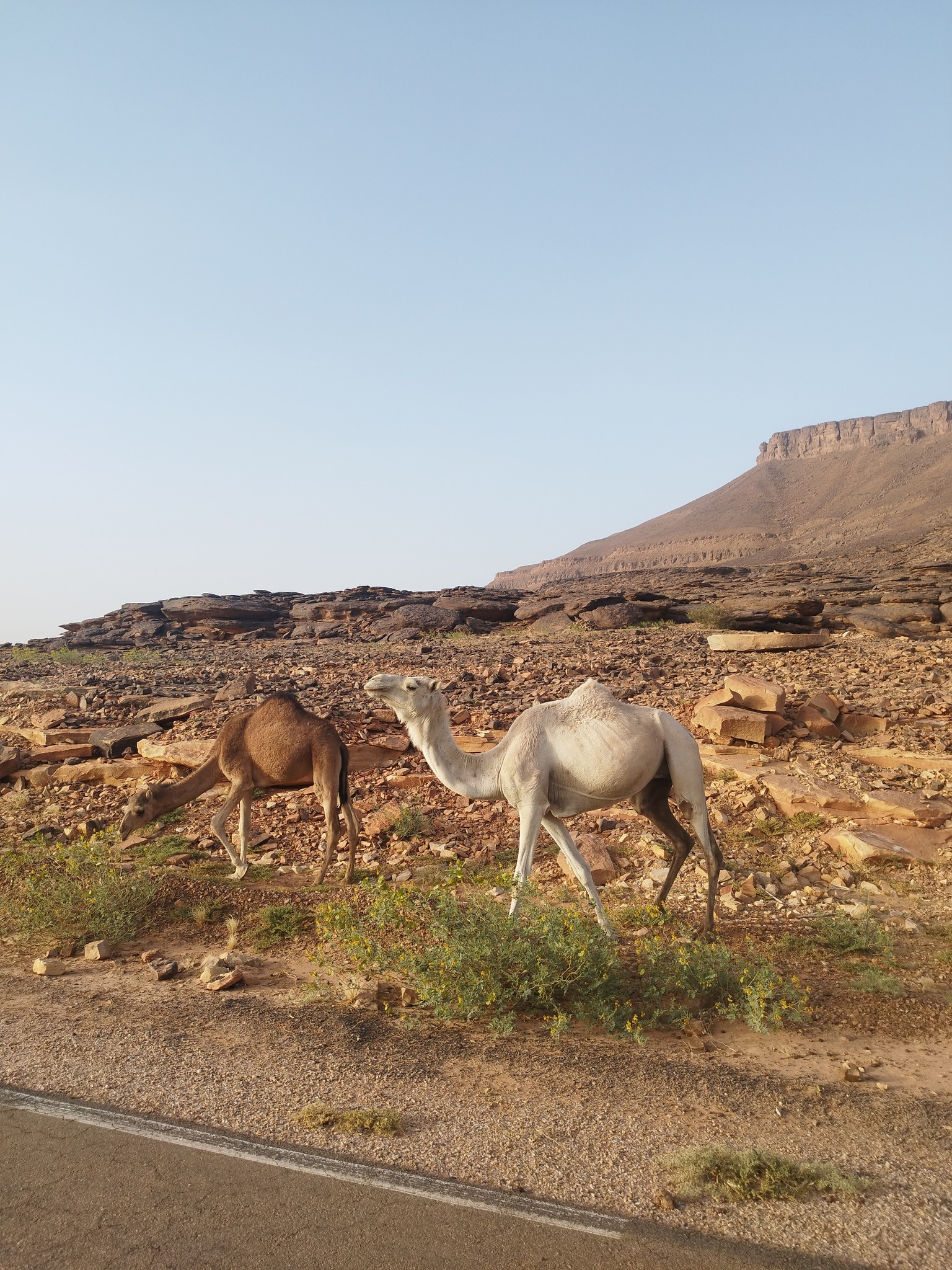
Most of our journey toward the capital, Nouakchott, was spent among sand dunes, camels, donkeys, and goats, but it was fascinating to watch how the Sahara changes. White, yellow, and red sand dunes, jagged rocky deserts, and green oases alternated across the country, which initially left us in awe.