June8-10.: From Epupa we headed toward Etosha National Park.
It’s hard to calculate in advance exactly where we’ll be on a given day, so we only booked accommodation a few days ahead. We were lucky—there was still availability at one of the campsites, so we managed to spend two nights inside the park. In Epupa we met someone who works as a tour guide and gave us a great tip: enter the park through the western gate, the Galton Gate, and drive through the park to our campsite instead of using the popular entrances near the Etosha salt pan. That’s exactly what we did—and it turned out to be the best decision. First we stayed at a new campsite just outside the gate, where we had a big surprise: police cars and darkened vehicles were everywhere. It turned out that the deputy minister was having dinner there, so we had to wait to get in. Luckily, they eventually let us through—and apart from us, there were no other guests.
fter Epupa, unfortunately, the cheap community campsites disappeared. Private campsites are generally very nice: each pitch has a huge private area with a fire pit, braai (barbecue) spot, tap, sink, and often even a private bathroom. It’s comfortable, of course, but we would have been happy if cheaper, shared options were still available. In any case, the host at this campsite was very kind.
It was already cold in the evening, but in the morning we were surprised to see that it was only 6°C—this is where winter in southern Africa began for us. (Looking back now from Lesotho, we would happily trade our –10 to –5°C mornings for that 6°C, but at the time we didn’t yet know that 6°C counts as warm. 😃)
We set off into the park, which is very well set up for independent travelers. Most tourists rent cars instead of booking organized safaris, since you can download a detailed map that even shows the waterholes.
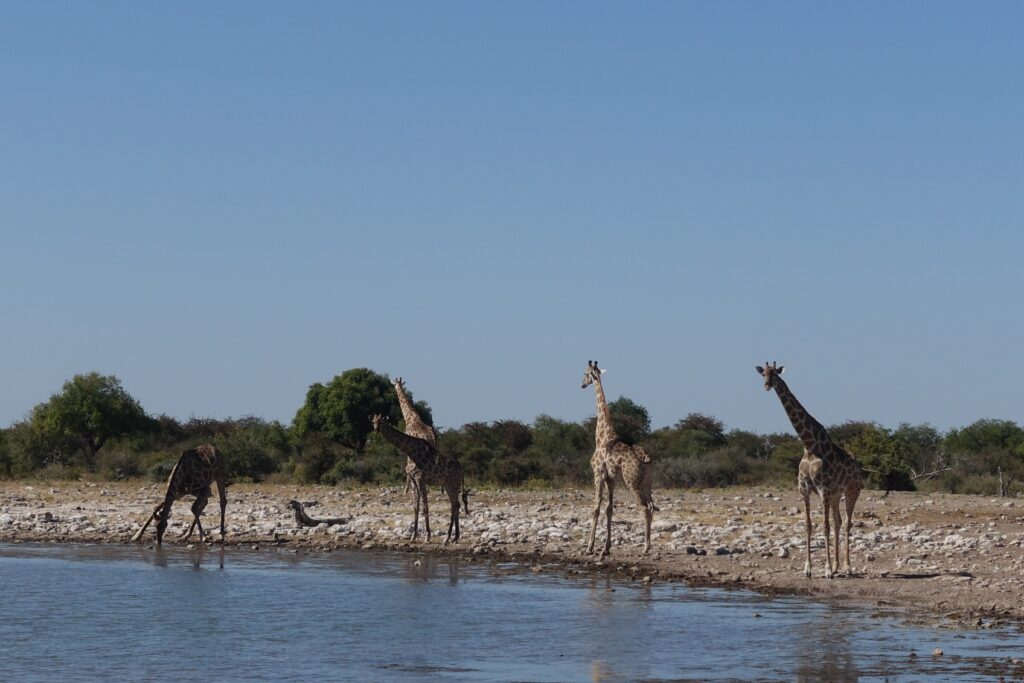
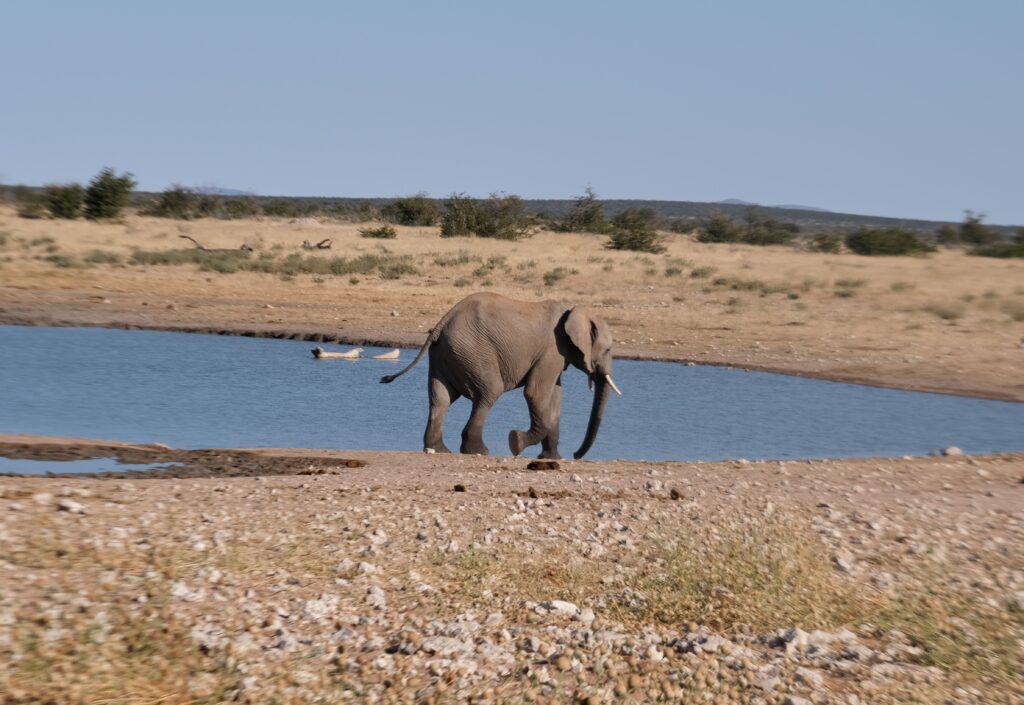
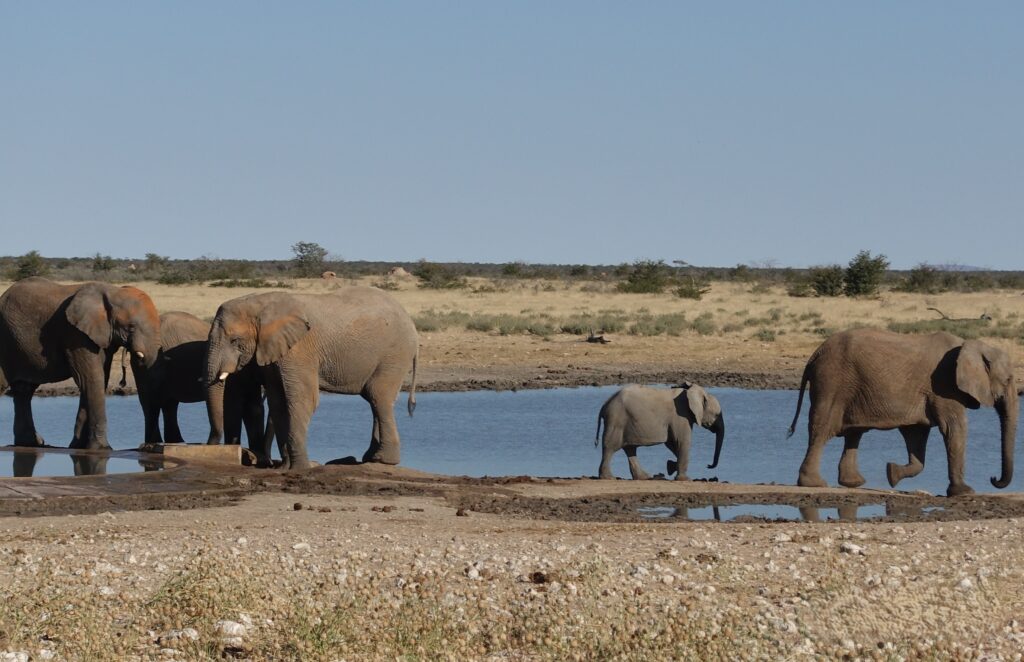
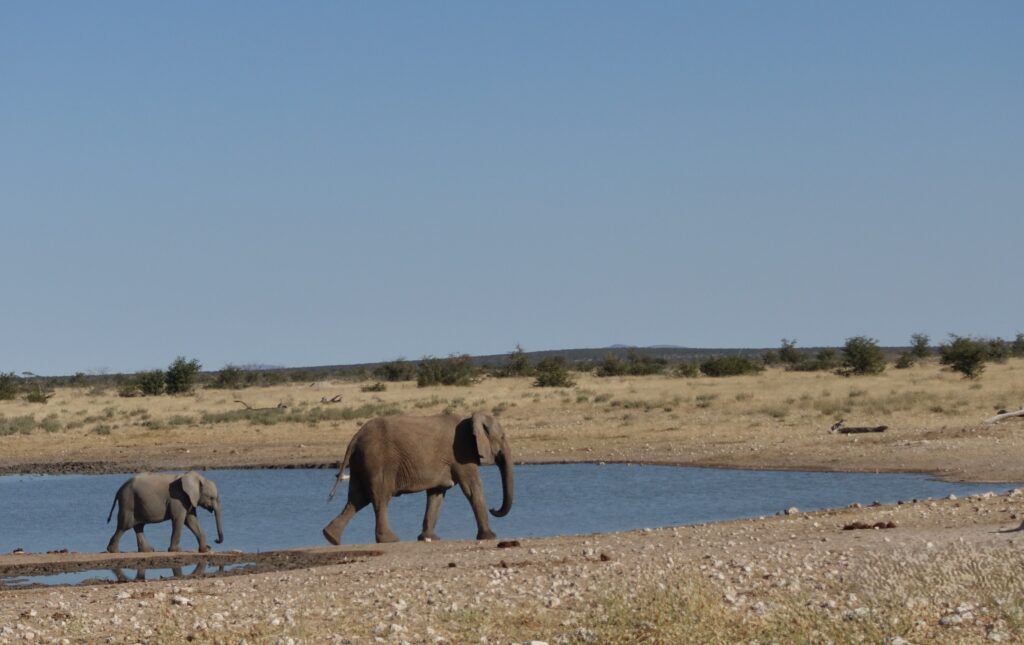
We were incredibly lucky at the very first waterhole: more than ten elephants arrived to drink, including calves. In the western part of the park, which is less visited by tourists, we saw loads of animals at almost every waterhole—zebras, gazelles, and giraffes drinking everywhere.
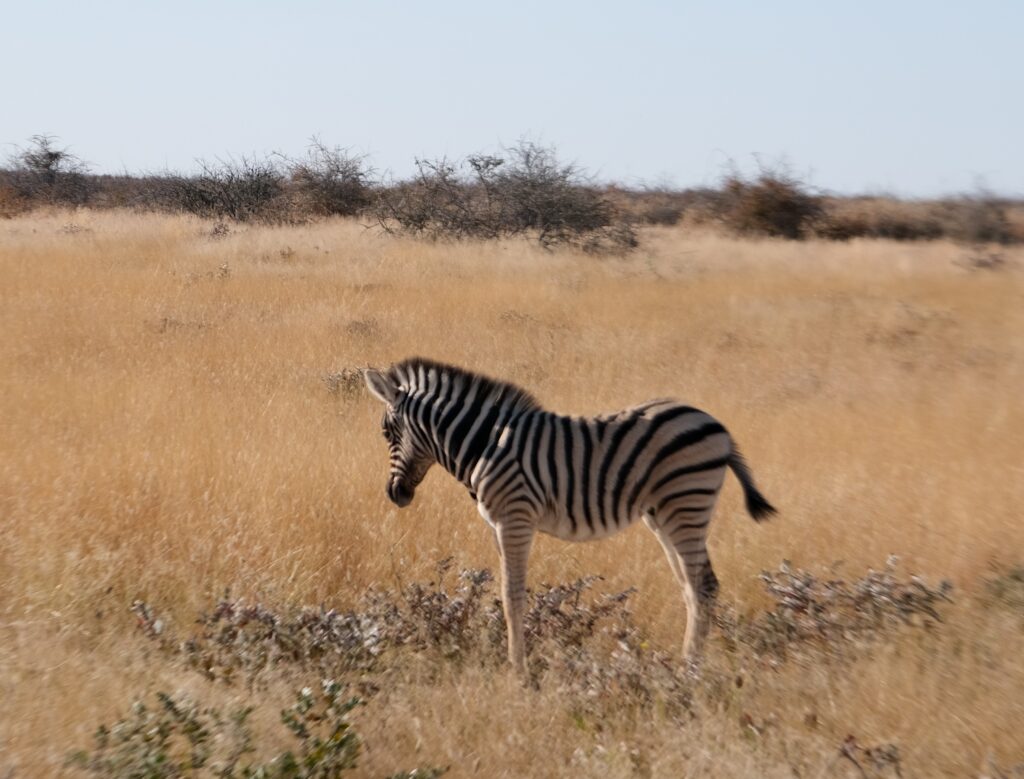
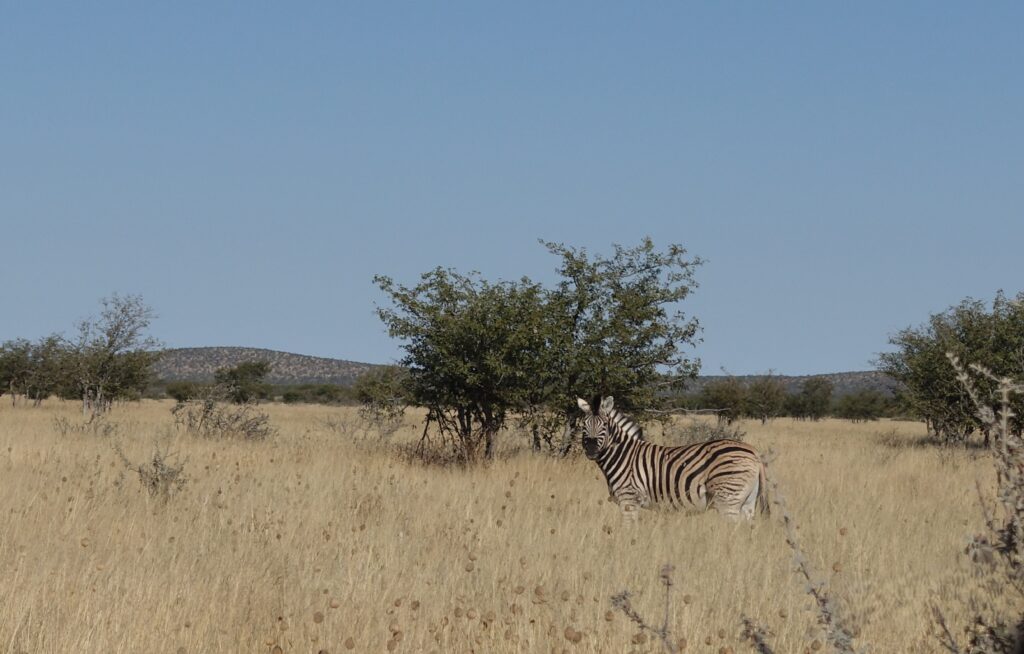
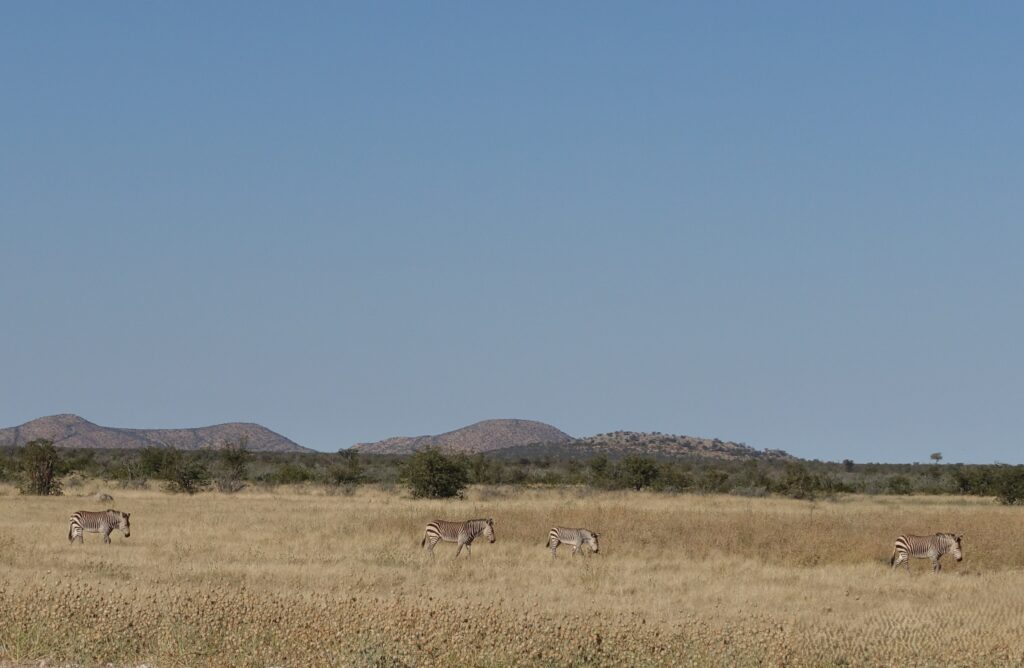
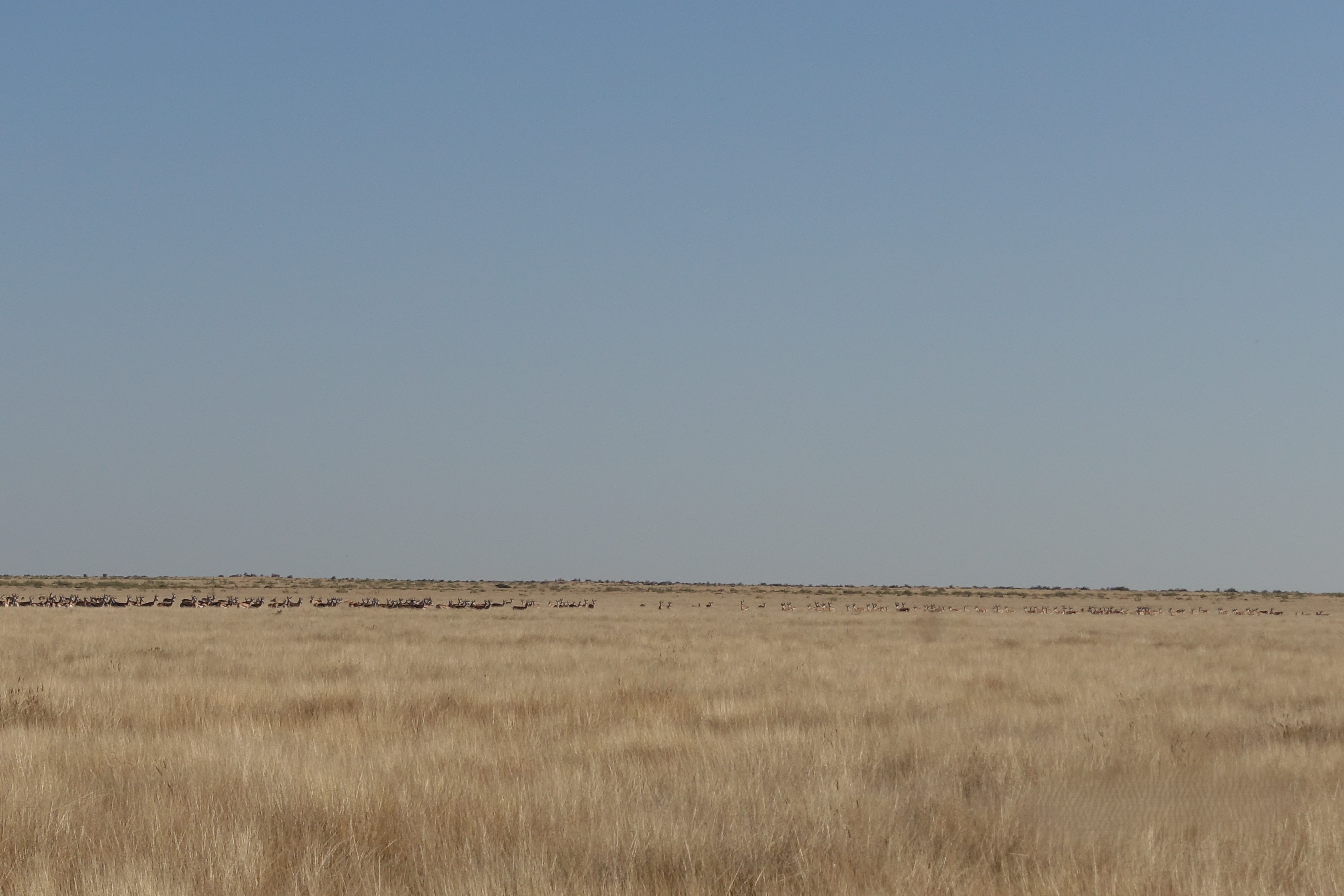
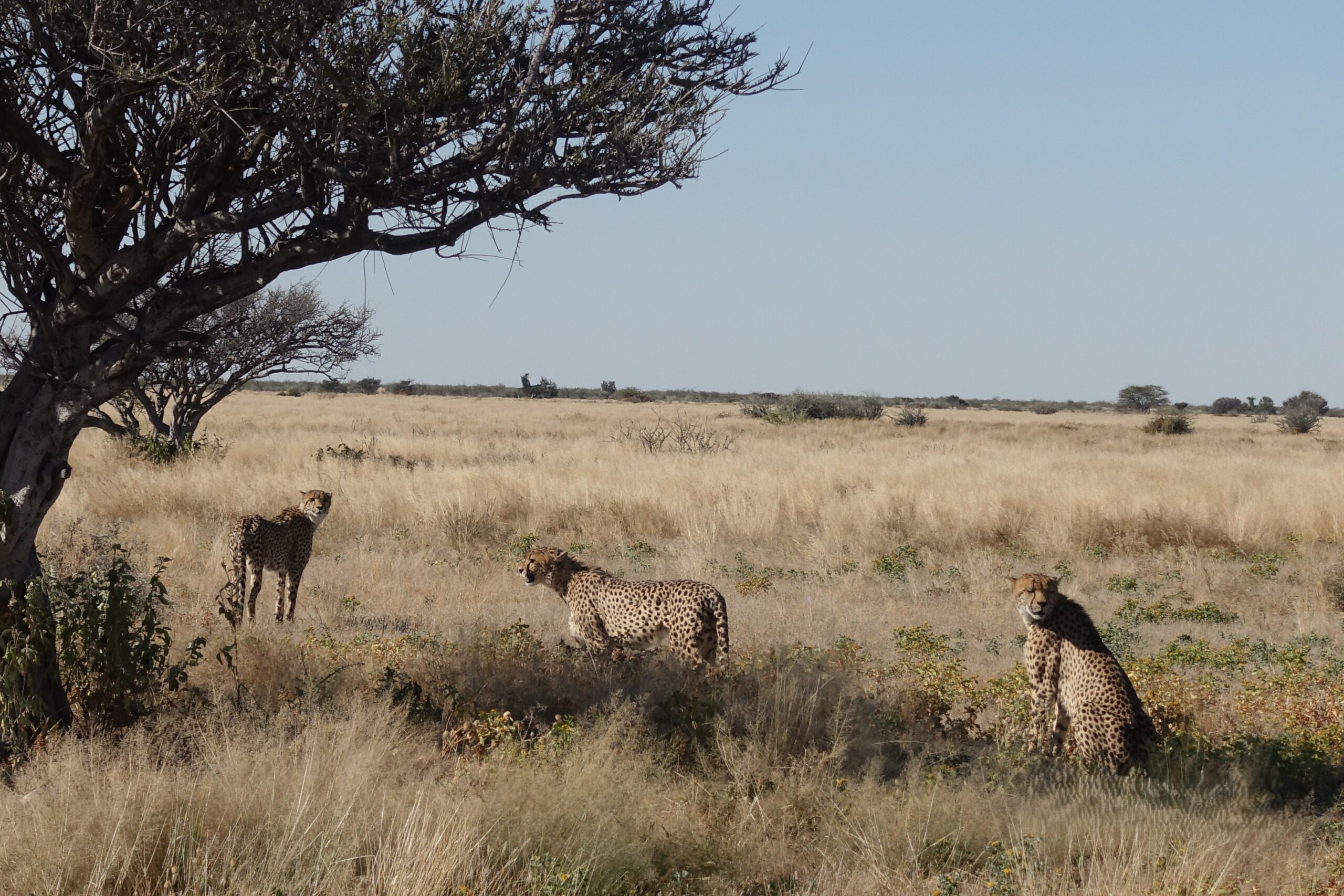
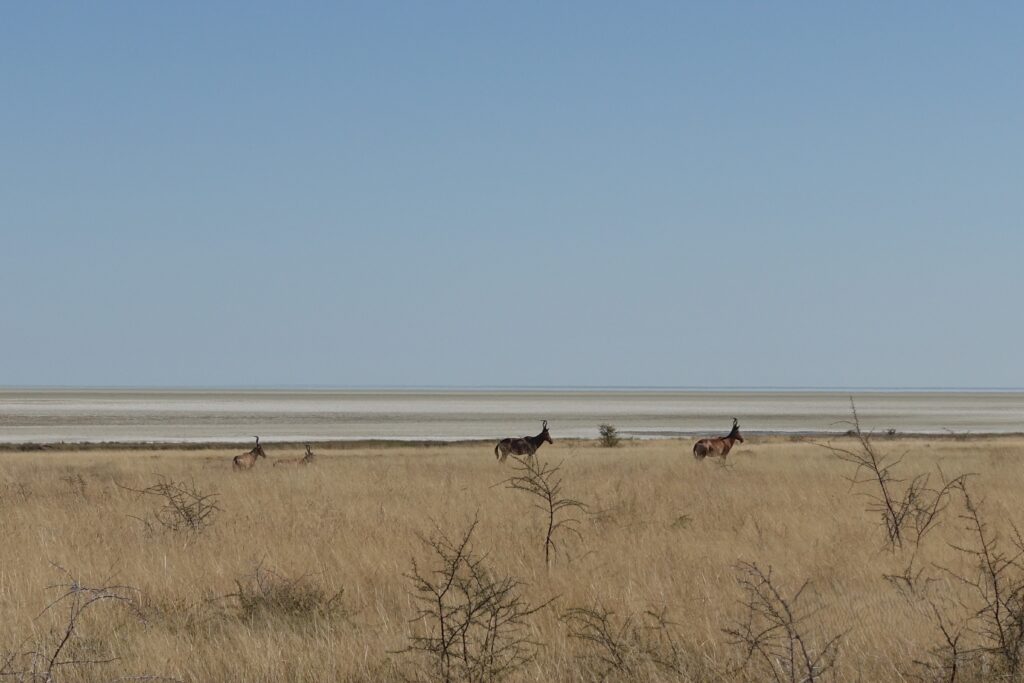
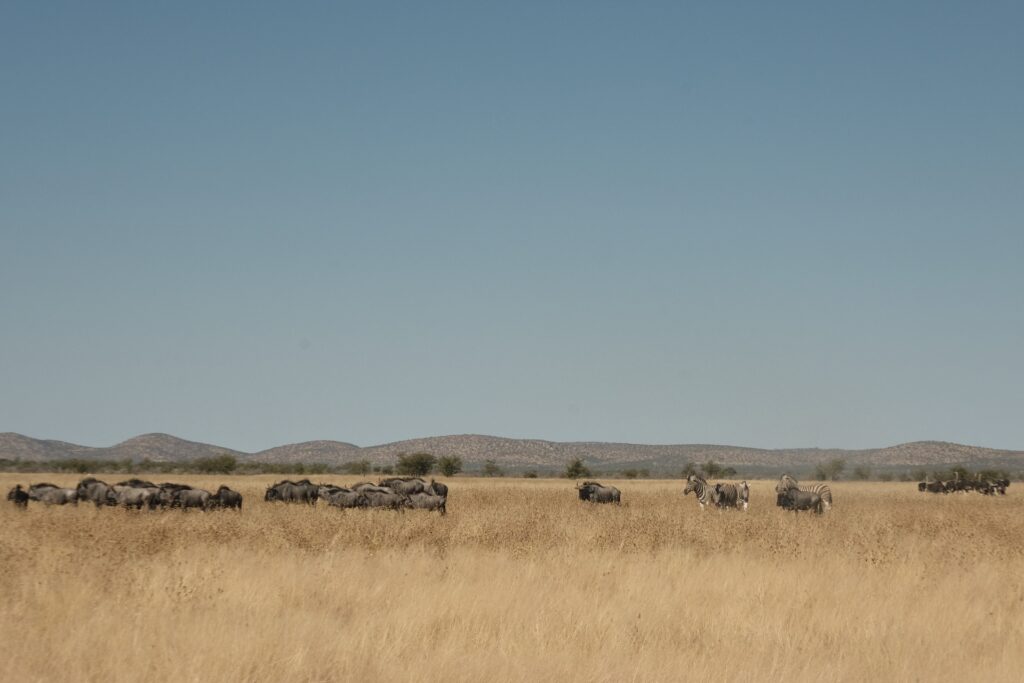
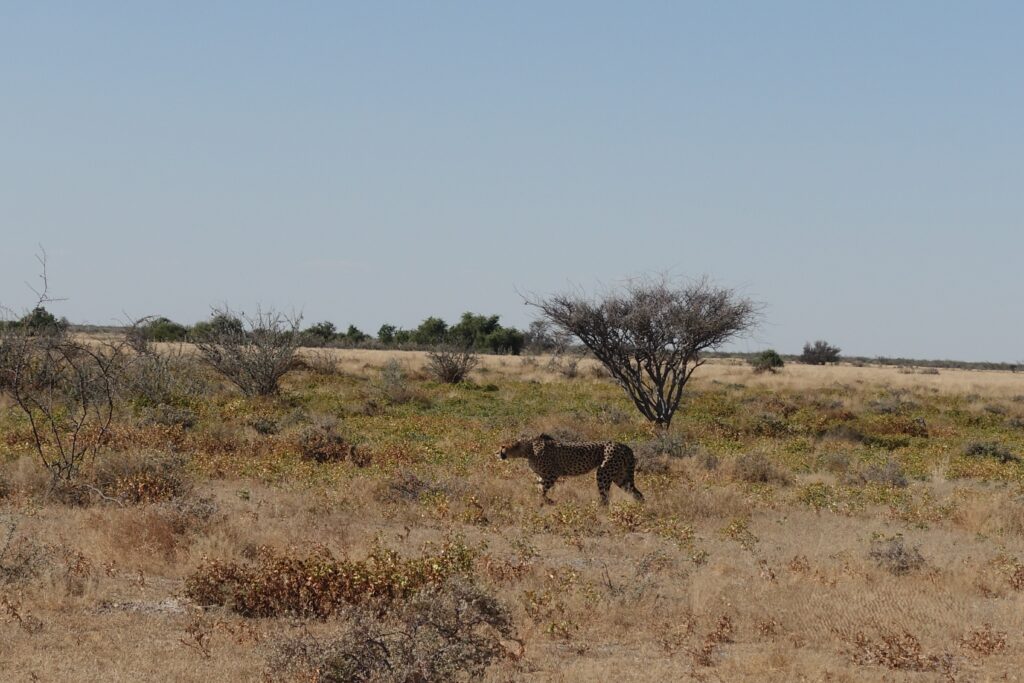
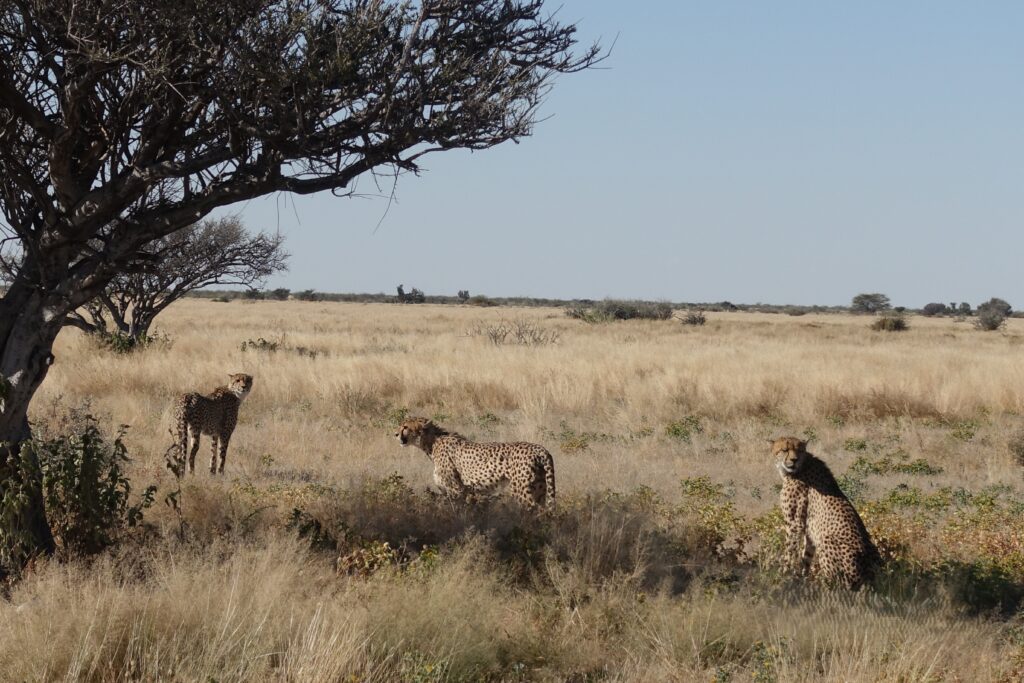
We had a hunch that before reaching the main part of Etosha, the large salt pan, we should take a detour toward the smaller Adamax Pan. As soon as we set off, we encountered three cheetahs that walked alongside our car for quite a while. A bit further on, a beautiful savanna opened up before us, full of herbivores that several lions were in the process of hunting. Later, when we reached the stunning pan itself, hundreds of zebras blocked the road—we could barely get through them. So much happened that we lost track of time and were no longer sure we would reach the campsite before sunset.
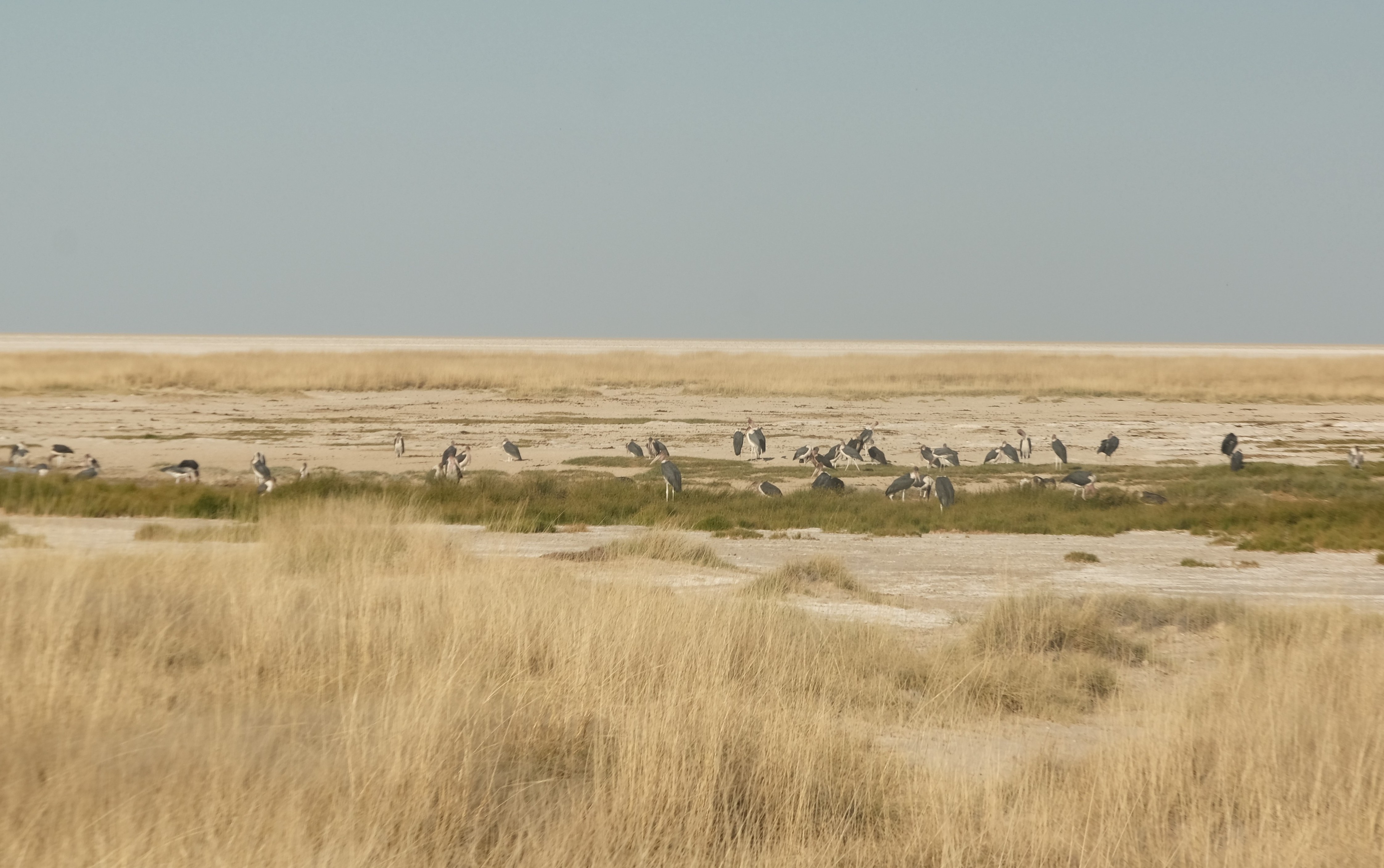
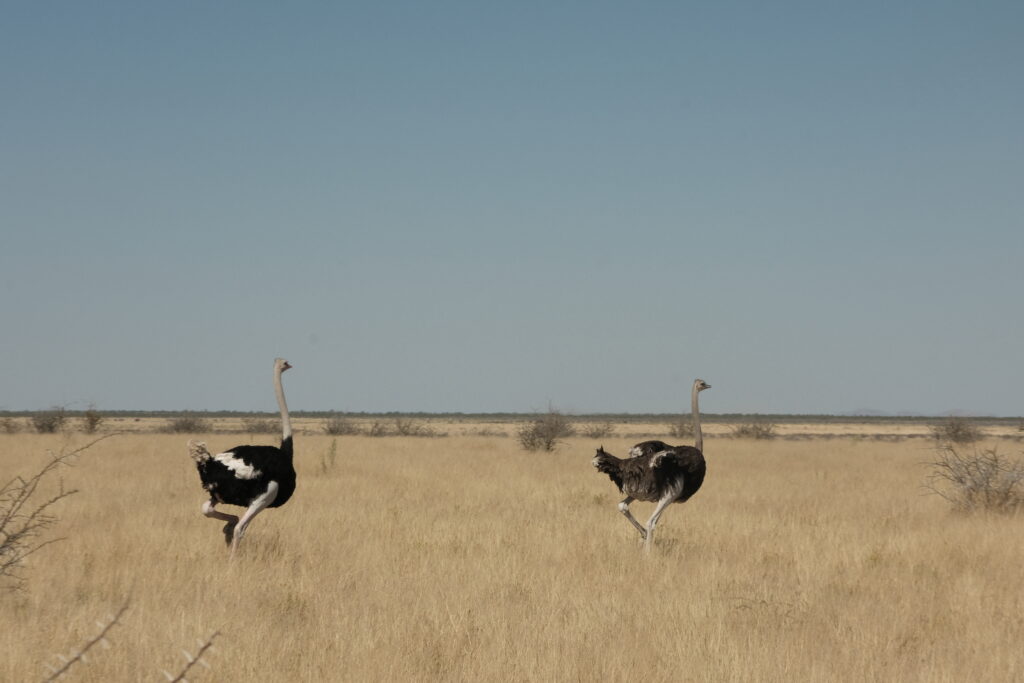
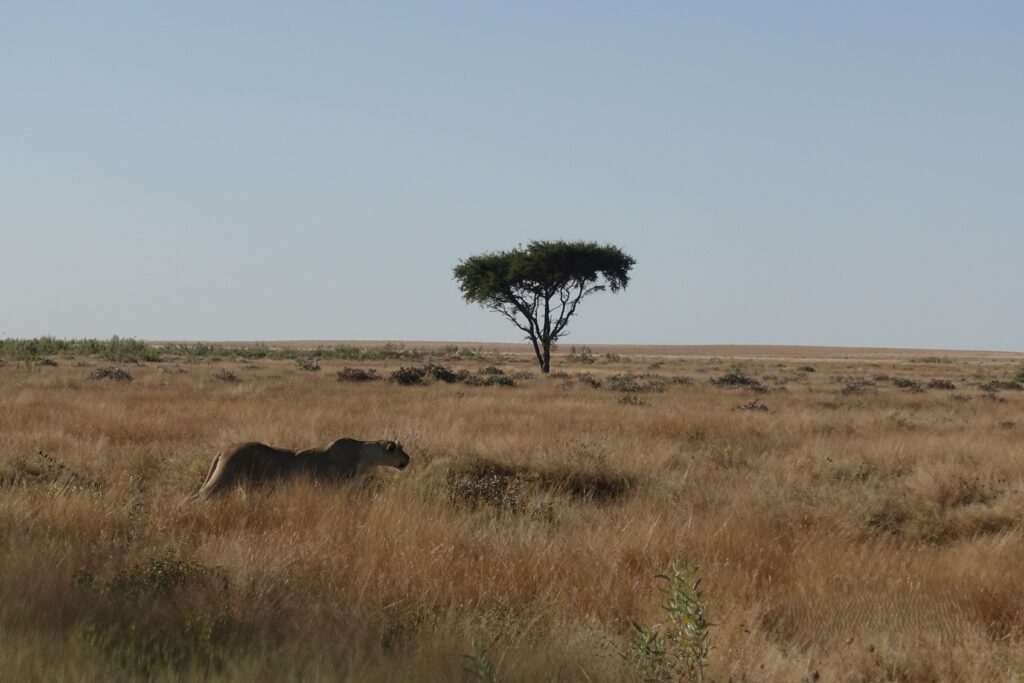
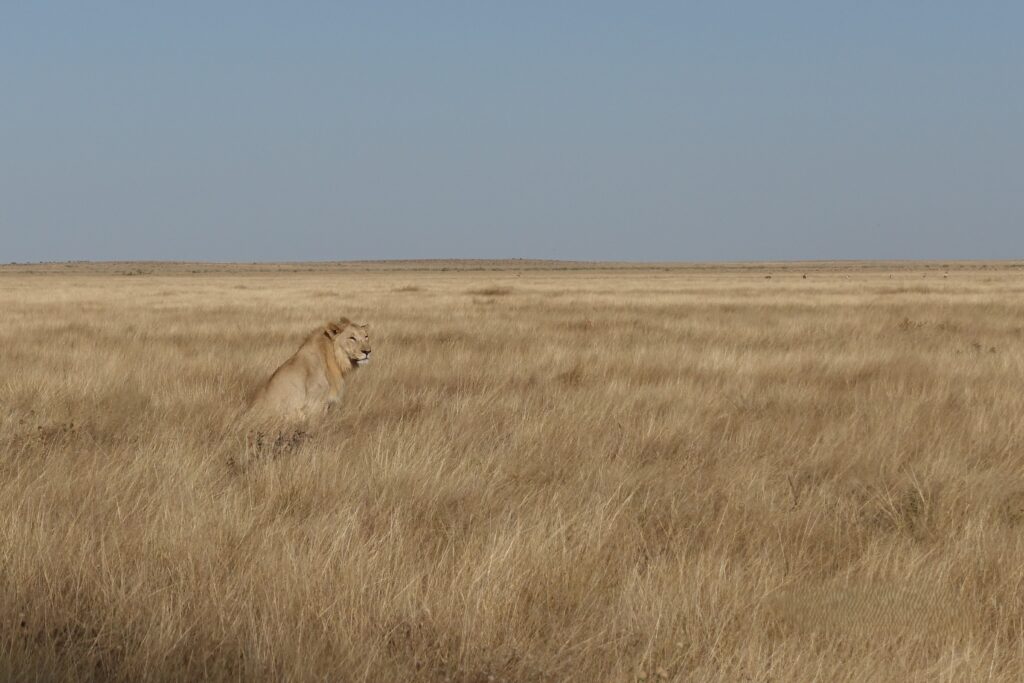
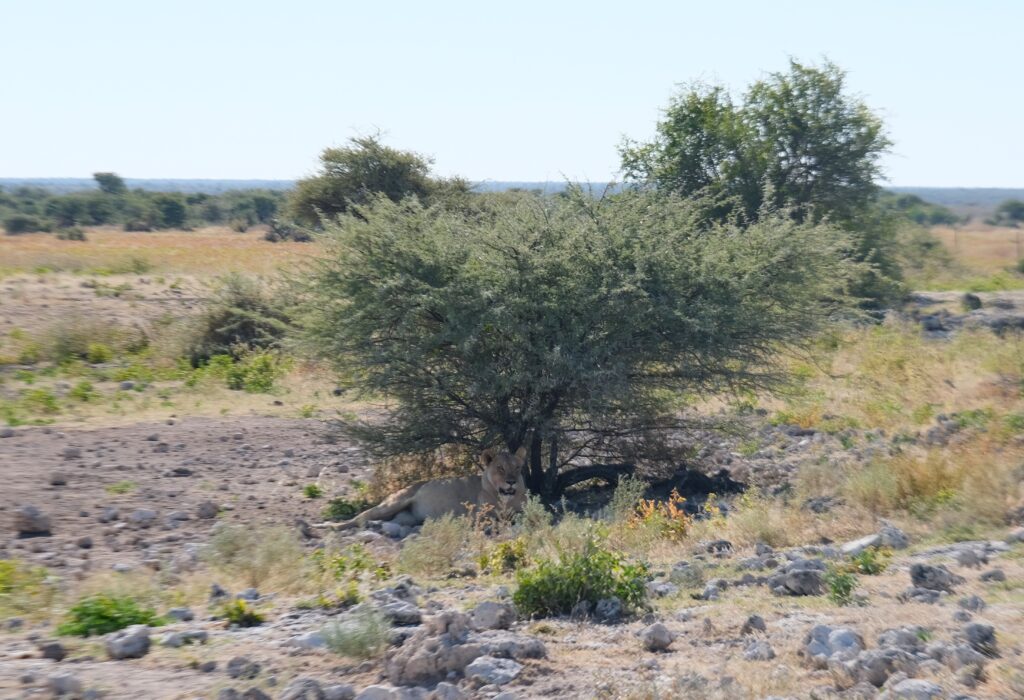
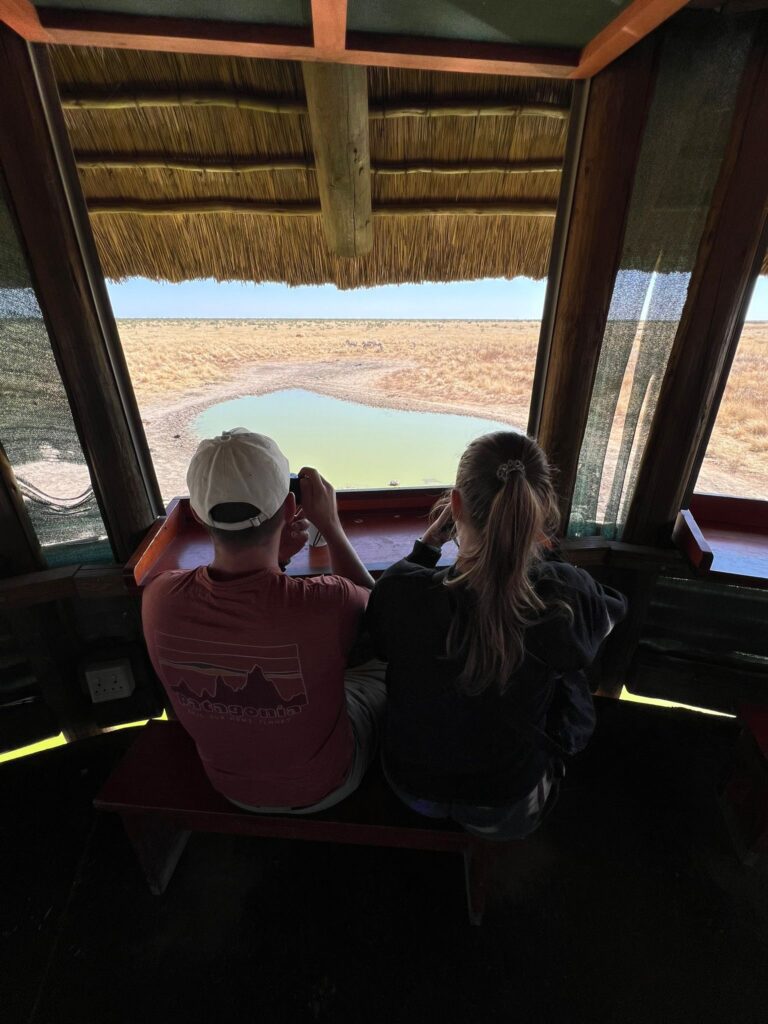
We joked about what could possibly be the perfect ending to such a day—and indeed, another surprise came: cars were backed up at the entrance to the campsite because a rhinoceros was grazing right there! (Luckily, we could blame our delay on watching the rhino. 😃) And as if that wasn’t enough, at the campsite waterhole we saw nine rhinos in the evening (along with a few hyenas and zebras), including calves, peacefully drinking.
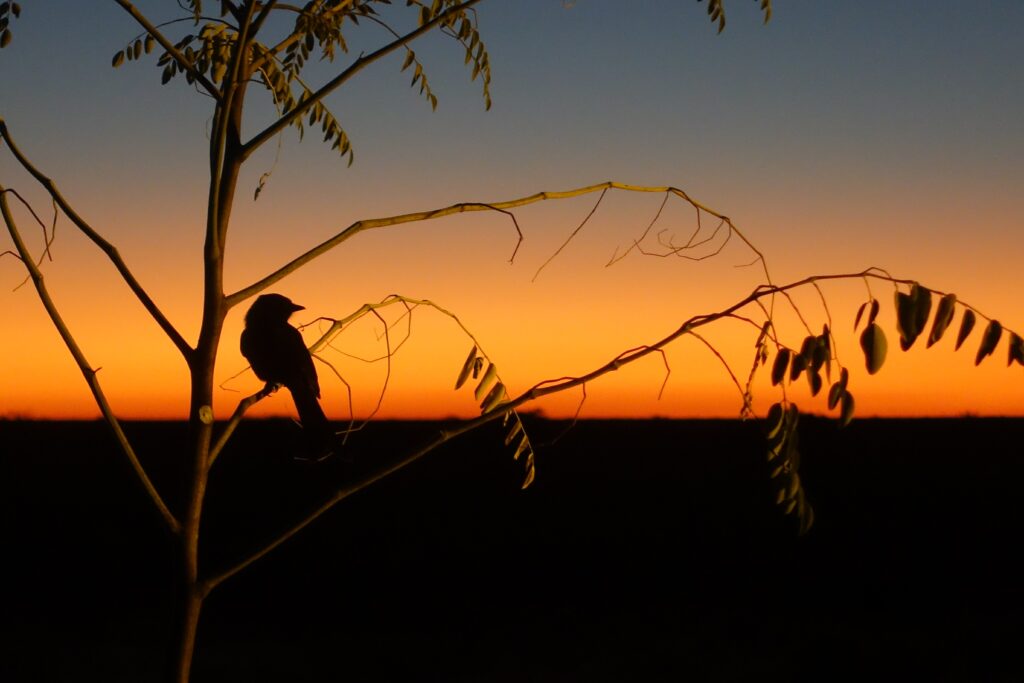
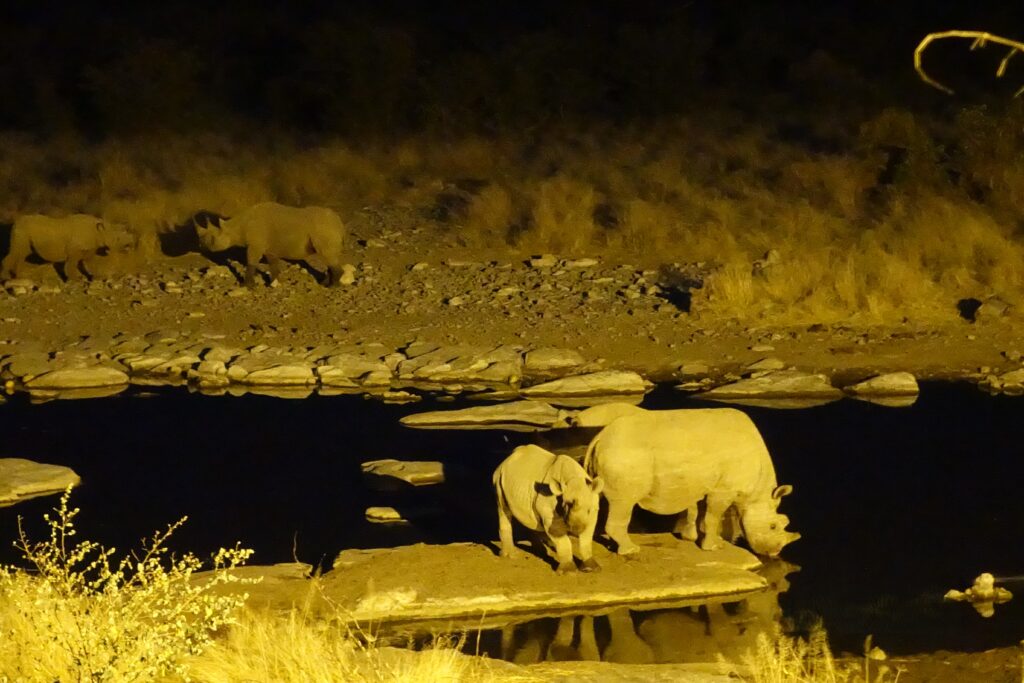
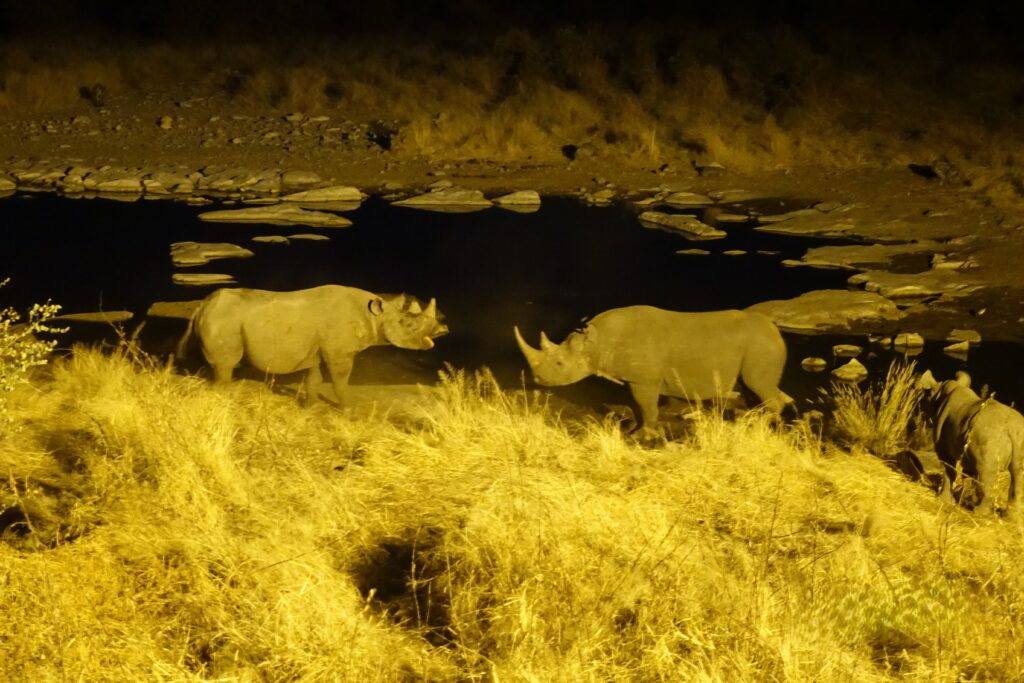
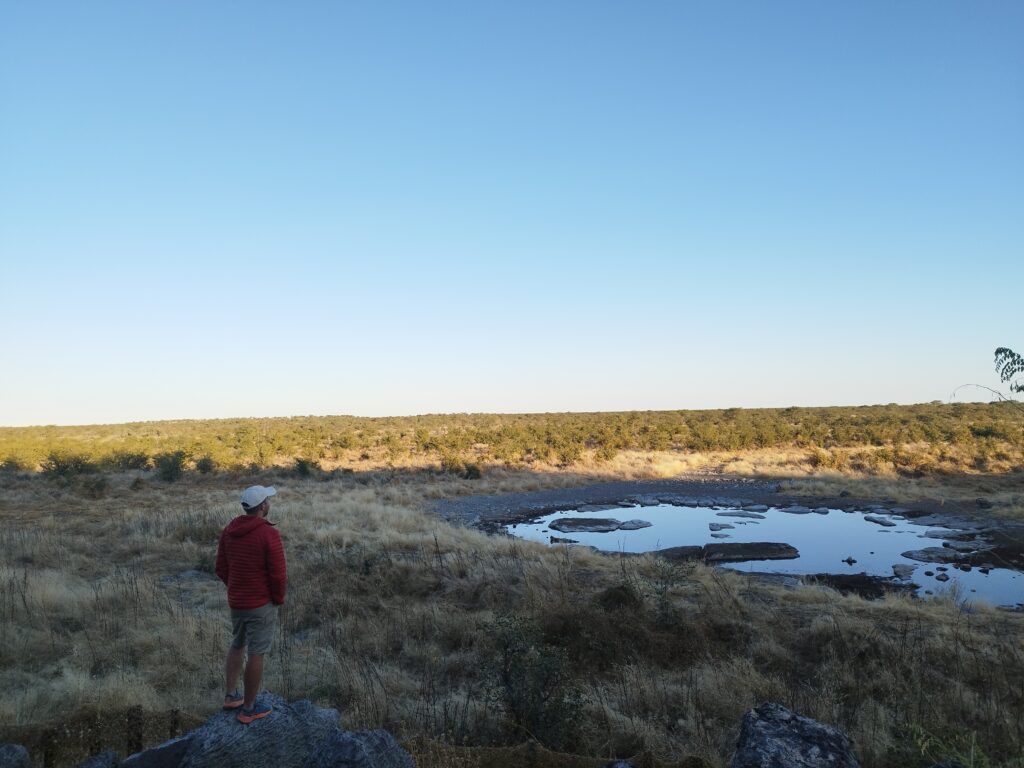
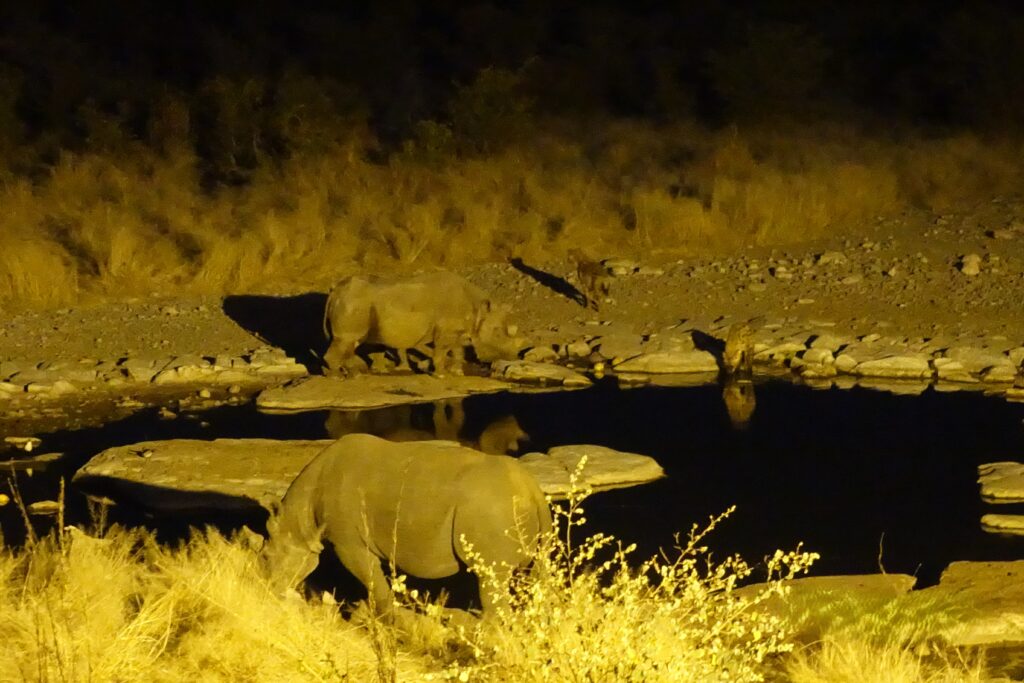
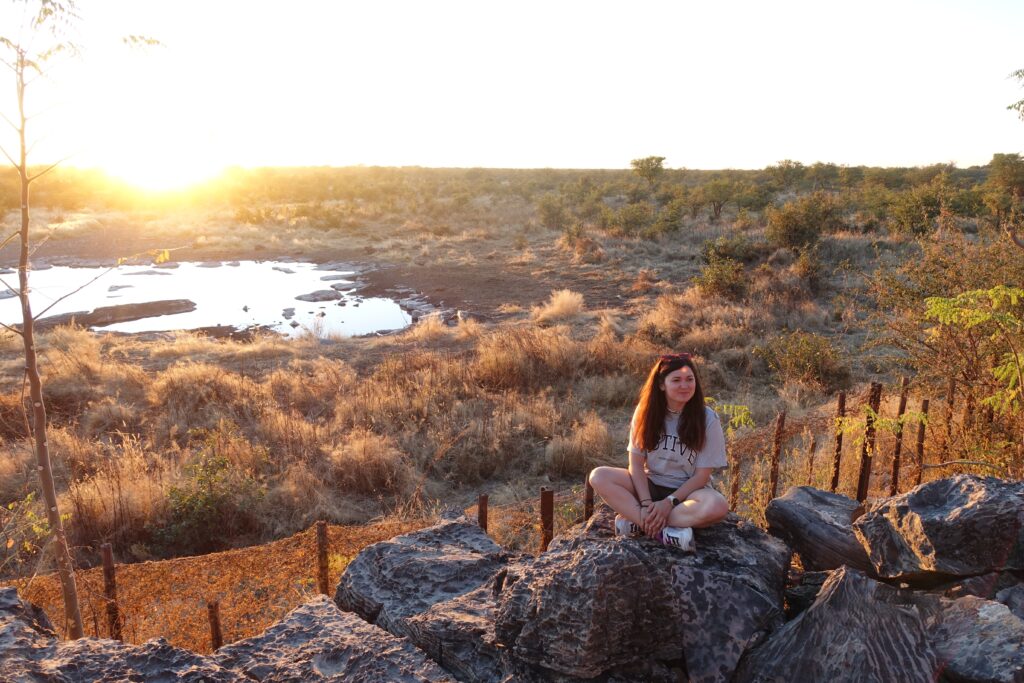
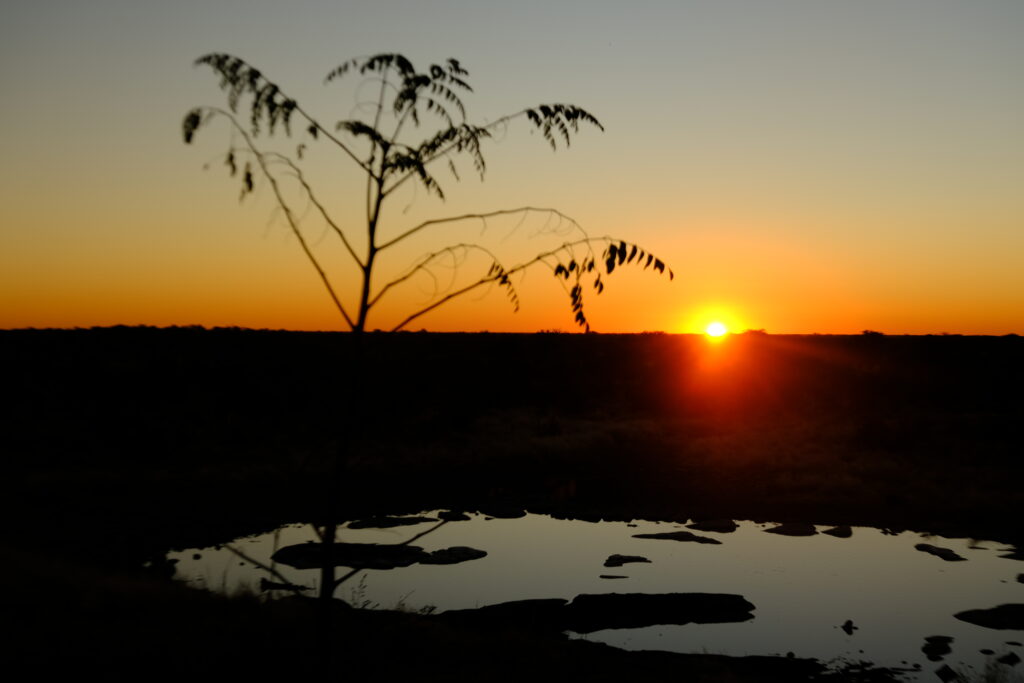
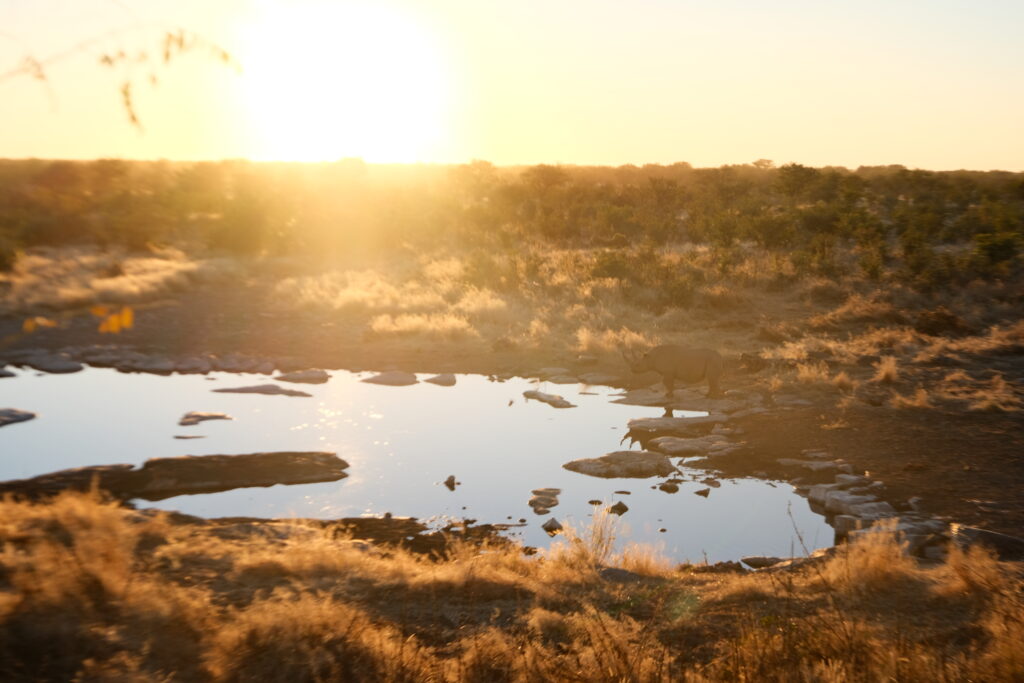
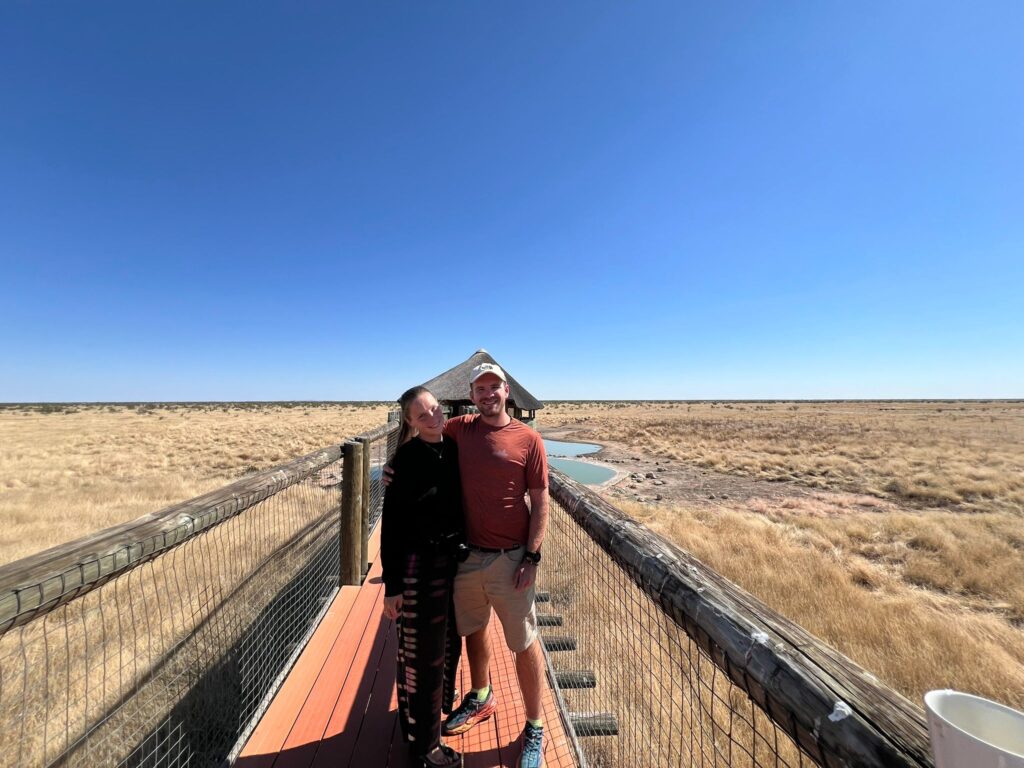
Ádám’s first safari was a complete success, and to crown the day, we grilled camembert cheese for dinner (for the first time we found cheese better than processed “bear cheese” at an affordable price) and drank our first South African wine, a Pinotage—which has been our favorite ever since.
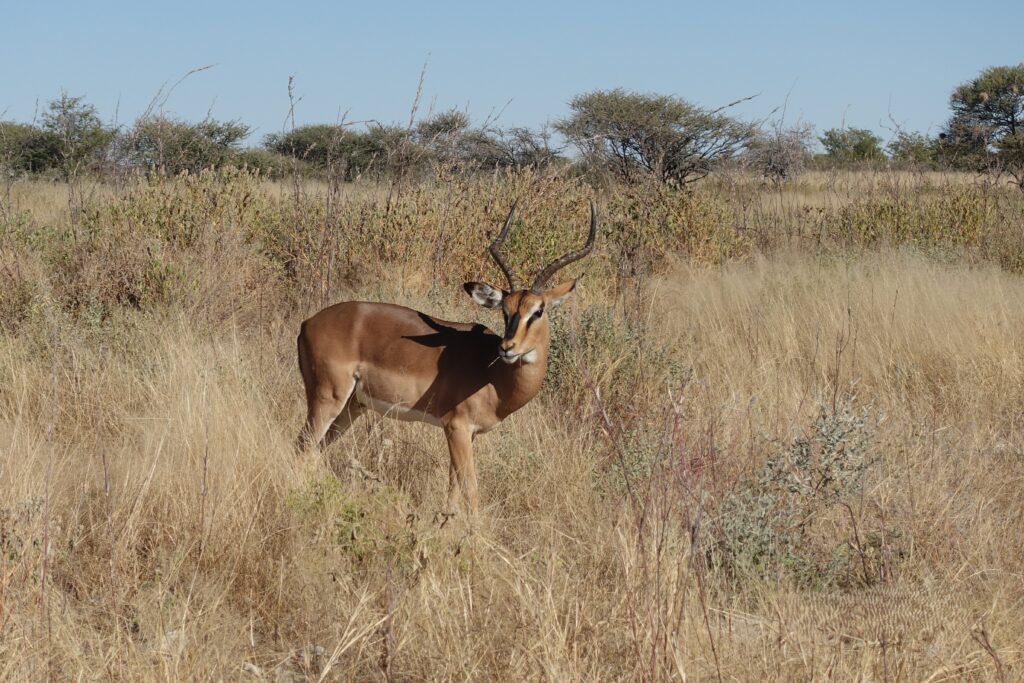
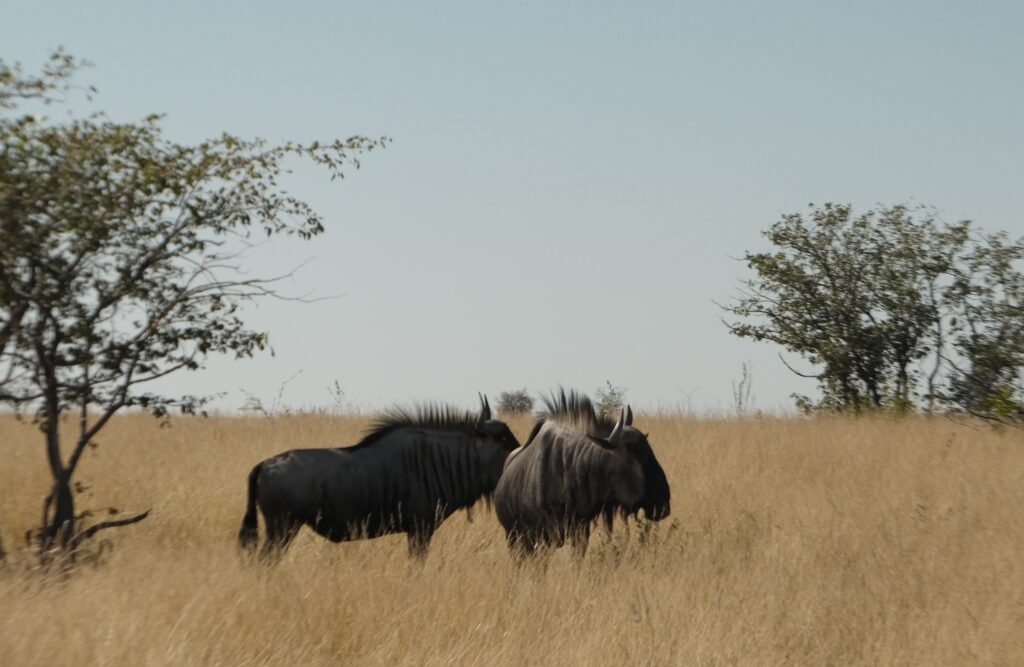
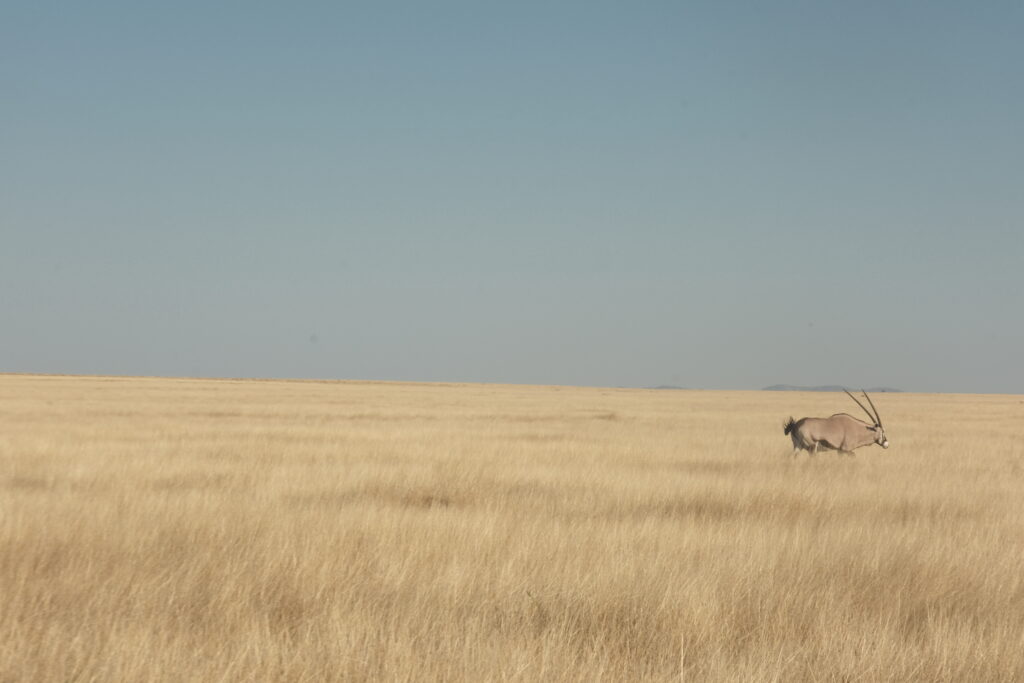
The next day our expectations were high as we explored the more popular areas around the pan. We saw fewer animals than the day before, but many new antelope species, including impala, oryx, eland, and huge numbers of wildebeest. The scenery of the savanna and the pan alone was breathtaking.
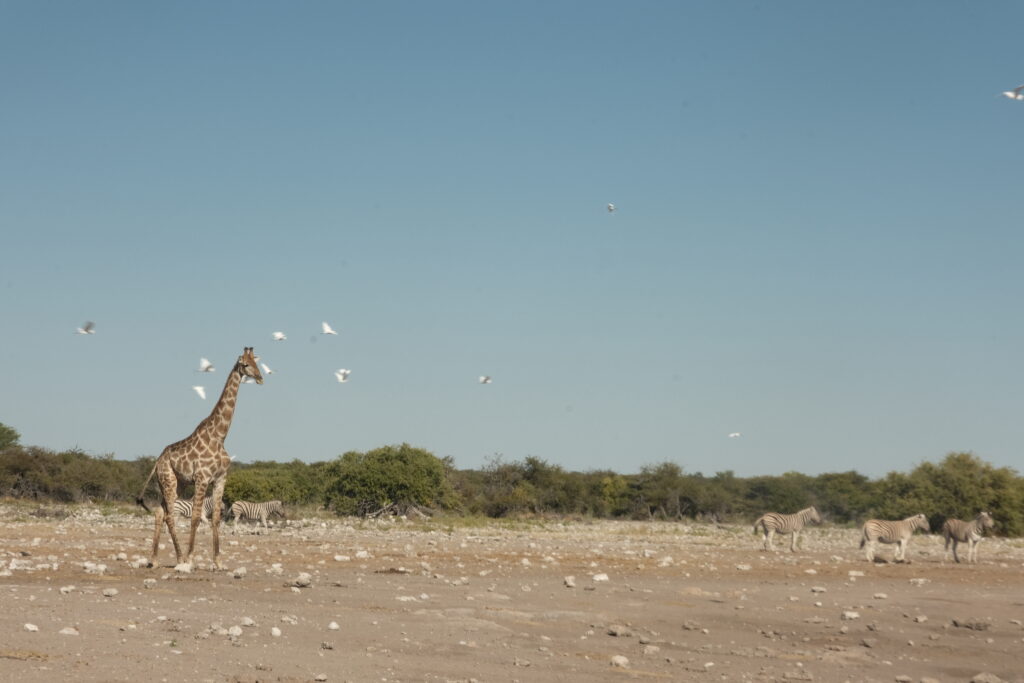
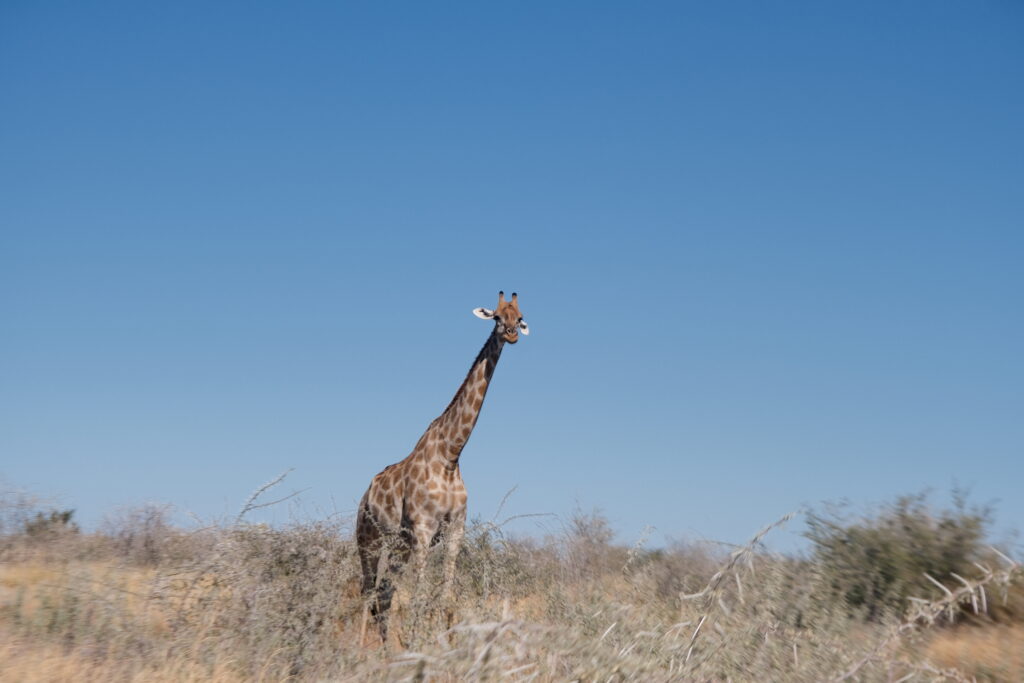
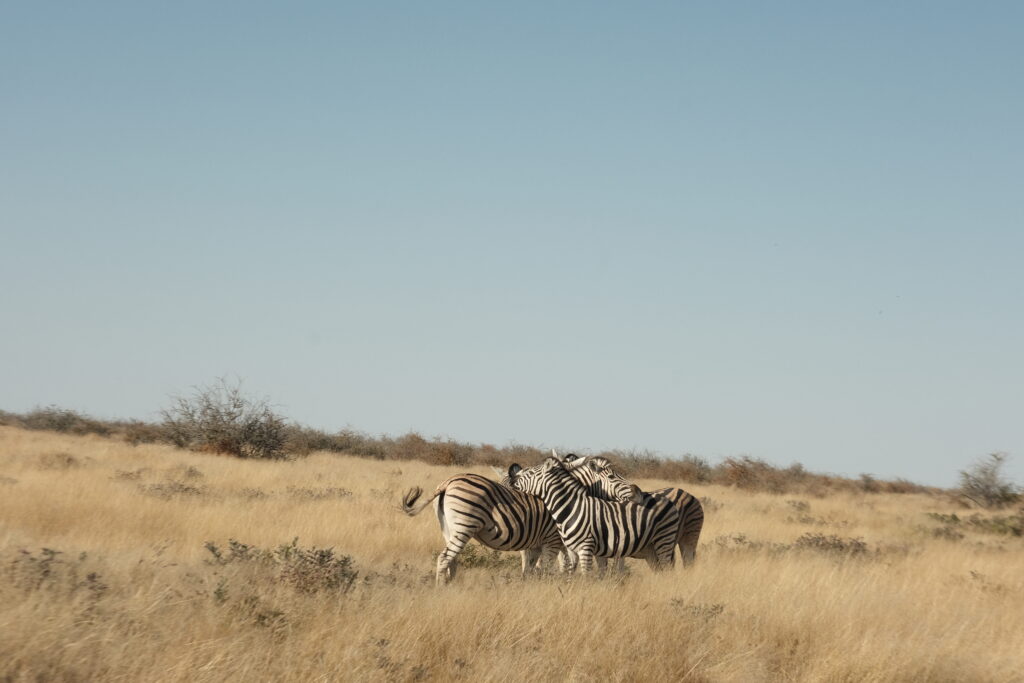
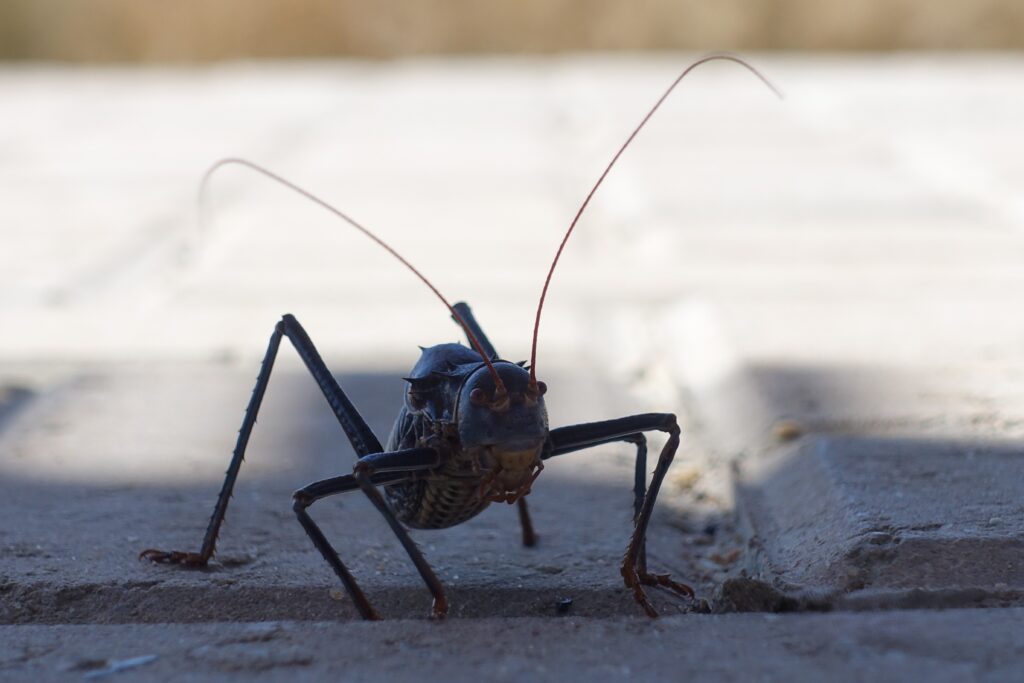
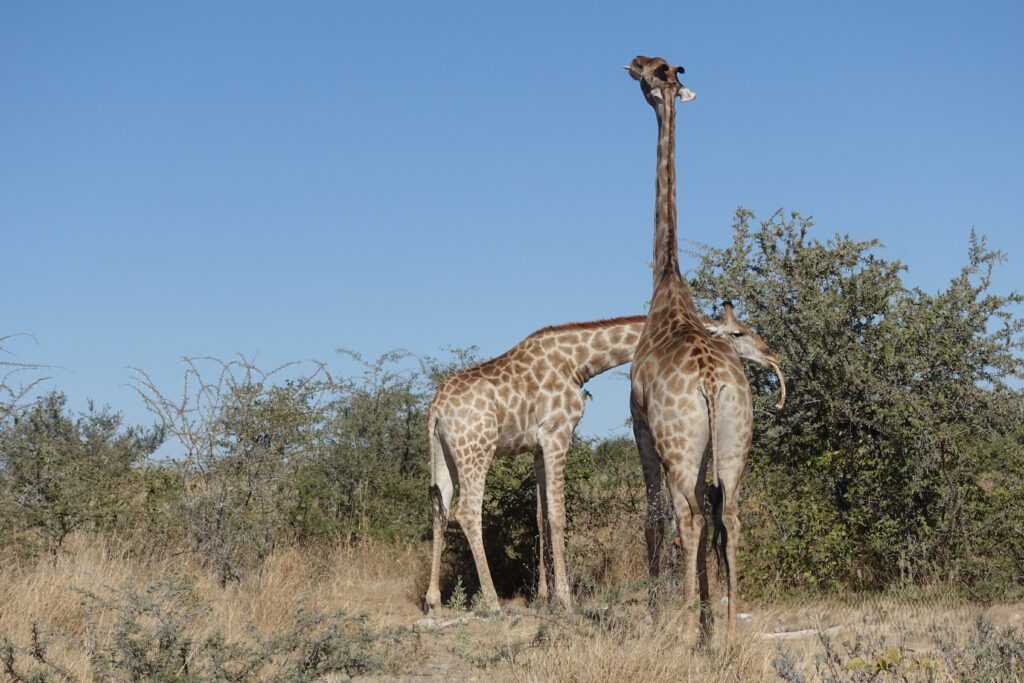
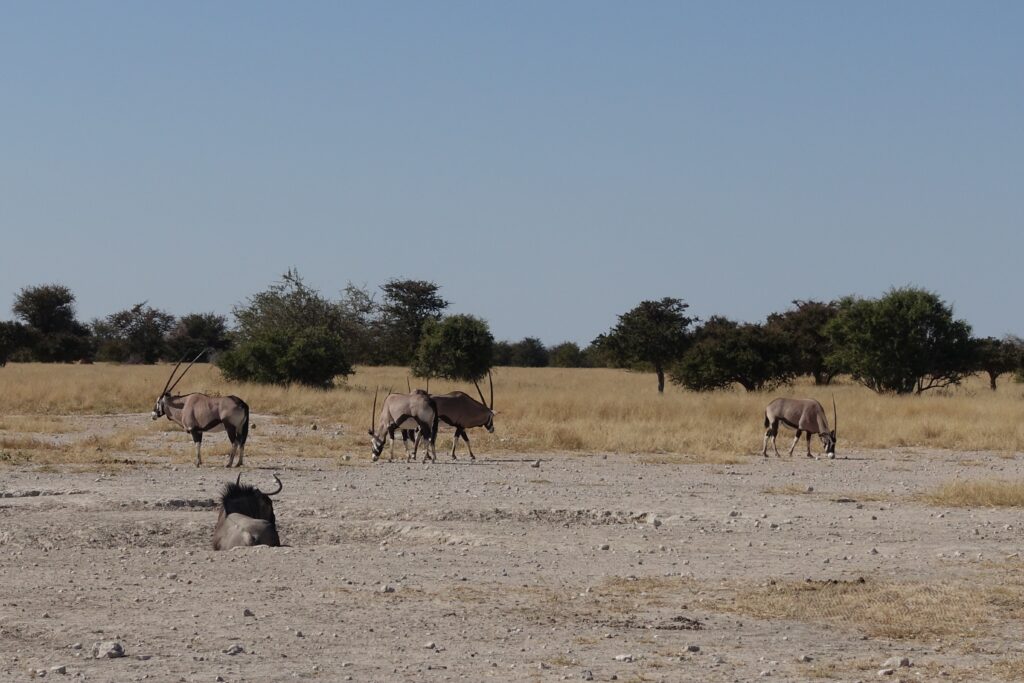
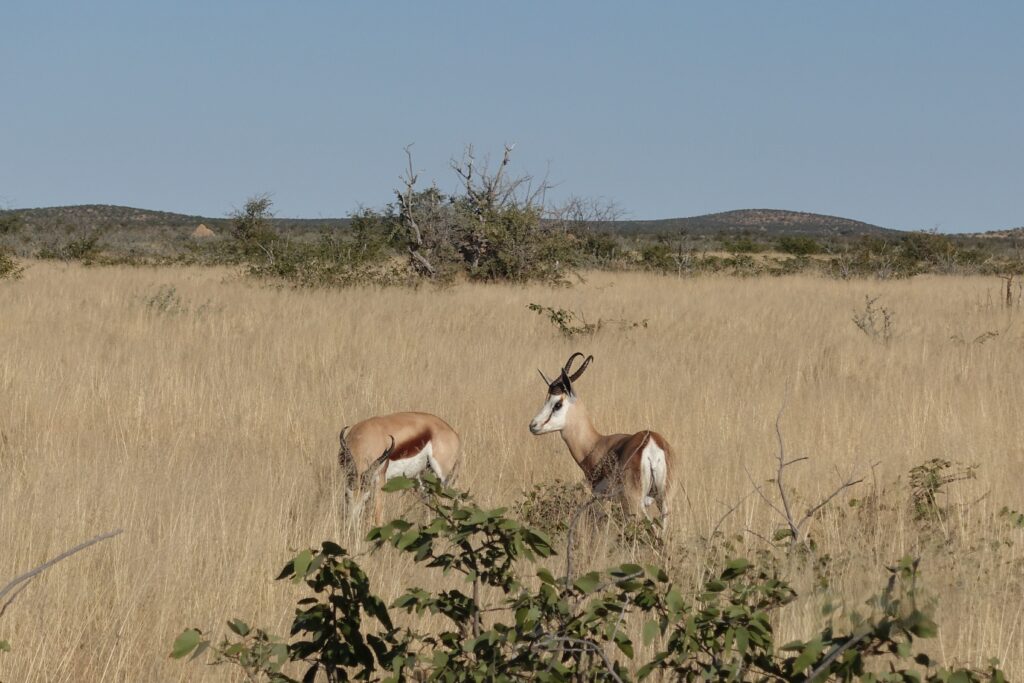
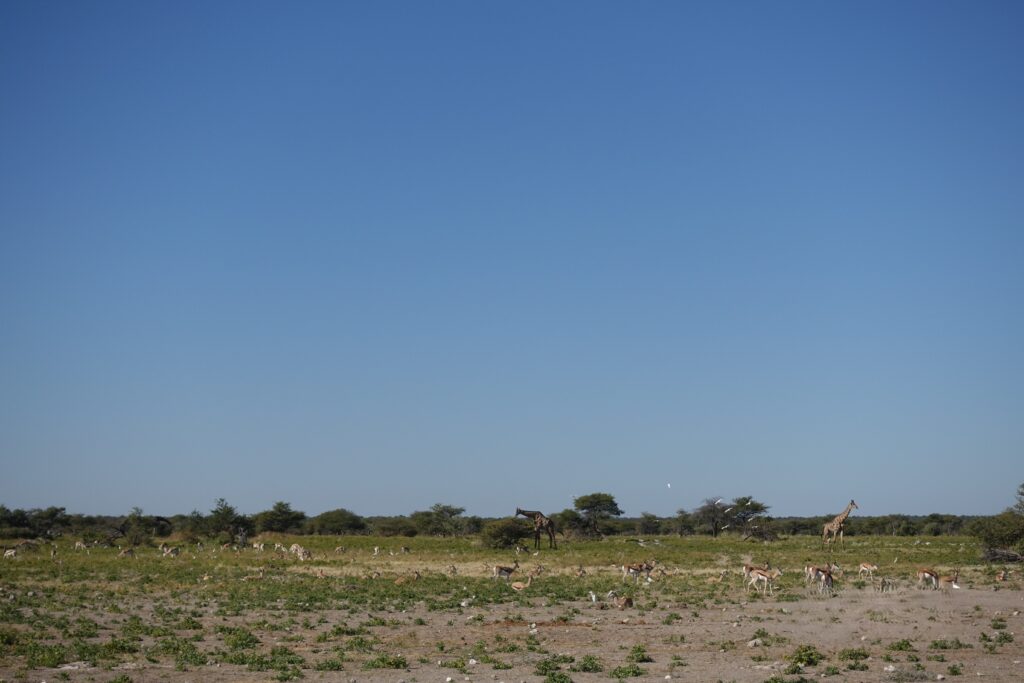
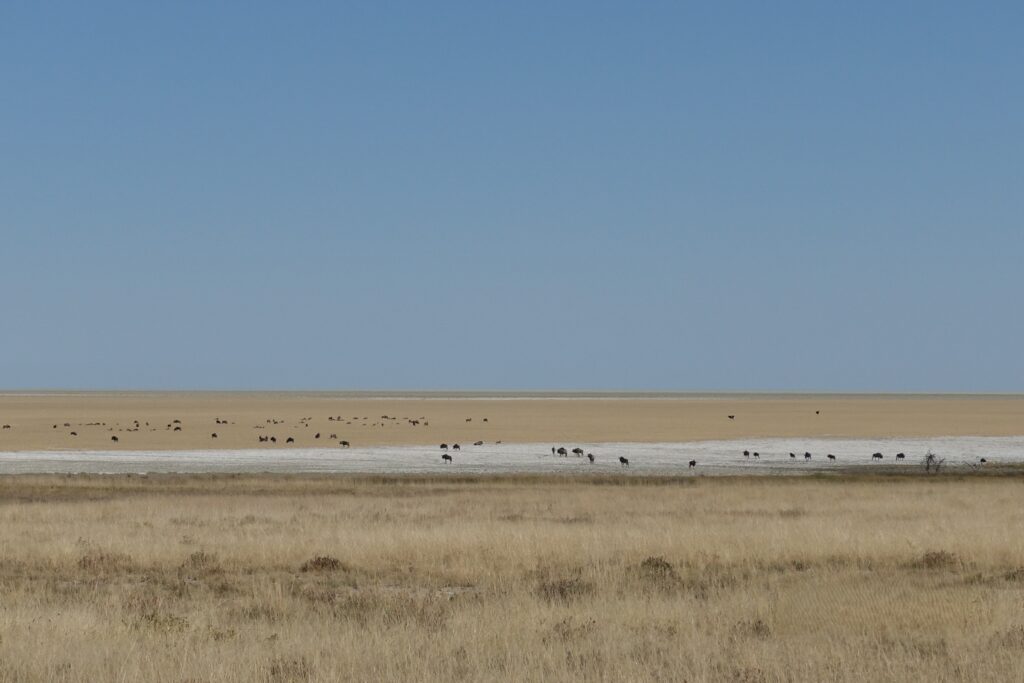
We wholeheartedly recommend Etosha as a first safari experience: the roads are relatively good (though corrugated), the park is well developed, it’s easy to navigate, simple to leave the main roads to reach waterholes and smaller loops, the landscape is beautiful, and the animals are diverse and plentiful. What was missing, however, was the true feeling of wilderness—at times it felt more like a very large zoo (although it really is enormous: Etosha covers more than 22,000 km²!). That’s why we were already looking forward to the national parks in Botswana, which we had heard so many good things about—though we were a bit nervous, since there are no fences around the campsites there. Overall, Etosha was the perfect first national park experience.