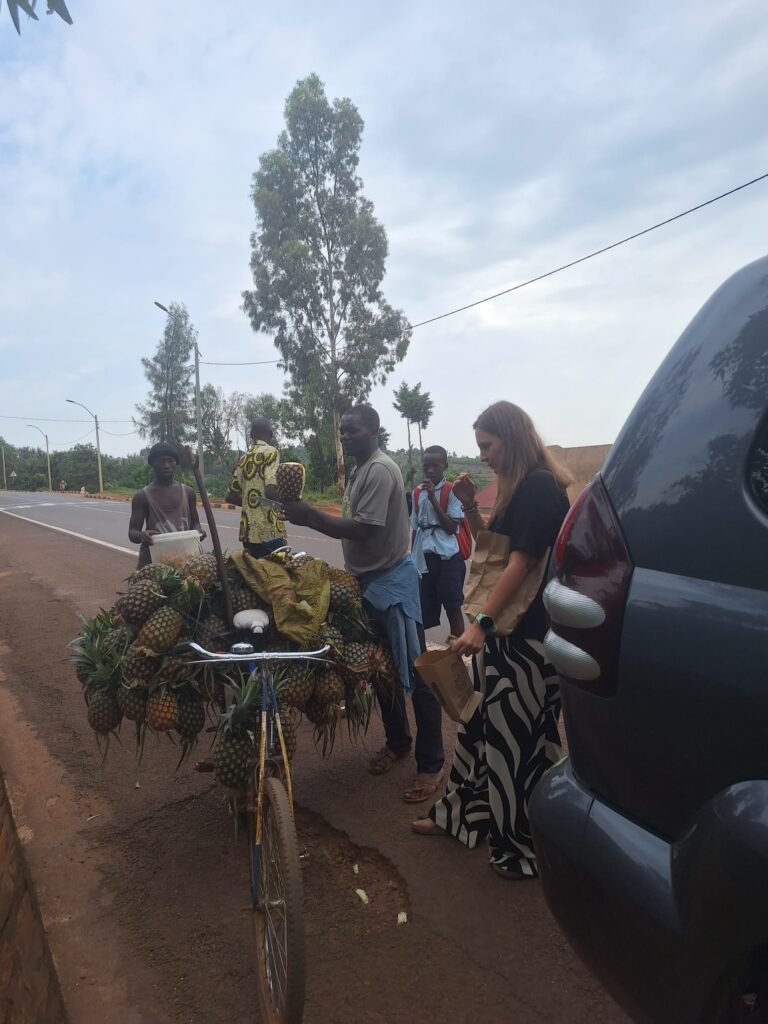
We started driving from Kigali toward Akagera National Park. On the way, we first stopped to buy pineapples – cyclists transport the fruit, passing cars stop them, and they are happy to cut it up for you. Pineapple is incredibly sweet around here, with a slightly coconut-like taste. Later, we stopped at a roadside café in a small town; it was nice to see that even here they use a proper espresso machine to make excellent Rwandan specialty coffee. We also went into the market, where we stocked up on even more fruit. Passion fruit is our absolute favourite, and fortunately it is very cheap here, but we also bought mangoes and papayas. In some countries with a good climate, fruit is so cheap that we can barely spend 500 forints on a huge bag, so sometimes we go a bit overboard and end up carrying way too much with us.
When we arrived at the park, we received a short briefing, then set off. Akagera is more expensive than the parks we had visited before, but the one-day ticket is still valid for two full days if you camp inside the park (and even then it’s just a fraction of the prices in Tanzanian or Kenyan parks). The park was established in 1934; it is also a Big Five park and is home to many other animals, including 500 bird species. Rwanda generally has a forested, hilly climate, but this area is a wetland. In the northern part, there is even a small savannah, making it the only place in the country where savannah animals live. Many of these species had previously gone extinct here, but great efforts have been made to reintroduce them (for example, they regularly bring in rhinos).
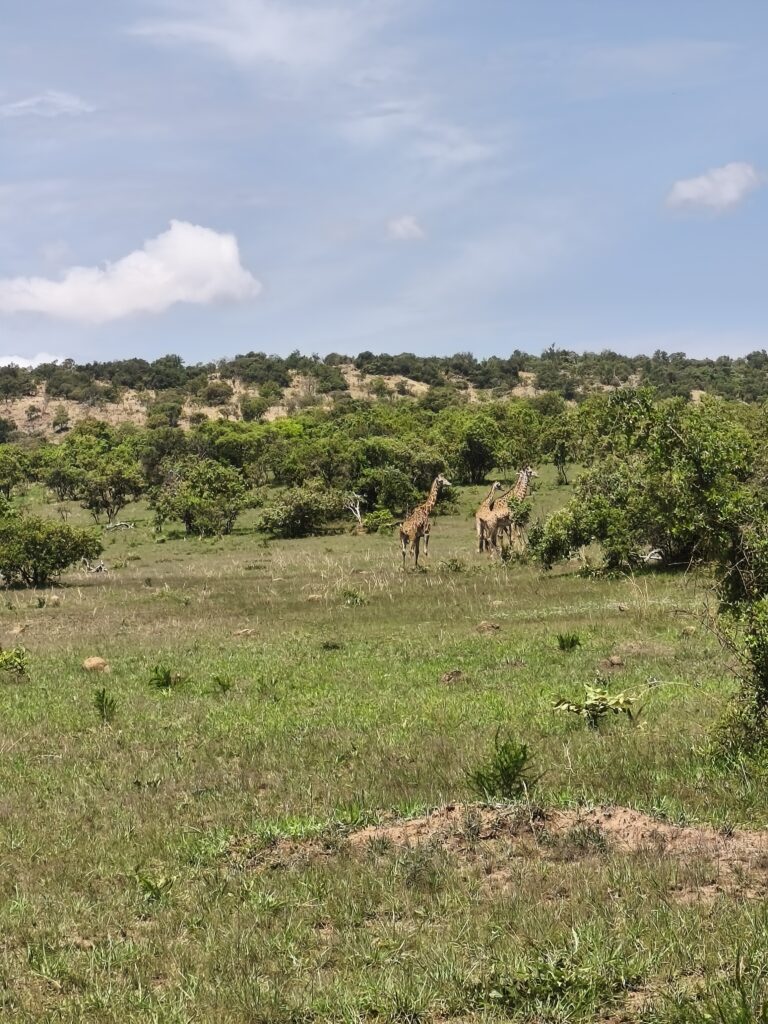
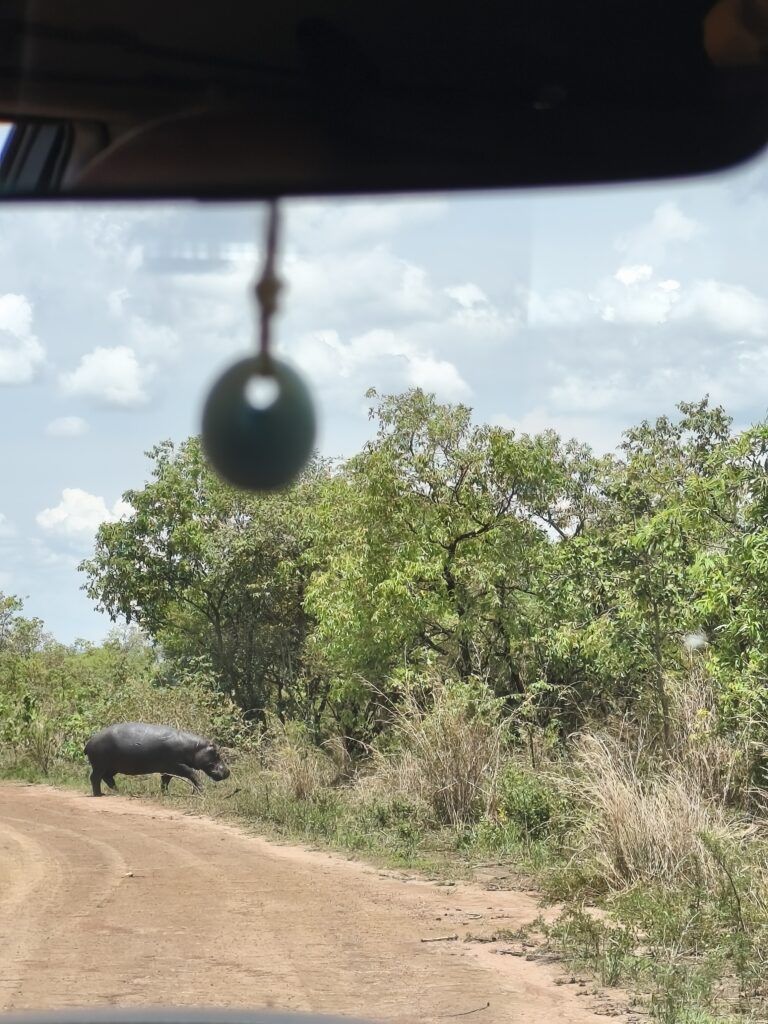
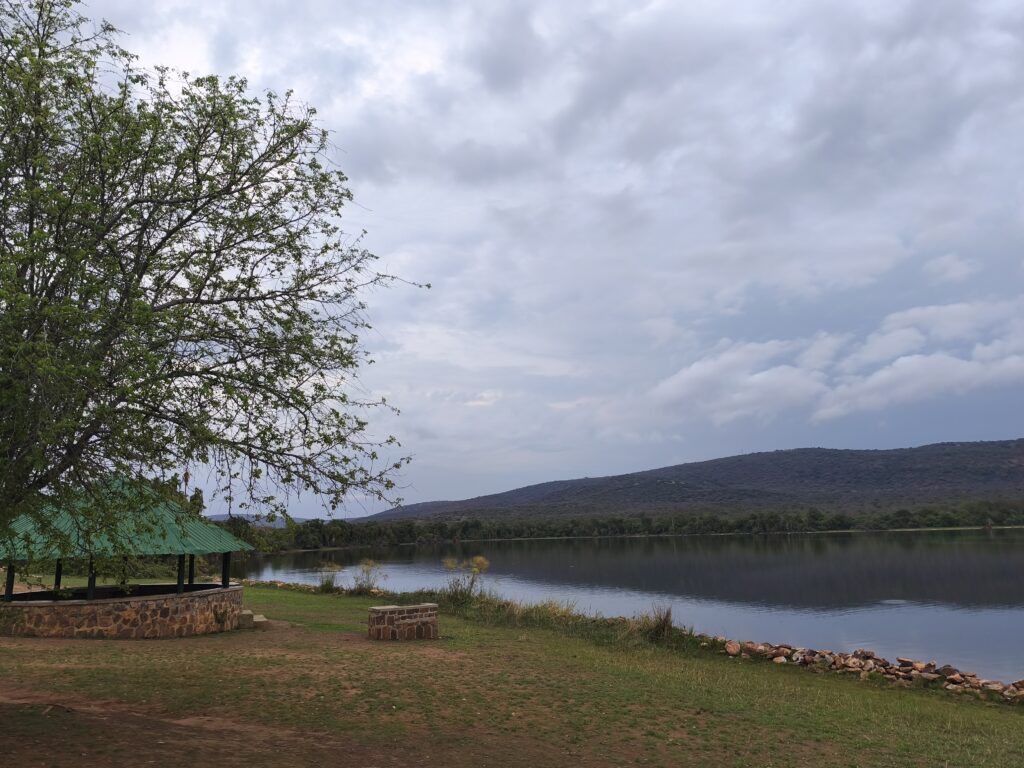
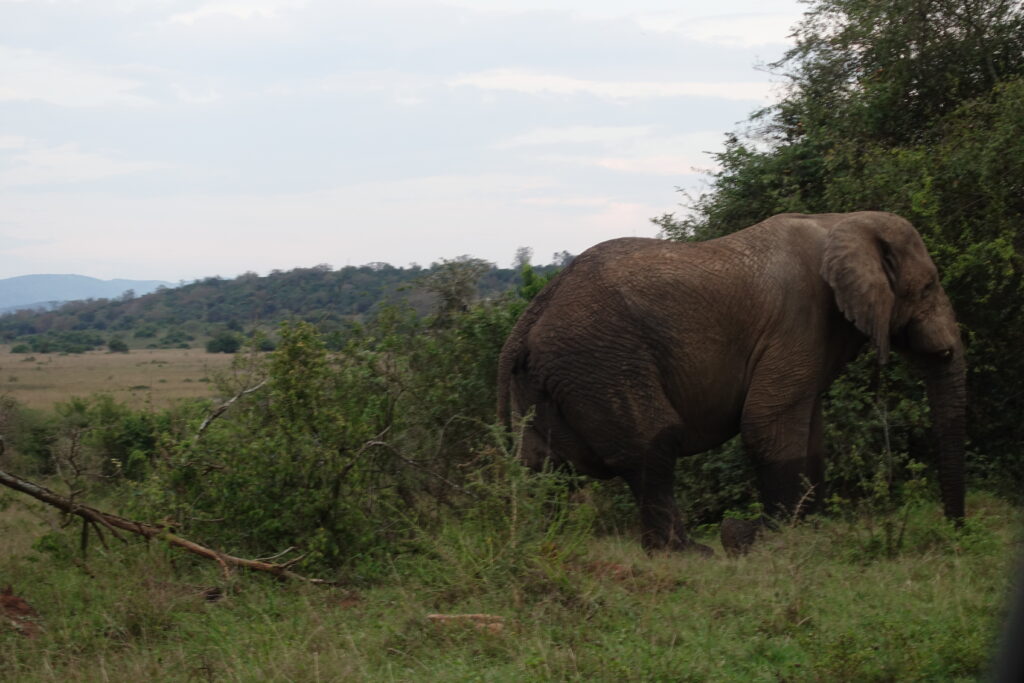
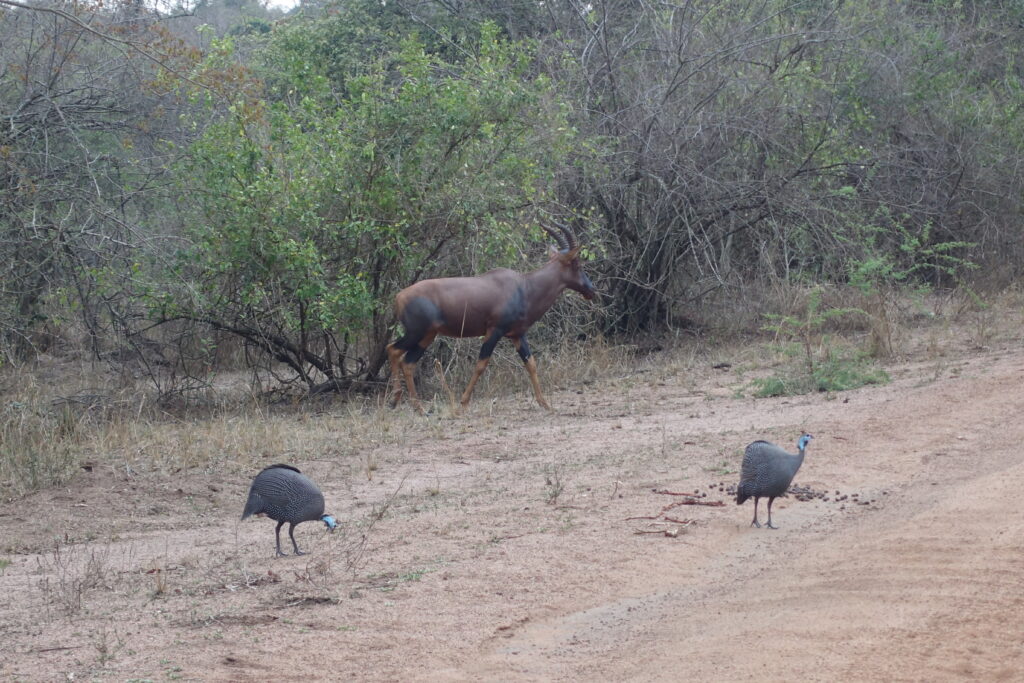
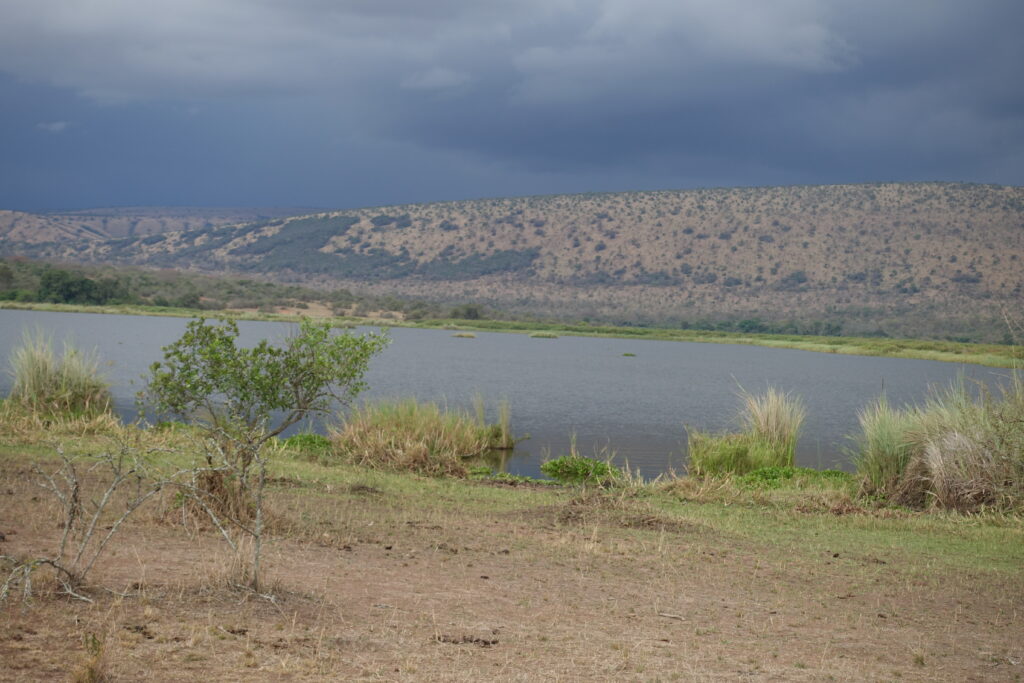
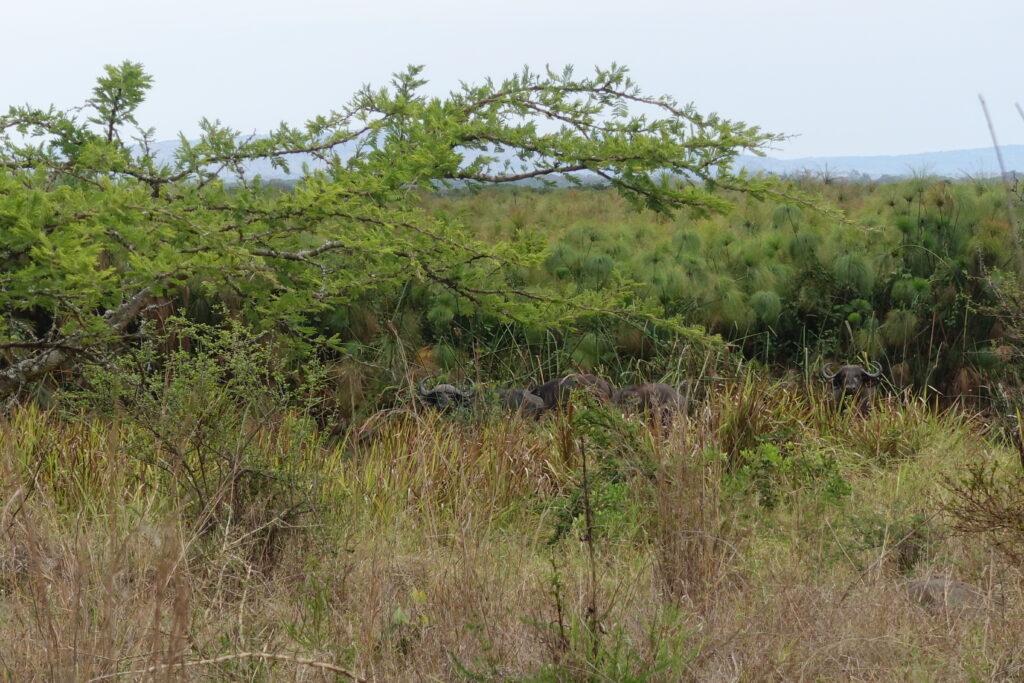
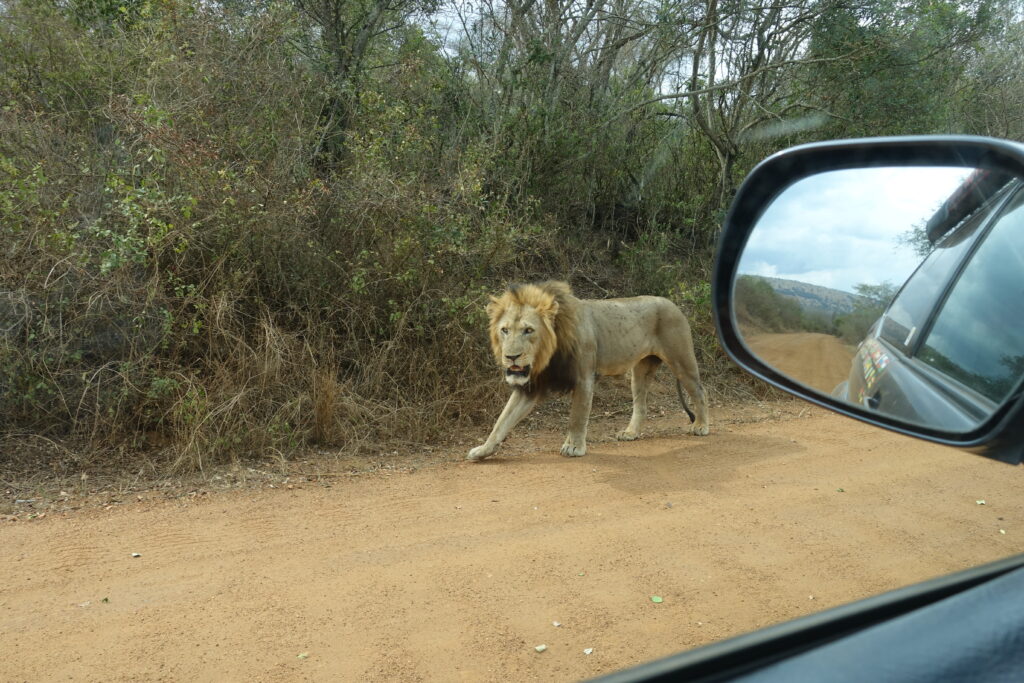
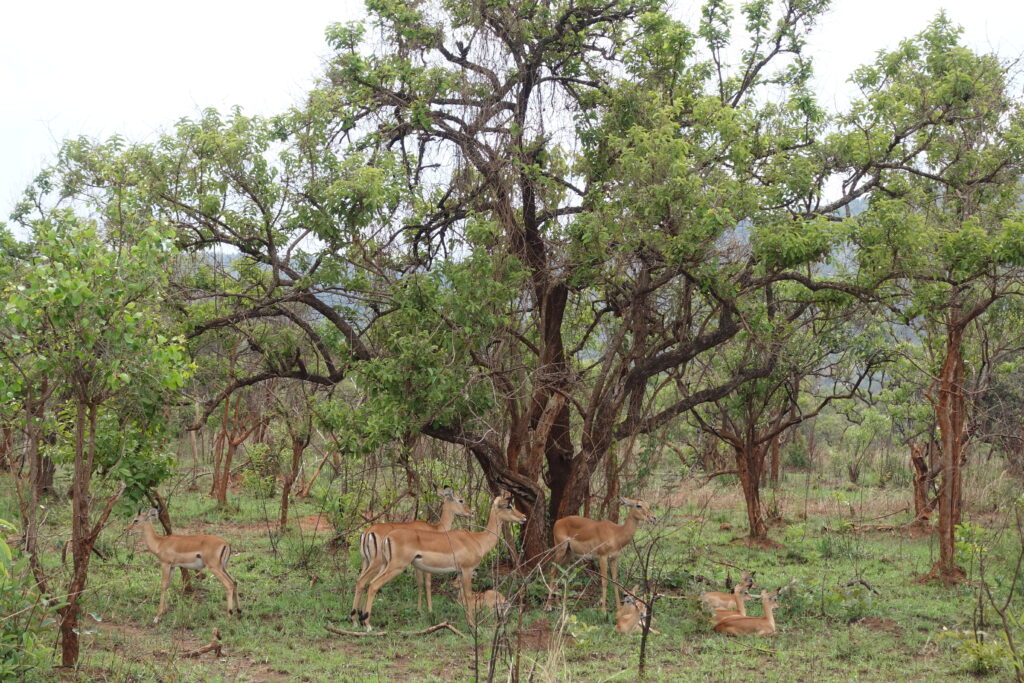
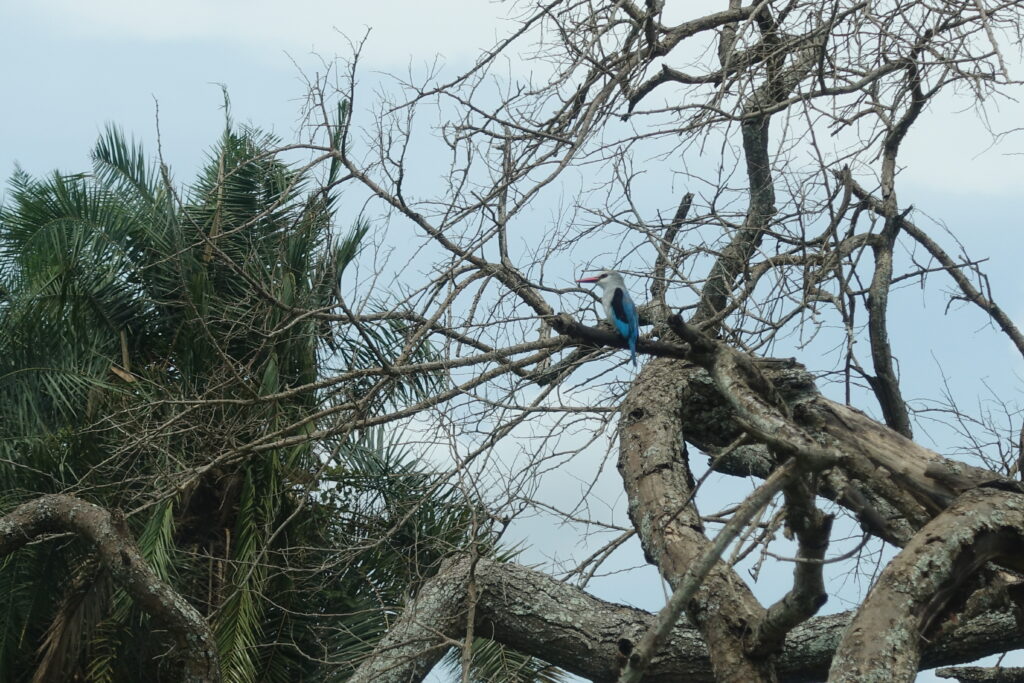
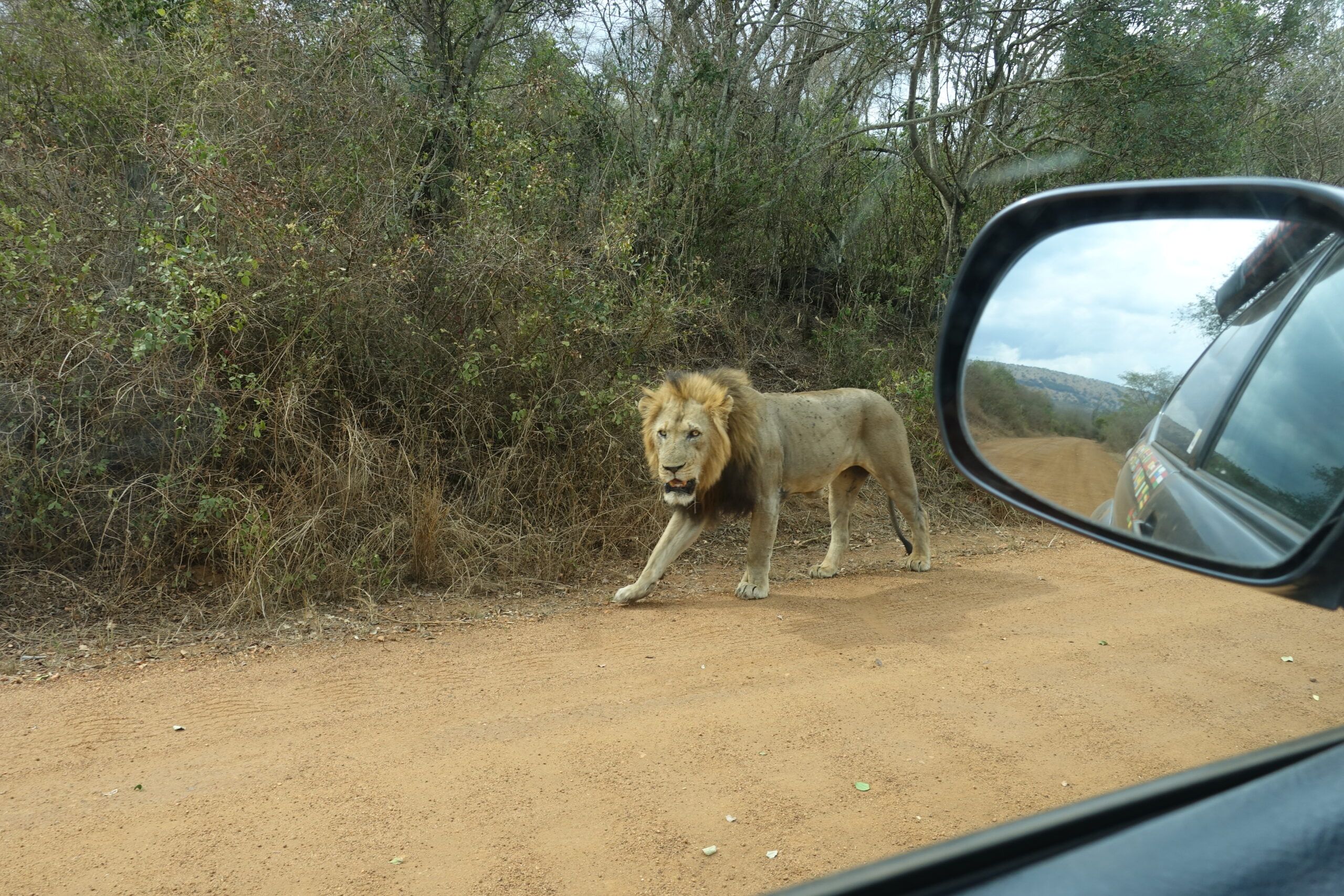
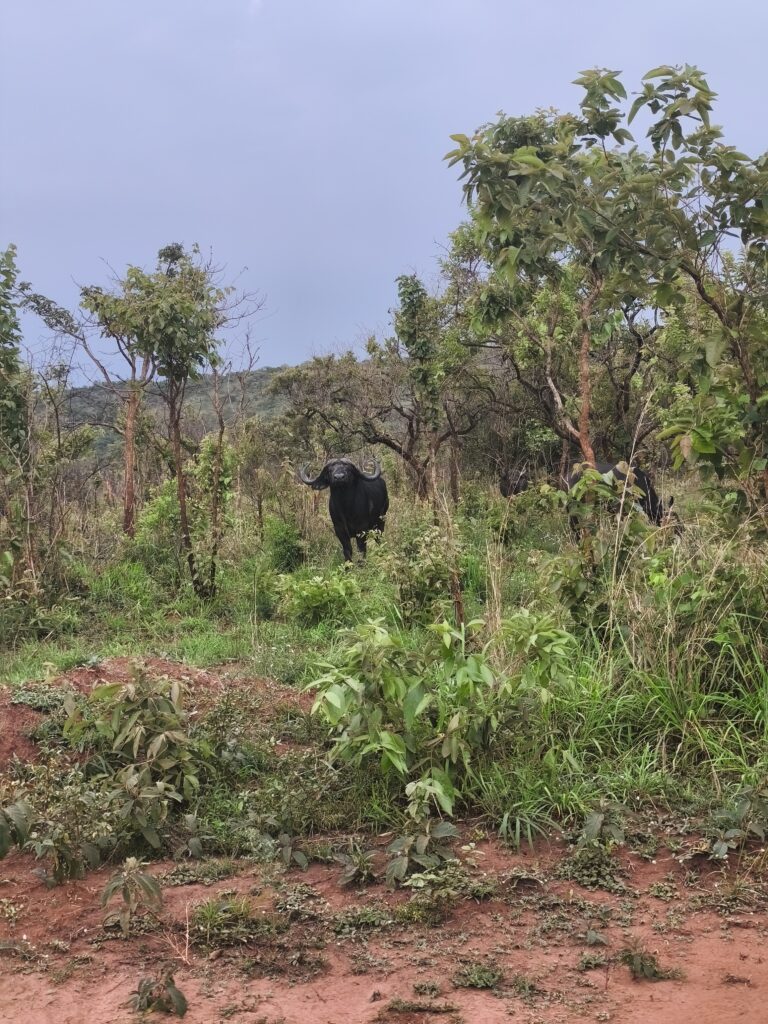
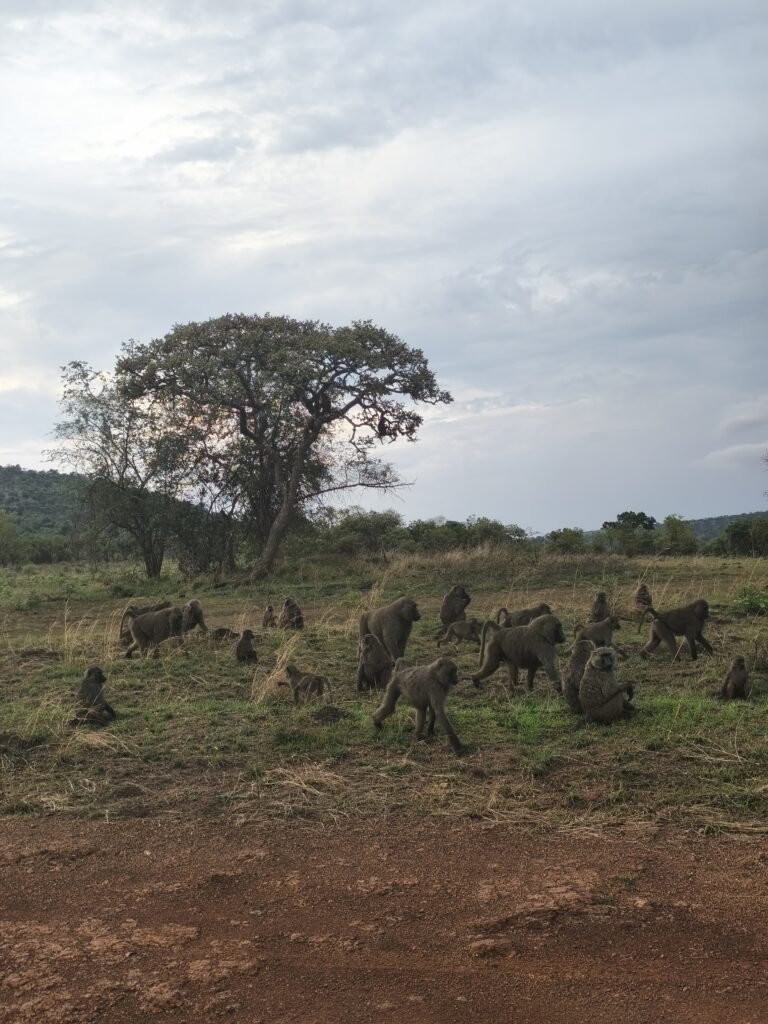
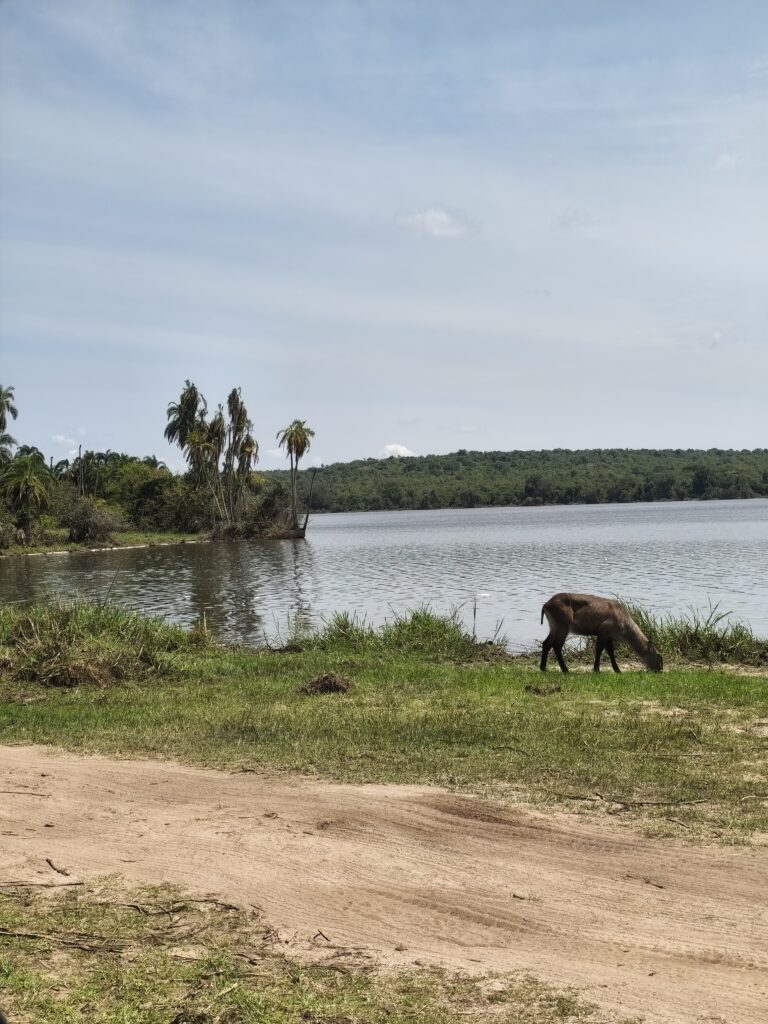
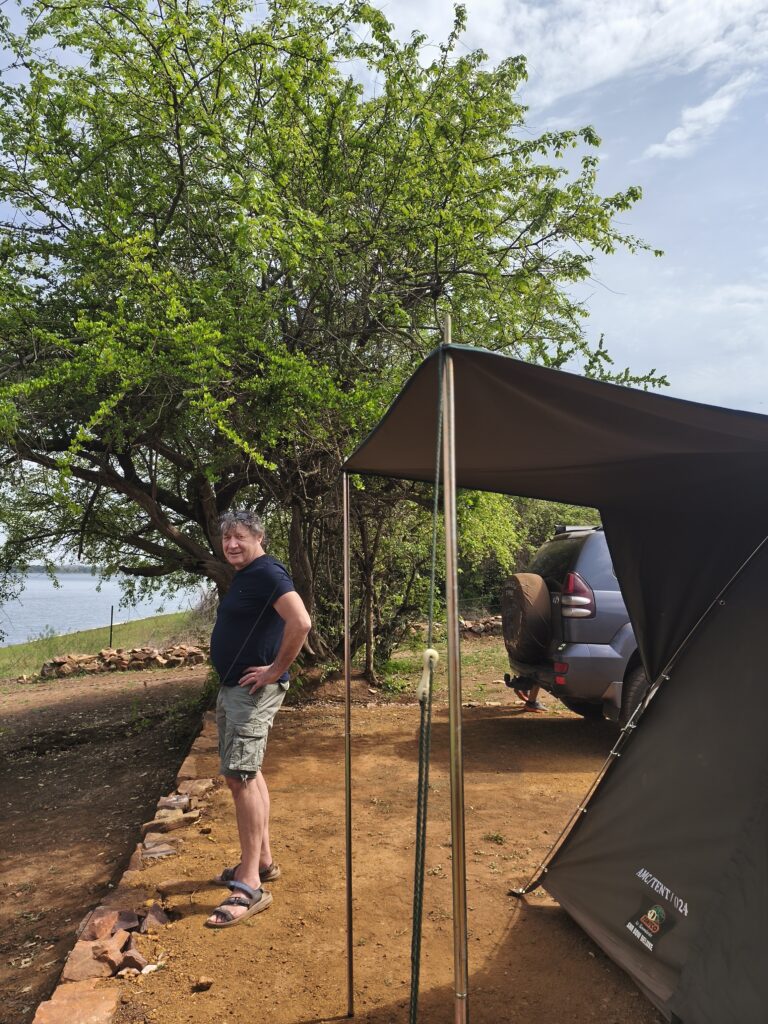
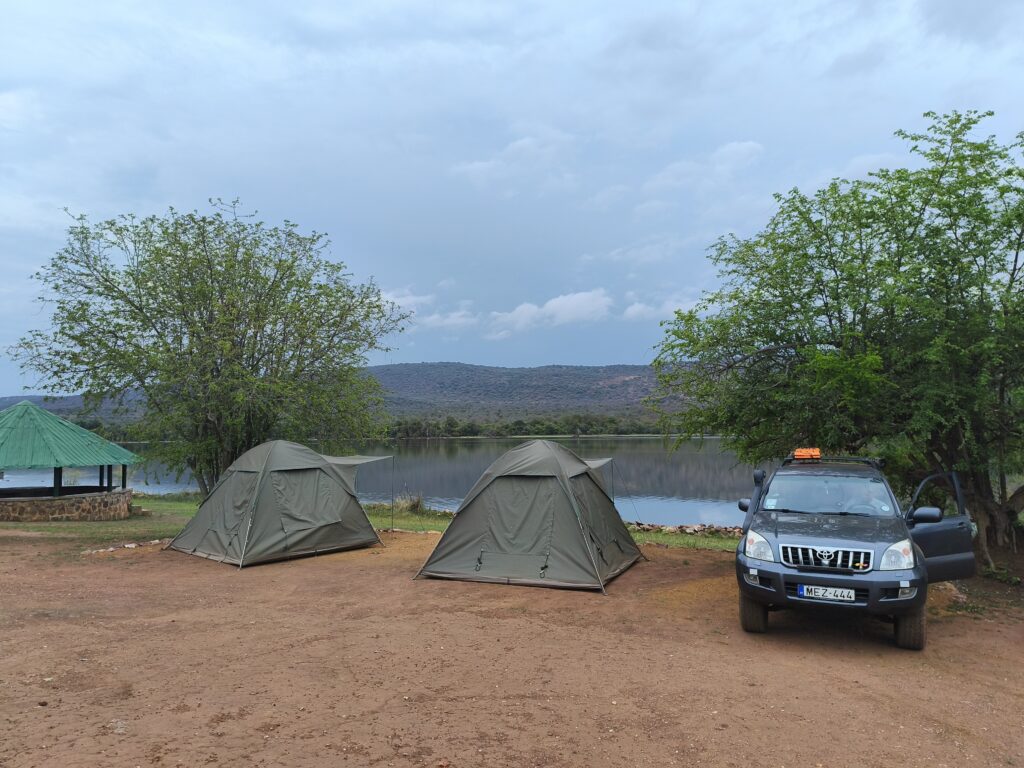
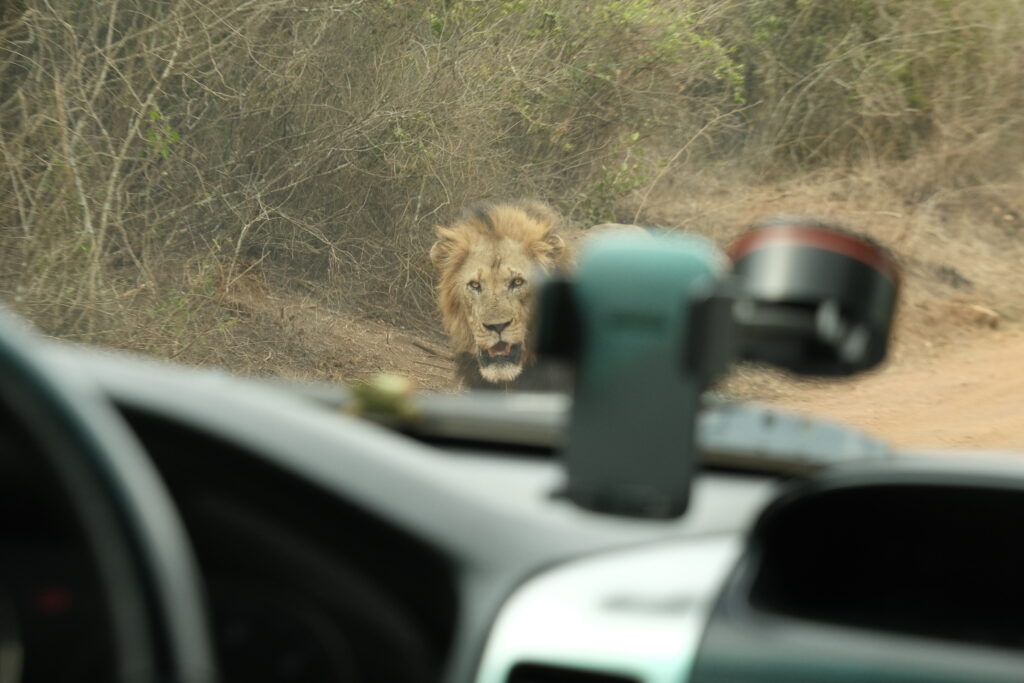
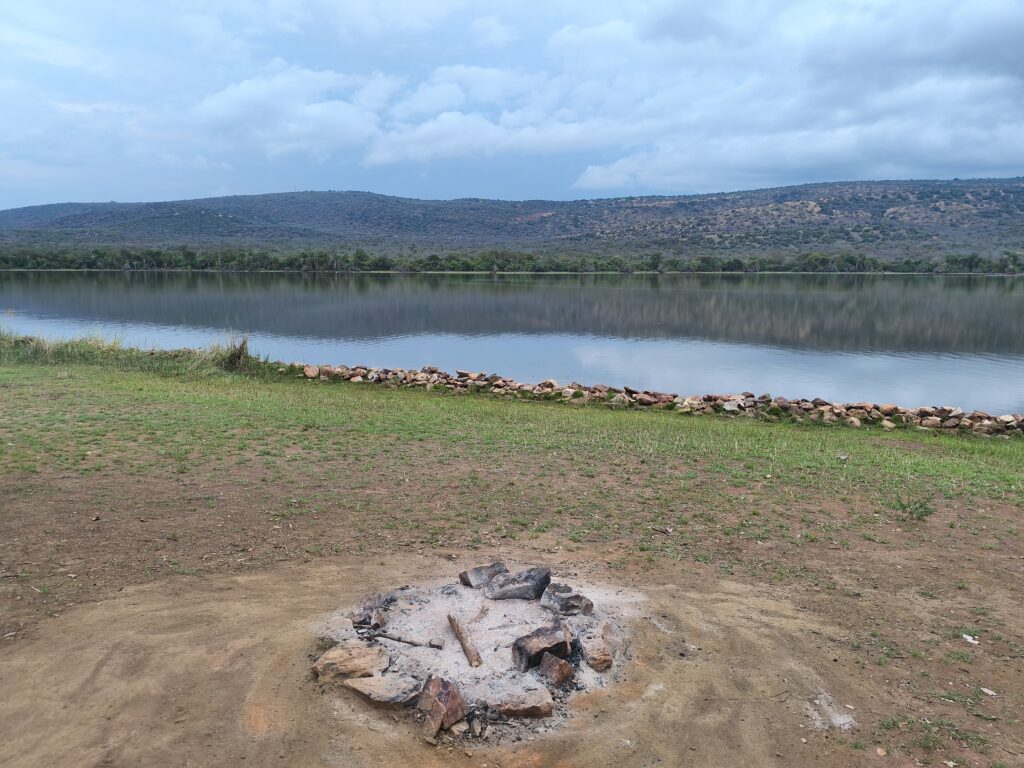
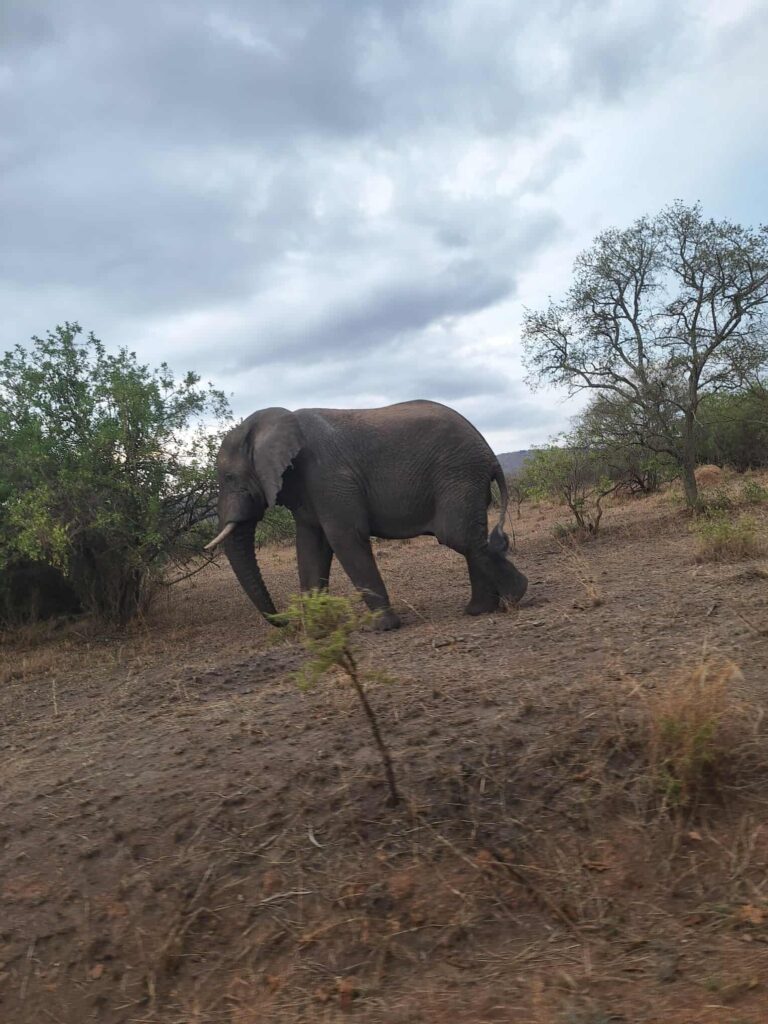
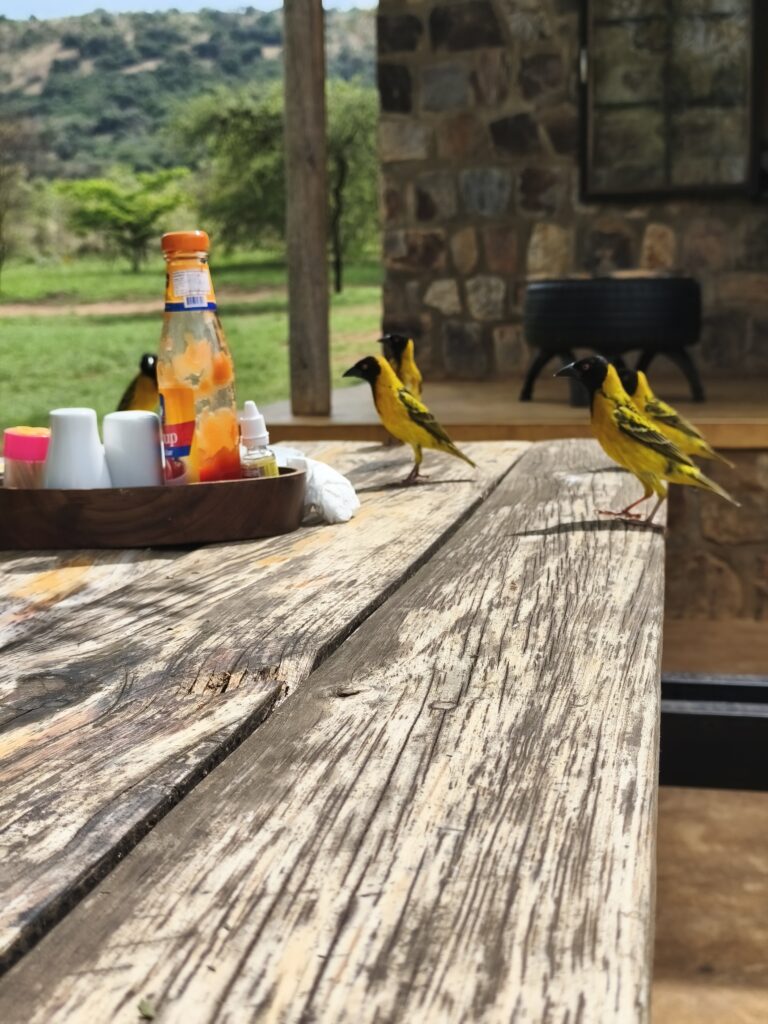
As we started driving, we didn’t see many animals at first, but when we reached one of the ten lakes, we saw plenty of hippos, zebras, sitatungas, baboons, and other monkeys. We were recommended a loop in the middle of the park, so we drove that way, and then a huge male lion walked toward us for 5–10 minutes, as if posing. At the beginning of the loop, we also saw a leopard, but only for a moment before it ran off. Later we saw lots of Cape buffalo. On the way to the campsite, a huge male elephant did the same „posing” routine as the lion earlier. It was a very successful first safari day for my parents. In the evening, we were the only guests at a lakeside campsite. We slept in the car, while my parents rented a pre-set tent. We cooked a quick dinner, but there were so many bugs around us that we soon escaped to sleep. The campsite wasn’t fully fenced, and there were many hippos in the lake right in front of us, yet we had a surprisingly calm night.
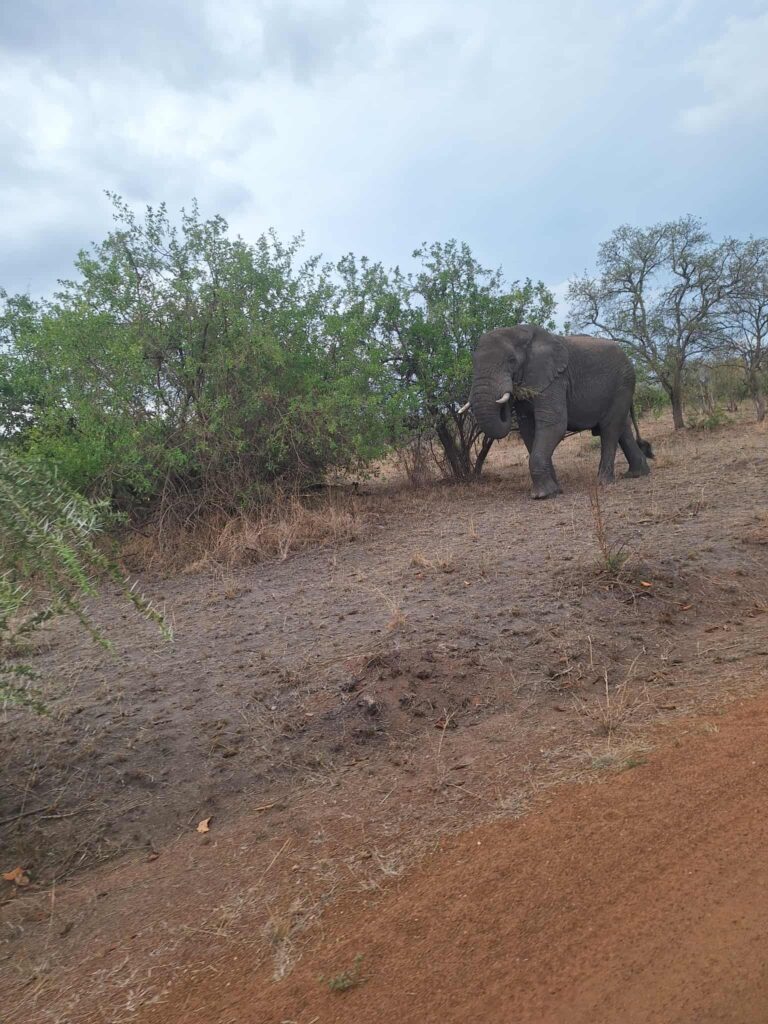
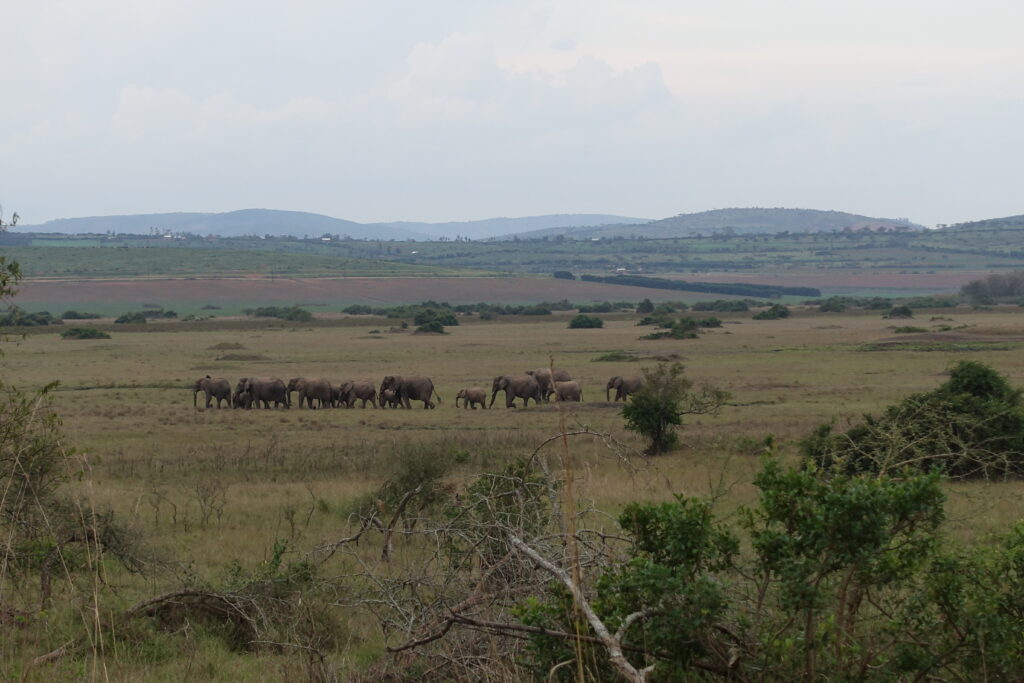
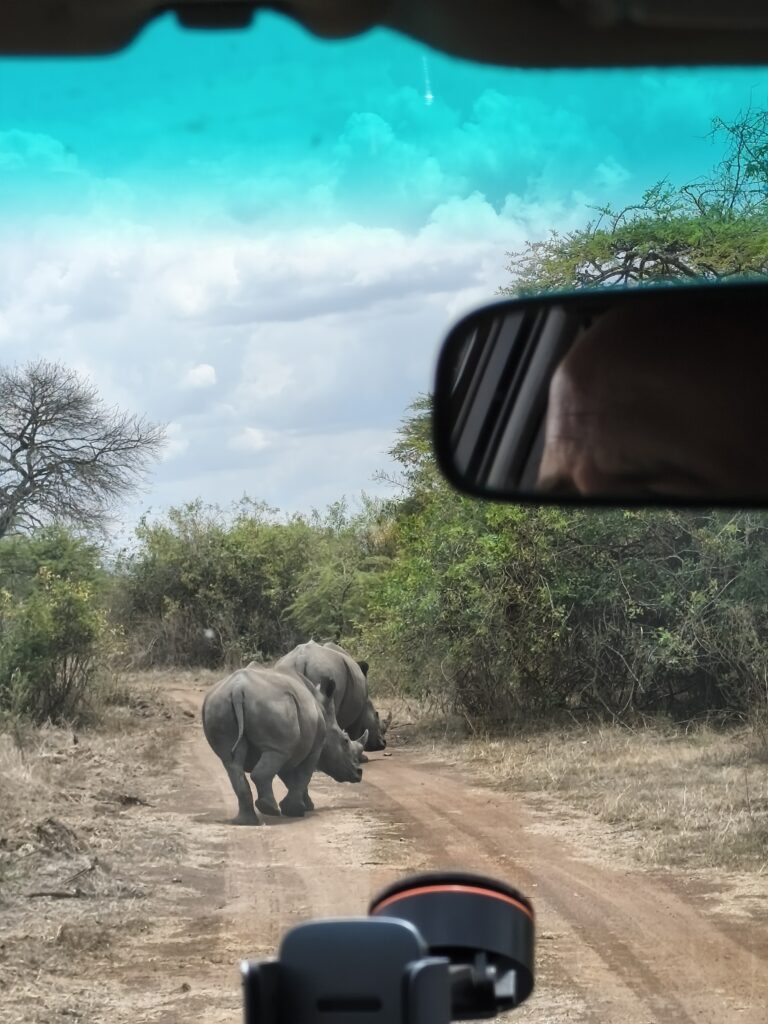
The next day we wanted to exit through the northern gate, so we drove through the entire park. As a child, my mom always told me that my dad’s favourite animal was the rhinoceros, and indeed, he managed to spot them twice, even though they were very far away. We were incredibly lucky: for example, when we were heading toward the park exit, shortly after saying, “it would be nice to see another elephant,” one walked right in front of us. And when we added, “it would be nice to see several elephants at once,” an entire herd appeared, with lots of babies. It was probably the typical beginner’s luck of first-time safari-goers.
After leaving the park, there was still a very long stretch of dirt road, so we got tired, and once we reached the main road, we looked for a place to stay and have dinner. Although the cuisine of Rwanda and Uganda does not have the best reputation, we actually ate very well in both countries. For lunch in the park, we had wok-fried beef with curry (both cuisines use a lot of curry powder). For dinner, we had a delicious ginger pumpkin cream soup, grilled half chicken (it was huge), and goat and beef skewers (brochette). Breakfast was also interesting: a type of cream soup that reminded us of spinach, into which we added boiled eggs, boiled potatoes (and a bit of ham, since they had some  ). And of course, we ate lots of fruit.
After such a great safari experience, it was time to move on. We had a very long day ahead of us: we planned to cross Kigali and reach the shores of Lake Kivu, to the town of Kibuye.