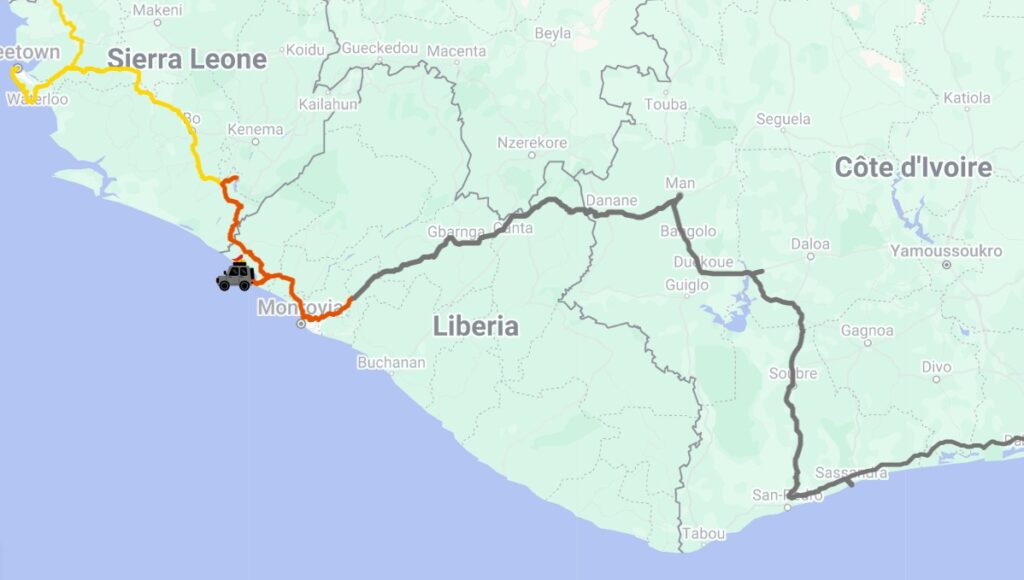
March 5–7: From Tiwai Island it was only about an hour to reach the Liberian border. Liberia is a unique African state: it was founded in 1847 by freed African American slaves and is one of Africa’s oldest republics. Liberia’s flag resembles that of the United States, and its capital, Monrovia, is named after U.S. President James Monroe. For a long time, the country’s history was shaped by the rule of settlers who returned from America, followed by the devastating civil wars between 1989 and 2003. These conflicts stemmed from deep social and political divisions between the Americo-Liberian elite and the indigenous majority (such as the Kpelle, Bassa, and Grebo), divisions that were exacerbated by decades of exclusion and inequality. The official language is English, but many local languages are spoken in everyday life; we found it quite challenging to understand the locals’ English (and they had the same difficulty understanding ours).
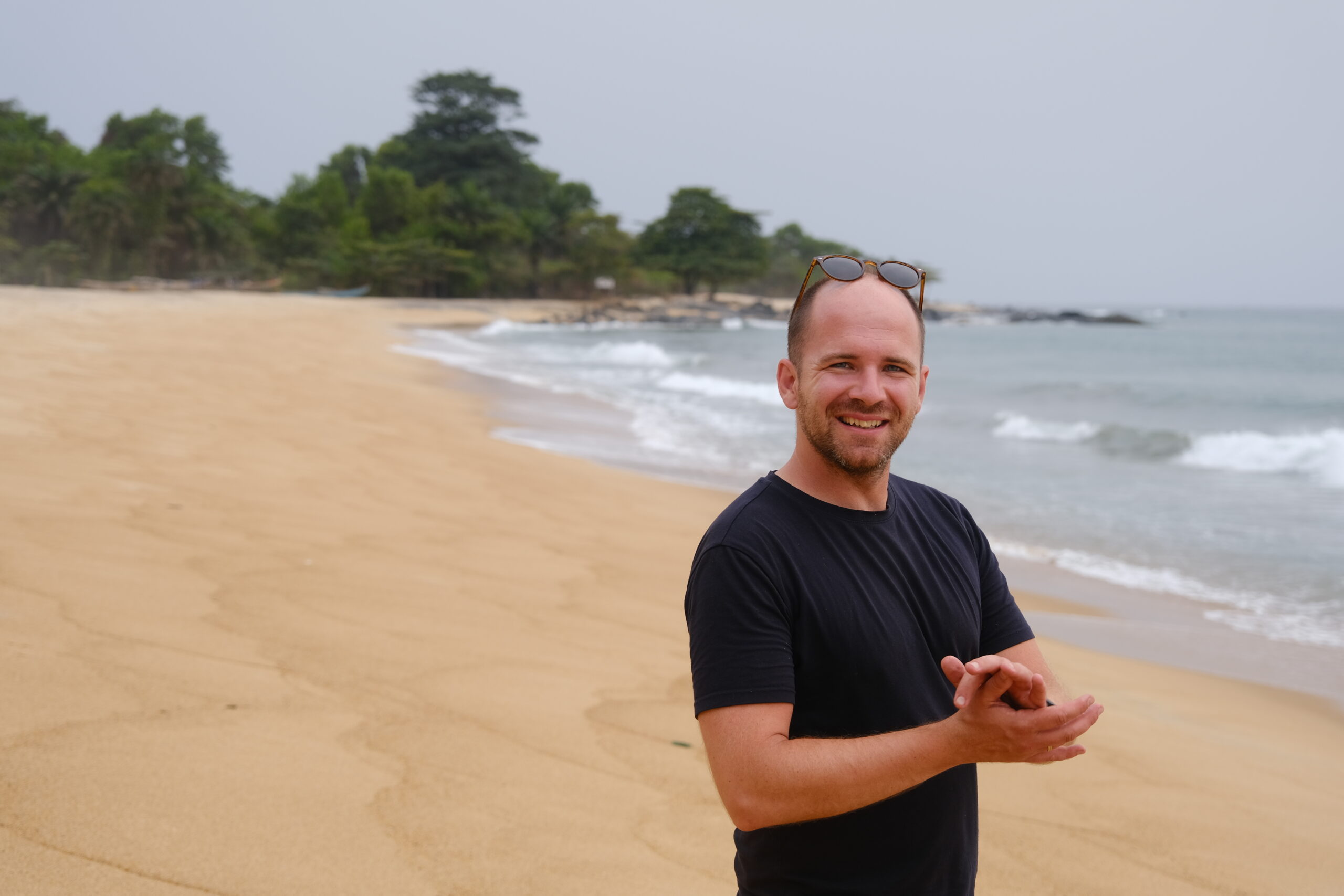
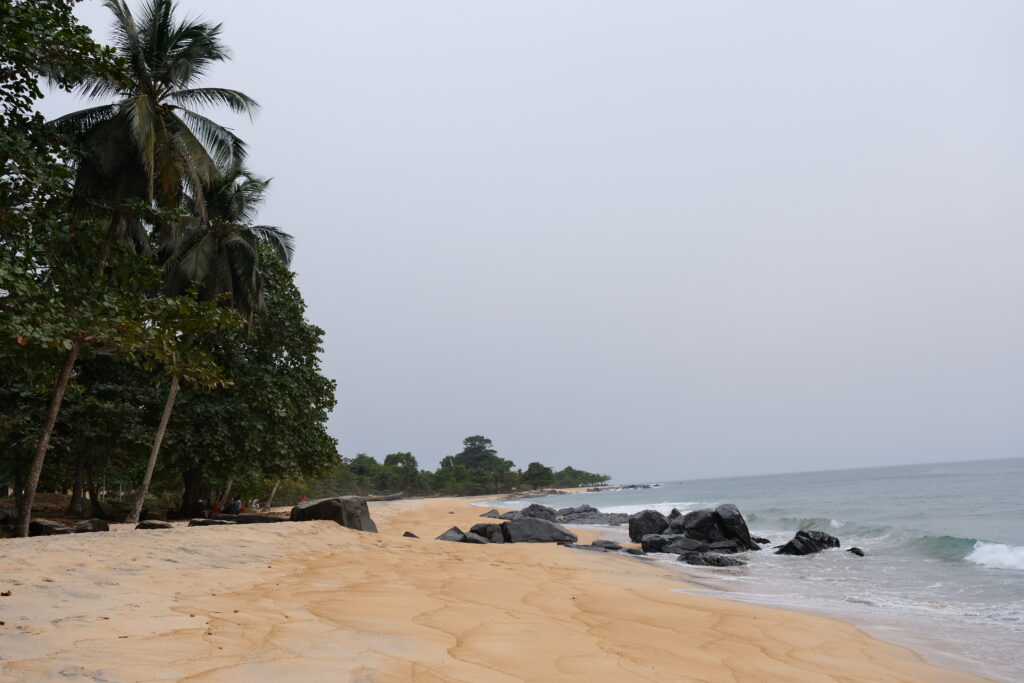
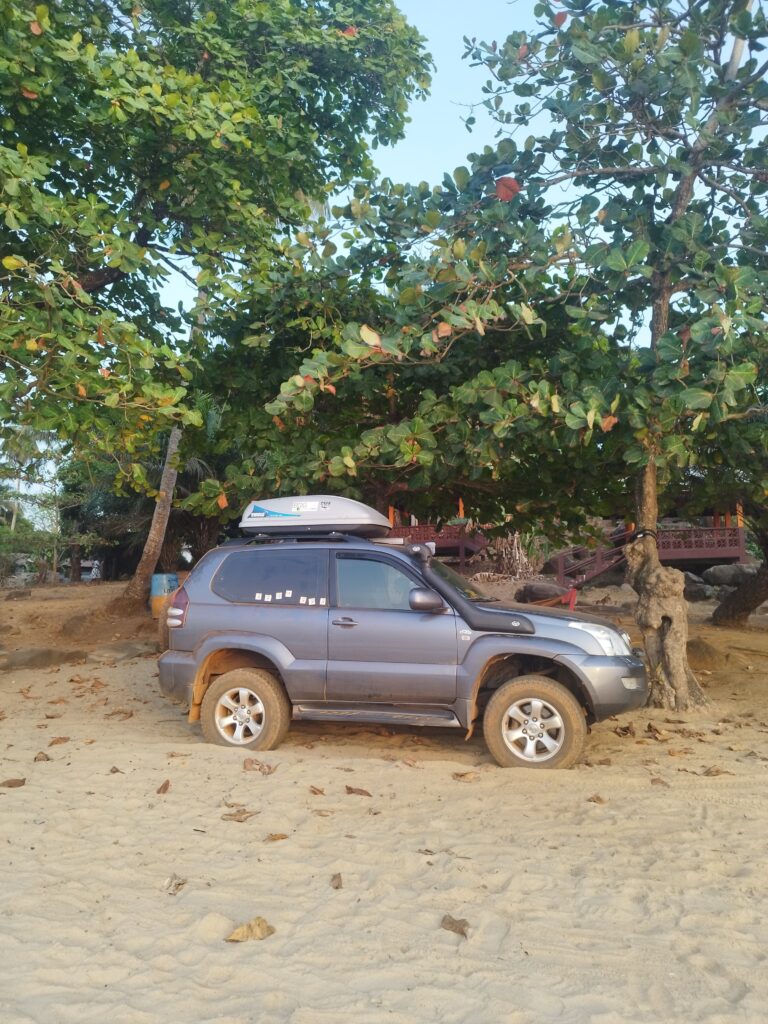
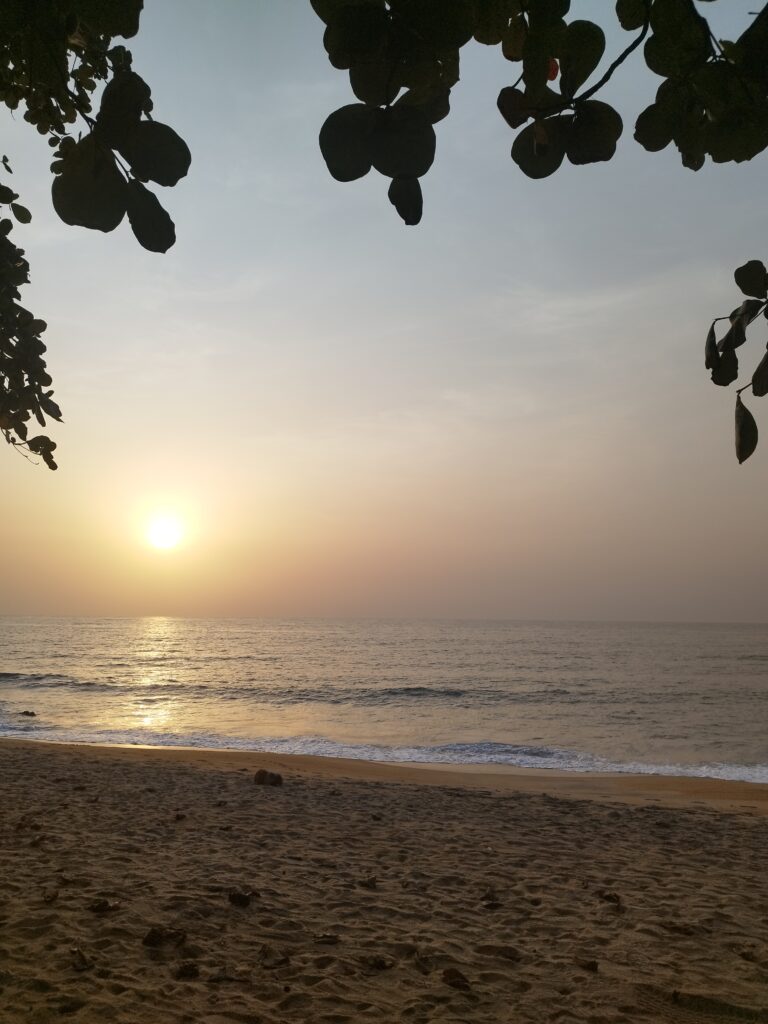
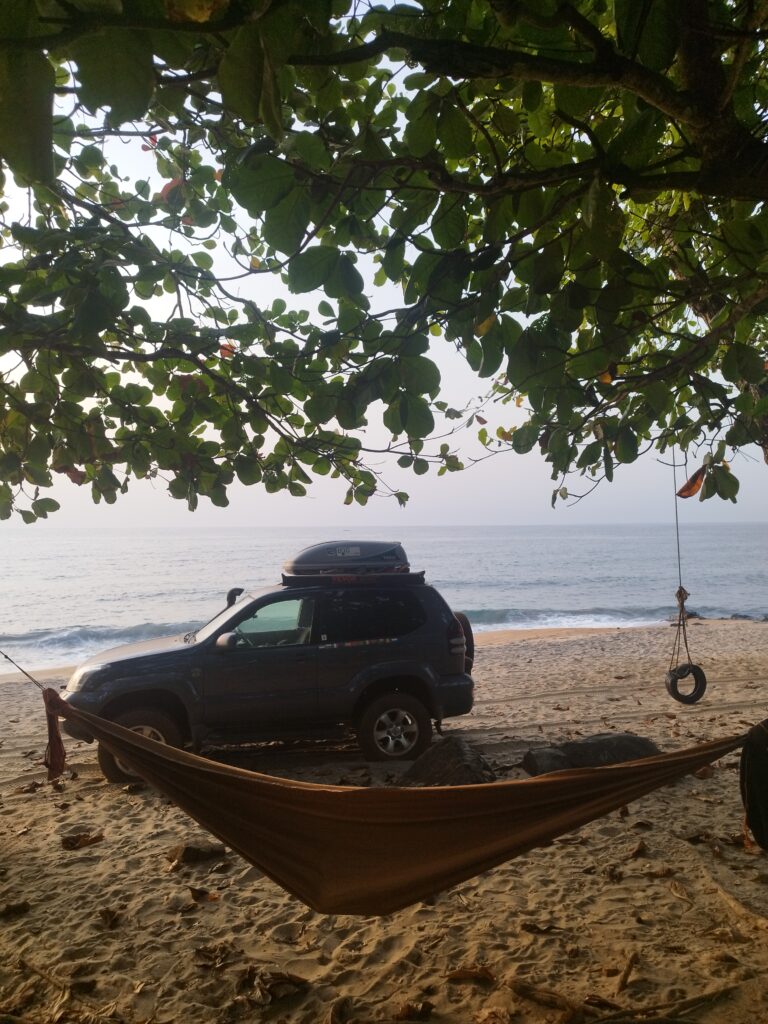
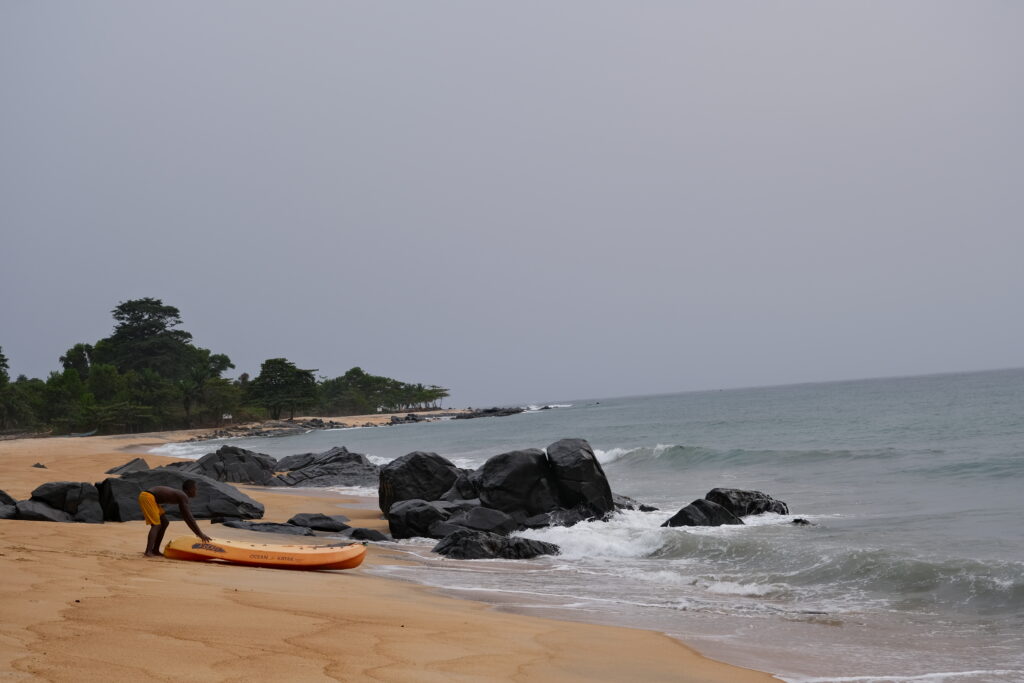
After a very quick and friendly border crossing, we headed toward Robertsport. Robertsport is a small coastal town that became famous for its surf club. The surf club has created a community space where you can eat and drink, as well as a campsite by the ocean: platforms have been set up for tents, or for €5 you can also camp in your car right on the beach, with access to bathroom facilities.
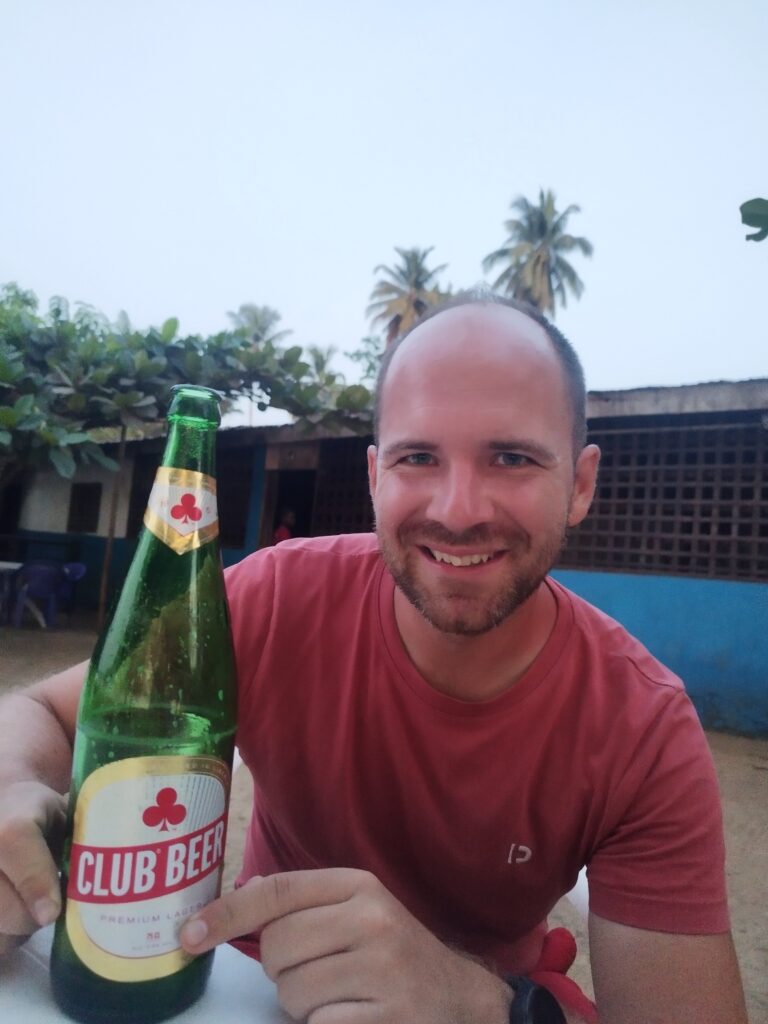
On the first day we wandered around and explored the area. For dinner we had a very tasty bean stew and chicken, and we drank a (huge) beer at the local bar. Beers come in three sizes, with the 0.75-liter one being the largest (and the best value for money).
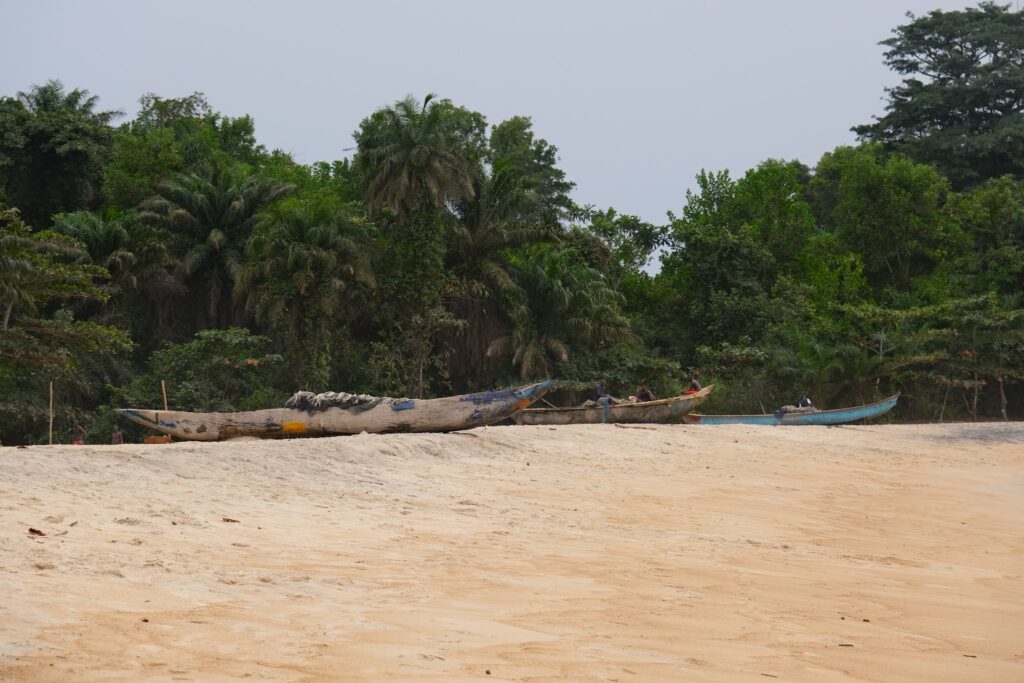
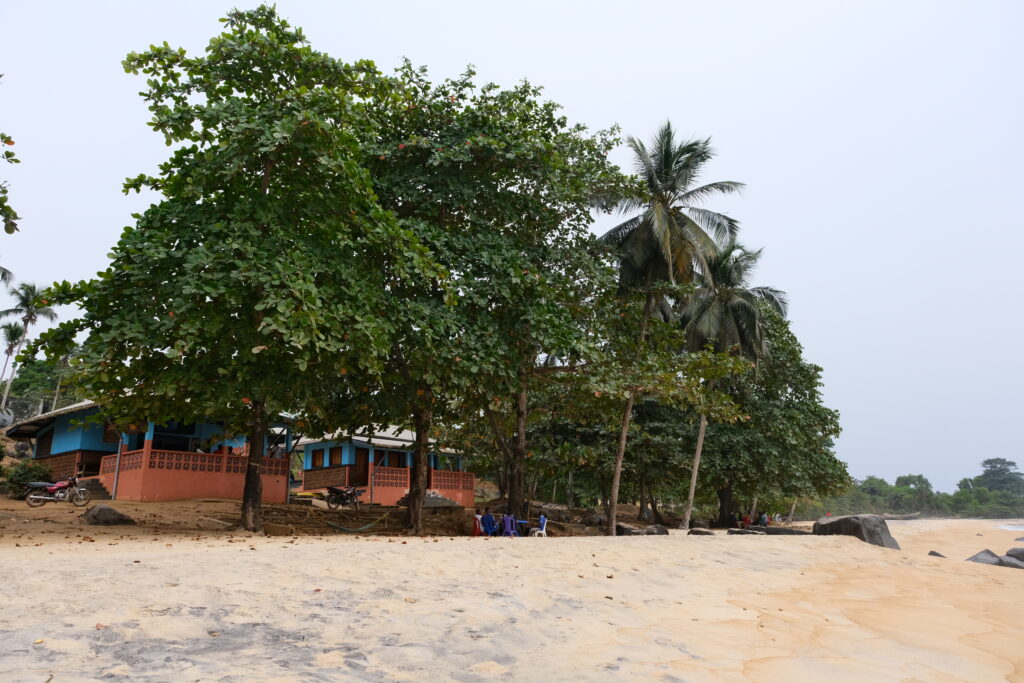
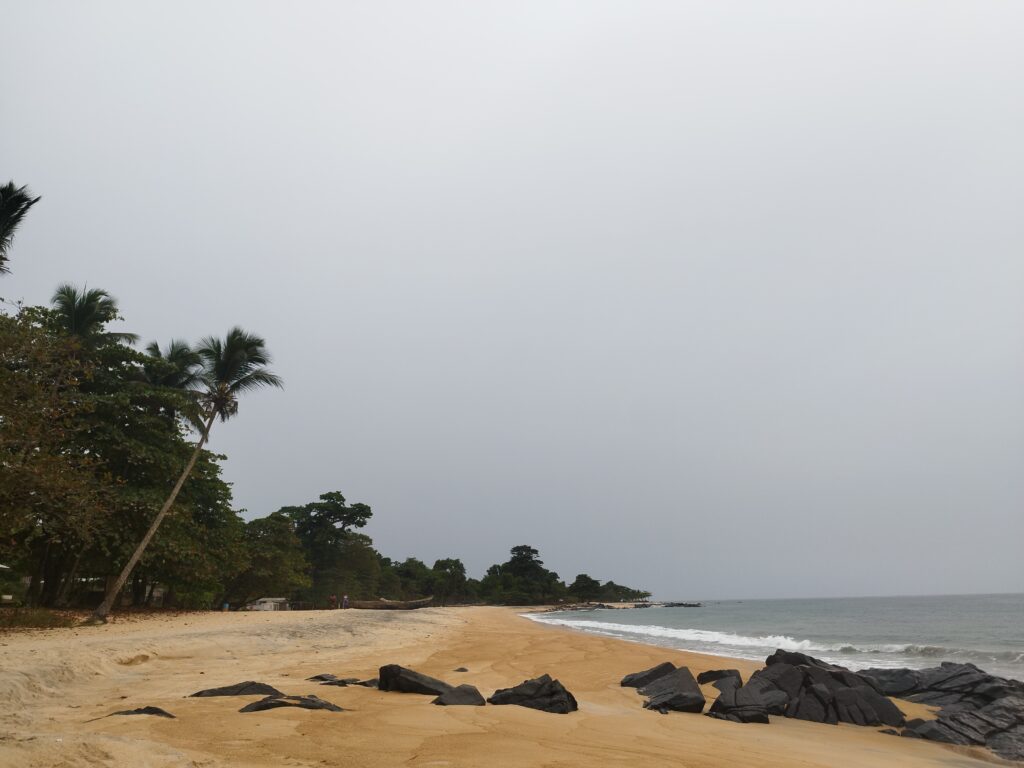
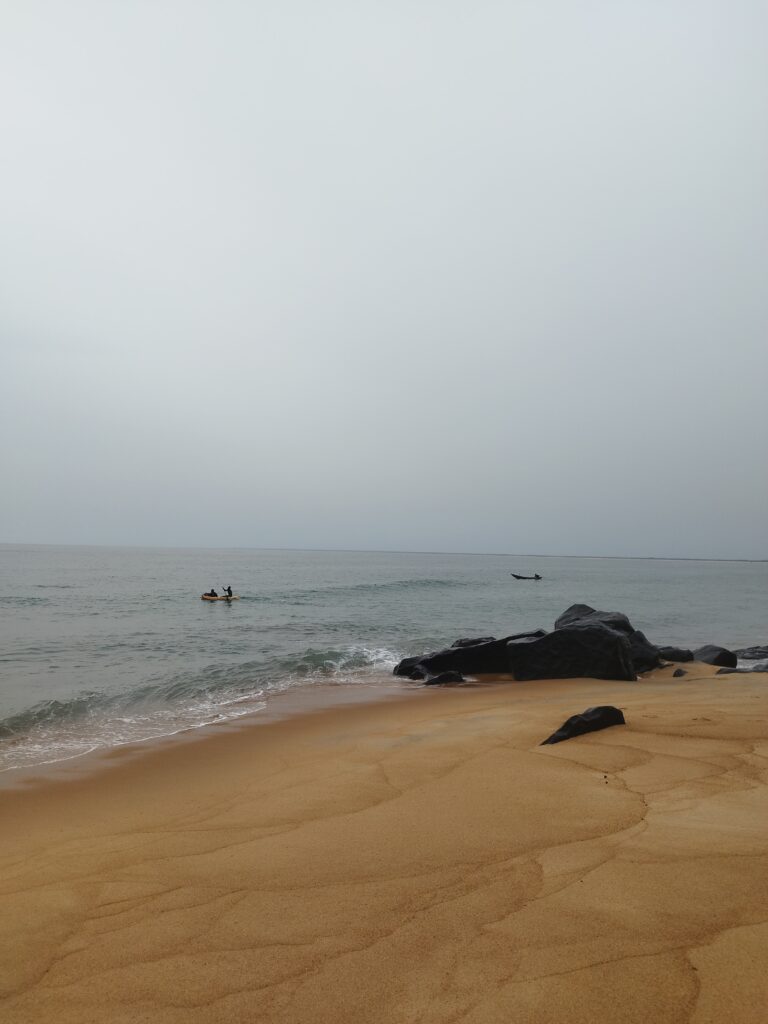
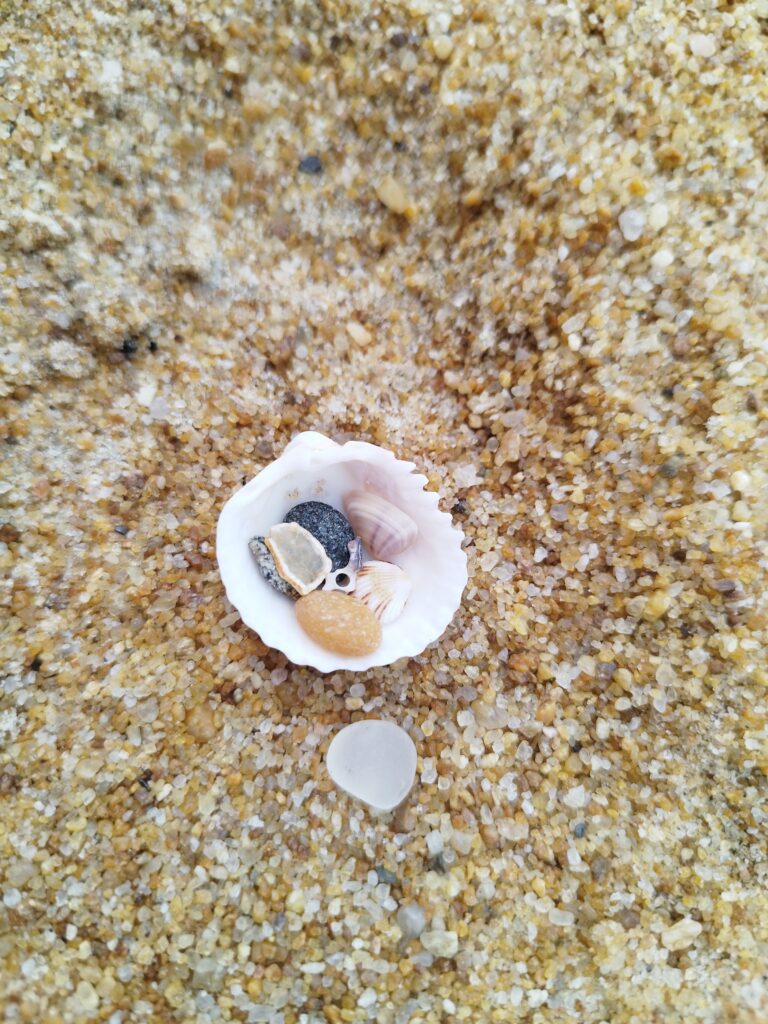
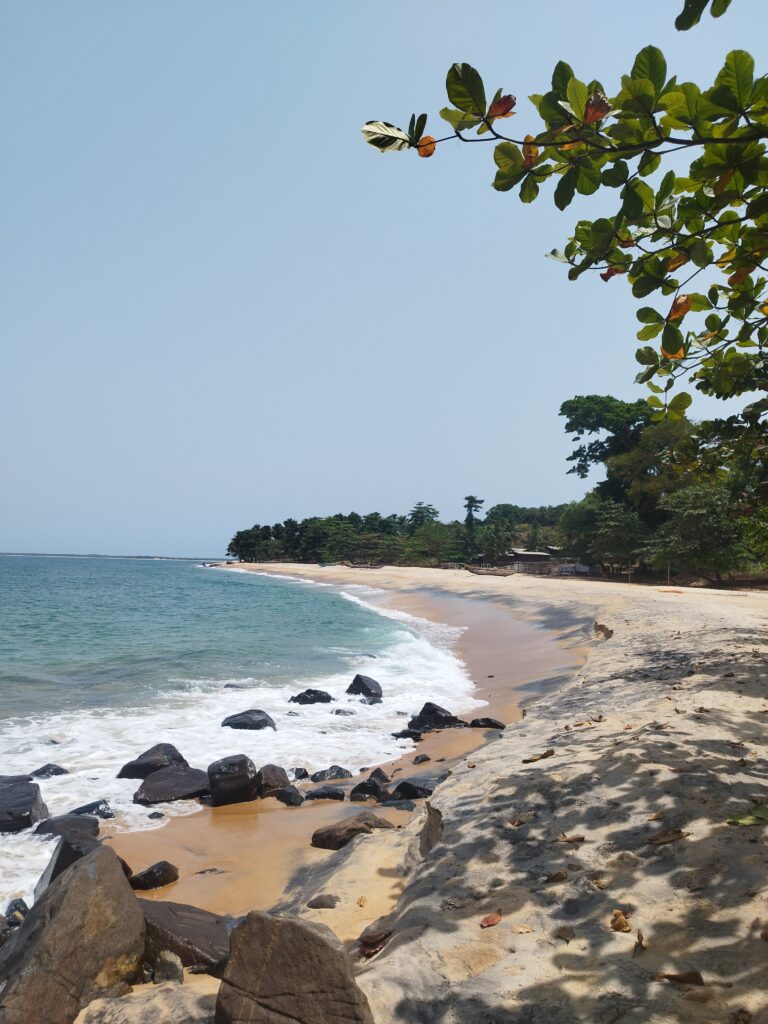
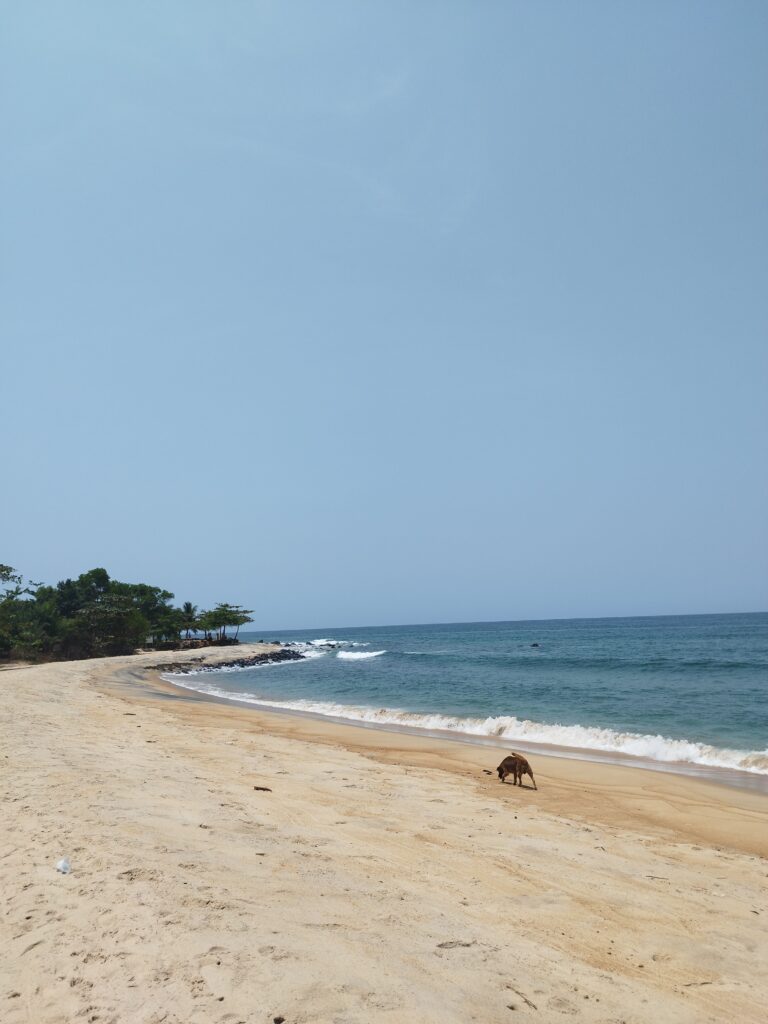
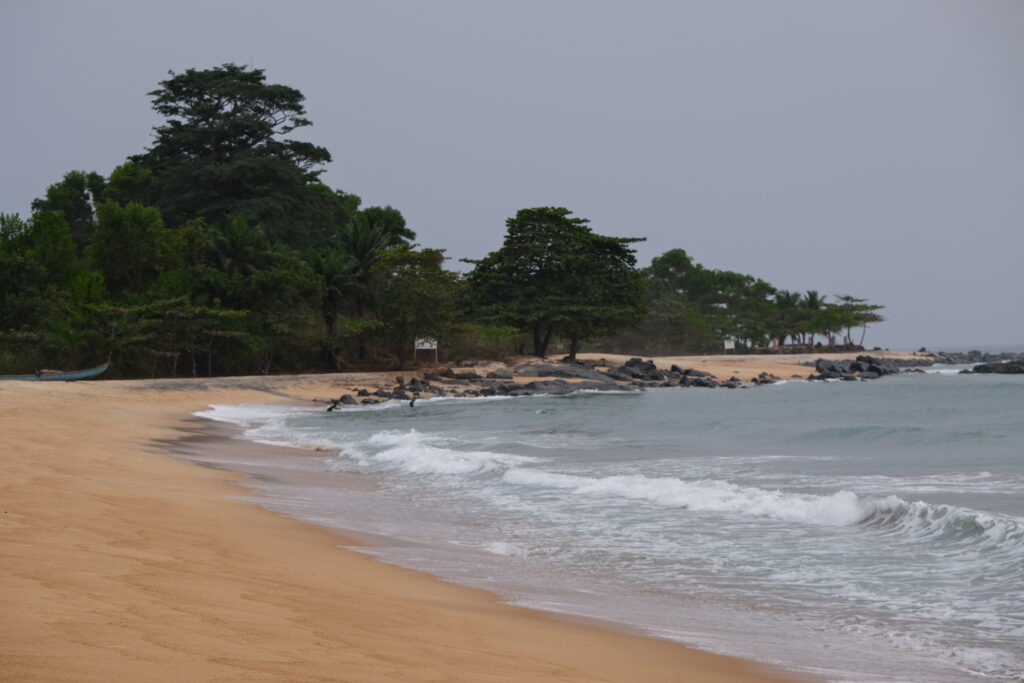
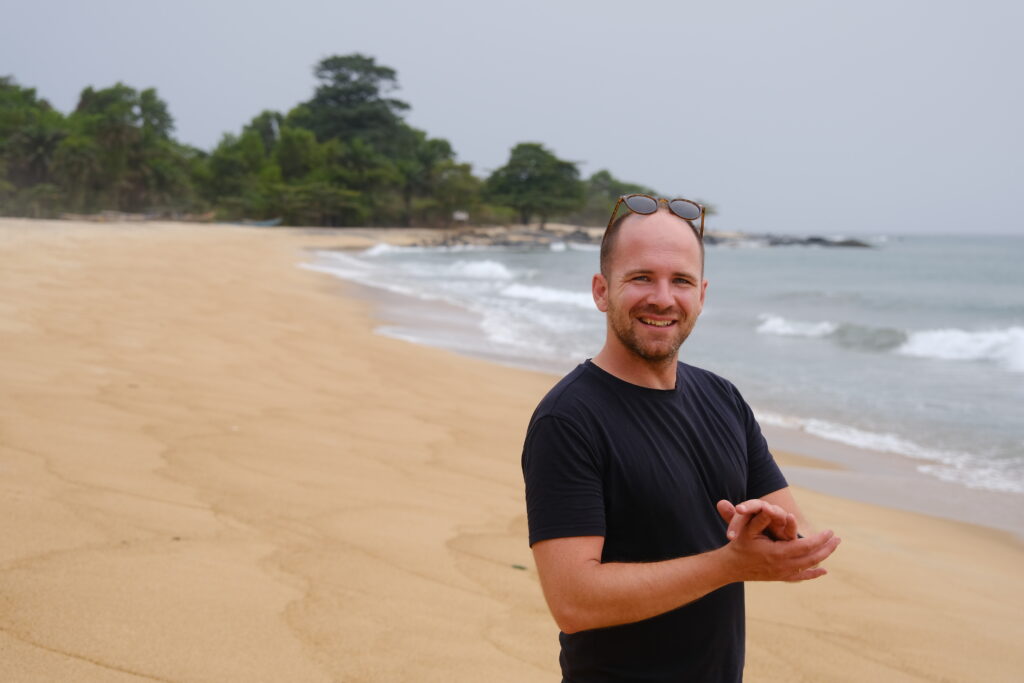
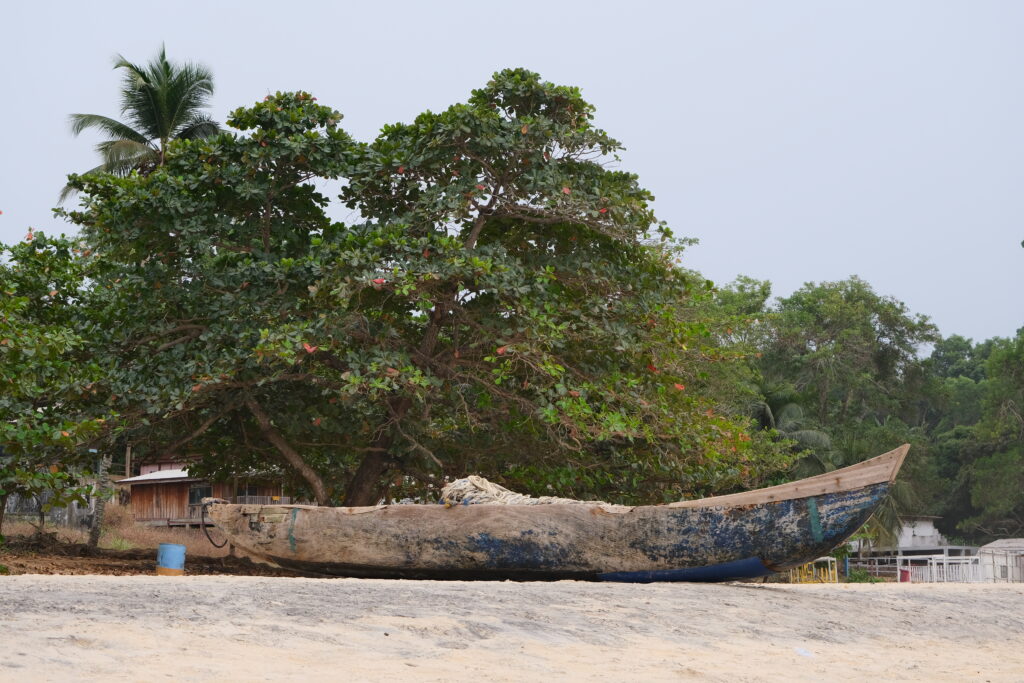
The next day we had a very hard time getting up: on the one hand it had been extremely hot at night to sleep in the car, and on the other hand we had caught some kind of cold-like virus. We pulled ourselves together and first walked into the village to top up our SIM card and buy some snacks. Four dogs followed us from the beach—which was quite a challenge here, because all the village dogs barked at us due to the unfamiliar dogs.
On the way back we felt a bit more alive and decided to walk to a shipwreck about an hour and a half away. The route led along the beach and at times through the jungle; the coastline was completely untouched—perhaps the most beautiful stretch we had seen on our journey. At the wreck we tried to go swimming, but the waves were enormous and the shore was full of washed-up jellyfish (Ádám was almost stung on the leg by a huge one). Walking in 40-degree heat really wore us out, so in the company of our two most persistent canine companions—who had shown us the way the entire time—we fell asleep in the shade of the shipwreck.
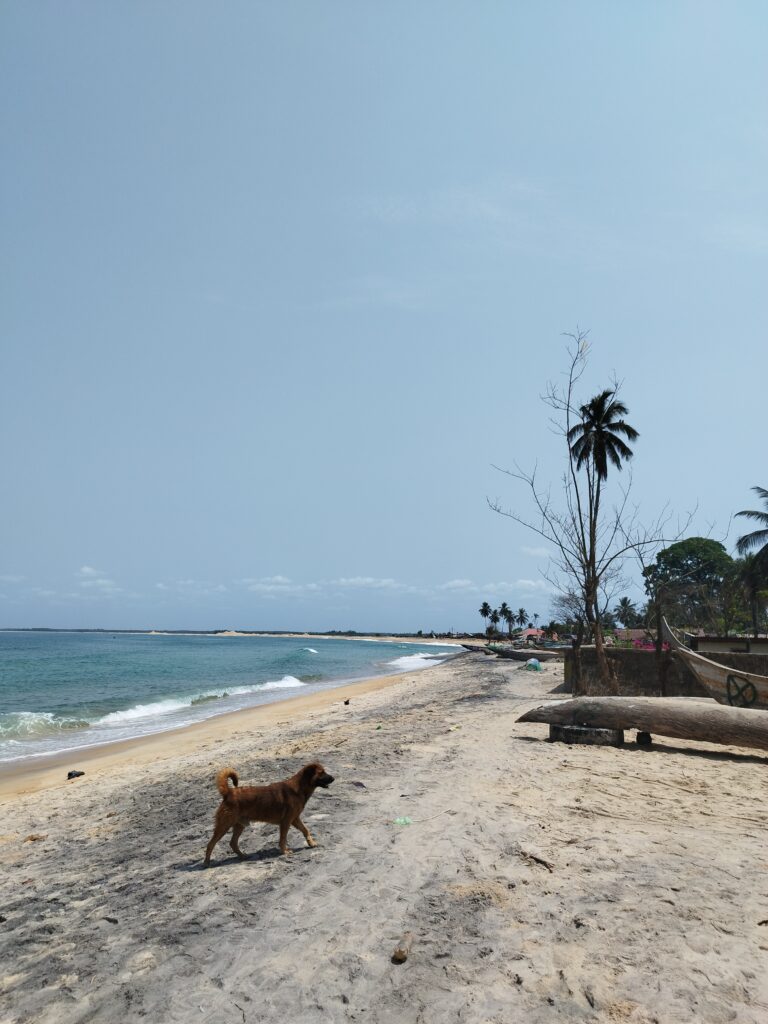
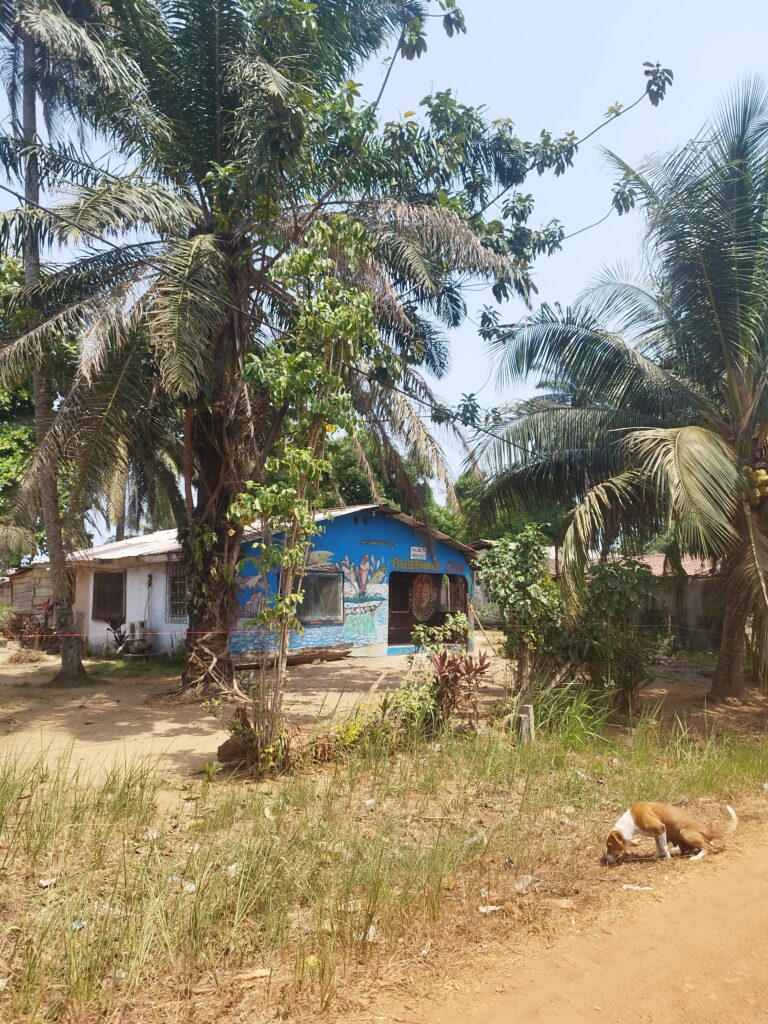
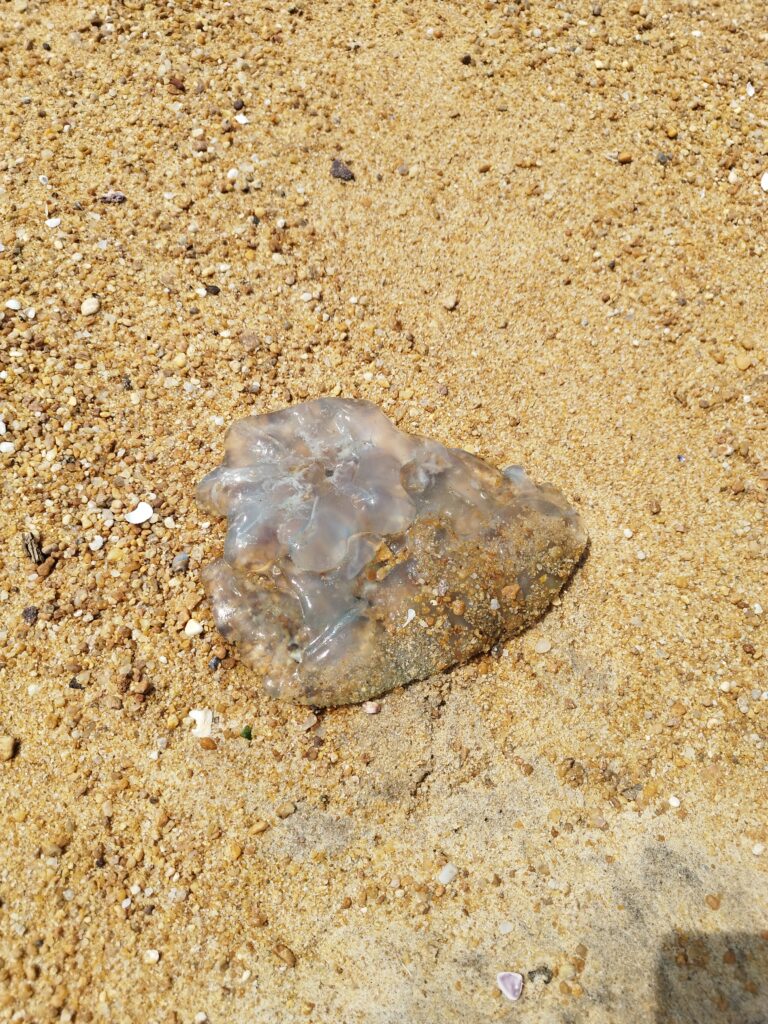
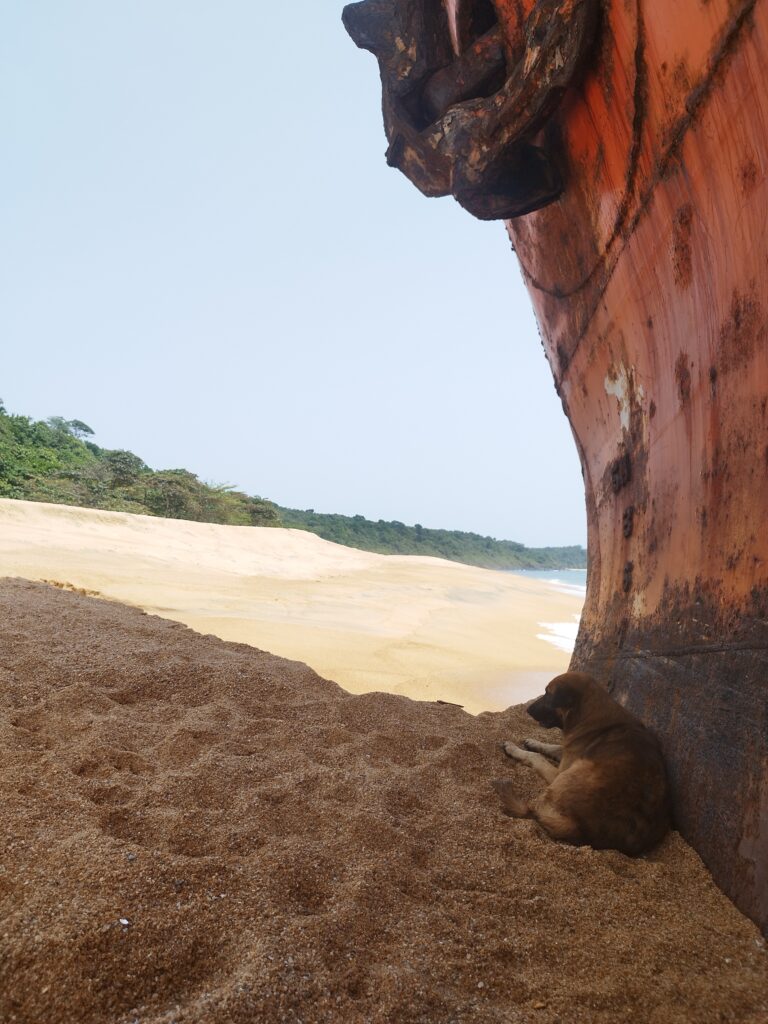
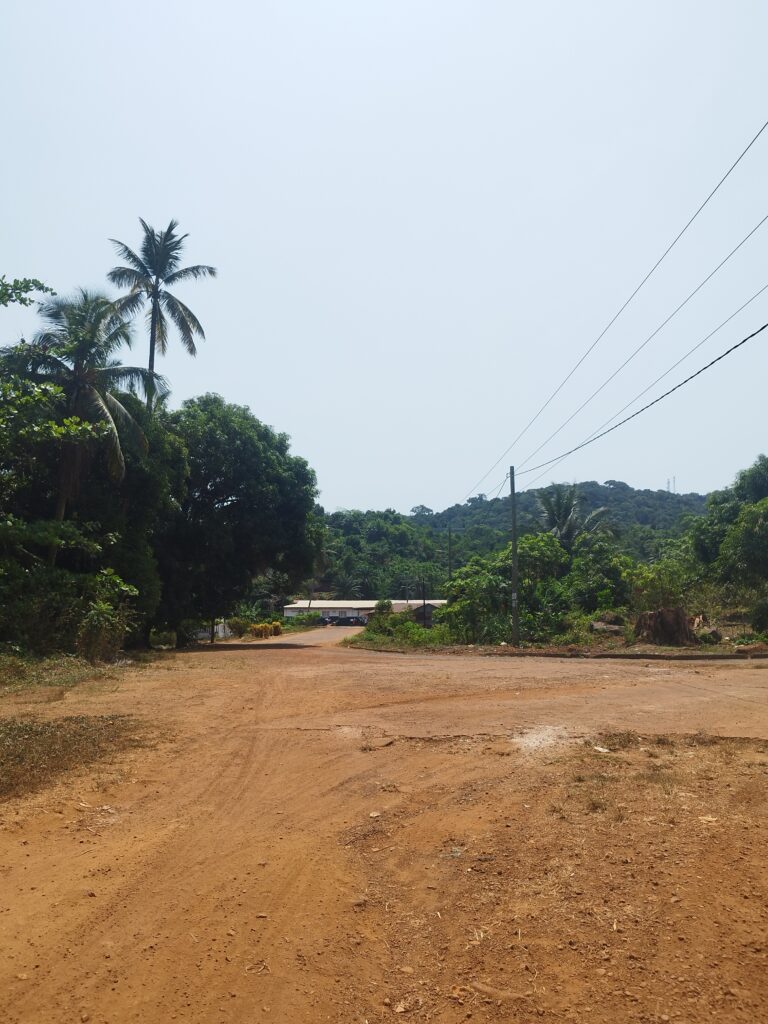
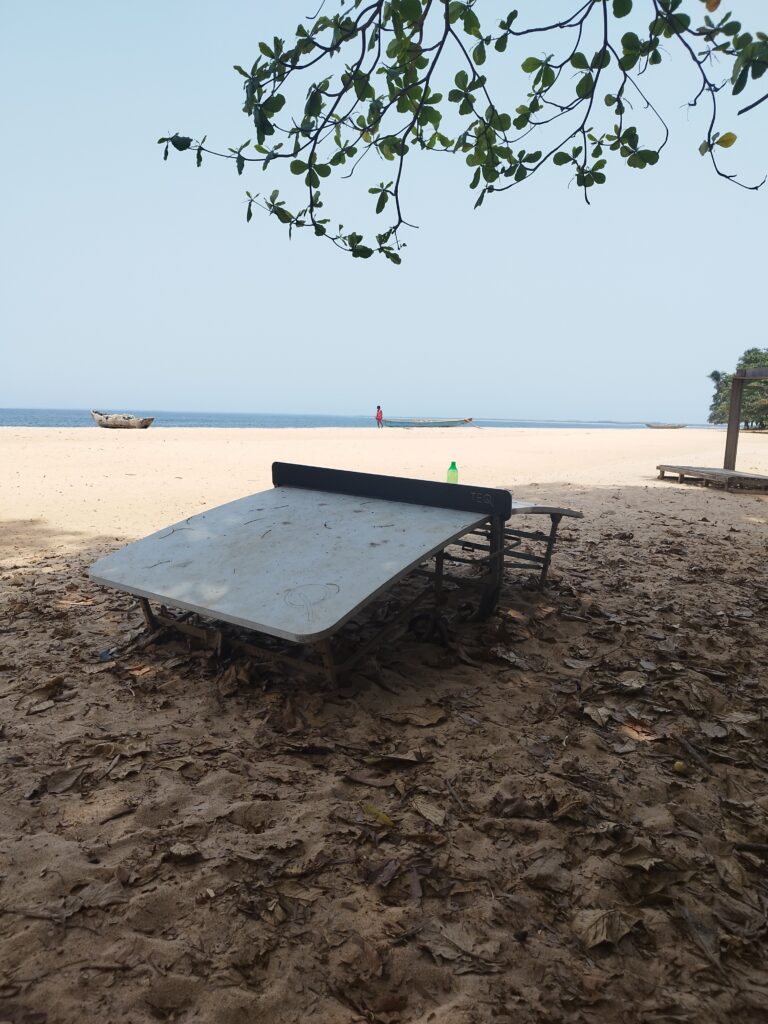
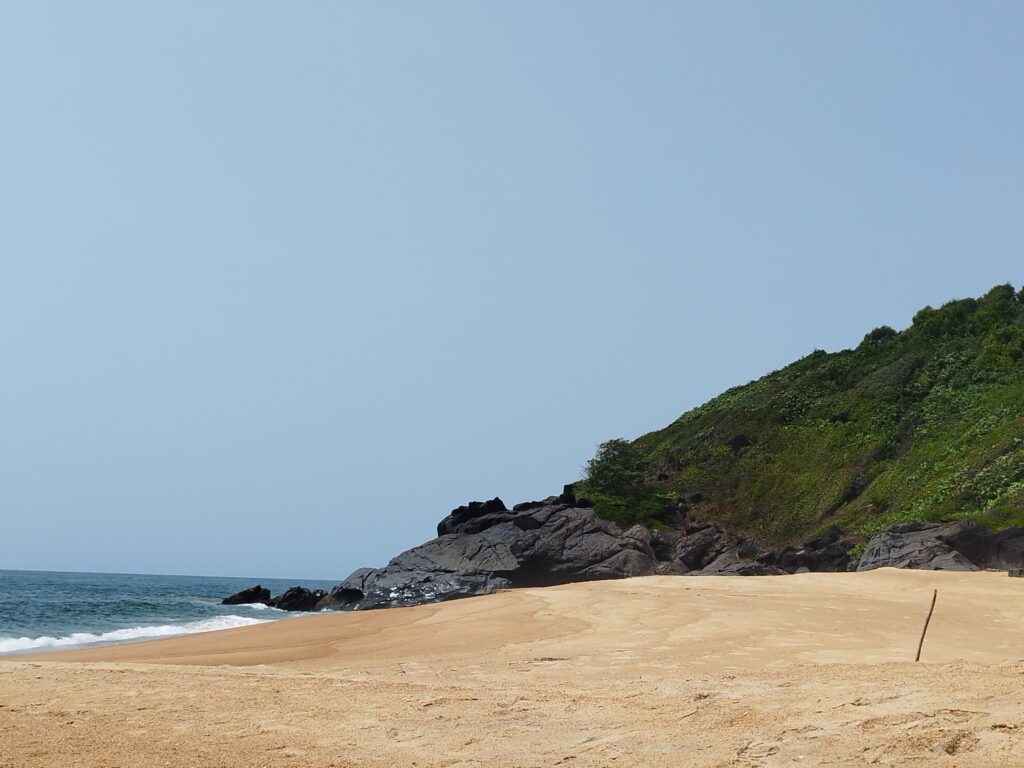
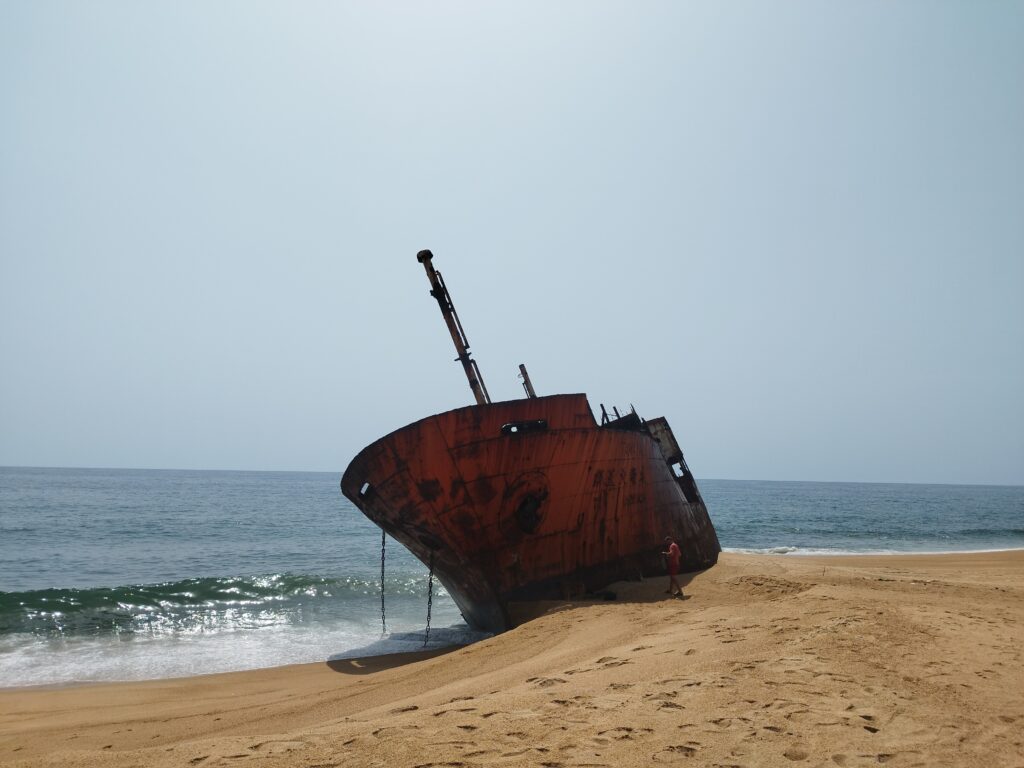
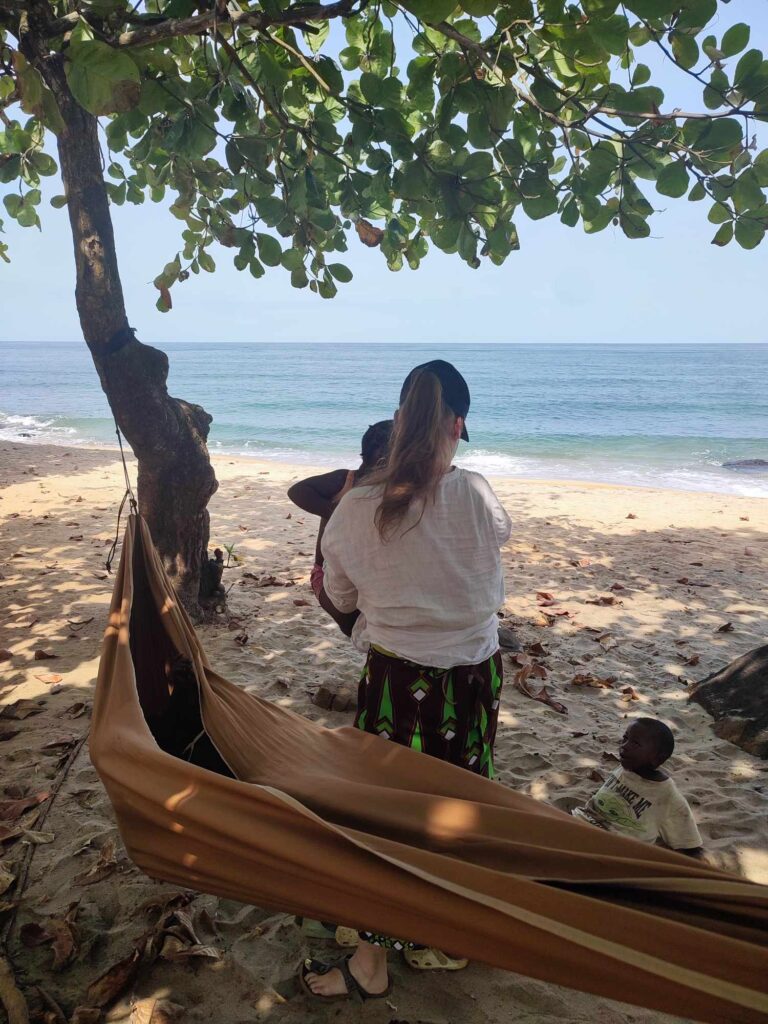
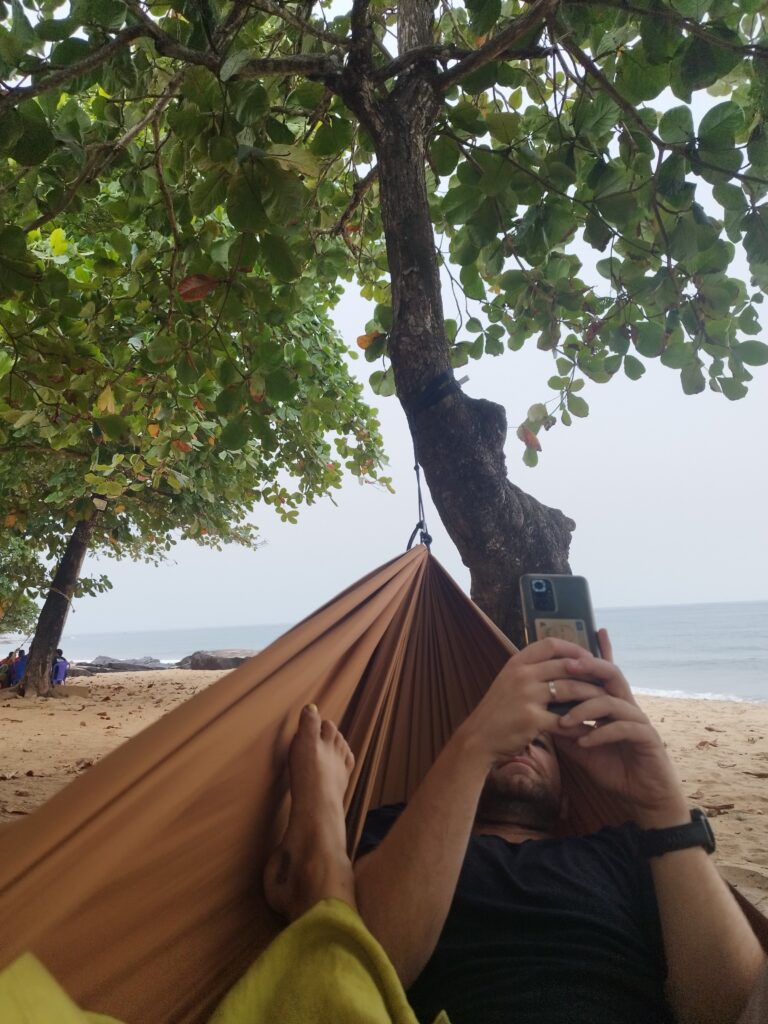
After that we walked back, and before dinner we played with the children, who had become completely accustomed to us and our hammock (Eszti was often followed by a little girl wherever she went). Their favorite game was for all of them to pile into the hammock, and then we had to “launch” them out one by one.
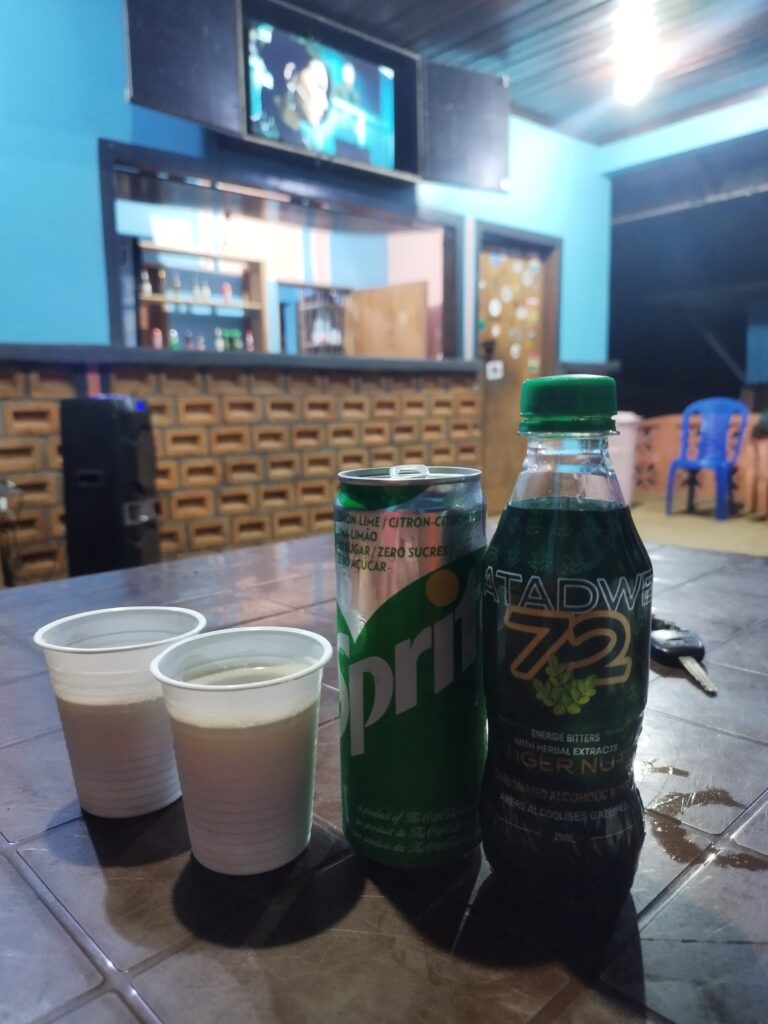
In the community space, it was mostly younger people hanging out, watching TV and playing PlayStation. Adults joined in the games too, and many people came there just to have a drink. We noticed that everyone was drinking something from small green bottles, which made us curious, so we tried it as well. It turned out to be a mixture of alcohol, various herbs, and tiger nuts, with different alcohol strengths—they recommended the milder one for us, mixed with Sprite. There was also a very pretty drink that looked like bottled beer, so we ordered one of those too. It turned out that the colorful, floral bottle didn’t contain beer at all, but a low-percentage, premixed, spiced alcoholic drink with a taste similar to our previous concoction.
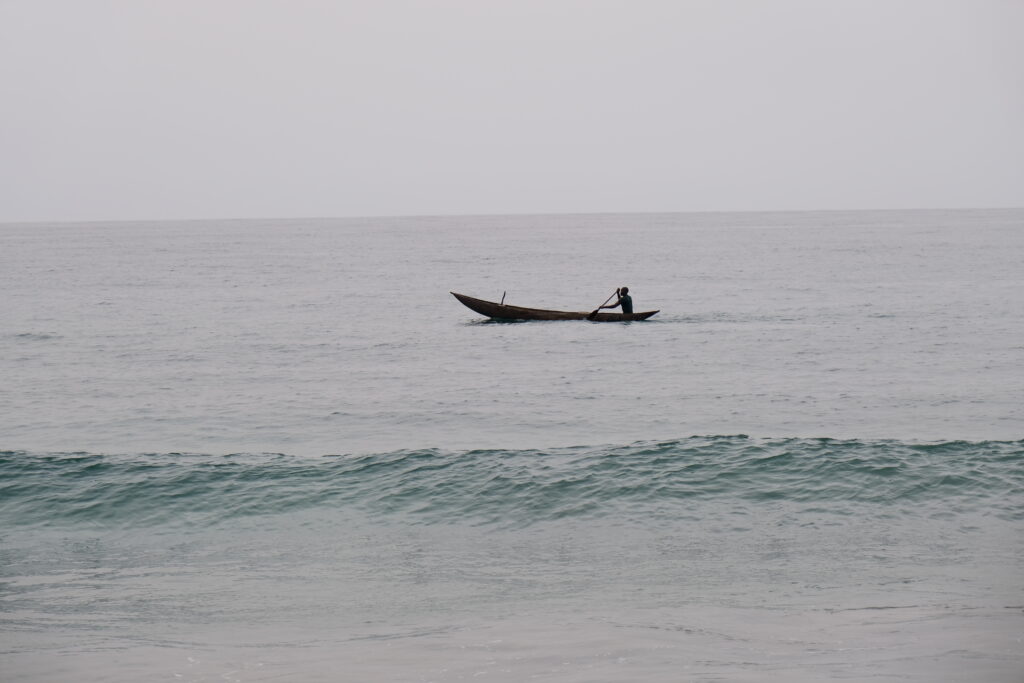
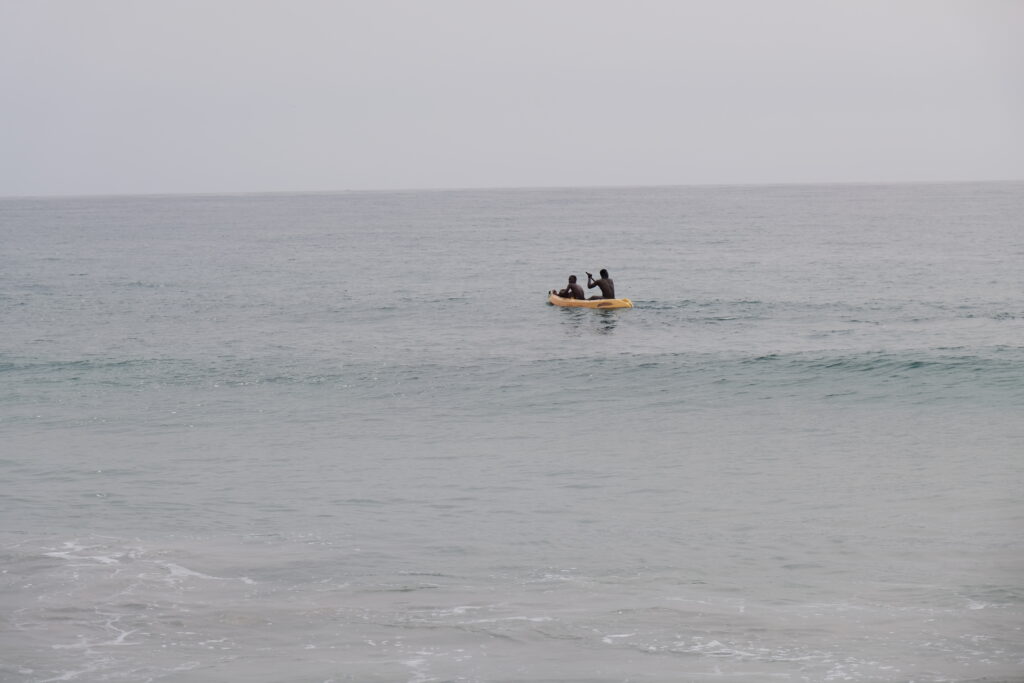
In the evening we also chatted with the head of the surf club, who told us that it wasn’t surf season at the moment—that starts in May, when all the kids surf and they often organize surf competitions as well. He also explained that the beach is so beautifully clean because every other Sunday the surf club walks along the shoreline and picks up all the trash. They want to set an example for other West African countries, where, despite having stunning beaches, black plastic bags (everything in small shops is wrapped in them) and transparent plastic water sachets are often a major problem. These sachets are the cheapest way to buy water: 3–5 dl of filtered water, sold for about 10–20 forints, or often given for free with a meal.
On the morning of the third day, we said goodbye to all our child and dog friends and set off for Monrovia, the capital of Liberia. The surf club’s cook asked if we could take him along as well, because Monrovia was the only place where he could refill his gas cylinder. We were very happy to have him with us, because although communication was difficult (in Liberia, too, people speak English mixed with local languages, so often we barely understood anything), we connected his phone to the car and listened to Liberian music for three hours straight.
When we arrived in Monrovia, we wanted to refuel, withdraw some cash, and look around a bit. We were very surprised, because what looked like the city center on the map turned out to be a huge market—it didn’t resemble a big city at all. We walked around briefly, then set off toward a border town near Côte d’Ivoire. After a while, we realized this would be impossible: the city was completely gridlocked, and although we passed through an area with larger houses, the market continued for kilometers. In the end, we aimed for a small town about 30 kilometers from Monrovia, where we had read that there was accommodation—unfortunately quite expensive. We tried bargaining, and the owner was very kind and lowered the price, so we managed to stay for almost half the original rate.
Accommodation in Liberia is incredibly expensive: they ask around 50 dollars for a place that in the countries after Liberia would cost at most 10 euros. The situation was the same in Robertsport: although there were places to stay, we met only four other travelers over three days, yet they tried to rent out a very basic bungalow for 200 dollars—so everything stood completely empty.
When we arrived in Kakata, we were extremely hungry, so we walked into town to look for dinner. It was already very dark, but we spotted a sign saying “restaurant” in the pitch black. A bit skeptically, we asked if there was still dinner—and yes, there was! We were served one of the tastiest meals of our entire trip so far: spicy fish soup with a nice big mackerel and cow skin (which was surprisingly delicious). Only later did we learn that this dish is called “pepper soup,” and it’s one of the most popular foods in Liberia. The next day as well, while heading toward the border, we found a small restaurant where they also only had “pepper soup,” but as it turned out, it’s often made not with fish but with tripe—something we enjoyed much less (though for anyone who likes tripe, a spicy, hearty soup is always a good choice in Liberia).
Unfortunately, we were only able to spend three days in Liberia.