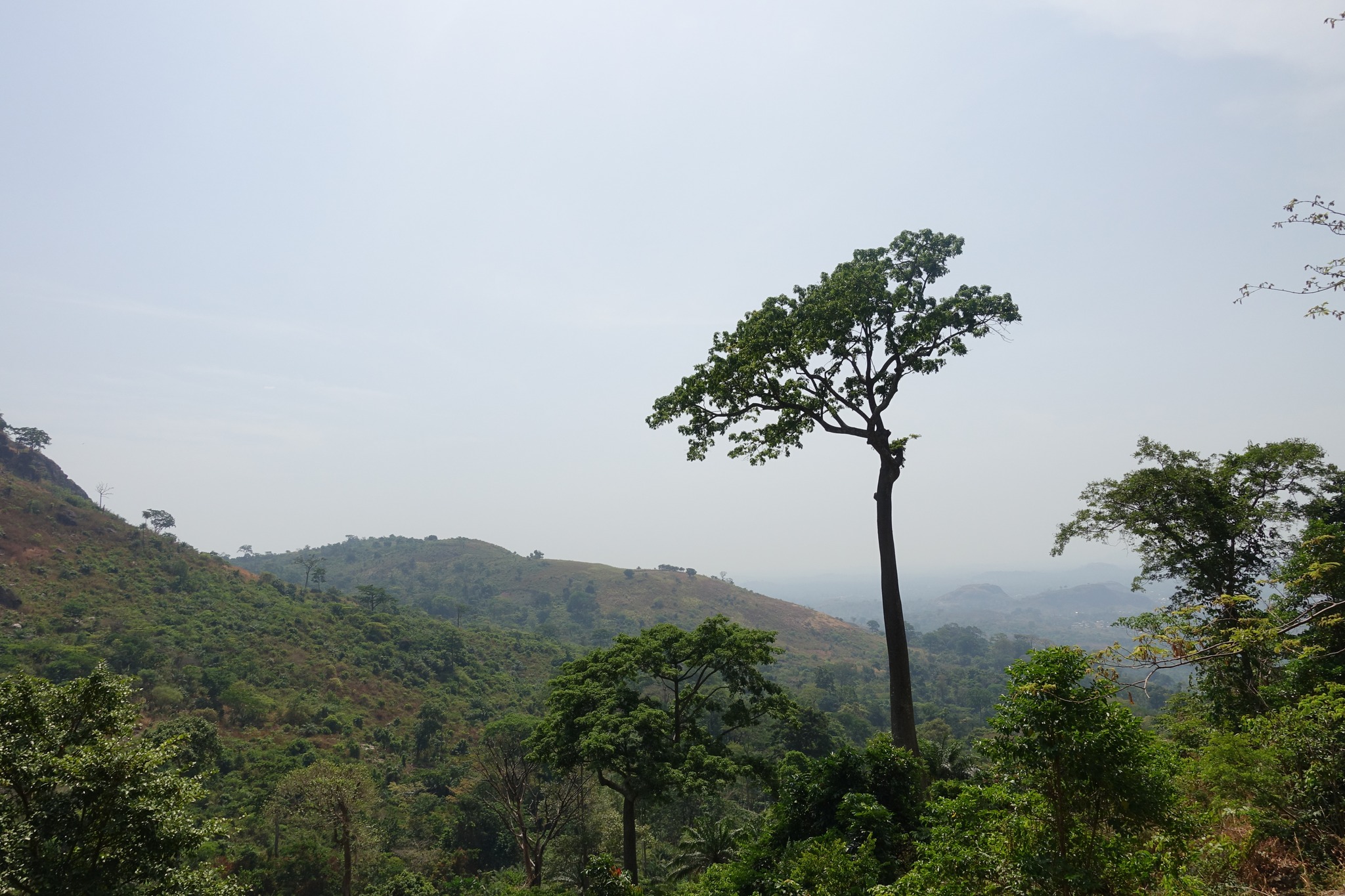
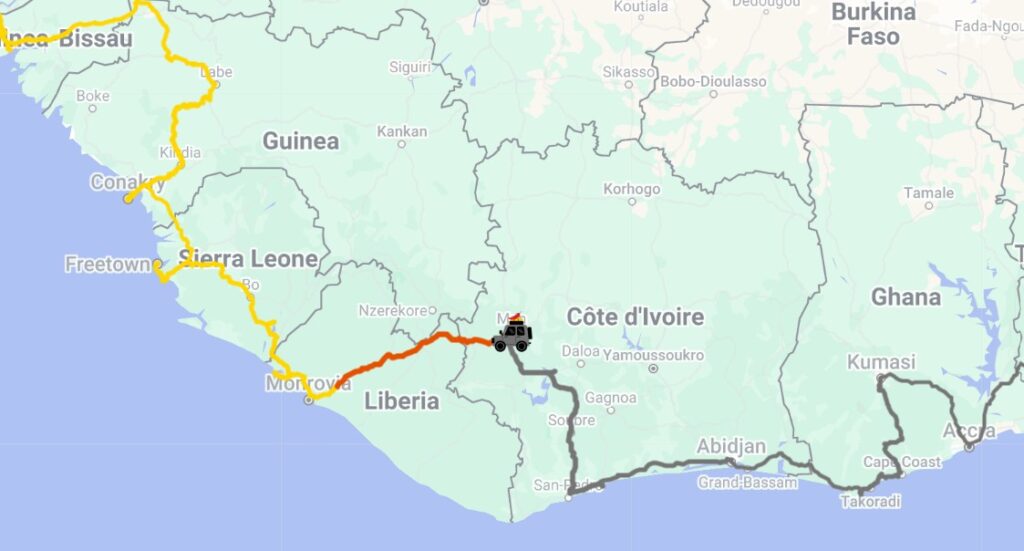
March 8–9.: After an early wake-up, we left Kataka heading toward the Ivorian (Côte d’Ivoire) border. The road to the border was beautiful: we passed through jungle and small villages. Once again, we arrived at a small border crossing, where we were practically the only ones crossing at the time. The border guards were extremely friendly and even tried to speed up the little bit of administration required. While Eszti handled the immigration papers, Ádám was able to go and sort out the car’s exit process.
We’d heard a lot about corruption and hassles at borders and police checkpoints, but we only had issues at the very beginning of the journey, when entering and exiting Mauritania – there they wanted to charge a fee for every stamp. Since then, however, every border crossing and checkpoint has been a positive experience. Most of the time, when we’re stopped (which often just involves a smile and a wave), it’s simply because people want to chat, ask where we’re from, and whether everything is okay.
After the border, we still had about 80 kilometers to go to reach the city of Man, when suddenly the sky darkened and it started pouring rain. We were very surprised, as we weren’t expecting rain before April or May. A few days earlier the weather had already been cloudy, and when we asked someone whether they thought it would rain, they replied, “Maybe in June.” Since then, we’ve learned that while the main rainy season starts in June, the smaller rainy season can begin as early as March – so from now on, we’ll need to be prepared for rain.
The rain also caught us off guard because Anna (Eszti’s sister) and Bálint (Eszti’s former classmate) were arriving that evening, and we had told them they wouldn’t need to worry about rain during their stay. Anna and Bálint had to travel across the entire country that day to get from Abidjan to Man. They landed in Abidjan the night before. The other “lie” we told them was that there are no serious power outages – we said that at night there’s always electricity, because even if it goes out, generators switch it back on. In contrast, their accommodation had no electricity all night – and without a fan or AC, the heat made it nearly unbearable. So they arrived in a rainy Man after two days of travel and no sleep – but fortunately, they were still in good spirits.
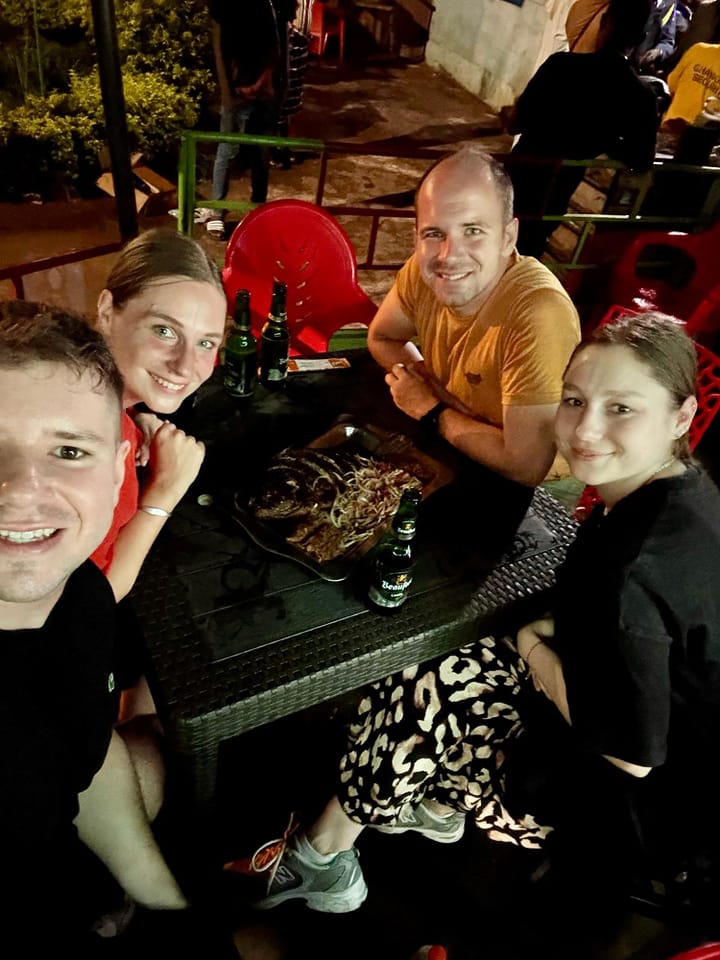
We went to meet them at the bus stop, and right next to it we found a small bar where we got a huge tilapia grilled over charcoal – more than enough for the four of us. We especially liked that the fish came with a salad of tomatoes, onions, chili, and a type of sauce, and as a side dish, attiéké (similar to couscous but made from cassava) – though the latter didn’t become our favorite.
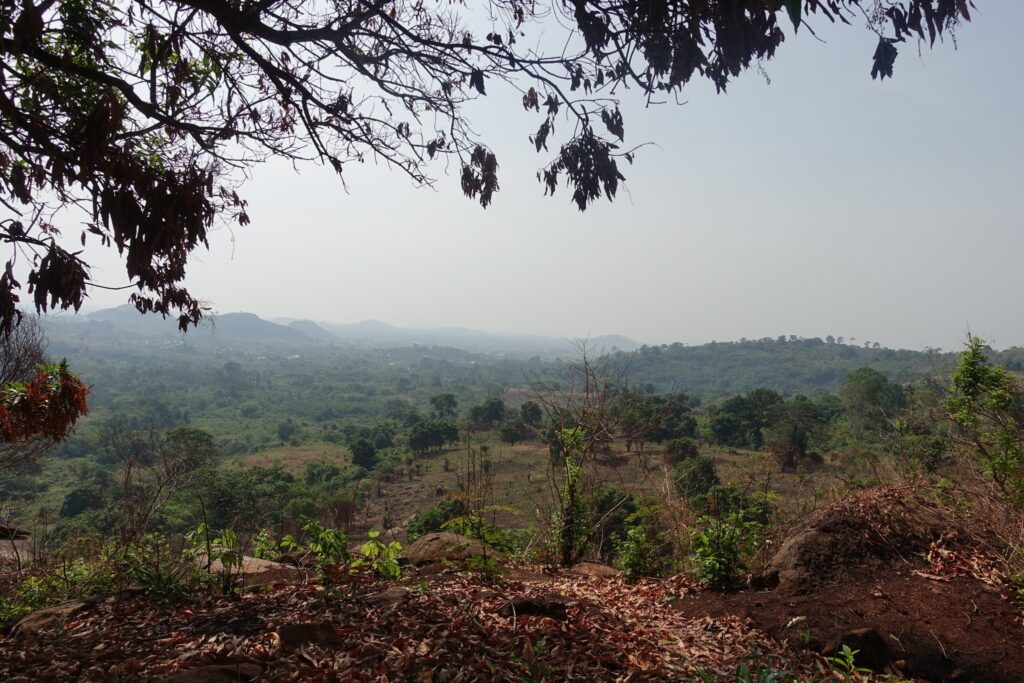
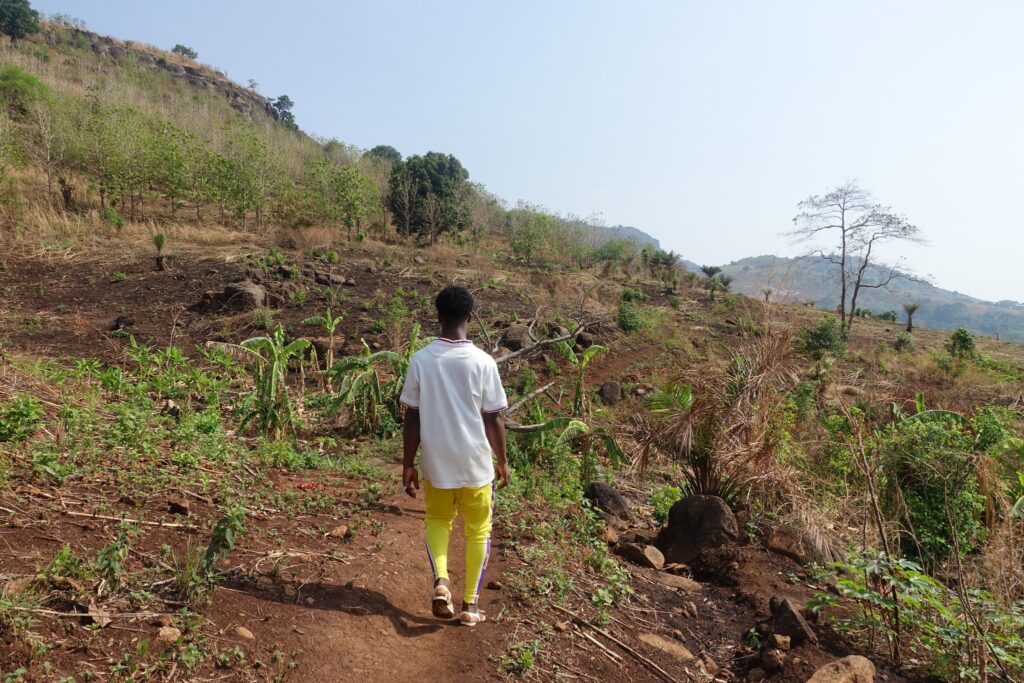
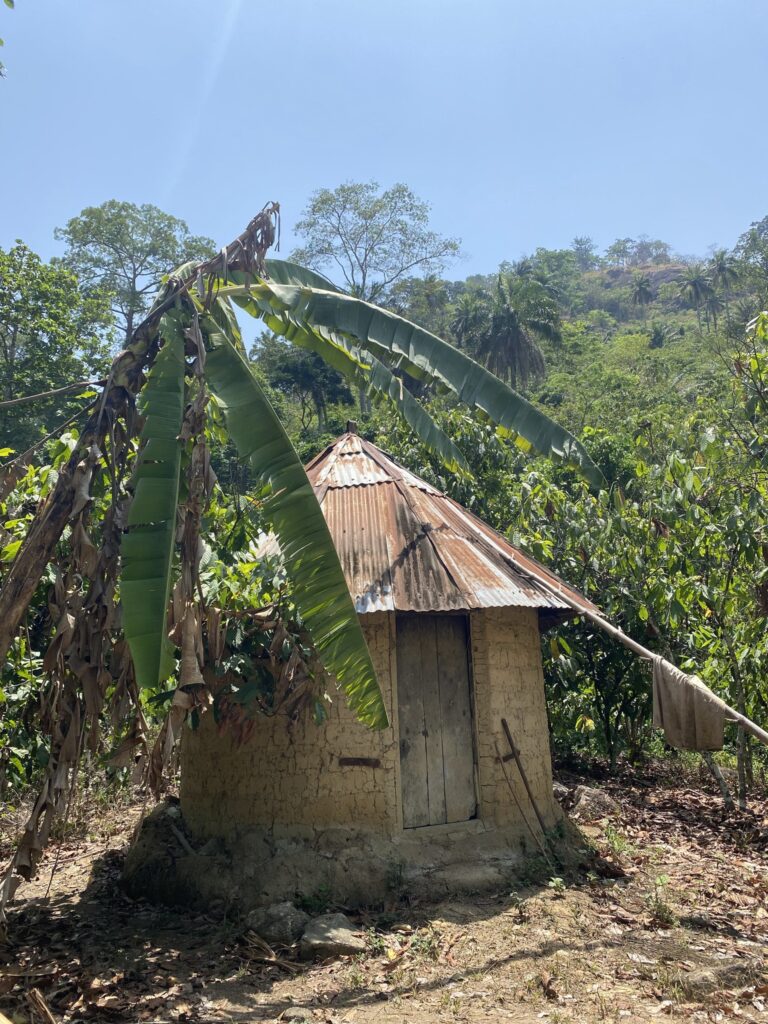
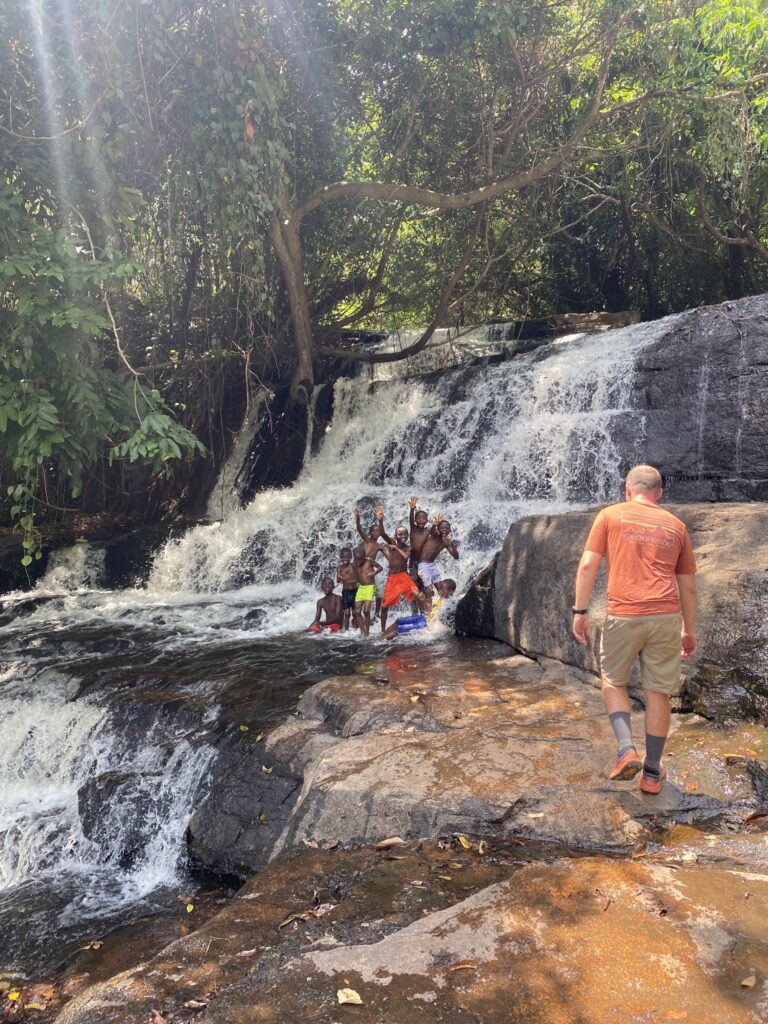
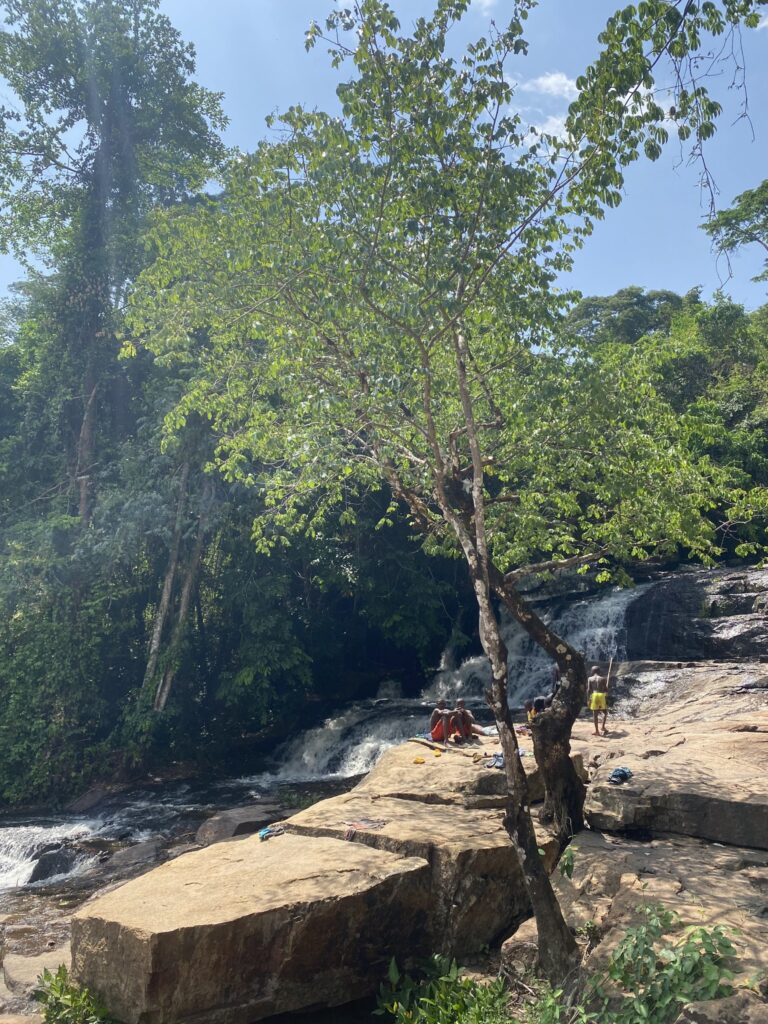
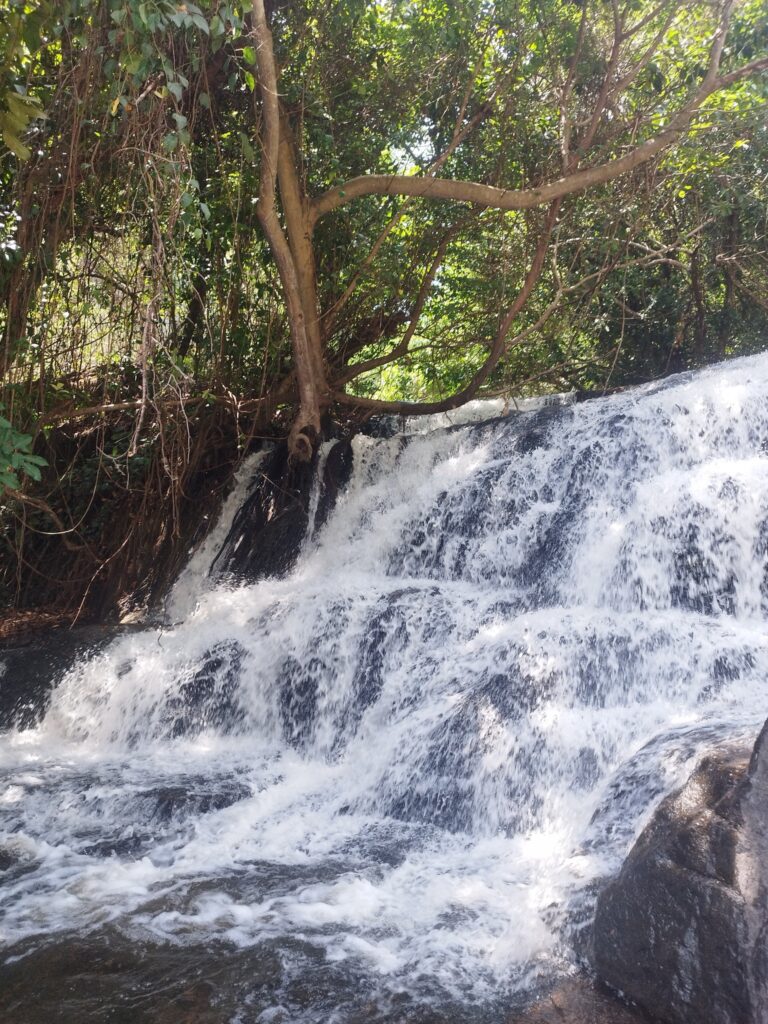
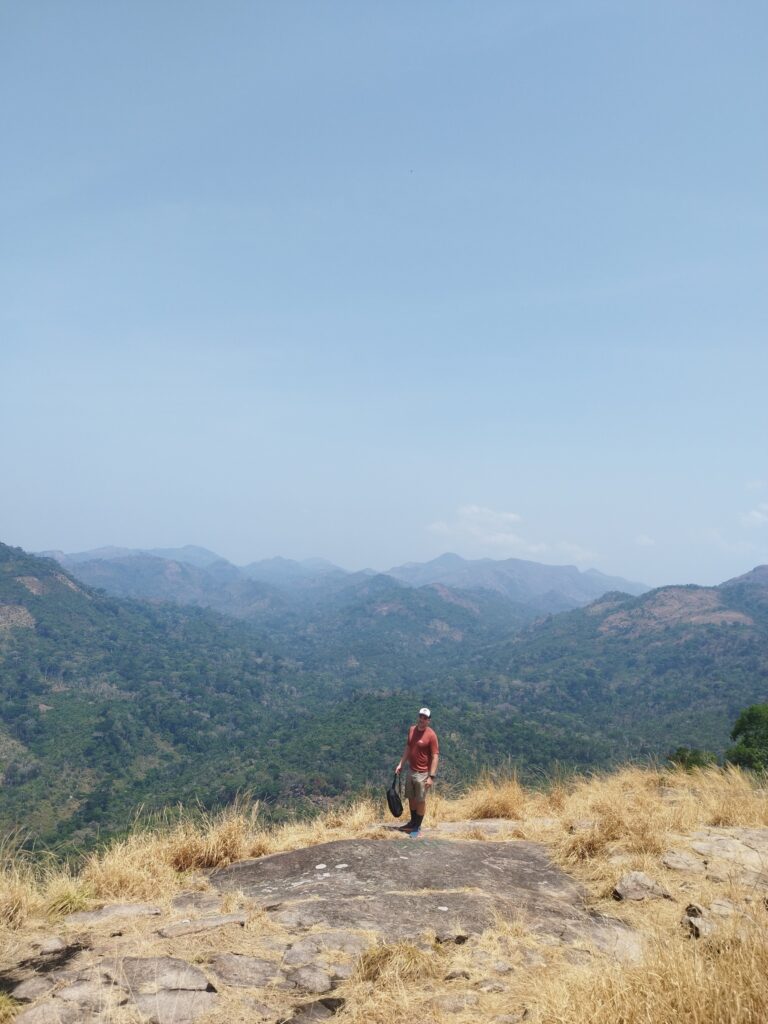
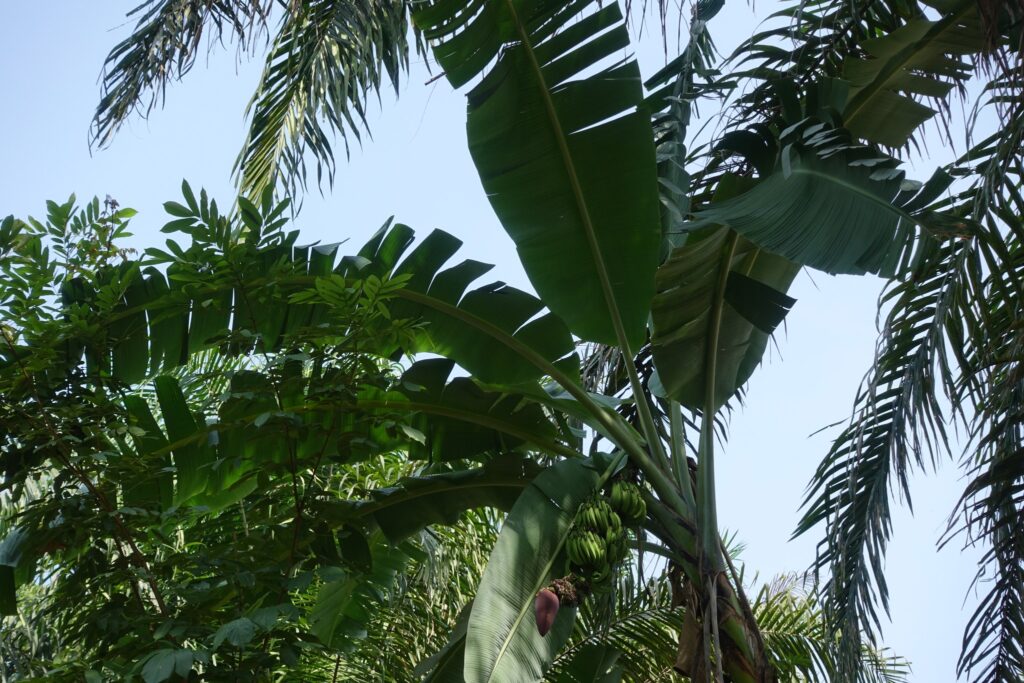
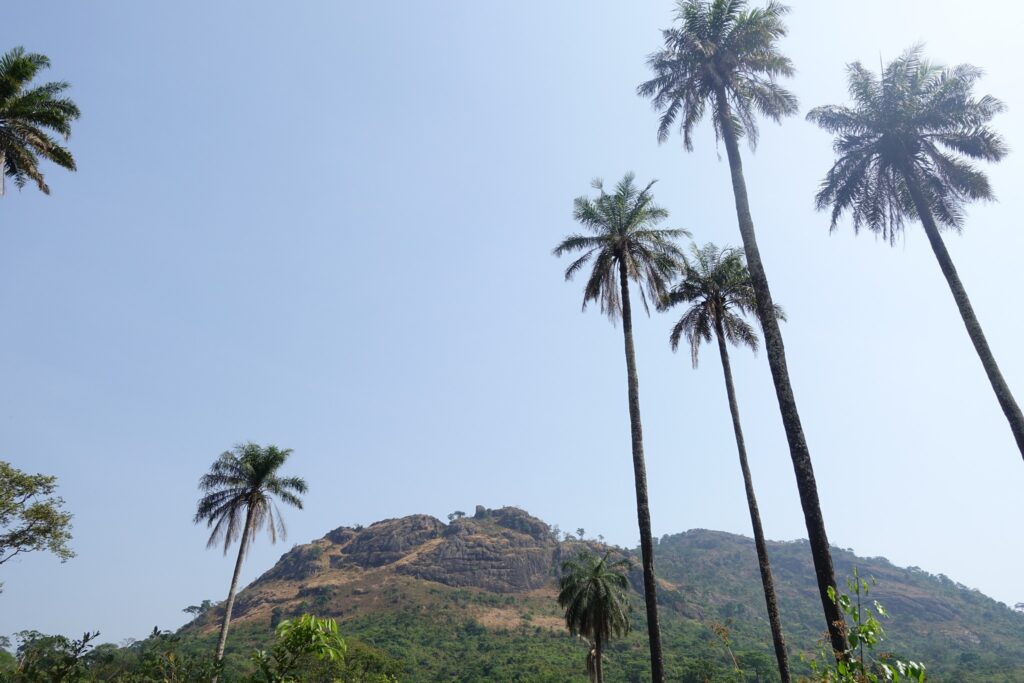
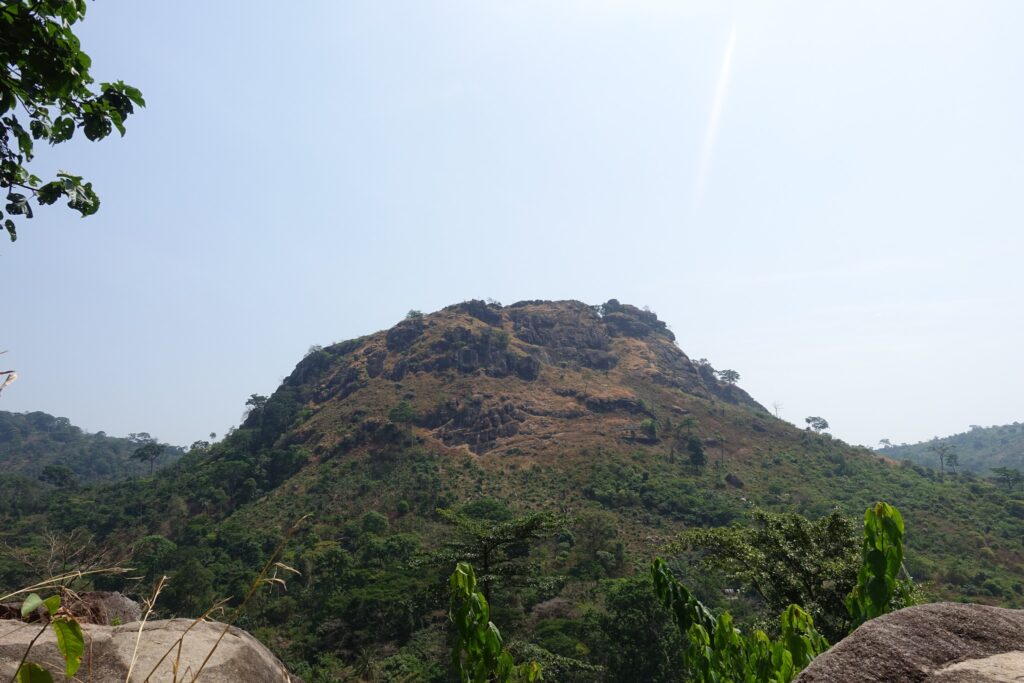
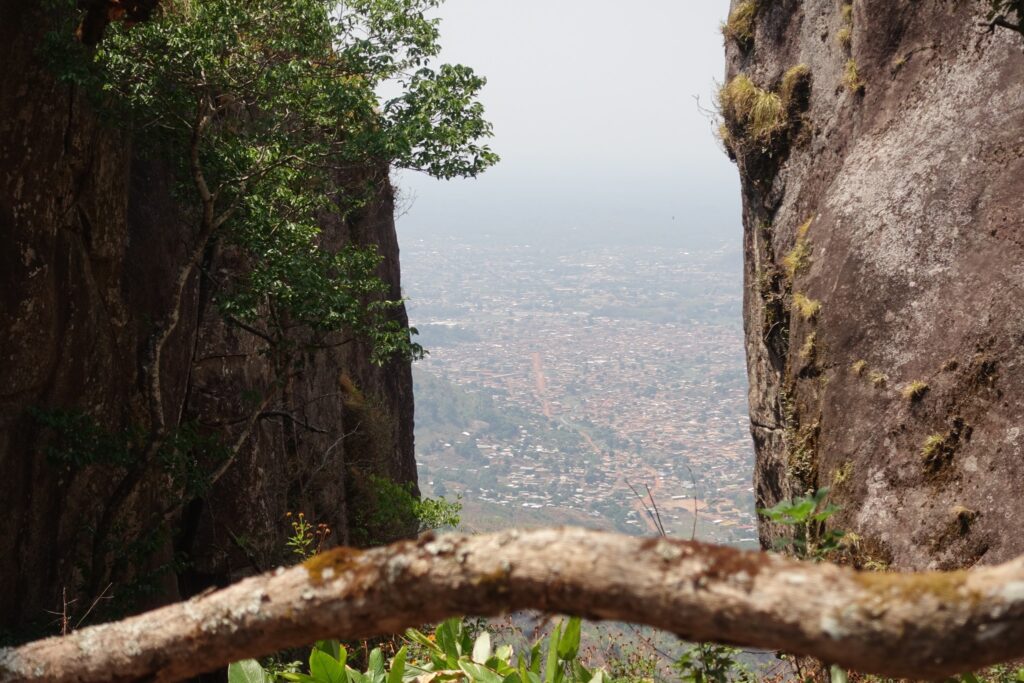
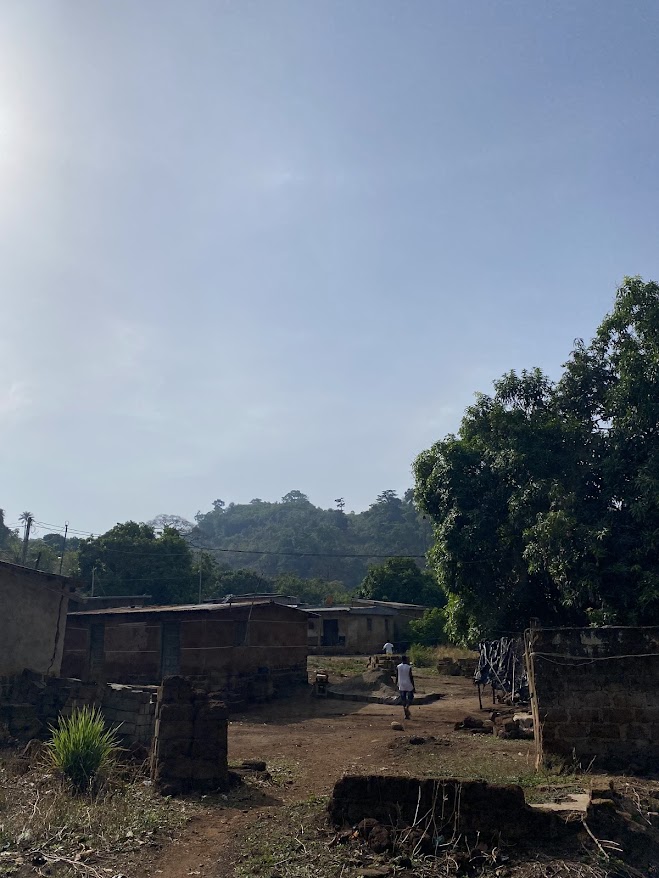
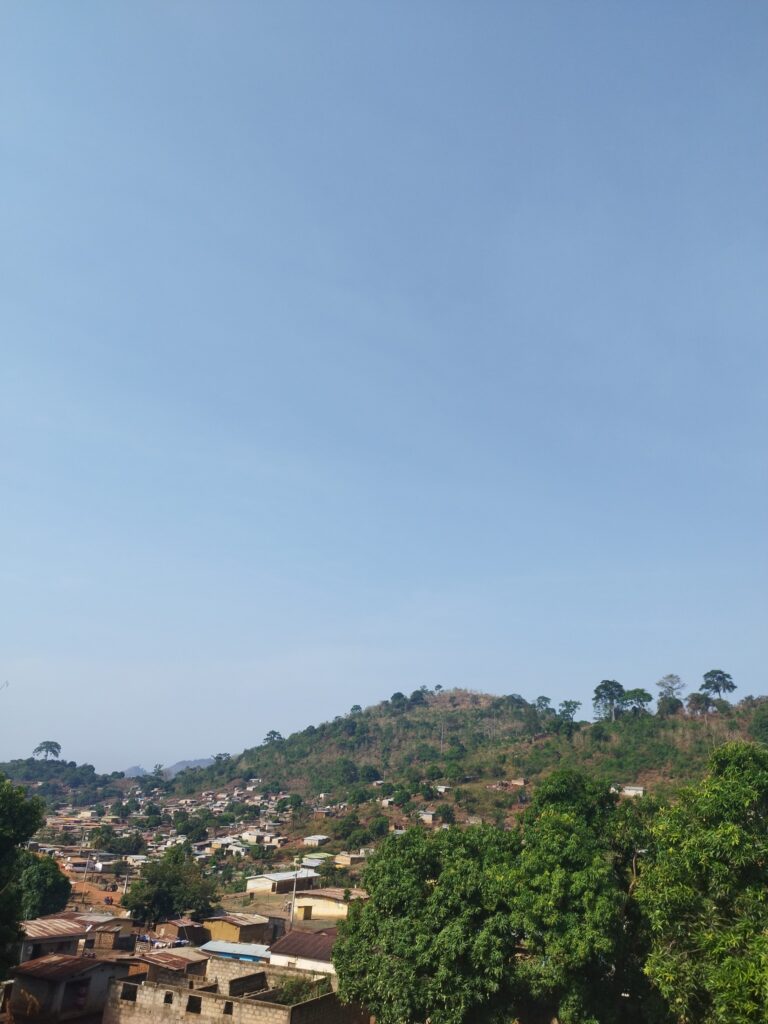
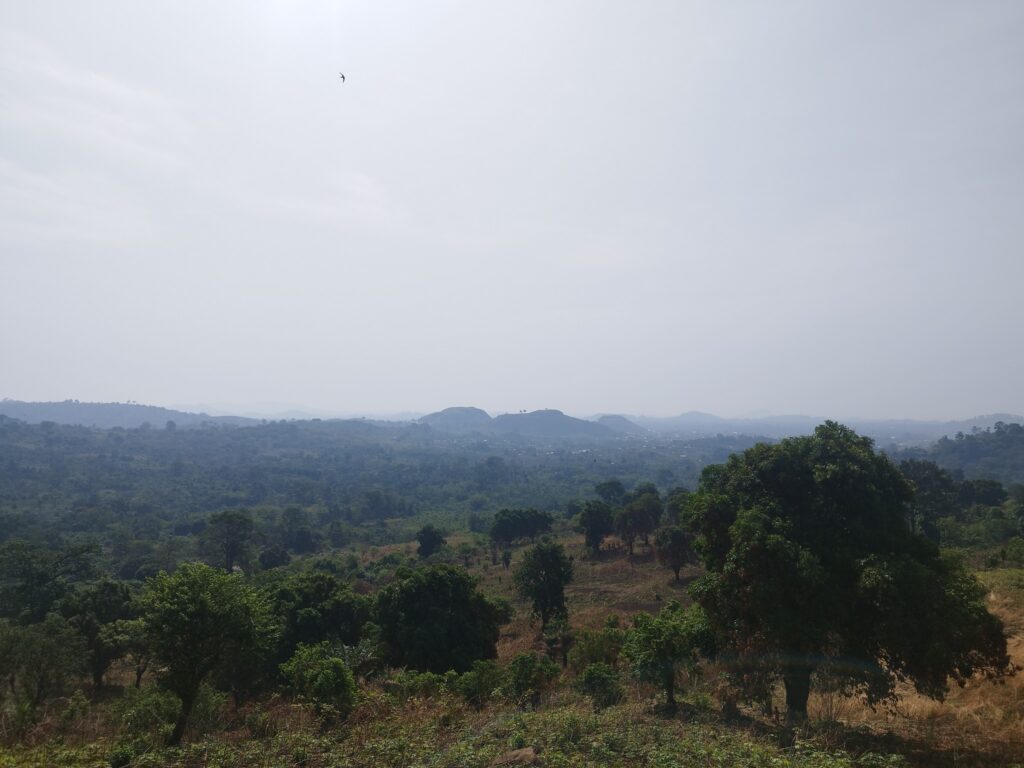
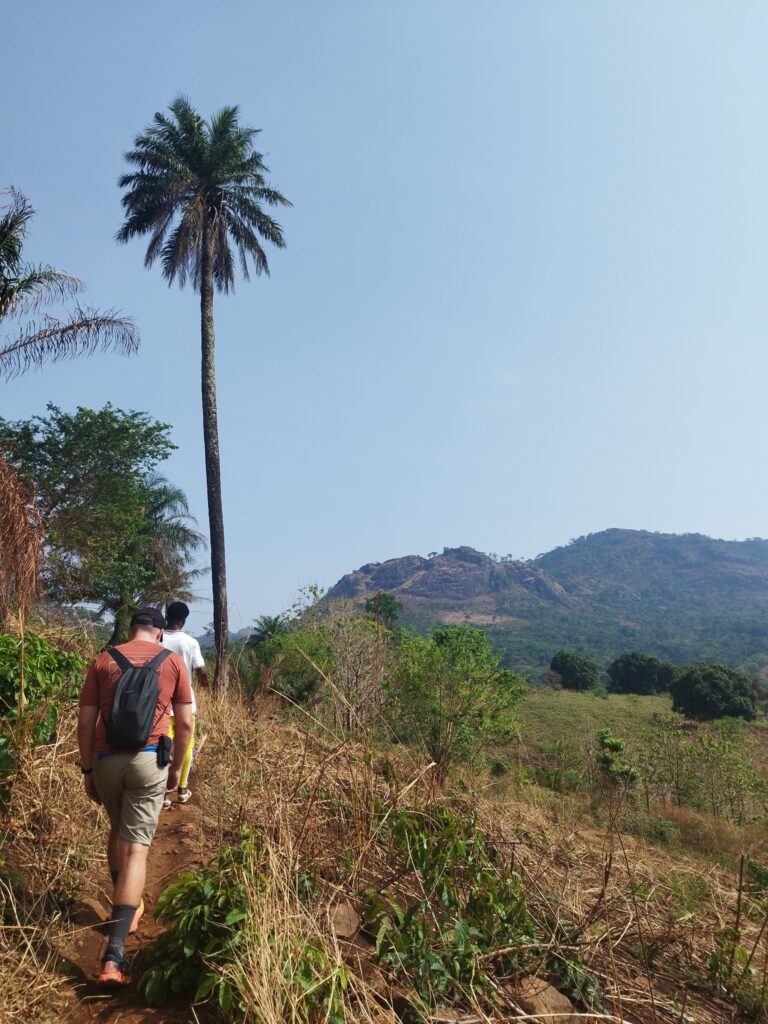
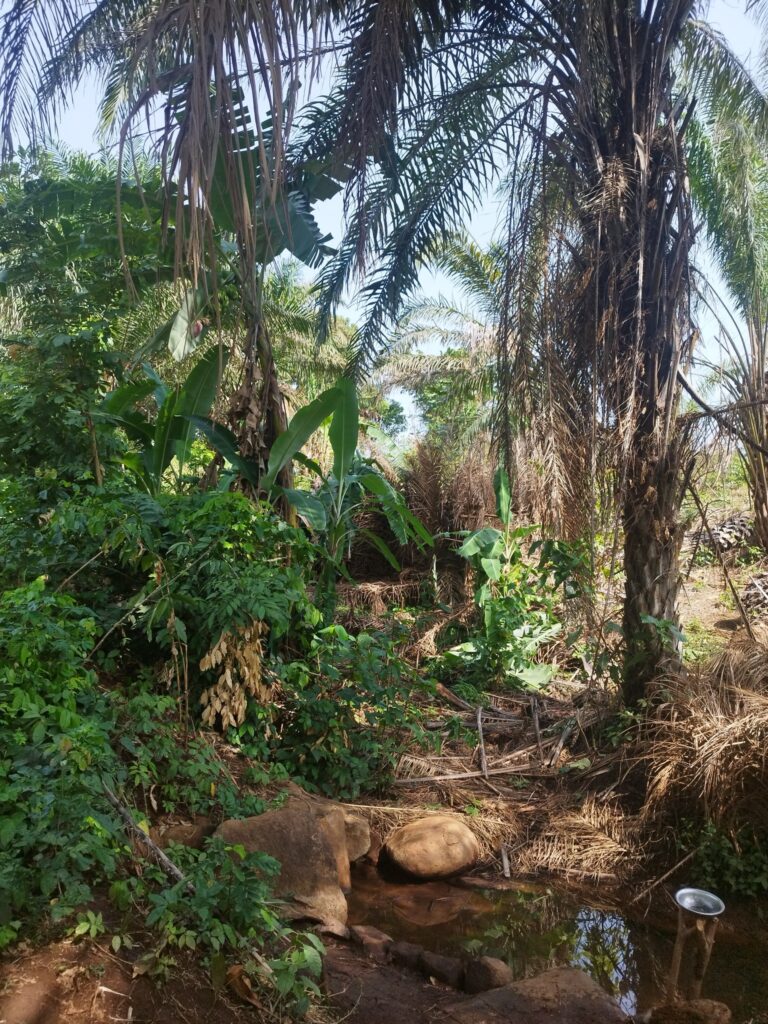
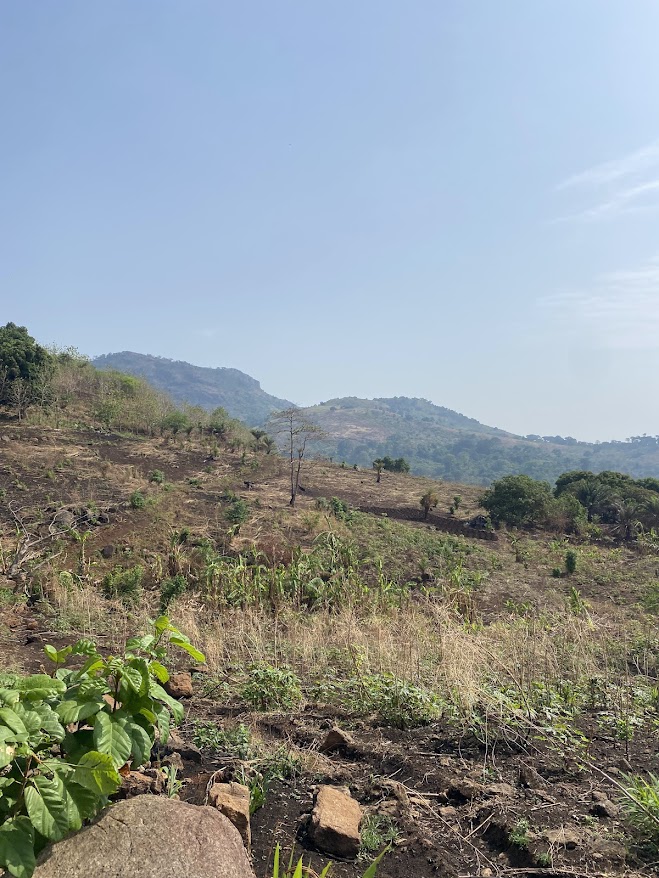
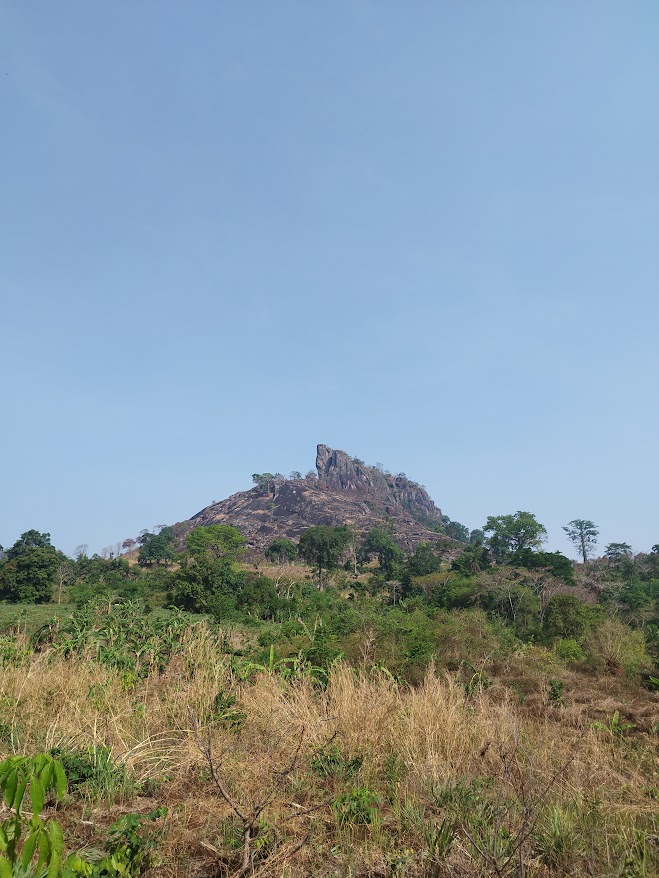
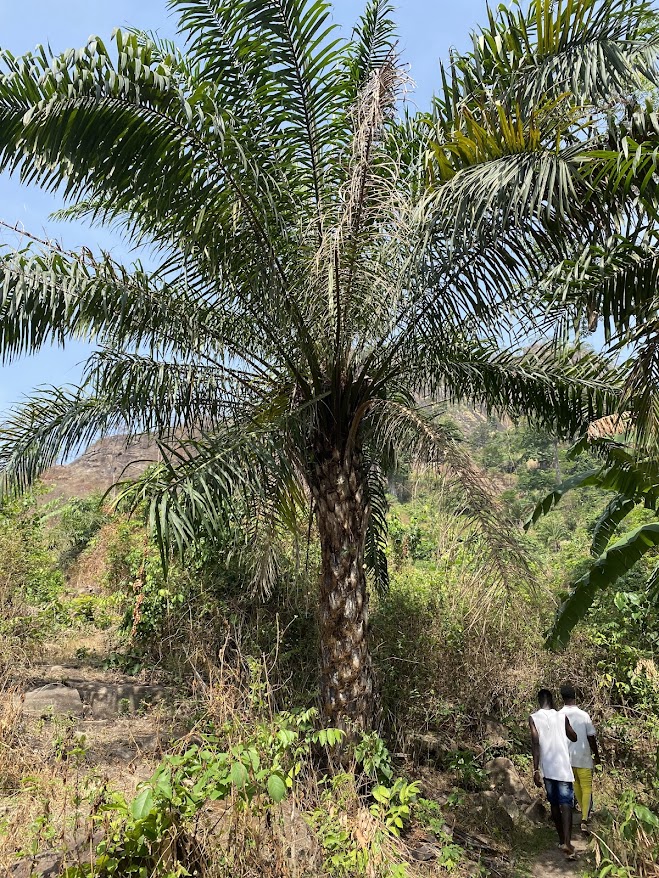
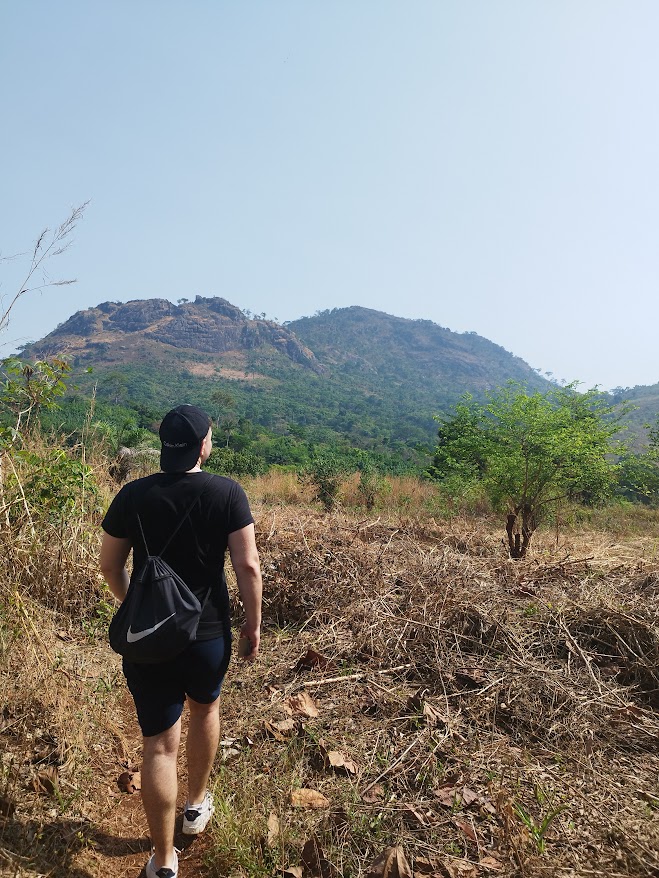
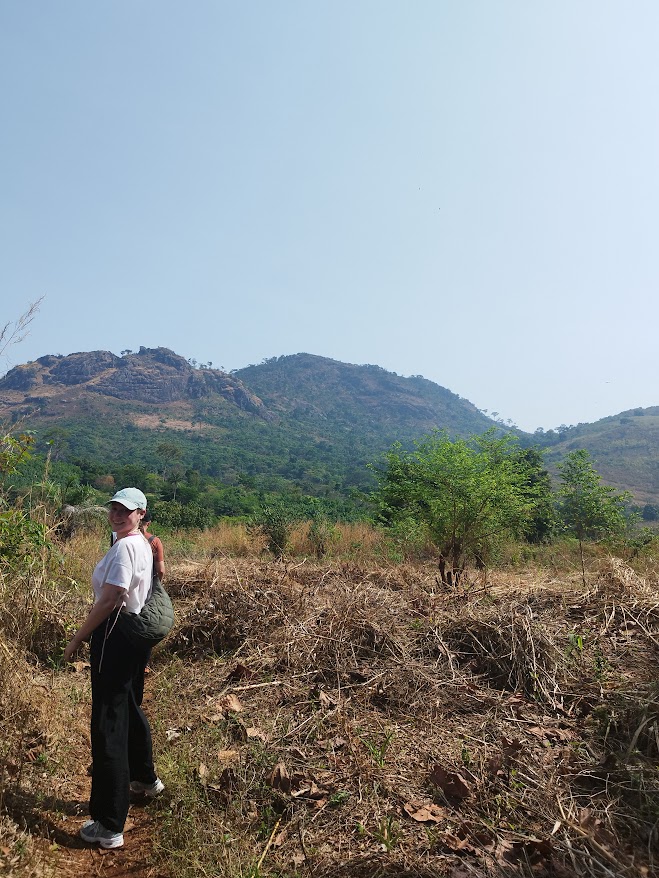
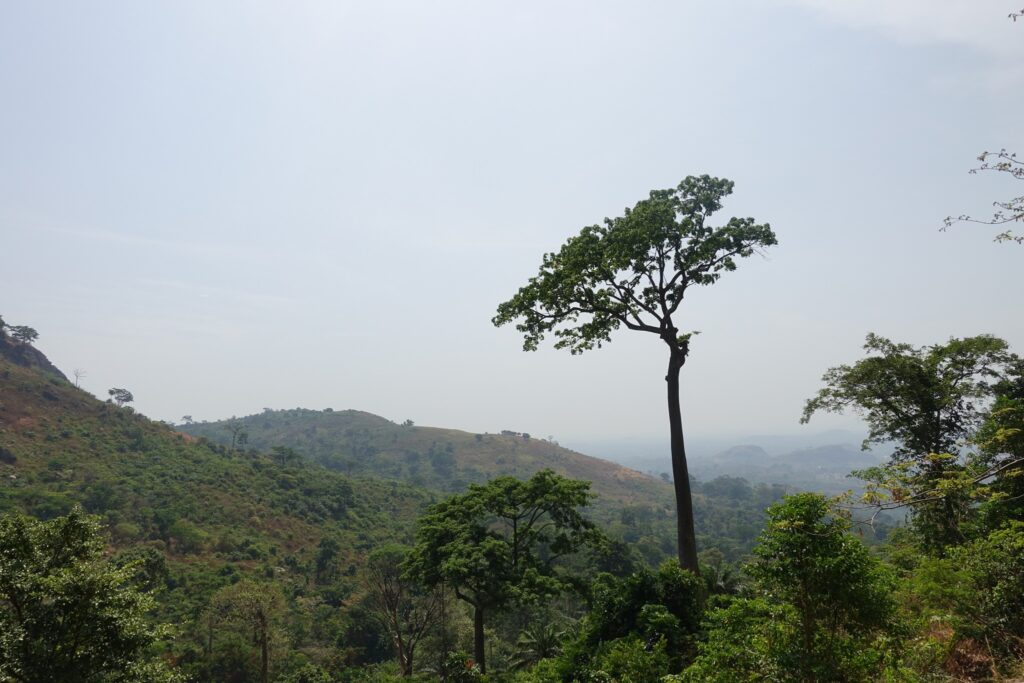
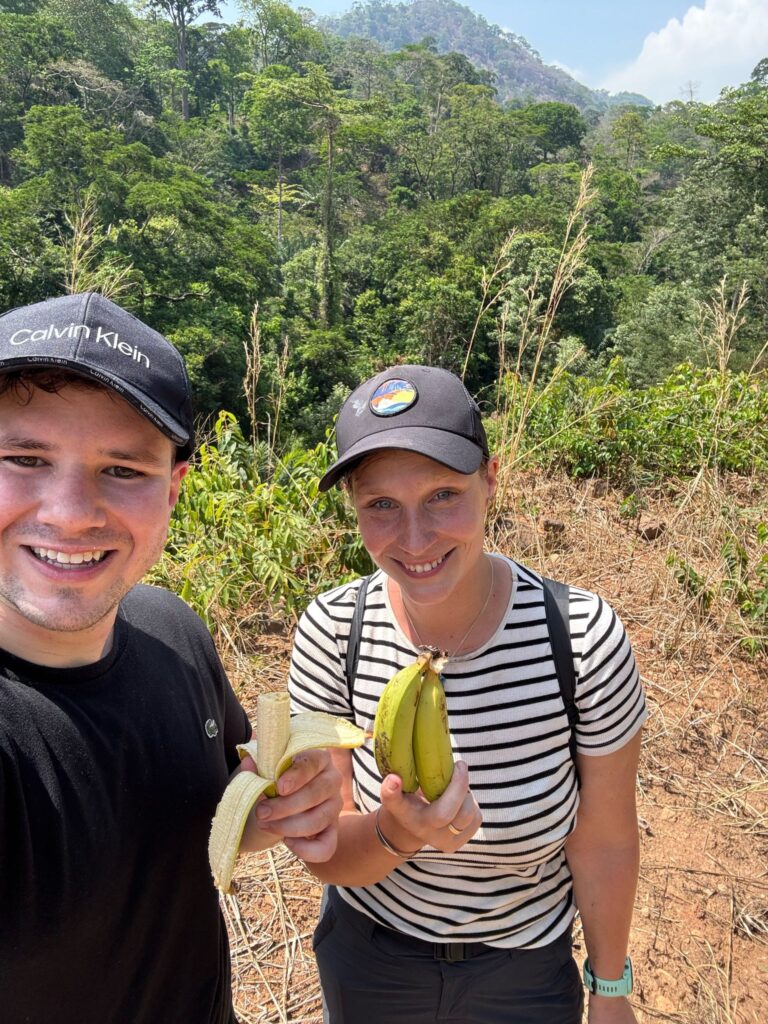
Man is a beautifully situated town, surrounded by many small hills. Luckily, the rain stopped the next day, so we set off to climb the most well-known peak, “La Dent de Man” (the Tooth of Man). We drove to a nearby village where the locals had organized themselves: they collected an entrance fee and provided a guide for the hike. The trail is actually available on public maps, but near the end there was a slightly more technical section, where it was helpful to have two young guys accompanying us. The 13-kilometer hike was beautiful, and the final hour to the top was very steep – we had to climb with both hands and even use a ladder at the end. The hike ended at a waterfall where many kids and adults were joyfully swimming and “jacuzzi-ing.” We could’ve used a refreshing dip ourselves, but we had miscalculated our food and water, so we were already quite thirsty and rushed back to the village.
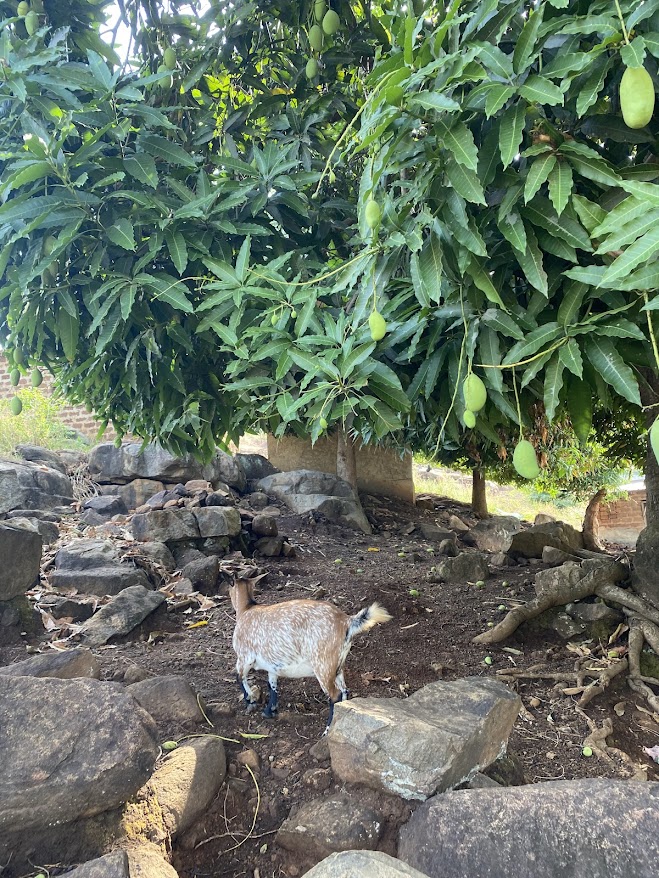
We first tried to quench our hunger with what felt like the world’s most delicious banana (or at least it did after the hike), sold by a woman along the trail. Back in the village, we found three women selling mangoes. We wanted to buy six – one for each of us – and based on our experiences in pricier countries, we offered 1000 CFA (about 1.5 EUR). Here, it’s common that fruits or even meals aren’t sold per item, but rather by price. The sellers were calculating with our guides, and we thought they were picking out the nicest ones – then we realized that for that amount, they would’ve basically had to give us their entire stock, as it would’ve bought around 30 mangoes. In the end, we agreed to pay only 500 CFA, and still received 15 mangoes – even though we tried to give some back. This kind of honesty is very typical in West Africa, especially among street vendors: once, when we overpaid by just 10 cents for a papaya from a car, they ran after us to return the extra money.
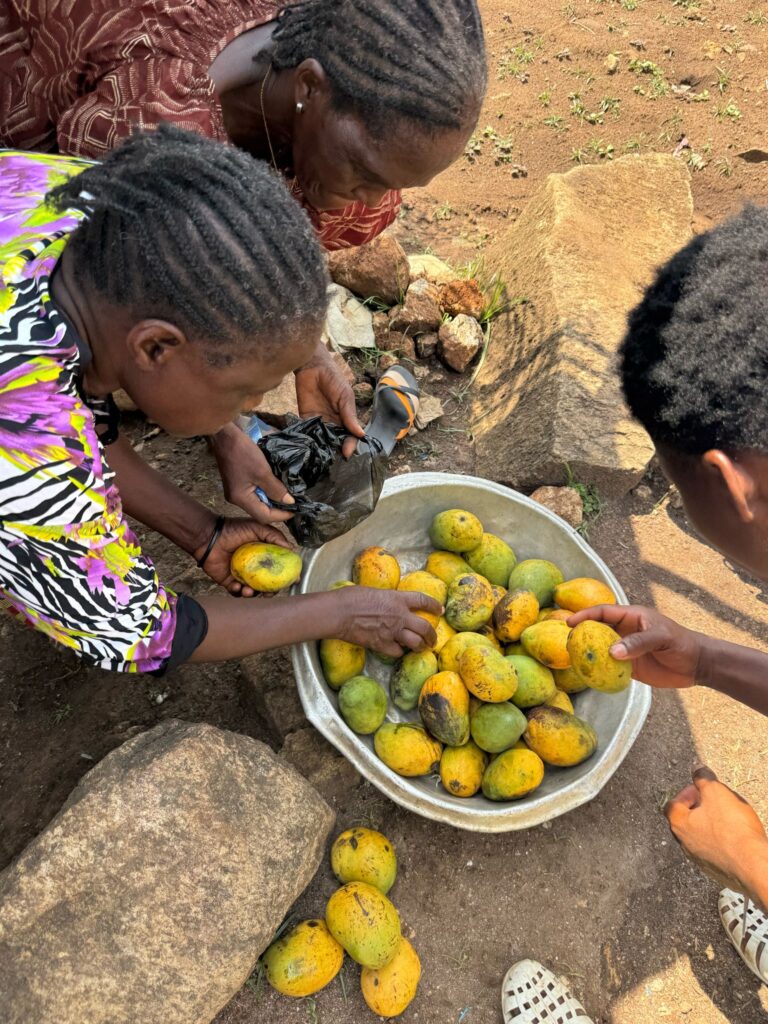
In the end, everyone got a mango – even our guides and a few kids from the village.
Part of the photos were taken by Anna and Balint.